Interviews are opportunities to demonstrate your expertise, and this guide is here to help you shine. Explore the essential Roller Preventative Maintenance interview questions that employers frequently ask, paired with strategies for crafting responses that set you apart from the competition.
Questions Asked in Roller Preventative Maintenance Interview
Q 1. Describe your experience with different types of roller bearings.
My experience encompasses a wide range of roller bearings, from cylindrical and tapered roller bearings commonly found in conveyor systems and heavy machinery, to spherical roller bearings used in applications demanding high load capacity and misalignment tolerance, such as wind turbines. I’ve also worked extensively with needle roller bearings, known for their compact size and high load-carrying capacity, often found in smaller mechanisms and automotive applications. Understanding the specific characteristics of each type – their internal geometry, material composition, and load-bearing capabilities – is crucial for effective preventative maintenance. For example, cylindrical roller bearings excel in high-speed applications, while spherical roller bearings are better suited for applications with significant shaft misalignment. This knowledge allows me to tailor maintenance strategies to the specific needs of each bearing type.
Q 2. Explain the process of lubricating industrial rollers.
Lubricating industrial rollers is a critical aspect of preventative maintenance, aiming to minimize friction, wear, and heat generation. The process depends heavily on the roller type, operating conditions, and the lubricant used. It often involves these steps:
- Cleaning: Thoroughly cleaning the bearing housing and surrounding areas to remove contaminants like dust, debris, and old grease. This often involves compressed air and specialized cleaning solvents.
- Lubricant Selection: Choosing the right lubricant is crucial. Factors like operating temperature, speed, and load influence the selection. Synthetic greases often offer superior performance in extreme conditions.
- Application: The method of application varies. Grease guns are commonly used for cartridge bearings. For open bearings, manual application with a brush or specialized grease fitting might be necessary. Oil lubrication is used in some high-speed applications and requires a proper oil bath or lubrication system.
- Inspection: After lubrication, a visual inspection ensures proper grease distribution or oil level. Excessive grease can attract contaminants, while insufficient grease leads to premature wear.
For instance, in a high-temperature steel mill application, a specialized high-temperature grease would be essential, whereas a food processing environment might require a food-grade lubricant.
Q 3. What are the common causes of roller failure?
Roller failure stems from a variety of factors, often interconnected. Common causes include:
- Insufficient or Improper Lubrication: Lack of lubrication leads to increased friction, heat, and premature wear. Using the wrong lubricant type can also cause damage.
- Contamination: Dust, debris, and other contaminants can introduce abrasive wear and damage bearing surfaces.
- Overloading: Exceeding the bearing’s load capacity causes premature wear and potential failure.
- Misalignment: Improper alignment of shafts and housings introduces uneven loads, leading to accelerated wear and potential damage.
- Corrosion: Exposure to moisture or corrosive substances leads to degradation of bearing components.
- Fatigue: Repeated stress cycles eventually lead to material fatigue and cracking, even under normal operating conditions.
A classic example is a conveyor system overloaded with excessive weight, leading to bearing failure due to overloading and potential misalignment from the added stress.
Q 4. How do you identify worn or damaged rollers?
Identifying worn or damaged rollers requires a combination of visual inspection and sometimes more sophisticated methods:
- Visual Inspection: Look for signs of excessive wear, pitting, scoring, discoloration, or unusual noise. Check for cracks or damage in the raceways and rollers.
- Measurement: Using micrometers or calipers, measure the roller diameter and raceway dimensions to detect any deviations from specifications.
- Vibration Analysis: Increased vibration levels often indicate bearing problems before significant visual damage appears.
- Oil Analysis: Analyzing lubricating oil for metallic particles can detect early signs of bearing wear.
- Temperature Monitoring: Elevated bearing temperatures suggest increased friction and potential problems.
For example, a noticeable increase in vibration in a rotating shaft coupled with unusual sounds could indicate the presence of damaged or worn rollers, necessitating further inspection and potential replacement.
Q 5. What safety precautions are essential during roller maintenance?
Safety is paramount during roller maintenance. Essential precautions include:
- Lockout/Tagout Procedures: Ensure the machinery is completely shut down and locked out to prevent accidental startup.
- Personal Protective Equipment (PPE): Wear safety glasses, gloves, and appropriate clothing to protect against injury from sharp edges, debris, or lubricants.
- Proper Lifting Techniques: Use appropriate lifting equipment to handle heavy components to avoid injuries.
- Compressed Air Precautions: Use caution when using compressed air to clean, as it can cause injury.
- Environmental Considerations: Dispose of used lubricants and cleaning materials properly to comply with environmental regulations.
Failing to follow lockout/tagout procedures, for example, could lead to serious injury from a machine unexpectedly restarting during maintenance.
Q 6. Describe your experience with roller alignment procedures.
Roller alignment is crucial for proper operation and preventing premature wear. My experience involves using various methods, including:
- Laser Alignment Tools: These provide precise measurements of shaft misalignment, ensuring accurate adjustments.
- Dial Indicators: These are used to measure shaft runout and parallelism.
- Shims and Adjustment Bolts: These are used to correct misalignment once it’s identified.
- Visual Inspection: Careful visual inspection of shaft alignment aids in identifying obvious misalignments.
For example, using a laser alignment tool on a large industrial fan motor allows for precise alignment of the motor shaft with the fan shaft, preventing excessive vibration and extending bearing life. Inaccurate alignment would cause premature wear and potential catastrophic failure.
Q 7. How do you determine the appropriate lubrication schedule for rollers?
Determining the appropriate lubrication schedule involves considering several factors:
- Bearing Type and Size: Different bearing types and sizes have different lubrication requirements.
- Operating Conditions: High speed, heavy loads, and high temperatures necessitate more frequent lubrication.
- Environmental Factors: Dusty or harsh environments require more frequent lubrication to combat contamination.
- Lubricant Type: The type of lubricant influences the lubrication interval.
- Manufacturer Recommendations: Always consult the bearing manufacturer’s recommendations for lubrication intervals.
A well-defined lubrication schedule, for example, based on these factors for a critical application like a wind turbine gearbox, could significantly prolong the life of the rollers and prevent costly downtime. Ignoring manufacturer recommendations and relying on arbitrary lubrication intervals could lead to premature wear and failure.
Q 8. What are the key indicators of impending roller failure?
Identifying impending roller failure relies on a combination of visual inspection and performance monitoring. Key indicators often include unusual noise – squeaking, grinding, or rumbling – which suggests friction or wear. You might also see visible signs of damage like cracks, pitting, or significant wear on the roller surface. Performance-wise, look for inconsistencies in the system; rollers might be jamming, moving erratically, or showing reduced efficiency in conveying materials. A gradual slowdown in the process, increased energy consumption, or uneven material flow are also potential warning signs. For instance, in a conveyor belt system, a failing roller might cause the belt to sag or ride unevenly. Regularly checking the alignment of rollers and their bearings is critical as misalignment often precedes failure.
- Unusual Noises: Grinding, squeaking, or rumbling.
- Visible Damage: Cracks, pitting, excessive wear.
- Performance Issues: Jamming, erratic movement, reduced efficiency.
- System Changes: Gradual slowdown, increased energy use, uneven material flow.
- Misalignment: Noticeable misalignment of rollers and their bearings.
Q 9. How do you troubleshoot a roller system malfunction?
Troubleshooting a roller system malfunction is a systematic process. First, I’d identify the specific problem—is it a single roller or the entire system? Is it a mechanical issue or a control problem? Once the problem area is pinpointed, I’d begin by examining the most obvious aspects. Is there any visible damage to the rollers or their components (bearings, shafts, housings)? Then, I’d check for proper alignment, ensuring that all rollers are correctly positioned and in line. Next, the bearings would be inspected for wear or damage, paying close attention to lubrication. A lack of lubrication is a frequent culprit. If the problem persists, I’d check the system’s electrical components, such as motors and sensors. This might involve checking power supply, voltage levels, and wiring integrity. Finally, a careful review of the system’s operational logs might reveal patterns or anomalies that indicate underlying problems. I use a combination of visual inspection, specialized tools like multimeters, and my knowledge of the system’s schematics to effectively diagnose the problem. For example, if I find a motor is not running, I’d systematically check for a blown fuse, a faulty power supply, or problems with the motor control system.
Q 10. Explain your experience with different types of roller materials and their applications.
My experience encompasses a wide range of roller materials, each chosen based on the specific application requirements. Steel rollers are a common choice for high-capacity, heavy-duty applications, offering excellent strength and durability. However, they might be prone to corrosion in damp environments, requiring regular maintenance and potentially specialized coatings. For lighter-duty applications or where corrosion resistance is paramount, I’ve worked extensively with stainless steel rollers, particularly in food processing and pharmaceutical industries where hygiene is critical. Polyurethane rollers provide excellent abrasion resistance and flexibility, ideal for handling delicate or abrasive materials. In contrast, nylon rollers offer good chemical resistance and are often preferred for applications involving harsh chemicals. Selecting the right material depends on factors such as load capacity, speed, operating temperature, the material being conveyed, and environmental conditions.
- Steel: High strength, durability, cost-effective but susceptible to corrosion.
- Stainless Steel: Excellent corrosion resistance, hygienic, suitable for food processing.
- Polyurethane: High abrasion resistance, flexibility, ideal for delicate or abrasive materials.
- Nylon: Good chemical resistance, suitable for harsh chemical environments.
Q 11. Describe your process for inspecting and documenting roller maintenance.
My inspection and documentation process follows a standardized procedure. First, a visual inspection notes any obvious damage, wear, or misalignment. This includes checking the rollers, bearings, shafts, and surrounding components. Measurements are taken to quantify wear or misalignment using calibrated tools (e.g., micrometers, dial indicators). Detailed photographs or video recordings document the condition of each roller. I record the lubrication levels and condition (consistency, presence of contaminants). This data, along with any other relevant observations, is meticulously documented in a standardized maintenance log, which includes date, time, location, and detailed descriptions. Any corrective actions taken, such as lubrication, replacement of parts, or adjustments, are documented, along with the parts used and any specific observations on the replaced components. This detailed logging helps track roller health, predict future maintenance needs, and facilitates troubleshooting if issues arise.
Q 12. How do you prioritize maintenance tasks for multiple roller systems?
Prioritizing maintenance for multiple roller systems involves assessing risk and criticality. I use a combination of factors including the age of the system, its operational hours, the consequences of failure, and the frequency of past repairs. A risk matrix could be used for systematic prioritization. Systems critical to production, with high failure consequences, and showing signs of wear naturally take priority. For instance, a roller system crucial for a continuous production line would require more frequent inspection than a less critical system. This prioritization ensures that the most critical systems receive timely maintenance to minimize downtime and potential losses. This may also involve implementing a preventive maintenance schedule, with different inspection intervals based on the risk assessment.
Q 13. What software or tools do you use for scheduling and tracking roller maintenance?
I’ve used various software and tools for scheduling and tracking roller maintenance. CMMS (Computerized Maintenance Management Systems) software is invaluable for this purpose. These systems allow for scheduling preventive maintenance tasks, tracking work orders, managing inventory, and generating reports. Specific examples include (but are not limited to) UpKeep, Fiix, and IBM Maximo. These systems often incorporate features like barcode scanning for asset tracking and automated notifications for upcoming maintenance tasks. They also generate reports and analytics, allowing identification of trends, potential areas for improvement, and cost savings opportunities. Besides software, I utilize spreadsheets for simpler tracking when a full CMMS isn’t necessary, which often involves visual aids and color-coded systems to flag urgency.
Q 14. Explain your understanding of predictive maintenance techniques for rollers.
Predictive maintenance for rollers utilizes advanced technologies to anticipate potential failures *before* they occur. Techniques such as vibration analysis can detect subtle changes in roller operation that indicate impending problems. Anomalies in vibration patterns can pinpoint bearing wear, imbalances, or other defects. Similarly, infrared thermography can detect excessive heat generation, which is a significant indicator of impending bearing or lubrication failure. These methods allow for proactive maintenance, minimizing downtime and extending the lifespan of roller systems. Data gathered from sensors can be analyzed using specialized software to predict remaining useful life, allowing for scheduled maintenance rather than reacting to failures. For instance, a slight increase in vibration amplitude over time, detected through vibration analysis, might indicate wear and tear in roller bearings, allowing for their proactive replacement before complete failure.
Q 15. How do you ensure the safety of workers during roller maintenance procedures?
Worker safety is paramount during roller maintenance. We employ a multi-layered approach, starting with comprehensive risk assessments specific to each roller and its location. This identifies potential hazards like pinch points, high-pressure systems, and electrical components. Based on this assessment, we implement the following:
- Lockout/Tagout Procedures: Before any maintenance begins, we rigorously implement lockout/tagout procedures to de-energize all power sources to the roller and surrounding equipment. This prevents accidental startup during maintenance.
- Personal Protective Equipment (PPE): Appropriate PPE, including safety glasses, gloves, hearing protection, and steel-toed boots, is mandatory for all personnel. The specific PPE will vary depending on the task and identified hazards. For instance, working near high-temperature rollers might require heat-resistant gloves and clothing.
- Training and Competency: All technicians receive thorough training on safe work practices, including the use of specialized tools and equipment. We verify their competency through practical assessments and regular refresher courses.
- Confined Space Entry Protocols: If maintenance involves working in confined spaces, we follow strict confined space entry procedures, including atmospheric monitoring, ventilation, and designated entry/exit points, with at least one standby worker present.
- Emergency Response Plan: A clearly defined emergency response plan is established and communicated to all workers, outlining procedures for handling incidents and contacting emergency services.
For example, during a recent maintenance project on a large industrial roller, we identified a potential pinch point between the roller and its housing. We implemented a specialized guarding system before commencing work to eliminate this hazard. This proactive approach ensures that our maintenance procedures prioritize worker well-being.
Career Expert Tips:
- Ace those interviews! Prepare effectively by reviewing the Top 50 Most Common Interview Questions on ResumeGemini.
- Navigate your job search with confidence! Explore a wide range of Career Tips on ResumeGemini. Learn about common challenges and recommendations to overcome them.
- Craft the perfect resume! Master the Art of Resume Writing with ResumeGemini’s guide. Showcase your unique qualifications and achievements effectively.
- Don’t miss out on holiday savings! Build your dream resume with ResumeGemini’s ATS optimized templates.
Q 16. What are the common causes of roller misalignment?
Roller misalignment is a common problem with several contributing factors. These can broadly be categorized as:
- Improper Installation: Incorrect mounting, insufficient foundation support, or neglecting shimming can lead to misalignment from the outset. This is often seen when rollers are not properly aligned with their supporting structures or driving mechanisms.
- Wear and Tear: Over time, wear and tear on bearings, shafts, and supporting structures can cause misalignment. This is particularly true in high-vibration or high-load applications. For example, uneven wear on roller bearings can subtly shift the roller’s position.
- Foundation Settlement: Uneven settlement of the foundation on which the roller is mounted can cause misalignment. This is more likely to occur in older installations or those built on unstable ground.
- Thermal Expansion: Differential thermal expansion of different components can induce misalignment, especially if the roller operates at high temperatures. The roller may expand differently than its supporting structure.
- External Forces: Impact loads, vibrations from external sources, or other external forces can disrupt the alignment of a roller. This can range from minor impacts to more significant events, such as accidents.
Diagnosing the root cause of misalignment requires careful inspection and measurement. We use precision alignment tools like laser alignment systems to identify the specific type and degree of misalignment before corrective action is taken.
Q 17. How do you address environmental concerns during roller maintenance?
Environmental responsibility is a core principle in our roller maintenance procedures. We aim to minimize our environmental footprint through several strategies:
- Waste Management: Proper disposal of lubricants, cleaning solvents, and other waste materials is crucial. We utilize certified waste disposal companies to handle these materials in accordance with all relevant environmental regulations.
- Spill Prevention and Containment: We implement procedures to prevent and contain spills of lubricants and other hazardous materials. Spill kits are readily available, and personnel are trained on their proper use.
- Energy Efficiency: By ensuring optimal roller alignment and performance, we contribute to energy efficiency. Misaligned rollers consume more energy and can lead to premature wear, reducing the overall lifespan and increasing energy consumption over time.
- Selection of Eco-Friendly Materials: Where possible, we use eco-friendly lubricants and cleaning agents that minimize environmental impact. Biodegradable lubricants are increasingly becoming a standard part of our maintenance operations.
- Water Conservation: During cleaning processes, we strive to minimize water usage and utilize water-efficient cleaning methods. In some cases, we employ dry cleaning methods to further reduce water consumption.
For instance, during a recent maintenance project, we replaced a traditional lubricant with a biodegradable alternative, reducing our environmental impact without compromising the roller’s performance. This demonstrates our commitment to sustainable maintenance practices.
Q 18. Explain your experience with vibration analysis in relation to roller maintenance.
Vibration analysis plays a critical role in predictive maintenance for rollers. By monitoring vibration levels and patterns, we can identify potential problems before they lead to major failures. We use handheld vibration analyzers and specialized software to collect and analyze data from various points on the roller and its supporting structure.
Typical applications include:
- Bearing Condition Monitoring: Increased vibration levels and specific frequency signatures can indicate bearing wear, damage, or impending failure. Early detection allows for timely replacement, preventing catastrophic breakdowns.
- Misalignment Detection: Vibration analysis helps identify various forms of misalignment, allowing for prompt correction and preventing premature wear on components.
- Unbalance Detection: An unbalanced roller will exhibit increased vibration, particularly at specific rotational speeds. This can be addressed through balancing procedures.
- Looseness Detection: Loose bolts, couplings, or other components can generate characteristic vibration patterns, indicating the need for tightening or replacement.
For example, we recently used vibration analysis to detect a subtle imbalance in a high-speed roller. This allowed us to perform a scheduled balancing procedure, preventing potential damage and downtime. The data we collected provided clear evidence of the problem, and the corrective action proved effective in reducing vibration levels significantly.
Q 19. How do you handle unexpected roller failures?
Unexpected roller failures require a swift and organized response. Our procedure involves:
- Immediate Isolation: The first priority is to isolate the failed roller to prevent further damage or injury. This might involve shutting down the system or implementing emergency stops.
- Damage Assessment: A thorough assessment of the damage is conducted to determine the extent of the failure and identify its root cause. This involves visual inspection, and potentially further investigation to clarify the cause of the failure.
- Safe Removal: The failed roller is carefully removed using appropriate lifting equipment and safety procedures. This step prioritizes both worker safety and preventing additional damage to surrounding equipment.
- Root Cause Analysis: A detailed root cause analysis is performed to determine the factors contributing to the failure. This helps prevent similar occurrences in the future. The analysis could incorporate the data already collected by vibration analysis or other sensors.
- Repair or Replacement: Depending on the severity of the damage, the roller is either repaired or replaced. A thorough inspection is performed before the roller is returned to service. This includes ensuring the roller is correctly aligned and functioning correctly.
- Documentation: The entire incident, including the root cause analysis and corrective actions, is thoroughly documented for future reference and continuous improvement of maintenance practices.
In one instance, a sudden roller failure led to a production line shutdown. Our rapid response, including prompt isolation and replacement, minimized downtime and prevented significant losses. The root cause analysis revealed a previously undetected flaw in the roller’s material, leading to improved material selection and quality control procedures.
Q 20. What are the different methods of roller cleaning?
Roller cleaning methods depend on the type of roller, the nature of the accumulated material, and environmental considerations. Common methods include:
- Dry Cleaning: This involves using brushes, compressed air, or vacuum systems to remove loose debris. It is suitable for removing dust, light dirt, and other dry contaminants.
- Wet Cleaning: This involves using water or specialized cleaning solvents to remove grease, oil, or other sticky materials. Appropriate solvents are chosen based on the material to be cleaned and environmental regulations. This often involves specific procedures for the safe handling and disposal of cleaning solutions.
- Ultrasonic Cleaning: This method uses ultrasonic waves to agitate a cleaning solution, effectively removing stubborn contaminants from hard-to-reach areas. This is more applicable when cleaning small components associated with the roller rather than the roller itself.
- Chemical Cleaning: Specialized cleaning chemicals can be used to remove specific types of contaminants, such as grease, paint, or rust. The selection of chemicals depends on the specific contaminant and material compatibility. Environmental compliance regarding the selection and use of cleaning chemicals is always a top priority.
The choice of cleaning method should always consider minimizing environmental impact and worker safety. For instance, we recently opted for a dry cleaning method for a particular roller to reduce water usage and avoid the use of harsh chemicals. This approach proved effective and aligned with our commitment to sustainable maintenance.
Q 21. Describe your experience with roller replacement procedures.
Roller replacement procedures are complex and require careful planning and execution. The steps involved generally include:
- Preparation: This includes isolating the roller, de-energizing related systems, and preparing the necessary tools and equipment. The environment surrounding the roller needs to be made safe for the team working on the replacement.
- Removal: The old roller is carefully removed using appropriate lifting equipment and safety procedures. This often requires disconnecting various components, such as drive shafts, couplings, and supporting structures.
- Inspection: Before installation, the new roller and its supporting components are inspected to ensure they are free from defects and properly aligned.
- Installation: The new roller is carefully installed, ensuring proper alignment and secure mounting. Precision alignment tools, such as laser alignment systems, are often employed to guarantee precise positioning.
- Testing: After installation, the roller is tested under controlled conditions to verify its proper function and alignment. This often includes running the roller at various speeds and monitoring key parameters like vibration levels and temperature.
- Documentation: The entire process is documented, including the serial numbers of the old and new rollers, the date of replacement, and any observations or challenges encountered.
During a recent large-scale project, we replaced several rollers in a continuous process line. The successful execution of this project, which involved meticulous planning, careful execution of safety protocols, and precise alignment, minimized downtime and ensured smooth production resumption. This highlights the importance of thorough preparation and detailed execution in roller replacement procedures.
Q 22. What are the critical parameters to monitor during roller operation?
Monitoring critical parameters during roller operation is crucial for preventative maintenance and preventing costly downtime. We focus on a few key areas:
- Vibration Analysis: Excessive vibration indicates potential bearing wear, misalignment, or imbalance. We use vibration sensors and analyzers to detect subtle changes and predict failures before they occur. For example, a sudden spike in vibration frequency might indicate an impending bearing failure.
- Temperature Monitoring: High operating temperatures can shorten roller lifespan. Infrared thermography allows for non-contact temperature measurement, quickly identifying hot spots that might indicate friction or lubrication problems. A consistently high temperature above the manufacturer’s recommendation warrants investigation.
- Lubrication Levels and Condition: Regular checks of lubrication levels and condition are paramount. Low levels suggest leaks, while degraded lubricant (discoloration, contamination) indicates a need for replacement. We often use oil analysis to detect contaminants or wear particles early on.
- Noise Levels: Unusual noises – grinding, squealing, or humming – are often indicative of component wear or damage. Regular acoustic inspections can reveal problems that might be missed through other monitoring methods. A sudden change in the sound profile could signal a critical issue.
- Speed and Torque: Monitoring these parameters helps detect deviations from normal operation. A drop in speed coupled with increased torque might point to increased friction or bearing wear.
By closely tracking these parameters, we can implement preventative measures and schedule maintenance proactively, avoiding unexpected breakdowns.
Q 23. How do you ensure compliance with safety regulations during roller maintenance?
Safety is our top priority during roller maintenance. We strictly adhere to all relevant safety regulations and company procedures. This involves:
- Lockout/Tagout Procedures: Before any maintenance, we use lockout/tagout procedures to ensure power to the roller system is completely isolated and cannot be accidentally reactivated. This is a non-negotiable step.
- Personal Protective Equipment (PPE): All technicians are required to wear appropriate PPE, including safety glasses, gloves, steel-toed boots, and hearing protection. The specific PPE depends on the task but safety is always the top concern.
- Confined Space Entry Procedures (If Applicable): If maintenance requires working in confined spaces, we follow strict confined space entry procedures, including atmospheric testing and proper ventilation. This ensures the safety of technicians working in potentially hazardous environments.
- Risk Assessments: We conduct thorough risk assessments before each maintenance task to identify potential hazards and implement appropriate control measures. A risk assessment helps us create a safe working environment before any work begins.
- Training and Competency: All technicians receive comprehensive training on safe working practices and emergency procedures specific to roller maintenance. Regular refresher training is essential to maintaining skill and safety awareness.
Our commitment to safety is not just a set of rules; it’s a deeply ingrained culture of responsibility and proactive hazard mitigation.
Q 24. Explain your understanding of different types of roller seals.
Roller seals are critical for preventing lubricant leakage and keeping contaminants out. Several types are commonly used:
- Lip Seals (Radial Shaft Seals): These are simple and cost-effective, commonly found in many roller applications. They rely on a flexible lip to create a seal against the shaft. However, they can be sensitive to misalignment and require proper lubrication.
- Mechanical Seals (Face Seals): These are more complex and robust, suitable for higher pressures and speeds. They use two precisely machined faces that rub against each other, creating a seal. They require careful installation and alignment. They often incorporate secondary seals for added reliability.
- Magnetic Seals: These seals use a magnetic field to transmit torque across a gap while preventing leakage. They are suitable for applications requiring a completely leak-free environment and are often used in more sensitive applications such as food processing.
- O-Rings: While not strictly a roller seal, O-rings are commonly used as secondary seals to improve the overall sealing performance of other seal types.
The choice of seal depends on factors such as operating pressure, speed, temperature, and the type of lubricant used. A well-chosen seal is critical for maintaining roller efficiency and lifespan.
Q 25. How do you maintain accurate records of roller maintenance activities?
Maintaining accurate records is vital for tracking maintenance history, predicting future needs, and ensuring compliance. We use a combination of methods:
- CMMS (Computerized Maintenance Management System): This is our primary tool for recording all maintenance activities, including parts used, labor hours, and any relevant observations. The system allows us to easily generate reports and track trends over time. We use this to schedule preventative maintenance and to analyze historical data.
- Work Orders: Each maintenance task is documented with a detailed work order, including the date, technician, work performed, and parts used. This documentation provides a detailed history for each piece of equipment.
- Inspection Checklists: Standardized checklists ensure consistency and completeness in our inspections. These checklists are used during routine inspections and preventative maintenance, providing a systematic approach.
- Digital Photography/Video: We often use digital photography and video to document the condition of rollers before, during, and after maintenance. This visual record provides valuable context to the written documentation.
These combined methods ensure comprehensive, easily accessible records that are essential for efficient and effective roller maintenance.
Q 26. What are the key performance indicators (KPIs) you use to evaluate roller system performance?
Key Performance Indicators (KPIs) help us evaluate roller system performance and the effectiveness of our maintenance strategies. We track:
- Mean Time Between Failures (MTBF): This measures the average time between equipment failures, reflecting the reliability of the roller system. A higher MTBF indicates improved reliability and effective preventative maintenance.
- Mean Time To Repair (MTTR): This measures the average time taken to repair a failed roller system. A lower MTTR reflects improved efficiency in our maintenance procedures.
- Overall Equipment Effectiveness (OEE): This comprehensive KPI considers availability, performance, and quality, providing a holistic view of the roller system’s effectiveness. High OEE indicates optimized performance.
- Lubricant Consumption: Tracking lubricant consumption helps detect potential leaks or excessive wear. Unexpected increases warrant investigation.
- Energy Consumption: Monitoring energy consumption can reveal inefficiencies and highlight areas for optimization.
By regularly monitoring these KPIs, we can identify areas for improvement in our maintenance program and maximize the overall performance and lifespan of the roller systems.
Q 27. Describe your experience with using computerized maintenance management systems (CMMS).
My experience with CMMS is extensive. I’ve worked with several different systems, including [mention specific CMMS software, e.g., IBM Maximo, SAP PM, UpKeep]. I’m proficient in using these systems to schedule preventative maintenance, track work orders, manage inventory, and generate reports. I understand the importance of accurate data entry and the value of using the system’s reporting features to identify trends and make data-driven decisions. For example, I once used CMMS data to identify a recurring issue with a specific roller type, leading to a proactive change in our lubrication schedule and a significant reduction in failures. I’m comfortable training others on the use of CMMS and ensuring accurate data entry is a priority across the maintenance team.
Q 28. How would you train a new technician on proper roller maintenance procedures?
Training a new technician involves a structured approach combining theoretical knowledge and hands-on experience:
- Classroom Training: This covers the fundamentals of roller operation, maintenance procedures, safety regulations, and the use of diagnostic tools. We utilize manuals, presentations, and interactive exercises.
- On-the-Job Training: Experienced technicians mentor new hires, guiding them through the various maintenance tasks under supervision. This practical experience reinforces classroom learning.
- Shadowing: New technicians initially shadow experienced technicians to observe best practices and learn from their expertise. This allows for observation and hands-on learning in a controlled setting.
- Hands-on Practice: The training program emphasizes practical skills development, allowing new technicians to perform tasks under supervision, gradually increasing their independence as they gain proficiency.
- Regular Assessments: We use regular assessments and feedback sessions to monitor progress and address any knowledge gaps. This provides ongoing review and a feedback system for continuous improvement.
The goal is to equip new technicians with the knowledge and skills to safely and effectively maintain roller systems, contributing to optimal performance and minimizing downtime. Our emphasis on practical application and continuous feedback ensures competence and confidence in their abilities.
Key Topics to Learn for Roller Preventative Maintenance Interview
- Roller Types & Functionality: Understanding different roller types (e.g., cylindrical, conical, spherical), their applications, and how their design impacts maintenance needs.
- Lubrication Strategies: Choosing the right lubricant based on roller material, operating conditions, and environmental factors; implementing effective lubrication schedules and techniques.
- Inspection & Detection of Wear: Mastering visual inspection methods, understanding common wear patterns, and utilizing diagnostic tools to detect early signs of failure.
- Preventive Maintenance Schedules: Developing and implementing proactive maintenance plans based on operational hours, anticipated wear, and manufacturer recommendations.
- Cleaning & Debris Removal: Understanding the importance of cleanliness and implementing procedures to prevent contamination and premature wear.
- Troubleshooting Common Issues: Diagnosing and resolving common roller-related problems, such as misalignment, excessive vibration, and noise.
- Safety Procedures & Regulations: Adhering to safety protocols during maintenance, understanding relevant industry regulations, and prioritizing workplace safety.
- Record Keeping & Documentation: Maintaining accurate and detailed records of maintenance activities, including inspection reports, repair logs, and parts replacement information.
- Cost-Effective Maintenance Strategies: Balancing preventive maintenance costs with the potential costs of unplanned downtime and repairs.
- Advanced Maintenance Techniques: Researching and understanding advanced techniques like predictive maintenance using vibration analysis or infrared thermography (if applicable to your target role).
Next Steps
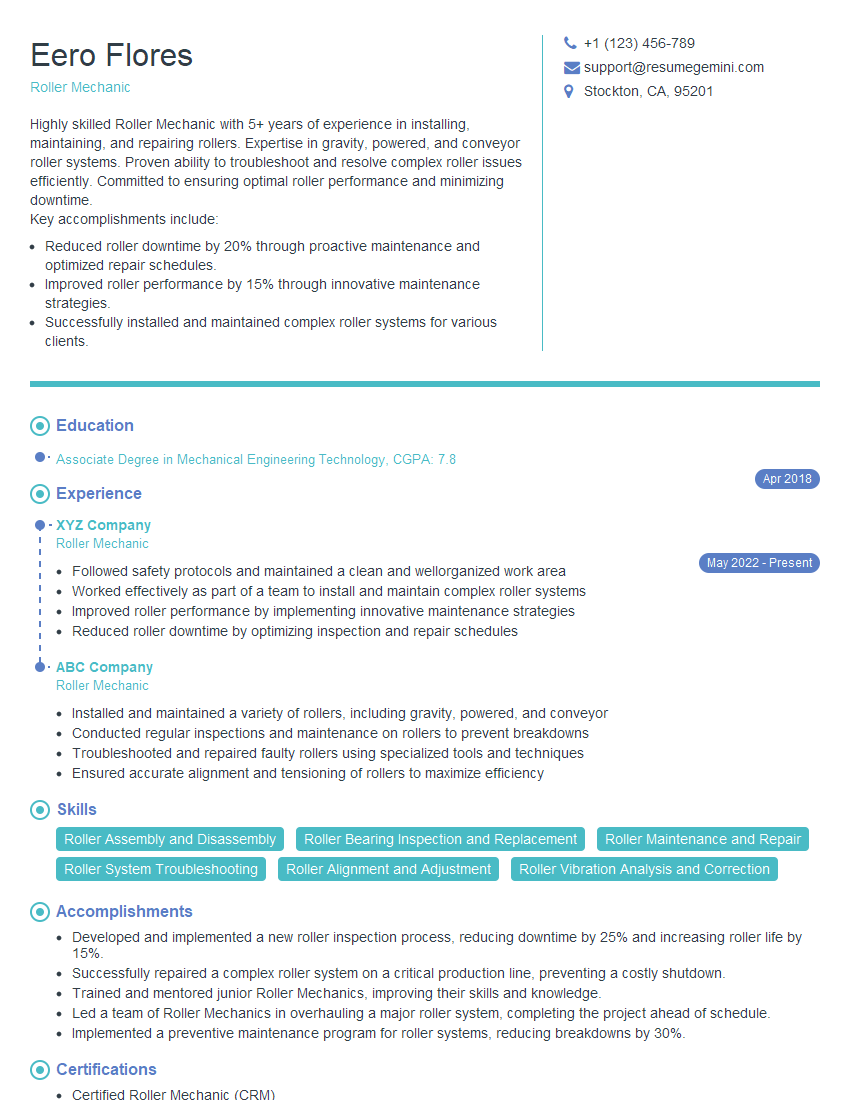
Mastering Roller Preventative Maintenance is crucial for career advancement in many industries. It demonstrates your commitment to efficiency, safety, and cost reduction. To significantly increase your job prospects, create an ATS-friendly resume that highlights your skills and experience effectively. ResumeGemini is a trusted resource to help you build a professional and impactful resume. Examples of resumes tailored to Roller Preventative Maintenance are provided to guide you.
Explore more articles
Users Rating of Our Blogs
Share Your Experience
We value your feedback! Please rate our content and share your thoughts (optional).
What Readers Say About Our Blog
Very informative content, great job.
good