Feeling uncertain about what to expect in your upcoming interview? We’ve got you covered! This blog highlights the most important Rotary Cutter Operation interview questions and provides actionable advice to help you stand out as the ideal candidate. Let’s pave the way for your success.
Questions Asked in Rotary Cutter Operation Interview
Q 1. Describe your experience operating various types of rotary cutters.
My experience with rotary cutters spans over 15 years, encompassing a wide range of models from various manufacturers. I’ve operated everything from small, PTO-driven units ideal for maintaining small acreage to large, heavy-duty models used in extensive land clearing projects. This includes experience with both flail and drum-type rotary cutters. I am proficient in operating both rear-mounted and front-mounted rotary cutters attached to tractors of various horsepower ratings. In my work, I’ve adapted my operation techniques to the specific demands of each machine and the task at hand – from precise trimming around obstacles to aggressive clearing of dense undergrowth.
For instance, I recall a project involving a particularly challenging hillside. A smaller, more maneuverable rotary cutter with a reinforced frame was crucial to safely and efficiently navigate the uneven terrain while achieving a clean cut. Conversely, for large-scale clearing projects, a more powerful model was needed to handle dense brush and larger debris without stalling or experiencing undue wear and tear.
Q 2. Explain the different types of rotary cutter blades and their applications.
Rotary cutter blades come in various types, each suited to specific applications. The most common types are flail blades and drum blades.
- Flail blades are individually mounted and swing freely. This design excels at handling dense vegetation and uneven terrain because the flexible nature of the blades allows for better obstacle avoidance. They are ideal for fine mulching and leaving a relatively smooth finish.
- Drum blades are fixed to a rotating drum. These are more robust and designed for tougher cutting conditions, tackling heavier brush and even small trees. However, they don’t mulch as effectively as flail blades and are less adept at navigating uneven terrain.
- Other blade types include carbide-tipped blades (for extra durability and longevity) and segmented blades (for a more aggressive cut and improved mulching).
The choice of blade type depends entirely on the application. For example, a flail blade would be preferred for maintaining a landscaped area, while a drum blade might be necessary for clearing a heavily overgrown field.
Q 3. How do you perform pre-operational checks on a rotary cutter?
Pre-operational checks are critical for safe and efficient rotary cutter operation. My routine includes the following steps:
- Visual Inspection: I thoroughly examine the cutter for any visible damage, including bent or broken blades, loose bolts, or damaged shields.
- Blade Sharpness: I assess the sharpness of the blades. Dull blades reduce cutting efficiency and increase the risk of damage to the cutter or tractor.
- PTO Shaft Connection: I ensure the PTO shaft is properly connected and secured, checking for any signs of wear or damage on the shaft itself or the universal joints.
- Hydraulic System (if applicable): For hydraulically driven rotary cutters, I check the fluid level and ensure the system operates smoothly. I listen for any unusual noises or leaks.
- Safety Shields: I verify that all safety shields are in place and properly secured. These are crucial for operator protection.
- Operational Checks: I engage the PTO and allow the cutter to run for a short period to confirm smooth operation and absence of unusual vibration.
By meticulously performing these checks before each use, I significantly reduce the risk of accidents or equipment damage.
Q 4. What safety procedures do you follow when operating a rotary cutter?
Safety is paramount when operating a rotary cutter. My safety procedures encompass all phases of operation:
- Personal Protective Equipment (PPE): I always wear appropriate PPE, including safety glasses, hearing protection, sturdy gloves, and steel-toed boots.
- Area Assessment: Before starting, I clear the area of any obstacles such as rocks, debris, or other hazards. I also check for the presence of people or animals.
- Ground Conditions: I assess the ground conditions and ensure the terrain is suitable for operation. I avoid working on extremely steep slopes or uneven surfaces.
- Clear communication: If working with others, clear communication and established procedures are essential.
- Machine Maintenance: Regular maintenance greatly minimizes the risk of accidents. I perform regular inspections and maintenance, keeping the cutter in optimal working order.
- Emergency Procedures: I am always aware of emergency procedures, including how to shut down the equipment quickly in an emergency.
The proper use of safety equipment and procedures minimizes risks and ensures a safe working environment.
Q 5. How do you identify and address common rotary cutter malfunctions?
Identifying and addressing malfunctions quickly is crucial for both safety and efficiency. Common issues I encounter include:
- Blade Damage: Bent or broken blades often result from striking unseen obstacles. These must be replaced immediately.
- Excessive Vibration: This can be indicative of an imbalance, loose bolts, or a bearing problem requiring immediate attention. Running the machine with excessive vibration can cause further damage.
- PTO Problems: Issues with the PTO shaft or clutch can cause the cutter to stop spinning or operate erratically. Thorough inspection and potential replacement might be necessary.
- Hydraulic Leaks (if applicable): Leaks in the hydraulic system should be addressed promptly to avoid fluid loss and potential damage.
My approach to troubleshooting involves a systematic approach: carefully examine the machine to identify the source of the problem, consult the equipment manual for guidance, and, if necessary, seek expert assistance for repairs.
Q 6. Explain the process of changing a rotary cutter blade.
Changing a rotary cutter blade varies slightly depending on the specific model but generally follows these steps:
- Disconnect the PTO: Ensure the tractor PTO is completely disengaged and the rotary cutter is at a complete standstill.
- Secure the Cutter: Use wheel chocks to securely prevent the cutter from moving.
- Access the Blades: Access the blades through the appropriate access points, usually by removing safety shields. Always follow manufacturer’s instructions regarding blade removal.
- Remove the Damaged Blade: Use appropriate tools (usually wrenches or impact wrenches) to remove the damaged blade, paying attention to the sequence to avoid imbalance issues.
- Install the New Blade: Install the new blade, ensuring it is properly aligned and secured with the correct torque specification found in your owner’s manual.
- Reassemble: Reassemble the safety shields and other components, ensuring everything is securely fastened.
- Test: After reassembly, run the cutter at low speed for a short time to ensure proper rotation and absence of unusual vibrations.
It’s crucial to always consult the manufacturer’s instructions, as blade replacement procedures can differ across models. Improper blade installation can lead to imbalance and increase risk of damage or injury.
Q 7. Describe your experience with different types of terrain and their impact on rotary cutter operation.
Terrain significantly impacts rotary cutter operation. Different terrains necessitate adjustments in operating technique and sometimes even the choice of equipment.
- Level Terrain: This is the easiest to work with, allowing for consistent operation at higher speeds.
- Slopes: Operating on slopes requires greater caution, reducing speed and carefully managing the tractor’s position to prevent rollovers. The angle of the slope might also require modifying the cutter’s angle to ensure even cutting.
- Rocky Terrain: Rocks pose a significant risk of damaging blades. Reduced speed and careful maneuvering are essential to avoid striking rocks. Sometimes the use of flail blades is preferred to minimize damage from impact.
- Wet or Muddy Conditions: These conditions significantly increase the risk of getting stuck and reduce cutting efficiency. Using a heavier machine and adapting the cutting technique is often helpful in these situations.
Experience allows for adapting operating techniques to the particular challenges of different terrains and to choosing the right equipment and blades for the task.
Q 8. How do you maintain the proper RPM for different cutting conditions?
Maintaining the correct RPM (revolutions per minute) for a rotary cutter is crucial for efficient cutting and preventing damage. The ideal RPM depends heavily on the type of vegetation, its density, and the cutter’s design. Think of it like adjusting the speed on a blender – you wouldn’t use the same speed for blending ice as you would for a smoothie.
For lighter vegetation like grass, a higher RPM is generally suitable, ensuring a clean cut. However, excessively high RPMs can lead to excessive wear on the blades and potentially damage the cutter itself. Conversely, thicker brush or small saplings require a lower RPM to avoid overloading the engine and damaging the blades. The operator should always consult the rotary cutter’s manual for recommended RPM ranges based on the cutting conditions. Many modern rotary cutters have adjustable RPM settings, allowing for fine-tuning based on the task at hand. Experienced operators often learn to adjust RPMs based on the sound and feel of the machine, recognizing signs of overloading or inefficient cutting.
In practice, I always start with the manufacturer’s recommended RPM for the given conditions. I then closely monitor the engine and the cutter’s performance, making adjustments as needed. If the engine strains, I reduce the RPM. If the cutting is inefficient (e.g., leaving long stalks uncut), I may increase the RPM slightly. Safety is paramount, and it’s better to err on the side of caution and work at a slightly lower RPM if unsure.
Q 9. How do you ensure the safe transportation and storage of a rotary cutter?
Safe transportation and storage of a rotary cutter are essential to prevent accidents and damage. Before transporting, ensure the rotary cutter is securely attached to the towing vehicle, using the appropriate hitch and safety chains. The blades should be disengaged and ideally covered to prevent damage during transit. Never exceed the recommended towing speed.
Once the rotary cutter is transported to the storage location, it should be stored in a safe, dry area away from children and unauthorized personnel. The blades should be covered or the cutter should be stored inside a shed to prevent rust and damage. Regularly inspect the cutter for any signs of wear or damage before and after each use.
For example, I always use a heavy-duty locking pin to secure the PTO shaft, preventing accidental engagement during transport. I also use a dedicated cover designed to fit over the blades, reducing the risk of accidental cuts or damage to the blades.
Q 10. What are the limitations of a rotary cutter, and how do you work around them?
Rotary cutters have limitations. They might struggle with extremely dense vegetation, rocky terrain, or extremely steep slopes. Large diameter stones or hidden objects can damage the blades, leading to significant downtime and repairs. The cutting quality might also be affected by the condition of the blades and the speed of operation.
To work around these limitations, I employ several strategies. For extremely dense vegetation, multiple passes may be necessary. In rocky terrain, I reduce the RPM to minimize damage to the cutter. I thoroughly inspect the area before operating the cutter to identify and avoid potential obstacles, and where conditions warrant, I use a smaller, lighter cutter more suited to the terrain or task.
Sometimes, pre-clearing an area with other tools, such as a brush hog or chainsaw, may be needed before deploying the rotary cutter for a more efficient and less risky operation. Always prioritize safety. If the terrain is too steep or unstable, using a rotary cutter is not an option; an alternative method should be considered.
Q 11. Explain your understanding of rotary cutter PTO (Power Take-Off) systems.
The PTO (Power Take-Off) system is the crucial link between the tractor’s engine and the rotary cutter. It transfers power from the tractor’s transmission to the cutter’s drive shaft, allowing it to operate. The PTO shaft is typically located at the rear of the tractor and has a specific RPM (usually 540 or 1000 RPM, depending on the cutter). The PTO is engaged and disengaged using a lever or button in the tractor’s cab.
Understanding the PTO is crucial for safe and effective operation. Improper engagement or disengagement can cause serious injury or damage to the equipment. Always ensure that the PTO is completely disengaged before leaving the tractor seat or performing any maintenance on the cutter. The PTO shaft has a safety shield which should always be in place to prevent accidental contact.
For instance, I always check the PTO’s engagement before starting the rotary cutter, ensuring a proper connection and alignment with the cutter’s shaft. If there’s even the slightest misalignment or binding, this must be addressed immediately before operation to avoid damage to the PTO system. Regular lubrication and inspection of the PTO shaft are key to its longevity and safe operation.
Q 12. How do you handle unexpected obstacles or emergencies during operation?
Unexpected obstacles or emergencies require immediate and decisive action. If I encounter a large rock or other substantial obstacle, I immediately disengage the PTO and stop the tractor. I carefully assess the situation and clear the obstacle before resuming operation. If a blade breaks or becomes damaged, I again immediately disengage the PTO and stop the tractor. Safety is paramount. I never attempt to repair the cutter while it’s running.
In case of an emergency, such as a fire or a mechanical failure, I immediately disengage the PTO, turn off the tractor, and exit the area to safety. I would then contact emergency services and report the incident as per company policy. Regular maintenance and pre-operational checks significantly reduce the likelihood of such emergencies.
For example, during one operation, I struck a large, hidden rock, bending a blade. I immediately stopped, disengaged the PTO, and inspected the damage. The bent blade needed replacement, requiring the repair to be completed later, off-site.
Q 13. Describe your experience with various rotary cutter attachments.
My experience encompasses a range of rotary cutter attachments, primarily focused on enhancing functionality and versatility. These attachments typically improve the cutter’s capability to handle different terrains or vegetation types.
I’ve worked with different types of blades designed for specific vegetation. For example, heavier blades are used for dense brush and saplings, while lighter, more flexible blades are better for grassy areas. I’ve also worked with various skid shoes or roller attachments, which help protect the cutter from ground contact and improve its maneuverability over uneven terrain.
One specific example involves using a reinforced skid shoe to maintain a consistent cutting height while clearing an overgrown ditch with significant undulations. This prevented the blades from digging into the ground while still maintaining a uniform cut.
Q 14. What are the key differences between flail and disc rotary cutters?
Flail and disc rotary cutters are the two primary types, differing significantly in their cutting mechanisms and resulting applications. Disc rotary cutters use sharp, rotating discs to cut vegetation, creating a clean, chopped finish. Think of a food processor chopping vegetables – the discs create a consistent and relatively fine cut.
Flail cutters, on the other hand, use a series of flails or hammers attached to a rotor. These flails strike the vegetation, causing it to be shredded or pulverized. This is like using a meat tenderizer – it breaks down the material into smaller pieces. Flail cutters excel at dealing with tougher, denser vegetation, producing a more finely mulched result, but they’re generally less efficient in terms of cutting very thick stems or brush.
The choice between the two depends heavily on the intended application. Disc cutters are preferred for cleaner cuts in lighter vegetation, while flail cutters are more suitable for thick brush, rocky terrain or where finer mulching is desired. The choice is largely dictated by the job requirements and the terrain conditions.
Q 15. Explain the importance of regular lubrication and maintenance for a rotary cutter.
Regular lubrication and maintenance are paramount for the longevity and efficient operation of a rotary cutter. Think of it like regular oil changes for your car – neglecting it leads to premature wear and tear, costly repairs, and potentially dangerous malfunctions.
- Lubrication: Reduces friction between moving parts, preventing excessive heat buildup and wear. This is crucial for bearings, gears, and the PTO (Power Take-Off) shaft. I always follow the manufacturer’s recommendations for lubricant type and frequency, which are usually specified in the operator’s manual. For example, using the wrong grease can lead to premature bearing failure.
- Maintenance: This encompasses a wide range of tasks including inspecting blades for sharpness and damage, checking for loose bolts and nuts, cleaning debris from the cutter housing, and ensuring the hydraulic system is functioning correctly. A regular maintenance schedule, perhaps monthly or after a certain number of operating hours, is vital. I always document my maintenance activities, including dates and parts replaced, for record-keeping and warranty purposes.
Failing to properly lubricate and maintain a rotary cutter can lead to significant downtime, expensive repairs, and even injury. A well-maintained cutter performs optimally, resulting in cleaner cuts, increased productivity, and a longer lifespan.
Career Expert Tips:
- Ace those interviews! Prepare effectively by reviewing the Top 50 Most Common Interview Questions on ResumeGemini.
- Navigate your job search with confidence! Explore a wide range of Career Tips on ResumeGemini. Learn about common challenges and recommendations to overcome them.
- Craft the perfect resume! Master the Art of Resume Writing with ResumeGemini’s guide. Showcase your unique qualifications and achievements effectively.
- Don’t miss out on holiday savings! Build your dream resume with ResumeGemini’s ATS optimized templates.
Q 16. How do you determine the appropriate cutting height for different applications?
Determining the appropriate cutting height depends entirely on the application. It’s not a one-size-fits-all situation. For example, preparing a field for planting might require a higher cut to leave enough residue to protect the soil, while mowing a lawn would require a much lower cut.
- Crop residue management: Leaving some crop residue after harvest can help with soil health, moisture retention and weed control. In this case, a higher cut height is often preferred.
- Roadside mowing: Lower cut heights are generally used for roadside mowing to maintain a neat and tidy appearance and to reduce the risk of overgrown vegetation obscuring visibility.
- Hay production: The cutting height for hay production will depend on the type of hay being cut, and the desired stage of maturity of the plant.
Most rotary cutters allow for adjustment of the cutting height, usually via a mechanism that raises or lowers the cutter deck. The specific adjustment method will vary depending on the manufacturer and model. Always refer to your operator’s manual for instructions on adjusting the cutting height, and make sure to check it before beginning any job.
Q 17. How do you manage fuel consumption while operating a rotary cutter?
Fuel consumption in a rotary cutter is heavily influenced by factors like engine size, terrain, cutting height, and the condition of the blades. Efficient fuel management involves optimizing these factors.
- Engine size: A larger engine will consume more fuel, but can also handle tougher jobs more effectively. Choosing the appropriate engine size for the task is key.
- Terrain: Cutting on uneven terrain requires more power and therefore consumes more fuel. If possible, planning the work to minimize uphill climbs and difficult areas can save fuel.
- Cutting height: Higher cutting heights typically reduce fuel consumption as the engine doesn’t need to work as hard.
- Blade condition: Dull or damaged blades require more power to cut effectively, thus increasing fuel consumption. Regular sharpening and replacement are critical.
- Proper operation: Avoid idling for extended periods, as this wastes fuel. Smooth and consistent operation will be more fuel-efficient.
In my experience, regular preventative maintenance and careful operation are the best ways to minimize fuel consumption. Regular engine maintenance also leads to better fuel efficiency.
Q 18. Describe your experience with different types of hydraulic systems used in rotary cutters.
I have extensive experience with various hydraulic systems in rotary cutters, ranging from simpler open-center systems to more complex closed-center systems with load-sensing capabilities.
- Open-center systems: These are typically simpler and less expensive. They constantly circulate hydraulic fluid, even when the cutter isn’t actively cutting. This can lead to some hydraulic fluid loss and slightly lower efficiency.
- Closed-center systems: These systems are more efficient as they only circulate fluid when needed. They usually offer better control and responsiveness. Closed-center systems are often preferred for larger and more powerful rotary cutters.
- Load-sensing systems: These advanced systems only pump the amount of hydraulic fluid needed to meet the load demands. This results in maximum efficiency and reduces fuel consumption. These are commonly found on high-end models.
Understanding the nuances of each system is crucial for effective troubleshooting and maintenance. For instance, a leak in a closed-center system might require a more specialized repair than a leak in an open-center system.
Q 19. What are the environmental considerations when using a rotary cutter?
Environmental considerations are crucial when operating a rotary cutter. The primary concerns revolve around soil erosion, noise pollution, and the potential for fuel and oil spills.
- Soil erosion: Rotary cutting can remove vegetation cover, leaving the soil vulnerable to erosion, especially on slopes. Minimizing disturbance, following appropriate mowing practices, and utilizing best management techniques such as contour plowing when applicable are key to preventing soil erosion.
- Noise pollution: Rotary cutters can be quite noisy. Operating them during appropriate hours, and potentially using noise-reduction measures where feasible can help reduce the impact on nearby residents and wildlife.
- Fuel and oil spills: Spills can contaminate soil and water sources. Regular maintenance checks for leaks, proper fuel storage, and rapid response to any spills are essential.
Responsible operation, coupled with adherence to best practices and environmental regulations, significantly mitigates environmental impacts.
Q 20. How do you ensure compliance with safety regulations during operation?
Safety is paramount in rotary cutter operation. Compliance with regulations starts with thorough operator training and extends to regular equipment inspections and adherence to safety protocols.
- Operator training: I always ensure operators are properly trained on the safe operation of the equipment, including pre-operation checks, emergency shutdown procedures, and awareness of potential hazards.
- Pre-operation checks: Before each use, I meticulously check the machine for any damage, loose parts, or leaks, paying close attention to blades, guards, and hydraulic lines.
- Personal Protective Equipment (PPE): I always insist on the use of appropriate PPE, including eye protection, hearing protection, sturdy footwear, and gloves.
- Environmental awareness: Operating the rotary cutter in safe areas, clear of bystanders and obstructions, is essential.
- Maintenance: Regular maintenance helps to prevent malfunctions that could lead to accidents.
By diligently adhering to safety regulations and best practices, I prioritize the safety of myself and others, minimizing the risk of accidents.
Q 21. Describe your troubleshooting skills related to rotary cutter hydraulics.
Troubleshooting rotary cutter hydraulics requires a systematic approach. I start by carefully observing the problem, then use a process of elimination to identify the cause.
- Listen for unusual noises: Grinding or whining sounds can indicate problems with pumps, motors, or valves.
- Check fluid levels: Low fluid levels often signal leaks. I’ll inspect all lines, connections and components for leaks.
- Examine hydraulic lines: Look for kinks, damage, or loose connections.
- Check for blockages: Debris in the system can restrict flow. I might need to flush the system to clear blockages.
- Test individual components: If necessary, I’ll use diagnostic tools to test individual hydraulic components like the pump, valves, or actuators.
For example, if the cutter won’t raise or lower, I’d first check the fluid level. If it’s low, I’d search for leaks. If the level is fine, I’d then check the hydraulic control valve, the hydraulic pump, and finally the hydraulic lines and actuators for blockages or failures. I always keep a comprehensive collection of hydraulic schematics on hand for such troubleshooting.
Q 22. Explain your understanding of the different types of rotary cutter drives.
Rotary cutter drives can be broadly categorized into two main types: PTO (Power Take-Off) and independent drives. PTO drives are the most common, utilizing the power from a tractor’s engine via its PTO shaft. This shaft rotates the cutter’s gearbox, ultimately spinning the blades. Think of it like a mechanical connection transferring power directly from the tractor to the cutter. This method is reliable and simple, but its cutting capacity is inherently linked to the tractor’s engine power.
Independent drives, on the other hand, incorporate their own engines or motors. These are typically found on larger, more heavy-duty rotary cutters, or those used in situations where a tractor isn’t readily available or practical. This offers greater flexibility regarding operational capacity and location, as the cutter’s performance isn’t reliant on a tractor. For example, a large-scale land clearing operation might use a self-propelled rotary cutter with an independent diesel engine for better maneuverability and control.
- PTO Drives: Simple, reliable, cost-effective, limited by tractor power.
- Independent Drives: More flexible, higher potential cutting capacity, increased operational cost and complexity.
Q 23. How do you perform a post-operational inspection of a rotary cutter?
A thorough post-operational inspection is crucial for maintaining the rotary cutter’s longevity and ensuring operator safety. My routine includes a systematic check of several key components:
- Blade Condition: Inspecting each blade for wear, damage (chips, cracks, bends), and sharpness. Any significant damage necessitates immediate replacement or sharpening.
- Gearbox and Drive System: Checking for leaks, unusual noises, or signs of overheating. Listen carefully for any grinding or whining sounds during operation – this can indicate damage that needs to be resolved before the next use.
- Bolts and Fasteners: Verifying all bolts and fasteners are securely tightened. Loose components can lead to dangerous malfunctions during operation.
- Safety Devices: Inspecting the safety shields, PTO guards, and any other safety mechanisms to ensure they are in perfect working order. Damaged safety devices should never be ignored.
- Hydraulic System (if applicable): Checking for leaks, proper fluid levels, and the overall functionality of the hydraulic components.
- Belt Tension (if applicable): Ensure that belts are properly tensioned for optimal power transfer. Loose belts will slip and could lead to poor performance.
This detailed inspection ensures that the rotary cutter is ready for the next operation, minimizing potential issues and promoting safety.
Q 24. What are the signs of a worn or damaged rotary cutter blade?
Worn or damaged rotary cutter blades exhibit several telltale signs:
- Rounded or Dull Edges: The cutting edge loses its sharpness, resulting in ragged cuts and reduced efficiency. Think of trying to cut with a dull knife – it’s difficult and produces poor results. The blades become less effective at cleanly severing vegetation.
- Chips or Cracks: Impact with rocks or other hard objects can cause chipping or cracking. These defects weaken the blade, making it prone to breakage and potentially causing injury. Any cracks necessitate immediate replacement.
- Bent Blades: Impact can also bend the blades, creating an uneven cutting action and reducing efficiency. Bent blades can also throw debris erratically and create a safety hazard.
- Excessive Vibration: Worn or unbalanced blades cause excessive vibration, creating discomfort for the operator and putting stress on the entire machine, potentially leading to premature failure of other components.
Regular inspection and prompt replacement or sharpening of damaged blades are essential for maintaining cutting performance, safety, and equipment longevity.
Q 25. How do you calculate the fuel efficiency of a rotary cutter operation?
Calculating fuel efficiency in rotary cutter operation involves tracking fuel consumption over a specific area covered. It’s expressed as the amount of fuel used per unit area (e.g., gallons per acre or liters per hectare). The formula is straightforward:
Fuel Efficiency = Total Fuel Consumed / Total Area Cut
For instance, if you used 5 gallons of fuel to cut 2 acres, your fuel efficiency is 2.5 gallons per acre (5 gallons / 2 acres = 2.5 gallons/acre). To get accurate results, you need to:
- Accurately measure fuel consumption: Note the fuel level before and after the operation.
- Precisely measure the area cut: Use GPS technology, survey equipment, or mapping tools to determine the area covered.
- Maintain consistent operating conditions: Factors like cutting height, terrain, and vegetation density significantly impact fuel consumption. Consistent conditions are crucial for reliable comparisons.
Tracking fuel efficiency helps optimize cutting strategies, identify areas for improvement (e.g., sharper blades, optimal cutting height), and ultimately reduce operating costs.
Q 26. Describe your experience with working in diverse weather conditions while operating a rotary cutter.
Operating a rotary cutter in diverse weather conditions requires adaptability and awareness of safety precautions. I have extensive experience working in everything from scorching heat to freezing rain.
Extreme Heat: Working in extreme heat necessitates frequent breaks to avoid dehydration and heatstroke. Proper hydration, wearing light-colored clothing, and utilizing sun protection are crucial. Machines might also overheat faster, so regular monitoring of engine temperature and fluid levels is essential.
Rain and Wet Conditions: Operating in wet conditions significantly reduces traction and increases the risk of accidents. Lowering ground speed, ensuring tire pressure is optimal, and exercising extra caution are critical. The risk of electrical shock also increases and the risk of slips, trips and falls is considerably heightened.
Cold Temperatures: Cold weather requires appropriate protective gear, as well as paying close attention to equipment behavior. Cold temperatures can impact the viscosity of fluids, making them slower to respond; this can impact performance. Proper engine warm-up is essential.
Safety is paramount in all weather conditions. I always prioritize a cautious and methodical approach, adjusting my techniques and using appropriate safety gear to ensure both my safety and the longevity of the equipment.
Q 27. How do you adjust the cutting width of a rotary cutter?
Adjusting the cutting width of a rotary cutter usually involves mechanisms that alter the reach of the cutter’s blades. The specific method depends on the cutter model. Some common methods include:
- Hydraulic Adjustments: Many modern rotary cutters use hydraulic cylinders to adjust the width. These are controlled by levers or switches in the tractor cab, providing smooth and precise control over the cutting width.
- Mechanical Adjustments: Some older models rely on mechanical linkages and pins. This often requires manual adjustments, typically involving pins or bolts that alter the outward reach of the cutting deck. These can require considerable effort.
- Swinging or Folding Mechanisms: Certain cutters have swinging or folding sections that allow for varying cutting widths. These mechanisms typically involve pins or hydraulics to control the expansion or contraction of the cutting deck.
Before any adjustments, consult the owner’s manual for the specific procedures and safety precautions for your rotary cutter model. Incorrect adjustment can damage the equipment or create safety hazards.
Q 28. Explain your experience with using GPS or other technology for precise cutting.
My experience with GPS and other technology for precise cutting has significantly improved efficiency and accuracy.
GPS Guidance Systems: These systems use satellite signals to guide the rotary cutter, maintaining consistent overlaps and preventing missed areas. This is particularly useful in large-scale operations where precise cutting is crucial. The system provides visual or audible signals to guide the operator, maintaining straight lines and minimizing overlap or gaps. The improved accuracy reduces fuel consumption and labor costs.
Mapping and Data Management: Software platforms can record the area cut, fuel consumption, and other operational data. This data is valuable for analysis, optimization of cutting strategies, and for creating accurate records of completed work. This is important for billing purposes and for record-keeping in large-scale projects.
Precision Cutting for Specific Applications: GPS guided rotary cutters allow for precise cutting around obstacles such as trees or existing structures, significantly enhancing the versatility of the operation. This level of precision is not achievable with traditional manual methods.
The integration of technology has significantly advanced the precision and efficiency of rotary cutter operations, making them more cost-effective and environmentally friendly.
Key Topics to Learn for Rotary Cutter Operation Interview
- Machine Operation & Safety: Understanding the operational controls, safety protocols, pre-operational checks (including blade sharpness and lubrication), and emergency shutdown procedures.
- Blade Maintenance & Replacement: Knowing how to inspect, sharpen, and replace blades safely and efficiently, including understanding the different types of blades and their applications.
- Material Handling & Processing: Familiarity with different materials processed by rotary cutters (e.g., grass, brush, timber), understanding optimal cutting heights and speeds for various materials, and safe handling techniques.
- Troubleshooting & Maintenance: Identifying common problems (e.g., blade imbalance, engine issues), performing basic maintenance tasks, and knowing when to seek professional assistance.
- Environmental Awareness: Understanding the impact of rotary cutter operation on the environment (e.g., noise pollution, soil erosion) and best practices for minimizing negative effects.
- Regulations & Compliance: Familiarity with relevant safety regulations and industry best practices for operating rotary cutters.
- Data Recording & Reporting: Understanding the importance of accurate record-keeping of operational data, maintenance logs, and potential incident reports.
Next Steps
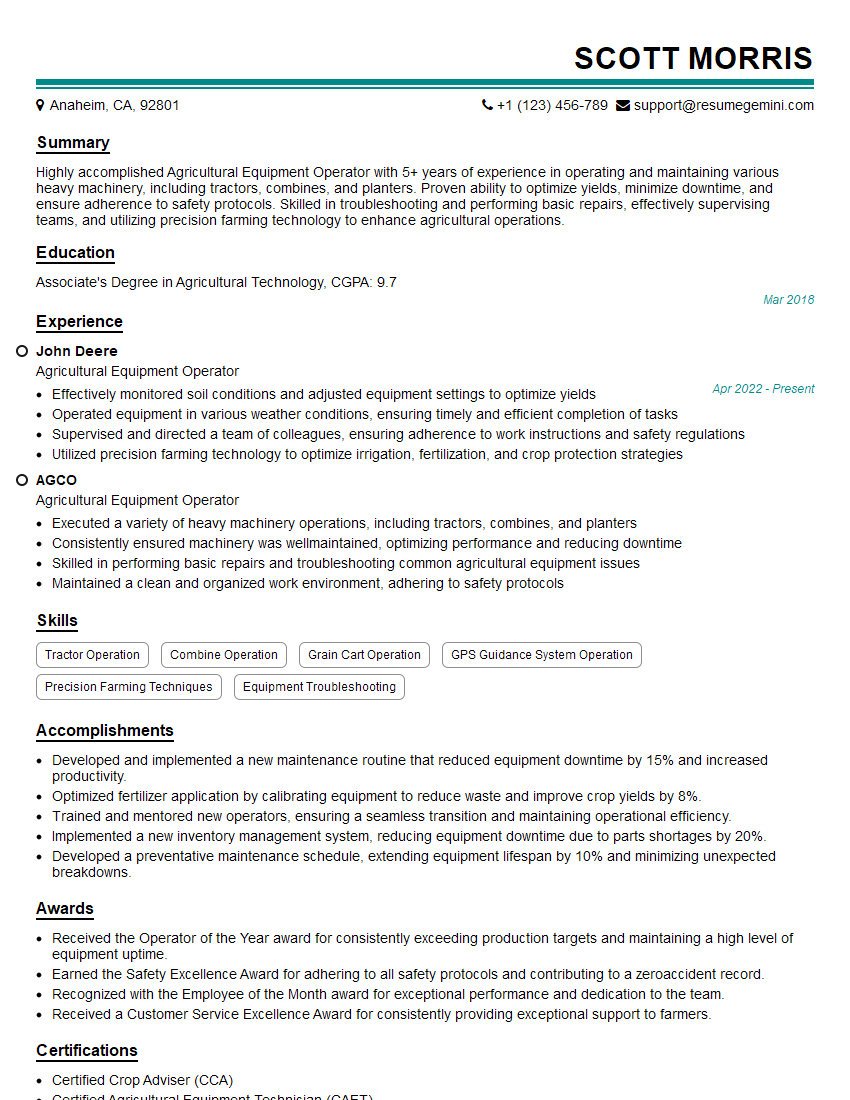
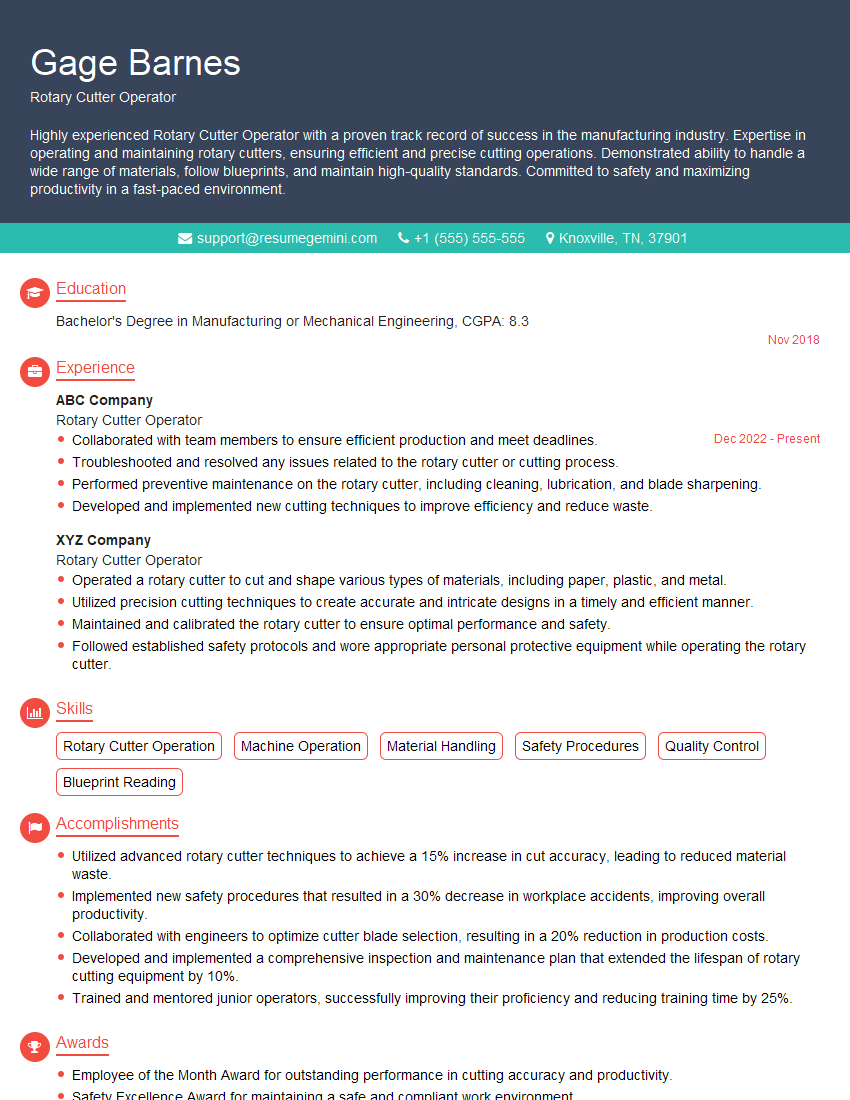
Mastering Rotary Cutter Operation opens doors to diverse and rewarding career opportunities in agriculture, landscaping, and construction. A strong understanding of these principles is highly valued by employers. To maximize your job prospects, creating an ATS-friendly resume is crucial. This ensures your application gets noticed by Applicant Tracking Systems used by most companies. We highly recommend leveraging ResumeGemini, a trusted resource for building professional and effective resumes. Examples of resumes tailored to Rotary Cutter Operation are available to help you craft a compelling application that showcases your skills and experience.


Explore more articles
Users Rating of Our Blogs
Share Your Experience
We value your feedback! Please rate our content and share your thoughts (optional).
What Readers Say About Our Blog
Very informative content, great job.
good