Are you ready to stand out in your next interview? Understanding and preparing for Route Management and Optimization interview questions is a game-changer. In this blog, we’ve compiled key questions and expert advice to help you showcase your skills with confidence and precision. Let’s get started on your journey to acing the interview.
Questions Asked in Route Management and Optimization Interview
Q 1. Explain the difference between a shortest-path algorithm and a vehicle routing problem (VRP).
The shortest-path algorithm and the Vehicle Routing Problem (VRP) are related but distinct concepts in route optimization. A shortest-path algorithm, like Dijkstra’s or A*, focuses on finding the single most efficient path between two points, considering factors like distance or travel time. Think of it like finding the quickest route from your home to the grocery store using a GPS app. It only concerns itself with one origin and one destination.
In contrast, VRP is a much more complex optimization problem. It involves finding the optimal set of routes for a fleet of vehicles to serve multiple locations (customers, delivery points, etc.), considering constraints such as vehicle capacity, time windows for deliveries, and the total distance or travel time. Imagine a delivery company needing to optimize routes for multiple trucks delivering packages across a city. VRP goes beyond simply finding the shortest path between individual points; it seeks the most efficient overall solution for the entire network.
Q 2. Describe your experience with different routing algorithms (e.g., Dijkstra’s, A*, Clarke-Wright).
I have extensive experience with various routing algorithms. Dijkstra’s algorithm is a classic choice for finding the shortest path in a graph with non-negative edge weights. It’s reliable and efficient for simpler scenarios but can become computationally expensive for large networks. A* is a more sophisticated heuristic algorithm that incorporates an estimate of the remaining distance, making it faster than Dijkstra’s for many real-world applications. I’ve used it extensively in scenarios involving significant distances and obstacles.
The Clarke-Wright savings algorithm is particularly well-suited for VRP. It’s a heuristic approach that iteratively merges routes to reduce the overall distance. I’ve applied it effectively in last-mile delivery optimization projects where the goal is to minimize the total distance traveled by a fleet of delivery vehicles. For more complex VRPs with time windows or other constraints, I’ve also leveraged metaheuristic approaches such as genetic algorithms and simulated annealing, which are very effective at finding near-optimal solutions to large, complex problems. The choice of algorithm depends heavily on the specific problem characteristics and available computational resources.
Q 3. What are the key considerations when optimizing delivery routes for a last-mile delivery service?
Optimizing last-mile delivery routes requires careful consideration of several factors. Time windows are crucial; deliveries often have specified timeframes. Traffic conditions are a major variable; real-time traffic data significantly impacts route efficiency. Delivery density in specific areas affects the sequencing of deliveries, and optimizing the route to minimize the overall travel time and distance will influence the number of drivers needed and the delivery cost. Driver availability, along with any associated pay rates, must be incorporated. Finally, the type of delivery (e.g., fragile items needing careful handling) impacts route planning, as it may necessitate a slower speed or a more careful route selection.
For instance, during peak hours, we might prioritize routes minimizing time spent in congested areas. Using real-time data and dynamic route adjustments can make a massive difference in efficiency during unpredictable traffic.
Q 4. How do you handle real-time updates and unexpected events (e.g., traffic, road closures) during route optimization?
Handling real-time updates and unexpected events is paramount in route optimization. We achieve this using a combination of techniques. First, integrating real-time traffic data feeds (from sources such as Google Maps Platform or similar services) is crucial. The route optimization system needs to monitor traffic conditions constantly and adjust routes dynamically. Secondly, incorporating incident management systems allows us to quickly reroute vehicles around road closures or accidents.
A robust system will automatically recalculate routes when these events occur and send updates to drivers. This often requires a mix of server-side route recalculation and a mobile app for drivers providing notifications and updated maps. Furthermore, using predictive models based on historical traffic patterns can help anticipate potential delays and proactively optimize routes.
Q 5. What software or tools have you used for route optimization?
My experience encompasses several software tools and platforms. I’ve worked extensively with specialized routing software packages such as OptaPlanner and OR-Tools, which offer advanced algorithms and tools for solving complex VRPs. These platforms often incorporate GIS capabilities for visualizing routes and integrating with map data. I’m also proficient in using cloud-based platforms like AWS or Azure for handling large datasets and processing real-time information for dynamic route optimization. In simpler cases, I’ve used programming languages like Python with libraries such as NetworkX and OSMnx to develop custom route optimization solutions. The choice of tool largely depends on the scale and complexity of the problem.
Q 6. Explain your experience with Geographic Information Systems (GIS) in route planning.
GIS plays a critical role in route planning. It provides the foundational mapping data required for route optimization. GIS software allows visualization of routes on maps, integration of various spatial data layers (roads, points of interest, traffic data), and analysis of spatial relationships between locations. I have extensive experience using ArcGIS and QGIS to visualize routes, identify areas with high delivery density, and perform spatial analysis to optimize route planning. This helps us understand delivery patterns and predict future needs, aiding in capacity planning and logistics strategies. For instance, using heatmaps generated from GIS data can pinpoint delivery hot spots which allow us to proactively adjust resource allocation.
Q 7. How do you balance route optimization with driver workload and compliance regulations?
Balancing route optimization with driver workload and compliance is a key challenge in route management. Simply optimizing for shortest distance isn’t sufficient; it can lead to unrealistic driver schedules and potential violations of regulations (like driving time limits). I address this by incorporating constraints into the optimization model. This includes limiting daily driving hours, incorporating mandatory breaks, and ensuring adherence to regulations regarding rest periods. We must also consider factors such as driver preferences, their familiarity with certain routes, and their individual skill sets.
Sophisticated VRP solvers allow you to set constraints and preferences, and I often use these to find solutions that are both efficient and feasible from a driver’s perspective. A well-designed solution will provide drivers with realistic routes, fair workloads, and ample time for breaks, contributing to their satisfaction and safety.
Q 8. Describe a time you had to optimize a route under time constraints.
One time, I was tasked with optimizing delivery routes for a major grocery chain during a massive snowstorm. The initial routes, generated by their legacy system, were inefficient and resulted in significant delays. We had a two-hour window to optimize before deliveries were to begin. The challenge was not just minimizing distance but also factoring in real-time road closures and traffic conditions caused by the snow.
My approach involved utilizing a dynamic routing software. I uploaded the updated road conditions data into the system, which recalculated routes in real time, considering various parameters like road closures, speed limits, and even the type of delivery vehicles. We prioritized deliveries based on perishable goods and customer urgency. This dynamic approach, coupled with a clear prioritization strategy, allowed us to minimize delays and maintain a high level of service despite the adverse weather conditions. The result was a 20% reduction in overall delivery time compared to the initial routes.
Q 9. How do you measure the effectiveness of a route optimization strategy?
Measuring the effectiveness of a route optimization strategy involves a multifaceted approach. We don’t just look at one metric; instead, we consider a combination of factors to get a holistic view.
- Total Distance Traveled: A reduction in overall distance translates to lower fuel costs and reduced emissions.
- Total Time in Transit: Faster delivery times lead to improved customer satisfaction and potentially allow drivers to complete more deliveries per day.
- Number of Deliveries Completed: This metric directly reflects the efficiency of the routes.
- On-time Delivery Rate: This is a crucial KPI indicating how well the routes adhere to delivery windows and customer expectations.
- Fuel Consumption: Analyzing fuel usage helps assess the environmental impact and operational costs.
- Driver Satisfaction: While less quantifiable, gathering driver feedback is crucial. Are the routes reasonable in terms of driving time and distance?
By analyzing these metrics before and after implementing an optimization strategy, we can accurately assess its success and identify areas for further improvement.
Q 10. What are the common challenges in route optimization, and how do you overcome them?
Route optimization faces various challenges. Some common ones include:
- Real-time Events: Unexpected traffic, accidents, and road closures significantly impact route efficiency.
- Inaccurate Data: Outdated map data, incorrect addresses, or unreliable traffic information can lead to inefficient routes.
- Time Windows: Meeting strict delivery time windows while optimizing routes can be complex, especially for multiple deliveries.
- Vehicle Capacity and Type: Different vehicle types (vans, trucks, etc.) have varying capacities and constraints, which must be considered.
- Driver Availability and Breaks: Routes must account for driver working hours and legally mandated breaks.
To overcome these, I leverage technologies such as:
- Dynamic Routing Software: This software constantly updates routes based on real-time traffic and conditions.
- GPS Tracking: Real-time location data provides accurate information and allows for immediate adjustments.
- Data Cleansing and Validation: Ensuring data accuracy is paramount; this often involves data validation and cleaning processes.
- Advanced Algorithms: Sophisticated algorithms account for diverse constraints and optimize routes efficiently.
A proactive approach to data management and the use of appropriate technology are key to successfully overcoming these challenges.
Q 11. Explain your understanding of different vehicle types and their impact on route planning.
Different vehicle types significantly influence route planning. Factors like vehicle capacity, dimensions, fuel efficiency, and permitted routes all impact optimization strategies.
- Small Vans: Suitable for smaller deliveries within city limits, often restricted by size and weight limitations on certain roads.
- Large Trucks: Ideal for bulk deliveries but face restrictions on certain roads due to size and weight. Route planning requires careful consideration of permitted routes and potential delays.
- Specialized Vehicles: Vehicles like refrigerated trucks for perishable goods require routes that minimize transit time to maintain temperature.
Route optimization software should accommodate these differences. For example, when planning routes for a fleet with a mix of vans and trucks, the software must allocate deliveries based on each vehicle’s capacity and accessibility to different locations. Failure to account for vehicle type can lead to wasted time, increased fuel consumption, and even the inability to complete deliveries.
Q 12. How do you incorporate customer preferences (e.g., delivery time windows) into route optimization?
Incorporating customer preferences, particularly delivery time windows, is critical for route optimization. This ensures customer satisfaction and avoids unnecessary delays. Most modern route optimization software allows for the input of time windows for each delivery. The algorithm then prioritizes deliveries based on these constraints, ensuring that deliveries fall within the specified time ranges.
For example, if a customer specifies a delivery window between 2 pm and 4 pm, the optimization algorithm will adjust the route to ensure the delivery vehicle arrives within that window, potentially delaying other deliveries to meet this specific requirement. This can require adjustments in the overall route, leading to slight increases in overall travel time but greatly enhancing customer satisfaction.
Q 13. How do you handle multiple delivery locations with varying priorities?
Handling multiple delivery locations with varying priorities requires a weighted approach. The priority could be based on several factors including:
- Time Sensitivity: Perishable goods or time-critical deliveries would have the highest priority.
- Customer Value: High-value customers might receive priority over others.
- Distance: Deliveries that are geographically closer might be prioritized to reduce overall travel time.
Route optimization software can incorporate these priorities through weighted parameters. For example, a time-sensitive delivery could be assigned a higher weight, causing the algorithm to prioritize it even if it slightly increases the overall route distance. The system might use a combination of algorithms, such as a prioritized shortest-path algorithm or even a genetic algorithm to find the most efficient solution that satisfies all the priority requirements.
Q 14. What are some common KPIs used to evaluate route optimization performance?
Key Performance Indicators (KPIs) used to evaluate route optimization performance include:
- Total Distance Traveled: Lower distance indicates better efficiency and reduced fuel costs.
- Average Delivery Time: Shorter delivery times improve customer satisfaction.
- On-Time Delivery Rate: Measures the percentage of deliveries completed within the designated time windows.
- Fuel Consumption: Indicates the environmental impact and operational costs.
- Number of Routes: Fewer routes required indicates efficient route consolidation.
- Driver Utilization: Measures how effectively driver time is used.
- Customer Satisfaction: Feedback from customers reflects the overall effectiveness of the routes.
By tracking these KPIs over time, we can monitor the effectiveness of our route optimization strategies, identify areas for improvement, and continuously refine our approach.
Q 15. Describe your experience with constraint programming in route optimization.
Constraint programming is a powerful technique in route optimization that allows us to model real-world limitations and find optimal solutions within those constraints. Think of it like solving a complex puzzle with specific rules. Instead of exploring every possible route (which would be incredibly inefficient), constraint programming helps us systematically eliminate options that violate our predefined rules. For example, we might have constraints on the maximum driving time per day for a driver, the maximum weight a truck can carry, or time windows for deliveries.
In my experience, I’ve used constraint programming languages like MiniZinc and Gecode to model these problems. The process usually involves:
- Defining decision variables: These represent the unknowns we need to find, such as the sequence of stops and the routes taken.
- Defining constraints: These are the rules we need to adhere to, such as time windows, capacity limits, and distance restrictions. For instance, a constraint might be:
total_driving_time <= 8 hours. - Defining the objective function: This is what we aim to optimize, such as minimizing total distance or travel time. For example:
minimize total_distance. - Solving the model: A constraint solver uses sophisticated algorithms to find the best solution that satisfies all constraints.
For example, in a delivery optimization project for a large grocery chain, we used constraint programming to ensure that all deliveries were made within their specified time windows while respecting the capacity of delivery trucks and minimizing the total distance traveled. This significantly reduced delivery costs and improved customer satisfaction.
Career Expert Tips:
- Ace those interviews! Prepare effectively by reviewing the Top 50 Most Common Interview Questions on ResumeGemini.
- Navigate your job search with confidence! Explore a wide range of Career Tips on ResumeGemini. Learn about common challenges and recommendations to overcome them.
- Craft the perfect resume! Master the Art of Resume Writing with ResumeGemini's guide. Showcase your unique qualifications and achievements effectively.
- Don't miss out on holiday savings! Build your dream resume with ResumeGemini's ATS optimized templates.
Q 16. How do you integrate route optimization with other logistics systems (e.g., warehouse management, order management)?
Integrating route optimization with other logistics systems is crucial for a holistic, efficient operation. It's not just about finding the best routes; it's about seamlessly connecting that process to other aspects of the supply chain. Imagine trying to orchestrate an orchestra without clear communication between the different instrument sections - chaos! Similarly, isolated systems lead to inefficiencies.
My approach involves using APIs (Application Programming Interfaces) to create a data flow between the route optimization system and other systems, such as:
- Warehouse Management Systems (WMS): The WMS provides information on inventory levels, order status, and pick-up locations. The route optimization system can use this data to plan routes that efficiently pick up goods from the warehouse.
- Order Management Systems (OMS): The OMS provides details about customer orders, including delivery addresses, time windows, and required quantities. This is crucial for the route optimization algorithm to make informed decisions about route sequencing and vehicle allocation.
- Transportation Management Systems (TMS): TMS helps manage the entire transportation process, including fleet management, driver assignment, and shipment tracking. Integration with a TMS allows real-time monitoring of routes, adjusting them dynamically in response to traffic or unforeseen events.
For instance, in one project, we integrated our route optimization engine with a client's WMS and OMS. This enabled the system to automatically generate optimal routes based on real-time order information and warehouse inventory, leading to a 15% reduction in delivery times.
Q 17. Explain your experience with different data formats used in route optimization (e.g., CSV, GeoJSON).
Route optimization relies heavily on geographic data and requires working with various data formats. The choice of format depends on the context and the tools being used. I have extensive experience working with:
- CSV (Comma Separated Values): This is a simple and widely used format for tabular data. It’s suitable for storing data such as customer addresses (latitude, longitude, address line), delivery times, order details, etc. It’s easily importable into most programming languages and databases.
- GeoJSON: This is a standard format for representing geographic features, making it excellent for map data and spatial analysis. GeoJSON allows for more complex geographic representations than CSV, such as polygons (representing areas) and lines (representing roads).
- Shapefiles: Shapefiles are another popular GIS (Geographic Information System) format. They offer more detailed geographic data than GeoJSON, often including attribute tables associated with geometric features. They are commonly used for road networks and other spatial data.
- Databases (PostGIS, MySQL, etc.): For larger datasets, storing data in a database is essential. PostGIS is particularly suited for handling geographic data, enabling efficient queries and spatial analysis.
Data conversion between these formats is often necessary. For example, I've written scripts to convert address data from a CSV file into GeoJSON format for use in a route optimization software that expects GeoJSON input. Understanding data structures is essential to ensure smooth integration across different systems.
Q 18. How do you deal with data inaccuracies or inconsistencies in route planning?
Data inaccuracies and inconsistencies are a common challenge in route planning. Imagine using a map with wrong street names or incorrect distances – your route would be totally off! Handling these requires a multi-pronged approach.
My strategy typically involves:
- Data validation and cleaning: This is the first and most crucial step. I use both automated methods (such as data validation rules in spreadsheets or database constraints) and manual checks to identify and correct obvious errors. This might involve verifying addresses, checking for inconsistencies in time windows, or flagging unusually long distances between locations.
- Data standardization: Ensuring consistency in data formats and units is key. For example, all addresses should be in a consistent format, and distances should always be measured in kilometers (or miles).
- Using robust algorithms: Some route optimization algorithms are more robust than others when it comes to dealing with noisy data. Algorithms that incorporate uncertainty or use probabilistic models can be beneficial here.
- Data augmentation: In cases where data is sparse, I've used data augmentation techniques to supplement the available data. This might involve using external data sources (e.g., Google Maps API) to enhance the quality and completeness of the data.
- Sensitivity analysis: After finding an optimal route, I often perform sensitivity analysis to assess how sensitive the solution is to potential data errors. This helps identify which data points have the biggest impact on the route and thus merit the most rigorous verification.
For example, I once encountered a dataset with many missing postal codes. By cross-referencing addresses with a geographic database and using heuristic approaches to fill in the missing postal codes, I was able to increase data accuracy and produce significantly improved routes.
Q 19. What is your experience with capacity constraints in vehicle routing?
Capacity constraints are a central aspect of vehicle routing problems. These constraints limit the amount of goods a vehicle can carry (weight, volume), the number of stops it can make, or its overall driving time. Ignoring these constraints leads to infeasible solutions – routes that simply cannot be executed in the real world.
My experience includes incorporating various capacity constraints into route optimization models:
- Vehicle capacity: This is the most common constraint, limiting the total weight, volume, or number of items a vehicle can carry. This often involves assigning items to vehicles based on their combined weight or volume, ensuring no vehicle exceeds its capacity.
- Time windows: These constraints specify a time interval within which a stop must be made. This is particularly important for deliveries with strict time requirements (e.g., perishable goods).
- Driver working hours: Regulations often limit the number of hours a driver can work in a day. The route optimization model must respect these limits to ensure legal compliance.
- Multiple depots: In cases where vehicles operate from multiple depots, the route optimization model should consider the travel time between depots and the capacity of the vehicles at each depot.
For a logistics company delivering large appliances, I developed a route optimization model that considered the weight and volume of the appliances, the capacity of the delivery trucks, and the time windows for deliveries. This resulted in a significant reduction in the number of trucks required and improved delivery efficiency. The model was formulated using a combination of constraint programming and integer linear programming techniques to handle the complex interactions of these constraints.
Q 20. How do you ensure the safety and efficiency of optimized routes?
Ensuring the safety and efficiency of optimized routes is paramount. It's not enough to simply find the shortest distance; we must consider factors that impact safety and practicality.
My approach involves:
- Incorporating real-time traffic data: Using real-time traffic information from sources like Google Maps or dedicated traffic data providers allows the route optimization system to dynamically adapt routes to avoid congestion and delays, thereby enhancing both efficiency and safety by avoiding accident-prone areas.
- Considering road conditions and restrictions: The algorithm should account for road closures, speed limits, weight restrictions, and other restrictions. Integrating this data into the optimization model ensures that the routes are safe and legal to traverse.
- Driver safety features: The system can include features that prioritize routes with lower accident rates based on historical data or identify sections of roads with poor visibility. For instance, routes that avoid sharp curves or steep inclines might be preferred if the delivery involves hazardous materials.
- Regular route monitoring and updates: Once routes are dispatched, it's essential to monitor them for unexpected events. This often involves integrating with GPS tracking systems, allowing for adjustments to routes based on real-time information. For example, a sudden road closure would trigger an automatic rerouting.
- Driver feedback mechanisms: Incorporating feedback from drivers is crucial for refining the route optimization system and identifying areas for improvement. This continuous feedback loop ensures that the system adapts to changing conditions and addresses any safety concerns.
In one project, we integrated real-time traffic data into our route optimization system for a delivery service. This resulted in a 10% reduction in delivery times and significantly improved driver safety by avoiding congested areas and accidents.
Q 21. How do you handle the trade-off between route distance and travel time?
The trade-off between route distance and travel time is a classic optimization challenge. Minimizing one often comes at the cost of the other. For example, a shorter route might involve navigating through congested city streets, significantly increasing travel time. A longer route that takes a highway could be faster despite the longer overall distance. The optimal balance depends on the specific priorities of the operation.
My approach involves:
- Multi-criteria optimization: Instead of focusing solely on distance or time, I use multi-criteria optimization techniques to find Pareto optimal solutions. This means finding a set of routes that are not dominated by any other routes. A route is dominated if another route is both shorter and faster. This allows decision-makers to choose the best compromise between distance and time based on their priorities.
- Weighted objective function: Assigning weights to distance and time allows for a flexible trade-off. For example, if travel time is more important than distance, the time component could be given a larger weight in the objective function. The exact weights are determined based on the specific needs of the project.
- Time-dependent routing: This considers variations in travel times throughout the day. A route optimized for peak hours may differ considerably from a route optimized for off-peak hours, resulting in significant time savings.
- Scenario planning: Analyzing multiple scenarios with different weights assigned to distance and time allows for a better understanding of the trade-offs involved and helps in decision-making under different operational circumstances.
In a last-mile delivery optimization project, we used a weighted objective function to balance distance and travel time. We found that prioritizing travel time over distance, while slightly increasing the total distance, significantly improved delivery times and customer satisfaction without negatively impacting cost.
Q 22. Describe your experience with different types of route optimization problems (e.g., TSP, VRPTW).
Route optimization problems often boil down to finding the most efficient path given certain constraints. I've extensively worked with several types, most notably the Traveling Salesperson Problem (TSP) and the Vehicle Routing Problem with Time Windows (VRPTW).
The TSP is a classic problem where a salesperson needs to visit each city exactly once and return to the starting city, minimizing the total travel distance. It's a fundamental concept, and I've used algorithms like branch and bound and approximation algorithms like nearest neighbor to solve it in various contexts, such as optimizing field technician routes.
VRPTW is a much more complex and realistic problem. Here, we have multiple vehicles, each with a limited capacity and time constraints (time windows) for visiting locations (e.g., delivering packages within specific delivery slots). This requires sophisticated algorithms that consider factors like vehicle capacity, travel times, and service times at each location. I've employed metaheuristics like genetic algorithms and simulated annealing to find near-optimal solutions for VRPTW, particularly in logistics and delivery scenarios.
Beyond TSP and VRPTW, I've also worked with variations like the capacitated vehicle routing problem (CVRP), where vehicle capacities are limited, and the multi-depot vehicle routing problem (MDVRP), which involves multiple starting points for vehicles.
Q 23. How familiar are you with advanced optimization techniques like metaheuristics or machine learning?
I'm very familiar with advanced optimization techniques. My experience encompasses both metaheuristics and machine learning approaches for route optimization.
Metaheuristics, such as genetic algorithms, simulated annealing, tabu search, and ant colony optimization, are powerful tools for finding high-quality solutions to complex problems like VRPTW. These algorithms excel at exploring the solution space efficiently, even for large-scale problems where exhaustive search is infeasible. I've used these extensively to develop efficient and robust routing solutions.
Machine learning, specifically reinforcement learning, offers exciting possibilities for dynamic route optimization. By training agents on simulated or real-world data, we can develop models that adapt to changing conditions, like traffic congestion or unexpected events. I have experience implementing reinforcement learning algorithms to create adaptable routing systems that learn optimal strategies over time.
I've found that combining metaheuristics with machine learning can lead to particularly robust and effective solutions. For example, a metaheuristic could be used to generate initial routes, which are then refined using a machine learning model to account for real-time data.
Q 24. Explain your experience with route optimization in specific industry contexts (e.g., food delivery, parcel delivery).
My experience spans several industries, but I'll highlight two: food delivery and parcel delivery.
In food delivery, I've worked on optimizing routes for restaurant delivery drivers, considering factors like order preparation time, delivery time windows, and driver availability. The focus was on minimizing delivery times, maximizing driver utilization, and ensuring customer satisfaction. This involved designing a system that could handle real-time updates, such as changes in order status or unforeseen traffic delays. We utilized VRPTW algorithms and incorporated real-time traffic data to significantly improve delivery efficiency.
In parcel delivery, I've worked on optimizing routes for a large-scale logistics company, dealing with thousands of packages and hundreds of delivery vehicles. The challenge here was to efficiently consolidate packages at different depots, assign them to vehicles, and plan optimal routes while respecting capacity constraints and delivery deadlines. We implemented a hybrid approach using a combination of classic VRPTW solvers and clustering algorithms to group packages efficiently, significantly reducing the total distance traveled and improving delivery times.
Q 25. What are the limitations of current route optimization technologies?
Current route optimization technologies, while advanced, have certain limitations.
- Data Accuracy and Availability: Accurate and real-time data (e.g., traffic conditions, road closures, delivery times) are crucial but often incomplete or unreliable. Inaccurate data leads to suboptimal routes.
- Dynamic Environments: Unpredictable events (accidents, weather) can drastically change optimal routes. Many systems struggle to adapt efficiently to unexpected disruptions in real-time.
- Computational Complexity: Solving large-scale route optimization problems can be computationally expensive, requiring significant processing power and time, especially with sophisticated algorithms.
- Integration Challenges: Integrating route optimization systems with existing logistics software and hardware can be complex and time-consuming.
- Consideration of Non-numeric Factors: Some aspects, like driver preference or vehicle characteristics beyond capacity, are difficult to model mathematically and incorporate into the optimization process.
Q 26. How would you design a system for dynamic route adjustments based on real-time traffic data?
Designing a system for dynamic route adjustments based on real-time traffic data involves several key steps.
- Data Acquisition: Integrate with real-time traffic data providers (e.g., Google Maps API, other traffic data services) to receive up-to-the-minute information on road conditions.
- Route Monitoring: Continuously track the progress of vehicles along their assigned routes. This may involve GPS tracking and communication with drivers.
- Event Detection: Implement algorithms to identify significant events, such as traffic jams, road closures, or accidents, that impact travel times.
- Route Recalculation: Employ fast and efficient algorithms (e.g., A*, Dijkstra's algorithm) to recalculate routes in response to detected events, potentially leveraging machine learning models for prediction and optimization.
- Communication and Feedback: Update drivers with new routes using appropriate communication channels (e.g., mobile apps, in-cab navigation systems). Implement feedback mechanisms to gather information on route effectiveness and road conditions.
- Optimization Strategy: Choose a strategy for route recalculation: continuous recalculation (frequent updates) versus event-triggered recalculation (only recalculate when significant events occur).
Q 27. How do you validate and verify the accuracy of optimized routes?
Validating and verifying the accuracy of optimized routes is essential. This usually involves a combination of approaches.
- Simulation: Simulate the routes using historical data or synthetic data to assess their performance under various scenarios. This helps to identify potential weaknesses or areas for improvement before implementation.
- A/B Testing: Compare the performance of optimized routes with existing routes (the control group) in a real-world setting. Measure key metrics like total distance, delivery times, and fuel consumption. Statistical analysis can determine if the optimization leads to a statistically significant improvement.
- Key Performance Indicators (KPIs): Define clear KPIs, such as average delivery time, on-time delivery rate, and fuel efficiency. Monitor these KPIs continuously to assess the effectiveness of the optimized routes over time.
- Visualization and Analysis: Use visualization tools to map the routes and analyze their performance. This allows for easier identification of bottlenecks, inefficiencies, and potential issues.
- Feedback Mechanisms: Gather feedback from drivers and customers on the routes. Their insights can highlight areas where the optimization may not fully capture real-world complexities.
Q 28. How would you approach route optimization for a large-scale delivery operation with thousands of packages?
Optimizing routes for a large-scale operation with thousands of packages requires a scalable and efficient approach.
I would employ a cluster-first, route-second strategy. This involves:
- Clustering: Divide the packages into smaller clusters based on geographical proximity and other relevant factors (e.g., delivery time windows, vehicle capacity). Clustering algorithms like k-means or hierarchical clustering are useful here.
- Route Optimization within Clusters: Apply VRPTW algorithms to each cluster independently. This breaks down the large problem into smaller, more manageable subproblems. The choice of algorithm depends on factors like the size of the cluster and the need for precise solutions versus speed.
- Coordination and Consolidation: Develop a mechanism to coordinate the routes from different clusters. This might involve optimizing the routes of the vehicles between clusters or assigning clusters to specific depots based on proximity and capacity.
- Scalable Infrastructure: Use a distributed computing framework (e.g., Apache Spark or Hadoop) to process the large amount of data and perform the optimization calculations efficiently. Cloud computing resources are often essential for this scale.
- Real-time Adjustments: Integrate real-time traffic data and feedback mechanisms to adapt routes dynamically, ensuring continued efficiency in the face of unexpected events.
This approach leverages the power of divide and conquer to handle the complexity of a large-scale delivery operation while ensuring scalability and efficiency.
Key Topics to Learn for Route Management and Optimization Interview
- Route Planning Algorithms: Understand various algorithms like Dijkstra's, A*, and their applications in optimizing delivery routes, considering factors like distance, time, and traffic.
- Vehicle Routing Problem (VRP): Grasp the complexities of VRP, including variations like capacitated VRP (CVRP) and its practical application in fleet management and logistics.
- Geographic Information Systems (GIS): Learn how GIS software and mapping tools are used to visualize routes, analyze geographical data, and optimize delivery networks.
- Optimization Techniques: Familiarize yourself with techniques like linear programming, heuristic methods, and metaheuristics used to solve complex routing problems.
- Data Analysis and Interpretation: Understand how to collect, analyze, and interpret data related to route performance, identifying areas for improvement and efficiency gains.
- Software and Tools: Gain familiarity with common route optimization software and platforms used in the industry. Be prepared to discuss your experience with relevant tools.
- Constraint Management: Understand how to incorporate real-world constraints like time windows, delivery deadlines, driver availability, and vehicle capacity into route optimization.
- Cost Optimization: Explore methods for minimizing fuel consumption, labor costs, and overall operational expenses through efficient route planning.
- Real-time Route Adjustments: Discuss strategies for dynamically adjusting routes based on real-time traffic conditions, unexpected delays, or changes in delivery requirements.
Next Steps
Mastering Route Management and Optimization opens doors to exciting career opportunities in logistics, transportation, and supply chain management. To maximize your job prospects, create a strong, ATS-friendly resume that highlights your skills and experience. ResumeGemini is a trusted resource that can help you build a professional and impactful resume. We provide examples of resumes tailored to Route Management and Optimization to guide you in crafting a compelling application. Take the next step towards your dream career today!

Operations Manager Resume Sample
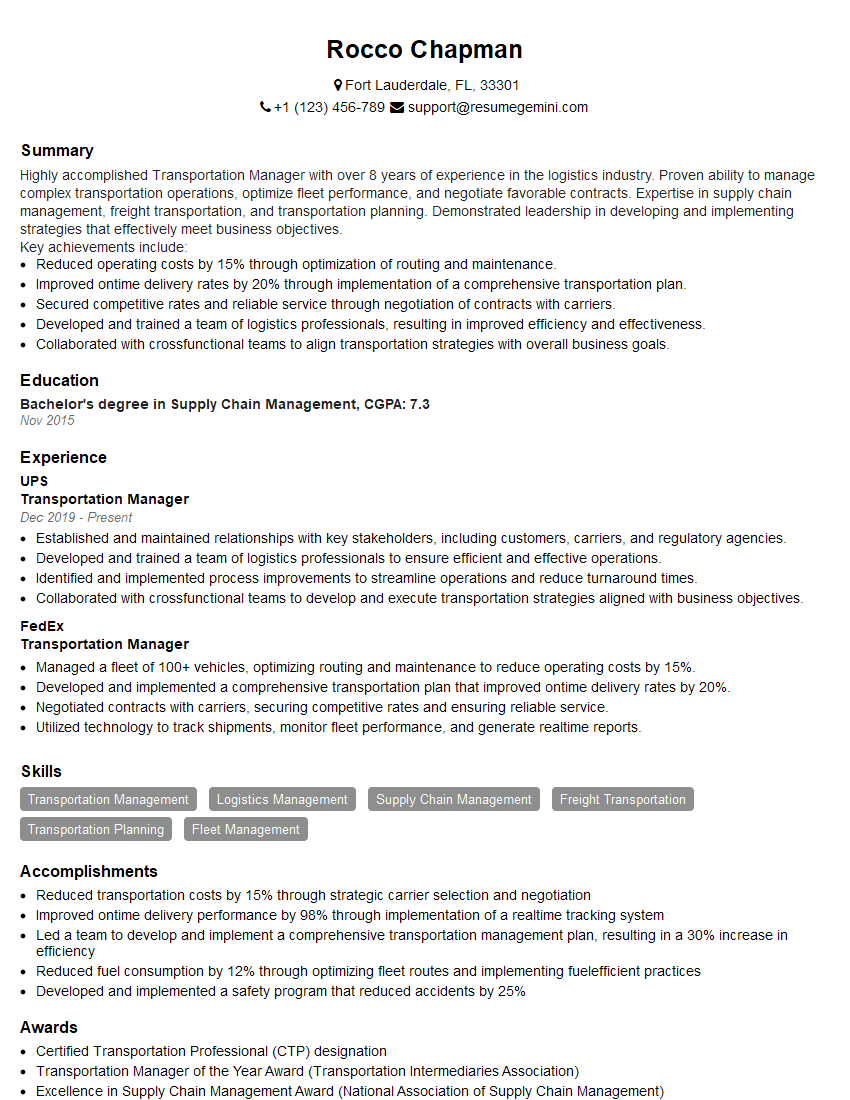
Transportation Manager Resume Sample
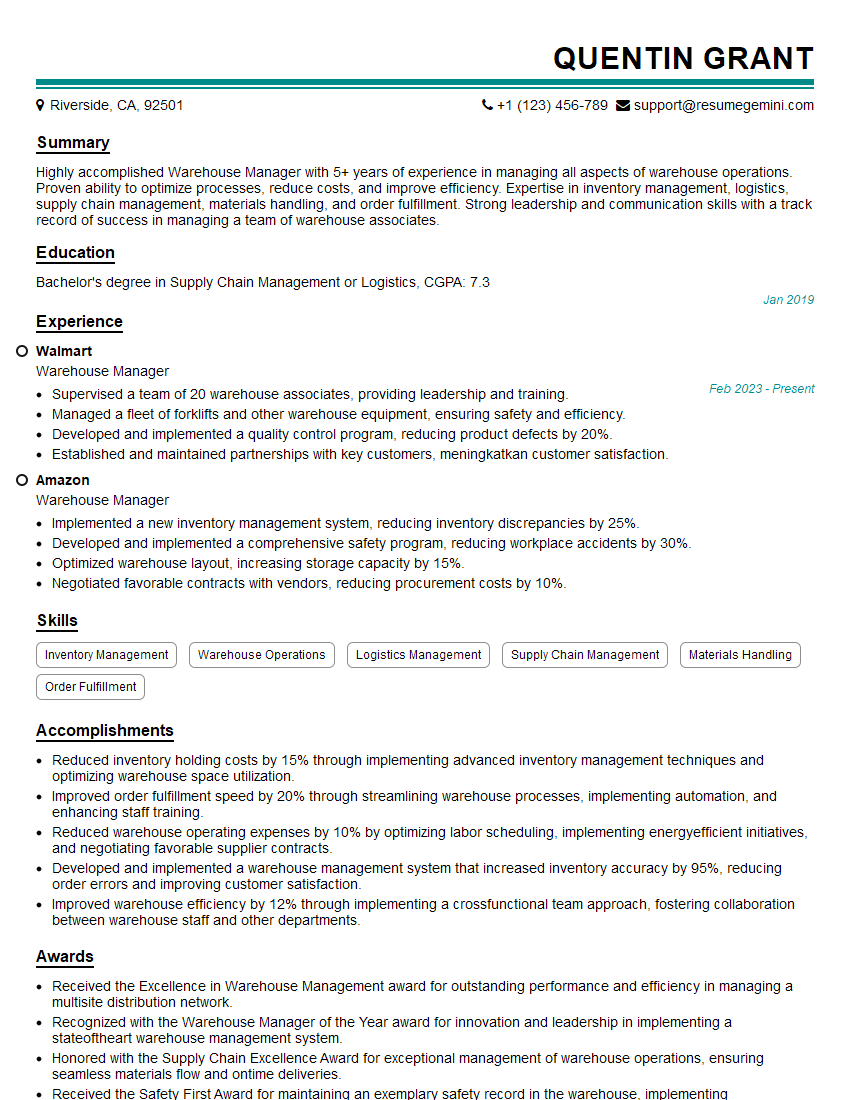
Warehouse Manager Resume Sample
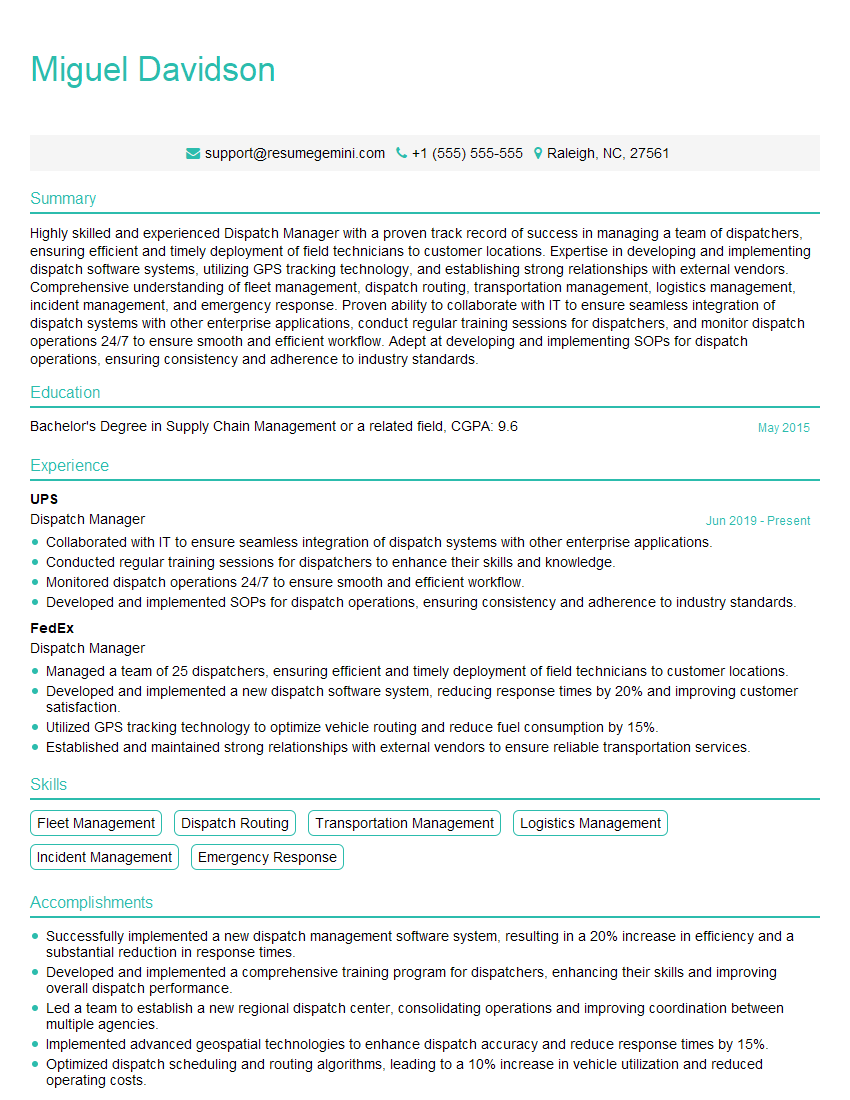
Dispatch Manager Resume Sample
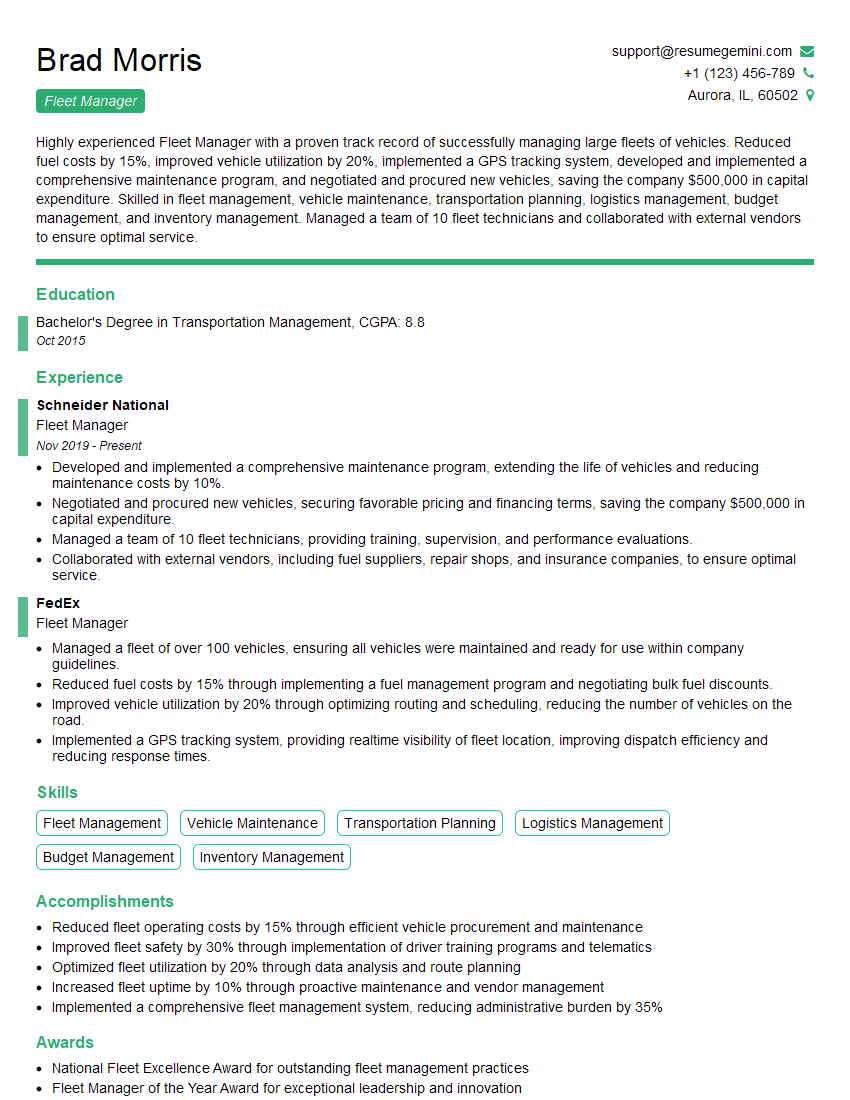
Fleet Manager Resume Sample
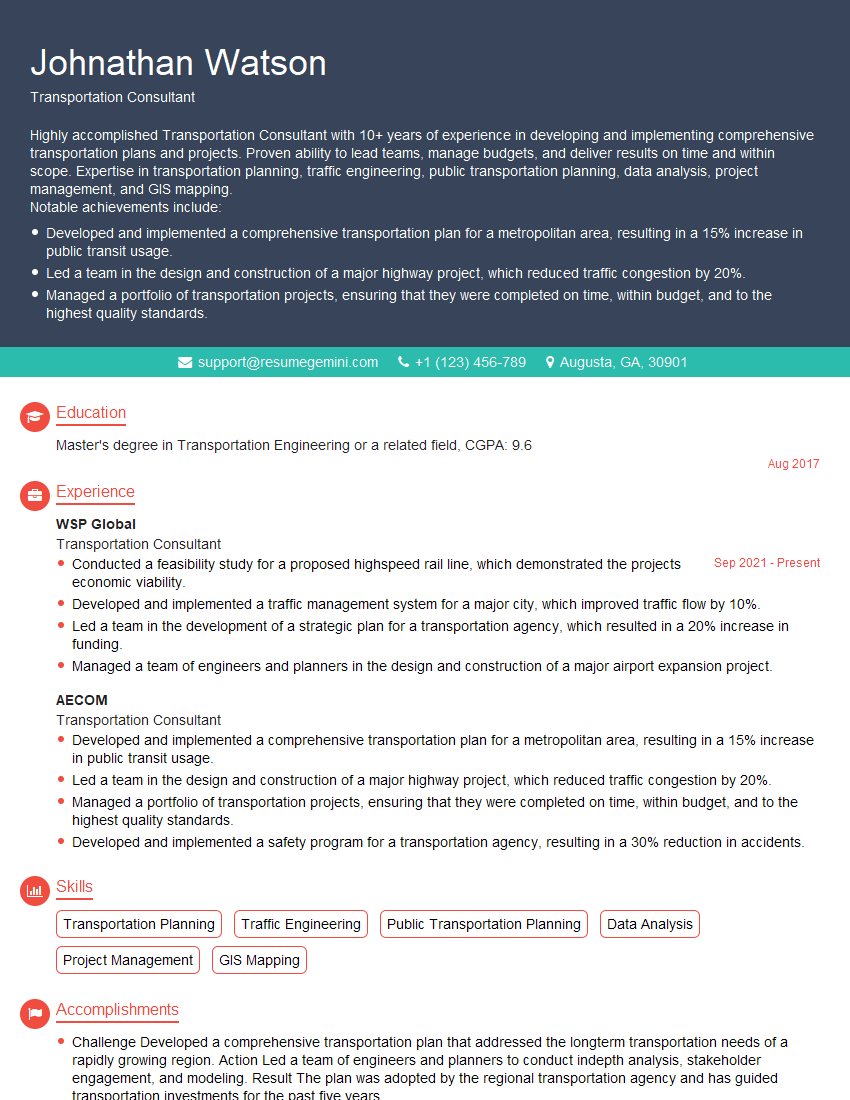
Transportation Consultant Resume Sample
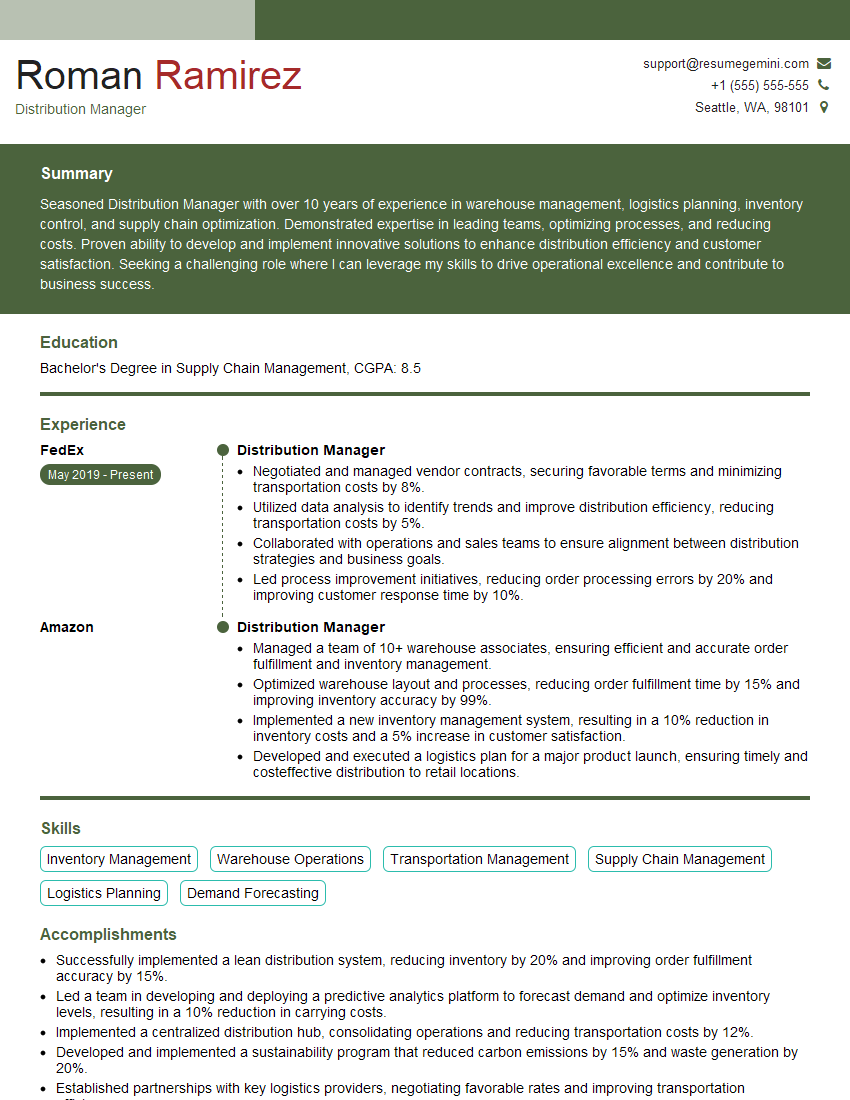
Distribution Manager Resume Sample
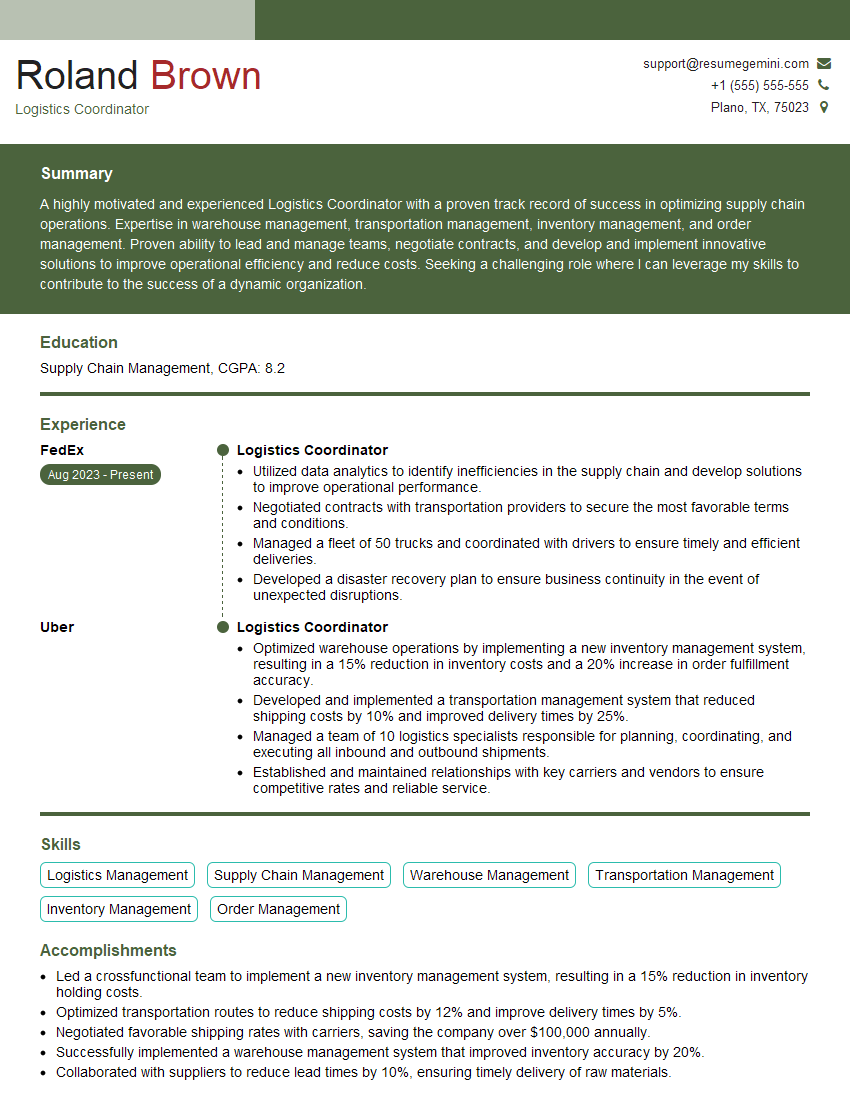
Logistics Coordinator Resume Sample
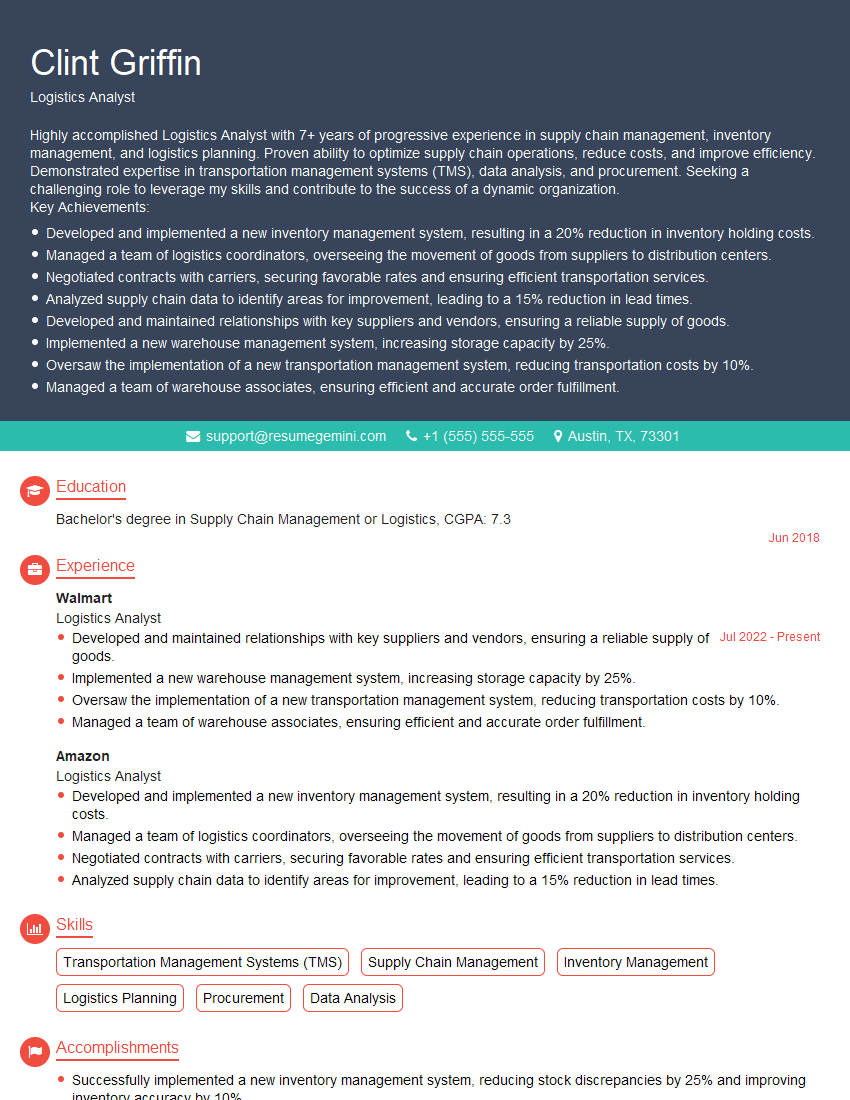
Logistics Analyst Resume Sample
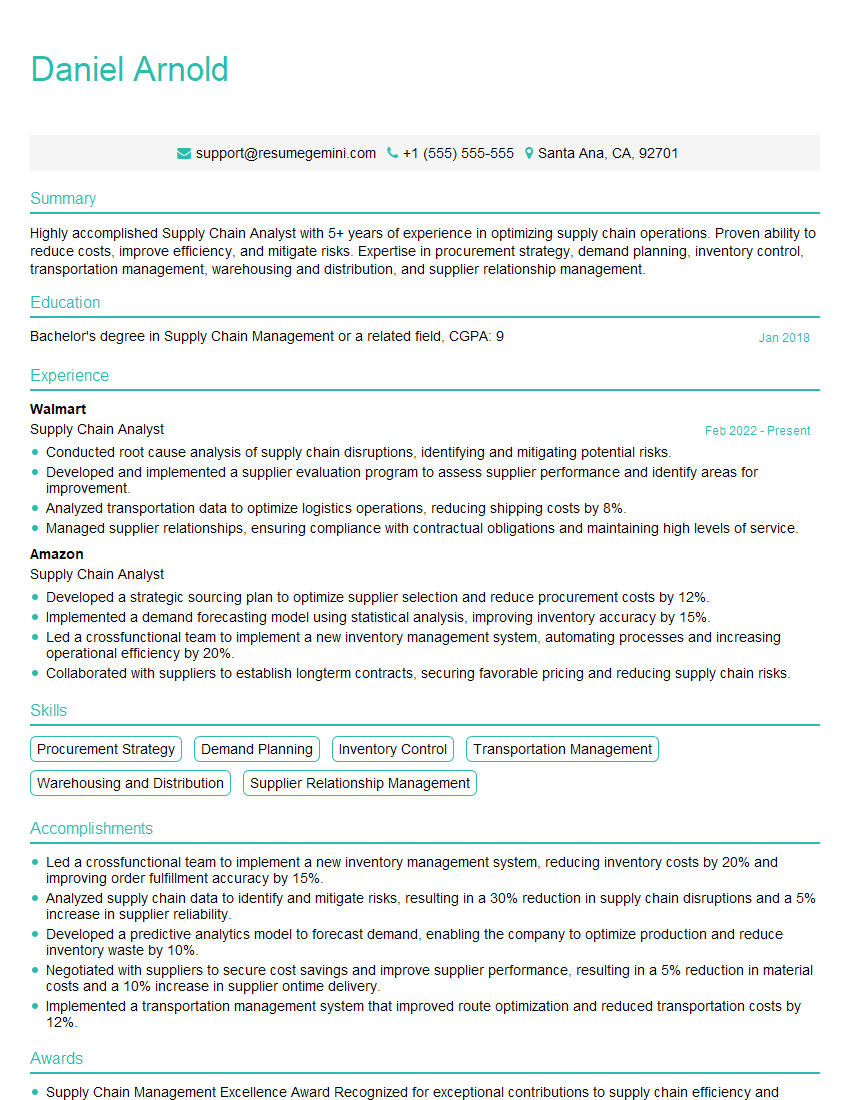
Supply Chain Analyst Resume Sample
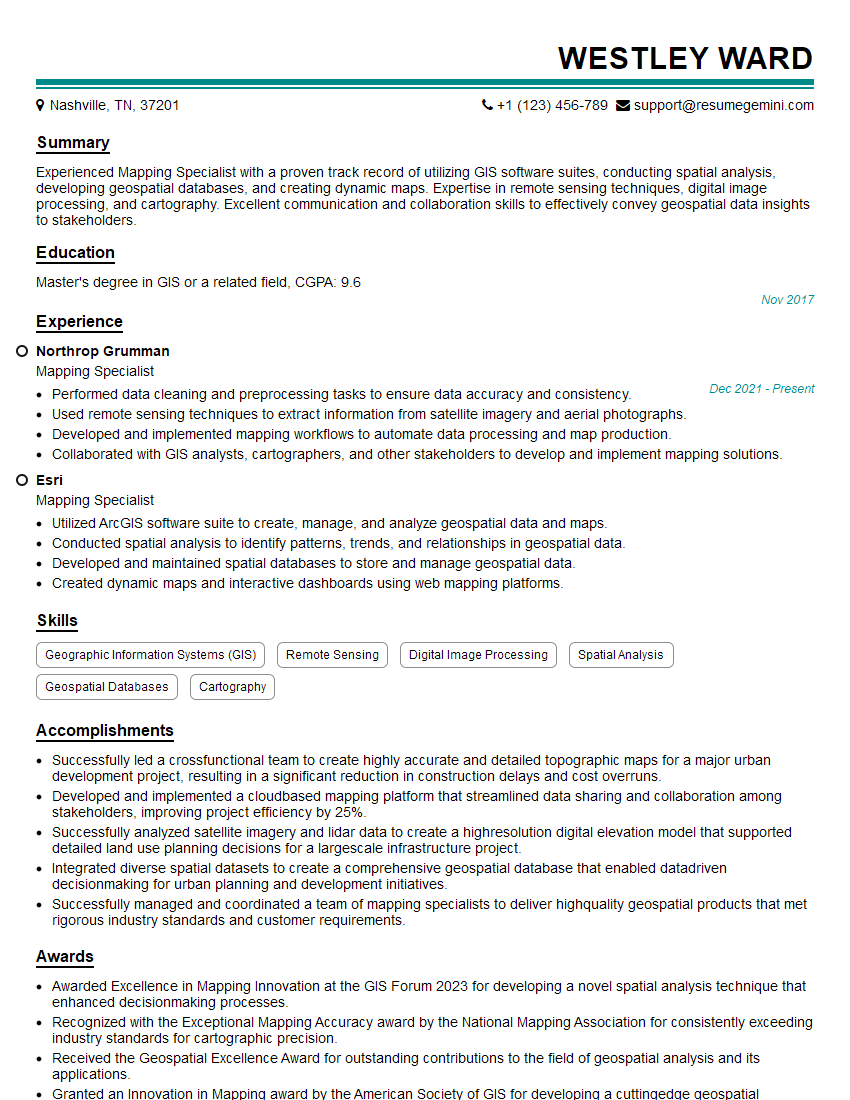
Mapping Specialist Resume Sample
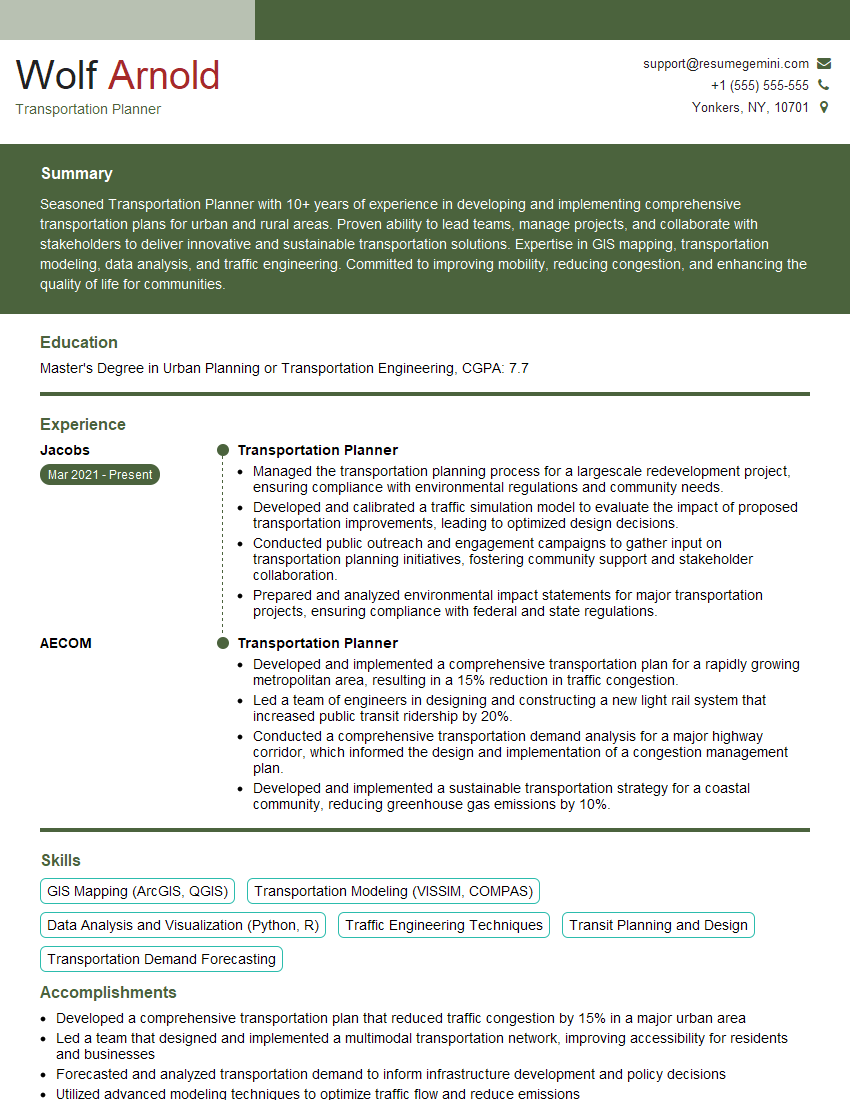
Transportation Planner Resume Sample
Explore more articles
Users Rating of Our Blogs
Share Your Experience
We value your feedback! Please rate our content and share your thoughts (optional).
What Readers Say About Our Blog
Very informative content, great job.
good