Unlock your full potential by mastering the most common Ceramic Fabrication Techniques interview questions. This blog offers a deep dive into the critical topics, ensuring you’re not only prepared to answer but to excel. With these insights, you’ll approach your interview with clarity and confidence.
Questions Asked in Ceramic Fabrication Techniques Interview
Q 1. Explain the difference between dry pressing and isostatic pressing in ceramic fabrication.
Both dry pressing and isostatic pressing are powder compaction techniques used in ceramic fabrication to shape green bodies before firing. However, they differ significantly in how pressure is applied.
Dry Pressing: This is a uniaxial pressing method where ceramic powder is compacted in a die under pressure applied from a single direction, typically using a mechanical press. Think of it like making a cookie – you press the dough down from the top. This results in higher density in the direction of the press, and often lower density at the edges and center. It’s simple, relatively inexpensive, and suitable for mass production of simple shapes.
Isostatic Pressing: In contrast, isostatic pressing uses a fluid (usually water or gas) to apply pressure uniformly to the ceramic powder enclosed in a flexible mold (rubber or similar material). This ensures even compaction throughout the part, leading to a more homogenous green body and superior mechanical properties after firing. Imagine submerging a balloon filled with powder in a pressurized chamber – pressure is applied from all sides. This method is more versatile for complex shapes and can produce near-net-shape parts, minimizing machining needs.
In short: Dry pressing is simpler, cheaper, and good for simple shapes, while isostatic pressing provides superior homogeneity, better mechanical properties, and is better suited for complex geometries, but is more expensive.
Q 2. Describe the process of slip casting and its applications.
Slip casting is a ceramic forming technique that utilizes a suspension of ceramic particles in a liquid medium, known as a ‘slip’. The slip is poured into a porous mold, and the water is absorbed by the mold, leaving behind a solid ceramic layer. This process is repeated until the desired wall thickness is achieved.
The Process: First, a fine ceramic powder is mixed with a liquid (often water) and a deflocculant to create a stable slip. This slip is then poured into a plaster mold. The plaster mold absorbs water from the slip, causing a layer of solid ceramic particles to build up on the mold’s inner surface. Once the desired thickness is reached, excess slip is poured out, and the mold is allowed to dry. The solidified ceramic piece can then be carefully removed from the mold.
Applications: Slip casting is widely used for producing intricate, hollow shapes, such as teacups, vases, and sanitary ware. Its ability to create complex geometries efficiently makes it a favored technique for artistic and industrial applications. It’s particularly advantageous when producing numerous identical parts.
Q 3. What are the common types of ceramic defects and how can they be minimized?
Ceramic defects can significantly impact the final properties and performance of the ceramic product. Common types include:
- Porosity: The presence of pores (small holes) within the ceramic body. High porosity reduces strength, durability, and can hinder watertightness. Minimization involves careful control of the processing parameters, like compaction pressure and sintering temperature.
- Cracking: Formation of cracks during drying or firing due to uneven shrinkage. Strategies include slow drying rates, appropriate binder selection, and precise thermal profiles during firing.
- Voids: Larger, irregularly shaped cavities that are usually due to poor powder packing during compaction. Careful particle size distribution and effective de-airing during processing help reduce voids.
- Inclusions: Foreign materials trapped within the ceramic matrix. Maintaining cleanliness during powder preparation and processing is essential to avoid inclusions.
- Grain Boundary Defects: Imperfections at the boundaries between individual ceramic grains. Controlling the sintering process and using additives to promote grain growth can mitigate these defects.
Minimizing defects requires a meticulous approach to all stages of ceramic processing, from raw material selection and powder preparation to shaping, drying, and firing.
Q 4. Explain the importance of particle size distribution in ceramic powder processing.
Particle size distribution (PSD) plays a crucial role in determining the properties of green and final ceramic bodies. A well-defined PSD is essential for achieving optimal packing density, minimizing porosity, and enhancing the mechanical strength of the final product.
Importance: A mixture of fine and coarse particles allows for efficient packing, where fine particles fill the voids between the coarser ones. This leads to higher green density, and consequently, a denser sintered ceramic with improved strength. An uneven PSD, on the other hand, can lead to poor packing, increased porosity, and weak final parts.
Practical example: Imagine trying to pack marbles of varying sizes into a jar. A mix of small and large marbles will pack much more densely than using only large marbles. Similarly, in ceramic processing, a well-distributed PSD leads to denser packing, resulting in a superior final product.
Q 5. What are the different types of kilns used in ceramic firing and their applications?
Various kilns are employed for ceramic firing, each with its advantages and disadvantages:
- Electric Kilns: Offer precise temperature control and uniform heating, making them suitable for high-quality ceramics, especially fine art and technical applications. They are generally more expensive than gas kilns.
- Gas Kilns: Utilize natural gas or propane as a fuel source. They provide good temperature control and rapid heating, but can be less precise than electric kilns. They’re often preferred for large-scale industrial production due to their lower operational costs.
- Tunnel Kilns: Continuous kilns where ware is transported through different temperature zones on a conveyor belt. Ideal for high-volume production and can achieve high throughput, making them cost-effective in mass production.
- Downdraft Kilns: The firing chamber is heated from below. The heat flows down through the ware, resulting in even heating, commonly used for various types of ceramics.
The choice of kiln depends on factors such as production volume, required temperature precision, fuel costs, and the type of ceramic being fired.
Q 6. Describe the process of glazing ceramics and the factors affecting glaze quality.
Glazing is the process of applying a vitreous coating to a ceramic body to enhance its aesthetics, durability, and functionality. This coating melts and fuses to the ceramic surface during firing, creating a smooth, waterproof, and often decorative layer.
The Process: Glazes are typically suspensions of powdered materials (silica, alumina, fluxes, etc.) in water. They can be applied using various methods such as dipping, spraying, or brushing. The glazed ware is then fired at a specific temperature, causing the glaze to melt and form a glassy layer.
Factors Affecting Glaze Quality:
- Glaze Composition: The specific ratio of ingredients determines the glaze’s properties like color, texture, and durability.
- Firing Temperature: Incorrect firing temperature can result in an underfired (dull) or overfired (blistered) glaze.
- Application Technique: Uniform application is crucial for a consistent glaze layer; uneven application can cause streaking or pinholing.
- Body-Glaze Compatibility: The thermal expansion coefficients of the ceramic body and glaze must be compatible to prevent cracking or crazing.
Achieving high-quality glazing requires a deep understanding of glaze chemistry and firing parameters.
Q 7. Explain the concept of sintering and its importance in ceramic fabrication.
Sintering is a heat treatment process where compacted ceramic powders are heated to a high temperature (but below the melting point of the main constituents), causing them to bond together and form a solid, dense body. This process is fundamental in ceramic fabrication because it significantly enhances the mechanical strength, density, and other properties of the ceramic product.
Importance: Sintering is crucial because it transforms the relatively weak green body (the unfired compacted powder) into a strong, dense, and durable ceramic component. The process involves several steps including particle rearrangement, neck formation between particles, pore reduction, and grain growth. The final microstructure strongly influences the mechanical and physical properties of the ceramic.
Think of it like this: Imagine a pile of sand. Individually, the sand grains are loose and easily separated. Sintering is like heating the sand until the grains fuse together, forming a solid block that’s much stronger and more resistant to external forces. This analogy applies to ceramic powder, which is transformed into a solid, functional ceramic component through the sintering process.
Q 8. What are the different types of ceramic bonds and their properties?
Ceramic bonds determine the strength and other properties of a ceramic body. They are essentially the forces holding the individual ceramic particles together. The key types are:
- Ionic Bonds: These bonds arise from the electrostatic attraction between oppositely charged ions. Think of table salt (NaCl): the positive sodium ions and negative chloride ions strongly attract each other, forming a crystalline structure. In ceramics, ionic bonds contribute significantly to strength and hardness but can make the material brittle. Examples include Alumina (Al2O3) and Zirconia (ZrO2).
- Covalent Bonds: These bonds involve the sharing of electrons between atoms. This results in strong, directional bonds, often leading to higher hardness and melting points. Silicon carbide (SiC) is a prime example, showcasing exceptional hardness due to strong covalent bonds.
- Metallic Bonds: While less common in purely ceramic materials, metallic bonds can be present in cermets (ceramic-metal composites). These bonds involve a ‘sea’ of delocalized electrons shared among metal atoms, contributing to ductility and electrical conductivity.
- Van der Waals Bonds: These are weak, secondary bonds arising from fluctuating dipoles in atoms or molecules. They play a minor role in ceramics, primarily influencing properties like interlaminar bonding in layered materials.
The relative strength and type of bonds present significantly influence a ceramic’s overall properties like hardness, toughness, and thermal shock resistance. For example, a ceramic with predominantly ionic bonds will generally be harder but more brittle than one with a higher proportion of covalent bonds.
Q 9. How do you ensure quality control throughout the ceramic fabrication process?
Quality control in ceramic fabrication is paramount. It involves a multi-stage approach ensuring the final product meets the specified requirements. This begins with:
- Raw Material Characterization: Analyzing the purity, particle size distribution, and chemical composition of starting powders using techniques like XRD (X-ray Diffraction) and SEM (Scanning Electron Microscopy) is critical. Variations in these parameters can significantly affect the final product’s properties.
- Process Monitoring: During mixing, milling, and shaping, parameters like slurry viscosity, particle packing density, and drying rate are meticulously monitored and controlled. This often requires specialized equipment like rheometers and particle size analyzers.
- In-Process Inspection: Regular checks during stages like tape casting or pressing are crucial to catch defects early. This might include visual inspection for cracks or dimensional deviations, or more sophisticated techniques like ultrasonic testing for internal flaws.
- Firing/Sintering Control: The sintering process is particularly sensitive, with temperature and time precisely controlled to optimize densification and microstructure. Precise temperature profiles are crucial to prevent cracking or warping.
- Final Inspection: The finished components undergo rigorous testing. This includes measuring dimensions, density, mechanical properties (strength, fracture toughness), and microstructure analysis to ensure conformity to standards.
Statistical Process Control (SPC) is often employed to track and minimize variations throughout the process, ensuring consistent high-quality products.
Q 10. Explain the significance of rheology in ceramic slurry preparation.
Rheology is the study of the flow and deformation of matter. In ceramic slurry preparation, it’s crucial because the slurry’s flow behavior directly impacts the quality of the formed component. A well-behaved slurry with appropriate rheological properties is essential for achieving uniform thickness, minimizing defects, and ensuring proper casting or molding.
Key rheological properties of interest include:
- Viscosity: This is a measure of a fluid’s resistance to flow. Controlling viscosity ensures consistent casting thickness and prevents settling or segregation of particles within the slurry.
- Yield stress: This is the minimum stress required for the slurry to begin flowing. It’s important in preventing sagging during casting or printing.
- Thixotropy: This refers to a slurry’s ability to regain its viscosity after shearing. This property is beneficial during casting as it maintains the slurry’s shape after it’s poured.
Rheological modifiers, such as dispersants and binders, are often added to control the slurry’s rheological properties. A rheometer is used to measure these properties and ensure that the slurry has the optimal characteristics for the chosen fabrication method.
Q 11. What are the different methods for measuring the density of a ceramic component?
Measuring the density of a ceramic component is crucial for assessing its quality and identifying potential defects such as porosity. Common methods include:
- Archimedes’ Principle (Water Displacement): This classic method involves weighing the component in air and then submerged in water. The difference in weight, along with the density of water, allows for calculation of the component’s density. This is a relatively simple and widely used technique.
- Pycnometry: This method uses a pycnometer, a precisely calibrated glass vessel, to determine the volume of a known mass of the ceramic material. The density is then calculated using the mass and volume. Pycnometry is more accurate than water displacement, particularly for porous materials.
- Helium Pycnometry: Similar to traditional pycnometry, but uses helium gas instead of a liquid. This method is particularly useful for measuring the density of porous materials with high precision, as helium can penetrate smaller pores.
- X-ray Computed Tomography (CT): Advanced imaging technique that can provide 3D density maps of the component, allowing for detailed analysis of porosity and density variations.
The choice of method depends on the desired accuracy, the porosity of the material, and the resources available. For routine quality control, Archimedes’ principle might suffice, whereas research applications often necessitate the higher accuracy of helium pycnometry or CT scanning.
Q 12. Describe the principles of tape casting and its advantages.
Tape casting is a widely used ceramic fabrication technique where a ceramic slurry is cast onto a moving carrier film to form a thin, green tape. The principles involve carefully controlling the slurry rheology, doctor blade gap, and drying process to obtain a uniform, crack-free tape of the desired thickness.
The process typically involves:
- Slurry preparation: The ceramic powder is mixed with a binder, solvent, plasticizer, and dispersant to create a slurry with the appropriate rheological properties.
- Tape casting: The slurry is poured onto a moving substrate (typically a polymer film) and spread evenly using a doctor blade to control tape thickness.
- Drying: The wet tape is then dried slowly to remove the solvent, avoiding cracks. Controlled drying conditions are important for minimizing stress buildup.
- Debinding (if necessary): The binder is removed by pyrolysis before sintering.
- Sintering: The tape is then subjected to high-temperature sintering to densify the material and achieve the desired final properties.
Advantages of tape casting include:
- Precise thickness control: Highly uniform tapes with thicknesses down to a few micrometers can be produced.
- High throughput: It’s a relatively fast and efficient method for producing large quantities of green tapes.
- Complex shapes: Green tapes can be laminated or co-fired to create complex multilayer structures.
- Good reproducibility: With careful process control, excellent reproducibility can be achieved.
Tape casting is used extensively in the production of electronic components, fuel cells, and various other advanced ceramic applications.
Q 13. What are the safety precautions associated with handling ceramic materials and equipment?
Working with ceramic materials and equipment requires careful attention to safety. Several key precautions must be followed:
- Respiratory Protection: Many ceramic powders are fine and can be easily inhaled, leading to respiratory problems like silicosis. Always use appropriate respirators and ensure good ventilation in the workspace.
- Eye Protection: Flying particles during grinding, milling, or handling can cause serious eye injuries. Safety glasses or goggles are mandatory.
- Hearing Protection: Some ceramic processing equipment, like milling machines, can be noisy and cause hearing damage. Hearing protection should be worn.
- Skin Protection: Wear gloves to prevent skin irritation from handling powders or chemicals used in the processing. Use appropriate clothing to prevent cuts or abrasions from sharp ceramic edges or tools.
- Handling of Chemicals: Many chemicals, including binders and solvents used in slurry preparation, are hazardous. Follow Material Safety Data Sheets (MSDS) guidelines and use appropriate safety equipment.
- High-Temperature Safety: Sintering furnaces operate at very high temperatures. Always follow proper operating procedures and avoid touching hot components. Use heat-resistant gloves and clothing when necessary.
- Waste Disposal: Proper disposal of waste materials, including ceramic scraps, and chemicals is crucial to protect the environment. Follow local regulations.
Regular safety training and adherence to established safety protocols are essential to minimize risks and maintain a safe work environment.
Q 14. Explain the importance of thermal shock resistance in ceramic applications.
Thermal shock resistance is a crucial property in many ceramic applications, particularly those exposed to rapid temperature changes. It refers to a material’s ability to withstand thermal stresses without fracturing. These stresses arise from the mismatch in thermal expansion between different parts of a component or from rapid changes in temperature.
A material’s thermal shock resistance is influenced by several factors:
- Thermal conductivity: High thermal conductivity allows for rapid heat dissipation, reducing temperature gradients within the material.
- Thermal expansion coefficient: A lower coefficient of thermal expansion means less expansion or contraction with temperature changes, reducing the internal stresses.
- Fracture toughness: High fracture toughness allows the material to withstand higher stresses before fracturing.
- Modulus of elasticity: A lower modulus of elasticity (Young’s modulus) means the material is less stiff and can accommodate thermal expansion more easily, reducing stress.
Materials with high thermal shock resistance are essential in applications like:
- Gas turbine blades: Exposed to high temperature variations during operation.
- Heat exchangers: Subject to repeated heating and cooling cycles.
- Engine components: Undergoing rapid temperature changes during operation.
- Crucibles for high-temperature processes: Handling substantial temperature differences.
Designing for thermal shock resistance often involves selecting appropriate materials, controlling the microstructure of the ceramic, and optimizing the component’s geometry to reduce stress concentrations.
Q 15. What are the common techniques for joining ceramic components?
Joining ceramic components requires careful consideration due to their inherent brittleness and high melting points. Common techniques aim to create a strong, hermetic bond with minimal residual stress. These methods broadly fall into two categories: adhesive bonding and high-temperature joining.
Adhesive Bonding: This uses a polymeric or ceramic adhesive to bond the components at lower temperatures. While simpler, the bond strength is generally lower than with high-temperature methods and can be susceptible to degradation at elevated temperatures or in harsh environments. Epoxy resins are frequently used for room-temperature applications. For higher temperature applications, specialized ceramic adhesives may be employed.
High-Temperature Joining: This involves techniques like brazing, soldering, and diffusion bonding, all of which require elevated temperatures to achieve a strong metallurgical bond. Brazing uses a filler metal with a lower melting point than the ceramics to form a joint. Soldering is similar but uses even lower melting point fillers. Diffusion bonding involves pressing the components together at high temperatures, allowing atomic diffusion across the interface to create a strong bond. The choice of method depends on the specific ceramic materials, required strength, and operating conditions.
For example, in the manufacturing of high-performance ceramic insulators for power electronics, high-temperature joining techniques such as brazing with a specialized glass frit are often used to ensure a hermetic seal and high electrical insulation.
Career Expert Tips:
- Ace those interviews! Prepare effectively by reviewing the Top 50 Most Common Interview Questions on ResumeGemini.
- Navigate your job search with confidence! Explore a wide range of Career Tips on ResumeGemini. Learn about common challenges and recommendations to overcome them.
- Craft the perfect resume! Master the Art of Resume Writing with ResumeGemini’s guide. Showcase your unique qualifications and achievements effectively.
- Don’t miss out on holiday savings! Build your dream resume with ResumeGemini’s ATS optimized templates.
Q 16. How do you characterize the microstructure of a ceramic material?
Characterizing the microstructure of a ceramic material is crucial for understanding its properties and performance. This typically involves a combination of techniques focusing on grain size, shape, distribution, porosity, and the presence of any defects or secondary phases.
Optical Microscopy: A relatively simple and widely used method to examine the surface structure, providing information about grain size, shape, and porosity. Polishing and etching are essential steps to reveal the microstructure.
Scanning Electron Microscopy (SEM): Provides higher magnification and resolution than optical microscopy, enabling detailed observation of grain boundaries, pores, and other microstructural features. Energy-dispersive X-ray spectroscopy (EDS) can be used in conjunction with SEM to determine the elemental composition of different phases.
Transmission Electron Microscopy (TEM): Offers the highest resolution and allows for the study of crystal structure, defects, and interfaces at the atomic level. This is especially useful for investigating very fine-grained materials or advanced ceramic composites.
X-ray Diffraction (XRD): Determines the crystal structure, phase composition, and preferred orientation of the ceramic material. This is vital in identifying crystalline phases, checking for the presence of impurities, and assessing the degree of crystallinity.
For instance, in the development of high-strength alumina ceramics for cutting tools, SEM and XRD would be employed to analyze grain size and crystal structure to optimize mechanical properties.
Q 17. Describe the different types of ceramic materials and their applications.
Ceramic materials are incredibly diverse, with properties tailored to their specific applications. They are broadly classified based on their chemical composition and structure.
Oxides: Alumina (Al2O3) is the most common, used in applications requiring high strength and hardness, like cutting tools and engine components. Zirconia (ZrO2) exhibits high fracture toughness and is used in biomedical implants and oxygen sensors. Silica (SiO2) is essential in glass and glass-ceramics.
Carbides: Silicon carbide (SiC) and tungsten carbide (WC) are known for their high hardness and wear resistance, making them ideal for cutting tools, wear-resistant coatings, and high-temperature applications.
Nitrides: Silicon nitride (Si3N4) exhibits high strength and toughness at high temperatures, used in engine parts and high-temperature structural components. Boron nitride (BN) has excellent thermal conductivity and is used in high-temperature lubricants and crucibles.
Other Ceramics: This category includes a wide range of materials like borides, silicides, and intermetallics, each offering unique combinations of properties for niche applications.
For example, in the aerospace industry, silicon carbide-based ceramics are used for heat shields and high-temperature components due to their exceptional high-temperature strength and oxidation resistance.
Q 18. What are the challenges associated with machining ceramic components?
Machining ceramics presents significant challenges due to their inherent hardness, brittleness, and abrasive nature. The process can lead to tool wear, surface damage, and even component fracture.
High Hardness: Ceramics require specialized tools made of superhard materials (like diamond or cubic boron nitride) to avoid rapid wear during machining.
Brittleness: The brittle nature of ceramics makes them prone to cracking and chipping under high cutting forces. Precise control over cutting parameters (speed, feed, and depth of cut) is crucial to prevent damage.
Abrasiveness: The abrasive nature of ceramics causes rapid wear and tear on conventional machining tools. This necessitates frequent tool changes and potentially higher machining costs.
Heat Generation: Machining generates significant heat, which can lead to thermal cracking or damage to the ceramic component. Effective cooling strategies are important.
For example, in the production of precision ceramic components for microelectronics, diamond-tipped tools and cryogenic cooling techniques are often employed to minimize tool wear and prevent thermal damage.
Q 19. Explain the process of injection molding for ceramics.
Injection molding is a versatile technique for shaping ceramic powders into complex components. It involves mixing the ceramic powder with a binder system to create a moldable slurry, which is injected into a mold cavity under pressure and then debound and sintered.
Powder Preparation: Fine ceramic powders are blended with a binder system, usually consisting of organic polymers and plasticizers. The binder provides the necessary flow and strength for injection molding.
Mixing and De-aeration: The powder-binder mixture is thoroughly mixed to ensure uniform distribution of the binder and then de-aerated to remove trapped air bubbles that could cause defects in the final part.
Injection Molding: The prepared slurry is injected into a preheated mold under high pressure, filling the cavity to form the desired shape.
Debinding: After molding, the organic binder is removed by thermal treatment, leaving a porous ceramic preform.
Sintering: The porous preform is then heated to a high temperature (typically 1000-1600 °C) to consolidate the particles and achieve high density and strength. This process often involves controlled atmosphere to prevent oxidation or unwanted reactions.
Injection molding is particularly useful for producing complex shapes with fine details, making it a valuable technique in various industries.
Q 20. What are the environmental considerations associated with ceramic fabrication?
Ceramic fabrication processes have significant environmental implications, including energy consumption, waste generation, and emissions. Sustainability is becoming a major concern in the industry.
Energy Consumption: High-temperature processes like sintering are energy-intensive. Improving energy efficiency through process optimization and the use of alternative energy sources is essential.
Waste Generation: Ceramic fabrication generates significant amounts of waste, including spent binders, process water, and broken or rejected components. Recycling and waste reduction strategies are crucial for minimizing environmental impact.
Emissions: Sintering can release volatile organic compounds (VOCs) and particulate matter. Implementing effective emission control technologies and optimizing process parameters are necessary to reduce emissions.
Raw Material Extraction: The extraction and processing of raw ceramic materials can lead to land disturbance, habitat loss, and water pollution. Sustainable sourcing practices and responsible mining are important considerations.
For example, in recent years, there has been a significant effort to develop greener ceramic fabrication processes, such as using bio-based binders and implementing closed-loop water recycling systems.
Q 21. Describe your experience with different types of ceramic raw materials.
My experience encompasses a wide range of ceramic raw materials, from common industrial oxides to specialized high-performance powders. I’ve worked extensively with alumina, zirconia, silicon carbide, and silicon nitride powders in various applications. The characteristics of each material significantly influence processing parameters and final product properties.
Alumina (Al2O3): I’ve used different grades of alumina powders, from high-purity alpha-alumina for high-strength applications to less pure grades suitable for less demanding purposes. The particle size distribution, surface area, and morphology of the powder directly impact the resulting microstructure and properties of the sintered component.
Zirconia (ZrO2): I’ve worked with yttria-stabilized zirconia (YSZ) powders for applications requiring high fracture toughness. The level of yttria stabilization influences the phase transformation behavior and overall mechanical properties.
Silicon Carbide (SiC): I have experience with both alpha and beta silicon carbide powders, understanding their differing crystal structures and consequent effects on processing and properties. The purity and particle size control are essential for achieving desired performance characteristics.
Silicon Nitride (Si3N4): I’ve worked with various grades of silicon nitride powders with different additives for controlling sintering behavior. The control of oxygen content is critical, as it significantly affects the densification and mechanical properties.
My experience includes optimizing the processing conditions for each material to achieve the desired microstructure and properties, tailoring powder characteristics and processing parameters for specific application requirements.
Q 22. How do you troubleshoot common problems encountered during ceramic firing?
Troubleshooting ceramic firing problems requires a systematic approach, combining observation with understanding of the underlying chemistry and physics. Common issues include cracking, warping, bloating, and underfiring or overfiring. Let’s break down troubleshooting strategies:
- Cracking: This often stems from rapid temperature changes during firing, uneven drying leading to internal stresses, or inadequate support for delicate pieces. The solution involves slower heating and cooling rates, careful drying techniques (controlled humidity and temperature), and appropriate kiln furniture like kiln wash or shelves.
- Warping: Similar to cracking, warping results from uneven shrinkage during firing. Causes include uneven thickness in the greenware (unfired ceramic), improper support during firing, or uneven heating within the kiln. Addressing this involves ensuring consistent piece thickness, using adequate supports (kiln posts, stilts), and checking kiln uniformity.
- Bloating: This is usually indicative of trapped gases within the ceramic body that expand during firing. It might be due to organic contaminants in the clay, insufficiently de-aired clay, or improper firing techniques. Solutions focus on using cleaner raw materials, employing vacuum techniques during clay preparation, and adjusting the firing schedule to allow for controlled gas release.
- Underfiring/Overfiring: Underfiring results in a porous, weak product, while overfiring can lead to excessive shrinkage, deformation, or even melting. Careful monitoring of temperature and time using pyrometers and accurate firing schedules is crucial. Experimentation with cone testing (pyrometric cones that melt at specific temperatures) helps determine the optimum firing range for a particular ceramic body.
For example, I once encountered significant warping in a batch of porcelain figurines. By carefully analyzing the firing process and the pieces themselves, I identified uneven thickness in the greenware as the culprit. Implementing a more controlled drying process and using custom-made kiln supports resolved the issue.
Q 23. What software or tools are you familiar with for designing or analyzing ceramic components?
My experience encompasses a range of software and tools relevant to ceramic design and analysis. For CAD design, I’m proficient in SolidWorks and Autodesk Inventor, which allow for precise 3D modeling of complex ceramic components. These tools aid in optimizing geometries for strength and minimizing material usage. For finite element analysis (FEA), I utilize ANSYS and Abaqus to simulate stress and strain behavior under various loading conditions. This is vital for predicting performance in real-world applications.
Beyond software, I’m experienced with various measurement instruments, including scanning electron microscopes (SEMs) for microstructural characterization, X-ray diffraction (XRD) for phase identification, and universal testing machines for mechanical testing. These tools are indispensable for material characterization and quality control.
Example of simple SolidWorks sketch for a ceramic part: //This is illustrative and does not represent actual codeQ 24. Explain your understanding of the phase diagram for a specific ceramic system.
Let’s consider the Alumina (Al2O3) – Silica (SiO2) phase diagram, a crucial system in ceramics. This binary diagram shows the equilibrium relationships between these two components at different temperatures and compositions. Key features include:
- Liquidus Line: This line indicates the temperature at which the mixture begins to melt completely. Above this line, the material is entirely liquid.
- Solidus Line: Below this line, the material is entirely solid. Between the liquidus and solidus lines, a mixture of liquid and solid phases coexists.
- Eutectic Point: This is the point at which the liquidus and solidus lines meet, representing the lowest melting temperature for a given system. At the eutectic composition, the mixture melts and solidifies at a single temperature.
- Intermediate Phases: The Al2O3 – SiO2 system exhibits several intermediate phases, such as mullite (3Al2O3·2SiO2), which significantly affects the properties of the ceramic material. The diagram will show the composition and temperature ranges of these phases.
Understanding this diagram is critical in determining the appropriate firing temperature and composition to achieve desired properties. For example, if we want a high-strength ceramic with minimal porosity, we might choose a composition and firing temperature well above the solidus line to ensure full densification (eliminating pores) but below the liquidus line to prevent melting.
Q 25. How would you assess the mechanical properties of a finished ceramic product?
Assessing the mechanical properties of a finished ceramic product requires a multifaceted approach, using standardized testing methods and suitable instrumentation. The properties of interest typically include:
- Flexural Strength (Bending Strength): This measures the ability of the ceramic to resist fracture under bending loads. A three-point bend test is commonly used.
- Compressive Strength: This indicates the material’s resistance to crushing forces.
- Tensile Strength: This is a measure of resistance to pulling forces, often challenging to measure directly in brittle ceramics.
- Hardness: This is a measure of the material’s resistance to indentation, commonly assessed using techniques like Vickers or Knoop hardness testing.
- Fracture Toughness: This describes the ceramic’s resistance to crack propagation.
- Elastic Modulus (Young’s Modulus): This reflects the material’s stiffness or resistance to deformation under load.
We typically use a universal testing machine equipped with appropriate fixtures for the specific tests. The results provide essential data for design, quality control, and performance prediction of ceramic components in various applications, such as structural ceramics in aerospace or biomedical implants.
Q 26. Describe your experience with different types of ceramic coatings.
My experience encompasses various ceramic coating techniques and their applications. Different coatings offer distinct properties tailored to specific needs:
- Sol-Gel Coatings: These are prepared from solutions that are deposited onto the substrate and then thermally treated to form a continuous coating. They are excellent for producing thin, uniform films with precise control over composition and properties.
- Electrodeposition Coatings: This technique involves depositing ceramic particles from a suspension by applying an electric field. It’s beneficial for creating coatings with high density and uniform thickness.
- Plasma Spray Coatings: This process melts and atomizes ceramic powder using a plasma torch, then propels the molten particles onto the substrate to form a thick, protective coating. It is ideal for applications requiring high wear resistance and thermal barrier properties.
- Chemical Vapor Deposition (CVD): In this method, gaseous precursors are decomposed at elevated temperatures on the surface of the substrate to form a thin, conformal coating. CVD coatings are suitable for generating highly pure and controlled coatings with excellent adhesion.
I’ve worked extensively with zirconia coatings for wear resistance in tools and thermal barrier coatings based on yttria-stabilized zirconia (YSZ) for high-temperature applications in gas turbines. The choice of coating technique depends heavily on the substrate material, desired properties, and cost considerations.
Q 27. Explain the concept of creep and its importance in high-temperature ceramic applications.
Creep is the time-dependent deformation of a material under sustained stress at elevated temperatures. Imagine a heavy weight slowly bending a metal bar over time – that’s analogous to creep. In high-temperature ceramic applications, creep is a critical consideration as it can lead to dimensional changes and eventual failure of components. The rate of creep increases with increasing temperature and stress. The mechanism usually involves the movement of dislocations (structural defects in the crystal lattice) and diffusion of atoms.
The importance of understanding creep in high-temperature ceramic applications is paramount because it can dramatically affect the longevity and reliability of components subjected to high thermal and mechanical stresses. For example, in gas turbine engines, creep can cause gradual deformation of the ceramic components, potentially leading to catastrophic failure. Therefore, material selection and design must carefully account for creep behavior to ensure component integrity and safety.
Q 28. How do you determine the appropriate firing temperature for a specific ceramic body?
Determining the appropriate firing temperature for a specific ceramic body involves a combination of experience, experimentation, and understanding the material’s characteristics. Several methods are employed:
- Cone Testing: Pyrometric cones, also known as Orton cones, are small, tapered ceramic pieces that bend at specific temperatures. By observing which cone bends or melts during firing, one can determine the approximate firing temperature.
- Differential Thermal Analysis (DTA) and Thermogravimetric Analysis (TGA): These techniques involve heating the ceramic body at a controlled rate and monitoring changes in heat flow (DTA) and weight (TGA). These data reveal the phase transitions and chemical reactions occurring during firing, helping to identify the ideal firing temperature.
- Experimental Firing: This involves firing test specimens at various temperatures and analyzing the resultant properties (strength, shrinkage, porosity, etc.). This iterative process enables precise determination of the optimum firing temperature that yields desired characteristics.
- Literature Review: Existing literature on similar ceramic compositions often provides guidance on the expected firing range. However, variations in raw materials and processing techniques may necessitate some adjustments.
For example, when developing a new porcelain body, I conducted extensive cone testing and experimental firing to determine the optimal temperature range for achieving the desired whiteness, translucency, and strength. The process is iterative and may require several rounds of optimization.
Key Topics to Learn for Ceramic Fabrication Techniques Interview
- Powder Preparation & Characterization: Understanding particle size distribution, surface area analysis, and the impact on final product properties. Practical application: Troubleshooting issues with inconsistent green body density.
- Forming Techniques: Mastering techniques like slip casting, dry pressing, injection molding, extrusion, and tape casting. Practical application: Selecting the optimal forming method for a given ceramic component design and material.
- Drying & Debinding: Analyzing the critical factors influencing shrinkage, cracking, and warping during drying and debinding processes. Practical application: Developing strategies to minimize defects during these crucial stages.
- Sintering: Understanding the mechanisms of sintering, including solid-state diffusion, liquid-phase sintering, and the role of temperature and atmosphere. Practical application: Optimizing sintering parameters to achieve desired microstructure and properties.
- Glazing & Decoration: Knowledge of glaze application methods, firing processes, and the effects of glaze composition on properties. Practical application: Troubleshooting glaze defects such as crazing or pinholing.
- Quality Control & Testing: Familiarity with various testing methods to assess the properties of ceramic products, including density, strength, porosity, and microstructure analysis (SEM, XRD). Practical application: Implementing quality control measures to ensure consistent product quality.
- Advanced Ceramic Fabrication: Exploring techniques like 3D printing (additive manufacturing) for ceramics, colloidal processing, and chemical vapor deposition. Practical application: Identifying emerging techniques for specialized applications.
Next Steps
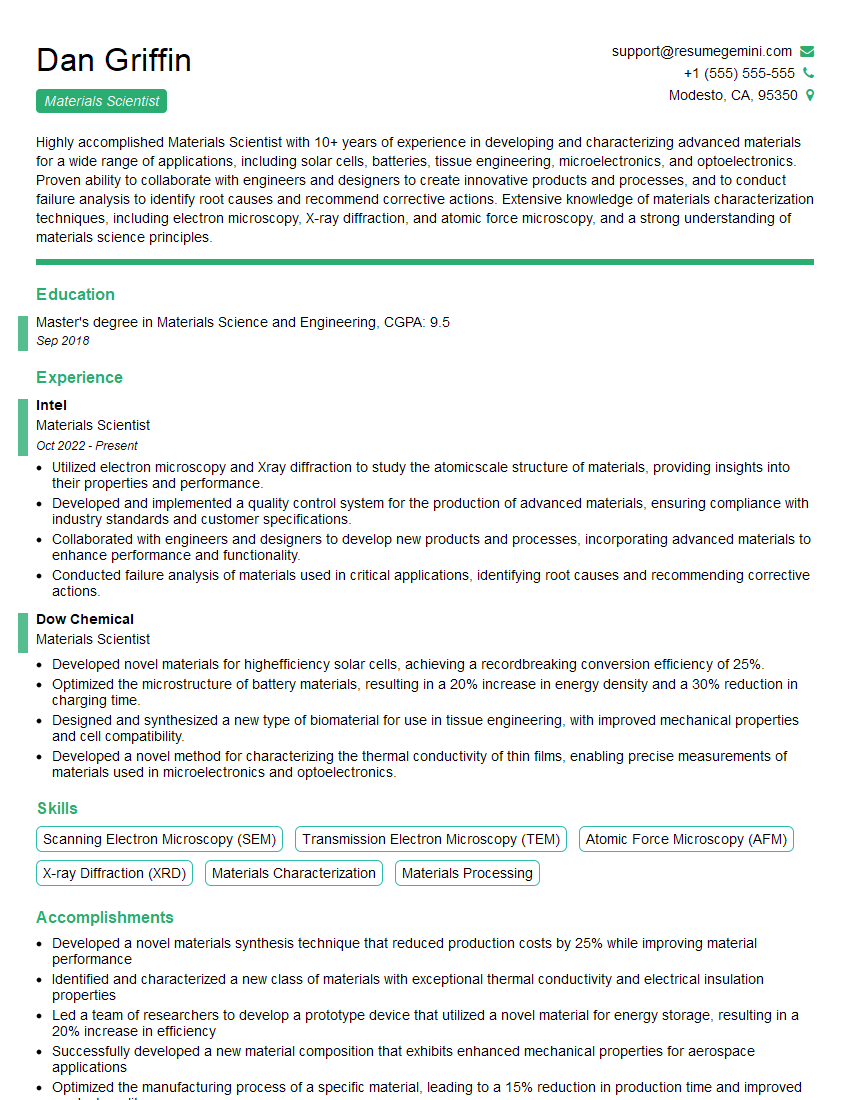
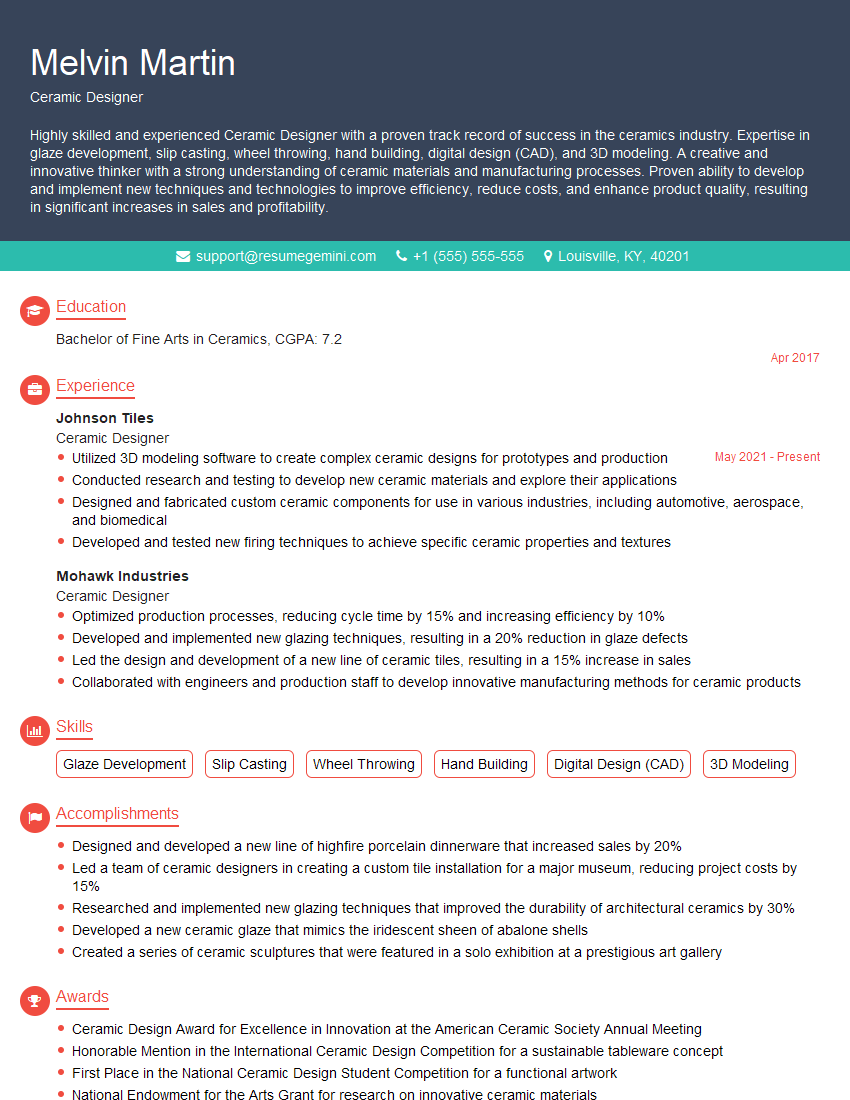
Mastering Ceramic Fabrication Techniques is crucial for a successful and rewarding career in materials science, engineering, and related fields. A strong understanding of these techniques opens doors to exciting opportunities in research, development, and manufacturing. To maximize your job prospects, it’s essential to create a professional and ATS-friendly resume that effectively showcases your skills and experience. ResumeGemini is a trusted resource that can help you build a compelling resume tailored to the specific requirements of the Ceramic Fabrication Techniques field. Examples of resumes tailored to this specialization are available to guide you.
Explore more articles
Users Rating of Our Blogs
Share Your Experience
We value your feedback! Please rate our content and share your thoughts (optional).
What Readers Say About Our Blog
Very informative content, great job.
good