Preparation is the key to success in any interview. In this post, we’ll explore crucial SaaS Pricing interview questions and equip you with strategies to craft impactful answers. Whether you’re a beginner or a pro, these tips will elevate your preparation.
Questions Asked in SaaS Pricing Interview
Q 1. Explain the difference between value-based and cost-plus pricing.
Value-based pricing and cost-plus pricing represent fundamentally different approaches to setting prices. Value-based pricing focuses on the perceived value a customer receives from your SaaS product. The price is determined by what the customer is willing to pay for that value, not by your costs. Cost-plus pricing, on the other hand, is a simpler method where you calculate your total costs (including development, marketing, support, etc.) and add a markup percentage to arrive at the final price. Think of it like adding a surcharge on top of your expenses.
Example: Imagine a project management tool. A value-based approach might involve analyzing competitor pricing, surveying potential customers to understand their willingness to pay for increased efficiency and time savings, and then setting a price accordingly. A cost-plus approach would calculate the total development cost and add a, say, 20% markup to determine the price. Value-based pricing often commands higher prices, but it requires more market research and a nuanced understanding of your customer’s needs.
Q 2. Describe three common SaaS pricing models and their suitability for different customer segments.
Three common SaaS pricing models are:
- Subscription Pricing: This is the most prevalent model, offering tiered pricing based on features, usage, or the number of users. It’s suitable for a wide range of customer segments, from individuals to large enterprises. For example, a basic plan might offer core features at a low price, while a premium plan includes advanced functionalities at a higher price. This model is great for predictable recurring revenue.
- Freemium Pricing: This model offers a free version with limited features, alongside paid premium plans with enhanced functionality. It’s ideal for attracting a large user base quickly, converting a subset of free users into paying customers, and for products where virality and network effects are strong. It’s especially beneficial for acquiring early adopters and generating organic growth.
- Usage-Based Pricing: This model charges customers based on their actual consumption of the service. For instance, a cloud storage service might charge per gigabyte used. It’s highly scalable and transparent, as customers only pay for what they use. This model is best suited for products where usage is variable and predictable costs aren’t a reliable pricing factor. This can also be combined with subscription plans for a hybrid model.
Suitability: Subscription pricing is generally versatile, freemium works well for products with viral potential, and usage-based pricing is best for scalable services with variable consumption.
Q 3. How do you determine the optimal price point for a new SaaS product?
Determining the optimal price point is a crucial step in SaaS launch. It’s not simply about covering costs; it’s about finding the sweet spot that maximizes revenue and customer acquisition. A multi-faceted approach is needed.
- Competitive Analysis: Research your competitors’ pricing strategies. What are they offering, and at what price points? This provides a benchmark but remember your unique value proposition.
- Value Assessment: Quantify the value your SaaS delivers to customers. How much time, money, or effort does it save them? This helps justify a higher price point.
- Market Research: Conduct surveys, interviews, and focus groups to gauge customer willingness to pay. This provides direct insight into the demand at various price points.
- Price Testing: Experiment with different price points, perhaps using A/B testing on your website. Monitor conversion rates, customer acquisition costs (CAC), and customer lifetime value (CLTV). This iterative approach refines your pricing strategy.
- Cost Analysis: Understand your total costs (development, marketing, customer support, etc.) to ensure your pricing covers them and allows for profitability.
By combining these, you iteratively refine your approach, adjusting based on data and feedback. It’s an ongoing process, not a one-time decision.
Q 4. What are the key metrics you would track to measure the success of a pricing strategy?
Key metrics for measuring pricing strategy success include:
- Monthly Recurring Revenue (MRR): This tracks the predictable revenue from subscriptions.
- Customer Acquisition Cost (CAC): This measures how much it costs to acquire a new customer. A low CAC relative to CLTV is crucial.
- Customer Lifetime Value (CLTV): This represents the total revenue generated by a customer over their relationship with your company. High CLTV is a sign of customer satisfaction and retention.
- Churn Rate: This measures the percentage of customers who cancel their subscriptions. A low churn rate indicates a successful pricing strategy that provides value to customers.
- Average Revenue Per User (ARPU): This metric shows the average revenue generated per user, providing insight into the effectiveness of your pricing tiers.
- Conversion Rate: Measures the percentage of prospects who become paying customers. A higher conversion rate suggests your pricing is attractive and reflects the value proposition.
Tracking these allows you to identify areas for improvement and optimize your pricing model for maximum profitability and sustainable growth.
Q 5. How do you handle price objections from prospective customers?
Handling price objections requires a consultative approach. It’s not just about lowering the price; it’s about understanding the underlying concerns and addressing them.
- Listen and Empathize: Actively listen to the customer’s objections. Understand their perspective and validate their concerns. Showing empathy goes a long way.
- Reframe the Value Proposition: Highlight the long-term benefits and ROI of your SaaS. Quantify the value proposition using case studies or data.
- Offer Alternative Solutions: If the price is the primary concern, explore alternatives such as a different pricing tier, a trial period, or a phased implementation plan.
- Focus on Value, Not Just Price: Explain how your SaaS solves the customer’s problems and improves their business outcomes. Price is just one factor in their decision.
- Negotiate if Necessary: Be willing to negotiate within reasonable limits, but don’t compromise profitability or devalue your product.
The goal is to build a strong relationship and demonstrate the value of your SaaS, even if the initial price point presents a challenge.
Q 6. Explain the concept of price elasticity and its importance in SaaS pricing.
Price elasticity measures the responsiveness of demand to changes in price. In SaaS pricing, it indicates how much your customer base will shrink or expand if you increase or decrease your prices. High elasticity means a small price change significantly impacts demand; low elasticity means demand is relatively unaffected.
Importance: Understanding price elasticity is vital for making informed pricing decisions. If your product has high elasticity, small price increases could drastically reduce sales. Conversely, if elasticity is low, you might have more pricing flexibility without significantly impacting your customer base. For example, a niche SaaS serving a specialized market may experience lower elasticity than a general-purpose tool.
Example: If a 10% price increase leads to a 20% drop in sales, the demand is highly elastic. If the same price increase only results in a 5% drop in sales, demand is relatively inelastic. By analyzing historical data and running experiments, you can estimate your product’s price elasticity and optimize your pricing strategy accordingly.
Q 7. How do you conduct market research to inform pricing decisions?
Market research for SaaS pricing involves gathering data to understand your target market, competitors, and the overall market landscape. This data-driven approach ensures your pricing aligns with market realities.
- Competitive Analysis: Identify key competitors and analyze their pricing models, features, and target markets. Use tools to track pricing changes and strategies.
- Customer Surveys: Conduct surveys to understand customer needs, preferences, and willingness to pay. This helps gauge the demand and acceptance of different pricing tiers.
- Focus Groups: Organize focus groups with potential customers to gather qualitative feedback on your pricing strategy and value proposition. Direct interaction offers valuable insights.
- Industry Reports: Consult industry reports and market analyses to understand the size, growth rate, and key trends of your target market.
- Pricing Experiments: Conduct A/B testing with different pricing models or price points to see how they impact conversion rates, customer acquisition costs, and revenue.
By combining these methods, you build a comprehensive understanding of the market, enabling you to set prices that maximize revenue while remaining competitive and customer-centric.
Q 8. Describe your experience with A/B testing different pricing options.
A/B testing pricing is crucial for optimizing revenue. It involves creating multiple versions of your pricing page, each with different price points, features, or packaging, and then showing these variations to different segments of your user base. We analyze the results to determine which version converts best – leading to higher conversions or a more profitable customer base.
For example, I once worked on a project where we A/B tested three different pricing tiers for a project management SaaS: a basic plan at $29/month, a premium plan at $49/month with advanced features, and an enterprise plan at $99/month with custom support. The A/B test revealed that while the $49/month plan had the highest conversion rate, the $99/month plan generated the highest Average Revenue Per User (ARPU) due to a smaller but significantly more profitable customer segment. This informed our decision to shift marketing efforts towards attracting customers who would benefit from the enterprise-level features.
This process typically involves utilizing analytics platforms to track key metrics such as conversion rates, average order value, and customer churn. The data then guides further iterations of the A/B testing process, allowing for continuous optimization and refinement of the pricing strategy.
Q 9. How do you account for customer lifetime value (CLTV) in pricing decisions?
Customer Lifetime Value (CLTV) is a critical metric for making informed pricing decisions. It represents the total revenue a customer is expected to generate throughout their relationship with your company. By considering CLTV, we can justify higher upfront prices for customers who are likely to stay longer and generate more revenue, even if their initial acquisition cost is higher.
To account for CLTV in pricing, we typically use a predictive model incorporating factors like customer churn rate, average revenue per user (ARPU), and the average customer lifespan. A higher CLTV justifies investing more in acquisition costs, allowing for a higher price point. Conversely, a lower CLTV might suggest a lower price point to increase customer acquisition and compensate for shorter customer lifespans.
For example, if our CLTV analysis indicates a high value for enterprise customers who are likely to stay with us for several years, we can confidently price our enterprise plan higher. This allows us to balance the cost of acquiring and supporting these customers with the long-term revenue they generate.
Q 10. What are some common challenges in SaaS pricing, and how have you overcome them?
Common challenges in SaaS pricing include finding the optimal balance between maximizing revenue and maintaining a competitive edge. Another hurdle is the difficulty of accurately predicting customer behavior and lifetime value. Finally, pricing models need to be flexible enough to accommodate evolving market conditions and changing customer needs.
I’ve overcome these challenges by utilizing data-driven approaches. This includes rigorous A/B testing (as discussed earlier), detailed market research to understand competitor pricing and customer preferences, and employing sophisticated forecasting models to estimate CLTV. Furthermore, by building pricing models that offer different tiers with varying levels of functionality and support, we’ve catered to the diverse needs and budget constraints of different customer segments.
For instance, I once encountered a situation where our initial pricing was too high for the market, resulting in low conversion rates. Through A/B testing and competitor analysis, we identified a more competitive price point that significantly boosted our customer acquisition while maintaining profitability. This highlighted the importance of iterative adjustments based on real-world data.
Q 11. Explain the difference between freemium and tiered pricing models.
Freemium and tiered pricing models are both popular in SaaS, but they differ significantly.
- Freemium: Offers a basic version of the software for free, with paid plans unlocking premium features or removing usage limitations. Think of it as a trial period that converts into a subscription for advanced functionality. The goal is to acquire a large user base through the free tier, hoping to convert a segment of these users to paid subscriptions.
- Tiered Pricing: Offers several paid plans with varying features and price points. Each tier caters to different customer needs and budgets, providing a more granular approach to monetization. This might range from a basic plan with limited functionality to an enterprise plan with comprehensive features and dedicated support.
The key difference lies in the access to core functionality. Freemium provides basic access for free, hoping for conversion to paid tiers. Tiered pricing, on the other hand, requires a paid subscription for even basic access, offering different levels of service at various price points.
Q 12. How do you balance profitability and customer acquisition with your pricing strategy?
Balancing profitability and customer acquisition requires a delicate dance. The goal is to find a price point that attracts enough customers to generate sufficient revenue while maintaining healthy profit margins.
My approach involves thoroughly analyzing the costs associated with customer acquisition (marketing, sales, onboarding) and comparing them against the projected lifetime value (CLTV) of customers acquired at different price points. This helps identify the optimal price range where customer acquisition costs are justified by the long-term revenue generated.
We might use a combination of promotional offers or discounts to encourage trial and adoption during customer acquisition phases. The analysis of customer retention and churn data helps inform decisions on pricing strategies, making sure we attract profitable customers, not just a high volume of users.
Q 13. How do you incorporate competitor pricing into your strategy?
Competitor pricing is an important factor, but it shouldn’t be the sole determinant of our pricing strategy. Instead, we use competitor analysis to understand the market landscape, identify pricing trends, and gauge the perceived value of our offerings relative to competitors. We wouldn’t simply match competitor prices; instead, we would differentiate our product based on value proposition.
Our analysis focuses on several factors: features, functionality, target audience, brand reputation, and customer support. If competitors offer a similar product at a lower price, we might justify a premium price through superior customer support, advanced features, or a stronger brand reputation. Alternatively, we may need to adjust our offering to offer better value at a more competitive price.
For example, if a competitor offers a basic plan at $19/month with limited features, we might offer a similar plan at $25/month but include significantly better customer support or additional features to justify the price difference. It’s always about finding the right balance to be competitive yet maintain reasonable profit margins.
Q 14. Describe your experience with subscription management software.
My experience with subscription management software is extensive. I’ve worked with several platforms, including Zuora, Chargebee, and Recurly. These platforms automate various aspects of subscription management such as billing, invoicing, payment processing, and customer relationship management (CRM) integration. This automation significantly reduces manual effort and improves efficiency.
The selection of a subscription management system depends on several factors such as the size of the customer base, the complexity of the pricing model, and the required level of integration with other systems. For example, a smaller SaaS company might find a simpler platform like Recurly sufficient, while a larger enterprise might require a more robust solution like Zuora to manage complex pricing plans and numerous customer accounts.
My experience involves not only selecting and implementing these systems but also optimizing their use to improve customer experience, reduce churn, and enhance revenue generation. I’ve worked on projects involving integrating subscription management software with various CRM systems, implementing automated dunning processes to reduce payment failures, and customizing dashboards to monitor key metrics in real-time.
Q 15. What are your thoughts on dynamic pricing in SaaS?
Dynamic pricing in SaaS, where prices adjust based on real-time market conditions, customer behavior, and other factors, is a powerful tool but requires careful consideration. It offers the potential for increased revenue and optimized pricing strategies. However, it’s crucial to avoid alienating customers with unpredictable price fluctuations.
Successful dynamic pricing hinges on these elements:
- Data-driven approach: Leverage data on customer segments, usage patterns, competitor pricing, and market demand to inform price adjustments. This ensures pricing decisions are based on sound analytics, not gut feelings.
- Transparency and communication: Clearly communicate the rationale behind price changes to customers to build trust and avoid accusations of unfair practices. Explain the value proposition associated with the dynamic pricing model.
- Algorithmic control: Employ sophisticated algorithms to automatically adjust prices based on predefined rules and data thresholds. This minimizes manual intervention and maintains consistency.
- A/B testing: Experiment with different pricing models and algorithms to identify the optimal approach for maximizing revenue while retaining customers.
Example: A SaaS company offering project management tools could dynamically adjust pricing based on the number of users, project complexity, and features utilized. A small team with basic needs pays less than a large enterprise with advanced features and integrations.
Career Expert Tips:
- Ace those interviews! Prepare effectively by reviewing the Top 50 Most Common Interview Questions on ResumeGemini.
- Navigate your job search with confidence! Explore a wide range of Career Tips on ResumeGemini. Learn about common challenges and recommendations to overcome them.
- Craft the perfect resume! Master the Art of Resume Writing with ResumeGemini’s guide. Showcase your unique qualifications and achievements effectively.
- Don’t miss out on holiday savings! Build your dream resume with ResumeGemini’s ATS optimized templates.
Q 16. How do you segment your customers for pricing purposes?
Customer segmentation for pricing is vital for achieving fair and profitable pricing models. It involves grouping customers based on shared characteristics that influence their willingness to pay and their value to the business. This is not a one-size-fits-all process, and the best approach depends on the specific SaaS product and its target market.
Key segmentation criteria include:
- Company size: Small businesses, medium-sized enterprises (SMEs), and large enterprises often have different budgets and needs.
- Industry: Different industries have varying pricing sensitivities and budgetary constraints.
- Usage patterns: High-volume users might be charged differently than low-volume users based on tiered pricing.
- Features used: Offering different feature packages allows for customized pricing based on the specific needs and usage of each customer segment.
- Contract length: Longer-term contracts often come with discounts to incentivize loyalty.
Example: A CRM SaaS company might offer three pricing tiers: a basic plan for freelancers and small businesses, a professional plan for SMEs, and an enterprise plan for large companies with advanced customization and support.
Q 17. Explain your understanding of price optimization techniques.
Price optimization techniques involve using data and analytical methods to identify the pricing strategy that maximizes revenue and profitability. It’s not simply about finding the highest price; it’s about finding the price point that generates the most profitable sales volume.
Common techniques include:
- Price elasticity analysis: Determines how changes in price affect demand. Understanding elasticity helps set optimal prices.
- Value-based pricing: Sets prices based on the perceived value of the product or service to the customer, not just the cost of production.
- Competitive analysis: Analyzing competitor pricing to understand market dynamics and identify opportunities for differentiation.
- A/B testing: Experimenting with different price points and packages to determine which yield the best results.
- Machine learning: Leveraging machine learning algorithms to predict customer behavior and optimize prices in real-time (dynamic pricing).
Example: A SaaS company could use A/B testing to compare the performance of different pricing tiers, measuring conversion rates and revenue generated by each.
Q 18. How do you handle pricing changes for existing customers?
Handling pricing changes for existing customers requires a delicate balance between maintaining profitability and preserving customer relationships. Transparency and clear communication are key to mitigating negative reactions.
Strategies for managing pricing changes for existing customers:
- Grandfathered pricing: Offer existing customers the option to maintain their current pricing for a defined period, often with a transition plan.
- Phased rollout: Introduce price increases gradually, spreading the impact over time to lessen the shock.
- Value-added benefits: Offset price increases by offering new features or improved service levels.
- Clear communication: Explain the reasons behind the price change, highlighting the added value and benefits customers receive.
- Incentives for early adoption: Offer discounts or incentives for customers who upgrade to the new pricing plans early.
Example: A SaaS provider could announce a price increase six months in advance, giving existing customers ample time to adjust their budgets and providing a detailed explanation of the improvements that justify the change.
Q 19. How do you measure the ROI of a pricing change?
Measuring the ROI of a pricing change requires a careful analysis of the impact on key metrics before and after the implementation. It’s not just about increased revenue; it’s also about assessing the impact on customer retention, churn rate, and overall profitability.
Key metrics to track:
- Revenue change: Calculate the increase or decrease in revenue following the price change.
- Customer churn: Monitor the rate at which customers cancel their subscriptions after the price change.
- Customer acquisition cost (CAC): Assess the cost of acquiring new customers in light of the price change.
- Average revenue per user (ARPU): Track changes in the average revenue generated per customer.
- Customer lifetime value (CLTV): Analyze the long-term value of customers after the pricing adjustment.
Example: A SaaS company implementing a price increase might see a small increase in revenue but also a higher churn rate. By analyzing these metrics, they can determine whether the net positive revenue generated outweighs the cost of lost customers and therefore if the ROI is positive.
Q 20. Explain your experience with different types of discounts and promotions.
Discounts and promotions are powerful tools for acquiring new customers, boosting revenue, and increasing customer lifetime value. However, they must be implemented strategically to avoid negatively impacting profitability.
Types of discounts and promotions:
- Volume discounts: Offer reduced pricing for higher usage volumes.
- Tiered pricing: Offer different price points for different feature sets or usage limits.
- Time-limited promotions: Offer discounts for a limited time to create a sense of urgency.
- Early bird discounts: Incentivize early adoption with discounted pricing.
- Referral programs: Reward existing customers for referring new customers.
- Bundled offerings: Combine multiple products or services at a discounted price.
Example: A SaaS company offering marketing automation tools could offer a 20% discount for annual subscriptions, bundle their email marketing tool with their social media management tool, and offer a free trial period to attract new customers.
Q 21. How do you deal with pricing pressure from sales teams?
Pricing pressure from sales teams is a common challenge in SaaS. Sales representatives often want flexibility to offer discounts to close deals, but this can erode profitability if not managed effectively.
Strategies to manage pricing pressure from sales teams:
- Establish clear pricing guidelines: Develop a well-defined pricing structure and policy that leaves room for limited exceptions.
- Provide sales training: Educate sales teams on the rationale behind pricing decisions and equip them with effective sales arguments that emphasize value rather than discounts.
- Incentivize sales based on value, not discounts: Reward sales representatives for selling higher-value plans rather than solely focusing on the number of deals closed.
- Implement sales process controls: Require sales team approval for discounts beyond a pre-defined threshold, incorporating review from pricing or finance teams.
- Use discount tracking and analysis: Monitor discounts provided and their impact on revenue and profitability to refine strategies.
Example: A SaaS company might allow sales representatives to offer a small discount (e.g., 5%) for qualified leads, but require management approval for any discounts larger than this, ensuring that discounts are justifiable and not undermining profitability.
Q 22. Describe your experience with SaaS pricing analytics tools.
My experience with SaaS pricing analytics tools spans several years and various platforms. I’m proficient in using tools like ChartMogul, Baremetrics, and ProfitWell, leveraging their capabilities for detailed analysis of customer acquisition cost (CAC), monthly recurring revenue (MRR), churn rate, customer lifetime value (CLTV), and other key metrics. I’m also comfortable working with data visualization tools like Tableau and Power BI to create insightful dashboards and reports. For example, using ChartMogul, I once identified a significant correlation between customer onboarding time and churn rate, leading to process improvements that resulted in a 15% reduction in churn. Beyond pre-built tools, I’m also skilled in using SQL and other programming languages to perform custom data analysis directly from our databases, allowing me to tailor analyses to specific business needs. This hands-on approach enables me to uncover hidden trends and make data-driven recommendations for optimizing pricing strategies.
Q 23. How do you forecast revenue based on different pricing scenarios?
Forecasting revenue across different pricing scenarios involves a multi-step process. First, I segment the customer base based on various factors like usage patterns, demographics, and contract types. This allows for granular analysis and more accurate predictions. Next, I apply different pricing models to each segment. This might involve testing a tiered pricing model, freemium model, or value-based pricing, depending on the specific product and target audience. For each model, I generate revenue projections based on historical data, projected growth rates, and assumptions about price elasticity (how demand changes in response to price changes). I typically utilize statistical modeling techniques, such as regression analysis, to quantify the relationship between price and demand. Finally, I conduct sensitivity analysis to identify how changes in key assumptions impact the overall revenue forecast. This includes varying parameters like churn rate, conversion rates, and customer acquisition costs to assess risk and create more robust predictions. The output is a range of possible outcomes, enabling informed decision-making regarding optimal pricing strategies.
Q 24. What are the ethical considerations in SaaS pricing?
Ethical considerations in SaaS pricing are paramount. Transparency is key—customers should clearly understand what they’re paying for and how the pricing works. This includes avoiding hidden fees or deceptive pricing practices. Another important aspect is fairness. Pricing should be equitable and should not discriminate against certain customer segments or unfairly penalize long-term users. For instance, suddenly increasing prices significantly for existing clients without providing added value is unethical. Finally, data privacy and security are integral. Pricing models should not inadvertently collect or utilize sensitive customer data in a way that violates privacy policies or regulations. Maintaining a strong ethical framework ensures customer trust and long-term business success. Violating these principles can lead to reputational damage and loss of customers.
Q 25. How do you communicate pricing changes to customers effectively?
Communicating pricing changes effectively involves proactive, transparent, and empathetic communication. I start by providing ample advance notice, giving customers sufficient time to adjust their budgets and plans. Clear and concise explanations of the reasons for the change are crucial—providing context helps customers understand the value proposition and avoids resentment. This might involve highlighting new features, increased operational costs, or market adjustments. I’d also offer various options, such as grandfathering existing customers into the old pricing for a certain period or providing discounted rates for longer-term commitments. Multiple communication channels (email, in-app notifications, blog posts) should be used to reach all customer segments. Finally, open channels for feedback and questions are essential for addressing concerns and maintaining positive customer relationships. Failing to communicate effectively can lead to churn and damage brand reputation.
Q 26. Describe your understanding of the impact of churn on SaaS pricing.
Churn significantly impacts SaaS pricing strategies. High churn directly impacts MRR and CLTV, making it crucial to understand the root causes. For example, pricing that’s too high relative to perceived value is a major driver of churn. Therefore, a thorough analysis of churn reasons, often involving customer surveys and data analysis, is crucial to inform pricing decisions. Strategies to mitigate churn impact might include offering different pricing tiers catered to various customer needs, improving onboarding and customer success initiatives, and implementing usage-based pricing to better align costs with value received. Data analysis on churn allows for the identification of high-risk customers, enabling proactive interventions such as targeted discounts or personalized support. This iterative approach—analyzing churn, adjusting pricing, and re-evaluating—is vital to maintain a sustainable business model.
Q 27. How do you leverage data to drive pricing decisions?
Data is the cornerstone of informed pricing decisions. I use a variety of data sources, including customer usage data, financial statements, market research, and competitive analysis, to inform pricing strategies. For instance, analyzing customer segmentation data can reveal which features are most valued, guiding decisions around value-based pricing or feature-specific pricing tiers. Understanding the elasticity of demand to price changes, based on A/B testing different price points, allows optimization of revenue generation. By combining quantitative data with qualitative feedback from surveys and customer support interactions, a holistic understanding of customer needs and preferences can be achieved. This data-driven approach moves beyond gut feeling and leads to optimal pricing models that maximize revenue and customer satisfaction. Tools and techniques, such as cohort analysis and statistical modeling, are crucial for extracting actionable insights from raw data.
Q 28. Explain your experience with international pricing considerations.
International pricing requires careful consideration of various factors. Currency fluctuations can significantly impact revenue, necessitating robust financial modeling and hedging strategies. Local market conditions, including economic factors, purchasing power parity, and competitive landscapes, must be analyzed to determine appropriate pricing for each region. Legal and regulatory compliance, particularly regarding taxes and data privacy, is essential. Furthermore, cultural nuances and customer preferences influence pricing sensitivity, requiring tailored approaches for different markets. For example, a premium pricing strategy might work well in one country but not in another. Localization of pricing requires strategic planning, often involving collaborating with local teams and market research experts. Effective international pricing strategies require a deep understanding of global economics and regulatory environments, ensuring both profitability and customer satisfaction in diverse markets.
Key Topics to Learn for SaaS Pricing Interview
- Pricing Models: Understand the nuances of subscription-based pricing (e.g., freemium, tiered, usage-based), and their suitability for different SaaS products and customer segments. Consider the impact of each model on customer acquisition, retention, and lifetime value.
- Value-Based Pricing: Learn to articulate the value proposition of a SaaS product and translate that value into a compelling price. This involves understanding customer needs, competitive landscape, and the overall market dynamics.
- Cost Analysis: Master the art of calculating the cost of goods sold (COGS) for a SaaS product, including infrastructure, development, support, and marketing costs. This is crucial for determining profitable pricing strategies.
- Pricing Optimization: Explore techniques for optimizing pricing strategies, such as A/B testing different price points, analyzing customer segmentation, and understanding price elasticity of demand. This includes understanding the impact of discounts and promotions.
- Competitive Analysis: Develop the ability to analyze competitor pricing strategies and identify opportunities for differentiation and competitive advantage. This requires research, analysis, and understanding of market trends.
- Financial Modeling: Practice building financial models to project revenue, profitability, and customer acquisition cost (CAC) under different pricing scenarios. This demonstrates a quantitative approach to pricing decisions.
- Sales & Marketing Alignment: Understand how pricing strategies integrate with sales and marketing efforts. This involves considering pricing’s impact on lead generation, sales cycles, and customer onboarding.
Next Steps
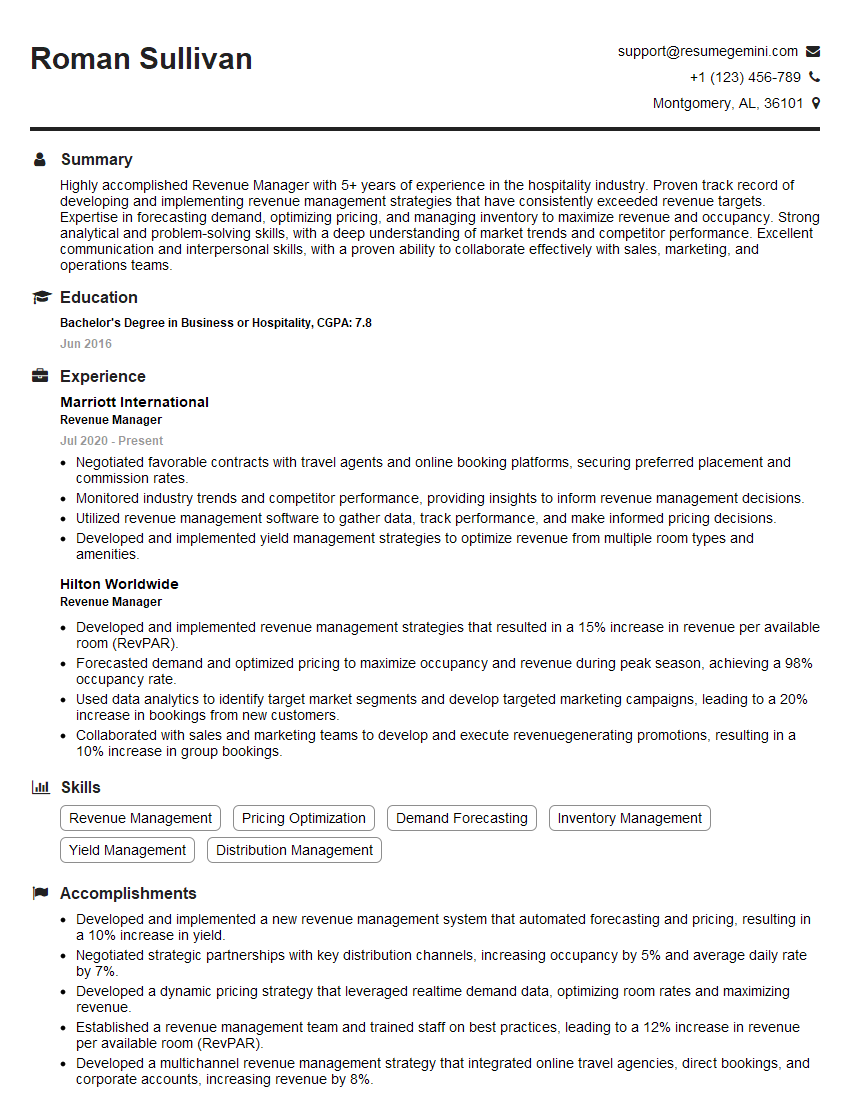
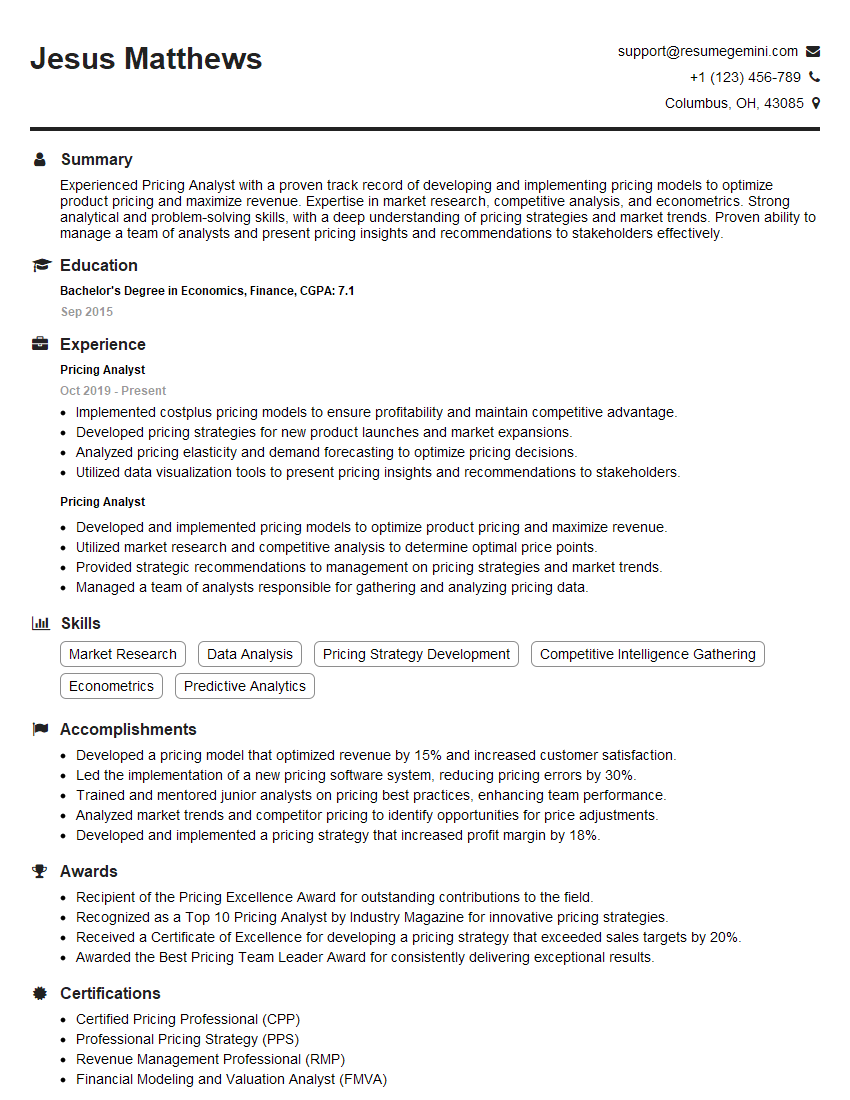
Mastering SaaS pricing is crucial for a successful career in the tech industry. A strong understanding of pricing strategies and their financial implications significantly enhances your value to potential employers. To maximize your job prospects, create an ATS-friendly resume that showcases your relevant skills and experience. ResumeGemini is a trusted resource for building professional and impactful resumes. We provide examples of resumes tailored to SaaS Pricing roles to help you create a compelling application that stands out. Use ResumeGemini to elevate your job search and land your dream SaaS Pricing role.
Explore more articles
Users Rating of Our Blogs
Share Your Experience
We value your feedback! Please rate our content and share your thoughts (optional).
What Readers Say About Our Blog
Very informative content, great job.
good