Interviews are more than just a Q&A session—they’re a chance to prove your worth. This blog dives into essential Safety Basis Development interview questions and expert tips to help you align your answers with what hiring managers are looking for. Start preparing to shine!
Questions Asked in Safety Basis Development Interview
Q 1. Define Safety Basis and its key components.
A Safety Basis is a documented justification for the safety of a system or process. It’s essentially a comprehensive record demonstrating that sufficient measures are in place to prevent or mitigate identified hazards to an acceptable level of risk. Key components include:
- Hazard Identification and Risk Assessment: This involves identifying potential hazards and assessing the associated risks (likelihood and severity of harm).
- Safety Requirements Specification: Defining the necessary safety functions and performance requirements to control the identified hazards.
- Safety Integrity Level (SIL) Determination: Assigning a SIL to each safety function, indicating the required level of safety performance.
- Safety Justification: Demonstrating how the implemented safety measures meet the specified safety requirements and achieve the target SILs. This often includes calculations, simulations, and test results.
- Safety Case: The overarching document compiling all the elements above into a coherent argument for the safety of the system.
Think of it like building a house: the Safety Basis is the blueprint, explaining every component and how they work together to ensure a safe and stable structure.
Q 2. Explain the importance of a well-defined Safety Basis.
A well-defined Safety Basis is crucial for several reasons:
- Demonstrates Compliance: It provides evidence that the system meets regulatory requirements and industry best practices regarding safety.
- Facilitates Risk Management: It allows for a systematic approach to identifying, assessing, and mitigating hazards, leading to improved safety performance.
- Supports Decision-Making: It provides a clear understanding of the safety aspects of the system, supporting informed decision-making during design, operation, and maintenance.
- Enhances Safety Culture: A comprehensive Safety Basis fosters a culture of safety by encouraging proactive risk management and continuous improvement.
- Reduces Liability: In the event of an accident, a strong Safety Basis can help demonstrate due diligence and mitigate legal liabilities.
Imagine a surgeon operating without a proper plan. A well-defined Safety Basis is that plan for ensuring a safe system.
Q 3. Describe the relationship between Safety Basis and Safety Integrity Levels (SILs).
The Safety Basis and Safety Integrity Levels (SILs) are intrinsically linked. The SIL is a relative measure of the risk reduction provided by a safety function. The Safety Basis justifies the selection of a specific SIL for each safety function. It shows how the chosen safety measures, documented within the Safety Basis, achieve the required level of risk reduction implied by that SIL. For example, a safety function with a SIL 3 requires significantly more rigorous design, implementation, and verification than a SIL 1 function. The Safety Basis provides the evidence to support the SIL assignment for each safety function and thereby demonstrates compliance.
Q 4. How do you identify hazards in a process or system?
Hazard identification is a systematic process. Techniques include:
- HAZOP (Hazard and Operability Study): A structured and systematic review of the process, using guide words to identify deviations from intended operation.
- What-if analysis: A brainstorming technique where team members pose ‘what-if’ scenarios to identify potential hazards.
- Failure Modes and Effects Analysis (FMEA): A bottom-up approach that systematically analyzes potential failures of components and their effects on the system.
- Checklists and Databases: Using pre-defined checklists or databases of known hazards relevant to the specific industry or process.
- Previous Incident Reports: Learning from past accidents and near misses to identify potential hazards in similar systems.
A good analogy is a detective investigating a crime scene – meticulously examining all aspects to uncover potential hazards.
Q 5. Explain the process of conducting a Hazard and Operability Study (HAZOP).
A HAZOP is a systematic and structured hazard identification and risk assessment technique. The process typically involves a multidisciplinary team reviewing a process flow diagram (P&ID). They consider each process element and ask guiding questions using ‘guide words’ (e.g., ‘no,’ ‘more,’ ‘less,’ ‘part of’). Each deviation is assessed for its potential to cause a hazard. The process generally follows these steps:
- Define Scope and Objectives: Determine the boundaries of the HAZOP study and define its objectives.
- Assemble the Team: Form a multidisciplinary team with expertise in the process, safety, and engineering.
- Review Process Information: Review relevant process documentation, including P&IDs, process descriptions, and operating procedures.
- Conduct the HAZOP Study: Systematically work through the process, applying guide words to each process element and identifying potential deviations.
- Assess Hazards: For each identified deviation, assess the potential hazards, consequences, and likelihood of occurrence.
- Recommend Safeguards: Develop and recommend appropriate safeguards to mitigate the identified hazards.
- Document Findings: Document all identified hazards, consequences, safeguards, and actions required.
For example, considering a pump in a chemical plant, a HAZOP team might ask: ‘What if the flow is less than intended?’ This could lead to a hazard identification of insufficient cooling, resulting in overheating and potential fire.
Q 6. What is Layer of Protection Analysis (LOPA) and how is it used?
Layer of Protection Analysis (LOPA) is a qualitative risk assessment technique used to determine the necessary level of protection for a process or system. Unlike HAZOP, which focuses on hazard identification, LOPA focuses on assessing the risk reduction provided by existing and proposed safeguards. It uses a simplified approach compared to quantitative risk assessment, and is particularly useful for quickly evaluating a variety of scenarios. LOPA considers the frequency of initiating events, the probability of failure of each protective layer, and the consequence of failure. The goal is to reduce the overall risk to an acceptable level.
In essence, LOPA considers each protection layer (e.g., alarms, interlocks, emergency shutdown systems) and assigns a probability of failure on demand (PFD) to each. By combining the PFD of all protection layers, LOPA estimates the overall risk. This helps determine if additional layers of protection are needed to reach the target risk level.
Q 7. How do you determine the required Safety Integrity Level (SIL) for a safety function?
Determining the required SIL for a safety function involves a risk assessment that considers:
- Frequency of Hazardous Events: How often is the hazardous event expected to occur?
- Severity of Consequences: What are the potential consequences of the hazardous event (e.g., fatalities, injuries, environmental damage)?
- Risk Reduction Required: How much risk reduction is needed to reach an acceptable level of risk?
This assessment usually employs a risk matrix or a quantitative risk analysis to determine the necessary level of risk reduction. Based on this analysis, a SIL is assigned to each safety function. A higher SIL implies a higher level of safety integrity required (e.g., SIL 1 is the lowest, SIL 4 is the highest). Standards like IEC 61508 and IEC 61511 provide detailed guidance on SIL determination.
For instance, a safety function designed to prevent a catastrophic explosion would likely require a higher SIL (e.g., SIL 3 or SIL 4) than a safety function preventing a minor leak (which might only require a SIL 1 or SIL 2).
Q 8. Explain the different SIL levels and their corresponding probabilities of failure on demand.
Safety Integrity Levels (SILs) are a way of classifying the risk reduction provided by a Safety Instrumented System (SIS). They range from SIL 1 (lowest) to SIL 4 (highest), with each level corresponding to a progressively lower probability of failure on demand (PFD). PFD represents the probability that the SIS will fail to perform its safety function when demanded.
- SIL 1: PFD values typically range from 10-2 to 10-3. Think of this as a 1% to 0.1% chance of failure when needed. This might be suitable for applications where the consequences of failure are relatively minor.
- SIL 2: PFD values typically range from 10-3 to 10-4 (0.1% to 0.01%). This represents a significantly lower risk and is used for applications with more serious consequences of failure.
- SIL 3: PFD values typically range from 10-4 to 10-5 (0.01% to 0.001%). This is a high integrity level, suitable for situations where the consequences of failure are severe, potentially resulting in major injuries or significant environmental damage.
- SIL 4: PFD values typically range from 10-5 to 10-6 (0.001% to 0.0001%). This is the highest safety integrity level, reserved for situations where the consequences of failure are catastrophic, potentially resulting in fatalities or widespread environmental disasters. Think of applications like nuclear power plant safety systems.
It’s important to note that these PFD ranges are guidelines and the exact values may vary depending on the specific application and safety standard used.
Q 9. Describe the lifecycle of a Safety Instrumented System (SIS).
The lifecycle of a Safety Instrumented System (SIS) mirrors a typical systems engineering lifecycle, but with an increased emphasis on safety and rigorous verification and validation activities at every stage. It generally consists of these phases:
- Concept and Definition: Defining safety requirements, identifying hazards, and performing preliminary risk assessments to determine the need for a SIS and the required SIL level.
- Design: Specifying the SIS architecture, selecting components, developing functional safety requirements, and designing the system to meet these requirements.
- Implementation: Procurement, installation, and commissioning of the SIS. This includes testing individual components and the system as a whole.
- Verification and Validation: Rigorous testing and analysis to demonstrate that the SIS meets its safety requirements and performs as intended. This includes safety integrity level (SIL) verification.
- Operation and Maintenance: Regular inspections, testing, and maintenance to ensure the continued safe operation of the SIS. This includes documenting all changes and updates.
- Decommissioning: Safe and controlled removal of the SIS from service at the end of its lifecycle.
Each phase requires detailed documentation and traceability to ensure compliance with safety standards and regulations.
Q 10. What are the key elements of a Safety Case?
A Safety Case is a documented argument that shows how the risks associated with a system are being managed to an acceptable level. It’s a living document, updated throughout the system’s lifecycle. Key elements include:
- Hazard Identification and Risk Assessment: A detailed analysis of potential hazards and their associated risks. This often involves HAZOP (Hazard and Operability) studies or similar techniques.
- Safety Requirements Specification: Clearly defined safety requirements that the system must meet to mitigate the identified hazards.
- System Design and Architecture: Description of the system’s design, including its safety-related components and how they interact.
- Safety Integrity Level (SIL) Allocation: Assignment of SIL levels to individual safety functions based on the risk assessment.
- Verification and Validation Evidence: Documentation of all testing, analysis, and other activities performed to demonstrate that the system meets its safety requirements. This includes test reports, simulations, and design reviews.
- Safety Management Plan: A plan outlining the processes and procedures for managing safety throughout the system’s lifecycle.
- Justification and Argumentation: A clear and logical explanation of how the safety requirements have been met and how the risks have been mitigated to an acceptable level. This might include fault tree analysis (FTA) or event tree analysis (ETA) results.
A strong safety case provides a comprehensive and auditable record of the safety aspects of a system.
Q 11. How do you verify and validate a Safety Instrumented System (SIS)?
Verifying and validating a SIS is crucial for ensuring its effectiveness. Verification confirms that the system is built correctly (according to the design), while validation confirms that it does what it’s intended to do (meets requirements). This involves a multi-faceted approach:
- Design Verification: Reviews, analyses, and simulations to ensure the design meets the safety requirements. This includes checking for potential hazards and vulnerabilities.
- Testing: A range of tests, including unit tests (individual components), integration tests (interconnections), and system tests (the entire SIS). These often involve simulations of hazardous situations.
- Hardware and Software Verification: Rigorous testing and analysis of the hardware and software components to ensure they meet their specified safety integrity levels.
- SIL Verification: Demonstrating that the implemented SIS achieves the allocated SIL level through analysis and testing. This requires detailed calculations and justifications.
- Independent Safety Audits: An independent review of the safety case and all verification and validation activities. This provides an objective assessment of the SIS’s safety.
The specific methods used depend on the complexity of the SIS and the required SIL level. Higher SIL levels require more stringent verification and validation activities.
Q 12. Explain the concept of independent protection layers.
Independent Protection Layers (IPLs) are separate and distinct safety systems designed to mitigate the same hazard. Each layer operates independently and uses different technologies or principles. The goal is to reduce the probability of simultaneous failures by introducing redundancy and diversity. Imagine a scenario where a single safety system fails: a second independent system would take over.
Example: Consider a high-pressure gas system. One IPL might be a pressure relief valve, while another might be an emergency shutdown system that closes the supply valve. These are independent; the failure of one doesn’t automatically cause the failure of the other.
Implementing IPLs significantly improves the overall safety of the system because the probability of all layers failing simultaneously is much lower than the probability of a single layer failing. The level of redundancy and diversity in the IPLs depends upon the risk associated with the hazard and the required SIL.
Q 13. What are the common safety standards and regulations you are familiar with? (e.g., IEC 61508, IEC 61511)
I’m familiar with a number of safety standards and regulations, most prominently:
- IEC 61508: This is the foundational international standard for functional safety of electrical/electronic/programmable electronic safety-related systems. It provides a framework for managing safety in a wide range of industries.
- IEC 61511: This standard specifically addresses functional safety for the process industry, providing detailed guidance on the application of IEC 61508 to processes such as oil and gas refining, chemical manufacturing, and power generation. This standard builds upon 61508 and provides industry-specific guidance.
- ISO 13849: This standard focuses on safety-related control systems for machinery, providing a similar framework for achieving functional safety in the machinery sector.
Other relevant standards may apply depending on the specific application and industry, including those addressing specific hazards (e.g., explosion protection) or regional regulations.
Q 14. How do you manage changes to a Safety Basis throughout a project lifecycle?
Managing changes to a Safety Basis throughout a project lifecycle is critical for maintaining the integrity of the safety system. A formal change management process is essential, typically involving:
- Change Request: All proposed changes must be formally documented as a change request, clearly outlining the reason for the change, potential impacts, and justification.
- Impact Assessment: A thorough assessment of the proposed change’s potential effects on the safety of the system. This may involve re-analysis of hazards and risks, reassessment of the SIL level, and verification and validation activities.
- Risk Evaluation: Evaluating the risks associated with the change, considering both the risks of not implementing the change and the risks associated with implementing it.
- Approval Process: The change request must be approved by a suitably authorized body, often involving a review by a safety engineer or safety committee.
- Implementation and Verification: Implementing the approved change and verifying that the safety integrity of the system remains unaffected.
- Documentation Update: Updating all relevant documentation, including the safety case, design specifications, and test reports, to reflect the implemented change.
Maintaining a clear audit trail is crucial. The change management process should be well-documented and auditable to demonstrate that all changes have been appropriately assessed and managed.
Q 15. Describe your experience with fault tree analysis (FTA) or event tree analysis (ETA).
Fault Tree Analysis (FTA) and Event Tree Analysis (ETA) are crucial techniques in safety basis development. FTA is a deductive, top-down approach that starts with an undesired event (top event) and works backward to identify the basic events that could cause it. Think of it like investigating a car accident: you start with the accident itself and trace back to the contributing factors, like brake failure or driver error. ETA, conversely, is an inductive, bottom-up approach that starts with an initiating event and traces forward through a series of possible outcomes, ultimately determining the probability of various consequences. Imagine a power plant experiencing a pressure surge; an ETA would analyze the potential consequences depending on whether safety systems activate correctly.
In my experience, I’ve used both extensively. For example, in a recent project involving offshore platform safety, we used FTA to analyze the potential causes of a major gas leak, identifying critical components and their failure modes. Then, using ETA, we modeled the sequence of events following a detected leak, considering the effectiveness of emergency shutdown systems. This allowed us to identify weaknesses in the system and recommend improvements.
I’m proficient in using software tools like Isograph Reliability Workbench and other similar platforms to create and analyze both FTA and ETA diagrams, ensuring accurate modeling and probability calculations.
Career Expert Tips:
- Ace those interviews! Prepare effectively by reviewing the Top 50 Most Common Interview Questions on ResumeGemini.
- Navigate your job search with confidence! Explore a wide range of Career Tips on ResumeGemini. Learn about common challenges and recommendations to overcome them.
- Craft the perfect resume! Master the Art of Resume Writing with ResumeGemini’s guide. Showcase your unique qualifications and achievements effectively.
- Don’t miss out on holiday savings! Build your dream resume with ResumeGemini’s ATS optimized templates.
Q 16. Explain the concept of common cause failures and how to mitigate them.
Common cause failures (CCFs) occur when multiple seemingly independent components or systems fail simultaneously due to a shared underlying cause, rather than individual failures. Imagine a fire in a control room disabling multiple control systems – the fire is the common cause. They are particularly dangerous because traditional risk assessments often overlook them, assuming component failures are independent.
Mitigating CCFs involves several strategies. Firstly, design diversity involves using different technologies or design principles for critical systems. Instead of relying on two identical pumps, you might use one centrifugal pump and one positive displacement pump. Secondly, physical separation keeps critical components geographically apart to reduce the impact of a single event. Thirdly, redundancy with diverse failure modes utilizes backup systems that are unlikely to fail in the same way as the primary system. Finally, robust design and testing minimize the susceptibility of individual components to common environmental factors or operational conditions.
For instance, in a nuclear power plant, CCF mitigation is paramount. We’d ensure diverse safety systems (e.g., different types of emergency core cooling systems) are physically separated, properly maintained, and tested regularly to prevent catastrophic failures from a single event such as a fire or earthquake.
Q 17. How do you assess the effectiveness of safety measures?
Assessing the effectiveness of safety measures requires a multi-faceted approach. It’s not enough to simply implement safety measures; we must demonstrate they actually reduce risk. We use several techniques:
- Quantitative Risk Assessment: This involves using data and modelling to quantify the likelihood and consequences of hazards, both before and after implementing safety measures. The reduction in risk demonstrates effectiveness.
- Hazard and Operability Studies (HAZOP): This structured and systematic approach identifies potential hazards and operational problems. The review process helps identify gaps in safety measures.
- Failure Mode and Effects Analysis (FMEA): This technique analyzes potential failure modes of each component and assesses their impact on the system. This helps prioritize improvements to critical systems.
- Performance Indicators (KPIs): We track key safety metrics such as incident rates, near misses, and safety training participation. Trends in these KPIs offer valuable insights into the efficacy of safety measures.
- Audits and Inspections: Regular audits and inspections provide independent verification that safety measures are correctly implemented and maintained.
In practice, I’ve seen safety improvements validated by comparing pre- and post-implementation risk assessments, demonstrating significant reductions in the probability of major accidents. For example, the implementation of a new emergency shutdown system in an oil refinery resulted in a measurable decrease in the likelihood of a major fire.
Q 18. How do you document and communicate safety information effectively?
Effective documentation and communication are crucial for a robust safety basis. We need to ensure safety information is readily available, easily understandable, and accessible to all relevant stakeholders.
- Clear and Concise Language: Avoid technical jargon whenever possible. Use visual aids like diagrams and flowcharts to simplify complex information.
- Structured Documentation: Use a standardized format (e.g., safety cases, hazard registers) and numbering system to allow easy retrieval and updating of information.
- Version Control: Track changes to documents and maintain a history of revisions to ensure accountability.
- Multi-Platform Accessibility: Store documents in a centralized, accessible location, ideally using a system that allows multiple users to access, review and update the documents simultaneously.
- Regular Communication: Conduct regular safety meetings, training sessions, and briefings to keep stakeholders informed of updates, risks, and new procedures.
For instance, in a previous role, we developed an online safety portal containing all relevant documentation, procedures, and training materials, accessible via desktop and mobile devices. This fostered greater safety awareness and increased employee engagement. We also implemented regular safety newsletters to keep staff updated on key safety issues.
Q 19. Describe your experience with safety lifecycle management tools.
My experience encompasses various safety lifecycle management (SLM) tools. I’m familiar with software that supports hazard identification, risk assessment, and mitigation planning. This includes tools for developing and maintaining safety cases, performing FTA/ETA, and tracking safety performance indicators.
I’ve worked with both commercial and open-source platforms. I’ve used tools for managing safety documentation, facilitating collaborative reviews, and tracking the progress of safety improvements. Proficiency in these tools enables efficient and effective safety basis development and maintenance.
The choice of SLM tools depends on the specific needs of the project, considering factors such as complexity, budget, and the regulatory framework.
Q 20. What are some common challenges encountered in developing a Safety Basis?
Developing a safety basis presents several common challenges:
- Incomplete or Ambiguous Requirements: Vague or conflicting safety requirements can lead to misunderstandings and inconsistencies in the safety basis.
- Data Scarcity: Lack of reliable data on failure rates, human error probabilities, or environmental factors can limit the accuracy of risk assessments.
- Balancing Safety and Cost: Implementing extensive safety measures can be costly. Finding the optimal balance between safety and economic viability often requires careful trade-off analysis.
- Stakeholder Management: Managing expectations and obtaining consensus among various stakeholders (e.g., engineers, management, regulatory bodies) can be challenging.
- Maintaining the Safety Basis: As systems evolve and new information becomes available, the safety basis needs regular updates and maintenance, which requires continuous effort.
For example, in a project involving the upgrade of a chemical plant, we faced challenges in obtaining accurate failure data for some of the new components, forcing us to rely on conservative estimates and thorough testing.
Q 21. How do you handle conflicting safety requirements?
Conflicting safety requirements are a common issue in complex systems. The approach involves a structured process to resolve inconsistencies:
- Identify and Document Conflicts: Clearly document all identified conflicts, noting the source of each conflicting requirement.
- Analyze the Root Causes: Investigate the reasons behind the conflicting requirements. This may involve reviewing the design specifications, operational procedures, or regulatory guidelines.
- Prioritize Requirements: Assess the relative importance of each conflicting requirement based on factors such as risk level, safety criticality, and regulatory compliance.
- Develop Trade-off Analysis: Analyze the potential consequences of satisfying one requirement over another, considering both safety and operational impacts.
- Establish Resolution Criteria: Develop objective criteria for resolving conflicts, such as prioritizing requirements based on risk reduction potential or regulatory mandates.
- Document Resolution: Clearly document the resolution process and justify the chosen approach. Ensure the resolution is traceable back to the original conflicting requirements.
For example, we once had conflicting requirements regarding the pressure relief system of a refinery. One requirement emphasized rapid pressure release to prevent catastrophic failure, while another emphasized minimizing environmental impact. We resolved the conflict by implementing a two-stage pressure release system that prioritized safety in the first stage and minimized environmental impact in the secondary stage. This resolution was thoroughly documented to ensure transparency and traceability.
Q 22. Describe your experience with risk assessment methodologies.
Risk assessment is the cornerstone of Safety Basis development. It’s the process of identifying hazards, analyzing their potential for harm, and evaluating the risks associated with them. My experience encompasses various methodologies, including:
- HAZOP (Hazard and Operability Study): A systematic and structured approach used to identify potential hazards and operability problems in complex systems. I’ve utilized HAZOP extensively in process plant design and operation, focusing on deviations from intended operational parameters.
- FTA (Fault Tree Analysis): A deductive technique that works backward from an undesired event (top event) to identify the contributing causes (basic events). I’ve applied FTA to analyze the failure modes of safety-critical systems, like emergency shutdown systems, and identify vulnerabilities.
- What-If Analysis: A brainstorming technique that explores potential scenarios and their consequences. While less structured than HAZOP or FTA, it’s valuable for identifying unforeseen hazards, especially in novel or evolving systems. I find it particularly useful in early-stage design reviews.
- Bow-Tie Analysis: Combines elements of FTA and HAZOP by linking the causes (threats) of an undesired event (top event) to its consequences (effects) via preventive and mitigating controls. I’ve used this for integrated risk management, visualizing the entire event chain.
In practice, I often combine these methods to achieve a comprehensive risk assessment, tailoring the approach to the specific project and its complexity. For instance, HAZOP might be the primary method for a process plant, supplemented by FTA for critical systems and What-If analysis to address emerging issues.
Q 23. How do you ensure that the Safety Basis remains relevant and up-to-date?
Maintaining the relevance of a Safety Basis is crucial for ongoing safety and compliance. This involves a proactive approach focusing on several key strategies:
- Regular Reviews: Scheduled reviews, tied to project milestones or operational changes, ensure the Safety Basis remains aligned with the current system. These reviews should involve a multi-disciplinary team with diverse expertise.
- Change Management: Any modification to the process, equipment, or operating procedures requires a thorough assessment of its impact on the identified hazards and risks. A robust change management process ensures that all changes are properly evaluated and documented within the Safety Basis.
- Lessons Learned: Implementing a structured ‘lessons learned’ program captures insights from incidents, near misses, and operational experience. These insights inform updates to the Safety Basis, preventing future occurrences.
- Technology Updates: Advancements in technology might necessitate revisions to the Safety Basis. For example, new safety instrumented systems or improved protective measures might require updates to the risk assessment and mitigation strategies.
- Regulatory Compliance Updates: Staying current on changes in safety regulations and standards is paramount. The Safety Basis must be updated to reflect these changes to ensure continued compliance.
Think of the Safety Basis as a living document, constantly evolving to reflect the dynamic nature of the system and its environment. A well-maintained Safety Basis isn’t just a static document; it’s a dynamic tool that actively supports safe operation.
Q 24. Explain the importance of human factors in Safety Basis development.
Human factors are paramount in Safety Basis development because human error is a major contributor to accidents. Ignoring human limitations and cognitive biases leads to ineffective safety measures. I integrate human factors considerations by:
- Human Reliability Analysis (HRA): HRA techniques, such as THERP (Technique for Human Error Rate Prediction), help quantify the likelihood of human errors in specific tasks. This informs the design of safety-critical systems and procedures to minimize the impact of potential errors.
- Human-Machine Interface (HMI) Design: The design of interfaces between humans and machines must be intuitive and user-friendly, minimizing confusion and errors. This includes clear displays, logical controls, and appropriate warning systems.
- Training and Procedures: Comprehensive training programs and well-defined operating procedures are essential to ensure that personnel understand the system, their roles, and the safety procedures. These should consider human limitations and cognitive processes.
- Work Environment Considerations: Factors like fatigue, stress, workload, and environmental conditions can significantly impact human performance. The Safety Basis should address these factors and incorporate strategies to mitigate their negative impact.
A realistic Safety Basis considers not only technical failures but also the human element, creating a more robust and effective safety system. For example, designing a control panel with clear labeling and intuitive controls is just as important as the technical reliability of the underlying system.
Q 25. How do you integrate Safety Basis development into the overall project management process?
Integrating Safety Basis development into the overall project management process is crucial for success. This is achieved through:
- Early Involvement: Safety considerations should be integrated from the very beginning of the project lifecycle, not as an afterthought. This ensures that safety is built-in, not bolted-on.
- Defined Roles and Responsibilities: Clear roles and responsibilities for safety-related tasks must be established and communicated to all team members. This ensures accountability and efficient execution.
- Phased Approach: The Safety Basis development should be broken down into manageable phases that align with the project schedule. This allows for iterative development and review, ensuring continuous improvement.
- Regular Reporting and Communication: Progress on Safety Basis development should be reported regularly to the project management team. This allows for timely identification and resolution of any challenges.
- Resource Allocation: Adequate resources (time, budget, personnel) must be allocated to the Safety Basis development process. This demonstrates the commitment to safety as a critical project objective.
A well-integrated approach avoids conflicts and delays, resulting in a comprehensive Safety Basis that is fully integrated into the project’s deliverables.
Q 26. Describe your experience with safety audits and inspections.
My experience with safety audits and inspections includes both conducting and participating in them. I’ve performed audits to assess compliance with established safety procedures and regulations, and inspected facilities and equipment to identify potential hazards. These audits and inspections involved:
- Developing Checklists: Creating comprehensive checklists based on relevant standards and regulations to ensure thoroughness and consistency.
- Document Review: Reviewing documentation, such as operating procedures, maintenance logs, and training records, to verify compliance and identify potential gaps.
- On-Site Observations: Conducting on-site observations to evaluate the physical condition of equipment, the work practices of personnel, and the overall workplace environment.
- Interviewing Personnel: Interviewing personnel at all levels to gain insights into their perceptions of safety practices and identify areas for improvement.
- Reporting and Recommendations: Generating detailed reports that clearly document findings, identify any non-compliances, and provide specific recommendations for corrective actions.
Through these audits and inspections, I have identified several critical issues leading to improvements in safety practices and preventative measures.
Q 27. How do you ensure compliance with relevant safety regulations?
Ensuring compliance with relevant safety regulations is paramount. My approach involves:
- Identifying Applicable Regulations: This involves thorough research to identify all relevant national and international safety standards, codes, and regulations applicable to the project or facility.
- Integrating Regulations into the Safety Basis: The identified regulations are explicitly integrated into the Safety Basis, ensuring that all design, operational, and maintenance activities meet the regulatory requirements.
- Maintaining Documentation: All compliance-related documents, such as permits, licenses, and inspection reports, are meticulously maintained and readily available for review by regulatory authorities.
- Staying Updated: Continuous monitoring of changes and updates to relevant regulations is essential to ensure continued compliance. This includes subscribing to relevant newsletters and attending industry events.
- Internal Audits and Inspections: Regular internal audits and inspections are conducted to identify any areas of non-compliance before they are discovered by external regulatory bodies.
Proactive compliance not only minimizes risk but also builds a culture of safety within the organization.
Q 28. Describe a situation where you had to overcome a challenge related to Safety Basis development.
During the development of the safety basis for a new chemical processing plant, we encountered a significant challenge related to the integration of a novel safety instrumented system (SIS). The system, while technologically advanced, lacked sufficient documented evidence to support its safety integrity level (SIL) claims. This posed a significant risk because the SIS was critical to preventing catastrophic events.
To overcome this challenge, we initiated a comprehensive independent verification and validation (V&V) process. This involved:
- Detailed Review of Design Specifications: A thorough review of the SIS design specifications, including hardware, software, and functional safety requirements.
- Independent Testing and Simulation: Conducting rigorous independent testing and simulation to assess the system’s performance and verify its ability to meet the required SIL.
- Collaboration with Vendors: Close collaboration with the system vendors to obtain necessary documentation and address any gaps in the available evidence.
- Expert Consultation: Seeking advice from independent functional safety experts to ensure the validity of our findings and the adequacy of our mitigation strategies.
This rigorous V&V process provided the necessary confidence to demonstrate the system’s safety integrity, leading to successful regulatory approval and the safe commissioning of the plant. This experience underscored the importance of thorough due diligence and the need for proactive problem-solving in Safety Basis development.
Key Topics to Learn for Safety Basis Development Interview
- Hazard Identification and Risk Assessment: Understand various methodologies like HAZOP, What-If analysis, and FMEA. Practice applying these techniques to real-world scenarios.
- Safety Instrumented Systems (SIS): Learn about SIS architecture, lifecycle, and functional safety requirements (IEC 61508/61511). Be prepared to discuss practical applications and troubleshooting.
- Safety Case Development: Understand the principles of building a robust safety case, including justification of safety integrity levels (SILs) and demonstrating compliance with regulations.
- Layer of Protection Analysis (LOPA): Master the principles of LOPA and its application in assessing risk reduction measures. Be ready to discuss the limitations and advantages compared to other risk assessment methods.
- Safety Standards and Regulations: Familiarize yourself with relevant industry standards and regulations (e.g., OSHA, ISO, IEC) and their practical implications in Safety Basis Development.
- Safety Life Cycle: Understand the complete lifecycle of safety systems, from concept to decommissioning, including design, implementation, verification, and validation.
- Human Factors in Safety: Discuss the importance of human factors in safety design and operation, including human error analysis and mitigation strategies.
- Communication and Collaboration: Showcase your ability to communicate technical information effectively to both technical and non-technical audiences. Demonstrate teamwork and problem-solving skills.
Next Steps
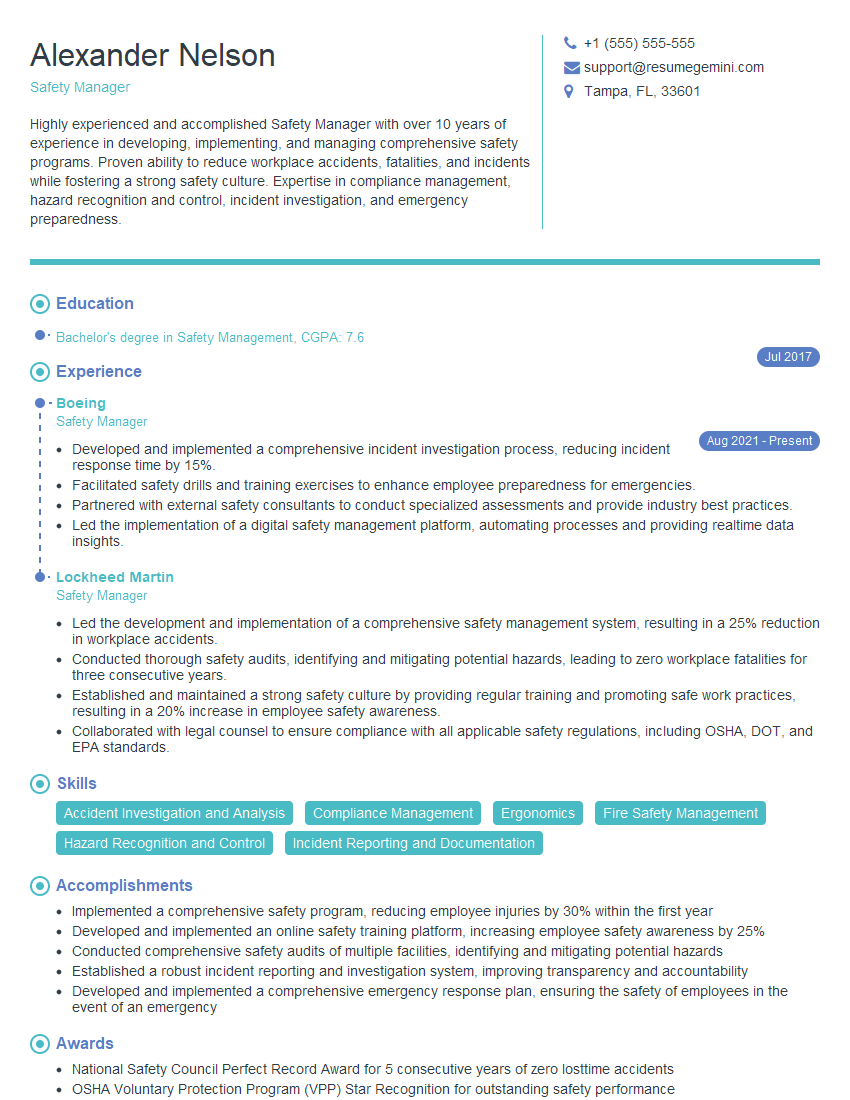
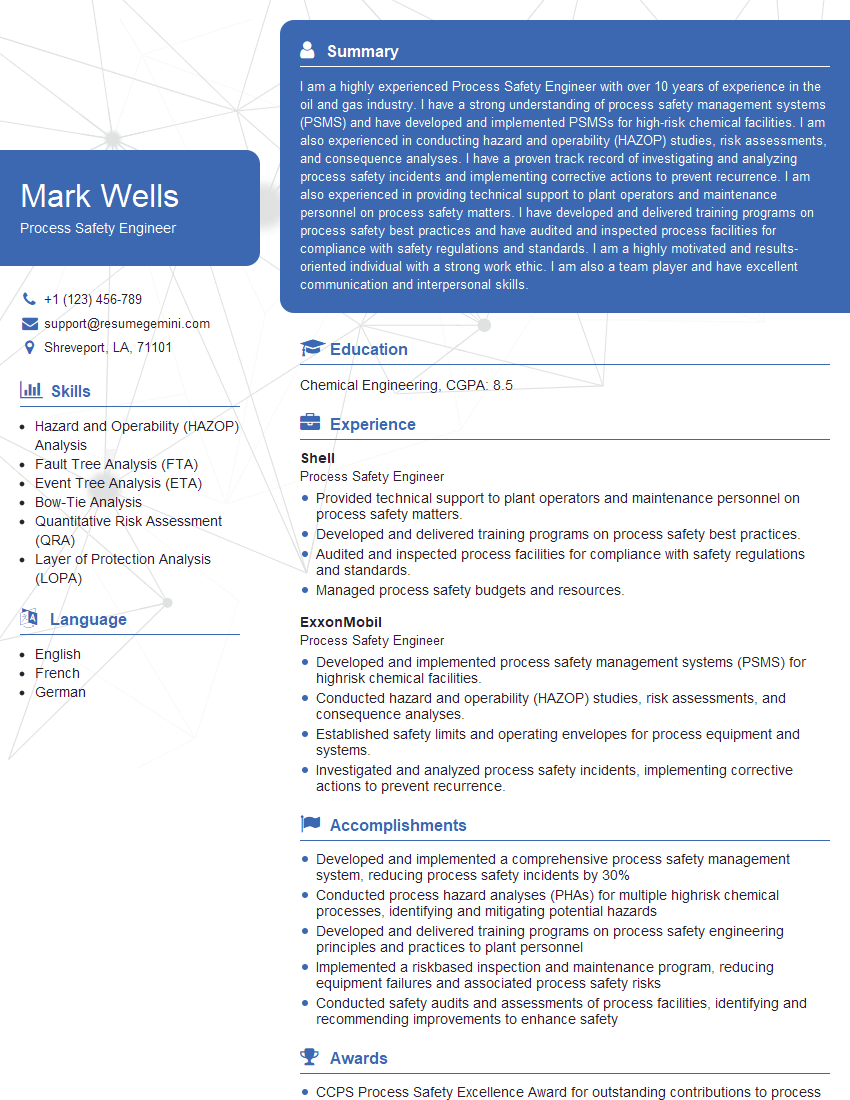
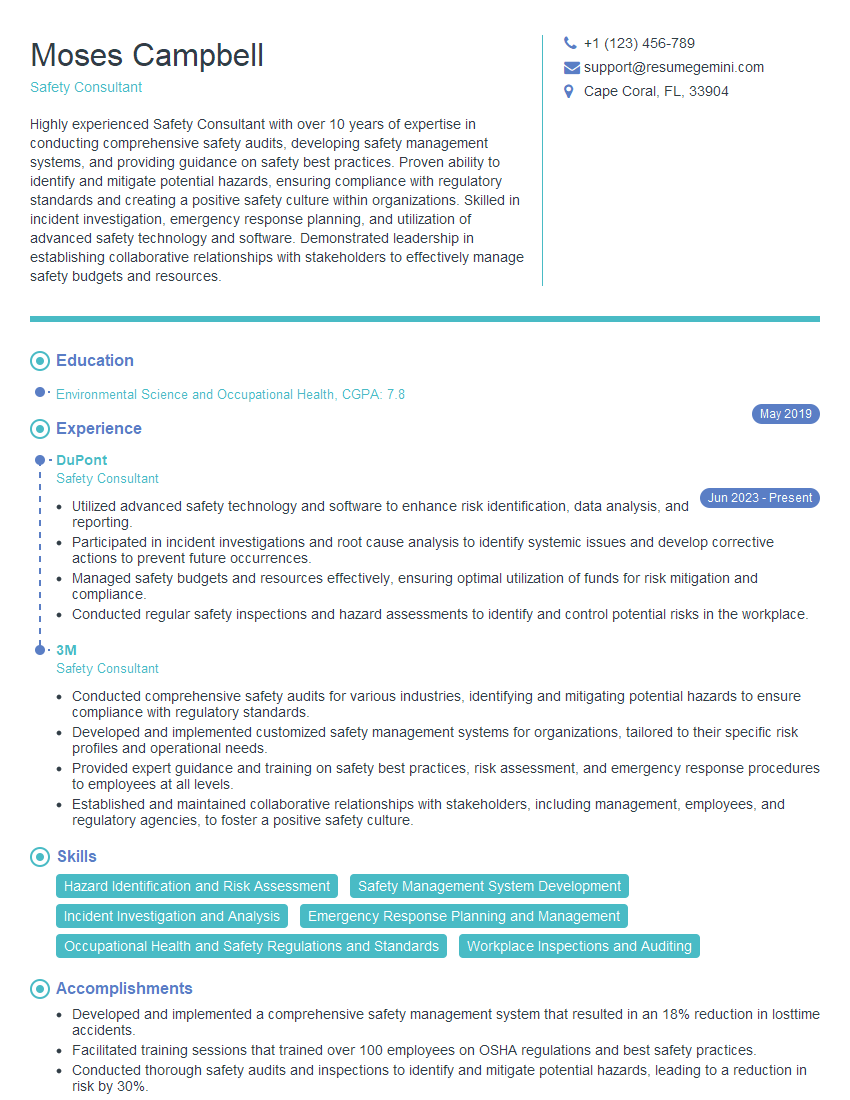
Mastering Safety Basis Development is crucial for a successful and rewarding career in a field increasingly demanding robust safety protocols. This expertise opens doors to leadership roles and positions of significant responsibility. To maximize your job prospects, creating an ATS-friendly resume is paramount. A well-structured resume highlights your skills and experience effectively, increasing your chances of getting noticed by recruiters. We highly recommend using ResumeGemini to build a professional and impactful resume tailored to the Safety Basis Development field. ResumeGemini provides valuable tools and resources, and examples of resumes tailored to this specific area are available to guide you. Invest time in crafting a compelling resume – it’s your first impression and a key step in landing your dream job.
Explore more articles
Users Rating of Our Blogs
Share Your Experience
We value your feedback! Please rate our content and share your thoughts (optional).
What Readers Say About Our Blog
Very informative content, great job.
good