Unlock your full potential by mastering the most common Safety Testing and Validation interview questions. This blog offers a deep dive into the critical topics, ensuring you’re not only prepared to answer but to excel. With these insights, you’ll approach your interview with clarity and confidence.
Questions Asked in Safety Testing and Validation Interview
Q 1. Explain the difference between Verification and Validation.
Verification and validation are crucial aspects of ensuring a system meets its intended purpose and operates safely. They are often confused, but they represent distinct processes. Think of it this way: verification asks, “Are we building the product right?” while validation asks, “Are we building the right product?”
- Verification focuses on confirming that each stage of development adheres to the specifications and design. This involves rigorous testing and reviews at each step to ensure the product conforms to its requirements. Examples include code reviews, unit testing, and integration testing.
- Validation focuses on whether the final product meets the overall objectives and user needs. It involves evaluating the system against its intended use and verifying it performs as expected in real-world scenarios. Examples include system testing, user acceptance testing (UAT), and field testing.
In a simple example, imagine building a house. Verification would be checking if the walls are straight, the electrical wiring is correct, and the plumbing is installed according to code. Validation would be ensuring the house is comfortable, functional, and meets the client’s needs and expectations.
Q 2. Describe your experience with Safety Integrity Levels (SILs).
Safety Integrity Levels (SILs) are a crucial part of my work, quantifying the risk reduction needed for safety-critical systems. SILs, ranging from SIL 1 (lowest) to SIL 4 (highest), define the level of safety required based on the potential severity of hazards. My experience spans various projects, where I’ve been responsible for determining the appropriate SIL for different system components, designing safety-related systems, and verifying that these systems meet their assigned SIL requirements through rigorous testing and analysis.
For example, in a previous project involving an automated industrial process, I conducted a hazard analysis to identify potential hazards like uncontrolled machine movement. Based on the risk assessment, which included considering the probability and severity of injury, we determined a SIL 3 requirement for the emergency stop system. This meant selecting components and implementing safety mechanisms with a demonstrably low probability of failure to ensure a high degree of safety.
I have extensive experience using SIL-relevant standards like IEC 61508 and applying them to the selection of hardware, software, and safety functions, and verifying that the overall system meets the required SIL through techniques like fault tree analysis and FMEA. I meticulously document all stages of the process to ensure compliance and traceability.
Q 3. What are the key stages in a safety testing lifecycle?
The safety testing lifecycle mirrors the broader software development lifecycle, but with a heightened focus on safety and risk mitigation. It typically includes these key stages:
- Requirements Analysis and Hazard Identification: This initial phase involves defining system requirements, identifying potential hazards, and assessing the risks associated with them.
- Safety Requirements Specification: This stage establishes specific safety requirements and allocates Safety Integrity Levels (SILs) to the various system components based on the risk analysis.
- Safety Design and Implementation: The design and development process focuses on incorporating safety features and implementing safety mechanisms to meet the specified SIL requirements.
- Verification and Validation Testing: This is where safety testing techniques like fault injection, failure modes and effects analysis (FMEA), and fault tree analysis (FTA) are employed to ensure the system meets its safety requirements. This involves both unit and integration testing as well as system-level tests.
- Safety Assessment and Certification: Formal assessment and possibly third-party certification are conducted to verify the system’s compliance with relevant safety standards (e.g., ISO 26262, IEC 61508).
- Maintenance and Updates: Ongoing monitoring and updates of the safety system are necessary to maintain its effectiveness and address any emerging risks.
Q 4. How do you conduct a Failure Modes and Effects Analysis (FMEA)?
A Failure Modes and Effects Analysis (FMEA) is a systematic approach to identify potential failure modes in a system, their effects, and their severity. It’s a proactive technique used to prevent failures before they occur. Here’s how I conduct an FMEA:
- Define the System: Clearly define the system or component under analysis and its boundaries.
- Identify Potential Failure Modes: Brainstorm potential ways each component could fail, considering various factors like wear and tear, environmental conditions, and human errors.
- Determine Effects of Failure: For each failure mode, assess the consequences of its occurrence on the system and its environment. Consider the impact on safety, performance, and functionality.
- Assess Severity, Occurrence, and Detection: Assign a rating to each failure mode based on its Severity (S), Occurrence (O), and Detection (D). These ratings are typically on a numerical scale (e.g., 1-10), allowing for a Risk Priority Number (RPN) calculation (RPN = S x O x D).
- Prioritize Actions: Focus on failure modes with high RPN values. Develop and implement corrective actions to mitigate the risks associated with these failure modes.
- Document and Review: Thoroughly document the FMEA process, including all identified failure modes, their effects, ratings, and corrective actions. Regular reviews are essential to update the FMEA as the system evolves.
Example: In an FMEA for a braking system, one failure mode might be ‘brake fluid leak.’ The effects could include reduced braking performance or complete brake failure. We’d assign severity, occurrence, and detection ratings, calculate the RPN, and implement corrective actions such as regular fluid checks and leak detection mechanisms.
Q 5. What is a Hazard and Operability Study (HAZOP)?
A Hazard and Operability Study (HAZOP) is a systematic and structured technique used to identify potential hazards and operability problems in a system. It’s a qualitative approach that involves a team of experts examining the process flow diagram and systematically evaluating deviations from normal operating conditions. These deviations are referred to as ‘hazards’.
During a HAZOP, the team uses guide words such as ‘no,’ ‘more,’ ‘less,’ ‘part of,’ ‘reverse,’ and ‘other than’ to explore potential deviations from the design intent. For each deviation, the team identifies the causes, consequences, and possible safeguards to mitigate the risks. The output is a detailed report listing potential hazards, their causes, consequences, and recommended safeguards.
HAZOP is particularly useful for complex systems with interacting components, where a failure in one part could have cascading effects. For example, a HAZOP applied to a chemical plant would meticulously analyze the potential consequences of equipment malfunctions, operator errors, and external factors such as power failures and ensure adequate safety measures are implemented across the entire process.
Q 6. Explain your experience with Fault Tree Analysis (FTA).
Fault Tree Analysis (FTA) is a top-down, deductive technique used to analyze the causes of a specific undesired event, often called a ‘top event.’ My experience with FTA involves constructing fault trees to visually represent the various combinations of failures that can lead to this top event. This analysis helps quantify the probability of the top event occurring, allowing us to prioritize mitigation efforts.
I’ve used FTA in several projects, ranging from analyzing the causes of system crashes in software to identifying potential failures in complex hardware systems. For instance, in a previous project involving an aircraft’s flight control system, we used FTA to analyze the causes of a potential loss of control event. The FTA revealed several contributing factors, such as sensor failures, software glitches, and actuator malfunctions. By analyzing the probabilities of these failures, we could assess the overall risk and implement appropriate countermeasures to reduce the likelihood of the top event.
The process involves defining the top event, identifying its immediate causes, and recursively working backwards to identify the underlying causes until basic events are reached. Boolean logic gates (AND, OR) are used to show the relationships between these events. Software tools can assist in building and analyzing the fault tree, providing quantitative risk assessments.
Q 7. Describe your experience with different safety standards (e.g., ISO 26262, IEC 61508).
My experience encompasses a wide range of safety standards, most notably ISO 26262 for automotive safety and IEC 61508 for functional safety of electrical/electronic/programmable electronic safety-related systems. I am familiar with the requirements, methodologies, and best practices outlined in these standards. I understand the importance of tailoring the safety approach to the specific application and risk profile.
ISO 26262, for instance, provides a framework for managing safety risks throughout the automotive lifecycle. I’ve worked on projects involving the application of Automotive Safety Integrity Levels (ASILs), which are analogous to SILs but specific to the automotive domain. These ASILs dictate the level of rigor required for various system components based on the potential severity of harm in the event of a malfunction.
Similarly, my experience with IEC 61508 encompasses its application to various industrial control systems. This involves not only understanding the technical requirements of the standard but also navigating the complexities of certification processes. I’m proficient in employing various safety techniques, including FMEA, FTA, and HAZOP, to achieve compliance with these standards.
Understanding these standards is crucial in ensuring the safe operation of complex systems, and I actively stay updated on any revisions or new developments in this ever-evolving field.
Q 8. How do you handle conflicting safety requirements?
Conflicting safety requirements are a common challenge in safety-critical systems. They arise when two or more requirements demand seemingly contradictory actions or limitations. For example, a requirement for maximum speed might conflict with a requirement for minimal braking distance. Resolving these conflicts requires a systematic approach.
My approach involves a multi-step process: First, I meticulously document all conflicting requirements, clearly stating the source and rationale for each. Then, I prioritize the requirements based on risk assessment. This often involves using techniques like Failure Modes and Effects Analysis (FMEA) or Hazard and Operability Studies (HAZOP) to understand the potential consequences of not meeting each requirement. The higher the risk associated with failing to meet a requirement, the higher its priority.
Next, I explore possible solutions. This might involve trade-off analysis, where we assess the benefits and drawbacks of compromising on one requirement to meet another. Often, engineering solutions can be implemented to reconcile the conflict; perhaps a sophisticated braking system could be developed to meet both requirements. In some cases, negotiation with stakeholders is required to refine the requirements or define acceptable compromises. Finally, I document the resolution process and the final chosen solution, ensuring all stakeholders understand and agree on the trade-offs made.
Q 9. What is your experience with safety critical software development?
I have extensive experience in safety-critical software development, primarily focusing on systems with stringent safety requirements like those governed by standards such as IEC 61508 or DO-178C. My experience encompasses the entire software development lifecycle, from requirements specification and design to implementation, testing, and verification.
For example, in a recent project involving a medical device, I was responsible for leading the development of a software module controlling the infusion pump. We adhered to a rigorous V-model development process, implementing formal methods like model checking to validate critical functionalities. This ensured that the software met its functional and safety requirements, minimizing the risk of unexpected behavior that could compromise patient safety.
I’m proficient in using various programming languages such as C and Ada, known for their suitability in safety-critical applications. Moreover, I have hands-on experience using static analysis tools and dynamic testing techniques to detect and mitigate software defects at various stages of development.
Q 10. Explain your experience with testing safety-critical hardware.
My experience in safety-critical hardware testing involves comprehensive testing strategies to identify potential hazards and ensure compliance with relevant safety standards. This goes beyond simple functional testing. It requires a deep understanding of the hardware’s operation, potential failure modes, and the impact these failures could have on the overall system.
For instance, I was involved in testing the hardware of an autonomous vehicle. This involved environmental testing to assess its resilience against extreme temperatures, humidity, and vibrations. We also performed stress testing to push the hardware to its limits, identifying potential weaknesses or failure points. Fault injection techniques were used to simulate different failure scenarios, and the system’s response was carefully evaluated to ensure the safety mechanisms functioned as intended.
Detailed documentation was crucial, meticulously recording test procedures, results, and any anomalies observed. These results were used to improve the hardware’s design, leading to a safer and more robust system. We also employed techniques like design reviews, Failure Modes, Effects, and Diagnostic Analysis (FMEDA), and Hardware-in-the-loop (HIL) simulation to thoroughly validate the hardware’s safety performance.
Q 11. How do you define and measure safety metrics?
Defining and measuring safety metrics requires a clear understanding of the system’s hazards and risks. These metrics must be measurable, quantifiable, and aligned with the overall safety goals. Common safety metrics include:
- Probability of Failure on Demand (PFD): The probability that a safety-related function will fail to operate correctly when it is demanded.
- Safety Integrity Level (SIL): A four-level classification (SIL 1 to SIL 4) representing the risk reduction required by safety functions. SIL 4 being the highest, requiring the most rigorous safety measures.
- Mean Time Between Failures (MTBF): The average time between failures of a system or component. A higher MTBF indicates greater reliability.
- Mean Time To Failure (MTTF): The average time until the first failure of a system or component.
- Failure Rate: The number of failures per unit of time.
The choice of metrics depends on the application and the relevant safety standards. It is crucial to establish clear baselines and track these metrics throughout the lifecycle of the system to ensure continuous improvement and the effective management of safety risks. Furthermore, it’s vital to use appropriate statistical methods for analysis and interpretation of data.
Q 12. Describe a time you identified a critical safety issue. What was your approach?
During testing of a railway signaling system, we discovered a critical safety issue during integration testing. A rare sequence of events involving a specific train speed and signal configuration could lead to a potential collision. Initially, the problem was difficult to reproduce due to the low probability of this specific sequence occurring. However, systematic fault injection techniques coupled with detailed simulations and log analysis helped identify the root cause.
Our approach involved: 1) Reproducing the issue through carefully designed test cases. 2) Analyzing the system logs to pinpoint the exact point of failure. 3) Debugging the software and hardware to understand the interaction that led to the error. 4) Developing a mitigation strategy, implementing software and hardware changes to prevent the hazardous condition from occurring. 5) Retesting to validate the effectiveness of the solution. This included extensive validation through simulation and real-world testing with the corrected system.
The project team worked collaboratively through this challenging situation, highlighting the importance of a comprehensive testing strategy, meticulous data analysis, and strong team communication in managing critical safety issues.
Q 13. What is your experience with safety testing tools and techniques?
My experience with safety testing tools and techniques is extensive. I’m proficient in using a wide array of tools, both commercial and open-source, for various stages of testing. This includes:
- Static Analysis Tools: Such as Coverity, Polyspace, and Clang-Tidy for detecting potential software defects early in the development cycle.
- Dynamic Analysis Tools: Including debuggers, code profilers, and memory leak detectors to identify runtime errors and performance issues.
- Model Checking Tools: For verifying the correctness and safety properties of complex systems using formal methods.
- Simulation and Hardware-in-the-Loop (HIL) testing: To test systems in realistic environments without endangering human life or equipment.
- Fault Injection Tools: To simulate various failure scenarios and evaluate system responses.
Beyond tools, I possess solid knowledge of various testing methodologies such as fault tree analysis, event tree analysis, and Failure Modes and Effects Analysis (FMEA), all essential for systematic safety assessment.
Q 14. Explain your familiarity with different testing methodologies (e.g., unit, integration, system).
I’m very familiar with various testing methodologies, recognizing their respective strengths and weaknesses in the context of safety-critical systems. My experience spans:
- Unit Testing: Testing individual software components in isolation to ensure each unit functions as specified. This is crucial for early defect detection and focuses on verifying individual modules’ adherence to their requirements and specifications.
- Integration Testing: Testing the interaction between different software components to identify defects in their integration. This process ensures that different modules communicate effectively and cooperate to fulfill the entire system functionality, specifically identifying issues arising from their interactions.
- System Testing: Testing the entire system as a whole to ensure that it meets all requirements and functions correctly. This is the most comprehensive testing level, validating all integrated components in a realistic operating environment.
- Acceptance Testing: Verification that the system meets the user’s needs and expectations. This is frequently conducted with the end-users to confirm the system aligns with operational needs and safety requirements in real-world scenarios.
The order and intensity of these methodologies vary depending on the system’s complexity and safety requirements. In safety-critical systems, rigorous testing at each level is paramount, often including redundancy and extensive documentation.
Q 15. How do you ensure traceability between requirements and test cases?
Ensuring traceability between requirements and test cases is paramount in safety-critical systems. It’s all about establishing a clear, auditable link, proving that every requirement has been thoroughly tested and demonstrating full coverage. This is achieved through a systematic approach, often involving a requirements traceability matrix (RTM).
An RTM is essentially a spreadsheet or database that maps requirements to test cases. Each requirement is listed, along with the corresponding test cases designed to verify it. This allows us to easily see which tests cover which requirements, and identify any gaps in testing. For instance, if a requirement is missing a corresponding test case, it’s immediately flagged for attention.
- Requirement ID: Unique identifier for each requirement.
- Requirement Description: A clear statement of what the system should do.
- Test Case ID: Unique identifier for each test case.
- Test Case Description: A description of the test case’s steps and expected results.
- Status: Indicates whether the test case has been executed and passed, failed, or is still in progress.
Using tools like Jira or specialized test management systems greatly facilitates this process, automatically tracking linkages and generating reports. In one project, we used DOORS to manage requirements and linked them directly to our automated test scripts, ensuring complete traceability and simplifying our audits.
Career Expert Tips:
- Ace those interviews! Prepare effectively by reviewing the Top 50 Most Common Interview Questions on ResumeGemini.
- Navigate your job search with confidence! Explore a wide range of Career Tips on ResumeGemini. Learn about common challenges and recommendations to overcome them.
- Craft the perfect resume! Master the Art of Resume Writing with ResumeGemini’s guide. Showcase your unique qualifications and achievements effectively.
- Don’t miss out on holiday savings! Build your dream resume with ResumeGemini’s ATS optimized templates.
Q 16. Describe your experience with test automation for safety-critical systems.
My experience with test automation for safety-critical systems is extensive. I’ve worked on several projects where automated testing was crucial for meeting stringent safety and reliability requirements. The key here is not just automating the tests, but ensuring the automation itself is robust, reliable, and thoroughly validated.
We primarily use model-based testing techniques, generating test cases automatically from system models (e.g., using tools like MATLAB Simulink). This helps ensure complete test coverage and reduces the risk of human error. For example, in a recent project involving an autonomous driving system, we used automated tests to rigorously verify the functionality of the emergency braking system under various scenarios, including unexpected obstacles and challenging environmental conditions.
Crucially, we employ a layered approach to automation. This includes unit tests, integration tests, and system tests, all automated using appropriate tools and frameworks such as Robot Framework or pytest, ensuring comprehensive validation at each level. We also employ continuous integration and continuous testing (CI/CT) pipelines to automatically run tests whenever code changes are integrated.
It’s also vital to have rigorous processes for validating the automation itself. This includes rigorous code reviews, static analysis, and testing the test scripts to ensure they are accurate and reliable. The cost of a failed automated test is very high, so we apply the same levels of care and attention to their development and validation that we apply to the systems under test.
Q 17. How do you manage and report test results effectively?
Effective test result management and reporting are critical for demonstrating compliance and making informed decisions. We use a combination of automated reporting tools and manual analysis to ensure comprehensive and insightful reporting.
Automated tools integrate directly with our test automation frameworks, generating detailed reports on test execution, including pass/fail rates, execution times, and any identified defects. These reports are typically stored in a central repository, accessible to all stakeholders. We use dashboards to visualize key metrics, providing a clear overview of the testing progress and overall quality.
Beyond automated reports, we also conduct thorough manual analysis of test results, particularly for critical failures. This involves investigating root causes, analyzing log files, and potentially reproducing failures in controlled environments. This detailed analysis forms the basis of our defect reports and recommendations for corrective actions. We use a defect tracking system to manage these reports, tracking progress and ensuring that defects are resolved and retested.
Finally, we tailor our reports to the audience. For technical teams, we provide detailed technical reports, including stack traces and diagnostic information. For management, we focus on high-level summaries of test coverage, defect rates, and overall progress.
Q 18. What is your experience with risk assessment and mitigation?
Risk assessment and mitigation are integral to safety-critical system development. We employ a systematic approach, starting with the identification of potential hazards that could lead to unsafe conditions. This process typically involves hazard and operability studies (HAZOP) and fault tree analysis (FTA).
HAZOP is a structured review process that systematically examines the system’s functionality to identify potential hazards. FTA is a graphical technique used to analyze the causes of system failures. These analyses help us identify potential risks and their probabilities. We use this information to quantify the risks, prioritizing them based on their severity and likelihood. For example, a high-severity, high-probability risk demands immediate attention.
Mitigation involves implementing strategies to reduce the identified risks. This can involve design modifications, improved testing procedures, safety mechanisms (e.g., redundant systems, fail-safes), and operational procedures. The effectiveness of these mitigation strategies is then rigorously evaluated, often using quantitative risk analysis to ensure the acceptable level of risk is achieved. We document all aspects of the risk assessment and mitigation process, ensuring that the entire process is auditable.
Q 19. How do you handle test failures and investigate root causes?
Handling test failures requires a systematic and thorough investigation to uncover the root cause. We use a structured debugging process, starting with the reproduction of the failure in a controlled environment. This often involves reviewing log files, debugging the code, and analyzing system behavior.
We utilize various debugging tools, including debuggers, memory analyzers, and network analyzers, to isolate the cause of the failure. The goal is to find the precise location and reason for the failure, not just a workaround. This might involve code inspection, reviewing system requirements, or even conducting more detailed testing to pinpoint the issue.
Once the root cause is identified, we document the failure, the root cause, and any corrective actions taken. This information is then fed back into the development process to prevent similar failures in the future. We use a defect tracking system to manage these defects, ensuring proper tracking and follow-up. A detailed post-mortem analysis is conducted for major failures to identify improvements to our processes or testing strategy.
Q 20. What is your experience with safety certification processes?
My experience with safety certification processes is extensive. I’ve participated in several projects that required compliance with various safety standards, including ISO 26262 (for automotive safety) and IEC 61508 (for functional safety of electrical/electronic/programmable electronic safety-related systems). These standards require rigorous adherence to procedures and documentation throughout the entire lifecycle.
This involves participation in safety planning, requirement specification, hazard analysis, and verification and validation activities. It also includes meticulous documentation, including safety cases, hazard analysis reports, and test reports. We utilize tools and techniques to manage the safety evidence, trace it back to requirements, and demonstrate compliance with the relevant standards. For instance, using a safety case tool helps systematically collate the safety evidence, ensuring complete traceability and auditability.
Understanding the specific requirements of the relevant safety standard is paramount. The certification process often involves independent audits and inspections by certification bodies. We actively collaborate with certification bodies throughout the process, addressing their findings and ensuring that all requirements are met. The end goal is successful certification, demonstrating that the system meets the required safety integrity level (SIL).
Q 21. Describe your experience with safety documentation and reporting.
Safety documentation and reporting are essential for demonstrating compliance with safety standards and ensuring the safety and reliability of safety-critical systems. We maintain comprehensive documentation throughout the entire development lifecycle, including requirement specifications, design documents, test plans and reports, risk assessments, and safety cases.
Our documentation follows a clear structure and adheres to the relevant standards. This ensures consistency and clarity, facilitating audits and facilitating traceability between different artifacts. We use version control systems to manage the documentation, ensuring that revisions are tracked and that only the most up-to-date documents are used. We also employ template-based documentation to enforce consistency and completeness.
Reporting is a crucial part of this process. We generate regular reports on the status of safety activities, including test results, risk assessments, and any identified safety issues. These reports are tailored to the intended audience, providing clear and concise summaries of the most important information. For example, we generate executive summaries highlighting overall progress and any significant risks for management and detailed technical reports for engineering teams.
Q 22. What are the challenges of safety testing in embedded systems?
Safety testing in embedded systems presents unique challenges due to their inherent complexity and real-world consequences. These systems often control critical functions in various applications, from automotive braking systems to medical devices. Failure can lead to significant harm or even death.
- Real-time constraints: Embedded systems must respond within strict time limits, making testing for timing-related issues crucial. A simple delay could be catastrophic. For example, a delayed response in an aircraft’s autopilot system could lead to an accident.
- Resource limitations: Embedded systems typically have limited processing power, memory, and energy. This restricts the types and extent of testing that can be performed, making it challenging to achieve comprehensive test coverage.
- Hardware dependency: Testing must often be done on the actual hardware, which can be expensive, time-consuming, and requires specialized equipment. Emulation and simulation can help, but they can’t fully replicate real-world behavior.
- Interaction with external environment: Embedded systems often interact with complex physical environments. Testing all possible interactions and environmental conditions is difficult, if not impossible, requiring careful selection of representative test cases.
- Safety standards compliance: Meeting stringent safety standards like ISO 26262 (automotive) or IEC 61508 (industrial) requires meticulous documentation, rigorous testing, and traceability throughout the development lifecycle. This adds significant overhead.
Addressing these challenges involves employing techniques such as model-based testing, fault injection, and robust test automation frameworks, alongside careful planning and resource allocation.
Q 23. How do you ensure the independence and objectivity of the safety testing process?
Ensuring independence and objectivity in safety testing is paramount to maintaining trust and ensuring the system’s safety. This is achieved through several key strategies:
- Independent testing team: The safety testing team should be independent from the development team. This prevents bias and ensures an unbiased assessment of the system’s safety. Imagine a scenario where the developers themselves test their own code; they might overlook critical flaws.
- Clearly defined test procedures: Test plans and procedures should be formally documented, reviewed, and approved before testing commences. This ensures a consistent and repeatable approach, reducing subjectivity.
- Traceability: A complete audit trail should be maintained, linking test cases to requirements, design documents, and code. This allows for verification of thoroughness and identification of the root cause of any identified issues.
- Use of automated testing tools: Automation reduces manual intervention, minimizes human error, and promotes repeatability. It also allows for more comprehensive test coverage in a shorter time.
- Third-party audits: Periodic independent audits by certified experts can further bolster confidence in the integrity and objectivity of the testing process. An external review provides fresh perspectives and identifies potential blind spots.
By implementing these measures, organizations can foster a culture of safety and build trust in the safety-critical systems they develop. The goal is to ensure the testing process is rigorous, transparent, and free from any undue influence.
Q 24. How familiar are you with safety culture and its importance?
Safety culture is a fundamental aspect of developing and deploying safe systems. It’s more than just following procedures; it’s a mindset and a set of values that prioritize safety above all else. It’s about fostering a work environment where everyone feels empowered to identify and report safety concerns, without fear of retribution.
- Proactive identification of hazards: A strong safety culture encourages proactive hazard identification and risk assessment. Employees are encouraged to voice concerns, even seemingly minor ones, as a small oversight can have significant consequences.
- Open communication and collaboration: Effective communication and collaboration between all stakeholders—engineers, management, and even end-users—is vital. It facilitates shared understanding of safety goals and enables efficient problem-solving.
- Continuous improvement: A safety culture embraces continuous improvement. Lessons learned from incidents, near-misses, and audits are used to enhance safety practices and prevent future occurrences. This iterative process is crucial to ongoing safety enhancement.
- Management commitment: Ultimately, a strong safety culture requires strong leadership and visible commitment from management. It needs to be a top-down initiative, not just a series of compliance exercises.
In essence, a robust safety culture is an investment in the long-term safety and success of the organization. It’s not just about avoiding accidents; it’s about creating a work environment where safety is valued, respected, and continuously improved upon.
Q 25. Explain your understanding of safety lifecycle management.
Safety lifecycle management (SLM) is the systematic application of safety principles throughout the entire lifecycle of a safety-critical system. It ensures that safety considerations are integrated into each stage, from initial conception to decommissioning. Think of it as a continuous loop of planning, implementation, monitoring, and improvement focused solely on safety.
- Concept and requirements phase: Defining safety requirements, conducting hazard analysis, and allocating safety requirements.
- Design phase: Developing the system architecture with safety mechanisms, selecting safe components, and designing safety-related software.
- Implementation phase: Coding, testing, and verification of the system to meet safety requirements. This is where rigorous testing methodologies are crucial.
- Verification and validation phase: Ensuring the system meets its safety requirements through testing, inspection, and review.
- Operation and maintenance phase: Monitoring the system’s performance, identifying and addressing potential issues, and managing changes safely.
- Decommissioning phase: Safe disposal or decommissioning of the system, ensuring no residual risks remain.
SLM frameworks like IEC 61508 provide guidance and standards for each phase. Implementing SLM ensures consistent application of safety practices, enhancing the safety integrity level of the system and minimizing risk.
Q 26. Describe your experience with safety-related incidents and investigations.
I’ve been involved in several safety-related incident investigations, both during development and post-deployment. One case involved a malfunction in a medical device’s control software that resulted in a temporary loss of critical functionalities.
Our investigation involved:
- Gathering evidence: Collecting logs, diagnostic data, and witness accounts to reconstruct the sequence of events.
- Analyzing the root cause: Using fault tree analysis and other techniques to identify the underlying causes of the malfunction. In this case, a coding error combined with insufficient error handling was to blame.
- Implementing corrective actions: Developing and implementing software patches and improved error handling mechanisms to prevent similar incidents. This included rigorous testing and validation of the corrections.
- Reporting and documentation: Documenting the entire investigation process, including the root cause analysis, corrective actions, and lessons learned. This serves as valuable input for future development and risk mitigation.
These experiences emphasize the importance of rigorous testing, comprehensive documentation, and a proactive safety culture. Each incident provides invaluable learning opportunities to refine processes and improve system safety.
Q 27. How would you approach testing a new safety-critical system?
Testing a new safety-critical system requires a structured and multi-faceted approach. The specific methods will depend on the system’s complexity and its intended application, but a common framework is to follow these steps:
- Hazard Analysis and Risk Assessment (HARA): Identify potential hazards and assess their risks using techniques like Failure Modes and Effects Analysis (FMEA) or Fault Tree Analysis (FTA).
- Requirements Definition: Clearly define safety requirements that address the identified hazards and risks. These requirements should be verifiable and traceable throughout the development lifecycle.
- Test Strategy and Planning: Develop a comprehensive test strategy that outlines the testing methods, tools, and resources required. This includes defining the test levels (unit, integration, system) and determining the appropriate safety integrity level (SIL).
- Test Case Design and Implementation: Design test cases that cover the system’s behavior under both normal and fault conditions. Consider using techniques like fault injection and stress testing to evaluate resilience.
- Test Execution and Results Analysis: Execute the test cases using appropriate tools and analyze the results. Document all test results and identify any deviations from the requirements.
- Verification and Validation: Verify that the system meets its requirements and validate that it fulfills its intended purpose in terms of safety. This might involve simulation, formal verification techniques, and independent audits.
- Documentation: Maintain complete and accurate documentation of the entire testing process, including test plans, test cases, results, and defect reports. This documentation will be crucial for certification and auditing purposes.
Remember, safety-critical testing is an iterative process. Findings from earlier stages might inform and refine later stages, requiring further testing and refinement until confidence in the system’s safety is achieved.
Key Topics to Learn for Safety Testing and Validation Interview
- Hazard Analysis and Risk Assessment: Understanding methodologies like FMEA (Failure Mode and Effects Analysis) and HAZOP (Hazard and Operability Study) is crucial. Practical application involves identifying potential hazards in a system and mitigating risks proactively.
- Safety Standards and Regulations: Familiarity with relevant industry standards (e.g., IEC 61508, ISO 26262) and regulatory compliance requirements is essential. This includes understanding how these standards translate into practical testing procedures.
- Testing Methodologies: Mastering various testing techniques, including functional safety testing, performance testing, and reliability testing, is critical. Practical applications involve designing and executing test plans, analyzing results, and reporting findings.
- Verification and Validation Techniques: Understand the difference between verification (are we building the product right?) and validation (are we building the right product?). Explore techniques like inspections, reviews, and simulations to ensure product safety.
- Safety-Critical Systems: Deepen your understanding of the unique challenges in testing safety-critical systems, including fault tolerance, redundancy, and fail-safe mechanisms. Consider practical examples from relevant industries (automotive, aerospace, medical devices).
- Data Analysis and Reporting: Learn how to effectively analyze test data, identify trends, and communicate findings to both technical and non-technical audiences. This includes creating clear and concise reports.
- Software Safety and Testing: If relevant to the role, understand software safety standards and testing methods specific to software components within safety-critical systems.
Next Steps
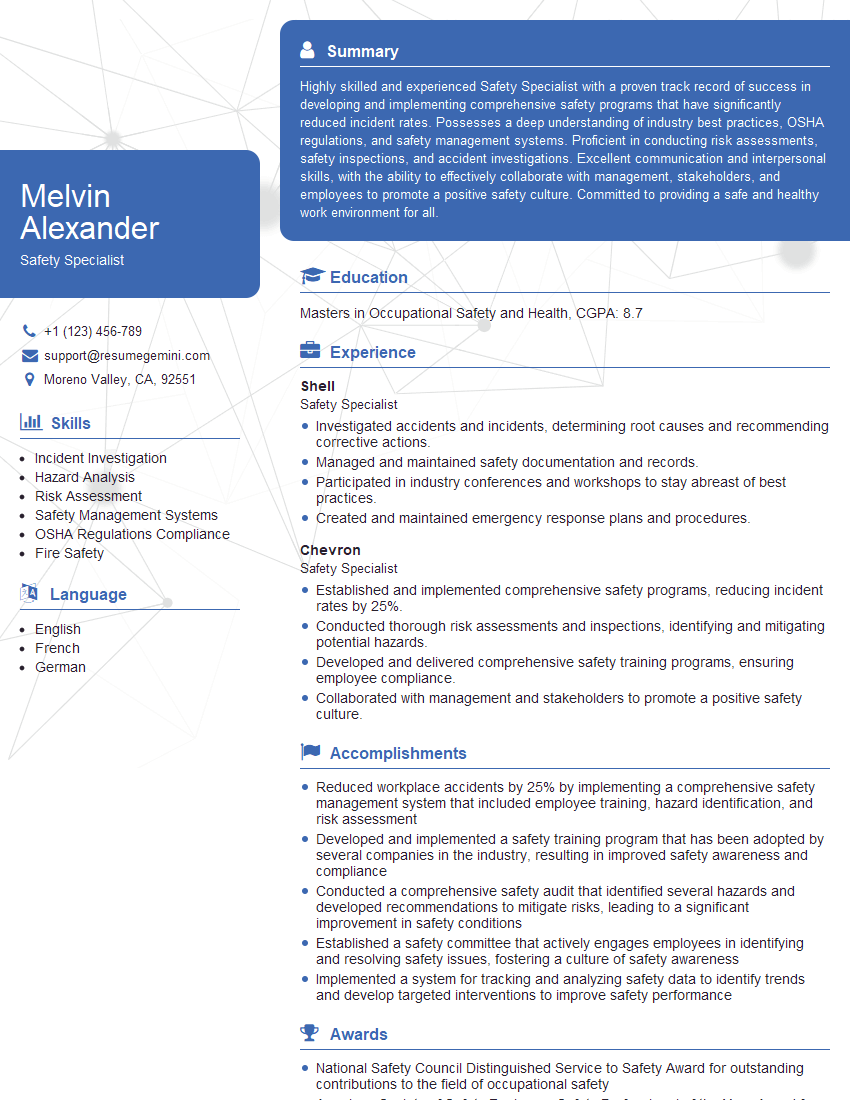
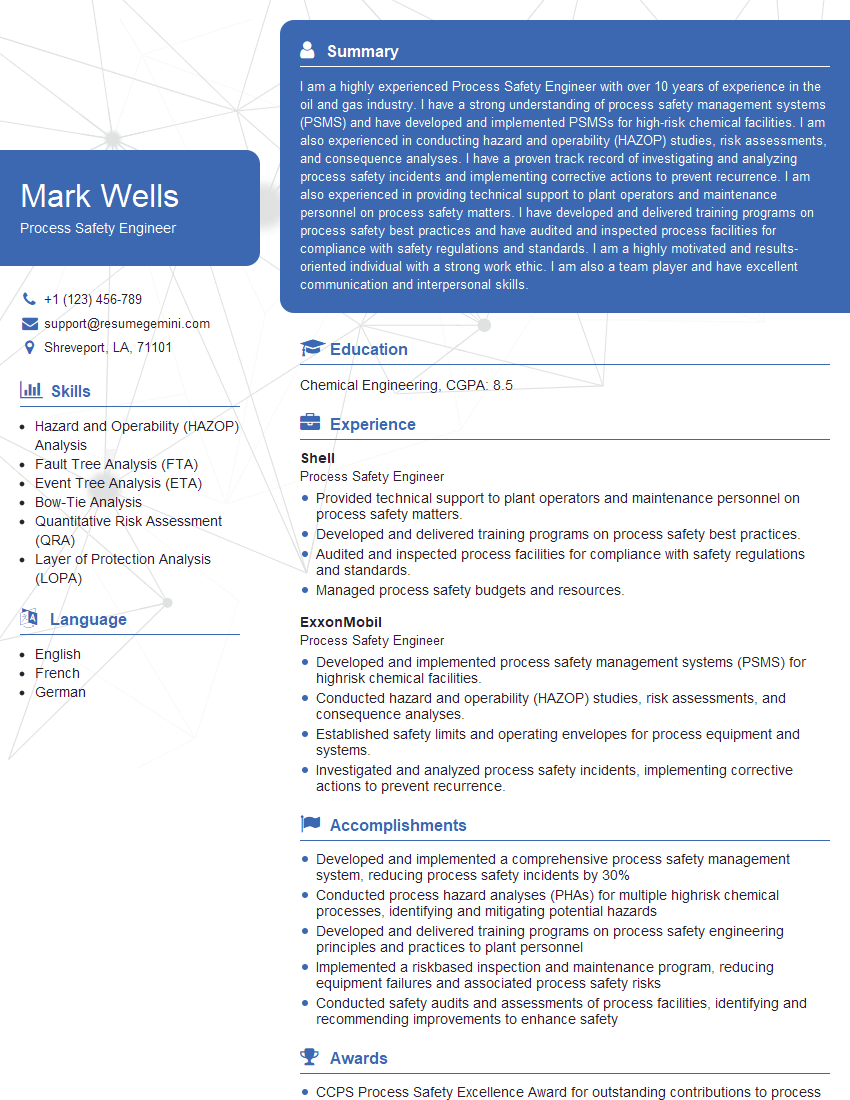
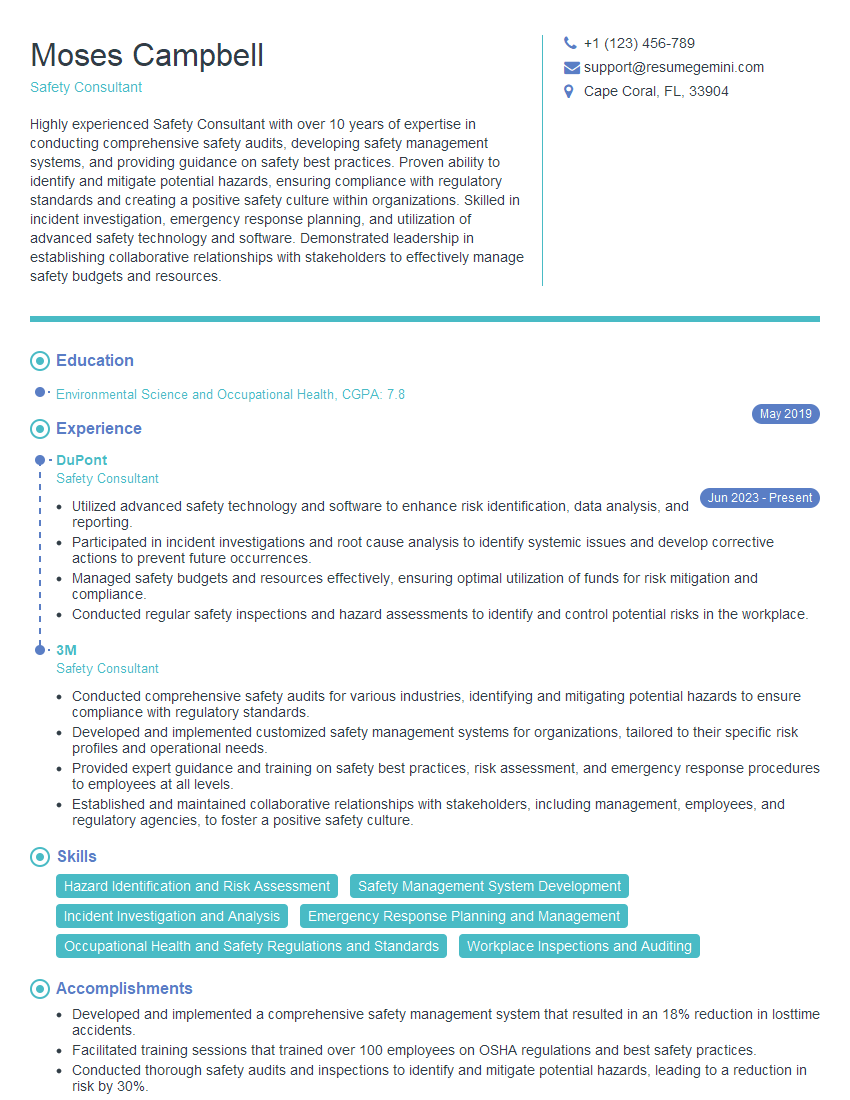
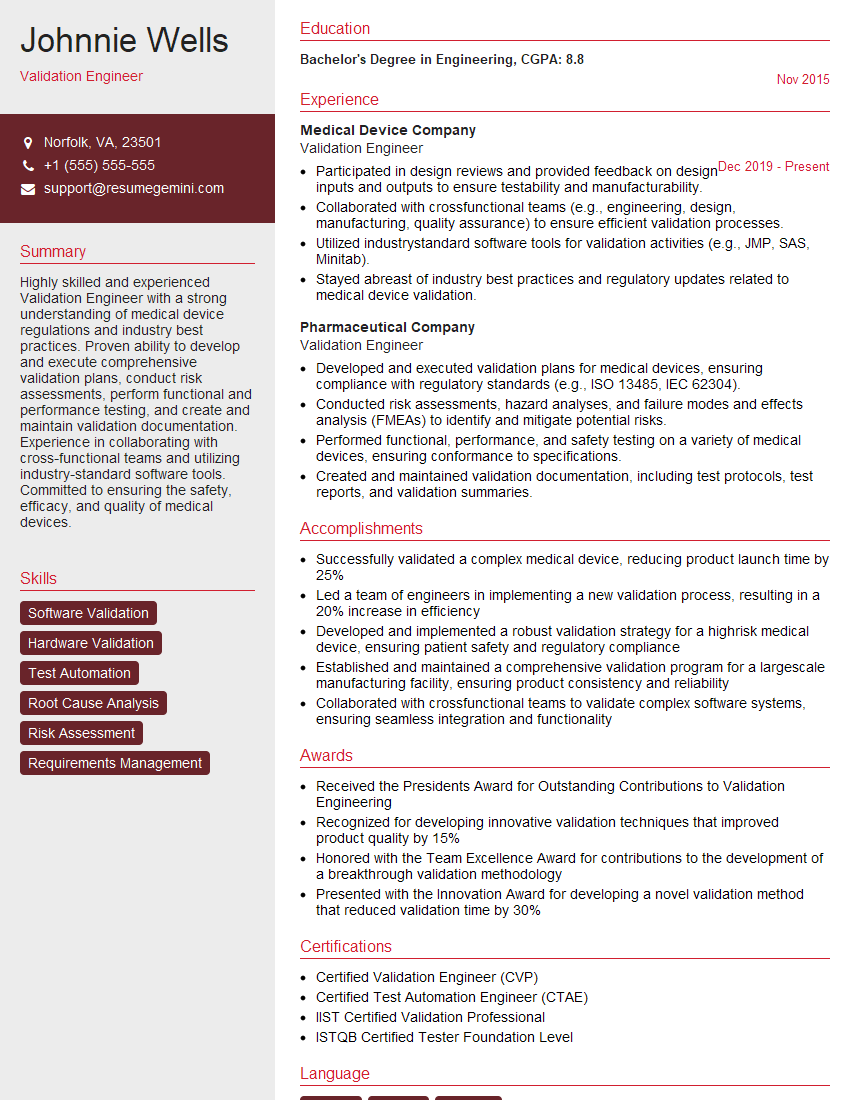
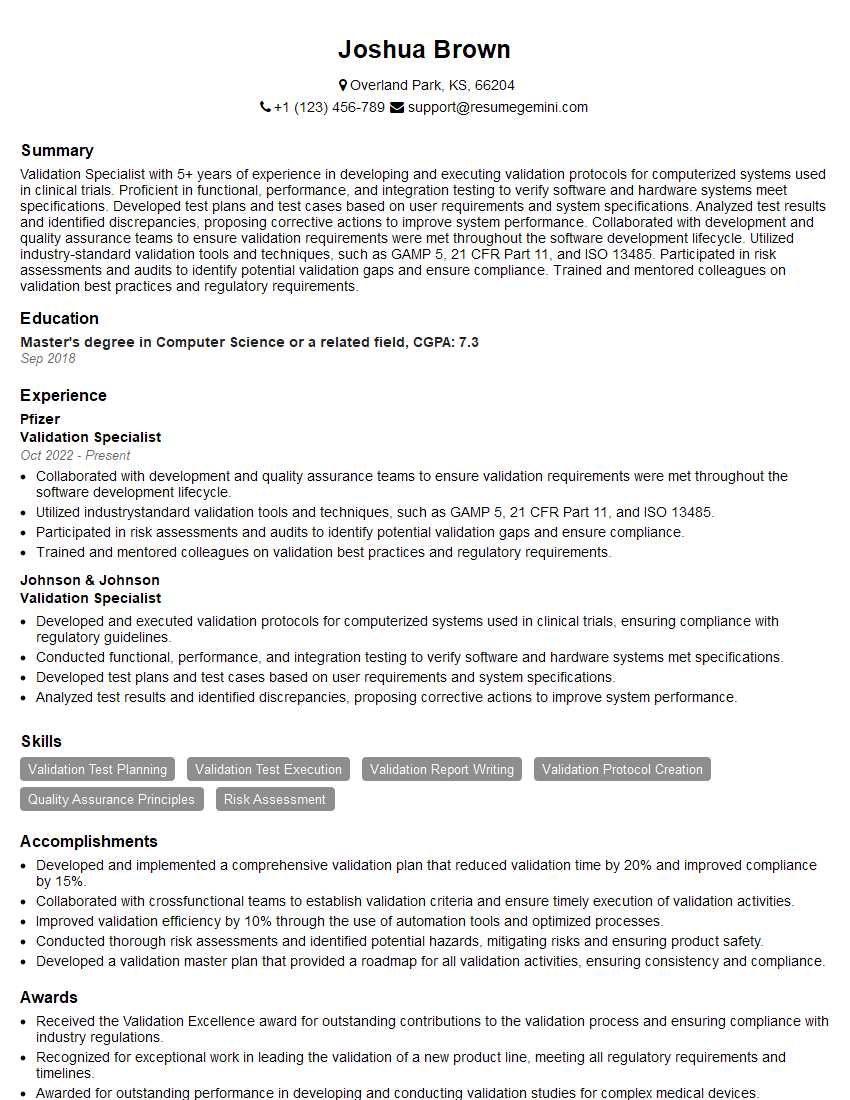
Mastering Safety Testing and Validation opens doors to rewarding careers in diverse and impactful industries. To maximize your job prospects, crafting an ATS-friendly resume is paramount. A well-structured resume highlights your skills and experience effectively, ensuring your application gets noticed. We highly recommend using ResumeGemini to build a professional and impactful resume that stands out. ResumeGemini provides examples of resumes tailored to Safety Testing and Validation, offering valuable templates and guidance to help you showcase your qualifications effectively.
Explore more articles
Users Rating of Our Blogs
Share Your Experience
We value your feedback! Please rate our content and share your thoughts (optional).
What Readers Say About Our Blog
Very informative content, great job.
good