Every successful interview starts with knowing what to expect. In this blog, we’ll take you through the top Water Measurement Techniques interview questions, breaking them down with expert tips to help you deliver impactful answers. Step into your next interview fully prepared and ready to succeed.
Questions Asked in Water Measurement Techniques Interview
Q 1. Explain the principles of flow measurement using a current meter.
Current meters measure flow velocity directly. They operate on the principle that a rotating element (propeller or rotor) placed in the flowing water will spin at a rate proportional to the water’s velocity. A sensor measures the rotation speed, which is then translated into velocity using a calibration curve specific to the meter. To get the flow rate (volume per unit time), you multiply the velocity by the cross-sectional area of the flow. Imagine a small windmill in a stream – the faster the water flows, the faster the windmill spins. This is essentially how a current meter works.
For example, a common application is measuring river discharge. Multiple velocity measurements are taken across the river’s cross-section at various depths, using a weighted average to account for the velocity profile (typically faster in the center, slower near the banks). These velocities are combined with the corresponding area segments to determine the total discharge.
Q 2. Describe different types of water level sensors and their applications.
Water level sensors are crucial for monitoring and controlling water levels in various applications. Different types cater to specific needs and conditions.
- Pressure sensors: These measure the hydrostatic pressure at the sensor’s depth, which is directly proportional to the water level. They’re simple, reliable, and suitable for many applications, from wells to reservoirs. However, they require a known reference point (e.g., the bottom of a tank).
- Ultrasonic sensors: These emit ultrasonic pulses towards the water surface and measure the time it takes for the echo to return. The time of flight is directly related to the distance, thus the water level. They’re non-contact, easy to install, and work well in open channels and tanks but are susceptible to interference from air bubbles or floating debris.
- Float sensors: These consist of a float connected to a potentiometer or other sensing mechanism. As the water level changes, the float moves, changing the sensor’s output. They are simple and reliable but have mechanical limitations and are susceptible to fouling.
- Radar sensors: These use radar waves to measure the water level, offering a non-contact and long-range measurement capability. They are ideal for large bodies of water or applications where harsh environmental conditions exist. However, they are generally more expensive than other types.
Applications range from irrigation management and flood control to wastewater treatment and industrial process control. For example, pressure sensors are often used in wells to monitor groundwater levels, while ultrasonic sensors are commonly employed in open channels for continuous flow monitoring.
Q 3. What are the common methods for measuring water discharge in open channels?
Measuring discharge in open channels involves determining both the flow velocity and the cross-sectional area of the flow. Common methods include:
- Current meter method: As described earlier, this involves measuring velocity at multiple points across the channel using a current meter and then calculating discharge.
- Area-velocity method: This is a more sophisticated version of the current meter method, often using acoustic Doppler current profilers (ADCPs) to obtain a more detailed velocity profile across the channel. ADCPs can measure velocity at many points simultaneously, greatly improving accuracy and efficiency.
- Weirs and flumes: These structures create a controlled flow constriction, creating a predictable relationship between the water level upstream and the discharge. We will discuss weirs in more detail later.
- Stage-discharge relationships: This method relies on developing a relationship between the water level (stage) and the discharge using various measurements, often combined with flow modeling. This is useful for continuous monitoring, as discharge can be inferred from stage measurements alone. It’s crucial to have a well-calibrated relationship.
The choice of method depends on factors like channel geometry, flow regime, accuracy requirements, and available resources.
Q 4. How do you calibrate a water meter?
Water meter calibration verifies its accuracy and ensures it’s providing reliable measurements. The process generally involves:
- Establishing a known flow rate: This often uses a calibrated tank or a precision flow-control system. The volume of water discharged is carefully measured over a specific time period to determine the flow rate.
- Measuring the meter’s reading: Simultaneously with measuring the known flow rate, the water meter’s reading is recorded for the same time period.
- Comparing the readings: The difference between the known flow rate and the meter’s reading provides the calibration error. This error can be used to create a correction factor or adjustment.
- Adjusting the meter (if necessary): Some meters allow for adjustments to improve accuracy. If the meter is not within an acceptable tolerance level, it may require repair or replacement.
- Documentation: The calibration process should be fully documented, including dates, flow rates, readings, and any adjustments made.
Calibration frequency depends on the meter’s type, usage, and required accuracy but is typically done annually or more frequently if the meter is in a high-wear environment.
Q 5. Explain the concept of Manning’s equation and its use in flow calculations.
Manning’s equation is an empirical formula used to estimate the average velocity of water flowing in an open channel. It relates the flow velocity (V) to the channel’s geometry and the roughness of the channel bed. The equation is:
V = (1/n) * R^(2/3) * S^(1/2)where:
Vis the average flow velocity (m/s)nis the Manning’s roughness coefficient (dimensionless), reflecting the channel’s roughness. A smoother channel has a lower ‘n’ value.Ris the hydraulic radius (m), the ratio of the cross-sectional area of flow to the wetted perimeter.Sis the channel slope (dimensionless), the drop in elevation per unit length of the channel.
Once the velocity is calculated, the discharge (Q) can be determined by multiplying the velocity by the cross-sectional area (A): Q = V * A. Manning’s equation is widely used in hydraulic engineering for design and analysis of open channels, such as rivers, canals, and drainage systems. For example, it helps in sizing culverts or designing irrigation canals.
Q 6. What are the sources of error in water measurement, and how can they be minimized?
Several sources of error can affect water measurement accuracy:
- Instrumentation error: Inaccurate calibration, faulty sensors, or limitations of the measurement technique itself.
- Environmental factors: Temperature variations, water quality (turbidity, suspended sediment), and changes in channel geometry can all influence measurements.
- Human error: Incorrect data recording, improper instrument handling, and errors in data processing.
- Model limitations: When using empirical equations like Manning’s equation, assumptions and simplifications can introduce errors, especially for complex channel geometries or non-uniform flows.
Minimizing errors involves:
- Regular calibration and maintenance of instruments: Ensures accuracy and reliability.
- Careful selection of measurement techniques: Choosing the appropriate method for the specific conditions.
- Multiple measurements and averaging: Reduces the impact of random errors.
- Quality control procedures: Implementing checks and validation steps throughout the measurement process.
- Data validation and error analysis: Identifying and correcting errors in the collected data.
For instance, in river flow measurement, using multiple current meter readings across the channel’s width and depth, along with proper calibration and consideration of channel irregularities, can significantly reduce uncertainties.
Q 7. Describe different types of weirs and their applications in flow measurement.
Weirs are structures that constrict flow in an open channel, creating a predictable relationship between upstream water level and flow rate. Different types cater to various flow conditions and channel characteristics:
- Rectangular weir: Simple, easy to construct, and suitable for relatively low flows. Its discharge formula is well-established.
- Triangular (V-notch) weir: Useful for measuring low flows more accurately than rectangular weirs. The V-notch concentrates flow, providing higher sensitivity at lower heads.
- Trapezoidal weir: Combines features of rectangular and triangular weirs; often used for a wider range of flows.
- CIP (Circular Inverted Profile) weir: Designed to reduce the effects of velocity head on the measurement and is often used in wastewater applications.
- Broad-crested weir: A weir with a crest significantly wider than the upstream water level. It has a simplified flow equation.
Applications include flow measurement in irrigation canals, wastewater treatment plants, and hydrological monitoring stations. The choice of weir type depends on the flow range, accuracy requirements, and site-specific constraints. For example, a triangular weir might be preferred for monitoring small streams where low flows are important, while a rectangular weir is better suited for higher flow rates in larger channels.
Q 8. How do you select the appropriate water measurement technique for a given application?
Selecting the right water measurement technique depends heavily on several factors: the application’s purpose, the scale of the measurement (e.g., a small pipe versus a large river), the required accuracy, budget constraints, and the accessibility of the site. Think of it like choosing the right tool for a job – you wouldn’t use a hammer to screw in a screw!
- For small-scale applications like measuring flow in a pipe, a flow meter (e.g., ultrasonic, magnetic, or turbine meter) would be suitable. These are accurate, relatively inexpensive, and easy to install.
- For larger-scale applications such as measuring river flow, techniques like the velocity-area method using current meters or Acoustic Doppler Current Profilers (ADCPs) are more appropriate. These handle larger flow ranges and irregular channel geometries.
- If high accuracy is needed, methods like tracer studies or sophisticated acoustic techniques might be necessary, even if they are more expensive and complex.
- For water level measurement, pressure transducers, ultrasonic sensors, or even simple staff gauges might be used, depending on the application’s requirements and the water body’s characteristics.
Ultimately, a thorough understanding of the project’s needs and the capabilities of each technique is critical for making an informed decision. A cost-benefit analysis should also be conducted to ensure the chosen method is efficient and delivers the needed accuracy within budget.
Q 9. Explain the difference between point velocity and average velocity in flow measurement.
The difference between point velocity and average velocity is crucial in flow measurement. Imagine a river: the water doesn’t flow at a uniform speed across its entire cross-section.
Point velocity is the speed of the water at a specific point in the flow. You measure this using a current meter or ADCP at a particular location and depth. It varies across the cross-section, being generally faster in the center and slower near the banks (due to friction).
Average velocity, on the other hand, represents the mean flow speed across the entire cross-section of the water body. This is what’s needed to calculate the total flow rate (Q = A * V, where Q is flow rate, A is cross-sectional area, and V is average velocity). It’s calculated by integrating or averaging multiple point velocity measurements taken at various points across the cross-section. This is often done using a systematic grid pattern to ensure representative sampling.
For accurate flow calculations, determining the average velocity is vital. Using only a single point velocity measurement can significantly underestimate or overestimate the actual flow.
Q 10. What are the advantages and disadvantages of using pressure transducers for water level measurement?
Pressure transducers are popular for water level measurement because they are relatively inexpensive, reliable, and easy to install. They measure the hydrostatic pressure at the bottom of the water column, which is directly proportional to the water depth (pressure = density * gravity * depth).
- Advantages: High accuracy, good for continuous monitoring, relatively low maintenance, can measure in harsh environments, compact size.
- Disadvantages: Sensitive to sediment accumulation on the sensor, can be affected by changes in atmospheric pressure (which needs to be compensated for), requires regular calibration to maintain accuracy, not suitable for very shallow or turbulent water bodies.
For example, in a reservoir, pressure transducers provide continuous water level data allowing for efficient management of water resources. However, in a rapidly changing stream environment, an ultrasonic sensor might be a better choice due to the sediment sensitivity of pressure transducers.
Q 11. How do you account for temperature effects on water measurement?
Temperature significantly affects water density, and therefore, flow measurements. Warmer water is less dense than colder water. This means that for the same volume, warmer water has a lower mass, which could lead to inaccuracies in flow calculations if not properly accounted for.
To correct for temperature effects, we need to measure both the water temperature and flow simultaneously. Most flow meters incorporate temperature sensors for automatic compensation. In cases where temperature compensation is not built into the equipment, we use a correction factor based on water’s temperature-density relationship which is easily accessible from standard tables or equations. The water density at the measured temperature is used to calculate the corrected mass flow rate. These corrections are essential for accurate and reliable water measurement, especially in applications where temperature fluctuations are significant.
Q 12. Describe the process of data logging and analysis in water measurement projects.
Data logging and analysis are crucial steps in any water measurement project. Data logging involves the continuous or periodic recording of water-related parameters such as flow rate, water level, temperature, and precipitation. This is typically done using data loggers—electronic devices that automatically record measurements at set intervals and store them digitally.
The process typically involves:
- Sensor selection and installation: Choosing appropriate sensors and installing them at strategic locations.
- Data logger programming: Setting the logging interval, data storage format, and any necessary alarm thresholds.
- Data acquisition: Collecting data from the data logger using suitable software or communication protocols.
- Data cleaning and processing: Removing any spurious data points or outliers. This may involve filtering or smoothing techniques.
- Data analysis and interpretation: Using statistical methods, visualization tools, and modeling techniques to extract meaningful information and insights from the data, e.g., calculating average flow rates, detecting trends, or identifying anomalies.
For instance, analyzing data from a stream gauging station can reveal seasonal flow patterns, allowing for better water resource management.
Q 13. What software packages are commonly used for analyzing water measurement data?
Several software packages are widely used for analyzing water measurement data. The choice depends on the specific needs of the project, the type of data, and the user’s experience. Popular options include:
- Spreadsheet software (e.g., Microsoft Excel, Google Sheets): Suitable for basic data analysis, plotting graphs, and performing simple calculations.
- Statistical software (e.g., R, SPSS): Powerful tools for advanced statistical analysis, modeling, and hypothesis testing.
- Hydrological modeling software (e.g., HEC-RAS, MIKE FLOOD): Used for simulating water flow in rivers and other water bodies, and for analyzing flood risks.
- Data visualization tools (e.g., MATLAB, Python with libraries like Matplotlib and Seaborn): Allow for creating informative and visually appealing plots and graphs for communicating findings.
- Database management systems (e.g., SQL Server, PostgreSQL): Essential for managing and querying large datasets.
Often, a combination of these tools is used to achieve a comprehensive analysis.
Q 14. Explain the concept of water balance and its importance in water management.
Water balance is a fundamental concept in hydrology and water resource management. It describes the relationship between the inflows and outflows of water within a defined system (e.g., a watershed, a lake, or an irrigation system). The principle is based on the conservation of mass: what goes in must come out or be stored.
The basic equation is: Inflow = Outflow + Change in Storage
Inflows might include rainfall, surface runoff, groundwater inflow, and water transfers. Outflows could be evapotranspiration (water loss to the atmosphere), surface runoff, groundwater outflow, and water withdrawals for human use. The change in storage represents the net accumulation or depletion of water within the system.
Understanding water balance is crucial because:
- It helps us assess the availability of water resources.
- It aids in predicting water shortages or floods.
- It guides decision-making on water allocation and management strategies.
- It allows for the evaluation of the effectiveness of water management interventions.
For example, in managing an irrigation system, water balance helps determine the optimal amount of irrigation water needed, avoiding both water wastage and crop stress. Accurate estimations of water balance are central to sustainable water management.
Q 15. What are the different types of water quality parameters, and how are they measured?
Water quality parameters describe the chemical, physical, and biological characteristics of water. Understanding these parameters is crucial for assessing water suitability for various purposes, from drinking to irrigation. Key parameters include:
- Temperature: Measured using thermometers, thermistors, or temperature loggers. Affects dissolved oxygen levels and biological activity.
- pH: Indicates acidity or alkalinity, measured using a pH meter. Impacts aquatic life and chemical reactions.
- Dissolved Oxygen (DO): The amount of oxygen dissolved in water, measured using an oxygen meter (e.g., Winkler titration method or optode). Essential for aquatic organisms.
- Turbidity: Water cloudiness, measured using a turbidimeter. Indicates suspended sediment load and can affect light penetration.
- Conductivity: Measures the ability of water to conduct electricity, reflecting the total dissolved solids (TDS). Measured using a conductivity meter. Important for irrigation and industrial uses.
- Nutrients (Nitrate, Phosphate): Measured using spectrophotometry or ion chromatography. Excess nutrients can lead to eutrophication.
- Bacteria and other microorganisms: Measured through microbiological tests. Indicates water safety for human consumption.
The choice of measurement method depends on the parameter, desired accuracy, and available resources. For instance, while a simple thermometer suffices for temperature, precise DO measurements often require specialized equipment and lab analysis.
Career Expert Tips:
- Ace those interviews! Prepare effectively by reviewing the Top 50 Most Common Interview Questions on ResumeGemini.
- Navigate your job search with confidence! Explore a wide range of Career Tips on ResumeGemini. Learn about common challenges and recommendations to overcome them.
- Craft the perfect resume! Master the Art of Resume Writing with ResumeGemini’s guide. Showcase your unique qualifications and achievements effectively.
- Don’t miss out on holiday savings! Build your dream resume with ResumeGemini’s ATS optimized templates.
Q 16. Describe the principles of using acoustic Doppler current profilers (ADCPs).
Acoustic Doppler Current Profilers (ADCPs) measure water velocity and direction using the Doppler effect. They transmit acoustic pulses into the water column, and the reflected signals are analyzed to determine the velocity of water particles moving towards or away from the instrument.
Here’s how it works:
- Acoustic Pulse Transmission: The ADCP emits sound waves (acoustic pulses) at specific frequencies.
- Doppler Shift: If the water is moving, the frequency of the reflected sound waves changes (Doppler shift). The shift is directly proportional to the velocity of the water.
- Velocity Calculation: The ADCP’s internal processor measures the Doppler shift and calculates the water velocity at different depths within the water column. It can also calculate flow direction.
- Data Processing: The raw data is then processed to provide information on water velocity profiles, discharge, and other hydrological parameters.
ADCPs are extensively used in river flow monitoring, oceanographic studies, and environmental impact assessments. Imagine trying to manually measure the velocity at numerous points across a wide river; an ADCP makes this task significantly easier and more comprehensive.
Q 17. How do you interpret a hydrograph?
A hydrograph is a graph showing the discharge (flow rate) of a river or stream over time. Interpreting a hydrograph helps us understand hydrological processes and predict flood risks. Key features to interpret:
- Rising Limb: Shows the increase in discharge, often due to rainfall or snowmelt.
- Peak Discharge (Crest): The highest point on the hydrograph, representing the maximum flow rate.
- Recession Limb: Shows the decrease in discharge as the water flows downstream.
- Baseflow: The low flow that sustains the stream during periods of no rainfall, typically groundwater contribution.
- Lag Time: The time delay between peak rainfall and peak discharge. A longer lag time suggests a larger basin with more storage capacity.
By analyzing the shape and features of the hydrograph, hydrologists can infer information about the catchment’s characteristics, rainfall patterns, and potential flood hazards. For example, a steep rising limb indicates a rapid response to rainfall, potentially increasing flood risk.
Q 18. What are the common methods for measuring groundwater levels?
Groundwater level measurement is essential for managing aquifers and understanding groundwater resources. Common methods include:
- Water level meter: A simple device using a weighted tape or electronic sensor to measure the depth to water in a well. This is a direct and readily available method.
- Pressure transducer: Measures the pressure at the bottom of a well, which is directly related to the water level. This method is accurate and often used for continuous monitoring.
- Acoustic sounding: Uses sound waves to determine the distance to the water table. This can be applied in deeper wells and boreholes.
The choice of method depends on the well’s depth, accessibility, and desired data resolution. For example, a simple water level meter is suitable for shallow wells requiring occasional measurements, while pressure transducers provide continuous, high-precision data for extensive monitoring networks.
Q 19. Explain the concept of water budgeting.
Water budgeting is an accounting approach used to analyze the inflows and outflows of water within a defined system (e.g., a watershed, lake, or irrigation system). The basic equation is:
Precipitation + Surface Runoff + Groundwater Inflow = Evapotranspiration + Surface Runoff + Groundwater Outflow + Change in Storage
Essentially, it’s a balance sheet for water. By measuring each component, we can understand how water is distributed and used within the system. This is crucial for managing water resources efficiently, predicting water availability, and assessing the impact of human activities (like dam construction or irrigation).
Imagine managing a farm’s irrigation system; a water budget would help you determine how much water you need to extract from the groundwater and surface water sources to meet your crop’s needs, avoiding overuse and ensuring sustainability.
Q 20. How do you ensure the accuracy and reliability of water measurement data?
Ensuring accuracy and reliability in water measurement is paramount. Key strategies include:
- Calibration and Maintenance: Regularly calibrate all instruments (e.g., flow meters, water level sensors) using traceable standards. Proper maintenance extends the lifespan and accuracy of instruments.
- Quality Control/Quality Assurance (QC/QA) Procedures: Implement protocols for data validation and error checking. This may include comparing data from multiple sources, performing duplicate measurements, and using statistical analysis to identify outliers.
- Data Logging and Archiving: Store data electronically with appropriate metadata (information about the data, including the time, location, and method of measurement). Secure data storage prevents loss and facilitates future analysis.
- Appropriate Instrumentation Selection: Choosing the right instrument for the task is critical. A simple flow meter may be sufficient for a small stream, whereas a sophisticated ADCP might be necessary for a large river.
- Uncertainty Analysis: Estimate and quantify uncertainty associated with each measurement. This provides a realistic assessment of data precision and helps users understand the limitations of their measurements.
By adopting rigorous QC/QA procedures, we ensure that the measured data is dependable and usable for informed decision-making. Failing to do so could lead to poor water resource management and costly errors.
Q 21. Describe the different types of water meters available in the market.
A wide range of water meters are available, categorized by their measurement principles and applications:
- Mechanical Meters (e.g., positive displacement meters): These meters measure flow by counting the number of times a fixed volume of water passes through a chamber. Simple, robust, but can be less accurate at low flows.
- Electromagnetic Flow Meters: Measure flow based on the voltage induced by the movement of conductive water through a magnetic field. Suitable for large pipes and open channels, but not ideal for non-conductive fluids.
- Ultrasonic Flow Meters: Measure flow using the difference in transit time of ultrasonic waves traveling upstream and downstream in the pipe. Versatile, accurate, and suitable for various fluids, but may require straight pipe sections.
- Vortex Flow Meters: Measure flow by detecting vortices (swirling patterns) generated downstream of a bluff body in the flow path. Relatively low maintenance and suitable for a wide range of applications.
- Open Channel Flow Meters (e.g., weirs, flumes): Measure flow in open channels using structures that create a controlled flow regime. Relatively simple and inexpensive for certain applications.
The choice of meter depends on factors like the pipe diameter, fluid properties, desired accuracy, budget, and maintenance requirements. For example, a mechanical meter might be sufficient for residential water usage, while an electromagnetic meter would be more suitable for industrial processes.
Q 22. What are the challenges in measuring water flow in complex channels?
Measuring water flow in complex channels presents significant challenges due to the irregular geometries and varying flow conditions. Unlike straight pipes, where simple flow meters suffice, complex channels – think rivers with meandering paths, varying depths, and obstacles like rocks and vegetation – require more sophisticated techniques.
- Variability in flow velocity: Water velocity isn’t uniform across the channel’s cross-section. Faster flow occurs in the center, slower near the banks and bottom. This necessitates multiple velocity measurements at different points to accurately determine average flow.
- Obstructions and irregularities: Rocks, vegetation, and uneven channel beds disrupt the flow, creating turbulence and making it difficult to obtain representative measurements.
- Accessibility limitations: Certain sections of a channel might be inaccessible for direct measurement, requiring indirect techniques or estimations. For instance, measuring flow in a deep gorge requires specialized equipment and possibly remote sensing.
- Sediment transport: Suspended sediment influences flow measurements, particularly with acoustic Doppler current profilers (ADCPs), which can misinterpret sediment movement as water flow.
To address these challenges, we often use a combination of methods. This might include ADCPs for extensive surveys, current meters for point measurements, and flow simulation models integrating topographical data and observed flow patterns. Careful consideration of channel characteristics and the selection of appropriate measurement techniques are vital for achieving accuracy.
Q 23. How do you handle missing data in a water measurement dataset?
Handling missing data in a water measurement dataset is crucial for maintaining data integrity and avoiding skewed analyses. Simply ignoring missing data leads to biased results. The approach depends on the extent and nature of the missing data.
- Data imputation techniques: If data gaps are relatively small and randomly distributed, statistical imputation methods can be employed. These methods estimate missing values based on existing data using techniques like linear interpolation, spline interpolation, or more sophisticated methods like k-Nearest Neighbors (k-NN). The choice depends on the characteristics of the data and the anticipated impact on the final results.
- Gap filling with reasonable estimations: In some cases, based on known patterns or historical data, reasonable estimations can be used. This requires careful judgment and documentation. For instance, if a sensor malfunctioned temporarily during a period of stable flow, it might be reasonable to use the average flow from the preceding and following periods.
- Identifying and addressing the root cause: Understanding why data is missing is crucial. If consistent failures are caused by a faulty sensor, it needs repair or replacement. Addressing the root cause is the most sustainable solution.
- Sensitivity analysis: Once data is imputed, conduct a sensitivity analysis to evaluate the impact of different imputation methods on the overall results. This helps in selecting the most suitable imputation technique.
For example, imagine a daily rainfall dataset with missing values. If missing values occur during a period of no precipitation, simply filling with zeros might be appropriate. However, if missing during a heavy rainfall event, a more sophisticated interpolation method is needed.
Q 24. Explain the importance of quality control in water measurement.
Quality control (QC) in water measurement is paramount for ensuring reliable and trustworthy data. Inaccurate measurements can have significant consequences, from flawed water resource management decisions to incorrect billing and legal disputes.
- Calibration and maintenance of equipment: Regularly calibrating flow meters, sensors, and other instruments is vital. This ensures they are providing accurate readings. Routine maintenance reduces the likelihood of malfunctions and data loss. Think of it like taking your car for regular servicing.
- Data validation: Checking for outliers and inconsistencies in the data is crucial. Outliers could result from equipment malfunctions, data entry errors, or unexpected events. Validation techniques can identify these anomalies for further investigation.
- Data consistency checks: Comparing measurements from different instruments or techniques can help identify discrepancies. For example, cross-checking flow rates calculated from different methods, like using a weir and an ADCP, helps identify possible errors.
- Chain of custody: Maintaining a clear chain of custody for samples ensures the integrity of the samples during collection, transportation, and analysis. This is especially important in legal contexts.
- Documentation: Meticulous record-keeping is essential. Documenting instrument calibrations, maintenance activities, measurement procedures, and any anomalies encountered is crucial for traceability and accountability.
Neglecting QC can lead to costly errors and flawed decision-making. Imagine relying on inaccurate flow data to manage a reservoir; the consequences could range from water shortages to flooding.
Q 25. What are the legal and regulatory aspects related to water measurement?
Legal and regulatory aspects surrounding water measurement vary significantly depending on jurisdiction and the specific application. However, some common themes emerge.
- Water rights and allocation: Accurate water measurement is fundamental to resolving water rights disputes and fairly allocating water resources among users. Legal frameworks often specify acceptable measurement accuracy and methods.
- Environmental regulations: Many jurisdictions have regulations regarding water withdrawals and discharges. Accurate measurement is essential for ensuring compliance. For example, industrial facilities need to monitor and report their water usage and effluent discharges.
- Billing and charges: Water usage is often billed based on metered volumes. Accurate measurement is crucial for both fairness and financial accuracy.
- Data reporting and transparency: Many legal frameworks require the reporting of water measurement data to regulatory agencies. This ensures transparency and allows for the effective monitoring of water resources.
- Standards and certifications: Specific standards and certifications may exist for water measurement equipment and methodologies. Compliance with these standards is frequently legally required.
Ignoring these legal and regulatory aspects can result in significant penalties, legal actions, and reputational damage. A thorough understanding of the relevant laws and regulations is vital for anyone involved in water measurement.
Q 26. Describe your experience with different water sampling techniques.
My experience encompasses various water sampling techniques, each suited to different objectives and water body characteristics.
- Grab sampling: This involves collecting a single sample at a specific point and time. It’s a simple, cost-effective method but may not be representative of the entire water body, particularly in heterogeneous systems. I’ve used this extensively for quick assessments of water quality parameters like pH and temperature.
- Integrated sampling: Using a weighted bottle, this technique integrates samples from different depths along a vertical profile, providing a more representative sample of the water column. This is useful for studying vertical gradients in water quality parameters.
- Composite sampling: Several grab samples are collected over time and combined to form a composite sample. This provides a temporal average of water quality parameters. I have used this for monitoring water quality in rivers over a day or week to represent changes across time.
- Automatic samplers: These automated devices collect samples at pre-programmed intervals and depths, reducing the need for manual sampling and providing a more comprehensive data set. These are particularly useful for long-term monitoring programs.
The choice of sampling technique is guided by the specific research question, the characteristics of the water body, and the resources available. Each method has its advantages and limitations, and careful consideration of these factors is essential to ensure the representativeness and reliability of the data collected.
Q 27. How do you ensure the safety of personnel during water measurement activities?
Ensuring personnel safety during water measurement activities is a top priority. Water-related work poses various hazards.
- Risk assessment: A thorough risk assessment is conducted before any fieldwork to identify potential hazards, such as swift currents, slippery surfaces, deep water, exposure to hazardous materials, or equipment malfunctions.
- Personal protective equipment (PPE): Appropriate PPE, including life jackets, waders, safety helmets, and gloves, is provided and used according to the identified risks. Training on the proper use of PPE is essential.
- Emergency procedures: Clear emergency procedures, including communication protocols and rescue plans, should be in place. All personnel are trained in these procedures.
- Site-specific safety measures: Safety measures are tailored to each site. This might involve using warning signs, establishing safe work zones, securing equipment, and having spotters present. For working on rivers, understanding the local hydrological forecasts is vital.
- Training and supervision: All personnel involved are properly trained on safe working practices. Experienced supervisors oversee fieldwork to ensure adherence to safety protocols.
I’ve been involved in projects where safety protocols prevented accidents. For example, during river flow measurements, we always used life jackets and deployed a safety boat alongside the measurement team, ensuring rapid rescue response if needed.
Q 28. What are the ethical considerations in water resource management?
Ethical considerations are central to responsible water resource management. Decisions around water allocation and usage have profound social, economic, and environmental implications.
- Equity and fairness: Water resources should be allocated fairly and equitably among different users, taking into account the needs of all stakeholders. This avoids bias toward particular groups or industries.
- Transparency and accountability: Water management decisions should be transparent and accountable. Information about water availability, usage, and allocation should be readily accessible to the public.
- Environmental sustainability: Water management practices should strive to protect and preserve aquatic ecosystems. Sustainable water use minimizes environmental impact and avoids depletion of water resources.
- Intergenerational equity: Water management should consider the needs of future generations. This ensures that water resources are not overexploited to the detriment of future generations.
- Scientific integrity: Water management decisions should be based on sound scientific evidence. Avoid manipulation of data or selective reporting to favor specific interests.
Ignoring these ethical considerations can lead to social unrest, environmental degradation, and long-term water insecurity. Ethical water management requires a commitment to responsible resource stewardship and a consideration of the broader societal impact.
Key Topics to Learn for Water Measurement Techniques Interview
- Flow Measurement: Understanding various flow measurement methods (e.g., ultrasonic, magnetic, orifice plate, Venturi meter), their principles, and limitations. Consider the impact of factors like pipe size, fluid properties, and accuracy requirements on method selection.
- Level Measurement: Exploring different level sensing technologies (e.g., pressure transducers, ultrasonic sensors, radar level gauges, float switches). Focus on application scenarios, calibration procedures, and the advantages and disadvantages of each method.
- Data Acquisition and Analysis: Mastering data logging techniques, understanding data interpretation, and identifying potential sources of error in water measurement systems. Practice analyzing data to identify trends and anomalies.
- Water Quality Parameters: Familiarize yourself with common water quality parameters (e.g., turbidity, pH, conductivity) and how they are measured and their relevance to water management and control.
- Instrumentation and Calibration: Gain a comprehensive understanding of the instrumentation used in water measurement and the importance of proper calibration techniques to ensure accurate readings. Know how to troubleshoot common issues.
- Practical Applications: Explore case studies of water measurement in different sectors (e.g., irrigation, wastewater treatment, industrial processes). Be prepared to discuss real-world applications and problem-solving strategies.
- Regulatory Compliance: Understand relevant regulations and standards related to water measurement and reporting. This may vary depending on your geographical location.
Next Steps
Mastering water measurement techniques is crucial for advancing your career in water resource management, environmental engineering, or related fields. A strong understanding of these techniques opens doors to diverse and impactful roles. To maximize your job prospects, create an ATS-friendly resume that highlights your skills and experience effectively. ResumeGemini is a trusted resource to help you build a professional and impactful resume, ensuring your application stands out. Examples of resumes tailored to Water Measurement Techniques are available to help guide you. Take this opportunity to showcase your expertise and land your dream job!
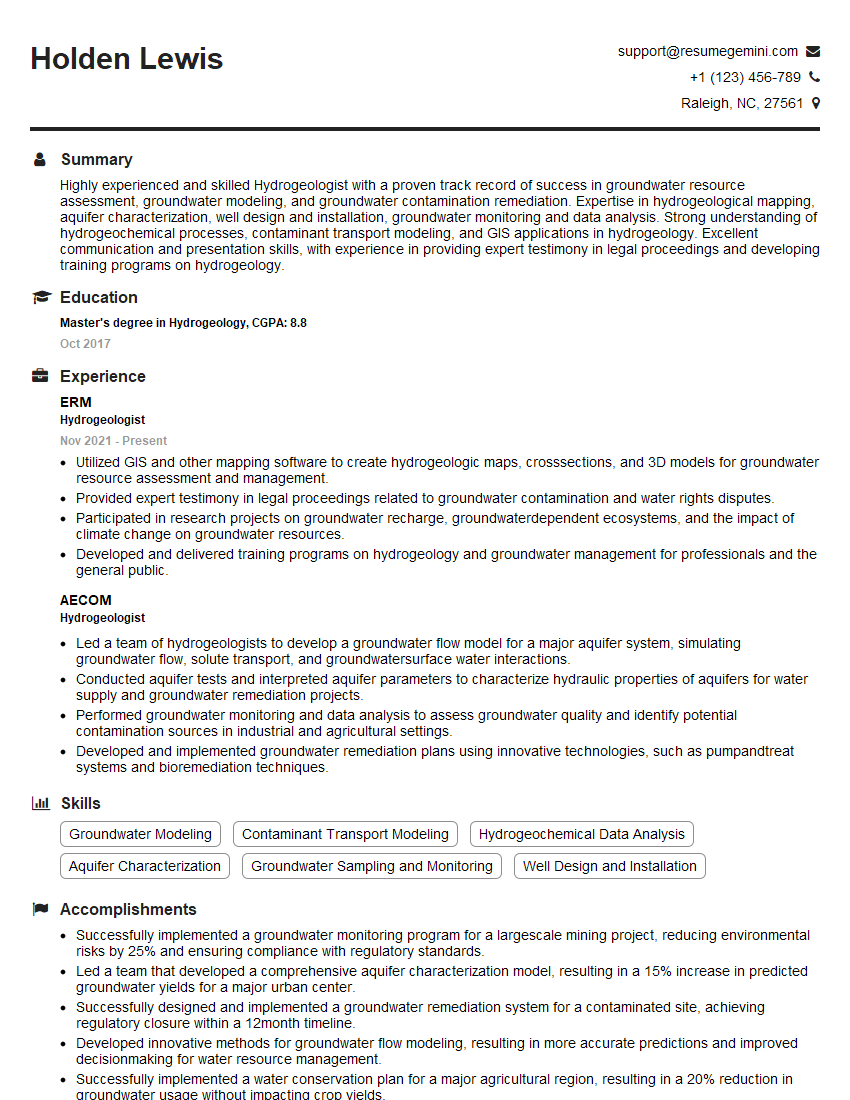
Hydrogeologist Resume Sample
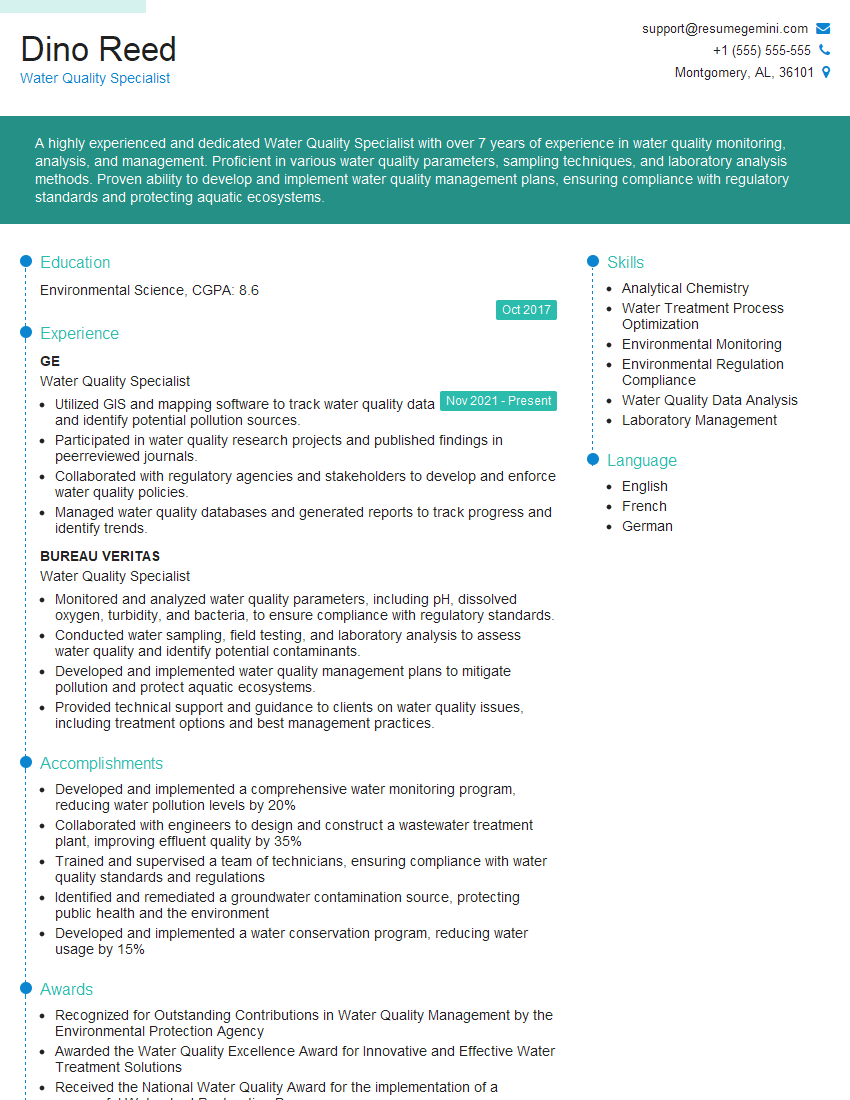
Water Quality Specialist Resume Sample
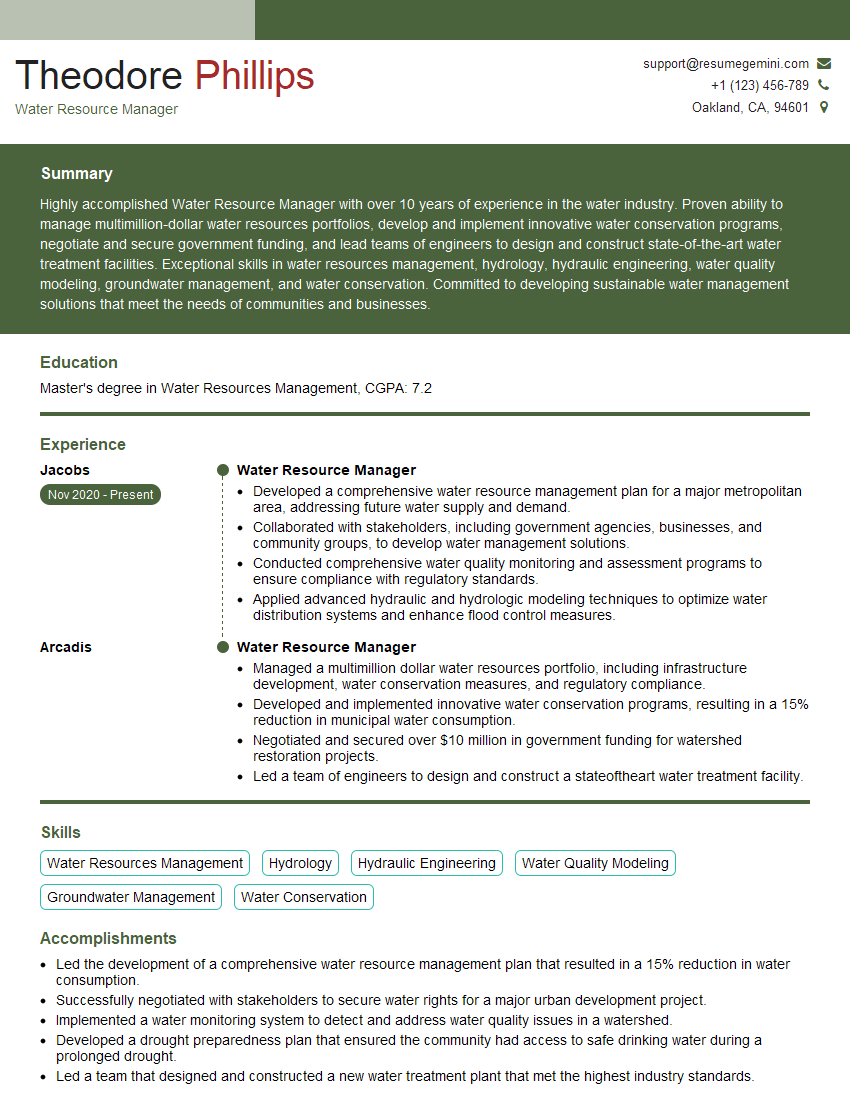
Water Resource Manager Resume Sample
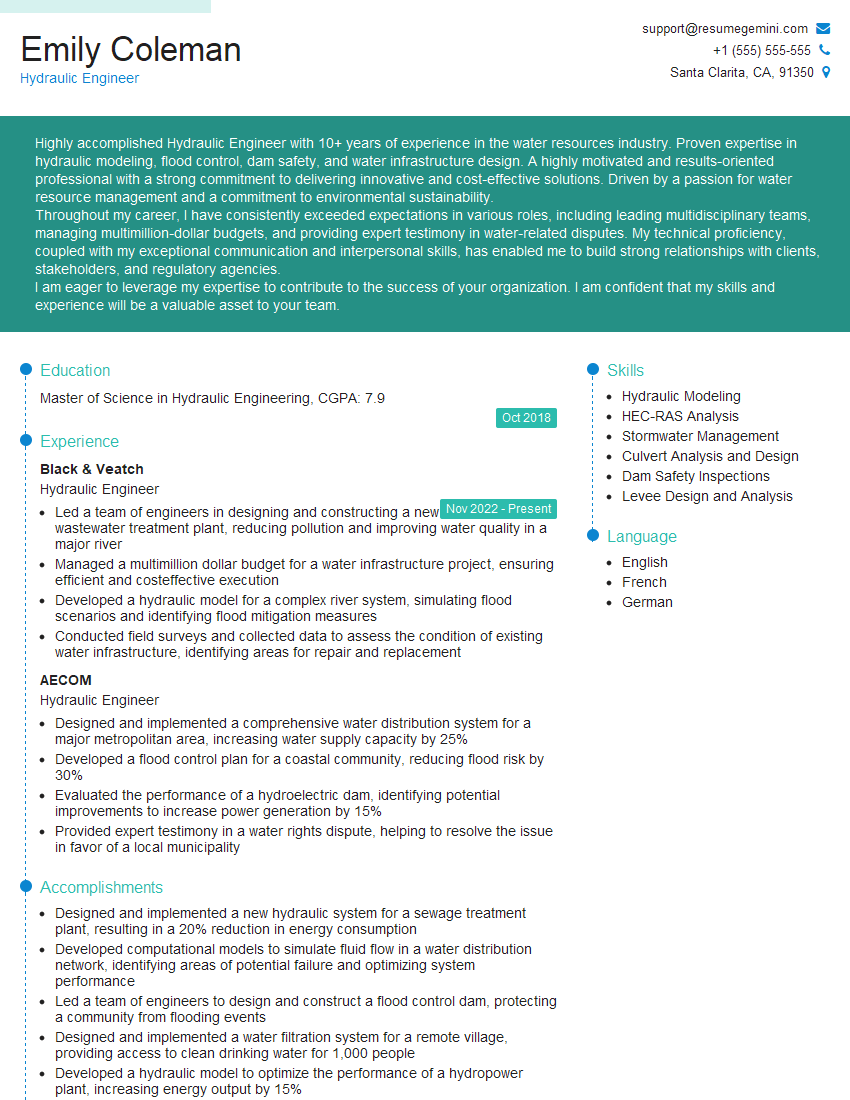
Hydraulic Engineer Resume Sample
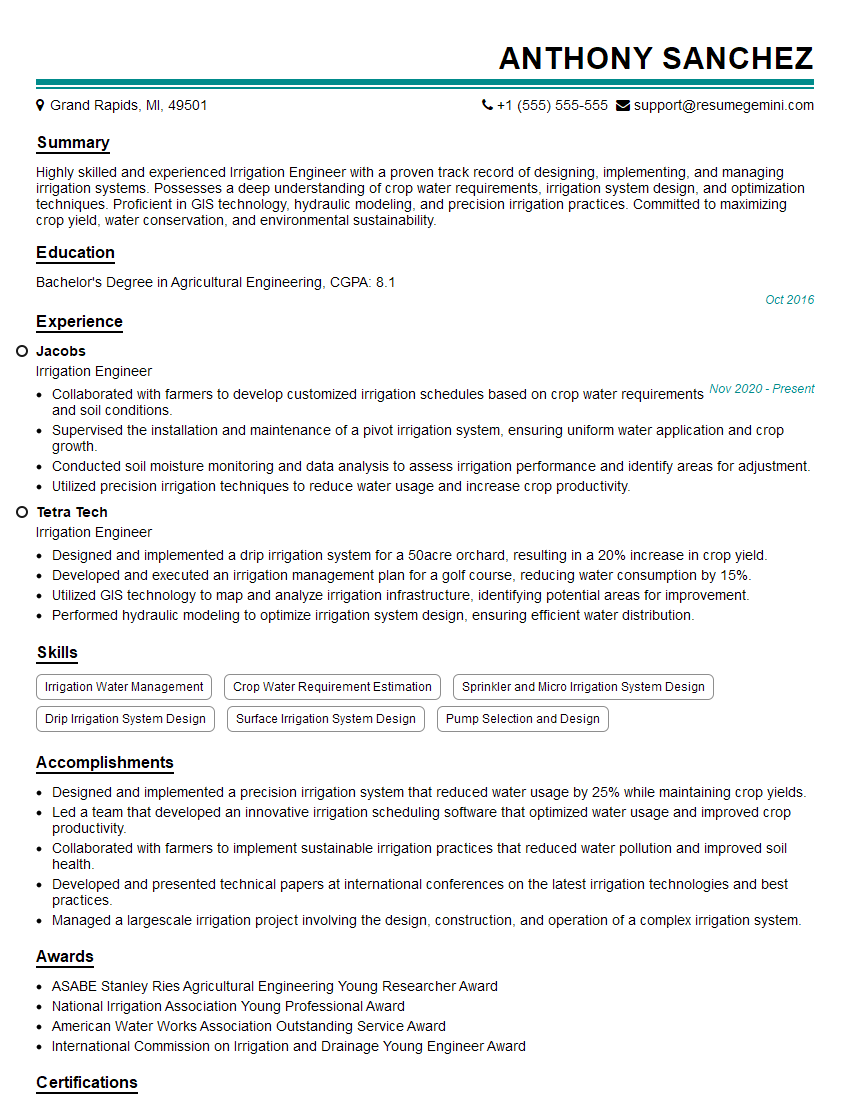
Irrigation Engineer Resume Sample
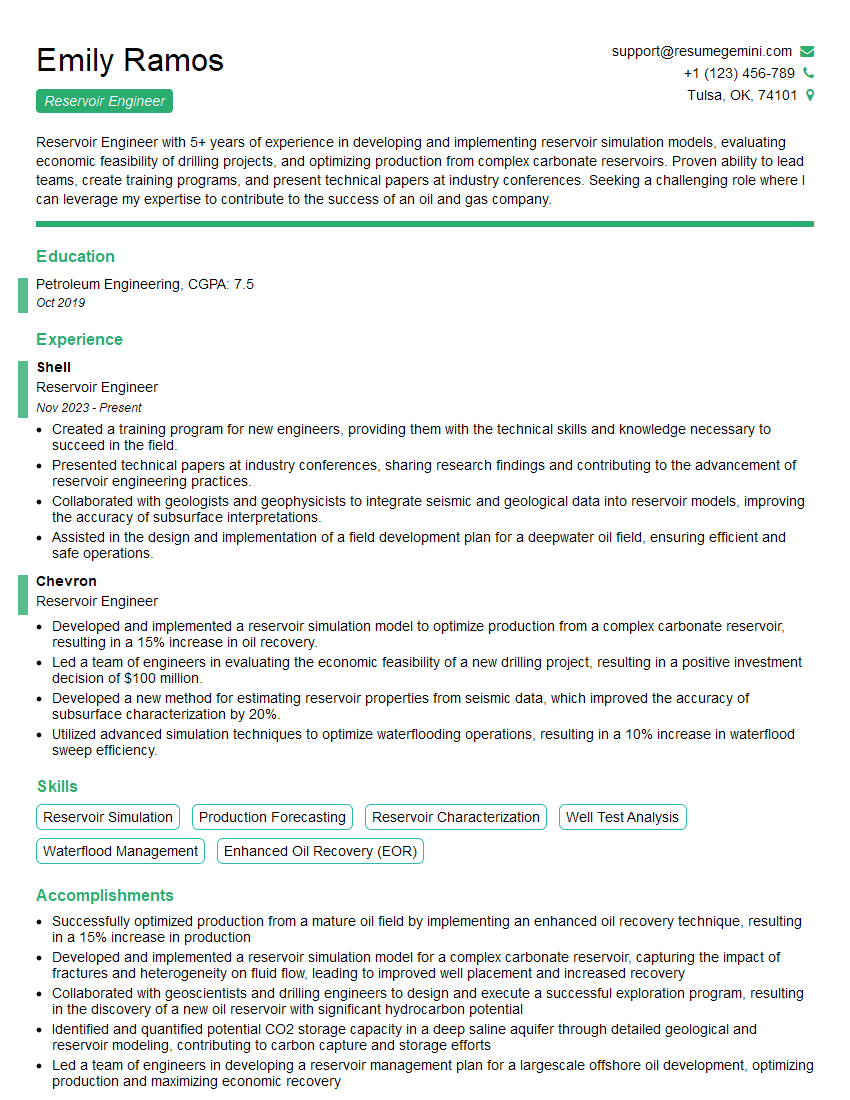
Reservoir Engineer Resume Sample
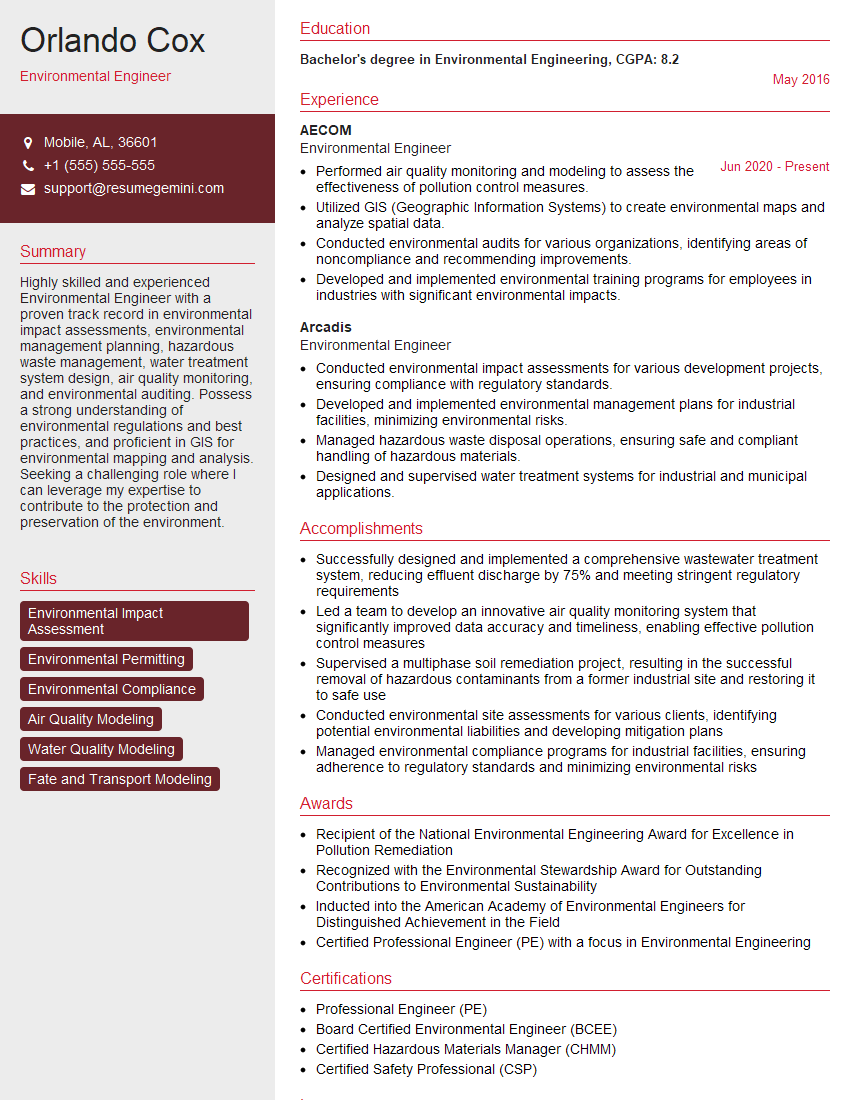
Environmental Engineer Resume Sample
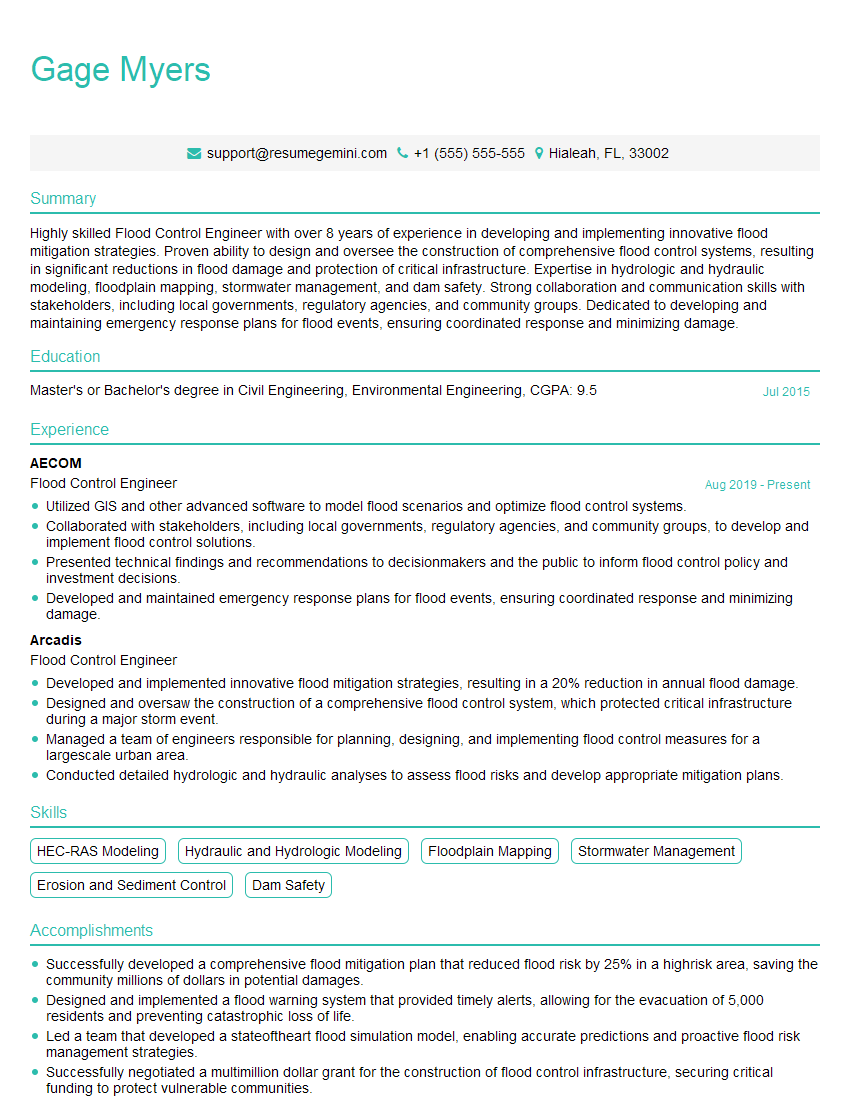
Flood Control Engineer Resume Sample
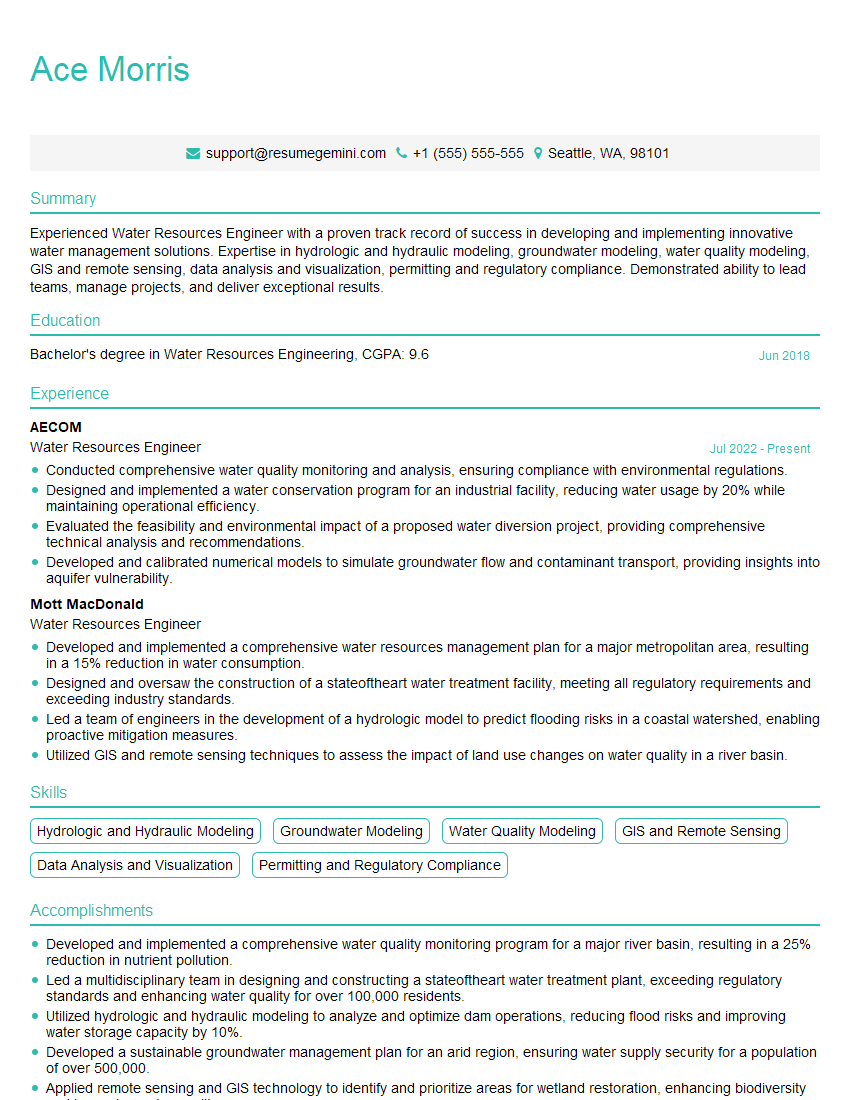
Water Resources Engineer Resume Sample
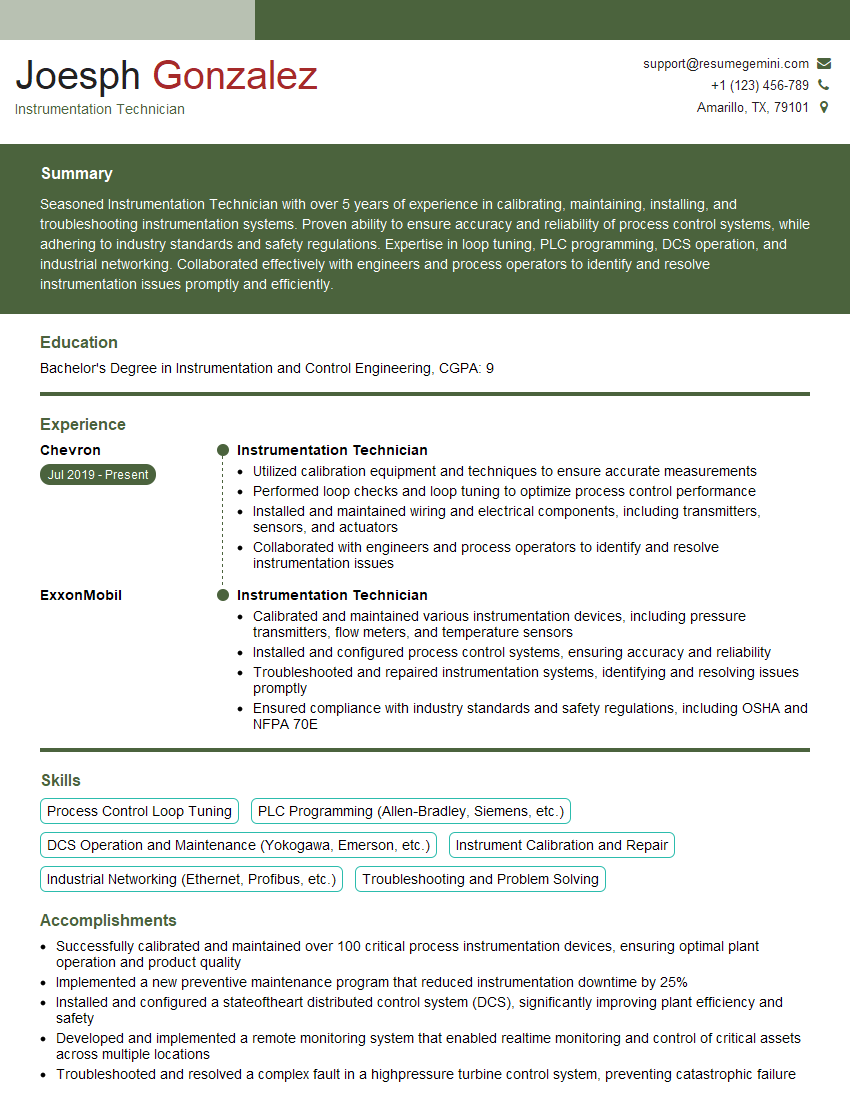
Instrumentation Technician Resume Sample
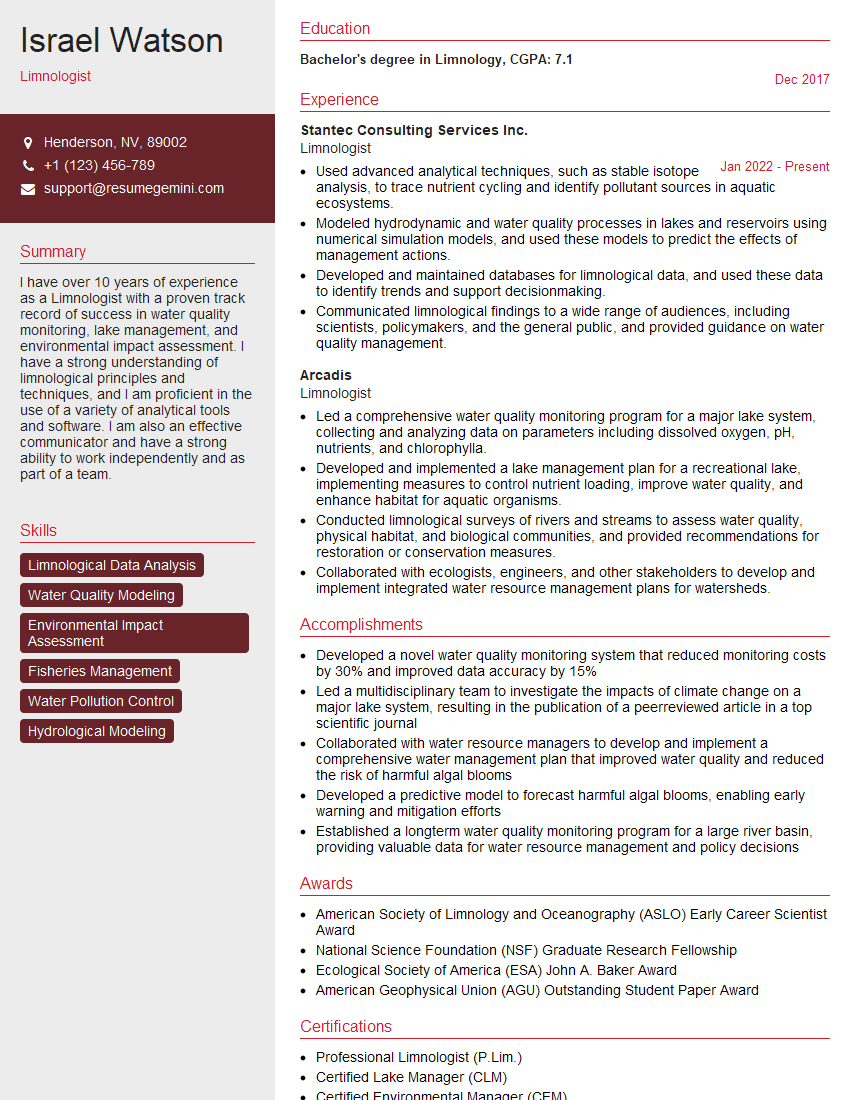
Limnologist Resume Sample
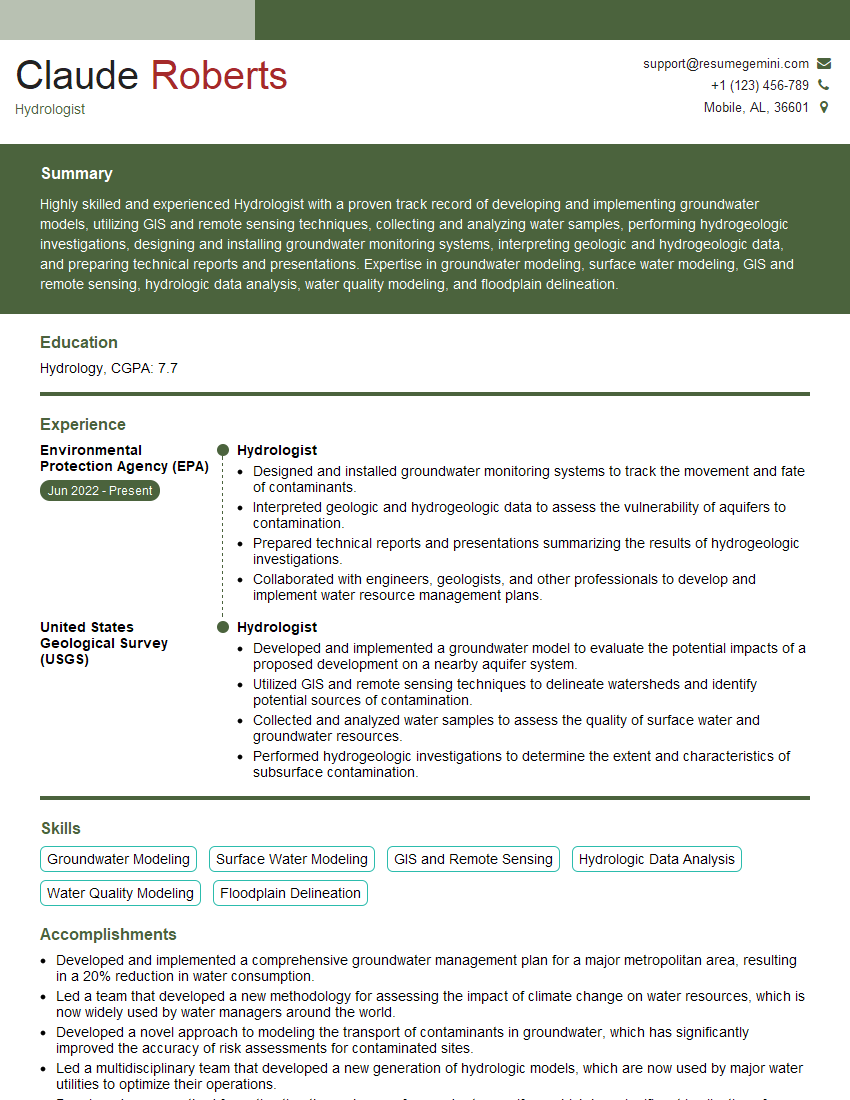
Hydrologist Resume Sample
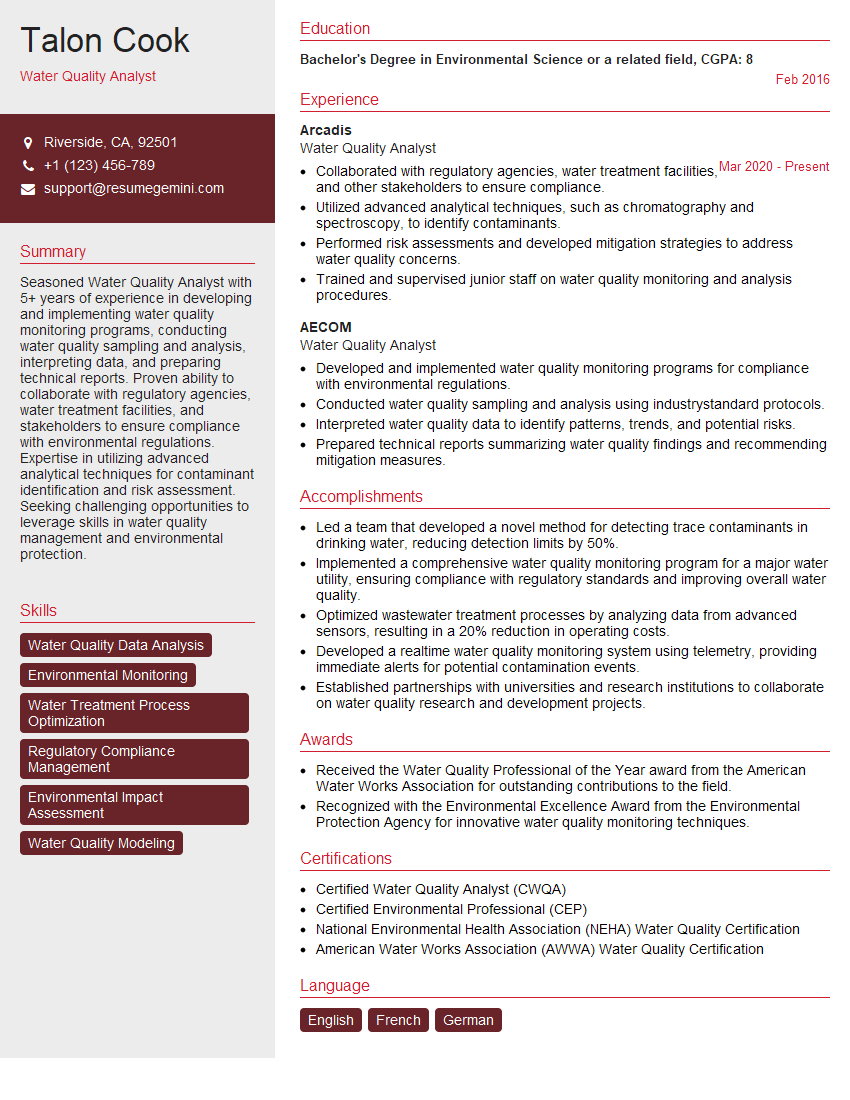
Water Quality Analyst Resume Sample
Explore more articles
Users Rating of Our Blogs
Share Your Experience
We value your feedback! Please rate our content and share your thoughts (optional).
What Readers Say About Our Blog
Very informative content, great job.
good