Every successful interview starts with knowing what to expect. In this blog, we’ll take you through the top Sand Casting and Mold Making interview questions, breaking them down with expert tips to help you deliver impactful answers. Step into your next interview fully prepared and ready to succeed.
Questions Asked in Sand Casting and Mold Making Interview
Q 1. Explain the different types of sand used in sand casting.
Sand casting utilizes various sands, each with unique properties influencing the casting’s quality. The choice depends on factors like the casting’s complexity, metal type, and desired surface finish. Common types include:
- Natural Sand: This is silica sand, readily available and relatively inexpensive. However, its properties can vary, requiring careful control. Think of it like baking – you wouldn’t use just any flour.
- Synthetic Sand: Engineered sands offer greater consistency and control over properties like permeability and strength. This is similar to using specialized baking ingredients for a predictable outcome.
- Chromite Sand: Used for high-temperature castings, offering superior refractoriness (resistance to heat). It’s the heavy-duty flour for extreme baking conditions.
- Zircon Sand: Known for its high melting point and excellent thermal shock resistance. This is like using a special heat-resistant pan for high-temperature applications.
- Olivine Sand: A high-strength sand particularly useful for large castings due to its excellent collapsibility. Consider it the extra-strong oven dish for handling large loads.
The selection process often involves considering factors like cost, availability, and the specific demands of the casting process.
Q 2. Describe the green sand molding process.
Green sand molding is a widely used method because of its simplicity and cost-effectiveness. ‘Green’ refers to the fact that the sand mold isn’t baked or dried before casting. The process involves:
- Pattern Making: Creating a pattern, typically from wood or metal, representing the desired casting shape.
- Mold Preparation: The pattern is placed in a flask (a box-like structure), and sand is packed around it. This creates a cavity that mirrors the pattern’s shape.
- Molding: The packed sand is carefully compacted to achieve appropriate strength and permeability, often using mechanical rammers or pneumatic equipment. Think of this as creating a sturdy mold to contain the molten metal.
- Pattern Removal: The pattern is carefully removed, leaving behind a cavity precisely shaped like the desired casting.
- Gating System Creation: Channels – sprue, runners, and gates – are created within the mold to allow the molten metal to flow smoothly into the mold cavity.
- Pouring: Molten metal is poured into the gating system, filling the mold cavity.
- Cooling and Solidification: The metal cools and solidifies, forming the casting.
- Mold Breaking: The solidified casting is removed from the mold by carefully breaking away the sand.
The entire process emphasizes precise sand compaction and a well-designed gating system to ensure a defect-free casting.
Q 3. What are the advantages and disadvantages of sand casting?
Sand casting, despite its age, remains popular due to its advantages but also faces limitations:
Advantages:
- Versatility: Handles complex shapes and large sizes with ease.
- Cost-Effectiveness: Relatively inexpensive tooling and equipment compared to other processes.
- Material Flexibility: Can cast a wide range of metals (ferrous and non-ferrous).
Disadvantages:
- Surface Finish: Typically requires further machining to achieve a smooth surface.
- Dimensional Accuracy: Can have lower dimensional accuracy than other casting methods.
- Labor Intensive: Mold making can be labor intensive, especially for intricate designs.
- Potential for Defects: Prone to defects like porosity, shrinkage, and gas inclusions if not properly controlled.
The decision to use sand casting involves carefully weighing these factors against the project’s specific requirements.
Q 4. How do you determine the appropriate gating system for a casting?
Designing an appropriate gating system is crucial for successful sand casting. It must ensure:
- Smooth Metal Flow: Minimize turbulence and prevent air entrapment.
- Proper Filling: Completely fill the mold cavity without splashing or erosion.
- Controlled Solidification: Achieve a uniform cooling rate to minimize defects.
Factors considered include:
- Casting Size and Shape: Larger castings need larger gating systems.
- Metal Type: Different metals have different fluidity and solidification characteristics.
- Mold Design: The mold’s complexity impacts the gating system’s design.
The design process often involves simulations and calculations to optimize metal flow and minimize defects. Experienced casters often use established design rules and principles based on years of experience.
Q 5. Explain the concept of riser design and its importance.
Risers are reservoirs of molten metal connected to the main casting. Their primary function is to compensate for shrinkage that occurs during solidification. Without them, the casting might develop shrinkage cavities or porosity. A well-designed riser ensures:
- Complete Filling: The casting is fully filled before the metal solidifies.
- Sound Casting: Minimizes internal defects by feeding molten metal to compensate for shrinkage.
Riser design considerations include:
- Size and Shape: Should be adequately sized to feed the casting.
- Location: Strategically placed to feed the most critical areas prone to shrinkage.
- Riser-to-Casting Ratio: Determined based on the metal type, casting size, and shape.
Improper riser design can lead to incomplete filling or internal defects, rendering the casting unusable. Therefore, proper design is crucial to ensure a sound casting.
Q 6. What are common casting defects and their causes?
Sand casting, while versatile, can be prone to several defects. Understanding their causes is key to prevention:
- Porosity: Gas bubbles trapped during solidification. Causes include excessive moisture in the sand, improper venting, or rapid cooling.
- Shrinkage: Cavities formed due to metal contraction during cooling. Causes include inadequate feeding, insufficient riser size, or rapid cooling.
- Cold Shut: Incomplete fusion of metal streams during filling. Causes include poor gating system design, low metal temperature, or turbulence.
- Misruns: Incomplete filling of the mold cavity. Causes include inadequate metal flow, improper gating, or low metal temperature.
- Surface Defects: Roughness, scabs, and washes. Causes include sand erosion, moisture in the sand, or improper mold venting.
Careful control of the casting parameters and meticulous mold preparation is essential in minimizing these defects.
Q 7. How do you prevent porosity in sand castings?
Porosity, a common defect, results from gas entrapment during solidification. Prevention strategies include:
- Proper Mold Venting: Ensuring adequate venting to allow trapped gases to escape. Think of it as providing escape routes for steam during baking.
- Controlled Pouring Rate: Avoiding turbulence, which can trap gases.
- Dry Sand: Using dry or properly baked sand to minimize moisture content, a key source of gas generation.
- Degasification of Molten Metal: Treating molten metal to remove dissolved gases before pouring.
- Proper Gating Design: A well-designed gating system minimizes turbulence and facilitates smooth metal flow.
By addressing these aspects, you significantly reduce the likelihood of porosity, creating stronger and more reliable castings.
Q 8. Describe the process of core making.
Core making is the process of creating a sand form, called a core, that is inserted into a sand mold to create internal cavities or shapes within a casting. Think of it like baking a cake – the core is like the insert you might use to make a hole in the middle. It’s crucial for producing castings with complex shapes that can’t be achieved with just the outer mold.
The process generally involves:
- Core Box: A wooden or metal frame with the negative shape of the internal cavity.
- Core Sand: A special type of sand, often with binding agents, that holds its shape after being compacted in the core box.
- Core Making Machine (often): Automated or manual equipment used to pack the sand tightly and evenly within the core box.
- Baking/Drying: The core is removed from the box and baked or dried to harden the sand and improve its strength.
- Core Placement: Finally, the hardened core is carefully placed within the main sand mold before casting.
For example, creating a hollow cylinder requires a core to form the central hole. The core is inserted into the mold cavity before molten metal is poured, creating the desired hollow shape.
Q 9. What are the different types of cores used in sand casting?
Sand cores are categorized in various ways, primarily by their bonding agent and manufacturing method.
- Green Sand Cores: These are made from the same sand mixture as the main mold and are held together by clay binders. They are less durable and primarily used for simpler internal features, often requiring careful handling.
- Dry Sand Cores: These are baked or dried to increase strength and stability and are typically used for complex internal shapes or when higher strength is necessary. They can withstand the high temperatures and pressures of molten metal pouring.
- Resin-Bonded Cores: These cores use synthetic resins as binders, offering excellent strength, dimensional accuracy and consistent quality. They are frequently used in high-precision casting applications.
- Shell Cores: Produced using a shell-molding process, which employs a metal pattern and a specialized sand mixture. They’re thin-walled and lightweight but surprisingly strong, suited for parts with intricate internal features.
The choice depends on factors such as the casting’s complexity, required accuracy, and production volume. For mass production, resin-bonded cores are often preferred due to their consistency and automation capabilities.
Q 10. Explain the importance of mold venting.
Mold venting is crucial for the safe and successful sand casting process. It involves creating pathways within the mold to allow the escape of gases produced when the molten metal is poured.
These gases can include:
- Moisture in the sand: Sand, even when seemingly dry, retains some moisture.
- Volatiles from binders: Binding agents in the sand can release gases upon heating.
- Air trapped in the mold: Air pockets can remain in the mold cavity.
Without adequate venting, these gases would be trapped, causing:
- Blows and pinholes: Gas bubbles forming within the casting.
- Mold cracking: Pressure buildup from trapped gases can crack the mold.
- Casting defects: Gas pockets can weaken the cast part and compromise its integrity.
Venting is achieved by adding small channels or vents to the mold, often strategically placed near the pouring point and around the core. Proper venting ensures a smooth, controlled pouring process and a high-quality casting.
Q 11. How do you inspect a sand mold for defects?
Inspecting a sand mold for defects is a crucial step to prevent casting flaws. A thorough inspection involves visual examination, often supplemented with tools and techniques.
The inspection covers several aspects:
- Visual Examination: Checking for cracks, holes, or any damage to the mold surface. Uneven sand compaction is also readily apparent.
- Smoothness and Finish: Assessing the surface for imperfections that might translate into surface defects on the casting.
- Alignment of Parts: Ensuring that mold halves are correctly aligned and that cores are properly seated to avoid misalignment in the final casting.
- Vent Check: Confirming that venting channels are open and properly positioned. A blocked vent is easily overlooked but can have disastrous results.
- Core Position and Seating: Verifying that cores are correctly positioned and securely seated within the mold cavity to maintain correct internal geometry.
Experienced molders develop a keen eye for defects, recognizing subtle variations in sand compaction, color, or texture that could indicate a problem. Using tools like a flashlight or a probe to check for cracks or hidden defects further enhances the inspection process.
Q 12. What are the safety precautions involved in sand casting?
Sand casting poses several safety hazards; precautions are essential.
- Respiratory Protection: Silica dust from the sand is a serious respiratory hazard. Workers must wear appropriate respirators and work in well-ventilated areas.
- Hot Metal Burns: Molten metal is extremely dangerous. Protective clothing, including heat-resistant gloves, aprons, and eye protection, is essential. Proper pouring techniques are also critical.
- Molding Machine Safety: Sand molding machines can present mechanical hazards such as pinch points and moving parts. Safe operating procedures and proper training are mandatory.
- Fire Prevention: Molten metal poses a fire hazard. Fire extinguishers rated for metal fires must be readily accessible.
- Hearing Protection: Noisy machinery may require hearing protection.
Regular safety training, adherence to safety protocols, and using proper personal protective equipment are paramount in maintaining a safe working environment.
Q 13. Describe the process of melt preparation and pouring.
Melt preparation and pouring are critical phases in sand casting. The quality of the casting hinges heavily on the correct procedure.
Melt Preparation:
- Melting: The metal is melted in a furnace, crucible, or other suitable equipment. Temperature control is vital to avoid overheating or insufficient melting.
- Alloying: Alloying elements are added as needed to achieve the desired properties of the final casting.
- Fluxing: Fluxes are added to remove impurities and prevent oxidation. These chemicals can be hazardous, requiring careful handling.
- Degassing: To remove dissolved gases from the molten metal.
Pouring:
- Ladle: Molten metal is transferred to a ladle for controlled pouring.
- Pouring Speed: This is crucial to avoid turbulence that could introduce gas bubbles or cause erosion of the mold.
- Gating System: Molten metal flows through a precisely designed gating system, allowing uniform filling of the mold cavity.
- Cooling: After pouring, the mold is allowed to cool gradually, allowing the metal to solidify and prevent cracking.
Precise temperature control, efficient degassing, and careful pouring techniques are essential for defect-free castings.
Q 14. What is the role of a pattern in sand casting?
The pattern is the heart of sand casting, a template that creates the mold cavity’s shape. It’s a replica of the final casting, but slightly larger to account for shrinkage of the metal as it cools.
Patterns are typically made from various materials, such as wood, metal, or plastic, depending on the complexity of the casting and the number of castings needed. The choice of material also influences the pattern’s cost, durability, and accuracy.
The pattern’s role includes:
- Mold Cavity Formation: It is pressed into the sand to create the mold cavity.
- Defining Dimensions: Ensures the casting’s accurate dimensions.
- Gating System Integration: Often incorporates features to guide the flow of molten metal.
- Riser and Vent Locations: Usually includes features for risering and venting.
Accurate pattern design and creation are critical for producing a successful and well-dimensioned casting. A flawed pattern leads directly to defects in the final product.
Q 15. Explain the difference between shell molding and sand casting.
Shell molding and sand casting are both sand casting methods, but they differ significantly in how the mold is created. Sand casting uses a traditional sand mold built in two halves (cope and drag) packed around a pattern. Shell molding, on the other hand, creates a thin, shell-like mold by applying a resin-coated sand mixture to a heated metal pattern. This shell is then cured and assembled to form the mold cavity.
Think of it like building a sandcastle: Sand casting is like packing wet sand around a toy to make the mold, while shell molding is like building the castle wall piece-by-piece with a special, quickly setting sand mixture.
- Sand Casting: Uses a larger volume of sand, creating a heavier, more robust mold. Offers more flexibility for complex shapes, but is generally slower and less precise.
- Shell Molding: Uses less sand, resulting in a lighter, thinner mold. It’s faster, more automated, and yields improved dimensional accuracy. However, it’s better suited for simpler geometries.
The choice between the two depends on factors like the casting’s complexity, production volume, required dimensional accuracy, and cost considerations.
Career Expert Tips:
- Ace those interviews! Prepare effectively by reviewing the Top 50 Most Common Interview Questions on ResumeGemini.
- Navigate your job search with confidence! Explore a wide range of Career Tips on ResumeGemini. Learn about common challenges and recommendations to overcome them.
- Craft the perfect resume! Master the Art of Resume Writing with ResumeGemini’s guide. Showcase your unique qualifications and achievements effectively.
- Don’t miss out on holiday savings! Build your dream resume with ResumeGemini’s ATS optimized templates.
Q 16. How do you measure the dimensional accuracy of a casting?
Measuring the dimensional accuracy of a casting involves a multifaceted approach using various tools and techniques. The specific method depends on the casting’s size, complexity, and required tolerance levels.
- Coordinate Measuring Machine (CMM): For high precision, a CMM provides three-dimensional measurements with high accuracy. It’s ideal for intricate castings where precise dimensions are critical.
- Vernier Calipers and Micrometers: These handheld instruments are used for measuring linear dimensions like length, width, and thickness. They are cost-effective but less precise than a CMM, especially for complex shapes.
- Optical Comparators: These project an enlarged image of the casting onto a screen, allowing for visual comparison against a template or blueprint. This is useful for detecting deviations in shape and surface finish.
- Go/No-Go Gauges: Simple and efficient for mass production, these gauges quickly determine if a casting falls within the acceptable tolerance range.
In practice, a combination of these techniques is often used to ensure thorough dimensional accuracy assessment. It’s crucial to meticulously document all measurements and compare them against the design specifications. Deviations beyond acceptable tolerances might indicate issues with the mold, casting process, or alloy properties, requiring adjustments to the process for improvements.
Q 17. What is the significance of the Cope and Drag in sand casting?
The cope and drag are the two main parts of a sand mold in sand casting. They are essentially the top and bottom halves of the mold that enclose the pattern and create the cavity for molten metal.
- Cope: The upper half of the mold. It’s usually lighter and easier to handle than the drag.
- Drag: The lower half of the mold. It often contains the sprue, runner, and gates through which molten metal enters the mold cavity.
Imagine a two-piece lunchbox. The top is like the cope and the bottom is the drag. The food (molten metal) is poured into the top compartment. These two parts fit together to create the complete mold cavity where the casting is formed. The accurate alignment and proper sealing of the cope and drag are essential for preventing leaks and achieving a successful casting.
Q 18. Explain the process of cleaning and finishing a sand casting.
Cleaning and finishing a sand casting is a crucial step to remove the residual sand, scale, and imperfections to achieve the desired surface quality and dimensional accuracy.
- Shot Blasting: This process uses high-velocity steel shot to remove adhering sand and scale from the casting’s surface. It improves surface finish and removes minor surface defects.
- Tumbling: Castings are tumbled in a rotating drum with abrasive media to smooth surface irregularities and remove loose sand.
- Grinding and Machining: For precise dimensional accuracy and surface finish, grinding and machining operations may be necessary. This involves using various tools to remove excess material and achieve the required tolerances.
- Inspection: After cleaning and finishing, a thorough inspection is critical to ensure that the casting meets the required specifications regarding surface finish, dimensions, and absence of defects.
The specific cleaning and finishing methods employed depend on the casting’s complexity, size, material, and intended application. For instance, a high-precision aerospace component would require far more stringent cleaning and finishing than a simple decorative item.
Q 19. How do you interpret a casting drawing?
Interpreting a casting drawing requires a strong understanding of engineering drawings and foundry practices. The drawing shows the casting’s geometry, dimensions, tolerances, material specifications, surface finish requirements, and other important information needed for mold making and casting.
Key elements to focus on include:
- Dimensions: These define the casting’s size and shape, often including tolerances indicating allowable deviations from the nominal values.
- Material Specification: This specifies the alloy composition for the casting, impacting the mechanical properties and casting process parameters.
- Surface Finish: This indicates the desired roughness of the casting’s surface, often expressed using roughness average (Ra) values.
- Machining Allowances: If machining is planned after casting, the drawing will specify additional material to be removed.
- Casting Number and Revision: These uniquely identify the drawing and its revision level.
Understanding the symbols and conventions used in casting drawings is crucial. These drawings often include details like core prints, gating systems, and riser locations, all of which guide the mold maker in creating the appropriate mold.
Q 20. What are the different types of casting alloys used in sand casting?
A wide variety of alloys are used in sand casting, chosen based on the required properties of the final product. Some common examples include:
- Gray Iron: Excellent for damping vibrations and offering good machinability. Common in automotive and machinery applications.
- Ductile Iron (Nodular Iron): Higher tensile strength and ductility than gray iron, suitable for components requiring higher strength and toughness.
- Steel: High tensile strength and good weldability, used in structural components and pressure vessels.
- Aluminum Alloys: Lightweight and corrosion-resistant, ideal for aerospace and automotive applications.
- Copper Alloys (Brass, Bronze): Good corrosion resistance and high conductivity, used in plumbing fittings, electrical components, and bearings.
- Magnesium Alloys: Extremely lightweight and strong, used in aerospace and automotive components.
The choice of alloy depends on several factors including strength, ductility, corrosion resistance, cost, and the required casting properties. Each alloy has its unique melting point, fluidity, and shrinkage characteristics, necessitating careful consideration during mold design and casting process selection.
Q 21. Explain the concept of solidification shrinkage in casting.
Solidification shrinkage in casting refers to the volume reduction that occurs as molten metal cools and transforms into a solid. As the metal cools, its atoms arrange themselves into a more ordered structure, resulting in a decrease in volume. This shrinkage can cause defects in the casting if not properly accounted for in the design and casting process.
Imagine filling a balloon with water and letting it cool. As the water solidifies into ice, it shrinks slightly. Similarly, molten metal experiences a volumetric decrease during solidification. This shrinkage can lead to several problems, including:
- Porosity: Shrinkage can create voids or pores within the casting, reducing its mechanical strength and integrity.
- Dimensional Inaccuracies: The final dimensions of the casting can deviate from the design specifications due to shrinkage.
- Hot Tears: Severe shrinkage can cause cracks or tears in the solidified casting.
To mitigate these issues, foundry professionals employ strategies such as using risers (reservoirs of molten metal to compensate for shrinkage) and designing the casting with appropriate dimensions to account for shrinkage. Accurate prediction and compensation for solidification shrinkage is crucial for producing high-quality castings.
Q 22. How do you calculate the amount of metal needed for a casting?
Calculating the amount of metal needed for a casting involves more than just the volume of the final part. We need to account for the extra metal required to fill the gating system (sprue, runners, and ingates) and the shrinkage that occurs as the metal cools and solidifies. Think of it like baking a cake – you need more batter than the final cake volume to account for the pan and some loss during baking.
The process typically involves these steps:
- Determine the volume of the casting: This is usually done using CAD software or by calculating the volume of the pattern. Let’s say our casting has a volume of 100 cubic centimeters (cc).
- Calculate the volume of the gating system: This depends on the design of the gating system, but it’s often around 20-30% of the casting volume. In our example, let’s assume a 25% addition, resulting in an extra 25 cc.
- Account for shrinkage: The metal shrinks as it cools. The shrinkage factor varies depending on the metal alloy. For example, aluminum might shrink by around 6%, while cast iron might be closer to 1%. Let’s assume a 6% shrinkage for our aluminum casting. This means we need to add 6 cc (6% of 100 cc).
- Total metal required: Adding the casting volume, gating system volume, and shrinkage compensation, we get 100 cc + 25 cc + 6 cc = 131 cc. This is the approximate amount of molten metal needed.
It’s crucial to note that this is an approximation. Precise calculations often require specialized software and consider factors like metal fluidity and pouring temperature.
Q 23. What are the environmental considerations in sand casting?
Sand casting, while a versatile process, presents several environmental challenges. The primary concerns revolve around:
- Sand disposal: Used sand often contains residual metal, binders, and potentially harmful chemicals. Improper disposal can contaminate soil and water sources. Sustainable solutions include sand reclamation and recycling processes, where the used sand is cleaned and reused.
- Air emissions: Melting and pouring metals can release fumes and particulate matter into the atmosphere, depending on the type of metal and the casting process. Proper ventilation and emission control systems are essential to minimize these emissions.
- Water usage and waste: Cleaning and preparing the molds and castings can require significant water usage. Implementing water recycling and minimizing water waste are crucial for environmental responsibility.
- Energy consumption: Sand casting is an energy-intensive process, particularly in the melting and pouring stages. Optimizing energy efficiency through technological improvements and process optimization can significantly reduce the environmental impact.
Modern foundries are increasingly adopting environmentally friendly practices such as using recycled sand, implementing closed-loop water systems, and investing in energy-efficient equipment to mitigate these environmental concerns. Regulations and certifications, like ISO 14001, further push the industry towards sustainable practices.
Q 24. Describe the role of a sprue and runner in a gating system.
The sprue, runner, and ingates are integral parts of the gating system in sand casting, responsible for delivering molten metal to the mold cavity smoothly and efficiently. Think of it as a controlled highway system for molten metal.
- Sprue: The sprue is the vertical channel through which molten metal flows from the pouring basin into the runner system. It’s essentially the main ‘highway’ entrance. Its design is critical; a poorly designed sprue can lead to turbulence and air entrapment.
- Runner: The runner is a horizontal channel that distributes the molten metal from the sprue to the ingates. It acts as the ‘distributor road’ leading to the individual mold cavities. Multiple runners can feed multiple castings simultaneously.
- Ingates: Ingates are smaller channels that connect the runner system to the mold cavity. They act as the individual ‘street entrances’ into each casting. The design affects the flow of metal into the mold cavity, influencing the metal’s filling pattern and minimizing defects.
A well-designed gating system ensures a smooth and consistent flow of molten metal into the mold cavity, minimizing turbulence, air entrapment, and defects in the final casting. The size and shape of each component are carefully chosen based on the properties of the metal being cast, the mold design, and the casting’s complexity.
Q 25. Explain the use of chaplets in sand casting.
Chaplets are small, metal supports used in sand casting to hold cores in place within the mold cavity. Imagine you’re building a sandcastle with intricate interior structures; chaplets act as the supporting beams.
Cores are used to create internal cavities or complex shapes within the casting. Without support, these cores could shift or float during pouring, resulting in misaligned or defective castings. Chaplets are positioned strategically to prevent this. They are typically made of materials like cast iron or ceramic, chosen to withstand the high temperatures of molten metal.
The design of the chaplet needs careful consideration. They must be strong enough to support the core, but small enough to avoid interfering with the flow of metal or leaving unwanted marks on the casting. They often have a tapered or notched design for better sand penetration, ensuring they are securely embedded in the mold.
Q 26. What is the purpose of a parting line in a sand mold?
The parting line in a sand mold is the surface where the two mold halves separate. Think of it as the ‘seam’ of a two-part container. It’s the plane along which the mold is opened and closed during the casting process.
Its purpose is to allow for easy mold assembly and disassembly. Complex castings often require more intricate parting lines to accommodate the shape of the casting. The location of the parting line is strategically chosen to minimize the surface area disruption, resulting in improved casting quality and reduced finishing work. A poorly chosen parting line can lead to difficulties in mold making, a higher risk of casting defects, and increased finishing requirements.
Q 27. Describe different methods of pattern making.
Pattern making is the crucial first step in sand casting, creating the replica of the final casting. Several methods exist, each with its advantages and disadvantages:
- Wood patterns: Traditionally, wood patterns were widely used due to their ease of fabrication and relatively low cost. However, they are susceptible to wear and tear and are not suitable for high-volume production.
- Metal patterns: Metal patterns (aluminum, steel, etc.) offer better durability and accuracy, suitable for higher-volume production. They can also withstand repeated use and provide better dimensional stability.
- Plastic patterns: Plastic patterns, often made from polyurethane or epoxy resins, offer a good balance between cost and durability. They are lighter than metal patterns and are easily machinable, but are less resistant to wear and tear.
- Expanded polystyrene (EPS) patterns: These patterns, also known as ‘lost foam’ patterns, are relatively inexpensive and offer intricate detail. The foam pattern is embedded in the sand and melts during pouring, eliminating the need for pattern removal.
- 3D-printed patterns: Additive manufacturing techniques like 3D printing allow for complex and customized patterns to be created quickly and efficiently. This is especially valuable for rapid prototyping and low-volume production runs.
The choice of pattern making method depends on factors like casting complexity, production volume, required accuracy, and material cost.
Q 28. What are the challenges and solutions related to high-volume sand casting production?
High-volume sand casting production presents unique challenges, primarily related to efficiency, consistency, and cost-effectiveness.
- Automation and mechanization: Automating various stages of the process, like mold making, pouring, and cleaning, is essential for achieving high-volume output. This reduces labor costs and improves consistency.
- Sand handling and recycling: Efficient sand handling systems and sand recycling processes are crucial for minimizing waste and maintaining sand quality. This reduces material costs and environmental impact.
- Quality control and inspection: Implementing rigorous quality control measures throughout the process, including automated inspection techniques, is vital to ensure consistent casting quality and minimize defects.
- Process optimization: Optimizing the casting process, including gating system design, pouring parameters, and cooling strategies, can significantly improve casting yields and reduce production time.
- Maintaining consistent sand properties: fluctuations in sand properties can greatly affect the quality of castings. Careful monitoring and control of sand moisture content, grain size distribution and additives are essential for consistency.
Addressing these challenges requires a holistic approach combining advanced technologies, efficient management, skilled workforce, and a commitment to continuous improvement.
Key Topics to Learn for Your Sand Casting and Mold Making Interview
- Sand Properties and Selection: Understanding the different types of molding sand (e.g., silica, chromite), their properties (permeability, strength, collapsibility), and how to select the appropriate sand for specific casting applications. Consider the impact of moisture content and grain size distribution.
- Mold Making Techniques: Mastering various mold making methods, including hand molding, machine molding (e.g., jolt squeeze, air set), and the advantages and limitations of each. Be prepared to discuss pattern design and preparation.
- Gating and Risering Systems: Understanding the principles of designing effective gating and risering systems to ensure proper metal flow, minimize defects (e.g., porosity, shrinkage), and achieve sound castings. Be ready to discuss various gating designs and their applications.
- Melting and Pouring Practices: Familiarize yourself with different melting techniques (e.g., cupola, induction furnace) and the importance of maintaining proper temperature control during the pouring process. Understand the factors influencing metal fluidity and its effect on casting quality.
- Casting Defects and Troubleshooting: Learn to identify common casting defects (e.g., cold shuts, blowholes, misruns) and discuss practical troubleshooting strategies to prevent their occurrence. Understanding root cause analysis is vital.
- Safety Procedures and Regulations: Demonstrate awareness of the safety precautions and regulations associated with sand casting and mold making, including personal protective equipment (PPE) and environmental considerations.
- Material Science Fundamentals: Possessing a strong understanding of the properties of metals and alloys relevant to sand casting. This includes thermal properties, solidification behavior, and their influence on casting characteristics.
Next Steps
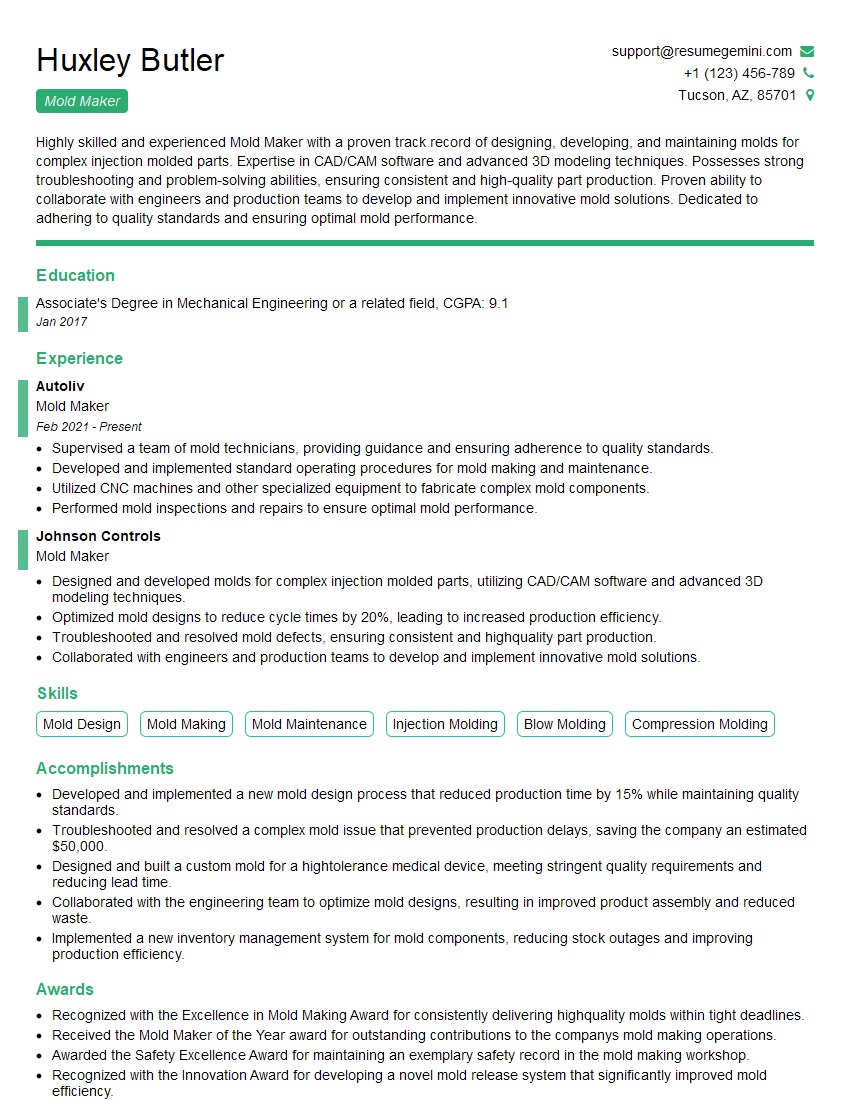
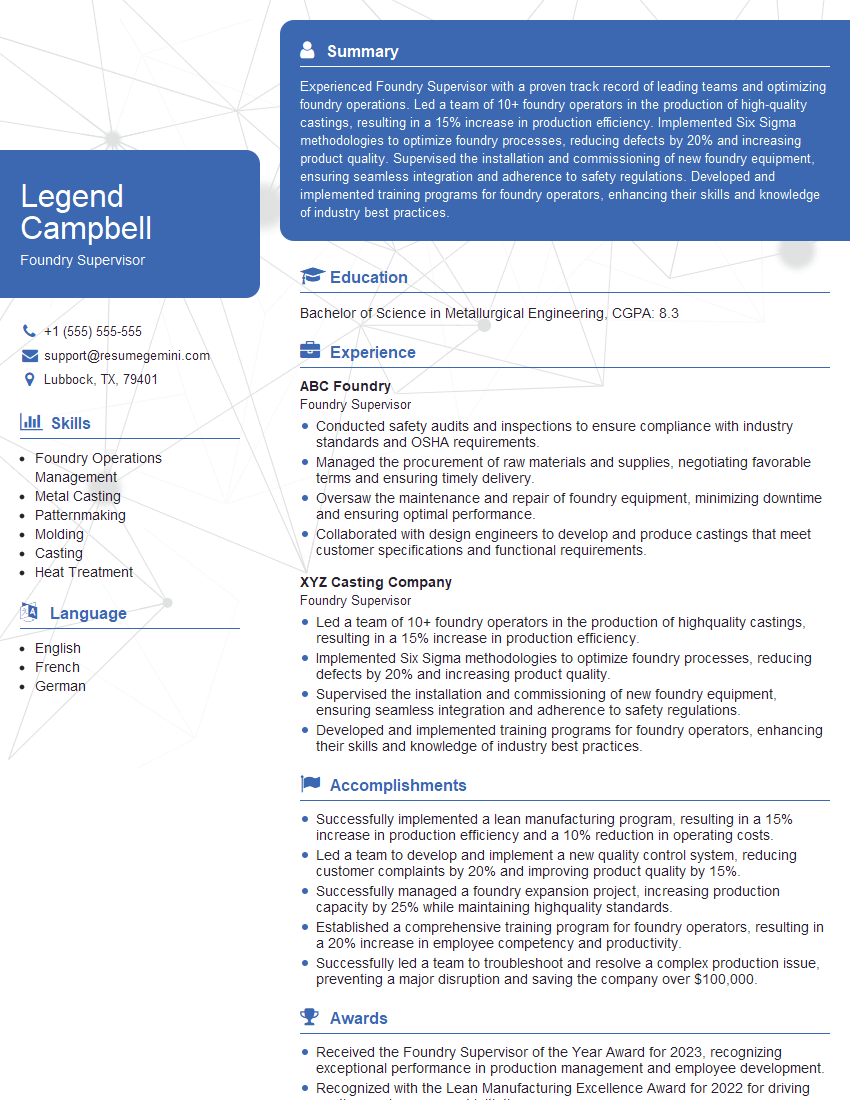
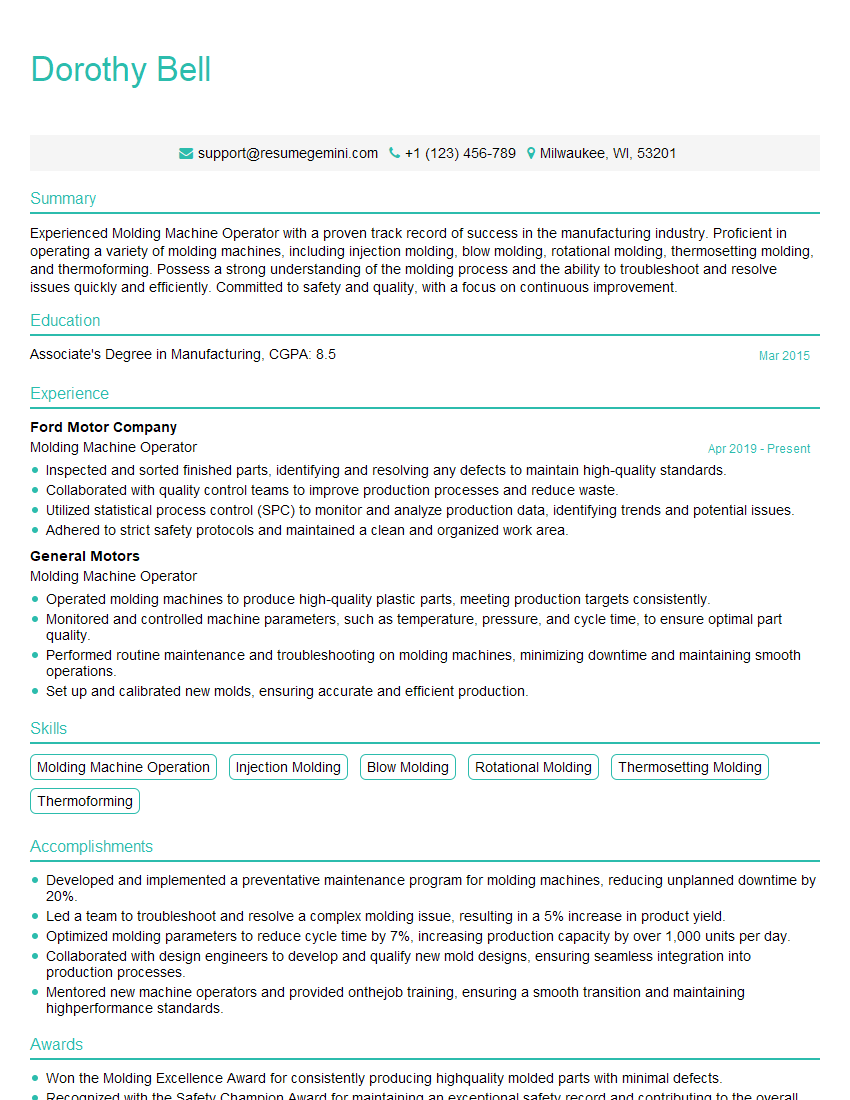
Mastering sand casting and mold making opens doors to exciting career opportunities in manufacturing and related industries. Your expertise in this crucial process will be highly valued. To maximize your job prospects, it’s crucial to present your skills effectively. Creating an ATS-friendly resume is paramount in getting your application noticed by potential employers. ResumeGemini is a trusted resource that can help you craft a professional and impactful resume tailored to the specifics of your experience. We provide examples of resumes specifically designed for Sand Casting and Mold Making professionals to give you a head start. Invest in showcasing your skills – it’s an investment in your future.
Explore more articles
Users Rating of Our Blogs
Share Your Experience
We value your feedback! Please rate our content and share your thoughts (optional).
What Readers Say About Our Blog
Very informative content, great job.
good