Cracking a skill-specific interview, like one for Sandblasting Equipment Operation, requires understanding the nuances of the role. In this blog, we present the questions you’re most likely to encounter, along with insights into how to answer them effectively. Let’s ensure you’re ready to make a strong impression.
Questions Asked in Sandblasting Equipment Operation Interview
Q 1. What are the different types of abrasive materials used in sandblasting?
Sandblasting uses a variety of abrasive materials, each chosen for its specific properties to achieve the desired surface finish. The choice depends heavily on the material being blasted, the desired outcome, and environmental concerns.
- Sand: While the name suggests it, silica sand is increasingly less common due to its health hazards (silicosis). It’s relatively inexpensive but can leave a rough finish.
- Glass beads: These produce a very smooth, fine finish, ideal for delicate parts or where a high-gloss finish is needed. They are more expensive than sand.
- Aluminum oxide: A very hard and durable abrasive, excellent for removing heavy rust, paint, or scale. It leaves a somewhat rougher finish than glass beads.
- Steel grit: Used for aggressive cleaning and surface preparation, especially on tough materials. It produces a more textured finish.
- Walnut shell media: A softer, eco-friendly alternative, ideal for cleaning delicate surfaces where aggressive blasting isn’t required, like antique restoration. It leaves a relatively smooth finish.
- Copper slag: A recycled material offering a good balance of cost and performance, suitable for various applications.
Choosing the right abrasive is crucial for a successful project. For instance, using steel grit on a delicate aluminum part would damage it, while using glass beads on heavily rusted steel would be inefficient.
Q 2. Explain the difference between pressure blasting and suction blasting.
Pressure blasting and suction blasting are two primary methods of sandblasting, each with its own advantages and disadvantages. They differ primarily in how the abrasive is propelled.
- Pressure blasting: In this method, a compressor pressurizes the abrasive, forcing it through the nozzle at high velocity. This results in a powerful blast, ideal for removing heavy coatings or tough contaminants. Think of it like a high-pressure water jet, but with abrasive particles instead of water. Pressure blasting offers greater control and more precise cleaning, though it often requires more powerful equipment.
- Suction blasting: This system uses a vacuum to draw the abrasive through the nozzle. The abrasive is not pressurized, resulting in a gentler blast, suitable for delicate surfaces. Imagine a powerful vacuum cleaner working in reverse, pulling abrasive material and blasting it onto the surface. It is generally considered safer and better suited for intricate work. However, suction blasting may be less effective for heavily coated or heavily contaminated surfaces.
The choice depends on the application. For removing heavy rust from a steel beam, pressure blasting is more effective. For cleaning a delicate antique, suction blasting is preferable.
Q 3. Describe the safety procedures you would follow before operating sandblasting equipment.
Safety is paramount when operating sandblasting equipment. Before I even think about turning on the machine, I meticulously follow these procedures:
- PPE Check: I ensure I have and correctly wear all necessary Personal Protective Equipment (PPE), including a full-face respirator with appropriate filters (specifically designed for the abrasive being used), a protective hood, heavy-duty gloves, safety glasses, and hearing protection. A proper respirator is non-negotiable.
- Area Assessment: I inspect the work area for hazards, ensure proper ventilation, and establish a safe perimeter to keep unauthorized personnel away. The area should be clear of flammable materials.
- Equipment Inspection: I thoroughly inspect the sandblasting equipment, including hoses, nozzle, and pressure gauge, checking for any leaks, damage, or worn parts. I’ll also confirm that the air compressor is functioning correctly.
- Test Blast: Before blasting the actual workpiece, I conduct a test blast on a scrap piece of similar material to check the pressure, nozzle setting, and abrasive flow. This prevents accidental damage to the intended piece.
- Emergency Procedures: I confirm that I know the location of emergency shut-off valves and understand the emergency response procedures.
Neglecting even one of these steps can lead to serious injury or damage. Safety isn’t just a guideline; it’s a non-negotiable requirement.
Q 4. How do you select the appropriate nozzle size and pressure for a specific sandblasting job?
Selecting the correct nozzle size and pressure is vital for achieving the desired outcome without damaging the workpiece. This involves careful consideration of several factors.
- Material of the workpiece: A harder material can withstand higher pressure, while a softer material requires lower pressure and a potentially larger nozzle to avoid damage.
- Type of coating or contaminant: Heavily adhered coatings may necessitate higher pressure and a smaller nozzle for effective removal. Lighter coatings can often be removed with lower pressure and a larger nozzle.
- Desired finish: A finer finish requires lower pressure and a smaller nozzle, whereas a coarser finish can be achieved with higher pressure and a larger nozzle.
- Abrasive type: The hardness and size of the abrasive also influence the choice of nozzle size and pressure. Harder abrasives can handle higher pressures.
For example, cleaning a delicate aluminum part would require lower pressure and a larger nozzle with a softer abrasive like glass beads. Conversely, removing heavy rust from a steel structure would require higher pressure and a smaller nozzle with a harder abrasive like aluminum oxide or steel grit. Experience and a keen understanding of material properties are crucial in this selection process. Often, testing on scrap material first is the best approach.
Q 5. What are the signs of a malfunctioning sandblasting system?
Several signs indicate a malfunctioning sandblasting system. Recognizing these early can prevent accidents and damage.
- Inconsistent abrasive flow: A fluctuating or weak abrasive stream suggests a problem with the compressor, hose, or nozzle.
- Leaks in the system: Air or abrasive leaks are unsafe and inefficient. They indicate hose damage, faulty connections, or nozzle wear.
- Unusual noises: Unusual noises from the compressor or hose could signify a mechanical problem needing attention.
- Low pressure: A pressure gauge reading consistently below the expected level indicates a problem with the air compressor or system leaks.
- Nozzle clogging: A clogged nozzle will reduce the abrasive flow and lead to uneven blasting. This often necessitates a nozzle change or cleaning.
- Excessive vibration: Vibrations beyond normal operation suggest mechanical issues that should be addressed immediately.
Addressing these issues promptly is crucial for maintaining safety and equipment efficiency. Ignoring them can lead to costly repairs and, importantly, potential accidents.
Q 6. How do you maintain and clean sandblasting equipment?
Regular maintenance and cleaning are essential for prolonging the lifespan of sandblasting equipment and ensuring its safe operation.
- After each use: I thoroughly clean the equipment, removing any residual abrasive from the hoses, pot, and nozzle. This prevents clogging and corrosion.
- Regular inspections: I inspect hoses and connections for wear and tear, replacing them as needed to prevent leaks and accidents.
- Nozzle maintenance: Nozzles wear out over time and need regular checks and cleaning or replacement. A worn nozzle can reduce efficiency and create uneven blasting.
- Compressor maintenance: Following the manufacturer’s recommendations for compressor maintenance is vital, including regular oil changes and filter replacements.
- Storage: When not in use, I store the equipment in a clean, dry place to prevent corrosion and damage.
Proper maintenance not only extends the life of the equipment but also contributes to its consistent and safe operation. Preventive maintenance is far more economical than dealing with unexpected breakdowns.
Q 7. What are the potential hazards associated with sandblasting, and how do you mitigate them?
Sandblasting presents several potential hazards requiring strict mitigation strategies.
- Respiratory hazards: Inhaling abrasive dust, especially silica sand, can cause serious lung diseases like silicosis. This is mitigated by using an appropriate respirator with the correct filters and ensuring adequate ventilation.
- Eye injuries: High-velocity abrasive particles can cause severe eye injuries. Safety glasses are mandatory, and eye protection should always be worn.
- Hearing damage: The loud noise generated by sandblasting equipment can lead to hearing loss. Wearing hearing protection is essential.
- Skin abrasions: Abrasive particles can cause skin abrasions and irritation. Protective clothing and gloves are crucial.
- Fire hazards: In certain situations, sandblasting can create sparks or generate heat, posing a fire hazard. Therefore, flammable materials must be removed from the area.
- Rebound damage: Abrasive particles can rebound and damage surrounding surfaces. Proper shielding and containment are necessary.
These hazards highlight why adhering strictly to safety procedures is non-negotiable. Regular training, awareness, and the consistent use of appropriate PPE are the most effective mitigation strategies. A culture of safety is crucial.
Q 8. How do you ensure the proper surface profile is achieved during sandblasting?
Achieving the proper surface profile in sandblasting is crucial for ensuring the quality and longevity of the final coating or finish. It’s all about achieving the right level of roughness, measured in a unit called ‘profile depth’ which is usually expressed in microns or mils. This is determined by the project specifications. We control this through several key factors.
- Abrasive Type and Size: Different abrasives (e.g., silica sand, glass beads, aluminum oxide) provide varying degrees of aggressiveness. Finer abrasives create smoother finishes, while coarser ones produce a rougher profile. The size of the abrasive directly impacts the profile. For example, a project requiring a very fine finish might use fine glass beads, while a project needing a strong anchor profile for a subsequent coating might use coarse silica sand.
- Blast Pressure and Nozzle Distance: Higher blast pressure and closer nozzle distance lead to a deeper profile, while lower pressure and greater distance result in a finer profile. Think of it like using a water hose: close and high pressure cuts deep, far and low pressure creates a gentle spray. We carefully adjust these settings according to the required surface profile and the material’s hardness.
- Blast Angle and Technique: The angle at which the abrasive stream hits the surface also influences the profile. Using a consistent, overlapping pattern prevents uneven blasting. For example, using angled passes can reduce the impact of the blast on delicate areas. It’s a bit of an art, requiring practice and experience to consistently produce the desired surface finish.
- Regular Monitoring and Adjustment: Throughout the process, we regularly monitor the surface profile using calibrated roughness gauges. This allows for adjustments in blast parameters to ensure consistent results. This continual feedback loop is essential for high-quality work.
For instance, on a recent bridge repair project, we needed a very specific profile to ensure proper adhesion of the new coating. We used a profile gauge continuously to check the roughness and adjusted the blast pressure and nozzle distance to meet the stringent specifications.
Q 9. Explain the importance of proper ventilation during sandblasting operations.
Proper ventilation during sandblasting is paramount for both worker safety and environmental protection. Sandblasting generates a significant amount of airborne dust, which can contain harmful silica particles, leading to serious respiratory illnesses like silicosis. Moreover, the abrasive material itself can cause eye and skin irritation.
- Respiratory Hazards: Silica dust is particularly dangerous, as prolonged exposure can lead to irreversible lung damage. This is why we always mandate respirators with HEPA filters designed to remove these particles.
- Environmental Impact: Airborne dust can also cause environmental pollution, potentially impacting air quality in the surrounding areas. This makes effective dust extraction and containment crucial.
- Ventilation Systems: We use a combination of methods to ensure proper ventilation. This can include enclosed blasting cabinets, local exhaust ventilation systems directed at the point of operation, and, in some cases, large-scale containment structures depending on the project scale. In open-air blasting, we use windbreaks to manage the spread of dust.
- Air Monitoring: For particularly hazardous materials or in confined spaces, we utilize air monitoring equipment to measure dust levels and ensure they remain below permissible exposure limits. We are always focused on compliance with all relevant health and safety standards.
In a recent project involving the sandblasting of a large industrial tank, we employed a combination of an enclosed blasting cabinet and local exhaust ventilation to minimize dust generation and ensure a safe working environment.
Q 10. How do you determine the appropriate blast cleaning parameters for different materials?
Determining appropriate blast cleaning parameters depends on a number of factors, primarily the material being cleaned and the desired outcome. The goal is to remove contaminants without damaging the base material. It’s like finding the right balance in cooking: enough heat to cook the dish but not enough to burn it.
- Material Properties: Harder materials like steel require higher blast pressures and coarser abrasives than softer materials like aluminum. We need to consider the material’s hardness, and its sensitivity to scratching or deformation.
- Contaminant Type and Adhesion: The type and degree of adhesion of the contaminant affect the blast parameters. Tough, baked-on paint requires more aggressive blasting than loose rust. We take into account the nature of the contaminant to find the optimal blasting parameters.
- Desired Surface Finish: The final surface finish also plays a role. If a smooth surface is needed, we select finer abrasives and lower pressure, whereas a roughened surface might require coarser abrasives and higher pressure.
- Trial and Error (Controlled): Often, a small-scale test is conducted on a sample piece to determine the optimal settings before proceeding with the full-scale blasting operation. This allows for fine-tuning the parameters and prevents any damage to the main workpiece.
For example, when cleaning delicate cast iron components, we used low pressure with fine glass beads to remove light corrosion without damaging the intricate details. Contrast this with a heavy-duty steel structure needing paint removal, where higher pressure with a coarser abrasive was utilized.
Q 11. Describe your experience with different types of sandblasting equipment (e.g., pot blasters, airless blasters).
My experience encompasses a variety of sandblasting equipment, each with its strengths and limitations. Choosing the right equipment is vital for efficiency and safety.
- Pot Blasters: These are ideal for smaller projects and offer good control over the blasting process. The abrasive is contained in a pressure vessel, and the operator controls the flow rate. I’ve extensively used pot blasters for cleaning smaller parts and intricate components where precision is critical.
- Airless Blasters: These offer higher productivity, especially for larger surfaces. They use a high-pressure pump to propel the abrasive, reducing air consumption. I have employed airless blasters on various large-scale industrial projects requiring rapid surface preparation.
- Vacuum Blasters: These are designed for enclosed blasting, minimizing dust dispersal. They’re excellent for sensitive environments or when working with hazardous materials. I’ve used these extensively when environmental regulations necessitate high levels of containment.
- Other specialized equipment: This includes mobile blast cabinets (for contained small work), and specialized blasting nozzles depending on the need (e.g., rotating nozzles for cleaning pipes and tubes). This extensive experience allows me to choose the optimal equipment based on the project’s requirements.
For instance, while working on a ship’s hull, the sheer scale of the project demanded the higher production rate of an airless blaster. In contrast, intricate engine parts were cleaned using a pot blaster to prevent damage.
Q 12. How do you handle unexpected equipment failures during a sandblasting job?
Unexpected equipment failures can halt a project and create safety hazards. A proactive approach is essential.
- Preventive Maintenance: Regular maintenance, including inspections, lubrication, and component replacements, minimizes the risk of failures. This is the cornerstone of successful operation and prevents unexpected downtime.
- Emergency Procedures: We have established clear emergency procedures for different types of failures, including shutting down the equipment safely, securing the work area, and initiating repairs or replacements. These procedures are documented and regularly practiced.
- Troubleshooting Skills: I possess strong troubleshooting skills and can often diagnose and fix minor issues on-site. This minimizes downtime and keeps the project moving forward. I have the knowledge to determine when to call for professional repairs or equipment replacement.
- Spare Parts and Redundancy: We maintain a stock of commonly used spare parts to expedite repairs and minimize disruption. For critical components, we often have backups to maintain a continuous work stream.
During a recent job, the air compressor failed unexpectedly. Luckily, our established protocols and available spare parts allowed us to effect a quick fix, limiting the project delay to a few hours.
Q 13. What are the different types of surface preparation methods, and when would you choose sandblasting?
Several methods prepare surfaces before painting or coating. Sandblasting is one of the most effective, but its appropriateness depends on the specific application.
- Sandblasting: Provides a thorough cleaning and a controlled surface profile, ideal for creating a strong anchor profile for coatings. It’s best suited for larger projects or when a specific surface profile is required.
- Power Tool Cleaning: Using grinders, wire brushes, or other power tools offers a faster alternative but provides less consistent surface preparation. It’s suitable for smaller projects or quick cleaning but is less effective at removing tenacious contaminants.
- Hand Tool Cleaning: This involves using scrapers, chisels, and other hand tools, ideal for delicate areas or smaller, intricate components. However, it’s labor-intensive and not suitable for large-scale projects.
- Chemical Cleaning: Utilizing solvents or other chemicals can effectively remove certain types of contaminants. It’s appropriate for situations where sandblasting might be inappropriate due to the material’s sensitivity but is less environmentally friendly and sometimes less effective.
We choose sandblasting when the project demands a consistent, well-defined surface profile for optimal coating adhesion, such as in bridge construction or industrial tank refurbishment. For smaller projects or delicate components, other methods might be preferable.
Q 14. Explain the process of selecting the appropriate personal protective equipment (PPE) for sandblasting.
Selecting the right PPE for sandblasting is crucial for worker safety. Inadequate protection can lead to serious injuries, from silicosis to eye damage.
- Respiratory Protection: A supplied-air respirator (SAR) is essential, providing a continuous supply of clean air. It’s better than air-purifying respirators because it eliminates the possibility of hazardous dust particles getting into the clean air supply.
- Eye Protection: A full-face shield is required to prevent abrasive particles from entering the eyes. This should always provide excellent coverage and visibility.
- Hearing Protection: Sandblasting is noisy, making earplugs or earmuffs essential to protect against hearing damage over time. We use appropriately rated ear protection.
- Body Protection: A durable, high-coverage protective suit prevents abrasive particles from hitting the skin. The coveralls should be tightly sealed to the wearer’s body.
- Footwear: Safety boots with steel toes provide protection against dropped objects and falling debris. All safety measures must be considered to prevent injuries.
It’s not just about wearing the PPE, it’s about ensuring it’s the correct type, fits properly, and is regularly inspected to guarantee continued effectiveness. We frequently check the integrity and functionality of each part of the PPE prior to work.
Q 15. How do you ensure the quality of your sandblasting work?
Ensuring high-quality sandblasting hinges on meticulous preparation and execution. It starts with a thorough assessment of the surface to be treated – understanding the material, its condition, and the desired finish is crucial. For instance, preparing a rusty steel beam for painting requires a different approach than preparing a delicate glass component for etching.
We then select the appropriate abrasive, pressure, and nozzle size to achieve the specified surface profile. Too much pressure can damage the substrate; too little will leave the surface insufficiently prepared. I regularly use surface profile gauges to verify we’ve met specifications. Post-blasting, we meticulously inspect the work for uniformity, removing any remaining contaminants or imperfections. Think of it like baking a cake – the right ingredients and the right process are essential for a perfect result.
Regular maintenance of the equipment, including checking nozzle wear and filter cleanliness, is also key. A worn nozzle can produce an inconsistent blast, leading to uneven results and potentially damaging the workpiece. Finally, thorough documentation – including photos before, during, and after the process – provides a record of the quality of work and helps in identifying areas for improvement.
Career Expert Tips:
- Ace those interviews! Prepare effectively by reviewing the Top 50 Most Common Interview Questions on ResumeGemini.
- Navigate your job search with confidence! Explore a wide range of Career Tips on ResumeGemini. Learn about common challenges and recommendations to overcome them.
- Craft the perfect resume! Master the Art of Resume Writing with ResumeGemini’s guide. Showcase your unique qualifications and achievements effectively.
- Don’t miss out on holiday savings! Build your dream resume with ResumeGemini’s ATS optimized templates.
Q 16. Describe your experience with different abrasive blasting techniques (e.g., wet blasting, dry blasting).
My experience encompasses both dry and wet blasting techniques, each suited to different applications. Dry blasting, the more common method, uses compressed air to propel abrasive media, like silica sand or aluminum oxide, at high velocity onto the surface. It’s ideal for removing rust, paint, or scale from large metal structures. I’ve used this extensively on construction projects, preparing steel for painting or coating.
Wet blasting, on the other hand, mixes the abrasive with water, resulting in a gentler process that minimizes dust and is better suited for delicate materials like aluminum or softer metals. This technique is particularly useful when dust control is critical, for instance, in enclosed spaces or when working near sensitive electronics. I’ve successfully employed wet blasting for cleaning intricate parts in a manufacturing plant, ensuring minimal damage to precision components.
The choice between dry and wet blasting depends on the material being treated, the desired finish, and environmental considerations. Each method has its advantages and disadvantages, requiring different skills and safety protocols.
Q 17. What is the purpose of a blast cleaning cabinet?
A blast cleaning cabinet provides a contained environment for sandblasting smaller items, safeguarding both the operator and the surrounding area from abrasive dust and debris. It’s essentially a small, sealed chamber with a glove port allowing for manipulation of the workpiece inside while protecting the operator from the blast.
Its purpose is threefold: safety, precision, and environmental protection. The enclosed nature of the cabinet minimizes dust exposure, reducing health risks and environmental pollution. The controlled environment allows for precise blasting, ensuring a consistent and even finish on smaller, more intricate parts. Think of it as a miniature, controlled sandblasting workshop. I regularly use blast cabinets for cleaning delicate parts or for precision applications where a consistent finish is paramount.
Q 18. How do you ensure the safety of bystanders during sandblasting operations?
Safety is paramount during sandblasting. Before commencing any operation, we establish a secure perimeter using barriers and signage to keep bystanders a safe distance from the blast area. This distance varies depending on the pressure and type of abrasive used; higher pressures require a larger safety zone. We also ensure everyone in the vicinity wears appropriate personal protective equipment (PPE), including respirators, safety glasses, hearing protection, and protective clothing.
Regular safety briefings reinforce safe practices. We always check the equipment for leaks and proper operation before starting. For larger projects, we may coordinate with site security to control access and ensure only authorized personnel are in the vicinity. Think of it like a controlled demolition – careful planning and execution are essential for everyone’s safety.
Q 19. What are the environmental considerations associated with sandblasting?
Sandblasting presents significant environmental considerations primarily due to dust generation and the potential for abrasive media to become airborne. The most significant environmental concern is the release of silica dust, which is a known respiratory hazard and can contribute to air pollution. Other abrasives, while less hazardous, still contribute to particulate matter in the air.
To mitigate these impacts, we employ various control measures, including using dust suppression systems (like wet blasting), installing efficient dust collection systems on the equipment, and properly disposing of the spent abrasive. We always adhere to local environmental regulations and prioritize the use of environmentally friendly abrasives whenever possible. Responsible disposal of waste materials is critical to minimizing the environmental impact of our work.
Q 20. Describe your experience with troubleshooting common sandblasting problems.
Troubleshooting sandblasting problems often involves a systematic approach. A common issue is inconsistent blasting, which could stem from a worn nozzle, clogged air lines, insufficient air pressure, or a poorly maintained blast pot. I start by visually inspecting the equipment, checking for obvious problems like nozzle wear or leaks.
If the problem persists, I check the air pressure and flow rate using gauges and adjust them accordingly. I also examine the abrasive media for consistency and replace it if necessary. Clogged air lines can be cleaned using compressed air, and other issues might require more specialized knowledge. I regularly consult the equipment’s manual and manufacturer’s recommendations for solutions. It’s similar to diagnosing a car problem – a systematic check identifies the root cause, enabling effective repair.
Q 21. How do you manage waste materials generated during sandblasting?
Waste management in sandblasting is critical to environmental protection and worker safety. Spent abrasive media, often containing residual contaminants from the blasting process, must be handled responsibly. We usually collect spent abrasive in designated containers, preventing it from becoming airborne and contaminating the environment.
The disposal method depends on the type of abrasive and local regulations. Some abrasives can be recycled, while others require special disposal procedures. We always comply with all relevant environmental regulations and ensure that the waste is disposed of properly through licensed waste disposal facilities. This responsible approach minimizes environmental impact and ensures compliance with all safety and environmental regulations.
Q 22. Explain the importance of regular maintenance and inspections for sandblasting equipment.
Regular maintenance and inspections of sandblasting equipment are paramount for safety, efficiency, and longevity. Neglecting this can lead to equipment failure, safety hazards, and costly repairs. Think of it like regular check-ups for your car – preventative maintenance is far cheaper than emergency repairs.
- Safety Checks: This includes inspecting hoses for cracks or wear, ensuring proper grounding to prevent static electricity buildup (which can cause explosions with certain abrasives), and checking the pressure regulator and safety valves. A malfunctioning valve could lead to uncontrolled abrasive release, posing serious injury risks.
- Performance Optimization: Regular maintenance ensures the equipment operates at peak efficiency. Clogged air filters, for example, reduce blasting power and increase wear on the compressor. A well-maintained system uses less energy and produces better results.
- Preventative Measures: Regular lubrication of moving parts prevents premature wear and tear, extending the lifespan of the equipment. Inspecting the blasting pot for damage and ensuring proper sealing prevents leaks and abrasive wastage.
- Record Keeping: Meticulous record keeping of maintenance activities is crucial for traceability and compliance with safety regulations. This documentation is also beneficial for troubleshooting potential issues in the future.
Q 23. What are the different types of surface profiles, and how are they measured?
Surface profiles in sandblasting refer to the roughness of the surface after blasting. They are crucial for ensuring proper adhesion of subsequent coatings (paint, powder coating, etc.). Different profiles are achieved by varying the abrasive type, pressure, and blasting distance. These profiles are measured using a surface roughness meter (profilometer).
- Common Profile Types: These are often defined by standards like ISO 8503-1, and include profiles like Near White Metal Blast Cleaning (NWM), Commercial Blast Cleaning (C), and Brush-Off Blast Cleaning (B). Each has a specific range of roughness.
- Measurement Methods: Profilometers use various techniques, such as stylus profilometry, to measure the surface irregularities. The resulting measurement is usually expressed in terms of average roughness (Ra), root mean square roughness (Rq), or other relevant parameters. This data quantifies the surface texture, ensuring consistency and meeting project specifications.
- Practical Application: Achieving the correct profile is critical. Too rough a surface might lead to excessive coating consumption or poor adhesion. Too smooth a surface might not provide sufficient mechanical bonding for proper coating performance.
Q 24. Describe your experience with working at heights while performing sandblasting operations.
I have extensive experience working at heights during sandblasting projects. Safety is always my top priority. I’ve never undertaken work at heights without the appropriate safety equipment and training.
- Safety Equipment: This includes using harnesses connected to properly anchored safety lines, fall arrest systems, and appropriate personal protective equipment (PPE) such as safety helmets, high-visibility clothing, and respiratory protection.
- Work Platforms: Secure scaffolding, properly erected and inspected, is crucial. I always ensure the scaffolding is rated for the load and complies with all safety regulations before starting any work. If scaffolding isn’t feasible, I’d utilize appropriate elevated work platforms (EWPs) with safety restraints.
- Risk Assessment: Before any high-altitude work, a thorough risk assessment is conducted to identify and mitigate potential hazards. This includes considering wind speed, weather conditions, and the stability of the structure being blasted.
- Teamwork: Working at heights requires a team effort. A spotter is essential to provide additional safety oversight. Communication between the operator and spotter is crucial for ensuring a safe work environment.
Q 25. How do you handle different types of surface contamination before sandblasting?
Surface contamination significantly impacts the quality and adhesion of the sandblasted surface. Before sandblasting, proper surface preparation is essential. The method used depends on the type and extent of contamination.
- Oil and Grease: These are removed using appropriate degreasers and solvents. Thorough cleaning and rinsing are required to ensure complete removal. Safety precautions, including proper ventilation and the use of appropriate gloves and eye protection, are critical.
- Rust and Loose Paint: These are typically removed using hand tools, wire brushes, or power tools like scrapers. Safety precautions such as wearing appropriate PPE are necessary here, too.
- Scale and Other Deposits: These might require specialized cleaning agents or techniques, potentially including mechanical methods or chemical cleaning. The choice of cleaning method will depend on the specific material and the nature of the deposit.
- Inspection: After cleaning, a thorough inspection ensures that the surface is free from significant contamination before sandblasting commences. This step prevents defects and ensures the quality of the finished product.
Q 26. What are the regulations and standards associated with sandblasting in your region?
Sandblasting regulations vary by region, but they generally focus on worker safety and environmental protection. In my region, we must comply with regulations concerning:
- Occupational Safety and Health Administration (OSHA): OSHA guidelines cover respiratory protection, fall protection, confined space entry, and the safe handling of abrasive materials. These are crucial for protecting workers from potential hazards such as silica dust inhalation.
- Environmental Protection Agency (EPA): EPA regulations cover the disposal of abrasive materials and waste generated during sandblasting operations. These often involve specific procedures for handling hazardous materials and minimizing environmental impact.
- Local and State Regulations: Additional local and state regulations might exist, particularly concerning noise levels, air quality, and permitting requirements for specific operations.
- Material Safety Data Sheets (MSDS): Thorough familiarity with the MSDS for all abrasives used is mandatory. This document provides information on the potential hazards and safe handling procedures for each material.
Q 27. How do you document your sandblasting work, including safety procedures and results?
Documentation is critical in sandblasting. It ensures compliance, provides traceability, and facilitates efficient troubleshooting if issues arise. My documentation typically includes:
- Pre-Job Inspection: A detailed report noting the condition of the surface to be blasted, including any existing contamination or damage.
- Safety Procedures: A record of all safety measures taken, including the PPE used, risk assessments conducted, and any special safety precautions implemented (e.g., confined space entry protocols).
- Blasting Parameters: The type of abrasive used, pressure settings, blasting distance, and duration of the blasting process are carefully documented.
- Post-Job Inspection: A final inspection to evaluate the quality of the surface profile achieved and to note any defects or issues.
- Photographs: Before-and-after photos visually document the results and the overall process.
- Certifications: Documentation of all certifications and permits related to the work, such as confined space entry permits or certifications related to working at heights.
Q 28. Describe a time you had to troubleshoot a complex sandblasting equipment problem.
During a large-scale project, the pressure regulator on our main compressor malfunctioned, causing inconsistent blasting pressure. This led to inconsistent surface profiles and delays. My troubleshooting steps were:
- Safety First: I immediately shut down the equipment to prevent further damage or injury.
- Initial Assessment: I visually inspected the pressure regulator for any obvious damage or leaks. I also checked the air lines for blockages.
- Systematic Investigation: Since the visual inspection didn’t reveal any immediate problems, I systematically checked other components of the system, such as the compressor’s air filter and the pressure gauge, to rule out other potential causes.
- Testing and Calibration: Using a calibrated pressure gauge, I tested the pressure at different points in the system to pinpoint the exact location of the pressure inconsistency.
- Repair/Replacement: Once I had identified the faulty pressure regulator, it was replaced with a new unit. The system was then thoroughly tested to ensure it was operating correctly before resuming work.
- Documentation: I documented the entire troubleshooting process, including the problem, my diagnostic steps, the repair solution, and the verification of the fix. This created a record for future reference and quality control.
Key Topics to Learn for Sandblasting Equipment Operation Interview
- Equipment Familiarization: Understanding the different types of sandblasting equipment (pressure pot, siphon feed, etc.), their components, and their operating principles. This includes knowing the safety features and their function.
- Safety Procedures and Regulations: Mastering OSHA and industry-specific safety regulations for sandblasting. This includes proper PPE (Personal Protective Equipment) usage, confined space entry procedures, and emergency response protocols.
- Abrasive Selection and Management: Knowing how to select the appropriate abrasive material (e.g., silica sand, glass beads, garnet) based on the surface material and desired finish. This also includes understanding abrasive handling, storage, and disposal.
- Surface Preparation and Cleaning: Understanding the importance of proper surface preparation before sandblasting, including masking and protecting surrounding areas. This also involves knowing different cleaning methods post-sandblasting.
- Pressure and Flow Rate Control: Knowing how to adjust pressure and flow rate to achieve the desired blasting results. Understanding the impact of these variables on surface finish and efficiency.
- Troubleshooting and Maintenance: Ability to identify and resolve common equipment malfunctions. This includes basic maintenance procedures to keep the equipment running efficiently and safely.
- Environmental Considerations: Understanding the environmental impact of sandblasting and the necessary measures to minimize dust and abrasive waste. This may include knowledge of dust collection systems and containment techniques.
Next Steps
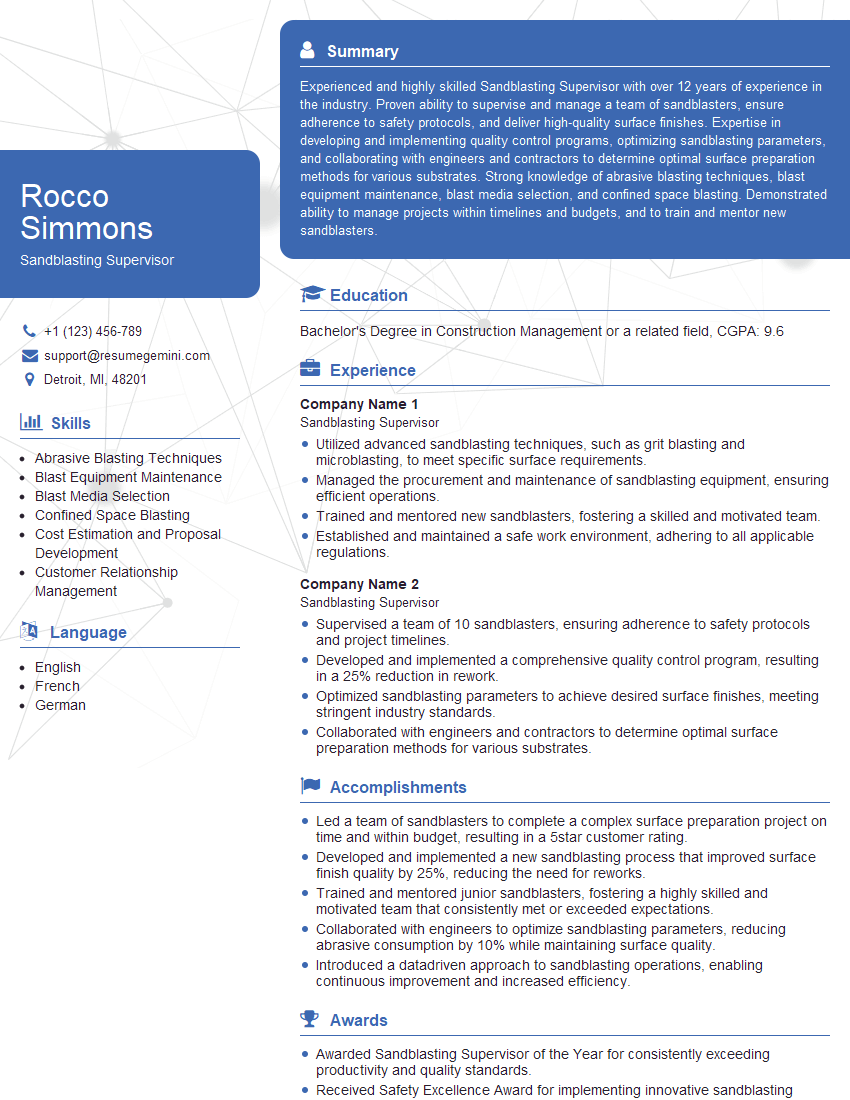
Mastering Sandblasting Equipment Operation opens doors to a rewarding career with excellent growth potential. Proficiency in this area makes you a highly valuable asset in various industries. To maximize your job prospects, it’s crucial to have a strong and ATS-friendly resume that highlights your skills and experience effectively. ResumeGemini is a trusted resource that can help you build a professional resume tailored to the demands of the Sandblasting Equipment Operation field. We provide examples of resumes specifically designed for this role to guide you. Invest in a powerful resume – it’s your first impression on potential employers.

Explore more articles
Users Rating of Our Blogs
Share Your Experience
We value your feedback! Please rate our content and share your thoughts (optional).
What Readers Say About Our Blog
Very informative content, great job.
good