Interviews are opportunities to demonstrate your expertise, and this guide is here to help you shine. Explore the essential Satellite Imagery interview questions that employers frequently ask, paired with strategies for crafting responses that set you apart from the competition.
Questions Asked in Satellite Imagery Interview
Q 1. Explain the differences between panchromatic, multispectral, and hyperspectral imagery.
The key difference between panchromatic, multispectral, and hyperspectral imagery lies in the way they capture and represent the electromagnetic spectrum.
- Panchromatic imagery records light intensity across a broad range of the visible spectrum (typically 450-900nm), producing a grayscale image with high spatial resolution. Think of it like a black and white photograph with very fine detail. It’s excellent for tasks requiring high spatial resolution, such as identifying individual trees or small buildings.
- Multispectral imagery captures light intensity in several distinct, broader wavelength bands (e.g., red, green, blue, near-infrared). Each band provides information about specific properties of the surface. Imagine it as several black and white photographs, each highlighting different features. This allows for vegetation analysis, water detection, and other thematic mapping applications.
- Hyperspectral imagery goes a step further, capturing hundreds of very narrow, contiguous wavelength bands. This provides incredibly detailed spectral information, revealing subtle differences in material composition that are invisible in multispectral data. It’s like having thousands of black and white photos, allowing for highly accurate material identification—think distinguishing different types of vegetation or minerals.
In essence, panchromatic provides high spatial detail, multispectral offers thematic information, and hyperspectral provides the most comprehensive spectral information, each with trade-offs in spatial and spectral resolution.
Q 2. Describe the process of orthorectification.
Orthorectification is the process of geometrically correcting a satellite image to remove distortion caused by terrain relief and sensor perspective. Imagine taking a picture of a mountain range; the slopes appear distorted. Orthorectification makes the image appear as if it were taken from directly above, ensuring accurate measurements and spatial relationships.
The process typically involves:
- Acquiring elevation data: A Digital Elevation Model (DEM) provides elevation information for the area.
- Geometric transformation: The image is transformed using the DEM to correct for the distortions. This involves complex mathematical calculations to account for variations in elevation.
- Resampling: Pixels are reassigned to their corrected locations. This requires choosing a resampling method (e.g., nearest neighbor, bilinear interpolation) which affects the image’s sharpness.
The result is an orthorectified image, suitable for accurate measurements and map overlays. This is crucial for tasks like precise area calculations, change detection, and creating accurate maps.
Q 3. What are the common atmospheric corrections applied to satellite imagery?
Atmospheric corrections are essential to remove the effects of the atmosphere on satellite imagery. The atmosphere scatters and absorbs light, affecting the accuracy of reflectance measurements. Common corrections include:
- Dark Object Subtraction (DOS): Assumes that the darkest pixels in an image represent zero reflectance and adjusts other pixels accordingly. Simple, but prone to error.
- Empirical Line Method (ELM): Uses a linear relationship between atmospheric scattering and reflectance to estimate atmospheric effects. Relatively straightforward.
- Atmospheric Radiative Transfer (ART) models: More complex models that use detailed atmospheric parameters to simulate light interactions. Highly accurate, but require substantial input data.
These corrections are crucial to ensure accurate representation of the Earth’s surface, removing the effects of atmospheric interference, leading to reliable analysis of land cover, vegetation health, and other features.
Q 4. How do you handle cloud cover in satellite imagery analysis?
Cloud cover presents a significant challenge in satellite imagery analysis, as it obscures the underlying surface features. Several strategies exist for handling this:
- Cloud masking: Identifying and removing cloudy areas from the image. Algorithms based on spectral thresholds or machine learning can be used.
- Image compositing: Combining multiple images acquired over time to minimize cloud cover. A simple method is selecting the clearest image. More advanced techniques use image stacking or weighted averaging.
- Cloud filling: Replacing cloudy pixels with estimated values using neighboring clear pixels or data from other sources. This requires careful consideration to avoid introducing artifacts.
The best approach depends on the specific application and data availability. For example, using a cloud-free composite is often ideal for mapping applications where a complete coverage is crucial. For time-series analysis, we might focus on filling gaps, but always acknowledging the limitations of these methods.
Q 5. Explain different resampling techniques used in image processing.
Resampling is needed when changing the spatial resolution of a satellite image, for instance, during geometric corrections or data fusion. Different methods exist, each with trade-offs:
- Nearest Neighbor: Assigns the pixel value of the nearest neighbor in the original image. Simple and fast, but can introduce blocky artifacts and aliasing.
- Bilinear Interpolation: Averages the values of the four nearest neighbors, providing smoother results than nearest neighbor but can blur fine details.
- Cubic Convolution: Uses a weighted average of 16 neighboring pixels, resulting in sharper and more accurate results but computationally more expensive.
The choice of resampling method depends on the specific application and the importance of preserving detail versus computational efficiency. For precise measurements, cubic convolution might be preferred, while nearest neighbor might suffice for quick visualizations.
Q 6. What are the advantages and disadvantages of different satellite sensor platforms (e.g., Landsat, Sentinel, WorldView)?
Different satellite sensor platforms offer varying advantages and disadvantages:
- Landsat: Long-term archive, extensive spatial coverage, moderate resolution. Excellent for long-term change detection and global monitoring, but resolution may be limiting for detailed analysis.
- Sentinel: Free and open access, high revisit frequency, moderate resolution. Ideal for frequent monitoring of rapidly changing phenomena (e.g., flooding, deforestation), but may not be suitable for very high-resolution applications.
- WorldView: Very high-resolution imagery, excellent for detailed mapping and analysis. But, limited temporal coverage and higher cost.
The choice depends on the specific needs of the project. For large-scale monitoring, Landsat and Sentinel are cost-effective. For very detailed applications, WorldView’s high-resolution is necessary, even though this comes at a higher cost.
Q 7. Describe your experience with image classification techniques (e.g., supervised, unsupervised).
I have extensive experience with both supervised and unsupervised image classification techniques.
- Supervised classification: This involves training a classifier using labeled data (samples with known land cover types). Algorithms like Support Vector Machines (SVM), Random Forest, and Maximum Likelihood are commonly used. The accuracy depends heavily on the quality and quantity of training data. I’ve used this extensively for land cover mapping, urban planning, and precision agriculture. A successful example involved classifying different agricultural crops using Sentinel-2 data, achieving over 90% accuracy by strategically selecting training samples.
- Unsupervised classification: This approach does not require labeled data. Algorithms like k-means clustering group pixels based on their spectral similarity. Useful for exploratory analysis and identifying patterns in the data, but interpretation of the results requires domain knowledge. I’ve successfully applied this technique to identify different geological units based on their spectral characteristics in hyperspectral imagery.
The choice between supervised and unsupervised methods depends on the availability of labeled data and the objectives of the analysis. Supervised methods provide more accurate results when sufficient training data are available, while unsupervised techniques are valuable for exploratory data analysis when labeled data are scarce.
Q 8. How do you assess the accuracy of your image classification results?
Assessing the accuracy of image classification results is crucial for ensuring the reliability of our analysis. We primarily use several methods:
- Accuracy Assessment Matrix (Confusion Matrix): This matrix compares the classified results to a reference dataset (ground truth data). It provides metrics like overall accuracy, producer’s accuracy (how well each class was mapped), user’s accuracy (how reliable the classification is for each class), and the kappa coefficient (a measure of agreement correcting for chance). For example, if we’re classifying land cover into urban, forest, and water, the confusion matrix shows the correct and incorrect classifications for each category.
- Visual Inspection: We visually compare the classified image with high-resolution imagery or field data to identify potential misclassifications. This allows for a qualitative assessment of the results, particularly identifying systematic errors.
- Error Analysis: By analyzing the errors identified through the confusion matrix and visual inspection, we can identify the root causes of misclassification. This might be due to factors such as spectral confusion between classes, insufficient spatial resolution, or limitations in the training data.
For instance, in a project classifying agricultural fields, we might discover that different crop types have similar spectral signatures, leading to misclassifications. Addressing this might involve using higher spatial resolution imagery or incorporating ancillary data like elevation or planting dates.
Q 9. Explain the concept of spatial resolution and its impact on analysis.
Spatial resolution refers to the size of the smallest discernible detail in a satellite image. It’s typically measured in meters per pixel (m/pixel). A higher spatial resolution means smaller pixels, allowing for the detection of finer details. For example, a 1-meter resolution image shows details at a 1-meter scale, while a 30-meter resolution shows much coarser details.
The impact on analysis is significant. Higher spatial resolution is essential for applications requiring detailed information, such as urban planning (identifying individual buildings), precision agriculture (mapping specific crop types), or infrastructure monitoring (assessing the condition of roads and bridges). Lower resolution imagery, while covering larger areas, is better suited for applications that require less detail, such as broad-scale land cover mapping or deforestation monitoring.
Imagine trying to count the number of cars in a parking lot. A high-resolution image would allow you to count each car individually. A low-resolution image would just show a blob of cars, making accurate counting impossible.
Q 10. What is the difference between vector and raster data?
Raster and vector data are two fundamentally different ways of representing geographic information.
- Raster data consists of a grid of cells (pixels) where each cell contains a value representing a particular attribute. Think of it like a digital image. Examples include satellite imagery, aerial photography, and digital elevation models. Each pixel stores information like spectral reflectance or elevation.
- Vector data represents geographic features as points, lines, and polygons with associated attributes. Imagine drawing shapes on a map. Each shape (feature) has a specific location and descriptive information. Examples include roads, buildings, and rivers. Vector data is often more precise for representing discrete features.
The key difference lies in how they store spatial information. Raster data is good for representing continuous phenomena (e.g., temperature variations), while vector data is better for discrete features (e.g., boundaries of countries). Often, we work with both in satellite image analysis; for example, we might overlay vector data of roads on a raster image for better contextualization.
Q 11. Describe your experience with GIS software (e.g., ArcGIS, QGIS).
I have extensive experience with both ArcGIS and QGIS, utilizing them for various tasks throughout my career. My skills encompass data import, preprocessing, geoprocessing, image classification, analysis, and visualization.
In ArcGIS, I’ve worked extensively with the Spatial Analyst extension for tasks like image segmentation, classification, and terrain analysis. I’m proficient in using tools like the reclassification tool, the raster calculator, and various spatial statistics tools. In QGIS, I’ve leveraged its open-source capabilities for similar tasks, often using plugins for specialized processing and analysis. For example, I’ve used the Semi-Automatic Classification Plugin (SCP) for object-based image analysis and the GRASS GIS tools within QGIS for various geoprocessing functionalities.
A recent project involved using ArcGIS Pro to create a detailed land cover map using a combination of Sentinel-2 imagery, LiDAR data, and field survey information. This project required extensive use of geoprocessing tools, image classification techniques, and accuracy assessment methods.
Q 12. How do you handle large satellite imagery datasets?
Handling large satellite imagery datasets efficiently requires a multi-pronged approach:
- Cloud Computing: Utilizing cloud platforms like Google Earth Engine, Amazon Web Services (AWS), or Azure allows for processing and analysis of large datasets without the need for significant local computing resources. These platforms offer scalable computing power and storage.
- Data Subsetting and Tiling: Instead of processing the entire dataset at once, we break it down into smaller, manageable tiles or subsets. This allows for parallel processing, significantly reducing processing time.
- Data Compression and Formats: Employing efficient data compression techniques (like GeoTIFF with LZW compression) and using appropriate data formats (like HDF5 for large multi-band imagery) minimizes storage space and improves processing speed.
- Optimized Algorithms and Software: Utilizing optimized algorithms and software designed for handling large datasets, such as those offered by GDAL/OGR and other geospatial libraries, greatly improves processing speed.
For instance, a project involving monitoring deforestation across an entire country would necessitate the use of cloud computing and data subsetting strategies to effectively process the massive amount of satellite imagery involved.
Q 13. Explain your experience with data visualization techniques for satellite imagery.
Effective data visualization is crucial for communicating findings from satellite imagery analysis. My experience encompasses a range of techniques:
- False-color composites: These use combinations of different spectral bands to enhance the visibility of specific features. For example, a near-infrared, red, and green (NIR-red-green) composite highlights vegetation in bright red.
- Classification maps: These display the results of image classification, with different colors representing different land cover types or other features.
- Time-series animations: These use a sequence of images over time to show changes, such as deforestation or urban sprawl.
- 3D visualizations: Using digital elevation models (DEMs) and other data, we can create 3D representations of the terrain and features of interest.
- Interactive web maps: These utilize web mapping platforms to create dynamic and interactive displays that allow for users to explore the imagery and data online.
In a recent project, we used interactive maps to present the results of a flood risk assessment based on satellite imagery analysis, allowing stakeholders to easily identify areas at high risk.
Q 14. Describe your workflow for processing and analyzing satellite imagery data.
My workflow for processing and analyzing satellite imagery data generally follows these steps:
- Data Acquisition and Preprocessing: This involves obtaining the necessary satellite imagery from sources like USGS EarthExplorer or directly from satellite providers. Preprocessing steps may include atmospheric correction (removing the effects of the atmosphere), geometric correction (georeferencing), and orthorectification (removing geometric distortions).
- Data Exploration and Visualization: This involves visualizing the data using various techniques to understand its characteristics and identify potential issues.
- Data Analysis: This step depends on the specific project objectives. It might involve image classification (supervised or unsupervised), change detection, object-based image analysis, or other geospatial analysis techniques.
- Post-processing and Validation: This stage involves refining the results, such as smoothing or enhancing the classified image, and validating the accuracy of the results using ground truth data.
- Data Dissemination and Reporting: This involves preparing maps, reports, and presentations to effectively communicate the findings.
Throughout this workflow, quality control and error checking are crucial at each step to ensure the reliability and accuracy of the final results.
Q 15. What are the ethical considerations in using satellite imagery?
Ethical considerations in using satellite imagery are paramount. We must always prioritize responsible data acquisition and usage, mindful of privacy concerns, national security implications, and the potential for misuse.
- Privacy: Satellite imagery can capture incredibly detailed information, potentially revealing sensitive details about individuals or groups. Blurring faces or using anonymization techniques are crucial when working with imagery that could compromise privacy.
- National Security: High-resolution imagery can be misused for espionage or military planning. Access to and distribution of such imagery need to adhere to strict regulations and licensing agreements.
- Data Bias and Misinterpretation: The data itself can reflect existing societal biases or be misinterpreted, leading to flawed conclusions. Careful data analysis and validation are critical to mitigate this risk. For example, using satellite imagery to assess poverty levels might inadvertently reinforce existing inequalities if not analyzed with a critical eye towards potential bias in data collection or interpretation.
- Transparency and Accountability: It’s vital to be transparent about the source of the imagery, the methods used in its analysis, and the potential limitations of the results. This ensures accountability and allows for scrutiny of the research or application.
In my work, I strictly adhere to ethical guidelines, ensuring informed consent whenever possible and carefully considering the potential impact of my analysis before sharing results.
Career Expert Tips:
- Ace those interviews! Prepare effectively by reviewing the Top 50 Most Common Interview Questions on ResumeGemini.
- Navigate your job search with confidence! Explore a wide range of Career Tips on ResumeGemini. Learn about common challenges and recommendations to overcome them.
- Craft the perfect resume! Master the Art of Resume Writing with ResumeGemini’s guide. Showcase your unique qualifications and achievements effectively.
- Don’t miss out on holiday savings! Build your dream resume with ResumeGemini’s ATS optimized templates.
Q 16. How do you identify and address errors in satellite imagery?
Identifying and addressing errors in satellite imagery requires a multi-faceted approach involving both pre- and post-processing techniques. Errors can stem from various sources, including atmospheric effects, sensor limitations, and geometric distortions.
- Atmospheric Correction: Clouds, haze, and aerosols can significantly affect the accuracy of the data. Atmospheric correction algorithms are used to remove or minimize these effects. This often involves employing radiative transfer models or using reference data from clear sky images.
- Geometric Correction: Satellite imagery is often geometrically distorted due to the Earth’s curvature and sensor perspective. Geometric correction involves transforming the image to a map projection using ground control points (GCPs) or other reference data. Software packages like ENVI and ArcGIS are commonly used for this purpose.
- Radiometric Calibration: This corrects for variations in sensor response, ensuring consistent brightness values across the image. This often involves using pre-launch calibration data and comparing against known reference targets.
- Data Validation: Comparing satellite-derived information against ground truth data (e.g., field measurements) is crucial. This allows for identification of systematic or random errors in the data. Any significant deviations require investigation and potentially correction or exclusion of affected data.
For example, I once encountered significant striping artifacts in a Landsat image due to sensor malfunction. Identifying the affected bands and carefully masking or interpolating the affected areas was necessary to ensure the integrity of the analysis.
Q 17. Explain your understanding of different map projections.
Map projections are essential for representing the three-dimensional Earth on a two-dimensional surface. Different projections have different strengths and weaknesses, and the choice of projection depends heavily on the specific application.
- Conformal Projections (e.g., Mercator): These preserve angles, making them useful for navigation but distorting area near the poles. Imagine trying to flatten an orange peel – you’ll inevitably distort its shape. The Mercator projection is an example of a conformal projection that accurately depicts shapes but dramatically exaggerates the size of landmasses at higher latitudes.
- Equal-Area Projections (e.g., Albers Equal-Area Conic): These preserve area, making them suitable for applications like measuring land area but distorting shapes. This is like creating a perfectly scaled model of an orange segment – the shape might be slightly distorted, but the relative sizes are accurate.
- Equidistant Projections: These preserve distance from a central point or line. This is less commonly used for satellite imagery analysis but can be useful when dealing with specific spatial relationships. Think of a projection that accurately depicts distances from a specific city.
- Compromise Projections (e.g., Robinson): These aim to balance the distortions of shape, area, and distance. Often used for general-purpose maps, they are a good balance of accuracy for various spatial properties.
My experience involves selecting appropriate projections based on the research question and the spatial extent of the study area. For regional-scale analyses, equal-area projections are frequently preferred for accurate area calculations, while global analyses often use compromise projections to balance distortions. The choice is crucial to prevent misinterpretation of data related to distance, area, or shape.
Q 18. Describe your experience with change detection using satellite imagery.
Change detection using satellite imagery is a core component of my work. It involves analyzing image time series to identify and quantify changes over time. This is critical for monitoring various phenomena, from deforestation to urban sprawl.
- Image Differencing: This simple method involves subtracting the pixel values of two images at different times. Large differences highlight areas of change.
- Image Ratioing: This technique involves dividing the pixel values of two images. It’s particularly useful for highlighting subtle changes in spectral reflectance.
- Principal Component Analysis (PCA): This advanced statistical method identifies the principal components that capture the maximum variance in the data, often highlighting changes more effectively than simpler methods. This is particularly useful for high-dimensional data with multiple spectral bands.
- Post-Classification Comparison: This involves classifying individual images and then comparing the resulting classifications to identify changes. This approach provides categorical information about the nature of the change.
For example, I used time series of Landsat imagery to monitor deforestation in the Amazon rainforest. By employing image differencing and post-classification comparison techniques, I was able to map areas of forest loss and calculate the rate of deforestation over several years.
Q 19. How do you use satellite imagery for environmental monitoring?
Satellite imagery is an indispensable tool for environmental monitoring, providing broad spatial coverage and regular temporal resolution.
- Deforestation Monitoring: Detecting changes in forest cover using techniques like change detection (as described above) is crucial for conservation efforts.
- Glacier and Ice Cap Monitoring: Analyzing changes in ice extent and thickness helps to understand the impacts of climate change.
- Water Quality Assessment: Spectral analysis of water bodies can reveal information about water turbidity, chlorophyll concentration, and other indicators of water quality.
- Pollution Monitoring: Satellite imagery can detect and map pollution sources, like oil spills or industrial discharges.
- Biodiversity Assessment: While not directly providing species counts, spectral analysis combined with field data can provide an estimate of vegetation diversity and health, indicative of overall biodiversity.
I have utilized satellite data to assess the impact of agricultural runoff on coastal water quality, employing spectral indices to quantify chlorophyll concentrations and turbidity levels. This helped identify areas where mitigation strategies were needed.
Q 20. Explain your experience in using satellite imagery for urban planning.
Satellite imagery provides invaluable data for urban planning, helping to understand urban growth patterns, assess infrastructure needs, and monitor urban environmental challenges.
- Urban Sprawl Analysis: Tracking the expansion of urban areas over time using change detection techniques allows for more informed planning decisions.
- Infrastructure Assessment: Identifying roads, buildings, and other infrastructure elements allows planners to assess infrastructure needs and plan for future development.
- Population Density Estimation: By analyzing nighttime lights or building density, it’s possible to estimate population density at a given location.
- Environmental Monitoring: Satellite imagery helps track urban heat island effects, air quality, and green space availability.
- Disaster Risk Assessment: Identifying vulnerable areas prone to flooding or landslides assists in developing disaster mitigation plans.
In a recent project, I used high-resolution imagery to assess the accessibility of public transportation in a rapidly growing city. By analyzing road networks, bus routes, and residential areas, I was able to identify areas with limited access and recommend improvements to the public transportation system.
Q 21. Describe how you would use satellite imagery to assess damage after a natural disaster.
Assessing damage after a natural disaster, such as an earthquake or hurricane, using satellite imagery is critical for rapid response and recovery efforts.
- Rapid Damage Assessment: High-resolution imagery can quickly provide an overview of the extent of damage to buildings, infrastructure, and other assets. This immediate assessment helps prioritize rescue and relief efforts.
- Building Damage Mapping: By analyzing spectral characteristics and image texture, it’s possible to identify damaged or destroyed buildings and classify the severity of the damage.
- Infrastructure Assessment: Monitoring the integrity of roads, bridges, and other infrastructure elements helps guide the allocation of repair resources.
- Flood Extent Mapping: Satellite imagery can map the extent of flooding following a storm, helping assess the affected population and guide emergency response teams.
- Landslide Detection: Changes in topography identified via imagery can reveal areas affected by landslides, aiding in rescue and evacuation efforts.
Following a major earthquake, I utilized very high-resolution satellite imagery to map the extent of building damage, differentiating between minor damage, significant damage, and complete destruction. This information was crucial in coordinating rescue and relief efforts and prioritizing the allocation of emergency supplies.
Q 22. What are the limitations of using satellite imagery?
Satellite imagery, while powerful, has limitations. Think of it like taking a picture from a great distance – you lose detail and clarity the further away you get. These limitations can be broadly categorized into:
- Spatial Resolution: The size of the smallest discernible feature on the ground. Lower resolution means less detail; a blurry image might make it hard to differentiate between individual trees versus a forest. Higher resolution is generally more expensive and data-intensive.
- Spectral Resolution: The number and width of wavelength bands captured. Limited spectral resolution can hinder accurate classification of materials. For instance, distinguishing between different types of vegetation might require bands sensitive to specific chlorophyll absorption.
- Temporal Resolution: The frequency of image acquisition. If you need daily updates to track a rapidly changing event (e.g., a flood), infrequent imagery (e.g., monthly) won’t suffice.
- Atmospheric Effects: Clouds, haze, and aerosols can obscure the ground, reducing image clarity and introducing errors in analysis. Imagine trying to see through a fog – you’d miss crucial details.
- Geometric Distortion: Satellite images can be distorted due to sensor and earth curvature effects. This needs careful correction (georeferencing) to ensure accurate measurements and map overlay.
- Data Volume and Processing: Satellite images are large files, demanding significant storage and processing power, increasing costs and time requirements.
Understanding these limitations is crucial for selecting the right imagery for a specific application and managing expectations. For example, if you’re studying individual buildings in a city, you’ll need high spatial resolution imagery, potentially sacrificing temporal frequency.
Q 23. How do you ensure the accuracy and reliability of your satellite imagery analysis?
Ensuring accuracy and reliability in satellite imagery analysis requires a multi-pronged approach. It’s like building a sturdy house – you need a strong foundation and careful construction.
- Data Preprocessing: This includes atmospheric correction (removing the effects of clouds and haze), geometric correction (removing distortions), and radiometric calibration (correcting for sensor variations).
- Validation with Ground Truth Data: Comparing satellite-derived information with field measurements or other highly accurate data sources is crucial. For instance, validating land cover classification results by comparing them to field surveys.
- Accuracy Assessment: Using metrics like overall accuracy, producer’s accuracy, and user’s accuracy to quantify the correctness of the analysis. This provides a measure of confidence in the results.
- Quality Control: Implementing rigorous quality control procedures throughout the entire process, from data acquisition to final interpretation.
- Utilizing Multiple Data Sources: Integrating multiple satellite images (acquired at different times or with different sensors) or integrating satellite data with other data (LiDAR, GPS) can help validate results and reduce uncertainty.
- Employing Robust Analytical Methods: Using appropriate image processing and classification techniques, validated and tested methodologies, and robust algorithms contribute to more accurate results.
For example, in a project mapping deforestation, I’d validate the results using high-resolution aerial photographs, field observations, and potentially historical maps.
Q 24. Explain your understanding of different image enhancement techniques.
Image enhancement techniques aim to improve the visual quality and information content of satellite images. Imagine sharpening a blurry photo to reveal hidden details.
- Contrast Stretching: Expanding the range of pixel values to highlight subtle variations in brightness. This improves the visibility of features in low-contrast images.
- Histogram Equalization: Redistributing pixel values to achieve a more uniform histogram, enhancing the overall contrast.
- Filtering: Smoothing or sharpening images to remove noise or enhance edges. Spatial filtering can remove salt-and-pepper noise (random bright or dark pixels), while edge enhancement filters highlight boundaries between different features.
- Principal Component Analysis (PCA): Transforming the data into new uncorrelated components that highlight specific patterns. This can be effective in enhancing subtle variations within data, for instance, in identifying subtle variations in vegetation health.
- Pan-sharpening: Combining high-resolution panchromatic (grayscale) imagery with lower-resolution multispectral data to improve the spatial resolution of the multispectral bands. This enhances the visual details across all spectral bands.
For example, in analyzing an agricultural area, contrast stretching might reveal subtle differences in crop health, while pan-sharpening could enhance the detail of individual crop rows in a high-resolution image.
Q 25. Describe your experience with object-based image analysis (OBIA).
Object-based image analysis (OBIA) is a powerful approach that analyzes satellite imagery by treating individual objects (e.g., buildings, trees, roads) as individual units, rather than individual pixels. It’s like organizing your closet by item type rather than by color.
My experience with OBIA includes using software like eCognition and ArcGIS to segment images into meaningful objects based on spectral, spatial, and contextual information. This segmentation step is crucial; it defines the individual objects that can be further analyzed.
I’ve used OBIA for various applications: urban planning (classifying land cover types, mapping impervious surfaces), forestry (identifying tree species, assessing forest health), and precision agriculture (analyzing crop yields and detecting stress). The key advantage is its ability to incorporate contextual information and prior knowledge which significantly improves accuracy compared to pixel-based approaches.
For example, in a forestry application, OBIA can be used to identify individual trees, measure their size and crown area, and assess forest health using spectral indices. This offers a level of granularity and accuracy not possible with traditional pixel-based methods.
Q 26. How do you integrate satellite imagery with other data sources (e.g., LiDAR, field data)?
Integrating satellite imagery with other data sources significantly enhances analysis. It’s like solving a puzzle with multiple pieces; each piece contributes to a more comprehensive understanding.
- LiDAR (Light Detection and Ranging): LiDAR provides highly accurate 3D elevation data, which is invaluable for creating digital elevation models (DEMs) and analyzing terrain features. Combining this with satellite imagery gives us a more comprehensive picture of the landscape, combining spectral and topographic information.
- Field Data: Ground truth data, obtained through field surveys, provides crucial validation for satellite-derived information. This data can be used to train classification models and assess the accuracy of results.
- Other Geospatial Data: Integrating data like road networks, administrative boundaries, and demographic information can provide valuable contextual information and allow for more sophisticated analyses.
For instance, in a flood mapping project, satellite imagery could be used to identify flooded areas. Integrating LiDAR data would provide information on elevation, helping to understand flood extent and depth, and integrating field observations would validate the satellite results.
The integration often involves georeferencing all data to a common coordinate system and using appropriate software tools to combine and analyze the different datasets.
Q 27. What are your experiences with specific satellite image formats (e.g., GeoTIFF, JPEG2000)?
I have extensive experience with various satellite image formats, each with its own advantages and disadvantages.
- GeoTIFF: A widely used format that combines the flexibility of TIFF with geospatial metadata, allowing for easy integration into GIS software. It’s a good general-purpose format that supports various compression options and supports different pixel depth.
- JPEG2000: A superior compression format compared to JPEG, offering better image quality at lower compression ratios. It’s especially useful for handling large, high-resolution satellite images, saving significant storage space and reducing processing time. However, it can be more challenging to process compared to GeoTIFF. I’ve used it when working with massive datasets from high-resolution sensors.
- Other Formats: I also have experience with other formats like ERDAS Imagine (.img), ENVI (.dat), and HDF (Hierarchical Data Format), which are specific to different remote sensing software packages.
Choosing the right format depends on the application, desired data compression, and software compatibility. For example, for sharing images with a wider audience, GeoTIFF is a versatile and widely compatible option, but for long-term storage of high-resolution imagery, JPEG2000’s compression efficiency is preferable.
Q 28. Describe a time you had to troubleshoot a problem with satellite imagery data.
During a project mapping changes in coastal erosion, I encountered a significant challenge with cloud cover obscuring a large portion of the satellite imagery. The imagery was critical to the analysis, and obtaining new images would have caused delays.
My troubleshooting steps included:
- Assessing the Extent of Cloud Cover: I carefully evaluated the cloud cover using cloud masks and determined the areas most affected.
- Exploring Cloud Removal Techniques: I investigated various cloud removal techniques, such as using cloud-masking techniques and exploring image reconstruction methods through software like ENVI.
- Evaluating Alternative Data Sources: To supplement the imagery, I looked for alternative data sources, such as historical satellite images, aerial photographs, and potentially using different sensors.
- Image Interpolation and Patchwork: For small gaps, I used image interpolation techniques to fill in the missing data. For larger gaps, I assembled a ‘patchwork’ from other images, ensuring consistent georeferencing and radiometric consistency.
- Validation of Results: Finally, I carefully validated my results by comparing them with available ground truth data and other sources, confirming the accuracy of the interpolation and patchwork methodology.
This experience highlighted the importance of thorough planning, considering potential data quality issues, and possessing a range of techniques to address unforeseen challenges. The final product, while using a composite of data sources, accurately reflected the coastal changes.
Key Topics to Learn for Satellite Imagery Interview
- Image Acquisition and Sensors: Understand the different types of satellite sensors (optical, radar, hyperspectral), their capabilities, and limitations. Consider the impact of spatial, spectral, and temporal resolution on applications.
- Image Processing and Analysis: Become proficient in techniques like geometric correction, atmospheric correction, image classification (supervised and unsupervised), and feature extraction. Discuss your experience with relevant software (e.g., ENVI, ArcGIS Pro).
- Applications of Satellite Imagery: Showcase your knowledge of how satellite imagery is used in various fields such as agriculture (crop monitoring), urban planning (change detection), environmental monitoring (deforestation analysis), and disaster response (damage assessment). Be ready to discuss specific case studies.
- Data Formats and Management: Familiarize yourself with common satellite image formats (e.g., GeoTIFF, HDF) and database management systems for handling large datasets. Discuss your experience with data handling and organization strategies.
- Cloud Computing and GIS: Demonstrate understanding of cloud-based platforms (e.g., Google Earth Engine, AWS) for processing and analyzing large satellite datasets. Highlight your experience with Geographic Information Systems (GIS) software and their integration with satellite imagery.
- Photogrammetry and Remote Sensing Principles: Explain fundamental concepts of aerial photography, stereo vision, and 3D model generation from satellite imagery. Understand the differences between passive and active remote sensing systems.
- Data Interpretation and Visualization: Discuss your abilities to interpret satellite imagery, extract meaningful information, and communicate findings effectively through maps, charts, and reports. Practice explaining complex technical concepts clearly.
Next Steps
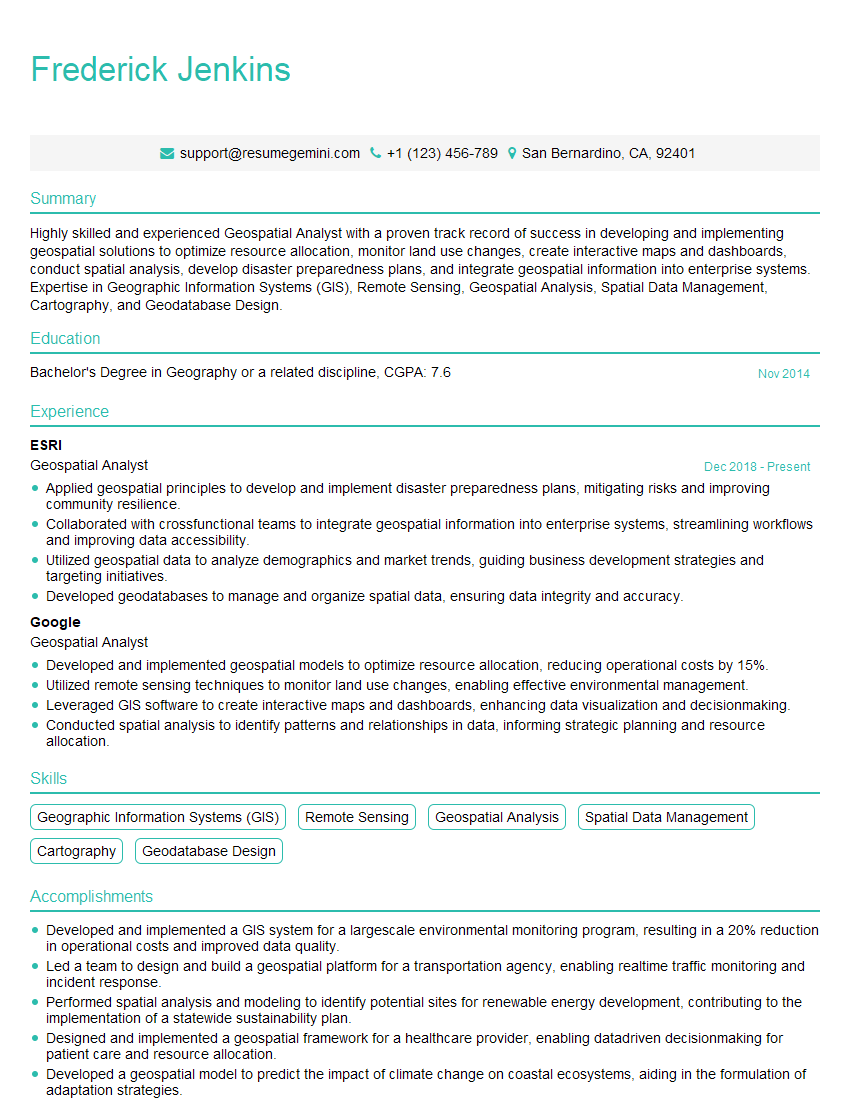
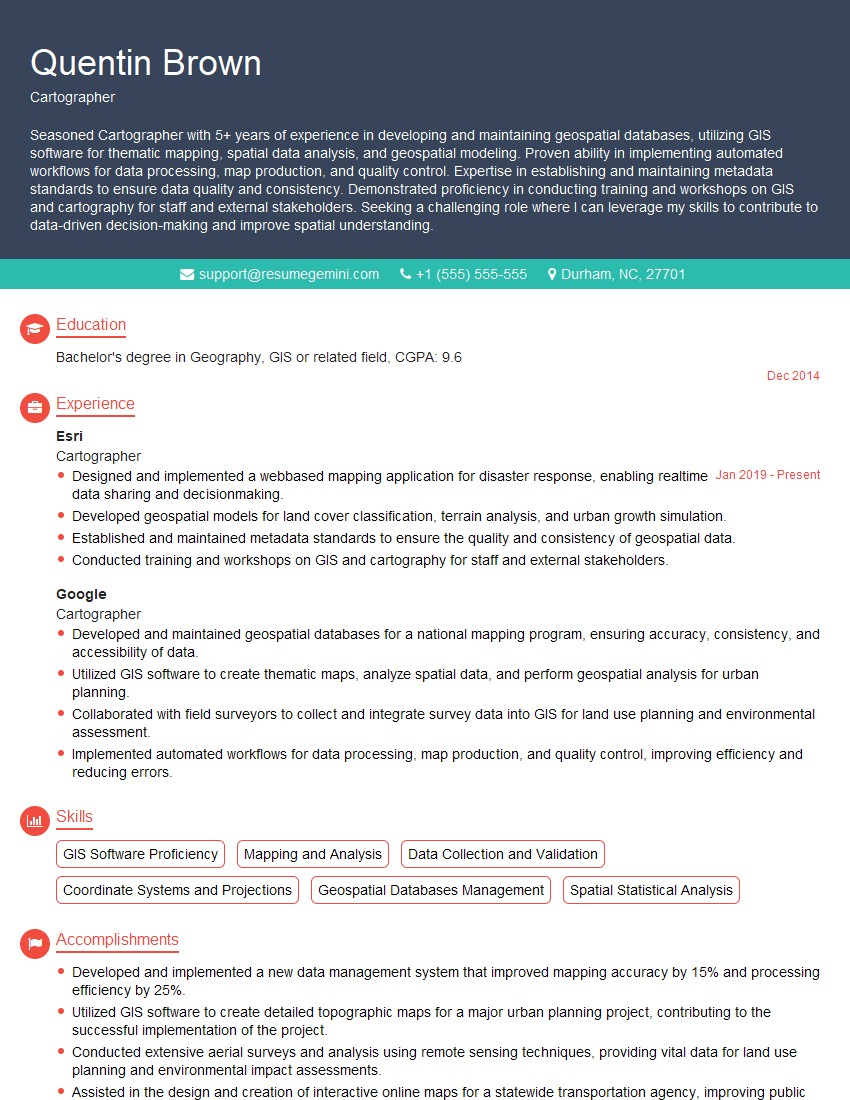
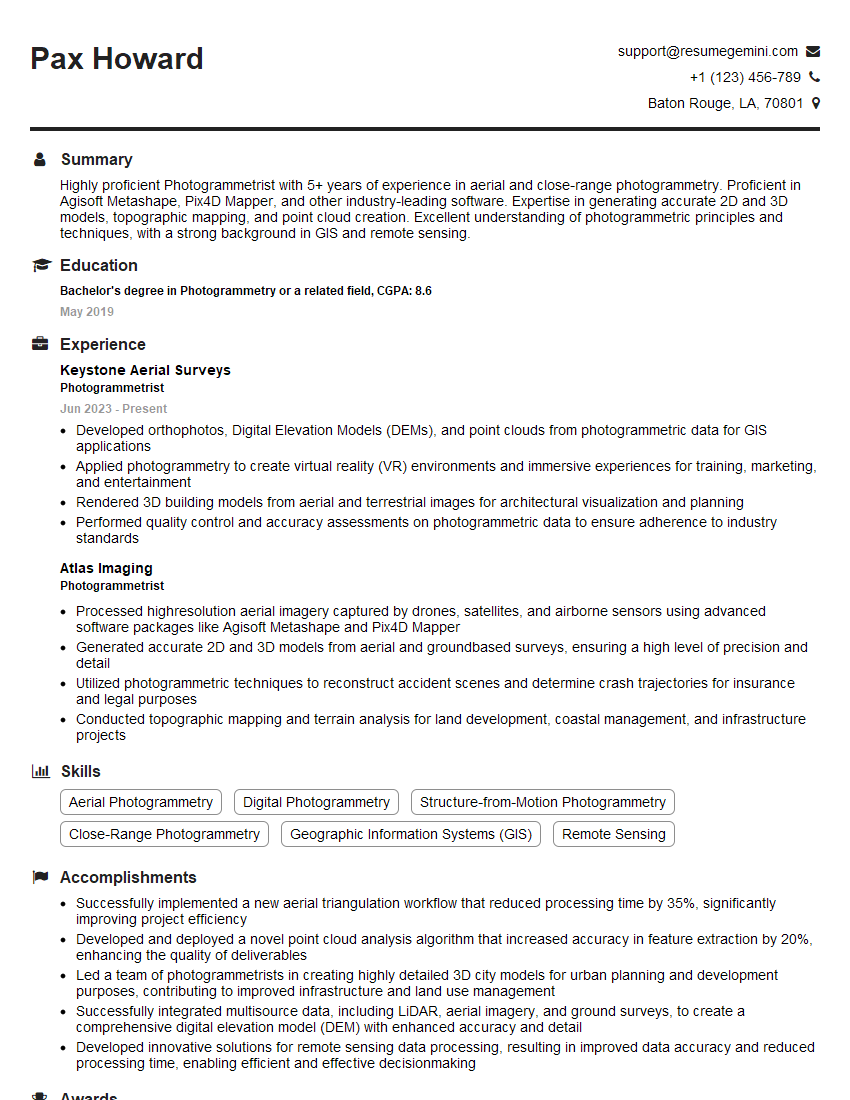
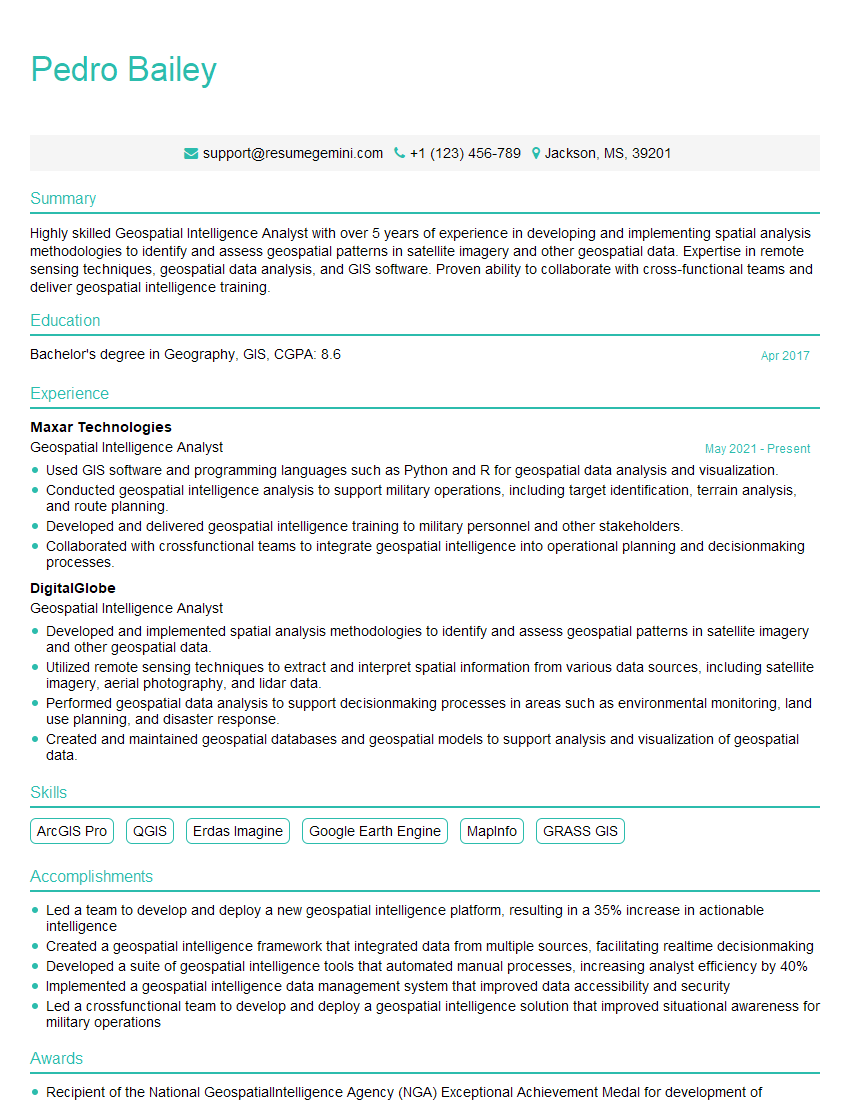
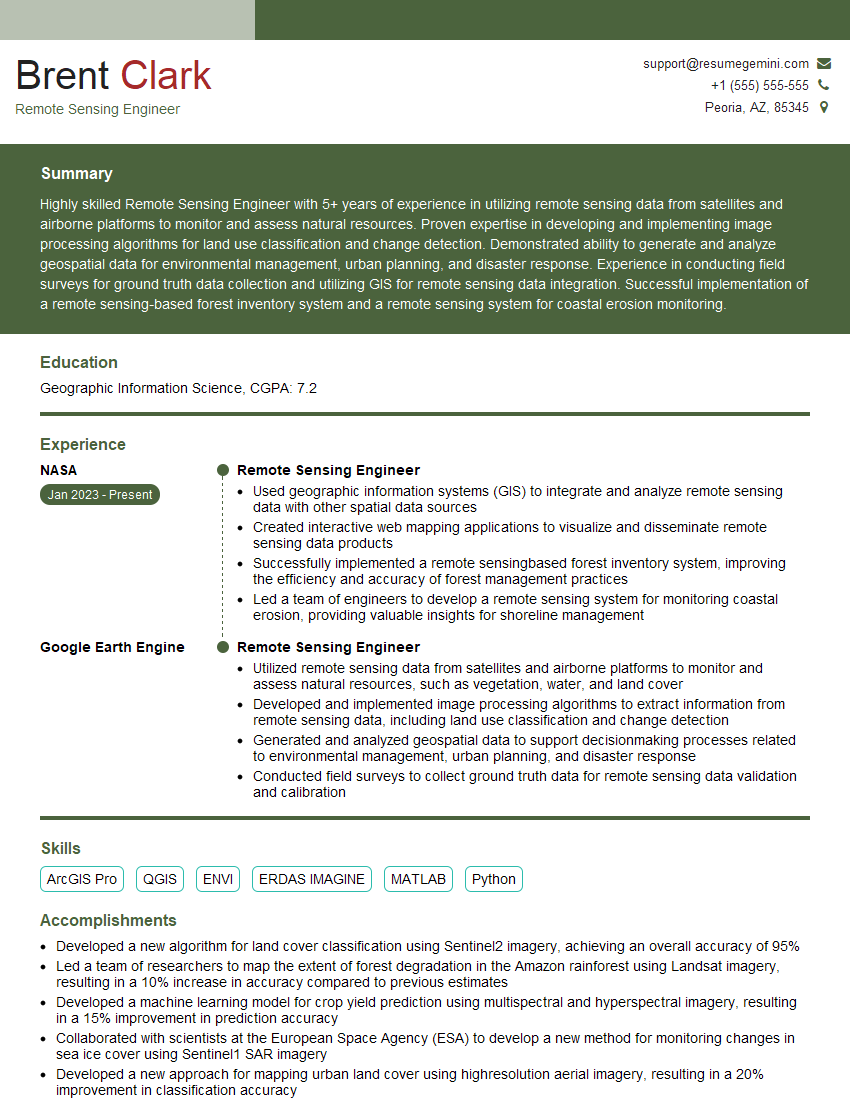
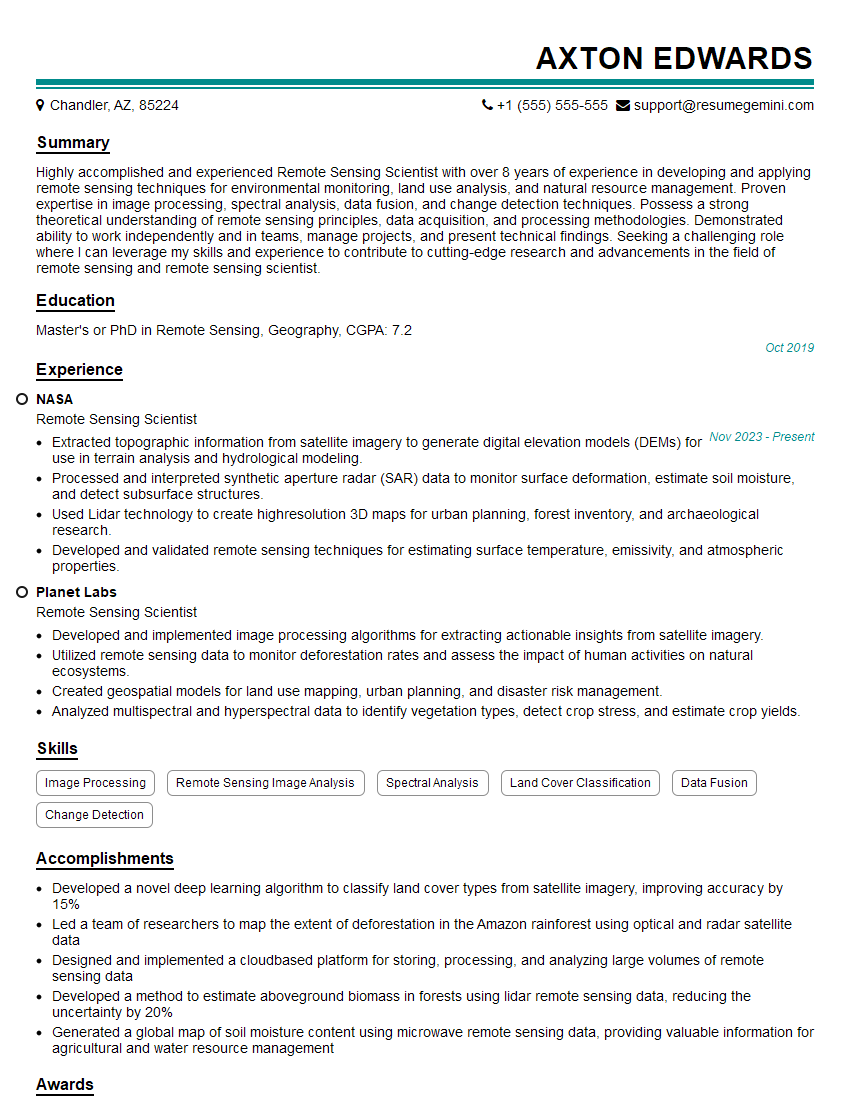
Mastering satellite imagery opens doors to exciting and impactful careers in various sectors. To maximize your job prospects, it’s crucial to present your skills effectively. Creating an ATS-friendly resume is key to getting your application noticed by recruiters. ResumeGemini is a trusted resource to help you build a professional and impactful resume that highlights your expertise in satellite imagery. Examples of resumes tailored to the Satellite Imagery field are available, providing you with a strong foundation to showcase your accomplishments and experience. Take the next step towards your dream career today!
Explore more articles
Users Rating of Our Blogs
Share Your Experience
We value your feedback! Please rate our content and share your thoughts (optional).
What Readers Say About Our Blog
Very informative content, great job.
good