Unlock your full potential by mastering the most common Sawmill Operation interview questions. This blog offers a deep dive into the critical topics, ensuring you’re not only prepared to answer but to excel. With these insights, you’ll approach your interview with clarity and confidence.
Questions Asked in Sawmill Operation Interview
Q 1. Describe your experience operating different types of saws (bandsaws, circular saws, etc.).
My experience encompasses a wide range of sawing equipment, crucial for adapting to various log sizes and lumber requirements. I’m proficient with both bandsaws and circular saws, understanding their strengths and limitations. Bandsaws, known for their precision and ability to cut intricate curves, are ideal for high-value lumber production. I’ve extensively used them for cutting figured hardwoods like cherry and walnut, achieving minimal waste and maximizing the value of the timber. Conversely, circular saws are better suited for high-volume production of standard dimensions. Their speed makes them efficient for processing large quantities of softwoods like pine or fir for construction lumber. I’ve worked on sawmills using both horizontal and vertical band saws, each requiring specific operational skills and safety protocols. For example, managing the tension and alignment of bandsaw blades is critical for preventing breakage and maintaining cut quality. Similarly, with circular saws, blade sharpness and feed rate are key factors for accurate cuts and avoiding kickback. My experience spans various models and brands, making me adaptable and efficient in diverse sawmill environments.
Q 2. Explain the process of log scaling and its importance in sawmill operation.
Log scaling is the process of accurately measuring the volume of logs before processing. It’s a fundamental step in sawmill operations, vital for several reasons. First, it allows for accurate timber inventory management. Knowing the exact volume of logs received allows for better planning of production, optimizing yield and minimizing waste. Secondly, log scaling is critical for fair pricing and financial transactions between the sawmill and timber suppliers. A precise scale ensures that both parties are compensated fairly based on the actual amount of usable wood. There are various methods for log scaling, including using standardized tables based on log diameter and length, or employing more sophisticated technologies like laser scanning. The choice of method depends on factors such as the size and type of sawmill. I’ve used both traditional scaling methods and more modern, digital approaches. For example, in a smaller operation, I might use a diameter tape and a log ruler, carefully measuring each log and calculating its volume using established formulas. In larger operations, we use sophisticated scanning systems that can provide immediate and very accurate measurements, allowing for real-time tracking of inventory and optimizing the sawing process. Accurate log scaling is vital for efficient sawmill management and ensures profitability.
Q 3. How do you ensure the safety of yourself and your team while operating heavy machinery?
Safety is paramount in sawmill operation. My approach to safety is proactive and multi-faceted. It begins with rigorous adherence to all safety regulations and company policies. This includes wearing appropriate personal protective equipment (PPE) at all times – safety glasses, hearing protection, steel-toe boots, and high-visibility clothing. Before operating any machine, I conduct a thorough pre-operational inspection, checking for any mechanical defects or loose parts that could compromise safety. Regular maintenance is crucial; I’m familiar with all maintenance schedules and promptly report any issues. Furthermore, I actively participate in regular safety training and toolbox talks, reinforcing safe work practices and addressing potential hazards. Teamwork plays a significant role; I ensure open communication within the team, providing clear instructions and establishing a culture of mutual respect and safety awareness. We conduct daily safety briefings to identify potential hazards and discuss ways to mitigate them. In the event of an accident, I’m trained in first aid and emergency procedures, ensuring timely and appropriate response. Prevention is always better than cure – I emphasize safe work practices consistently to ensure a safe working environment for myself and my colleagues.
Q 4. What are the common causes of saw blade breakage, and how do you prevent them?
Saw blade breakage is a serious concern in sawmill operation, leading to downtime, potential injury, and costly repairs. Common causes include dull blades, improper tension (in bandsaws), striking a foreign object embedded in the log, excessive feed rate, and overheating. Prevention strategies focus on proactive maintenance and operational diligence. Regular sharpening and inspection of blades are crucial, identifying and addressing minor defects before they lead to major problems. For bandsaws, maintaining correct blade tension is paramount, avoiding both over-tensioning (which can lead to breakage) and under-tensioning (which reduces cutting efficiency). Careful log handling is essential – ensuring logs are free from embedded metal or rock before sawing. Operating the saw within its recommended speed and feed rate parameters also prevents overloading and overheating. Proper lubrication and cooling systems are necessary, especially during extended operation. Finally, regular training and adherence to safety procedures help minimize risks. For example, I’ve encountered situations where a knot in the wood unexpectedly caused a blade to bind and break. Detecting these knots before they cause a serious incident requires both proper training and a trained eye in the log handling stage.
Q 5. Describe your experience with different log species and their specific sawing requirements.
Experience with various log species is vital for efficient sawmill operation. Different wood species have varying densities, hardness, and grain patterns, requiring adjustments in sawing techniques and equipment. For instance, hardwoods like oak and maple are denser and more resistant to cutting than softwoods such as pine or fir. This requires slower feed rates and potentially more powerful saws to avoid damaging the blade. The grain pattern also influences cutting strategy. For example, cutting against the grain can lead to blade binding and breakage. I’ve worked extensively with Douglas Fir, known for its strength and even grain, making it ideal for structural lumber. In contrast, I’ve also processed more challenging species such as curly maple, which demands precise cuts to showcase its unique grain. Experience teaches the operator how to optimize sawing parameters based on the particular species. For example, I use a slower feed rate and sharper blades when cutting denser hardwoods, and might optimize kerf (the width of the saw cut) to minimize waste. Understanding the characteristics of each wood species allows for maximizing yield, minimizing waste, and producing high-quality lumber tailored to specific applications.
Q 6. How do you identify and address defects in lumber during the sawing process?
Identifying and addressing lumber defects is crucial for producing high-quality products. These defects can include knots, splits, checks, and decay, significantly impacting the lumber’s structural integrity and market value. During the sawing process, I visually inspect each board, identifying defects and deciding how to manage them. Small defects might be trimmed during the cutting process, while larger defects might necessitate discarding the affected board entirely. Experience allows me to anticipate potential defects based on the log’s appearance and previous cuts. For example, a large knot visible on the log’s surface might require a strategic change in the sawing plan to minimize the defect’s impact on the finished lumber. Moreover, proper drying techniques help minimize the appearance or formation of new defects after sawing. For example, rapid drying can lead to increased checking. Careful selection and sorting based on defect levels allow for proper grading and pricing of the final product. Accurate defect identification and management are essential for ensuring consistent quality, meeting customer demands, and maximizing profit margins.
Q 7. What are your methods for optimizing lumber yield from each log?
Optimizing lumber yield is a key objective in sawmill operation, aiming to maximize the amount of usable lumber obtained from each log. This involves careful planning, precise cutting, and strategic log breakdown. I utilize various techniques to achieve this goal, including optimizing sawing patterns based on log shape and defect location. This often involves creating a ‘break-down plan’, a pre-cutting strategy that visualizes the most efficient way to saw the log, minimizing waste and maximizing the recovery of high-value lumber. I also consider the optimal board sizes and dimensions based on market demand to minimize the need for further trimming. Advanced sawing technology, such as computer-aided sawing systems, assists in optimizing the breakdown process and reducing waste. These systems can analyze the log’s dimensions and internal structure, creating highly efficient sawing patterns. Beyond the actual sawing, efficient log handling and storage practices minimize waste and degradation. Minimizing kerf (the width of the cut) by using sharp blades also contributes to improved yield. The overall goal is to extract the maximum amount of usable lumber while minimizing waste and maximizing profitability, requiring experience and skill in log assessment and optimization strategies.
Q 8. Explain your understanding of sawmill maintenance procedures and preventative maintenance.
Sawmill maintenance is crucial for safety, efficiency, and product quality. It’s a two-pronged approach: preventative maintenance (PM) and corrective maintenance. Preventative maintenance involves regularly scheduled inspections and servicing to prevent breakdowns before they occur. This is like changing your car’s oil – it’s proactive and avoids larger, more costly repairs later. Corrective maintenance, on the other hand, addresses problems as they arise.
My experience includes developing and implementing PM schedules based on equipment usage and manufacturer recommendations. This involves tasks like:
- Daily checks: Inspecting chains, blades, rollers, and bearings for wear and tear, lubrication levels, and loose bolts.
- Weekly checks: More thorough inspections including hydraulic system checks, belt tension, and blade alignment.
- Monthly checks: Involving more in-depth checks of motors, sensors, and control systems, often with specialized testing equipment.
- Annual overhauls: Major servicing including complete disassembly, cleaning, and replacement of worn parts, often involving specialized contractors for complex machinery like debarkers.
We utilize computerized maintenance management systems (CMMS) to track maintenance schedules, record work performed, and manage spare parts inventory. A well-maintained sawmill minimizes downtime, reduces repair costs, and enhances the overall safety of the operation.
Q 9. How familiar are you with different grading rules for lumber?
I’m thoroughly familiar with various lumber grading rules, including those established by organizations like the American Lumber Standard Committee (ALSC) and regional grading agencies. These rules define the quality of lumber based on factors such as:
- Species: Different species have different inherent properties affecting their grading.
- Size and dimensions: Tolerances for actual dimensions compared to nominal sizes are specified.
- Appearance: Knots, checks, splits, and other imperfections affect the grade.
- Strength: Grades reflect the structural integrity of the lumber, impacting its suitability for various applications.
For example, understanding the difference between Select Structural lumber (suitable for load-bearing applications) and No. 2 Common lumber (suitable for less demanding applications) is critical. I have extensive experience using grading rules to accurately assess lumber quality, ensure compliance with customer specifications, and optimize yield by maximizing the higher-grade lumber produced.
Q 10. Describe your experience with different types of sawmill equipment (e.g., debarkers, edgers, trimmers).
My experience encompasses a wide range of sawmill equipment, including:
- Debarkers: I’ve worked with both drum debarkers (rotating drums that remove bark using friction) and ring debarkers (stationary rings with rotating knives).
- Headrigs: I’m proficient with various types of headrigs, from band saws to circular saws, and understand their operational characteristics and maintenance requirements.
- Edgers: I understand the principles of edger operation, including optimizing cuts to maximize lumber yield and minimize waste. Experience includes both manual and automatic edgers.
- Trimmers: I’m familiar with both manual and automatic trimmers and understand the importance of accurate cutting for maintaining consistent lumber lengths.
- Dry kilns: I have hands-on experience operating and maintaining various types of dry kilns, including conventional and dehumidification kilns.
My understanding extends beyond basic operation; I’m adept at troubleshooting malfunctions and performing routine maintenance on this equipment. This includes understanding the interplay between different machines in the production line to optimize the overall efficiency of the sawmill.
Q 11. How do you handle unexpected equipment malfunctions or breakdowns?
Handling unexpected equipment malfunctions requires a systematic approach. My first step is always safety: ensuring the immediate area is secure and preventing further damage or injury. Then, I follow these steps:
- Assess the situation: Identify the specific problem and its impact on production.
- Isolate the problem: Determine if the issue is confined to one machine or impacting the entire line.
- Implement immediate corrective actions: If possible, make minor repairs to get the system running again (e.g., tightening a loose belt or clearing a jam).
- Contact maintenance personnel: Call in specialized technicians for complex repairs. We maintain a strong network of qualified contractors.
- Document the issue: Maintain thorough records of the malfunction, repair process, and any preventative measures taken to avoid future occurrences.
- Analyze the root cause: After repair, we conduct a thorough analysis to understand the cause of the breakdown and implement steps to prevent it from happening again.
In one instance, a sudden power surge caused a motor failure on our edger. By following this process, we quickly identified the issue, replaced the motor, and minimized downtime. Post-incident analysis revealed a weakness in our surge protection system, which was promptly upgraded.
Q 12. What is your experience with computerized sawmill control systems?
I have considerable experience with computerized sawmill control systems. These systems automate various aspects of the milling process, from log infeed to lumber sorting, improving efficiency and optimizing lumber yield. My experience includes using systems that:
- Monitor production parameters: Track parameters like cutting speeds, feed rates, and lumber dimensions in real-time.
- Control equipment: Automatically adjust settings on machines like edgers and trimmers based on log characteristics.
- Optimize lumber grade: Use algorithms to identify the optimal cuts to maximize the yield of higher-grade lumber.
- Generate reports: Provide detailed reports on production efficiency, yield, and downtime.
I am proficient in using SCADA (Supervisory Control and Data Acquisition) systems and understand programming logic used in these systems. This allows me to troubleshoot problems, make modifications, and integrate new equipment effectively. For instance, I successfully implemented a new grading system in our last operation, which resulted in a 5% increase in the yield of higher-grade lumber. This involved reprogramming parts of the SCADA system and training mill operators on its new features.
Q 13. Describe your knowledge of lumber drying processes and kiln operation.
Lumber drying is a critical step that affects the quality, stability, and durability of the final product. I’m experienced in both conventional and dehumidification kiln drying. Conventional kilns use heat and controlled humidity to remove moisture from the lumber, whereas dehumidification kilns remove moisture through a process of dehumidification, making them more efficient and reducing energy consumption. My experience involves:
- Scheduling drying cycles: Developing and implementing appropriate drying schedules based on lumber species, dimensions, and desired moisture content.
- Monitoring drying parameters: Closely monitoring temperature, humidity, and airflow within the kilns to ensure proper drying conditions and prevent defects.
- Troubleshooting drying problems: Identifying and addressing issues such as case hardening, checking, and warping.
- Maintaining kilns: Performing routine maintenance to ensure the efficient and safe operation of the kilns.
I understand the importance of controlling drying parameters precisely, as improper drying can lead to significant quality issues, including checking, cracking, and warping. Through careful monitoring and adjustment of the kiln’s environmental controls, we ensure the lumber emerges in optimal condition.
Q 14. How do you ensure the quality of lumber throughout the entire sawmill process?
Ensuring lumber quality throughout the sawmill process requires a holistic approach. It starts with selecting high-quality logs and continues through every stage of production. This includes:
- Log selection and handling: Careful selection of logs based on species, size, and defects.
- Sawing and processing: Precise sawing techniques, proper blade maintenance, and careful attention to detail throughout the sawing and processing stages.
- Grading and sorting: Accurate grading and sorting according to established standards.
- Drying: Precise control of the drying process to prevent defects.
- Quality control checks: Regular inspections at various stages of production to identify and correct any defects.
Implementing a robust quality control program with regular inspections and detailed records is crucial. We also use statistical process control (SPC) techniques to monitor key parameters and identify trends that could indicate potential quality issues. This proactive approach allows us to identify and address potential problems early, minimizing waste and maximizing yield of high-quality lumber. By continuously monitoring and improving our processes, we strive for consistent high-quality output and satisfied customers.
Q 15. How do you maintain accurate production records and track key performance indicators (KPIs)?
Maintaining accurate production records and tracking KPIs in a sawmill is crucial for efficiency and profitability. We achieve this through a combination of real-time data capture and robust record-keeping systems.
Firstly, we utilize production monitoring software integrated with the sawmill’s machinery. This software automatically records data such as the volume of logs processed, lumber produced per species and grade, downtime due to maintenance or malfunctions, and the number of operational hours. This real-time data provides immediate insights into production efficiency.
Secondly, we implement a detailed manual logging system for data not automatically captured. This includes aspects like labor hours, material costs (including log acquisition and transportation), and any unforeseen events impacting production. This data is cross-referenced with the automated system to ensure complete accuracy.
Key Performance Indicators (KPIs) are then calculated from this consolidated data. Examples include lumber yield (volume of lumber produced per volume of logs), production rate (volume of lumber produced per hour), and machine uptime (percentage of time a machine is operational). We regularly analyze these KPIs to identify areas for improvement, whether it’s optimizing cutting patterns, reducing downtime, or improving employee training.
Finally, regular reports are generated and distributed to relevant stakeholders, providing transparency and facilitating data-driven decision-making. These reports are crucial for identifying trends, forecasting production, and adjusting operational strategies as needed. For example, a consistent drop in lumber yield might indicate the need for sharper saw blades or adjustments to the cutting plan.
Career Expert Tips:
- Ace those interviews! Prepare effectively by reviewing the Top 50 Most Common Interview Questions on ResumeGemini.
- Navigate your job search with confidence! Explore a wide range of Career Tips on ResumeGemini. Learn about common challenges and recommendations to overcome them.
- Craft the perfect resume! Master the Art of Resume Writing with ResumeGemini’s guide. Showcase your unique qualifications and achievements effectively.
- Don’t miss out on holiday savings! Build your dream resume with ResumeGemini’s ATS optimized templates.
Q 16. Explain your understanding of sawmill safety regulations and procedures.
Sawmill safety is paramount. My understanding of safety regulations and procedures is comprehensive and encompasses all aspects of the operation, from log yard management to final lumber handling. We adhere strictly to OSHA (Occupational Safety and Health Administration) standards and any relevant state or local regulations.
Our safety program includes regular safety training for all employees, covering topics such as proper use of personal protective equipment (PPE), hazard identification and risk assessment, lockout/tagout procedures for machinery maintenance, and emergency response protocols. We conduct daily safety checks of the equipment and the work environment. This includes inspections of machinery for any wear and tear, proper functioning of safety guards, and the overall tidiness of the work area to prevent trip hazards.
Specific procedures are in place for handling heavy machinery, including forklifts and loaders. Employees are trained on safe operating procedures, including pre-shift inspections, load securing techniques, and awareness of their surroundings. The use of specialized safety equipment like hard hats, safety glasses, hearing protection, and steel-toed boots is mandatory for all employees. We also have a robust reporting system for near misses and accidents, ensuring that we can learn from any incidents and implement corrective actions.
Furthermore, we conduct regular safety audits to identify any potential hazards and ensure that our safety procedures are effective and up-to-date. This proactive approach helps prevent accidents and maintains a safe working environment for all personnel. The safety of our employees is not just a priority; it’s our number one concern.
Q 17. Describe your experience with log handling and yard management.
My experience with log handling and yard management is extensive. Efficient log handling is crucial for smooth sawmill operations, minimizing bottlenecks and maximizing productivity. I’ve worked with various log handling equipment, from grapple skidders and forwarders in the logging operation to log decks, loaders, and unloaders in the sawmill yard.
Effective yard management involves strategic log sorting and stacking. Logs are typically sorted by species, diameter, and quality before being processed. This ensures that the sawmill can efficiently process logs according to their intended use, minimizing waste and maximizing lumber yield. I’m experienced in using various techniques for stacking logs to prevent damage and ensure safe storage. This includes ensuring proper spacing and support to avoid logs rolling or collapsing.
I understand the importance of inventory management in the log yard. Accurate tracking of log inventory is critical for efficient production planning. This involves utilizing inventory management systems to monitor incoming logs, track log movement within the yard, and anticipate log depletion based on production schedules. We use barcodes and RFID tags in some cases for accurate tracking and to maintain up-to-date inventory records.
Experience with different log handling techniques allows me to assess the most efficient method for a given situation, taking into consideration factors such as log size, species, terrain, and weather conditions. For instance, in wet conditions, we might use different handling techniques to prevent log damage or soil compaction.
Q 18. How do you manage inventory and optimize lumber storage?
Inventory management and optimized lumber storage are vital for minimizing losses and maximizing profitability in a sawmill. We employ a combination of physical inventory checks, automated systems, and data analysis to achieve this.
First, lumber is graded and sorted immediately after processing, categorized by species, dimension, and grade. This sorting ensures efficient storage and simplifies order fulfillment. We use barcodes and RFID technology to accurately track the lumber’s movement throughout the storage process and maintain precise inventory records.
Secondly, lumber storage is optimized to prevent damage and maximize space utilization. We utilize various techniques, including proper stacking methods, effective use of racking systems, and adequate air circulation to prevent warping or decay. The choice of storage method often depends on the type of lumber, climate conditions, and available space. For instance, air-drying lumber requires different storage techniques compared to kiln-dried lumber.
Regular inventory checks are conducted to ensure that the physical inventory matches our records. This helps us identify and address any discrepancies promptly. We also use forecasting techniques to predict future demand and adjust our inventory levels accordingly, minimizing waste from overstocking or shortages that can disrupt production.
Finally, data analysis is crucial for optimizing inventory levels and storage strategies. We track lumber sales data, production data, and inventory turnover rates to identify areas for improvement. For example, consistently slow-moving items might indicate the need to adjust our cutting plans or explore different marketing strategies.
Q 19. What is your experience with different types of wood waste management?
Wood waste management is a crucial aspect of environmentally responsible sawmill operation. My experience encompasses various techniques for handling different types of wood waste, prioritizing both environmental compliance and resource recovery.
Sawdust, bark, and wood shavings are often used to generate biomass energy, either through direct combustion in boilers for heating or electricity generation, or by converting them into biofuels. We also explore partnerships with external companies to process wood waste into valuable byproducts such as animal bedding or mulch. This reduces landfill waste and generates additional revenue streams.
Larger pieces of wood waste, such as offcuts and trim, can be repurposed for different applications, such as pallets, furniture components, or even smaller-scale wood products. We have systems in place to segregate this material based on size and quality, maximizing their potential for reuse.
Our waste management procedures also adhere to all relevant environmental regulations, ensuring proper disposal of materials that cannot be reused or recycled. This includes appropriate permitting, monitoring, and reporting to ensure compliance with local and national environmental standards. We are actively exploring new technologies and best practices for wood waste management to continuously minimize our environmental impact.
Q 20. How familiar are you with environmental regulations pertaining to sawmill operations?
I’m very familiar with environmental regulations pertaining to sawmill operations. These regulations vary depending on location, but generally cover aspects like air emissions, water discharge, waste management, and noise pollution.
For air emissions, we comply with regulations concerning particulate matter and volatile organic compounds (VOCs) released during the sawing and drying processes. This often involves using air pollution control equipment like dust collectors and scrubbers. We also regularly monitor our emissions to ensure compliance and make necessary adjustments to our processes as needed.
Water discharge is another key area. We adhere to regulations related to the discharge of wastewater from the sawmill, ensuring that the water quality meets the required standards before release. This might involve the use of wastewater treatment systems to remove pollutants and contaminants.
Waste management regulations are crucial, as discussed earlier. We comply with regulations regarding the disposal of wood waste, ensuring responsible management to minimize environmental impact. Regular environmental audits are conducted to ensure that we meet all relevant environmental requirements and identify opportunities for improvement in our environmental performance. This commitment extends to minimizing energy consumption and promoting sustainable forestry practices.
Q 21. Describe your experience with troubleshooting and resolving operational issues.
Troubleshooting and resolving operational issues is a routine part of my role. My approach is systematic and data-driven, employing a combination of diagnostic skills, problem-solving techniques, and preventative maintenance strategies.
When an issue arises, I start by gathering data to understand the nature and extent of the problem. This could involve checking machine logs, reviewing production records, or consulting with operators to identify potential causes. For example, a decrease in production output might be due to a malfunctioning machine, a supply chain disruption, or even an issue with the quality of incoming logs.
Once the problem is identified, I develop a solution by considering various options and selecting the most effective one, based on factors such as cost, safety, and time constraints. This might involve repairing or replacing faulty equipment, adjusting operational parameters, or even retraining personnel. For instance, if a saw blade is dulling too quickly, it could indicate a problem with the blade alignment, the feed rate, or even the quality of the logs.
Following implementation of the solution, I monitor the results to ensure that the issue has been resolved effectively and to identify any potential unintended consequences. This iterative approach, combining diagnosis, solution implementation, and monitoring, is crucial for maintaining efficient and reliable sawmill operations. I also strongly believe in preventative maintenance to minimize unforeseen issues and maximize operational uptime.
Q 22. How do you communicate effectively with your team and supervisors?
Effective communication is the cornerstone of a successful sawmill operation. With my team, I prioritize clear, concise, and consistent communication. This includes daily briefings outlining tasks, safety procedures, and production goals. I utilize various methods like whiteboard sessions for brainstorming solutions to operational challenges, one-on-one meetings to address individual concerns or provide specific training, and team meetings to discuss overall performance and improvements. With supervisors, my communication is focused on reporting progress, identifying potential issues proactively, and suggesting solutions. I ensure all reports are accurate, timely, and include relevant data such as production metrics, downtime analysis, and any safety incidents. For example, if a piece of equipment malfunctions, I immediately report it to my supervisor, outlining the issue, the potential impact on production, and any immediate steps I’ve taken (if any) to mitigate it. This proactive approach builds trust and ensures smooth operations.
Q 23. Describe your experience working within a team environment.
My experience working in team environments within sawmills has been extensive. I’ve consistently worked collaboratively with cross-functional teams, including logging crews, maintenance personnel, and quality control inspectors. In my previous role, we were tasked with increasing output by 15% while maintaining quality. To achieve this, we formed a team comprised of representatives from each department. We utilized Lean methodologies to identify bottlenecks in the process, such as inefficient log handling. We collaboratively implemented improvements such as optimizing the log sorting system and implementing a new cutting schedule that reduced waste. The result was a 17% increase in output while exceeding quality standards, demonstrating the power of effective teamwork. I value mutual respect, open communication, and shared responsibility within a team; I actively contribute and support my colleagues, believing that a strong team is essential for a productive and safe work environment.
Q 24. How do you adapt to changing production demands and priorities?
Adaptability is crucial in a sawmill environment, where demands constantly fluctuate due to order changes, material availability, or equipment malfunctions. My approach is threefold: firstly, I prioritize understanding the root cause of any changes. Why is the demand shifting? What are the constraints? Secondly, I work collaboratively with my team to reassess priorities. We use visual management tools, like Kanban boards, to track progress and adjust tasks accordingly. Thirdly, I leverage my experience and knowledge of various sawmill processes to find efficient solutions. For instance, if a high-priority order requires a specific type of lumber that’s currently low in stock, I’ll explore alternative solutions – such as adjusting cutting patterns to optimize yield or temporarily prioritizing the production of the required lumber. My experience in adjusting to unplanned downtime due to equipment failure is critical here. Effective communication with supervisors and colleagues during these periods is paramount.
Q 25. What are your strategies for improving efficiency and productivity in a sawmill?
Improving efficiency and productivity involves a multi-pronged approach. Firstly, optimizing the workflow is critical. This means analyzing each stage of the process, from log receiving to finished product, identifying bottlenecks, and streamlining operations. Lean manufacturing principles are particularly useful here. Secondly, implementing preventative maintenance programs is vital. Regular equipment inspections and timely repairs minimize downtime and extend equipment lifespan. Thirdly, continuous improvement through data analysis is essential. Tracking key performance indicators (KPIs) like production rate, yield, and waste allows for identifying areas for improvement. For example, analyzing waste data can pinpoint issues with cutting patterns or log sorting, allowing for adjustments to maximize lumber yield. Finally, investing in employee training is crucial. A skilled and well-trained workforce is more efficient and productive. This includes training on new technologies, safety procedures, and best practices.
Q 26. Describe a time you had to solve a complex problem in a sawmill setting.
In my previous role, we experienced a significant breakdown in the debarker, resulting in a complete production halt. The initial diagnosis pointed to a complex electrical issue, but after several hours of troubleshooting by the maintenance team, the problem remained unresolved. I took the initiative to collaborate with the maintenance crew, reviewing operational logs and schematics. We discovered that a seemingly minor issue – a loose connection in a less accessible area – was the actual cause of the larger electrical problem. Once this connection was tightened, the debarker resumed operation. This experience highlighted the importance of thorough troubleshooting, collaborative problem-solving, and the value of understanding even the seemingly minor components of the sawmill machinery. The swift resolution minimized downtime and prevented significant production losses, proving that a systematic and team-based approach to problem-solving is vital in a sawmill setting.
Q 27. How do you stay up-to-date with advancements in sawmill technology and best practices?
Staying current in sawmill technology and best practices requires a multifaceted approach. I actively participate in industry conferences and workshops, attending seminars and networking with other professionals. I also subscribe to industry publications and online resources, keeping myself abreast of the latest advancements in areas such as automation, saw blade technology, and log handling systems. I regularly review industry best practices related to safety, efficiency, and sustainability. For example, I recently learned about a new scanning system that improves log sorting accuracy, reducing waste and increasing yield. I actively look for opportunities to implement new technologies and methodologies to enhance efficiency and safety in my work. Online courses and certifications help to formally document and demonstrate updated skills and knowledge.
Q 28. What are your salary expectations for this role?
Based on my experience and skills, and considering the responsibilities and requirements of this role, my salary expectations are in the range of [Insert Salary Range]. However, I am open to discussing this further based on the specifics of the compensation package.
Key Topics to Learn for Sawmill Operation Interview
- Log Handling and Sorting: Understanding different log types, grading systems, and efficient sorting techniques for optimal sawmill productivity. Practical application: Explain your experience with different log species and their unique handling requirements.
- Sawmilling Processes: Detailed knowledge of the entire sawing process, from debarking to sawing, edging, and trimming. Practical application: Describe your experience with various sawing techniques (e.g., headrig, gang sawing) and their impact on lumber yield and quality.
- Equipment Operation and Maintenance: Proficiency in operating and maintaining various sawmill machinery (e.g., headrigs, edgers, trimmers, debarkers). Practical application: Discuss preventative maintenance procedures and troubleshooting techniques you’ve employed to minimize downtime.
- Safety Procedures and Regulations: Thorough understanding and adherence to all safety protocols and regulations within a sawmill environment. Practical application: Explain your experience with implementing and enforcing safety measures to prevent accidents.
- Wood Science and Lumber Grades: Fundamental knowledge of wood properties, grading standards (e.g., lumber grading rules), and the impact of different sawing patterns on lumber quality. Practical application: Describe how you ensure lumber meets specific quality standards.
- Production Optimization and Efficiency: Strategies for maximizing sawmill output while minimizing waste and maintaining high lumber quality. Practical application: Share examples where you improved efficiency or reduced waste in a sawmill setting.
- Quality Control and Inspection: Methods for inspecting lumber for defects and ensuring consistent quality throughout the production process. Practical application: Describe your experience with quality control procedures and how you identified and addressed quality issues.
Next Steps
Mastering sawmill operation opens doors to rewarding and challenging careers with excellent growth potential. A strong understanding of these key areas will significantly increase your chances of success in your interview. To further enhance your job prospects, focus on creating an ATS-friendly resume that highlights your skills and experience effectively. ResumeGemini is a trusted resource that can help you build a professional resume tailored to the sawmill industry. Examples of resumes tailored to Sawmill Operation are available to help guide you.
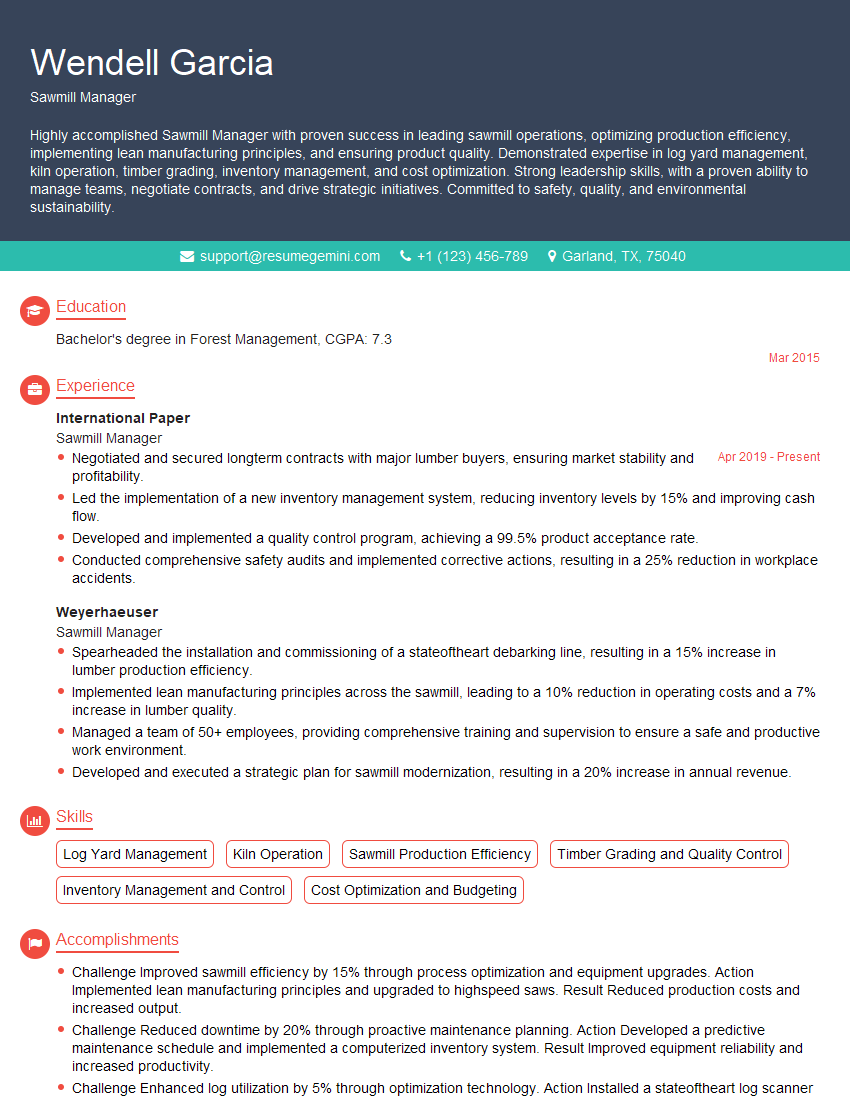
Sawmill Manager Resume Sample

Head Sawyer Resume Sample
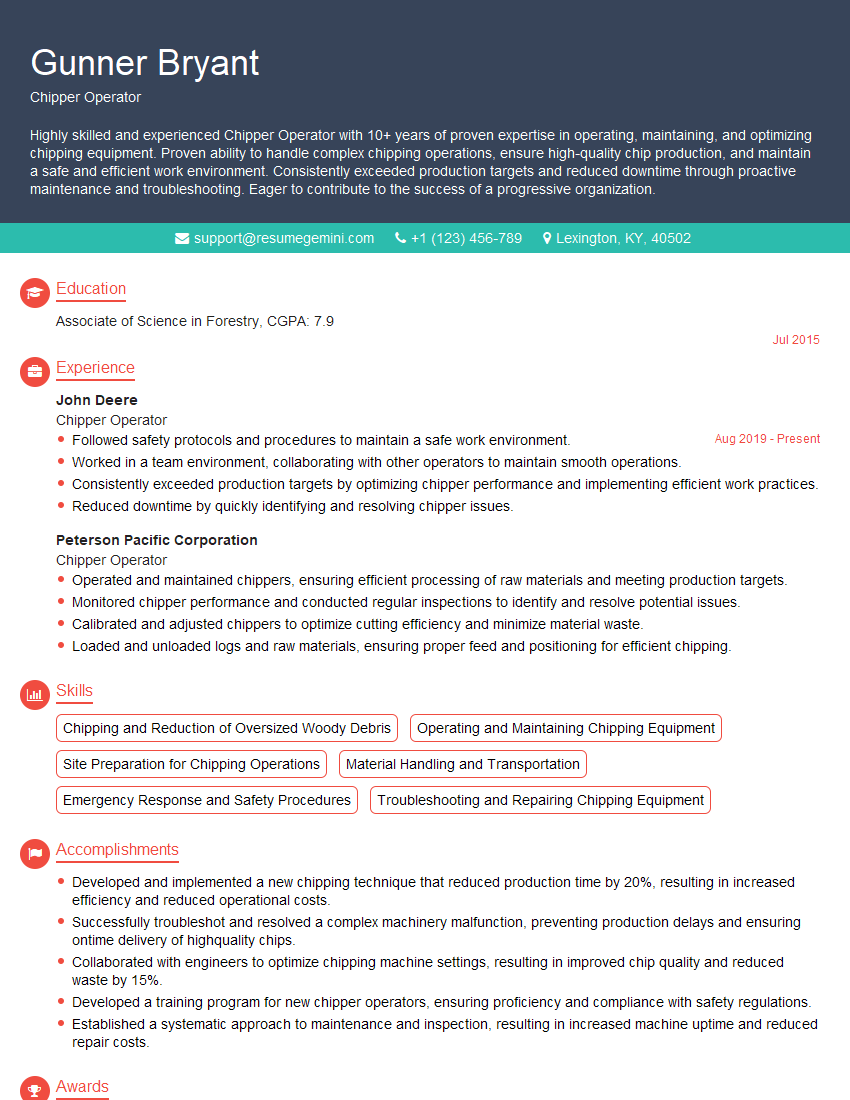
Chipper Operator Resume Sample

Sawmill Supervisor Resume Sample
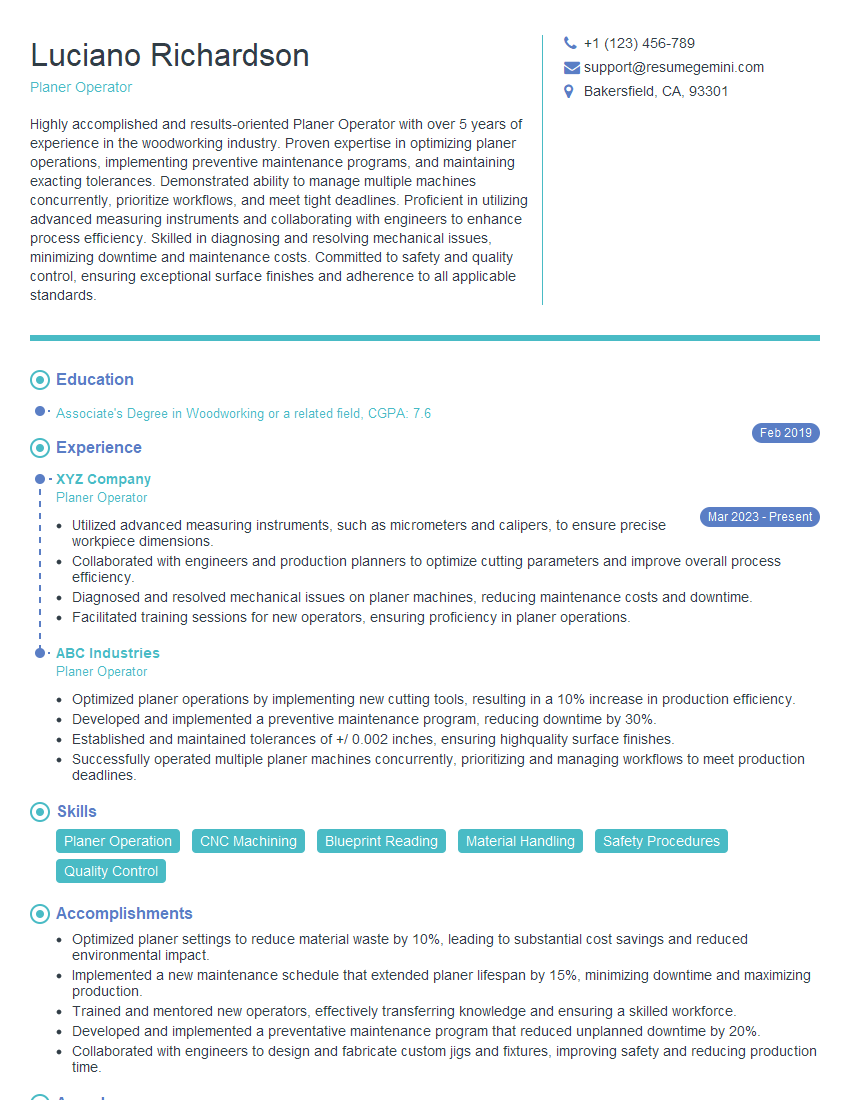
Planer Operator Resume Sample

Trimmer Operator Resume Sample
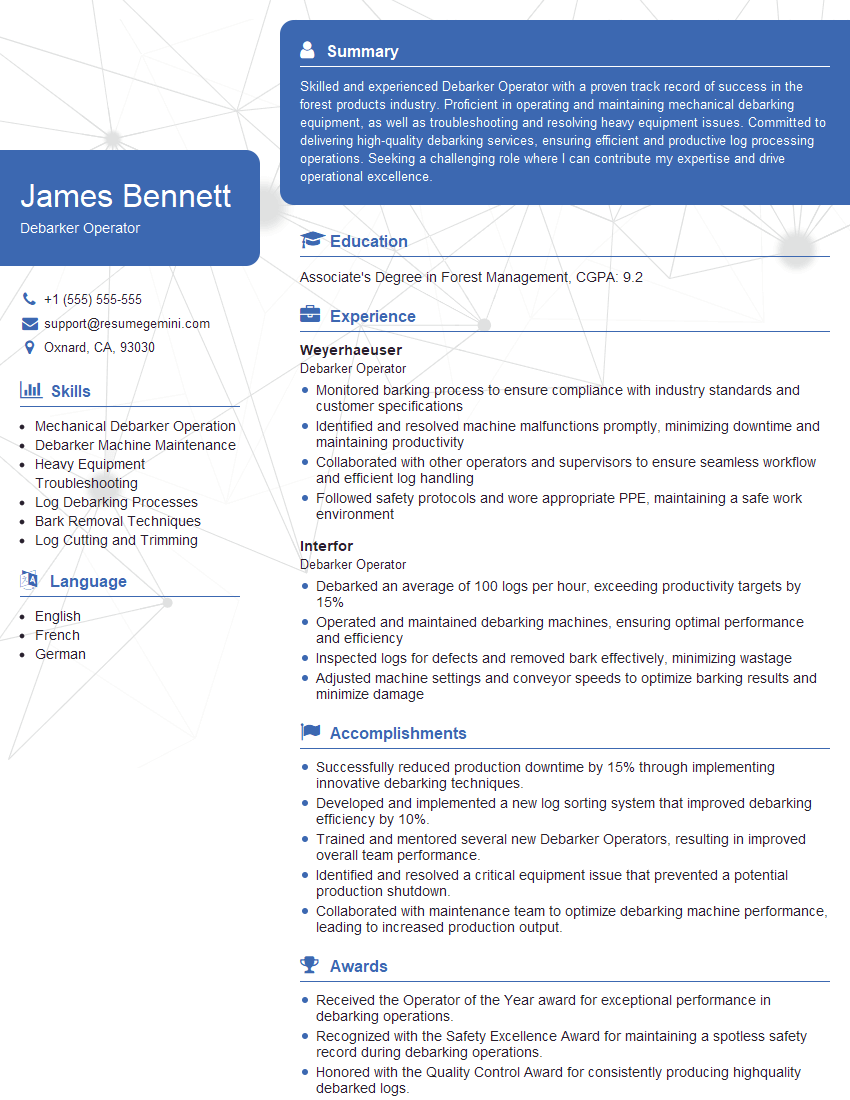
Debarker Operator Resume Sample

Edgerman Resume Sample

Dry Kiln Operator Resume Sample

Sorter Operator Resume Sample
Explore more articles
Users Rating of Our Blogs
Share Your Experience
We value your feedback! Please rate our content and share your thoughts (optional).
What Readers Say About Our Blog
Very informative content, great job.
good