Every successful interview starts with knowing what to expect. In this blog, we’ll take you through the top Scene Direction interview questions, breaking them down with expert tips to help you deliver impactful answers. Step into your next interview fully prepared and ready to succeed.
Questions Asked in Scene Direction Interview
Q 1. Describe your experience creating mood boards for scene direction.
Mood boards are crucial for establishing the visual tone and atmosphere of a scene. They’re more than just pretty pictures; they’re a collaborative tool that communicates the director’s vision to the entire production team. My process begins with a deep dive into the script, identifying key themes, emotions, and the overall style the director wants to achieve. Then, I gather images, textures, colors, and even objects that evoke the desired mood. This might include photographs, paintings, fabric swatches, even found objects that capture the essence of the scene. For example, for a dark, suspenseful scene, I might include images of shadowy alleyways, distressed textures, and moody color palettes. Conversely, a bright, comedic scene might feature vibrant colors, playful patterns, and images representing lightheartedness. I organize these elements on a physical or digital board, creating a visual narrative that tells the story of the scene before any physical set is built. This process ensures everyone on the team – from the cinematographer to the costume designer – is on the same page, leading to a cohesive and impactful final product.
Q 2. How do you collaborate effectively with other departments (e.g., lighting, costume)?
Collaboration is paramount in scene direction. Effective communication is key, and I use a multi-pronged approach. Before the design process even begins, I have initial meetings with the lighting, costume, and art departments to establish a shared understanding of the script’s vision and overall aesthetic. This collaborative brainstorming session ensures that everyone is aligned from the outset. Then, during the design phase, I present my mood boards and preliminary sketches to these departments, inviting feedback and ensuring that the set design complements their work seamlessly. For instance, if the lighting team is planning dramatic chiaroscuro lighting, the set design should accommodate this by incorporating features that enhance shadow play and contrast. Similarly, the costume design should complement both the lighting and set designs, creating a unified visual tapestry. Regular updates and open communication channels (email, shared online documents, regular in-person meetings) throughout the production process are essential to address any arising concerns and ensure the cohesive execution of the director’s vision.
Q 3. Explain your process for translating a script’s vision into a physical set design.
Translating a script’s vision into a physical set design is a multifaceted process that starts with a thorough understanding of the story’s narrative, characters, and setting. I begin by analyzing the script, identifying key locations, actions, and dialogues. I create detailed sketches and diagrams illustrating the layout, dimensions, and key elements of the set. These initial visualizations are then refined into 3D models using software like Cinema 4D or SketchUp, allowing for a more immersive and detailed representation of the final design. Consider a scene in a Victorian-era drawing room: the script may only mention ‘a grand drawing room,’ but my process would involve researching the period’s architecture, furniture styles, and color palettes to accurately recreate a believable and immersive environment. I’d need to decide on specific furniture, wall coverings, and decorative elements that accurately reflect the time period and socioeconomic status of the inhabitants. The end goal is to create a set that not only visually represents the location but also supports the actions and emotions conveyed within the script.
Q 4. How do you manage the budget and timeline constraints of a scene’s production?
Budget and timeline constraints are always a significant factor in scene design. I approach this challenge by adopting a highly organized and cost-effective strategy. Before commencing the design phase, I create a detailed budget breakdown, estimating costs for materials, construction, rentals, and labor. I explore cost-effective alternatives, for instance, using repurposed materials or creating set pieces using clever techniques. This is often achieved through collaboration with the art department, who can provide creative solutions that reduce costs without sacrificing visual quality. Simultaneously, I create a meticulously detailed production schedule, outlining tasks, timelines, and potential bottlenecks. The schedule helps manage the workflow effectively, keeping the project on track and minimizing potential delays. For example, instead of building an elaborate castle set from scratch, we might use a combination of practical construction, digital matte paintings, and strategic camera angles to create a convincing illusion within budget. Continuous monitoring and timely adjustments are crucial to stay within the allocated budget and timeline throughout the entire production.
Q 5. What software programs are you proficient in for scene design and visualization?
Proficiency in various software programs is essential for modern scene design. I am highly proficient in industry-standard software such as Cinema 4D, SketchUp, and AutoCAD. Cinema 4D enables me to create photorealistic 3D models and renderings of sets, allowing for detailed visualization before construction. SketchUp is particularly helpful for quick prototyping and design exploration, while AutoCAD facilitates the creation of precise technical drawings for the construction team. I’m also proficient in Adobe Photoshop and Illustrator, which are indispensable for creating textures, mood boards, and other visual aids. Understanding these tools enables me to communicate designs effectively, create detailed technical specifications, and manage the overall design process efficiently.
Q 6. Describe your experience with different shooting styles and how that impacts set design.
Different shooting styles significantly impact set design. For example, a fast-paced, hand-held camera style might require a more flexible and adaptable set, perhaps one with fewer intricate details or larger, more open spaces to accommodate the camera movement. Conversely, a meticulously planned, static-camera style might allow for more intricate details and carefully crafted compositions, as the camera’s position is predetermined. Likewise, a high-budget, visually spectacular style would demand greater detail and realism, potentially requiring extensive use of practical sets and elaborate construction. Conversely, a low-budget, more stylized approach may rely heavily on digital enhancements and might require the sets to be designed with certain digital effects in mind. Understanding the nuances of different shooting styles allows me to tailor the set design to complement and enhance the cinematic language employed by the director, maximizing both the visual impact and efficiency of the production.
Q 7. How do you handle unexpected changes or challenges on set?
Unexpected changes and challenges are inevitable on set. My approach involves maintaining flexibility, resourcefulness, and proactive problem-solving. The key is quick thinking and decisive action. Firstly, I prioritize open communication. If a problem arises, I immediately inform the relevant team members, discuss potential solutions collaboratively, and make adjustments as necessary. This might involve modifying set pieces, improvising with existing resources, or even re-evaluating the scene’s staging. For instance, if a crucial prop breaks, I might quickly source a replacement or find a creative way to work around the issue. I also maintain a contingency plan to account for potential problems, such as backup props, alternative materials, and flexible solutions. My experience has taught me that maintaining calm and a solution-oriented approach is crucial in handling unexpected situations on set. Adaptability is paramount, and I always prioritize maintaining the overall vision and quality of the production.
Q 8. How do you ensure the safety of your crew and actors on set?
Safety is paramount on any set. My approach is proactive and multi-layered, starting long before the first day of filming. It begins with a thorough risk assessment, identifying potential hazards like pyrotechnics, stunts, working at heights, or even simple tripping hazards. This assessment informs the creation of a comprehensive safety plan, which includes detailed procedures and emergency protocols. This plan is shared with the entire crew, and regular safety briefings are held to ensure everyone is aware of the potential risks and their responsibilities.
On set, I work closely with the safety officer to monitor adherence to the plan. This includes regular inspections of equipment, ensuring proper use of safety gear (like harnesses for heights or eye protection for pyrotechnics), and addressing any immediate concerns raised by crew members. I encourage an open communication environment where anyone can voice safety concerns without fear of reprisal. For instance, during a shoot involving a simulated car crash, we implemented a rigorous choreography with stunt professionals and multiple safety checks to ensure the actors were safe throughout.
Beyond the physical safety, I also prioritize the mental wellbeing of my crew and actors. Maintaining a respectful, collaborative atmosphere reduces stress and contributes to a safer working environment. We create a clear chain of command, preventing confusion or uncertainty that could lead to accidents.
Q 9. Describe your experience with location scouting and selection.
Location scouting is a crucial part of pre-production. It’s more than just finding a visually appealing place; it’s about finding a location that aligns with the story’s needs, is logistically feasible, and adheres to the budget. My process begins with a deep dive into the script, analyzing the scenes’ requirements for setting, light, and overall atmosphere.
Next, I research potential locations using maps, databases, and online resources. I often collaborate with location managers, who bring invaluable local knowledge and connections. We then conduct site visits, evaluating factors such as accessibility, parking, permitting requirements, and potential disruption to the surrounding area. I always look beyond the immediate visual appeal, considering factors like weather patterns, noise levels, and proximity to essential amenities. For example, when scouting for a historical drama, I needed a location with authentic period architecture but also suitable for setting up lighting and grip equipment without impacting the historical integrity of the site. We successfully found a location that satisfied both aesthetic and logistical needs, even arranging permissions to temporarily modify areas without permanent damage.
Finally, I present my findings to the production team with photographic documentation and logistical assessments, making a compelling case for the chosen location based on its strengths and how they address the script’s requirements.
Q 10. What is your approach to creating visually compelling and consistent scenes?
Creating visually compelling and consistent scenes requires a holistic approach, starting with a clear understanding of the story and its visual language. This begins with mood boards and storyboarding, where I collaborate with the director, cinematographer, and production designer to define the visual tone and style. We establish a consistent color palette, lighting scheme, and set design that reinforces the overall mood and theme of the story.
Consistency is key. For instance, if a scene takes place in a character’s home, I ensure that the visual elements—from furniture arrangement to color scheme—remain consistent across multiple scenes, creating a cohesive and believable environment. I use detailed shot lists to track camera angles and positions ensuring that visual elements complement each other across cuts and edits. This helps maintain visual continuity despite any practical challenges on set.
Furthermore, I use visual references like paintings, photography, and even film stills to inspire the overall look. For example, when working on a period drama, I might use historical paintings to inform the color palette and set design, giving the audience a sense of authenticity and immersion. This also guides decisions on details like costumes, props, and set dressing, ensuring that they contribute to the overall visual coherence.
Q 11. How do you incorporate practical effects into your set designs?
Incorporating practical effects adds a unique layer of realism and artistry to a scene. My approach is always to consider practicality and safety first. I work closely with the special effects team to design effects that can be safely executed on set, whilst still providing the visual impact the scene requires. We explore different techniques, weighing the pros and cons of each. For example, rather than relying solely on CGI for a collapsing wall, we might use a combination of practical set construction (building a section of the wall that can be safely controlled) and digital augmentation to enhance the effect, achieving a more convincing result.
Before implementation, we run thorough tests to ensure the effect works as intended and is safe for the actors and crew. Detailed plans and safety protocols are crucial. For a scene involving fire, for example, we’d work with fire marshals and certified pyrotechnicians to ensure all necessary precautions are in place, including fire suppression systems and designated safety zones. Documentation is key, including comprehensive blueprints and shot plans, to ensure clarity and coordination during the shoot.
The balance between practical and digital effects is essential. Practical effects often offer a more tangible sense of reality, while digital effects can enhance or expand upon those elements. Careful planning allows for a seamless blend of both to achieve the most visually impressive and realistic results.
Q 12. How do you work with actors to create a believable and engaging environment?
Collaboration with actors is crucial in creating a believable and engaging environment. It starts long before filming, ideally during rehearsals, where I work with the actors to understand their characters’ motivations and their relationship to the set. I encourage them to interact with the set, to explore their surroundings, and to use the environment to inform their performances. This helps them feel comfortable and invested in their roles, leading to more natural and engaging performances.
On set, I ensure that the environment enhances the actors’ performance. This includes considering things like the placement of props, the arrangement of furniture, and even the subtle details like lighting and sound that contribute to the overall atmosphere. For instance, if a character is supposed to be feeling isolated, I might use lighting and set design to create a sense of emptiness and distance. Conversely, a scene of joy and celebration would require bright lighting, inviting set design, and props that contribute to the scene’s overall mood.
Communication is key. I maintain an open dialogue with actors, allowing them to share their feedback and concerns about the set. This collaborative process ensures that the set supports their performance and contributes to the overall narrative. By actively listening to and addressing their concerns, we create a trusting and collaborative space where actors feel comfortable and confident.
Q 13. What are some key considerations for designing sets in different genres (e.g., comedy, horror, drama)?
Set design varies drastically across genres, reflecting the specific needs and emotional tone of each. In comedy, the focus is often on creating environments that are visually playful, quirky, and even exaggerated, reflecting the humorous nature of the story. This might involve using bright colors, unusual props, and unexpected layouts to enhance the comedic elements.
Horror films, in contrast, often utilize sets to create suspense and unease. This might involve claustrophobic spaces, dark lighting, and unsettling props or set dressings to cultivate a feeling of dread or paranoia. The visual language will employ techniques like shadows, unusual angles, and decaying environments to build the atmosphere of fear.
Drama requires a more nuanced approach, creating environments that reflect the characters’ emotional state and the story’s themes. This might involve using natural light, neutral color palettes, and realistic set design that provides authenticity and believability. A drama’s set design should not necessarily dominate the scene, allowing the actors’ performances and emotional arc to take centre stage. The setting supports the story, it does not steal the show.
Each genre demands a distinct approach. Understanding the genre’s conventions and exploring innovative ways to work within (or against) them is critical to crafting effective and compelling scenes.
Q 14. Describe your process for creating scale models or blueprints for scene design.
My process for creating scale models and blueprints involves several key steps. It starts with a thorough understanding of the script’s requirements, including the set’s dimensions, functionality, and overall aesthetic. This involves close collaboration with the director and production designer to ensure the design aligns with the overall vision.
Next, I develop initial sketches and conceptual drawings, experimenting with different layouts and design elements. This helps visualize the spatial relationships between different set pieces and explore potential challenges. I then create detailed blueprints using CAD software, such as AutoCAD or SketchUp. These blueprints provide precise measurements, elevations, and detailed views of the set, ensuring accuracy in construction. This often involves creating multiple iterations to refine the design based on feedback from the production team.
Depending on the project’s complexity and budget, I may also build scale models. These provide a tangible representation of the set, allowing for a clearer understanding of the spatial relationships and overall aesthetics. These models can be used for presentations and for identifying potential issues before construction begins. These models are then used to inform final design decisions and ensure that the actual set is built according to specifications. The process is iterative and involves constant refinement throughout the design and construction phases.
Q 15. How do you manage and organize the set during filming?
Managing a film set requires meticulous organization. Think of it like conducting a complex orchestra – every element needs to be in the right place at the right time. My approach involves a three-pronged strategy: pre-production planning, on-set execution, and post-production wrap-up.
- Pre-production: This phase involves creating detailed set plans, including accurate measurements, prop lists, and a clear layout of all set pieces. I use software like AutoCAD or SketchUp to create visual representations that everyone can understand. This also includes creating a comprehensive shot list that indicates the exact camera positions and the areas of the set that will be in frame for each shot. This prevents unnecessary clutter.
- On-set execution: During filming, I work closely with the set dresser and the grips to maintain the set’s integrity between shots. A designated set runner assists in keeping things tidy and readily available. We clearly label everything, assign specific areas for props and equipment, and implement a system for quick set changes between scenes. This often involves a colour-coded system for easy identification of props and set pieces.
- Post-production wrap-up: This entails a careful disassembly and storage of the set, ensuring all materials are accounted for and stored properly for future use or disposal. I create detailed documentation of the set’s construction, including photographs and measurements, for reference on future projects.
For example, on a recent period drama, we color-coded furniture and props based on their relevance to specific scenes, allowing for efficient set changes during the shoot, minimizing downtime and maximizing shooting hours.
Career Expert Tips:
- Ace those interviews! Prepare effectively by reviewing the Top 50 Most Common Interview Questions on ResumeGemini.
- Navigate your job search with confidence! Explore a wide range of Career Tips on ResumeGemini. Learn about common challenges and recommendations to overcome them.
- Craft the perfect resume! Master the Art of Resume Writing with ResumeGemini’s guide. Showcase your unique qualifications and achievements effectively.
- Don’t miss out on holiday savings! Build your dream resume with ResumeGemini’s ATS optimized templates.
Q 16. How familiar are you with various set building materials and techniques?
My familiarity with set building materials and techniques is extensive. I’m proficient in working with a range of materials, from traditional wood and plaster to modern alternatives like lightweight foam and recycled materials.
- Traditional Materials: I’m experienced in carpentry, plastering, and painting techniques, allowing for the creation of realistic and durable sets. This allows for intricate detail and the ability to weather materials to achieve a specific look.
- Modern Materials: I’m adept at using lightweight materials like foam core and expanding polyurethane foam for creating complex structures and props quickly and efficiently. This is crucial for time-sensitive productions and locations with weight restrictions.
- Sustainable Practices: I’m increasingly incorporating sustainable building practices into my work, utilizing reclaimed wood, recycled materials, and eco-friendly paints whenever possible.
For instance, in a recent project involving a futuristic cityscape, we utilized recycled metal and plexiglass for creating a visually striking and environmentally conscious set. Knowing the properties of each material is crucial for efficient set building, achieving the desired aesthetic, and ensuring safety on set.
Q 17. How do you balance artistic vision with practical considerations such as budget and logistics?
Balancing artistic vision with practical considerations is a core skill for a scene director. It’s about finding creative solutions that don’t compromise the film’s integrity while staying within budget and logistical constraints.
My approach involves a collaborative process. Early on, I work closely with the production designer and director to establish a clear vision and set a realistic budget. We then explore different design options, weighing the artistic merits against the cost and feasibility of each. This might involve using clever visual effects to replace expensive practical elements, or repurposing existing set pieces in creative ways.
For example, if a scene requires a grand ballroom, a completely built set might be prohibitively expensive. A compromise might be to build a smaller, representative section of the ballroom and use clever camera angles and digital enhancements to create the illusion of a larger space. It’s about finding smart shortcuts that don’t sacrifice visual storytelling.
Q 18. How do you ensure consistency in the visual style across multiple scenes?
Maintaining visual consistency across multiple scenes is paramount for creating a cohesive and believable world. This requires careful planning and attention to detail throughout the production.
- Mood Boards and Style Guides: Creating comprehensive mood boards and style guides in pre-production is crucial. These visually capture the desired color palettes, textures, lighting styles, and overall aesthetic. These guides are shared with the entire team (set design, costume, and cinematography) to ensure everyone is on the same page.
- Detailed Set Plans: Detailed plans are essential. They provide a reference point throughout the production, ensuring that all elements of the set, from color schemes to the placement of furniture, remain consistent.
- Regular Communication: Open and regular communication with the director, cinematographer, and other key crew members is vital for identifying and addressing inconsistencies early on. Daily walk-throughs of the sets are helpful in identifying these inconsistencies.
For instance, in a historical drama, consistent use of specific fabrics, furniture styles, and lighting schemes across all the interior sets is critical for creating a cohesive historical setting and avoiding jarring inconsistencies that might break the viewer’s immersion.
Q 19. Describe your experience with creating storyboards or visual references for scene design.
Storyboarding and visual references are invaluable tools in my workflow. I use them to communicate my design ideas clearly and collaboratively, and to visually map out the scenes’ flow.
- Storyboards: I utilize storyboards to sketch out the scene layout, camera angles, and the overall action. This allows for a clear visualisation of the scene’s composition and helps to identify potential challenges before filming begins.
- Mood Boards: These boards collect images, textures, and color palettes that help define the scene’s aesthetic and atmosphere, and give a visual representation of the overall tone and design.
- 3D Modeling: For complex sets, I often employ 3D modeling software to create detailed visualizations, allowing for accurate planning and easier communication with the director and the construction crew. This gives a realistic representation, allowing to check for potential errors early on.
In a recent science fiction film, detailed 3D models of spaceship interiors allowed us to visualize the scale and functionality of sets before construction, enabling effective spatial planning and avoiding costly mistakes during production.
Q 20. How do you communicate your design ideas effectively to the director and other crew members?
Effective communication is key to a successful production. My approach to communicating design ideas involves a multi-faceted strategy, catering to various learning styles and ensuring everyone is on the same page.
- Visual Communication: I primarily use visual aids like storyboards, mood boards, and 3D models to communicate my concepts clearly and concisely. These act as universal languages, transcending any communication barriers.
- Written Communication: Detailed design documents, including plans, specifications, and material lists, provide concrete and accurate information to the construction team and other relevant departments. This includes annotated drawings.
- Verbal Communication: I maintain regular meetings and communication with the director and other crew members, providing updates on progress and addressing any questions or concerns. This includes actively listening to other team members’ inputs and incorporating their feedback.
For example, on a period piece, detailed drawings and descriptions of furniture styles, along with a mood board detailing the color palettes and texture of the era, ensured the entire team understood the desired visual language of the film.
Q 21. What is your preferred workflow for managing props and set dressing?
My workflow for managing props and set dressing emphasizes organization, accessibility, and clear communication. It’s a system designed to minimize chaos and maximize efficiency.
- Detailed Inventory: I begin with a meticulously detailed prop and set dressing list, including descriptions, quantities, and sources. This list is regularly updated throughout the production.
- Organized Storage: Props and set dressing items are organized according to their scene usage, with clear labeling and storage locations to ensure quick retrieval. This includes colour-coded systems or numerical labelling based on the shot list.
- Dedicated Team: I work closely with a dedicated set dresser and their team. They manage the day-to-day handling of props and set dressing, ensuring everything is in place and maintained during filming.
- Digital Database: I often utilize a digital database or spreadsheet to track prop locations, condition, and availability. This database is accessible to the entire team, providing real-time information and facilitating seamless collaboration. This system can be extremely helpful during large-scale projects.
For example, in a large-scale historical drama, a digital database enabled us to track the precise location and condition of hundreds of props, facilitating efficient set dressing and preventing any loss or damage to valuable items.
Q 22. How do you adapt your scene design approach to different shooting locations (e.g., studio, location)?
Adapting my scene design approach between studio and location shoots requires a fundamental shift in mindset and methodology. In a studio, I have complete control. I can meticulously plan every detail, from lighting and set construction to prop placement. I can create a perfect environment tailored precisely to the script’s needs, even building entire sets from scratch. Think of it like sculpting – you have the clay and all the tools to mold it exactly as you envision.
Location shoots, however, present a different challenge. The environment is pre-existing, and my approach becomes one of adaptation and integration. Instead of building a set, I need to scout locations carefully, analyzing the existing architecture, light, and natural elements. My role shifts from a creator to a curator, selecting the best aspects of the location and minimizing any detracting features. It’s more like painting a landscape – you work with what nature provides, enhancing and adjusting as necessary.
For instance, on a recent shoot, we needed a dilapidated building for a dramatic scene. Using a studio would have been expensive and time-consuming. Instead, we found a suitable derelict building, making minimal alterations to enhance the feeling of decay and add specific details that were crucial to the narrative. This involved detailed pre-production scouting and careful consideration of safety and permits. This adaptability is key to efficient and creative scene direction.
Q 23. Describe a time you had to solve a creative problem on set.
During a period drama shoot, we faced a significant challenge with a key scene set in a grand ballroom. Our original plan involved using elaborate period-appropriate chandeliers, but due to unforeseen circumstances, they arrived damaged and unusable, just hours before filming. We were facing a potential production shutdown.
To solve this, I quickly convened a meeting with the lighting team, art director, and production manager. We brainstormed alternatives, considering the visual impact of the chandeliers and their role in establishing the scene’s ambiance. Ultimately, we decided to use strategically placed, smaller antique-style sconces along with creatively arranged lighting and subtle camera angles to create the illusion of grand chandeliers, while subtly suggesting the grandeur without the actual fixtures. We also used practical light sources to add depth and authenticity to the scene. The result was not only a successful solution but also a more intimate and atmospheric scene than initially conceived, proving sometimes, challenges can lead to better creative outcomes.
Q 24. What are some common challenges faced in scene direction, and how have you overcome them?
Common challenges in scene direction often involve time constraints, budget limitations, and logistical hurdles. Time pressure is particularly acute. You might need to achieve a highly detailed set design within a tight schedule, or unexpected problems can arise, demanding quick, creative solutions. Budget limitations require resourceful planning and clever solutions to achieve high-quality results without exceeding allocated funds. Logistical challenges include location permits, equipment malfunctions, and coordinating large teams.
I overcome these by meticulous planning, thorough pre-production, and collaborative teamwork. Creating detailed shot lists, storyboards, and set designs ensures everyone is on the same page. I prioritize tasks based on their impact on the overall narrative and allocate resources accordingly. Problem-solving on the spot often involves innovative thinking and improvisation, working closely with my team to find alternative solutions that maintain the artistic integrity of the scene.
For instance, when faced with a budget shortfall on a project, I worked with the art department to source props and set dressings from antique shops and rental houses instead of commissioning custom-made pieces, achieving a similar aesthetic while saving money. Communication and teamwork are essential in navigating these challenges.
Q 25. How do you stay up-to-date with the latest trends and techniques in scene direction?
Staying current in scene direction demands continuous learning and exposure to new techniques and trends. I actively pursue this through multiple avenues. I regularly attend industry workshops, conferences, and masterclasses to learn from leading professionals in the field.
I also stay updated through professional publications and online resources, examining the work of renowned scene directors and filmmakers. Analyzing their creative choices and techniques provides valuable insights and inspiration. Furthermore, I actively engage with fellow scene directors and designers through networking opportunities, collaborating on projects and exchanging ideas. This allows me to learn from others’ experiences and discover new creative solutions. It’s a constant process of learning and refinement. I aim to stay abreast of both technological advancements and evolving aesthetic trends to keep my skills sharp and my designs innovative.
Q 26. How do you prioritize tasks and manage your time effectively during a shoot?
Effective time management during a shoot relies on a combination of careful planning, prioritization, and delegation. Before shooting begins, I create a detailed shot list, schedule, and breakdown of all tasks. This helps in visualizing the entire workflow and allocating adequate time for each aspect.
I prioritize tasks based on their importance to the scene and the overall narrative, ensuring that the most crucial elements are addressed first. This may involve addressing critical set dressing needs before tackling less significant details. I also delegate tasks effectively to my team members, empowering them to take ownership and responsibility for their respective areas. Open communication and regular progress checks are vital to maintain the workflow and address any emerging issues promptly. This proactive approach ensures that the shoot stays on schedule and within budget.
Q 27. Explain your understanding of the relationship between scene design and the overall storytelling.
Scene design is intrinsically linked to storytelling; it’s not merely a visual element, but a powerful tool for conveying narrative information and enhancing the viewer’s emotional experience. A well-designed scene can significantly amplify the story’s impact, reinforcing themes, revealing character traits, and establishing mood and atmosphere.
For example, a dimly lit, claustrophobic set can effectively create a sense of tension and unease, while a bright, airy setting can evoke feelings of openness and hope. The color palette, props, and overall composition of the scene also contribute to the storytelling. The placement of characters within the scene, their interaction with the environment, and the overall visual language employed all contribute to the narrative’s effectiveness. Ultimately, scene design is a form of visual storytelling, working in harmony with the script to create a compelling and immersive experience for the audience.
Q 28. Describe your experience with creating realistic and believable environments.
Creating realistic and believable environments is paramount in scene direction. It involves meticulous attention to detail, understanding of visual storytelling, and a blend of artistic skill and technical expertise. I start by thoroughly researching the intended period, location, and cultural context of the scene. This helps in selecting appropriate props, costumes, and set dressings.
I pay close attention to the consistency and accuracy of details. For example, if designing a period piece, I ensure that the props and set design accurately reflect the style and technology of that era. Lighting is crucial, too; natural light sources, shadows, and the overall illumination of the space contribute greatly to realism and mood. Furthermore, I collaborate closely with the art department, ensuring that the set construction, prop selection, and overall aesthetic are aligned with the desired level of realism.
In one project, we were depicting a bustling 1920s Parisian street scene. To achieve realism, we consulted historical photographs and documents, ensuring the set’s architecture, street furniture, and even signage reflected that era’s design accurately. The collaboration with costumers and make-up artists played a key role in the project’s success. Attention to detail, thorough research, and teamwork are crucial for creating believable and impactful environments.
Key Topics to Learn for Scene Direction Interview
- Understanding the Script: Analyze scripts for subtext, character relationships, and overall themes to inform your directorial choices.
- Visual Storytelling: Explore how composition, camera angles, and movement contribute to conveying narrative and emotion.
- Blocking and Staging: Master techniques for arranging actors and utilizing space to enhance the scene’s impact and clarity.
- Working with Actors: Discuss strategies for effective communication, collaboration, and guidance to elicit compelling performances.
- Technical Aspects: Demonstrate familiarity with lighting, sound design, and their integration with the overall vision.
- Rehearsal Process: Outline your approach to rehearsals, including strategies for problem-solving, experimentation, and refinement.
- Collaboration and Communication: Highlight experience working effectively with diverse teams, including actors, cinematographers, and production crews.
- Problem-Solving and Adaptability: Describe your ability to handle unexpected challenges on set and maintain creative vision under pressure.
- Directorial Style and Influences: Articulate your unique approach to scene direction, drawing upon relevant influences and inspirations.
- Specific Genre Knowledge: Depending on the role, showcase expertise in directing for specific genres (e.g., comedy, drama, action).
Next Steps
Mastering scene direction opens doors to exciting career opportunities in film, television, and theatre, offering creative control and the chance to shape compelling narratives. To maximize your job prospects, it’s crucial to create an ATS-friendly resume that showcases your skills and experience effectively. ResumeGemini is a trusted resource to help you build a professional and impactful resume. They offer examples of resumes tailored to Scene Direction, ensuring your application stands out. Take the next step towards your dream career – craft a winning resume with ResumeGemini today!
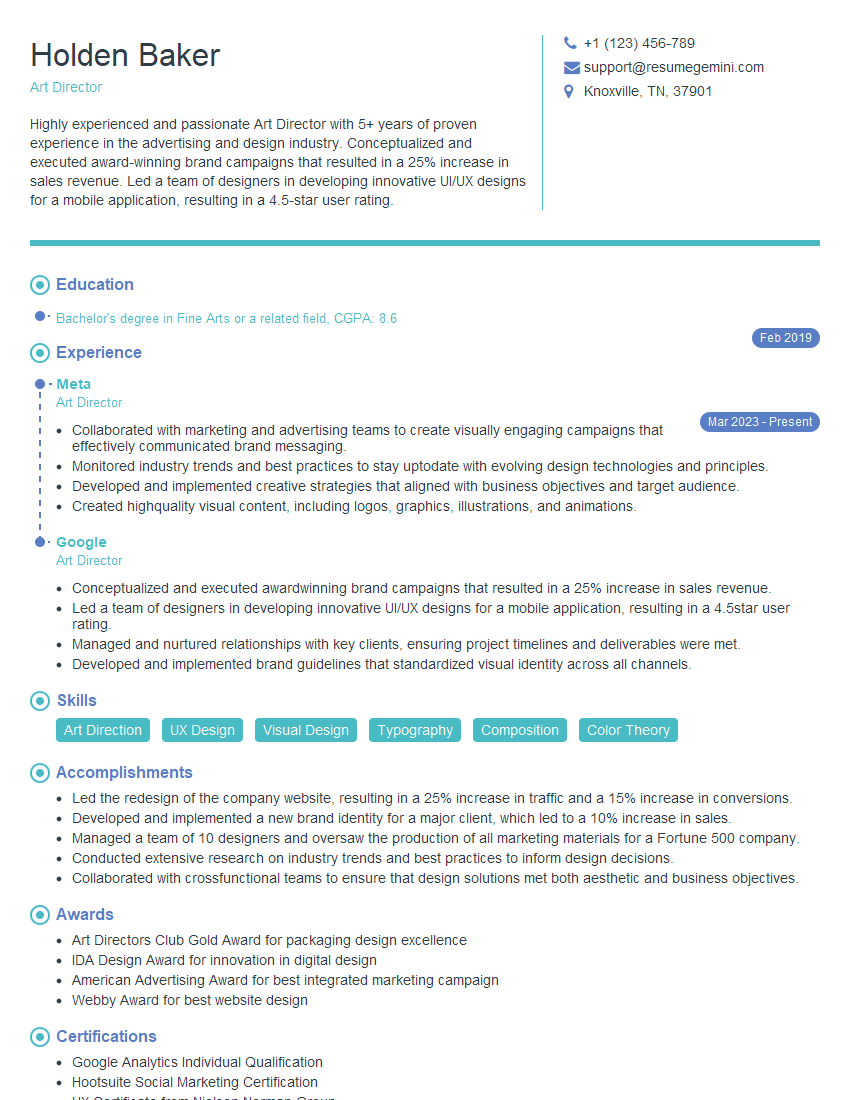
Art Director Resume Sample
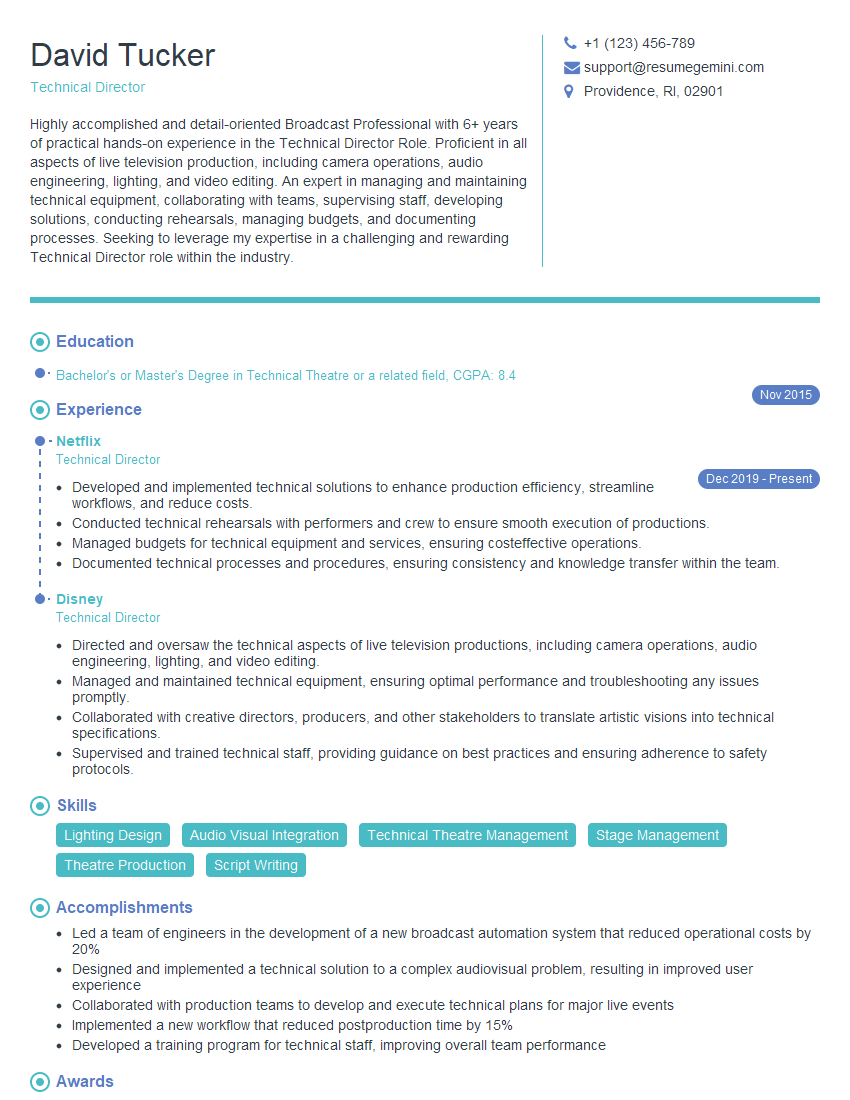
Technical Director Resume Sample

Production Coordinator Resume Sample
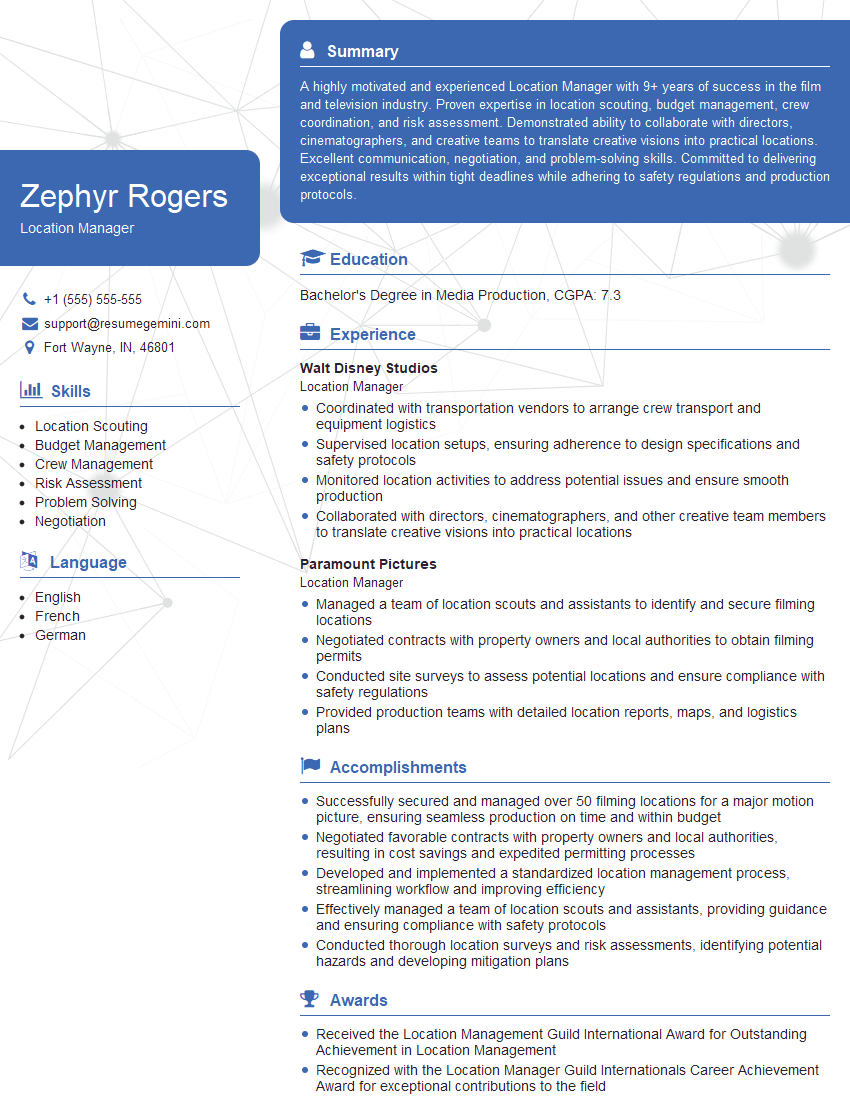
Location Manager Resume Sample
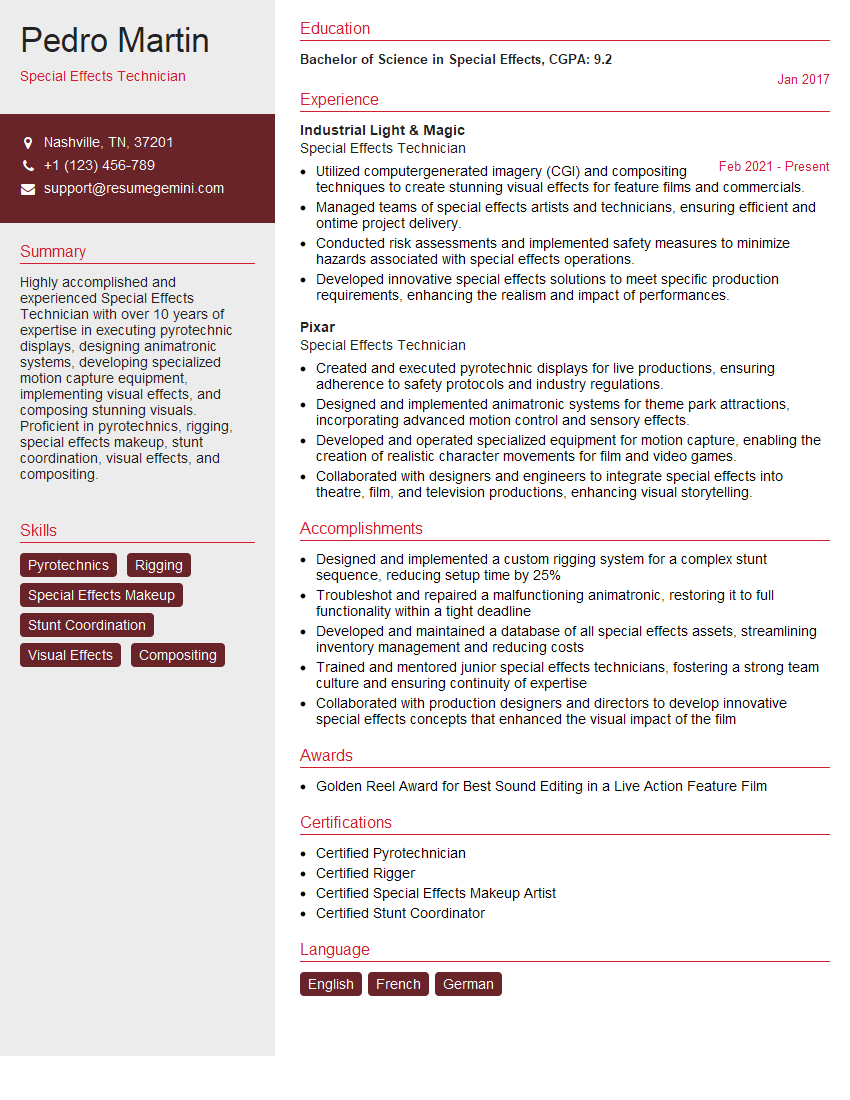
Special Effects Technician Resume Sample
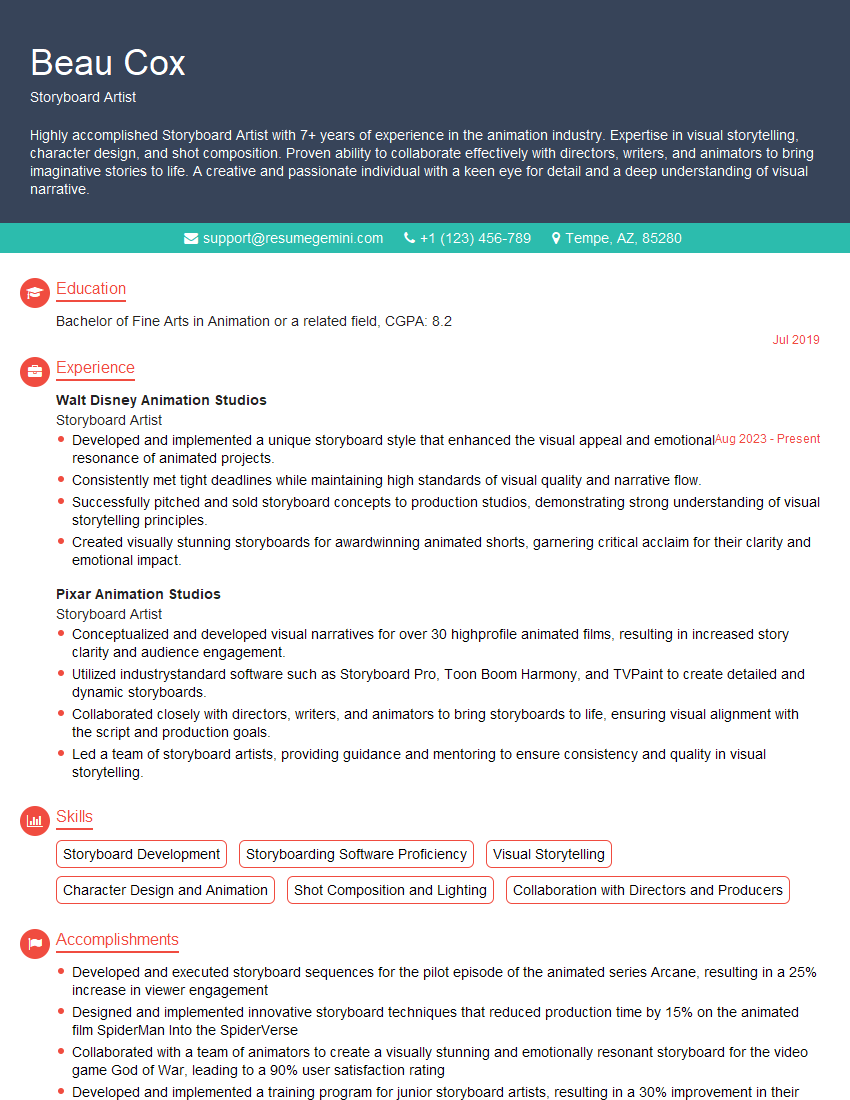
Storyboard Artist Resume Sample
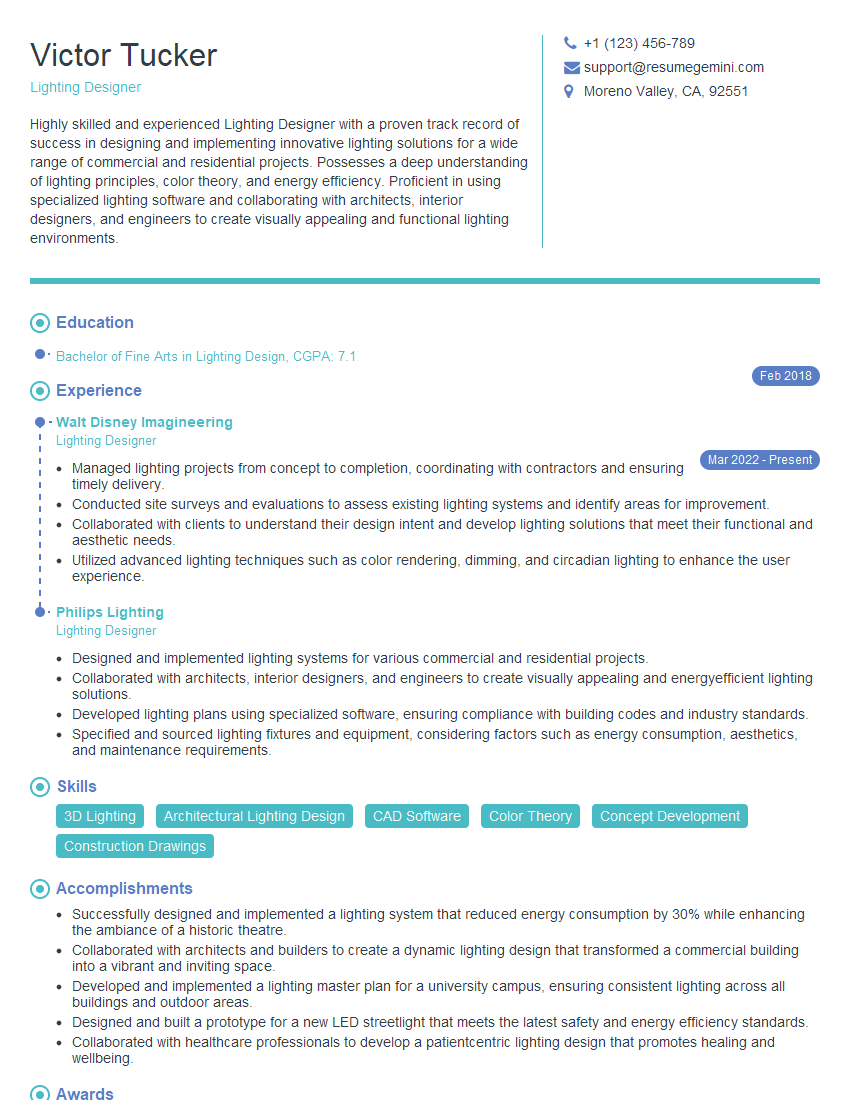
Lighting Designer Resume Sample
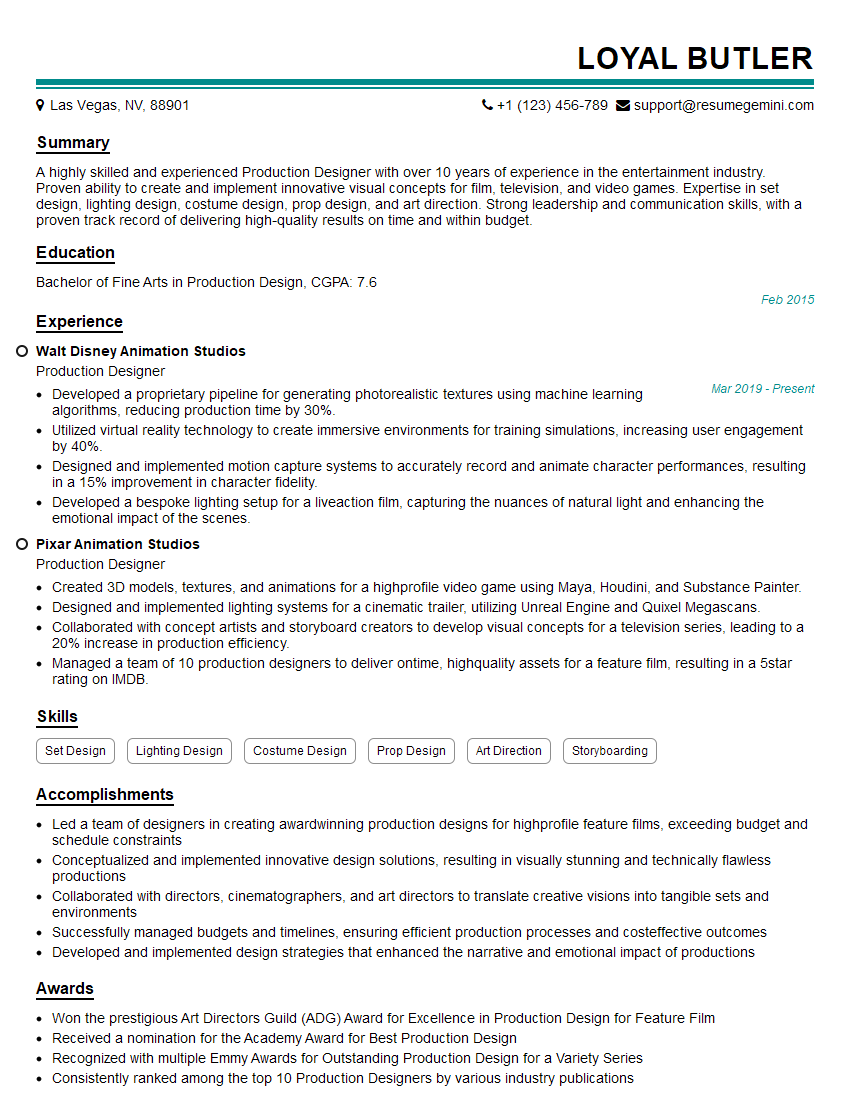
Production Designer Resume Sample
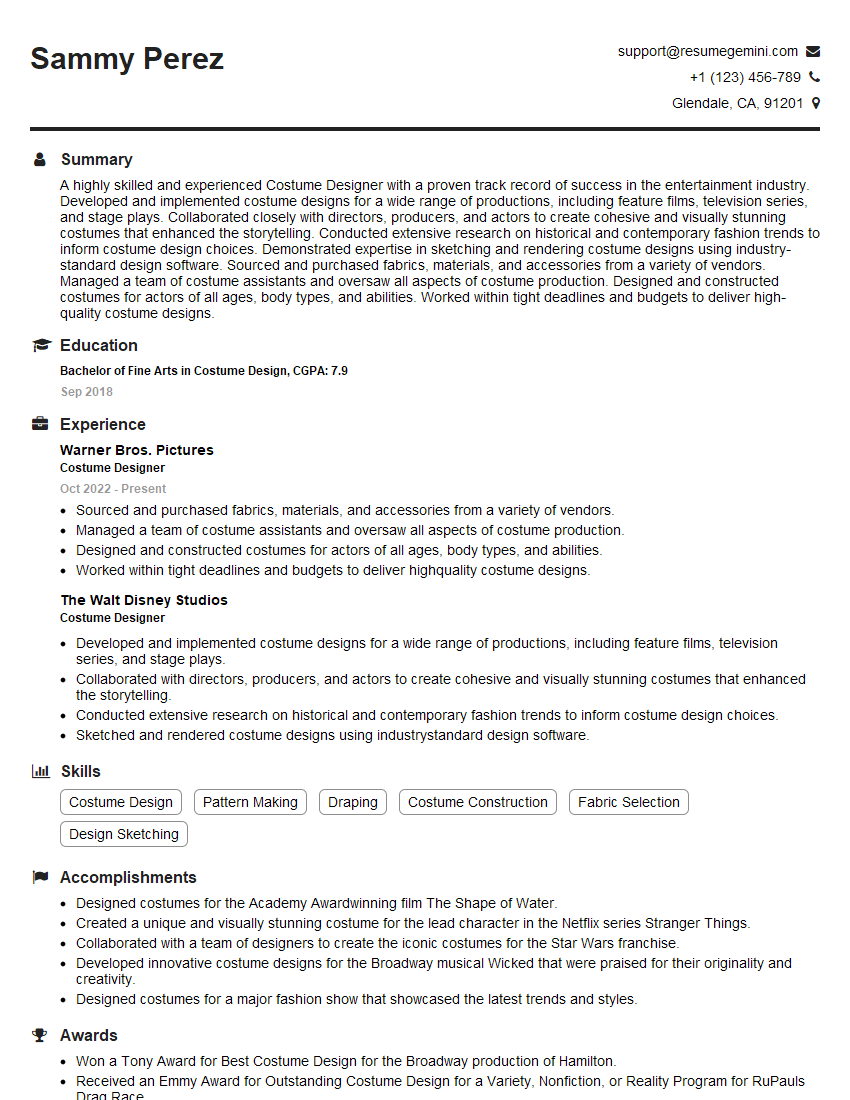
Costume Designer Resume Sample
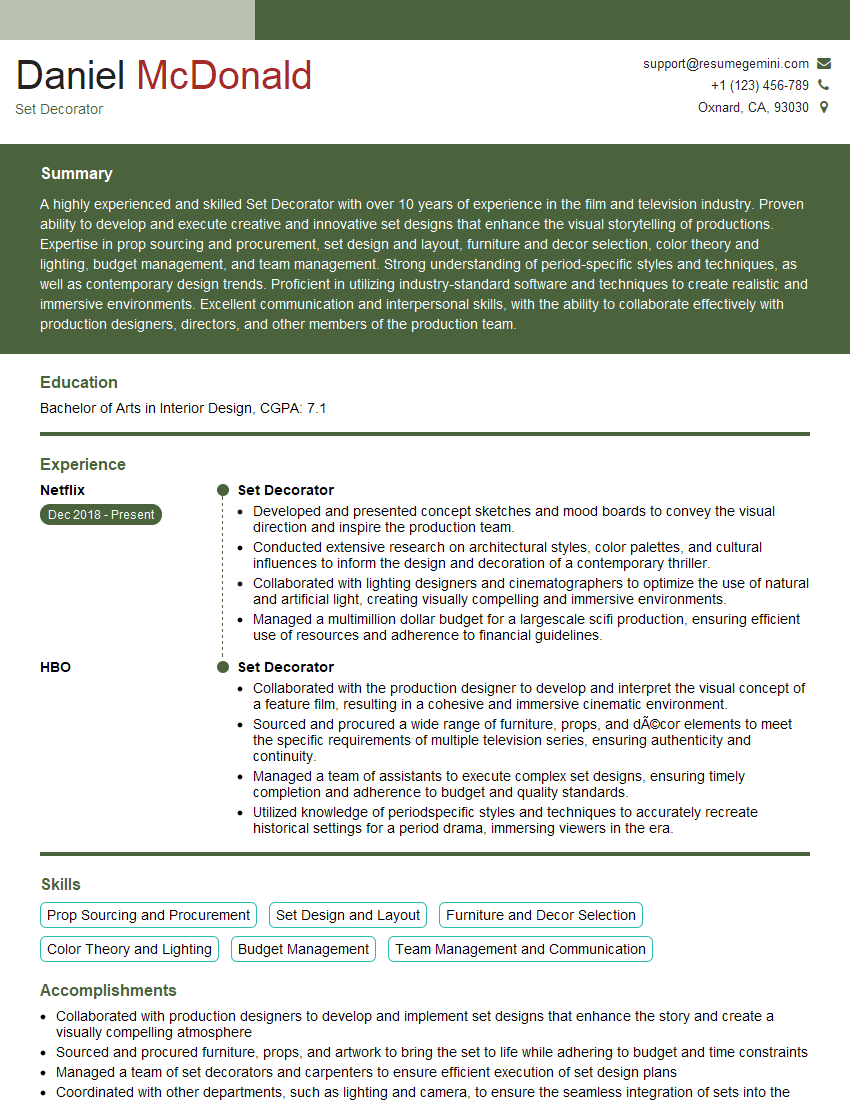
Set Decorator Resume Sample
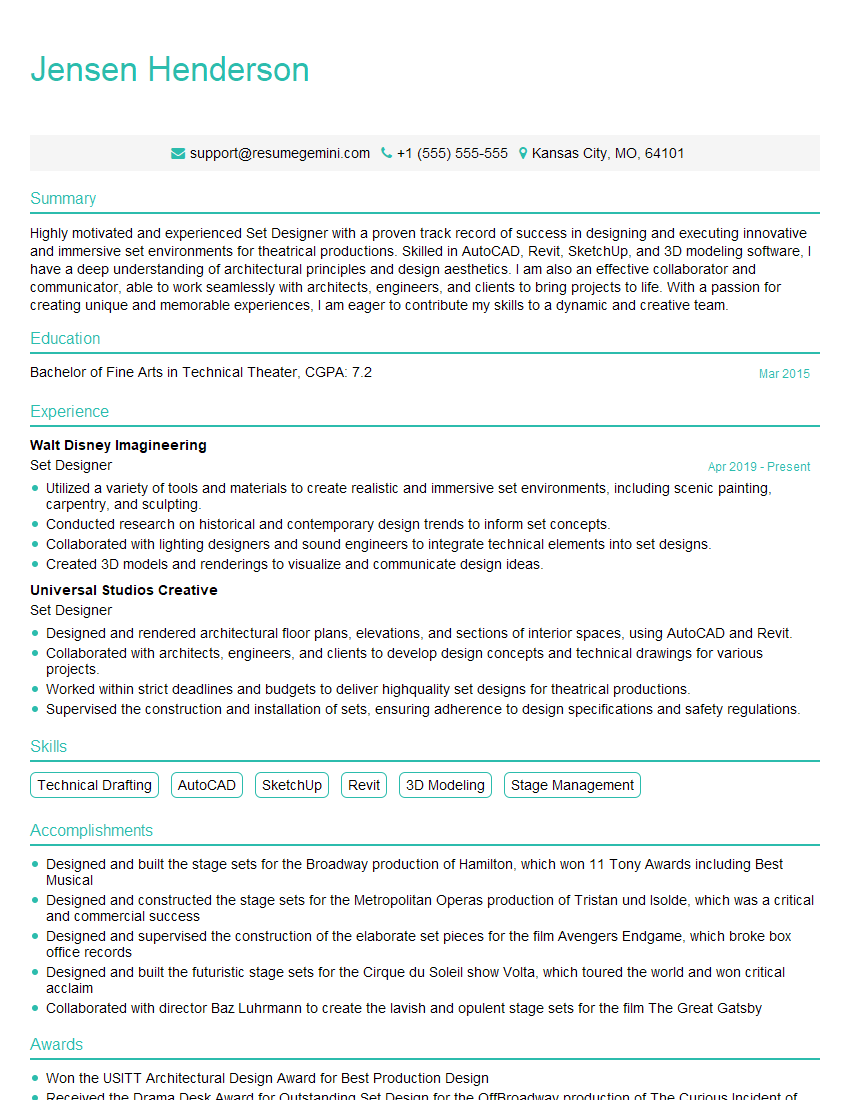
Set Designer Resume Sample
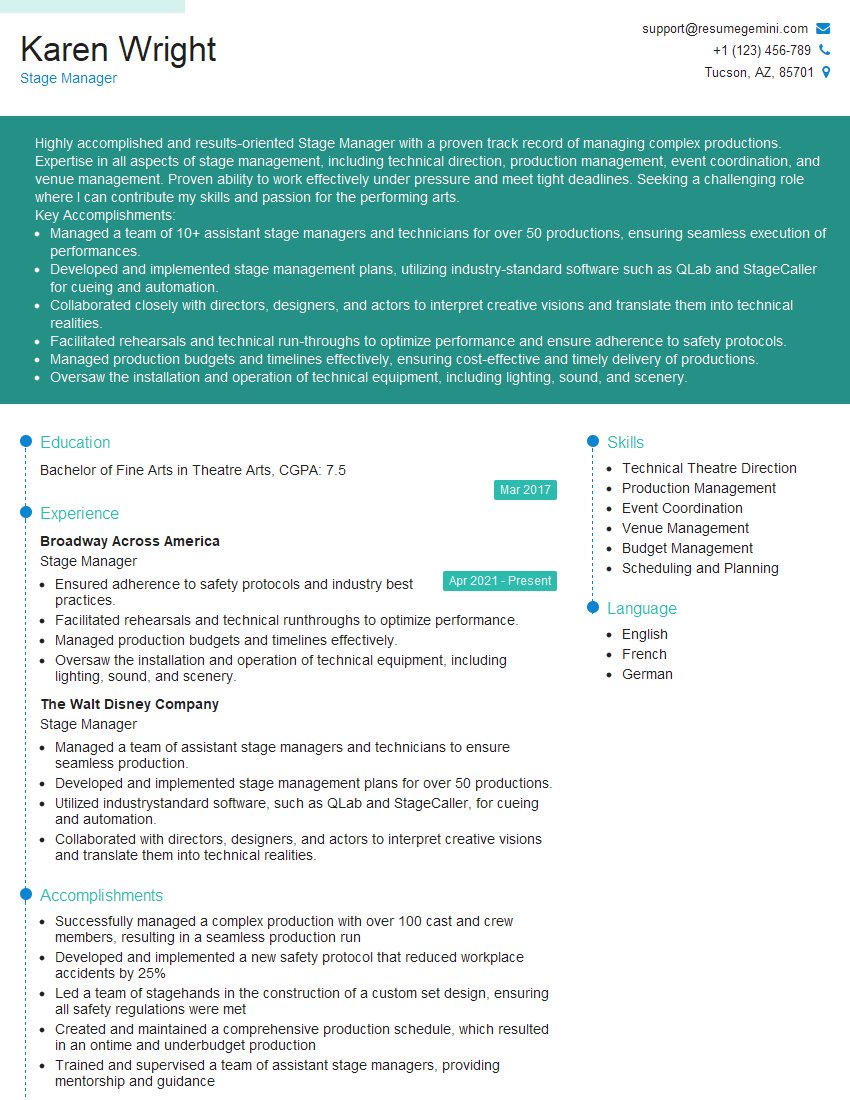
Stage Manager Resume Sample
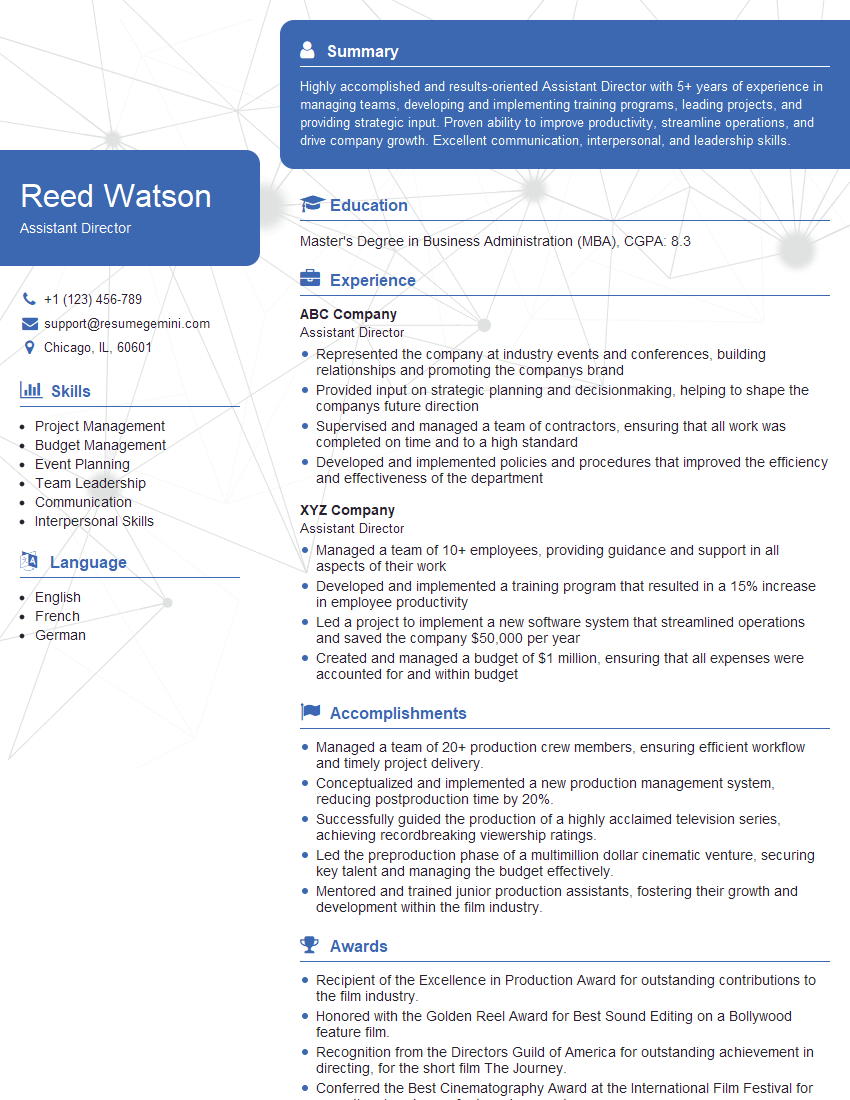
Assistant Director Resume Sample
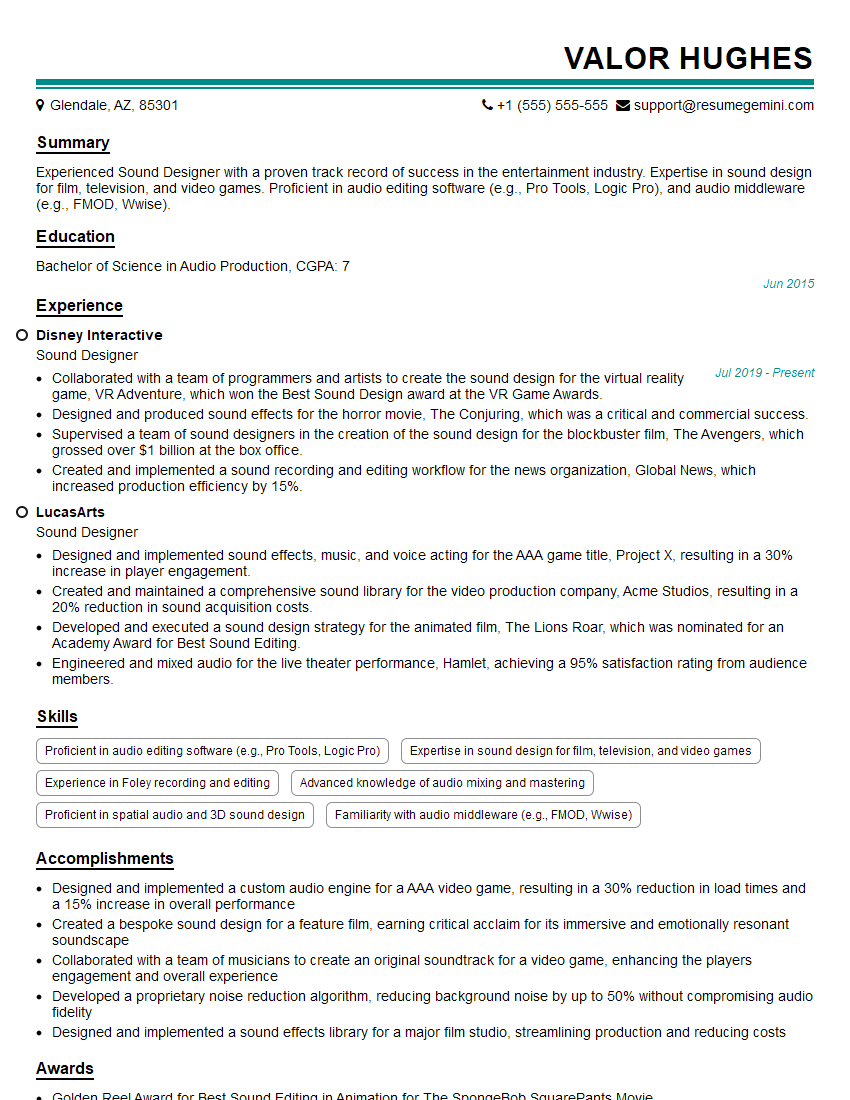
Sound Designer Resume Sample
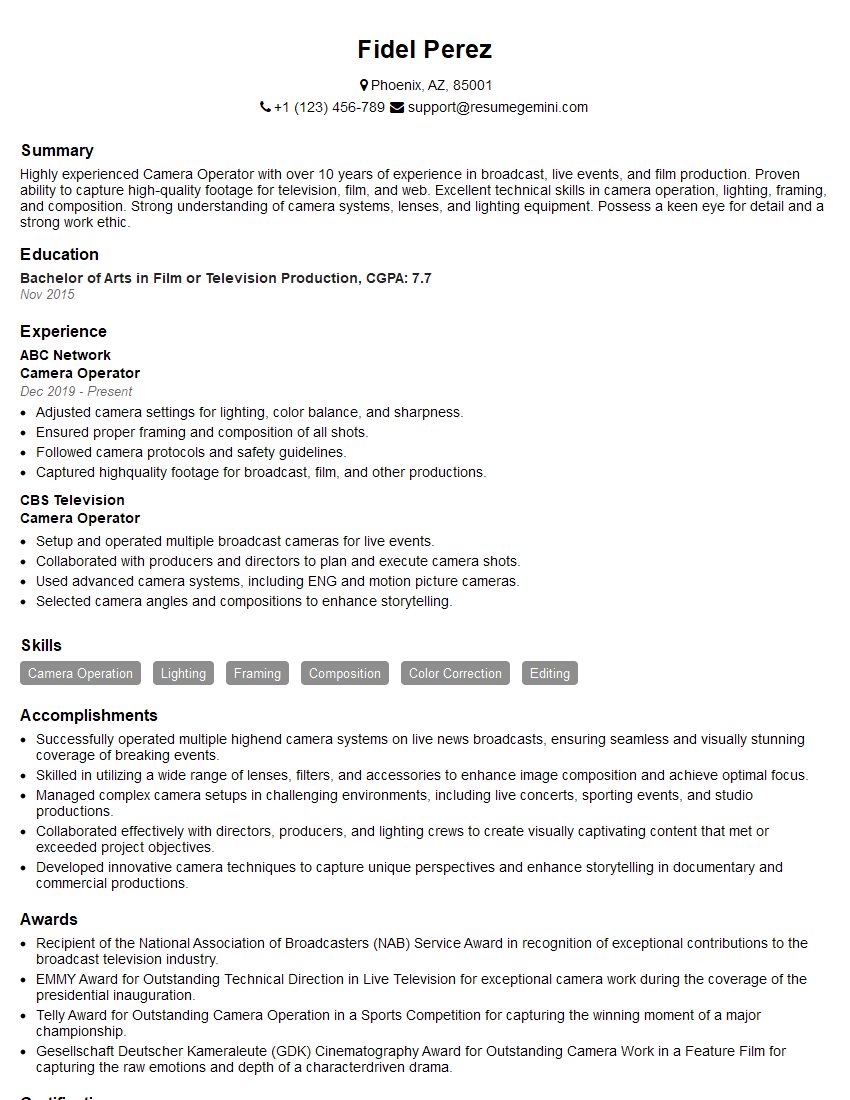
Camera Operator Resume Sample
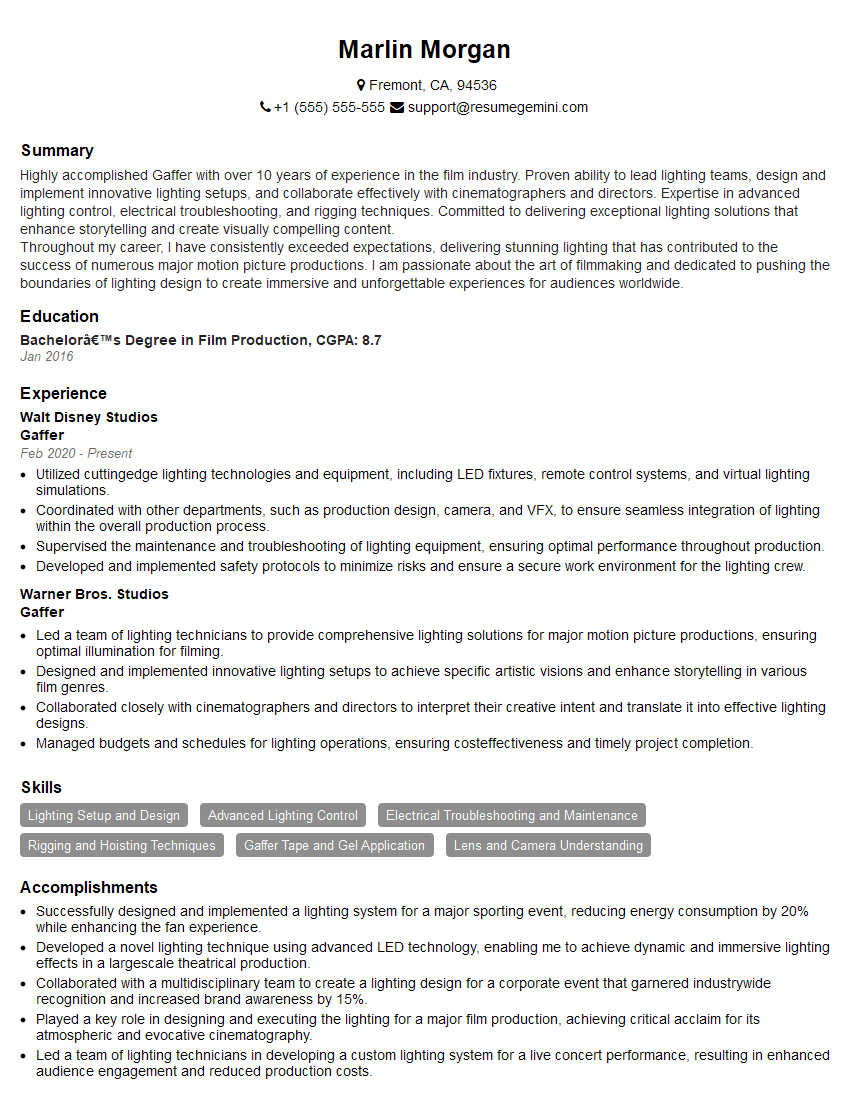
Gaffer Resume Sample
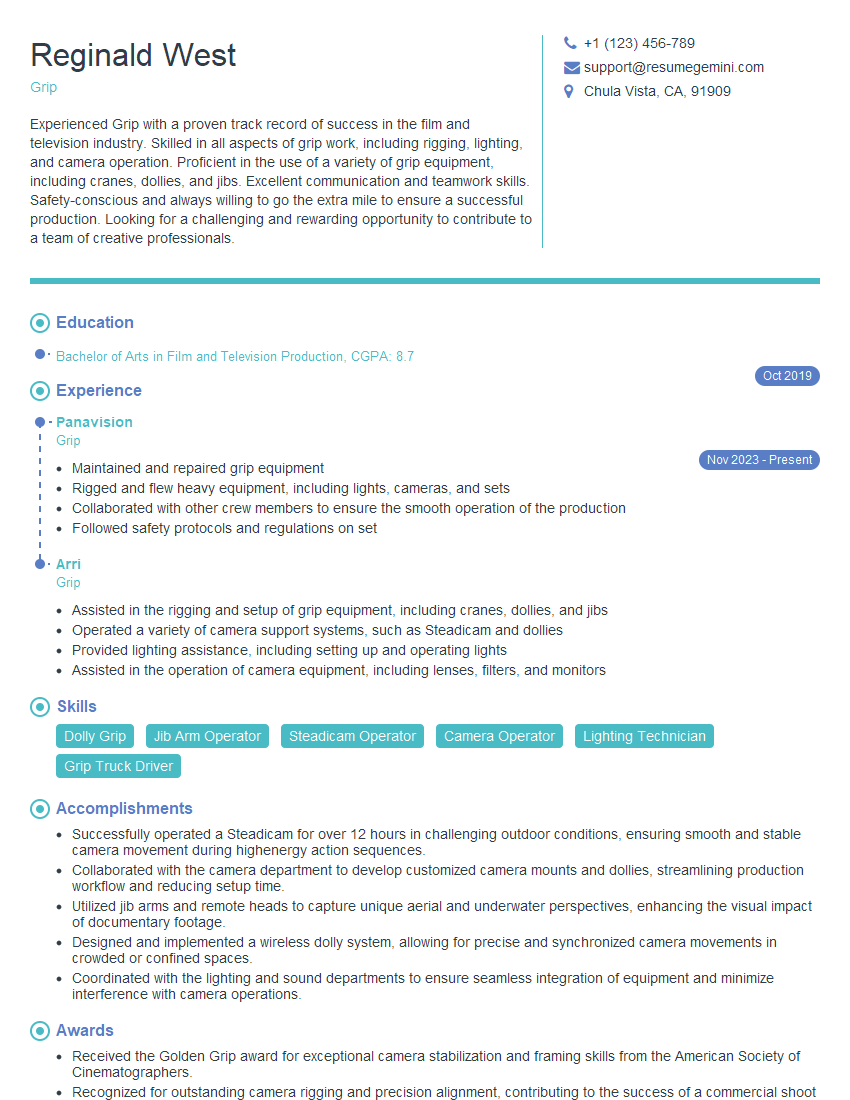
Grip Resume Sample
Explore more articles
Users Rating of Our Blogs
Share Your Experience
We value your feedback! Please rate our content and share your thoughts (optional).
What Readers Say About Our Blog
Very informative content, great job.
good