Cracking a skill-specific interview, like one for Scouting Reports, requires understanding the nuances of the role. In this blog, we present the questions you’re most likely to encounter, along with insights into how to answer them effectively. Let’s ensure you’re ready to make a strong impression.
Questions Asked in Scouting Reports Interview
Q 1. Explain your experience in creating comprehensive scouting reports.
Creating a comprehensive scouting report involves meticulous observation, data collection, and insightful analysis to paint a holistic picture of an athlete’s potential. My approach goes beyond simply listing stats; it focuses on understanding the ‘why’ behind the numbers.
For instance, I recently scouted a basketball player. Instead of just noting his points per game, I analyzed his shot selection, efficiency in different game situations (e.g., clutch shots, fast breaks), and his defensive contributions. This allowed me to assess his overall game intelligence and predict his potential in various roles.
My reports incorporate detailed analyses of strengths and weaknesses, future projections, and comparisons to similar players at the same level or in higher leagues. I aim to provide actionable insights for decision-makers, offering a clear picture of what an athlete can bring to the team and areas needing improvement.
- Detailed Skill Assessment: A breakdown of technical skills, tactical understanding, and physical attributes, supported by quantitative and qualitative data.
- Comparative Analysis: Benchmarks against players in similar roles and leagues, providing context for the player’s potential.
- Future Projections: An informed estimation of the player’s potential development trajectory, considering age, training potential, and the level of competition.
Q 2. Describe your process for identifying key performance indicators (KPIs) in a scouting report.
Identifying key performance indicators (KPIs) requires a deep understanding of the specific sport and the role of the athlete. It’s not a one-size-fits-all approach. I prioritize KPIs that are both objective and relevant to the decision-making process.
For a soccer player, KPIs might include passing accuracy, tackles won, key passes, sprints per game, and defensive actions. For a baseball pitcher, it could be ERA, strikeouts per nine innings, WHIP, and fastball velocity. These are quantifiable metrics. However, I also consider qualitative factors that contribute to these statistics. For example, a high strikeout rate may be great, but I would also evaluate the pitcher’s control and ability to pitch in high-pressure situations.
My process involves:
- Defining the Role: Understanding the specific position and responsibilities of the athlete.
- Identifying Key Attributes: Pinpointing the crucial attributes needed to excel in that position (speed, agility, accuracy, decision-making, etc.).
- Selecting Appropriate KPIs: Choosing measurable metrics directly reflecting these key attributes.
- Contextualizing Data: Considering the level of competition and the athlete’s experience to avoid skewed interpretations.
Q 3. How do you ensure objectivity and avoid bias in your scouting evaluations?
Objectivity is paramount in scouting. Bias can significantly impact the evaluation and lead to wrong decisions. To mitigate bias, I employ a systematic approach:
- Multiple Data Sources: I gather information from various sources, including game film, statistical data, coach feedback, and peer observations, cross-referencing to reduce reliance on a single perspective.
- Structured Evaluation Framework: I use standardized checklists and rating scales to structure the evaluation process, ensuring consistent criteria across all players.
- Self-Reflection and Peer Review: I regularly review my own reports to identify and correct potential biases, and I welcome feedback from other scouts to gain diverse perspectives.
- Data Visualization: Utilizing charts and graphs to visualize data helps to avoid subjective interpretations and allows for clearer pattern recognition.
For example, if a coach highly praises a player, I’ll cross-reference that with game film to verify the claims. This ensures the assessment is grounded in tangible evidence, not just subjective opinions.
Q 4. What software or tools do you utilize for scouting report creation and data analysis?
I utilize a combination of software and tools to streamline the scouting process. My workflow typically involves:
- Video Analysis Software: Software like Hudl, Sportscode, or Dartfish allows me to meticulously review game footage, slow down key moments, and analyze player performance frame by frame.
- Spreadsheet Software: Programs like Excel or Google Sheets are crucial for organizing and analyzing statistical data, tracking KPIs, and generating comparative reports.
- Database Management Systems: I use databases to store and manage large amounts of player data for easy access and retrieval.
- Performance Tracking Apps: Some apps provide objective performance data directly from athletes’ wearable devices, supplementing visual scouting.
These tools allow me to efficiently collect, analyze, and present data in a clear and concise manner, resulting in well-structured and informative scouting reports.
Q 5. How do you handle conflicting information from different sources when compiling a scouting report?
Conflicting information is common in scouting. Addressing this requires careful consideration and a systematic approach. My strategy involves:
- Source Verification: I assess the credibility and expertise of each source. Information from reputable coaches or analysts typically carries more weight.
- Data Triangulation: I look for patterns and consistency across multiple data points. If several independent sources corroborate a particular observation, it strengthens the evidence.
- Qualitative Assessment: In cases of conflicting information, I often rely on qualitative observations from game film to resolve discrepancies.
- Transparency and Documentation: My reports clearly document all sources of information, including any conflicts and how they were addressed.
Imagine conflicting reports on a player’s passing accuracy. One source shows high accuracy, while another shows low accuracy. I would then examine game footage to observe the player’s passing technique and the context of the passes, potentially identifying external factors (e.g., pressure, teammate positioning) that could explain the discrepancy.
Q 6. Describe your experience evaluating athletes’ physical attributes and athletic abilities.
Evaluating physical attributes and athletic abilities involves a combination of objective measurements and subjective observation. Objective measurements might include:
- Height, Weight, and Body Composition: Provides a baseline understanding of physical build.
- Speed and Agility Tests: 40-yard dash, cone drills, etc., measure speed, agility, and quickness.
- Strength and Power Tests: Vertical jump, broad jump, bench press, etc., assess strength and power capabilities.
Subjective observations from game footage and live viewings are crucial to assess aspects like:
- Movement Efficiency: How smoothly and effectively the athlete moves on the field or court.
- Coordination and Balance: Ability to maintain balance and coordination during dynamic movements.
- Reaction Time: Speed at which the athlete responds to stimuli.
For instance, I might measure a basketball player’s vertical jump, but I also observe their ability to use their explosive power effectively during gameplay, considering factors like timing and court awareness.
Q 7. How do you assess an athlete’s mental fortitude and competitive drive?
Assessing mental fortitude and competitive drive is more challenging than evaluating physical attributes, as it relies heavily on observation and interpretation.
I look for indicators like:
- Resilience: How the athlete responds to setbacks and adversity, such as missed shots, turnovers, or tough opponents.
- Leadership Qualities: Does the athlete inspire and motivate teammates? Do they take initiative on the field?
- Focus and Concentration: Ability to maintain focus during intense games and high-pressure situations.
- Coachability: Willingness to learn, adapt, and accept feedback from coaches.
- Game Day Performance: How does their performance compare between regular season and important matches?
For example, observing a player’s reaction to a missed penalty kick provides insight into their mental resilience and ability to bounce back from adversity. A player might show disappointment, but a quick mental reset and focus on the next play demonstrates stronger mental fortitude.
Q 8. Explain your process for evaluating an athlete’s potential for future growth and development.
Evaluating an athlete’s potential for future growth involves a holistic assessment going beyond just current skill level. It’s like judging a sapling – you look at its current height, but you also consider the soil quality (genetics and training environment), the sunlight it receives (coaching and opportunities), and its inherent strength (physical and mental attributes). My process involves several key steps:
- Physical Assessment: I analyze their physical attributes (height, weight, body composition) considering their age and stage of development. For example, a young basketball player might have a lot of room to grow taller, impacting their potential. I also assess their movement patterns, flexibility, and strength potential.
- Skill Evaluation: This involves observing their technical skills, athleticism, and tactical understanding in game situations. I look for coachability – their willingness to learn and improve. A player with excellent skills but a poor attitude may not reach their full potential.
- Mental and Psychological Assessment: This is crucial. I observe their competitiveness, resilience, and ability to handle pressure. Are they able to bounce back from setbacks? Do they learn from their mistakes? This involves observation during games and potentially interviews.
- Medical History and Injury Prone-ness: Past injuries and overall health are important considerations. A player with a history of recurring injuries may have a lower ceiling, regardless of their talent.
- Training Environment and Support System: Access to high-quality training, coaching, and support networks significantly influences potential. A talented player with limited access to resources might not develop as well as one with more advantages.
By combining these factors, I create a comprehensive profile that projects their likely future development trajectory. This isn’t a precise science, but a well-informed estimation.
Q 9. How do you prioritize different factors when creating a scouting report (e.g., physical skills, character, academic performance)?
Prioritizing factors in a scouting report depends heavily on the context – the sport, the level of competition, and the specific needs of the team. However, I generally follow a tiered approach:
- Tier 1: Essential Attributes: This includes fundamental skills crucial to the sport. For example, in basketball, this would be shooting accuracy, ball-handling, and court awareness. In baseball, it’s hitting, pitching, or fielding skills depending on the position.
- Tier 2: Athleticism and Physical Tools: Speed, strength, agility, and size are often critical for success at a higher level. These factors, however, can be less impactful depending on the sport and team needs. For instance, a shorter player might excel in a position that requires less height.
- Tier 3: Character and Academic Performance: These are often overlooked but equally vital. A player’s work ethic, teamwork skills, and coachability influence their development trajectory. Academic performance is crucial for eligibility and often reflects discipline and time-management skills.
While Tier 1 is generally weighted the most heavily, the relative importance of the other tiers changes based on the specific needs of the team. For a team aiming for an athletic style of play, Tier 2 might be emphasized more. Similarly, a team looking for long-term commitment will give more weight to Tier 3. The weighting is carefully balanced and documented in the report.
Q 10. Describe your experience in presenting scouting reports to stakeholders.
Presenting scouting reports is about effective communication of complex information. My approach involves tailoring the presentation to the audience and context. I’ve presented to various stakeholders, including coaches, general managers, and team owners.
- Preparation: I always start with clearly defined objectives. What key takeaways should the audience have? I prepare concise slides or a written report highlighting crucial findings.
- Visual Aids: Using video clips, charts, and graphs makes the information easier to understand. Visuals bring the scouting data to life, effectively highlighting strengths and weaknesses.
- Interactive Session: After the initial presentation, I always leave room for questions and discussions. This allows for clarifying any uncertainties and establishing a collaborative environment.
- Written Report: I provide a detailed written report, which serves as a reference point and ensures everyone is on the same page after the presentation.
For example, when presenting to a coach, I focus on the player’s tactical awareness and potential fit within the team’s system. When presenting to the general manager, I emphasize the long-term investment perspective and the player’s potential.
Q 11. How do you adapt your scouting approach depending on the sport and level of competition?
My scouting approach adapts significantly depending on the sport and competitive level. The variables involved in evaluating a youth soccer player are different from a professional basketball player.
- Sport Specific Skills: The fundamental skills, strategies, and tactics vary drastically between sports. A detailed understanding of the sport is paramount, requiring specialized knowledge and expertise. For example, my approach to scouting a pitcher in baseball is vastly different from scouting a point guard in basketball.
- Competition Level: The level of competition influences the focus of the evaluation. In youth leagues, I emphasize the player’s potential for growth and development, whereas at the professional level, the focus is on immediate impact and consistency.
- Data Availability: Data availability also changes drastically. Professional leagues offer comprehensive statistics, while youth leagues may rely more on observation and anecdotal evidence.
For instance, evaluating a high school basketball player might involve attending multiple games, interviewing coaches, and collecting limited statistical data. In contrast, scouting an NBA player involves a deep dive into advanced statistics, video analysis, and expert opinions.
Q 12. How do you incorporate statistical analysis into your scouting reports?
Statistical analysis plays a crucial role in modern scouting, especially at higher levels of competition. It adds an objective layer to the subjective observations.
- Quantitative Data: I integrate relevant statistical data, such as batting averages (baseball), points per game (basketball), or goals scored (soccer), into my reports. These metrics provide a quantifiable measure of performance.
- Advanced Metrics: For many sports, advanced metrics offer deeper insights. Examples include WAR (Wins Above Replacement) in baseball, PER (Player Efficiency Rating) in basketball, or Expected Goals (xG) in soccer. These metrics often reveal more nuanced aspects of a player’s contribution.
- Data Visualization: I use charts and graphs to visually represent this data. A simple bar chart showing a player’s points per game over several seasons can reveal trends and patterns.
- Contextualization: Statistical analysis needs careful contextualization. A player’s high points-per-game average might be less impressive if their team dominates possession every game.
I use software like R or Python with packages like pandas and matplotlib to process and visualize the statistical data. The output is always interpreted in the context of the player’s overall performance and potential.
Q 13. How do you handle incomplete or missing data when creating a scouting report?
Incomplete or missing data is a common challenge in scouting. My approach involves a combination of strategies:
- Data Triangulation: I attempt to verify information from multiple sources. This can involve contacting multiple coaches, reviewing game footage from different angles, or consulting other scouting reports.
- Qualitative Assessment: If quantitative data is missing, I rely more on qualitative observations of a player’s skills and attributes. I might describe their performance using descriptive terms and comparative analysis against observed players.
- Acknowledging Limitations: I clearly state the limitations of the report if significant data is missing. This ensures transparency and prevents misinterpretations.
- Statistical Imputation (Advanced): In some instances, statistical methods can be used to estimate missing values based on available data. However, this should be approached cautiously and with a strong understanding of the limitations.
For example, if a player’s stats are unavailable for a particular season, I would describe their observed performance during that period and explain the lack of quantifiable data in my report.
Q 14. Explain your experience with using video analysis software in scouting.
Video analysis software is an indispensable tool in modern scouting. It allows for a detailed breakdown of a player’s performance beyond what can be captured through live observation.
- Software Proficiency: I’m proficient with various video analysis software, such as Dartfish, Hudl, and others. These platforms provide tools for slowing down, pausing, and annotating video footage. This allows for a frame-by-frame analysis of player movements, decision-making, and technique.
- Quantitative Measures: Many software packages provide tools to measure speed, acceleration, and other quantitative metrics from video. This data can be incorporated into my statistical analysis.
- Qualitative Analysis: Beyond quantitative measures, I utilize video analysis to assess qualitative aspects like body language, reactions, and decision-making under pressure.
- Sharing & Collaboration: These softwares usually provide tools to share annotated videos, enabling collaboration with coaches and other scouts.
For example, using video analysis, I might analyze a basketball player’s shooting form by breaking down their shooting motion frame-by-frame, identifying any mechanical flaws, and determining areas for improvement.
Q 15. Describe a time you had to defend your scouting evaluation to a skeptical audience.
One time, I evaluated a young pitcher with exceptional velocity but inconsistent control. My report highlighted his potential but also cautioned about the need for mechanical adjustments. Several scouts on the team, focusing solely on the velocity, disagreed, arguing he was a surefire first-round pick. To defend my evaluation, I presented a detailed breakdown of his pitch movement data, showcasing inconsistencies in his release point. I also showed video analysis demonstrating his inefficient mechanics. I compared his profile to past prospects with similar velocity profiles but lacking control, showing the lower success rate of such players. Ultimately, my data-driven approach and the comparison to historical data persuaded the team to proceed cautiously, resulting in a strategic drafting decision later on.
Career Expert Tips:
- Ace those interviews! Prepare effectively by reviewing the Top 50 Most Common Interview Questions on ResumeGemini.
- Navigate your job search with confidence! Explore a wide range of Career Tips on ResumeGemini. Learn about common challenges and recommendations to overcome them.
- Craft the perfect resume! Master the Art of Resume Writing with ResumeGemini’s guide. Showcase your unique qualifications and achievements effectively.
- Don’t miss out on holiday savings! Build your dream resume with ResumeGemini’s ATS optimized templates.
Q 16. How do you stay up-to-date on the latest trends and developments in sports scouting?
Staying current in sports scouting requires a multifaceted approach. I consistently monitor advanced analytics websites and publications offering in-depth player statistics and performance tracking. I actively attend scouting combines and showcases to observe players firsthand. Networking with other scouts and coaches through industry conferences and online forums provides invaluable insights into emerging trends. I subscribe to specialized scouting newsletters and publications. Further, I utilize advanced statistical software and machine learning tools to analyze vast datasets and identify hidden patterns in player performance. Finally, I continuously review academic research on sports science, biomechanics, and performance analysis to improve my understanding of player development and potential.
Q 17. Explain your understanding of different scouting methodologies.
Scouting methodologies vary widely, but several key approaches exist. Traditional scouting relies heavily on subjective observations during live games and practices, focusing on observable skills and intangibles like work ethic and coachability. Advanced analytics utilize statistical data to objectively evaluate player performance, focusing on metrics that predict future success. A hybrid approach combines traditional scouting with advanced analytics, leveraging the strengths of both methodologies to obtain a more holistic evaluation. For example, traditional scouting might focus on a player’s ability to read defenses, while advanced analytics would quantify their batting average against specific pitch types. I believe a hybrid approach is most effective, allowing for a nuanced and well-rounded assessment of a player.
Q 18. How do you quantify your successes in scouting and player evaluation?
Quantifying success in scouting is challenging because it’s not always immediate. I track the performance of players I’ve evaluated, measuring their progression against my initial projections. For example, I might monitor their statistical performance in minor leagues or their overall impact on their teams at the professional level. Success is measured by how well my predictions align with their actual development and contributions. I also analyze the accuracy of my draft rankings and the long-term success of players I recommended. While not every player will become a superstar, a high percentage of accurately predicted players indicates success. Qualitative feedback from coaches and management about a player’s fit and development also plays a key role in my self-assessment.
Q 19. What are the most common mistakes you see in scouting reports?
Common mistakes in scouting reports often stem from bias, insufficient data, or poor communication. Confirmation bias – focusing only on information supporting a pre-existing opinion – is detrimental. Reports lacking objective data, relying solely on anecdotal observations, are also problematic. Using overly vague or subjective language, without specific examples or quantifiable metrics, makes a report difficult to interpret and evaluate. Lastly, reports that fail to address weaknesses or potential downsides of a prospect can mislead decision-makers. It’s crucial to present a balanced and thorough assessment, acknowledging both strengths and weaknesses.
Q 20. How do you ensure the accuracy and reliability of your scouting reports?
Ensuring accuracy and reliability involves meticulous record-keeping and rigorous methodology. I use a standardized reporting template to maintain consistency across all evaluations. I employ multiple observation methods, including live game scouting, video analysis, and statistical data, to mitigate bias and improve the depth of understanding. I cross-reference information from various sources to verify accuracy. Finally, peer review with other scouts helps identify potential errors or biases and ensures a consensus approach in player evaluation. Each report is carefully reviewed and refined before distribution, ensuring the information is accurate, comprehensive and objective.
Q 21. Describe your experience working with diverse teams and stakeholders.
Throughout my career, I’ve collaborated with diverse teams including scouts from different backgrounds, coaches with varying philosophies, and front office personnel with diverse skill sets. Successfully navigating these dynamics requires strong communication and interpersonal skills. I’ve learned to articulate my findings clearly and concisely, tailoring my communication style to the audience. I value diverse perspectives and actively seek input from team members with different expertise. For example, collaborating with a strength and conditioning coach provides insights into player injury risk and physical development, while discussions with a team’s hitting coach offer context on a batter’s approach and mechanics. By embracing collaboration and open communication, I ensure the scouting process remains efficient and beneficial to the entire organization.
Q 22. How do you collaborate effectively with coaches and other scouting staff?
Effective collaboration with coaches and scouting staff is crucial for building a strong team and making informed decisions. My approach centers around clear communication, active listening, and a shared understanding of goals. I believe in fostering a collaborative environment where everyone feels comfortable sharing their insights and expertise.
- Regular Meetings: I advocate for frequent, scheduled meetings to discuss player evaluations, identify potential prospects, and strategize recruitment approaches. This ensures everyone is on the same page and allows for real-time feedback.
- Data Sharing Platforms: Utilizing shared databases and cloud-based platforms enables seamless information exchange. This eliminates the need for repetitive communication and facilitates quicker decision-making.
- Constructive Feedback: I actively solicit and provide constructive feedback, fostering a culture of continuous improvement. This not only strengthens individual performance but also helps build consensus within the team.
- Respectful Dialogue: I always approach discussions with respect for differing opinions, recognizing that various perspectives can enrich the evaluation process. I view disagreements as opportunities for learning and growth.
For example, in my previous role, our team used a shared online platform to update player profiles, share video clips, and document scouting reports. This transparent system ensured everyone had access to the latest information and minimized duplicated effort. We also held weekly meetings to discuss specific players, analyze their strengths and weaknesses, and strategize on how best to assess their potential.
Q 23. How do you handle pressure and deadlines in a fast-paced scouting environment?
The scouting world is inherently fast-paced, with numerous deadlines and high-pressure situations. My ability to thrive under pressure stems from meticulous planning, prioritization, and a proactive approach. I’m adept at managing competing priorities without compromising the quality of my work.
- Prioritization Matrix: I utilize a prioritization matrix to categorize tasks based on urgency and importance, ensuring that critical tasks receive immediate attention. This helps prevent feeling overwhelmed by focusing on what matters most.
- Time Management Techniques: Employing time management techniques like the Pomodoro Technique, where I work in focused bursts with short breaks, helps me maintain concentration and avoid burnout. This allows for increased efficiency and productivity.
- Contingency Planning: I always anticipate potential roadblocks and develop contingency plans. This proactive approach allows me to adapt to unexpected challenges and minimize delays.
- Delegation: When appropriate, I delegate tasks to leverage the strengths of my team members, optimizing our collective efficiency. This also allows for the development of future scouting talent.
For instance, during a critical draft period, I effectively managed a large workload by using a project management tool to track my progress, prioritize urgent tasks, and communicate clearly with my team. This approach allowed me to meet all deadlines and contribute significantly to the team’s success.
Q 24. How do you manage a large volume of data and information effectively?
Effectively managing large volumes of data is a core skill for a successful scout. I leverage various tools and techniques to organize, analyze, and extract meaningful insights from vast datasets.
- Database Management Systems: I am proficient in using scouting databases like (mention specific examples, e.g., Sportradar, etc.), ensuring efficient data entry, retrieval, and analysis.
- Data Visualization: I utilize data visualization tools to create charts, graphs, and dashboards that help identify trends and patterns within player performance data. This allows for easy comprehension of complex data.
- Data Filtering and Sorting: I leverage advanced filtering and sorting techniques within databases to quickly find specific player profiles matching specific criteria. This streamlines the process of identifying suitable candidates.
- Statistical Analysis: I’m familiar with statistical techniques (e.g., regression analysis, predictive modeling) to understand underlying factors influencing player performance. This enables data-driven scouting decisions.
For example, I once utilized a database to analyze the performance metrics of over 500 basketball players, isolating key performance indicators like points per game, assists, and rebounds to develop a predictive model for future success. This allowed us to effectively rank prospects and make data-driven recruitment decisions.
Q 25. How do you maintain confidentiality when handling sensitive information about athletes?
Maintaining confidentiality is paramount in scouting. I understand the sensitive nature of athlete information and adhere to strict ethical and legal guidelines to protect player privacy.
- Secure Data Storage: I utilize secure data storage methods, including password-protected databases and encrypted files, to prevent unauthorized access to sensitive information.
- Limited Access Control: I implement strict access controls, ensuring that only authorized personnel have access to confidential data. This includes utilizing role-based access controls within databases and systems.
- Data Minimization: I collect and store only the necessary information required for evaluation, minimizing the risk of data breaches and unnecessary exposure of sensitive data.
- Confidentiality Agreements: I am familiar with and readily sign confidentiality agreements to ensure compliance with legal and ethical requirements. I understand the legal implications of disclosing confidential information.
My commitment to confidentiality is unwavering. I understand that breaching this trust can have serious consequences for both the athletes and the organization, and I have consistently prioritized protecting sensitive information throughout my career.
Q 26. Describe your experience using scouting databases and management systems.
I have extensive experience using various scouting databases and management systems throughout my career. My proficiency extends to both the technical aspects of data entry and management, as well as the strategic application of these tools to enhance scouting effectiveness.
- System Proficiency: I’m proficient with (mention specific databases and systems, e.g., ProScout, PlayerProfiler, etc.) including data entry, report generation, and data analysis.
- Data Integration: I’ve successfully integrated data from multiple sources, including video analysis platforms and performance tracking systems, to create a holistic view of player potential.
- Custom Report Generation: I can create custom reports tailored to specific scouting needs, allowing for the efficient extraction of relevant information.
- System Troubleshooting: I’m capable of troubleshooting technical issues and implementing solutions to ensure the seamless operation of scouting systems.
In my previous role, I played a key role in transitioning the scouting department from a paper-based system to a fully digital platform. This involved training staff on the new system, migrating existing data, and establishing standardized procedures for data management. The result was a significant increase in efficiency and accuracy in our scouting processes.
Q 27. How do you identify and mitigate potential risks associated with scouting decisions?
Identifying and mitigating risks associated with scouting decisions is crucial for minimizing potential negative impacts on team performance and recruiting outcomes. My approach involves a multi-faceted strategy focusing on data validation, comprehensive evaluation, and continuous learning.
- Data Validation: I meticulously verify the accuracy and reliability of data from various sources, recognizing that biases and inaccuracies can skew evaluations. This involves cross-referencing information from multiple sources.
- Comprehensive Evaluation: I conduct thorough evaluations of players, considering multiple factors beyond just statistics, including character, work ethic, and coachability. This holistic approach reduces the likelihood of overlooking critical aspects.
- Bias Mitigation: I’m aware of common biases in scouting and employ strategies to mitigate their influence on my assessments. This includes using structured evaluation frameworks and seeking diverse perspectives.
- Continuous Learning: I continuously update my knowledge and skills by studying the latest advancements in scouting methodologies and analytical techniques. This allows me to adapt to evolving trends and make more informed decisions.
For example, I once identified a potential bias in our scouting system that overemphasized raw athleticism over basketball IQ. By adjusting our evaluation criteria and incorporating more subjective assessments of basketball skills and decision-making, we significantly improved the accuracy of our player assessments and reduced the risk of selecting players with high potential but ultimately low productivity.
Q 28. What are your salary expectations for this role?
My salary expectations are commensurate with my experience, skills, and the responsibilities associated with this role. I am open to discussing a competitive compensation package that aligns with the market value for someone with my qualifications and proven track record of success in scouting. I am more interested in a position that offers opportunities for professional growth and the chance to contribute meaningfully to a winning team.
Key Topics to Learn for Scouting Reports Interview
- Data Collection and Analysis: Understanding the various methods used to gather scouting data, including statistical analysis and qualitative observations. This includes knowing how to identify biases and ensure data integrity.
- Player Evaluation Metrics: Familiarize yourself with key performance indicators (KPIs) used in scouting reports, and how these metrics are applied in different sports or contexts. Consider the practical application of these metrics in identifying player strengths and weaknesses.
- Report Writing and Communication: Mastering the art of concise and effective report writing. Practice structuring your reports clearly and logically, ensuring your observations and conclusions are well-supported by evidence. This also involves understanding different audiences and tailoring your communication style accordingly.
- Technological Tools and Software: Explore the various software and technologies used in modern scouting, including database management systems and statistical analysis packages. Understanding how to leverage these tools efficiently is crucial.
- Ethical Considerations in Scouting: Understand the ethical implications involved in scouting, including fairness, objectivity, and responsible data handling. Be prepared to discuss how you would navigate potential conflicts of interest.
- Future Trends in Scouting: Research emerging technologies and methodologies in sports scouting, demonstrating your proactive approach to professional development and your understanding of the evolving landscape.
Next Steps
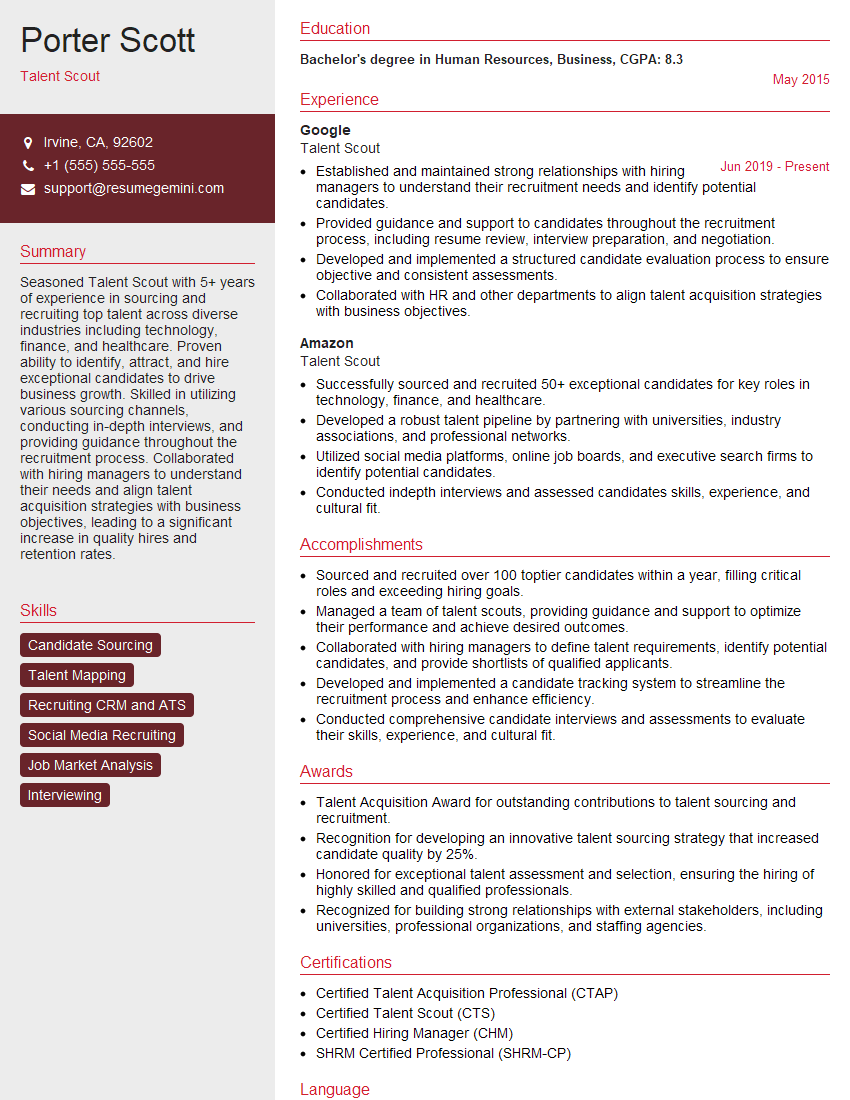
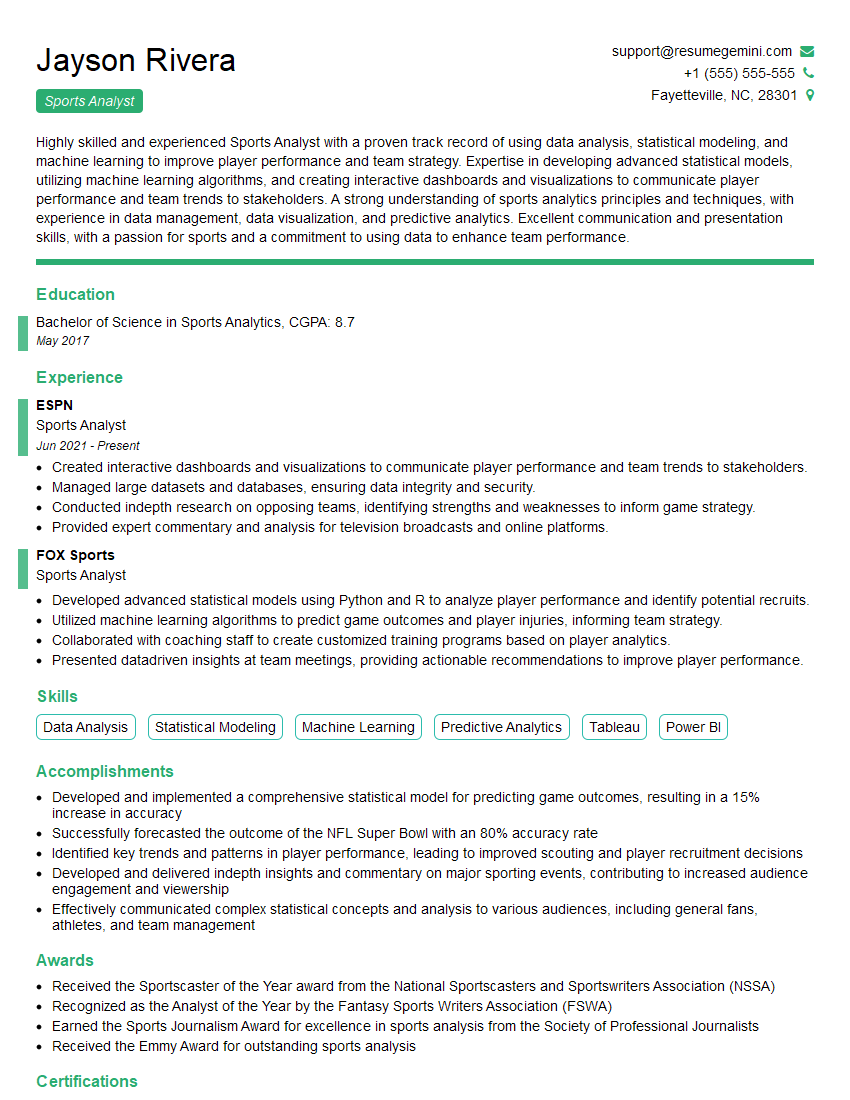
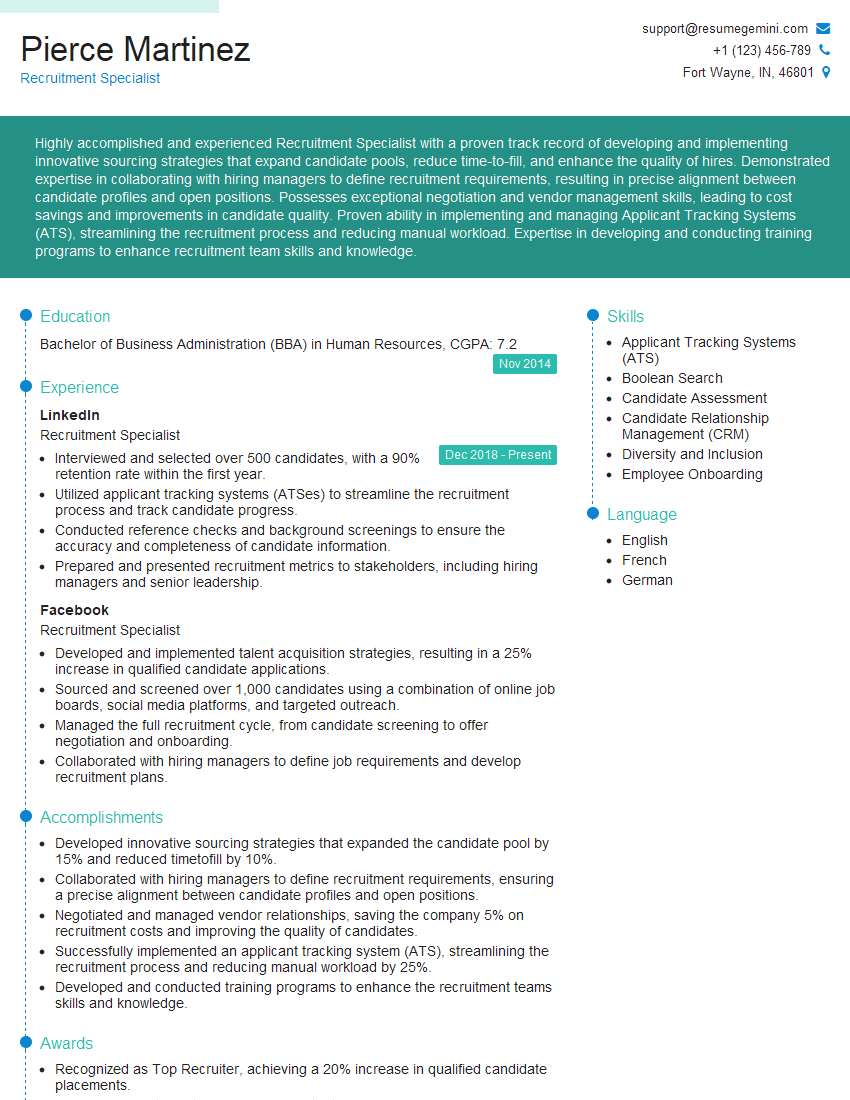
Mastering the intricacies of scouting reports significantly enhances your career prospects in sports analytics, talent acquisition, and related fields. A strong understanding of data analysis, player evaluation, and effective communication is highly valued by employers. To increase your chances of landing your dream role, creating an ATS-friendly resume is paramount. This ensures your application gets noticed and considered. We highly recommend utilizing ResumeGemini to build a professional and impactful resume tailored to the specific requirements of a Scouting Reports role. Examples of resumes tailored to this field are available for your review, providing valuable insight and guidance.
Explore more articles
Users Rating of Our Blogs
Share Your Experience
We value your feedback! Please rate our content and share your thoughts (optional).
What Readers Say About Our Blog
Very informative content, great job.
good