Unlock your full potential by mastering the most common Drag Reduction interview questions. This blog offers a deep dive into the critical topics, ensuring you’re not only prepared to answer but to excel. With these insights, you’ll approach your interview with clarity and confidence.
Questions Asked in Drag Reduction Interview
Q 1. Explain the concept of skin friction drag and pressure drag.
Drag, in the context of fluid dynamics, is the resistance encountered by a body moving through a fluid. It’s composed of two main components: skin friction drag and pressure drag.
Skin friction drag arises from the viscous shear stresses within the boundary layer – the thin layer of fluid immediately adjacent to the body’s surface. Imagine trying to push your hand through honey; the stickiness is analogous to skin friction. The slower-moving fluid near the surface interacts with the faster-moving fluid further away, creating resistance. This drag is proportional to the surface area and the velocity of the flow.
Pressure drag, on the other hand, is caused by pressure differences around the body. A streamlined body experiences relatively uniform pressure distribution, minimizing pressure drag. Conversely, a bluff body (like a brick) creates regions of high and low pressure. The pressure difference between the front (high pressure) and rear (low pressure) generates a net force opposing the motion – pressure drag. Think of a parachute; its large surface area and shape create significant pressure drag, slowing its descent.
Q 2. Describe different methods for reducing skin friction drag.
Reducing skin friction drag focuses on minimizing the viscous shear stresses within the boundary layer. Several methods exist:
- Surface roughness reduction: A smoother surface reduces the interaction between the fluid and the body’s surface. This is why airplanes are meticulously polished and aircraft components undergo detailed surface finishing processes.
- Streamlining: Designing a body with a smooth, elongated shape minimizes turbulence and reduces the boundary layer thickness. The classic teardrop shape is a prime example of streamlining to minimize drag.
- Boundary layer suction: Removing the slow-moving fluid near the surface of the body can reduce the thickness of the boundary layer and thus the skin friction. This method, however, can be energy-intensive.
- Surface coatings: Applying special coatings, such as polymers or other drag-reducing additives, can alter the fluid’s behavior near the surface, reducing friction. This is commonly seen in marine applications where coatings are used to improve the hull efficiency of ships.
- Riblets: Microscopic grooves or riblets oriented along the flow direction can reduce skin friction by altering the near-wall turbulence structure. They effectively “organize” the chaotic movement of the fluid near the surface, leading to smaller shear stresses.
Q 3. How does boundary layer control affect drag reduction?
Boundary layer control directly influences drag reduction. By managing the boundary layer’s characteristics – its thickness, laminar or turbulent state, and separation – we can significantly affect the overall drag.
A laminar boundary layer (smooth, orderly flow) generates less skin friction drag compared to a turbulent boundary layer (chaotic flow). Methods like suction, blowing, or manipulating the surface geometry can transition a turbulent boundary layer to a laminar one, thereby reducing drag. Moreover, delaying boundary layer separation (where the flow detaches from the surface, causing a large increase in pressure drag) is crucial. Techniques like adding vortex generators or shaping the body to prevent separation can be highly effective in drag reduction.
Q 4. Explain the role of Computational Fluid Dynamics (CFD) in drag reduction.
Computational Fluid Dynamics (CFD) is an indispensable tool in drag reduction research. It allows us to simulate the flow of fluids around complex geometries, analyze the pressure and velocity fields, and quantify the drag forces without the need for expensive and time-consuming physical experiments. CFD can model various aspects influencing drag, including turbulence, boundary layer behavior, and the effects of different drag reduction techniques. It enables engineers to virtually test numerous designs, optimizing shapes and surface features for minimal drag before physical prototyping.
For instance, CFD can be used to simulate the airflow over an aircraft wing, revealing areas of high pressure drag or skin friction. This information can then inform design modifications, such as optimizing the wing’s airfoil or implementing surface treatments for improved performance.
Q 5. What are the limitations of CFD in drag reduction analysis?
Despite its power, CFD has limitations in drag reduction analysis:
- Turbulence modeling: Accurately simulating turbulence is computationally expensive and challenging. The accuracy of the results is highly dependent on the chosen turbulence model, which may not perfectly capture the complexity of real-world flows.
- Mesh resolution: Fine mesh resolution is essential for capturing the details of the boundary layer, which is critical for accurate skin friction calculations. However, finer meshes significantly increase computational cost and time.
- Validation challenges: CFD results must be validated against experimental data. The lack of reliable experimental data, particularly for complex geometries or flow conditions, can limit the confidence in CFD predictions.
- Computational cost: Simulating high-Reynolds-number flows (flows with high inertia) requires substantial computational resources, potentially making it impractical for routine design optimization.
Q 6. Describe different turbulence modeling approaches used in CFD for drag reduction simulations.
Several turbulence modeling approaches are used in CFD for drag reduction simulations, each with its own strengths and weaknesses:
- RANS (Reynolds-Averaged Navier-Stokes) models: These are the most commonly used models, offering a balance between accuracy and computational cost. Popular RANS models include the k-ε model and the k-ω SST model. They solve for time-averaged flow quantities, using turbulence closure models to represent the effects of turbulence.
- LES (Large Eddy Simulation): LES resolves the large-scale turbulent structures directly, modeling only the smaller scales. This provides higher accuracy than RANS but demands significantly more computational resources.
- DNS (Direct Numerical Simulation): DNS resolves all turbulent scales directly, offering the most accurate results. However, it is extremely computationally expensive and currently feasible only for simple geometries and low Reynolds numbers.
The choice of turbulence model depends on the complexity of the flow, the available computational resources, and the desired level of accuracy. Often, a combination of models and techniques is employed to achieve optimal results.
Q 7. How do you validate CFD results for drag reduction studies?
Validating CFD results for drag reduction studies is crucial. This involves comparing the CFD predictions against experimental data obtained from wind tunnels, towing tanks, or other experimental setups. The validation process typically involves:
- Quantitative comparison: Comparing predicted drag coefficients, pressure distributions, and boundary layer parameters with measured values. Statistical measures like the root mean square error (RMSE) are used to assess the agreement.
- Qualitative comparison: Visualizing the flow patterns from both CFD and experiments (e.g., using flow visualization techniques) to confirm the overall flow features and identify any discrepancies.
- Grid independence study: Ensuring that the CFD results are not significantly affected by the mesh resolution. This involves running simulations with progressively finer meshes until the results converge.
- Uncertainty quantification: Accounting for uncertainties in both the CFD model and the experimental data. This helps in evaluating the reliability of the CFD predictions.
A successful validation builds confidence in the CFD model’s ability to accurately predict drag and its reduction strategies, leading to more reliable design optimization.
Q 8. Explain the concept of passive and active drag reduction methods.
Drag reduction methods are broadly classified into passive and active techniques. Passive methods involve modifying the geometry or surface of a body to reduce drag without any external energy input. Think of it like streamlining a car’s design – once the shape is optimized, it continuously reduces drag without needing additional power. Active methods, conversely, require an external energy source to control the flow and minimize drag. Imagine a system that actively adjusts the shape of an aircraft wing based on flight conditions to maintain optimal airflow.
Q 9. Give examples of passive drag reduction techniques and their applications.
Passive drag reduction techniques are numerous and are often applied in conjunction. Some prominent examples include:
- Streamlining: Shaping a body to minimize separation of the boundary layer, reducing pressure drag. Think of the teardrop shape of many aircraft fuselages.
- Surface coatings: Applying low-friction coatings or special textures to reduce skin friction drag. Examples include riblets (tiny grooves) mimicking shark skin.
- Vortex generators: Small devices that create controlled vortices to energize the boundary layer and delay separation, particularly useful on aircraft wings.
- Fairings: Smooth coverings used to reduce drag caused by discontinuities in the body’s shape, such as covering wheel wells in a vehicle.
Applications range widely, from aircraft and automobiles to marine vessels and even pipelines. For example, riblets are being explored for use on the hulls of ships and the surfaces of aircraft to reduce fuel consumption.
Q 10. Give examples of active drag reduction techniques and their applications.
Active drag reduction techniques require external power and offer more control over the flow field. Examples include:
- Boundary layer suction: Removing slow-moving boundary layer fluid to prevent separation and reduce skin friction. This is energy-intensive but highly effective.
- Moving surface control: Adjusting the shape of a surface (e.g., wings, flaps) in real-time to optimize the airflow based on flight conditions. This is common in advanced aircraft.
- Plasma actuators: Using plasma discharges to influence the boundary layer and prevent separation. This technology is still under development but holds significant potential for applications where traditional methods are insufficient.
- Synthetic jets: Small jets that inject fluid into the boundary layer to control flow separation. These can be used to delay stall in airfoils.
These techniques are crucial in applications requiring maximum efficiency, such as high-speed aircraft and racing cars. For instance, active flow control is being researched extensively for use on aircraft wings to improve maneuverability and reduce fuel burn.
Q 11. Describe the use of RANS and LES simulations in drag reduction.
Computational Fluid Dynamics (CFD) plays a vital role in drag reduction research. Reynolds-Averaged Navier-Stokes (RANS) simulations are widely used for their computational efficiency, providing time-averaged flow solutions. While cost-effective, RANS struggles to accurately capture unsteady flow features like turbulent eddies which significantly influence drag. Large Eddy Simulation (LES), on the other hand, resolves larger-scale turbulent structures directly, providing more detailed insights into the flow physics and offering better accuracy at the expense of higher computational cost. RANS is often used for preliminary design and optimization, while LES is employed for detailed analysis of specific flow features impacting drag.
Q 12. How do surface roughness and surface texture affect drag?
Surface roughness and texture significantly influence drag, primarily through increased skin friction drag. A smoother surface generally leads to lower drag because the boundary layer experiences less resistance. Conversely, a rough surface increases turbulence and shear stress within the boundary layer, resulting in higher drag. The effect of surface texture is complex and depends on the scale of the roughness relative to the boundary layer thickness. Microscopic roughness can actually reduce drag in some cases (riblets), while larger-scale roughness consistently increases it. Optimizing surface texture, therefore, is a crucial aspect of drag reduction strategies, particularly in applications like pipelines or marine vessels.
Q 13. Explain the concept of drag coefficient and its significance.
The drag coefficient (CD) is a dimensionless quantity that quantifies the resistance to motion experienced by a body moving through a fluid. It relates the drag force (FD) to the dynamic pressure (½ρV²) and the reference area (A):
CD = FD / (½ρV²A)
where:
- ρ is the fluid density
- V is the velocity
- A is the reference area (e.g., frontal area for a car)
A lower CD indicates lower drag. The significance of CD lies in its ability to compare the drag of different shapes and sizes, independent of velocity and fluid properties. This makes it a crucial parameter in the design and optimization of vehicles and structures for minimal drag.
Q 14. How do you measure drag in wind tunnel experiments?
Drag measurement in wind tunnel experiments typically involves a force balance. The model is mounted in the test section on a system of precisely calibrated load cells that measure forces and moments acting on the model. The drag force is determined directly by subtracting the tare force (forces acting on the balance itself) from the total force measured with the model in the flow. Pressure taps on the model’s surface can provide additional information about pressure distribution, which is useful in understanding the causes of drag. Advanced techniques such as Particle Image Velocimetry (PIV) are often combined with force balance measurements to visualize the flow field and gain a deeper understanding of the drag generation mechanisms.
Q 15. What are the challenges in implementing active drag reduction systems?
Implementing active drag reduction systems presents several significant challenges. Firstly, these systems often require complex and precisely controlled actuators, sensors, and sophisticated control algorithms. This translates to increased system complexity, higher costs, and greater potential for failure. Secondly, the energy required to power these active systems can offset some or all of the drag reduction benefits, especially at low speeds. Imagine trying to reduce the drag of a car by deploying tiny, active flaps on its surface; the energy used to move these flaps might outweigh the fuel saved from reduced drag unless it’s implemented very efficiently. Thirdly, active systems may be sensitive to external disturbances and require robust control strategies to adapt and maintain performance in varied conditions – think of a turbulent environment affecting the effectiveness of active flow control. Finally, the integration of active systems into existing vehicle designs can be challenging from both an engineering and a structural perspective, demanding significant redesign and impacting weight and overall performance.
Career Expert Tips:
- Ace those interviews! Prepare effectively by reviewing the Top 50 Most Common Interview Questions on ResumeGemini.
- Navigate your job search with confidence! Explore a wide range of Career Tips on ResumeGemini. Learn about common challenges and recommendations to overcome them.
- Craft the perfect resume! Master the Art of Resume Writing with ResumeGemini’s guide. Showcase your unique qualifications and achievements effectively.
- Don’t miss out on holiday savings! Build your dream resume with ResumeGemini’s ATS optimized templates.
Q 16. Explain the role of flow visualization techniques in drag reduction studies.
Flow visualization techniques are indispensable in drag reduction studies as they provide crucial qualitative and quantitative data on flow structures. These techniques, such as oil flow visualization, smoke wire visualization, and particle image velocimetry (PIV), allow us to ‘see’ the flow patterns around an object. Imagine painting the surface of an airplane with a special oil; the flow patterns reveal where the flow separates, creating drag, providing a visual map of areas needing improvement. This information is invaluable for understanding how the flow interacts with the surface and identifying areas of high shear stress and vortex shedding, both significant contributors to drag. Quantitative techniques like PIV use lasers and cameras to measure the velocity field with high precision, allowing for detailed analysis and comparison with computational fluid dynamics (CFD) simulations. This iterative process—visualizing, analyzing, and refining—is crucial for developing effective drag reduction strategies.
Q 17. Discuss the impact of Reynolds number on drag.
The Reynolds number (Re) is a dimensionless quantity that represents the ratio of inertial forces to viscous forces in a fluid. It plays a critical role in determining the flow regime around an object and, consequently, its drag. At low Reynolds numbers (laminar flow), drag is primarily due to viscous forces, and the drag coefficient is relatively high. Think of a small sphere moving slowly through honey—the drag is high due to the honey’s viscosity. As the Reynolds number increases, the flow transitions to turbulence, and inertial forces dominate. While the drag coefficient decreases somewhat, the total drag increases due to higher inertial forces. Consider a high-speed train cutting through air; although the shape is streamlined, the immense speed increases the inertia of the air, resulting in significant drag. The transition from laminar to turbulent flow is crucial, and accurately modeling it is essential for drag reduction studies. The precise effect of Reynolds number on drag varies depending on the object’s shape and surface roughness.
Q 18. How does the shape of an object influence its drag?
The shape of an object significantly influences its drag. Streamlined shapes, characterized by smooth curves and gradual transitions, minimize flow separation and turbulence, thereby reducing drag. Imagine the shape of a teardrop or an airplane wing – the air flows smoothly over the surface, minimizing drag. In contrast, bluff bodies, with sharp corners and abrupt changes in geometry, tend to generate significant wake turbulence, leading to considerably higher drag. A square block placed in a wind tunnel experiences significantly more drag than a similarly sized streamlined body due to the formation of large-scale vortices behind it. Therefore, optimizing the shape of an object is a fundamental approach to drag reduction, and understanding this relationship is crucial for designing aerodynamically efficient vehicles and structures.
Q 19. Explain the concept of streamlining and its application in drag reduction.
Streamlining is the process of designing an object to minimize its drag by shaping it in a way that promotes smooth, laminar flow around its surface. The goal is to reduce the formation of turbulent eddies and vortices in the wake of the object. Think of a racing car: its sleek shape directs the airflow around it smoothly, minimizing drag and enhancing speed. Streamlining involves careful consideration of the object’s shape, surface roughness, and the flow conditions. It’s widely applied in the design of aircraft, automobiles, ships, and various other transportation systems. Effective streamlining often involves features like smoothly rounded leading edges, tapered trailing edges, and minimizing abrupt changes in geometry. This minimizes flow separation and reduces the overall pressure drag on the object, leading to improved efficiency and performance.
Q 20. Describe different types of wind tunnels and their suitability for drag reduction research.
Several types of wind tunnels cater to different aspects of drag reduction research. Low-speed wind tunnels are commonly used for initial testing and aerodynamic shape optimization. These tunnels are relatively simple and cost-effective, providing a controlled environment to measure drag forces on smaller models and components. High-speed wind tunnels are necessary for simulating higher Reynolds numbers, particularly relevant to aircraft and high-speed vehicles. They enable researchers to study the effects of compressibility and shock waves on drag. Then there are specialized wind tunnels, such as boundary layer wind tunnels designed for studying the boundary layer flow separation over a surface. The choice of wind tunnel depends heavily on the specific research goals. For instance, investigating a new car’s drag might call for a low-speed wind tunnel, while researching hypersonic aircraft will require a high-speed facility. Each tunnel has its strengths and limitations; selecting the appropriate one is critical for accurate and meaningful results.
Q 21. How do you analyze experimental data obtained from wind tunnel testing?
Analyzing experimental data from wind tunnel testing is a multi-step process. It begins with careful calibration of the instrumentation, ensuring accuracy and reliability of the measured data. Data acquisition systems collect information on forces, moments, and pressures, often complemented by flow visualization data. The raw data then undergoes rigorous processing, including correction for calibration errors and background noise. The primary focus is determining the drag coefficient (Cd), which is a dimensionless quantity relating the drag force to the dynamic pressure and reference area. Statistical methods might be employed to assess the uncertainty in the measured data. Finally, the data is interpreted to identify trends, patterns, and potentially unexpected results, which inform the design optimization process. Advanced techniques like CFD simulations can be used to validate and complement the experimental findings, creating a more complete understanding of the flow and the effectiveness of drag reduction strategies.
Q 22. What are the key performance indicators (KPIs) for evaluating drag reduction techniques?
Key Performance Indicators (KPIs) for evaluating drag reduction techniques are crucial for assessing the effectiveness and efficiency of implemented strategies. These KPIs typically center around quantifiable metrics that directly impact the reduction in drag forces.
Drag Coefficient (Cd): This dimensionless quantity is the most fundamental KPI. A lower Cd directly signifies reduced drag. We compare Cd values before and after implementing drag reduction techniques to measure the improvement. For example, a reduction from Cd = 0.3 to Cd = 0.25 represents a significant 16.7% decrease.
Total Drag Force: This is the actual force resisting motion, expressed in Newtons (N). Direct measurement of this force, for example, through wind tunnel testing, offers a clear indication of drag reduction. A decrease in total drag force is a direct measure of the success of the intervention.
Fuel Efficiency/Energy Savings: In applications like automobiles or aircraft, the primary goal often translates to fuel savings. We can quantify this as a percentage improvement in fuel consumption (e.g., 5% improvement in miles per gallon) or energy consumption per unit distance.
Pressure Drop: In pipeline flows, drag reduction directly affects pressure drop. Measuring the reduction in pressure drop along a pipeline is a critical KPI, often translated to reduced pumping power requirements or increased flow rates.
Lift-to-Drag Ratio (L/D): This is particularly relevant in aerospace applications. An increase in L/D ratio implies that for the same lift force, less drag is experienced, leading to better performance and efficiency.
The choice of KPI depends heavily on the specific application and the primary objective of drag reduction. For instance, while Cd is a universal measure, fuel efficiency might be the most important metric for a vehicle designer.
Q 23. Discuss the trade-offs between different drag reduction methods.
Different drag reduction methods present various trade-offs. The optimal choice depends on factors such as the application, cost, complexity, and environmental impact. Let’s consider some examples:
Surface Modifications (e.g., riblets): These offer relatively simple implementation and significant drag reduction, particularly at high Reynolds numbers. However, the durability and cost-effectiveness may be limiting factors, especially for large-scale applications. Also, their effectiveness is Reynolds number dependent and the optimal geometry varies for different flow regimes.
Polymer Additives: These are highly effective in reducing turbulent drag in pipelines. However, they require continuous injection, leading to increased operational costs and environmental concerns regarding disposal of the additives. Biodegradable additives are an active area of research to address this issue.
Active Flow Control: This offers highly adaptable and efficient drag reduction but necessitates sophisticated sensors, actuators, and control systems, significantly increasing cost and complexity. Moreover, these systems add weight and can become unreliable.
Aerodynamic Optimization (e.g., streamlined shapes): This is a design-level approach that leads to substantial drag reduction. However, it often requires significant changes to the design itself, potentially impacting other aspects of performance (e.g., payload capacity).
The decision often involves careful cost-benefit analysis, balancing the level of drag reduction achieved against the added complexity, cost, and potential downsides of each method. For instance, while active flow control might offer the highest drag reduction, the cost and complexity may make it impractical for many applications.
Q 24. Explain how to incorporate drag reduction strategies into the design process.
Incorporating drag reduction strategies into the design process requires a holistic approach, starting at the conceptual design stage and continuing through to testing and validation.
Early-Stage Assessment: Conduct a preliminary assessment to identify the dominant sources of drag in the system. This often involves Computational Fluid Dynamics (CFD) simulations or wind tunnel testing. This helps in prioritizing drag reduction strategies.
Design Optimization: Employ optimization techniques to find the optimal shape and surface features that minimize drag. This often involves parametric studies and iterative design refinement using CFD tools. Genetic algorithms and other optimization methods are used to explore the design space efficiently.
Material Selection: Choose materials with low surface roughness and appropriate frictional properties. This directly impacts skin friction drag and the effectiveness of surface modifications. For instance, high surface smoothness is crucial for riblets to work properly.
Manufacturing Considerations: Ensure that the chosen drag reduction techniques are manufacturable and cost-effective. The process may need adjustments to accommodate special surface treatments or new manufacturing techniques. The manufacturing cost and scalability should always be a crucial factor.
Testing and Validation: Conduct extensive experimental validation to verify the drag reduction performance. This often involves wind tunnel tests, towing tank experiments, or actual field testing, depending on the application.
Integrating drag reduction into the design process is not merely about adding a single solution at the end; it’s about creating a streamlined design from the beginning that prioritizes minimizing drag forces.
Q 25. How do you address uncertainties and limitations in drag reduction models?
Drag reduction models, whether based on theoretical correlations or CFD simulations, are inherently subject to uncertainties and limitations. Addressing these requires a multi-pronged approach:
Model Validation: Compare model predictions with experimental data obtained from wind tunnels, towing tanks, or field measurements. This helps in identifying the limitations of the model and quantifying the uncertainty associated with its predictions.
Uncertainty Quantification: Employ methods to quantify the uncertainty arising from various sources, such as input parameters, turbulence modeling, and numerical discretization. Probabilistic approaches and sensitivity analysis can provide a more realistic picture of the range of possible outcomes.
Grid Refinement and Convergence Studies: In CFD simulations, ensure that the computational mesh is sufficiently fine to accurately capture the flow features that influence drag. Convergence studies help ascertain that the numerical solution is independent of the grid resolution.
Turbulence Modeling: Choose an appropriate turbulence model that accurately captures the turbulent flow structures relevant to the specific flow regime. Different turbulence models have different strengths and weaknesses, and the selection depends on the specific application and complexity of the flow. For instance, RANS models might suffice for simple flows, while LES or DNS are needed for complex flows.
By addressing these aspects systematically, we can gain a more comprehensive understanding of the uncertainties and limitations of the models, resulting in more robust and reliable drag reduction strategies.
Q 26. Describe your experience with specific software used for drag reduction analysis (e.g., ANSYS Fluent, OpenFOAM).
I have extensive experience using ANSYS Fluent and OpenFOAM for drag reduction analysis. Both are powerful tools with their own strengths and weaknesses:
ANSYS Fluent: This commercial software offers a user-friendly interface and a wide range of turbulence models and solver options. It’s particularly well-suited for complex geometries and detailed flow simulations. I have utilized Fluent extensively in optimizing the design of aircraft components, such as wings and fuselages, to minimize drag. For instance, I used Fluent to design and simulate riblets on an airfoil, observing significant drag reduction compared to a smooth surface.
OpenFOAM: This open-source software provides greater flexibility and control over the simulation process. I have leveraged OpenFOAM’s capabilities to develop custom solvers and boundary conditions for specific drag reduction problems, such as simulating the effects of polymer additives in turbulent pipe flows. The flexibility of OpenFOAM is advantageous for exploring unconventional drag reduction strategies.
My proficiency in both tools allows me to choose the most appropriate software based on the project’s specific requirements, balancing ease of use with the need for flexibility and customization.
Q 27. Describe a situation where you had to troubleshoot a problem related to drag reduction.
During a project involving the design of a high-speed train, we experienced unexpected discrepancies between the CFD predictions and the wind tunnel test results. The CFD model consistently predicted significantly lower drag than what was measured experimentally.
Our troubleshooting process involved the following steps:
Reviewing the CFD Setup: We carefully checked the mesh quality, boundary conditions, and turbulence model used in the simulation. This step led us to identify a meshing issue near the train’s nose, which was causing inaccuracies in the pressure distribution.
Mesh Refinement: We refined the mesh in the critical region and repeated the simulation, observing a significant improvement in agreement with the experimental data.
Wind Tunnel Test Validation: To further investigate, we performed a series of controlled wind tunnel tests varying certain experimental parameters, such as wind speed and yaw angle. These additional tests helped us isolate and understand the reasons for the initial discrepancies. It was found that slight variations in surface roughness between the CFD model and the physical model contributed to the differences in drag.
Surface Roughness Characterization: To further address the issue of surface roughness discrepancies between the real-world train and CFD simulations, we used a surface roughness measurement technique to obtain highly detailed information about the train’s surface. This data was then used to refine the surface roughness properties used in the CFD simulations, leading to even better agreement between simulation and experiment.
This experience emphasized the importance of careful model validation, rigorous mesh convergence studies, and close collaboration between simulation and experimental efforts in achieving accurate and reliable drag reduction analysis.
Q 28. Discuss the future trends and challenges in drag reduction technology.
Future trends in drag reduction technology involve the integration of advanced computational tools, innovative materials, and sophisticated control systems. Key challenges remain:
Bio-inspired Drag Reduction: Further research into biomimicry, learning from the drag-reducing mechanisms observed in nature (e.g., dolphin skin), holds immense promise. This involves understanding and replicating the complex flow structures and surface properties of these organisms.
Advanced Materials: The development of new materials with tailored surface properties, such as superhydrophobic coatings or adaptive surfaces that respond to changing flow conditions, presents significant opportunities for improved drag reduction. Self-healing materials are also an exciting area of research to increase the longevity of drag-reducing surfaces.
AI and Machine Learning: The application of machine learning techniques for optimizing drag reduction strategies and designing more efficient control systems will enhance the capabilities of existing methods.
Integration of Multiple Techniques: Hybrid approaches combining different drag reduction methods (e.g., surface modifications and active flow control) may yield synergistic effects, leading to greater overall drag reduction. The challenge is effectively coordinating these methods to maximize their combined impact.
Scalability and Cost-Effectiveness: The cost-effectiveness of drag reduction technologies is crucial for widespread adoption. The challenge lies in developing scalable and cost-effective manufacturing processes for implementing these technologies.
Addressing these challenges requires interdisciplinary collaboration between fluid dynamicists, materials scientists, control engineers, and computer scientists. This will accelerate the development of innovative solutions that significantly improve energy efficiency and reduce environmental impact across various industries.
Key Topics to Learn for Drag Reduction Interview
- Boundary Layer Theory: Understanding laminar and turbulent flow, boundary layer separation, and transition. Practical application: Analyzing flow over airfoils and designing for reduced drag.
- Drag Estimation and Prediction: Applying computational fluid dynamics (CFD) and experimental techniques to quantify drag forces. Practical application: Validating design choices and optimizing aerodynamic performance.
- Drag Reduction Techniques: Exploring passive and active methods such as surface roughness manipulation, vortex generators, and boundary layer control. Practical application: Implementing solutions in aircraft, automotive, or marine design.
- Dimensional Analysis and Scaling: Applying Buckingham Pi theorem to understand the influence of different parameters on drag. Practical application: Extrapolating experimental results to different scales and conditions.
- Aerodynamic Shape Optimization: Utilizing optimization algorithms and CFD simulations to design low-drag geometries. Practical application: Designing streamlined bodies for improved fuel efficiency.
- Turbulence Modeling: Understanding different turbulence models (e.g., k-ε, k-ω SST) and their application in CFD simulations for accurate drag prediction. Practical application: Selecting appropriate models for specific flow regimes.
- Experimental Techniques: Familiarity with wind tunnel testing, particle image velocimetry (PIV), and other experimental methods used to measure and analyze drag. Practical application: Interpreting experimental data and validating computational models.
Next Steps
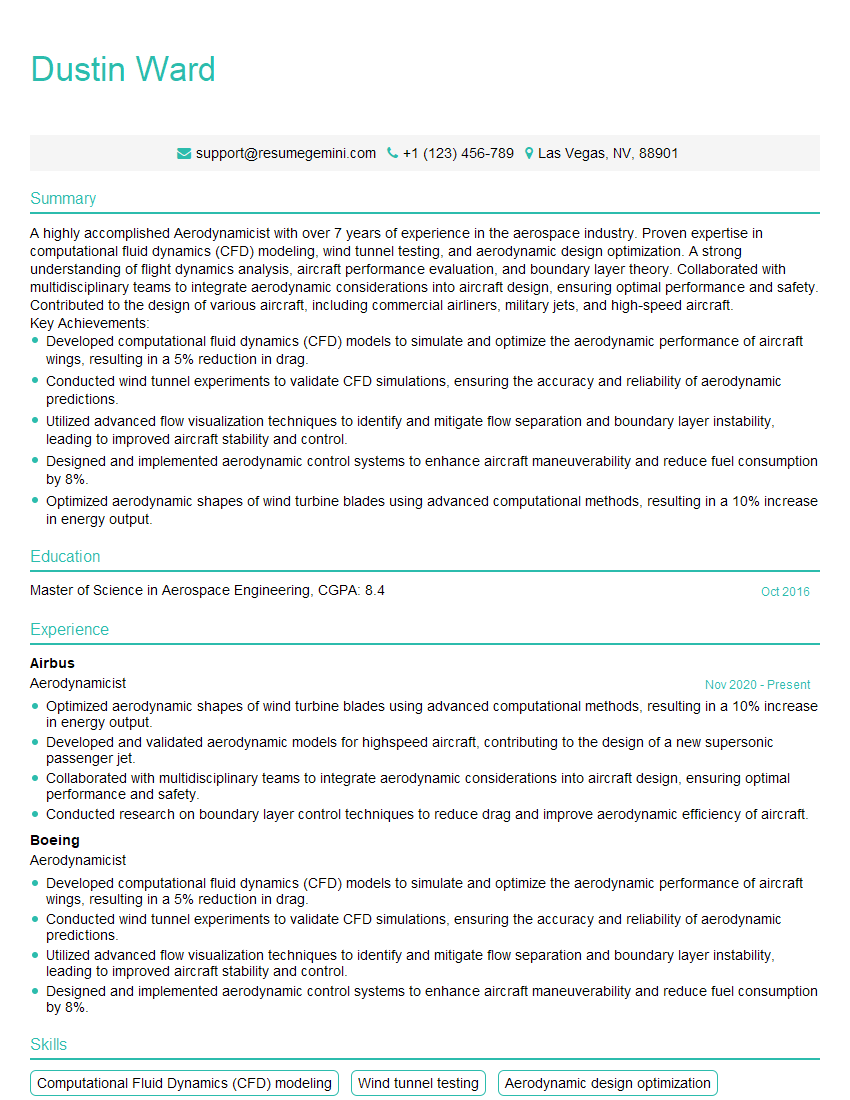
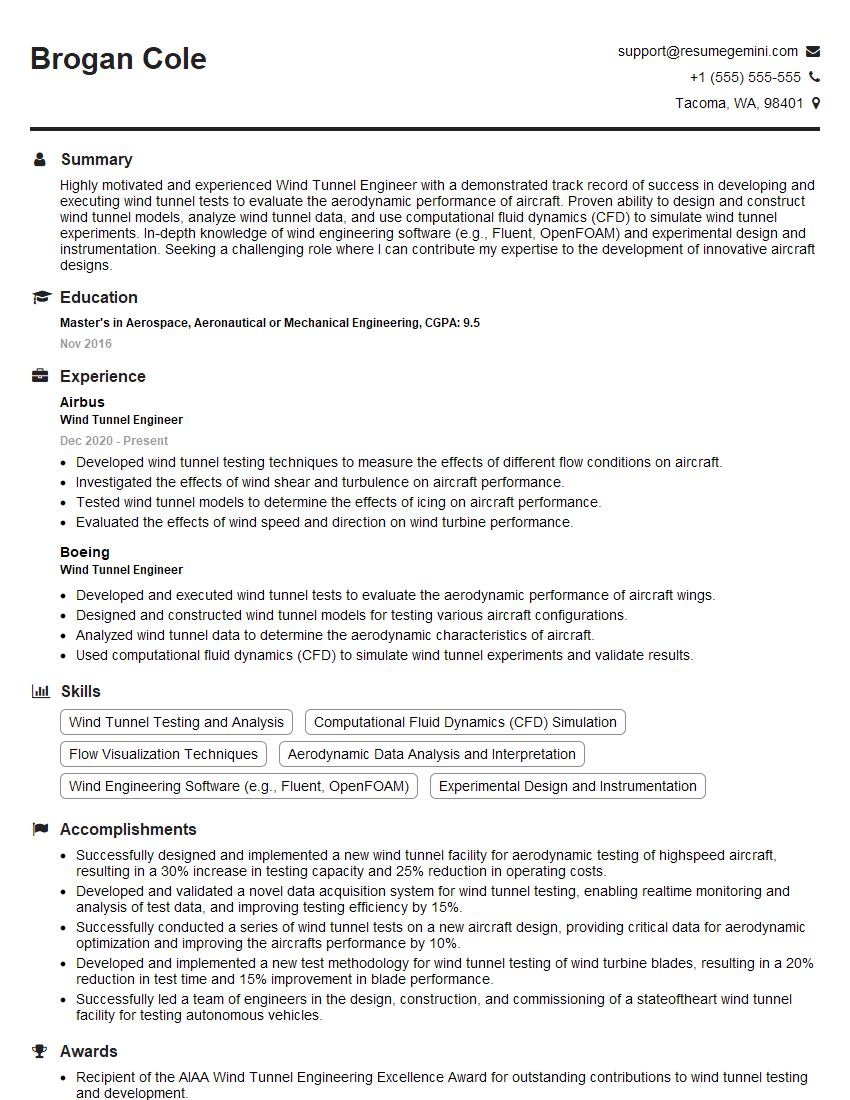
Mastering drag reduction principles is crucial for a successful career in aerospace, automotive, or marine engineering, opening doors to exciting and challenging roles. A strong resume is your first impression – make it count! Crafting an ATS-friendly resume significantly increases your chances of getting noticed by recruiters. ResumeGemini is a trusted resource to help you build a professional and impactful resume. We provide examples of resumes tailored to the Drag Reduction field to give you a head start. Take the next step towards your dream career – build a winning resume today!
Explore more articles
Users Rating of Our Blogs
Share Your Experience
We value your feedback! Please rate our content and share your thoughts (optional).
What Readers Say About Our Blog
Very informative content, great job.
good