Unlock your full potential by mastering the most common Seafood Harvesting interview questions. This blog offers a deep dive into the critical topics, ensuring you’re not only prepared to answer but to excel. With these insights, you’ll approach your interview with clarity and confidence.
Questions Asked in Seafood Harvesting Interview
Q 1. Describe your experience with different fishing gear types and their applications.
My experience spans a wide range of fishing gear, each suited to specific target species and environments. Think of it like choosing the right tool for the job – a hammer won’t work for sawing wood.
Trawls: These are large nets dragged along the seabed or through the water column. I’ve extensively used bottom trawls for catching groundfish like cod and haddock, and midwater trawls for pelagic species such as herring and mackerel. The type of trawl net – its mesh size, shape, and configuration – is crucial for selectivity and minimizing bycatch (unintentional capture of non-target species).
Seine nets: These are large, wall-like nets used to encircle schools of fish. I’ve worked with purse seines, where the bottom of the net is drawn closed like a purse, and beach seines, where the net is pulled ashore to land the catch. Purse seines are particularly effective for schooling pelagic fish like tuna and sardines, while beach seines are often used in shallower coastal waters.
Gillnets: These are passive fishing gears made of panels of netting; fish swim into the net and get entangled by their gills. Gillnets are highly effective for specific species but can lead to high bycatch if not carefully managed. I’ve used them for targeting salmon and other migratory species.
Longlines: These consist of a long main line with numerous baited hooks attached. They are used to catch deep-water species, such as tuna and swordfish, as well as bottom-dwelling fish, such as halibut. The depth and type of bait are crucial factors.
My experience covers the deployment, retrieval, and maintenance of each of these gear types, understanding their environmental impact, and selecting the most appropriate gear for sustainable harvesting.
Q 2. Explain the process of selecting fishing grounds based on environmental factors.
Selecting fishing grounds is a critical aspect of sustainable fishing, combining scientific data with practical experience. It’s not just about finding fish; it’s about finding fish in a way that protects the environment and the fish stocks for the future.
The process involves:
Hydrographic data analysis: Examining charts, bathymetric maps, and satellite imagery to identify areas with suitable water depth, temperature, salinity, and currents for the target species.
Environmental monitoring: Using sonar and other technologies to locate fish schools and assess their size and density. We also monitor water quality parameters like dissolved oxygen levels, which are essential for fish health.
Species-specific habitat knowledge: Different species have preferred habitats. For example, cod prefer cooler, deeper waters with rocky or sandy bottoms, whereas tuna prefer warmer, open ocean environments. Understanding these preferences is key.
Historical fishing data: Analyzing past catch records to identify productive areas and understand seasonal variations in fish distribution. This gives valuable insights into patterns and trends.
Regulations and protected areas: Ensuring fishing activities comply with all relevant regulations, avoiding protected areas and spawning grounds.
For example, when targeting cod, we use sonar to find suitable seabed habitats, checking bathymetric charts for suitable depths and then taking water samples to verify temperature and salinity levels within the preferred range for cod. We constantly monitor our catches to ensure we’re not affecting the overall health of the population.
Q 3. How do you ensure compliance with fishing regulations and quotas?
Compliance with fishing regulations and quotas is paramount for the sustainability of fisheries. It’s about responsible stewardship of our marine resources.
We achieve this through:
Accurate record-keeping: Maintaining detailed logs of fishing activities, including location, date, time, gear used, and catch size. This ensures transparency and allows for accurate reporting to regulatory authorities.
Utilizing Vessel Monitoring Systems (VMS): These GPS-based systems track vessel location and fishing activity, providing real-time data to regulatory bodies. This allows for monitoring fishing effort and ensuring compliance with spatial restrictions.
Regular inspections: Submitting to regular inspections by fisheries officers to verify compliance with regulations and quotas. This includes checks on gear specifications and catch documentation.
Participation in fisheries management programs: Engaging actively in collaborative fisheries management initiatives, contributing data and participating in discussions to develop sustainable fishing practices. This involves attending meetings, providing input on quotas, and participating in stock assessments.
Training and education: Ensuring that all crew members are well-trained on fishing regulations and understand their responsibilities in maintaining compliance.
Non-compliance can result in hefty fines, suspension of fishing licenses, and damage to reputation. Our commitment to sustainable fishing requires strict adherence to these rules.
Q 4. What are the common challenges faced in seafood harvesting and how have you overcome them?
Seafood harvesting faces numerous challenges, including:
Fluctuating fish stocks: Fish populations are naturally variable, influenced by environmental factors like water temperature and prey availability. This unpredictability makes planning and resource management challenging.
Bycatch: The unintentional capture of non-target species is a major concern. We mitigate this through selective fishing gear, careful fishing practices, and bycatch reduction devices.
Weather conditions: Inclement weather can disrupt fishing operations, posing risks to both the crew and the vessel. We meticulously monitor weather forecasts and adapt our operations accordingly, sometimes delaying trips or changing locations.
Fuel costs and market prices: Fluctuations in fuel prices and market demand can significantly impact profitability. We manage this through efficient vessel operation and careful market analysis.
Competition: The seafood industry is competitive. We address this by focusing on sustainable practices, high-quality product, and building strong relationships with buyers.
To overcome these, we employ a multi-faceted approach, including careful planning, accurate forecasting, diversification of species and markets, technological innovation (sonar technology, etc.), and collaboration with other stakeholders in the industry and regulatory bodies.
Q 5. Detail your knowledge of fish handling and preservation techniques.
Proper fish handling and preservation are crucial for maintaining quality and extending shelf life. It’s all about minimizing spoilage and preserving the flavor and nutritional value of the catch.
Our methods include:
Immediate chilling: Fish are chilled as quickly as possible after capture, ideally to temperatures below 0°C (32°F). This slows down enzymatic and microbial activity, preventing spoilage.
Bleeding and gutting: Removing blood and guts promptly reduces bacterial contamination and improves product quality.
Ice packing: Fish are packed in ice to maintain low temperatures during transport and storage.
Freezing: Freezing is essential for long-term preservation, ideally using quick-freezing methods to minimize ice crystal formation and damage to the fish tissue.
Modified Atmosphere Packaging (MAP): This technique involves packaging fish in an atmosphere with reduced oxygen and increased carbon dioxide to slow down spoilage.
We follow strict protocols throughout the entire process, from catching to freezing, ensuring that the fish are handled with care and stored at optimal temperatures. This maintains freshness, taste and extends shelf life for consumers.
Q 6. How do you maintain the safety and wellbeing of your crew?
Crew safety and well-being are my top priorities. A safe and happy crew is a productive crew. This is achieved through several means:
Safety training: All crew members undergo rigorous safety training before going to sea, covering topics such as emergency procedures, first aid, and personal protective equipment (PPE) usage. Regular refresher training is also provided.
Regular vessel inspections: The vessel is regularly inspected to ensure that it is in good working order and meets safety standards. This includes equipment checks, and maintenance scheduling.
Emergency preparedness: We have comprehensive emergency plans in place, including procedures for man overboard situations, fire emergencies, and medical emergencies. We conduct regular drills to ensure everyone is prepared.
Communication protocols: Clear communication channels are maintained between the captain, crew, and shore-based support, ensuring prompt responses to any issues.
Health and wellbeing initiatives: We promote healthy eating habits, provide access to medical care, and foster a positive and supportive work environment.
We emphasize open communication and create a culture where safety concerns can be raised without fear of reprisal.
Q 7. Explain your experience with navigation and vessel operation.
My experience in navigation and vessel operation is extensive. It’s a multifaceted skill involving technical expertise and a deep understanding of maritime regulations and safety procedures.
My experience includes:
Chart reading and navigation: I am proficient in using nautical charts, electronic charting systems (ECDIS), and GPS to navigate safely and efficiently. This includes planning voyages, calculating courses, and monitoring vessel position.
Vessel handling: I have extensive experience operating various types of fishing vessels, including their maneuvering in diverse conditions (calm seas, rough seas, etc.). I understand the technical aspects of vessel systems, including engine operation, communication systems, and safety equipment.
Communication systems: I am proficient in using various communication systems, including VHF radio, satellite communication, and GMDSS (Global Maritime Distress and Safety System).
Compliance with regulations: I am fully aware of and comply with all relevant maritime regulations, including those concerning navigation, safety, and environmental protection. This includes COLREGs (Collision Regulations).
Weather forecasting: I monitor weather conditions closely using various forecasting tools and make decisions to ensure the safety of the vessel and crew. This includes route planning and decision making concerning challenging weather.
Safety at sea is paramount, and my experience allows for safe and efficient operation of the vessel, making sure all precautions and regulations are met.
Q 8. Describe your experience with different fish species and their characteristics.
My experience spans over two decades, encompassing a wide array of fish species. I’ve worked extensively with pelagic species like tuna and mackerel, known for their schooling behavior and fast swimming capabilities, requiring specialized fishing techniques. I’m also proficient in harvesting demersal species, such as cod and haddock, which inhabit the seabed and necessitate different gear and fishing strategies. Understanding the unique characteristics of each species—their preferred habitats, feeding habits, migratory patterns, and reproductive cycles—is crucial for sustainable harvesting. For instance, understanding the spawning season of a particular fish is vital for avoiding overfishing and ensuring stock replenishment. I’ve also worked with shellfish including shrimp, crab and various types of oysters, which demand different handling techniques and ecological considerations.
Beyond the species themselves, I’ve also developed expertise in identifying various life stages, from juvenile to mature fish, which is critical for maintaining healthy populations. This detailed knowledge helps in implementing selective fishing practices, allowing us to minimize bycatch and focus on the target species.
Q 9. How do you manage and track your catch?
Catch management and tracking are paramount for responsible fishing. We utilize a combination of methods. Firstly, we maintain detailed logbooks that record daily catch, species identification, location (using GPS coordinates), fishing gear employed, and time spent fishing. This data is crucial for regulatory compliance and for analyzing our fishing performance.
Secondly, we employ electronic monitoring systems, including cameras and sensors, on our vessels to provide a continuous record of our fishing activities. These systems provide independent verification of our logbook entries. This technology allows for real-time monitoring and ensures transparency.
Thirdly, we use specialized software to analyze this data, allowing us to identify trends, optimize fishing strategies, and adapt to changing environmental conditions. This data-driven approach enables us to make informed decisions about fishing quotas and to better understand the overall health of the fish stocks.
Q 10. What are your strategies for minimizing bycatch?
Minimizing bycatch—the unintentional catch of non-target species—is a top priority. We use several strategies. Firstly, we employ selective fishing gear. For instance, using modified nets with larger mesh sizes allows smaller fish and other marine life to escape, reducing their mortality. Secondly, we utilize gear modifications such as turtle excluder devices (TEDs) in shrimp trawls to prevent sea turtles from becoming entangled.
Thirdly, we carefully select our fishing locations and times to avoid areas known to have high concentrations of non-target species or critical habitats. We monitor the bycatch frequently and make adjustments to our methods as needed. For example, if we notice a high bycatch of a particular species, we may adjust our gear, fishing location or time to reduce its capture.
Finally, we work closely with marine biologists and scientists to improve our bycatch reduction strategies. Continuous learning and adapting to new technologies and research findings are integral to this process. We’ve seen significant reductions in bycatch by implementing these strategies.
Q 11. How familiar are you with sustainable fishing practices?
I’m intimately familiar with sustainable fishing practices. My understanding encompasses the principles of ecosystem-based management, which considers the interactions between different species and their environment. This includes understanding stock assessments, fishing quotas, and the implementation of marine protected areas (MPAs) to safeguard crucial habitats and breeding grounds.
We adhere to certification programs like the Marine Stewardship Council (MSC) certification, which provides a framework for sustainable fishing. This involves rigorous audits of our fishing practices to ensure we meet strict environmental and social standards. Sustainable practices aren’t just good for the environment; they ensure the long-term viability of our industry.
Q 12. Explain the process of quality control in seafood harvesting.
Quality control starts at the point of capture. Fish should be handled carefully to minimize stress and damage. Proper icing or chilling is crucial to preserve freshness and quality. Onboard, we sort and grade the catch based on size, species, and quality. Damaged or undersized fish are typically discarded or used for other purposes, such as fishmeal.
After landing, our seafood undergoes further quality checks, including visual inspection for freshness and assessment of temperature. We follow strict hygiene protocols to prevent contamination. Traceability is a major component, with each batch tracked from the point of harvest to the consumer. This ensures transparency and allows for quick response in case of any quality issues.
Q 13. Describe your understanding of different fishing methods (e.g., trawling, purse seining).
I have extensive experience with various fishing methods. Trawling involves dragging large nets along the seabed or through the water column to catch demersal or pelagic species. Purse seining employs large nets to encircle schools of fish near the surface. Other methods I’m proficient in include longlining (using long lines with baited hooks), gillnetting (using nets that fish get entangled in), and pot fishing (using traps for crustaceans and other bottom-dwelling species).
Each method has its own environmental impacts and efficiencies. Understanding these differences is vital for selecting the most appropriate and sustainable method for each species and location. We always aim to employ the most selective and environmentally friendly method possible.
Q 14. What are the environmental impacts of seafood harvesting and how can they be mitigated?
Seafood harvesting can have significant environmental impacts, including habitat destruction (e.g., bottom trawling), bycatch, and depletion of fish stocks. Overfishing can disrupt marine ecosystems, impacting biodiversity and food webs. Pollution from fishing vessels, such as fuel spills and discarded fishing gear, also contributes to environmental degradation.
Mitigation strategies include adopting selective fishing gear, implementing fishing quotas, establishing marine protected areas, reducing fuel consumption, improving waste management practices on vessels and promoting sustainable fishing practices. Collaboration with scientists and regulatory bodies is crucial to monitor and manage these impacts effectively. We also participate in programs aimed at reducing our carbon footprint and protecting marine environments.
Q 15. How do you handle equipment malfunctions or emergencies at sea?
Handling equipment malfunctions at sea requires a systematic approach combining immediate action with preventative measures. Think of it like a well-rehearsed emergency response plan for a hospital – every second counts.
Immediate Response: Our first priority is safety. We secure the affected area, assess the damage, and activate emergency procedures. This might involve shutting down the malfunctioning system, contacting the shore team for support, and ensuring the crew’s safety (e.g., wearing appropriate safety gear, deploying life rafts if necessary).
Troubleshooting and Repair: Depending on the nature of the malfunction, we attempt immediate repairs. For example, a minor engine issue might be resolved with readily available tools and spare parts. We have a comprehensive inventory of common spare parts onboard. We follow manufacturer’s manuals and our internal checklists meticulously. If the repair is beyond our capabilities, we document the issue thoroughly for our support team.
Communication and Support: We maintain constant communication with the shore base, providing regular updates on the situation. This allows them to coordinate assistance, potentially sending out a repair vessel or directing us to the nearest port for more extensive repairs. Good communication is paramount; the right information, transmitted effectively, is the difference between a minor setback and a major incident.
Preventative Maintenance: We avoid emergencies by implementing a rigorous preventative maintenance schedule. This involves regular inspections, cleaning, and testing of all equipment. Think of it like regular checkups for your car; regular preventative measures prevent catastrophic breakdowns.
Career Expert Tips:
- Ace those interviews! Prepare effectively by reviewing the Top 50 Most Common Interview Questions on ResumeGemini.
- Navigate your job search with confidence! Explore a wide range of Career Tips on ResumeGemini. Learn about common challenges and recommendations to overcome them.
- Craft the perfect resume! Master the Art of Resume Writing with ResumeGemini’s guide. Showcase your unique qualifications and achievements effectively.
- Don’t miss out on holiday savings! Build your dream resume with ResumeGemini’s ATS optimized templates.
Q 16. Explain your experience with fish stock assessments.
Fish stock assessments are crucial for sustainable fishing practices. It’s like being a doctor for the ocean; you need to understand the health of the fish population before you prescribe a treatment (harvest).
My experience involves participating in stock assessments conducted by various organizations, including governmental agencies and research institutions. This involves data collection and analysis of various parameters such as:
Catch data: Analyzing the amount and size of fish caught over time, providing insights into population trends.
Survey data: Using sonar and trawls to estimate fish abundance in specific areas. This is like taking a census of the fish population.
Biological data: Studying fish age, size, and reproductive status to understand population dynamics. This helps determine if the population is healthy and sustainable.
Environmental data: Considering factors like water temperature, salinity, and currents, which can affect fish populations.
I’m proficient in using statistical software to analyze this data and contribute to developing sustainable fishing quotas. The goal is to ensure that fishing levels don’t deplete the fish population, allowing it to replenish naturally, and maintaining biodiversity.
Q 17. How do you maintain accurate records of fishing operations?
Maintaining accurate records is fundamental to responsible fishing and compliance with regulations. It’s our fishing diary, detailing our activities for traceability and accountability.
We use a combination of electronic and paper-based systems:
Electronic logbooks: These digitally record crucial information such as date, time, location, gear type, species caught, and catch quantity. Data is often automatically logged through sensors and GPS systems which automatically tracks our position.
Paper logs: These serve as backups and are especially useful when electronic systems fail. We maintain detailed physical logs as a redundant safeguard. This is akin to keeping a hard copy of your important documents.
Catch documentation: We meticulously document each catch with photographic evidence and detailed species identification to ensure transparency.
Regular Audits: We undergo regular audits to ensure the accuracy and completeness of our records. This safeguards against discrepancies and ensures compliance with regulations.
These records are crucial for regulatory compliance, stock assessment, and business management. They allow us to track our efficiency, identify trends, and respond effectively to changing market demands.
Q 18. Describe your experience with communication and teamwork in a challenging environment.
Effective communication and teamwork are essential for survival in the demanding maritime environment. Think of it as a well-orchestrated symphony – every player needs to be in sync.
My experience emphasizes:
Clear and concise communication: In emergency situations or challenging weather, clear communication is life-saving. We utilize both verbal and non-verbal communication methods – from shouting over engine noise to utilizing hand signals.
Respectful collaboration: Every member of the crew has a vital role. We foster an environment of mutual respect and understanding, where everyone feels comfortable voicing concerns.
Shared responsibility: Safety is a collective responsibility. Each member contributes actively to maintaining safe working practices. This is a team effort with each member accountable for safety and efficiency.
Conflict resolution: Disagreements can occur, but effective conflict resolution mechanisms are crucial for maintaining team cohesion. We strive for collaborative problem solving.
Successfully navigating storms, equipment malfunctions, and challenging fishing conditions requires seamless teamwork and clear communication; a cohesive team is far more effective than a group of individuals working in isolation.
Q 19. How do you ensure the safety and quality of harvested seafood?
Ensuring the safety and quality of harvested seafood is paramount – it’s about providing consumers with a safe and delicious product while upholding ethical and environmental responsibility.
Our practices include:
Hygiene and sanitation: We maintain strict hygiene protocols onboard, from cleaning equipment regularly to practicing proper food handling techniques. This prevents bacterial contamination.
Rapid chilling: Seafood is highly perishable. We use ice or refrigerated systems to quickly chill the catch after harvest, preventing spoilage and maintaining freshness. This preserves the product’s quality and safety.
Proper handling and storage: We handle the catch carefully to avoid damage, ensuring that it is properly sorted, graded, and stored. This is important for both quality and safety.
Traceability: Our comprehensive record-keeping allows full traceability of the seafood from harvest to market, facilitating quick response in case of any quality issues.
Quality control checks: We perform regular quality control checks throughout the process, from onboard inspections to laboratory testing at the processing plant.
These measures protect both the consumer and the integrity of our business, ensuring that only high-quality and safe seafood reaches the market.
Q 20. What are the current trends and challenges facing the seafood harvesting industry?
The seafood harvesting industry faces numerous challenges and trends that impact sustainability and profitability. It’s a dynamic landscape, constantly evolving due to environmental pressures, technological advancements, and shifting consumer demand.
Overfishing and declining fish stocks: Overfishing remains a significant concern, threatening the long-term viability of many fish populations. Sustainable fishing practices are crucial to mitigate this.
Climate change: Rising ocean temperatures, ocean acidification, and changing weather patterns are impacting fish distribution and abundance, altering habitats and presenting new challenges for harvesters.
Bycatch reduction: Minimizing unwanted catches (bycatch) is a major focus. Technological advancements and better fishing practices are being implemented to reduce bycatch and protect marine ecosystems.
Technological advancements: The use of advanced technologies such as sonar, GPS, and data analytics is improving fishing efficiency and sustainability. These tools offer a more targeted approach and reduce environmental impact.
Increased consumer demand for sustainability: Consumers are increasingly aware of the environmental impact of their food choices, demanding sustainably sourced seafood. This is driving the industry toward more eco-friendly practices.
Regulations and certifications: Stringent regulations and eco-certifications are being introduced to promote sustainable fishing practices and protect marine resources. Compliance is crucial for long-term operation.
Navigating these challenges requires a commitment to innovation, adaptation, and collaboration across the entire seafood supply chain.
Q 21. How do you adapt your harvesting strategies to changing weather conditions?
Adapting to changing weather conditions is crucial for safety and operational efficiency. It’s about being prepared, flexible, and making informed decisions.
Our adaptation strategies include:
Weather monitoring: We closely monitor weather forecasts using satellite and radar systems to stay informed about impending storms, strong winds, or rough seas. This allows us to plan accordingly and make informed decisions.
Flexible scheduling: We adapt our fishing schedule to avoid hazardous weather. If severe weather is predicted, we’ll return to port early, or postpone operations until conditions improve.
Safety protocols: We have comprehensive safety protocols that are strictly followed during inclement weather. This includes securing the vessel, deploying emergency equipment and utilizing appropriate safety gear.
Crew training: Our crew receives regular training in handling adverse weather conditions, including emergency procedures and seamanship skills. This constant learning enhances safety and efficiency.
Vessel design and maintenance: The vessel itself is designed and maintained to withstand challenging weather conditions. Regular maintenance ensures optimal performance, improving response to adverse weather.
Our ability to adapt to changing weather conditions is critical not only for the safety of the crew but also for the success of the fishing operation.
Q 22. Describe your understanding of fish processing techniques.
Fish processing techniques encompass a wide range of methods designed to preserve and prepare seafood for consumption or further processing. These techniques vary depending on the species of fish, the intended market, and the available resources.
- Cleaning and Gutting: This initial step involves removing scales, viscera (internal organs), and gills. This is crucial for preventing spoilage and enhancing the product’s quality. Different species require different techniques—some are easily scaled by hand, while others may need specialized tools.
- Filleting: Removing the fillets (the edible muscle portions) from the carcass. This is a skill requiring precision to maximize yield and minimize waste. Techniques vary depending on the fish shape and bone structure.
- Heading and Tailing: Removing the head and tail of the fish. While seemingly simple, efficient heading and tailing is essential for streamlined processing.
- Portioning and Cutting: Cutting the fillets or whole fish into specific sizes and shapes to meet consumer demand. This may involve portioning for restaurants or pre-packaging for retail sale.
- Preservation Methods: This is vital for extending shelf life. Common methods include freezing (often blast freezing for quick preservation), canning, smoking, drying, salting, and pickling. Each method has its own specific procedures and considerations.
For example, in processing tuna for sashimi, the focus is on speed and precision to maintain the fish’s quality and color. Conversely, processing cod for fillets demands meticulous care to remove bones effectively.
Q 23. How do you ensure the traceability of your catch?
Traceability in seafood harvesting is paramount for ensuring food safety, meeting regulatory requirements, and maintaining consumer trust. We employ a robust system integrating several key elements:
- Unique Catch Identifiers: Each catch is assigned a unique identifier, often linked to the vessel, date, and location of the catch. This is recorded both electronically and on physical documentation.
- Chain of Custody Records: Detailed records are maintained at every stage of the process – from the point of capture to landing, processing, and distribution. This chain of custody ensures the traceability of the product throughout its journey.
- Electronic Monitoring Systems (EMS): We use GPS tracking systems on our vessels to monitor fishing activities, including location, time, and gear deployed. This data is stored and can be accessed to verify the origin of our catch.
- Third-Party Certifications: Our operations frequently undergo audits by third-party certification bodies (e.g., MSC – Marine Stewardship Council) to ensure compliance with sustainable fishing practices and traceability standards.
- Blockchain Technology (Emerging): We are exploring the use of blockchain technology to enhance transparency and security in our traceability system, offering a tamper-proof record of the entire supply chain.
Imagine a scenario where a batch of contaminated fish is discovered. Our detailed traceability system will enable us to quickly pinpoint the origin of the fish, identify potentially affected batches, and take swift action to prevent further issues.
Q 24. What is your experience with using GPS and other navigational tools?
GPS and other navigational tools are essential for safe and efficient seafood harvesting. My experience spans over [Number] years, and I’m proficient in using various systems.
- GPS Navigation: I use GPS extensively for plotting fishing routes, locating fishing grounds, and ensuring compliance with fishing regulations that restrict access to certain areas. I’m also skilled in using GPS to navigate in challenging conditions such as fog or strong currents.
- Chartplotters: I use chartplotters to visualize our position, depth, and bottom contours. This is invaluable for avoiding hazards like shallow waters or underwater obstacles.
- Sonar and Fish Finders: These technologies are essential for locating fish schools. I’m experienced in interpreting sonar data to identify the size, density, and species of fish beneath the vessel.
- AIS (Automatic Identification System): AIS allows me to track the position of other vessels, avoiding collisions and managing traffic in busy fishing areas.
- Weather Monitoring Systems: Staying informed about weather forecasts and using weather monitoring systems is crucial for ensuring the safety of the crew and vessel.
For example, using sonar to detect a school of salmon and then using the GPS to mark the location and return to it later, allows for optimizing fishing time and maximizing yield.
Q 25. Describe your experience with maintaining fishing equipment.
Maintaining fishing equipment is critical for safety, efficiency, and profitability. My experience includes preventative maintenance, troubleshooting, and minor repairs.
- Preventative Maintenance Schedules: I adhere to strict preventative maintenance schedules for all fishing gear, including nets, lines, winches, engines, and other equipment. This involves regular inspections, lubrication, cleaning, and replacement of worn parts.
- Troubleshooting and Repair: I’m skilled in identifying and troubleshooting mechanical and electrical problems in our equipment. This helps minimize downtime and avoid costly repairs.
- Record Keeping: Detailed records are kept regarding maintenance activities and repairs. This aids in tracking the equipment’s lifespan and predicting potential failures.
- Knowledge of Different Gear Types: I’m familiar with various fishing gear types, including trawls, gillnets, longlines, and traps, and understand their specific maintenance requirements.
- Safety Procedures: Safety is always paramount. I follow strict safety procedures during equipment maintenance to prevent accidents and injuries.
For instance, regular inspection and cleaning of the net significantly reduce its wear and tear, thus extending its lifespan and saving money on replacements.
Q 26. How do you deal with conflicts with other fishing vessels?
Conflicts with other fishing vessels can arise due to disputes over fishing grounds, gear entanglement, or violations of regulations. My approach emphasizes communication, professionalism, and adherence to the law.
- Communication and De-escalation: I prioritize open and respectful communication with other vessel captains to resolve conflicts peacefully. I try to de-escalate tense situations through calm dialogue and mutual understanding.
- Adherence to Regulations: Strict adherence to fishing regulations helps minimize the potential for conflicts. Knowing and respecting established boundaries minimizes overlap and disputes.
- Reporting Incidents: If conflicts cannot be resolved amicably, I report incidents to the relevant authorities (e.g., coast guard) for investigation and resolution. This ensures that all parties are held accountable.
- Maintaining Professional Conduct: I always maintain a professional attitude, avoiding aggressive or provocative behavior. This helps to de-escalate situations and promote mutual respect.
- Use of technology: Using AIS to monitor other vessels allows us to plan accordingly and hopefully prevent conflicts in advance.
In one instance, a nearby vessel’s net became entangled with ours. Through clear communication, we were able to coordinate efforts to disentangle the nets without incident, demonstrating a positive resolution of a potential conflict.
Q 27. What are your strategies for maximizing efficiency in seafood harvesting?
Maximizing efficiency in seafood harvesting involves a multi-faceted approach encompassing planning, technology, and skilled execution.
- Pre-Trip Planning: Thorough pre-trip planning, including reviewing weather forecasts, mapping potential fishing grounds, and ensuring adequate fuel and supplies, is vital.
- Optimized Fishing Techniques: Using the most appropriate fishing gear and techniques for the target species, considering factors like water depth and current. Understanding fish behavior and selecting the most effective method is key.
- Technological Advancements: Leveraging technology like sonar, GPS, and fish finders to pinpoint fish schools efficiently. Utilizing data-driven insights to optimize fishing routes and reduce searching time.
- Efficient Crew Management: A well-trained and coordinated crew is essential for efficient operations. This involves clear communication, task delegation, and safety protocols.
- Post-Harvest Handling: Minimizing the time between catch and processing or preservation to maintain the quality and value of the harvested seafood.
For example, using real-time data from sonar to precisely target a school of fish reduces fuel consumption and overall time spent searching, maximizing the efficiency of the trip.
Q 28. How do you stay updated on industry best practices and regulations?
Staying updated on industry best practices and regulations is crucial for maintaining a competitive edge and ensuring responsible fishing.
- Professional Organizations: Active participation in relevant professional organizations, attending conferences, and networking with peers provides access to the latest industry trends and best practices.
- Government Agencies: Regularly reviewing updates from government agencies responsible for fisheries management and regulations is necessary to ensure ongoing compliance.
- Trade Publications and Journals: Keeping abreast of current developments and advancements through industry publications and scientific journals.
- Online Resources and Webinars: Utilizing online resources, attending webinars, and participating in online courses to stay informed on new technologies and sustainable fishing practices.
- Training and Certifications: Seeking out and completing training courses and acquiring certifications related to sustainable fishing practices and equipment operation.
For example, attending a workshop on reducing bycatch (unintentional catch of non-target species) helps us to implement new techniques and technologies to minimize our environmental impact.
Key Topics to Learn for Your Seafood Harvesting Interview
- Sustainable Fishing Practices: Understanding and applying sustainable fishing methods, including quotas, gear selection, and bycatch reduction techniques. Practical application: Explain your experience with or knowledge of different fishing gear and their environmental impact.
- Seafood Processing and Handling: Knowledge of proper handling, storage, and preservation techniques to maintain quality and safety. Practical application: Describe your experience with different preservation methods and their impact on seafood quality.
- Vessel Operations and Safety: Familiarity with vessel maintenance, navigation, and emergency procedures. Practical application: Discuss your understanding of safety protocols and emergency response in a maritime environment.
- Regulations and Compliance: Understanding and adhering to relevant fishing regulations, permits, and reporting requirements. Practical application: Explain how you would ensure compliance with fishing regulations in a given scenario.
- Fish Stock Assessment and Management: Basic understanding of fish stock assessments and their role in sustainable fishing management. Practical application: Describe how this knowledge informs your fishing practices.
- Technology in Seafood Harvesting: Familiarity with modern technologies used in seafood harvesting, such as sonar, GPS, and fishing gear technologies. Practical application: Discuss the benefits and limitations of specific technologies used in your experience.
- Environmental Impact and Conservation: Awareness of the environmental impact of seafood harvesting and strategies for minimizing it. Practical application: Describe your understanding of habitat protection and its importance in sustainable fishing.
Next Steps
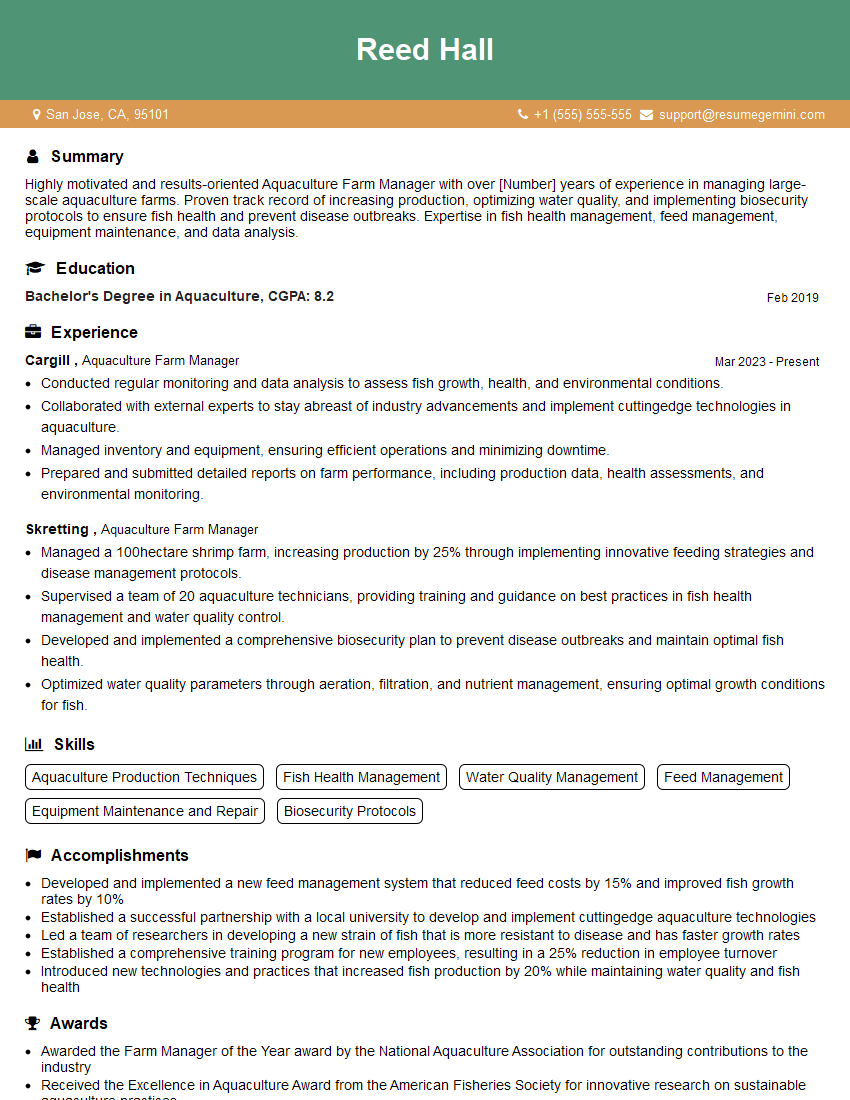
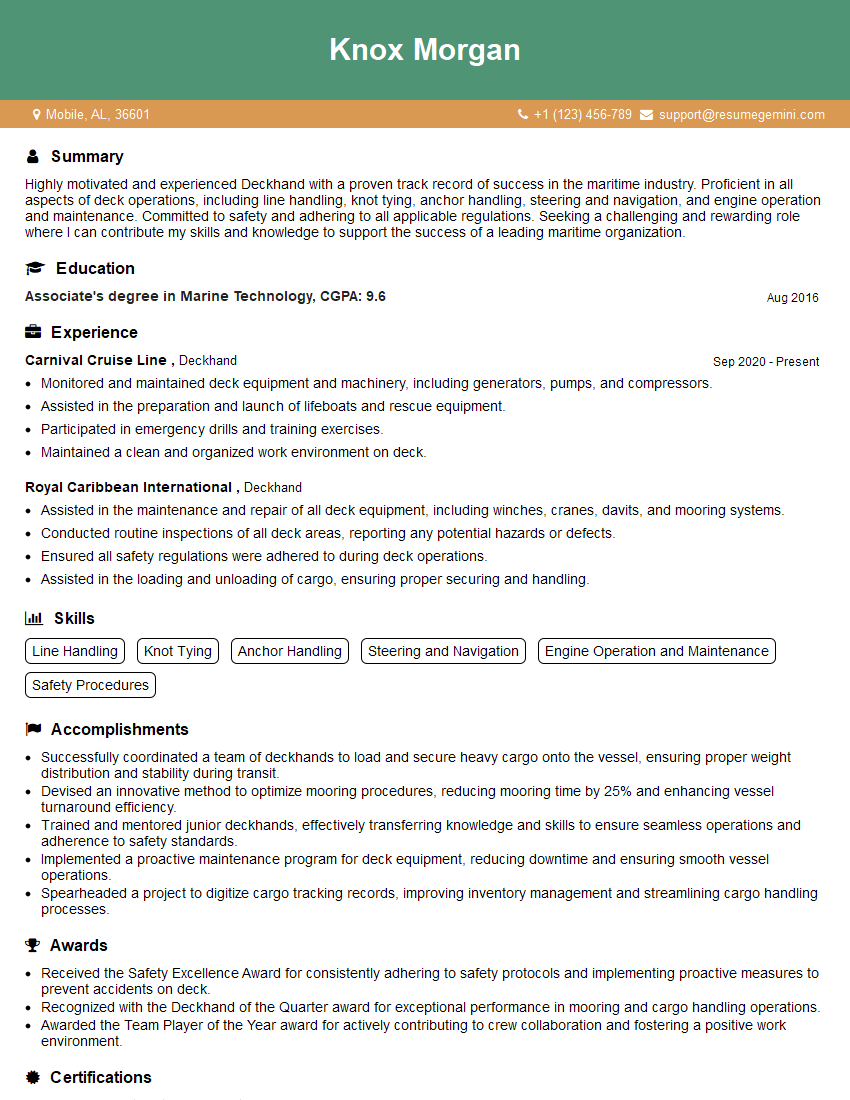
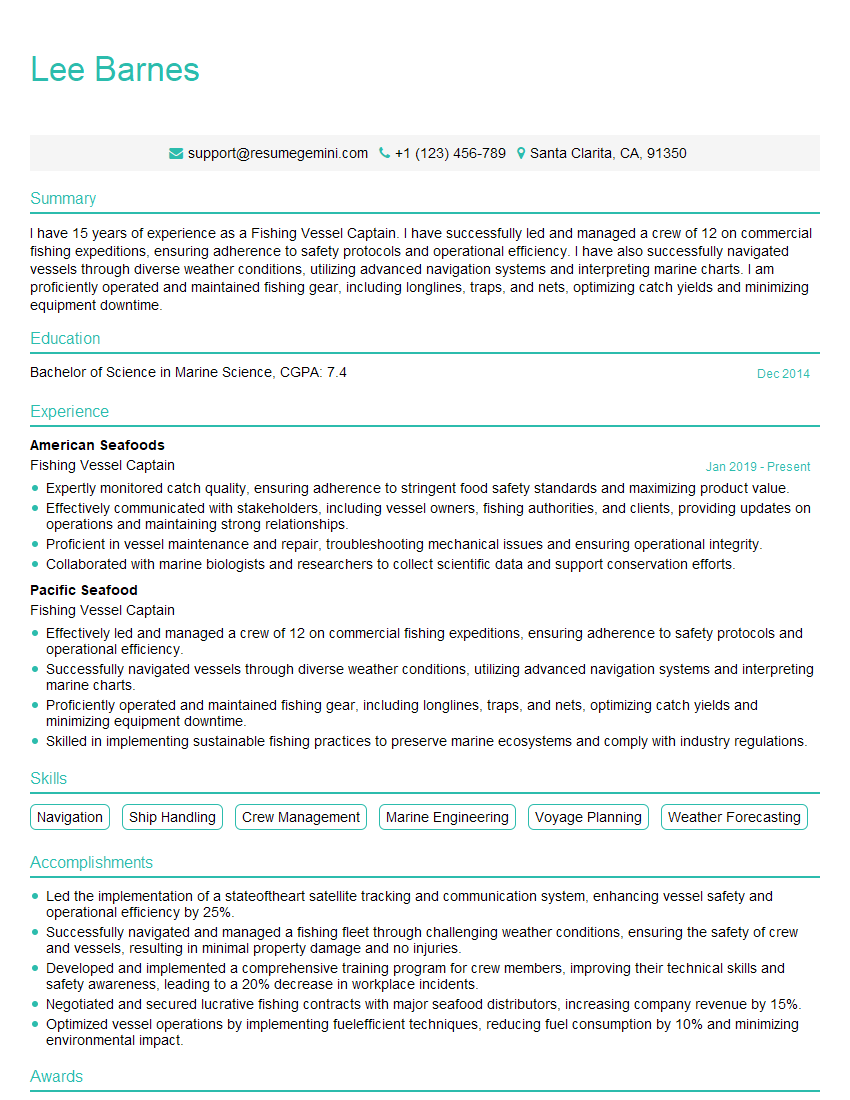
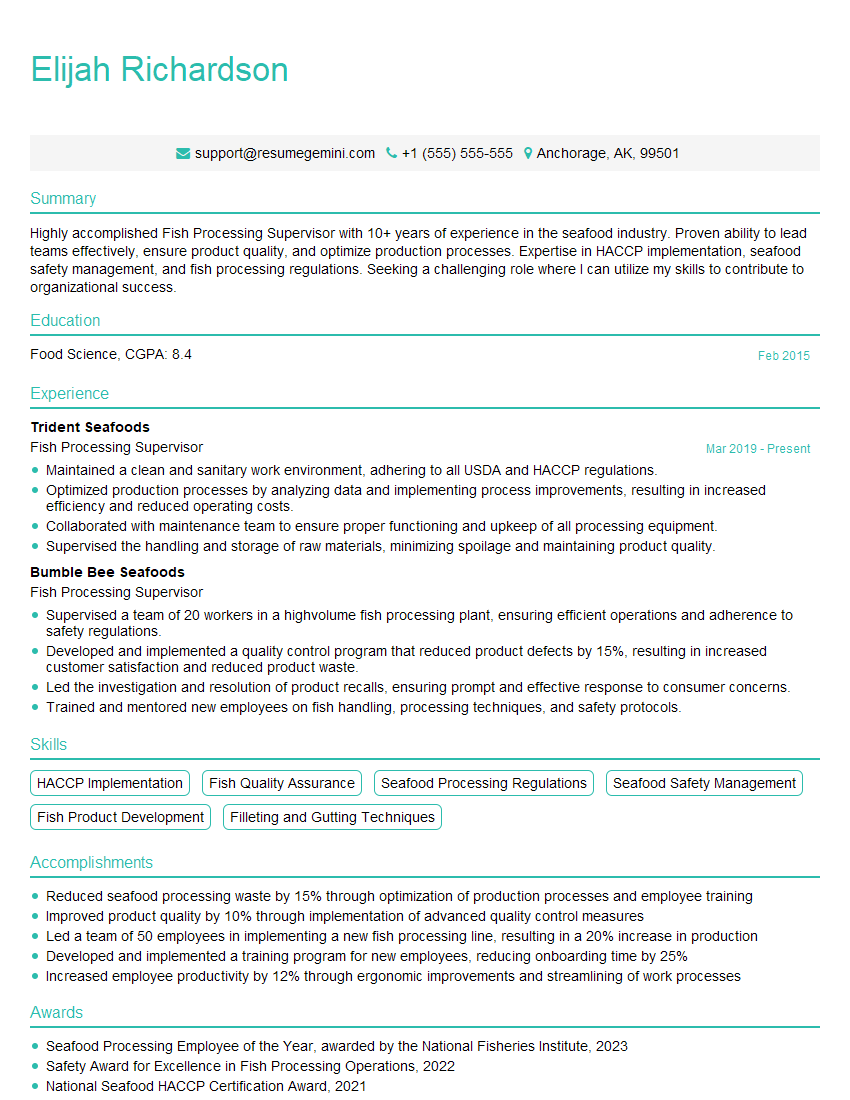
Mastering the intricacies of seafood harvesting opens doors to a rewarding career with significant growth potential, offering opportunities for specialization, leadership roles, and contributing to a sustainable seafood industry. To maximize your job prospects, it’s crucial to present your skills and experience effectively. Create an ATS-friendly resume that highlights your relevant qualifications and catches the recruiter’s eye. ResumeGemini is a trusted resource to help you build a professional, impactful resume. We provide examples of resumes tailored to the Seafood Harvesting industry to give you a head start. Invest time in crafting a compelling resume – it’s your first impression!
Explore more articles
Users Rating of Our Blogs
Share Your Experience
We value your feedback! Please rate our content and share your thoughts (optional).
What Readers Say About Our Blog
Very informative content, great job.
good