Interviews are opportunities to demonstrate your expertise, and this guide is here to help you shine. Explore the essential Seam Allowance Management interview questions that employers frequently ask, paired with strategies for crafting responses that set you apart from the competition.
Questions Asked in Seam Allowance Management Interview
Q 1. What are the standard seam allowances used in the apparel industry?
Standard seam allowances in the apparel industry aren’t universally fixed, but rather depend on the garment type, fabric, and design. However, some common allowances are widely used. Think of seam allowance as the extra fabric beyond the cutting line that’s stitched to create the seam. A common standard for many garments is 5/8 inch (1.5cm), offering a good balance of durability and minimizing bulk. Other frequently used allowances include ½ inch (1.2cm), particularly for lighter fabrics or when minimizing bulk is crucial, and ¾ inch (1.9cm) for heavier fabrics or designs requiring extra strength. Some specialty garments may use other allowances, like 1 inch or even more for specific construction needs.
- 5/8 inch (1.5cm): A versatile standard for many applications.
- ½ inch (1.2cm): Often used for delicate fabrics or where a flatter seam is desired.
- ¾ inch (1.9cm): Commonly used for heavier fabrics or when greater seam strength is needed.
Q 2. Explain the importance of consistent seam allowances in garment production.
Consistent seam allowances are absolutely critical for successful garment production. Inconsistent allowances lead to a cascade of problems. Imagine building a house where some walls are slightly off – it would be structurally unsound and aesthetically displeasing. Similarly, inconsistent seam allowances result in:
- Poor Fit: Uneven seams distort the garment’s shape, leading to ill-fitting garments. A sleeve might be too tight on one side or the entire garment may be twisted.
- Fabric Waste: Inconsistent allowances lead to either too much or too little fabric, impacting material costs and potentially requiring adjustments that further waste material.
- Time Consumption: Corrections for inconsistent seams are time-consuming and increase production costs. It requires additional labor and may necessitate re-cutting fabric pieces.
- Professionalism: Inconsistent seams indicate a lack of attention to detail and undermine the quality of the finished product.
Maintaining consistent seam allowances ensures a professional finish, accurate sizing, and reduced waste, leading to higher-quality garments and increased efficiency in manufacturing.
Q 3. How do different fabric types influence seam allowance choices?
Fabric type significantly influences seam allowance selection. The goal is to balance seam strength with minimizing bulk.
- Lightweight Fabrics (e.g., silk, chiffon): These fabrics generally use smaller seam allowances (½ inch or less) to avoid creating excessive bulk and maintaining a graceful drape. Too large an allowance would make the seams stiff and visible.
- Medium-weight Fabrics (e.g., cotton, linen): 5/8 inch seam allowance is frequently employed for its balance of strength and aesthetic appeal.
- Heavyweight Fabrics (e.g., denim, canvas): These fabrics require larger seam allowances (¾ inch or more) to ensure durability and prevent seam breakage under stress. The thicker material needs a stronger, wider seam to support the garment’s weight and use.
- Stretch Fabrics (e.g., jersey, spandex): These require careful consideration and often smaller seam allowances (sometimes ¼ inch to 5/8 inch) to accommodate the fabric’s elasticity and prevent the seams from restricting movement or causing puckering. The exact allowance depends on the degree of stretch.
Choosing the right seam allowance is essential to achieving the desired look and functionality of the garment while minimizing fabric waste.
Q 4. Describe the impact of incorrect seam allowances on garment fit and quality.
Incorrect seam allowances have a detrimental impact on garment fit and quality. Even seemingly minor discrepancies can drastically alter the final product:
- Size Distortion: Inconsistent allowances cause the garment to be too large or too small in specific areas. A sleeve could be too tight or a neckline too wide.
- Poor Shaping: Uneven seams prevent the garment from hanging correctly, leading to puckering, pulling, or twisting.
- Seam Breakage: Too small an allowance can lead to weak seams prone to ripping, especially in garments subjected to stress.
- Bulkiness: Excessive allowances create unnecessary bulk, especially around curves or seams where layers meet, causing discomfort and an unrefined appearance.
- Unprofessional Appearance: Inconsistent seams detract from the overall aesthetic quality and professionalism of the garment.
Imagine a beautifully tailored jacket with one sleeve significantly shorter than the other due to inconsistent seam allowances – this exemplifies the severe consequences of this oversight.
Q 5. What are the common methods for marking seam allowances?
Several methods are used to accurately mark seam allowances:
- Pattern Marking: Seam allowances are typically included directly on the pattern pieces. This is the most common method, offering precision and consistency.
- Measuring from the Cutting Line: Using a ruler or measuring tape, the seam allowance is measured and marked directly onto the fabric from the cutting line.
- Seam Allowance Guides on Cutting Machines: Industrial cutting machines often have adjustable guides that automatically cut the fabric to the desired width, including seam allowances.
- Rotary Cutter with Ruler: A rotary cutter and ruler combination provides a fast and accurate method for marking and cutting consistent seam allowances on multiple layers of fabric.
- Tailor’s Chalk or Marking Pencils: These tools are used to mark seam allowances directly onto fabric, providing visibility for accurate stitching.
The choice of method depends on factors such as production scale, fabric type, and desired accuracy.
Q 6. How do you handle seam allowances when working with stretch fabrics?
Working with stretch fabrics requires a nuanced approach to seam allowances. The key is to avoid restricting the fabric’s elasticity, which can lead to discomfort, pulling, or seam failure. Several techniques are employed:
- Smaller Seam Allowances: Often, smaller seam allowances (¼ to 5/8 inch) are used to accommodate the fabric’s stretch and prevent constricting the garment.
- Serger or Overlock Stitching: A serger finishes the raw edges while simultaneously stitching the seam, providing a professional finish and preventing fraying of stretchy fabrics.
- Using Stretch Stitches: A zigzag stitch or other stretch stitches are used to accommodate fabric expansion and contraction during wear.
- Testing Before Cutting: It’s crucial to test the chosen seam allowance and stitch type on a sample piece of fabric to ensure it doesn’t restrict movement or cause the fabric to distort.
- Careful Handling: Stretching the fabric gently during stitching can also help avoid distortion and ensure proper seam allowance distribution.
The goal is to achieve a comfortable and durable seam that complements the fabric’s inherent properties.
Q 7. Explain the difference between a 5/8″ seam allowance and a ½” seam allowance.
The difference between a 5/8 inch (1.5cm) seam allowance and a ½ inch (1.2cm) seam allowance might seem minor, but it can have a noticeable impact on the finished garment.
- 5/8 inch (1.5cm): This is a widely used standard offering a good balance between seam strength and minimal bulk. It’s suitable for a variety of fabrics and applications.
- ½ inch (1.2cm): This smaller allowance results in a flatter, less bulky seam, which is ideal for delicate or lightweight fabrics where bulk is to be minimized. It may also be preferred for garments requiring a more refined silhouette.
The ⅛ inch difference can accumulate across multiple seams, resulting in noticeable changes in the overall garment size and fit. Choosing the correct allowance depends on the fabric weight, garment design, and the desired aesthetic.
Q 8. How do you ensure accurate seam allowances during pattern making?
Ensuring accurate seam allowances during pattern making is crucial for a garment’s final fit and appearance. It begins with precise drafting and diligent attention to detail throughout the process. We achieve this accuracy through a combination of methods:
Using industry-standard software: Software like Gerber Technology’s Accumark or Lectra’s Modaris allows for precise digital pattern creation and manipulation, ensuring consistent seam allowances are applied across the entire garment. The software often allows setting a default seam allowance and automatically adding it to all pattern pieces.
Precise measurements and calculations: All measurements taken during the pattern design phase should be meticulously recorded and double-checked. Calculations for seam allowances must be accurate and applied consistently. For example, if a 5/8” seam allowance is required, it’s applied uniformly to all relevant pattern pieces.
Testing and adjustments: Before production, multiple prototypes are made and carefully examined to validate the seam allowances. Adjustments are made as needed to fine-tune the fit and ensure that the seam allowances are sufficient for the chosen construction techniques.
Clear documentation: Thorough documentation of seam allowance specifications is critical, using clear notations directly on the patterns and in the technical package. This prevents confusion and errors.
Q 9. What are some common seam allowance issues encountered in production?
Common seam allowance issues in production often stem from inconsistent application or misinterpretations of specifications. Some examples include:
Inconsistent seam allowances: This leads to ill-fitting garments, with sections too tight or too loose. A seemingly small variation of 1/8” across a garment can significantly affect the overall fit.
Incorrect seam allowance placement: Seam allowances may be cut incorrectly, leading to poor alignment and a less professional finish.
Seam allowance variations due to material stretch: Working with stretchy fabrics requires careful attention to seam allowances, as stretching during construction can significantly alter the final dimensions.
Lack of clear communication: Ambiguous or unclear instructions regarding seam allowances can easily lead to errors and inconsistencies on the production floor.
Inadequate training: Production personnel may lack the necessary training on proper seam allowance techniques, resulting in inconsistencies.
Q 10. How do you address seam allowance discrepancies between samples and production garments?
Discrepancies between sample and production garments often highlight issues in the pattern-making or production processes. Addressing these discrepancies involves a systematic approach:
Thorough comparison: Carefully compare the sample and production garments, noting the exact areas where seam allowance differences exist. Measurements should be taken to quantify these differences.
Investigate the root cause: Determine whether the discrepancy originates from pattern making, cutting, sewing techniques, or material variations. For example, differences in fabric shrinkage between samples and bulk fabrics can alter seam allowances.
Implement corrective actions: Once the root cause is identified, necessary adjustments are made to the pattern, cutting instructions, or production processes. This may involve revising the pattern, providing additional training to the production team, or improving quality control measures. The correction is then thoroughly tested on a new sample before implementing it to the main production run.
Documentation and prevention: Document all discrepancies and corrective actions to prevent recurrence. This might include updating the technical package, creating more detailed instructions, or refining quality control procedures.
Q 11. Describe your experience with different seam allowance techniques (e.g., French seams, serged seams).
I have extensive experience with various seam allowance techniques. The choice of technique often depends on the fabric type, garment style, and desired aesthetic. Here are some examples:
French seams: These enclose all raw edges, providing a clean, professional finish, ideal for fine fabrics. The seam allowance is typically quite small (1/4” to 3/8”).
Serged seams: A serger (overlock machine) creates a neat, finished edge, preventing fraying. The seam allowance is often determined by the machine’s settings but is generally slightly larger than a standard seam allowance (often 5/8” or more).
Standard seams: These are the most common, employing a simple straight stitch or zigzag stitch, and the seam allowance is typically 5/8”.
Hong Kong seams: These are similar to French seams, but a bias binding is used to encase the raw edges, offering a beautifully finished, durable seam.
Flat-felled seams: These are particularly robust and are often used in menswear or workwear. They involve one seam allowance being folded over and stitched down flat onto the other seam allowance.
My experience allows me to select the most appropriate seam allowance technique based on the specific requirements of the project, optimizing both aesthetics and durability.
Q 12. How do you communicate seam allowance specifications to production teams?
Clear and consistent communication of seam allowance specifications is vital to prevent errors. My approach involves a multi-pronged strategy:
Detailed technical package: This document includes detailed illustrations, measurements, and written instructions for seam allowances for each pattern piece. It also specifies any special seam finishing techniques required.
Marked patterns: The seam allowances are clearly marked directly on the patterns themselves. Using a different color or notation helps to distinguish the seam allowance from other markings.
Production sewing specifications: A concise document that specifically outlines all seam allowance requirements and how they are to be applied during construction.
Training and visual aids: Production teams receive thorough training on interpreting the technical package and applying the seam allowance correctly. Visual aids, such as sample garments with accurately applied seam allowances, significantly assist in training and clarification.
Regular communication and feedback: Open communication channels ensure that any questions or uncertainties are addressed promptly. Feedback from the production team is actively sought to address any potential challenges in applying the specifications.
Q 13. What are the implications of using inconsistent seam allowances on production costs?
Inconsistent seam allowances have significant implications on production costs. The most direct impacts are:
Increased fabric waste: Inconsistent seam allowances can lead to cutting errors, resulting in fabric waste and higher material costs. This is especially true when dealing with expensive fabrics.
Rework and repairs: Garments with incorrect seam allowances may require extensive rework or even need to be scrapped, incurring labor costs and potentially causing production delays.
Reduced efficiency: Production teams spend more time correcting errors, lowering overall efficiency and potentially leading to higher labor costs.
Quality control costs: Increased quality control measures are required to catch seam allowance inconsistencies, adding to overall production costs.
Customer dissatisfaction and returns: Ill-fitting garments due to inconsistent seam allowances lead to customer dissatisfaction and potentially costly returns, impacting brand reputation and profitability.
Therefore, ensuring accurate seam allowances from the initial pattern making stage significantly reduces production costs and improves overall product quality.
Q 14. How do you handle seam allowances for different garment constructions (e.g., sleeves, collars)?
Seam allowance management varies depending on the garment construction element. Certain areas require specific considerations:
Sleeves: Sleeve seam allowances often need to be slightly larger to accommodate ease and movement. The seam allowance may also vary along the sleeve depending on the design. For example, a set-in sleeve might have a slightly larger seam allowance at the underarm for ease of movement.
Collars: Collar seam allowances often require more precision due to the complexity of collar construction. The seam allowance may vary depending on the type of collar (e.g., shirt collar vs. mandarin collar) and the required interfacing. Accurate seam allowances are essential for a proper fit and stand.
Yokes: Yokes, especially in shirts and blouses, require careful consideration of seam allowances to ensure the yoke fits smoothly onto the body. Too much or too little seam allowance can cause puckering or gapping.
Pockets: Pocket seam allowances are crucial for a secure and aesthetically pleasing finish. The amount depends on the pocket type and method of construction.
Expertise in different garment constructions is essential to determine the correct seam allowance for each area to ensure optimal garment fit, functionality and aesthetics.
Q 15. How do seam allowances affect the overall drape and silhouette of a garment?
Seam allowances, the extra fabric added beyond the stitching line, significantly impact a garment’s drape and silhouette. Think of them as the invisible architecture of your clothing. A larger seam allowance can add volume and create a fuller, more relaxed look. Conversely, a smaller seam allowance results in a cleaner, more fitted silhouette. For example, a dress with generous seam allowances in the skirt will hang more softly and flowingly, while a tailored jacket with minimal seam allowances will have a sharp, structured appearance. The type of fabric also interacts with the seam allowance; a stiff fabric might need a smaller allowance to prevent bulkiness, whereas a fluid fabric can tolerate a larger one to accommodate its movement.
Consider this: a simple A-line skirt with a 5/8” seam allowance will have a noticeably different drape compared to the same skirt made with a 1” seam allowance. The larger allowance would create more fullness and a gentler A-line shape.
Career Expert Tips:
- Ace those interviews! Prepare effectively by reviewing the Top 50 Most Common Interview Questions on ResumeGemini.
- Navigate your job search with confidence! Explore a wide range of Career Tips on ResumeGemini. Learn about common challenges and recommendations to overcome them.
- Craft the perfect resume! Master the Art of Resume Writing with ResumeGemini’s guide. Showcase your unique qualifications and achievements effectively.
- Don’t miss out on holiday savings! Build your dream resume with ResumeGemini’s ATS optimized templates.
Q 16. What are some industry standards or best practices related to seam allowances?
Industry standards for seam allowances aren’t universally fixed, but there are common practices. A standard 5/8” (1.5cm) seam allowance is often used for many garments, particularly in ready-to-wear. This offers a good balance between ease of construction and a neat finish. However, variations exist depending on the garment type and design details. For instance, tailored garments might use smaller seam allowances (e.g., ¼” or 3/8”) for precision, while garments with a lot of draping might use larger allowances (e.g., ¾” or 1”) for ease of movement and manipulation of the fabric. Best practices involve clear documentation of the seam allowances used on each pattern piece. This ensures consistency throughout production and simplifies the manufacturing process. Consistent seam allowances are crucial for smooth grading, preventing sizing issues.
Q 17. How do you ensure accurate seam allowance measurements during quality control?
Accurate seam allowance measurement during quality control is crucial for consistent sizing and garment quality. We employ a multi-pronged approach. First, random sampling of garments is carried out, where seam allowances on key areas are measured with precise measuring tools – rulers and calipers. Secondly, we use digital measuring tools that capture and record precise seam allowance data in seconds. These measurements are then compared to the pattern specifications, using statistical process control (SPC) to identify any significant deviations. Any inconsistencies trigger further investigation to pinpoint the root cause, whether it’s a machine malfunction, operator error, or fabric shrinkage. We maintain detailed records of these inspections to identify trends and improve our process over time. Regular calibration of our equipment is essential to ensure accuracy.
Q 18. Explain your experience with using CAD software for seam allowance management.
My experience with CAD software for seam allowance management is extensive. I’m proficient in several industry-standard programs. These programs allow for precise digital pattern creation and manipulation. This is significantly more efficient and accurate than traditional manual methods. I utilize CAD software to define seam allowances directly on the digital pattern pieces, ensuring accuracy and consistency across all sizes. The software automatically calculates and adjusts seam allowances during the grading process, minimizing human error and saving valuable time. I regularly use these features to create accurate and detailed technical design packages which communicate precisely the intended seam allowances to the cutting and production teams. Furthermore, the digital nature of the patterns facilitates easy modifications and version control.
Q 19. Describe your troubleshooting skills related to seam allowance issues.
Troubleshooting seam allowance issues requires a systematic approach. I start by examining the finished garment, identifying the specific problem: is it inconsistent seam allowances, puckering, gaping, or incorrect sizing? Next, I meticulously examine the pattern, the cutting process, and the sewing process. I check the original pattern for errors or inconsistencies in the seam allowance markings. I review the cutting and marking procedures and measurements taken. Sewing machine settings are also carefully checked as incorrect tension or stitch length can impact seam allowances. Often, the issue is straightforward – a misaligned guide on the cutting table or a sewing machine needing recalibration. However, sometimes deeper analysis is needed involving fabric analysis (shrinkage, drape) to understand the underlying cause. A detailed record-keeping system helps identify recurring problems and refine our processes to prevent them.
Q 20. How do you stay updated on the latest industry trends in seam allowance practices?
Staying updated on industry trends is a continuous process. I regularly attend industry conferences and workshops, subscribe to relevant trade publications, and follow industry leaders on social media platforms. Online forums and communities of garment professionals provide opportunities to exchange knowledge and best practices. Furthermore, I actively participate in professional organizations related to pattern making and apparel manufacturing. This exposure keeps me informed about the latest technological advancements in CAD software, new fabric technologies, and evolving design techniques influencing seam allowance practices. For example, recent trends include the growing use of laser cutting for precise seam allowances and the exploration of more sustainable fabric choices that may require adjusted allowances.
Q 21. What is your understanding of the relationship between seam allowances and grading?
Seam allowances and grading are intrinsically linked. Grading is the process of scaling a pattern to create multiple sizes. Accurate seam allowances are crucial for successful grading. If seam allowances aren’t consistent across the pattern pieces, grading will lead to discrepancies in the final garment sizes, resulting in ill-fitting clothes. The seam allowances remain constant while the pattern itself is enlarged or reduced during grading, ensuring that the structural integrity of the garment is maintained in all sizes. For example, if a 5/8” seam allowance is specified for a size small, that same 5/8” must be maintained in all subsequent graded sizes (medium, large, etc.) to prevent sizing errors.
Q 22. Explain how seam allowance affects the cost of labor in garment production.
Seam allowance, the extra fabric beyond the stitching line, significantly impacts labor costs in garment production. A larger seam allowance means more fabric is consumed, increasing material costs. However, it also affects labor in several ways. Larger allowances can ease sewing, potentially speeding up production and reducing errors. This translates to lower labor costs per garment. Conversely, excessively small seam allowances demand greater precision and slower, more meticulous sewing, which increases labor costs and the risk of rejected garments.
For instance, a factory producing a simple T-shirt might find that a 5/8 inch seam allowance is efficient. But if the design is changed to a more complex garment with many curves or layers (e.g., a tailored jacket), the optimal seam allowance might increase to ¾ inch or even 1 inch to accommodate the added complexity, thus impacting both material and labor costs. The balance between the efficiency of the seam allowance and labor costs is carefully considered for each garment type and production method.
In some instances, a larger seam allowance can lead to faster production overall because skilled workers can achieve higher output. In other cases, a smaller seam allowance will be used when working with costly materials, despite the increased labor time, to minimize material waste. This highlights the dynamic interplay between the seam allowance and overall production costs.
Q 23. How do you incorporate seam allowance into your pattern design?
Incorporating seam allowance into pattern design is crucial for a successful garment. It’s not just an afterthought; it’s an integral part of the design process. I typically add seam allowance to my patterns digitally using CAD software. This ensures accuracy and consistency.
My process involves first creating a base pattern without any seam allowance. This ‘cut line’ represents the final size of the garment. Then, I add the designated seam allowance (usually 5/8 inch, but variable based on garment and fabric type) to all pattern edges. This addition can be done automatically in many CAD programs or manually through precise measurements.
For example, if a pattern piece needs a ½ inch seam allowance, I would add this allowance to the end of every edge of the pattern piece. This allows for enough extra fabric for stitching and prevents any errors. Adding seam allowance is crucial before plotting and cutting the patterns to make it efficient.
Q 24. What is your preferred method for communicating seam allowance information on patterns?
Clear communication of seam allowances on patterns is vital to avoid errors and ensure consistency. My preferred method combines digital and physical marking techniques.
Digitally, I use CAD software to clearly label the seam allowance on the pattern pieces. It is indicated with a specific line style, distinct from the cut line, which is usually a bold solid line. This digital version also notes the amount in millimeters or inches.
For physical patterns, I use a combination of techniques. I’ll mark the seam allowance using notches (small triangular cuts in the fabric) at regular intervals. The notches also act as reference points for matching pattern pieces when sewing. I also use a clear, consistent labeling system—often writing the seam allowance directly onto the pattern pieces with a washable marker (like a tailor’s chalk). It’s vital to maintain consistent units (either inches or centimeters) and styles across the whole pattern set.
Q 25. How would you train new staff on proper seam allowance techniques?
Training new staff on seam allowance techniques requires a multi-faceted approach combining theoretical knowledge and practical skills.
I begin by explaining the importance of consistent seam allowances, emphasizing their impact on the final garment’s fit, appearance, and production efficiency. We then discuss different seam allowance types (e.g., standard, French, bound) and their applications. I use visual aids, including diagrams and samples of different seams, to illustrate these concepts.
The practical training involves hands-on exercises. Starting with simple projects, new staff practice marking and cutting fabric with precise seam allowances. I provide detailed feedback, focusing on accuracy and consistency. We address common mistakes, such as uneven seam allowances or incorrectly marking pattern pieces. I use both one-on-one guidance and group sessions, providing constructive feedback and ensuring everyone masters the technique.
Continuous assessment and improvement are vital parts of the training. Regular checks on their work help catch any inconsistencies early and refine their techniques. Successful completion of several practical exercises, where the seam allowances meet the specifications, certifies that they have reached the required standard.
Q 26. How do you deal with a situation where seam allowances are not meeting specifications?
Inconsistencies in seam allowances are a serious problem that can affect garment quality and production efficiency. My approach to this involves a systematic investigation and corrective action.
First, I identify the root cause of the problem. This might include issues with pattern making, cutting, sewing techniques, or even the tools being used. I review the pattern markings, inspect the cutting process, and analyze the stitching to locate the source of error.
Once the problem is identified, I take corrective measures. This could range from retraining staff on proper measuring and cutting techniques, recalibrating cutting machines, or refining the pattern to incorporate easier-to-handle seam allowances. If the issue stems from inconsistent operator skill, it may require additional training and practice to get consistent results. The aim is to improve efficiency and consistency to prevent a recurrence.
Crucially, I document all findings and actions taken to prevent future issues. This documentation serves as a learning opportunity and helps maintain a high level of quality control in garment production.
Q 27. Describe your experience managing seam allowance changes in a production environment.
I’ve managed numerous seam allowance changes throughout my career, often driven by design revisions, fabric changes, or efficiency improvements. One specific example involved a production run of women’s blouses. The initial pattern used a standard 5/8 inch seam allowance, but feedback from production indicated that this was too small for the chosen fabric, a lightweight silk. This led to excessive breakage of needles and increased labor costs due to the meticulous sewing required.
To resolve this, I worked with the design team and production manager to increase the seam allowance to ¾ inch. This change required updating the digital patterns, recalibrating the cutting machines, and retraining the sewing operators on handling the wider seams. Implementing this change involved detailed communication across all departments to prevent confusion and ensure a smooth transition.
We carefully monitored production after the change, tracking both the number of rejected garments and the overall production time. The results showed a significant reduction in rejected garments and only a slight increase in material consumption. This change ultimately improved efficiency and the final product quality, demonstrating the benefits of proactively addressing seam allowance challenges.
Q 28. How do you balance design aesthetics with the practical considerations of seam allowances?
Balancing design aesthetics with the practical considerations of seam allowances requires careful planning and expertise. Designers often desire clean lines and minimal bulk, which can conflict with the need for sufficient seam allowance for durability and ease of construction.
My strategy is to integrate seam allowance considerations early in the design process. I work closely with designers to explore design solutions that minimize visual bulk while maintaining adequate seam allowances. This might involve using specific seam finishes (e.g., French seams, serged seams) that reduce bulk or strategically placing seams in less visible areas. For example, a design detail, like a decorative stitch, might cleverly incorporate the seam allowance, concealing it while adding aesthetic value.
Sometimes, compromises are necessary. We might opt for slightly smaller seam allowances in certain areas where bulk is highly undesirable, but only when the fabric and construction methods allow for it. A detailed understanding of different fabric properties and sewing techniques is crucial for these decisions, as it informs the acceptable minimum seam allowance for a given design and material. Through collaboration and careful analysis, we arrive at the best compromise between design and practicality.
Key Topics to Learn for Seam Allowance Management Interview
- Understanding Seam Allowances: Defining different types of seam allowances (e.g., standard, 5/8″, French seam), their purpose, and industry best practices.
- Impact on Garment Construction: Analyzing how seam allowance choices affect garment fit, durability, and overall aesthetics. Discuss the relationship between allowance size and fabric type.
- Pattern Making and Grading: Explain how seam allowances are incorporated into pattern making and the process of adjusting allowances during pattern grading for different sizes.
- Production Efficiency: Explore how efficient seam allowance management contributes to streamlined production processes, reduced fabric waste, and improved cost control.
- Quality Control and Inspection: Describe methods for inspecting seam allowances to ensure consistent quality and adherence to specifications. Identify potential issues and their solutions.
- Technology & Software: Discuss the role of CAD software and other technologies in automating seam allowance management and optimizing pattern design.
- Problem-Solving in Seam Allowance Management: Illustrate your ability to troubleshoot common problems related to inconsistent seam allowances, such as puckering, stretching, or poor alignment.
- Sustainability Considerations: Discuss how mindful seam allowance management contributes to minimizing fabric waste and promoting sustainable manufacturing practices.
Next Steps
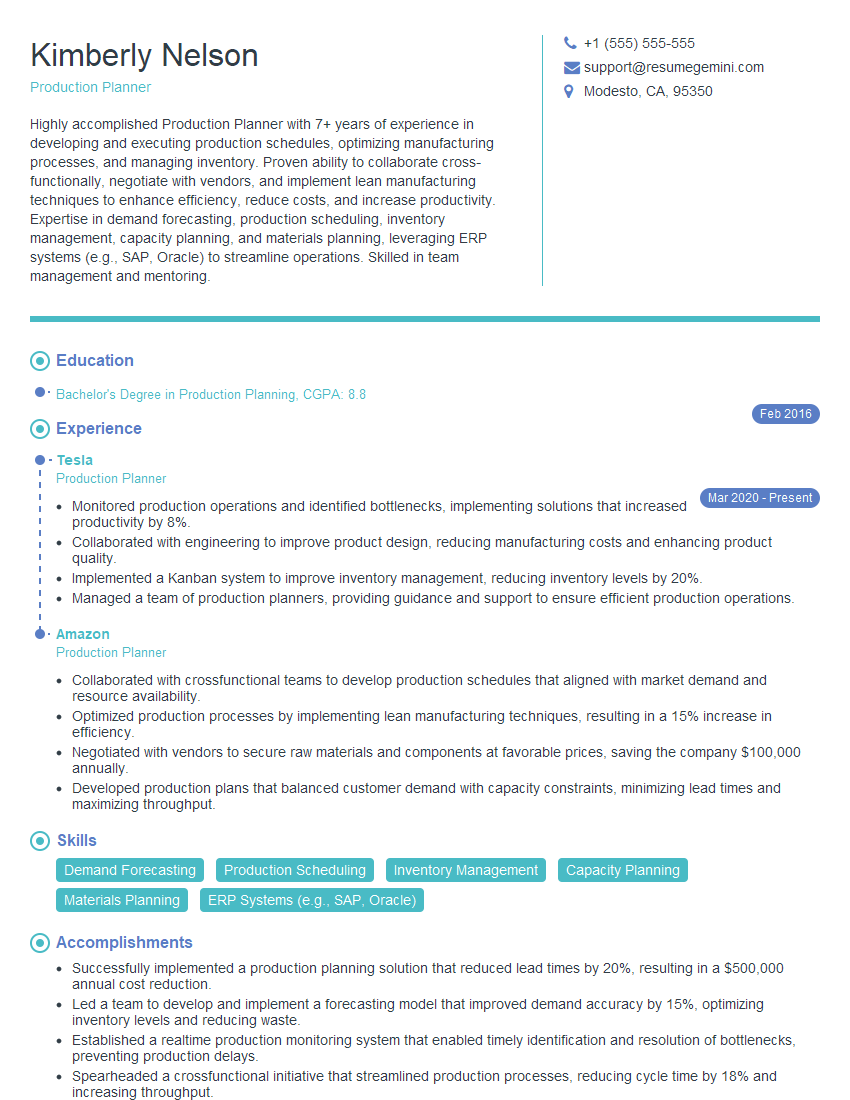
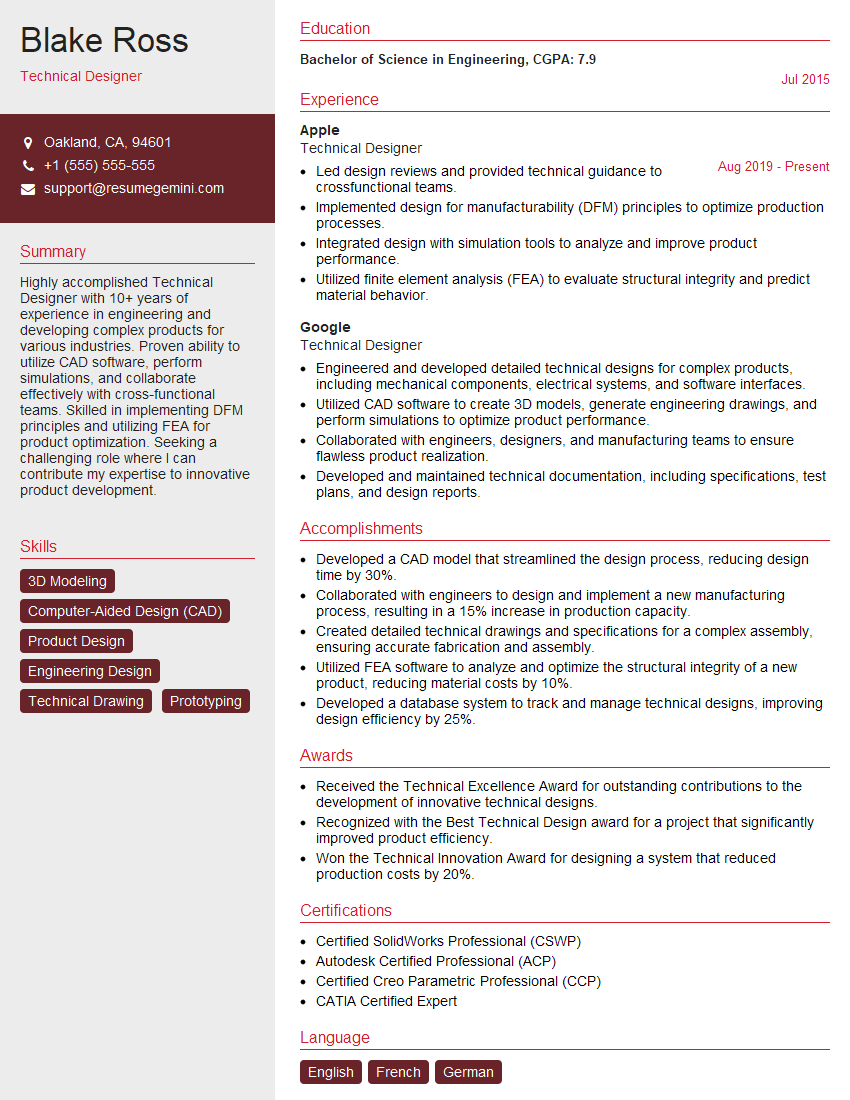
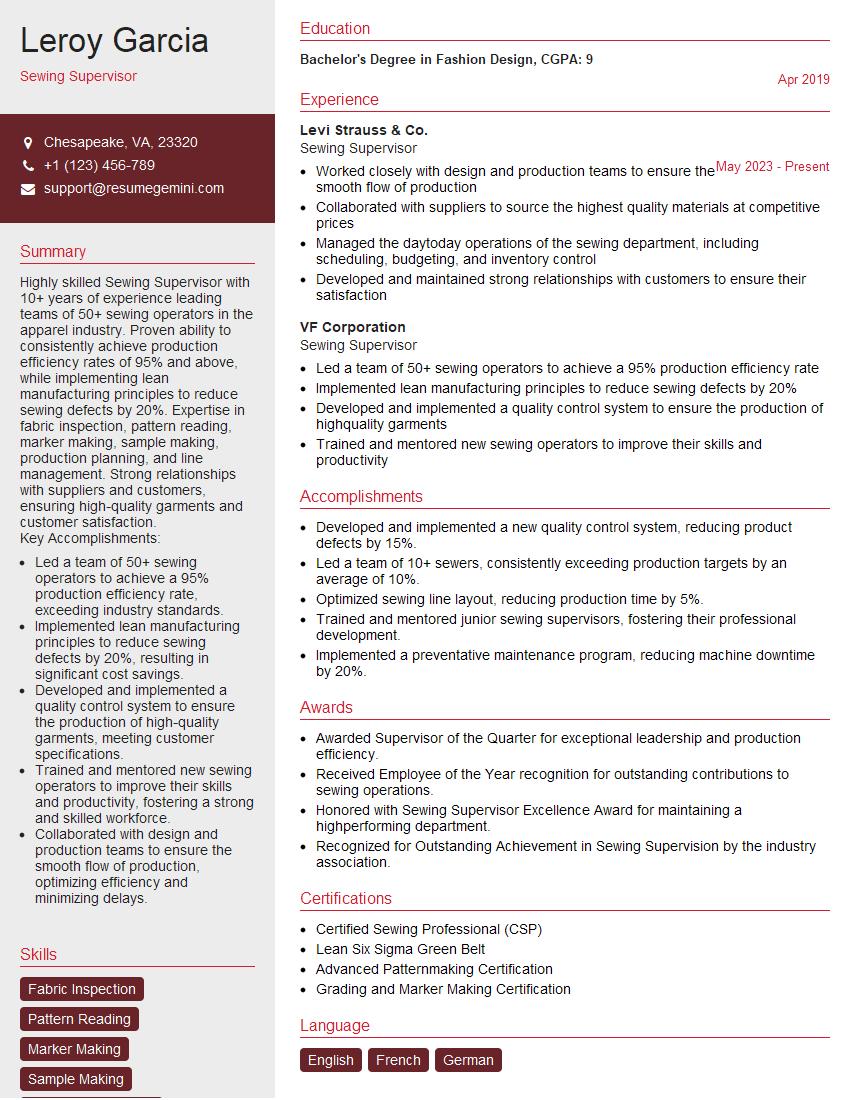
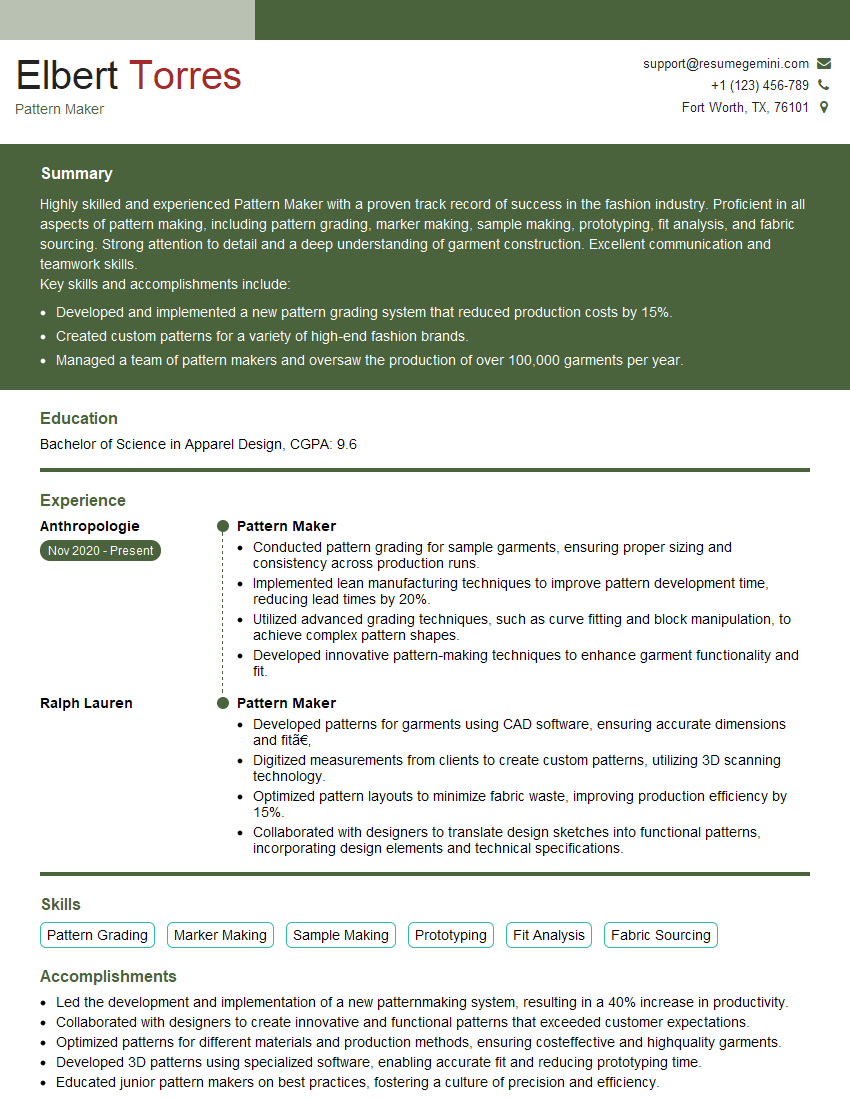
Mastering Seam Allowance Management is crucial for career advancement in the fashion and apparel industry. A strong understanding of these concepts showcases your technical skills and attention to detail, making you a highly valuable asset to any team. To significantly enhance your job prospects, focus on creating a professional and ATS-friendly resume that highlights your expertise. ResumeGemini is a trusted resource to help you build a compelling resume that showcases your skills effectively. We provide examples of resumes tailored to Seam Allowance Management to guide you in crafting a document that will impress potential employers.

Explore more articles
Users Rating of Our Blogs
Share Your Experience
We value your feedback! Please rate our content and share your thoughts (optional).
What Readers Say About Our Blog
Very informative content, great job.
good