Are you ready to stand out in your next interview? Understanding and preparing for Seam Allowance Trimming interview questions is a game-changer. In this blog, we’ve compiled key questions and expert advice to help you showcase your skills with confidence and precision. Let’s get started on your journey to acing the interview.
Questions Asked in Seam Allowance Trimming Interview
Q 1. What are the standard seam allowances for different garment types?
Standard seam allowances vary depending on the garment type and the desired finish. There isn’t a single universal standard, but rather common practices within the industry. Think of it like a recipe – you can adjust based on your needs and the specific fabric.
- Garments requiring a clean, tailored finish (e.g., tailored jackets, trousers): Often use a 5/8 inch (1.5cm) seam allowance. This allows for sufficient fabric manipulation and a neat finish.
- Everyday garments (e.g., blouses, skirts, dresses): A 1/2 inch (1.2cm) seam allowance is frequently used. This balances ease of construction with fabric economy.
- Certain items like lingerie or children’s wear: May use a smaller seam allowance (e.g., 1/4 inch or 6mm) to minimize bulk and reduce the overall size of the finished garment.
- Specific design elements (e.g., French seams, double welt pockets): May require a larger seam allowance to accommodate the multiple layers of stitching.
It’s always best to check the pattern instructions for the specific seam allowance recommended. These instructions are created by professionals who understand how the design elements interact with different seam allowances.
Q 2. Explain the importance of consistent seam allowance trimming.
Consistent seam allowance trimming is crucial for several reasons. Inconsistent allowances lead to a sloppy, unprofessional finish and can drastically affect garment fit and appearance.
- Professional Finish: Uniform seam allowances contribute to a polished and well-made garment. Inconsistent allowances create a messy look, which detracts from the overall quality.
- Accurate Fit: Inconsistent allowances can distort garment proportions, leading to ill-fitting garments. For example, uneven seam allowances in trousers could result in legs that are different lengths or a waistband that is crooked.
- Reduce Bulk: Trimming seam allowances to the correct width prevents excess bulk, especially in areas where layers of fabric meet, resulting in a smoother, more comfortable garment.
- Fabric Stability: Properly trimmed allowances are less likely to cause the garment to distort or stretch unevenly over time.
Imagine building a house – if some walls were thicker than others, the structure would be unstable. Consistent seam allowances provide stability and balance within the structure of a garment.
Q 3. Describe different methods for trimming seam allowances (e.g., pinking shears, zigzag stitch).
Several methods exist for trimming seam allowances, each offering unique advantages.
- Pinking Shears: These shears create a zigzag edge that prevents the seam allowance from fraying. They are excellent for lightweight and stable fabrics. However, they aren’t ideal for fabrics that tend to ravel easily or those that require precise finishing.
- Zigzag Stitch: Using a sewing machine’s zigzag stitch secures the raw edge and prevents fraying. This is a highly versatile technique suitable for most fabrics, allowing for excellent control over the seam allowance width. Adjust the stitch width and length based on the fabric’s weight and structure.
- Serger/Overlocker: A serger (overlocker) neatly finishes and trims the seam allowance in a single step. This is efficient for production sewing but requires a specialized machine.
- Clipping Curves: For curved seams, clipping (making small cuts into the seam allowance) helps to reduce bulk and allow the seam to lie flat. The depth of the clip depends on the sharpness of the curve.
Choosing the right method depends on factors like fabric type, the desired finish, and the sewing machine’s capabilities. For instance, pinking shears work well with cotton, but a zigzag stitch is better for delicate fabrics like silk.
Q 4. How do you ensure accurate seam allowance trimming on curved seams?
Accurate seam allowance trimming on curved seams requires extra care and attention to detail. The key is to prevent distortion and ensure the seam lies flat.
- Clipping: Make small, shallow cuts into the seam allowance, following the curve. This prevents the seam from pulling and bunching up. Avoid cutting into the stitching line.
- Notching: For deeper curves, make small V-shaped notches into the seam allowance. This allows the seam to lie flatter than clipping alone would achieve.
- Grading: Carefully trimming different layers of fabric to different widths. For example, on a double-layered curved seam, the under layer might be trimmed slightly wider than the top layer. This again reduces bulk and improves the curve’s smooth appearance.
- Using a rotary cutter and mat: These tools allow for consistent and precise trimming of the seam allowance, which is particularly beneficial for curved seams.
Remember, when working with curved seams, less is more. Begin with small, careful snips or notches, and gradually increase as needed. Always test on a scrap of fabric first to avoid ruining your project.
Q 5. What are the consequences of incorrect seam allowance trimming?
Incorrect seam allowance trimming can have several negative consequences, impacting both the aesthetics and functionality of the finished garment.
- Poor Fit: Uneven or inconsistent seam allowances can lead to ill-fitting garments, creating distortions in the shape and proportions. A simple example is uneven trousers that look slightly lopsided.
- Distorted Seams: Seams may pucker, pull, or bunch up, creating an unattractive finish. This is particularly noticeable in areas of curves or stress points.
- Bulkiness: Excess seam allowance can add unnecessary bulk, making the garment uncomfortable and less flattering.
- Durability Issues: Improper trimming can weaken seams, making them prone to breaking or unraveling over time.
- Professionalism: Inconsistent seam allowances indicate a lack of attention to detail, which detracts from the overall professionalism of the garment.
Imagine a perfectly tailored suit with uneven sleeve lengths. This would immediately look unprofessional and badly made. Precise seam allowance management is crucial for maintaining high quality standards in garment construction.
Q 6. How do you handle different fabric types when trimming seam allowances?
Different fabric types require different approaches to seam allowance trimming. The choice of method depends on the fabric’s weight, structure, and tendency to fray.
- Woven Fabrics (Cotton, Linen, Silk): These fabrics often require a zigzag stitch or serging to prevent fraying. Pinking shears can also be used for fabrics that don’t fray excessively.
- Knit Fabrics (Jersey, Ribbing): Knit fabrics typically require a zigzag stitch or serging to prevent rolling or curling of the edges. Using a ballpoint needle is crucial to avoid damaging the knit structure.
- Stretch Fabrics (Lycra, Spandex): Because these fabrics stretch, using a narrow zigzag stitch is essential to allow for flexibility, preventing the seams from breaking under stress.
- Heavyweight Fabrics (Denim, Canvas): Heavy fabrics may need to be trimmed with sharp shears to achieve a clean finish. A serger is often preferred for ease of work and to finish the edge neatly.
It’s often helpful to experiment with scrap fabric before starting on your project to determine the best trimming method and appropriate seam allowance width for the specific fabric.
Q 7. Explain the relationship between seam allowance and garment fit.
Seam allowance plays a significant role in garment fit. The accuracy of the seam allowance directly influences the final dimensions of the garment.
- Overall Size: The seam allowance adds to the overall dimensions of the garment. If you use a wider seam allowance, the final garment will be slightly larger.
- Ease: Seam allowance can incorporate ‘ease,’ which is extra fabric added to allow for comfort and movement. This is especially important for garments that need to stretch, such as clothes made from knit fabric.
- Design Features: Certain design features, like pleats or gathers, rely on specific seam allowances to create the desired effect. Incorrect allowances will impact the appearance and drape of these design elements.
For example, if you have a pattern that calls for a 5/8 inch seam allowance, and you accidentally use a 1/2 inch allowance, your garment will be too small. This will not be easily corrected, and can severely affect the overall appearance and fit. Paying close attention to the pattern instructions and maintaining accuracy is critical for a well-fitting garment.
Q 8. How do you identify and correct uneven seam allowances?
Uneven seam allowances are a common issue, but easily rectified with careful attention. Identifying them is usually done by sight – simply holding the garment up to the light or visually inspecting the seams for inconsistencies. A ruler can be used to measure the allowance precisely and pinpoint the areas needing correction. Correction involves carefully trimming the excess fabric with sharp shears or a rotary cutter, always working slowly and precisely to avoid creating further problems. Imagine you’re sculpting clay – smooth, gentle movements are key to achieving a clean finish. For small discrepancies, a razor-sharp pinking shears can be used for a slight adjustment, while larger corrections necessitate more precise trimming with sharp shears and consistent measurements.
Example: If you find one side of a seam allowance is 5/8” and the other is 3/8”, carefully trim the larger side down to match the smaller, maintaining a consistent 3/8” allowance.
Q 9. Describe your experience with using different types of trimming tools.
My experience encompasses a wide range of trimming tools, each with its own strengths and weaknesses. I’m proficient with both traditional sharp shears, including pinking shears for preventing fraying, and rotary cutters for larger projects or when trimming many layers of fabric. I also frequently use small, sharp embroidery scissors for detailed work, such as trimming curved seams or intricate details. The choice of tool depends entirely on the project; delicate fabrics demand smaller, more precise tools while larger, heavier fabrics are best handled with rotary cutters. I find the right tool significantly increases efficiency and accuracy.
Example: For trimming a delicate silk scarf, I would use small, sharp embroidery scissors to ensure a clean, even edge. However, for a large quilt, a rotary cutter is far more efficient and precise, and even a smaller rotary cutter would be suitable for certain seam allowances.
Q 10. How do you maintain the sharpness and effectiveness of your trimming tools?
Maintaining sharp trimming tools is crucial for clean, precise cuts and safety. I regularly hone my shears using a honing steel or sharpening stone, following the manufacturer’s instructions carefully. Rotary cutter blades are replaced when dull; attempting to sharpen them often leads to uneven cuts and damage. For both types of tools, proper storage is essential. Shears should be kept in a protective sheath to prevent accidental damage and maintain sharpness. Rotary cutters should be kept in their protective cases with blades retracted to avoid accidental cuts and dulling.
Example: I usually hone my shears before each major project, and always after working with heavy or difficult fabrics. I replace my rotary cutter blade at least once every few projects, or more frequently if I’m consistently cutting through multiple layers of heavy fabrics.
Q 11. What are the safety precautions you take when trimming seam allowances?
Safety is paramount when handling sharp tools. I always work on a clean, flat surface with ample lighting. I ensure I have a comfortable and secure posture to prevent fatigue and accidental slips. When using rotary cutters, I use a cutting mat to protect the surface underneath, prevent damage to the tool, and to control the fabric. My fingers are always kept out of the path of the blade. Sharpening and cleaning tools are undertaken with the utmost caution. I always store my tools securely, out of reach of children and pets, when not in use.
Example: Before using a rotary cutter, I carefully assess the fabric layers to avoid any slippage or movement during cutting. I never rush, and always focus on my technique to reduce the risk of accidents.
Q 12. How do you deal with frayed or ravelled edges after trimming?
Frayed or ravelled edges are often addressed by using a serger or overlocker before trimming – this prevents fraying and provides a professional finish. If serging isn’t possible or desirable, I address the fraying after trimming with appropriate techniques. These include using a small zig-zag stitch on a sewing machine close to the edge or hand-sewing a narrow hem. For delicate fabrics, applying a fabric glue or fray check is an effective solution. The choice of technique depends heavily on the fabric type, the amount of fraying, and the overall aesthetic of the garment.
Example: For a linen garment, a narrow hand-stitched hem provides a beautiful, classic finish. For a knit fabric, applying a fray check is often sufficient, especially for seams on the inside of the garment.
Q 13. Explain the process of trimming seam allowances on a serged edge.
Trimming seam allowances on a serged edge requires a delicate touch. The serger’s stitches are already very close to the edge, so you only want to trim off a small amount. Typically, I trim just enough to remove any excess fabric that might bulk up the seam. The goal is to achieve a clean, finished look without compromising the integrity of the serged edge. Using sharp small scissors is usually ideal for this, taking care to ensure the trim is perfectly even to preserve the neat, professional serged finish. Using dull scissors can cause the serged stitches to unravel or distort.
Example: I might trim a 1/8” to ¼” off a serged seam allowance, depending on the fabric weight and seam construction.
Q 14. How do you ensure consistent seam allowance trimming across multiple garments?
Consistency across multiple garments is achieved through a combination of techniques. Firstly, I always measure the seam allowance precisely before cutting the fabric, and using a seam gauge is essential. Secondly, using a rotary cutter for larger projects ensures a uniform seam allowance. Thirdly, I frequently check my work throughout the process, using a ruler to ensure consistency. Finally, employing consistent trimming techniques, whether shears or rotary cutters, enhances the overall consistency.
Example: When creating a series of similar garments (e.g., a collection of dresses), I’ll establish a standard seam allowance at the start and diligently follow that measurement for each piece of fabric and each garment.
Q 15. How do you handle different seam allowance specifications provided by patterns?
Handling varying seam allowance specifications is crucial for accurate garment construction. Patterns often specify seam allowances ranging from 1/4 inch to 1 inch or more, depending on the garment type and fabric weight. My approach involves carefully checking the pattern instructions before cutting the fabric. I always highlight the seam allowance markings on the pattern pieces to avoid any confusion during cutting and sewing. If the pattern doesn’t specify a seam allowance, I default to a standard 5/8 inch unless the fabric is particularly delicate or the garment requires a specific finish.
For example, if a pattern calls for a 3/8-inch seam allowance on the sleeve and a 1/2-inch seam allowance on the bodice, I meticulously measure and mark those specific allowances on each pattern piece before cutting. This prevents mistakes and ensures a well-fitting garment. During sewing, I use my sewing machine’s stitch length and pressure settings appropriate for the fabric type to create consistent, neat seams that are easy to trim precisely to the required allowance.
Career Expert Tips:
- Ace those interviews! Prepare effectively by reviewing the Top 50 Most Common Interview Questions on ResumeGemini.
- Navigate your job search with confidence! Explore a wide range of Career Tips on ResumeGemini. Learn about common challenges and recommendations to overcome them.
- Craft the perfect resume! Master the Art of Resume Writing with ResumeGemini’s guide. Showcase your unique qualifications and achievements effectively.
- Don’t miss out on holiday savings! Build your dream resume with ResumeGemini’s ATS optimized templates.
Q 16. What are the common challenges in seam allowance trimming, and how do you overcome them?
Common challenges in seam allowance trimming include uneven trimming, cutting into the seam, and difficulty handling delicate fabrics. Uneven trimming leads to an unprofessional finish and potential fitting issues. Cutting into the seam reduces seam strength and can cause the garment to fall apart. Delicate fabrics can easily fray or tear if not handled carefully.
To overcome these, I use sharp, high-quality shears or rotary cutters for precise cuts. For curves, I use small pinking shears to prevent fraying. On delicate fabrics, I employ a technique called ‘clipping’ – making small cuts into the seam allowance to reduce bulk and allow for smooth curves without compromising the fabric’s integrity. Before trimming, I always press the seams open or to one side for a cleaner look and more accurate cutting. Finally, I regularly sharpen my cutting tools to maintain their sharpness, which greatly improves the precision and consistency of my trimming.
Q 17. Describe your experience with quality control procedures related to seam allowance trimming.
Quality control is paramount in my work. My quality control procedures for seam allowance trimming involve regular checks throughout the process. Firstly, I always double-check the pattern markings for the correct seam allowance before cutting. After sewing, I inspect each seam to ensure the stitch length and tension are consistent and the seam is neat and flat. The trimming itself is then inspected for uniformity – all seam allowances should be the same width, and the cuts should be clean and precise, without any jagged edges or fraying. I regularly use a seam gauge to check the accuracy of my trimming to maintain consistency. If any defects are detected, I immediately correct them before proceeding to the next step. This meticulous approach ensures high-quality garments.
Q 18. How do you contribute to efficiency and productivity in seam allowance trimming?
I contribute to efficiency and productivity through careful planning and effective techniques. For example, I use rotary cutters and cutting mats for efficient bulk fabric cutting, significantly reducing time compared to using shears alone. I also use specialized tools like seam rippers efficiently to correct mistakes quickly without wasting excess time. My organized workflow allows for smooth transitions between sewing and trimming, minimizing delays. Consistent practice and knowledge of different fabrics and their trimming requirements ensure I work quickly without compromising on quality. I also consistently maintain my tools and workspace, reducing downtime due to malfunctions or searches for tools.
Q 19. How do you adapt your techniques to different sewing machine types?
Adapting techniques to different sewing machine types primarily involves understanding how the stitch length and presser foot pressure affect the seam. For instance, older machines might require slightly more careful trimming as the stitch formation might be less consistent. For machines with adjustable presser foot pressure, I adjust accordingly depending on the fabric weight, preventing puckering or uneven seams which may in turn affect the accuracy of the trimming. My focus remains on the same meticulous trimming approach regardless of the machine: inspecting, pressing, and trimming carefully to achieve a clean finish. Understanding the nuances of each machine helps me adjust my technique for optimal results.
Q 20. How do you troubleshoot problems related to seam allowance trimming (e.g., skipped stitches, broken needles)?
Troubleshooting seam allowance trimming problems requires a systematic approach. Skipped stitches often indicate a problem with the needle, thread, or fabric tension. I would first check the needle for bends or damage, replace the thread if it is frayed or knotted, and adjust the tension accordingly. Broken needles usually result from hitting pins or hard objects in the fabric. It’s crucial to thoroughly check the fabric for such obstructions before sewing. If problems persist, I consult my sewing machine’s manual or seek professional assistance.
For instance, if I encounter consistently uneven seam allowances, it could be a sign of dull shears or incorrect pressing. I might try using a different pair of shears or adjust my pressing technique. Addressing the root cause rather than simply re-trimming is key to prevent repetitive errors and maintain efficiency.
Q 21. What is your preferred method for trimming seam allowances on delicate fabrics?
Trimming seam allowances on delicate fabrics requires extra care to avoid damaging the material. My preferred method involves using small, sharp pinking shears or even a small pair of embroidery scissors for intricate curves. Pinking shears create a zig-zag edge that helps prevent fraying, whilst the small sharp scissors provide precise cuts in tighter areas. Before trimming, I always press the seams open gently, and I work slowly and meticulously, taking my time to avoid any accidental cuts or pulls. This careful approach ensures that the delicate fabric retains its integrity, leading to a beautiful and durable finished garment.
Q 22. How do you ensure the seam allowance doesn’t show on the finished garment?
Ensuring seam allowances are invisible on a finished garment is crucial for a professional look. It’s achieved through a combination of precise cutting, accurate stitching, and meticulous trimming. The key is to trim the seam allowance *evenly* and *close* to the stitching line, but *never* cutting into the stitching itself. Think of it like sculpting – you’re carefully removing excess material to reveal the perfect shape.
- For straight seams: Use sharp, small shears or pinking shears to trim the seam allowance to 1/4 inch (or the specified allowance) consistently along its entire length. A rotary cutter and mat can provide excellent precision for larger pieces.
- For curved seams: Use small shears or curved shears (also known as ‘duckbill’ shears) to trim carefully, making small snips to follow the curve closely and avoid bulkiness or distortion. Notching (making small cuts into the seam allowance at curves) can prevent pulling and allow the fabric to lie flat.
- For corners: Trim the corners at a 45-degree angle to reduce bulk and ensure a neat, crisp finish. This prevents the corner from being thick and clumsy.
By consistently applying these techniques, you prevent the seam allowance from creating unwanted ridges, bumps, or visible lines on the finished garment’s exterior.
Q 23. Describe your experience working with different types of pressing tools for seam allowances.
My experience with pressing tools is extensive, encompassing various types to achieve different results for seam allowances. The right tool greatly impacts the final garment’s quality and appearance.
- Iron: A fundamental tool, but its effectiveness depends on the fabric. I use a variety of ironing techniques, such as pressing (lifting the iron and placing it down again) which is generally preferred to ironing (gliding the iron), and I always ensure the iron’s temperature is correct for the fabric type to prevent scorching or damage.
- Clapper: This is indispensable for pressing open seams, creating a crisp, flat finish. The clapper’s weight helps to set the seams precisely. I use a clapper made of wood or metal to evenly distribute pressure without causing impressions.
- Seam roll: Especially helpful for easing curves and pressing darts, the seam roll distributes pressure evenly over curved areas, preventing creasing and achieving a smoother finish.
- Tailor’s ham: Essential for curved seams, the ham’s shape helps to mold the seam allowance into the correct shape, preventing distortion. The ham provides a 3D surface and prevents flattening of curves.
The choice of pressing tool always depends on the fabric, seam type, and the desired result. It’s about understanding the nuances of each tool and how they interact with different materials.
Q 24. How do you maintain precision and accuracy when trimming complex seam allowances?
Maintaining precision and accuracy with complex seam allowances requires a methodical approach. It’s not just about speed, but accuracy that’s key.
- Accurate marking: I always begin by precisely marking seam allowances on the pattern pieces and transferring those markings to the fabric. This is the foundation of accurate trimming.
- Sharp tools: Using sharp scissors and rotary cutters is essential. Dull tools lead to uneven cuts and inaccurate seam allowances, requiring more correction later on.
- Gradual trimming: I usually trim in stages for intricate designs, checking frequently to ensure accuracy. Start by trimming away a larger portion of the seam allowance, and then do finer trimming to get the desired precise seam allowance.
- Frequent checks: I regularly check my work against the pattern pieces or previously finished sections to catch errors early on. It’s much easier to correct minor inaccuracies than major ones.
- Patience and focus: Trimming complex seams requires concentration and a steady hand. Rushing often results in errors.
These methods, combined with practice, allow me to achieve the precision needed for intricate designs without compromising on accuracy. A slow, careful approach always pays off.
Q 25. Explain how seam allowance trimming contributes to overall garment quality.
Seam allowance trimming significantly impacts the overall quality of a garment. Properly trimmed seams contribute to a garment’s fit, drape, finish, and durability.
- Clean finish: Neatly trimmed seam allowances prevent bulk and create a clean, professional finish that enhances the garment’s overall aesthetic appeal.
- Improved drape: Correct trimming prevents puckering and distortion, resulting in a smoother drape and a better fit, particularly noticeable in delicate fabrics.
- Enhanced durability: Reducing bulk at the seam minimizes stress points, thus improving the durability of the garment and preventing seam failure.
- Better fit: Accurate seam allowances ensure the garment conforms to the intended shape and size, preventing ill-fitting areas that detract from the overall look.
In short, meticulous seam allowance trimming is not merely a detail but a foundational element of professional garment construction, transforming a good garment into an excellent one.
Q 26. What are your methods for training others in correct seam allowance trimming techniques?
Training others involves a practical, hands-on approach, combining demonstration and guided practice.
- Demonstration: I begin by demonstrating correct techniques on a sample garment, explaining each step clearly and highlighting potential pitfalls. This helps them understand the ‘why’ behind the techniques, not just the ‘how’.
- Guided practice: I then have trainees practice on their own garments, providing individual feedback and guidance. I emphasize the importance of consistency and accuracy. I also show them ways to spot common mistakes early on.
- Visual aids: Diagrams, photographs, and video clips are useful supplementary tools for reinforcing techniques. This provides visual aids to refer to even after the training is complete.
- Feedback and reinforcement: Continuous feedback and constructive criticism are crucial. I encourage trainees to ask questions and seek clarification to ensure full understanding.
My goal is to equip them with the skills and confidence to consistently produce high-quality work. I believe in learning by doing, and constant feedback and improvement.
Q 27. Describe a time you had to solve a problem related to seam allowance trimming. What was the solution?
I once encountered a problem with a particularly challenging curve on a silk dress. The seam allowance was bunching despite careful notching and trimming.
The solution involved a combination of techniques. Firstly, I adjusted the original trimming to make it even more precise, slightly adjusting the angle and reducing the allowance even further in certain areas. Second, I added stay stitching—a line of stitching close to the seamline—to help stabilize the fabric and reduce stretching during the construction of the curved seam. This addition served to support the seam during further manipulation, giving a much more refined finish. Finally, I used a tailor’s ham and carefully pressed the seam to set the curve. The combination of fine trimming, stay stitching, and precise pressing solved the issue, yielding a beautiful, smooth curve on the final garment.
Q 28. How do you stay updated on best practices and new techniques in seam allowance trimming?
Staying updated in this field requires continuous learning and engagement with the industry.
- Professional journals and publications: I regularly read industry journals and publications to stay abreast of new techniques and best practices.
- Workshops and seminars: Attending workshops and seminars allows for hands-on learning and networking with other professionals.
- Online resources and forums: Online resources offer valuable insights, tutorials, and discussions with fellow professionals.
- Mentorship and collaboration: I actively engage in mentorship programs and collaborate with other experienced professionals to exchange knowledge and insights.
By consistently pursuing professional development, I ensure my skills and knowledge remain current and relevant, enabling me to deliver the highest quality of work.
Key Topics to Learn for Seam Allowance Trimming Interview
- Understanding Seam Allowances: Different types of seam allowances (e.g., standard, narrow, wide), their purpose in garment construction, and how they impact the final product’s fit and appearance.
- Trimming Techniques: Mastering various trimming methods, including pinking shears, straight shears, and specialized tools. Understanding when to use each technique for optimal results and minimizing fabric fraying.
- Quality Control and Accuracy: The importance of consistent and precise trimming for professional finishes. Identifying and correcting common trimming errors (e.g., uneven seams, jagged edges).
- Fabric Considerations: How different fabric types (e.g., woven, knit, stretch) influence the appropriate seam allowance and trimming techniques. Adapting methods for various fabrics to maintain quality.
- Efficiency and Speed: Strategies for efficient seam allowance trimming, balancing speed with accuracy and quality. Understanding the impact of workflow on productivity.
- Safety Procedures: Safe handling of sharp tools and equipment. Implementing safety practices to prevent accidents and injuries.
- Troubleshooting: Identifying and resolving common problems encountered during seam allowance trimming (e.g., uneven cuts, fabric slippage). Developing problem-solving skills to maintain efficiency.
- Advanced Techniques: Exploring advanced techniques like grading seam allowances, using sergers for finishing, and understanding specialized trimming tools for specific garments.
Next Steps
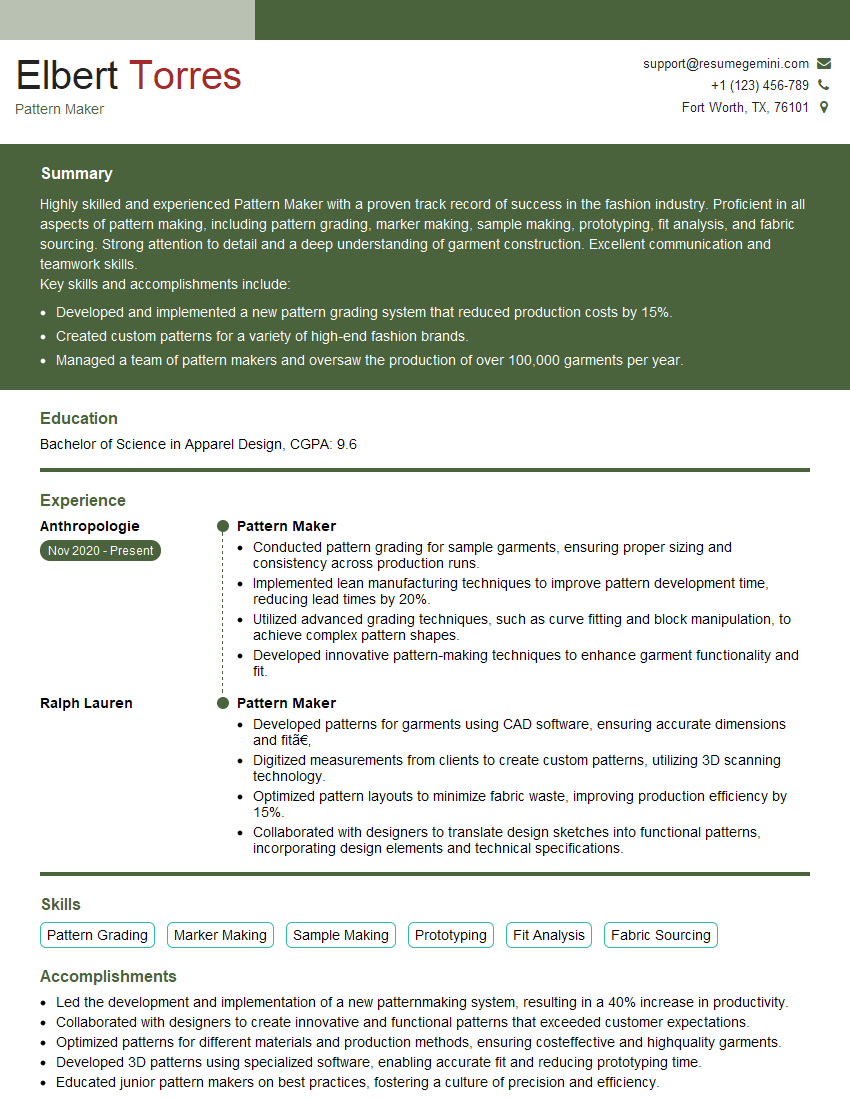
Mastering seam allowance trimming is crucial for career advancement in the garment industry. Precise and efficient trimming directly impacts the quality and professionalism of finished garments, making you a valuable asset to any team. To boost your job prospects, create a compelling and ATS-friendly resume that highlights your skills and experience. ResumeGemini is a trusted resource to help you build a professional resume that stands out. Examples of resumes tailored to Seam Allowance Trimming expertise are available, showcasing how to best present your capabilities to potential employers.







Explore more articles
Users Rating of Our Blogs
Share Your Experience
We value your feedback! Please rate our content and share your thoughts (optional).
What Readers Say About Our Blog
Very informative content, great job.
good