Unlock your full potential by mastering the most common Proficient in piano and organ interview questions. This blog offers a deep dive into the critical topics, ensuring you’re not only prepared to answer but to excel. With these insights, you’ll approach your interview with clarity and confidence.
Questions Asked in Proficient in piano and organ Interview
Q 1. Describe your experience with different organ stop combinations and their tonal effects.
Organ stop combinations are like a painter’s palette, allowing for a vast array of tonal colors. Each stop represents a different rank of pipes, each with its own unique timbre – from the bright, piercing sound of a Trumpet to the mellow, flute-like tones of a Flute stop. My experience encompasses decades of exploring these combinations. For example, combining a 8′ Principal (a foundational stop) with a 4′ Octave (an octave higher) creates a fuller, richer sound than the Principal alone. Adding a 16′ Bourdon (an octave lower) further expands the sound’s depth and power. Conversely, a combination of softer stops like the Flute and the Vox Humana (a stop that mimics the human voice) creates a more intimate and ethereal sound, perfect for accompanying hymns or solo performances. I regularly experiment with different combinations, always seeking to achieve the perfect tonal balance for a given piece and context. Consider the dramatic contrast achievable between a powerful full organ sound, utilizing multiple stops across different registers, and a delicate solo passage played on a single, carefully chosen stop. This nuanced control over tonal palette is critical to effective organ performance.
Q 2. Explain the difference between legato and staccato playing techniques.
Legato and staccato are fundamental playing techniques that affect the articulation and phrasing of music. Legato, meaning ‘tied’ or ‘connected’ in Italian, involves playing notes smoothly and connectedly, with minimal breaks between them. Think of it like a flowing river – each note seamlessly blends into the next. This is achieved through smooth finger movements and a consistent pedaling technique on the piano or appropriate voicing on the organ, particularly when using swell pedals. Staccato, on the other hand, means ‘detached’ in Italian and involves playing notes sharply and distinctly separated. Imagine a series of short, crisp sounds, like the rhythmic ticking of a clock. This is achieved by using short, precise strokes and slightly lifting the fingers after each note, thus resulting in a clear separation between each tone. The contrast between legato and staccato is crucial for expressive playing. A piece entirely in legato might sound monotonous, while an entirely staccato piece could lack warmth and emotional depth. The skillful application of both techniques, transitioning smoothly between them, is key to bringing out the full emotional spectrum of any composition. I often use the metaphor of sculpting sound: legato shapes smooth curves, staccato sharp edges.
Q 3. How do you approach sight-reading challenging piano music?
Sight-reading challenging piano music is a skill honed through consistent practice and a systematic approach. I begin by quickly scanning the piece to assess its overall structure, key, and tempo. Then, I focus on the individual sections, paying close attention to the harmony, rhythm, and melodic contour. I don’t try to play everything perfectly on the first attempt; instead, I focus on accurately reading the notes and rhythms, even if the phrasing and dynamics are not yet ideal. Gradually, I refine my interpretation, adding expression and nuance. Regular practice of sight-reading exercises, ranging in difficulty and style, plays a major role in my ability to navigate even complex pieces effectively. If encountering an exceptionally difficult passage, I might break it down into smaller, manageable sections, focusing on individual hands before combining them. Ultimately, sight-reading is an ongoing process of skill development. It’s about strategic reading and understanding the underlying musical language, rather than just trying to play every note perfectly from the first attempt.
Q 4. What is your experience with various musical styles (e.g., Baroque, Classical, Romantic, Jazz)?
My experience spans a wide range of musical styles. In Baroque music (e.g., Bach), I focus on the clarity of counterpoint and ornamentation, emphasizing the period-specific performance practices. The Classical era (e.g., Mozart, Haydn) demands elegance and balance, with clear phrasing and articulation. Romantic music (e.g., Chopin, Liszt) allows for greater emotional expression and rubato (flexible tempo), demanding a deep understanding of harmonic language. I’ve also explored Jazz piano, focusing on improvisation, swing feel, and blues scales. This broad stylistic experience allows me to bring a versatile approach to any performance setting, adapting my technique and interpretation to match the unique demands of each composer and period. For example, the delicate touch required for a Chopin nocturne contrasts sharply with the powerful chords and rhythmic drive of a jazz improvisation. This adaptability is a crucial aspect of my musicianship.
Q 5. Discuss your proficiency in different musical notations.
I am proficient in various musical notations, including standard Western notation, figured bass, and tablature (for lute, guitar). Standard notation forms the foundation of my reading and writing skills, allowing me to interpret and create music with precision. My understanding of figured bass allows me to realize complex harmonies and improvisational accompaniment for Baroque and Classical pieces. This skill is invaluable for playing continuo on the organ or harpsichord. Familiarity with tablature has broadened my understanding of how different instruments can be represented on paper and provides a greater appreciation for historical performance practices. I can easily adapt between these different notations, ensuring that my understanding and mastery are both comprehensive and precise. It is an ability that has proved essential in my musical career.
Q 6. Describe your approach to practicing and memorizing complex musical pieces.
Memorizing and practicing complex musical pieces is a methodical process. I begin by carefully studying the score, understanding the overall structure and harmonic progressions. Then, I break down the piece into smaller, manageable sections, focusing on mastering each section before moving on to the next. This process might involve slow practice to improve accuracy, as well as practicing sections individually for technical mastery before integrating them. I also use techniques like chunking, where I divide the music into small meaningful phrases, creating a stronger sense of musical coherence. Rote repetition is not my sole approach; I vary the practice, focusing on different aspects of the music, such as dynamics, articulation, and phrasing. Regular review of previously mastered sections maintains fluency. Eventually, the piece comes together organically. Furthermore, I find that actively listening to recordings of my practiced pieces enhances my memorization and performance.
Q 7. How do you handle performance anxiety?
Performance anxiety is a common challenge for musicians. My approach involves a combination of preparation, mental strategies, and experience. Thorough preparation is crucial; the more confident I am in my technical mastery of the piece, the less anxious I feel. This includes ample practice, attention to detail, and familiarity with performance spaces. Mentally, I utilize relaxation techniques such as deep breathing and mindfulness to calm my nerves before a performance. Visualization, mentally rehearsing the performance, also helps to reduce anxiety. With experience, I have learned to channel nervous energy into a focused and energized performance. In fact, a certain level of excitement can enhance the experience and improve my delivery. Ultimately, consistent performance experience is the best way to manage performance anxiety. Each performance is a learning experience that allows me to further refine my ability to manage stress and deliver successful performances.
Q 8. Explain your understanding of music theory, including scales, chords, and harmony.
Music theory is the foundation of musical understanding. It encompasses various elements that dictate how music is composed, performed, and perceived. Let’s delve into scales, chords, and harmony:
Scales: Scales are ordered sets of notes, forming the basis for melodies and harmonies. Major scales, like C major (C-D-E-F-G-A-B-C), have a characteristic bright and uplifting sound due to their specific intervals (the distances between notes). Minor scales, such as A minor (A-B-C-D-E-F-G-A), tend to sound more somber or reflective. Understanding scales is crucial for writing melodies that are pleasing to the ear and for understanding key signatures.
Chords: Chords are combinations of three or more notes played simultaneously. They add harmonic richness to music. A simple example is a C major chord, comprised of C, E, and G. Different chord types (major, minor, diminished, augmented) possess distinct qualities, influencing the emotional impact of the music. Chord progressions, the sequences of chords, form the harmonic structure of a piece. For example, a common progression is I-IV-V-I (in C major, this would be C-F-G-C).
Harmony: Harmony refers to the simultaneous combination of sounds, primarily chords, creating a sense of consonance (pleasantness) or dissonance (tension) within a composition. Understanding harmonic function—how chords relate to each other within a key—is vital for creating meaningful and compelling musical structures. For instance, the V chord (dominant) often creates a strong pull towards the I chord (tonic), resolving the tension and providing a sense of closure.
- Example: In a Bach prelude, the intricate harmonic progressions create a tapestry of sound, skillfully using dissonance to heighten dramatic effect before resolving to consonance.
Q 9. How do you maintain and care for a piano or organ?
Maintaining a piano or organ requires regular care. For a piano, this includes:
- Tuning: Regular tuning (at least once a year, ideally twice) is crucial to maintain pitch accuracy. A professional piano technician uses specialized tools to adjust the tension of the strings.
- Cleaning: Dusting the keys and the case regularly prevents the buildup of dirt, which can affect the mechanism’s performance. A soft cloth is ideal. Avoid harsh chemicals.
- Regulation: This involves adjusting the action—the mechanical parts that connect the keys to the hammers—to ensure consistent touch and response. A technician performs this more complex task.
- Humidity Control: Maintaining stable humidity levels prevents the soundboard from cracking or warping. A humidifier or dehumidifier might be necessary, depending on your climate.
Organ maintenance varies depending on the type of organ (pipe organ or electronic). Pipe organs require meticulous care of the pipes, wind system, and bellows. Electronic organs may need periodic cleaning and servicing of the electronic components. Professional servicing for both is usually annual, and may include adjustments to voicing.
Q 10. Explain your experience with improvising on the piano or organ.
Improvisation is a vital skill for both piano and organ. It involves creating music spontaneously, drawing upon your understanding of music theory and your stylistic knowledge. My improvisation often involves:
- Harmonic Exploration: Building chord progressions based on the underlying harmony of a piece or creating original harmonic structures.
- Motivic Development: Taking a short melodic idea and developing it through variation, repetition, and sequencing.
- Rhythmic Variation: Exploring different rhythmic patterns to add interest and dynamism.
- Dynamic Control: Using dynamics (volume changes) to create contrast and shape the musical narrative.
- Stylistic Choice: Adapting my improvisation to fit the chosen style, whether it’s jazz, classical, gospel, or something more contemporary.
Example: During a church service, I might improvise a prelude based on a hymn, weaving in elements of the hymn melody and developing its harmonies into a more elaborate musical texture.
Q 11. How would you teach a beginner piano student?
Teaching a beginner requires patience and a structured approach. I would begin with:
- Posture and Hand Position: Correct posture and hand position are essential for efficient playing and to prevent strain.
- Basic Music Notation: Introducing the musical staff, notes, and rests.
- Finger Numbers and Exercises: Simple finger exercises help develop dexterity and coordination.
- Simple Melodies: Starting with simple melodies, like “Mary Had a Little Lamb”, to build confidence and familiarize students with reading music and playing notes.
- Rhythm and Time Signatures: Grasping rhythm and understanding different time signatures (4/4, 3/4, etc.) is fundamental.
- Theory Fundamentals: Introducing basic music theory concepts like scales, chords, and intervals in a simple and engaging manner.
- Repertoire: Gradually introducing a variety of pieces that engage and inspire the student.
- Performance Opportunities: Encouraging performance at appropriate times to build confidence and showcase progress.
I believe in a supportive and encouraging learning environment where mistakes are viewed as opportunities for learning.
Q 12. What is your approach to working with a choir or ensemble?
Working with a choir or ensemble requires collaborative leadership, detailed preparation, and effective communication. My approach involves:
- Understanding the Repertoire: Thoroughly analyzing the chosen music, identifying its stylistic elements, and understanding the challenges it poses for singers or instrumentalists.
- Clear Communication: Providing clear instructions and constructive feedback to the ensemble.
- Dynamic Rehearsal: Designing rehearsals that are engaging and productive, focusing on both individual and ensemble technique. I balance focused work on challenging sections with opportunities for the group to develop a cohesive performance style.
- Balancing Individual Needs and Ensemble Goals: Addressing individual needs while maintaining a clear vision of the overall sound and musical interpretation.
- Collaboration: Encouraging discussion and collaboration within the group to help them actively participate in shaping the final interpretation.
Q 13. Describe your experience with accompanying singers or instrumentalists.
Accompanying singers or instrumentalists requires sensitivity, responsiveness, and a deep understanding of musical phrasing and dynamics. My experience includes accompanying soloists in various settings, from recitals to orchestral collaborations. I carefully study the score of the soloist, identifying key moments that require support, emphasizing the musical narrative rather than distracting from the soloist. My approach involves:
- Careful Listening: Paying close attention to the nuances of the soloist’s performance and adapting accordingly.
- Dynamic Balance: Maintaining a supportive balance in volume with the soloist, ensuring neither overpowers the other.
- Phrasing and Rhythm: Maintaining consistent rhythmic support, providing a solid foundation that allows the soloist freedom to interpret the melody.
- Communicating Effectively: Communicating with the soloist before the performance to establish shared interpretative goals.
Q 14. How do you adapt your playing style to different performance settings?
Adapting my playing style to different settings involves considering factors such as acoustics, audience, and the overall musical context.
- Acoustics: A large concert hall requires a fuller and more powerful tone than a smaller recital space. I adjust my touch and dynamics to compensate for the acoustics of the venue.
- Audience: The audience’s expectations, age, and familiarity with the repertoire influence my performance choices. A classical concert calls for a different approach than a jazz club performance.
- Musical Context: My style adapts depending on the type of music being performed, such as Baroque, Romantic, or contemporary. Each style has particular stylistic features.
- Instrumentation: I adjust my playing style depending on whether I am playing on a piano or an organ. The organ has different capabilities and requires a unique approach to registration (selecting different stops or sounds).
Example: When playing a Romantic concerto with an orchestra, I would project a larger sound, focusing on lyrical phrasing and romantic expression. However, performing a Baroque sonata would require a lighter touch and a clearer articulation to bring out the detail and ornamentation.
Q 15. What software or technology do you use for music creation or editing?
For music creation and editing, I utilize a suite of software tailored to my needs as a pianist and organist. My primary tools include Digital Audio Workstations (DAWs) like Logic Pro X and Steinberg Cubase. These allow for multi-track recording, MIDI sequencing, and advanced editing capabilities. I also frequently use notation software such as Sibelius and Finale for composing, arranging, and creating accurate scores. For specific organ sounds, I often utilize virtual instrument plugins like Hauptwerk, which emulates the sounds of historical pipe organs with impressive realism, allowing me to experiment with different organ stops and voicings digitally before applying them to a physical instrument. Finally, I frequently use audio editing software like Audacity for simple tasks such as cleaning up recordings or applying basic effects.
Career Expert Tips:
- Ace those interviews! Prepare effectively by reviewing the Top 50 Most Common Interview Questions on ResumeGemini.
- Navigate your job search with confidence! Explore a wide range of Career Tips on ResumeGemini. Learn about common challenges and recommendations to overcome them.
- Craft the perfect resume! Master the Art of Resume Writing with ResumeGemini’s guide. Showcase your unique qualifications and achievements effectively.
- Don’t miss out on holiday savings! Build your dream resume with ResumeGemini’s ATS optimized templates.
Q 16. How do you troubleshoot technical issues with a piano or organ?
Troubleshooting technical issues with pianos and organs requires a systematic approach. With a piano, common problems include tuning issues, sticking keys, or noise from the action. I start by visually inspecting the instrument for any obvious problems. For tuning, I use a digital tuning device and systematically adjust each string. Sticking keys often require cleaning or lubricating the key mechanisms. Noise can be traced to loose parts, needing tightening or replacement. Organ troubleshooting is more complex, varying widely based on the type of action. With tracker actions (mechanical), I might check for worn-out trackers, sticking valves, or air leaks. Pneumatic actions (using compressed air) may require inspection of bellows, valves, and air pressure regulation. Electrical actions often involve tracing wiring, checking for faulty relays or transistors, and testing the power supply. In each case, careful examination, testing individual components, and a solid understanding of the instrument’s mechanics are key to efficient troubleshooting. I always prioritize safety, especially when dealing with electrical components.
Q 17. Explain your familiarity with different types of organ actions (e.g., tracker, pneumatic, electric).
My familiarity with different organ actions extends to the three primary types: tracker, pneumatic, and electric. Tracker actions are entirely mechanical, using a system of wooden trackers to transmit the key press to the windchests and pipes. They offer a direct, tactile feel and are prized for their responsiveness and the subtle nuances they allow. Pneumatic actions utilize compressed air to transmit the key press. This allows for larger instruments and more complex stop actions, but they are more prone to leaks and require regular maintenance. Electric actions use electrical signals to control the pipes, offering advantages in terms of flexibility, programming options, and precise control of stops and combinations. I’ve had extensive experience playing and working on instruments with all three types of actions, understanding their unique characteristics, strengths, and weaknesses. This breadth of experience allows me to adapt my playing style and approach to any instrument I encounter.
Q 18. Discuss your experience with tuning or voicing an organ.
Tuning and voicing an organ is a specialized skill demanding both technical expertise and artistic sensibility. Tuning involves adjusting the pitch of each pipe to achieve the correct intonation. This is a meticulous process requiring precision and a good ear. Voicing, on the other hand, is the art of shaping the tonal qualities of each pipe. It involves adjusting the pipes’ mouths, resonators, and other components to achieve the desired tone color, volume, and responsiveness. I have experience voicing pipes using traditional techniques, including careful adjustment of voicing tools and meticulous listening. This includes understanding the relationship between voicing and the overall tonal palette of the organ. I also utilize modern techniques, integrating digital measurement tools to assist in ensuring precision. The interplay between tuning and voicing is critical, ensuring the instrument’s overall balance and aesthetic quality.
Q 19. How do you interpret musical scores accurately?
Accurate interpretation of musical scores is fundamental to my work. My process begins with a thorough reading of the score, analyzing the composer’s style, form, and dynamics. I pay close attention to articulation markings, phrasing, and tempo indications. I consider the historical context and the intended instrument to inform my interpretation. For example, I might consider the performance practice of the Baroque era when interpreting a Bach organ work versus a more modern Romantic piece. I also consider the musical context within the piece as a whole, understanding the development and flow of ideas. After this analytical phase, I translate this understanding into a performance, paying close attention to voicing choices, registration, and dynamics to enhance the musical expression and communicate the composer’s intentions effectively to the audience.
Q 20. What is your process for selecting repertoire for a recital or concert?
Selecting repertoire for a recital or concert involves careful consideration of several factors. Firstly, I consider the venue and the instrument available. A large church organ requires different repertoire than a smaller chamber organ. The audience is also crucial. I tailor the program to their tastes and expectations while still showcasing my skills and artistic vision. I strive to create a balanced and cohesive program that flows naturally from one piece to the next, offering variety in style, period, and emotional impact. I aim to tell a story through the chosen pieces, creating a journey for the listener. Finally, I select works that I am passionate about and that present me with both artistic and technical challenges, ensuring a rewarding and stimulating performance experience for both myself and my audience.
Q 21. Describe your experience with composing or arranging music.
My experience in composing and arranging music has primarily focused on enhancing existing pieces or creating new works tailored to specific instruments. I have arranged several piano pieces for organ, requiring careful consideration of the organ’s unique sonic capabilities and its limitations compared to the piano. This often involves adapting the range, texture, and harmonic structure to suit the instrument. In terms of original composition, I’ve primarily worked on smaller-scale pieces—primarily preludes, interludes, and short character pieces. This process often starts with a melodic idea or harmonic progression that sparks my inspiration. I then develop this idea, considering form, structure, and harmony. I find digital notation software helpful in this process, enabling me to quickly experiment with different ideas before committing to a final version. I frequently seek feedback from colleagues and mentors during the composing process, incorporating constructive criticism to refine and improve my work.
Q 22. How do you collaborate effectively with other musicians?
Effective collaboration with other musicians hinges on clear communication, mutual respect, and a shared artistic vision. It’s about more than just playing the notes; it’s about creating a cohesive musical experience.
- Active Listening: I prioritize actively listening to my fellow musicians, understanding their interpretations, and adapting my own playing to complement their style. This involves being sensitive to nuances in dynamics, phrasing, and articulation.
- Open Communication: Open and honest communication is vital. Before rehearsals, I discuss my interpretation of the piece and any specific challenges I foresee. This proactive approach prevents misunderstandings and ensures a unified performance.
- Compromise and Flexibility: Collaboration involves compromise. There will be times when I need to adjust my own approach to better fit the ensemble’s overall sound. Flexibility and a willingness to experiment are crucial for finding the best collective expression.
- Respectful Feedback: Offering and receiving constructive criticism is essential. I approach feedback with respect and aim to provide thoughtful suggestions while remaining open to suggestions from others. This collaborative feedback loop ensures that the performance evolves organically.
For instance, during a recent performance of a Bach Brandenburg Concerto, I worked closely with the violinist to ensure our cadenzas blended seamlessly. We spent time discussing our individual interpretations and found common ground in our phrasing, creating a unified and powerful musical statement.
Q 23. How do you manage your time effectively when preparing for multiple performances?
Managing time effectively when preparing for multiple performances requires meticulous planning and prioritization. It’s like running a well-oiled machine, with each component working in harmony.
- Detailed Schedule: I create a detailed schedule that outlines rehearsal times for each piece, considering both individual practice and ensemble rehearsals. I break down complex pieces into smaller, manageable sections, dedicating specific practice time to each.
- Prioritization: I prioritize tasks based on their urgency and importance. Performances that are closer tend to get more immediate attention. However, I ensure that even the more distant performances receive consistent attention, preventing last-minute rushes.
- Time Blocking: I allocate specific blocks of time for focused practice. This minimizes distractions and allows me to enter a state of flow where I can achieve maximum efficiency. I also incorporate breaks to prevent burnout.
- Rehearsal Strategies: I utilize effective rehearsal techniques such as cyclical practice (rehearsing challenging sections repeatedly), focused listening (carefully examining each part within the music), and recording sessions (identifying areas that require improvement).
For example, when preparing for a recital and accompanying a choral group, I might dedicate Monday to solo piano practice, Tuesday to choral rehearsal, Wednesday to both, and so on, ensuring a balanced approach.
Q 24. Describe a challenging musical piece you have mastered and how you overcame the challenges.
Mastering Bach’s Toccata and Fugue in D minor for organ presented a significant challenge. The sheer technical demands, coupled with its emotional depth, required persistent effort and a multifaceted approach.
- Technical Mastery: The piece demands exceptional dexterity and stamina. I overcame this by breaking down the complex passages into smaller, manageable sections, practicing each hand separately before combining them. Slow, deliberate practice was crucial in achieving accuracy and fluency.
- Musical Interpretation: Understanding the emotional arc of the piece was equally crucial. I researched various interpretations and explored the historical context, paying close attention to dynamics, articulation, and voicing to convey the intended emotional impact.
- Problem-Solving: I encountered several technical hurdles, particularly in the fugue’s intricate counterpoint. I addressed these by analyzing the score meticulously, identifying problematic sections, and devising targeted practice strategies, using recordings and consultations with colleagues to gain fresh insights.
- Persistence and Patience: Mastering this piece required significant patience and persistence. There were moments of frustration, but I focused on consistent progress rather than perfection, celebrating small victories along the way.
The reward of finally performing the Toccata and Fugue with confidence and artistry was immensely satisfying and demonstrated the value of perseverance and meticulous preparation.
Q 25. Explain your understanding of musical form and structure.
Musical form and structure provide the blueprint for a musical composition, guiding the listener through a coherent and engaging musical journey. They are like the architectural design of a musical building.
- Binary Form (AB): A simple structure with two contrasting sections (A and B), often repeated (AABB). Think of a simple folk song with a verse and chorus.
- Ternary Form (ABA): A three-part structure where the first section (A) is repeated after a contrasting middle section (B). Many classical pieces employ this structure for its satisfying return to the main theme.
- Rondo Form (ABACA): A structure featuring a recurring main theme (A) interspersed with contrasting episodes (B, C, etc.). Think of the playful repetition in a Mozart piano sonata.
- Sonata Form (Exposition-Development-Recapitulation): A more complex structure used in many classical sonatas and symphonies, with a clear presentation of themes, their development, and eventual return. Beethoven’s sonatas are classic examples.
- Theme and Variations: A structure where a single theme is presented repeatedly, each time with variations in melody, harmony, or rhythm. This allows for exploration of a single musical idea.
Understanding musical form allows me to anticipate the composer’s intentions and to create a performance that reflects that structure effectively. I can guide the listener through the piece’s narrative arc and highlight the crucial moments within each section.
Q 26. What are your strengths and weaknesses as a musician?
As a musician, I possess several strengths and weaknesses, and constant self-assessment is key to my improvement.
- Strengths: I possess a strong technical foundation on both piano and organ, a deep understanding of musical theory, and an ability to connect with audiences on an emotional level. My ability to adapt quickly and collaborate effectively are also significant assets.
- Weaknesses: While I excel at detailed preparation, I sometimes struggle to improvise spontaneously. I am also working on improving my marketing and self-promotion skills to reach a broader audience.
I actively address my weaknesses by taking improvisation workshops and seeking feedback on my performance strategies. Continuous self-reflection and targeted practice are helping me to refine my skills and overcome these challenges.
Q 27. How do you stay current with the latest developments in music?
Staying current with the latest developments in music is a continuous process. I view it as a vital aspect of professional growth.
- Attending Concerts and Recitals: I regularly attend live performances, both local and international, to experience a wide range of musical styles and approaches.
- Reading Musical Journals and Publications: I subscribe to leading music magazines and journals to keep abreast of new compositions, performance trends, and scholarly research.
- Online Resources and Streaming Services: I utilize online platforms and streaming services to discover new artists, explore different genres, and access recordings of significant historical performances.
- Networking with Colleagues: Engaging in discussions and exchanges of ideas with fellow musicians provides valuable insights into current trends and innovations.
For example, recently attending a conference on contemporary organ music introduced me to several exciting composers and their innovative approaches to organ composition, expanding my repertoire and artistic horizons.
Q 28. Describe your long-term career goals in music.
My long-term career goals involve a multifaceted approach to musical engagement.
- Performance: I aspire to continue performing regularly as a solo and collaborative artist, expanding my repertoire and reaching wider audiences.
- Teaching: I am passionate about sharing my knowledge and experience with aspiring musicians. I plan to pursue teaching opportunities at both the collegiate and private levels.
- Composition: I would like to explore my creative side by composing original works for piano and organ, and possibly collaborate with other musicians on larger-scale projects.
- Community Engagement: I wish to contribute to the wider music community through outreach programs, workshops, and collaborations with local organizations.
Ultimately, my goal is to make a meaningful contribution to the world of music through performance, education, and artistic creation, impacting both the musical landscape and the lives of individuals who encounter my music.
Key Topics to Learn for Proficient in Piano and Organ Interview
- Musical Theory: Demonstrate a thorough understanding of music theory including scales, chords, harmony, counterpoint, and musical form. Be prepared to discuss these concepts in relation to both piano and organ performance.
- Performance Techniques: Articulate your proficiency in various performance techniques specific to both instruments. This includes fingering, pedaling (for both piano and organ), registration (organ), phrasing, dynamics, and articulation.
- Repertoire and Interpretation: Discuss your experience with a wide range of musical styles and composers. Be prepared to discuss your interpretive choices and the technical challenges you’ve overcome in performing specific pieces. Show your understanding of stylistic periods and performance practices.
- Improvisation: Showcase your improvisational skills on both piano and organ, demonstrating your understanding of harmony, rhythm, and melodic development. Be ready to discuss your approach to improvisation.
- Sight-Reading: Highlight your ability to sight-read accurately and expressively on both instruments. Be prepared to discuss strategies for efficient and effective sight-reading.
- Ensemble Playing: If applicable, discuss your experience playing in ensembles, highlighting your collaborative skills and your understanding of ensemble balance and dynamics.
- Maintenance and Care: Demonstrate an understanding of the maintenance and care required for both pianos and organs. This could include basic tuning knowledge or awareness of common issues.
- Teaching Experience (if applicable): If you have teaching experience, be ready to discuss your pedagogical approach and your successes in teaching piano or organ.
Next Steps
Mastering proficiency in piano and organ opens doors to diverse and rewarding careers, from performance and teaching to music therapy and composition. A strong resume is crucial for showcasing your skills and experience to potential employers. To increase your chances of landing your dream job, focus on building an ATS-friendly resume that effectively highlights your unique qualifications. ResumeGemini is a trusted resource for crafting compelling and effective resumes. Utilize their tools and resources to build a professional resume that stands out. Examples of resumes tailored to showcasing proficiency in piano and organ are available within ResumeGemini to help guide you.
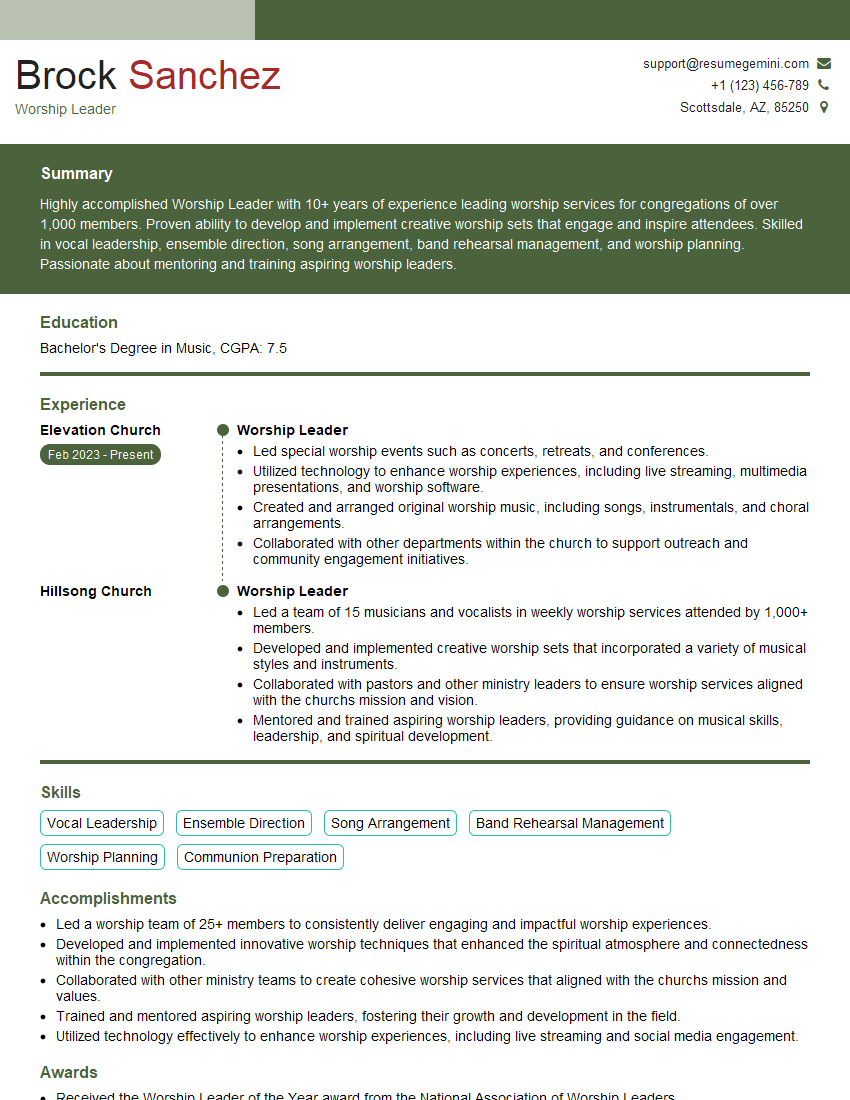
Worship Leader Resume Sample
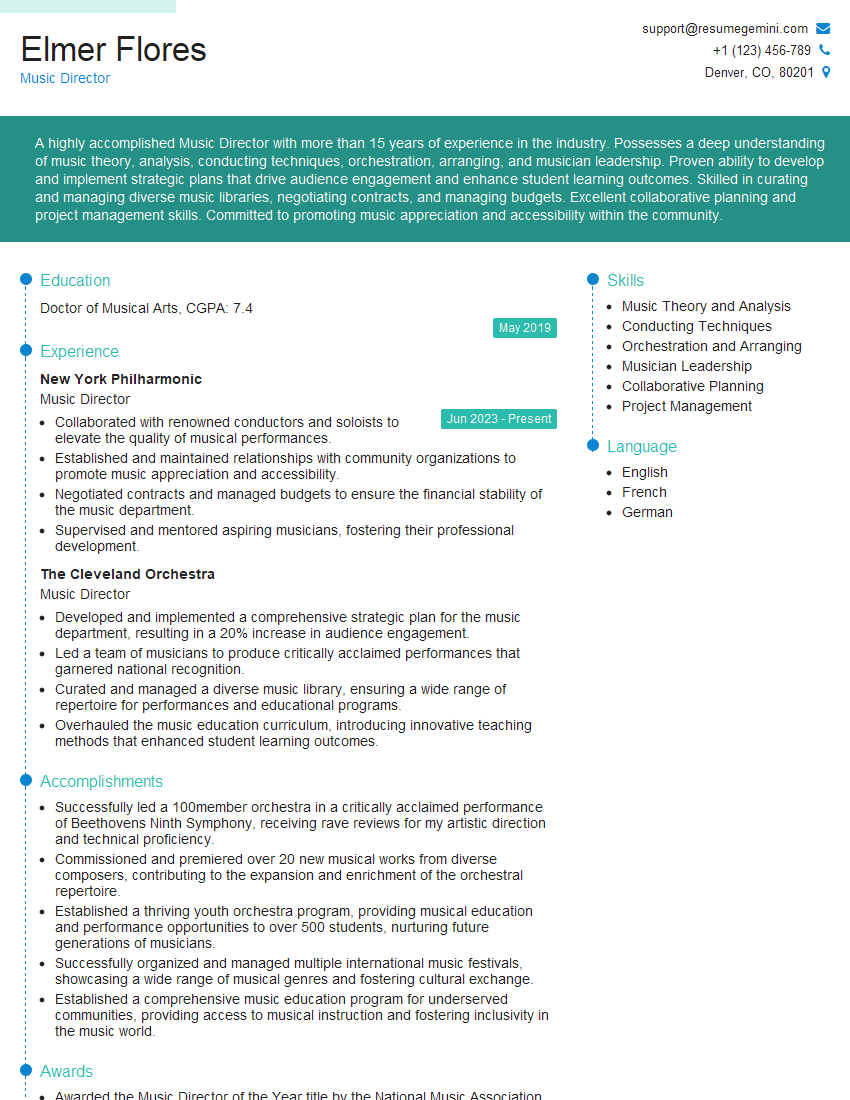
Music Director Resume Sample
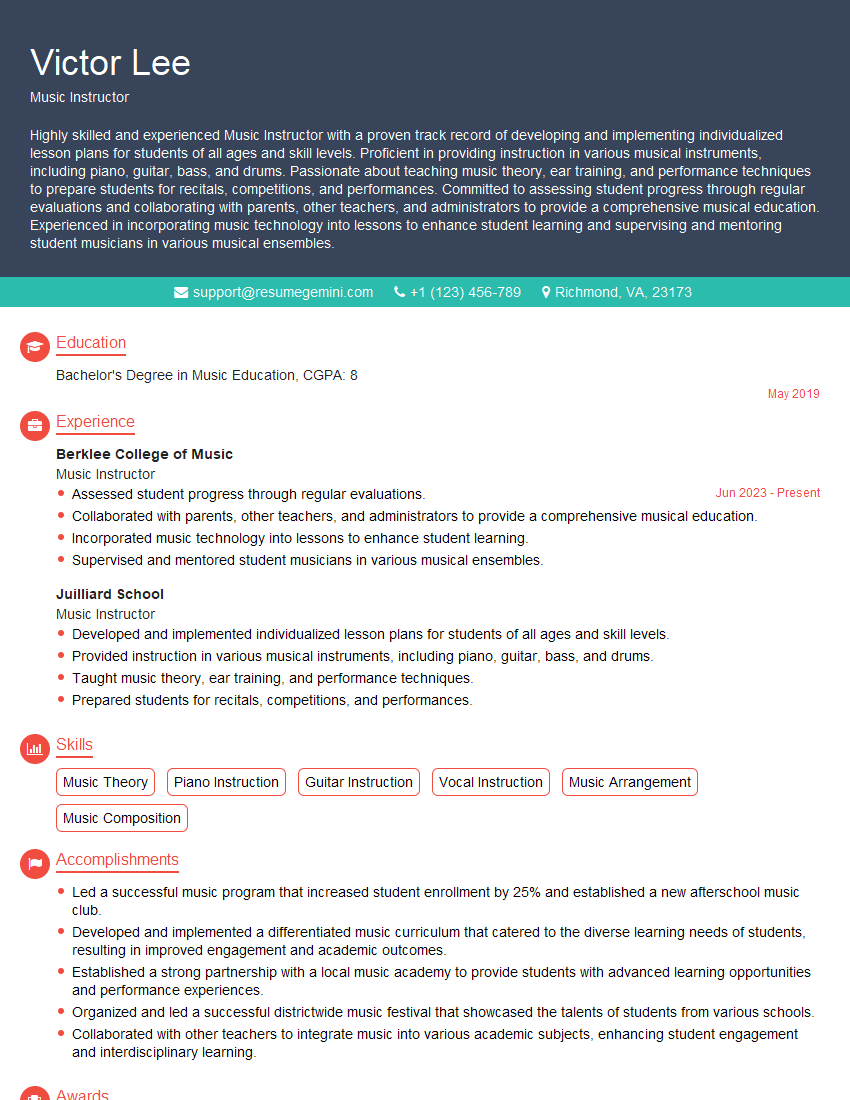
Music Instructor Resume Sample
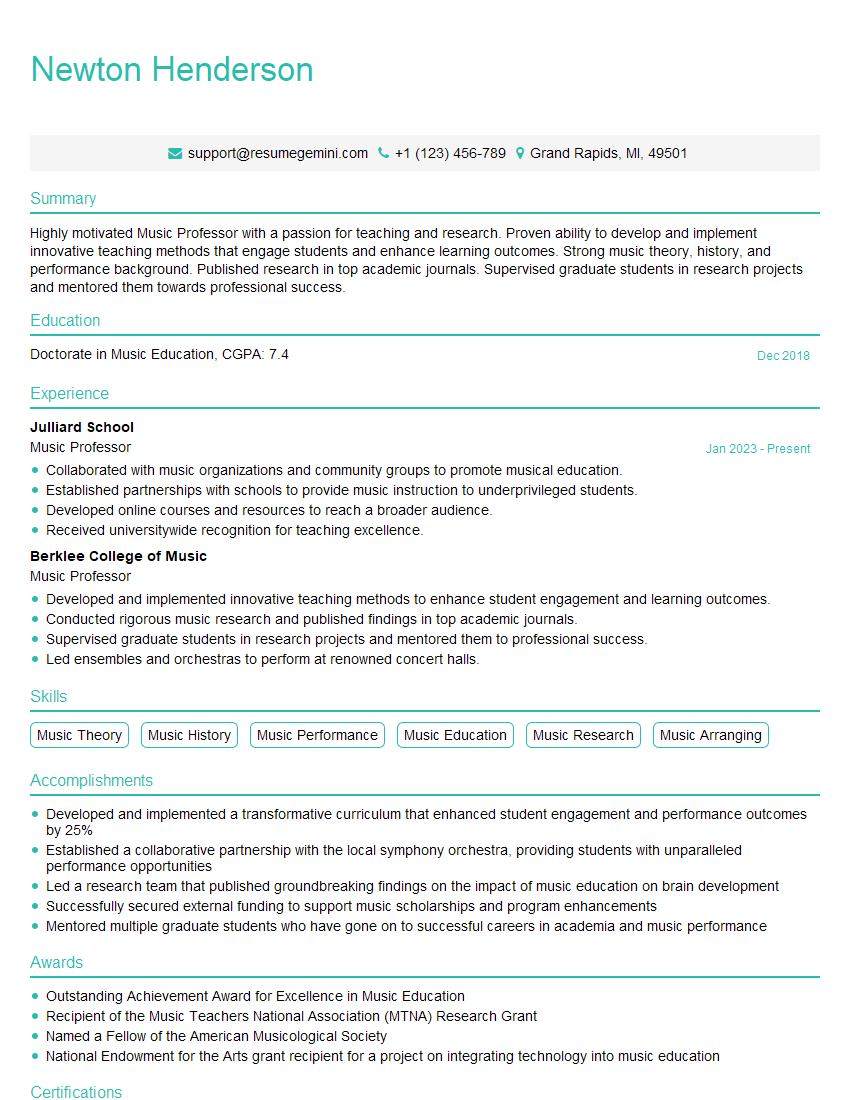
Music Professor Resume Sample
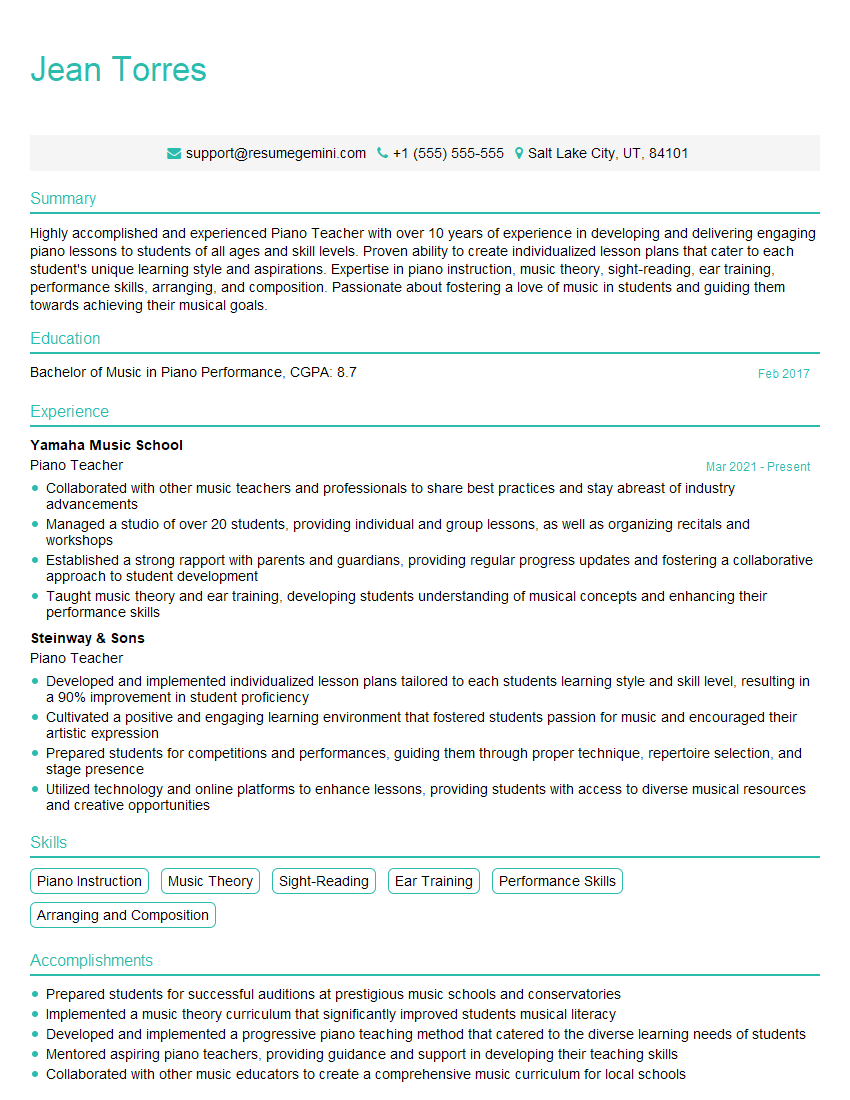
Piano Teacher Resume Sample
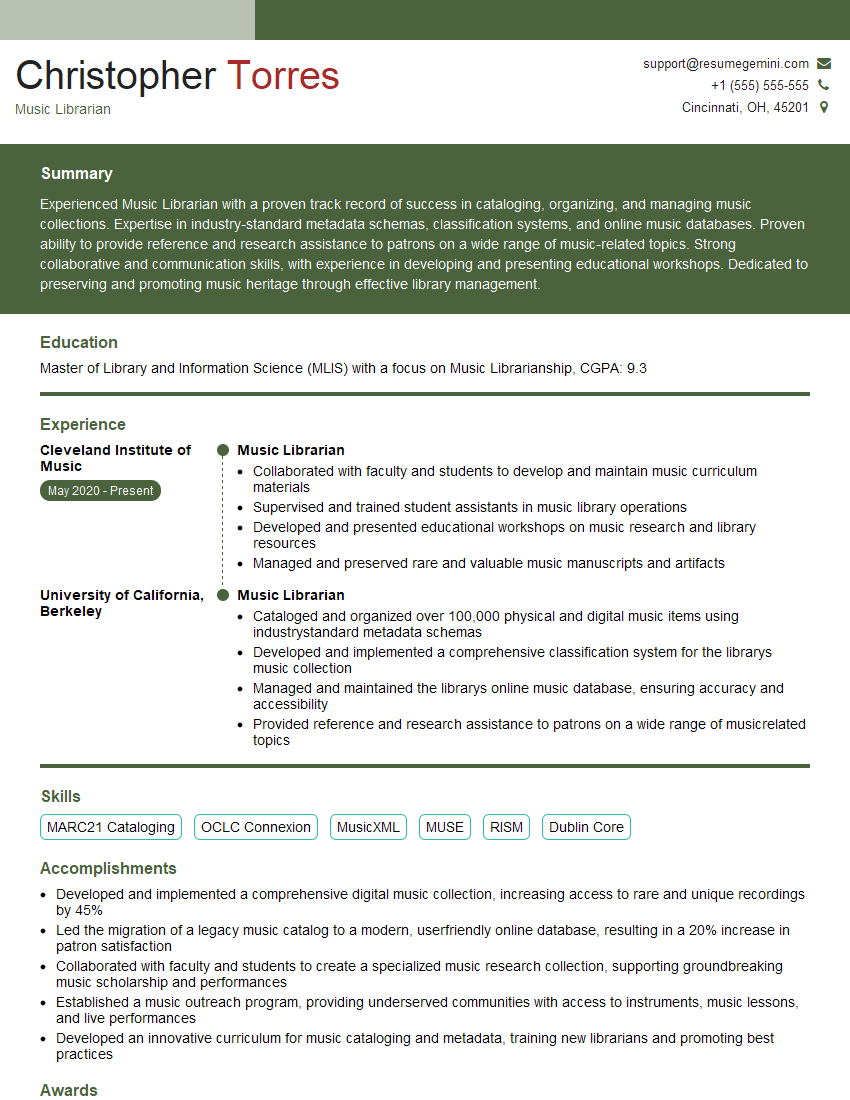
Music Librarian Resume Sample
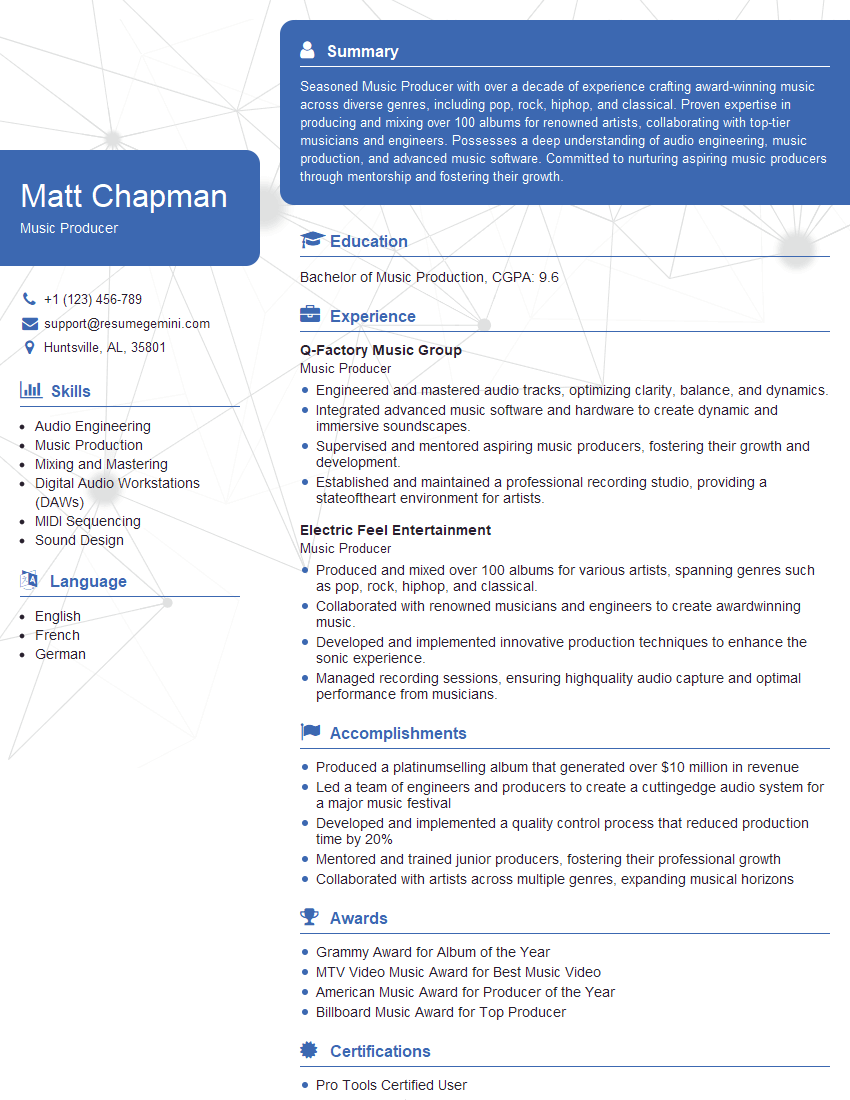
Music Producer Resume Sample
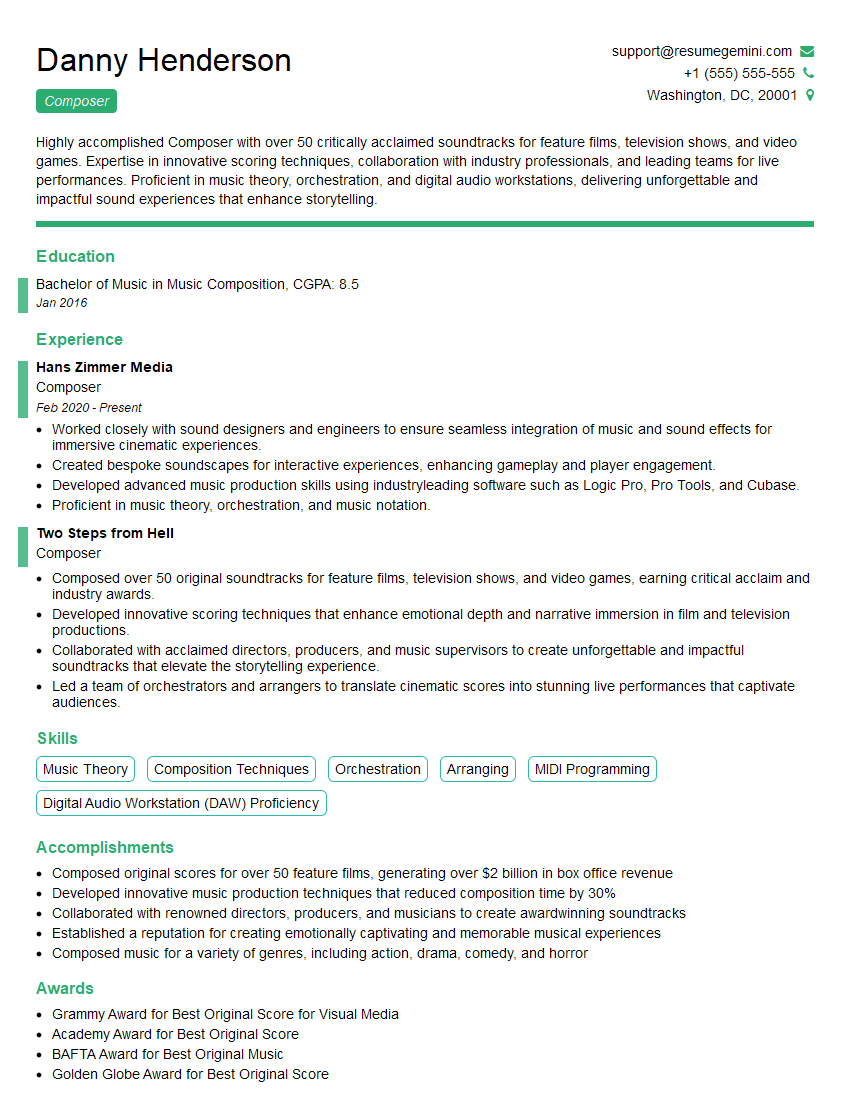
Composer Resume Sample
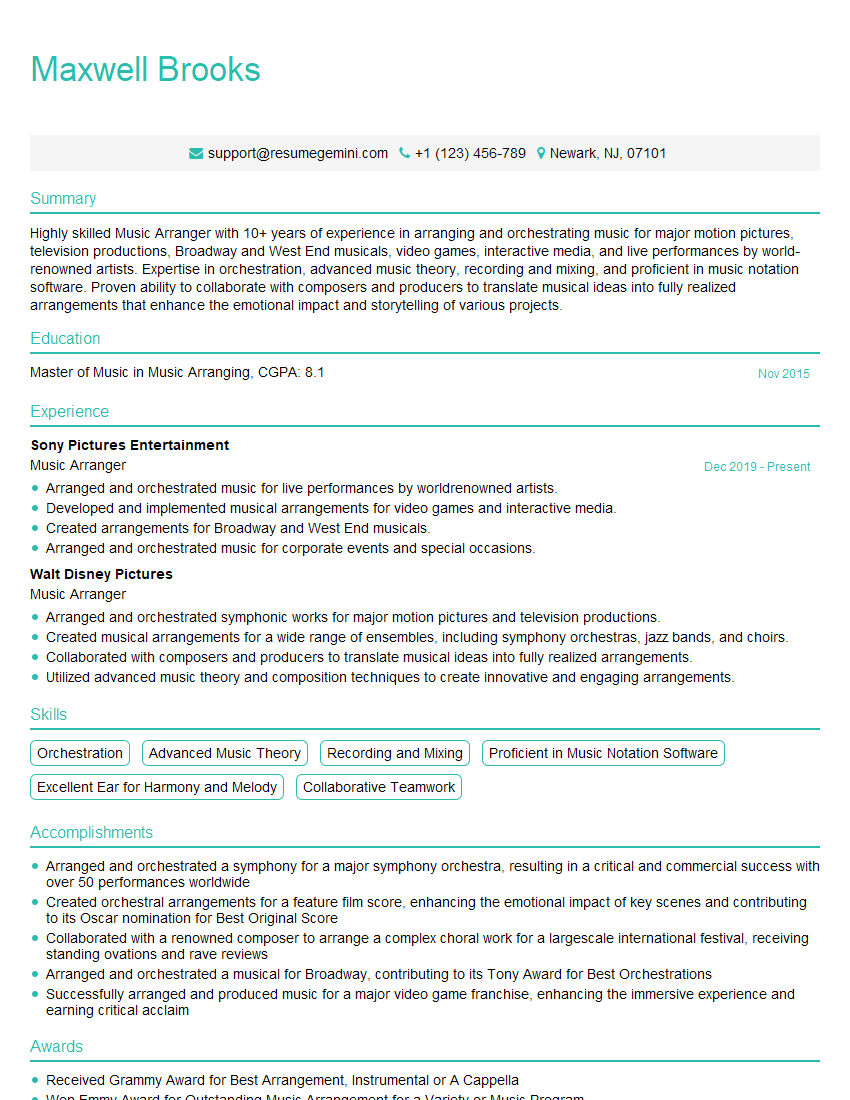
Music Arranger Resume Sample
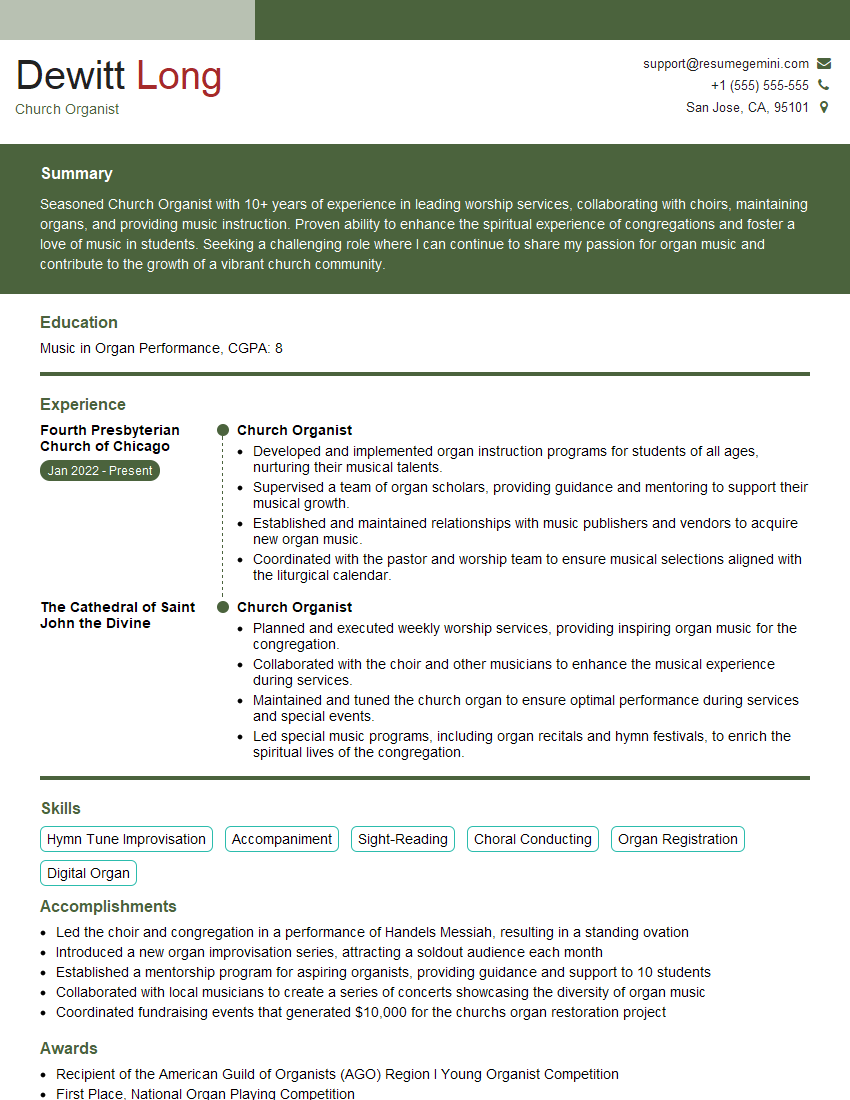
Church Organist Resume Sample
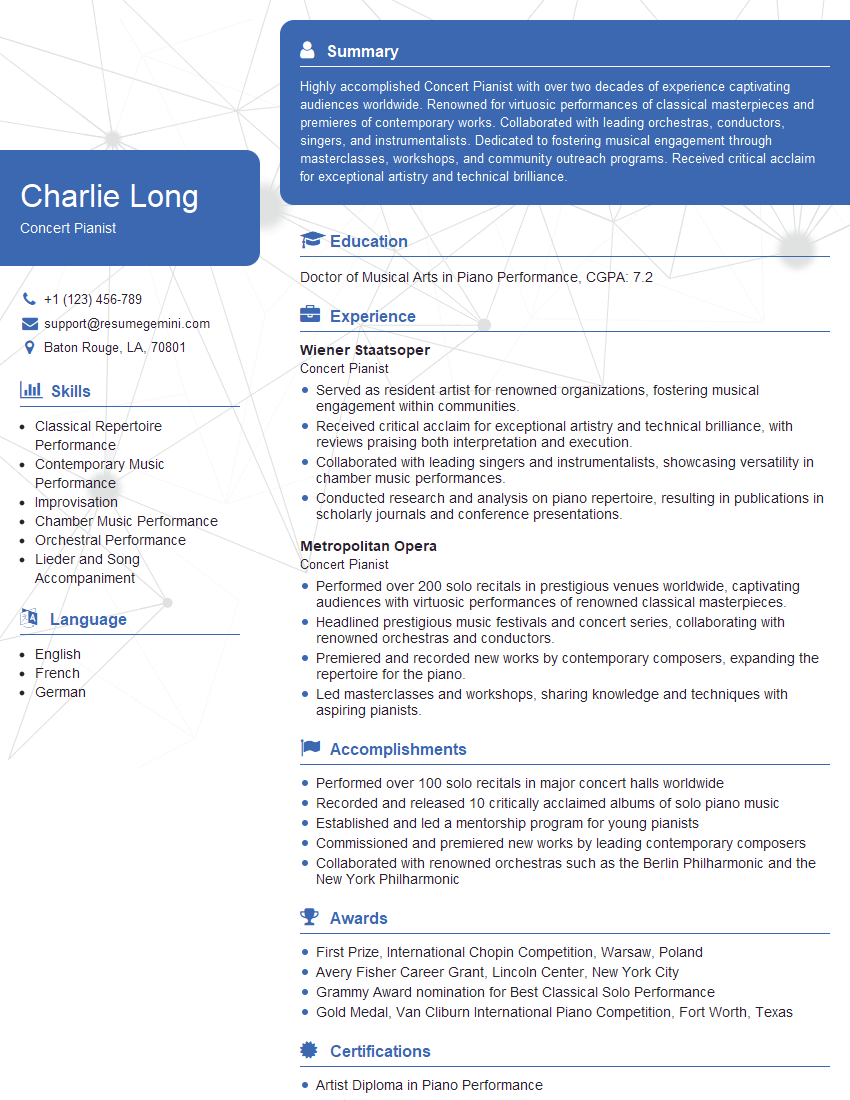
Concert Pianist Resume Sample
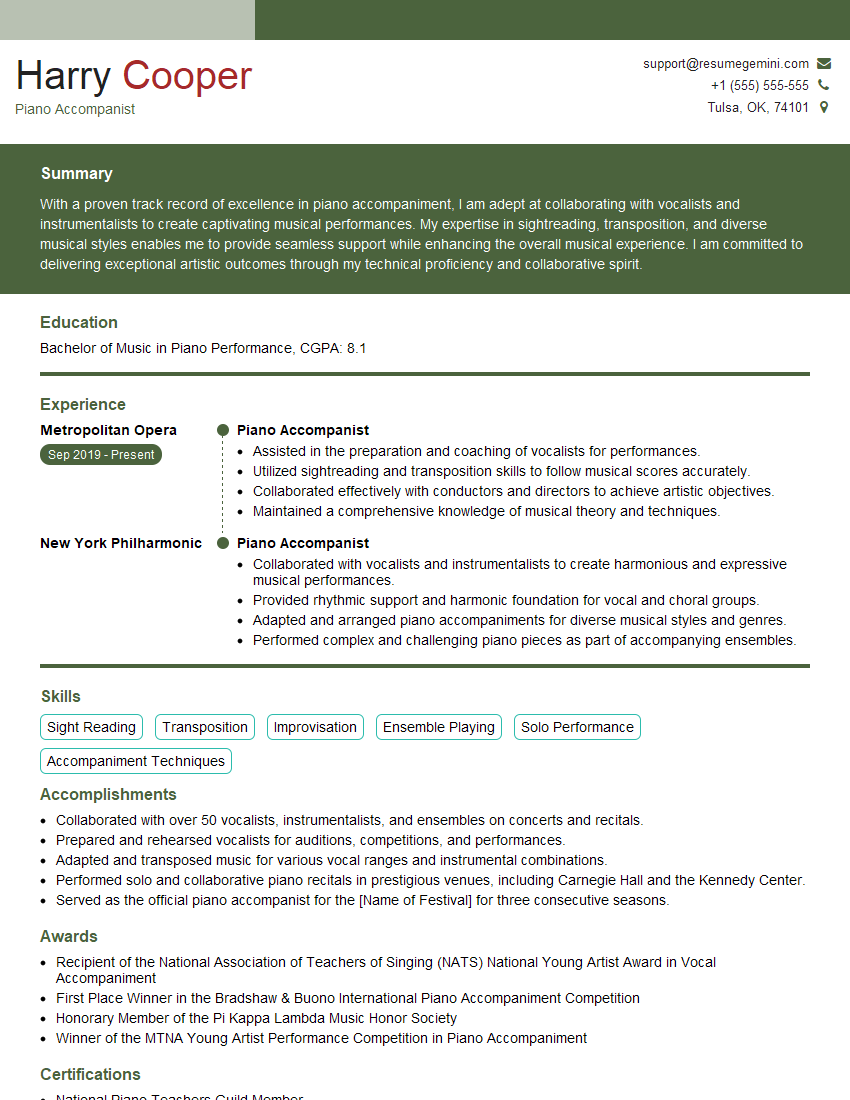
Piano Accompanist Resume Sample
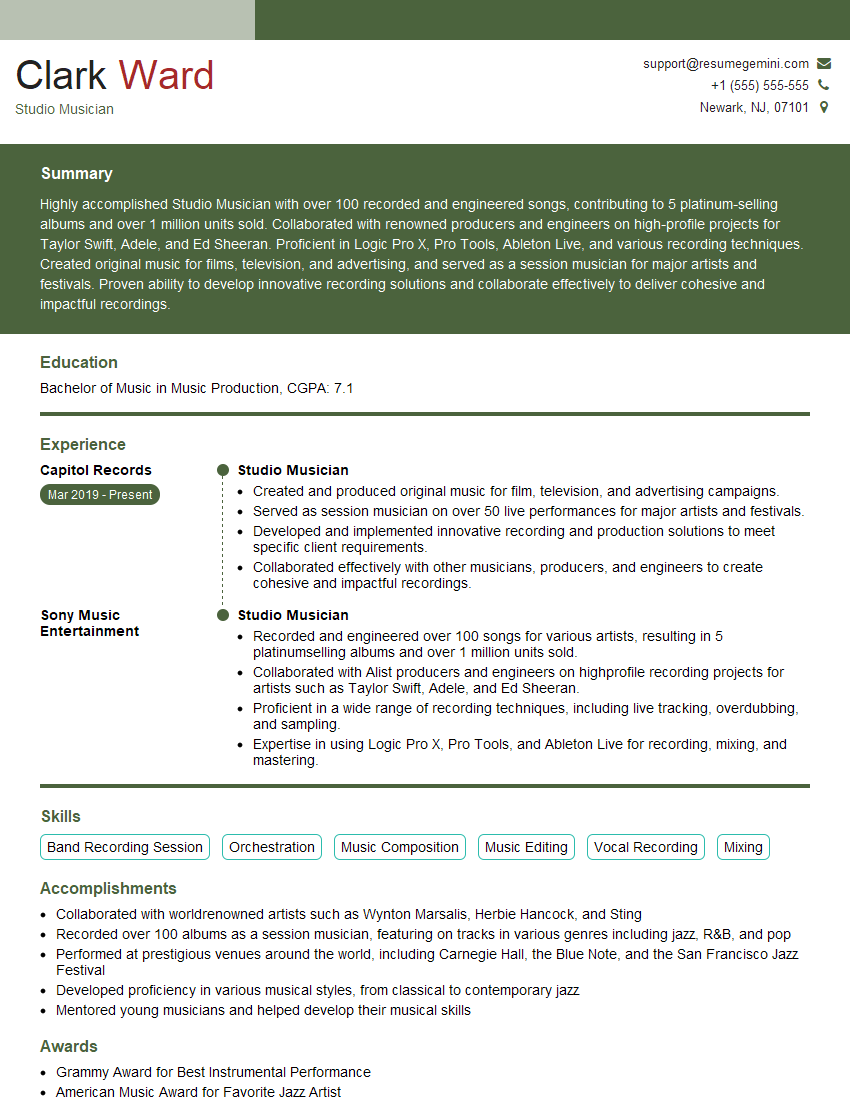
Studio Musician Resume Sample
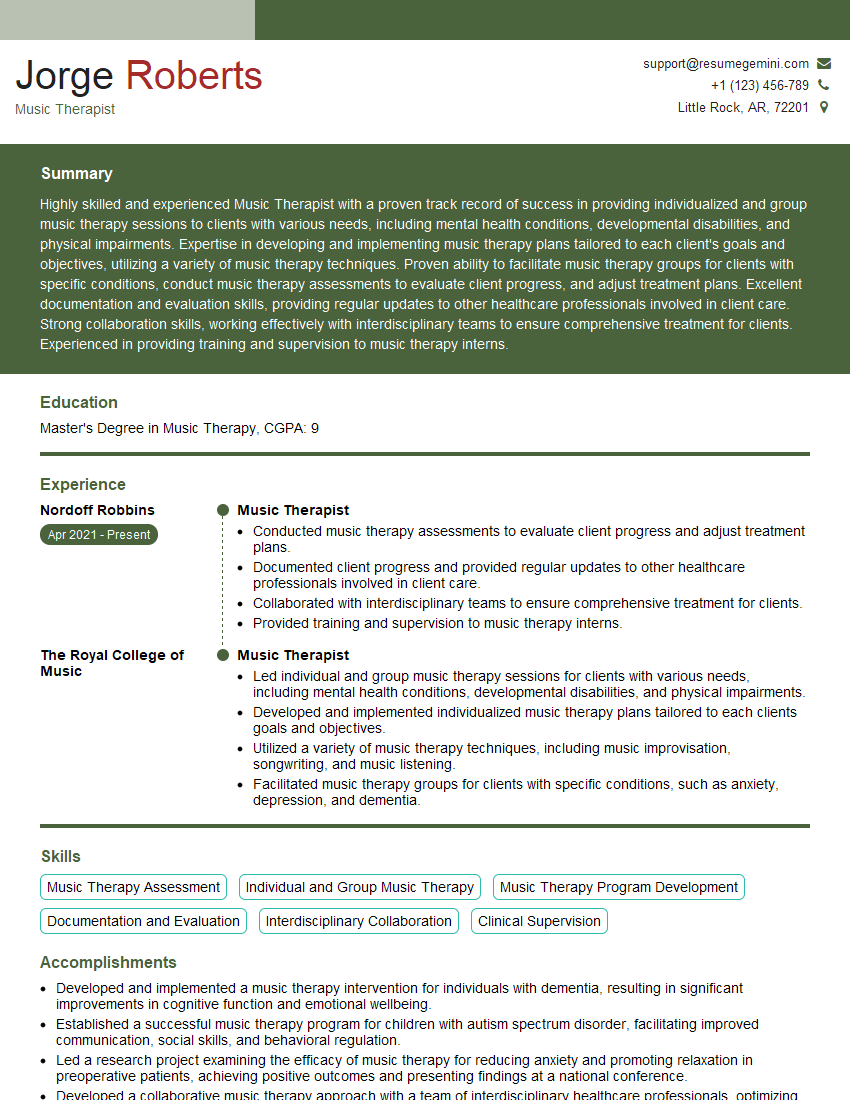
Music Therapist Resume Sample
Explore more articles
Users Rating of Our Blogs
Share Your Experience
We value your feedback! Please rate our content and share your thoughts (optional).
What Readers Say About Our Blog
Very informative content, great job.
good