Are you ready to stand out in your next interview? Understanding and preparing for Security Fencing interview questions is a game-changer. In this blog, we’ve compiled key questions and expert advice to help you showcase your skills with confidence and precision. Let’s get started on your journey to acing the interview.
Questions Asked in Security Fencing Interview
Q 1. What types of security fencing materials are you familiar with?
Security fencing materials vary widely depending on the specific security needs and budget. My experience encompasses a broad range, including:
- Chain-link fence: A cost-effective option, often galvanized for rust resistance, suitable for general perimeter security. Variations include vinyl-coated chain link for enhanced aesthetics and longevity.
- Wrought iron fence: Provides a high level of security and visual appeal, but is more expensive and requires regular maintenance. Its strength and ornate design are deterrents to intruders.
- Aluminum fence: A lightweight yet durable option, resistant to corrosion, making it ideal for coastal areas or harsh climates. It’s less expensive than wrought iron but might not offer the same level of strength.
- Vinyl fence: A low-maintenance choice, offering various styles and colors. It’s not as strong as metal options, but offers good privacy and is relatively inexpensive.
- Steel fence: Highly durable and strong, often used in high-security applications. It can be designed with various features like barbed wire or razor wire for increased deterrence. Powder-coating adds to its longevity and aesthetics.
- Composite fencing: A blend of materials like wood fiber and plastic, providing strength, durability, and low maintenance. It often mimics the look of wood, but with enhanced resistance to rot and insects.
The choice of material always depends on a careful risk assessment and consideration of factors such as budget, aesthetics, and the level of security required.
Q 2. Describe your experience with different fence installation methods.
My experience covers various fence installation methods, each tailored to the specific materials and site conditions. These include:
- Post-hole digging and setting: This involves manually digging holes or using an auger for larger posts, ensuring proper depth and stability in different soil types. Concrete is often used to secure the posts permanently.
- Using post drivers: This method is faster for driving smaller posts into the ground, especially in softer soil. It’s crucial to ensure the posts are set straight and to the correct depth.
- Concrete footings: For increased stability, especially in challenging terrains or for taller fences, concrete footings are used. These provide a strong foundation and prevent settling.
- Working with various fasteners: I’m proficient in using various fasteners, including tension wires, clips, and screws, depending on the fence type. Correct fastening is vital for structural integrity.
- Specialized tools and equipment: My experience extends to operating heavy machinery when needed, such as excavators or post hole diggers, while adhering strictly to safety protocols.
Each project presents unique challenges; I adapt my methods to optimize speed, efficiency, and safety while maintaining the highest standards of quality.
Q 3. How do you ensure the structural integrity of a security fence?
Ensuring structural integrity is paramount in security fencing. It involves a multi-faceted approach:
- Proper post placement and depth: Posts must be set at the correct depth and spacing, considering the soil type and fence height to withstand wind and other loads. Using concrete footings further enhances stability.
- Correct tensioning of wire or rails: Chain-link fences require proper tensioning to prevent sagging and maintain strength. For other fence types, rails and panels should be securely attached and aligned.
- Use of quality materials: Selecting high-quality materials that meet or exceed industry standards is crucial. This includes using corrosion-resistant materials and appropriate fasteners.
- Regular inspections during construction: Frequent checks throughout the installation process help identify and correct any issues early, preventing larger problems later.
- Adhering to building codes and regulations: Following all relevant building codes and regulations ensures the fence meets safety and structural requirements. This often includes considerations for wind load, soil conditions, and local ordinances.
A well-built fence should be able to withstand significant stress, offering the intended level of security and lasting for years with minimal maintenance.
Q 4. What safety measures do you employ during fence installation?
Safety is my top priority. During installation, I consistently employ the following measures:
- Personal Protective Equipment (PPE): This includes safety glasses, gloves, steel-toed boots, and hard hats. Additional PPE like hearing protection may be required depending on the equipment used.
- Safe handling of tools and equipment: I follow all manufacturer’s instructions and best practices for operating power tools and heavy machinery, conducting thorough pre-operation checks and maintenance.
- Site hazard assessment: Before beginning work, I assess the site for potential hazards, such as underground utilities, uneven terrain, and the presence of wildlife.
- Proper use of warning signs and barricades: I use clear warning signs and barricades to alert others of the construction activities and ensure the safety of the public and workers.
- Emergency response planning: I ensure everyone on the team knows emergency procedures and has access to necessary communication and emergency contact information.
Safety is not just a procedure, it is a mindset; I am always vigilant and actively seek ways to improve safety on the job.
Q 5. Explain your experience with post-installation inspections.
Post-installation inspections are critical to ensure the fence meets specifications and is structurally sound. My inspections involve a thorough visual check, including:
- Post alignment and stability: Checking if posts are plumb (vertically straight), securely set, and show no signs of settling.
- Fence alignment and tension: Ensuring the fence lines are straight, the panels are properly aligned, and there is sufficient tension in the wires or rails, preventing sagging.
- Fastener integrity: Checking all fasteners to make sure they are securely attached and not damaged.
- Gate operation and security: Testing the functionality of any gates, ensuring they open and close smoothly and securely lock.
- Overall appearance and adherence to specifications: Verifying the fence meets the agreed-upon design, specifications, and client expectations.
I document all findings, including any necessary repairs, and provide a detailed report to the client. This ensures that any potential issues are addressed promptly.
Q 6. How do you handle challenging terrain during fence construction?
Challenging terrain requires careful planning and adaptation. My experience includes:
- Site preparation: This might include clearing vegetation, leveling the ground, and managing drainage. Different methods are needed for rocky, hilly, or swampy ground.
- Specialized equipment: Using equipment such as excavators, augers, or post drivers suited for different soil conditions is vital. Manual labor might be required in some situations.
- Adaptive post placement: In uneven terrain, adjusting post depth and spacing might be necessary to ensure stability and prevent sagging. This may involve using longer posts or more substantial concrete footings.
- Terracing or benching: In sloped areas, terracing or benching might be employed to create level platforms for the fence. This approach increases the strength and stability of the fence line.
- Consulting with engineers: For particularly challenging terrain, consulting with a geotechnical engineer is advisable to determine the best design and construction methods.
I carefully assess the site’s unique characteristics and adapt my techniques to successfully construct a robust and secure fence, regardless of the terrain.
Q 7. What are the common causes of fence damage and how do you repair them?
Fence damage can stem from various causes, and repairs vary accordingly:
- Weather damage: Strong winds, storms, and heavy snow can cause posts to lean or break, and panels to become damaged or detached. Repairs involve straightening or replacing damaged posts, and replacing or repairing sections of fencing.
- Vandalism: Intentional damage, such as cutting or climbing, might require repairing or replacing sections of fencing, and possibly strengthening the fence to resist future attempts.
- Animal damage: Animals such as deer or rodents can cause damage to posts or fencing. Repairs often involve reinforcing vulnerable areas.
- Ground settling: Uneven settling of the ground can cause sections to sag or posts to lean. This may require adjusting posts, adding support structures, or re-setting posts with deeper footings.
- Corrosion: Rust or corrosion can weaken metal fences. Repair involves replacing or treating the damaged sections with rust inhibitors and possibly applying protective coatings.
Before initiating repairs, I always carefully assess the extent of the damage, determine the root cause, and choose the appropriate repair technique to ensure a long-lasting solution. I am prepared to apply various methods, from simple spot repairs to large-scale replacements depending on the circumstances.
Q 8. Describe your experience with different types of gate mechanisms.
Gate mechanisms are crucial for security fencing, balancing ease of access with robust security. My experience encompasses a wide range of systems, from simple swing gates to complex automated options.
- Swing Gates: These are the most common, utilizing hinges and often a latch or padlock. I’ve worked extensively with various hinge types, from basic butt hinges to heavy-duty, self-closing hinges designed for high-traffic areas or high-security applications. The choice depends on factors like gate weight and expected use.
- Sliding Gates: These are space-saving and ideal for wider openings. I’m proficient with both manual and automated sliding gates, understanding the different wheel and track systems required for smooth operation. Automated systems often involve electric motors, sensors, and control panels, which require careful installation and maintenance. I’ve also worked with various types of rollers, depending on weight and terrain.
- Cantilever Gates: These gates are self-supporting, with the wheels running along a track embedded in the ground, allowing for increased security and a cleaner aesthetic compared to traditional sliding gates. I have experience with the design and installation of these more sophisticated systems.
- Automated Gates: These include electrically operated swing and sliding gates, often incorporating access control systems like keypads, card readers, or remote controls. My experience covers the installation and troubleshooting of various brands and models, ensuring seamless integration with the overall security system. I understand the importance of safety features such as emergency stop buttons and photocells that prevent accidents.
Choosing the right gate mechanism depends on the specific security needs, budget, and site conditions. For instance, a high-security facility might necessitate an automated gate with access control features, while a residential setting could benefit from a simpler swing gate with a robust latch.
Q 9. How do you ensure compliance with local building codes and regulations?
Compliance with local building codes and regulations is paramount in any fencing project. I always begin by thoroughly researching the specific requirements for the project location. This involves checking with the relevant authorities—city, county, or state—to obtain the necessary permits and understand any restrictions on fence height, materials, setbacks, and other relevant factors.
For example, I’ve encountered situations where specific materials were mandated (e.g., certain types of chain-link for visibility reasons) or where height restrictions were in place near airports or utilities. I always maintain detailed records of all permits and inspections, ensuring that all work adheres to the approved plans and specifications. This proactive approach minimizes the risk of delays, rework, or penalties.
I collaborate with local inspectors throughout the project, addressing any concerns or queries promptly and ensuring a smooth and compliant process. My goal is to exceed compliance standards, providing a secure and safe solution that meets all local regulations.
Q 10. What is your experience with working from blueprints or schematics?
My experience with blueprints and schematics is extensive. I can proficiently interpret architectural drawings, site plans, and engineering specifications to accurately determine fence layout, materials, and gate placements. I’m adept at identifying potential issues or conflicts early on in the design phase, such as underground utilities or difficult terrain, preventing costly delays during the installation process.
For example, I recently worked on a project where the blueprint initially omitted the location of a crucial underground gas line. By carefully reviewing the schematics and contacting the utility company, I was able to identify and avoid damaging the line, preventing a significant safety hazard and saving the project from considerable cost overruns.
I utilize various tools and software for blueprint interpretation, including CAD software to assist in creating detailed plans for materials and installation. This ensures all team members understand and correctly execute the project’s requirements.
Q 11. How do you manage a project timeline and budget for a fencing project?
Managing project timelines and budgets requires a structured approach. I begin by creating a detailed project schedule, breaking down the project into manageable tasks, each with assigned timelines and responsibilities. I utilize project management software to track progress, manage resources, and identify potential delays. A critical path analysis helps prioritize tasks to meet the overall deadline.
Budget management involves creating a comprehensive cost estimate, considering all materials, labor, permits, and other expenses. I work closely with clients to establish a clear budget and regularly update them on expenditures throughout the project. Contingency plans are built into the budget to account for unforeseen circumstances such as material price fluctuations or weather delays.
Regular meetings with the client and the installation team ensure transparency and allow for prompt adjustments if necessary. This approach allows me to deliver projects on time and within budget, minimizing risks and ensuring client satisfaction.
Q 12. How do you manage a team of installers?
Managing a team of installers requires strong leadership and communication skills. I foster a positive and collaborative work environment, ensuring clear roles and responsibilities for each team member. Regular team briefings, including safety talks, are crucial for maintaining consistent standards and addressing any concerns.
I provide thorough training to ensure everyone understands the safety procedures and installation techniques specific to each fencing type. Effective communication, both verbal and written, ensures that tasks are executed correctly and efficiently. I use performance tracking systems to monitor individual and team productivity. This allows for identifying areas where support or training might be needed and contributes to a consistently high level of quality.
I also emphasize safety as a top priority, enforcing strict adherence to safety regulations and providing the necessary personal protective equipment. By creating a supportive and well-managed team, I ensure high-quality workmanship and successful project completion.
Q 13. Describe your experience with different types of access control systems.
My experience with access control systems for security fencing is extensive. I’ve worked with a wide variety of systems, ranging from simple keypads to sophisticated biometric systems.
- Keypads: These offer a basic level of access control, allowing authorized personnel to enter using a pre-programmed code.
- Card Readers: These utilize proximity cards or fobs to grant access, offering improved security compared to keypads.
- Biometric Systems: These systems use fingerprint, facial recognition, or other biometric data for authentication, providing the highest level of security.
- Combination Systems: Often, systems combine multiple access control methods for enhanced security and flexibility. For example, a gate might require both a card reader and a PIN code for access.
The choice of access control system depends on the specific security requirements of the site and the budget. I ensure that the chosen system seamlessly integrates with the fencing system and is properly installed and configured to prevent unauthorized access. My expertise covers both installation and maintenance, and I’m familiar with troubleshooting common issues that can arise with these systems.
Q 14. How do you determine the appropriate height and type of fencing for a specific site?
Determining the appropriate height and type of fencing for a specific site requires careful consideration of various factors. These include the site’s purpose, security needs, local regulations, and environmental conditions.
Height: Height is crucial for deterring intrusion. Residential settings might require a 4-6 foot fence, while high-security facilities might necessitate much taller fences, even incorporating barbed wire or other deterrents. Local regulations often dictate maximum fence heights.
Type: The type of fencing material greatly influences both security and aesthetics. Chain link is economical and offers good visibility, while wrought iron provides a more aesthetically pleasing option but is more expensive and might require more maintenance. Wood fences offer privacy but may require more upkeep. For high-security situations, stronger materials such as steel or specialized mesh might be used. Consideration should also be given to the surrounding landscape; a fence’s effectiveness is reduced if it can be easily climbed over or undermined.
I always conduct a thorough site assessment, taking into account factors like terrain, existing structures, and potential environmental impacts. This comprehensive evaluation allows me to recommend the most effective and appropriate fencing solution that meets both the security and aesthetic needs of the client while adhering to all applicable regulations.
Q 15. What are some common challenges in security fencing projects, and how have you overcome them?
Security fencing projects often face challenges related to site conditions, client expectations, and regulatory compliance. One common challenge is dealing with difficult terrain. For example, rocky soil can make post-hole digging incredibly time-consuming and require specialized equipment. To overcome this, I utilize ground-penetrating radar to assess the soil composition beforehand, allowing me to choose the appropriate post-setting method (e.g., using helical piles instead of digging for rocky areas) and accurately estimate project timelines.
Another challenge is managing client expectations. Clients may have unrealistic timelines or budgetary constraints. I address this by providing detailed project plans upfront, including realistic timelines and cost breakdowns. Open communication throughout the project, with regular updates and proactive problem-solving, ensures everyone is informed and expectations are managed effectively. A recent project involved a client who wanted a high-security fence installed rapidly. By using pre-fabricated fence panels and coordinating with multiple crews, we completed the project ahead of schedule, exceeding their expectations.
Finally, navigating local regulations and permitting processes can be complex. To overcome this, I work closely with local authorities from the outset of each project to ensure all permits and approvals are secured before commencing work, preventing costly delays and potential project shutdowns.
Career Expert Tips:
- Ace those interviews! Prepare effectively by reviewing the Top 50 Most Common Interview Questions on ResumeGemini.
- Navigate your job search with confidence! Explore a wide range of Career Tips on ResumeGemini. Learn about common challenges and recommendations to overcome them.
- Craft the perfect resume! Master the Art of Resume Writing with ResumeGemini’s guide. Showcase your unique qualifications and achievements effectively.
- Don’t miss out on holiday savings! Build your dream resume with ResumeGemini’s ATS optimized templates.
Q 16. How familiar are you with different types of ground conditions and their impact on fence installation?
My experience encompasses a wide range of ground conditions, each demanding a different approach to fence installation. Sandy soil, for instance, is relatively easy to work with, but requires careful consideration of post stability, potentially necessitating deeper post-holes or the use of concrete footings. Clay soil, on the other hand, can be very challenging. It’s often hard to dig in and can expand and contract significantly with changes in moisture, affecting the fence’s long-term stability. In such situations, I use specialized augers or even consider alternative foundation methods like helical piles that screw directly into the ground, providing excellent stability regardless of soil type.
Rocky soil, as mentioned earlier, presents significant challenges and demands the use of specialized equipment like rock drills or hydraulic post drivers. Swampy or marshy land necessitates the use of different post types and foundation systems entirely. I employ different techniques, like using pressure-treated wooden posts with extensive concrete footings for long-term stability and to prevent fence sinking. Understanding the different soil types and selecting appropriate techniques is crucial for the structural integrity and longevity of the fence.
Q 17. Describe your experience with working with clients to understand their security needs.
Building strong client relationships is key to successful security fencing projects. I start by actively listening to the client’s needs and concerns, clarifying their security goals, and understanding their budget constraints. I use open-ended questions to encourage them to articulate their specific vulnerabilities and desired levels of protection. For instance, are they concerned about unauthorized entry, vandalism, or animal intrusion? This understanding guides my recommendations for fence type, height, and material selection.
I then translate their security needs into practical solutions, presenting various options with cost estimates and highlighting the advantages and disadvantages of each. Visual aids like site plans and 3D renderings are essential in conveying the proposed design and its impact on the property’s aesthetics. Regular communication, updates, and addressing any concerns promptly fosters trust and ensures the client feels involved throughout the project lifecycle. This collaborative approach leads to mutually satisfactory outcomes and often results in strong client referrals. One example is a client who initially had a limited budget, but after discussing the long-term costs of inadequate security, they opted for a higher quality fence, ensuring higher long-term value.
Q 18. What is your understanding of the different security levels offered by various fence types?
Different fence types offer varying levels of security. Chain-link fences provide a basic level of deterrence, offering visibility and some physical barrier against casual intrusion. However, they’re easily climbed and offer minimal protection against determined individuals. Wrought iron fences offer a higher level of security due to their strength and aesthetic deterrents. They are more difficult to climb and cut.
Higher security levels are achieved with palisade fencing, featuring pointed vertical bars that are difficult to climb. For enhanced security, barbed wire or razor wire can be added to the top of virtually any fence type. The most secure options are often high-security perimeter fences, which might incorporate multiple layers of fencing, intrusion detection systems, and even electric fencing. Selecting the appropriate fence type is a balance of security needs, budget considerations, and aesthetic preferences. My experience enables me to advise clients on the best security solution based on a thorough risk assessment of their specific needs.
Q 19. How do you ensure the longevity and maintenance of a security fence?
Ensuring the longevity and minimizing maintenance of a security fence involves several key considerations starting with material selection. Using high-quality, durable materials like galvanized steel or powder-coated aluminum significantly reduces corrosion and extends the fence’s lifespan. Proper installation techniques are just as critical. Posts need to be set at the correct depth and angle, with the appropriate concrete mix to ensure stability. Regular inspections are necessary to identify and address issues promptly, such as loose posts, damaged panels or gates, and signs of corrosion.
A preventative maintenance schedule, including annual inspections and minor repairs (e.g., tightening loose fasteners), can prevent more extensive and costly repairs down the line. Thorough cleaning to remove debris and corrosion is essential. Finally, I advise clients on the importance of having a robust maintenance plan in place, including procedures for dealing with unexpected damage (such as from severe weather events). A well-maintained fence not only enhances its longevity but also retains its security effectiveness.
Q 20. What is your experience with using specialized tools and equipment?
My experience includes extensive use of a variety of specialized tools and equipment, crucial for efficient and safe fence installation. This includes post-hole diggers, both manual and powered, for efficient post setting. Post drivers are essential for quickly and accurately setting posts, especially in challenging soil conditions. I am proficient in using various types of welding equipment to repair or fabricate components.
Measuring and cutting tools, such as tape measures, levels, and power saws, are essential for precise fence construction. We utilize tensioning tools to ensure proper fence alignment and structural integrity, and wire-tying tools for securely fastening fence wires and mesh. For larger projects, specialized equipment such as excavators or cranes might be necessary to handle heavy materials and efficiently maneuver the site. Safety is paramount; all team members receive thorough training on the safe operation and maintenance of all equipment utilized on our projects.
Q 21. How do you handle unexpected problems or delays during a project?
Unexpected problems and delays are inevitable in construction projects. My approach emphasizes proactive risk management. This starts with thorough site assessments and detailed project planning to anticipate potential issues. Having contingency plans in place is key. For example, if weather delays are anticipated, having a readily available alternative indoor workspace or plan for re-scheduling work can be critical.
When unexpected problems do arise, such as encountering unforeseen underground utilities or material supply chain issues, I immediately initiate a structured problem-solving process. This involves: (1) Clearly defining the problem; (2) Identifying potential solutions; (3) Evaluating the pros and cons of each solution; (4) Choosing the best solution based on factors such as cost, time, and safety; (5) Implementing the solution; and (6) Documenting the problem and the chosen solution for future reference. Open communication with the client is vital during these moments. Keeping them informed and involved maintains trust and minimizes disruptions. In one instance, a sudden change in site conditions was handled by quickly adjusting the installation plan and working closely with the client to find an acceptable alternative solution, minimizing project delay.
Q 22. Describe your experience with working in various weather conditions.
Working in security fencing involves exposure to a wide range of weather conditions. My experience encompasses everything from scorching summers and freezing winters to heavy rainfall and high winds. I’ve learned to adapt my work methods accordingly, prioritizing safety and ensuring project timelines aren’t unduly impacted. For instance, during heavy rain, we utilize waterproof materials and adjust our timelines to allow for drying periods. In extreme cold, we take extra precautions to prevent frostbite and material damage, using heated equipment when necessary. Working efficiently under challenging weather conditions requires careful planning, the use of appropriate equipment, and a flexible approach to scheduling.
For example, on one project, we faced unexpectedly heavy snowfall. Instead of halting work completely, we adjusted our schedule, focusing on tasks less affected by the weather like site preparation and material delivery. Once conditions improved, we quickly completed the fence installation, minimizing delays.
Q 23. How do you ensure the security fence is resistant to climbing and breaching attempts?
Creating a climb-resistant and breach-proof security fence requires a multi-faceted approach. It’s not just about choosing the right materials; it’s about the complete design and installation. We begin by assessing the site’s specific vulnerabilities – considering terrain, potential access points, and the threat level. This informs our choice of fence type, height, and additional security features.
- Fence Height and Design: Taller fences (over 8 feet) are more difficult to climb. We often incorporate angled tops or barbed wire to further deter climbing attempts.
- Material Selection: Stronger materials like palisade fencing (with its sharp points) or high-tensile wire mesh offer superior resistance compared to weaker materials. The mesh size should also be small enough to prevent easy access.
- Grounding and Installation: Properly embedding fence posts into the ground, using concrete, prevents easy removal or tipping. Secure fastening of all components is crucial to prevent unauthorized entry.
- Perimeter Considerations: We always assess the entire perimeter. This might involve adding anti-climb features to walls or gates, addressing potential weak points, and ensuring adequate lighting.
For instance, a client with a high-security need might benefit from a combination of palisade fencing, topped with barbed wire, coupled with an intrusion detection system. This multi-layered approach significantly increases the level of security.
Q 24. What are your methods for ensuring the fence is properly grounded and bonded?
Proper grounding and bonding of a security fence are crucial for safety and effectiveness, particularly when integrating with electronic security systems. Grounding dissipates electrical surges, preventing damage to equipment and protecting personnel from electric shock. Bonding ensures that all metal components are electrically connected, preventing voltage differences that can lead to corrosion or electric shock hazards.
Our methods typically involve:
- Using Ground Rods: We drive copper-clad steel ground rods deep into the earth at regular intervals along the fence line, ensuring good earth contact.
- Connecting to Grounding System: The ground rods are then connected to the fence using heavy-gauge bonding wire, ensuring a low-resistance path to earth.
- Regular Testing: We use a ground resistance tester to verify that the grounding system meets the required resistance values, typically below 5 ohms.
- Bonded Connections: All metal components of the fence (posts, gates, wire mesh) are securely bonded together, usually using exothermic welding for superior conductivity and durability.
Failing to properly ground and bond a fence can result in electrical hazards and compromised system effectiveness. Regular inspections and testing are vital for maintaining a safe and functional system.
Q 25. Explain your experience with different types of wire mesh fencing.
My experience encompasses a variety of wire mesh fencing, each with its own strengths and weaknesses. The choice depends heavily on the specific security needs and budget constraints of the project.
- Chain Link: A common and cost-effective option, chain link fencing is available in various mesh sizes and galvanized or vinyl-coated finishes. While relatively easy to install, it is vulnerable to cutting and climbing unless reinforced with barbed wire or other anti-climb measures.
- Welded Wire Mesh: Offers superior strength and security compared to chain link, as the wires are welded at each intersection. It’s more resistant to cutting and climbing. Different mesh sizes and gauge wire allow for adjusting security levels.
- Razor Wire/Barbed Wire: These are primarily used as a deterrent, rather than a standalone security measure. They are often added to the top of existing fencing to make it more difficult to climb.
- Concertina Wire: A type of razor wire with a spiral design, it is very effective in deterring climbing and is commonly used in high-security applications.
In practice, selecting the right wire mesh often involves trade-offs. For example, a high-tensile welded wire mesh offers better security but may be more expensive than chain link. We always discuss the client’s needs to find the most suitable and cost-effective solution.
Q 26. How do you deal with clients who have unrealistic expectations or budgets?
Managing client expectations and budget constraints is a critical aspect of my work. I always begin with a thorough consultation to understand the client’s security needs, preferred aesthetics, and budget. I then provide a realistic assessment of what’s achievable within those constraints. Open and honest communication is key.
If a client has unrealistic expectations, I explain clearly why their vision might be impractical or overly expensive. I offer alternative solutions that balance security needs with budgetary realities. For example, I might propose using a less expensive fencing material in less visible areas while reserving higher-security options for more vulnerable sections. I might also suggest phasing the project, implementing higher security levels incrementally.
If the budget is extremely limited, I present different options at various price points, clearly explaining the trade-offs in terms of security and longevity. I prioritize solutions that provide the maximum level of security within the allocated funds.
Q 27. What are the key differences between chain link, palisade, and other types of security fencing?
Chain link, palisade, and other security fencing options offer distinct advantages and disadvantages:
- Chain Link: Cost-effective, relatively easy to install, but less secure than other options unless reinforced. Offers good visibility.
- Palisade: Highly secure, very strong, and difficult to climb due to its sharp, pointed design. More expensive than chain link, and less aesthetically pleasing to some.
- Welded Wire Mesh: A good balance between cost and security, stronger than chain link but less secure than palisade. Mesh size can be customized to suit different needs.
- Wrought Iron: Expensive, very durable, and aesthetically pleasing, often used in high-end applications. Requires skilled installation.
- Vinyl-coated Fencing: Offers corrosion resistance and low maintenance but can be less strong than metal alternatives.
The optimal choice depends on a range of factors: the level of security required, the budget, aesthetic preferences, and site-specific conditions. For example, a high-security facility might choose palisade fencing, while a residential property might opt for a more affordable chain link fence with added security features.
Q 28. Describe your experience with integrating security fencing with other security systems (e.g., CCTV, alarm systems).
Integrating security fencing with other security systems, such as CCTV and alarm systems, significantly enhances overall security. My experience includes collaborating with various security professionals to create comprehensive, layered security solutions.
Here’s how we typically integrate these systems:
- CCTV Integration: Strategic placement of CCTV cameras along the fence line provides visual monitoring, detecting breaches and identifying intruders. We often use cameras with infrared capabilities for night vision.
- Alarm System Integration: Sensors can be integrated into the fence itself to detect vibrations, unauthorized access attempts, or even climbing attempts. These triggers can immediately alert security personnel or law enforcement. This might involve using vibration sensors or pressure sensors embedded in the fence line or fence posts.
- Access Control Integration: Security gates can be incorporated into the fence, integrating with access control systems (card readers, keypads) to restrict entry to authorized personnel only.
- Lighting Integration: Well-lit perimeter fencing acts as both a deterrent and improves the effectiveness of CCTV systems. Motion-activated lighting further enhances security by illuminating areas only when needed.
Effective integration requires careful planning and coordination between different contractors. We ensure seamless communication to guarantee proper system functionality and optimal security coverage.
Key Topics to Learn for Security Fencing Interview
- Types of Security Fencing: Understanding the properties and applications of various fence materials (chain link, wire mesh, palisade, etc.), their strengths, weaknesses, and suitability for different security needs.
- Installation Techniques and Best Practices: Familiarity with proper installation methods, including post placement, tensioning, and securing fence components. Knowledge of relevant safety regulations and procedures.
- Security System Integration: Understanding how security fencing can be integrated with other security systems, such as surveillance cameras, alarm systems, and access control.
- Site Assessment and Design: Ability to analyze a site’s security vulnerabilities and design a fencing system that effectively addresses those vulnerabilities. This includes considerations of terrain, access points, and potential threats.
- Maintenance and Repair: Knowledge of routine maintenance tasks and troubleshooting common issues with security fencing. Understanding the importance of regular inspections and repairs for maintaining system integrity.
- Regulations and Compliance: Familiarity with local building codes, safety regulations, and relevant industry standards related to security fencing installation and maintenance.
- Cost Estimation and Budgeting: Ability to accurately estimate the costs associated with different fencing materials, labor, and installation.
- Project Management and Communication: Understanding the importance of effective communication with clients and contractors throughout the project lifecycle.
Next Steps
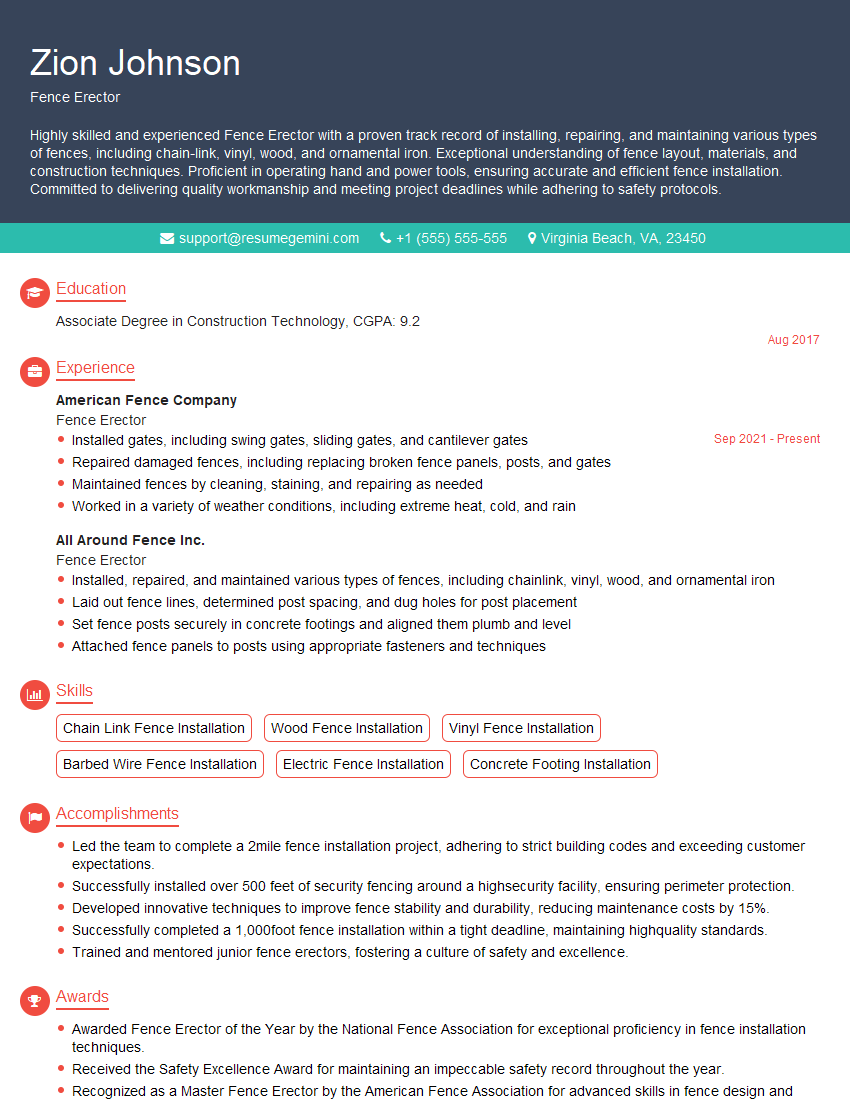
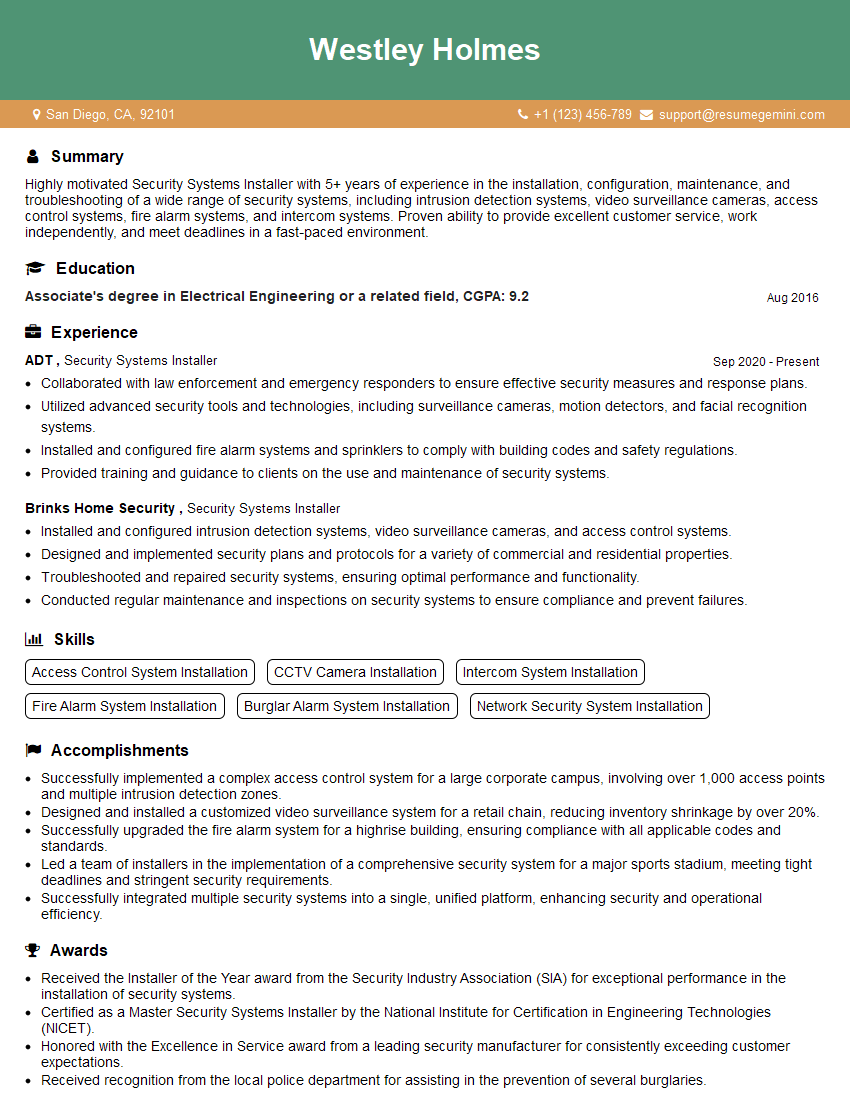
Mastering the principles of security fencing opens doors to a rewarding career with excellent growth potential in a vital industry. As you prepare, remember that a strong, ATS-friendly resume is crucial for getting your foot in the door. This is where ResumeGemini can be a valuable asset. ResumeGemini helps you craft a professional resume that highlights your skills and experience, maximizing your chances of landing an interview. We provide examples of resumes tailored to the Security Fencing field to help guide your creation process. Take the next step toward your dream job today!
Explore more articles
Users Rating of Our Blogs
Share Your Experience
We value your feedback! Please rate our content and share your thoughts (optional).
What Readers Say About Our Blog
Very informative content, great job.
good