Cracking a skill-specific interview, like one for Selective Breeding and Line Breeding, requires understanding the nuances of the role. In this blog, we present the questions you’re most likely to encounter, along with insights into how to answer them effectively. Let’s ensure you’re ready to make a strong impression.
Questions Asked in Selective Breeding and Line Breeding Interview
Q 1. Define selective breeding and explain its key principles.
Selective breeding, also known as artificial selection, is the process by which humans use animal breeding and plant breeding to selectively develop particular phenotypic traits (characteristics) by choosing which typically animal or plant males and females will sexually reproduce and have offspring together. It’s like being a plant or animal matchmaker, aiming for offspring with the best qualities.
Key principles include:
- Identifying desirable traits: This could be anything from increased milk production in cows to disease resistance in wheat.
- Selecting parents: Choosing individuals that exhibit the desired traits to a high degree.
- Controlled mating: Carefully controlling which individuals breed to maximize the chances of inheriting desirable traits.
- Evaluating offspring: Assessing the traits of the offspring to determine the success of the breeding program and inform future selections.
- Repeating the process: Breeding the best offspring from each generation to further improve the traits.
For example, dog breeding has used selective breeding for centuries to produce various breeds, each with unique traits. The tiny Chihuahua and the giant Great Dane are both descendants of wolves, showcasing the power of selective breeding.
Q 2. What are the differences between inbreeding, line breeding, and crossbreeding?
Inbreeding, line breeding, and crossbreeding are all forms of selective breeding but differ significantly in their approach to genetic relatedness:
- Inbreeding: Mating closely related individuals (e.g., siblings, parent-offspring). This increases homozygosity (having two identical alleles for a gene), meaning traits become more uniform. However, it also increases the risk of recessive genetic disorders becoming expressed.
- Line breeding: A less intense form of inbreeding where individuals are more distantly related than in inbreeding. The goal is to maintain a higher degree of genetic similarity within a line while minimizing the risks associated with close inbreeding. It’s a more cautious approach.
- Crossbreeding: Mating individuals from different breeds or lines. This increases heterozygosity (having two different alleles for a gene), leading to hybrid vigor (heterosis) where offspring display superior traits compared to their parents. However, it can make it harder to predict the traits of offspring.
Imagine a family tree: inbreeding is like selecting partners from the same immediate branch, line breeding from a closer but broader branch, and crossbreeding from entirely different trees.
Q 3. Explain the concept of heritability in the context of selective breeding.
Heritability refers to the proportion of variation in a trait that is due to genetic factors. It’s a crucial concept in selective breeding because it determines how effectively a trait can be improved through selection. A heritability of 0 means the trait is entirely environmentally determined, while a heritability of 1 means the trait is entirely genetically determined. Most traits have a heritability somewhere in between.
In practice, heritability estimates are used to predict the response to selection. If a trait has high heritability, selecting parents with that trait will result in offspring that also exhibit that trait to a greater degree. However, a low heritability means that selection will have a weaker effect, and environmental factors play a significant role.
For example, if milk production in cows has high heritability, then selecting high-producing cows as parents will produce offspring with even higher milk production. Conversely, if disease resistance has low heritability, selecting resistant parents might not lead to significantly more resistant offspring.
Q 4. Describe the advantages and disadvantages of inbreeding.
Inbreeding has both advantages and disadvantages:
- Advantages:
- Increased homozygosity, leading to more uniform traits, making selection more predictable.
- Can help to concentrate desirable recessive genes in a line.
- Useful in maintaining a particular breed standard.
- Disadvantages:
- Increased risk of recessive genetic disorders, due to the increased homozygosity. These disorders can be detrimental to the health and productivity of the animals or plants.
- Reduced genetic diversity, making the population more vulnerable to diseases and environmental changes.
- Inbreeding depression, a decrease in fitness (survival and reproduction) associated with inbreeding.
A classic example demonstrating the disadvantage is the case of certain dog breeds where inbreeding has led to a higher prevalence of specific genetic diseases.
Q 5. How do you identify desirable traits for selective breeding?
Identifying desirable traits involves a careful consideration of several factors:
- Economic value: Traits that increase profitability, such as higher yield, faster growth, or disease resistance.
- Adaptation to environment: Traits that enable animals or plants to thrive in specific environments (e.g., drought tolerance in plants, heat tolerance in livestock).
- Quality: Traits that improve the quality of the product, such as taste, texture, or nutritional value.
- Health and welfare: Traits related to animal or plant health, such as disease resistance or fertility.
- Breed standard (for animals): Traits that adhere to established breed standards, although there’s an ongoing discussion about the ethics of some standards.
The process often involves data collection (e.g., measuring yield, assessing disease resistance), genetic analysis, and careful consideration of market demands and consumer preferences.
Q 6. What methods are used to assess genetic diversity within a breeding population?
Several methods are used to assess genetic diversity within a breeding population:
- Pedigree analysis: Examining family history to identify relatedness between individuals and estimate inbreeding coefficients.
- Molecular markers: Analyzing DNA to identify variations in genes or DNA sequences (e.g., microsatellites, SNPs). This gives a direct measure of genetic variation.
- Effective population size (Ne): A measure of the breeding potential of a population. A lower Ne suggests reduced genetic diversity.
- Heterozygosity: The proportion of heterozygous loci in individuals. Lower heterozygosity indicates reduced genetic diversity.
These methods provide insights into the genetic health of a breeding population and can help guide decisions about mating strategies to maintain or increase genetic diversity.
Q 7. Explain the role of pedigree analysis in selective breeding programs.
Pedigree analysis plays a vital role in selective breeding by providing a visual representation of an animal or plant’s ancestry. It helps trace the inheritance of traits across generations and identify individuals with desirable or undesirable genetic characteristics.
Uses include:
- Identifying relatedness: Assessing the degree of inbreeding or the level of relationship between potential mates.
- Predicting trait inheritance: Estimating the probability of offspring inheriting specific traits based on parental genotypes and phenotypes.
- Identifying potential genetic defects: Detecting the presence of recessive genes that can lead to genetic disorders.
- Selecting superior breeding stock: Choosing parents with a history of superior performance or desirable traits based on their pedigree.
By carefully analyzing pedigrees, breeders can make informed decisions to optimize the genetic makeup of their populations and achieve desired breeding goals.
Q 8. How do you manage inbreeding depression in a breeding program?
Inbreeding depression is the reduction in fitness of a population due to increased homozygosity – when individuals inherit two identical copies of a gene. This often leads to the expression of harmful recessive alleles, resulting in reduced fertility, slower growth, increased susceptibility to diseases, and lower overall performance. Managing inbreeding depression requires a proactive approach focusing on balancing the benefits of line breeding with strategies to mitigate its negative consequences.
- Careful Pedigree Management: Maintain detailed records of animal lineages to track inbreeding coefficients (a measure of inbreeding). Avoid mating closely related animals excessively.
- Crossbreeding: Introducing unrelated individuals (outcrossing) into the breeding program can effectively purge harmful recessive alleles and increase genetic diversity.
- Selection against Deleterious Traits: Rigorously select against individuals exhibiting signs of inbreeding depression, such as reduced fertility or poor health. This requires careful observation and potentially genetic testing.
- Genetic Monitoring: Employ molecular markers or genomic selection to identify and select against detrimental alleles, even before they manifest as observable traits. This allows for early intervention.
- Optimal Mating Strategies: Employ sophisticated mating strategies that minimize inbreeding while maximizing the selection of desirable traits. These strategies often involve computer algorithms to optimize matings.
For example, in dairy cattle breeding, a careful balance between line breeding to maintain desirable milk production traits and outcrossing to avoid inbreeding depression is crucial for long-term success.
Q 9. Describe the application of molecular markers in selective breeding.
Molecular markers are DNA sequences with known locations on chromosomes. They act as signposts for genes that control economically important traits (e.g., milk yield, disease resistance). In selective breeding, molecular markers enhance the efficiency and accuracy of the selection process.
- Marker-Assisted Selection (MAS): MAS uses markers linked to desirable genes to identify superior individuals even before the trait is expressed. This allows for early selection, accelerating the breeding process and reducing costs. For example, a marker linked to a gene for disease resistance can help identify resistant animals early in life, avoiding losses due to disease.
- Genotyping: Advanced techniques like genome-wide association studies (GWAS) use thousands of markers across the entire genome to identify genomic regions associated with complex traits. This provides a more comprehensive understanding of the genetic architecture of the traits.
- Genetic Mapping: Markers aid in constructing genetic maps, which reveal the relative positions of genes on chromosomes. This improves understanding of how genes interact and influence traits, aiding in breeding strategy design.
Imagine trying to find a specific house in a large city without an address – very difficult. Molecular markers are like the addresses of genes, allowing breeders to pinpoint and select the desirable genes more efficiently.
Q 10. What are the ethical considerations involved in selective breeding?
Selective breeding, while beneficial for improving traits, raises several ethical concerns:
- Animal Welfare: Intense selection can lead to animals with compromised health or welfare. For example, breeding for extreme physical characteristics (e.g., excessively large breast size in poultry) can negatively affect the animal’s health and mobility.
- Genetic Diversity Loss: Focusing on a limited number of desirable traits reduces overall genetic diversity, making the population more vulnerable to diseases and environmental changes.
- Unintended Consequences: Selection for one trait may unintentionally negatively affect other traits. For example, selecting for increased muscle mass in livestock might compromise fertility.
- Consumer Concerns: Consumers may have ethical objections to certain breeding practices, particularly those involving genetic engineering or practices perceived as cruel or inhumane.
Responsible breeding programs need to consider the animal’s well-being and strive for a balance between genetic improvement and maintaining biodiversity. Open communication with the public and strict adherence to ethical guidelines are crucial.
Q 11. Explain the concept of genetic gain in selective breeding.
Genetic gain represents the improvement in the average value of a trait in a population across generations due to selective breeding. It’s essentially how much better the next generation is than the current one, in terms of the desired trait. A higher genetic gain indicates a more effective breeding program.
Genetic gain is influenced by several factors:
- Heritability: The proportion of trait variation due to genetic factors. Higher heritability means a greater potential for genetic gain.
- Selection Intensity: The proportion of the population selected for breeding. Selecting a smaller, elite group leads to higher intensity but might reduce genetic diversity.
- Accuracy of Selection: How well the selected individuals represent the genetic merit for the trait. More accurate selection leads to higher genetic gain.
- Generation Interval: The average age of parents when offspring are born. Shorter generation intervals accelerate genetic gain.
For example, if the average milk yield of cows increased by 100 liters per year due to selective breeding, that represents the genetic gain for that trait.
Q 12. How do you select breeding pairs to maximize genetic gain?
Selecting breeding pairs to maximize genetic gain requires a combination of careful planning and sophisticated techniques. The goal is to identify individuals with superior genetics and minimize inbreeding.
- Best Linear Unbiased Prediction (BLUP): BLUP uses statistical models to estimate the breeding value of an individual, considering both its own performance and the performance of its relatives. This helps accurately predict the genetic merit of potential parents.
- Estimated Breeding Values (EBVs): EBVs are calculated using BLUP or similar methods, providing a numerical estimate of an animal’s genetic merit. Breeding pairs are chosen to maximize the sum of their EBVs.
- Inbreeding Coefficient Calculation: The inbreeding coefficient is calculated for potential mating pairs. Pairs with low inbreeding coefficients are prioritized to minimize the risk of inbreeding depression.
- Pedigree Analysis: Detailed pedigree analysis helps to identify superior lineages and avoid excessive inbreeding within those lineages.
- Molecular Marker Information: Utilizing molecular markers linked to desirable genes further refines the selection process.
In practice, this often involves sophisticated software programs that analyze pedigree data, performance records, and molecular marker information to recommend optimal mating pairs.
Q 13. What is genomic selection, and how does it improve selective breeding?
Genomic selection is a powerful tool that leverages high-density marker data (SNP chips) to predict the breeding value of individuals more accurately than traditional methods. It predicts the genetic merit of an animal by analyzing its entire genome, rather than relying solely on phenotypic data (observable traits).
How it improves selective breeding:
- Increased Accuracy: Genomic selection significantly increases the accuracy of breeding value prediction, especially for traits with low heritability or that are difficult or expensive to measure.
- Earlier Selection: Genomic selection allows for selection at a younger age, even before the trait is expressed, accelerating genetic gain.
- Selection for Multiple Traits Simultaneously: It allows for simultaneous selection for multiple traits, optimizing the overall breeding program.
- Improved Efficiency: It reduces the need for extensive phenotypic data collection, making the breeding process more efficient and cost-effective.
Imagine predicting the yield of an apple tree before it even bears fruit – this is the power of genomic selection. It allows breeders to make better decisions, faster, resulting in faster genetic progress.
Q 14. Describe the challenges associated with line breeding.
Line breeding is a form of inbreeding where the goal is to concentrate genes from a particular ancestor into a population. While it can enhance desirable traits, it carries significant challenges:
- Increased Inbreeding Depression: The closer the relationship between the breeding animals, the greater the risk of inbreeding depression. This can manifest as reduced fertility, increased susceptibility to diseases, and lower overall fitness.
- Loss of Genetic Diversity: Line breeding reduces genetic diversity, making the population more vulnerable to environmental changes and diseases.
- Difficulty in Identifying Superior Lines: It can be challenging to accurately identify superior lines early on. The effects of inbreeding might not be immediately obvious, leading to potentially wasted resources.
- Risk of Fixing Undesirable Genes: Along with desirable traits, undesirable recessive genes linked to the favored ancestor might also become fixed in the population.
Line breeding requires careful planning, meticulous record keeping, and regular monitoring for signs of inbreeding depression. A robust selection process, ideally incorporating molecular markers and genomic information, is essential to manage the risks associated with line breeding.
Q 15. Explain the importance of maintaining genetic variability in breeding programs.
Maintaining genetic variability is crucial in breeding programs because it’s the raw material for future adaptation and improvement. Think of it like a toolbox: a diverse gene pool provides a wide array of tools (genes) to select from when facing new challenges, whether it’s a changing climate, a new disease, or evolving consumer preferences. Without this variability, your breeding program becomes vulnerable and may stagnate or even collapse.
A lack of diversity can lead to inbreeding depression, where offspring exhibit reduced fitness due to the accumulation of harmful recessive genes. This manifests as lower yields, decreased disease resistance, and reduced reproductive success. Imagine breeding a crop for high yield, but focusing only on a few high-yielding parents. If an unforeseen disease strikes, the entire crop might be wiped out because it lacks the genetic diversity to include resistance genes.
Strategies to maintain variability include: carefully selecting parents from diverse populations, employing crossbreeding techniques, and using techniques like marker-assisted selection to identify and track valuable genes without sacrificing diversity. Regularly assessing genetic diversity through tools like pedigree analysis and genomic evaluations is also vital.
Career Expert Tips:
- Ace those interviews! Prepare effectively by reviewing the Top 50 Most Common Interview Questions on ResumeGemini.
- Navigate your job search with confidence! Explore a wide range of Career Tips on ResumeGemini. Learn about common challenges and recommendations to overcome them.
- Craft the perfect resume! Master the Art of Resume Writing with ResumeGemini’s guide. Showcase your unique qualifications and achievements effectively.
- Don’t miss out on holiday savings! Build your dream resume with ResumeGemini’s ATS optimized templates.
Q 16. How do you evaluate the success of a selective breeding program?
Evaluating the success of a selective breeding program is a multifaceted process that goes beyond simply observing the desired trait. We need to look at the overall fitness and adaptability of the improved line. Success is measured by several key indicators:
- Improved trait performance: This is the most obvious indicator – a demonstrable increase in the desired trait (e.g., higher milk yield in cows, larger fruit size in tomatoes).
- Increased uniformity: Consistent performance across the offspring is equally important. If the improved trait is unstable and varies greatly between individuals, the breeding program hasn’t fully achieved its objective.
- Improved overall fitness: An improved trait shouldn’t come at the cost of decreased health, reproduction, or adaptability. The ideal outcome is a line that excels in the target trait while maintaining or even improving its overall viability.
- Economic viability: Breeding programs must consider the economic implications of the improvements. For example, a higher-yielding crop is only successful if the increase in yield compensates for any increased production costs.
Statistical analysis of phenotypic data (observable traits) and, increasingly, genotypic data (genetic makeup), plays a crucial role in quantifying these improvements and ensuring the success of the program.
Q 17. What are the different selection methods used in selective breeding?
Selective breeding utilizes various selection methods, each with its own strengths and weaknesses. The choice of method depends on the specific trait, the available resources, and the breeding objective.
- Mass selection: This involves selecting individuals based on their own phenotype. It’s simple and cost-effective but less precise, especially for traits with low heritability (the proportion of trait variation due to genetic factors).
- Pedigree selection: This relies on the performance of an individual’s ancestors and relatives. It’s particularly useful for traits expressed later in life or with low heritability, but requires detailed pedigree records.
- Progeny testing: This involves evaluating individuals based on the performance of their offspring. It’s highly accurate, especially for traits with low heritability, but is time-consuming and requires careful management of mating.
- Combined selection: Often, a combination of these methods is used to improve efficiency and accuracy. For instance, mass selection can be combined with pedigree selection to get a broader picture of an individual’s genetic potential.
- Marker-assisted selection (MAS): This cutting-edge technique uses DNA markers linked to desirable genes to identify superior individuals early in their lives, accelerating the breeding process. It is particularly useful for traits that are difficult or expensive to measure directly.
Q 18. Discuss the impact of environmental factors on selective breeding outcomes.
Environmental factors significantly impact selective breeding outcomes. The expression of genes is influenced by the environment, and the same genotype can exhibit different phenotypes in different conditions. Think of a plant bred for high yield: it may perform exceptionally well in optimal conditions (ideal temperature, sunlight, and nutrients), but poorly under stress (drought, disease, or poor soil).
To mitigate environmental effects, breeders often employ several strategies:
- Controlled environments: Greenhouse or laboratory settings can minimize environmental variation during crucial stages of plant breeding.
- Replication and location testing: Repeating trials in multiple locations and years helps account for environmental variation and assess the genotype’s adaptability across diverse conditions.
- Genotype x environment interaction analysis: Statistical methods are employed to quantify the interaction between genotype and environment, identifying genotypes that perform consistently well across a range of conditions.
- Adaptation strategies: Breeding programs are increasingly focusing on developing genotypes resistant to various environmental stresses, such as drought, salinity, or heat.
Understanding and accounting for environmental influences is critical for ensuring the robustness and reliability of selective breeding results.
Q 19. How do you manage genetic diseases in a breeding program?
Managing genetic diseases in a breeding program requires a proactive and multifaceted approach. Ignoring them can lead to decreased productivity and economic losses.
- Genetic screening: Testing breeding animals for known genetic disorders is fundamental. DNA tests or pedigree analysis can identify carriers and affected individuals, enabling informed breeding decisions.
- Selection against affected individuals: Affected individuals are removed from the breeding program to prevent the spread of the disease.
- Selection against carriers: Depending on the mode of inheritance and severity of the disease, carriers might also be excluded from the breeding pool. This depends heavily on a cost-benefit analysis and available genetic diversity.
- Mating strategies: Careful mating designs can help to minimize the risk of inheriting recessive diseases. For example, avoiding mating closely related individuals can reduce the likelihood of homozygous recessive genotypes.
- Genetic counseling: In some cases, genetic counseling can inform breeders on the risks and implications of specific genetic diseases and guide mating strategies.
The decision of how rigorously to manage genetic diseases depends on several factors, including the severity of the disease, the frequency of the disease-causing alleles in the population, and the available genetic diversity in the breeding program.
Q 20. What statistical methods are used to analyze breeding data?
Statistical methods are integral to analyzing breeding data and making informed decisions. These methods help to quantify the improvements, assess heritability, and predict the genetic merit of future generations. Some commonly used methods include:
- Analysis of variance (ANOVA): Used to compare the performance of different genotypes or treatments.
- Regression analysis: Used to model the relationship between traits and identify important factors affecting performance.
- Correlation analysis: Used to measure the association between different traits.
- Best Linear Unbiased Prediction (BLUP): A powerful technique used to estimate breeding values, which accounts for genetic relationships and environmental effects. This provides a more accurate assessment of an individual’s genetic merit than simply looking at their phenotype.
- Mixed-model analysis: This is a broader approach that handles multiple random effects, such as genetic effects and environmental effects, making it ideal for more complex breeding data.
The specific methods employed will depend on the research question, the complexity of the data, and the available computational resources.
Q 21. Describe the role of progeny testing in selective breeding.
Progeny testing is a crucial method in selective breeding, particularly for traits with low heritability or those expressed late in life. It involves evaluating an individual’s breeding value (genetic merit) based on the performance of its offspring. It’s more accurate than simply selecting based on an individual’s phenotype because it accounts for the environmental influence on the individual’s own phenotype.
For example, imagine you’re breeding dairy cows for high milk yield. A cow might have a high yield herself due to excellent environmental conditions, but progeny testing allows you to see if this high yield is also passed down to her offspring, indicating a strong genetic basis. A high-yielding cow with low-yielding offspring might be a result of environmental influences and not strong genes for milk production.
Progeny testing is more time-consuming and costly than other selection methods because it requires producing and evaluating offspring, but its accuracy makes it essential for improving traits with complex genetic control or traits expressed only later in life.
Q 22. How do you choose appropriate breeding goals for a specific population?
Choosing appropriate breeding goals is the cornerstone of any successful selective breeding program. It involves a careful consideration of several factors, ultimately aiming to improve the overall fitness and economic value of the population. This begins with defining clear, measurable, achievable, relevant, and time-bound (SMART) objectives.
- Market Demand: What traits are currently valued by consumers? For example, in cattle breeding, the demand might be for increased milk yield, specific meat quality, or disease resistance.
- Genetic Potential: What are the inherent strengths and weaknesses of the existing population? A thorough genetic analysis helps identify traits that are readily improvable.
- Environmental Considerations: How will the environment impact the expression of desired traits? For instance, a drought-resistant crop variety is crucial in arid regions.
- Economic Viability: The selected traits should be economically feasible to implement and maintain. A high-yield crop might be desirable, but if the cost of production outweighs the profit, it’s not a practical goal.
- Ethical Considerations: Animal welfare and ethical implications must be considered. Breeding for extreme traits could compromise animal health and well-being.
For example, if breeding dairy cows, goals might include increasing milk production while maintaining good udder health and minimizing somatic cell count (an indicator of mastitis). These goals are specific, measurable (quantifiable data available), achievable (given sufficient resources and genetic variability), relevant (meeting market demands), and time-bound (e.g., achieve a 10% increase in milk yield within 5 years).
Q 23. Explain the concept of phenotypic plasticity and its implications for breeding.
Phenotypic plasticity refers to the ability of a single genotype (genetic makeup) to produce different phenotypes (observable traits) in response to environmental changes. This means that the same genetic code can lead to different physical characteristics depending on environmental conditions like temperature, nutrition, or stress.
In breeding, understanding phenotypic plasticity is critical because it influences how effectively we can select for desired traits. If a trait exhibits high plasticity, it suggests that the environment plays a significant role in its expression. This makes genetic selection challenging because the observed phenotype might not accurately reflect the genotype’s true potential. For instance, a plant with a high yield potential might show lower yield under drought conditions, even though its genotype could produce high yield under optimal conditions.
Implications for breeding strategies include:
- Environmentally Robust Genotypes: We need to select genotypes that are less sensitive to environmental fluctuations and consistently express the desired phenotype across different environments.
- Adaptive Management Strategies: Breeding programs should consider environmental factors and potentially implement adaptive management strategies tailored to specific environmental conditions.
- Genotype x Environment Interactions (GxE): It’s essential to evaluate the genotype-by-environment interactions to understand how genotypes perform across various environments, which requires testing genotypes in multiple environments.
Q 24. Describe the differences between quantitative and qualitative traits in breeding.
Quantitative traits are traits that are measured on a continuous scale, influenced by many genes and significantly affected by the environment. Examples include height, weight, milk yield, and grain yield. These traits are analyzed using statistical methods like regression and analysis of variance (ANOVA).
Qualitative traits, conversely, are categorical and usually controlled by fewer genes with less environmental influence. Examples include flower color, coat color, disease resistance (present or absent), or fruit shape. They are analyzed using simpler methods, often based on ratios and frequencies.
The difference is crucial for breeding strategies because:
- Quantitative Trait Selection: Requires sophisticated statistical tools and often relies on progeny testing to estimate breeding values, which means evaluating the offspring of potential parents.
- Qualitative Trait Selection: Usually simpler, focusing on selecting parents with the desired qualitative characteristics. However, gene interactions and recessive traits can complicate the selection process.
Imagine breeding cattle: weight gain (quantitative) can be measured in kilograms, while coat color (qualitative) would be classified as black, brown, or white.
Q 25. How can you adapt your breeding strategy to changing market demands?
Adapting breeding strategies to changing market demands is vital for maintaining a competitive edge. This requires a proactive and flexible approach.
- Market Research and Trend Analysis: Stay informed about consumer preferences and evolving market trends. This might involve attending industry events, studying market reports, and engaging with stakeholders.
- Prioritization of Traits: Adjust breeding goals and priorities to reflect current demands. For example, if consumer preference shifts from high-fat milk to low-fat milk, breeding programs should prioritize genes related to fat content.
- Diversification of Breeding Lines: Maintaining genetic diversity allows for a wider range of options to meet changing demands. This helps to avoid becoming over-reliant on specific traits that might become less desirable in the future.
- Genomic Selection: Advanced techniques like genomic selection can accelerate the selection process by predicting the genetic merit of individuals based on their DNA markers, allowing for a quicker response to changing market conditions.
- Strategic Partnerships and Collaboration: Collaborating with other breeders, researchers, and industry stakeholders can provide valuable insights and resources to adapt breeding programs.
For instance, a seed company might initially focus on high-yield corn varieties. If consumer demand shifts towards drought-resistant corn, the company needs to incorporate drought resistance as a primary selection criterion, potentially through cross-breeding with drought-tolerant lines.
Q 26. What are the advantages and disadvantages of using marker-assisted selection?
Marker-assisted selection (MAS) is a breeding technique that uses DNA markers (specific DNA sequences) linked to genes controlling desirable traits to accelerate selection. This helps identify individuals with the desired genes even before the trait is expressed phenotypically.
Advantages:
- Early Selection: Selection can be done at younger ages or earlier developmental stages, saving time and resources.
- Increased Accuracy: MAS can improve the accuracy of selection, especially for traits that are difficult or expensive to measure directly.
- Selection for Recessive Genes: It facilitates the selection of recessive genes that might be difficult to identify through traditional methods.
- Improved Efficiency: Can significantly reduce the generation interval (time between generations), leading to faster genetic gain.
Disadvantages:
- Cost: The initial investment in developing and implementing MAS can be substantial.
- Marker-Trait Association: The effectiveness of MAS depends on the strength of the linkage between the marker and the desired gene. Weak associations can lead to inaccurate selection.
- Genetic Complexity: MAS can be less effective for traits controlled by many genes with complex interactions.
- Expertise Required: Requires specialized knowledge and expertise in molecular genetics and bioinformatics.
Imagine breeding for disease resistance in a crop. If a specific DNA marker is tightly linked to a gene that confers resistance, MAS allows breeders to select individuals carrying that marker, thus ensuring resistance without having to wait for the plant to actually encounter the disease.
Q 27. Discuss the role of technology (e.g., AI, automation) in modern breeding programs.
Technology is revolutionizing modern breeding programs, dramatically increasing efficiency and accuracy. Artificial intelligence (AI) and automation are playing particularly transformative roles.
- High-Throughput Phenotyping: Automated systems can measure phenotypic traits rapidly and accurately on a large scale, facilitating the evaluation of thousands of individuals.
- Genomic Selection and Prediction: AI algorithms analyze genomic data to predict the breeding value of individuals, streamlining selection and accelerating genetic gain.
- Robotics and Automation: Automated systems can perform tasks like planting, harvesting, and data collection, reducing manual labor and increasing efficiency.
- Data Management and Analysis: Software tools and databases efficiently manage large datasets generated from breeding programs, enabling complex statistical analyses and data-driven decision-making.
- Remote Sensing and Drones: Drones and remote sensing technologies allow for the collection of large-scale phenotypic data, providing detailed information on plant growth and health.
- Gene Editing Technologies (CRISPR): Precise gene editing techniques enhance the ability to modify specific genes, improving the efficiency and accuracy of genetic improvement.
For example, drones equipped with multispectral cameras can monitor plant health across large fields, allowing for early detection of diseases or nutrient deficiencies, which can inform selective breeding decisions.
Q 28. How do you manage data and maintain records in a breeding program?
Data management and record-keeping are fundamental to successful breeding programs. A well-organized system ensures data integrity, facilitates analysis, and enables effective decision-making.
- Database Management Systems (DBMS): Specialized software like relational databases (MySQL, PostgreSQL) or purpose-built breeding management software can effectively store and manage large datasets related to pedigree, phenotypic data, genotypic data, and environmental information.
- Data Standardization: Establishing clear data standards and formats ensures consistency and simplifies data analysis. This includes defining units of measurement, naming conventions, and data entry procedures.
- Data Security and Backup: Protecting data from loss or unauthorized access is critical. Regular data backups and robust security protocols are essential.
- Data Analysis and Visualization: Statistical software packages (R, SAS) and visualization tools enable the analysis of complex datasets and facilitate the interpretation of results.
- Integration of Data Sources: Integrating data from different sources (e.g., field trials, laboratory analyses, genomic data) allows for a comprehensive understanding of the breeding program’s progress.
- Regular Audits: Periodic audits of data management practices ensure data quality and identify areas for improvement.
A well-maintained database might include information about each plant or animal, including its pedigree, measured traits, DNA markers, environmental conditions, and progeny performance. This comprehensive record provides invaluable insights for making informed breeding decisions.
Key Topics to Learn for Selective Breeding and Line Breeding Interviews
- Fundamentals of Genetics: Understanding inheritance patterns, gene expression, and genotype/phenotype relationships is crucial. This forms the bedrock of selective breeding strategies.
- Selective Breeding Techniques: Explore various methods like mass selection, pedigree selection, and progeny testing. Understand their strengths, weaknesses, and applications in different contexts.
- Line Breeding Principles: Master the concepts of inbreeding depression, heterosis, and the careful balancing act of maintaining desirable traits while mitigating negative effects of inbreeding.
- Practical Applications: Consider case studies in animal breeding (e.g., livestock improvement, companion animal breeding), plant breeding (e.g., crop yield enhancement, disease resistance), and conservation genetics.
- Quantitative Genetics: Familiarize yourself with heritability, selection intensity, and genetic gain. Understanding these concepts is essential for evaluating breeding programs’ effectiveness.
- Ethical Considerations: Be prepared to discuss the ethical implications of selective breeding, including potential welfare concerns and the responsible use of genetic technologies.
- Problem-Solving: Practice analyzing breeding scenarios, identifying challenges, and proposing solutions based on your understanding of genetic principles and breeding techniques. Consider hypothetical breeding problems and how you’d approach them.
- Data Analysis and Interpretation: Develop your skills in interpreting data from breeding programs, including pedigree analysis and statistical analysis of phenotypic data.
Next Steps
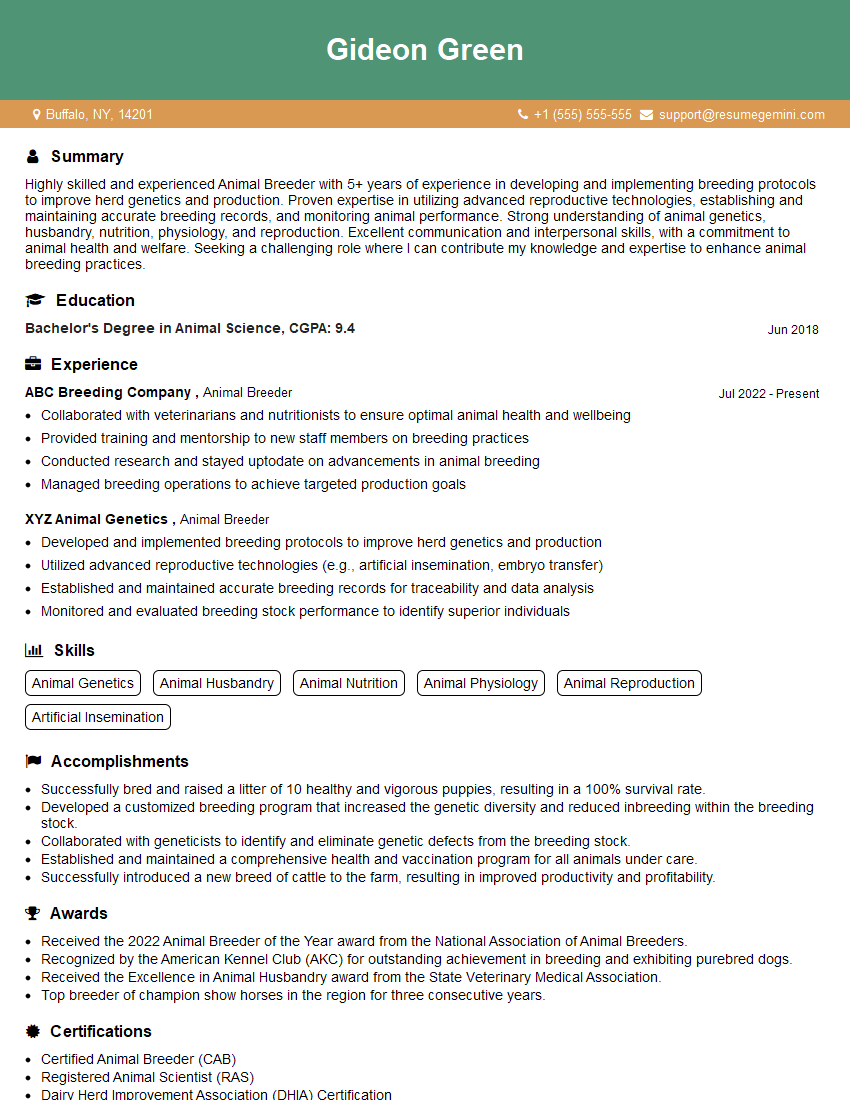
Mastering Selective Breeding and Line Breeding opens doors to exciting careers in agriculture, animal science, biotechnology, and conservation. A strong understanding of these concepts will significantly boost your interview performance and overall career prospects. To maximize your chances, create an ATS-friendly resume that highlights your skills and experience effectively. ResumeGemini is a trusted resource to help you build a professional and impactful resume that catches the eye of recruiters. We offer examples of resumes tailored to Selective Breeding and Line Breeding to guide you. Invest time in crafting a compelling resume – it’s your first impression and a key to unlocking your dream job.

Explore more articles
Users Rating of Our Blogs
Share Your Experience
We value your feedback! Please rate our content and share your thoughts (optional).
What Readers Say About Our Blog
Very informative content, great job.
good