Preparation is the key to success in any interview. In this post, we’ll explore crucial Semiconductor interview questions and equip you with strategies to craft impactful answers. Whether you’re a beginner or a pro, these tips will elevate your preparation.
Questions Asked in Semiconductor Interview
Q 1. Explain the difference between n-type and p-type semiconductors.
The fundamental difference between n-type and p-type semiconductors lies in their majority charge carriers. This difference is achieved through a process called doping, where we introduce impurity atoms into an intrinsic (pure) semiconductor like silicon.
N-type semiconductors are created by doping silicon with pentavalent impurities like phosphorus or arsenic. These impurities have five valence electrons, and four of them bond with the silicon atoms, leaving one extra electron free to move around. This extra electron becomes the majority charge carrier, leading to a negative charge dominance. Think of it like adding extra players to one team in a game, giving that team an advantage.
P-type semiconductors are created by doping silicon with trivalent impurities like boron or gallium. These impurities have three valence electrons. When they bond with silicon, they create a ‘hole’ – a missing electron – in the crystal lattice. This hole acts as a positive charge carrier because it can accept an electron from a neighboring atom, effectively moving the ‘hole’ through the lattice. Imagine it as creating empty seats in a stadium; those empty seats can be filled, and the empty seat itself effectively moves.
In summary:
- N-type: Majority carriers are electrons (negative charge).
- P-type: Majority carriers are holes (positive charge).
This distinction is crucial for creating semiconductor devices because the interaction between n-type and p-type regions forms the basis of diodes, transistors, and integrated circuits.
Q 2. Describe the operation of a MOSFET.
A MOSFET, or Metal-Oxide-Semiconductor Field-Effect Transistor, is a three-terminal semiconductor device that acts as a switch or amplifier. It’s the workhorse of modern electronics, found in virtually every integrated circuit.
Its operation relies on controlling the flow of current between the source and drain terminals using a voltage applied to the gate terminal. A thin insulating layer of silicon dioxide (SiO2) separates the gate from the channel, allowing for excellent control with minimal current leakage.
Here’s a simplified breakdown:
- N-channel MOSFET (NMOS): A positive voltage on the gate attracts electrons to the channel, forming a conductive path between the source and drain. This ‘turns on’ the transistor.
- P-channel MOSFET (PMOS): A negative voltage on the gate attracts holes to the channel, creating a conductive path. This also ‘turns on’ the transistor.
The beauty of the MOSFET is its ability to control a large current with a small gate voltage, making it highly energy-efficient. This makes it suitable for building integrated circuits with millions or even billions of transistors.
Consider a simple analogy: Imagine a water pipe (channel) connecting two reservoirs (source and drain). The gate acts like a valve; applying a voltage (turning the valve) controls the flow of water (current).
Q 3. What are the different types of memory in semiconductors?
Semiconductors employ various types of memory, broadly categorized as volatile and non-volatile. Volatile memory loses its stored information when power is removed, while non-volatile memory retains data even without power.
Volatile Memory:
- SRAM (Static Random-Access Memory): Uses flip-flops to store each bit, requiring continuous power to maintain the data. It’s faster and more expensive than DRAM.
- DRAM (Dynamic Random-Access Memory): Stores data as electrical charges in capacitors, requiring periodic refresh cycles to prevent data loss. It’s slower and cheaper than SRAM.
Non-Volatile Memory:
- ROM (Read-Only Memory): Data is permanently stored during manufacturing and cannot be easily changed. Used for firmware and boot instructions.
- PROM (Programmable ROM): Data can be written once after manufacturing, usually using a special programmer.
- EPROM (Erasable PROM): Data can be erased using ultraviolet light and reprogrammed.
- EEPROM (Electrically Erasable PROM): Data can be electrically erased and reprogrammed in smaller blocks, without needing UV light. This is the basis for many flash memories.
- Flash Memory: A type of EEPROM that can be erased and reprogrammed in blocks, commonly used in SSDs, USB drives, and memory cards. It’s slower than DRAM but faster than most other non-volatile memories.
The choice of memory type depends on factors like speed requirements, cost, power consumption, and the need for data persistence.
Q 4. Explain the process of CMOS fabrication.
CMOS (Complementary Metal-Oxide-Semiconductor) fabrication is a complex process involving multiple steps to create integrated circuits. It’s based on combining both NMOS and PMOS transistors on a single chip to minimize power consumption.
The process generally involves:
- Wafer Preparation: Starting with a silicon wafer, it undergoes cleaning and polishing to provide a smooth surface.
- Oxidation: A layer of silicon dioxide (SiO2) is grown on the wafer to act as an insulator.
- Photolithography: A photoresist is applied, exposed to UV light through a mask defining the circuit pattern, and developed to etch away unwanted areas of the oxide layer.
- Ion Implantation: Impurity atoms (dopants) are implanted into the silicon to create n-type and p-type regions.
- Metallization: Metal layers (usually aluminum or copper) are deposited and patterned to interconnect the transistors.
- Passivation: A protective layer is deposited to isolate the circuit from the environment.
- Testing and Packaging: The wafer is tested, diced into individual chips, and packaged for use.
This process is iterative, repeating steps 3-6 multiple times to create layered structures with transistors and interconnections. Advanced CMOS processes involve extremely fine feature sizes, requiring sophisticated equipment and techniques. The entire process demands extremely clean room conditions to prevent contamination.
Q 5. What are the challenges in scaling down semiconductor devices?
Scaling down semiconductor devices, while enabling increased transistor density and performance, presents significant challenges:
- Power Density: As transistors shrink, the power density increases, leading to heat dissipation issues. Managing heat becomes increasingly difficult as transistors get smaller and closer together. This could lead to device failure or performance degradation.
- Leakage Current: Smaller transistors experience higher leakage currents, consuming power even when they are ‘off’. This reduces battery life and increases heat generation.
- Short Channel Effects: At smaller dimensions, the electrical characteristics of the transistors deviate from the ideal behaviour, leading to performance variations and reliability concerns.
- Process Variations: Manufacturing processes become more susceptible to variations at smaller scales, impacting the performance and yield of devices.
- Quantum Effects: At the nanoscale, quantum mechanical effects become significant and can affect device behaviour, requiring new design and manufacturing approaches.
- Cost: The equipment and processes needed for advanced nodes are incredibly expensive, demanding massive investments.
Overcoming these challenges requires innovations in materials science, device design, manufacturing processes, and circuit architecture.
Q 6. How does doping affect the conductivity of a semiconductor?
Doping significantly alters the conductivity of a semiconductor. A pure semiconductor (intrinsic) has a low conductivity because the number of charge carriers (electrons and holes) is limited. Doping introduces impurity atoms, dramatically increasing the carrier concentration.
In n-type semiconductors, the added pentavalent dopants provide extra electrons, greatly increasing the number of negative charge carriers and thus the conductivity. The electrons become the majority carriers. Similarly, in p-type semiconductors, trivalent dopants create ‘holes’, which are positive charge carriers. These holes become the majority carriers, boosting conductivity.
The level of doping directly impacts conductivity. Higher doping concentration leads to higher conductivity, as more charge carriers are available to carry current. However, excessively high doping can also introduce unwanted side effects, such as increased leakage current and reduced mobility of carriers. Therefore, optimal doping levels are critical for achieving desired semiconductor performance.
Think of it like adding salt to water. Pure water is a poor conductor of electricity. Adding salt (the dopant) increases the number of ions (charge carriers) in the water, significantly improving its conductivity.
Q 7. Describe different types of semiconductor packaging.
Semiconductor packaging protects the delicate integrated circuits and provides a means for electrical connection to external circuits. Several types exist, categorized by form factor, thermal management capabilities, and cost.
Some common types include:
- Through-hole packages (DIP, etc.): These are older packages where the leads go through holes in a printed circuit board (PCB). They are simple but less suitable for high-density packaging.
- Surface-mount packages (SOIC, QFP, BGA, etc.): These packages have leads that are soldered directly onto the surface of the PCB, enabling higher density and better thermal management than through-hole packages.
- Chip Scale Packages (CSP): These packages are nearly the same size as the die itself, achieving very high density. They often lack robust lead-frames, making them more sensitive during assembly and handling.
- Ball Grid Array (BGA): Instead of leads, these packages use solder balls on the bottom to connect to the PCB, enabling high I/O counts and smaller package sizes.
- Plastic Leaded Chip Carrier (PLCC): A surface-mount package offering a low profile and high pin count.
The choice of package depends on factors like pin count, required performance, power consumption, cost, and board space constraints. Advanced packaging technologies, including 3D stacking and system-in-package (SiP) approaches, are continuously being developed to meet the demands of increasingly complex electronic systems.
Q 8. Explain the concept of carrier mobility.
Carrier mobility describes how easily electrons and holes move through a semiconductor material in response to an electric field. Think of it like this: imagine a crowded room. Electrons and holes are like people trying to navigate through the room. High mobility means they can move easily and quickly, while low mobility means they get stuck and move slowly. This ease of movement directly impacts the material’s conductivity.
It’s measured in units of cm²/Vs (centimeters squared per volt-second). A higher mobility value indicates better conductivity. Several factors influence carrier mobility, including temperature, crystal lattice imperfections (like impurities or defects), and the type of semiconductor material. For example, silicon has lower mobility compared to gallium arsenide, making GaAs suitable for high-frequency applications.
In practical terms, higher mobility is crucial for faster transistors and circuits. Designing semiconductors with high carrier mobility materials is essential for improving the speed and efficiency of electronic devices.
Q 9. What are the different types of semiconductor defects?
Semiconductor defects are imperfections in the crystal lattice structure that disrupt the regular arrangement of atoms. These defects can significantly impact the electrical and optical properties of the semiconductor. They are broadly classified into several types:
- Point Defects: These are localized imperfections involving a single atom or a few atoms. Examples include vacancies (missing atoms), interstitials (extra atoms in the lattice), and substitutional impurities (foreign atoms replacing host atoms). Doping, a crucial technique in semiconductor manufacturing, deliberately introduces substitutional impurities to control conductivity.
- Line Defects (Dislocations): These are one-dimensional imperfections, essentially misalignments in the atomic arrangement along a line. They arise during crystal growth or due to mechanical stress. Dislocations can act as scattering centers, reducing carrier mobility.
- Planar Defects: These are two-dimensional imperfections like grain boundaries (interfaces between different crystallites) and stacking faults (errors in the stacking sequence of atomic planes). Grain boundaries limit carrier transport, while stacking faults can affect the material’s strength and mechanical properties.
- Volume Defects: These are three-dimensional imperfections such as precipitates (clusters of impurity atoms) and voids (empty spaces). They can significantly alter the material’s properties and even lead to device failure.
Understanding and controlling these defects is critical in semiconductor manufacturing as they influence device performance and reliability. Techniques like annealing (heat treatment) are used to reduce the density of certain defects.
Q 10. How does temperature affect semiconductor performance?
Temperature plays a crucial role in semiconductor performance. Its effect is multifaceted and can be both beneficial and detrimental. Increasing temperature generally increases the energy of electrons, leading to:
- Increased Carrier Concentration: More electrons are excited from the valence band to the conduction band, increasing conductivity in intrinsic semiconductors. However, in extrinsic semiconductors, high temperatures can cause thermal ionization of impurities, potentially reducing conductivity at very high temperatures.
- Reduced Carrier Mobility: Increased thermal vibrations of the lattice atoms scatter carriers more effectively, leading to decreased mobility and hence reduced conductivity. This effect is dominant at higher temperatures.
- Increased Leakage Current: Higher temperatures increase the probability of electrons overcoming the energy barrier between different regions of the semiconductor, leading to increased leakage currents, especially in transistors and integrated circuits. This can affect the performance and reliability of devices.
Therefore, the optimal operating temperature range for a semiconductor device is carefully designed to balance these competing effects. Temperature control mechanisms, such as heat sinks and thermal management strategies, are essential for ensuring reliable operation, especially in high-power applications.
Q 11. Explain the working principle of a bipolar junction transistor (BJT).
A bipolar junction transistor (BJT) is a three-terminal semiconductor device capable of amplification and switching. Its operation relies on the control of current flow between two junctions formed by three doped regions: the emitter, base, and collector.
Imagine a water faucet. The base is like a control valve, the emitter is the source of water, and the collector is the output. A small current injected into the base (control valve) can modulate a larger current flowing between the emitter and the collector. This is the basis of amplification.
In a NPN BJT (most common type), the emitter is heavily doped N-type, the base is lightly doped P-type, and the collector is moderately doped N-type. When a small positive voltage is applied to the base with respect to the emitter, it injects holes into the base region. These holes attract electrons from the emitter, creating a current. This current is amplified by the electric field in the base-collector junction, resulting in a much larger current flowing from the collector to the emitter.
BJTs can be used in various applications like amplifiers, switches, and logic gates, forming the foundation of many analog and digital circuits. Their simple structure and high gain make them versatile components in electronic systems.
Q 12. What is a semiconductor integrated circuit (IC)?
A semiconductor integrated circuit (IC), often called a microchip, is a miniature electronic circuit built on a single piece of semiconductor material, typically silicon. It contains thousands or even billions of transistors, resistors, capacitors, and other components interconnected to perform specific functions. Imagine a complex city miniatured onto a tiny silicon wafer.
The process of creating an IC involves intricate photolithographic techniques to pattern the circuit onto the silicon, followed by multiple steps of doping, etching, and deposition to build the various components. The resulting IC provides a compact and cost-effective solution for a wide range of functionalities, ranging from simple logic gates to complex microprocessors.
ICs are ubiquitous in modern electronics, powering everything from smartphones and computers to cars and medical devices. The miniaturization and integration achieved by ICs have revolutionized electronics, making them smaller, faster, and more energy-efficient.
Q 13. Describe the different types of logic gates used in digital circuits.
Digital circuits rely on logic gates to perform Boolean operations. These gates take one or more binary inputs (0 or 1) and produce a single binary output. Some fundamental logic gates include:
- AND Gate: Outputs 1 only if all inputs are 1.
A AND B = 1only ifA = 1andB = 1. - OR Gate: Outputs 1 if at least one input is 1.
A OR B = 1ifA = 1orB = 1or both. - NOT Gate (Inverter): Inverts the input. If
A = 0, output is1; ifA = 1, output is0. - NAND Gate: Outputs 0 only if all inputs are 1 (the inverse of an AND gate).
- NOR Gate: Outputs 0 if at least one input is 1 (the inverse of an OR gate).
- XOR Gate (Exclusive OR): Outputs 1 if exactly one input is 1.
- XNOR Gate (Exclusive NOR): Outputs 1 if both inputs are the same (either both 0 or both 1).
Combinations of these basic gates can create more complex logic functions, forming the basis of digital circuits, microprocessors, and computer systems. The choice of specific logic gates depends on the design requirements and optimization goals.
Q 14. Explain the concept of Moore’s Law.
Moore’s Law, observed by Gordon Moore, co-founder of Intel, states that the number of transistors on a microchip doubles approximately every two years. This observation, initially a prediction, has held true for several decades, driving exponential growth in computing power and reducing the cost of electronics.
However, it’s important to note that Moore’s Law is not a physical law; it’s an empirical observation. While the trend has continued for an extended period, the rate of miniaturization is slowing down due to physical limitations at the nanoscale. The challenges include heat dissipation, quantum effects, and manufacturing complexities. Researchers are exploring new materials and architectures to extend the lifespan of Moore’s Law or find alternative paths to increase computing power.
The implications of Moore’s Law are profound. It’s been a driving force behind innovation in various fields, including medicine, communications, and entertainment. The continued miniaturization of electronics has enabled smaller, faster, and more energy-efficient devices, fundamentally changing the way we live and work.
Q 15. What is the difference between a depletion mode and an enhancement mode MOSFET?
The key difference between depletion and enhancement mode MOSFETs lies in their conducting behavior at zero gate-source voltage (VGS).
In a depletion mode MOSFET, a channel already exists between the source and drain even when VGS is zero. Applying a negative VGS (for an n-channel MOSFET) depletes this channel, turning the device OFF. A positive VGS enhances the channel’s conductivity, turning the device ON. Think of it like a water pipe that’s already partially open; you can either close it further (depletion) or open it wider (enhancement).
Conversely, an enhancement mode MOSFET requires a positive VGS (for an n-channel MOSFET) to create a channel between the source and drain. At VGS = 0, the channel is pinched off, and the device is OFF. Increasing VGS enhances the channel, turning the device ON. This is like a water pipe that’s completely closed; you need to actively open it (enhancement) to allow water flow.
In summary:
- Depletion mode: Conducts at VGS = 0; controlled by depleting the channel.
- Enhancement mode: Non-conducting at VGS = 0; requires a gate voltage to create a channel.
Depletion mode MOSFETs are less common in modern digital circuits but find applications in analog circuits where a wider range of operation is required.
Career Expert Tips:
- Ace those interviews! Prepare effectively by reviewing the Top 50 Most Common Interview Questions on ResumeGemini.
- Navigate your job search with confidence! Explore a wide range of Career Tips on ResumeGemini. Learn about common challenges and recommendations to overcome them.
- Craft the perfect resume! Master the Art of Resume Writing with ResumeGemini’s guide. Showcase your unique qualifications and achievements effectively.
- Don’t miss out on holiday savings! Build your dream resume with ResumeGemini’s ATS optimized templates.
Q 16. Describe different types of lithography techniques used in semiconductor fabrication.
Lithography is the cornerstone of semiconductor fabrication, allowing us to create incredibly small and intricate patterns on a silicon wafer. Several techniques are used, each with its own strengths and limitations:
- Photolithography (Optical Lithography): This is the most widely used technique, employing UV light to transfer a pattern from a photomask to a photosensitive material (photoresist) coated on the wafer. Different wavelengths (deep UV, EUV) provide varying resolutions. It’s like using a stencil and light to create a shadow on a surface. The resolution is limited by the wavelength of light used.
- Electron Beam Lithography (EBL): This technique uses a focused beam of electrons to directly write patterns on the resist. It offers very high resolution, allowing for the creation of incredibly fine features. However, it’s a slow process, making it suitable for specialized applications like mask making or creating prototypes.
- Extreme Ultraviolet Lithography (EUV): EUV lithography uses light with an extremely short wavelength to achieve incredibly high resolution, enabling the creation of the smallest transistors in modern chips. The technology is expensive and complex, but essential for advanced node chips.
- Nanoimprint Lithography (NIL): This technique uses a mold to imprint a pattern onto a resist, much like stamping. It is a high-throughput, cost-effective alternative to other techniques for certain applications but faces challenges in achieving extreme resolutions.
The choice of lithography technique depends on factors like resolution requirements, throughput, cost, and the complexity of the design.
Q 17. How is the yield of a semiconductor process calculated and improved?
Semiconductor yield refers to the percentage of working chips produced from a wafer. It’s a critical metric that directly impacts the cost and profitability of chip manufacturing.
Yield Calculation: Yield is typically calculated as the ratio of the number of good chips to the total number of chips on a wafer. For instance, if a wafer has 100 dies (individual chips), and 80 are functional, the yield is 80%. However, this is a simple calculation. More complex models consider defect densities, clustering effects, and process variations.
Improving Yield: Improving yield is a continuous effort involving many aspects of the manufacturing process:
- Process optimization: Careful control of process parameters (temperature, pressure, time, etc.) is crucial. Any deviation can lead to defects.
- Defect reduction: Identifying and eliminating sources of defects, such as particle contamination, etching issues, or photolithography problems is paramount.
- Improved materials: Using higher-quality materials reduces the likelihood of defects.
- Redundancy and design for manufacturability (DFM): Incorporating redundancy in the chip design allows for some defects to be tolerated without impacting functionality. DFM considers manufacturing limitations during design, improving the overall yield.
- Process monitoring and control: Real-time monitoring and control of the manufacturing process can help identify and correct deviations before they lead to defects.
Improving yield translates directly to lower production costs and higher profitability.
Q 18. Explain different types of testing methods used in semiconductor manufacturing.
Testing is a crucial step in semiconductor manufacturing to ensure that chips meet specifications and are free of defects. Various testing methods are employed at different stages:
- In-line testing: Performed during manufacturing to monitor process quality and detect defects early. This might involve electrical testing of individual wafers or dies.
- Wafer-level testing: Tests are performed on the entire wafer before individual dies are separated. This allows for efficient identification and sorting of faulty dies.
- Final testing: Each individual chip undergoes thorough testing after packaging. This includes functional tests, parametric tests, and reliability tests.
- Functional testing: This verifies that the chip performs its intended functions according to its specifications. This can involve complex test patterns and simulations.
- Parametric testing: Measures various electrical parameters of the chip, such as voltage, current, and capacitance, to ensure they are within acceptable limits.
- Reliability testing: Assesses the chip’s ability to withstand various environmental conditions and stresses over time. This includes tests like temperature cycling, humidity testing, and burn-in.
- Automated Test Equipment (ATE): ATE systems are used for high-speed automated testing of large volumes of chips. They use sophisticated algorithms and parallel test methods.
The choice of testing method depends on the chip’s complexity, application, and cost constraints. The goal is to identify and eliminate faulty chips efficiently before they reach the end user.
Q 19. What are the common failure mechanisms in semiconductor devices?
Semiconductor devices are susceptible to various failure mechanisms, impacting their functionality and reliability. These can be broadly categorized as:
- Electromigration: The movement of metal ions within conductors due to high current densities, eventually leading to open or short circuits. This is more common in smaller devices due to increased current density.
- Hot Carrier Effects: High electric fields can accelerate charge carriers, causing them to impact the silicon lattice and degrade device performance or even destroy the device. This is a major concern in advanced CMOS technology.
- Time-Dependent Dielectric Breakdown (TDDB): The gradual degradation of the insulating layer (gate oxide) in MOSFETs due to high electric fields and stress, leading to leakage current and eventually breakdown.
- Negative Bias Temperature Instability (NBTI): A degradation mechanism in MOSFETs primarily affecting p-channel transistors under negative gate bias and elevated temperatures, leading to threshold voltage shifts and performance degradation.
- Early Failures: These failures occur early in the device lifetime due to manufacturing defects or material issues. This could be from particle contamination, short circuits, or open circuits.
- Wear-out Failures: These failures occur after a period of normal operation due to degradation mechanisms like electromigration, hot carrier effects, or TDDB.
Understanding these failure mechanisms is critical for designing reliable and robust semiconductor devices. Advanced techniques like reliability modeling and accelerated stress testing are used to predict and mitigate these failures.
Q 20. How do you troubleshoot a faulty semiconductor device?
Troubleshooting a faulty semiconductor device is a systematic process that combines hardware and software techniques. Here’s a general approach:
- Visual Inspection: Begin with a careful visual inspection for any obvious physical damage, such as cracks, burns, or loose connections.
- Initial Testing: Use basic electrical measurements (voltage, current) to identify whether the device is completely dead or exhibiting specific symptoms. For example, if a power supply isn’t providing voltage then no amount of testing of the IC is useful.
- Isolate the Problem: If a board has multiple chips, start by isolating the faulty component by selectively powering down sections or replacing suspected components one by one.
- Functional Verification: Use appropriate test equipment (logic analyzers, oscilloscopes, multimeters) to verify that the device is functioning correctly under specified input conditions. Compare to a known good example if available.
- Schematic Analysis: Refer to the device’s datasheet and schematic diagram to understand its operation and identify potential points of failure. This allows for targeted analysis.
- Advanced Diagnostics: Use more sophisticated tools, like in-circuit emulators (ICEs) or boundary-scan testing, for advanced analysis. This helps to pinpoint precisely where the fault is.
- Data Analysis: If possible, analyze any error logs or data generated by the device to reveal the cause of the failure.
Remember safety precautions when working with electronic components. Always use appropriate grounding and electrostatic discharge (ESD) protection. Often root-cause analysis requires a multi-disciplinary approach using information from manufacturing, design, and test data.
Q 21. Explain different types of semiconductor materials (e.g., silicon, germanium).
Semiconductors are materials with electrical conductivity between that of a conductor and an insulator. The most common semiconductor materials used in electronics are:
- Silicon (Si): The dominant semiconductor material due to its abundance, relatively low cost, and excellent properties for integrated circuit fabrication. Its crystalline structure allows for precise control of electrical characteristics.
- Germanium (Ge): Historically significant, germanium had an early role in transistor development. It exhibits higher electron mobility than silicon but is less abundant and has other limitations that make it less suitable for large-scale integration.
- Gallium Arsenide (GaAs): A compound semiconductor with superior electron mobility compared to silicon, making it suitable for high-speed applications like microwave and optoelectronic devices. It’s more expensive than silicon.
- Silicon Carbide (SiC): A wide-bandgap semiconductor with high breakdown voltage and temperature tolerance, making it ideal for high-power and high-temperature applications like power electronics.
- Gallium Nitride (GaN): Another wide-bandgap semiconductor known for its high electron mobility and power handling capabilities, often used in high-frequency and high-power applications, particularly in power electronics and RF applications.
The choice of semiconductor material depends on the specific application requirements, such as speed, power handling, operating temperature, and cost.
Q 22. What are the advantages and disadvantages of different semiconductor technologies?
Semiconductor technology encompasses a vast landscape of fabrication techniques and materials, each with its own strengths and weaknesses. The choice depends heavily on the target application, balancing performance needs with cost and power consumption.
- Silicon-based CMOS (Complementary Metal-Oxide-Semiconductor): This is the dominant technology, used in almost all modern digital integrated circuits.
- Advantages: Mature technology, high integration density (allowing billions of transistors on a single chip), relatively low cost, and good performance.
- Disadvantages: Power consumption can be significant at high frequencies, scaling to even smaller feature sizes faces physical limitations (leakage current), and it’s not ideal for high-power applications.
- FinFET (Fin Field-Effect Transistor): A 3D transistor architecture that improves performance and reduces leakage compared to planar CMOS.
- Advantages: Enhanced performance, reduced power consumption, improved scaling capabilities.
- Disadvantages: More complex and expensive fabrication process compared to planar CMOS.
- Gallium Nitride (GaN) and Silicon Carbide (SiC): These wide-bandgap semiconductors are superior for high-power and high-frequency applications.
- Advantages: Higher breakdown voltage, higher electron mobility, and better thermal conductivity, making them suitable for power electronics, 5G infrastructure, and electric vehicles.
- Disadvantages: Relatively less mature technology, higher cost, and challenges in integration with existing silicon-based systems.
For instance, a high-performance CPU will leverage advanced FinFET technology for its speed and power efficiency, while a power adapter might utilize GaN for its ability to handle high voltages and currents with minimal energy loss.
Q 23. Describe your experience with semiconductor design tools (e.g., Cadence, Synopsys).
I have extensive experience with industry-standard Electronic Design Automation (EDA) tools, primarily Cadence and Synopsys. My work has involved the entire design flow, from schematic capture and simulation to layout and verification.
In Cadence, I’ve utilized tools like Allegro for PCB layout, Virtuoso for custom IC design, and Spectre for analog/mixed-signal simulation. I’m proficient in using constraint files to guide the synthesis and placement and routing processes. For example, I’ve utilized .lib files for specifying transistor models and .sdc files to define timing constraints to ensure the design meets performance requirements.
With Synopsys, my experience includes using Design Compiler for logic synthesis, IC Compiler for physical implementation, and PrimeTime for static timing analysis. I’m familiar with using scripting languages like TCL to automate repetitive tasks and improve design efficiency. For instance, I wrote a TCL script to automate the process of generating reports for timing analysis and identifying critical paths within a large design.
My experience extends to verification using tools like VCS and ModelSim, ensuring the design functions correctly before fabrication.
Q 24. Explain your experience with semiconductor fabrication processes.
My understanding of semiconductor fabrication processes encompasses a comprehensive understanding of the various steps involved in transforming a silicon wafer into a functional integrated circuit. This includes photolithography, etching, ion implantation, chemical-mechanical planarization (CMP), and metallization.
I’ve worked extensively with different process nodes, from older generations like 28nm to the latest sub-10nm technologies. I understand the complexities of managing process variations, yield optimization, and defect analysis. My knowledge extends to various techniques like chemical vapor deposition (CVD) for depositing thin films and plasma etching for precise pattern transfer.
For example, I’ve been involved in projects where we had to carefully control the doping profile during ion implantation to achieve the desired transistor characteristics. Understanding the intricacies of CMP, ensuring a perfectly flat wafer surface after each layer deposition, is crucial for successful fabrication. I have directly contributed to process optimization efforts by analyzing yield data and identifying potential sources of defects.
Q 25. How do you ensure the reliability of semiconductor devices?
Ensuring the reliability of semiconductor devices is paramount, impacting product longevity and customer satisfaction. A multi-pronged approach is necessary, encompassing robust design practices, rigorous testing, and comprehensive quality control throughout the entire manufacturing process.
- Design for Reliability (DFR): This involves employing design techniques to mitigate potential failure mechanisms. For example, incorporating redundant circuits, using robust design margins for voltage and temperature variations, and designing for electromigration resistance.
- Process Control and Monitoring: Maintaining tight control over the fabrication process parameters is crucial. Regular monitoring and statistical process control (SPC) help identify and correct deviations before they lead to defects.
- Testing and Characterization: Extensive testing at various stages – wafer level, package level, and system level – is essential to detect and screen out faulty devices. This includes tests for parametric variations, functionality, reliability (e.g., Highly Accelerated Life Testing – HALT), and environmental robustness.
- Failure Analysis: Investigating failed devices is vital to understand the root cause and implement corrective actions. Techniques like scanning electron microscopy (SEM), X-ray analysis, and electrical probing are used to identify defects.
For example, during a project where we faced unexpected field failures, rigorous failure analysis revealed a critical flaw in the design’s power supply circuitry. Redesigning this component, along with improved quality control measures, addressed the issue and improved overall product reliability.
Q 26. Describe your experience with semiconductor testing and characterization.
My experience in semiconductor testing and characterization includes working with various automated test equipment (ATE) and developing test strategies to verify device functionality and performance.
I’m proficient in using ATE systems from companies like Advantest and Teradyne to perform parametric and functional tests on a wide range of semiconductor devices. This includes both digital and analog testing, with familiarity in developing test programs using proprietary ATE languages.
Beyond ATE testing, I have experience with characterization techniques, such as current-voltage (I-V) measurements, capacitance-voltage (C-V) measurements, and noise characterization. I understand the importance of statistical analysis of test data to identify process variations and ensure product quality meets specifications. For instance, I’ve used statistical methods like control charts and process capability analysis to monitor the performance of our testing processes. These analyses enable proactive identification of potential quality issues and ensure our devices consistently meet specifications.
Q 27. What are your strategies for managing semiconductor projects?
Managing semiconductor projects effectively requires a structured approach and strong leadership. My strategy focuses on clear communication, detailed planning, and risk mitigation.
- Detailed Project Planning: This involves defining clear objectives, creating a detailed work breakdown structure (WBS), and establishing realistic timelines and milestones. Using project management tools like MS Project or Jira helps track progress and identify potential delays.
- Risk Management: Identifying and mitigating potential risks is crucial. This involves developing contingency plans for unforeseen issues, such as equipment failures, design flaws, or supply chain disruptions.
- Cross-functional Collaboration: Effective communication and collaboration among design engineers, fabrication engineers, test engineers, and management are essential. Regular meetings and status updates help maintain alignment and address potential issues promptly.
- Cost and Resource Management: Careful budgeting and resource allocation are vital to ensure projects are completed within the allocated resources. Monitoring expenses and optimizing resource utilization are essential.
For example, in a recent project facing a tight deadline, I implemented a daily stand-up meeting to foster communication and promptly address emerging roadblocks. This ensured we stayed on schedule and delivered the product successfully.
Q 28. What are the future trends in semiconductor technology?
The semiconductor industry is continuously evolving, driven by the relentless pursuit of faster, smaller, and more energy-efficient devices. Key future trends include:
- Advanced Packaging Technologies: Techniques like 3D stacking and chiplets will enable higher integration density and improved performance. This addresses the challenges of scaling down individual transistors.
- Beyond CMOS: Exploring alternative materials and architectures, such as spintronics and quantum computing, will be crucial to overcome the limitations of CMOS technology beyond a certain scaling limit.
- AI-driven Design and Manufacturing: Artificial intelligence and machine learning will play a more significant role in automating design processes, optimizing manufacturing yields, and accelerating innovation.
- Sustainable Semiconductor Manufacturing: The industry is focusing on reducing its environmental footprint by adopting more sustainable materials and manufacturing processes.
- Specialized Chips and Heterogeneous Integration: We are seeing a rise in specialized chips designed for specific applications (e.g., AI accelerators, high-performance computing), along with increased heterogeneous integration, combining different chip technologies on a single platform.
These trends indicate a future where semiconductors will become even more pervasive and critical to various aspects of our lives, driving further advancements in computing, communication, and other technologies.
Key Topics to Learn for Semiconductor Interview
- Semiconductor Device Physics: Understand the fundamental principles governing the operation of transistors (MOSFETs, BJTs), diodes, and other semiconductor devices. Explore concepts like doping, carrier transport, and current-voltage characteristics.
- Fabrication Processes: Familiarize yourself with the key steps in semiconductor chip manufacturing, including photolithography, etching, ion implantation, and thin film deposition. Understand the challenges and trade-offs involved in each step.
- Integrated Circuit Design: Learn about digital and analog circuit design principles, including logic gates, operational amplifiers, and memory circuits. Practice analyzing circuit behavior and troubleshooting common issues.
- Semiconductor Materials Science: Gain a solid understanding of the properties of silicon and other semiconductor materials, including their crystal structure, bandgap, and doping characteristics. Explore the impact of material properties on device performance.
- Testing and Characterization: Learn about various techniques used to test and characterize semiconductor devices and integrated circuits. Understand the importance of yield and reliability in semiconductor manufacturing.
- Analog and Mixed-Signal Circuit Design: This area blends analog and digital design, requiring a strong grasp of both. Understanding operational amplifiers, data converters, and signal processing techniques is crucial.
- Problem-Solving and Analytical Skills: Develop your ability to approach complex problems systematically, analyze data effectively, and devise creative solutions to challenges encountered in semiconductor design and manufacturing.
Next Steps
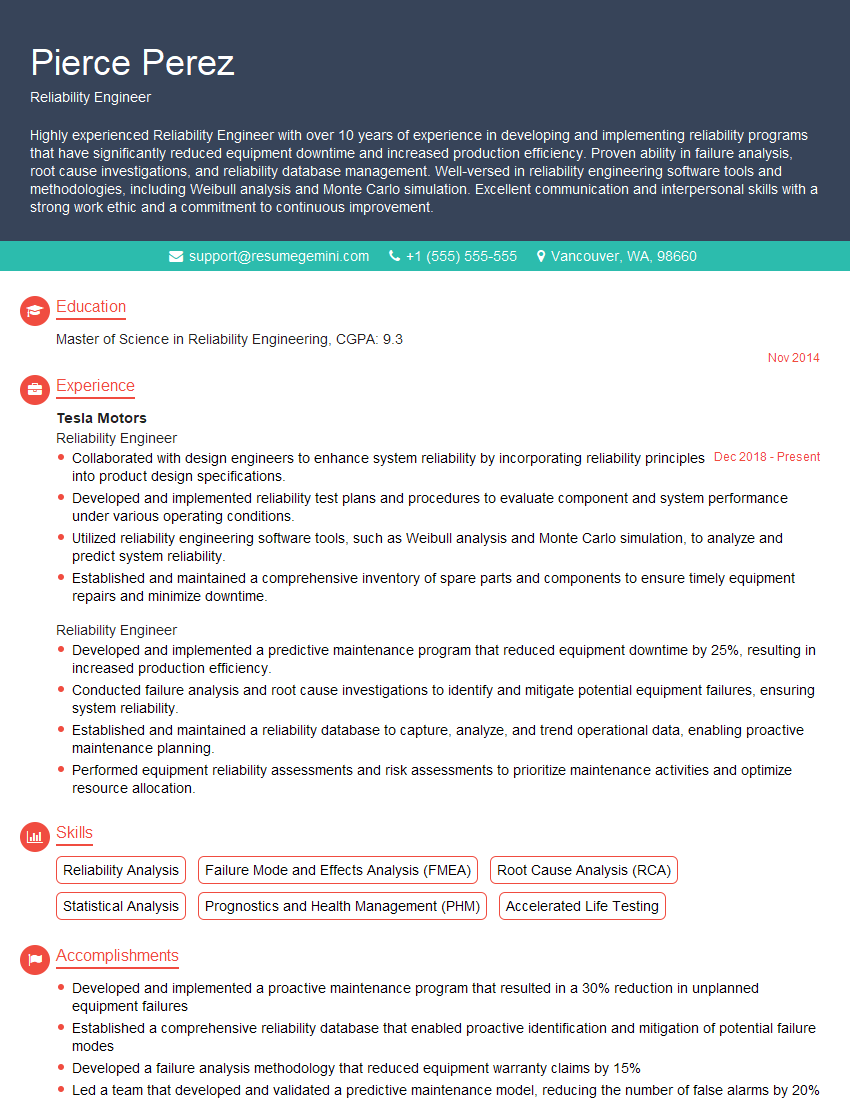
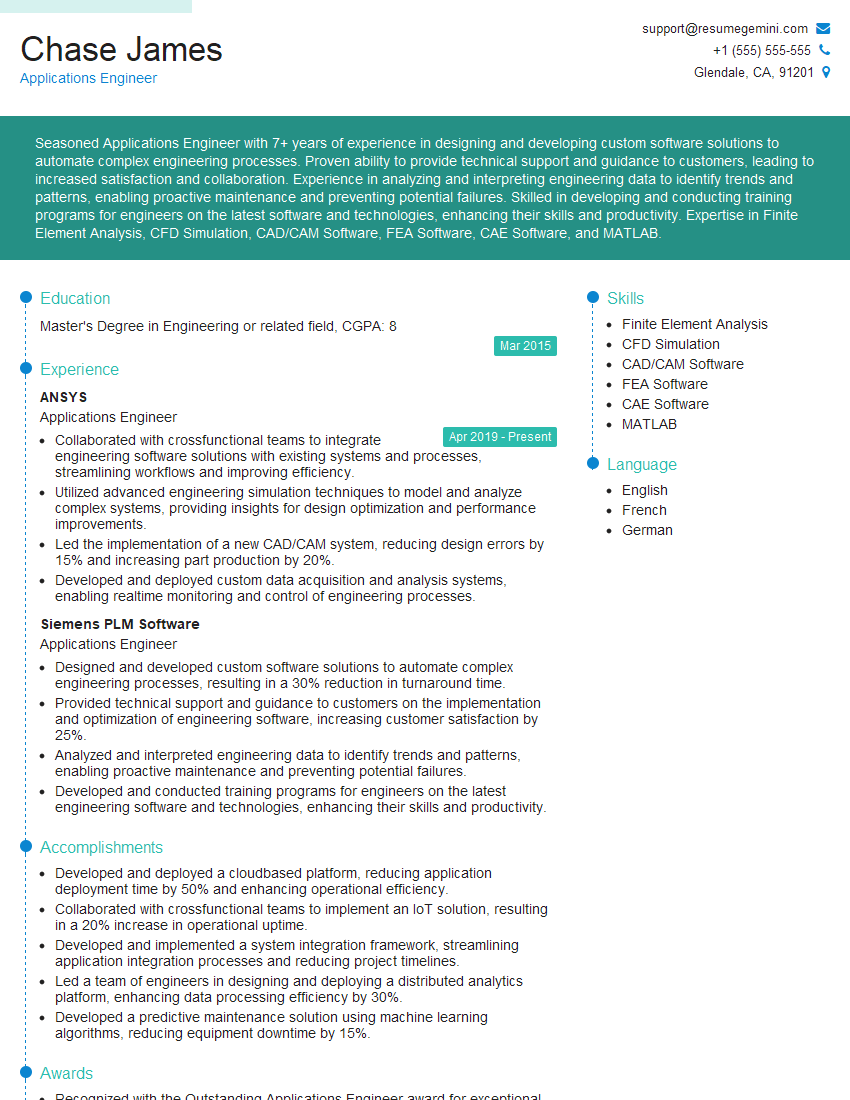
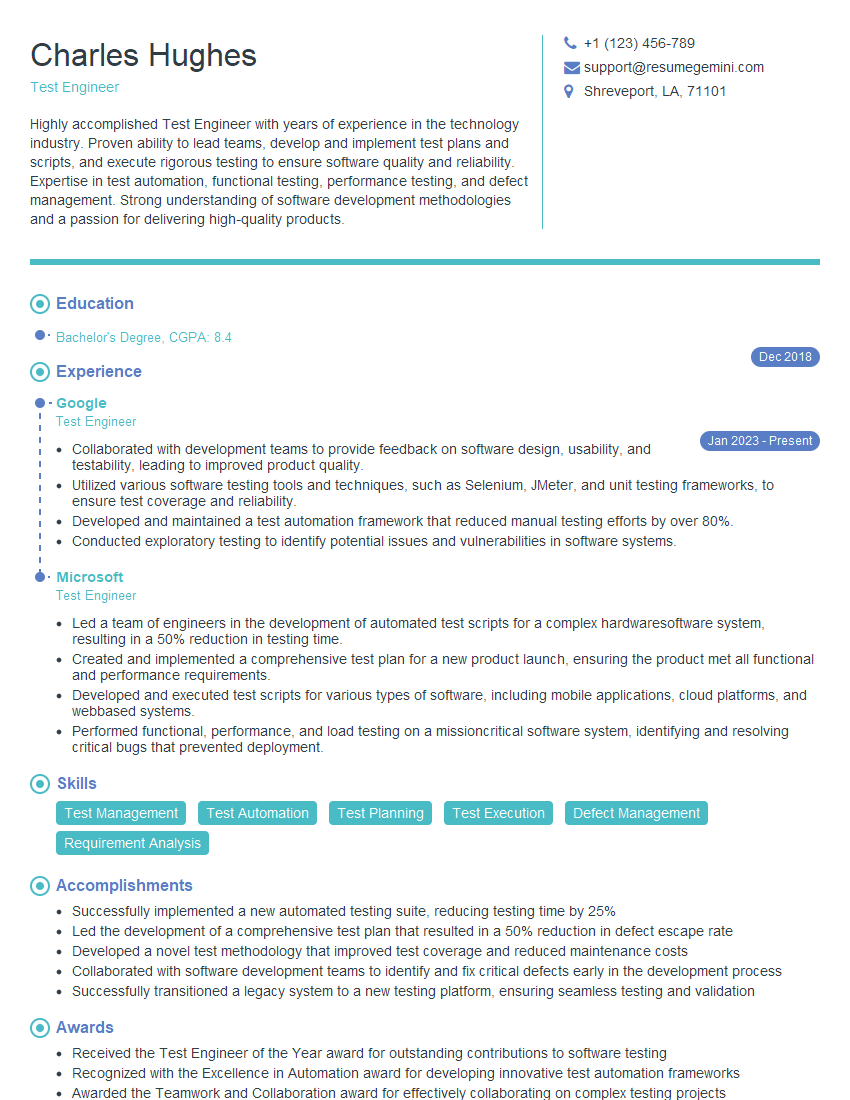
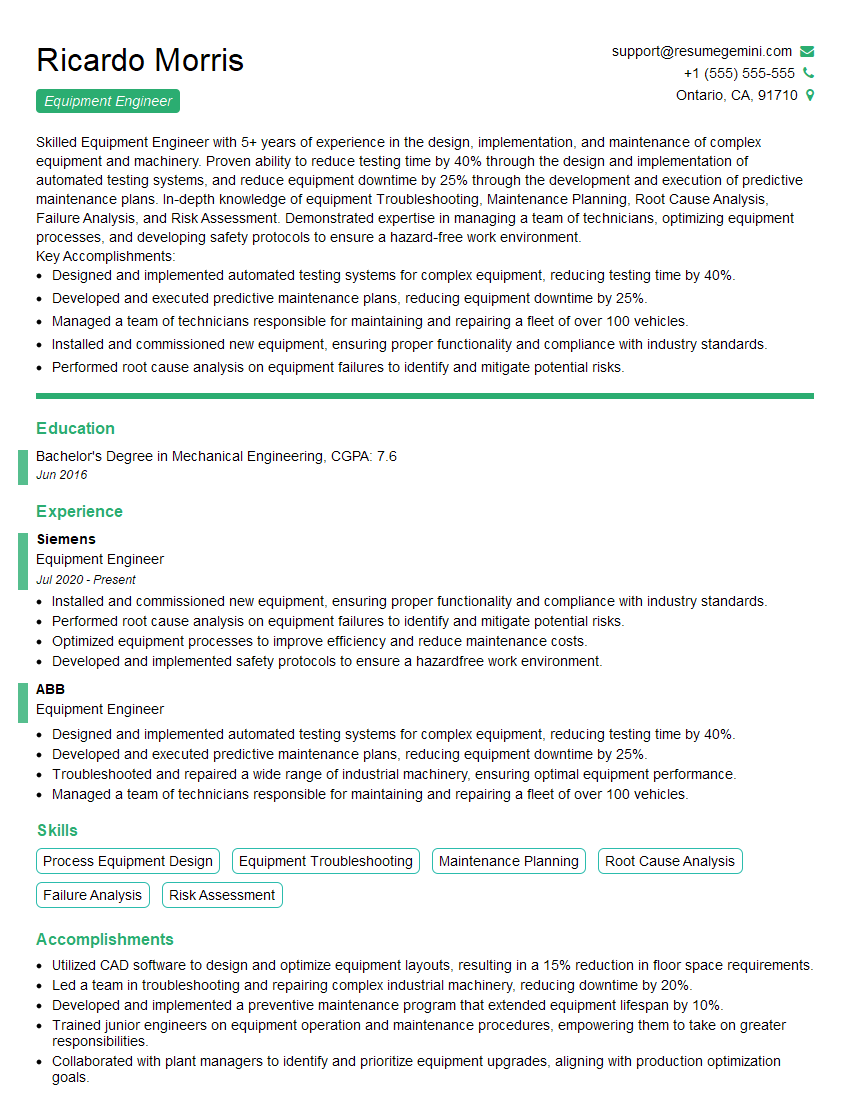
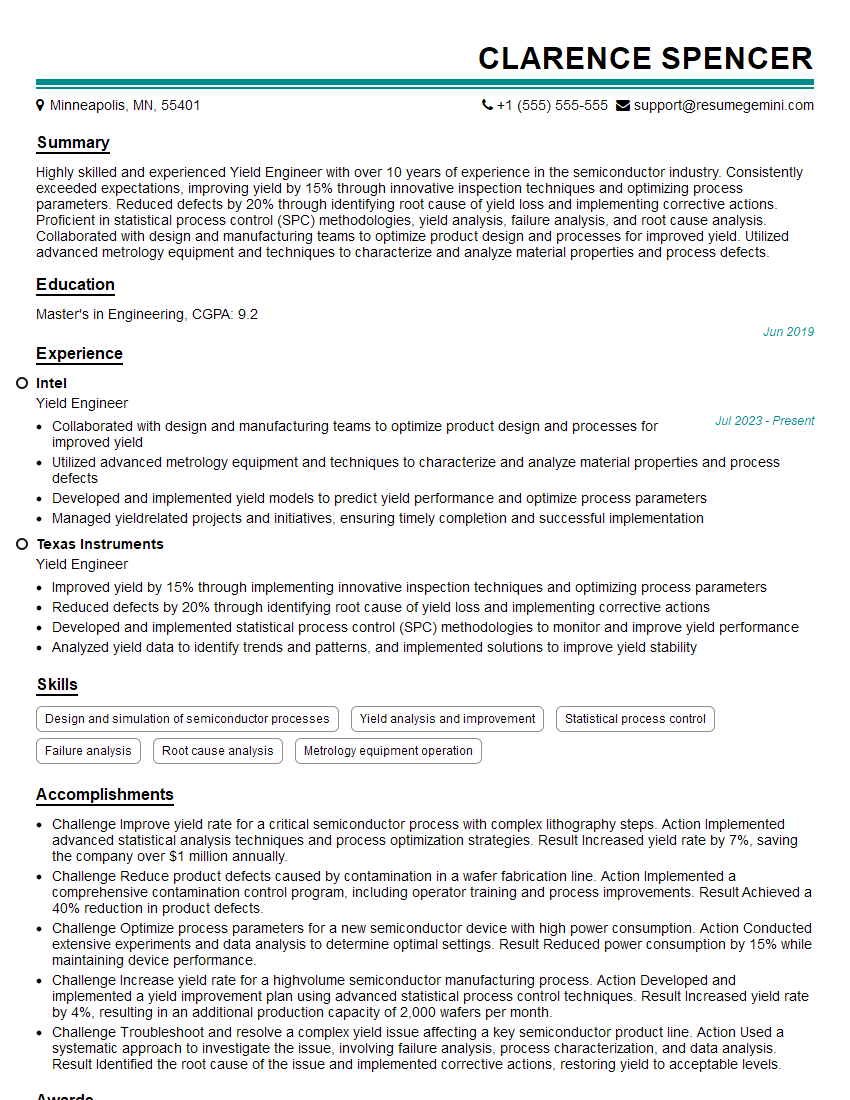
Mastering semiconductor technology opens doors to exciting and rewarding careers in a rapidly evolving industry. To maximize your job prospects, creating a strong, ATS-friendly resume is essential. ResumeGemini can help you build a professional resume that highlights your skills and experience effectively. We offer examples of resumes tailored specifically to the semiconductor industry to give you a head start. Invest time in crafting a compelling resume – it’s your first impression on potential employers.
Explore more articles
Users Rating of Our Blogs
Share Your Experience
We value your feedback! Please rate our content and share your thoughts (optional).
What Readers Say About Our Blog
Very informative content, great job.
good