Every successful interview starts with knowing what to expect. In this blog, we’ll take you through the top Serial Communication Protocols interview questions, breaking them down with expert tips to help you deliver impactful answers. Step into your next interview fully prepared and ready to succeed.
Questions Asked in Serial Communication Protocols Interview
Q 1. Explain the difference between synchronous and asynchronous serial communication.
The core difference between synchronous and asynchronous serial communication lies in how data is transmitted and synchronized between devices. Think of it like this: synchronous communication is like a perfectly choreographed dance, requiring precise timing and coordination between partners. Asynchronous communication is more like a casual conversation, where timing isn’t as critical, allowing for more flexibility.
Synchronous Serial Communication: This method uses a clock signal to synchronize the transmission and reception of data. Both the sender and receiver share a common clock signal, ensuring data is transferred at precisely timed intervals. This high degree of synchronization allows for high data rates and minimizes error but requires a complex clock synchronization mechanism.
Asynchronous Serial Communication: This method doesn’t rely on a shared clock signal. Instead, each data byte is transmitted independently, preceded by a start bit and followed by stop bits. This allows for simpler hardware implementation and greater flexibility in communication speeds. However, it’s generally slower than synchronous communication and requires more overhead bits (start and stop bits) for each byte.
Example: Synchronous serial communication is often used in high-speed data transfer applications like video transmission, while asynchronous communication is common in low-speed applications such as communication with a mouse or keyboard.
Q 2. Describe the functionality of UART (Universal Asynchronous Receiver/Transmitter).
The Universal Asynchronous Receiver/Transmitter (UART) is a fundamental chip or integrated circuit (within a microcontroller, for instance) that converts parallel data from a computer or microprocessor into serial data for transmission, and vice versa. It’s the workhorse of asynchronous serial communication.
Functionality: A UART takes parallel data (e.g., 8 bits representing a byte) and transmits it one bit at a time over a single serial line. It adds start and stop bits to each byte to mark the beginning and end of the data. It can also handle additional control signals (like parity bits) for error detection. On the receiving end, the UART does the reverse—receiving serial data one bit at a time and converting it back into parallel data for the computer or microprocessor.
In simple terms: Imagine you have a box of LEGO bricks (parallel data). The UART is the machine that takes those bricks one at a time and places them onto a conveyor belt (serial data). At the other end, another UART machine takes the bricks from the conveyor belt and puts them back into a box.
Real-world application: You’ll find UARTs everywhere, from simple embedded systems controlling appliances to more complex industrial automation systems. It’s a ubiquitous component for serial communication.
Q 3. What are the key characteristics of RS-232, RS-422, and RS-485?
RS-232, RS-422, and RS-485 are all serial communication standards, but they differ significantly in their electrical characteristics, signal transmission capabilities, and distances over which they can effectively communicate.
- RS-232: This is the oldest and most commonly known standard. It uses a single-ended signal transmission, meaning that the signal is referenced to ground. This makes it susceptible to noise and limits its transmission distance (typically under 50 feet). It’s relatively simple and inexpensive, but its limitations make it unsuitable for long distances or noisy environments.
- RS-422: This standard uses differential signaling, where the data is represented by the voltage difference between two wires rather than a single wire referenced to ground. This makes it much less susceptible to noise and allows for longer transmission distances (up to 4000 feet) and higher data rates compared to RS-232. It supports only point-to-point communication, meaning only one receiver can be connected to a single transmitter.
- RS-485: This also employs differential signaling, offering similar noise immunity and distance capabilities as RS-422. However, it allows for multi-point communication, meaning multiple receivers can be connected to a single transmitter in a bus topology. This makes it ideal for applications where many devices need to communicate over a long distance, like industrial sensor networks.
In a nutshell: RS-232 is simple but short-range; RS-422 is faster and longer-range but point-to-point; RS-485 is fast, long-range, and supports multiple devices.
Q 4. Explain the concept of baud rate and its significance in serial communication.
Baud rate refers to the number of signal units (symbols) transmitted per second in a digital communication signal. In serial communication, it often corresponds to the number of bits per second (bps). It essentially determines the speed of data transfer over a serial line.
Significance: The baud rate directly impacts the amount of data that can be transmitted in a given time. A higher baud rate means faster data transfer. However, increasing the baud rate beyond the capabilities of the hardware or the communication medium can lead to errors and unreliable communication. You need to choose an appropriate baud rate that’s supported by both the transmitting and receiving devices and suitable for the communication channel.
Example: If a serial communication link has a baud rate of 9600 bps, it can theoretically transmit 9600 bits per second. However, due to start, stop, and potentially parity bits, the actual data rate will be lower.
Practical Considerations: The maximum achievable baud rate depends on the physical characteristics of the transmission medium (cable type, length, noise levels), and the hardware capabilities of the UART or other serial interface.
Q 5. How does parity checking work in serial communication, and what are its limitations?
Parity checking is a simple error detection method used in serial communication to verify the integrity of transmitted data. It adds an extra bit (the parity bit) to each byte of data. The value of the parity bit is determined by counting the number of ‘1’ bits in the data byte. There are two main types: even and odd parity.
- Even Parity: The parity bit is set so that the total number of ‘1’ bits (including the parity bit) is even.
- Odd Parity: The parity bit is set so that the total number of ‘1’ bits (including the parity bit) is odd.
How it works: The receiver checks the parity of the received byte. If the parity doesn’t match the agreed-upon type (even or odd), it indicates an error in transmission. This alerts the receiver that data corruption may have occurred.
Limitations: Parity checking is a relatively simple and inexpensive method, but it has limitations. It can only detect an odd number of errors within a byte. If an even number of bits are flipped during transmission, the parity check will pass even though data is corrupted. It also doesn’t identify the location of the error within the byte, only that an error exists.
Q 6. What is the difference between half-duplex and full-duplex communication?
Half-duplex and full-duplex refer to the directions of data flow in a communication channel.
- Half-duplex: In half-duplex communication, data can flow in both directions, but only one direction at a time. Think of a walkie-talkie: only one person can speak at a time; both can listen. There’s a period of ‘switching’ needed between transmission and reception.
- Full-duplex: In full-duplex communication, data can flow in both directions simultaneously. Think of a telephone conversation: both parties can speak and listen at the same time. Simultaneous two-way communication is possible.
Example: A CB radio operates in half-duplex mode, while a telephone conversation uses full-duplex.
Q 7. Describe the process of handshaking in serial communication.
Handshaking in serial communication refers to the exchange of control signals between communicating devices to coordinate the data transmission process. It ensures reliable data transfer by synchronizing the sender and receiver. Several handshaking methods exist, including:
- Hardware Handshaking: This involves using dedicated control lines (such as RTS/CTS or DTR/DSR) to control the flow of data. The transmitter uses these lines to signal readiness, and the receiver acknowledges. It is faster than software handshaking but requires additional hardware lines.
- Software Handshaking: This relies on exchanging special characters within the data stream to indicate readiness for transmission and reception. It’s simpler in terms of hardware but can be slightly slower due to the overhead of processing these characters.
Process: In general, handshaking involves a sequence of signals indicating the sender’s readiness to transmit, receiver’s confirmation of readiness, the transmission of data, and an acknowledgement of data reception. This ensures the receiver is ready to receive data before the sender transmits, and that the sender only transmits new data once the receiver has acknowledged receiving and processed the previous data. This avoids buffer overflows and data loss.
Example: Imagine a waiter (transmitter) serving food to a customer (receiver). Hardware handshaking would be the waiter confirming the table is ready and the customer signaling readiness for the next course. Software handshaking would be the waiter and customer communicating via written notes about readiness for food.
Q 8. Explain the role of flow control mechanisms (e.g., XON/XOFF, RTS/CTS).
Flow control mechanisms in serial communication prevent a fast transmitter from overwhelming a slow receiver. Think of it like a conversation: you wouldn’t want to talk so fast that the other person couldn’t keep up. These mechanisms ensure data integrity and prevent buffer overflows.
XON/XOFF (Software Flow Control): This method uses special characters (XON and XOFF) to signal the transmitter to start and stop sending data. The receiver sends XOFF when its buffer is full and XON when it has space. It’s simple to implement but can be sensitive to noise which might cause misinterpretation of XON/XOFF characters.
RTS/CTS (Hardware Flow Control): This uses dedicated hardware lines (Request To Send and Clear To Send) for flow control. The receiver asserts CTS low to indicate a full buffer, preventing transmission; when it’s ready, it asserts CTS high. This method is more robust than XON/XOFF as it’s less prone to misinterpretations caused by noise.
Example: Imagine a microcontroller sending sensor data to a computer. If the computer is busy processing, it could signal XOFF or pull CTS low to pause the data stream until it has the capacity to receive more.
Q 9. What are the advantages and disadvantages of using SPI (Serial Peripheral Interface)?
SPI (Serial Peripheral Interface) is a synchronous, full-duplex communication protocol, meaning data can be sent and received simultaneously. It’s often used for short-range communication between a microcontroller and peripherals.
- Advantages:
- High speed: SPI can achieve significantly higher data transfer rates compared to I2C.
- Simplicity: The protocol is relatively easy to implement, requiring fewer lines than some alternatives.
- Full-duplex operation: Allows simultaneous sending and receiving of data.
- Disadvantages:
- Requires dedicated lines for each peripheral: This can increase the number of pins used on the microcontroller, especially with many peripherals.
- Master-slave architecture: Only one device can act as the master, limiting scalability.
- No built-in addressing mechanism: Address decoding usually needs to be implemented using chip select lines (CS).
In a practical scenario, SPI is well-suited for connecting high-speed peripherals like ADCs, DACs, and displays.
Q 10. Describe the master-slave architecture in SPI communication.
SPI employs a master-slave architecture. One device acts as the master, controlling the communication, while one or more devices function as slaves, responding to the master’s commands.
The master initiates communication by selecting a specific slave using a chip select (CS) line. It then clocks data to and from the selected slave. Only one slave is active at a time. The master determines the clock speed and data order. Each slave has a dedicated CS line for selection.
Example: In a system controlling a display, the microcontroller would be the SPI master, sending data to control the screen’s pixels. The display would be the slave responding to those commands.
Q 11. How does I2C (Inter-Integrated Circuit) communication differ from SPI?
Both SPI and I2C are serial communication protocols, but they differ significantly in architecture and functionality.
- SPI: Synchronous, full-duplex, master-slave, uses separate clock and data lines, requires individual chip selects (CS) for each slave.
- I2C: Synchronous, half-duplex (one device transmits at a time), multi-master capable (though usually one master dominates), uses two bidirectional lines (SDA and SCL), addressing is built into the protocol.
Essentially, SPI is faster for point-to-point communication with multiple devices but requires more wiring. I2C is simpler to wire and manage multiple devices but is slower. Choosing between them depends on speed requirements and the number of devices involved.
Q 12. Explain the concept of address decoding in I2C.
In I2C, address decoding allows the master to select a specific slave from a group of devices on the bus. Each device has a unique 7-bit address, which the master sends before sending data. This 7-bit address is combined with a read/write bit (R/W) to form an 8-bit address. The slave device compares its address with the received address and acknowledges only if the address matches.
The master initiates communication by sending a start condition, followed by the slave’s address and R/W bit. Only the slave with a matching address responds by sending an ACK (acknowledgement) bit. If the address doesn’t match, the slave ignores the message.
This mechanism avoids conflicts between multiple I2C devices.
Q 13. What are the benefits of using I2C over other serial communication protocols?
I2C offers several advantages:
- Reduced wiring: It only requires two wires (SDA and SCL), making it efficient for space-constrained applications.
- Multi-master capability: While usually one master dominates, multiple masters can share the bus, providing flexibility.
- Built-in addressing: The protocol handles addressing directly, simplifying the design compared to SPI.
- Easy implementation: The protocol’s simplicity and ease of use make it popular across numerous devices.
These benefits make I2C an excellent choice for applications like sensor networks, where many devices need to communicate with a central microcontroller using minimal wiring.
Q 14. How would you troubleshoot a serial communication issue where data is being corrupted?
Troubleshooting corrupted serial data involves a systematic approach.
- Verify Hardware Connections: Check all connections, including power supply, ground, and data lines. Look for loose connections, shorts, or broken wires. Consider using a multimeter to check continuity and voltage levels.
- Inspect Signal Quality: Use an oscilloscope to examine the data signals on the SDA/SCL (I2C) or MOSI/MISO/SCLK lines (SPI). Look for noise, glitches, or timing issues that might corrupt the data.
- Check Baud Rate: Ensure the transmitter and receiver are using the same baud rate. A mismatch here will lead to corrupted data.
- Examine Data Buffers: Investigate whether the buffers on the transmitter and receiver sides are overflowing or underflowing. Ensure buffer sizes are appropriate for the data rate.
- Check Flow Control: Make sure that flow control is correctly implemented and functional to prevent buffer overflows.
- Software Debugging: Examine the code on both the transmitting and receiving devices. Check for programming errors such as incorrect data handling or improper communication protocol implementation. Add logging statements to pinpoint the source of the problem.
- Test with a Loopback Plug: A loopback plug connects transmit and receive lines, allowing you to test the communication loop without external devices. This helps to isolate the problem to either the hardware or the software side.
By systematically going through these steps, you’ll narrow down the cause of the data corruption and find a solution. Remember to always document your findings throughout the process!
Q 15. Explain the importance of signal integrity in high-speed serial communication.
Signal integrity in high-speed serial communication is paramount because it directly impacts the reliability and speed of data transmission. Think of it like a highway: a smooth, well-maintained highway (good signal integrity) allows for fast and reliable traffic flow (data transmission), while a bumpy, damaged highway (poor signal integrity) leads to delays, accidents (data corruption), and potential traffic jams (communication failures).
High-speed serial communication involves transmitting data at very fast rates. At these speeds, even minor imperfections in the signal can lead to significant problems. These imperfections can arise from various sources such as impedance mismatches, reflections, crosstalk, and electromagnetic interference (EMI). Impedance mismatches occur when the characteristic impedance of the transmission line doesn’t match the impedance of the source or load, leading to signal reflections. Crosstalk is when signals on adjacent lines interfere with each other. EMI refers to unwanted electromagnetic energy that corrupts the signal. These issues can cause bit errors, data loss, and ultimately, system failure. Therefore, careful design considerations, including proper termination, shielding, and signal conditioning, are crucial for maintaining signal integrity.
For instance, in a high-speed data acquisition system, if the signal integrity is compromised, the acquired data may be inaccurate or unreliable, leading to incorrect analysis and potentially disastrous consequences. Maintaining signal integrity is achieved through careful PCB layout, using appropriate connectors and cables, and implementing proper signal termination techniques.
Career Expert Tips:
- Ace those interviews! Prepare effectively by reviewing the Top 50 Most Common Interview Questions on ResumeGemini.
- Navigate your job search with confidence! Explore a wide range of Career Tips on ResumeGemini. Learn about common challenges and recommendations to overcome them.
- Craft the perfect resume! Master the Art of Resume Writing with ResumeGemini’s guide. Showcase your unique qualifications and achievements effectively.
- Don’t miss out on holiday savings! Build your dream resume with ResumeGemini’s ATS optimized templates.
Q 16. Describe your experience with different serial communication protocols (UART, SPI, I2C, RS-232).
I have extensive experience with various serial communication protocols, including UART, SPI, I2C, and RS-232. Each has its strengths and weaknesses, making them suitable for different applications.
UART (Universal Asynchronous Receiver/Transmitter): This is a simple, widely used protocol for asynchronous communication. It’s great for low-speed, point-to-point connections, often used in simple debugging and human-machine interfaces (HMIs). I’ve utilized UART extensively in embedded systems projects for communicating with sensors and actuators. It’s relatively easy to implement, but its speed is limited.
SPI (Serial Peripheral Interface): This synchronous protocol is faster than UART and is commonly used for communicating with peripherals on a single microcontroller. It’s known for its simplicity and high speed, making it ideal for applications where speed and efficiency are paramount. I’ve used SPI for high-speed data transfers with ADCs, DACs, and flash memory in several projects.
I2C (Inter-Integrated Circuit): This is a multi-master, multi-slave, synchronous protocol perfect for connecting multiple devices on a single bus. Its advantage lies in its ability to address multiple devices, making it ideal for systems with many sensors or actuators. I’ve worked with I2C extensively in embedded projects involving complex sensor networks.
RS-232: This is an older standard but still widely used for long-distance communication. It’s a point-to-point protocol utilizing voltage levels for data representation. While robust for long distances, it’s slower than other protocols mentioned and requires level converters for compatibility with most modern microcontrollers.
My experience spans from designing low-level hardware interfaces to developing high-level communication software stacks for these protocols.
Q 17. What are some common challenges faced in implementing serial communication?
Implementing serial communication can present several challenges. These include:
Clock Synchronization: Synchronous protocols like SPI and I2C require precise clock synchronization between the master and slave devices. Any clock drift can lead to data errors.
Noise and Interference: External noise and electromagnetic interference can corrupt the signal, leading to data errors. Shielding and proper signal conditioning are crucial to mitigate this.
Protocol Mismatches: Incorrect configuration of baud rates, data bits, parity, and stop bits in asynchronous protocols like UART can lead to communication failures. Careful verification of these settings is essential.
Bus Contention: In multi-master protocols like I2C, conflicts can arise when multiple devices try to access the bus simultaneously. Proper arbitration mechanisms are necessary to resolve such conflicts.
Hardware Faults: Faulty hardware, such as damaged cables or connectors, can cause communication problems. Thorough testing and debugging are required to identify and fix such issues.
Addressing these challenges requires a methodical approach, combining careful design, robust hardware, and well-tested software.
Q 18. How do you handle data synchronization issues in serial communication?
Data synchronization issues in serial communication are primarily tackled through the use of appropriate protocols and techniques. For asynchronous protocols like UART, synchronization relies on the start and stop bits. The receiver uses the start bit to synchronize its sampling clock to the incoming data stream. However, small timing variations can lead to sampling errors. For synchronous protocols, a dedicated clock line is used for synchronization. In SPI, for instance, both master and slave share a common clock signal.
To handle synchronization problems, we use several strategies:
Clock recovery circuits: These circuits generate a clock signal synchronized to the incoming data stream, compensating for minor timing variations. This is particularly useful in high-speed applications.
Data framing: Use of start and stop bits in asynchronous protocols and synchronization bytes or packets in synchronous protocols help to establish data boundaries.
Error detection and correction codes: Techniques like parity checks, CRC (Cyclic Redundancy Check), or Hamming codes can detect and sometimes correct errors caused by synchronization problems. These codes add redundancy to the transmitted data to allow for error identification.
Proper clocking and signal integrity: Ensuring sufficient clock stability and high signal integrity is crucial to prevent synchronization drift and data corruption.
In cases where severe synchronization issues persist, using a logic analyzer to capture the signal timing can pinpoint the root cause, allowing for targeted corrections.
Q 19. Explain the use of interrupts in handling serial communication.
Interrupts are a crucial mechanism for efficiently handling serial communication, particularly when dealing with asynchronous events. Instead of constantly polling the serial port to check for incoming data (which wastes processor time), interrupts allow the microcontroller to perform other tasks until data arrives. When data is received, a hardware interrupt is triggered, signaling the processor to execute an interrupt service routine (ISR).
The ISR then handles the received data – reading it from the serial buffer, processing it, and potentially sending a response. This interrupt-driven approach is much more efficient, allowing the system to respond to data promptly without constant polling. This is vital in time-critical applications where real-time response is essential, like controlling industrial processes or robotics.
For example, in a data logging system using UART, an interrupt would signal the arrival of new sensor data. The ISR would then read this data, store it in memory, and potentially trigger further actions based on the data received.
Q 20. How do you debug serial communication problems using logic analyzers or oscilloscopes?
Debugging serial communication problems often involves using logic analyzers and oscilloscopes. These tools allow for detailed examination of the signals involved.
Logic Analyzer: A logic analyzer captures digital signals and presents them in a user-friendly format, showing the timing relationship between multiple signals. This allows for precise analysis of data streams, identifying errors such as missing bits, incorrect framing, or timing issues. For instance, a logic analyzer can reveal if the clock signal is stable, if the data is properly framed, and if any spurious signals are interfering with communication.
Oscilloscope: An oscilloscope displays analog signals over time, showing the voltage levels of the serial lines. It is excellent for detecting signal integrity problems like noise, reflections, or impedance mismatches. It can also identify glitches or distortions that might not be visible on a logic analyzer. For example, an oscilloscope can visualize the effect of noise on the signal, showing how it corrupts the data stream.
Debugging usually involves a systematic approach: first, visually inspecting the signals with these tools to identify any obvious problems, then analyzing the timing and voltage levels to pinpoint the root cause. The specific debugging steps will depend on the protocol and the nature of the problem, but these instruments are invaluable in isolating faults within the communication circuit.
Q 21. What are the differences between various serial data formats (e.g., 8N1, 7E1)?
Serial data formats like 8N1 and 7E1 specify the number of data bits, parity bit, and stop bits used in asynchronous communication. They influence the efficiency and error detection capabilities.
8N1: This indicates 8 data bits, no parity bit, and 1 stop bit. It’s the most common format and provides a balance between data efficiency and simplicity. No parity means no error detection, making it suitable for noise-free environments.
7E1: This specifies 7 data bits, even parity, and 1 stop bit. The parity bit adds a level of error detection; the receiver can detect single-bit errors. 7 bits are often sufficient for ASCII characters, but this reduces the amount of data that can be sent compared to 8-bit formats. The even parity indicates the number of 1s in the data bits + parity bit should be even. An odd number suggests a transmission error.
Other variations exist, such as 8O1 (8 data bits, odd parity, 1 stop bit), or configurations with multiple stop bits for added robustness at the cost of bandwidth. The choice of format depends on the application’s requirements for data integrity, speed, and error detection.
Q 22. What are some considerations when selecting a serial communication protocol for a specific application?
Choosing the right serial communication protocol is crucial for any application. It depends heavily on factors like data rate requirements, distance, noise immunity, cost, and power consumption. Let’s break down some key considerations:
- Data Rate: Protocols like RS-232 are suitable for low-to-moderate data rates, while others like SPI or USB can handle significantly higher speeds. If you’re transmitting high-resolution images or video, a high-speed protocol is essential. For simple sensor readings, RS-232 might suffice.
- Distance: RS-232 has limited range (typically under 50 feet), while RS-485 can extend to much greater distances using differential signaling, making it ideal for industrial settings with spread-out sensors. Fiber optic communication is necessary for extremely long distances.
- Noise Immunity: In noisy environments (like industrial machinery or electromagnetic interference), protocols like RS-485, with its differential signaling, offer superior noise immunity compared to RS-232’s single-ended signaling. Consider the electrical environment when making your choice.
- Cost: Simple protocols like UART (often underlying RS-232) require minimal hardware, whereas USB or CAN bus necessitate more complex and potentially expensive interface chips.
- Power Consumption: Low-power applications might favor protocols that minimize power usage. SPI, for example, is often more power-efficient than USB for short-range communication.
- Complexity: Protocols vary in implementation complexity. SPI is relatively simple to implement compared to more sophisticated protocols like CAN bus, which often involve arbitration and error detection mechanisms. Consider the development time and resources available.
For example, in a simple hobby project involving a microcontroller and a few sensors, RS-232 or UART might be perfectly adequate. However, in an automotive application requiring reliable communication between numerous ECUs in a noisy environment, CAN bus is a far better choice.
Q 23. Explain how you would implement a serial communication interface using a microcontroller.
Implementing a serial communication interface with a microcontroller involves several steps. Let’s use an example with UART and an Arduino (although the principles apply to most microcontrollers):
- Choose the Serial Port: Microcontrollers typically have several UART peripherals (e.g., UART0, UART1). Select an available port in your microcontroller’s datasheet.
- Configure the UART: Set the baud rate (data transmission speed), data bits (usually 8), parity (none, even, or odd), and stop bits (usually 1) using the microcontroller’s registers or relevant functions in your SDK. Example using Arduino:
Serial.begin(9600); // Initialize UART at 9600 baud- Write Data: To transmit data, use the appropriate microcontroller function (e.g.,
Serial.write()in Arduino). Serial.write("Hello, world!");- Read Data: To receive data, use a function to read data from the serial buffer (e.g.,
Serial.read()or similar). Make sure to handle buffer overflows. - Hardware Connections: Connect the microcontroller’s TX (Transmit) and RX (Receive) pins to the corresponding pins of the device you are communicating with. Ensure correct voltage levels and proper grounding.
In a more complex setup, you might need to handle flow control (e.g., using RTS/CTS) to prevent data loss when the receiver’s buffer is full. Properly selecting pull-up or pull-down resistors on the RX and TX lines is also essential.
Q 24. Describe your experience with different serial communication libraries or drivers.
I have extensive experience with various serial communication libraries and drivers. My experience includes:
- Arduino Serial Library: This is a straightforward library for simple serial communication using UART on Arduino microcontrollers. Its ease of use makes it ideal for rapid prototyping and educational purposes.
- pyserial (Python): A robust and widely used Python library for serial communication. It provides comprehensive functionality for configuring serial ports, reading and writing data, and handling various exceptions.
- STM32 HAL (Hardware Abstraction Layer): When working with STM32 microcontrollers, I use the HAL library to configure and manage the UART peripherals. It provides a higher-level abstraction, simplifying the interaction with low-level hardware registers.
- Linux Driver Development (character devices): I have experience writing custom kernel-level drivers for serial communication in Linux environments, especially when dealing with non-standard serial devices or requiring precise control over hardware behavior.
The choice of library depends on the target platform, complexity of the application, and desired level of control. For embedded systems with limited resources, simpler, low-level libraries are often preferred, while for desktop applications, higher-level libraries like pyserial offer greater ease of use and platform independence.
Q 25. How do you ensure data integrity and error detection in serial communication?
Ensuring data integrity in serial communication requires employing various error detection and correction techniques. The most common methods include:
- Parity Checks: Adding a parity bit to each byte allows for detection of single-bit errors. Even parity means the total number of 1s in the byte (including the parity bit) is even; odd parity requires an odd number of 1s.
- Checksums: A checksum is calculated from the data bytes (e.g., a simple sum of all bytes). The checksum is transmitted along with the data; the receiver recalculates the checksum and compares it to the received checksum. Discrepancies indicate errors.
- Cyclic Redundancy Checks (CRCs): CRCs are more sophisticated than simple checksums, providing stronger error detection capabilities. They involve polynomial division of the data; the remainder is the CRC, which is appended to the data. CRC-16 and CRC-32 are commonly used.
- Forward Error Correction (FEC): Techniques like Hamming codes add redundant bits to the data, allowing for the correction of errors without retransmission. This is more complex but essential for applications where retransmission is not feasible (e.g., satellite communication).
The choice of method depends on the required error detection strength and the acceptable overhead. Simple parity checks are sufficient for low-error-rate applications, while more robust methods like CRCs are necessary for higher reliability.
Q 26. Explain the concept of clock synchronization in synchronous serial communication.
Clock synchronization is critical in synchronous serial communication. In asynchronous communication, each byte has start and stop bits defining its boundaries, but synchronous communication relies on a shared clock signal to determine when data bits are transmitted and received.
Without a common clock, timing discrepancies can lead to data errors. Clock synchronization is typically achieved through one of these methods:
- External Clock: Both the transmitter and receiver share a common clock signal. This is the simplest method but requires a dedicated clock line, increasing wiring complexity.
- Clock Recovery: The receiver extracts the clock signal from the received data stream. This involves techniques like clock data recovery (CDR) circuits, which analyze the data stream to reconstruct the clock signal. This method is common in high-speed serial communication.
Maintaining clock synchronization is vital to prevent bit slips – where the receiver interprets the data bits incorrectly due to timing errors. Factors like clock jitter (small variations in clock frequency) and skew (timing differences between different parts of the clock signal) can impact synchronization and must be carefully managed in high-speed communication systems.
Q 27. How does DMA improve the performance of serial communication?
Direct Memory Access (DMA) significantly enhances the performance of serial communication by offloading data transfer from the CPU to a dedicated DMA controller.
Without DMA, the CPU needs to handle each byte of data being sent or received. This is CPU-intensive, especially for high-speed communication, leading to reduced CPU availability for other tasks. DMA directly transfers data between the serial port’s buffer and memory, freeing up the CPU. The CPU only needs to initiate the transfer and handle any interrupts related to completion or errors.
This results in several performance improvements:
- Increased Throughput: DMA enables much faster data transfer rates, significantly improving the overall serial communication speed.
- Reduced CPU Load: The CPU is no longer burdened with the task of byte-by-byte data transfer, improving its responsiveness to other applications.
- Lower Latency: DMA transfers happen concurrently with other CPU operations, reducing latency and improving real-time responsiveness.
In essence, DMA acts as a dedicated data mover, enabling the CPU to focus on more critical tasks while maintaining efficient serial communication.
Q 28. What is your experience with using serial communication in real-time systems?
I possess significant experience in integrating serial communication into real-time systems. Real-time applications demand stringent timing constraints – data must be processed and responded to within specific deadlines.
Here’s how I approach serial communication in real-time contexts:
- Deterministic Communication: Choosing protocols and implementation strategies that guarantee predictable data transfer times is crucial. Protocols like CAN bus are inherently designed for real-time systems due to their arbitration mechanisms.
- Interrupt Handling: Efficient interrupt handling is paramount. Interrupts triggered by serial data reception must be processed promptly to meet real-time constraints. Using DMA minimizes interrupt overhead.
- Buffer Management: Careful buffer management is necessary to avoid data loss or delays. Using circular buffers and strategies to prevent buffer overflows is essential.
- Real-Time Operating Systems (RTOS): Many real-time applications utilize RTOSs, such as FreeRTOS or VxWorks. I’m proficient in using RTOS features like semaphores and mutexes to coordinate access to serial communication resources and prevent race conditions.
- Timing Analysis: In critical real-time systems, it is often necessary to perform timing analysis to verify that all serial communication operations meet the timing deadlines. This ensures that the system meets its real-time performance requirements.
For example, I’ve worked on a project involving a robotic arm controlled via a serial interface. The system required precise timing to ensure accurate movements, and DMA, coupled with a carefully designed real-time task scheduler, was instrumental in achieving the necessary performance.
Key Topics to Learn for Serial Communication Protocols Interview
- Fundamentals: Understanding the basics – asynchronous vs. synchronous communication, baud rate, data bits, parity, stop bits, flow control (hardware and software).
- Popular Protocols: Deep dive into UART (Universal Asynchronous Receiver/Transmitter), SPI (Serial Peripheral Interface), I2C (Inter-Integrated Circuit), and their respective strengths and weaknesses. Consider comparing and contrasting these protocols.
- Data Framing and Error Detection: Mastering concepts like start and stop bits, parity checks, checksums, and CRC (Cyclic Redundancy Check) for ensuring data integrity.
- Practical Applications: Explore real-world examples where these protocols are used. Think about embedded systems, sensor networks, industrial automation, and data acquisition systems. Be prepared to discuss specific applications you’ve worked on.
- Hardware Interfacing: Familiarize yourself with connecting microcontrollers and other devices using serial communication. Understand the role of hardware components such as level shifters and transceivers.
- Troubleshooting and Debugging: Be ready to discuss common serial communication problems and how to troubleshoot them. This could include issues with baud rate mismatches, noise, or signal integrity.
- Software Implementation: Gain a solid understanding of how to program serial communication using different programming languages (e.g., C, Python). Be prepared to discuss relevant libraries and functions.
- Advanced Topics (Optional): Depending on the seniority of the role, you might consider exploring topics like RS-232, RS-485, CAN bus, or other specialized serial communication standards.
Next Steps
Mastering serial communication protocols is crucial for a successful career in embedded systems, robotics, IoT, and many other high-demand fields. These skills demonstrate a strong foundation in hardware and software interaction, making you a highly valuable asset to any team. To maximize your job prospects, create an ATS-friendly resume that clearly highlights your expertise. We strongly recommend using ResumeGemini to build a professional and impactful resume that gets noticed. ResumeGemini offers examples of resumes tailored to Serial Communication Protocols to guide you through the process. Take the next step towards your dream career today!

Principal Engineer Resume Sample
Computer Engineer Resume Sample

Research Scientist Resume Sample

Systems Architect Resume Sample
Network Engineer Resume Sample

Automation Engineer Resume Sample
Firmware Engineer Resume Sample

Technical Support Engineer Resume Sample

Test Engineer Resume Sample

Design Engineer Resume Sample
Telecommunications Engineer Resume Sample

Field Service Engineer Resume Sample

Hardware Engineer Resume Sample

Electrical Engineer Resume Sample
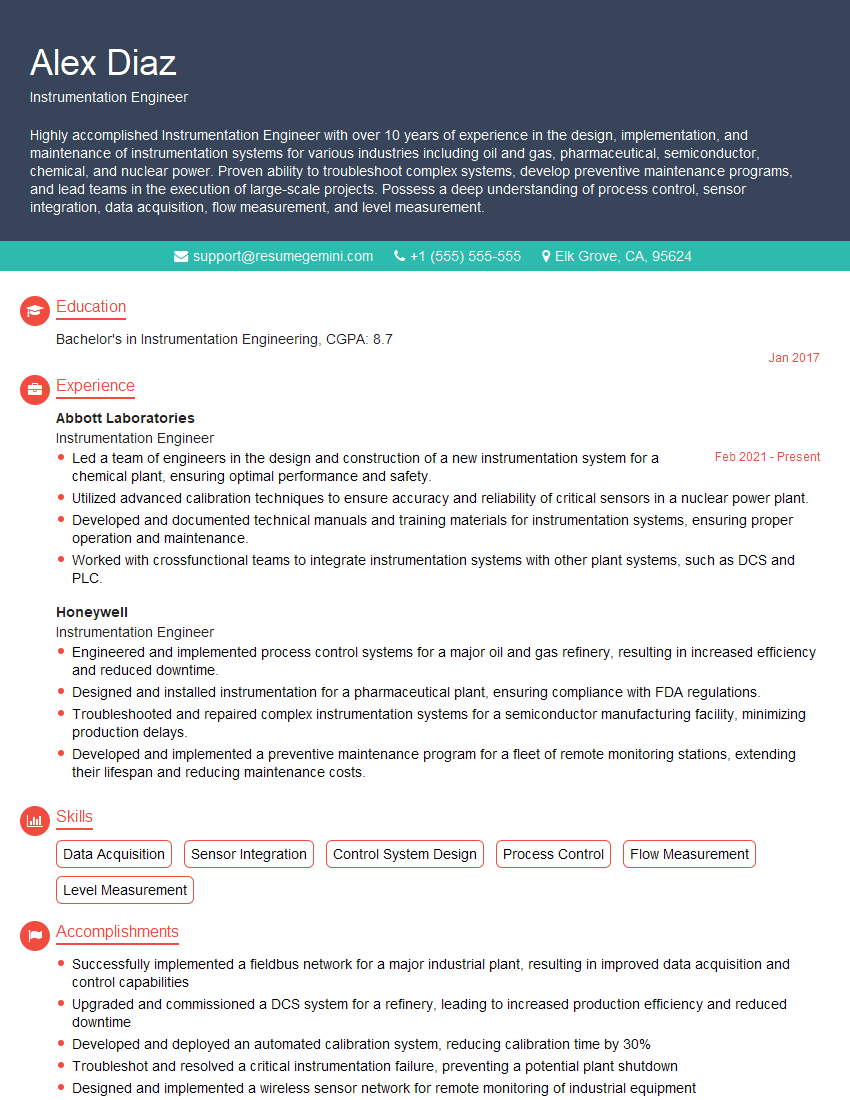
Instrumentation Engineer Resume Sample

Senior Engineer Resume Sample
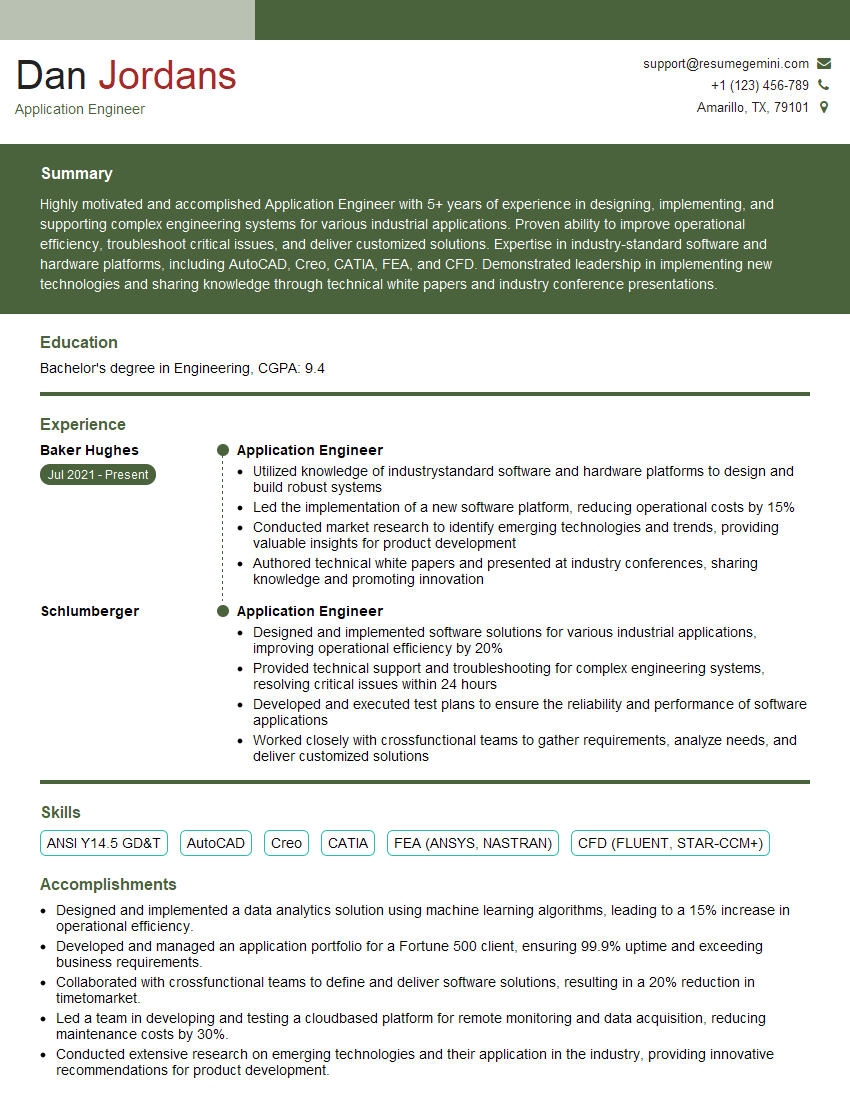
Application Engineer Resume Sample

Control Systems Engineer Resume Sample

Robotics Engineer Resume Sample
- Principal Engineer
- Computer Engineer
- Research Scientist
- Systems Architect
- Network Engineer
- Automation Engineer
- Firmware Engineer
- Technical Support Engineer
- Test Engineer
- Design Engineer
- Telecommunications Engineer
- Field Service Engineer
- Hardware Engineer
- Electrical Engineer
- Instrumentation Engineer
- Senior Engineer
- Application Engineer
- Control Systems Engineer
- Robotics Engineer
Explore more articles
Users Rating of Our Blogs
Share Your Experience
We value your feedback! Please rate our content and share your thoughts (optional).
What Readers Say About Our Blog
Very informative content, great job.
good