Preparation is the key to success in any interview. In this post, we’ll explore crucial Set and Stage Management interview questions and equip you with strategies to craft impactful answers. Whether you’re a beginner or a pro, these tips will elevate your preparation.
Questions Asked in Set and Stage Management Interview
Q 1. Describe your experience with show calls and their importance.
Show calls are the lifeblood of any theatrical production. They’re essentially detailed instructions outlining every action, cue, and transition needed for a smooth performance. Think of them as a meticulously crafted recipe for a perfect show. My experience encompasses creating, distributing, and executing show calls for a wide variety of productions, from intimate plays to large-scale musicals. Their importance lies in their ability to ensure consistency, prevent errors, and maintain the artistic vision throughout the run. Without a clear and well-organized show call, a show can quickly descend into chaos. For example, in a recent musical production, a meticulously detailed show call ensured that the quick changes between scenes happened flawlessly, preventing delays and ensuring a polished performance.
A typical show call includes:
- Scene descriptions: Concise summaries outlining the action and mood of each scene.
- Cue lists: Precise timings for lighting, sound, and set changes.
- Prop lists: Detailed lists of props used in each scene, including their placement and handling.
- Actor cues: Lines, actions, or movements to be executed at specific points.
- Technical cues: Instructions for lighting, sound, and stagehands.
A well-structured show call empowers all crew members to execute their tasks effectively, contributing to a seamless and professional production.
Q 2. Explain the process of creating a running schedule.
Creating a running schedule is like building a detailed roadmap for the entire production. It’s a dynamic document that outlines every aspect of the show’s schedule, from rehearsals to load-in, tech rehearsals, performances, and strike. My approach involves a phased process:
- Gathering information: I start by collecting data on rehearsal schedules, technical rehearsals, performance dates, and potential conflicts.
- Timeline creation: I use this information to create a preliminary timeline, allocating sufficient time for each phase of production. This often involves using a Gantt chart or similar scheduling software.
- Resource allocation: I then allocate resources like personnel, equipment, and venues based on the timeline, ensuring efficient utilization.
- Refinement and review: The schedule is then reviewed and refined in collaboration with the production team, addressing potential conflicts and making necessary adjustments.
- Distribution and communication: The finalized schedule is communicated to all relevant parties, and regularly updated.
For instance, in a recent production, we utilized a shared online calendar to manage the running schedule, allowing everyone to see the schedule, availability, and potential overlaps, thus preventing conflicts and ensuring effective communication.
Q 3. How do you manage conflicts between different production departments?
Managing conflicts between production departments—like lighting, sound, and set—requires proactive communication, collaboration, and a diplomatic approach. It’s like conducting an orchestra where every instrument needs to play in harmony. My strategy involves:
- Open communication: Fostering a culture of open and honest communication between departments, encouraging regular meetings and discussions.
- Problem identification and analysis: Identifying potential conflicts early and systematically analyzing their causes and impact.
- Compromise and negotiation: Working collaboratively with each department to find mutually acceptable solutions, sometimes requiring compromise.
- Prioritization and scheduling: Prioritizing tasks based on importance and urgency, ensuring that crucial elements are given precedence in the schedule.
- Documentation: Maintaining detailed records of decisions and agreements to prevent misunderstandings.
For example, if the lighting designer’s proposed setup conflicts with the set design, I would facilitate a meeting to discuss options, potentially involving compromises on both sides to find a solution that works for everyone.
Q 4. What software are you proficient in for scheduling and communication?
I’m proficient in several software applications commonly used in theatre production. These include:
- Google Calendar/Sheets: For scheduling, tracking tasks, and sharing information among team members.
- Microsoft Project/Asana/Trello: For more complex project management, task allocation, and tracking progress.
- QLab: For cue management and show control.
My expertise extends to using these tools to create efficient workflows, track progress, and manage communication effectively. For example, using Google Sheets to create a comprehensive prop list, easily accessible by all relevant team members, ensures everyone is on the same page and any potential issues are easily flagged and rectified.
Q 5. How do you handle a last-minute change to the set design?
Handling last-minute set design changes requires quick thinking, adaptability, and clear communication. It’s like navigating an unexpected detour on a road trip. My approach involves:
- Assessment: Immediately assess the impact of the change on the schedule, budget, and other aspects of the production.
- Communication: Communicate the change to all affected parties—the director, designers, crew, and relevant stakeholders—as quickly and clearly as possible.
- Problem-solving: Identify potential solutions and develop a revised plan to address the change effectively, often needing to prioritize and make adjustments to the existing schedule.
- Resource allocation: Determine if additional resources—time, personnel, materials—are required to implement the change.
- Implementation and monitoring: Oversee the implementation of the revised plan and monitor the situation closely for any unforeseen challenges.
For example, if a crucial set piece needs to be redesigned at the last minute, I would coordinate with the set designer, carpenter, and stagehands to re-plan and implement the changes, potentially delaying other tasks to ensure that the revised set piece is ready for its scene.
Q 6. What is your experience with budgeting and cost control?
Budgeting and cost control are essential skills in theatre management. It’s like managing a household budget, but with a much larger scale and more moving parts. My experience involves:
- Budget creation: Participating in the creation of the production budget, allocating funds to various departments and ensuring they align with the overall financial plan.
- Cost tracking: Tracking expenses meticulously, comparing actual spending to the budget, and identifying potential cost overruns.
- Value engineering: Exploring ways to achieve cost savings without compromising the artistic integrity of the production.
- Financial reporting: Providing regular financial reports to the production manager and other stakeholders to maintain transparency.
In a recent production, I managed to stay within the allocated budget by negotiating better deals with vendors and efficiently managing the use of materials. This involved close collaboration with all departments to avoid unnecessary spending.
Q 7. Describe your experience with safety protocols in a theatre environment.
Safety protocols are paramount in a theatre environment. It’s not just about complying with regulations; it’s about creating a culture of safety where everyone feels responsible for their own wellbeing and that of others. My experience includes:
- Risk assessment: Conducting regular risk assessments to identify potential hazards and developing strategies to mitigate them.
- Compliance: Ensuring compliance with all relevant safety regulations, including fire safety, electrical safety, and equipment handling.
- Training and education: Providing training and education to crew members on safety procedures and emergency protocols.
- Emergency planning: Developing and implementing emergency plans to address potential incidents, including evacuations and first aid.
- Enforcement: Enforcing safety rules consistently and addressing any safety violations promptly.
For example, before each show, I would conduct a walkthrough of the backstage area, ensuring that all equipment is properly secured, emergency exits are unobstructed, and safety guidelines are followed. This is done not just to comply with regulations, but to proactively prevent accidents and ensure the safety of everyone involved in the production.
Q 8. How do you ensure the smooth flow of rehearsals?
Ensuring a smooth rehearsal flow requires meticulous planning and proactive communication. It’s like orchestrating a symphony – each musician (actor, crew member) needs to know their part and when to play it.
- Detailed Schedules: I create and distribute comprehensive rehearsal schedules well in advance, clearly outlining the daily objectives, scene breakdowns, and anticipated run times. This minimizes wasted time and keeps everyone on track.
- Preparedness: I ensure all necessary props, costumes, and set pieces are readily available. Any potential delays due to missing items are identified and addressed proactively.
- Proactive Problem Solving: Anticipating potential issues before they arise is key. For example, if a complex scene requires specific lighting adjustments, I coordinate this with the lighting designer ahead of time, minimizing disruption during rehearsal.
- Regular Check-ins: Frequent communication is crucial. I conduct brief check-ins with the director and actors to address concerns and make necessary adjustments to the rehearsal schedule as needed. This ensures flexibility while maintaining focus.
- Positive Atmosphere: Creating a positive and supportive environment is vital. Encouraging open communication and addressing challenges constructively contribute to a smooth rehearsal process.
For example, on a recent production of ‘Hamlet’, we anticipated a lengthy scene requiring multiple costume changes. By pre-planning the changes with the costume department and actors, we minimized downtime and kept rehearsals flowing smoothly.
Q 9. What’s your approach to problem-solving in a high-pressure environment?
Problem-solving in a high-pressure environment relies on a calm, systematic approach. It’s about being resourceful and thinking on your feet. My approach is akin to being a firefighter; you need to assess the situation, contain the flames (the problem), and then extinguish it (find a solution).
- Assess the Situation: Quickly gather all the relevant information. What is the problem? What are the potential consequences? Who is involved?
- Prioritize: Determine the urgency of the problem. Is it a critical issue requiring immediate attention, or can it be addressed later without compromising the production?
- Brainstorm Solutions: Gather input from the relevant team members. Don’t hesitate to think outside the box; sometimes the simplest solution is the best.
- Implement Solution: Once a solution is agreed upon, execute it efficiently and effectively. Monitor the situation to ensure the solution is working.
- Document: After resolving the issue, document what happened, the solution implemented, and any lessons learned. This helps prevent similar problems in the future.
For instance, during a live performance, a crucial prop malfunctioned. By quickly assessing the situation, I directed a stagehand to substitute a similar prop, minimizing the interruption and avoiding any major disruption to the show.
Q 10. How do you maintain clear communication with the director and other crew members?
Clear communication is the cornerstone of successful theatre production. It’s essential to create and maintain open communication channels with everyone involved.
- Regular Meetings: Scheduling regular meetings with the director and other crew heads ensures alignment on goals and strategies. This is especially important during the initial phases of the production and before technical rehearsals.
- Production Communication Tools: I utilize various communication tools, including email, messaging apps (like Slack or WhatsApp), and production management software, to ensure timely and efficient communication. This helps disseminate information quickly and effectively.
- Detailed Documentation: Maintaining meticulous notes, including meeting minutes and communication logs, provides a clear record of decisions and plans. This is a vital resource for everyone involved.
- Active Listening: I actively listen to concerns and suggestions from everyone, fostering a culture of collaboration and teamwork. Open dialogue helps identify and address potential issues before they escalate.
- Feedback Loops: I encourage constructive feedback to refine communication strategies and processes.
For example, during a particularly challenging technical rehearsal, utilizing a shared online document allowed the director, lighting designer, and I to discuss and document all necessary lighting cues in real-time.
Q 11. Explain your understanding of load-in and load-out procedures.
Load-in and load-out are crucial phases that require meticulous planning and execution. They involve the efficient movement of sets, props, costumes, and equipment into and out of the venue. It’s a logistical puzzle where timing and organization are paramount.
- Detailed Plans: I develop comprehensive load-in/load-out plans, including detailed diagrams, schedules, and equipment lists. This outlines the precise location of each item and the sequence of operations.
- Coordination: I coordinate with the venue management, stagehands, and other crew members to ensure the smooth execution of the plans. This includes communicating any special access requirements or restrictions.
- Safety Procedures: Safety is paramount. I enforce strict safety procedures, including the proper use of equipment, safe lifting techniques, and clear communication on the worksite to prevent accidents.
- Inventory Management: I ensure a thorough inventory is conducted before, during, and after load-in/load-out to accurately track all items and prevent loss or damage.
- Post-Load-out Inspection: A thorough inspection of the venue after load-out is crucial to ensure no items were left behind and the space is left clean and in good condition.
In one production, I used a color-coded system to identify and locate items during load-in and load-out. This ensured speed and accuracy, preventing confusion and delays.
Q 12. Describe your experience with working with unions or guilds.
Working with unions and guilds requires a deep understanding of their contracts, rules, and regulations. It’s about building strong, professional relationships based on mutual respect and adherence to established procedures.
- Contract Knowledge: Thorough familiarity with the relevant union or guild contracts is crucial. This includes understanding working hours, pay rates, and safety regulations.
- Communication: Maintaining open and professional communication with union representatives is key to a smooth working relationship. This involves proactively addressing any concerns or issues that may arise.
- Compliance: Strict adherence to union rules and regulations is essential to avoid conflict or delays. This includes proper documentation of working hours and adherence to safety standards.
- Respectful Collaboration: Building strong relationships with union members based on mutual respect and cooperation helps foster a productive work environment.
- Conflict Resolution: Knowing how to address conflicts effectively and fairly is important. In the case of a disagreement, always consult with the union representative to find a solution that aligns with the established guidelines.
In my experience working with Actors’ Equity, I ensured all contract stipulations were met meticulously, fostering a positive and productive working relationship with the cast and their representatives. This resulted in a harmonious and efficient production.
Q 13. How do you manage a large team of stagehands?
Managing a large team of stagehands involves strong leadership, clear communication, and effective delegation. It’s like leading a well-oiled machine – each part needs to function smoothly and efficiently.
- Clear Roles and Responsibilities: Assigning clear roles and responsibilities to each stagehand prevents confusion and ensures everyone knows their tasks. This often involves creating a detailed crew list with assigned tasks.
- Effective Communication: Consistent and clear communication is critical. This involves regular briefings, clear instructions, and open channels for feedback and questions. Utilizing visual aids, like diagrams or drawings, can enhance understanding.
- Delegation: Effective delegation allows for efficient task completion and reduces the workload on any one individual. This requires trust and confidence in your team’s abilities.
- Motivation and Teamwork: Creating a positive and collaborative environment fosters teamwork and motivation. Recognizing and appreciating individual contributions boosts morale and productivity.
- Safety: Enforcing safety procedures and providing regular safety briefings is paramount. This includes proper lifting techniques, equipment safety, and emergency procedures.
On a large-scale opera production, I divided the stagehands into smaller, specialized teams, each with a designated lead. This facilitated efficient work and clear communication, resulting in a successful load-in and load-out.
Q 14. What is your experience with rigging and safety procedures related to it?
Rigging and safety procedures are paramount in theatre production, especially when working with heavy equipment and heights. It’s about understanding the physics of weight distribution and ensuring compliance with safety regulations. It’s not just about technical proficiency; it’s about a mindset of safety-first.
- Rigging Knowledge: A thorough understanding of rigging principles, including knot tying, weight distribution, and load calculations, is essential. I have hands-on experience in various rigging techniques and equipment.
- Safety Inspections: Regular inspections of rigging equipment are crucial to identify any wear and tear or potential hazards. This helps ensure that all equipment is safe and functioning correctly.
- Safety Procedures: Strict adherence to safety procedures, including the use of safety harnesses, fall protection systems, and lockout/tagout procedures, is paramount. These procedures must be meticulously followed at all times.
- Risk Assessment: A thorough risk assessment should be carried out before any rigging activity. This helps identify potential hazards and develop appropriate mitigation strategies.
- Crew Training: Providing thorough training to the crew on safe rigging practices is crucial. This involves both theoretical knowledge and practical hands-on training.
During a recent production that involved complex flying sequences, we conducted multiple safety inspections and rehearsals before the show, ensuring all aspects of the rigging system were safe and reliable. This resulted in a flawless execution of the flying sequences.
Q 15. How do you prioritize tasks during a hectic production period?
Prioritizing tasks during a hectic production period requires a structured approach. I use a combination of methods, including prioritizing tasks based on their urgency and impact. I start by identifying all tasks, then I categorize them using a system like the Eisenhower Matrix (urgent/important). This helps me focus on the most critical tasks first – those that will have the biggest impact on the show and are time-sensitive. For example, costume fittings or lighting cues are often higher priority than prop organization in the final week, although that latter task is vital too. I also utilize project management software to create to-do lists, assign deadlines, and track progress, allowing for better visualization of workload and dependencies. This system allows me to remain flexible, adjusting priorities as needed based on unforeseen circumstances, such as a sudden prop malfunction or actor illness.
Visual aids like a production schedule board, updated daily, keep the entire team informed and aware of current priorities. Regular team meetings are also crucial for collaborative prioritization, allowing for open communication and shared responsibility. It’s all about effective communication and proactive problem-solving, turning potential chaos into efficient workflow.
Career Expert Tips:
- Ace those interviews! Prepare effectively by reviewing the Top 50 Most Common Interview Questions on ResumeGemini.
- Navigate your job search with confidence! Explore a wide range of Career Tips on ResumeGemini. Learn about common challenges and recommendations to overcome them.
- Craft the perfect resume! Master the Art of Resume Writing with ResumeGemini’s guide. Showcase your unique qualifications and achievements effectively.
- Don’t miss out on holiday savings! Build your dream resume with ResumeGemini’s ATS optimized templates.
Q 16. Describe a time you had to deal with a difficult crew member.
During a recent production of Hamlet, I encountered a lighting technician who consistently missed deadlines and communicated poorly. Rather than immediately confront him, I first documented instances of the problematic behavior. Then, I initiated a private conversation, focusing on the impact of his actions on the overall production schedule and the team’s morale. I reframed the issue not as a personal attack, but rather as a collaborative effort to achieve a successful show. I offered suggestions, such as breaking down tasks into smaller, more manageable chunks. It turned out he was overwhelmed, not deliberately uncooperative. By understanding his challenges, I was able to implement better communication strategies and assist him, resulting in improved performance and a much better working relationship. The key was to address the behavior, not the person, fostering a supportive environment rather than a confrontational one.
Q 17. What is your experience with prop management and maintenance?
My prop management experience encompasses every stage, from initial acquisition and cataloging to maintenance and final return. I’m proficient in creating detailed prop lists, including condition reports and sourcing information. During the production, I maintain a dedicated prop inventory, constantly tracking their location and condition. Regular inspections are key to catching wear and tear early, preventing accidents. For example, ensuring swords are properly sheathed, delicate props are padded for transport, etc. Post-show, I ensure meticulous cleaning, repair, and storage of props, making a comprehensive inventory update to reflect changes in condition. I also develop a system for prop aging, when necessary, employing techniques ranging from simple paint work to more sophisticated processes to achieve the desired look. Ultimately, effective prop management contributes significantly to the safety, efficiency, and success of a production.
Q 18. How do you ensure the accuracy and completeness of the show’s paperwork?
Accuracy and completeness of show paperwork are paramount. I utilize a comprehensive system of checklists and digital record-keeping. Every document, from contracts and budgets to call sheets and cue sheets, is meticulously tracked and stored. I use a combination of physical files and a cloud-based system for easy access and version control. Regular cross-referencing and verification of data are essential. For instance, I’ll compare the prop list to the scene descriptions in the script, ensuring consistency. A detailed run of show is always created and distributed, ensuring every crew member has the necessary information. Post-show, I perform a final check against all relevant paperwork, reconciling any discrepancies, and filing materials accordingly. This system minimizes errors, enhances accountability, and ensures smooth production workflow.
Q 19. What is your experience with creating and using a prompt book?
Creating and using a prompt book is a cornerstone of my work. My prompt book isn’t just a script; it’s a dynamic document integrating blocking notes, lighting, sound, and prop cues, stage directions, and more. I maintain multiple copies for different team members, customizing them to their specific needs. During rehearsals, I annotate it diligently, refining cue timings and recording crucial staging decisions. For instance, I’ll note specific actor positions, microphone placements, or lighting changes. The book becomes a living document. A well-maintained prompt book is a priceless tool during tech rehearsals and performances, allowing smooth and efficient execution of the show, improving communication across the team.
Q 20. Explain your understanding of different theatre styles and their stage management needs.
My understanding of different theatre styles and their stage management needs is comprehensive. For instance, a naturalistic production necessitates meticulous attention to realistic set design and prop selection. Conversely, an avant-garde production might call for unconventional staging, requiring adaptability and quick problem-solving. Each style impacts stage management differently. A Shakespearean production needs a firm grasp of period conventions and the complexities of managing large casts and elaborate costumes. A musical presents unique challenges regarding choreography, lighting, and sound integration. My experience allows me to adapt my approach, ensuring smooth execution irrespective of the production’s style. I thrive in the challenge of navigating the specific needs of diverse styles.
Q 21. How do you maintain organization and efficiency during rehearsals and performances?
Maintaining organization and efficiency during rehearsals and performances relies heavily on clear communication, detailed planning, and proactive problem-solving. Regular rehearsal reports, detailing progress and outstanding issues, keep the director and team informed. During performances, I use a clear communication system — using headsets or visual cues — to maintain a fluid workflow between stage crew, actors, and technical teams. Detailed cue sheets and a precise run of show are vital, minimizing delays and ensuring accurate execution of cues. After each performance, debriefing sessions with the crew identify areas for improvement and ensure ongoing efficiency. The goal is to foster a calm and controlled environment, even amidst the excitement and pressures of live performance.
Q 22. Describe your approach to troubleshooting technical issues during a show.
My approach to troubleshooting technical issues during a show is systematic and proactive. It’s about minimizing disruption and ensuring the show goes on. I always prioritize safety first. My process involves:
- Assessment: Quickly assess the problem’s severity and scope. Is it a minor glitch or a major malfunction? Does it impact the performance immediately or later?
- Communication: Immediately inform relevant personnel – the director, stage manager, technical director, and affected crew members. Clear, concise communication prevents confusion and ensures everyone is on the same page.
- Problem Solving: Depending on the issue’s complexity, I’ll either directly address the problem (e.g., resetting a malfunctioning prop) or delegate to the appropriate technician (e.g., lighting, sound, automation). I always make sure to have backup solutions ready.
- Documentation: After the issue is resolved, I document the problem, the solution, and the time it took to resolve it. This is invaluable for future troubleshooting and improving our efficiency.
For example, during a recent musical, a microphone unexpectedly cut out during a crucial solo. I immediately alerted the sound technician using our headset comms, while simultaneously signaling to the performer to use a backup microphone we had prepped in case of emergencies. The sound technician quickly identified and fixed the issue, limiting the disruption to a minimal few seconds. The documentation helped improve our microphone checks for future shows.
Q 23. What is your experience with creating and implementing a rehearsal schedule?
Creating and implementing a rehearsal schedule requires careful planning and flexibility. I begin by collaborating with the director to understand the show’s needs and priorities. This includes identifying key scenes, complex technical elements, and actor availability.
The schedule itself is a living document. I typically use a spreadsheet or dedicated scheduling software to map out rehearsals, allocating specific times for blocking, technical rehearsals, and run-throughs. I factor in breaks, allowing for sufficient time for adjustments and unexpected delays. For instance, a recent production involved elaborate fight choreography and challenging scene changes. I allocated more time for these sections, understanding they would take longer to rehearse.
I also consider the cast and crew’s needs, ensuring reasonable working hours and breaks. Regular check-ins with the director and stage crew help maintain the schedule’s relevance throughout the rehearsal period. Changes are documented and communicated to everyone involved promptly. Flexibility is key; unexpected issues arise frequently during rehearsals, so managing them efficiently is critical to staying on track.
Q 24. How do you effectively delegate tasks to your team members?
Effective delegation is about matching tasks to individuals’ skills and experience while fostering teamwork. It’s not just about assigning work; it’s about empowering individuals to succeed.
My approach involves:
- Clear Communication: Clearly outline the task, expected outcome, deadlines, and available resources.
- Skill Matching: Assign tasks to team members whose skills and experience best match the requirements.
- Support and Feedback: Provide regular check-ins, offer guidance and support, and provide constructive feedback to maintain momentum.
- Empowerment: Allow team members some autonomy in their approach, fostering ownership and responsibility.
For example, when preparing for a large-scale production, I delegate scene changes to the crew with the most experience in that area. I ensure they have access to necessary information, such as the set design and stage plots. By fostering a supportive environment and providing regular feedback, I empower my crew and ensure that tasks are not only completed but done efficiently and effectively.
Q 25. How familiar are you with different types of stage equipment and their functions?
I possess extensive familiarity with various stage equipment, including lighting instruments (conventional and LED), sound systems (microphones, speakers, mixing consoles), rigging systems (motors, counterweights, safety lines), automated scenery, and special effects equipment (fog, haze, pyrotechnics – always within strict safety regulations).
My knowledge extends beyond basic operation to understanding their technical specifications, troubleshooting issues, and ensuring safe and effective use. For example, I know the difference between a Fresnel and a PAR can light and understand how to adjust their focus and intensity for optimal stage illumination. I’m also familiar with different types of microphones and their applications in theatrical settings. My understanding goes beyond just how to use the equipment; it also includes proper maintenance and safety protocols associated with them. Safety is paramount, and I make sure my team understands how to use all equipment correctly and safely.
Q 26. Describe your experience in using communication devices (walkie-talkies, headsets) on a production.
I’m highly proficient in using communication devices, including walkie-talkies and headsets, in theatrical productions. Clear and concise communication is crucial during performances. I ensure everyone on the team has a functioning device and is aware of the communication channels and protocol.
I establish clear communication procedures before a show. This includes assigning specific channels for different departments (lighting, sound, stage crew), using standardized communication practices, and frequently conducting checks to confirm that everyone can hear clearly. I’ve successfully used various communication systems across diverse productions, from small-scale plays to large-scale musicals.
For instance, during a complex scene change in a recent production, I used our headset system to coordinate the stage crew’s movement and cue the lighting and sound operators precisely, ensuring a seamless transition. Proper communication using headsets and walkie-talkies prevents confusion and mishaps, ultimately enhancing the show’s quality and efficiency.
Q 27. Explain your understanding of legal and safety regulations related to stage productions.
My understanding of legal and safety regulations in stage productions is comprehensive. I’m familiar with OSHA regulations (or equivalent regulations in other jurisdictions), fire safety codes, and licensing requirements for pyrotechnics and other special effects. This is a critical component of a production’s success and, most importantly, safety.
Before any production, I ensure all equipment is properly inspected and certified. I work closely with venue management to guarantee compliance with all safety regulations. Crew members are given training and briefed on emergency procedures, including evacuation routes, fire extinguisher usage, and first aid response. I meticulously document all safety checks and training sessions. The safety of the cast, crew, and audience is my top priority. I am familiar with how to obtain necessary permits and adhere to all local regulations to ensure legal compliance.
Q 28. How do you handle unexpected situations or emergencies during a performance?
Handling unexpected situations and emergencies during a performance requires quick thinking, decisive action, and a calm demeanor. My response is guided by a prioritized approach:
- Assess the Situation: Rapidly determine the nature and severity of the emergency.
- Prioritize Safety: Take immediate action to ensure the safety of the cast, crew, and audience.
- Implement Contingency Plans: If pre-established contingency plans exist (e.g., backup props, alternative lighting cues), implement them immediately.
- Problem-Solve Creatively: If no pre-existing plan covers the situation, I think on my feet, using my experience to find a viable solution, ensuring the show continues (as much as is safely possible).
- Communicate Effectively: Maintain open communication with all relevant personnel, keeping them informed of the situation and actions taken.
- Post-Incident Review: After the performance, conduct a thorough review of the incident, identifying areas for improvement in our preparedness and response strategies.
For example, during a recent performance, a set piece unexpectedly fell. I immediately called a halt to the show, ensuring everyone was safe, then worked with the crew to clear the debris and find a temporary solution to replace the fallen piece. The show restarted without significant further delays. The subsequent review identified areas in the set construction and inspection protocols that needed improvement.
Key Topics to Learn for Set and Stage Management Interview
- Production Planning & Scheduling: Understanding timelines, call sheets, and the overall production workflow. Practical application: Demonstrate your ability to manage multiple tasks concurrently and adapt to unexpected changes.
- Budgeting & Resource Management: Allocating resources effectively, tracking expenses, and adhering to budgetary constraints. Practical application: Explain how you would prioritize tasks given limited resources and time.
- Safety Procedures & Regulations: Knowledge of relevant safety protocols, risk assessment, and emergency procedures. Practical application: Describe your experience in ensuring a safe working environment for cast and crew.
- Technical Theatre & Equipment: Familiarity with stage machinery, lighting, sound, and rigging systems. Practical application: Discuss your experience with specific equipment and your ability to troubleshoot technical issues.
- Communication & Teamwork: Effective communication with directors, designers, technicians, and actors. Practical application: Share examples of successful collaborations and conflict resolution.
- Problem-Solving & Quick-Thinking: Ability to handle unexpected challenges, make quick decisions, and find creative solutions under pressure. Practical application: Describe a situation where you had to solve a problem quickly and efficiently.
- Legal & Contractual Aspects: Basic understanding of relevant contracts, permits, and legal requirements. Practical application: Explain your understanding of the responsibilities of a Set and Stage Manager in relation to legal compliance.
Next Steps
Mastering Set and Stage Management opens doors to exciting and rewarding careers in theatre, film, and television. A strong resume is crucial for showcasing your skills and experience to potential employers. Building an ATS-friendly resume significantly increases your chances of getting your application noticed. We highly recommend using ResumeGemini to create a professional and effective resume that highlights your unique qualifications. ResumeGemini offers examples of resumes tailored specifically to Set and Stage Management, helping you present your experience in the most impactful way. Take the next step towards your dream career – build your winning resume today!
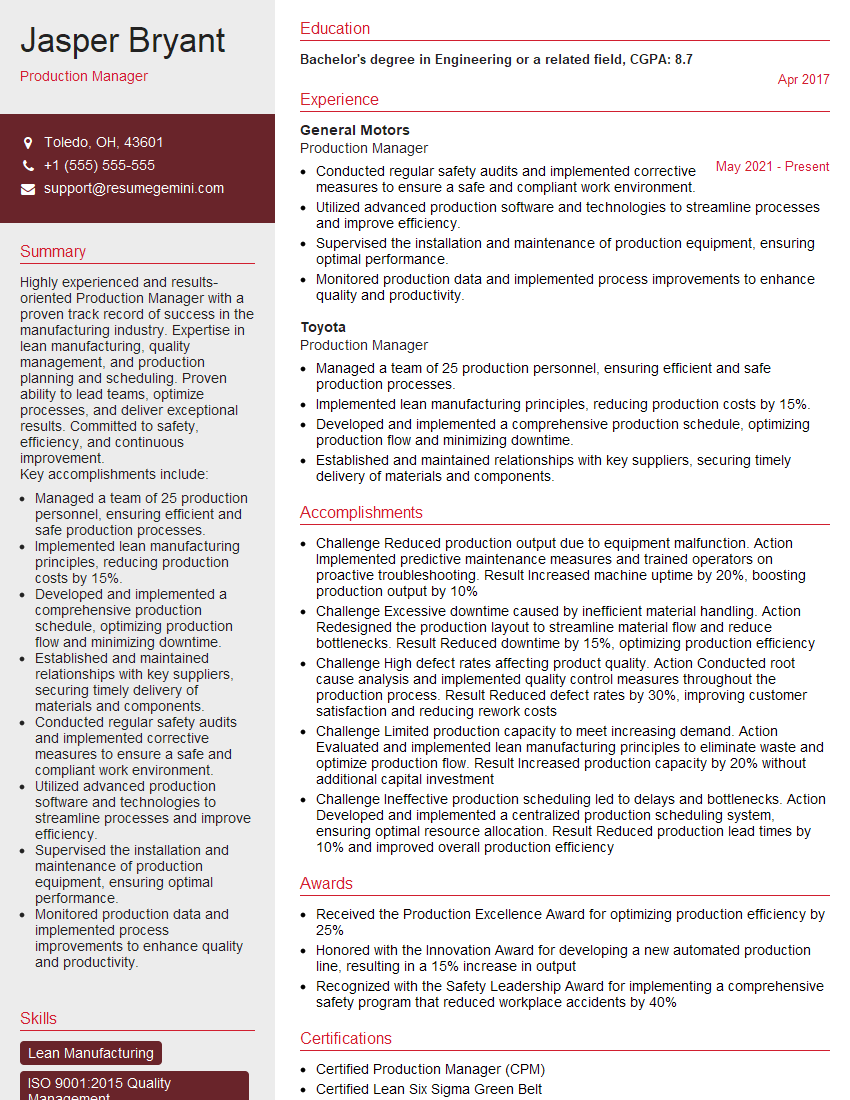
Production Manager Resume Sample
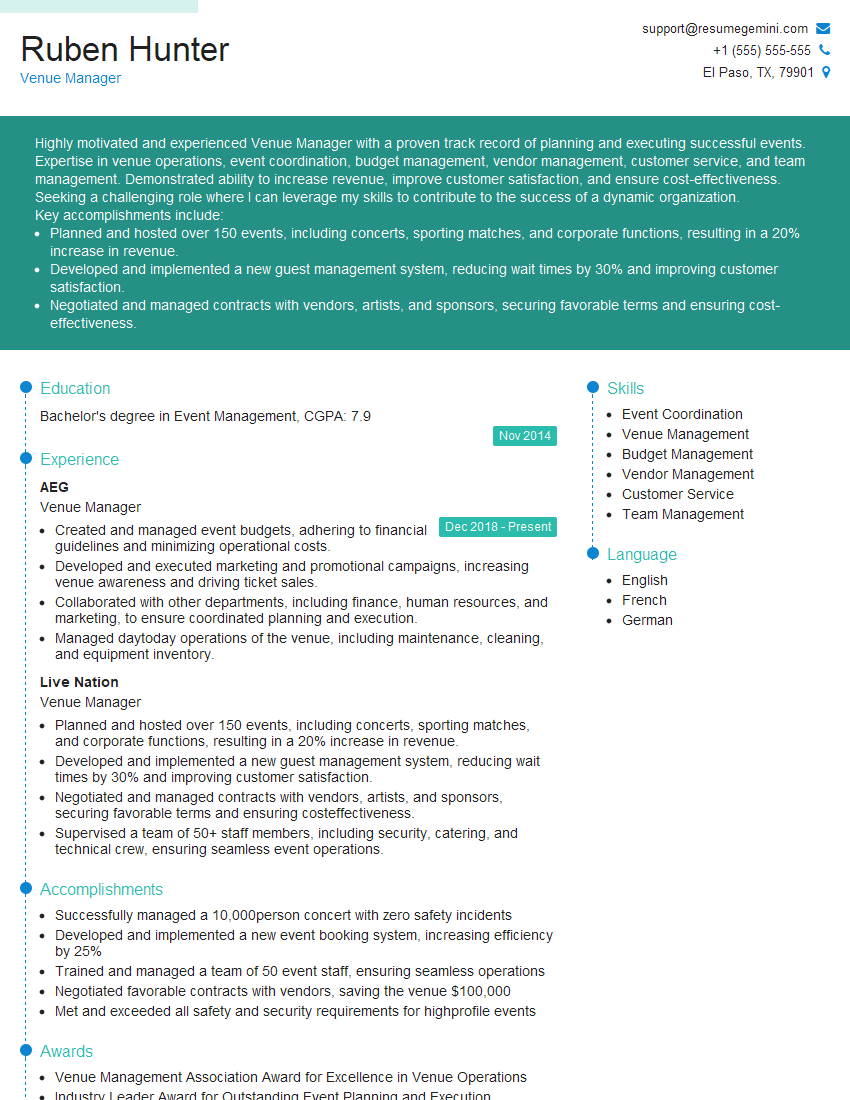
Venue Manager Resume Sample
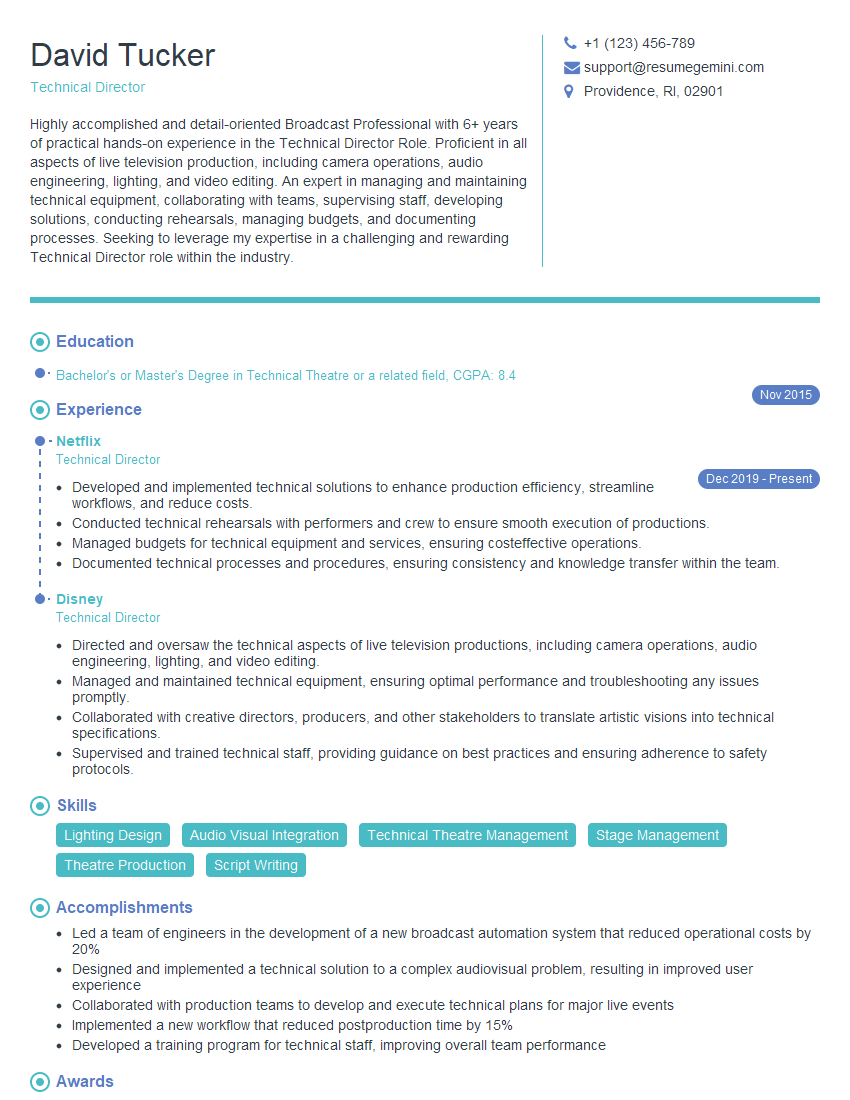
Technical Director Resume Sample

Production Coordinator Resume Sample
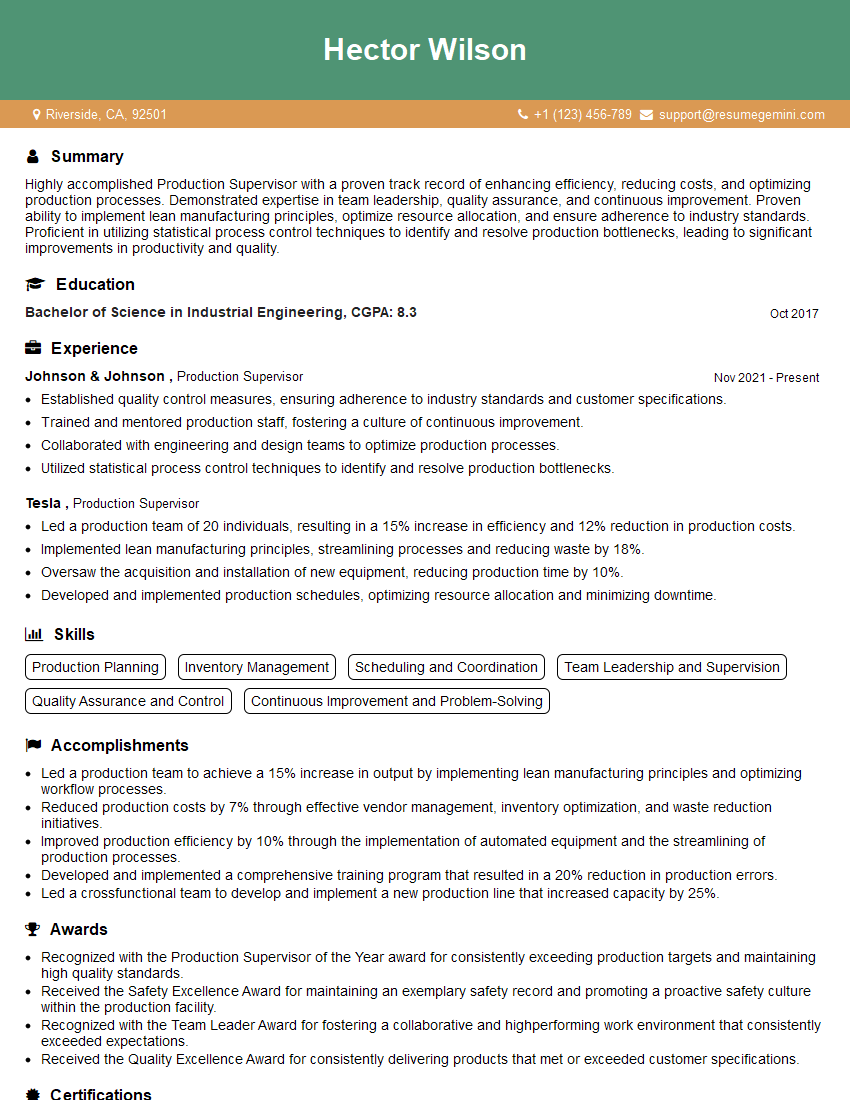
Production Supervisor Resume Sample
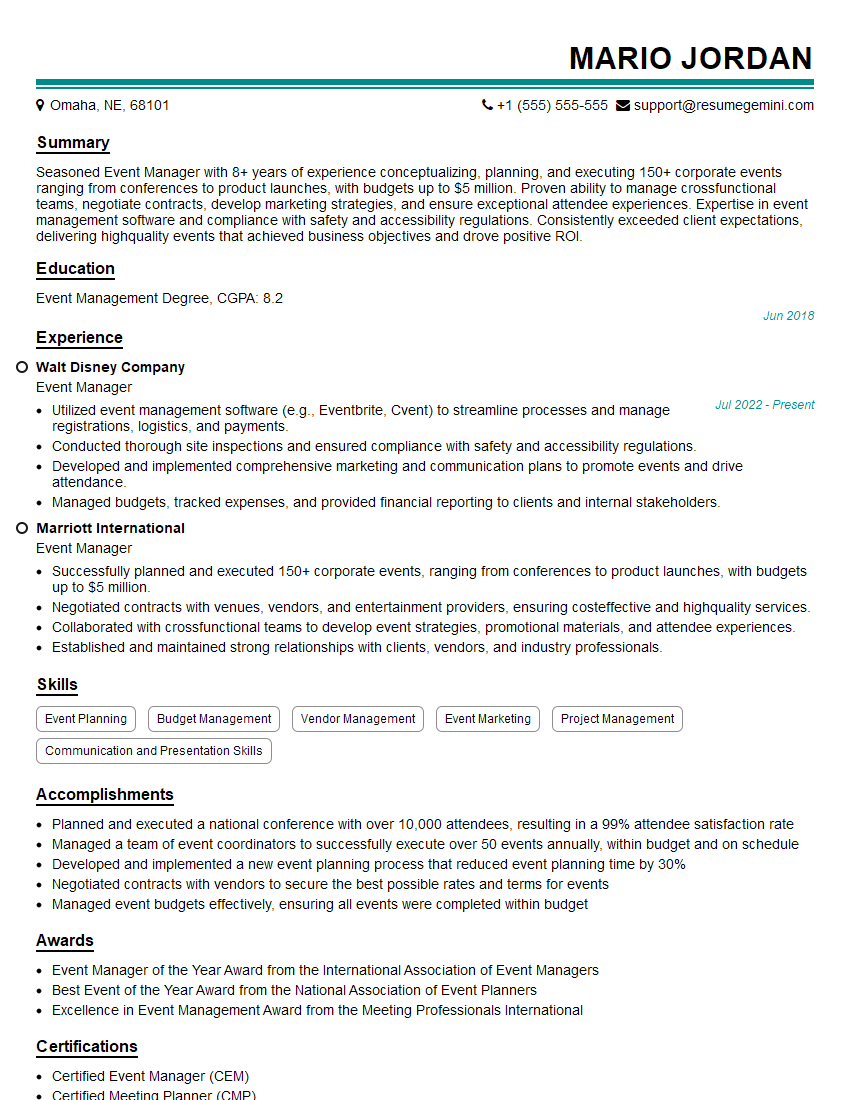
Event Manager Resume Sample
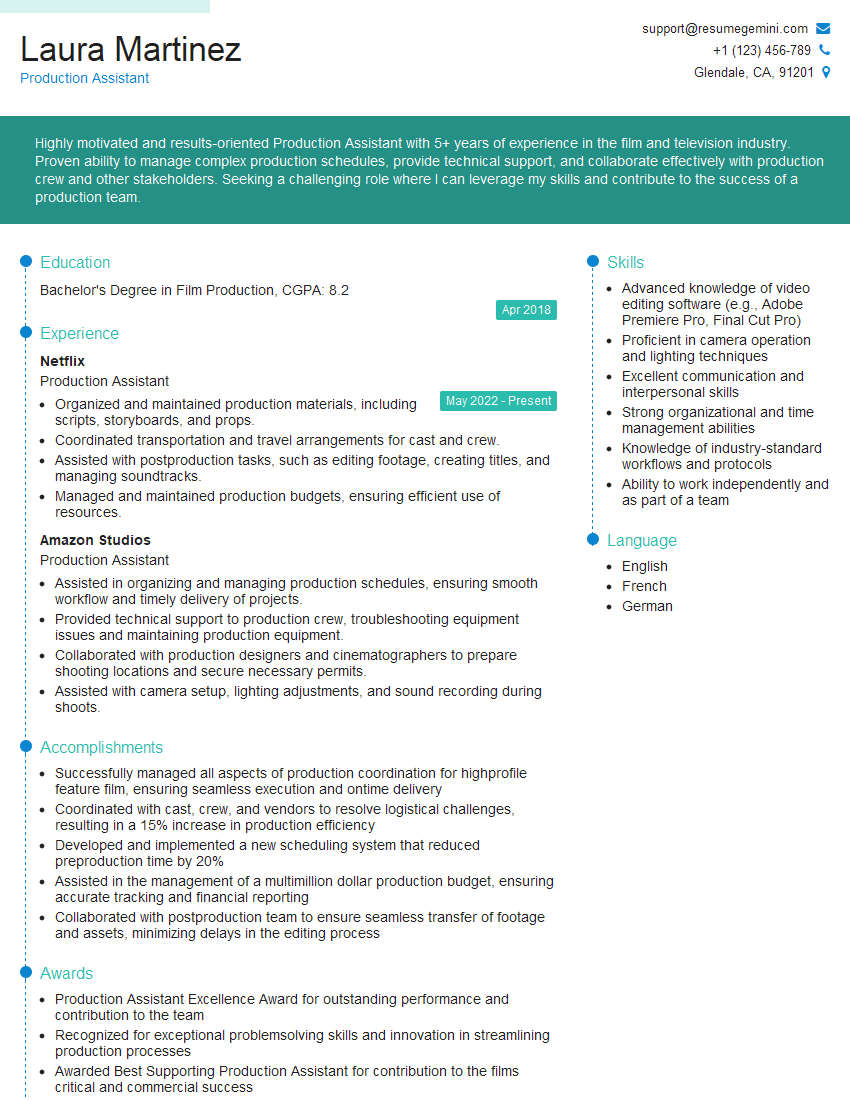
Production Assistant Resume Sample
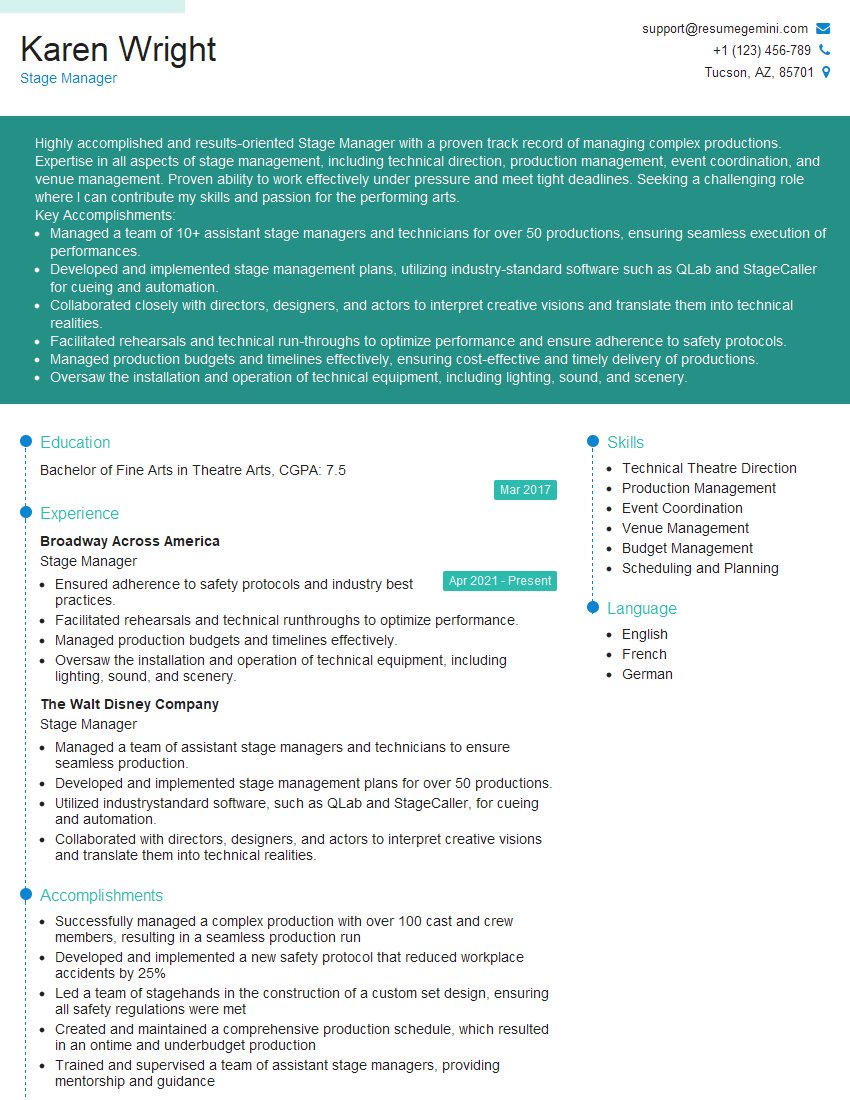
Stage Manager Resume Sample
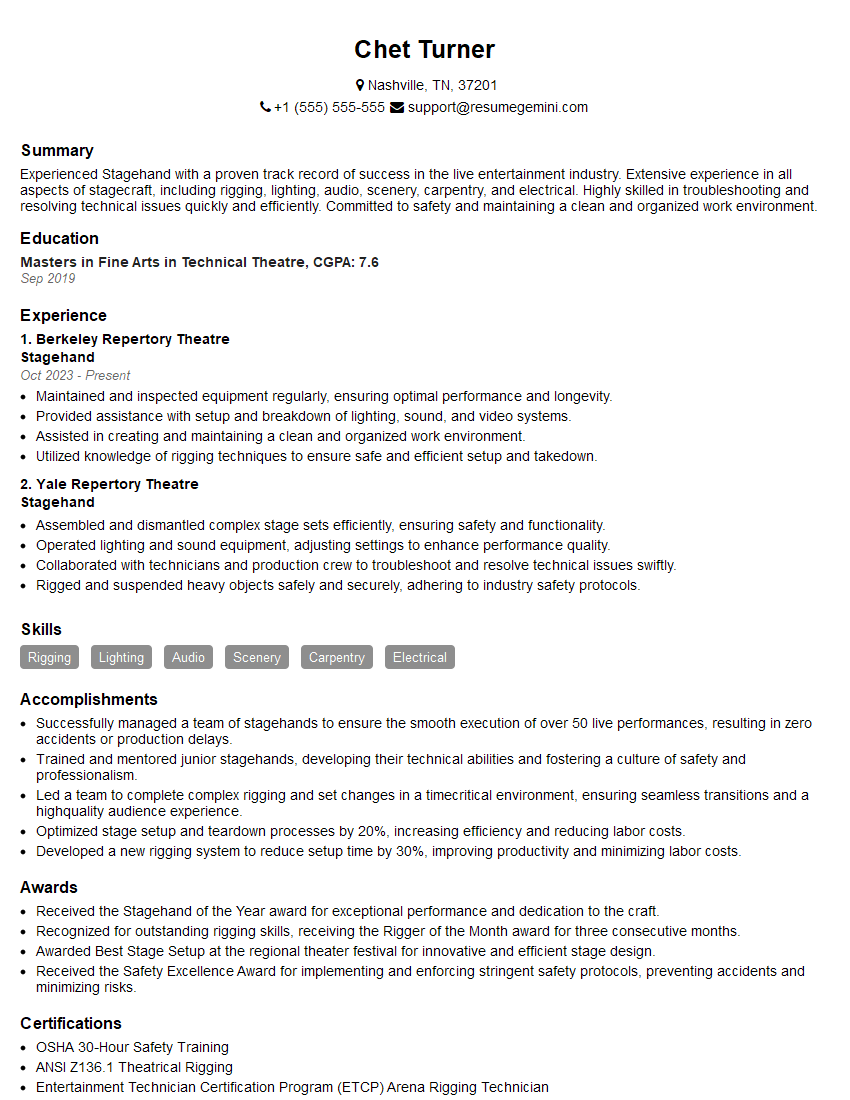
Stagehand Resume Sample
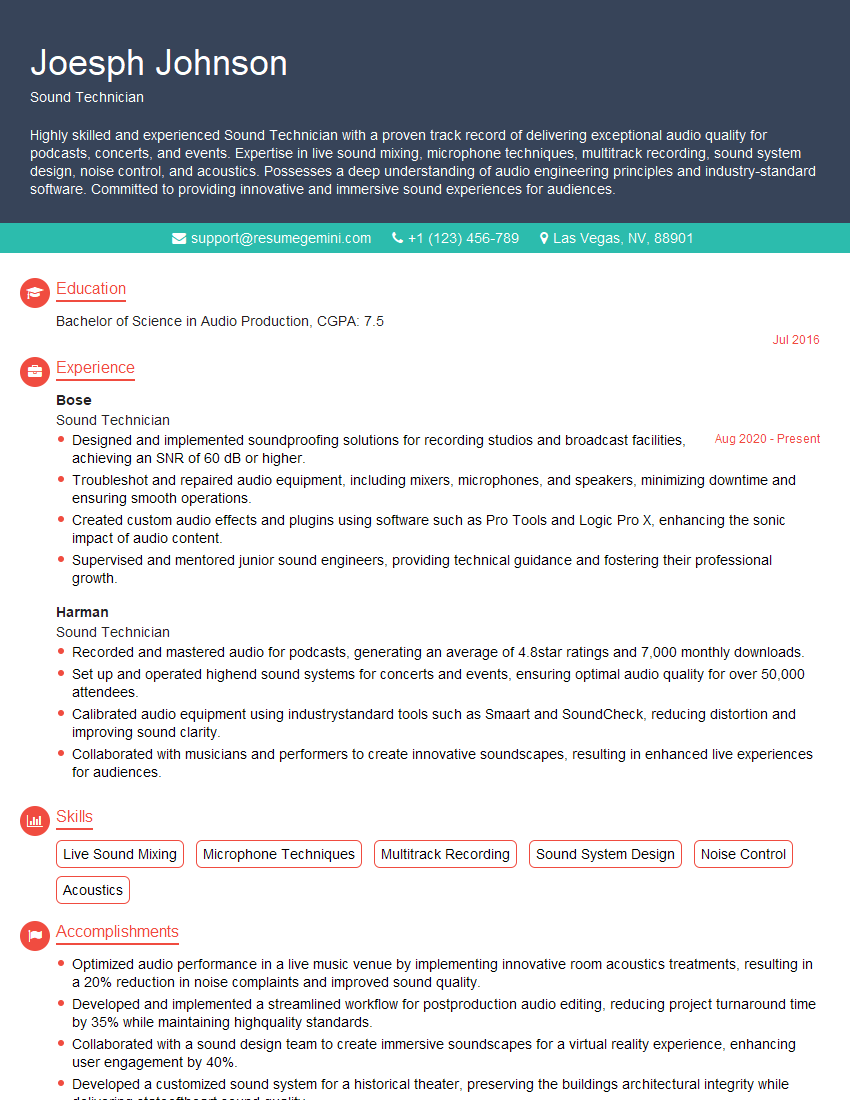
Sound Technician Resume Sample
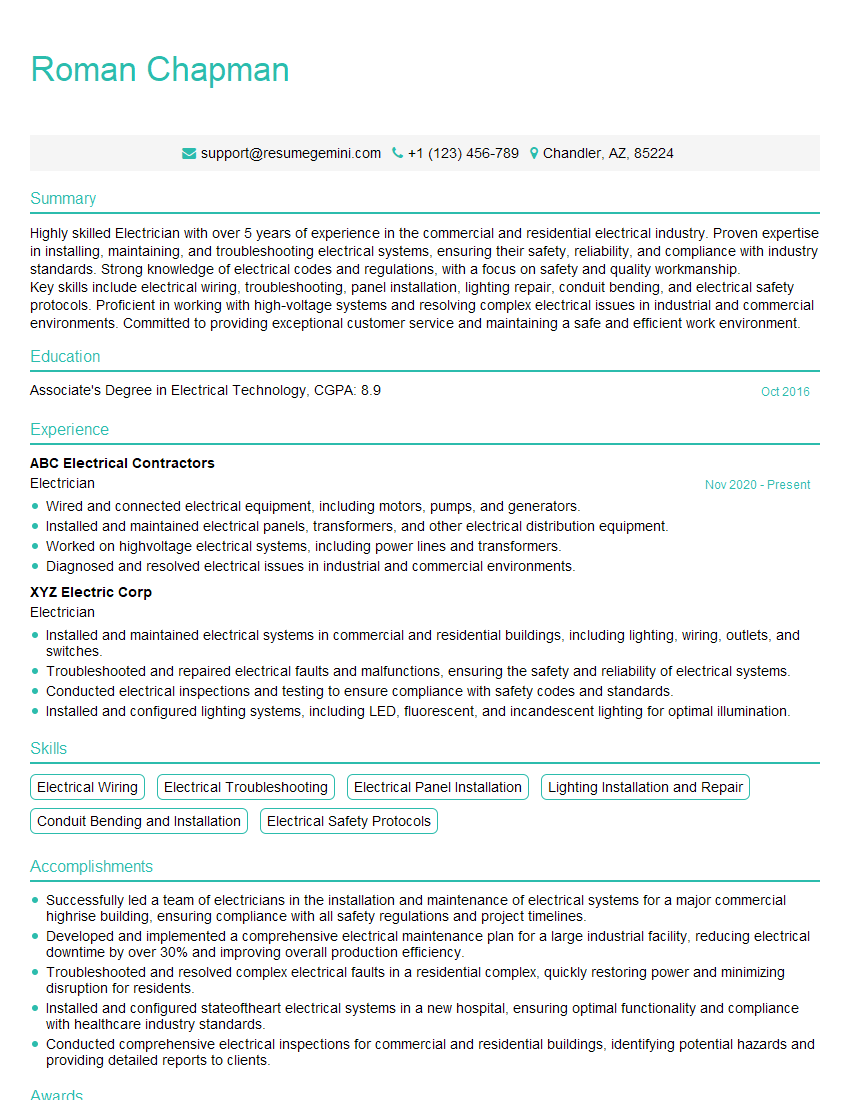
Electrician Resume Sample
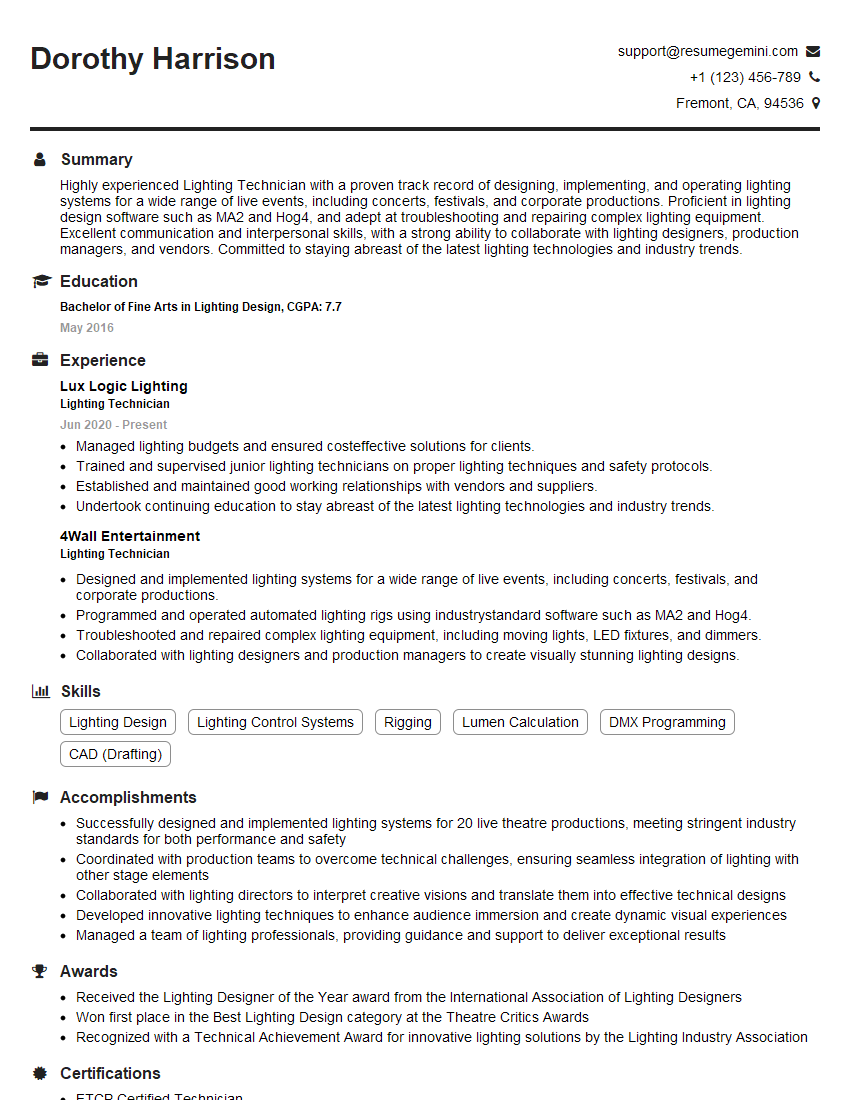
Lighting Technician Resume Sample
Explore more articles
Users Rating of Our Blogs
Share Your Experience
We value your feedback! Please rate our content and share your thoughts (optional).
What Readers Say About Our Blog
Very informative content, great job.
good