Unlock your full potential by mastering the most common Sharp Knife Skills interview questions. This blog offers a deep dive into the critical topics, ensuring you’re not only prepared to answer but to excel. With these insights, you’ll approach your interview with clarity and confidence.
Questions Asked in Sharp Knife Skills Interview
Q 1. What are the five basic knife cuts?
The five basic knife cuts are fundamental to any culinary skillset. Mastering them allows for efficient and consistent food preparation. They form the basis for more advanced techniques.
- Dice: Uniformly sized cubes, typically used for even cooking and presentation. Sizes vary from brunoise (very small), to small, medium, and large dice.
- Mincing: Finely chopping an ingredient into tiny irregular pieces. Essential for creating aromatics in sauces or adding texture to dishes.
- Julienne: Thin, matchstick-shaped cuts, usually around 1/8 inch thick and 2-3 inches long. Great for salads, stir-fries, and garnishes.
- Batonnet: Similar to julienne but thicker, typically 1/4 inch by 2-3 inches. Often used as a base for other cuts or to create attractive textures.
- Brunoise: The smallest dice, forming tiny cubes about 1/8 inch on each side. Requires precision and practice, often used for delicate dishes.
Q 2. Explain the difference between a chef’s knife and a paring knife.
While both are essential kitchen tools, a chef’s knife and a paring knife serve different purposes. Think of them as your primary and secondary weapons in a culinary arsenal.
A chef’s knife, typically 8-10 inches long, is an all-purpose workhorse. Its versatility allows for chopping, slicing, dicing, mincing – the bulk of your prep work. Its curved blade facilitates rocking motions for efficient cutting.
A paring knife, much smaller (2-4 inches), is designed for delicate tasks. Its short, pointed blade excels at peeling fruits and vegetables, removing eyes from potatoes, or making intricate cuts. It offers precision where a chef’s knife might be too large or unwieldy.
Q 3. Describe the proper grip for holding a chef’s knife.
The proper grip for a chef’s knife is crucial for safety and control. Imagine you’re shaking hands with the knife – a firm, yet relaxed grip.
Your index finger and thumb should gently cradle the blade near the bolster (the area where the blade meets the handle). Your remaining fingers curl around the handle, providing a stable and secure hold. Avoid a death grip – a relaxed yet firm grip allows for more fluid movement and prevents fatigue.
Practice different grips to find what’s most comfortable and efficient for you. A good grip is about balance and control.
Q 4. How do you maintain the sharpness of your knives?
Maintaining sharpness is vital for both safety and efficiency. A dull knife is more dangerous than a sharp one because it requires more force, leading to slips and accidents.
Regular honing is essential. A honing steel realigns the blade’s edge, but it doesn’t sharpen it. Think of it as straightening out bent teeth on a comb. Honing should be done before and after each use.
Sharpening, on the other hand, removes material from the blade, creating a new edge. This is done less frequently, typically with a whetstone or a professional sharpening service. How often you need to sharpen depends on the knife’s steel quality and your usage frequency.
Always store knives properly, ideally in a knife block or magnetic strip, to prevent damage and maintain their sharpness.
Q 5. What are the safety precautions you take when using sharp knives?
Safety is paramount when working with sharp knives. A few key precautions include:
- Sharp knives are safer knives: A dull knife requires more force, increasing the risk of accidents.
- Use a cutting board: Never cut directly on a counter or surface.
- Keep your knives clean: A clean knife is easier to handle and control.
- Cut away from yourself: Always point the blade away from your body and fingers.
- Use a firm, controlled grip: Avoid rushing and maintain a relaxed, yet focused grip.
- Never leave a knife unattended: Always put the knife down in a safe place when not in use.
- Learn proper knife techniques: Proper technique minimizes the risk of cuts and injuries.
Q 6. Demonstrate the proper technique for dicing an onion.
Dicing an onion is a classic example of precise knife work. Here’s a step-by-step approach:
- Trim the ends: Cut off both ends of the onion.
- Peel the onion: Remove the outer layers of skin.
- Cut in half: Cut the onion in half from stem to root, separating the layers.
- Slice lengthwise: Make thin slices along the length of each half, avoiding the root end.
- Make cross-cuts: With the onion flat, make cross-cuts at a right angle to your initial slices, again avoiding the root end.
- Dice: Finally, use a rocking motion to dice the onion into uniform cubes.
Practice makes perfect. Start with a slower pace to develop control and precision, gradually building up your speed as you improve.
Q 7. How do you julienne vegetables?
Julienne is the art of creating thin, matchstick-like vegetable cuts. It’s ideal for even cooking and attractive presentation.
Begin by preparing the vegetable (e.g., carrot, zucchini). Cut off any imperfect ends. Then:
- Cut into even strips: Depending on the vegetable’s size, cut into long, roughly 1/8 inch thick slices.
- Stack the strips: Neatly stack the slices on top of each other.
- Cut into matchsticks: Using the same 1/8 inch width, carefully slice the stacked strips into matchstick-like pieces.
Aim for consistent thickness and length for even cooking. Practice ensures your cuts look professional and cook evenly.
Q 8. Explain the technique for mincing garlic.
Mincing garlic involves creating a very fine, almost paste-like consistency. It’s crucial for achieving a smooth, even flavor distribution in sauces and other dishes, avoiding chunky bits of raw garlic. The key is using a rocking motion rather than a chopping motion.
- Preparation: Peel the garlic cloves and lay them flat on the cutting board.
- Initial Cut: Make a few initial, rough chops to break down the cloves into smaller pieces. This makes the subsequent mincing easier and safer.
- The Rocking Motion: Place the blade of your knife flat on the garlic, keeping your fingertips curled inward (pinch grip). Rock the knife back and forth, gently lifting and lowering the blade with each movement. The rocking action helps to finely chop the garlic without crushing it.
- Gathering: Periodically, use your knife to gently gather the minced garlic together. This keeps everything in a compact area and makes the mincing more efficient.
- Final Check: Check for consistency. If necessary, continue rocking the knife until the garlic reaches your desired fineness.
Think of it like gently massaging the garlic with your knife blade, aiming for a smooth, even texture. Practice makes perfect – you’ll quickly develop a feel for the pressure and rocking motion needed.
Q 9. How do you brunoise vegetables?
Brunoise is a classic knife cut that produces tiny, perfectly uniform cubes of vegetables. It’s a hallmark of precision and elevates a dish visually and texturally. The size is typically 1/8 inch x 1/8 inch x 1/8 inch. Achieving this requires a methodical approach.
- Preparation: Choose a firm vegetable like carrot, potato, or onion. Wash and peel as needed.
- Dice into Batons: First, cut the vegetable into even sticks called ‘batons.’ These should be roughly 1/8 inch square.
- Stack and Slice: Stack several batons neatly. Then, slice the batons evenly into 1/8 inch thick slices. Keep them aligned tightly.
- Final Chop: Stack the slices and make your final cuts perpendicular to create small, uniform cubes.
The secret to perfect brunoise is evenness in each step. Measure your first few cuts to ensure uniformity and maintain consistent pressure throughout the process. Practice with a less valuable vegetable before tackling delicate items.
Q 10. What are some common knife sharpening techniques?
Keeping your knives razor-sharp is essential for efficiency and safety. There are several methods, each with its own advantages.
- Honing Steel: This is for *maintaining* the edge, not sharpening it. You use it regularly to realign the blade’s edge. It’s like straightening out slightly bent teeth on a comb.
- Sharpening Steel: A sharpening steel is more aggressive than a honing steel and can be used to sharpen knives over time. It uses abrasive material to remove a small amount of metal, bringing the knife’s edge back to a keener edge.
- Whetstones (Water Stones or Oil Stones): These are the most versatile methods for sharpening. They offer the most control but require practice and a good understanding of angles. They use increasingly fine abrasives to hone the blade. Low grit is more aggressive and is used before finishing with higher grit for the finest edge.
- Electric Sharpeners: Convenient but often less precise than whetstones. They can be useful for quick sharpening of knives used frequently, especially in large kitchens. It is important to follow instructions closely and use the specific setting recommended for each type of knife.
The best method depends on your skill level and the type of knife. A honing steel is a must-have for daily maintenance, while whetstones are ideal for truly sharpening your blades.
Q 11. Explain the importance of a sharp knife in food preparation.
A sharp knife is paramount in food preparation for several key reasons: safety, efficiency, and quality.
- Safety: A dull knife requires more force to cut, increasing the risk of slipping and cutting yourself. A sharp knife glides through ingredients cleanly, minimizing the chance of accidents.
- Efficiency: Sharp knives significantly reduce prep time. Clean cuts mean less work and faster cooking.
- Quality: A sharp knife creates clean, even cuts that preserve the integrity of ingredients. This leads to better texture and presentation in your final dish. For example, neatly sliced vegetables cook evenly, while roughly chopped vegetables might overcook or undercook.
Imagine trying to cut a tomato with a dull knife – it squishes and tears. A sharp knife slices through cleanly, leaving a beautiful, even surface. This difference in quality applies to all ingredients.
Q 12. Describe the different types of knife steels.
Knife steels are categorized based on their composition, each affecting the knife’s properties.
- High-Carbon Steel: Offers excellent sharpness and edge retention but can be prone to rust if not properly cared for. Examples include 1095 and 154CM.
- Stainless Steel: Rust-resistant and easier to maintain, but generally not as sharp or durable as high-carbon steel. This comes in various grades and compositions.
- High-Speed Steel (HSS): Extremely hard and durable, often used in professional-grade knives. These knives are usually harder to sharpen but hold their edge remarkably well.
- Damascus Steel: A layered steel known for its beauty and sometimes improved performance, but it is often pricier than other varieties.
- Ceramic Steel: Extremely hard and sharp, offering exceptional edge retention, but fragile and easily chipped. Not ideal for tough ingredients.
The choice of steel depends on your needs and budget. High-carbon steel offers the best combination of sharpness and edge retention but requires more care, while stainless steel is more practical for everyday use.
Q 13. What is the best way to store knives to prevent damage?
Proper knife storage is crucial to maintain sharpness and prevent accidents. Avoid storing knives loosely in drawers where they can bang against each other.
- Magnetic Strips: Convenient and space-saving, allowing for easy access. They’re great for displaying your collection as well.
- Knife Blocks: Protect the blades from damage and keep them organized. Ensure the knife block has slots that properly fit the shape of each knife to ensure the knife edge is protected.
- Sheaths or Sleeves: Excellent for individual knives, offering maximum protection during transport or storage. Ideal for longer knives like carving knives.
- Drawers with Inserts: If you use a drawer, invest in inserts to create individual slots that prevent the blades from hitting each other.
Regardless of the method you choose, always ensure that the blades are dry before storing them to prevent rust. Avoid storing knives near water sources and always handle with care to avoid chipping the edge.
Q 14. What do you do if you accidentally cut yourself while working with knives?
Knife accidents are a risk of working with sharp tools. Immediate action is critical.
- Stop the Bleeding: Apply direct pressure to the wound with a clean cloth or bandage. Elevate the injured area above the heart to help slow bleeding.
- Clean the Wound: Once the bleeding is controlled, gently clean the wound with mild soap and water. Avoid scrubbing, which can cause more damage.
- Dress the Wound: Cover the wound with a clean bandage to prevent infection.
- Seek Medical Attention: If the wound is deep, bleeding profusely, or involves a tendon or joint, seek immediate medical attention. Deep cuts may also require stitches.
Prevention is key. Always use caution, employ the proper pinch grip, and maintain a sharp knife to minimize the risk of accidents. It’s also important to concentrate on your work to avoid mishaps.
Q 15. How do you handle different types of produce when using knives?
Handling different produce requires adapting your knife technique to the item’s texture and firmness. Think of it like painting – you wouldn’t use the same brush for watercolor as you would for oil.
- Soft Produce (e.g., tomatoes, berries): Use a sharp, thin-bladed knife with a gentle rocking motion to avoid crushing. Imagine slicing a ripe tomato – a forceful cut will squish it; a light touch keeps it intact.
- Firm Produce (e.g., potatoes, carrots): You can use more aggressive techniques like chopping or dicing with a heavier, more robust knife. For example, when chopping potatoes for a stew, a firm hand and decisive cuts ensure even sizes and prevent slipping.
- Hard Produce (e.g., winter squash, melons): These require a strong, sturdy knife and often a different grip to apply greater force. Consider using a cleaver for squashes; the weight of the blade does much of the work.
Always prioritize safety; secure the produce firmly on a cutting board to prevent slipping and keep your fingers tucked away.
Career Expert Tips:
- Ace those interviews! Prepare effectively by reviewing the Top 50 Most Common Interview Questions on ResumeGemini.
- Navigate your job search with confidence! Explore a wide range of Career Tips on ResumeGemini. Learn about common challenges and recommendations to overcome them.
- Craft the perfect resume! Master the Art of Resume Writing with ResumeGemini’s guide. Showcase your unique qualifications and achievements effectively.
- Don’t miss out on holiday savings! Build your dream resume with ResumeGemini’s ATS optimized templates.
Q 16. How do you sharpen a serrated knife?
Sharpening a serrated knife is different from sharpening a smooth-edged blade. You can’t use a standard honing steel or sharpening stone because you’d risk damaging the teeth. Instead, you need a specialized tool.
The best method is using a serrated knife sharpening tool, which usually has a V-shaped groove matching the serrations. You’ll carefully pass the blade through the groove multiple times, maintaining a consistent angle and pressure. This method carefully resharpens the existing teeth without affecting the overall serration pattern. Think of it as gently honing each tiny tooth individually.
Avoid using sharpening steels or conventional sharpening stones on serrated knives; they will damage the teeth irreparably.
Q 17. What are the benefits of using a honing steel?
A honing steel doesn’t actually sharpen the blade; instead, it straightens the microscopic edge that gets bent and dulled during use. Imagine a comb: repeated use bends the teeth; running it through a smoother straightens them again.
The benefits of honing are:
- Improved cutting efficiency: A straighter edge cuts cleaner and requires less force. You’ll notice the difference in the ease of slicing vegetables after honing.
- Extended blade life: Regular honing prevents excessive wear and tear, keeping your knife sharper for longer. This saves you money and effort in the long run.
- Enhanced safety: A well-honed blade is less likely to slip and cause accidents.
It’s a crucial part of knife maintenance. Honing should be done frequently – before and after each use for professional chefs – to maintain optimal performance.
Q 18. Explain the concept of knife balance and its importance.
Knife balance refers to the distribution of weight along the blade and handle. A well-balanced knife feels comfortable and natural in your hand, allowing for precise control and minimizing fatigue. It’s like finding the perfect balance point on a seesaw.
Importance of knife balance:
- Control and precision: A balanced knife allows for delicate cuts and detailed work.
- Reduced fatigue: The weight distribution minimizes strain on your hand and wrist, particularly during prolonged use.
- Increased safety: Good balance provides better control, reducing the risk of accidents.
A poorly balanced knife can lead to awkward hand positions, reduced control, increased fatigue, and a higher risk of injury. Choosing a well-balanced knife is crucial for both comfort and safety.
Q 19. How does knife type affect the choice of cut?
Knife type significantly impacts the choice of cut. Different blades are designed for specific tasks. Imagine trying to paint a portrait with a house-painting brush.
- Chef’s knife: Versatile; used for chopping, dicing, mincing, and slicing.
- Paring knife: Small and precise; ideal for intricate work like peeling or trimming.
- Serrated knife: Designed for slicing through tough items like bread or tomatoes without crushing them.
- Cleaver: Heavy and sturdy; used for chopping through bones and large cuts of meat.
Choosing the right knife for the job ensures efficiency, precision, and safety. Attempting a delicate task with a cleaver, for example, would be both inefficient and dangerous.
Q 20. Describe the difference between a cleaver and a butcher knife.
While both cleavers and butcher knives are used for cutting meat, they have distinct differences:
- Cleaver: Heavier, rectangular blade; typically used for chopping through bone, cartilage, and large cuts of meat. Its weight is its strength, allowing powerful cuts. Think of it as a powerful hatchet for the kitchen.
- Butcher knife: Longer, more curved blade; designed for more precise cutting and trimming of meat. It’s better for breaking down smaller joints or trimming excess fat. It provides more control and flexibility compared to a cleaver.
The choice depends on the task. A cleaver is excellent for breaking down a whole chicken, while a butcher knife is better for trimming steaks or filleting fish.
Q 21. What is the correct way to clean and sanitize knives?
Cleaning and sanitizing knives is crucial for both hygiene and blade longevity. It prevents the transfer of bacteria and also helps to prevent rust and corrosion. Always handle knives with care during cleaning.
Steps:
- Immediate Cleaning: Rinse the knife immediately after use, removing any food particles. Don’t let food dry on the blade.
- Washing: Wash the knife with warm soapy water, using a gentle sponge or brush. Avoid harsh scouring pads that can damage the blade.
- Thorough Rinsing: Rinse the knife completely to remove all traces of soap.
- Drying: Dry the knife immediately and thoroughly with a clean towel. Leaving it wet can lead to rust and corrosion, especially with carbon steel knives.
- Sanitizing (Optional): For professional kitchens or when dealing with potentially hazardous food items, use a food-safe sanitizer according to manufacturer’s instructions.
- Storage: Store the knives in a safe and organized manner to protect the blades and prevent accidental injury.
Always handle knives carefully during cleaning. Never leave them soaking in water, especially knives with wooden handles which can absorb moisture.
Q 22. What are the signs of a dull knife?
A dull knife is a dangerous knife. Several signs indicate dullness. The most obvious is a lack of sharpness – it struggles to cleanly slice through food. Instead of a smooth cut, you’ll notice:
- Jagged cuts: The knife tears through the food, creating uneven, rough edges.
- Increased force required: You have to press down harder to cut, increasing the risk of slipping and injury.
- Food slipping: The blade may slide off the food instead of slicing cleanly.
- Rounded edge: If you examine the blade closely, you might see the edge is becoming rounded instead of sharp. A truly sharp knife has a very fine, almost invisible edge.
- Bent or chipped blade: Damage to the blade itself also dramatically reduces sharpness.
Think of it like trying to cut a piece of paper with a blunt pair of scissors; it’s messy, inefficient, and frankly frustrating!
Q 23. How would you address a dull knife in a busy kitchen environment?
In a busy kitchen, downtime for sharpening is minimized. The solution is a two-pronged approach: prevention and quick fixes.
- Prevention: Regular honing is crucial. Honing, using a steel or honing rod, realigns the blade’s edge without removing material. This should be done before each service or at the beginning of each shift. It’s the equivalent of combing your hair; it doesn’t cut it shorter, but it keeps it looking its best.
- Quick Fixes: For a slightly dull knife during service, a quick touch-up with a sharpener might be necessary. Electric sharpeners are fast but can remove more steel than manual ones; manual sharpeners require more skill and time but are gentler on the blade. The choice depends on the kitchen’s resources and individual skill level. Having a designated ‘honing station’ makes this process more efficient.
- Sharpening Schedule: Professional sharpening should be done regularly by a qualified person. The frequency depends on the quality of the steel and how often the knives are used. This isn’t a quick fix, but a crucial aspect of long-term maintenance.
Q 24. Explain the proper techniques for filleting fish.
Filleting fish requires a long, flexible, and very sharp knife, ideally a filleting knife. The key is to follow the natural lines of the fish to ensure a clean cut and avoid wasting any meat.
- Position the fish: Lay the fish on a cutting board, skin-side down.
- Initial cut: Begin at the head, inserting the knife just behind the gills, and slice downwards, following the spine.
- Following the spine: Continue running the knife along the backbone, keeping it close to the bones to remove the fillet in one clean movement.
- Second fillet: Turn the fish over and repeat the process on the other side.
- Skin removal (optional): If you need to remove the skin, carefully slide the knife between the flesh and skin, starting at the tail end.
Imagine you are drawing a line with your knife blade along the spine, keeping the blade as flat as possible to maximize control and minimize waste.
Q 25. How do you safely break down a whole chicken?
Breaking down a whole chicken safely involves using a sharp boning knife and following a methodical process to avoid injury and maximize usable meat.
- Remove the wings: Locate the wing joints and cut through them, separating the wings from the body.
- Remove the legs and thighs: Find the joints connecting the legs and thighs to the body, and carefully cut through them.
- Separate the legs and thighs: If desired, you can separate the thighs from the drumsticks at the joint.
- Remove the breasts: You can either separate the breast fillets from the carcass or leave the breast bone intact.
- Remove the backbone: Place the carcass on its side and use a boning knife to run along the spine, separating it from the rest of the bird.
Safety first: Always point your knife away from your body and use a firm but controlled grip. Remember to cut through the joints, not through the bones, for a clean and efficient separation.
Q 26. Describe the different cuts of meat and the associated knife techniques.
Different cuts of meat require different knife techniques. A chef’s knife is versatile for most, but specialized knives are often preferred.
- Roasting: Large cuts like a whole roast require a carving knife for slicing thin, even portions. The technique involves using a sawing motion with the knife’s full length for thin slices.
- Steaks: Steak knives are excellent for clean, precise cuts through tougher meats; the technique involves a downward motion with minimal sawing.
- Chops: A cleaver works well for tougher cuts and bones; the technique is a powerful downward chop.
- Mincing: Mincing meat, as for burgers, requires a sharp knife and a rocking motion; fine control is key here.
- Cubing/Dicing: These cuts require precise knife control for even shapes. A sharp chef’s knife with a claw grip is essential.
The choice of knife and technique is crucial for achieving the desired texture, consistency, and visual appeal of the finished dish. Consider the fiber direction of the meat and adjust your cutting style accordingly.
Q 27. What is your experience with different types of knife steels (e.g., carbon steel, stainless steel)?
My experience with knife steels encompasses carbon steel, stainless steel, and high-carbon stainless steel blends. Each has its pros and cons.
- Carbon Steel: Exceptional sharpness and edge retention, but prone to rust and requires more care.
- Stainless Steel: Rust-resistant and easier to maintain, but generally doesn’t hold an edge as long as carbon steel.
- High-Carbon Stainless Steel: Offers a balance – good edge retention and stain resistance – but might not reach the sharpness of pure carbon steel.
I’ve worked with all three and found that the best choice depends on the demands of the kitchen. A high-volume restaurant might prefer stainless steel for ease of maintenance, while a chef focused on extremely fine knife work may prefer the superior sharpness of carbon steel and accept the need for more diligent care.
Q 28. What are some common mistakes to avoid when using knives?
Several common mistakes endanger both the chef and the quality of the work:
- Using a dull knife: This is the most dangerous; a dull knife requires more force, increasing the chance of slipping and causing injury.
- Improper grip: A weak or incorrect grip leads to lack of control and an increased risk of injury.
- Incorrect cutting technique: Using the knife incorrectly can lead to uneven cuts and wasted food.
- Ignoring the blade’s sharpness: Regular honing and professional sharpening are essential for maintaining blade integrity and sharpness.
- Improper storage: Knives should be stored properly – in a knife block, magnetic strip, or sheath – to protect both the blades and the user.
- Never leave a knife unattended, especially on the edge of the counter.
Safe and skillful knife work is a fundamental aspect of culinary practice. By avoiding these mistakes, chefs can significantly improve both the quality of their work and their personal safety.
Key Topics to Learn for Sharp Knife Skills Interview
- Knife Handling Techniques: Understanding proper grip, posture, and hand placement for various cuts (e.g., pinch grip, claw grip).
- Basic Cuts: Mastering essential cuts like dicing, mincing, julienning, brunoise, and chiffonade. Practical application includes demonstrating speed and precision while maintaining consistent size and shape.
- Advanced Cuts: Exploring more complex techniques such as tournéing, carving, and decorative cuts. Demonstrating proficiency in these techniques showcases a higher level of skill.
- Knife Safety and Maintenance: Understanding safe knife handling procedures, proper cleaning and storage, and recognizing signs of a dull blade. This includes the importance of preventing accidents and extending knife lifespan.
- Ingredient Selection and Preparation: Knowing how to choose the right knife for the task and prepare ingredients efficiently before cutting, minimizing waste and maximizing efficiency.
- Problem-Solving and Adaptability: Being able to adjust techniques based on different ingredients (e.g., firm vs. soft vegetables), using alternative methods when encountering challenges.
- Understanding Blade Geometry: Comprehending the relationship between blade shape, angle, and its impact on cutting efficiency and precision.
- Mise en Place: Demonstrating proficiency in organizing and preparing ingredients in advance, improving workflow and efficiency during cooking processes.
Next Steps
Mastering sharp knife skills is crucial for career advancement in culinary arts and related fields. Proficiency in these techniques demonstrates precision, efficiency, and a commitment to quality – highly valued attributes by employers. To significantly boost your job prospects, create an ATS-friendly resume that highlights your skills effectively. ResumeGemini is a trusted resource that can help you build a professional resume showcasing your expertise. Examples of resumes tailored to Sharp Knife Skills are available to guide you.

Deli Manager Resume Sample
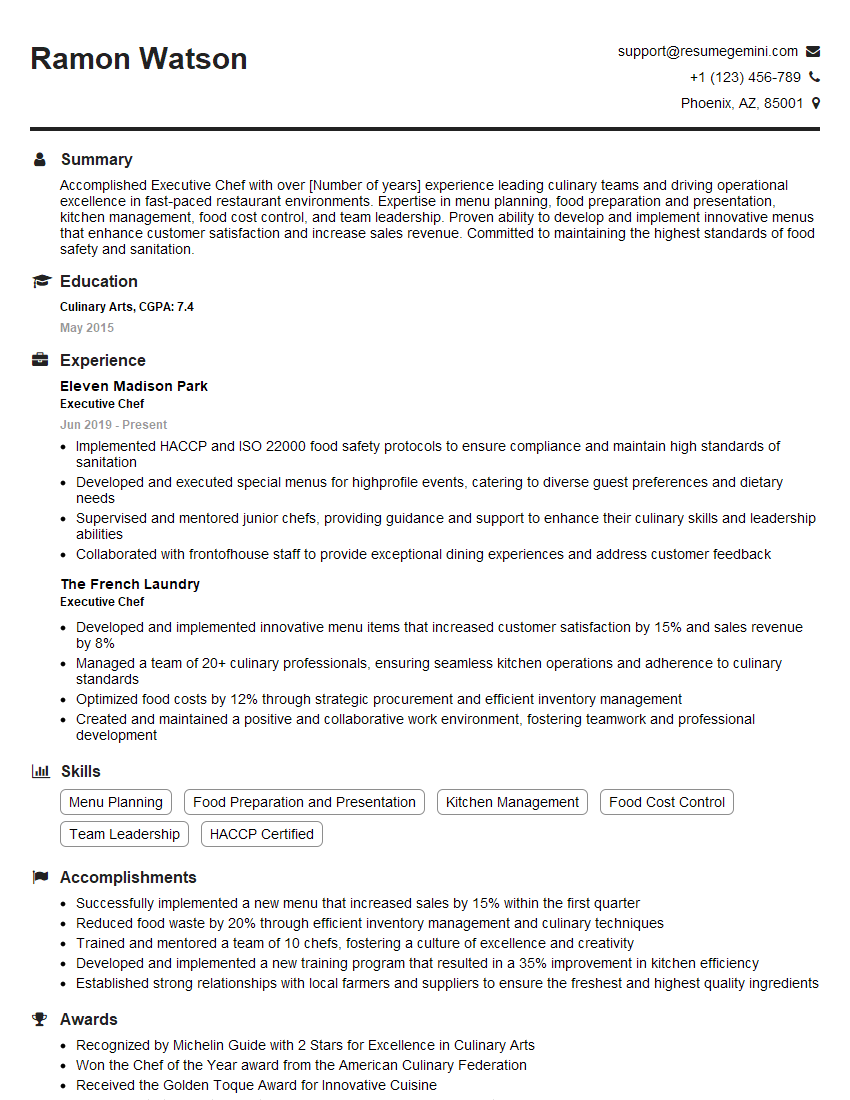
Executive Chef Resume Sample

Food Service Manager Resume Sample

Kitchen Manager Resume Sample
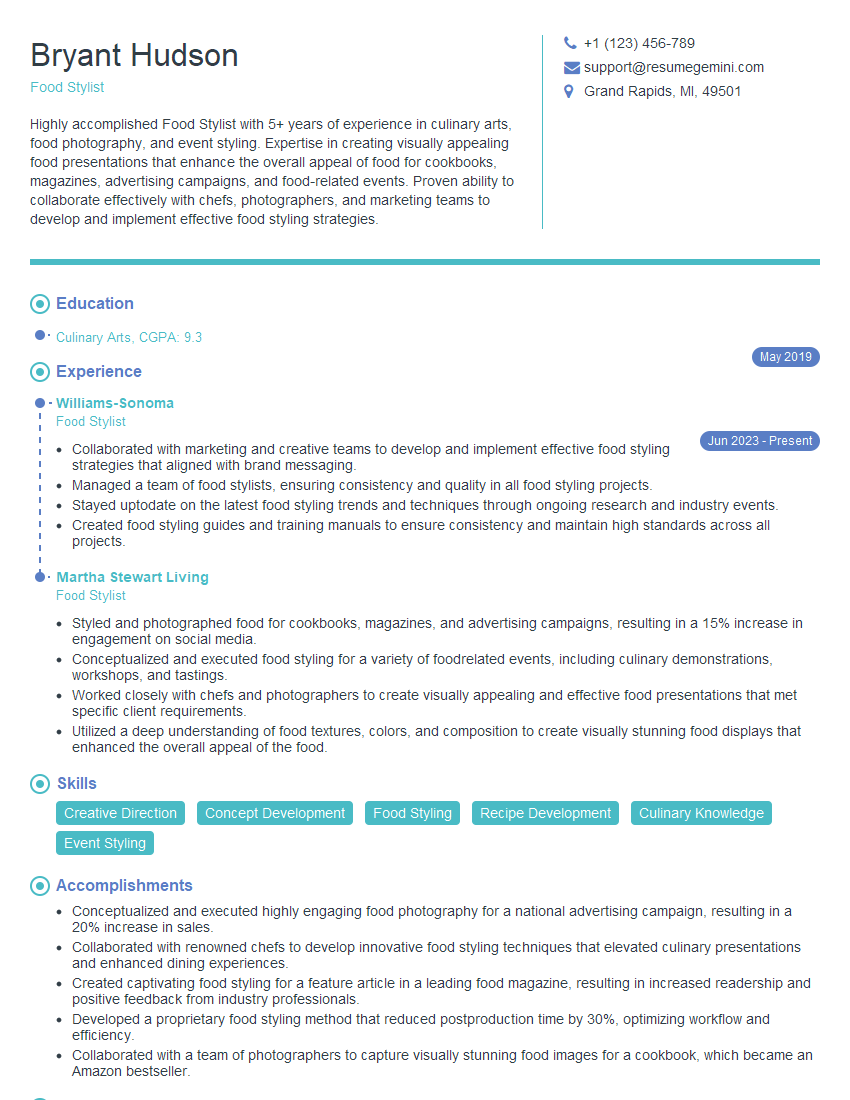
Food Stylist Resume Sample
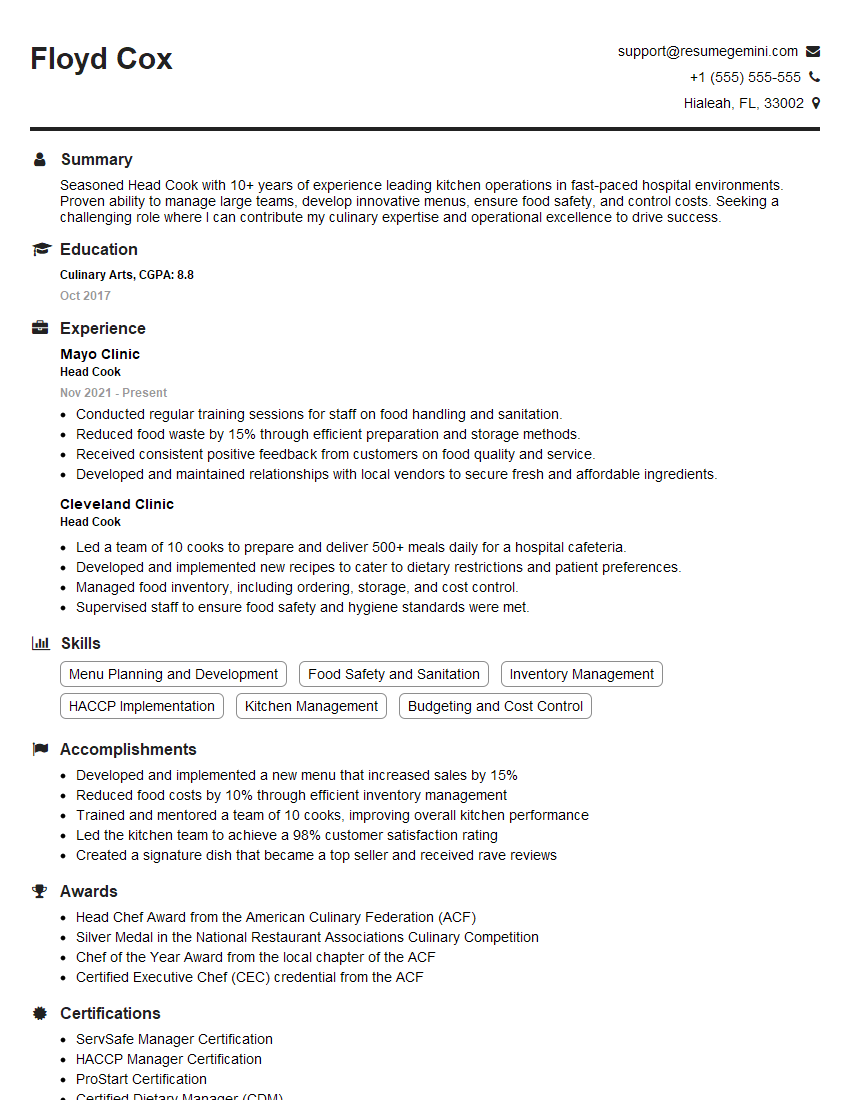
Head Cook Resume Sample
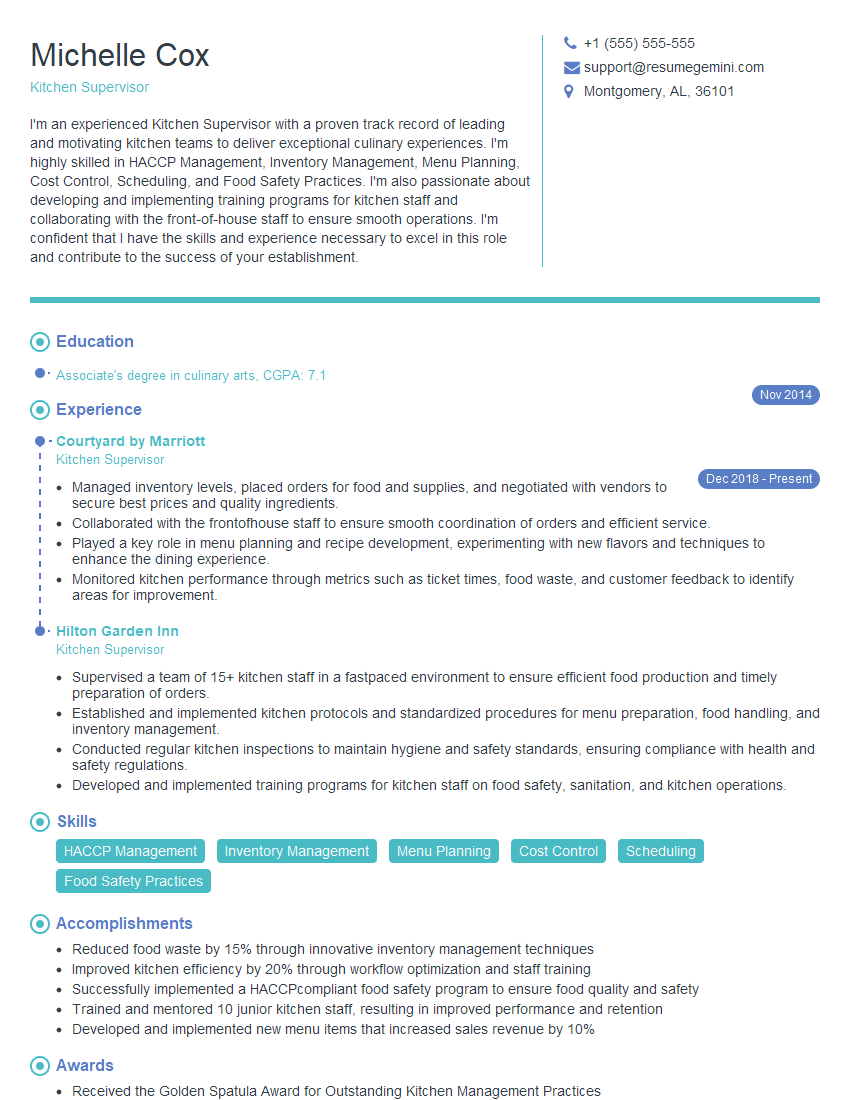
Kitchen Supervisor Resume Sample
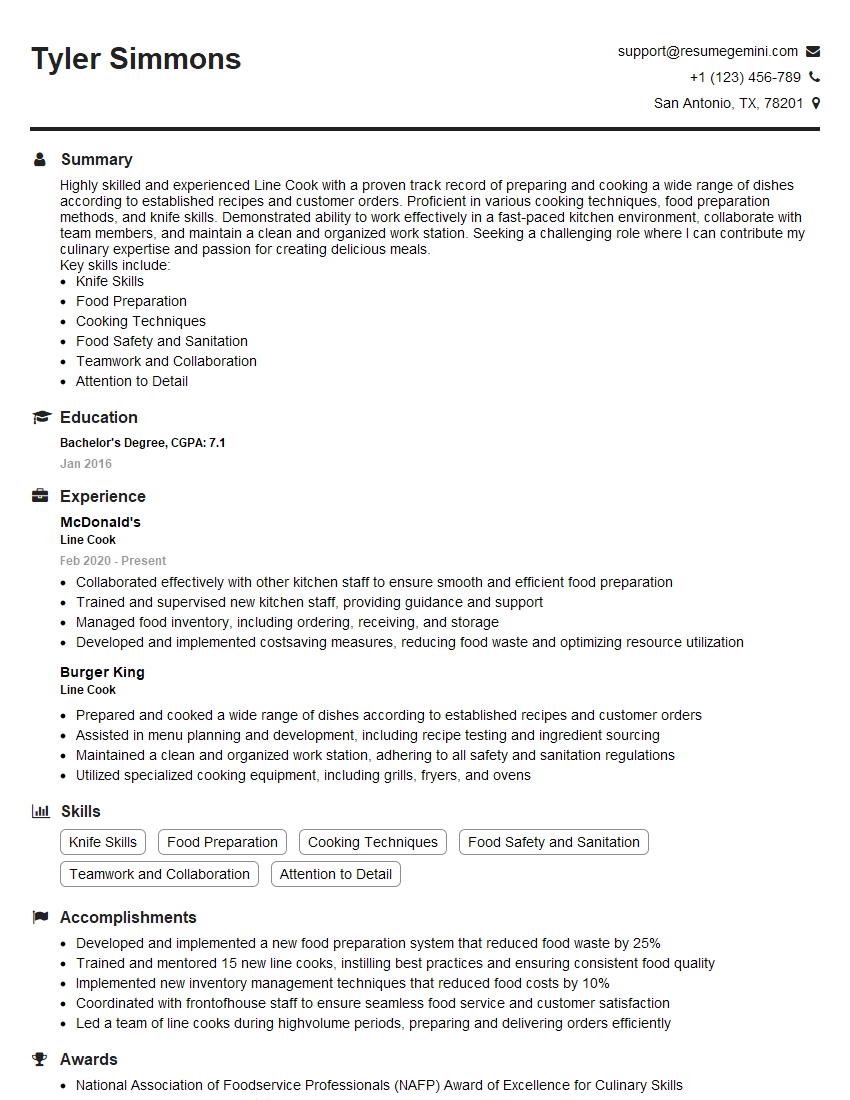
Line Cook Resume Sample
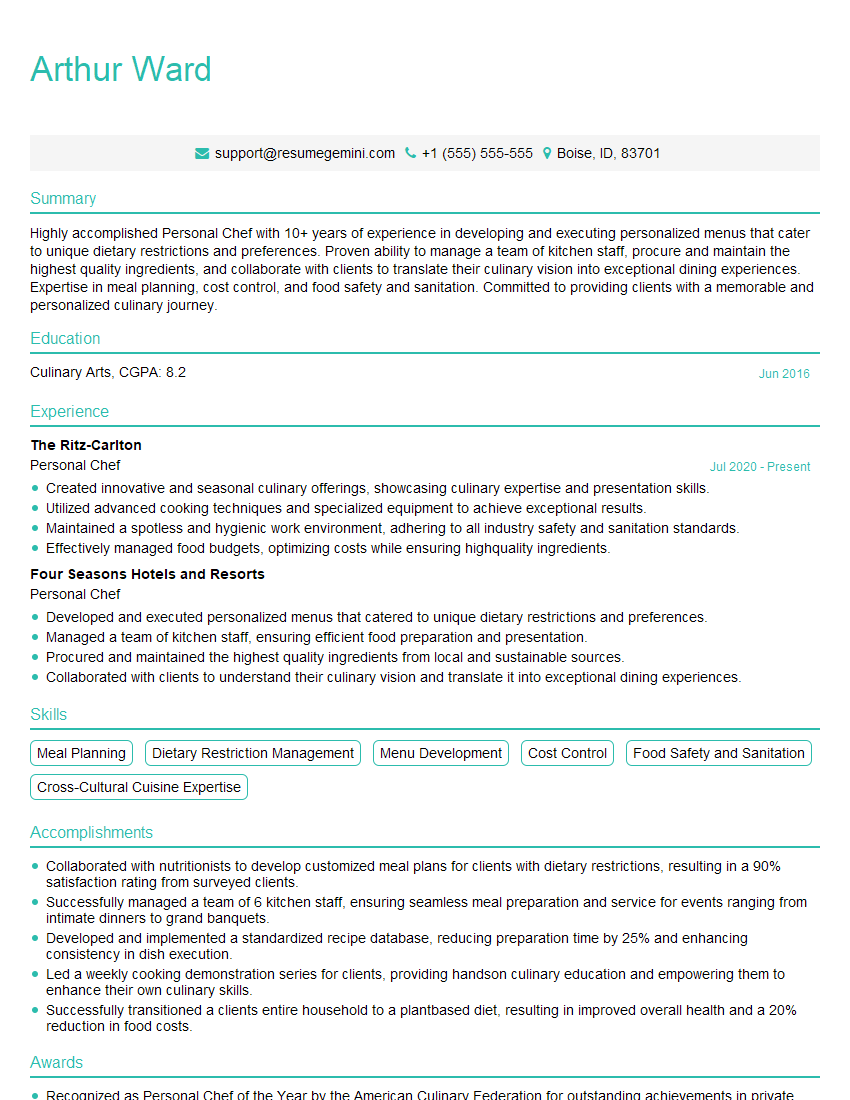
Personal Chef Resume Sample
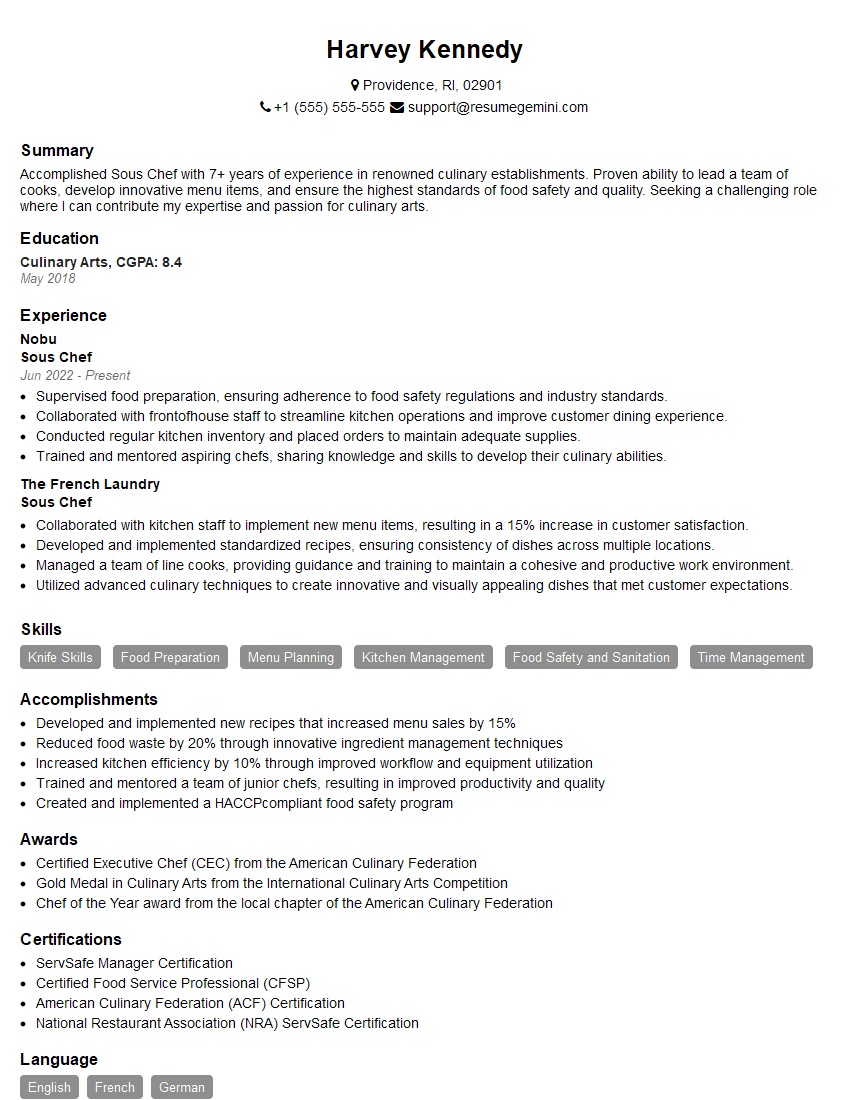
Sous Chef Resume Sample
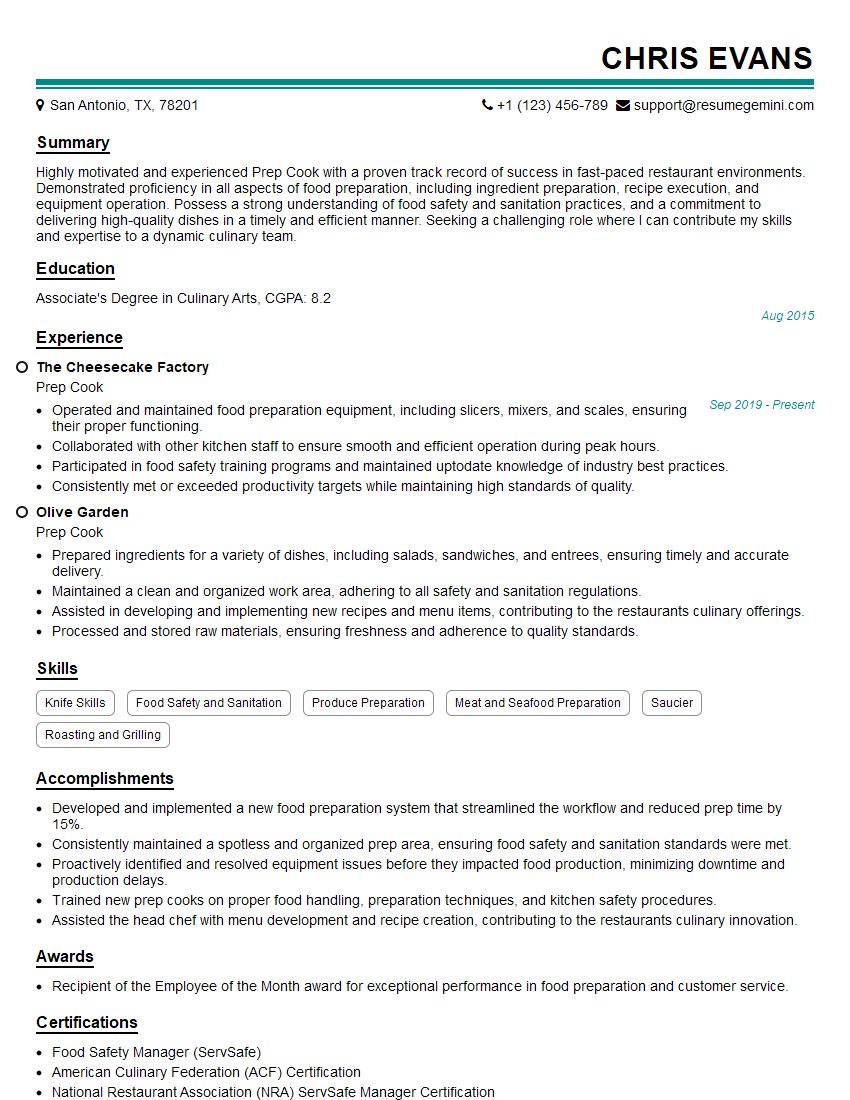
Prep Cook Resume Sample

Chef De Partie Resume Sample

Grocery Store Manager Resume Sample

Produce Manager Resume Sample

Pastry Chef Resume Sample
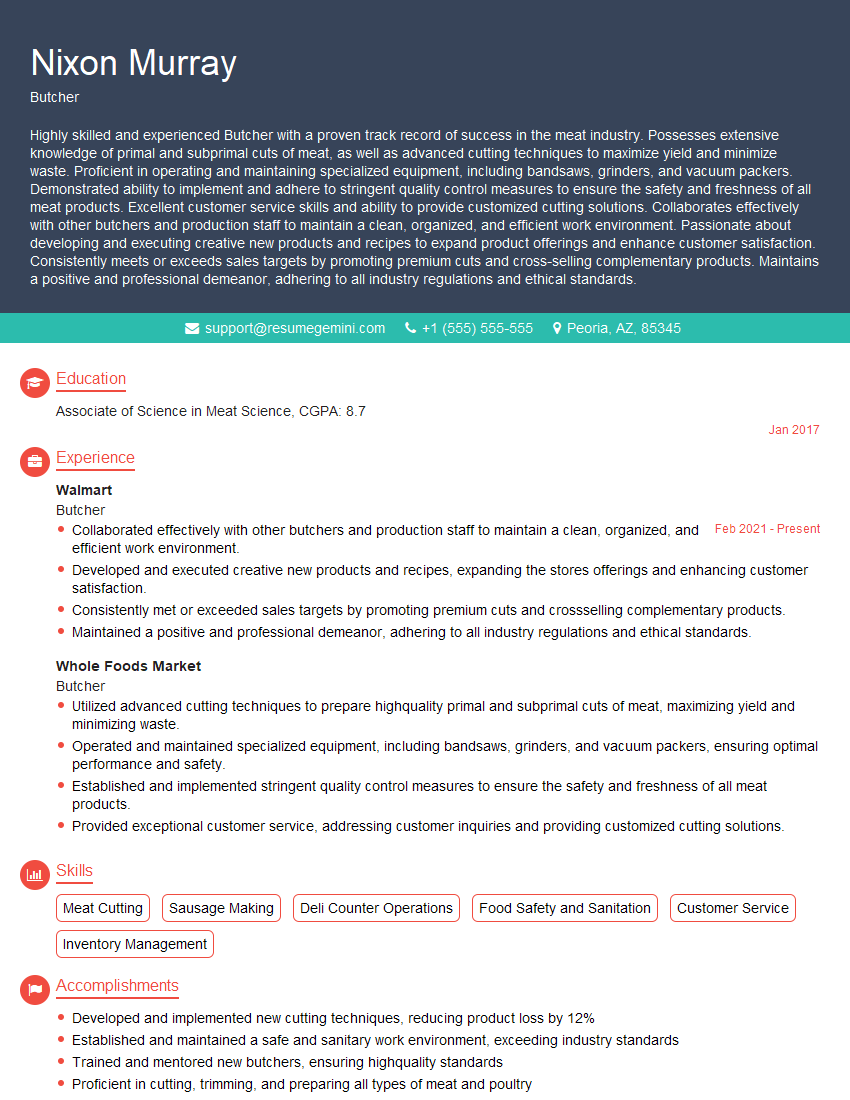
Butcher Resume Sample
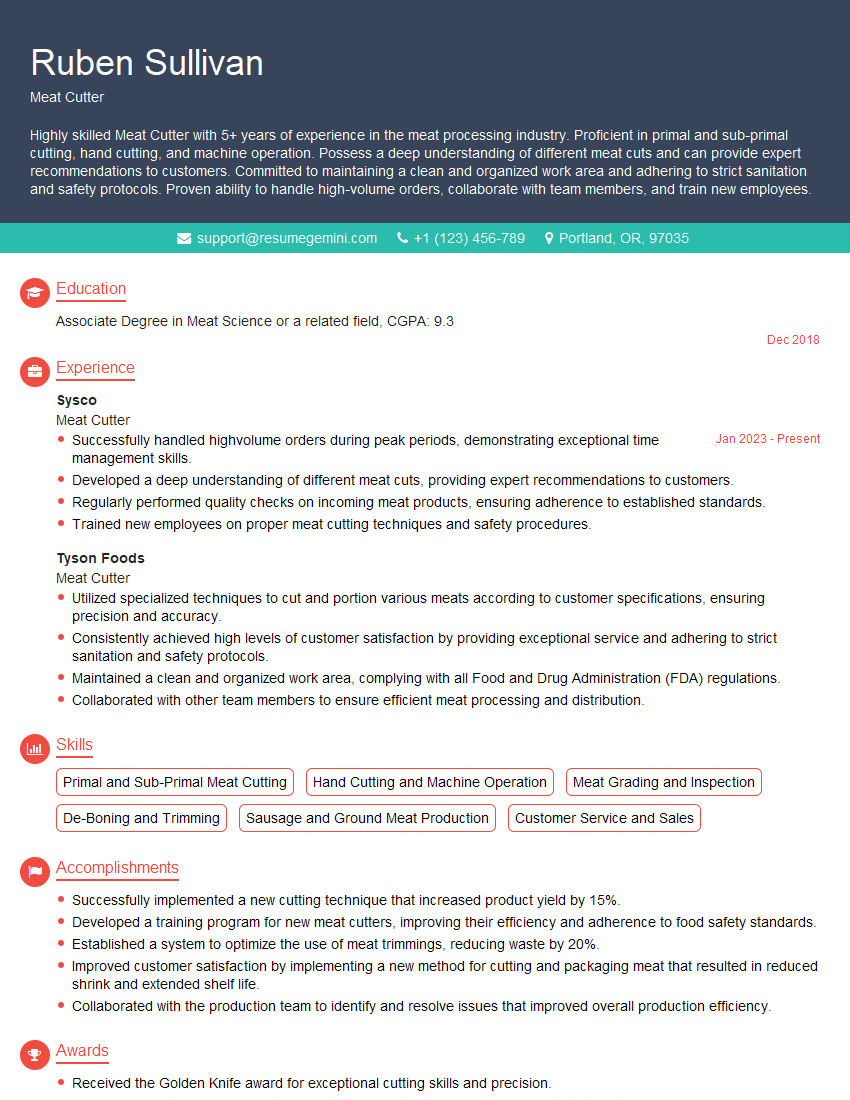
Meat Cutter Resume Sample
Explore more articles
Users Rating of Our Blogs
Share Your Experience
We value your feedback! Please rate our content and share your thoughts (optional).
What Readers Say About Our Blog
Very informative content, great job.
good