Cracking a skill-specific interview, like one for Shower Wall Installation, requires understanding the nuances of the role. In this blog, we present the questions you’re most likely to encounter, along with insights into how to answer them effectively. Let’s ensure you’re ready to make a strong impression.
Questions Asked in Shower Wall Installation Interview
Q 1. Describe your experience with different types of shower wall materials (e.g., tile, acrylic, cultured marble).
My experience encompasses a wide range of shower wall materials, each with its own strengths and weaknesses. Tile, a classic choice, offers unparalleled durability and design versatility. I’ve worked extensively with ceramic, porcelain, and glass tiles, mastering techniques for various sizes, shapes, and installation methods. Acrylic shower surrounds are a popular option due to their ease of installation and affordability. I’m proficient in installing pre-fabricated units and understand the nuances of ensuring a watertight seal. Cultured marble, another common material, provides a sleek, seamless look. I’ve worked with various thicknesses and understand the importance of proper support and reinforcement to prevent cracking. Choosing the right material depends heavily on the client’s budget, desired aesthetic, and the overall bathroom design.
For example, in a recent high-end bathroom remodel, we opted for large-format porcelain tiles to create a sophisticated and modern feel. In contrast, for a smaller budget renovation, we used a pre-fabricated acrylic shower surround that was both cost-effective and easy to install, meeting the client’s need for a quick and affordable solution.
Q 2. What are the key steps involved in preparing a wall for shower tile installation?
Preparing a wall for shower tile installation is crucial for a successful and long-lasting result. It’s a multi-step process that demands precision. First, we thoroughly clean the surface, removing any loose debris, paint, or old wallpaper. Then, we assess the wall’s structure; any uneven areas are addressed using cement board or drywall. This ensures a perfectly flat surface for tile adhesion. Next, we install water-resistant backer board, using waterproof cement to secure it to the studs, creating a solid and even substrate. All seams are carefully taped and mudded with waterproof setting compound, creating a smooth, continuous surface for the waterproofing membrane. Finally, we prime the backer board to enhance adhesion for the waterproofing membrane.
Think of this preparation phase as building a strong foundation for a house – you can’t have a beautiful, lasting structure without it.
Q 3. Explain the process of waterproofing a shower wall.
Waterproofing is paramount in shower installations to prevent water damage to the underlying structure and to ensure longevity. After preparing the wall as described above, we apply a waterproofing membrane to the entire shower area, extending several inches beyond the shower pan. This creates a complete barrier preventing water from penetrating the wall and causing damage. The membrane is applied according to the manufacturer’s instructions, ensuring full coverage and overlapping seams. In corners, we employ techniques like using a liquid membrane or overlapping membrane sheets to ensure a fully sealed, waterproof enclosure. Once the membrane is dry, it’s inspected carefully for any imperfections, and any repairs are made immediately.
Imagine waterproofing as applying a raincoat to your shower walls – it protects against the elements, ensuring they stay dry and damage-free.
Q 4. What types of waterproofing membranes are you familiar with?
I’m experienced with various waterproofing membranes, including liquid-applied membranes, sheet membranes (like PVC or CPE), and Schluter-KERDI systems. Liquid membranes offer excellent flexibility and seal well around corners and curves, while sheet membranes are durable and easy to install for larger, flat areas. Schluter-KERDI is a popular choice, known for its reliability and ease of installation; it’s a pre-formed system with specialized tapes and sealants designed for optimal water protection. The best choice depends on project specifics like budget, wall configuration, and personal preference.
Q 5. How do you ensure proper drainage in a shower installation?
Proper drainage is crucial to prevent water buildup and potential damage. This starts with the shower pan installation—ensuring it’s properly sloped toward the drain. The drain itself must be correctly installed and sealed to prevent leaks. I meticulously check the slope using a level to ensure water flows smoothly towards the drain. I also ensure there are no clogs in the drainpipe, and that the drain is properly vented to prevent siphoning and back-up.
A properly functioning drain is like a well-designed gutter system for a house – it ensures water flows away safely and efficiently.
Q 6. Describe your experience with installing shower niches.
Installing shower niches is a common request, and I’ve handled numerous installations of varying sizes and designs. The process begins with careful planning – determining the location, size, and ensuring it’s structurally sound. The niche is typically framed using waterproof materials like cement board, ensuring it’s fully integrated within the waterproofing system. We waterproof the interior and exterior of the niche before tiling, ensuring that water cannot penetrate the walls. Careful attention is paid to the seams and corners to maintain the watertight seal. Finally, the niche is tiled to match the overall shower design.
Think of a shower niche as a built-in storage container; it needs to be structurally sound and watertight for long-term durability.
Q 7. What methods do you use to cut and install tile around corners and curves?
Cutting and installing tile around corners and curves requires precision and the right tools. For straight cuts, a wet saw is essential, allowing for clean, accurate cuts. For curved cuts, a tile nipper or an angle grinder with a diamond blade provides flexibility. We use various methods depending on the curve’s radius. For tighter curves, we may need to use smaller tiles or even mosaic tiles. In some instances, we may use specialized curved tiles designed specifically for corners or use bullnose tiles to create a finished look around the edges.
Cutting tiles around corners and curves is like sculpting; it requires skill, precision, and attention to detail.
Q 8. How do you account for expansion and contraction of tile during installation?
Ceramic and porcelain tiles, commonly used in showers, expand and contract with temperature fluctuations. Ignoring this can lead to cracking and grout failure. We account for this expansion and contraction by incorporating expansion joints. Think of them as tiny ‘breathing’ spaces built into the tile layout.
- Control Joints: These are wider gaps, usually 1/4” to 1/2”, built into the tile design at strategic points, such as corners, around doorways, or at changes in the substrate. They allow the tile to move without stressing the grout or the tiles themselves. A flexible sealant, not grout, fills these joints.
- Movement Joints: These are larger expansion joints (often 1/2” or more) incorporated where the shower wall meets other structural elements, like a different wall material or the shower pan. Again, these are filled with a flexible caulk, allowing for significant movement.
- Spacing: Even without control joints, maintaining consistent grout lines (1/8” is typical) is crucial. This allows for minor expansion and contraction without putting excessive stress on individual tiles.
For example, on a large shower wall, I’d plan control joints at the corners and around any fixtures. This ensures the tile’s natural movement is accommodated, preventing damage.
Q 9. What are the common problems encountered during shower wall installation, and how do you address them?
Common problems during shower wall installation include uneven surfaces, improper waterproofing, incorrect grout application, and tile cracking.
- Uneven Surfaces: An uneven substrate leads to uneven tile setting, resulting in cracked tiles or grout lines. We solve this by using self-leveling compounds to create a perfectly smooth base before tiling.
- Improper Waterproofing: This is a critical issue. Failure to properly waterproof before tiling leads to water damage and mold growth. We use multiple layers of waterproof membrane, carefully taping all seams and corners, ensuring complete protection before tiling.
- Incorrect Grout Application: Grout applied too thinly can crack easily, while grout applied too thickly can shrink and crack. The correct technique involves using a grout float to pack the grout firmly into the joints, wiping away excess immediately. Using the right grout for the environment is also essential; I often choose epoxy grout for showers due to its superior water resistance.
- Tile Cracking: Cracking can result from poor substrate preparation, improper tile cutting, insufficient expansion joints, or using tiles that are not suitable for wet areas. Careful planning, precision cutting, and adhering to expansion joint guidelines are crucial to prevent cracking.
Addressing these issues proactively prevents costly repairs and ensures a long-lasting, watertight shower installation.
Q 10. Explain your experience with different grout types and their application.
I have extensive experience with various grout types, each with its advantages and disadvantages for shower applications.
- Cement-based grout: This is a common, cost-effective option, but it’s more porous and requires sealing to protect against water damage. I’ll choose this if the budget is tight and sealing is done properly.
- Epoxy grout: This is a premium choice, offering superior water resistance and stain resistance. It’s a bit more challenging to work with, requiring specific mixing and cleaning procedures, but it’s ideal for high-moisture areas like showers. I prefer it for its long-term durability and ease of maintenance.
- Sanded grout: This is used for wider grout joints (typically 1/8” and larger). The sand adds strength and prevents cracking. It needs more effort to clean up but is durable.
- Unsanded grout: Best suited for very narrow grout lines (less than 1/8”), this type provides a smoother, more refined finish. It’s less durable than sanded grout, so I typically avoid it in high-traffic shower areas.
The application technique varies slightly depending on the type of grout, but the core principles remain the same: consistent application, proper compaction, and thorough cleaning to prevent staining. I always follow manufacturer’s instructions precisely.
Q 11. How do you ensure proper grout joint spacing?
Consistent grout joint spacing is essential for aesthetics and structural integrity. We achieve this using plastic spacers, also known as tile spacers.
- Spacer Selection: The spacer size is chosen based on the tile size and desired grout line width (typically 1/8” for standard tiles).
- Spacer Placement: Spacers are inserted between the tiles during installation, maintaining even gaps throughout the project.
- Quality Control: Throughout the installation process, I regularly check the spacing to ensure consistency. Any irregularities are corrected immediately.
Using consistent spacers and regularly checking our work prevents uneven grout lines that compromise the finished look and can compromise structural integrity over time. A well-spaced tile job looks much more professional.
Q 12. How do you clean and seal grout after installation?
Cleaning and sealing grout is crucial for maintaining the shower’s hygiene and longevity. It prevents mold and mildew growth and makes cleaning easier.
- Cleaning: Once the grout has set (usually 24-48 hours), we thoroughly clean the tiles using a damp sponge or grout cleaning tool. This removes excess grout and haze from the tile surfaces.
- Sealing: After cleaning, we apply a grout sealer. This penetrates the grout, creating a water-resistant barrier. Multiple coats are applied based on the type of grout and manufacturer instructions.
- Maintenance Cleaning: Regular cleaning with a non-abrasive cleaner is crucial for long-term grout health.
For instance, after a large shower installation, I always wait the appropriate time, thoroughly clean all surfaces, and then apply at least two coats of grout sealer, allowing each coat to dry before applying the next. This extra step goes a long way towards preventing future issues.
Q 13. What safety precautions do you take during shower wall installation?
Safety is paramount during shower wall installation. Several precautions are consistently implemented.
- Personal Protective Equipment (PPE): We always wear safety glasses, gloves, and a dust mask to protect against dust, chemicals, and flying debris.
- Working at Heights: If working at heights, we use appropriate scaffolding and fall protection equipment.
- Proper Tool Usage: All power tools are used according to manufacturer instructions. We regularly inspect tools for damage before use.
- Wet Conditions: We take extra care in wet conditions to prevent slips and falls. Using non-slip mats or footwear is essential.
- Chemical Handling: When working with adhesives, sealants, and other chemicals, we ensure proper ventilation and adhere to the manufacturer’s safety guidelines.
Safety isn’t just a checklist; it’s an ingrained part of our process. A safe work environment ensures a quality installation and protects our team.
Q 14. Describe your experience with using various power tools relevant to shower installation.
I’m proficient with various power tools essential for shower installation.
- Wet Tile Saw: This is used for precise cutting of tiles to fit around fixtures and corners. I’m experienced in using various blades to handle different tile materials.
- Angle Grinder: This is used for rougher cuts, removing excess material, or preparing the substrate.
- Drill with Mixing Paddle: Used for mixing grout, thinset mortar, and other materials, ensuring consistent consistency.
- Impact Driver: While not always necessary, an impact driver can be helpful when installing certain types of shower fixtures or fastening backer boards.
Choosing the right tool for the job is vital. For example, using a wet tile saw minimizes dust and provides clean, precise cuts compared to a dry cut with an angle grinder. Proficiency with these tools ensures efficiency and accuracy during installation.
Q 15. How do you manage a project timeline and budget for a shower installation?
Managing a shower installation project’s timeline and budget requires meticulous planning and proactive communication. I begin by creating a detailed project schedule, breaking down the installation into manageable phases, from demolition and waterproofing to tile installation and final fixtures. Each phase is assigned a realistic timeframe, considering potential delays like material sourcing or unexpected repairs.
Budgeting involves a thorough material estimation, factoring in costs for everything from the shower pan and tiles to grout, sealant, and labor. I always add a contingency buffer (typically 10-15%) to account for unforeseen issues. This buffer ensures that if a problem arises, we don’t need to compromise on quality or rush the job. Regular progress updates with the client maintain transparency and ensure alignment with the agreed-upon budget and schedule. For example, if a specific tile becomes unavailable, we’d explore suitable alternatives within the budget and immediately discuss options with the client to avoid delays.
Career Expert Tips:
- Ace those interviews! Prepare effectively by reviewing the Top 50 Most Common Interview Questions on ResumeGemini.
- Navigate your job search with confidence! Explore a wide range of Career Tips on ResumeGemini. Learn about common challenges and recommendations to overcome them.
- Craft the perfect resume! Master the Art of Resume Writing with ResumeGemini’s guide. Showcase your unique qualifications and achievements effectively.
- Don’t miss out on holiday savings! Build your dream resume with ResumeGemini’s ATS optimized templates.
Q 16. Explain your understanding of building codes related to shower installation.
Understanding and adhering to building codes is paramount. This includes adhering to regulations regarding waterproofing membranes, such as complying with the ANSI A117.1 standard for accessibility. For example, the slope of the shower floor must meet specific requirements for proper drainage. Codes also dictate the types of materials allowed, such as the minimum thickness of ceramic tile and the necessary clearances around fixtures. Local codes may add further specifications. I regularly check with local building authorities to ensure compliance. Before starting any project, I obtain the necessary permits and review the relevant codes to prevent costly rework or project delays due to non-compliance.
Q 17. What is your experience with working from blueprints or plans?
I have extensive experience working from blueprints and plans. My process starts with carefully reviewing the architectural drawings to understand the shower’s layout, dimensions, and specified materials. I then cross-reference these plans with any provided specifications or notes. This review allows me to accurately estimate the materials required and prepare a detailed installation plan. I pay close attention to details such as plumbing locations, tile patterns, and niche dimensions. For example, a discrepancy between the plan and the actual wall framing needs to be identified and addressed before installation to avoid any complications. I always confirm all measurements on-site to ensure accuracy, as plans are sometimes not perfectly reflective of the existing conditions.
Q 18. Describe a time you had to troubleshoot a problem during shower installation.
During a recent renovation, we encountered a situation where the existing plumbing was not correctly aligned with the proposed shower location as per the blueprints. The drain was misaligned, which would have resulted in poor drainage and potential water damage. Instead of proceeding with the installation, which would lead to immediate failure, I immediately stopped the work and consulted with the client and plumber. Together, we decided to reroute the drain line. This involved additional time and cost, but it prevented a costly mistake and ensured a long-lasting, functional shower.
Q 19. How do you handle unexpected challenges or changes during a project?
Handling unexpected challenges is a critical aspect of my job. My approach involves a multi-step process: First, identify the issue, gather all relevant information, and assess its potential impact. Then, I collaborate with the client to discuss solutions, weighing cost and time implications. We explore all options—from minor adjustments to significant changes—and make the best decision based on their priorities. For example, if we discover rotted subflooring while demolishing an old shower, we’d immediately discuss the necessary repairs with the client and adjust the timeline and budget accordingly before continuing. Transparent communication with the client is essential to maintaining trust and ensuring project success even in the face of unforeseen circumstances.
Q 20. What types of caulking are suitable for shower installations?
The choice of caulking for shower installations is crucial for preventing water leakage. Silicone caulk is the most common choice due to its excellent adhesion and flexibility, making it able to withstand repeated expansion and contraction from temperature and moisture changes. Specifically, a 100% silicone caulk with mildewcide is ideal for areas exposed to moisture. However, in some areas, a polyurethane caulk might be preferred for its higher strength and faster curing time. Choosing the right caulking is essential. The wrong type can lead to cracks, leaks, and mold growth, thus compromising the shower’s watertight seal and longevity.
Q 21. How do you ensure a watertight seal around fixtures?
Ensuring a watertight seal around fixtures like faucets and showerheads requires meticulous attention to detail. I begin by using a high-quality silicone caulk to create a bead around the fixture’s base before installation. Then, I carefully position the fixture and ensure it sits flush against the wall. The caulk creates a barrier preventing water from seeping behind the fixture. Additionally, I thoroughly clean the surfaces before applying the caulk, ensuring optimal adhesion. After the caulk has cured, I inspect for any gaps or imperfections, reapplying caulk where necessary. Thorough cleaning and appropriate caulk application are crucial in preventing leaks and ensuring the longevity of the shower. A poorly sealed fixture can quickly lead to water damage and costly repairs.
Q 22. What is your experience with installing different types of shower doors?
My experience with shower door installation encompasses a wide range of styles and materials. I’ve worked extensively with framed doors, frameless doors, and bypass doors, each requiring a unique approach. Framed doors, for instance, are relatively straightforward, focusing on precise measurements and level installation of the frame before attaching the glass panels. Frameless doors demand meticulous precision because the glass panels bear the entire weight and need to be perfectly aligned to ensure smooth operation and water tightness. Bypass doors present their own set of challenges, involving the careful adjustment of the sliding mechanism to ensure effortless gliding and preventing any binding or noise. I’m proficient in working with various glass types, including tempered safety glass which is a mandatory requirement for shower doors.
For example, on a recent project, a customer requested a frameless glass shower door for their newly renovated bathroom. The intricate installation process involved ensuring a perfect plumb and level installation to prevent the door from sagging or sticking. It required careful measuring and precise drilling to securely fasten the door hinges and handle to the glass.
Q 23. Describe your process for quality control during and after installation.
Quality control is paramount in shower wall installation. My process begins with a thorough inspection of the substrate and materials before installation even starts. This includes checking for levelness, structural integrity, and any potential issues that might compromise the final product. During the installation, I consistently check my work for plumbness and squareness using levels and squares. I meticulously inspect tile alignment, ensuring grout lines are even and consistent. Once the installation is complete, a final inspection verifies the functionality of all fixtures and the overall aesthetics of the finished shower wall.
After installation, I conduct a water test to ensure complete water tightness. This involves running the shower for an extended period and checking for any leaks or drips. I also thoroughly inspect the sealant around all joints and seams to ensure a durable water barrier. Any minor imperfections are addressed immediately to maintain the highest level of quality.
Q 24. How do you maintain a clean and organized work area during installation?
Maintaining a clean and organized work area is crucial for efficiency and safety. Before starting any project, I protect the surrounding areas with drop cloths and plastic sheeting to prevent damage from debris, water, or materials. I keep all tools and materials neatly organized within easy reach. This helps prevent accidents and ensures a smooth workflow. Regularly disposing of waste and cleaning up spills are also important parts of maintaining a safe and efficient workspace. I use designated areas for different materials and tools, minimizing clutter and confusion.
Think of it like a surgeon’s operating room: everything has its place, and cleanliness minimizes the risk of contamination or errors. This approach not only helps me work faster and more accurately but also leaves a positive impression on my clients.
Q 25. What is your experience with working with different types of substrates?
My experience extends to working with various substrates, including cement board, drywall, and even existing tile surfaces. Each substrate requires a unique approach. Cement board is the preferred substrate for wet areas because of its water resistance. Drywall requires additional waterproofing measures such as waterproof membranes before tiling. Existing tile surfaces need careful assessment for soundness before proceeding with the new installation; sometimes, additional preparation like removing loose tiles or using a bonding agent might be necessary.
For example, when installing shower walls over existing drywall, I’ll always apply a waterproof membrane like RedGard to prevent moisture damage. This extra step ensures longevity and prevents potential issues down the line. Understanding the specific characteristics and requirements of each substrate is vital for a successful and long-lasting installation.
Q 26. Describe your familiarity with various methods of tile setting (thin-set, modified thin-set).
I’m proficient in both thin-set and modified thin-set mortar applications for tile setting. Thin-set mortar is a cement-based adhesive suitable for smaller tiles and less demanding applications. Modified thin-set mortar contains polymers that enhance its bonding strength, water resistance, and flexibility, making it ideal for larger format tiles, glass tiles, and demanding installations like showers. I choose the appropriate mortar based on the type of tile, substrate, and the overall project demands.
The application process involves carefully mixing the mortar according to the manufacturer’s instructions, then applying it evenly to the substrate, using a notched trowel to create the necessary grooves for optimal adhesion. The tiles are then firmly pressed into the mortar, ensuring complete contact. I use spacers to maintain consistent grout lines and meticulously clean excess mortar before it sets.
Q 27. What are your preferred methods for cleaning up after installation?
Cleaning up after installation is a crucial step. My preferred method starts with careful removal of excess grout and mortar using appropriate tools, such as a grout sponge and a scraper. I then thoroughly clean the tiles with a neutral cleaner, ensuring the removal of all residue. Drop cloths and protective coverings are removed and disposed of properly. All tools and equipment are cleaned and stored according to manufacturer recommendations. This ensures the work area is left clean, safe, and ready for the client to use.
I often use a final walk-through with the customer to make sure they’re satisfied with the cleanliness of the area and to address any lingering questions.
Q 28. How do you handle customer communication and address concerns during a project?
Open and honest communication is key throughout the project. I always start with a detailed consultation to understand the customer’s vision, budget, and any concerns they might have. I provide realistic timelines and cost estimates. During the installation process, I regularly update the client on progress, addressing any questions or concerns promptly and professionally. I strive to build a strong rapport with clients, making them feel comfortable and informed throughout the entire process.
For example, if a client expresses concern about a specific aspect of the installation, I take the time to explain the process, the rationale behind my decisions, and address their anxieties. Proactive communication prevents misunderstandings and ensures a positive experience.
Key Topics to Learn for Shower Wall Installation Interview
- Waterproofing Techniques: Understanding different waterproofing membranes (e.g., liquid membranes, sheet membranes), their application methods, and the importance of proper installation for preventing leaks and mold.
- Wall Substrate Preparation: Properly preparing the wall surface, including cleaning, patching imperfections, and ensuring a suitable base for tile adhesion. This includes understanding the impact of different substrates (e.g., drywall, cement board).
- Tile Selection and Installation: Knowledge of various tile types (ceramic, porcelain, natural stone), their suitability for shower environments, and proper installation techniques including setting methods, grout selection, and proper spacing.
- Installation of Shower Pan/Base: Understanding the different types of shower pans (pre-fabricated, custom-built), their installation procedures, and ensuring proper leveling and sealing to prevent leaks.
- Understanding Building Codes and Regulations: Familiarity with local building codes and regulations pertaining to shower installations, including waterproofing requirements and accessibility standards.
- Troubleshooting and Problem-Solving: Practical experience identifying and resolving common issues encountered during shower wall installation, such as uneven tiles, cracked grout, or leaks. This includes understanding the root causes of such issues.
- Safety Procedures and Practices: Adherence to safety regulations, including proper use of personal protective equipment (PPE) and safe handling of materials.
- Tools and Equipment: Familiarity with common tools and equipment used in shower wall installation, and their proper usage.
Next Steps
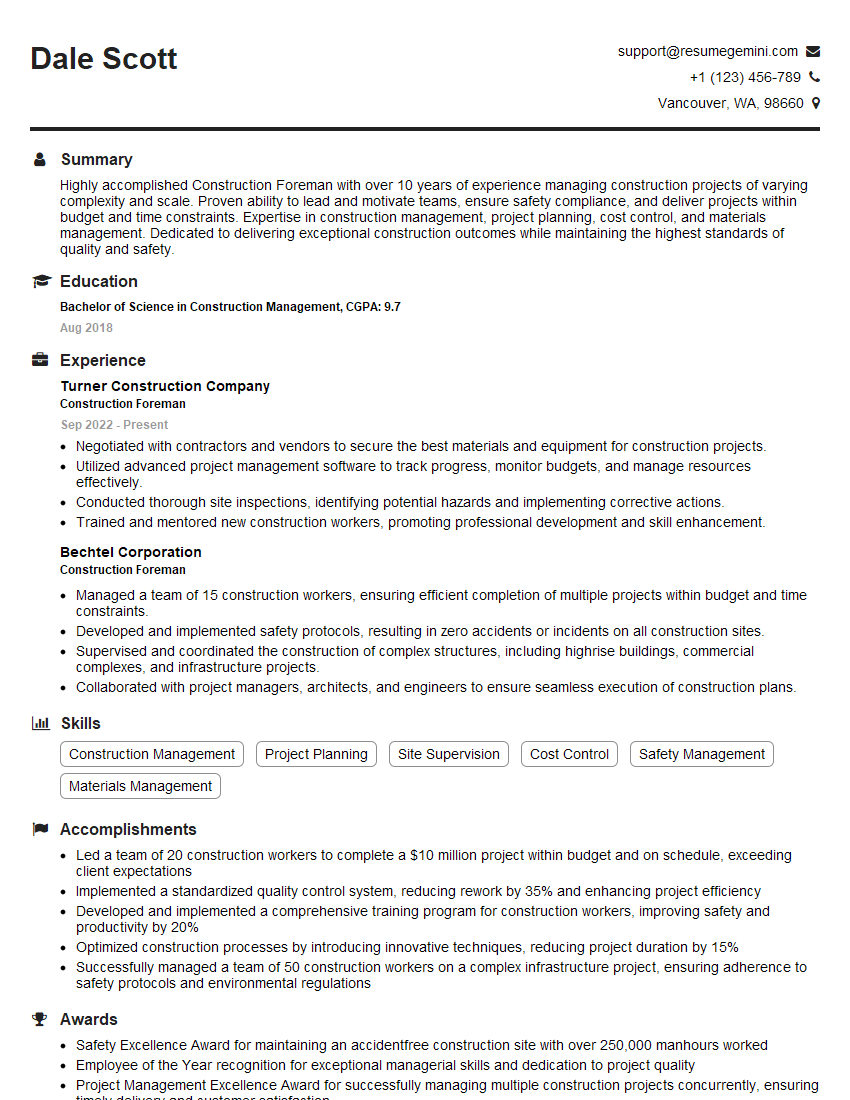
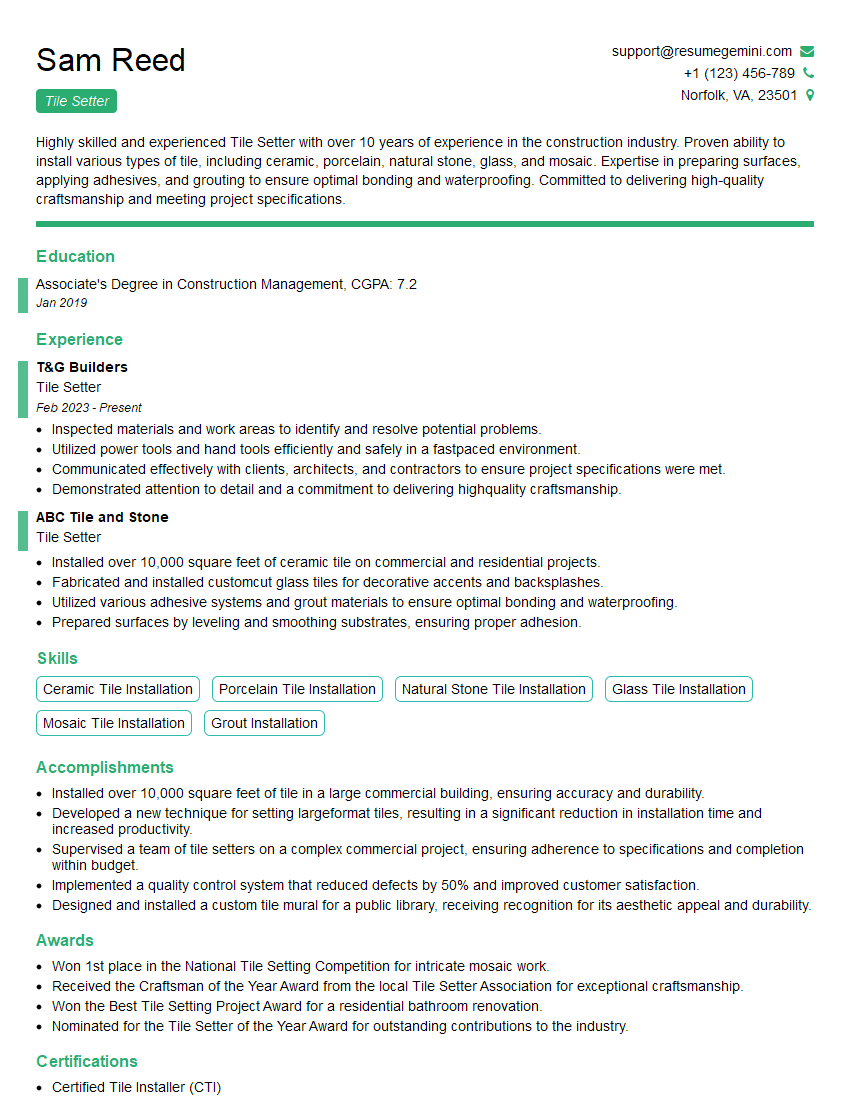
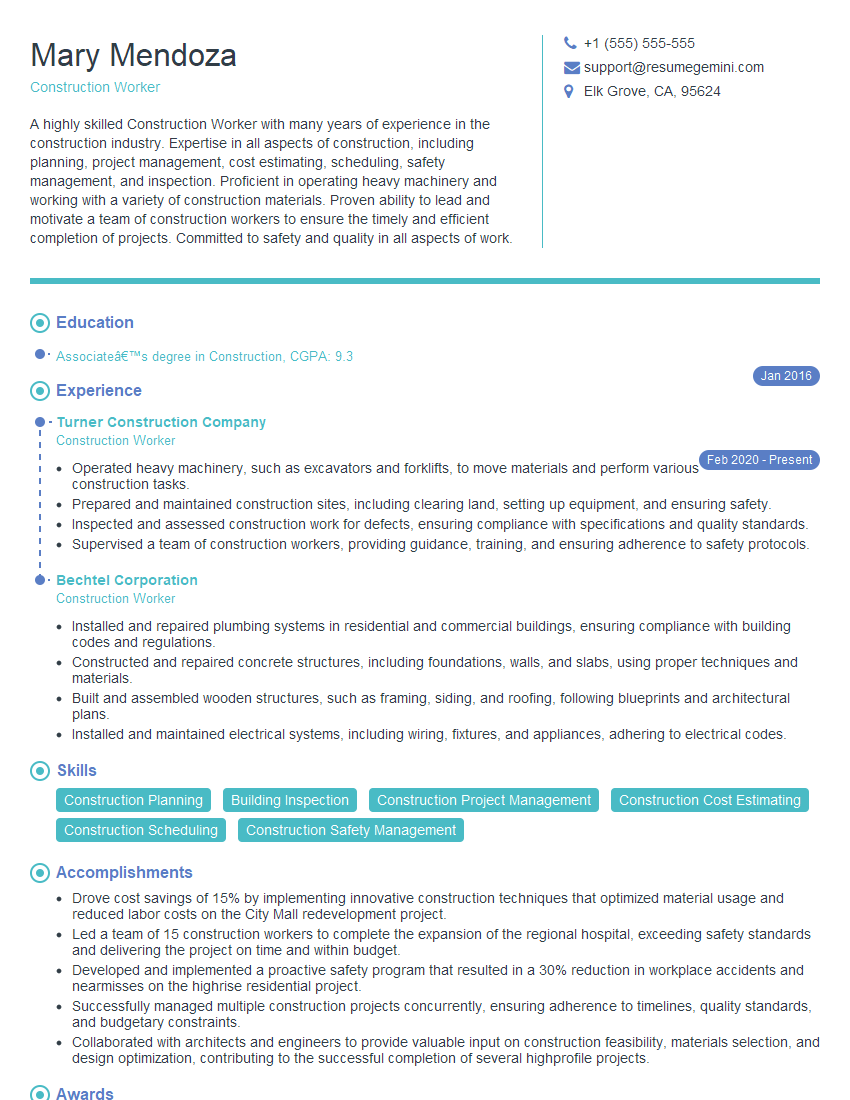
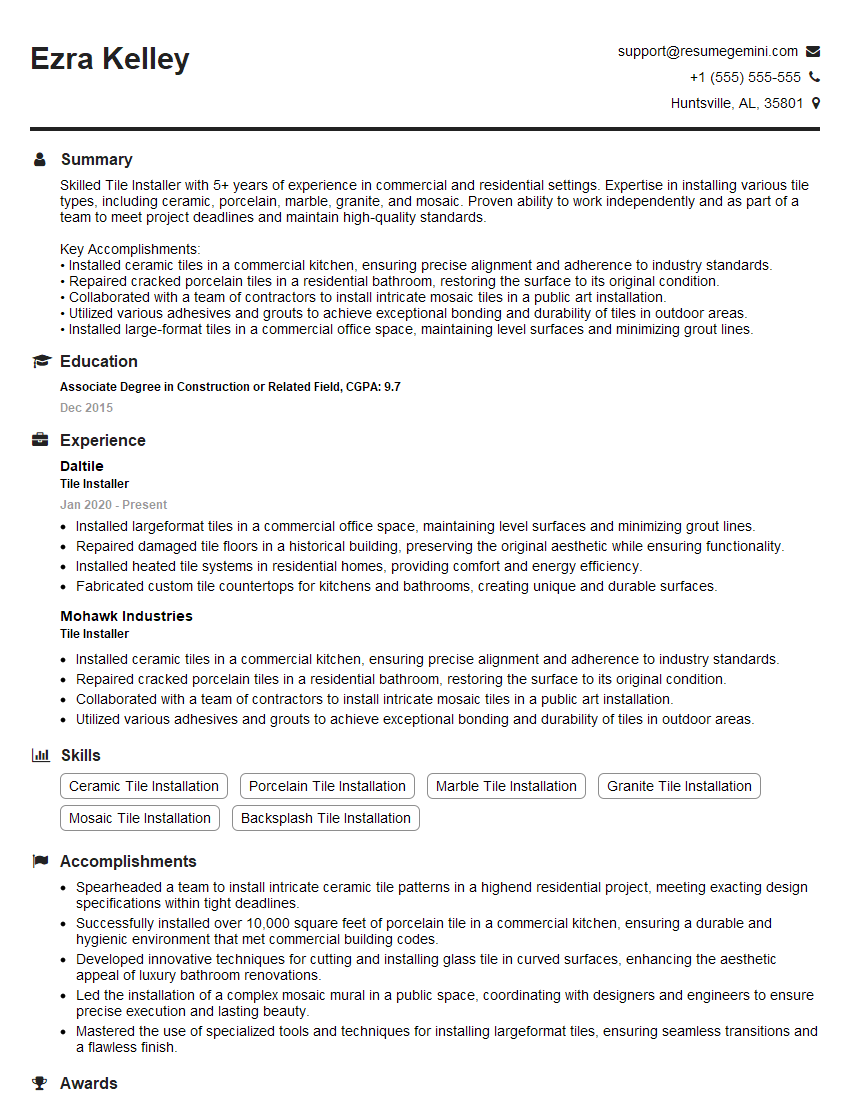
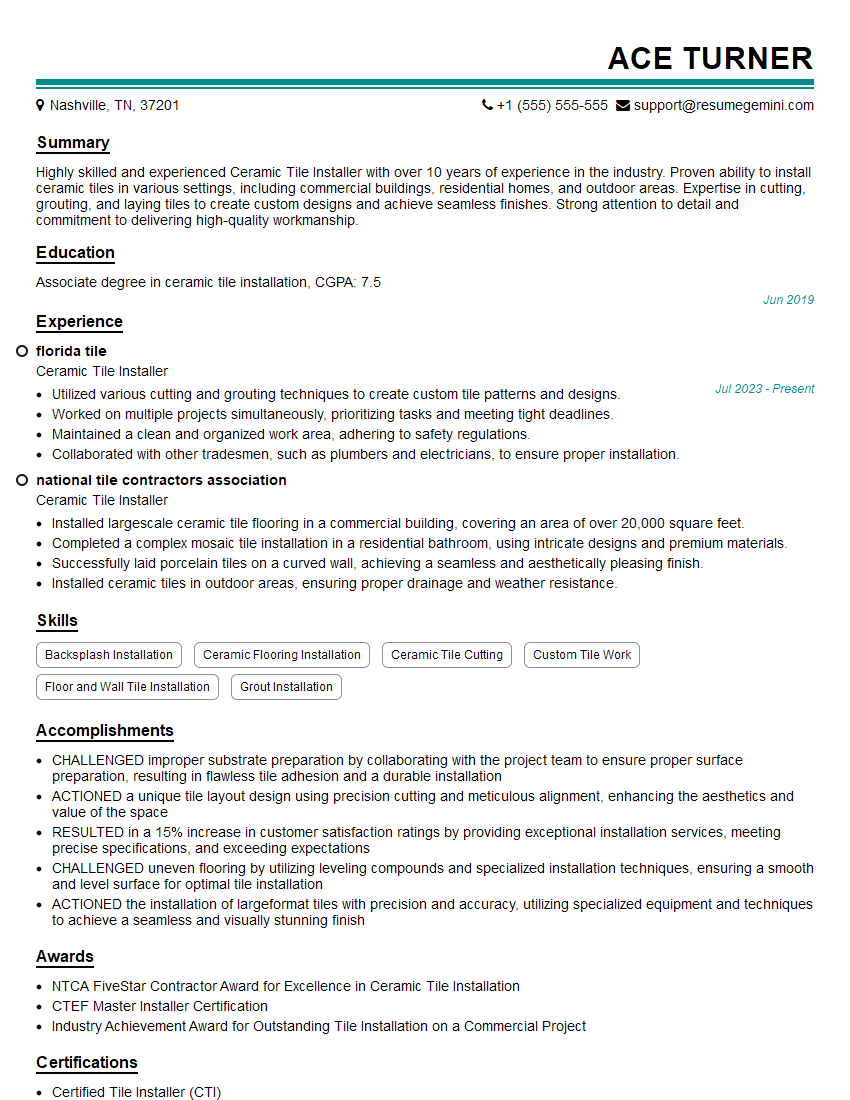
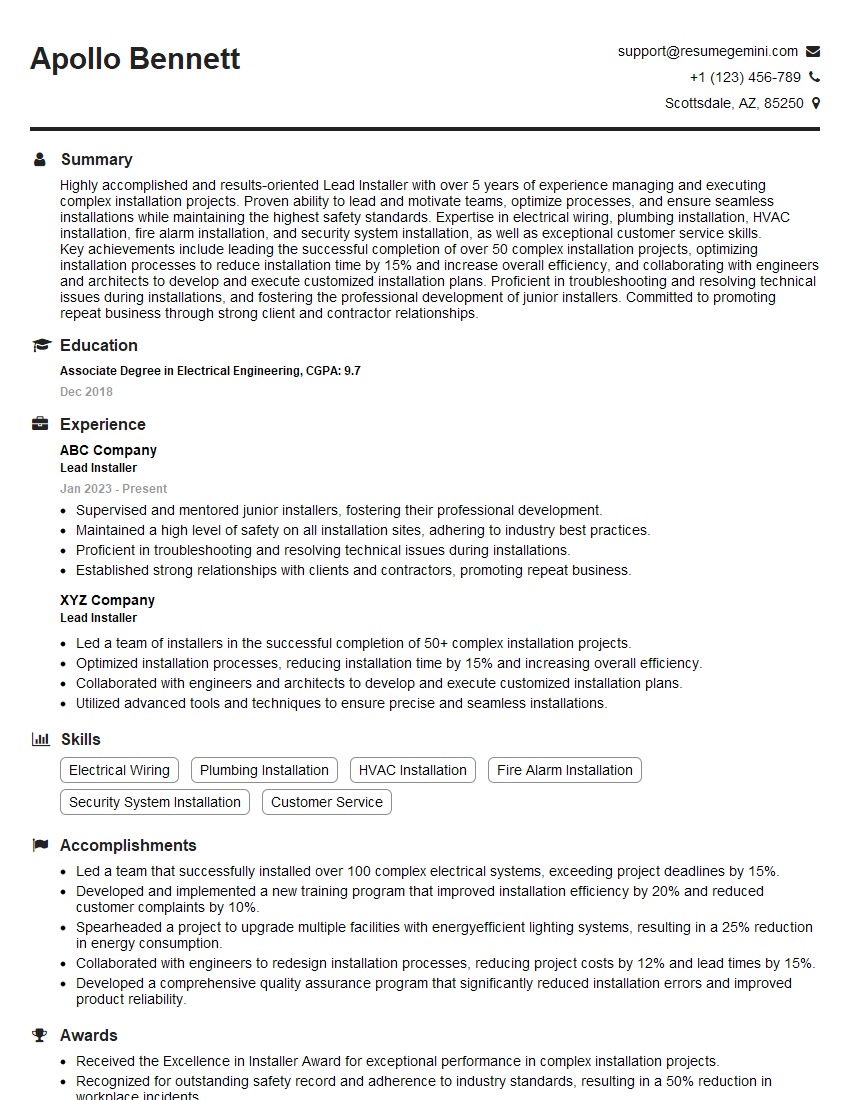
Mastering shower wall installation opens doors to rewarding career opportunities in construction and renovation. A strong understanding of these techniques showcases your skills and professionalism, making you a highly sought-after candidate. To maximize your job prospects, it’s crucial to create an ATS-friendly resume that highlights your expertise. We highly recommend using ResumeGemini to build a professional resume that effectively communicates your skills and experience to potential employers. ResumeGemini provides examples of resumes tailored to Shower Wall Installation to help you get started. Invest time in crafting a compelling resume – it’s your first impression!

Explore more articles
Users Rating of Our Blogs
Share Your Experience
We value your feedback! Please rate our content and share your thoughts (optional).
What Readers Say About Our Blog
Very informative content, great job.
good