Unlock your full potential by mastering the most common Siding Work interview questions. This blog offers a deep dive into the critical topics, ensuring you’re not only prepared to answer but to excel. With these insights, you’ll approach your interview with clarity and confidence.
Questions Asked in Siding Work Interview
Q 1. What types of siding materials are you familiar with (e.g., vinyl, wood, fiber cement, metal)?
As a seasoned siding professional, I’ve worked extensively with a variety of materials. Each has its own strengths and weaknesses, influencing project cost and longevity. Here are some of the most common types:
- Vinyl Siding: This is a popular choice due to its affordability, low maintenance, and wide range of colors and styles. It’s relatively easy to install, making it a good option for DIY projects, but it can be susceptible to damage from impact and extreme temperatures. Think of it as the ‘workhorse’ of siding options.
- Wood Siding: Offers a classic, natural look and excellent insulation. However, wood requires more maintenance than vinyl, including regular painting or staining to prevent rot and insect damage. It’s more expensive upfront and is a more labor-intensive installation.
- Fiber Cement Siding: A durable and fire-resistant option that mimics the look of wood but requires less maintenance. It’s more expensive than vinyl but less so than wood, offering a good balance of aesthetics, durability, and cost. This is a fantastic choice for areas prone to fire or harsh weather.
- Metal Siding: Incredibly durable and long-lasting, offering excellent protection against fire, insects, and harsh weather. It’s also very low-maintenance. However, metal siding can be more expensive than other options and can dent if not handled carefully during installation. This is often seen on commercial buildings and those in areas prone to high winds.
My experience encompasses all these materials, allowing me to advise clients on the best choice for their specific needs and budget.
Q 2. Describe your experience with different siding installation methods.
Siding installation methods vary depending on the material used. I’m proficient in several techniques:
- Nail-on installation: This is the most common method, particularly for vinyl and wood siding. It involves nailing the siding panels directly to the sheathing, ensuring proper spacing and alignment. Accuracy is crucial to avoid gaps or uneven surfaces.
- Lap siding: This classic method involves overlapping each siding panel to create a weather-resistant barrier. The overlap provides protection from wind and rain, and a neat aesthetic finish.
- Horizontal and vertical siding: I can install siding both horizontally and vertically, depending on the design requirements and the type of siding being used. Each orientation offers a different aesthetic, and choosing the right one is often dictated by the home’s style and the client’s preference.
- Specialty installation: For more complex projects involving intricate details or unique architectural features, I employ specialized techniques to ensure a seamless and professional finish. This might include custom cutting and fitting around windows, doors, and corners.
I always follow manufacturer’s instructions carefully for each material to ensure a long-lasting, high-quality installation.
Q 3. How do you prepare a surface for siding installation?
Proper surface preparation is paramount for a successful siding installation. Neglecting this step can lead to problems down the line, such as premature siding failure.
- Inspection: A thorough inspection identifies any existing damage, rot, or insect infestation. Addressing these issues before installation is crucial.
- Repair: Any damaged areas need to be repaired or replaced. This might involve replacing rotten wood, fixing damaged sheathing, or addressing water damage.
- Cleaning: The surface needs to be clean and free of debris, dust, and loose paint. Pressure washing is often used for this, but caution is needed to avoid damaging the underlying structure.
- Flashing and water barrier installation: Proper flashing and water barriers are essential to prevent water intrusion. These are strategically placed around windows, doors, and other critical areas.
- Sheathing: Ensuring the sheathing (the underlying layer of the wall) is properly installed and in good condition. Any gaps or damage should be addressed before siding goes on.
Thorough preparation ensures the siding adheres properly and lasts for years to come. It’s akin to preparing a canvas before painting a masterpiece – the better the preparation, the better the final result.
Q 4. What safety precautions do you take during siding installation?
Safety is my top priority. I follow strict safety procedures throughout the entire siding installation process:
- Personal Protective Equipment (PPE): I always wear appropriate PPE, including safety glasses, gloves, hard hats, and fall protection equipment when working at heights.
- Ladder Safety: When using ladders, I ensure they are properly placed and secured, and I follow all relevant safety guidelines.
- Power Tool Safety: I am trained in the safe operation of power tools, including saws, drills, and nail guns. I regularly inspect tools to ensure they are in good working order.
- Fall Protection: For multi-story projects, I always utilize proper fall protection systems to prevent accidents. This may include harnesses, lifelines, and anchor points.
- Weather Conditions: I never work in unsafe weather conditions, such as high winds, lightning, or heavy rain.
My commitment to safety not only protects myself but also ensures the safety of my team and those around the worksite.
Q 5. How do you handle damaged or defective siding materials?
Dealing with damaged or defective siding requires a methodical approach:
- Identification: I carefully inspect all materials upon delivery and throughout the installation process to identify any defects early on.
- Documentation: Any damaged or defective pieces are documented with photos and notes. This documentation is crucial for any warranty claims.
- Return or Replacement: Damaged materials are returned to the supplier for replacement. I ensure I have sufficient replacement materials available before proceeding with the installation.
- Repair (if feasible): In some cases, minor damage might be repairable on-site. However, this is only done after careful evaluation and ensuring it won’t compromise the integrity of the siding.
- Adjustments to installation plan: Sometimes, damaged materials may necessitate slight adjustments to the installation plan to maintain consistency and quality. This ensures the best possible result, despite the unexpected setback.
This process ensures that the final installation meets the highest standards of quality and longevity.
Q 6. Explain your experience with measuring and cutting siding.
Accurate measuring and cutting are essential for a professional-looking and properly functioning siding installation. My experience includes:
- Precise Measurements: I utilize accurate measuring tools such as tape measures and levels to ensure precise cuts. This is essential for achieving a consistent and clean finish.
- Appropriate Tools: I use the appropriate tools for cutting different siding materials. For instance, a circular saw with a fine-tooth blade is ideal for wood, while a miter saw is better suited for precise angle cuts.
- Layout and Planning: Before cutting, I carefully plan the layout of the siding panels to minimize waste and ensure proper alignment. This involves visualizing the finished product and calculating the necessary cuts.
- Waste Management: I follow environmentally sound practices for handling and disposal of waste materials.
My precision in measuring and cutting ensures minimal waste and a professional, high-quality installation. It’s all about attention to detail – a small error can cascade into larger problems down the line.
Q 7. Describe your process for installing flashing and trim.
Flashing and trim are crucial for protecting the building and enhancing its aesthetic appeal. Here’s my process:
- Flashing Installation: Flashing, typically made of metal, is installed around windows, doors, and other areas where the siding meets other building elements. This prevents water penetration and ensures a weathertight seal. Proper flashing installation is critical to prevent water damage.
- Trim Installation: Trim pieces, such as corner boards, J-channels, and starter strips, provide a neat and finished appearance. They also help to protect the edges of the siding and ensure proper alignment.
- Caulk and Sealants: I use high-quality caulk and sealants to seal any gaps or cracks between the flashing, trim, and siding. This creates a weathertight barrier, preventing water from seeping into the wall system.
- Material Selection: I choose appropriate flashing and trim materials that complement the siding and are compatible with the building’s design. This ensures both functionality and aesthetics.
Proper flashing and trim installation isn’t just about looks; it’s about protecting the building from the elements and preventing costly repairs down the road. It’s the finishing touch that takes a good job to a great one.
Q 8. How do you ensure proper ventilation behind the siding?
Proper ventilation behind siding is crucial to prevent moisture buildup, which can lead to rot, mold, and structural damage. Think of it like a house’s lungs – it needs to breathe! We achieve this through several methods.
- Soffit vents: These are vents installed in the soffits (the overhanging eaves) that allow air to enter the cavity.
- Gable vents: Located at the gable ends (the triangular parts of the roof), these vents allow air to exit the cavity, creating a natural airflow.
- Continuous air spaces: We ensure a continuous path for airflow by using appropriate flashing and building paper to prevent any blockage. This is particularly crucial around windows and doors.
- Rake vents: These are sometimes used along the roof edge to aid ventilation.
For example, on a recent project, we encountered a situation where the previous siding installation had blocked soffit vents. We carefully removed the sections obstructing the vents and installed new, properly sized vents, greatly improving the ventilation and the longevity of the building’s exterior.
Q 9. What are common problems encountered during siding installation, and how do you address them?
Common problems during siding installation often stem from poor preparation or unforeseen circumstances. Some of the most frequent issues include:
- Uneven sheathing: If the underlying sheathing isn’t properly leveled, the siding will appear wavy or uneven. We address this by identifying high and low spots and using shims to create a level surface before installation.
- Improper flashing: Incorrect flashing around windows and doors allows water penetration. We meticulously install flashing according to manufacturer’s instructions, ensuring water is directed away from the building.
- Damaged siding panels: Handling siding carefully is paramount. We take great care to avoid scratching or denting panels during transportation and installation. Damaged panels are immediately replaced.
- Incorrect fastener placement: This leads to weak spots and potential damage. We follow manufacturer’s spacing recommendations for nails or screws to ensure stability.
- Weather conditions: Extreme heat or cold can negatively impact installation. We adjust schedules to avoid working in unsuitable weather to maintain quality.
Solving these problems requires meticulous attention to detail and a proactive approach. We address each issue as it arises, documenting any adjustments or modifications made to ensure the project’s overall success. For instance, we might have to re-shim a wall section, replace a damaged panel, or use additional sealant to address water infiltration.
Q 10. Explain your experience with caulking and sealing.
Caulking and sealing are essential to creating a weathertight barrier. My experience encompasses a wide range of caulks, from acrylic latex for general purpose sealing to polyurethane for expansion joints and high-performance situations. I carefully select the appropriate caulk based on the material being sealed and its specific requirements.
For example, I often use a high-quality, paintable acrylic latex caulk for sealing gaps around windows and doors in wood siding. Around vinyl or composite siding, we might use a sealant specifically designed for those materials to ensure proper adhesion and prevent cracking. The process involves cleaning the surfaces thoroughly, applying the caulk in a smooth bead, and tooling it to create a neat, weather-resistant seal. I meticulously ensure complete coverage to prevent water penetration.
Proper sealing is not just about stopping water; it’s also about preventing air infiltration, which contributes to energy efficiency. Think of it as a vital layer of protection, creating a strong barrier against the elements.
Q 11. How do you manage a siding installation project timeline?
Managing a siding installation project timeline effectively involves careful planning and execution. I begin by creating a detailed schedule that accounts for every stage of the project, from initial site assessment and material ordering to final cleanup. This schedule is broken down into smaller, manageable tasks with clearly defined deadlines.
I utilize project management software to track progress, identify potential delays, and allocate resources efficiently. Regular communication with the client and the project team is paramount to keep everyone informed and on track. For example, weather delays are inevitable. We incorporate buffer time in the schedule to account for these unexpected events. If unforeseen issues arise, I promptly assess the impact and adjust the schedule accordingly, making sure to maintain transparency with the client.
This proactive approach allows for smoother project execution and timely completion. Ultimately, delivering a high-quality result while respecting the agreed-upon timeline is a key indicator of success.
Q 12. How do you work with other tradespeople on a construction site?
Collaboration is key on any construction site. I prioritize open communication and coordination with other tradespeople, such as electricians, plumbers, and insulation installers. We schedule our work to avoid conflicts and ensure a smooth workflow. For instance, electricians need access to walls before we install siding; careful scheduling prevents delays and avoids damaging already installed work.
Regular meetings and daily briefings help ensure everyone is aware of the day’s activities and potential challenges. I maintain a respectful and professional relationship with all trades involved. We work together as a team, solving problems collectively and ensuring the final product meets the highest standards. This collaborative approach not only speeds up the process but results in a higher quality finished product.
Q 13. Describe your experience with different types of fasteners.
My experience with fasteners includes a wide range, each suitable for different siding materials and applications. For example:
- Galvanized nails: Commonly used for wood siding; we choose appropriate length and gauge based on siding thickness and wood type.
- Stainless steel nails: Offer superior corrosion resistance, especially in coastal areas or for use with certain metal sidings.
- Exterior-grade screws: Particularly useful for securing vinyl or composite siding panels, providing a more secure and less likely to pull out fastening mechanism.
- Self-tapping screws: Used for specific applications, particularly when installing metal siding.
Choosing the right fastener is crucial for both aesthetic appeal and structural integrity. I always follow manufacturer’s recommendations, and, whenever appropriate, incorporate a sealant to enhance weather resistance.
Q 14. What are your methods for preventing water damage?
Preventing water damage is paramount in siding installation. This involves a multi-faceted approach:
- Proper flashing installation: Flashing acts as a water barrier around windows, doors, and other penetrations. We ensure all overlaps are correctly sealed.
- Careful sealant application: We use high-quality caulk to seal all gaps and joints.
- Correct siding overlap: Overlapping siding panels properly ensures water runs off the surface rather than penetrating.
- Proper grading around the foundation: Ensuring water drains away from the house is essential to prevent water from reaching the siding.
- Regular inspections: Once the job is complete, we schedule routine inspections to detect any potential water damage early.
Imagine a well-engineered raincoat – its layers of protection work together. Preventing water damage isn’t about one single step; it’s about taking every measure possible to ensure the siding forms an impenetrable barrier against the elements.
Q 15. How do you deal with unexpected issues that arise during installation?
Unexpected issues are par for the course in siding installation. My approach is methodical and proactive. First, I thoroughly assess the situation, identifying the root cause of the problem. This might involve anything from discovering rotted sheathing behind the siding to encountering unexpected wiring or plumbing. Then, I develop a solution, always prioritizing safety and code compliance. For example, if I find rotted wood, I wouldn’t just slap new siding over it; I’d carefully repair or replace the damaged sheathing, ensuring a solid, long-lasting foundation. I document everything – photos, notes, and any changes to the original plan – and communicate transparently with the client about the issue, the proposed solution, and any potential cost adjustments.
One time, I discovered a wasp nest behind a section of vinyl siding during a removal. Instead of continuing, I safely relocated the nest before proceeding, ensuring both the client’s safety and the preservation of the environment. This highlights the importance of thorough inspections and flexible problem-solving.
Career Expert Tips:
- Ace those interviews! Prepare effectively by reviewing the Top 50 Most Common Interview Questions on ResumeGemini.
- Navigate your job search with confidence! Explore a wide range of Career Tips on ResumeGemini. Learn about common challenges and recommendations to overcome them.
- Craft the perfect resume! Master the Art of Resume Writing with ResumeGemini’s guide. Showcase your unique qualifications and achievements effectively.
- Don’t miss out on holiday savings! Build your dream resume with ResumeGemini’s ATS optimized templates.
Q 16. What is your experience with different types of siding tools?
My experience with siding tools is extensive. I’m proficient with various power tools, including pneumatic nailers (for different siding types), circular saws for cutting materials precisely, and reciprocating saws for demolition and intricate cuts. I also regularly use measuring tools like tape measures, levels, and squares to ensure accuracy and precision. Hand tools such as utility knives, putties, and caulking guns are essential for finishing touches and smaller repairs. Beyond the basics, I’m familiar with specialized tools like siding breakers for removing difficult-to-remove siding and heat guns for working with certain materials.
For instance, understanding the nuances of using a pneumatic nailer – the appropriate pressure, nail size for different siding thicknesses, and avoiding damage to the underlying material – is crucial for efficient and high-quality installation. Knowing when a reciprocating saw is more efficient than a circular saw for a specific cut, also saves time and reduces material waste.
Q 17. Explain your understanding of building codes related to siding.
Building codes regarding siding are critical for safety and structural integrity. My understanding encompasses aspects like water penetration prevention, proper flashing installation around windows and doors, ventilation requirements to prevent moisture build-up, and the appropriate fastening methods for different siding materials. I’m familiar with local codes as well as national standards like those provided by the International Code Council (ICC). I understand the importance of using approved materials and adhering to specified installation procedures. Non-compliance can lead to structural damage, safety hazards, and potential legal issues.
For example, the proper installation of flashing around windows is not merely aesthetically pleasing; it’s a critical element preventing water intrusion which could lead to mold growth and structural damage. I always make sure to have a complete understanding of the relevant codes before I begin any project.
Q 18. How do you estimate the cost of a siding project?
Estimating siding costs involves a detailed process. First, I precisely measure the area requiring siding, accounting for windows, doors, and other features. I then determine the type of siding material chosen by the client, as costs vary significantly (e.g., vinyl, fiber cement, wood). Labor costs are factored in, considering the complexity of the job, such as the presence of intricate details or difficult-to-access areas. I also incorporate the cost of necessary materials like underlayment, flashing, fasteners, and caulking. Finally, I add a contingency for unforeseen issues. A detailed breakdown is always provided to the client, promoting transparency and building trust.
For example, a large, simple house with vinyl siding will naturally have a lower cost estimate compared to a smaller, more complex structure requiring intricate cuts and premium wood siding. I always ensure the client understands every aspect of the estimate to avoid surprises.
Q 19. What is your experience with reading blueprints and specifications?
I have extensive experience reading blueprints and specifications. I can interpret architectural drawings, understand elevations, identify material specifications, and grasp the overall project scope. This includes comprehending details like flashing requirements, siding profiles, and fastening schedules. A thorough understanding of these documents is crucial for accurate material ordering, efficient work planning, and ensuring the final product matches the client’s vision and code compliance. I can easily identify potential conflicts or ambiguities in the plans and discuss them with the client and any involved architects or contractors.
For example, identifying the type and size of siding from the specifications allows me to accurately calculate materials needed and schedule the procurement process, preventing delays.
Q 20. Describe your experience with repairing existing siding.
Repairing existing siding requires careful assessment of the damage. This could range from replacing individual damaged panels due to impact or weather damage to addressing larger issues like water damage or insect infestation. The repair process involves removing the damaged sections, repairing underlying structural issues if needed (like rotted wood), and then installing new siding to match the existing material. Color matching is crucial for a seamless repair. I understand the importance of proper caulking and sealing to prevent future water damage.
For instance, replacing a single damaged vinyl panel might seem simple, but careful consideration of the panel’s locking mechanism and maintaining alignment with adjacent panels is important to ensure a visually perfect and leak-proof result.
Q 21. How do you maintain quality control during a siding installation?
Maintaining quality control is paramount. This begins with a thorough inspection of the existing structure before starting the installation. During installation, I meticulously check for proper alignment, consistent spacing, and accurate fastening. Regular quality checks throughout the process ensure that issues are identified and addressed immediately. This includes ensuring proper flashing installation, checking for gaps or imperfections, and confirming that the final product adheres to building codes and client expectations. I also conduct a final inspection before handing over the project, documenting everything with photos.
For instance, using a laser level to ensure perfect alignment of siding panels consistently throughout the installation not only creates a beautiful aesthetic result but also contributes to the long-term durability and water-resistance of the siding. This is a simple yet impactful example of my quality control processes.
Q 22. How do you handle customer communication and concerns?
Customer communication is paramount in siding work. I believe in proactive, transparent communication throughout the entire project. This starts with a thorough initial consultation, where I listen carefully to the customer’s needs, preferences, and budget. I explain the process clearly, outlining timelines, potential challenges, and material choices. I provide detailed written estimates and regularly update the client on progress, addressing any concerns promptly and professionally. For example, if a weather delay occurs, I immediately inform the client and provide a revised timeline. If unexpected issues arise during installation, I photograph the problem and explain the solution clearly, getting their approval before proceeding. I am always available to answer questions by phone or email and aim to foster a positive and trusting relationship with each client.
Q 23. What is your experience with different siding manufacturers’ products?
My experience encompasses a wide range of siding manufacturers and their products. I’m familiar with vinyl siding from companies like CertainTeed, James Hardie, and Alside, each offering different styles, warranties, and price points. I’ve also worked extensively with fiber cement siding (like James Hardie products), which offers superior durability and fire resistance compared to vinyl, and with wood siding, requiring specialized installation techniques. Understanding the unique characteristics of each manufacturer’s product, such as their installation instructions, recommended tools, and potential challenges, is critical to ensuring a quality and long-lasting finish. For instance, James Hardie fiber cement requires specific fasteners and cutting techniques to prevent cracking. I always consult the manufacturer’s specifications before starting any project to ensure best practices are followed.
Q 24. Describe your problem-solving skills related to siding installation.
Problem-solving is an integral part of siding installation. For instance, I once encountered a situation where the existing wall framing was uneven, causing the siding to appear wavy. My solution involved carefully shimming the framing before installing the siding to create a perfectly flat surface. Another challenge involved dealing with rotted wood under existing siding. My approach was to carefully remove and replace the damaged wood, ensuring proper drying and treatment before re-siding. My problem-solving strategy involves careful assessment, considering different solutions, and selecting the most effective and cost-efficient approach while maintaining structural integrity and aesthetic appeal. I document each challenge and its solution for future reference and learning.
Q 25. How do you ensure proper insulation during siding installation?
Proper insulation is crucial for energy efficiency and to prevent moisture damage. During siding installation, I ensure the existing insulation is in good condition and properly installed. If necessary, I’ll recommend upgrading to more efficient insulation before siding installation. For instance, if we find gaps or insufficient insulation, we address that by adding appropriate insulation materials like spray foam or fiberglass batts, sealing any gaps to prevent air leakage. This helps maintain a consistent temperature within the home, improving comfort and reducing energy bills. This step is often overlooked but is a vital part of ensuring a high-quality, energy-efficient siding installation.
Q 26. What is your approach to working in various weather conditions?
Working in various weather conditions requires adaptability and planning. I avoid working in extreme weather like heavy rain, snow, or high winds, as this can compromise both the quality of the work and worker safety. When working in hot conditions, I schedule work during cooler parts of the day and ensure adequate hydration for the crew. In cold weather, I take steps to prevent materials from freezing and ensure worker safety by providing appropriate protective gear. I utilize weather forecasting to plan projects effectively and adjust schedules as needed. For example, we might stage materials on-site to minimize time spent outdoors in poor weather, and we utilize specialized equipment to deal with any weather-related complications.
Q 27. How do you manage waste materials during a siding project?
Waste management is a crucial aspect of responsible siding installation. We carefully sort waste materials on-site, separating recyclable materials like plastic and metal from non-recyclable waste like wood scraps. We utilize appropriate disposal bins and work closely with local recycling facilities to dispose of materials responsibly. We always strive to minimize waste generation through careful planning and precise cutting techniques. Leftover siding is often used for smaller projects or repairs, reducing waste going to landfills. Our commitment to responsible waste management reflects our dedication to environmental sustainability.
Q 28. What are your career goals related to siding installation?
My career goals involve continuing to hone my skills in siding installation and staying abreast of the latest techniques and materials. I aim to become a leading expert in the field, known for my quality workmanship and commitment to customer satisfaction. I also envision expanding my knowledge to encompass related areas like roofing and exterior renovations. Ultimately, I want to build a reputable business known for its exceptional quality and commitment to both clients and the environment. Continuous learning and a commitment to excellence are fundamental to my professional growth.
Key Topics to Learn for Siding Work Interview
- Siding Materials: Understanding different siding types (vinyl, wood, fiber cement, metal), their properties, advantages, and disadvantages. Practical application: Knowing when to recommend specific materials based on client needs and budget.
- Installation Techniques: Mastering proper installation methods for various siding materials, including flashing, caulking, and finishing. Practical application: Troubleshooting common installation problems and ensuring watertight and aesthetically pleasing results.
- Measuring and Estimating: Accurately measuring and calculating material needs for siding projects. Practical application: Creating detailed estimates that accurately reflect project costs and timelines.
- Safety Procedures: Understanding and adhering to all relevant safety regulations and best practices for working at heights and with power tools. Practical application: Identifying and mitigating potential hazards on the job site.
- Repair and Maintenance: Diagnosing and repairing common siding issues, such as damage from weather or impact. Practical application: Providing effective solutions for maintaining the longevity and appearance of siding.
- Tools and Equipment: Familiarity with common tools and equipment used in siding installation and repair. Practical application: Selecting and using the appropriate tools for specific tasks efficiently and safely.
- Building Codes and Regulations: Understanding local building codes and regulations related to siding installation. Practical application: Ensuring all work complies with local regulations and building permits are obtained.
Next Steps
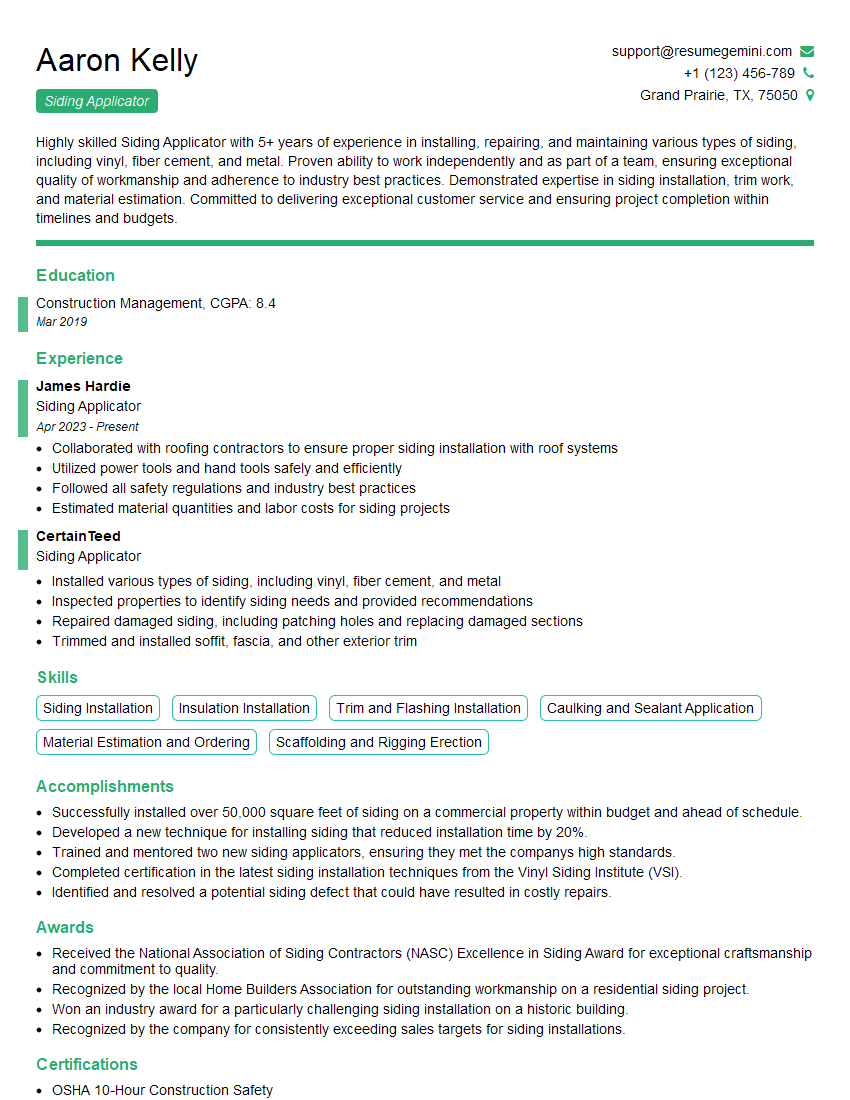
Mastering siding work opens doors to a rewarding career with excellent growth potential. A strong understanding of these key areas will significantly improve your chances of landing your dream job. To enhance your job prospects, it’s crucial to create an ATS-friendly resume that highlights your skills and experience effectively. ResumeGemini is a trusted resource to help you build a professional and impactful resume that stands out. Examples of resumes tailored to the Siding Work industry are available, providing you with practical templates and guidance. Invest in your future – create a compelling resume today!
Explore more articles
Users Rating of Our Blogs
Share Your Experience
We value your feedback! Please rate our content and share your thoughts (optional).
What Readers Say About Our Blog
Very informative content, great job.
good