Are you ready to stand out in your next interview? Understanding and preparing for Signmaking interview questions is a game-changer. In this blog, we’ve compiled key questions and expert advice to help you showcase your skills with confidence and precision. Let’s get started on your journey to acing the interview.
Questions Asked in Signmaking Interview
Q 1. Explain the different types of sign materials and their applications.
The choice of sign material significantly impacts a sign’s durability, appearance, and cost. Here are some common types and their applications:
- Aluminum: Durable, lightweight, and weather-resistant. Ideal for exterior signs, storefront signage, and monument signs. Its versatility allows for various finishes like powder coating for vibrant colors and lasting protection.
- Acrylic (Plexiglass): Offers excellent clarity and is available in a wide range of colors and thicknesses. Commonly used for illuminated signs, dimensional lettering, and indoor displays. Its smooth surface lends itself well to printing and engraving.
- PVC Foam Board: A cost-effective option for short-term signage or indoor applications. It’s lightweight but less durable than aluminum or acrylic, making it suitable for real estate signs or temporary point-of-sale displays. It’s easy to cut and print on.
- Wood: Offers a rustic or high-end aesthetic depending on the type of wood and finish. Often used for custom signage, interior signs, and vintage-style displays. Requires regular maintenance to preserve its appearance.
- Vinyl: Extremely versatile and available in various forms, including self-adhesive vinyl for decals, banners, and vehicle wraps; and rigid vinyl for signs requiring more strength and durability. It’s a popular choice due to its cost-effectiveness and ease of application.
The selection process depends heavily on the client’s budget, the sign’s location, its intended lifespan, and the desired aesthetic.
Q 2. Describe your experience with vinyl cutting and weeding.
Vinyl cutting and weeding are fundamental skills in signmaking. I’ve been using vinyl cutters since [Year], mastering various materials and intricate designs. Vinyl cutting involves using a computer-controlled plotter to cut adhesive vinyl according to a design file. Weeding, a crucial step that follows cutting, carefully removes the excess vinyl from around the cut design, leaving only the desired graphic. This requires precision and patience; a detail-oriented approach is essential to prevent damage to the delicate design.
I’ve worked on projects ranging from simple, single-color decals to complex, multi-layered designs requiring intricate weeding. My experience includes working with various vinyl types, including matte, gloss, perforated, and reflective vinyl, each requiring a slightly different weeding technique.
For instance, weeding intricate lettering often requires specialized tools like a weeding hook and a scalpel for reaching small areas, whereas larger designs can be weeded using tweezers.
Q 3. What software are you proficient in for sign design (e.g., CorelDRAW, Adobe Illustrator)?
My expertise in sign design software is extensive. I’m highly proficient in both CorelDRAW and Adobe Illustrator. I leverage these programs to create vector-based designs, which are essential for high-quality sign production because they maintain crisp lines and sharp details regardless of scale.
CorelDRAW’s intuitive interface and powerful tools are ideal for tasks like creating complex curves and managing multiple layers efficiently. Adobe Illustrator excels in creating intricate designs with precise control over color, gradients, and effects. The choice of software often depends on the project’s complexity and the client’s specific design requirements. I’m comfortable using both programs interchangeably to achieve optimal results. I also have basic proficiency in other software such as Photoshop for image editing and other sign specific programs as needed.
Q 4. How do you ensure accurate color matching in sign production?
Accurate color matching is critical to ensure the final sign meets client expectations. My process involves several steps:
- Understanding the color space: I work with both RGB (for digital design) and CMYK (for print) color models, ensuring a seamless transition between the digital design and the final printed output. Understanding the color limitations of different printing methods is essential.
- Using color profiles: I utilize ICC (International Color Consortium) profiles that accurately represent the color capabilities of specific printers and substrates. This ensures consistent color across various print runs.
- Color proofing: Before final production, I always create color proofs to verify the accuracy of the colors against the client’s specifications. This may involve soft proofs (on-screen preview) or hard proofs (printed samples). This allows for corrections before mass production begins.
- Spot color matching: For specific brand colors or critical color accuracy, I use Pantone Matching System (PMS) color codes. These are universally recognized, providing consistent color representation across different printing processes and locations.
My attention to detail in this area helps minimize discrepancies and ensures client satisfaction.
Q 5. Explain the process of installing large format signs.
Installing large-format signs is a multi-stage process requiring meticulous planning and execution. Safety is paramount, requiring adherence to all relevant safety regulations and the use of appropriate safety equipment. The steps typically include:
- Site survey: A thorough on-site assessment to determine the best installation location, considering factors like visibility, structural integrity, and access.
- Surface preparation: Thorough cleaning and preparation of the installation surface to ensure proper adhesion. This might include removing debris, applying primers, and leveling uneven surfaces.
- Mounting structure installation: If needed, installing a sturdy framework such as channel letters or mounting brackets to support the sign. This often involves drilling, bolting, or welding, depending on the materials and the sign’s weight.
- Sign installation: Carefully positioning and attaching the sign to the mounting structure using appropriate fasteners and adhesives. This process necessitates accurate measurements and the use of specialized tools.
- Final inspection: A comprehensive inspection of the installation to ensure stability, alignment, and overall aesthetics.
Large format sign installation often requires a team and specialized equipment, such as aerial lifts for high installations.
Q 6. Describe your experience with vehicle wrapping.
Vehicle wrapping is a specialized area requiring precision and attention to detail. My experience encompasses designing and installing wraps on a wide range of vehicles, from cars and trucks to vans and buses. The process begins with creating a high-resolution, vector-based design that seamlessly conforms to the vehicle’s contours. This demands a strong understanding of vehicle dimensions and wrapping techniques.
The installation itself involves carefully applying the vinyl wrap to the vehicle’s surface, smoothing out air bubbles and ensuring a wrinkle-free finish. This often requires patience and skillful use of heat guns and squeegees to achieve the perfect application. I’m skilled in working with various vinyl types, including cast and calendared vinyl, each with its strengths and applications.
I’ve successfully completed many vehicle wrap projects, always prioritizing quality workmanship and ensuring client satisfaction.
Q 7. How do you handle challenging sign installations (e.g., height restrictions, difficult terrain)?
Challenging sign installations require creative problem-solving and a flexible approach. I’ve encountered various obstacles, including height restrictions, difficult terrain, and limited access. Here’s how I handle these situations:
- Height restrictions: For high-rise installations, I utilize specialized equipment like boom lifts or scaffolding, ensuring all safety measures are followed. I collaborate closely with building management to obtain necessary permits and ensure minimal disruption to building operations.
- Difficult terrain: Uneven terrain requires careful planning and the use of appropriate equipment. This might involve using all-terrain vehicles, specialized lifting equipment, or even rope access techniques in extreme cases. Safety is prioritized throughout the entire process.
- Limited access: When access is restricted, I explore alternative approaches. This may involve using smaller-sized equipment, employing specialized lifting techniques, or even installing the sign in sections. I always prioritize finding a safe and efficient solution.
Risk assessment and thorough planning are crucial for overcoming challenging installations, ensuring a safe and successful outcome. Safety is always the top priority.
Q 8. What safety measures do you follow during sign installation?
Safety is paramount in sign installation. It’s not just about protecting the crew; it’s about ensuring public safety too. We meticulously follow a comprehensive safety protocol, starting with a thorough site survey. This involves identifying potential hazards like overhead power lines, traffic patterns, and unstable ground conditions. We then implement appropriate control measures. For example, if working at height, we’ll use harnesses, scaffolding, and fall arrest systems. When working near traffic, we’ll utilize traffic control measures like cones, barriers, and flaggers. Each team member receives specific safety training and is equipped with appropriate personal protective equipment (PPE), including hard hats, safety glasses, gloves, and high-visibility clothing. Before commencing any installation, we conduct a thorough toolbox talk to review the safety plan and any specific risks associated with the particular job. We also maintain comprehensive accident reporting and investigation procedures to continuously improve our safety practices. Think of it like building a house – you wouldn’t start construction without proper plans and safety precautions; sign installation follows the same principles.
Q 9. How do you manage deadlines and project timelines in signmaking?
Managing deadlines in signmaking requires a structured approach. We begin with a detailed project schedule, broken down into manageable tasks with assigned responsibilities and deadlines. This schedule is created collaboratively with the client, ensuring realistic expectations are set from the outset. We utilize project management software to track progress, identify potential delays, and proactively address challenges. For example, if a material is delayed, we’ll explore alternatives or communicate the delay transparently to the client. Regular progress meetings with the team are crucial to identify any bottlenecks or potential issues early on. We employ a system of ‘critical path analysis’ to identify the most time-sensitive tasks and focus our resources appropriately. We’ve also learned the value of building buffer time into the schedule to account for unforeseen circumstances. This proactive approach ensures projects are completed on time and to the client’s satisfaction. Think of it as orchestrating a symphony – every instrument (task) needs to be played at the right time to create a beautiful final product.
Q 10. Describe your experience with different types of sign printing techniques (e.g., screen printing, digital printing).
My experience encompasses a wide range of sign printing techniques. Screen printing offers vibrant, durable results, ideal for high-volume projects or applications requiring a textured finish. I’ve worked extensively with this method, particularly for smaller runs of custom designs where the detail and color consistency are paramount. Digital printing, on the other hand, provides unparalleled versatility. It allows for high-resolution images, photorealistic prints, and on-demand customization, perfect for projects demanding intricate designs or rapid turnaround times. For instance, I recently used digital printing to produce a series of large-format banners for a trade show, leveraging its ability to handle complex graphics with a fast turnaround. I also have experience with other methods like vinyl cutting for simple text and graphics and even some specialized techniques for illuminated signs. The choice of method always depends on the specific project requirements, budget, and desired outcome. It’s like having a painter’s palette – each tool has its own strengths and best suited for specific projects.
Q 11. How do you troubleshoot common issues during sign production or installation?
Troubleshooting is a daily occurrence in signmaking. Common issues range from minor print misalignments to more complex problems like substrate warping or lighting malfunctions. Our troubleshooting process starts with a thorough inspection, systematically checking each stage of production, from design to installation. If there’s a print issue, we examine the print settings, the quality of the substrate, and the printer itself. For example, if we have color inconsistencies, we might calibrate the printer or check the ink levels. If a sign is damaged during installation, we evaluate the cause (e.g., improper handling, environmental factors), and take steps to repair or replace it. We maintain a detailed log of common problems and their solutions to aid future troubleshooting. A systematic and meticulous approach, coupled with a solid understanding of the materials and processes involved, is key to quickly resolving issues and minimizing downtime.
Q 12. What is your experience with sign permit acquisition and regulations?
Navigating sign permit regulations is a crucial aspect of the job. My experience includes preparing and submitting permit applications, understanding zoning laws, and ensuring our projects comply with all relevant codes. I’m familiar with the process of obtaining sign permits from various municipalities, which involves navigating different requirements and timelines. For instance, a historical district will have far stricter regulations than a commercial zone. This includes understanding permitted sign sizes, materials, and placement restrictions. I’ve worked with building inspectors to ensure compliance and addressed any potential concerns proactively. Understanding these regulations not only ensures legal compliance but also protects the client from potential fines and delays. It’s about playing by the rules to guarantee a smooth and successful project.
Q 13. Describe your experience with different types of sign lighting.
Sign lighting significantly impacts a sign’s visibility and overall impact. I have experience with various lighting solutions, including LED lighting (most common due to energy efficiency and long lifespan), neon lighting (classic, but more energy-intensive), and internally illuminated signs (for projects requiring even illumination). The selection of lighting depends on factors such as the sign’s size, location, and intended effect. For instance, we might use energy-efficient LEDs for a large storefront sign to minimize operating costs, while choosing neon lighting to achieve a specific retro aesthetic. Furthermore, we consider factors like light intensity, color temperature, and durability to ensure the lighting is appropriate for the environment and delivers the desired visual impact. The lighting is more than just illumination; it sets the mood and complements the design. We consider these choices very carefully.
Q 14. How familiar are you with ADA signage requirements?
I’m very familiar with ADA (Americans with Disabilities Act) signage requirements. This is critical to ensure accessibility for people with disabilities. We understand the specifications regarding tactile characters, braille, and symbol requirements for signage in public spaces. For instance, we use specific font sizes, contrast ratios, and mounting heights to meet accessibility standards. We ensure all signage complies with these guidelines to create inclusive environments. Non-compliance can lead to significant penalties, making this knowledge not just important, but essential. It is about designing signs that are inclusive, ensuring everyone can easily navigate public spaces.
Q 15. Explain your experience with sign maintenance and repair.
Sign maintenance and repair are crucial for extending a sign’s lifespan and maintaining its visual appeal. My experience encompasses a wide range of tasks, from minor repairs like replacing damaged lettering or bulbs to more extensive overhauls involving structural reinforcements and complete repainting.
For example, I once repaired a large pylon sign that had sustained significant wind damage. This involved assessing the structural integrity, replacing damaged panels, and ensuring all wiring and lighting were functioning correctly. Another instance involved restoring a vintage neon sign, which required specialized knowledge of neon tube repair and restoration techniques. I meticulously cleaned the sign, replaced faulty tubes, and ensured its historical accuracy.
- Routine Maintenance: This includes cleaning signs regularly to remove dirt, grime, and debris, checking for loose connections, and replacing burned-out bulbs or LEDs.
- Repairing Damage: This ranges from simple fixes like replacing cracked acrylic panels or repairing minor dents to more complex tasks like welding damaged metal frames or replacing entire sign faces.
- Preventative Measures: This often includes advising clients on proper sign care, suggesting protective coatings, and scheduling regular maintenance checks to proactively address potential problems.
Career Expert Tips:
- Ace those interviews! Prepare effectively by reviewing the Top 50 Most Common Interview Questions on ResumeGemini.
- Navigate your job search with confidence! Explore a wide range of Career Tips on ResumeGemini. Learn about common challenges and recommendations to overcome them.
- Craft the perfect resume! Master the Art of Resume Writing with ResumeGemini’s guide. Showcase your unique qualifications and achievements effectively.
- Don’t miss out on holiday savings! Build your dream resume with ResumeGemini’s ATS optimized templates.
Q 16. Describe your experience with estimating the cost of sign projects.
Accurate cost estimation is vital in signmaking. My approach involves a detailed breakdown of all project elements. I begin by carefully reviewing the client’s specifications, including size, materials, design complexity, and installation requirements.
Next, I meticulously source materials, obtain pricing from suppliers, and factor in labor costs based on the project’s scope and the estimated time required. I account for potential challenges or unforeseen issues, adding a contingency buffer to ensure the final cost is accurate. For instance, a complex, multi-layered sign requiring intricate fabrication and specialized materials will naturally have a higher cost than a simple, single-panel sign.
I provide clients with a comprehensive breakdown, explaining each cost component clearly. This transparency builds trust and ensures there are no surprises during the project. Software tools are also employed to estimate material quantities and calculate labor hours more efficiently.
Q 17. How do you handle customer inquiries and feedback regarding sign projects?
Handling customer inquiries and feedback is paramount. I maintain open communication throughout the entire sign-making process. This starts with a thorough initial consultation to understand the client’s needs and expectations.
I actively solicit feedback during the design phase, making revisions based on their input. During the production process, I provide regular updates on progress, addressing any questions or concerns promptly. Post-installation, I follow up to ensure complete client satisfaction. If there are any issues, I address them efficiently and professionally, aiming for a positive resolution. For example, I once received feedback regarding the color of a sign not exactly matching the client’s original vision. I rectified this by creating a new panel and replacing the original one without any additional charge.
All feedback, both positive and negative, is carefully documented and used to improve our processes and better serve future clients.
Q 18. What are the key factors to consider when designing a sign for optimal visibility?
Optimal sign visibility hinges on several key factors. The primary focus is on legibility, ensuring the message is easily readable from the intended viewing distance.
- Font Choice: Simple, bold fonts with high contrast are essential. Avoid overly ornate or difficult-to-read fonts.
- Font Size: The size must be appropriate for the viewing distance. A sign visible from a highway will need significantly larger lettering than a sign for a storefront.
- Color Contrast: High contrast between the text and background is critical. Dark text on a light background, or vice-versa, works best.
- Lighting: Proper lighting is crucial, especially at night. Different lighting options are available: LED, neon, or internally lit panels.
- Location: The sign’s placement is key. Ensure it is visible from the target audience’s perspective and is not obstructed by other objects.
- Background and Surroundings: The sign’s background and surroundings should complement it and avoid creating visual clutter.
- Sign Material: Durable, weather-resistant materials ensure longevity and maintain visibility.
For instance, a sign for a fast-food restaurant on a busy highway requires a large, bold font with high contrast and strong backlighting to be easily visible to drivers.
Q 19. How do you ensure the quality and durability of the signs you produce?
Ensuring quality and durability starts with selecting premium materials and employing precise manufacturing techniques. I meticulously source materials known for their resilience and weather resistance. For example, I use UV-resistant inks and coatings to prevent fading and ensure vibrant colors last.
I also utilize robust construction methods, ensuring proper sealing and reinforcement to withstand environmental factors. Regular quality checks are conducted throughout the production process, from design to installation. Moreover, I advise clients on the appropriate maintenance to prolong the sign’s life. For example, advising them to regularly clean the sign and promptly address any potential damage.
Offering warranties on our work further reinforces our commitment to quality and builds client confidence. This reflects our commitment to delivering high-quality, long-lasting signage.
Q 20. Describe your experience with different types of sign finishing techniques (e.g., laminating, mounting).
My experience encompasses a variety of sign finishing techniques. Laminating provides an extra layer of protection against UV damage, scratches, and weathering. It enhances the sign’s durability and extends its lifespan. Different types of laminates exist, catering to specific needs, such as matte, gloss, or anti-graffiti finishes.
Mounting techniques vary depending on the sign’s size, material, and location. This can range from simple adhesive mounting for smaller signs to more complex installations involving brackets, posts, or specialized hardware for larger, more prominent signs. Ensuring correct mounting is critical for the sign’s stability and safety.
Other finishing techniques include: powder coating for metal signs (offering durability and a wide range of colors), vinyl lettering (for added detail and customization), and digital printing for high-resolution graphics. The choice of finishing technique depends entirely on the specific sign and client requirements.
Q 21. Explain your understanding of color theory and its application in signmaking.
Color theory is fundamental in signmaking. It influences how effectively a sign conveys its message and attracts attention. Understanding the color wheel—primary, secondary, and tertiary colors—and their relationships is key.
Color psychology plays a role: different colors evoke different emotions and associations. For example, red often signifies urgency or excitement, while blue might convey trust or stability. The right color combination can make a sign more engaging and memorable. For a restaurant, warm colors like oranges and yellows might be used to create a welcoming and appetizing ambiance, while a bank might prefer blues and greens to project professionalism and security.
Color contrast is also crucial for readability. High contrast ensures text is easily visible, particularly at a distance. For example, bright yellow text on a dark blue background offers excellent contrast, whereas light green text on a light beige background is difficult to read. I always consider the surrounding environment when selecting colors to ensure optimal visibility and readability.
Q 22. What are your preferred methods for measuring and marking surfaces for sign installation?
Precise measurement and marking are paramount in signmaking to ensure a perfect fit and professional finish. My preferred methods involve a combination of tools and techniques tailored to the specific surface and sign design.
Laser Measurement: For large-scale projects or intricate designs, I rely on laser measuring tools for accuracy down to millimeters. This eliminates guesswork and ensures consistent measurements across all dimensions.
Tape Measure and Level: For smaller projects or when working with standard materials, a high-quality tape measure and a reliable level are indispensable. Accurate measurements are taken, and levels are checked regularly to ensure the sign is properly aligned.
Marking Tools: I use a variety of marking tools depending on the material. For instance, I use a pencil for wood, a grease pencil for metal, and a marker for vinyl. Sharp lines are crucial for precise cutting and installation.
Templates and Transfer Methods: Complex designs often benefit from creating templates or using transfer paper. This allows for accurate replication of the design onto the installation surface.
Regardless of the method, meticulousness is key. Double-checking measurements and markings before proceeding to the next step is crucial to avoid costly mistakes and rework.
Q 23. Describe your proficiency with various hand and power tools used in signmaking.
My proficiency with hand and power tools is extensive, encompassing years of practical experience in signmaking. I’m comfortable and adept in using a broad array of tools, including:
Hand Tools: This includes various types of saws (hand saws, jigsaw, coping saw), chisels, hammers, screwdrivers, pliers, and measuring tools (ruler, tape measure, square). I understand the nuances of each tool and how to use them safely and effectively for different materials.
Power Tools: My expertise extends to power tools such as routers, drills, circular saws, sanders, and angle grinders. I’m proficient in operating these tools safely and efficiently and am familiar with different bit types and blade selections for optimal performance and material compatibility.
Specialized Signmaking Tools: I am also skilled in using vinyl cutters, laminators, and heat presses – essential tools for creating high-quality signs. I understand the settings and maintenance of these machines for optimal results.
Safety is paramount. I strictly adhere to safety regulations and always utilize appropriate personal protective equipment (PPE), such as safety glasses, gloves, and dust masks, when operating power tools.
Q 24. How do you maintain a clean and organized workspace in a sign shop environment?
Maintaining a clean and organized workspace is vital for efficiency and safety in a sign shop. A cluttered environment can lead to accidents, wasted time searching for tools, and a decrease in productivity.
Designated Storage: All tools, materials, and supplies are stored in designated areas, clearly labeled and easily accessible. This prevents clutter and streamlines workflow.
Regular Cleaning: I incorporate regular cleaning into my daily routine. This includes sweeping floors, wiping down surfaces, and disposing of waste materials. A tidy environment minimizes the risk of accidents and improves overall efficiency.
Inventory Management: I maintain a well-organized inventory system to keep track of materials and supplies. This helps prevent material shortages and reduces waste.
Waste Management: Proper disposal of waste materials, including solvents and scraps, is crucial. I adhere to all relevant environmental regulations and guidelines.
A well-organized workspace not only contributes to safety and efficiency but also reflects professionalism and enhances the overall work environment.
Q 25. Describe your experience with project management software (e.g., Asana, Trello).
I have experience using project management software like Asana and Trello to streamline workflow and collaborate effectively on signmaking projects. I find these platforms helpful in:
Task Management: Breaking down complex projects into smaller, manageable tasks allows for better organization and tracking of progress. I can assign tasks to team members, set deadlines, and monitor completion.
Communication: Project management software facilitates seamless communication among team members. Progress updates, file sharing, and discussions can be managed efficiently within the platform.
Collaboration: Collaborative features allow for real-time updates and feedback, enabling team members to work together efficiently.
Tracking Progress: Project dashboards provide a clear overview of project status, deadlines, and any potential roadblocks.
For example, in a recent project involving multiple large-format signs for a shopping mall, I used Asana to manage tasks, assign responsibilities, and track deadlines effectively, leading to timely completion and client satisfaction.
Q 26. Explain your knowledge of different types of adhesives used in signmaking.
A deep understanding of adhesives is crucial in signmaking, as the choice of adhesive directly impacts the longevity and aesthetic appeal of the finished product. My knowledge encompasses a range of adhesives, including:
Pressure-Sensitive Adhesives (PSAs): These are commonly used for vinyl lettering and graphics applied to various substrates. I select PSAs based on the substrate material, environmental conditions, and the required adhesion strength.
Solvent-Based Adhesives: These provide strong bonds for demanding applications, but require careful handling and proper ventilation. I’m knowledgeable about their application and safety precautions.
Water-Based Adhesives: Environmentally friendly options, suitable for certain applications where solvent-based adhesives are undesirable.
Epoxy Adhesives: For high-strength bonding requirements, particularly in outdoor signage where durability is crucial.
Choosing the correct adhesive involves considering factors like substrate compatibility, temperature resistance, UV resistance, and the overall application requirements. Improper adhesive selection can lead to sign failure or aesthetic issues.
Q 27. How do you stay updated with the latest trends and technologies in the signmaking industry?
Staying updated in the dynamic signmaking industry is vital for maintaining a competitive edge. I employ several strategies to keep abreast of the latest trends and technologies:
Industry Publications and Websites: I regularly read industry publications and visit relevant websites to stay informed about new materials, technologies, and design trends.
Trade Shows and Conferences: Attending trade shows and conferences provides a valuable opportunity to network with other professionals, see new products, and learn about the latest innovations firsthand.
Continuing Education: I participate in workshops, seminars, and online courses to enhance my skills and knowledge in specific areas, like digital printing or specialized software.
Networking: Engaging with other signmakers through professional organizations and online forums allows for the exchange of ideas and best practices.
By actively engaging in these activities, I ensure that my skills and knowledge remain current and relevant to the industry’s ever-evolving landscape. This enables me to deliver innovative and high-quality signage solutions.
Q 28. Describe a challenging signmaking project and how you overcame the difficulties.
One challenging project involved creating a large, three-dimensional sign with intricate lettering for a museum. The challenge lay in the complex geometry of the design and the need for precise alignment of multiple components.
Problem: The sign’s design required precise bending and shaping of metal components, followed by a seamless integration of LED lighting within the letters.
Solution: We started by creating a detailed 3D model to visualize the assembly process and identify potential issues beforehand. We then used a combination of laser cutting, metal bending techniques, and specialized welding to create the individual components. The LED integration involved meticulous planning and precise placement of wires to avoid damage to the sign’s aesthetics. We conducted rigorous testing to ensure the functionality of the lighting and the overall structural integrity of the sign.
Through careful planning, precise execution, and a collaborative team effort, we successfully overcame the challenges and delivered a high-quality sign that exceeded the client’s expectations. This experience emphasized the importance of meticulous planning and teamwork in tackling complex signmaking projects.
Key Topics to Learn for Your Signmaking Interview
- Design Principles: Understanding typography, color theory, and layout principles crucial for effective sign design. Consider how these impact readability and brand messaging.
- Materials and Processes: Familiarity with various sign materials (vinyl, acrylic, aluminum, wood) and production methods (printing, cutting, laminating, installation). Be prepared to discuss your experience with different techniques and their applications.
- Software Proficiency: Demonstrate knowledge of design software (Adobe Illustrator, CorelDRAW, etc.) and any relevant cutting software (e.g., for vinyl cutters). Highlight your skills in file preparation and output for different printing methods.
- Production Workflow: Understanding the entire signmaking process, from initial design and client consultation to production, installation, and potential maintenance. Be ready to discuss your role in each stage and how you ensure efficiency and quality.
- Regulations and Safety: Knowledge of relevant building codes, permits, and safety regulations pertaining to sign installation and maintenance is vital. Discuss your experience with adhering to these standards.
- Client Communication and Project Management: Effective communication with clients to understand their needs, manage expectations, and deliver projects on time and within budget. Be ready to share examples of successful project completion.
- Troubleshooting and Problem-Solving: Experience identifying and resolving issues during the design, production, or installation process. Show how you approach challenges creatively and efficiently.
Next Steps
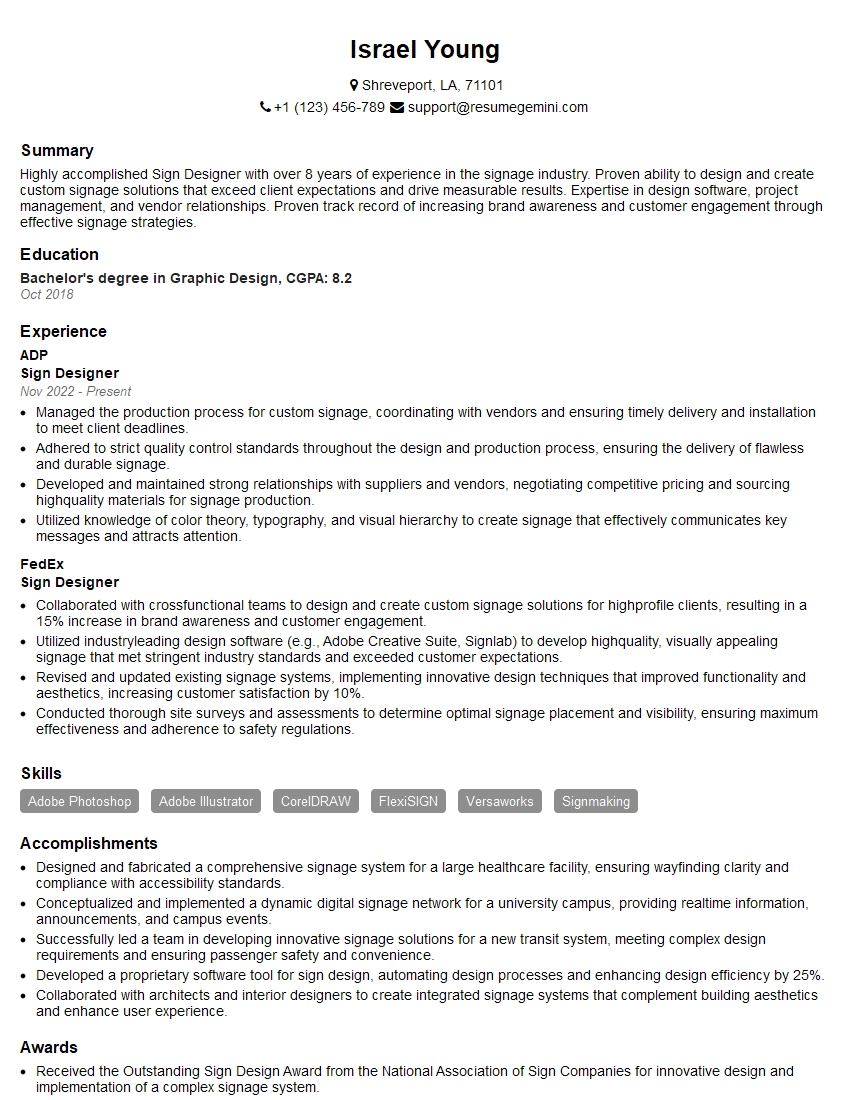
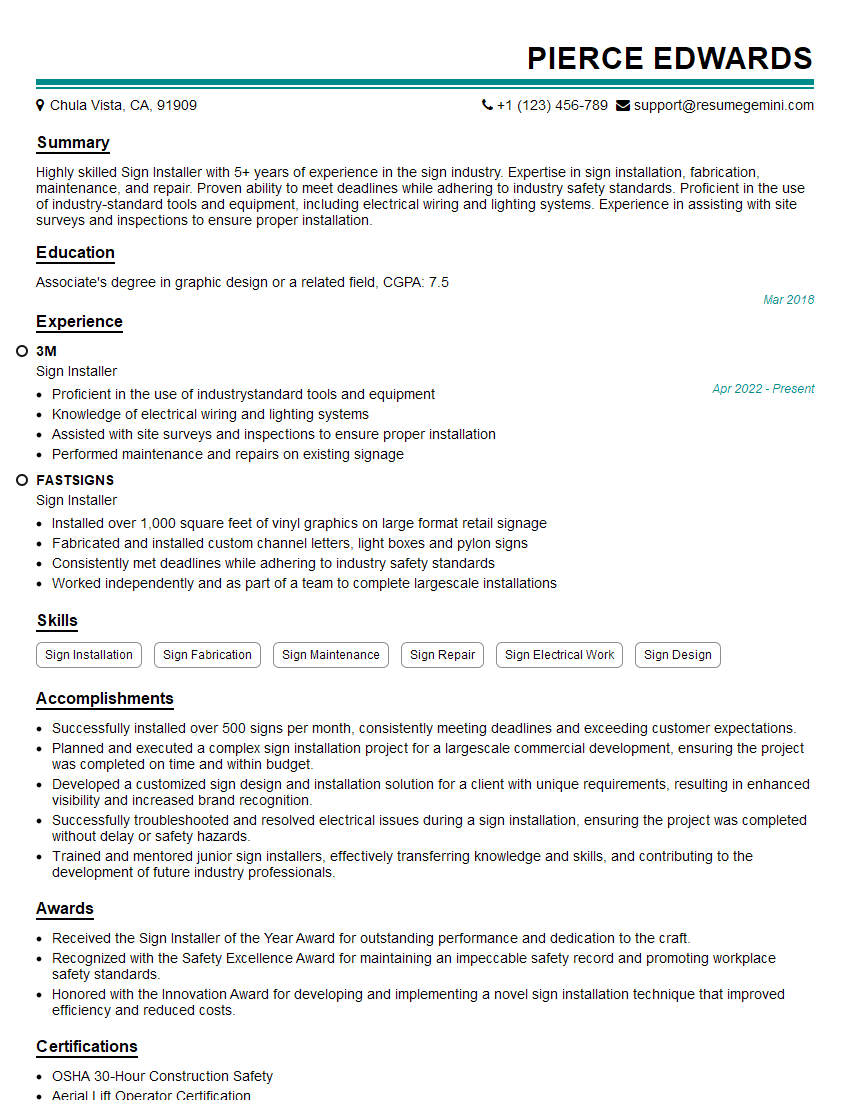
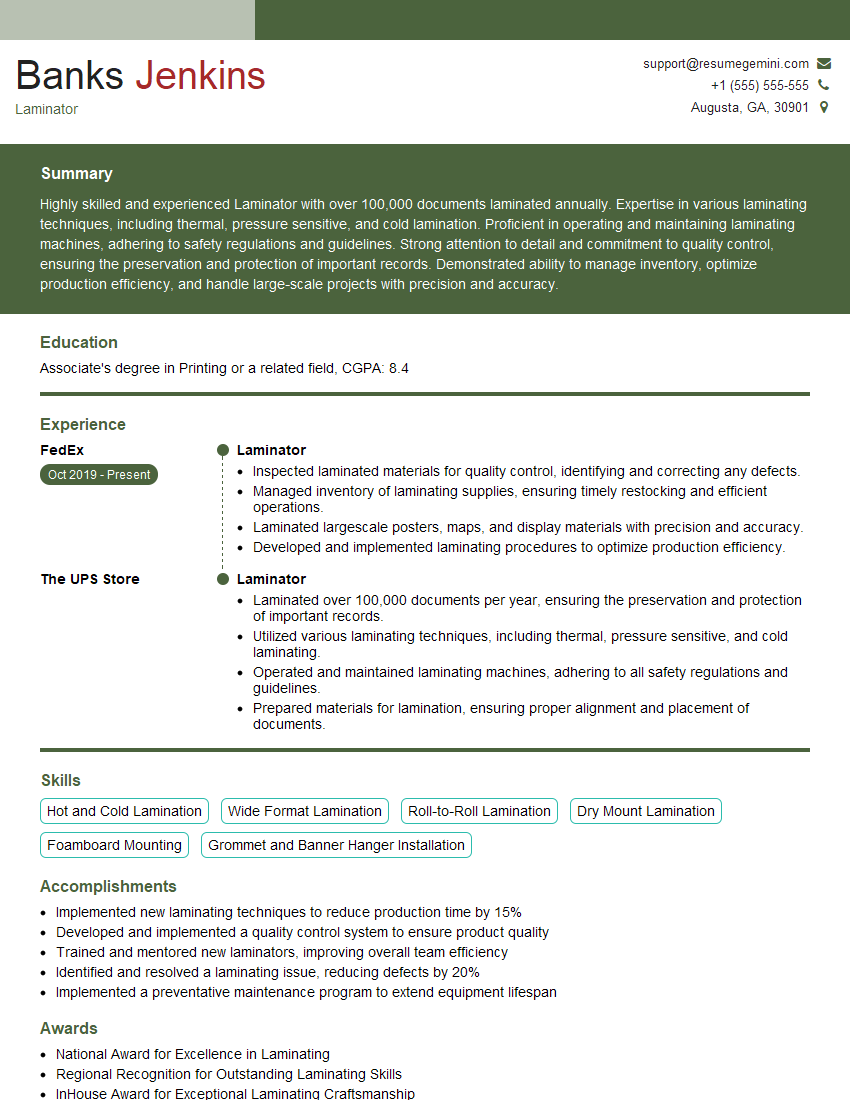
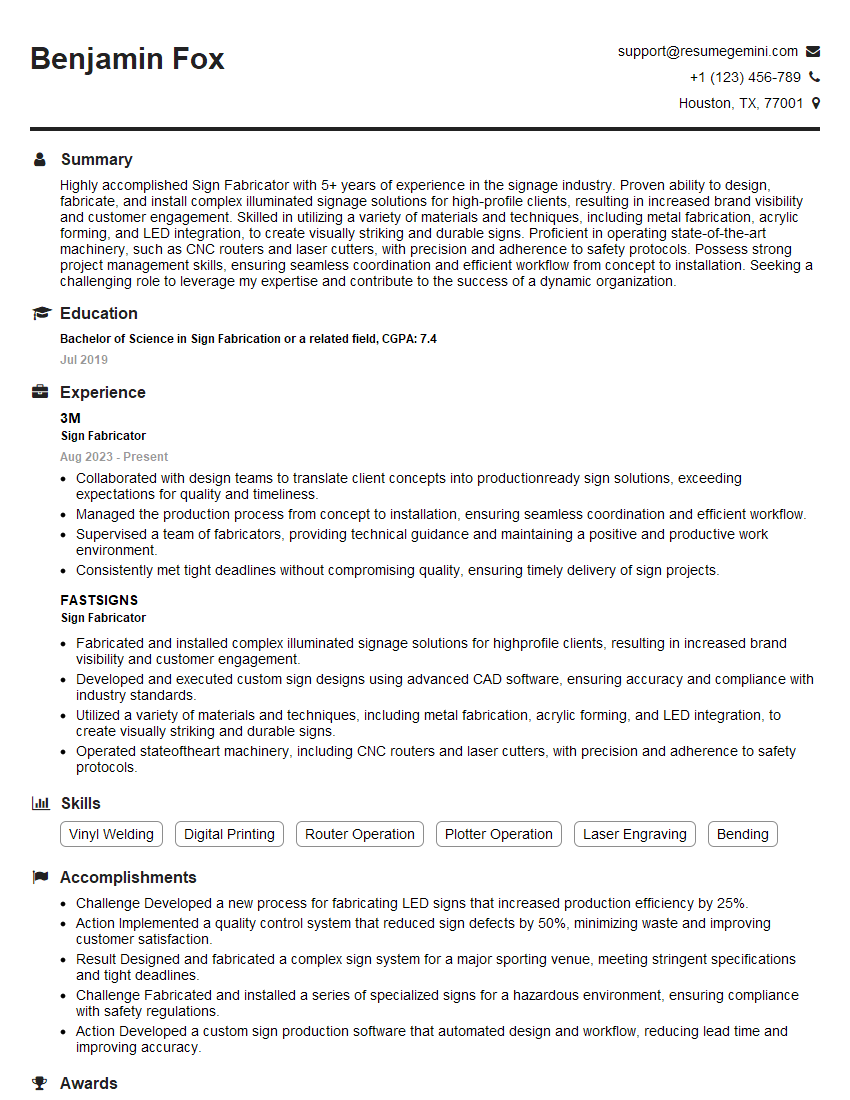
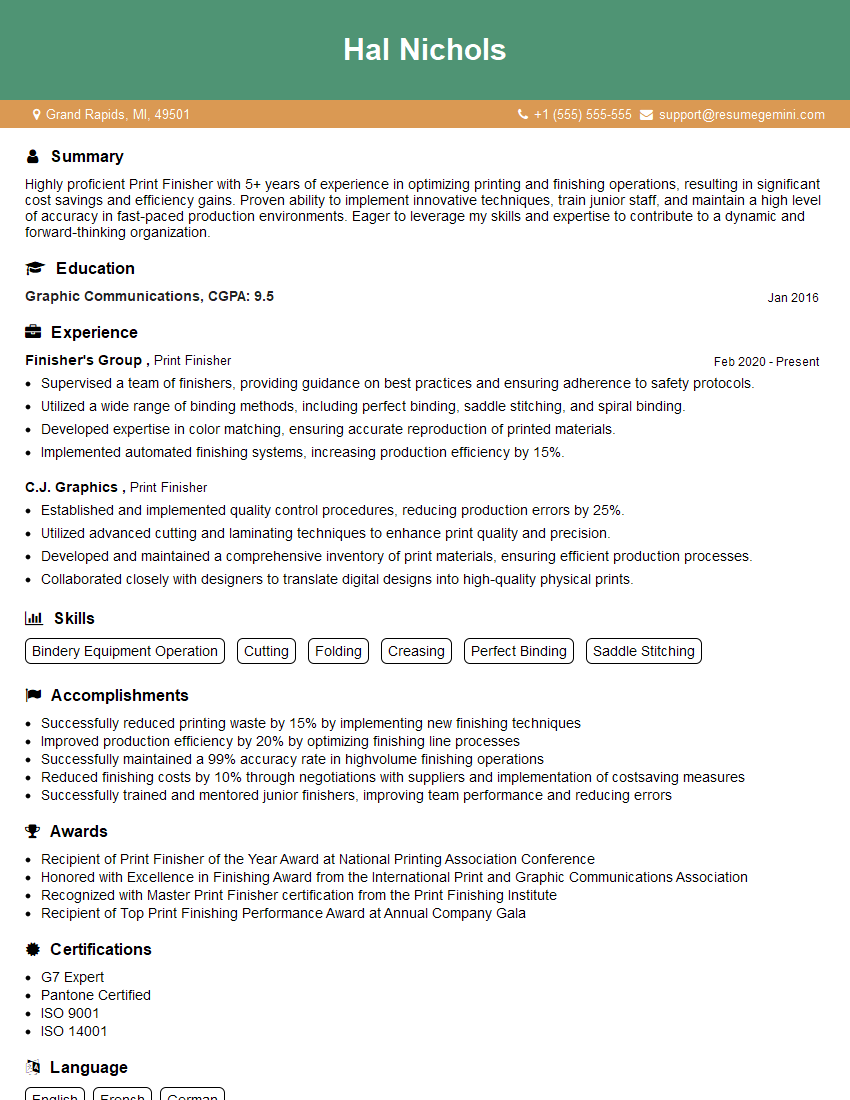
Mastering signmaking opens doors to a rewarding career with diverse opportunities for growth and specialization. To maximize your job prospects, crafting a strong, ATS-friendly resume is crucial. ResumeGemini is a trusted resource to help you build a professional resume that highlights your skills and experience effectively. We provide examples of resumes tailored specifically to the signmaking industry to help you get started. Take the next step towards your dream job – build a compelling resume that showcases your talents!

Explore more articles
Users Rating of Our Blogs
Share Your Experience
We value your feedback! Please rate our content and share your thoughts (optional).
What Readers Say About Our Blog
Very informative content, great job.
good