Unlock your full potential by mastering the most common Sketching and Illustration interview questions. This blog offers a deep dive into the critical topics, ensuring you’re not only prepared to answer but to excel. With these insights, you’ll approach your interview with clarity and confidence.
Questions Asked in Sketching and Illustration Interview
Q 1. What software are you proficient in (Adobe Illustrator, Photoshop, Procreate, etc.)?
My digital illustration toolkit is quite extensive. I’m highly proficient in Adobe Illustrator, a vector-based program ideal for creating scalable logos, illustrations, and designs with crisp lines. I’m equally comfortable with Adobe Photoshop, a raster-based program perfect for photo manipulation, digital painting, and achieving photorealistic effects. Finally, I’m adept at using Procreate, an intuitive iPad app that offers a fantastic digital painting experience, especially for sketching and concept art. Each program serves a unique purpose in my workflow, and I seamlessly integrate them depending on the project’s needs.
Q 2. Describe your sketching process from concept to final artwork.
My sketching process is iterative and involves several key stages. It begins with concept development, where I brainstorm ideas, explore different approaches through quick thumbnail sketches, and refine the most promising concepts. This stage often involves mood boards and reference gathering. Next comes the rough sketch phase, where I loosely define the composition, character poses, and key elements using a light pencil or digital equivalent. This stage is all about getting the overall feel and structure right. Then comes refinement, where I tighten up the sketch, adding details and correcting proportions. This often involves multiple layers in my digital workflow. Finally, I move on to inking (or line art in digital), followed by coloring, shading, and final touches, which might include adding textures or special effects. Each stage involves careful consideration of composition, lighting, and overall aesthetic coherence.
Q 3. How do you handle constructive criticism on your work?
I embrace constructive criticism as an invaluable tool for growth. I see it not as a personal attack but as an opportunity to improve my skills and refine my artistic vision. My approach involves actively listening to the feedback, asking clarifying questions if needed, and objectively evaluating its validity. If the critique is valid, I analyze how to integrate it into my work. If it’s not quite right for the project, I explain my reasoning politely, while still appreciating the effort to provide input. It’s a collaborative process, and I strive to maintain a professional and receptive attitude even when the feedback is challenging.
Q 4. Explain your approach to color theory and its application in your illustrations.
Color theory is fundamental to my illustrative work. I understand the color wheel, complementary colors (e.g., blue and orange), analogous colors (e.g., blues and greens), and triadic colors (e.g., red, yellow, blue). I use color to convey mood, emotion, and create visual interest. For example, warm colors like reds and oranges can evoke feelings of energy and excitement, while cool colors like blues and greens might suggest calmness or serenity. I carefully consider the overall color palette, making sure there’s a good balance and harmony, avoiding clashing colors unless it’s a deliberate stylistic choice. The application often involves experimenting with different color modes, such as RGB for digital screens and CMYK for print. I also use color to create depth, light and shadow through careful shading techniques.
Q 5. How do you manage deadlines and prioritize tasks in a fast-paced environment?
Managing deadlines in a fast-paced environment requires a structured approach. I start by breaking down large projects into smaller, manageable tasks. I then create a realistic schedule, assigning timeframes to each task, considering potential delays. I utilize project management tools (like Trello or Asana) to track progress, prioritize tasks based on urgency and importance, and identify any potential roadblocks early on. Effective communication with clients or supervisors is crucial—regular updates and clear expectations prevent misunderstandings. I’m also proactive about seeking clarification if needed and adjusting my schedule as necessary to ensure timely delivery.
Q 6. What are your preferred sketching mediums (digital, traditional, etc.) and why?
While I appreciate the spontaneity of traditional mediums like pencils, charcoal, and watercolors, my preferred method is digital. This offers flexibility, undo functionality, and easy experimentation. Digital sketching allows me to quickly iterate on ideas, seamlessly incorporate different brushes and textures, and easily share my work for feedback. I use a drawing tablet that gives me the control and precision I need, mimicking the feeling of traditional pen and paper. However, I still incorporate traditional methods occasionally to explore different textures and experiment with various techniques to enhance my digital skillset.
Q 7. Describe your experience with different illustration styles (e.g., realism, cartoon, vector).
I’ve had extensive experience working across various illustration styles. I’m comfortable with realistic rendering, where detailed accuracy and attention to anatomical and material properties are prioritized. I’ve also worked with cartoon styles, focusing on simplified forms and exaggerated features, bringing a playful and fun aspect to the imagery. I’m proficient in vector illustration, which allows me to create sharp, scalable designs that work well across various platforms and sizes. My experience allows me to adapt my style to meet the specific requirements of any project. For example, a children’s book may need a softer cartoon style, while a scientific illustration requires higher accuracy.
Q 8. How do you ensure consistency in your illustration style across multiple projects?
Maintaining a consistent illustration style across multiple projects is crucial for building a recognizable brand and ensuring a cohesive visual experience for clients. I achieve this through a multifaceted approach.
- Style Guide Creation: Before embarking on any project, I develop a comprehensive style guide. This document outlines key elements of my style, including color palettes (e.g., specific hex codes for primary and secondary colors), line weights (e.g., consistent thickness for outlines and details), character design (e.g., consistent facial features, body proportions, and clothing styles), and overall aesthetic (e.g., whether it leans towards realism, cartoonish, or minimalist). I even include examples to avoid ambiguity.
- Reference Sheets: For recurring elements like characters or objects, I create detailed reference sheets. These act as visual guides, ensuring consistency in their depiction across different illustrations. Think of it like a character design bible for a comic book.
- Digital Asset Management: I meticulously organize my digital assets, including brushes, textures, and pre-made elements. This allows me to easily access and reuse consistent components across projects. This is especially helpful if a client wants a similar style for multiple campaigns.
- Self-Review and Iteration: Throughout the process, I conduct regular self-reviews to ensure that my work aligns with the established style guide. I compare pieces side-by-side, noting any inconsistencies and adjusting accordingly. This helps maintain a high level of consistency.
For example, if I’m creating illustrations for a children’s book series, consistency in character design and color palettes is paramount. A style guide ensures that the main character looks the same throughout the entire series, even if the background and scenes vary.
Q 9. Explain your understanding of visual hierarchy and its importance in illustration.
Visual hierarchy is the arrangement of elements in a design to guide the viewer’s eye and communicate information effectively. In illustration, it’s about controlling what the viewer sees first, second, and so on. It’s crucial because it ensures that your message is understood clearly and prevents visual clutter.
- Size and Scale: Larger elements naturally draw more attention. For instance, the main subject of an illustration should be larger than supporting elements.
- Contrast: Using contrasting colors, textures, or shapes makes certain elements stand out. Think of a brightly colored character against a muted background.
- Placement: Elements placed centrally or at the top tend to be noticed first. This is why logos are usually placed prominently on websites.
- Color: Bright and saturated colors tend to be more visually dominant.
- Depth and Space: Using perspective and layering to create depth can draw attention to elements closer to the viewer.
Imagine an illustration of a bustling marketplace. Using visual hierarchy, I would make the main character more prominent by increasing their size, using brighter colors, and placing them in the center of the scene. Supporting details would be smaller and less saturated in color.
Q 10. How do you incorporate client feedback into your design process?
Incorporating client feedback is a vital part of my process. It ensures that the final product meets their expectations and reflects their vision.
- Active Listening: I begin by carefully listening to their feedback, asking clarifying questions to ensure I understand their concerns. Often a simple clarification saves hours of work.
- Visual Communication: I use annotations, sketches, and mockups to demonstrate my understanding of the feedback and present alternative solutions if necessary. Showing rather than just telling is crucial.
- Iterative Process: I treat feedback as an iterative process. I implement changes, share updates, and seek further feedback until the client is satisfied. This is a collaborative process; I’m not just executing orders, but co-creating.
- Professionalism: I maintain a professional and respectful demeanor throughout the feedback process, even when dealing with potentially critical comments. The goal is to find a solution that works for everyone.
For example, if a client feels a character’s expression isn’t conveying the right emotion, I would create several alternative sketches to demonstrate different options, allowing the client to choose the one that best fits their needs.
Q 11. Describe your experience with creating illustrations for different platforms (print, web, etc.).
I have extensive experience creating illustrations for various platforms, understanding that each platform has specific requirements in terms of resolution, file formats, and color spaces.
- Print: For print media (books, magazines, brochures), I work with high-resolution files (typically 300 DPI or higher) and CMYK color space to ensure high-quality reproduction. I also consider bleed areas and margins for proper printing.
- Web: Web illustrations (websites, social media) typically require lower resolutions (72-150 DPI) and RGB color space. File formats like PNG or SVG are ideal for web use, offering transparency and scalability.
- Mobile: Mobile illustrations need to be optimized for different screen sizes and resolutions. Vector formats like SVG are particularly beneficial here due to their scalability.
Adapting to these different requirements is crucial. For example, a print illustration might use a more detailed and textured style, whereas a web illustration might favor simpler lines and flat colors for faster loading times.
Q 12. How do you manage your time and workload when working on multiple illustration projects simultaneously?
Managing multiple projects simultaneously requires effective time management and organizational skills. I utilize several strategies.
- Project Planning: I meticulously plan each project, breaking down large tasks into smaller, manageable steps. This helps me create a realistic timeline and allocate sufficient time for each task.
- Prioritization: I prioritize tasks based on deadlines and urgency, focusing on the most critical aspects of each project first. I use tools like Trello or Asana to manage this.
- Time Blocking: I dedicate specific blocks of time to work on each project, minimizing distractions and maximizing focus. This structured approach prevents burnout.
- Communication: I maintain open communication with clients, informing them about my progress and any potential delays. Proactive communication prevents misunderstandings.
Think of it like a conductor of an orchestra. Each project is a different instrument, each requiring a specific amount of attention and effort. The goal is a harmonious result.
Q 13. How do you approach problem-solving in your illustration work?
Problem-solving is an integral part of illustration. I approach challenges methodically.
- Identify the Problem: First, I clearly define the problem, identifying the specific aspect that needs addressing. Is it a technical issue, a creative block, or a client concern?
- Brainstorm Solutions: I brainstorm multiple solutions, considering different approaches and techniques. I try sketching out different options or experimenting with various digital tools.
- Experiment and Iterate: I experiment with different solutions, testing and iterating until I find the most effective approach. This involves trial and error, a willingness to adapt.
- Seek Feedback: If I’m stuck, I seek feedback from colleagues, mentors, or even online communities. A fresh perspective can often unlock solutions.
For instance, if I’m struggling to create a believable perspective in a cityscape illustration, I might consult architectural drawings or use photo references to guide my composition.
Q 14. What is your process for generating unique and creative ideas?
Generating unique and creative ideas requires a multi-pronged approach, combining inspiration with deliberate effort.
- Inspiration Gathering: I actively seek inspiration from various sources, including museums, nature, books, movies, music, and online art communities. I keep a sketchbook and gather mood boards.
- Mind Mapping: For specific projects, I use mind mapping techniques to explore different concepts and ideas, branching out from a central theme.
- Sketching and Experimentation: I dedicate time for freehand sketching and experimentation, allowing ideas to flow organically. Often, the best ideas emerge from unexpected directions.
- Prompting and Constraints: I sometimes use prompts or self-imposed constraints to push my creativity. This can be a specific color palette, a particular style, or a thematic constraint. This is a useful technique to jumpstart the creative process.
Think of it as gardening – you plant many seeds, nurture them, and only some will blossom into beautiful flowers. The more seeds you plant (ideas you explore), the greater the chance of a stunning outcome.
Q 15. Describe your experience with collaborating with other designers or artists.
Collaboration is fundamental to successful design projects. My experience spans working in both large teams and smaller, more focused collaborations. In larger team settings, I’ve utilized project management tools like Asana and Trello to track progress, manage revisions, and maintain clear communication with designers, writers, and developers. For example, on a recent project for a tech company, I worked with a UX designer to ensure my illustrations seamlessly integrated with the overall user interface. We used regular check-ins and shared design files to maintain consistency and alignment with the project’s vision.
In smaller collaborations, I often rely on direct communication, such as email and video conferencing, to ensure a shared understanding of the project goals and artistic direction. For instance, while collaborating with a freelance writer on a children’s book, we utilized shared cloud storage for our files and regular email exchanges to discuss character designs and scene composition. Effective communication, whether it’s through formal project management systems or informal discussions, is always my top priority to guarantee a cohesive and high-quality final product.
Career Expert Tips:
- Ace those interviews! Prepare effectively by reviewing the Top 50 Most Common Interview Questions on ResumeGemini.
- Navigate your job search with confidence! Explore a wide range of Career Tips on ResumeGemini. Learn about common challenges and recommendations to overcome them.
- Craft the perfect resume! Master the Art of Resume Writing with ResumeGemini’s guide. Showcase your unique qualifications and achievements effectively.
- Don’t miss out on holiday savings! Build your dream resume with ResumeGemini’s ATS optimized templates.
Q 16. How do you stay updated on current trends and technologies in the illustration field?
Staying current in the illustration field requires a multi-pronged approach. I actively engage with online platforms like Behance, Dribbble, and ArtStation to see the latest work from fellow illustrators. These platforms expose me to diverse styles, techniques, and emerging trends. Following leading illustrators on social media, particularly Instagram and Twitter, offers another avenue for discovering new approaches and engaging in discussions within the community.
Furthermore, I subscribe to industry publications, both print and digital, to stay informed about new software releases and technological advancements. For example, learning about advancements in AI art generation tools like Midjourney and Stable Diffusion allows me to leverage these tools alongside my traditional skills for a more efficient and expressive workflow. Regularly attending online and in-person workshops and conferences keeps me abreast of best practices and expands my professional network.
Q 17. What is your approach to creating detailed and accurate technical illustrations?
Creating accurate technical illustrations demands meticulous attention to detail and a strong understanding of the subject matter. My approach begins with thorough research. I gather comprehensive information from various sources, including technical specifications, blueprints, and consultations with subject-matter experts. For instance, when creating illustrations for a mechanical engineering firm, I spent considerable time reviewing the blueprints and consulting with engineers to ensure the accuracy of every component.
Once the research is complete, I use a combination of sketching and digital illustration techniques. I typically start with rough sketches to establish the overall composition and perspective. Then, I refine the sketches using digital tools like Adobe Illustrator or Procreate, paying close attention to proportions, dimensions, and details. Accuracy is paramount; I often use references and cross-check my work against source materials to maintain precision. Finally, I incorporate appropriate annotations and labels to enhance clarity and understanding.
Q 18. How do you ensure your illustrations are accessible to a wide audience?
Accessibility is a crucial consideration in illustration. My approach focuses on ensuring inclusivity for a wide audience, considering factors such as color contrast, visual clarity, and alternative text. For example, I always ensure sufficient color contrast between text and background elements to meet WCAG (Web Content Accessibility Guidelines) standards, making my illustrations easily readable for users with visual impairments.
Where appropriate, I provide alternative text descriptions for images, enabling screen readers to convey the illustration’s content to visually impaired individuals. I also strive to create visually clear and simple illustrations, avoiding unnecessary complexity that might confuse or hinder understanding. Furthermore, I consider cultural sensitivity when choosing imagery and symbols to ensure broad appeal and avoid inadvertently excluding any group.
Q 19. Explain your understanding of copyright and intellectual property rights.
Copyright and intellectual property rights are paramount in my practice. I understand that copyright protects original creative works, including illustrations, from unauthorized use. This protection extends to the visual expression of an idea, not the idea itself. As such, I always maintain meticulous records of my work, including project dates, client agreements, and usage rights. I clearly define the scope of usage granted to clients in contracts, specifying whether the rights are exclusive or non-exclusive.
When using references or incorporating elements from other sources, I scrupulously ensure that I have the necessary permissions or use only materials in the public domain. Furthermore, I am knowledgeable about fair use principles and understand the limitations on the use of copyrighted material. I believe in respecting the intellectual property rights of others and maintaining ethical practices throughout my work.
Q 20. Describe your experience with presenting your work to clients or stakeholders.
Presenting my work effectively involves careful planning and execution. I always start by tailoring my presentation to the specific audience and their needs. For clients, I might focus on the visual impact and how the illustration directly addresses their project goals. For internal stakeholders, I might emphasize the design process and the rationale behind creative decisions.
My presentations usually incorporate a combination of visuals, narratives, and data to support my points. I might start with a brief overview of the project, followed by a detailed showcase of the illustrations, including variations and design iterations. I welcome feedback and actively encourage discussion to ensure alignment and address any concerns. Using tools like PowerPoint or Keynote aids in creating clear and visually engaging presentations. Practice and confidence are key in making the presentation effective and professional.
Q 21. How do you translate complex information into clear and visually appealing illustrations?
Translating complex information into visually appealing illustrations is a skill that relies on simplifying information and effective visual communication. My process begins with breaking down complex concepts into smaller, more manageable parts. I use analogies and metaphors to explain difficult technical details in a relatable way. For example, explaining a complex data flow might involve using a visual metaphor of a river, with different branches representing various data streams.
I then select the most appropriate visual style for conveying the specific information. Infographics, diagrams, and charts can be effective tools to represent data or complex processes visually. A strong understanding of visual hierarchy, color theory, and typography is essential to ensure clarity and focus. I always test my illustrations with the target audience to gain feedback and make any necessary refinements, iterating the design until the communication is both clear and engaging.
Q 22. What is your process for creating mood boards and developing visual concepts?
Creating compelling mood boards and visual concepts is the cornerstone of any successful illustration project. My process begins with a deep dive into understanding the client’s brief, identifying the core message, target audience, and desired aesthetic. I then gather visual inspiration, utilizing platforms like Pinterest, Behance, and Dribbble to collect images, colors, textures, and typography styles that align with the project’s overall tone and feeling.
Next, I organize these collected elements into a digital or physical mood board. This acts as a visual guide, helping me define a cohesive style and color palette. I often use software like Adobe Photoshop or Milanote to curate and organize these elements. For example, if I’m working on illustrations for a children’s book about space exploration, my mood board might include images of astronauts, planets, starry nights, and playful fonts. Once the mood board is refined, I start sketching thumbnails, exploring different compositions and visual approaches before settling on a final concept that embodies the mood board’s essence.
Q 23. How do you use typography and other design elements to enhance your illustrations?
Typography and other design elements are crucial in elevating illustrations from mere visuals to powerful communicative tools. I approach typography strategically, selecting fonts that complement the illustration style and resonate with the target audience. For instance, a playful script font might suit a children’s book, while a bold sans-serif font would be more appropriate for a corporate brochure. The font choice, size, and placement are all carefully considered to ensure readability and visual harmony.
Beyond typography, I use other elements like color, line weight, texture, and composition to enhance the illustrations. For example, varying line weight can create depth and emphasis. Strategic use of color can evoke emotion and guide the viewer’s eye. Textures, whether created digitally or through hand-drawn techniques, add visual interest and realism. And finally, the composition itself – the arrangement of elements within the illustration – greatly impacts the overall impact and message.
Q 24. What are some of the challenges you have faced in your illustration work, and how did you overcome them?
One of the biggest challenges I’ve faced is balancing artistic vision with client expectations. Sometimes, my initial concepts might differ significantly from the client’s vision. Overcoming this requires clear communication, presenting multiple options, and actively listening to feedback. It’s crucial to explain the rationale behind my artistic choices while remaining open to incorporating constructive criticism.
Another challenge is meeting tight deadlines while maintaining a high level of quality. To manage this, I employ meticulous planning, break down large projects into smaller, manageable tasks, and prioritize effectively. I’ve also learned to utilize time-management techniques like the Pomodoro technique to improve my focus and efficiency. Learning to say ‘no’ to projects that are unrealistic in terms of time constraints has also been vital.
Q 25. How do you ensure your illustrations are consistent with the overall brand identity?
Maintaining brand consistency is paramount. Before starting any project, I thoroughly research the client’s brand guidelines – their logo, color palette, typography, and overall brand voice. I analyze their existing marketing materials to understand their established visual style. I then translate those brand elements into my illustrations, ensuring that the style, colors, and even the overall feeling align seamlessly with the brand’s identity.
For example, if a client has a minimalist, modern brand identity, I would avoid overly ornate or detailed illustrations. Instead, I would opt for a clean, simple style that reflects the brand’s aesthetic. This consistency builds recognition and strengthens the brand’s message across all platforms.
Q 26. How do you adapt your illustration style to different clients’ needs and preferences?
Adaptability is key in the illustration field. I approach each project by first carefully understanding the client’s specific needs and preferences. This involves discussing their target audience, the project’s goals, and their preferred illustration style. Sometimes, clients might provide examples of styles they like, which serves as a valuable guide. Other times, they might have a more general idea, allowing me more creative freedom.
My approach is to offer a range of style options that cater to the client’s preferences while showcasing my skillset. Whether it’s a whimsical, cartoonish style, a realistic rendering, or a minimalist approach, I’m comfortable adapting my technique to meet the project requirements. Open communication and collaboration throughout the process are essential in ensuring client satisfaction.
Q 27. Describe your experience with creating illustrations for different target audiences.
My experience spans diverse target audiences. I’ve created illustrations for children’s books, requiring a playful and engaging style with bright colors and simple shapes. For corporate clients, the style needs to be professional, sophisticated, and often minimalist. Illustrations for educational materials demand clarity, accuracy, and a focus on communicating complex information visually. Each audience requires a distinct approach, taking into account their age, interests, and the message being conveyed.
Understanding the psychological impact of visuals on different age groups and demographics is crucial. Children respond well to vibrant colors and simple imagery, while adults might appreciate more nuanced and detailed illustrations. Adapting the style, color palette, and level of detail accordingly is essential for effective communication.
Q 28. What are your long-term career goals in the field of illustration?
My long-term career goals revolve around building a strong personal brand as a versatile and sought-after illustrator. I aim to continue expanding my skillset, exploring new digital tools and techniques while refining my traditional methods. I aspire to work on a diverse range of projects, from children’s books and editorial illustrations to branding and marketing materials. Ultimately, I envision myself collaborating on larger projects, potentially leading teams and mentoring aspiring illustrators, contributing to the growth and evolution of the illustration field.
Beyond individual projects, I’m passionate about using illustration to tell meaningful stories and contribute to positive social impact. I hope to use my skills to raise awareness about important issues and inspire positive change through compelling visuals.
Key Topics to Learn for Your Sketching and Illustration Interview
- Fundamental Drawing Skills: Mastering line weight, perspective, proportion, and form are crucial. Practice observational drawing and explore different sketching techniques (e.g., gesture drawing, contour drawing).
- Digital Illustration Techniques: Develop proficiency in industry-standard software like Adobe Photoshop, Illustrator, or Procreate. Understand layering, blending modes, and vector vs. raster graphics.
- Understanding Color Theory and Composition: Learn about color palettes, harmonies, and contrast. Practice creating visually appealing compositions using the rule of thirds, leading lines, and other design principles.
- Style Development and Exploration: Showcase a unique artistic style and demonstrate versatility across various illustration styles (e.g., realistic, cartoon, abstract). Be prepared to discuss your artistic influences and inspirations.
- Workflow and Process: Explain your approach to a project, from initial concept sketches to final artwork. Discuss your problem-solving methods when facing creative challenges.
- Portfolio Presentation and Communication: Learn how to effectively present your portfolio and articulate your creative choices to potential clients or employers. Practice concise and confident communication about your work.
- Understanding Client Needs and Collaboration: Discuss your experience working with briefs, feedback, and revisions. Highlight your ability to adapt your style and approach to meet project requirements.
Next Steps
Mastering sketching and illustration opens doors to exciting careers in animation, game design, publishing, advertising, and more. A strong portfolio is essential, but a well-crafted resume is your first impression. An ATS-friendly resume, optimized for applicant tracking systems, significantly increases your chances of landing an interview. ResumeGemini is a trusted resource to help you build a professional and effective resume that highlights your unique skills and experience. We provide examples of resumes tailored to Sketching and Illustration professionals to guide you. Take the next step towards your dream career – build your best resume today!
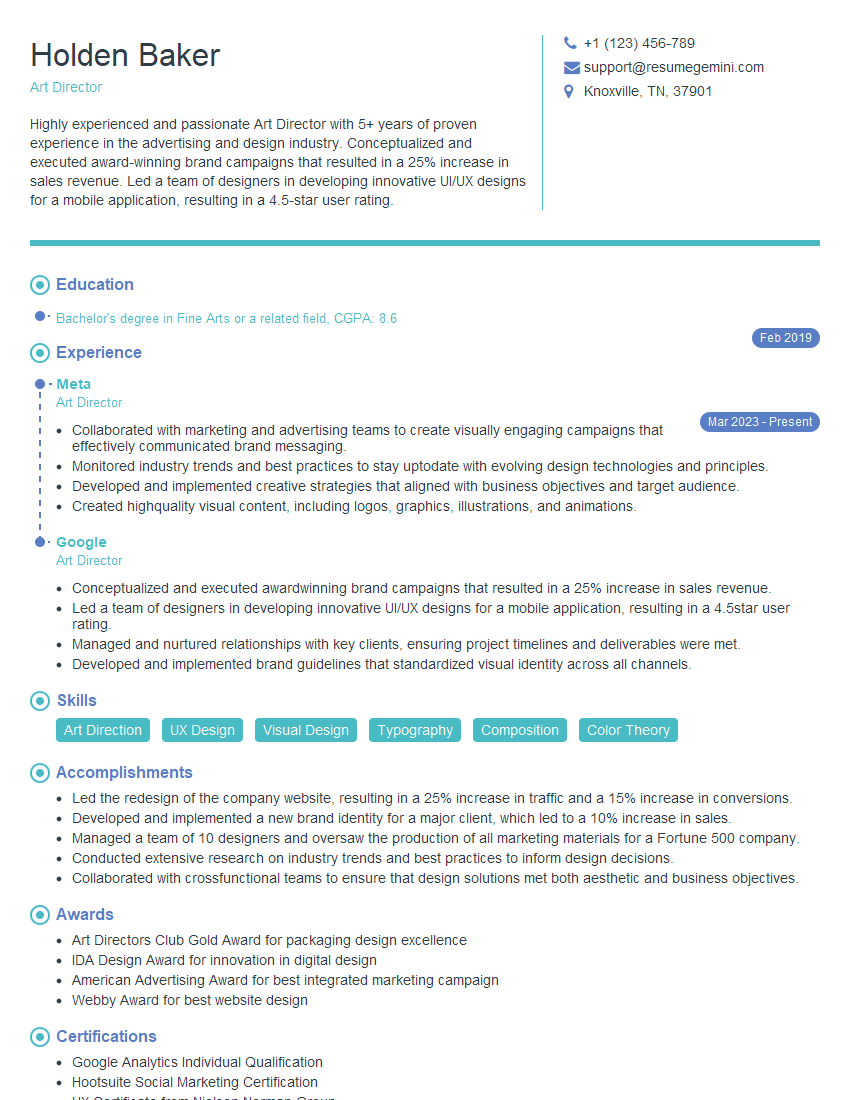
Art Director Resume Sample

Creative Director Resume Sample
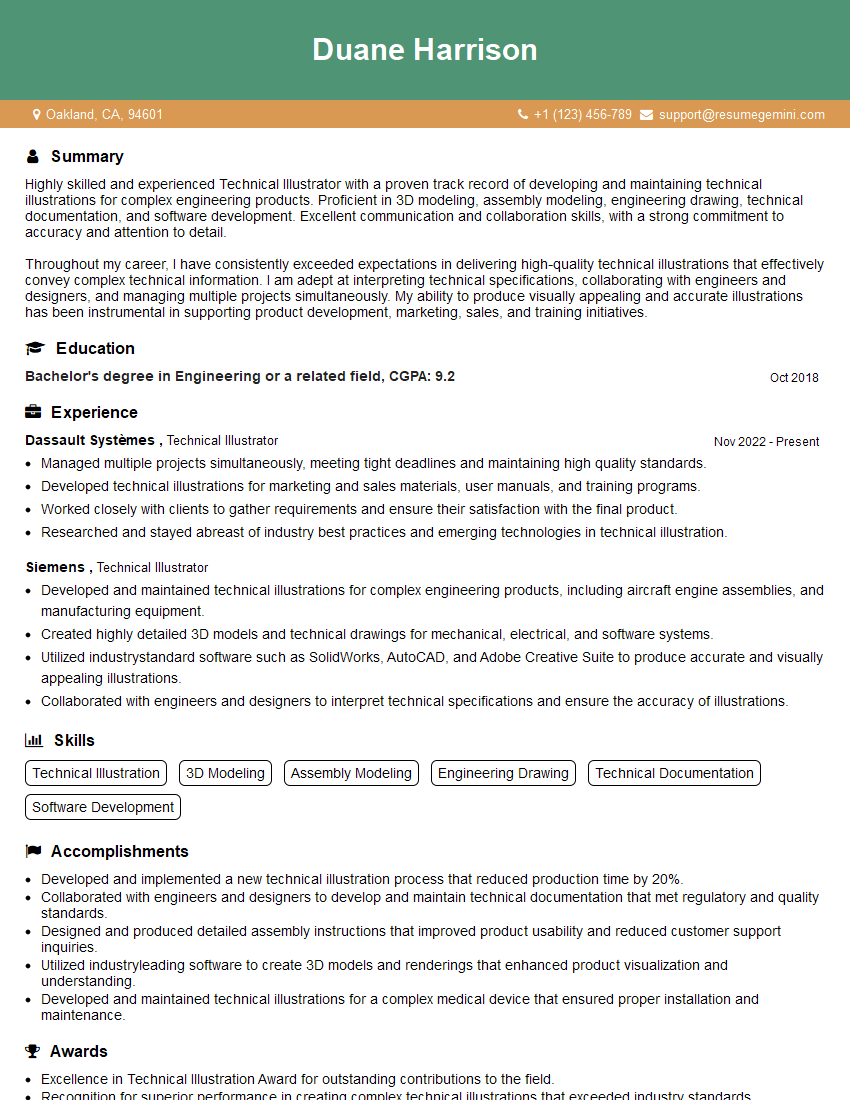
Technical Illustrator Resume Sample
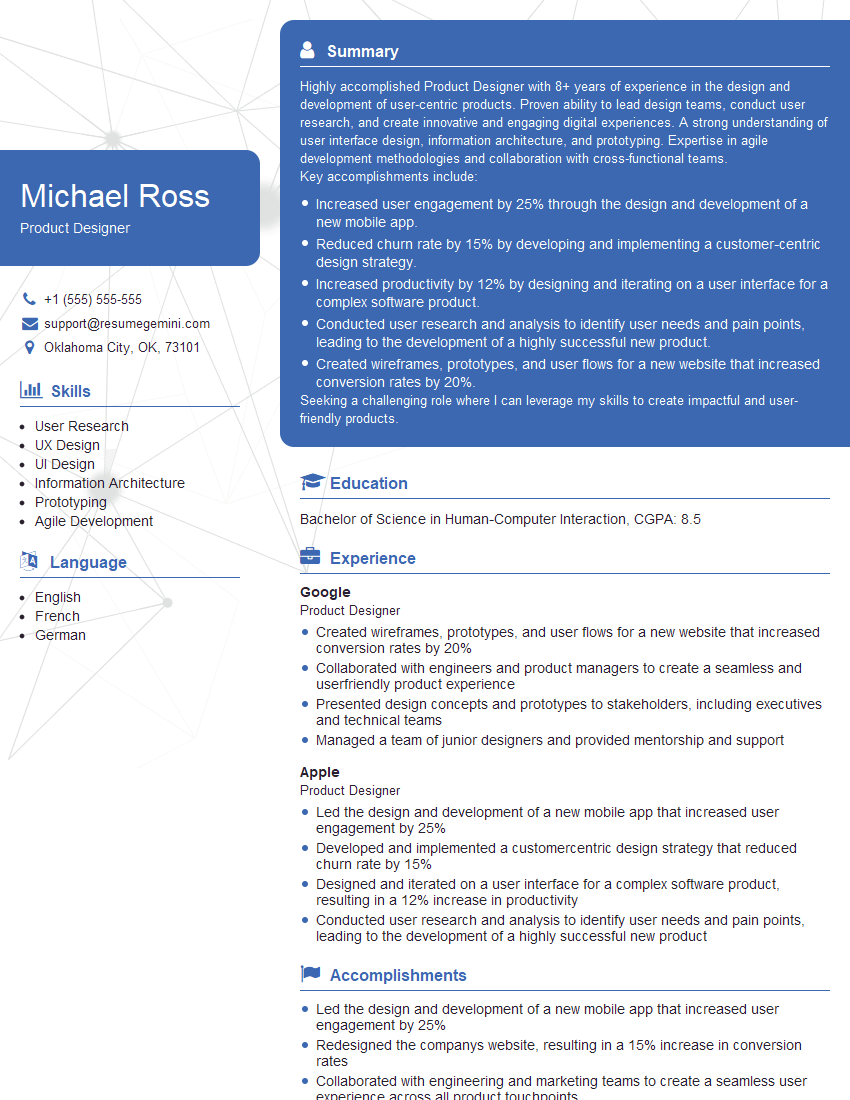
Product Designer Resume Sample
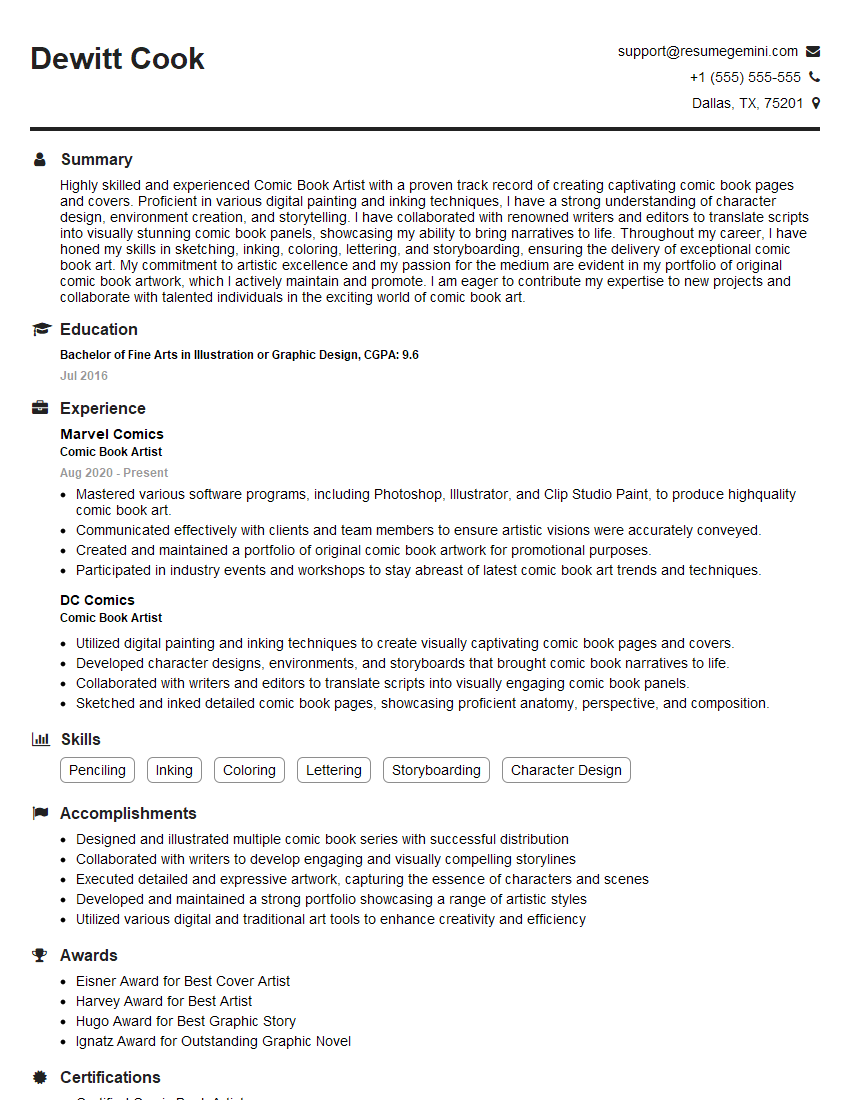
Comic Book Artist Resume Sample
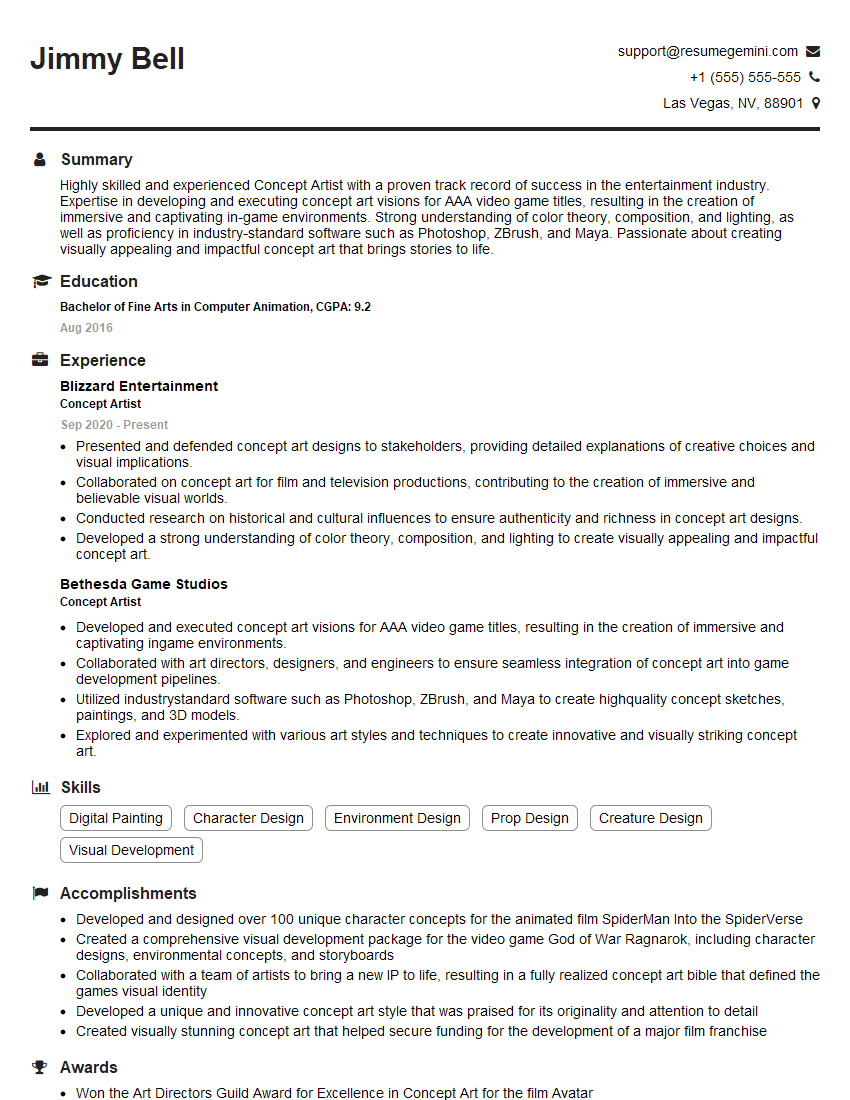
Concept Artist Resume Sample
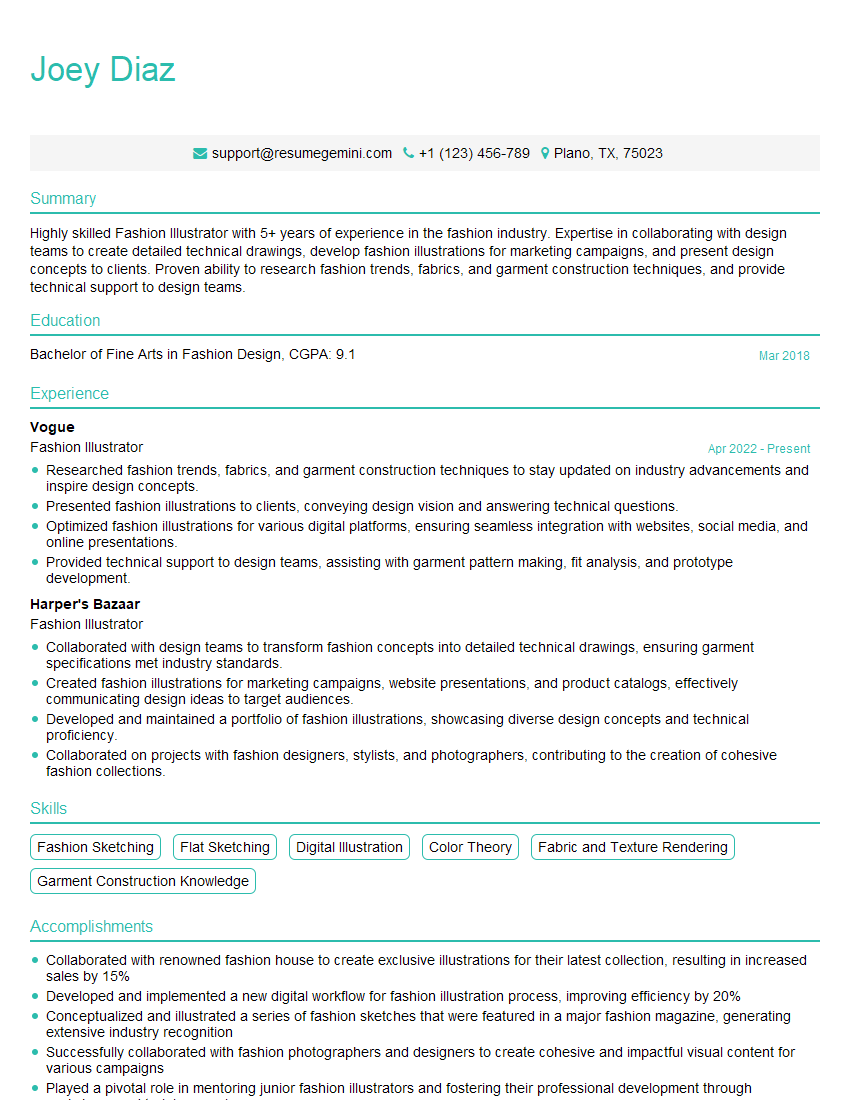
Fashion Illustrator Resume Sample
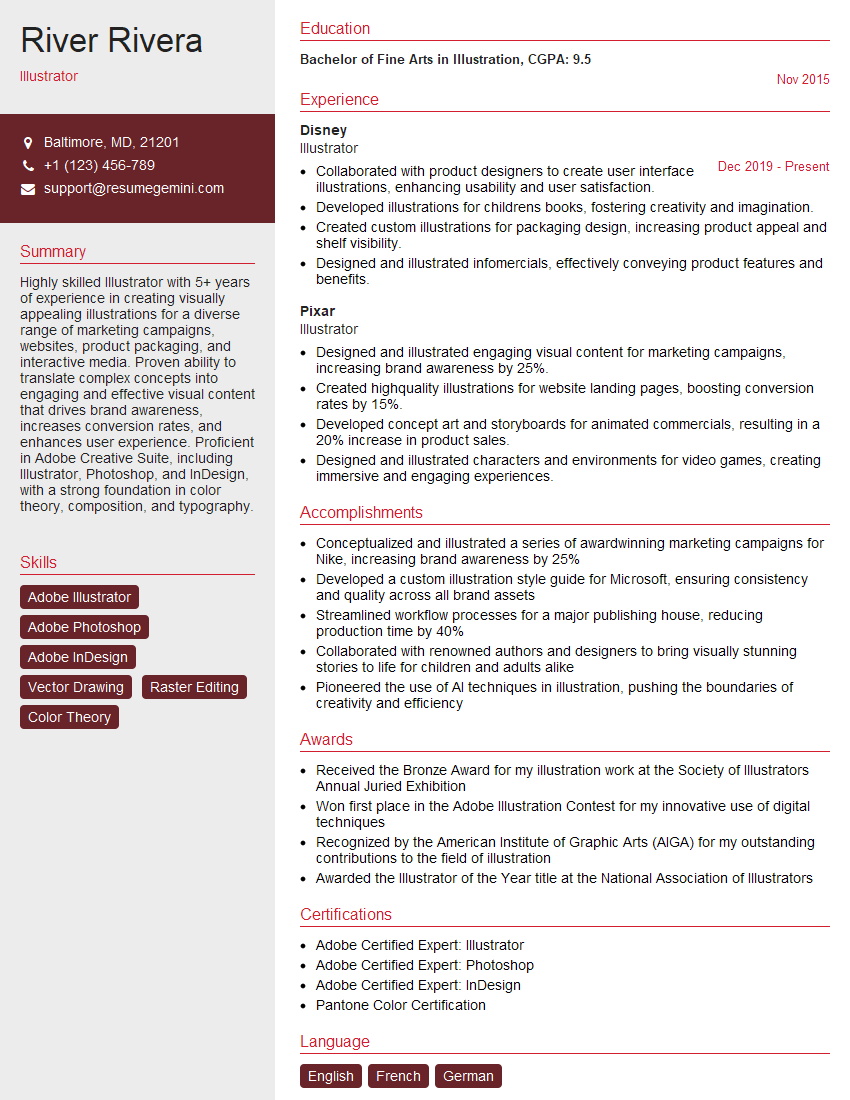
Illustrator Resume Sample
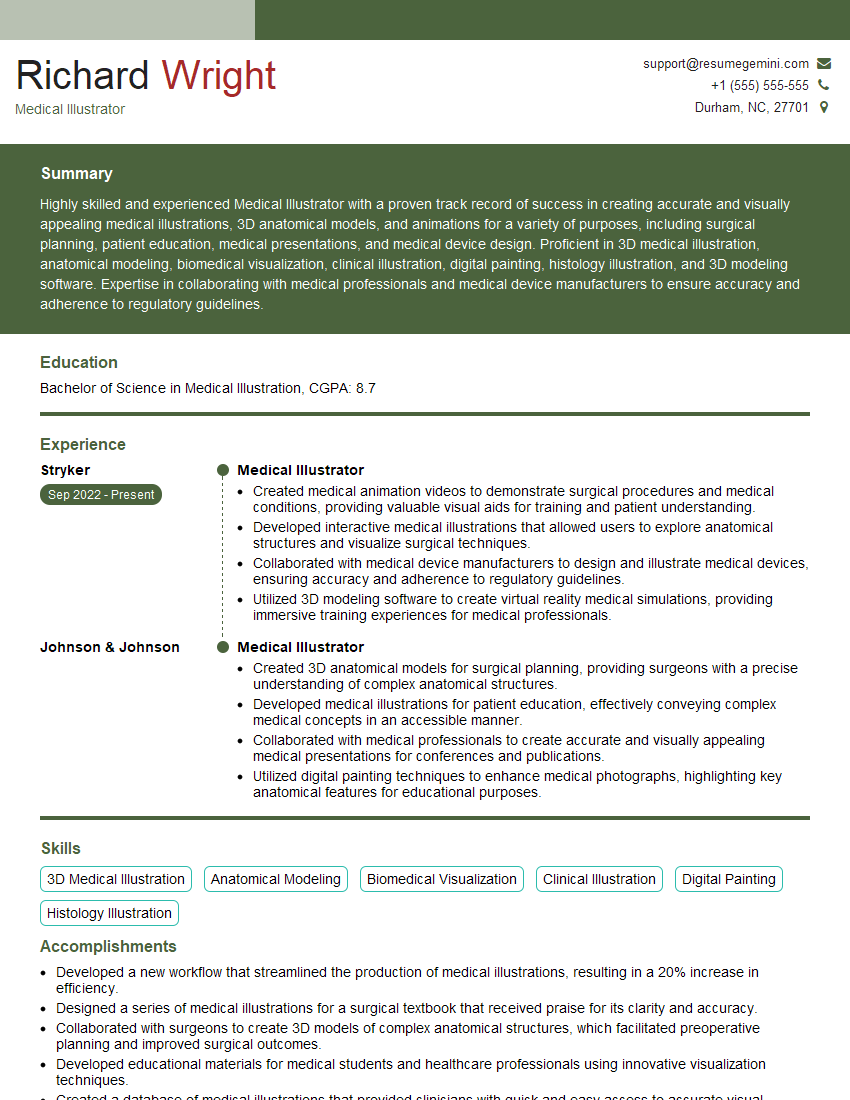
Medical Illustrator Resume Sample
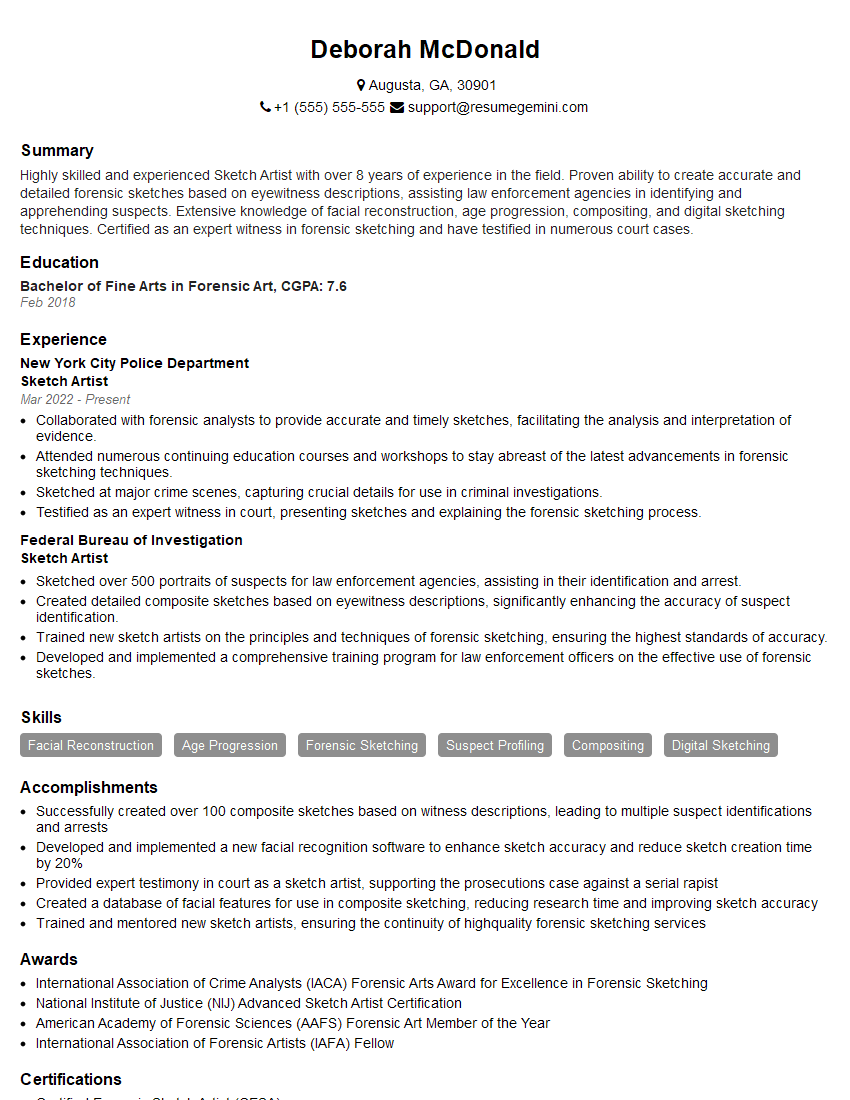
Sketch Artist Resume Sample
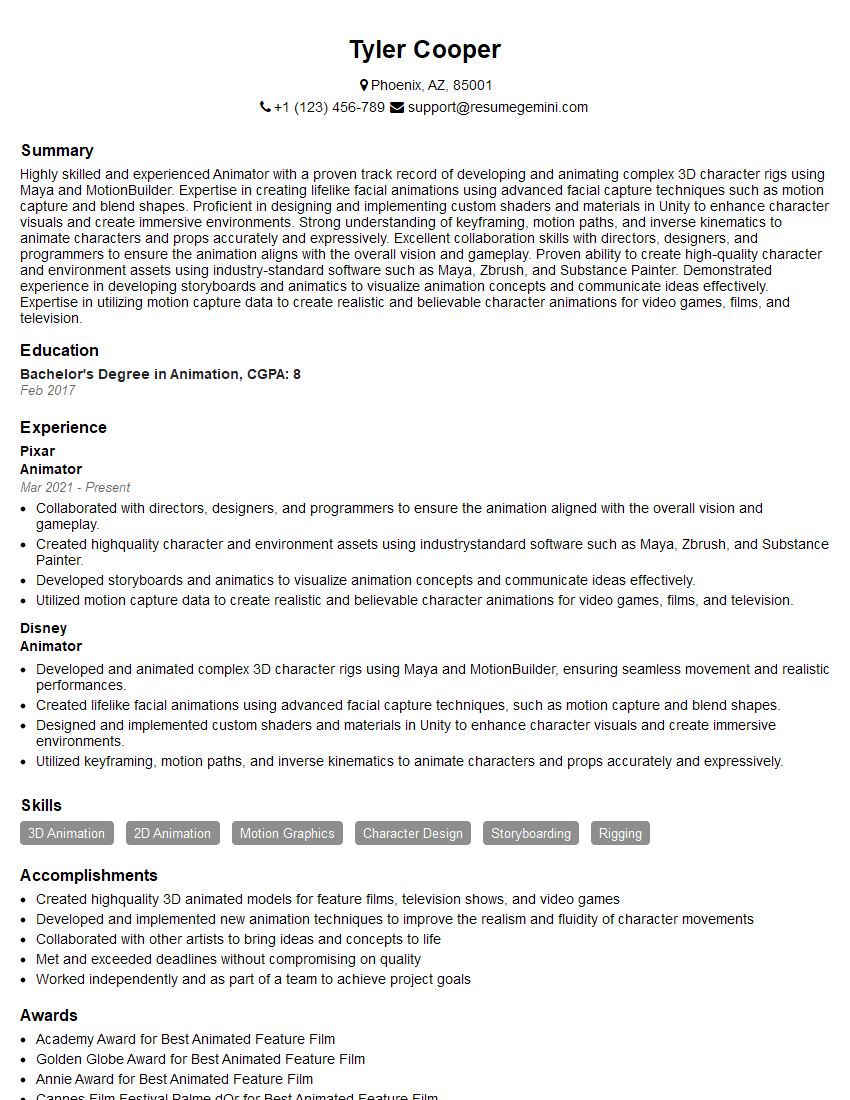
Animator Resume Sample
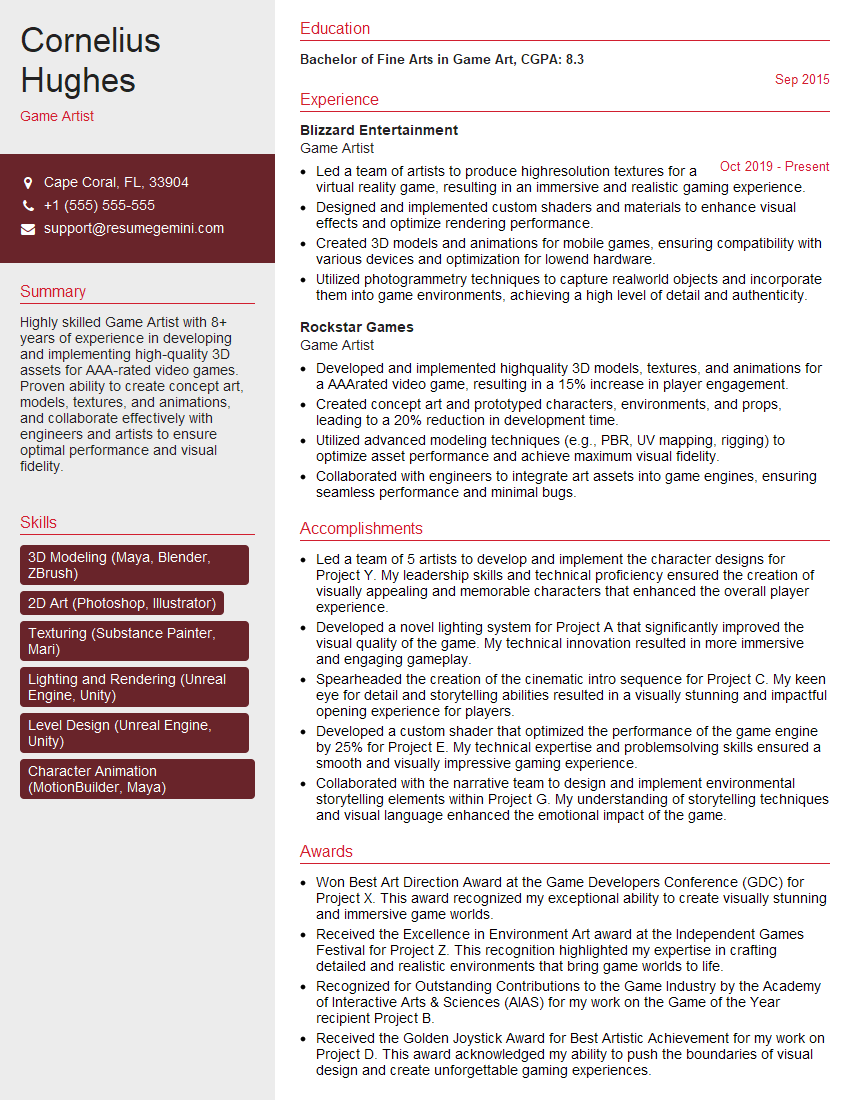
Game Artist Resume Sample
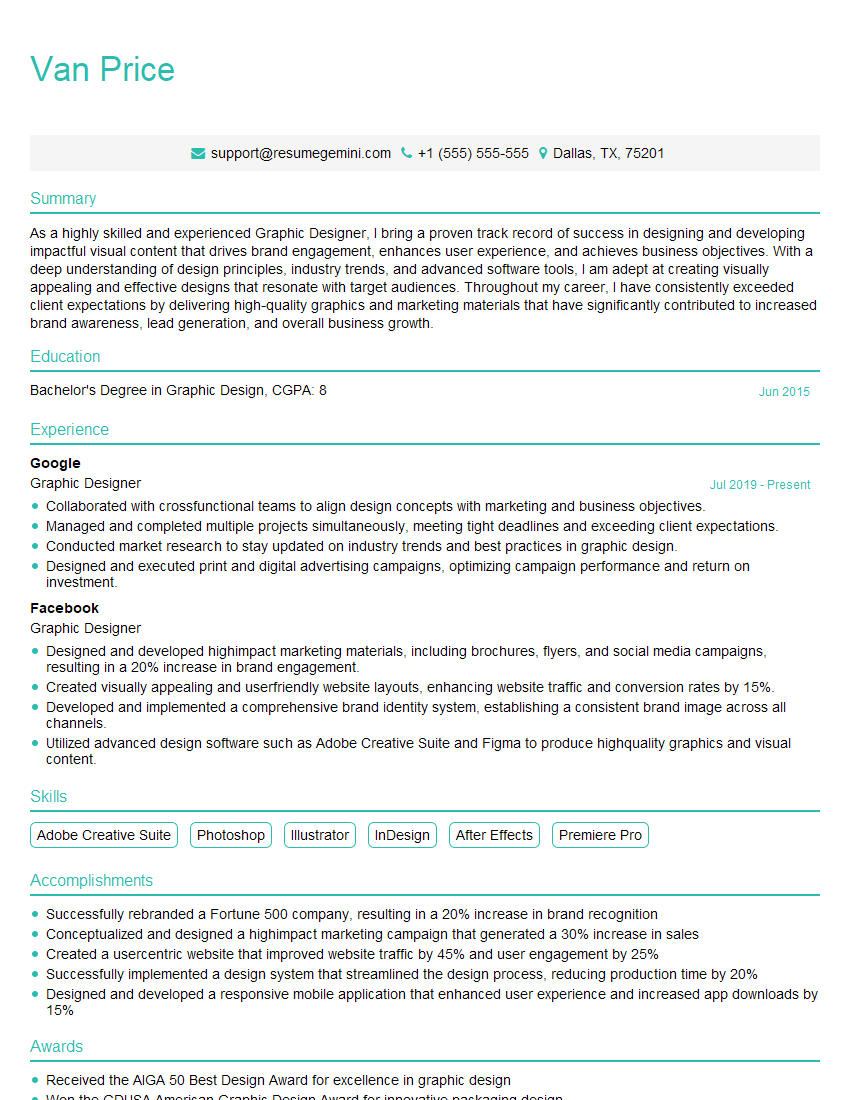
Graphic Designer Resume Sample
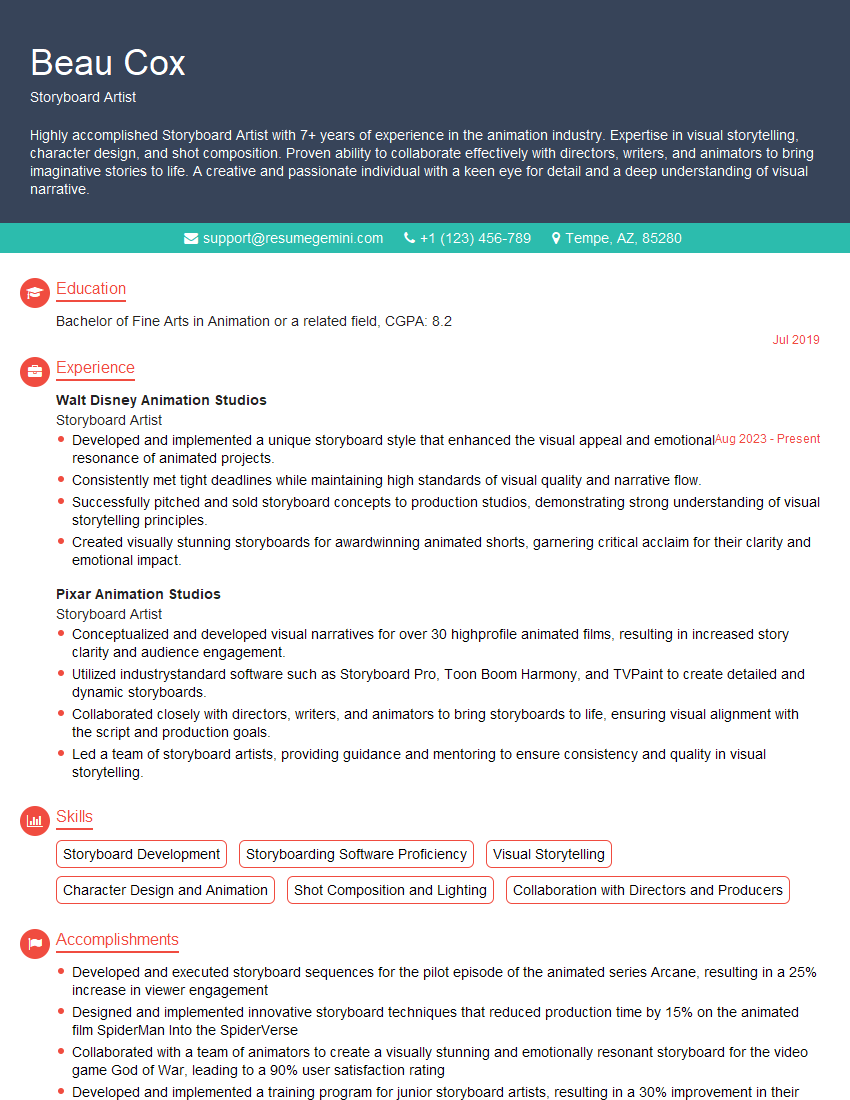
Storyboard Artist Resume Sample
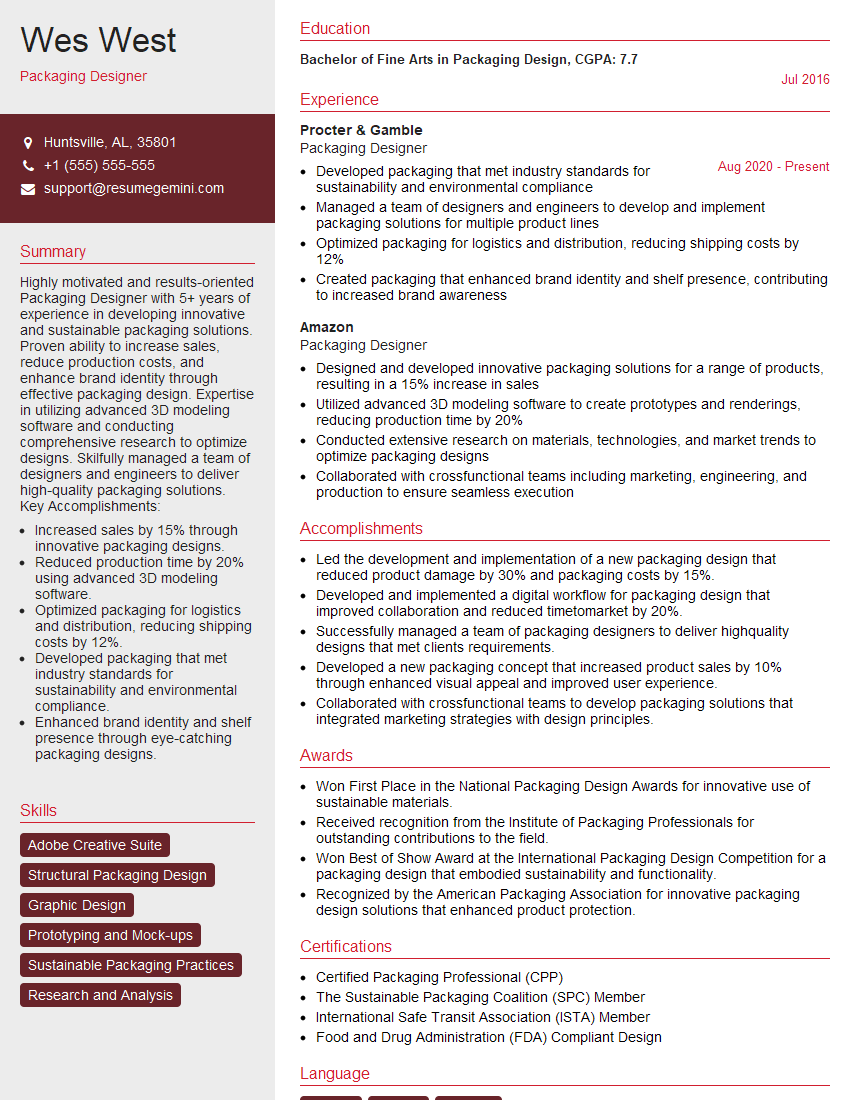
Packaging Designer Resume Sample
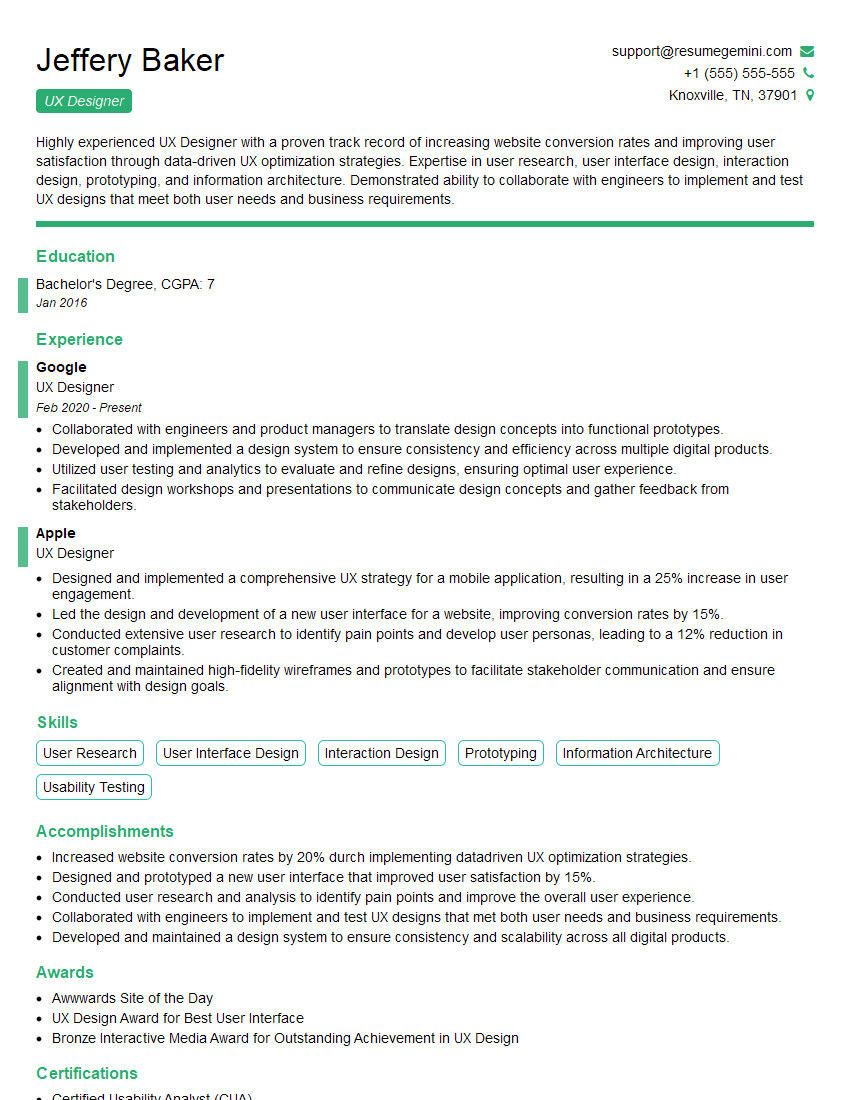
UX Designer Resume Sample
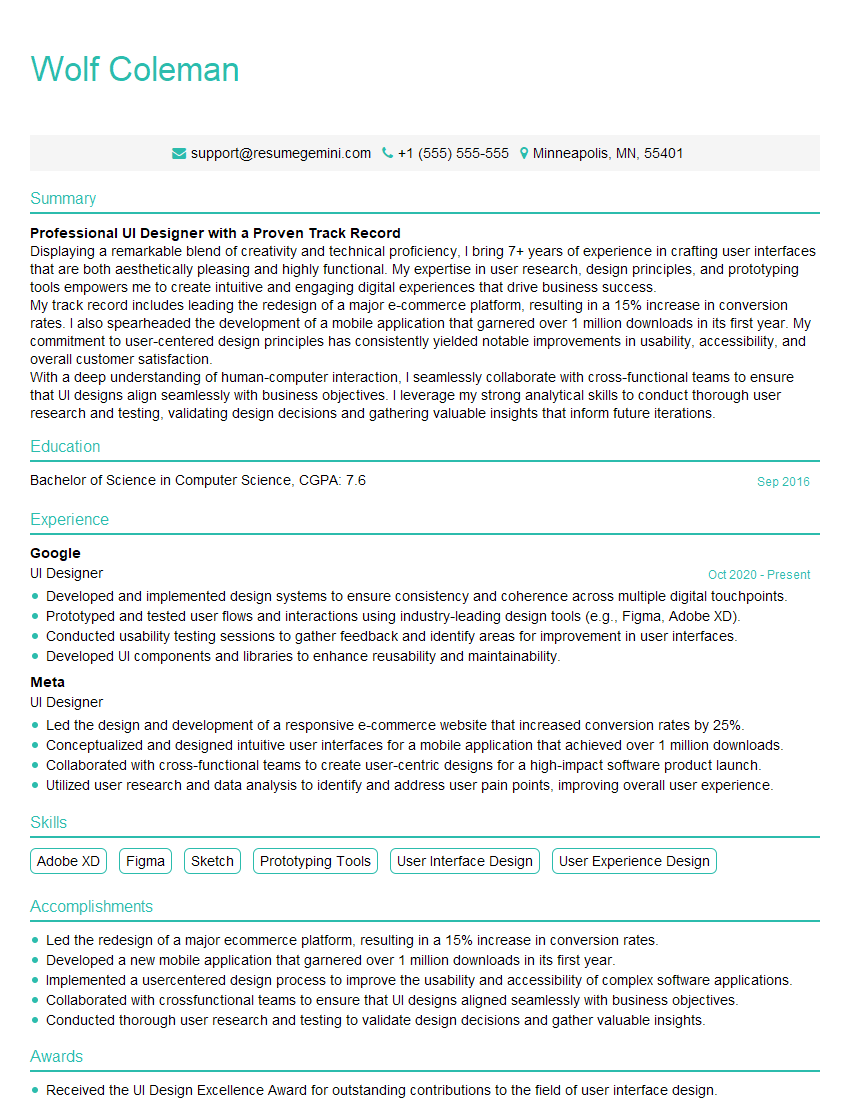
UI Designer Resume Sample
Explore more articles
Users Rating of Our Blogs
Share Your Experience
We value your feedback! Please rate our content and share your thoughts (optional).
What Readers Say About Our Blog
Very informative content, great job.
good