Feeling uncertain about what to expect in your upcoming interview? We’ve got you covered! This blog highlights the most important Skill in using a variety of sewing machines and tools interview questions and provides actionable advice to help you stand out as the ideal candidate. Let’s pave the way for your success.
Questions Asked in Skill in using a variety of sewing machines and tools Interview
Q 1. What types of sewing machines are you proficient with (e.g., industrial, domestic, serger, coverstitch)?
My proficiency spans a range of sewing machines, encompassing domestic, industrial, serger, and coverstitch machines. I’m equally comfortable with the precision of a high-end domestic machine for intricate detail work, like quilting or garment construction, and the powerful speed and durability of an industrial machine for large-scale projects, such as creating durable upholstery or bags. Sergers are my go-to for professional-looking seam finishes, preventing fraying and adding a touch of elegance. The coverstitch machine allows me to create those clean, professional-looking hems found on many ready-to-wear garments, adding a significant level of finish.
For example, I’ve used industrial walking foot machines extensively for projects requiring even feed, such as sewing multiple layers of heavy fabric. My experience with a serger includes creating flatlock seams for athletic wear, and I regularly use the coverstitch machine for adding that signature bottom hem to knit garments. This variety of machine experience allows me to adapt to any project’s demands.
Q 2. Describe your experience with different sewing machine needles and their applications.
Selecting the right needle is crucial for successful sewing. Different fabrics and sewing techniques require specific needle types. For instance, a universal needle is a versatile choice for many fabrics, but for delicate fabrics like silk or chiffon, a sharp needle is essential to prevent snagging. A ballpoint needle is best for knit fabrics, gliding between the loops without piercing them. Heavyweight fabrics like denim or canvas demand a denim or heavy-duty needle to withstand the pressure. Leather requires specialized needles designed for piercing the material without tearing. Using the wrong needle can lead to broken needles, skipped stitches, and damaged fabric.
I often use a needle size chart to determine the correct size and type of needle for a specific fabric. For example, when working with a fine silk, I’d use a size 70/10 sharp needle. For heavier denim, I might choose a size 14/90 denim needle. This careful selection ensures that my stitching is even and that the needle doesn’t break or damage the fabric.
Q 3. How do you troubleshoot common sewing machine problems (e.g., skipped stitches, broken needles, thread jams)?
Troubleshooting sewing machine problems requires a systematic approach. Skipped stitches often indicate incorrect tension, a bent or broken needle, improper threading, or a dull needle. I start by checking the needle – is it the correct type for the fabric and correctly inserted? Then I meticulously check the threading path, ensuring the thread is properly wound, inserted correctly, and sitting in the correct tension disks. If the problem persists, I check the bobbin tension, carefully adjusting the dial until the tension is balanced between the top and bottom threads. A broken needle is usually apparent, and replacing it is a straightforward fix. Thread jams often arise from improper threading or lint buildup within the machine. Regular cleaning and oiling will minimize such problems.
For example, recently, I experienced skipped stitches while sewing a leather project. After examining the needle, I found it was slightly bent. Replacing it with a fresh, sharp leather needle immediately solved the issue. Another time a thread jam occurred. After carefully removing the lint from under the hook, the machine was back to perfect working order. A methodical approach saves time and ensures a high-quality product.
Q 4. Explain your experience with various sewing machine presser feet and their uses.
Presser feet are specialized attachments that enhance sewing machine capabilities. A zipper foot is essential for sewing neat and even zippers. A buttonhole foot is crucial for creating precise buttonholes. A walking foot prevents fabric layers from shifting during sewing, perfect for quilting or sewing multiple layers of fabric. A blind hem foot allows for nearly invisible hemming. A rolled hem foot creates delicate rolled hems on sheer fabrics. The selection of the appropriate presser foot depends entirely on the sewing task. I choose the correct foot before beginning each project to ensure efficiency and a quality outcome.
In one project involving multiple layers of heavy fabric, the walking foot was essential for preventing slippage and creating perfectly aligned seams. For another project, I needed to create small, even buttonholes, and I used the buttonhole foot to create perfectly uniform buttonholes.
Q 5. What are your preferred methods for maintaining and cleaning sewing machines?
Maintaining a sewing machine is critical for its longevity and performance. Regular cleaning is key – I use a soft brush to remove dust and lint from the machine’s internal components. I use a lint brush to clean the bobbin area after each major project. Periodically, I carefully remove the machine’s needle plate and clean away any remaining lint or debris. Proper lubrication is vital; I apply a drop of high-quality sewing machine oil to the moving parts as recommended by the manufacturer. I also replace the needle regularly, even if it doesn’t appear damaged. A new needle ensures cleaner, smoother stitches. Following the manufacturer’s maintenance instructions is crucial. It’s a small investment of time that greatly extends the machine’s lifespan and prevents costly repairs.
I liken it to maintaining a car—regular oil changes, cleaning, and inspections keep it running smoothly and prevent larger issues down the road.
Q 6. How familiar are you with different types of seams and their construction?
My understanding of seams encompasses a broad range of types and their construction techniques. From basic seams like French seams and flat felled seams, offering durability and a clean finish, to more decorative seams like decorative stitch seams or topstitched seams, adding visual interest. I’m proficient in constructing different seams suitable for various fabric types and projects. The choice of seam depends on factors such as fabric weight, type, and the desired aesthetic outcome. For instance, a French seam provides a clean, professional finish for sheer fabrics, while a flat felled seam is ideal for durable garments like workwear. I understand the importance of accurate seam allowance and the proper finishing techniques to create strong and durable seams.
For a recent project requiring a strong and durable seam, I opted for a flat felled seam, knowing it is superior for the stress that the garment would endure. Conversely, a French seam was perfect for a lightweight garment, creating an invisible, beautiful interior finish.
Q 7. Describe your experience with pattern interpretation and adjustments.
Pattern interpretation and adjustment are fundamental skills in sewing. I can accurately read and understand commercially produced patterns, adapting them as needed to individual measurements and desired fit. I’m proficient in making pattern adjustments, such as altering the shoulder width, waistline, or sleeve length, using various techniques to accommodate body variations. I understand how to alter patterns to create different styles or sizes. I often use a muslin test garment to check the fit before working with the final fabric to ensure that alterations are successful and reflect the intended design. My approach to pattern adjustment is methodical and precise, always testing adjustments on a sample before applying them to the main fabric.
For example, I recently adjusted a dress pattern to accommodate a client’s broader shoulders. I added extra width to the shoulder seams and eased the fabric smoothly across the back, ensuring a comfortable fit and a professional finish. This adjustment process requires a detailed understanding of pattern construction and the principles of proper fit.
Q 8. How do you ensure accurate cutting and marking of fabric?
Accurate cutting and marking are fundamental to successful sewing. It’s like building a house – if your foundation is off, the whole structure suffers. I employ several strategies to ensure precision. First, I always use sharp shears, regularly honed to maintain a clean cut, preventing frayed edges. Dull shears cause uneven cuts, leading to ill-fitting garments.
Second, I use a cutting mat and rotary cutter for straight lines and precise curves, especially for larger projects. This method, combined with a clear cutting template or pattern, ensures consistency. For delicate fabrics, I prefer using dressmaker shears or pinking shears, to minimize stress and prevent fraying.
Finally, transferring markings from the pattern to the fabric is crucial. I use different techniques depending on the fabric type: tailor’s chalk for delicate fabrics, tracing wheels for heavier materials, and disappearing ink pens for projects where precision is paramount. I always double-check my markings before cutting, and always cut on the outside of the pattern piece to account for seam allowances, to avoid errors.
Q 9. What are your preferred techniques for finishing seams (e.g., serging, overlocking, zigzag stitch)?
Finishing seams is essential for durability and a professional finish. Think of it as the grout between tiles – it holds everything together and adds aesthetic appeal. My preferred techniques depend on the fabric type and project requirements.
- Serging/Overlocking: I use a serger for most projects, particularly those with stretchy fabrics like knits. It simultaneously cuts and stitches the raw edges, preventing fraying and creating a neat, professional finish. It’s fast and efficient, making it ideal for production work.
- Zigzag Stitch: A zigzag stitch is a versatile option, especially for woven fabrics. It prevents fraying effectively and can be customized for width and length depending on the fabric thickness. It’s great for projects where a serger isn’t available or if I need more control over the stitch appearance.
- French Seams: For more delicate fabrics or when a clean, invisible seam is needed, French seams are my go-to. They completely encase the raw edges, creating a durable and elegant finish. This is often my choice for high-end garments.
The choice depends on the project; for instance, a casual cotton t-shirt might use a simple zigzag stitch, while a silk dress would benefit from a French seam or overlocking with a fine needle.
Q 10. Describe your experience working with different types of fabrics (e.g., silk, cotton, leather)?
Working with different fabrics is a core aspect of sewing, each requiring a unique approach. It’s like using different tools for different tasks – you wouldn’t use a hammer to screw in a screw.
- Silk: Silk is delicate and requires a fine needle and a slow, gentle stitch. I use a walking foot to prevent slippage and ensure even feeding. Its smooth surface necessitates careful handling to avoid snags or tears.
- Cotton: Cotton is generally easier to work with, but the type of cotton varies greatly. Heavy cotton duck requires heavier needles and possibly even reinforced stitching, whereas lightweight cotton lawn calls for fine needles and delicate handling.
- Leather: Leather is a challenge that requires specialized tools, such as a leather needle and strong thread. I often use a walking foot or roller foot for even feed, and the stitches need to be strong enough to withstand stress without breaking. It can require pre-punching holes for heavier stitching.
Adapting to these varying needs is crucial; I adjust my machine settings, needle type, and stitch length to match the fabric’s characteristics for optimal results.
Q 11. How do you handle complex sewing projects involving multiple layers or intricate details?
Complex projects demand meticulous planning and organization. It’s like assembling a complex puzzle – you need to understand the whole picture before tackling individual pieces. I begin by carefully studying the pattern and instructions, making notes and identifying any potential challenges.
For multiple layers, I often use techniques such as basting to temporarily hold pieces together before final stitching. This helps maintain alignment and prevent shifting during construction. For intricate details, I might use templates, marking tools, and even hand-stitching where necessary, taking time and patience to ensure precision.
I also prioritize clear workspace organization. Having all my materials and tools readily available streamlines the process and reduces potential errors. Breaking down a complex project into smaller, manageable steps also helps reduce stress and ensures that each element is completed accurately and efficiently.
Q 12. What is your experience with industrial sewing machine maintenance?
Industrial sewing machine maintenance is crucial for longevity and consistent performance. Regular maintenance is like changing the oil in a car – it prevents bigger issues down the line. My experience includes tasks such as:
- Cleaning: Regularly cleaning the bobbin case, feed dogs, and shuttle area removes lint and debris, preventing jams and malfunctions.
- Lubrication: Proper lubrication is key to smooth operation, and I use the correct sewing machine oil in the designated areas to prevent wear and tear.
- Tension Adjustment: I can adjust tension settings to achieve consistent stitch quality, crucial for various fabrics and stitch types.
- Needle Changes: Regular needle changes prevent skipped stitches and fabric damage. I choose the correct needle type and size for each project.
- Troubleshooting: I’m adept at diagnosing and resolving common issues like skipped stitches, broken needles, or timing problems.
Proactive maintenance ensures smooth operation and reduces downtime, vital for efficient production.
Q 13. Have you worked with CAD/CAM systems in sewing applications?
While I haven’t extensively used CAD/CAM systems in a professional setting, I have a basic understanding of their application in sewing. I’m familiar with how they aid in pattern design, grading, and marker making. They streamline the process, reduce errors, and optimize material usage, particularly in large-scale production environments.
I know that CAD software can create precise patterns and simulate garment construction before actual production, greatly reducing waste and ensuring accuracy. CAM integration automates cutting and marking processes, leading to higher efficiency. Although I don’t have hands-on experience operating these systems, I’m confident in my ability to quickly learn and adapt to using them given the opportunity.
Q 14. What is your knowledge of different stitch types and their applications?
Understanding stitch types is crucial for tailoring your work to specific fabrics and design needs. It’s like having a toolbox filled with different tools – each one suited for a specific task.
- Straight Stitch: The workhorse of sewing, ideal for seams that need strength and durability. I use this for most construction seams.
- Zigzag Stitch: As mentioned earlier, prevents fraying and adds elasticity to seams.
- Overlock Stitch: A serger creates an overlock stitch for professional, neat seam finishes.
- Blind Hem Stitch: Invisible stitch, perfect for hems that shouldn’t be visible.
- Buttonhole Stitch: Creates functional and aesthetically pleasing buttonholes.
- Satin Stitch: A decorative stitch, used for embroidery or embellishments.
My knowledge extends to selecting the right stitch based on the fabric weight, type, and the desired outcome. I am adept at adjusting stitch length and width for optimal results.
Q 15. Describe your experience with different thread types and their suitability for various fabrics.
Selecting the right thread is crucial for a professional finish. Different threads have varying strengths, textures, and finishes, making them suitable for different fabrics. Think of it like choosing the right paint for a surface – you wouldn’t use house paint on a delicate china plate!
- Cotton thread: A versatile option, ideal for everyday sewing projects involving cotton, linen, and even lightweight wools. Its strength is moderate, and it’s readily available in various colors.
- Polyester thread: Known for its strength and durability, polyester thread is excellent for projects requiring high tensile strength, such as denim or upholstery. It also resists shrinking and stretching better than cotton.
- Silk thread: This luxurious thread lends a high-end finish to delicate fabrics like silk, satin, or chiffon. However, it’s less durable and more prone to breakage than cotton or polyester.
- Nylon thread: This strong and elastic thread is a perfect choice for stretchy fabrics like knits and swimwear, as it allows for movement without breaking. It’s also suitable for sewing leather.
For example, I recently completed a custom-made silk gown, and using silk thread ensured a smooth, elegant finish that wouldn’t show any harsh stitching lines. Conversely, when I repaired a pair of well-worn jeans, strong polyester thread was essential to ensure the seams could withstand regular wear and tear.
Career Expert Tips:
- Ace those interviews! Prepare effectively by reviewing the Top 50 Most Common Interview Questions on ResumeGemini.
- Navigate your job search with confidence! Explore a wide range of Career Tips on ResumeGemini. Learn about common challenges and recommendations to overcome them.
- Craft the perfect resume! Master the Art of Resume Writing with ResumeGemini’s guide. Showcase your unique qualifications and achievements effectively.
- Don’t miss out on holiday savings! Build your dream resume with ResumeGemini’s ATS optimized templates.
Q 16. How do you ensure consistent stitch length and tension?
Consistent stitch length and tension are paramount for achieving professional-looking seams and preventing puckering or broken threads. Think of it like writing – a consistent hand produces legible text, while an inconsistent hand results in messy scrawl.
I achieve this by carefully adjusting the settings on my sewing machine, considering both the fabric type and the project’s requirements. Most machines have dials for stitch length and tension adjustment. I always start with a test stitch on a scrap of the same fabric before beginning the actual project. This allows me to fine-tune the settings to ensure a perfect result.
For example, when sewing delicate fabrics like chiffon, I use a shorter stitch length (around 2.0 – 2.5 mm) and a lower tension to prevent the fabric from puckering. Conversely, for heavier fabrics like denim, a longer stitch length (around 3.0 – 3.5 mm) and a higher tension ensures the seams are secure and durable.
Regular maintenance of the machine, including cleaning and oiling, is also critical to maintaining consistent stitch quality.
Q 17. How do you measure and cut fabric accurately?
Accurate fabric measurement and cutting are foundational to any successful sewing project. A poorly cut piece can ruin even the most skillful construction. Think of a carpenter building a house; precise cuts are essential for a structurally sound building.
I use high-quality rulers, rotary cutters, and cutting mats to ensure precise cuts. I always double-check my measurements before cutting and use pattern weights to keep the fabric from shifting during the cutting process. I also consider the fabric’s grain – the lengthwise and crosswise yarns – to ensure the garment hangs properly and avoids distortion.
When working with intricate patterns, I use pattern tracing paper or a fabric marker to transfer pattern markings to the fabric accurately. For curved edges, I use flexible rulers or templates to ensure smooth, even cuts.
Q 18. How do you deal with fabric stretching or shrinking?
Fabric stretching and shrinking is a common challenge, but with proper planning and techniques, it can be minimized. Think of it as baking a cake; the right ingredients and preparation methods ensure the cake doesn’t collapse.
Preventing shrinkage: Pre-washing the fabric before cutting is essential, especially for natural fibers like cotton and linen. This allows the fabric to shrink before cutting, avoiding unexpected changes in size during or after construction. I always follow the care instructions on the fabric label.
Managing stretch: For stretchy fabrics, I use a specialized machine needle designed for knits and use a walking foot or other specialized presser foot to manage the fabric feeding evenly and prevent stretching during stitching. Interfacing can also help to stabilize and reduce stretching in specific areas.
Addressing existing shrinkage/stretch: If I encounter unexpected shrinkage after construction, I may carefully steam the garment to relax the fibers, or use a light pressing to help ease out wrinkles.
Q 19. How familiar are you with different types of sewing machine bobbins?
Familiarity with different bobbin types is essential for efficient sewing. Different bobbins are designed to fit various sewing machine models and often contribute to smoother sewing. It’s akin to having the right screw for the right job.
- Class 15 bobbins: A common type found in many domestic sewing machines.
- Class 66 bobbins: Another popular type, often used in industrial sewing machines and some high-end domestic machines.
- Top-drop-in bobbins: These bobbins load from the top of the machine, which can make bobbin changes quicker and easier.
- Vertical bobbins: These are designed to sit vertically in the bobbin case.
I’m proficient in using and identifying various bobbin types, and I always ensure I have the correct bobbin for my specific sewing machine model. Using the wrong bobbin could lead to problems like poor stitching, thread jams, or even damage to the machine.
Q 20. Describe your experience with using specialized tools (e.g., seam rippers, marking tools, rulers)?
Specialized tools are an extension of my hands, enhancing precision and efficiency. A seamstress without the right tools is like a chef without knives – the job can be done, but it’ll be much harder and less effective.
- Seam rippers: Essential for removing stitches neatly and quickly. I use them regularly for adjustments or corrections.
- Marking tools: From tailor’s chalk to marking pencils and disappearing ink pens, I choose the appropriate tool depending on the fabric type and pattern markings. Precise markings prevent errors and ensure accurate construction.
- Rulers: Accurate measurement is critical, and I use a variety of rulers, including flexible rulers for curves and clear acrylic rulers for accurate cutting.
- Other tools: I regularly utilize pincushions, scissors, and pressing tools (irons, pressing cloths) for efficient and organized sewing.
For instance, when working with delicate silk, I use a fine-tipped disappearing ink pen to mark the fabric without leaving visible traces, ensuring a clean, professional finish. A good seam ripper is invaluable for fixing mistakes, which happen even to the most experienced sewers.
Q 21. How do you manage time effectively in a high-volume sewing environment?
Time management in a high-volume sewing environment requires a systematic approach and efficient workflow. It’s like conducting an orchestra, ensuring every section plays its part smoothly and on time.
I use a combination of strategies: I prioritize tasks based on deadlines and urgency, breaking down large projects into smaller, manageable steps. I always prepare thoroughly before starting, ensuring all materials, tools, and patterns are readily accessible. I maintain a clean and organized workspace, reducing wasted time searching for materials. Batching similar tasks helps improve efficiency, optimizing the workflow.
Using digital tools for pattern creation, inventory management, and communication aids efficiency. I’ve also learned to anticipate potential problems and have backup plans ready to avoid unnecessary delays.
My experience working on large-scale projects, including the production run for a recent bridal collection, has honed my ability to manage time and resources effectively under pressure, ensuring timely completion and high-quality output.
Q 22. Describe a time you had to troubleshoot a complex sewing machine malfunction.
One time, I was working on a complex project involving a vintage Singer 201K, known for its intricate mechanics. The machine suddenly started producing inconsistent stitches – sometimes tight, sometimes loose, with occasional skipped stitches. This wasn’t a simple needle or bobbin issue. My initial troubleshooting involved systematically checking each component. I first inspected the needle and bobbin for damage or incorrect installation. Then I meticulously cleaned the bobbin case and shuttle, ensuring no lint or debris was obstructing the mechanism. After verifying the proper tension settings, I discovered the problem lay in the hook timing. The hook wasn’t catching the loop of thread consistently. This required careful adjustment of the timing screw, a delicate process requiring precise turns and repeated testing. I used a magnifying glass to observe the hook’s interaction with the needle and adjusted the screw until the hook consistently engaged the thread loop. Finally, I lubricated the moving parts with high-quality sewing machine oil to ensure smooth operation. The machine was back to its impeccable performance after this multi-step process. It highlighted the importance of patience and systematic troubleshooting when dealing with intricate sewing machine mechanics.
Q 23. How do you ensure quality control in your sewing work?
Quality control is paramount in my sewing work. It’s a multi-stage process starting before the needle even touches the fabric. I begin with meticulous pattern preparation, ensuring precise cutting and accurate markings. Throughout the sewing process, I regularly inspect my work for consistent stitch length, straight seams, and even fabric handling. I use a variety of tools to assist in this process, like seam rippers for correcting minor errors, and measuring tapes to ensure accuracy. I also check for things like fabric distortion or puckering during more challenging techniques like curve stitching or working with complex fabrics. After completion, a final quality check involves examining the garment inside and out for loose threads, inconsistencies in the stitching, and overall neatness. This is akin to building a house – each step is critical to the final quality. By being meticulous in each phase, I deliver garments that reflect professionalism and attention to detail.
Q 24. How do you adapt to different sewing machine models and brands?
Adapting to different sewing machine models and brands is a core skill. While the basic principles of sewing remain consistent, each machine has its unique features, controls, and sometimes quirks. My approach is to first consult the machine’s manual to understand its specific functionalities and any unique maintenance requirements. For example, Brother machines often have slightly different tension adjustment methods compared to Singer machines. I then engage in hands-on experimentation, practicing with scrap fabric until I feel comfortable with its stitch settings, speed control, and needle threading process. I focus on understanding the machine’s feedback – how it reacts to different stitch length settings, tension adjustments, and fabric types. Through this process of careful reading and practical application, I quickly become proficient with various models and brands.
Q 25. What safety precautions do you take while operating sewing machines?
Safety is my top priority. Before I start any sewing project, I ensure my workspace is well-lit and organized, free from clutter and tripping hazards. I always keep my fingers clear of the needle and presser foot while the machine is in operation. This seems basic but is crucial. I also use a finger guard when working on tight curves or difficult fabrics to avoid accidental needle pricks. Moreover, I regularly inspect the machine’s electrical cord for any damage and only use appropriately rated power outlets. When working with fabrics containing sharp elements, I wear protective gloves to prevent cuts. Regular maintenance, like cleaning and oiling the machine as per manufacturer’s recommendations, also plays a vital role in safe operation. It’s about developing a mindful and proactive approach to prevent accidents.
Q 26. How would you train a new employee on basic sewing machine operation?
Training a new employee would involve a phased approach. I’d start with a comprehensive safety briefing, emphasizing the importance of safe machine operation. Then I’d introduce the basic parts of the sewing machine, explaining their function and how they work together. We’d then move to practical exercises, starting with simple stitch patterns to develop proper needle threading and bobbin winding techniques. I’d guide them through tension adjustment, demonstrating how it impacts stitch quality using various fabric types. We’d work on progressively challenging projects, starting from simple seams and gradually adding more complex techniques. Throughout the training, I’d provide constructive feedback, highlighting their strengths and areas for improvement. I would encourage them to ask questions and foster a supportive learning environment where mistakes are viewed as learning opportunities. The focus would always be on building confidence and competence.
Q 27. Explain your experience with different types of sewing machine tension adjustments.
My experience encompasses a wide range of tension adjustments. This includes adjusting the upper tension dial, the bobbin tension, and sometimes even the presser foot pressure, depending on the machine and project. Upper tension controls the thread coming from the top spool, influencing how the top thread interacts with the bobbin thread. Bobbin tension, adjusted by a small screw in the bobbin case, influences the bottom thread’s consistency. I’ve worked with machines that offer numerical tension settings and others that use a dial with markings. Understanding the interplay between these elements is critical for producing balanced and consistent stitches. A perfect stitch is achieved when both upper and lower threads are interwoven correctly without one overshadowing the other. The adjustments are often nuanced and highly dependent on the fabric weight and type. I find that practice and paying close attention to the resulting stitch are crucial to mastering these techniques.
Q 28. How do you work under pressure to meet deadlines?
Meeting deadlines under pressure requires a systematic approach and effective time management. I prioritize tasks based on urgency and complexity. I break down larger projects into smaller, manageable steps and create a detailed timeline. I’m a firm believer in starting early, allowing for unexpected delays or complexities. This prevents last-minute panic. During periods of high pressure, I focus on maintaining a clear head and work efficiently, possibly adjusting my work schedule to accommodate heavier workloads. It’s essential to stay organized, communicate potential delays effectively to relevant parties, and remain adaptable to changing priorities. If necessary, I delegate tasks where possible and collaborate effectively to share the workload. I find this focused approach keeps me productive and minimizes the stress associated with tight deadlines.
Key Topics to Learn for Skill in using a variety of sewing machines and tools Interview
- Machine Operation: Understanding the mechanics of different sewing machine types (e.g., industrial, domestic, serger, embroidery machines). This includes threading, bobbin winding, stitch selection, and basic maintenance.
- Fabric Selection and Handling: Knowing which fabrics are suitable for different projects and sewing techniques. This includes understanding fabric properties (weight, drape, stretch) and how to pre-treat fabrics for optimal results.
- Stitch Selection and Application: Matching the appropriate stitch type to the fabric and project requirements. Understanding the strengths and weaknesses of various stitches (e.g., straight stitch, zigzag, overlock, blind hem).
- Pattern Interpretation and Alteration: Accurately interpreting sewing patterns and making necessary adjustments to fit and design. This includes understanding pattern markings and seam allowances.
- Tool Proficiency: Demonstrating competency with various sewing tools, including measuring tools (rulers, tape measures), cutting tools (scissors, rotary cutters), pressing tools (irons, pressing ham), and other specialized tools.
- Troubleshooting and Repair: Identifying and resolving common sewing machine issues, such as skipped stitches, broken needles, or tension problems. Knowing basic machine maintenance procedures.
- Safety Procedures: Understanding and adhering to safe operating procedures for all sewing machines and tools, including proper needle handling and machine maintenance.
- Quality Control: Understanding how to produce high-quality, consistent results and identifying potential flaws in your work.
Next Steps
Mastering a variety of sewing machines and tools is crucial for career advancement in the fashion, textile, or upholstery industries. It demonstrates a high level of skill and versatility, opening doors to more challenging and rewarding opportunities. To maximize your job prospects, create an ATS-friendly resume that highlights your capabilities clearly and effectively. ResumeGemini is a trusted resource that can help you build a professional and impactful resume, ensuring your qualifications stand out. Examples of resumes tailored to showcasing proficiency in using a variety of sewing machines and tools are available to guide you.
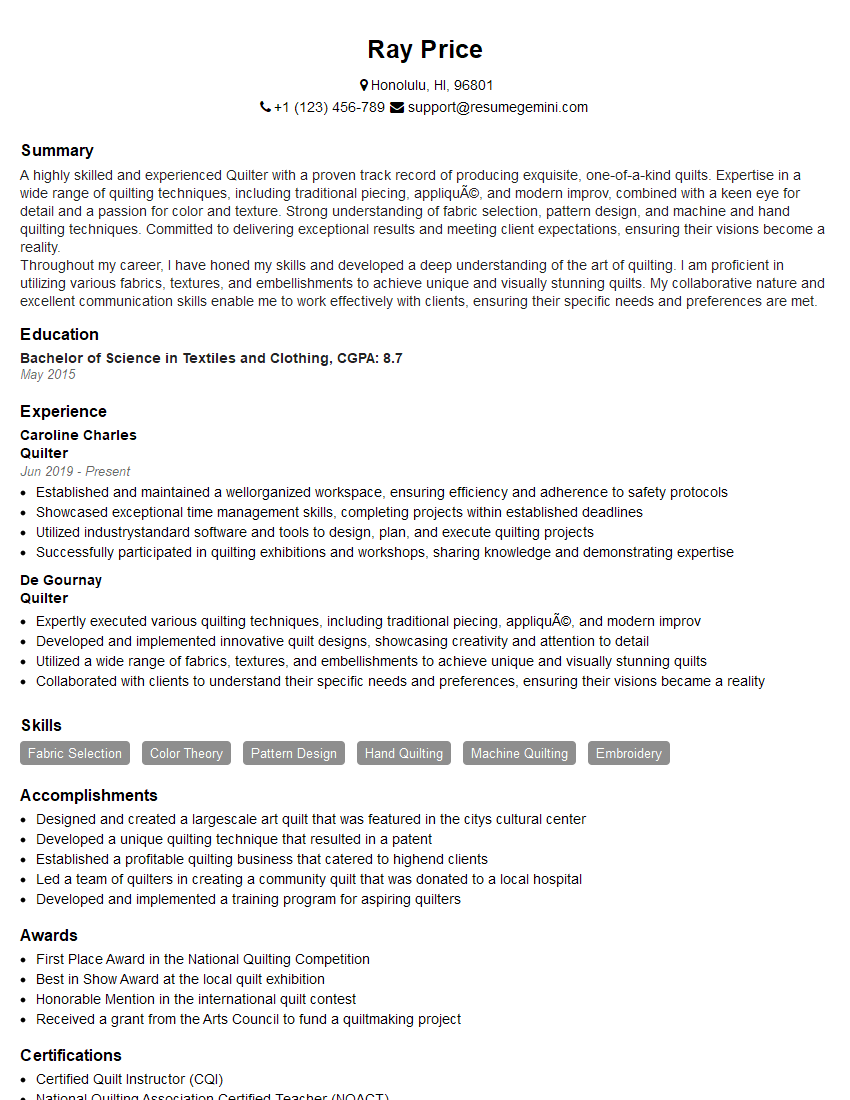
Quilter Resume Sample
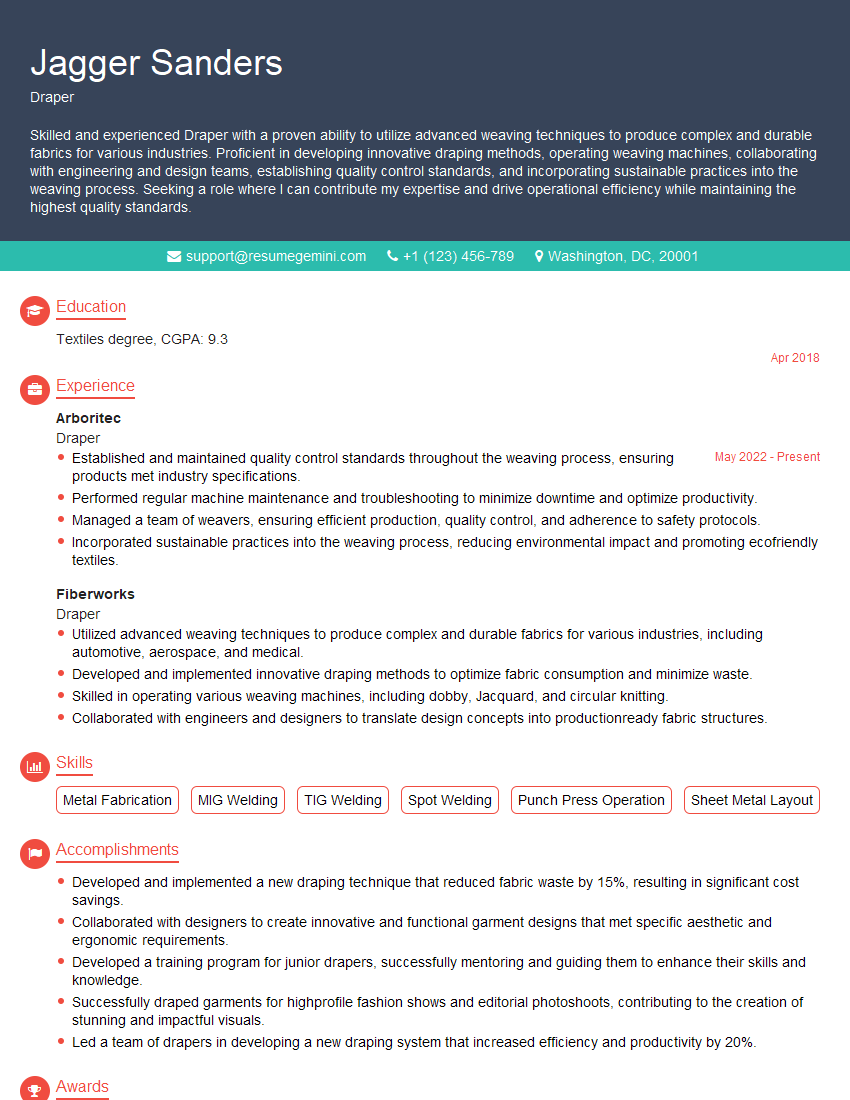
Draper Resume Sample
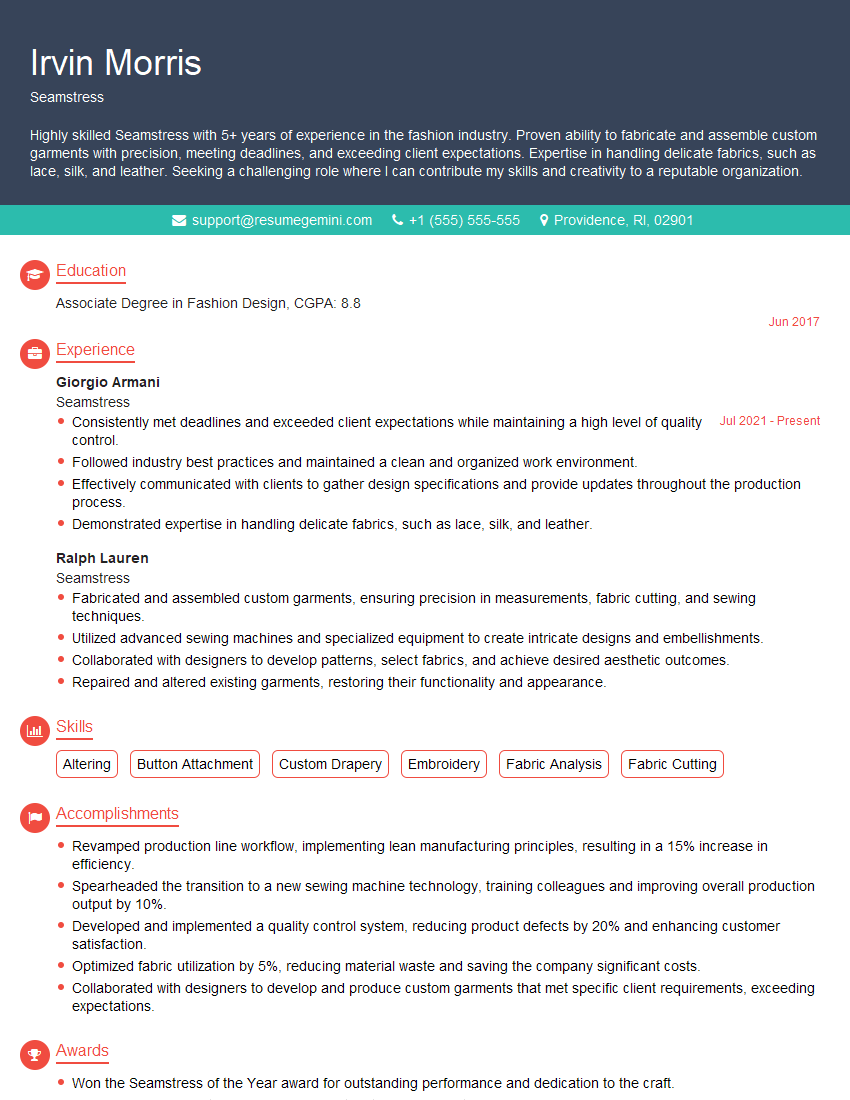
Seamstress Resume Sample
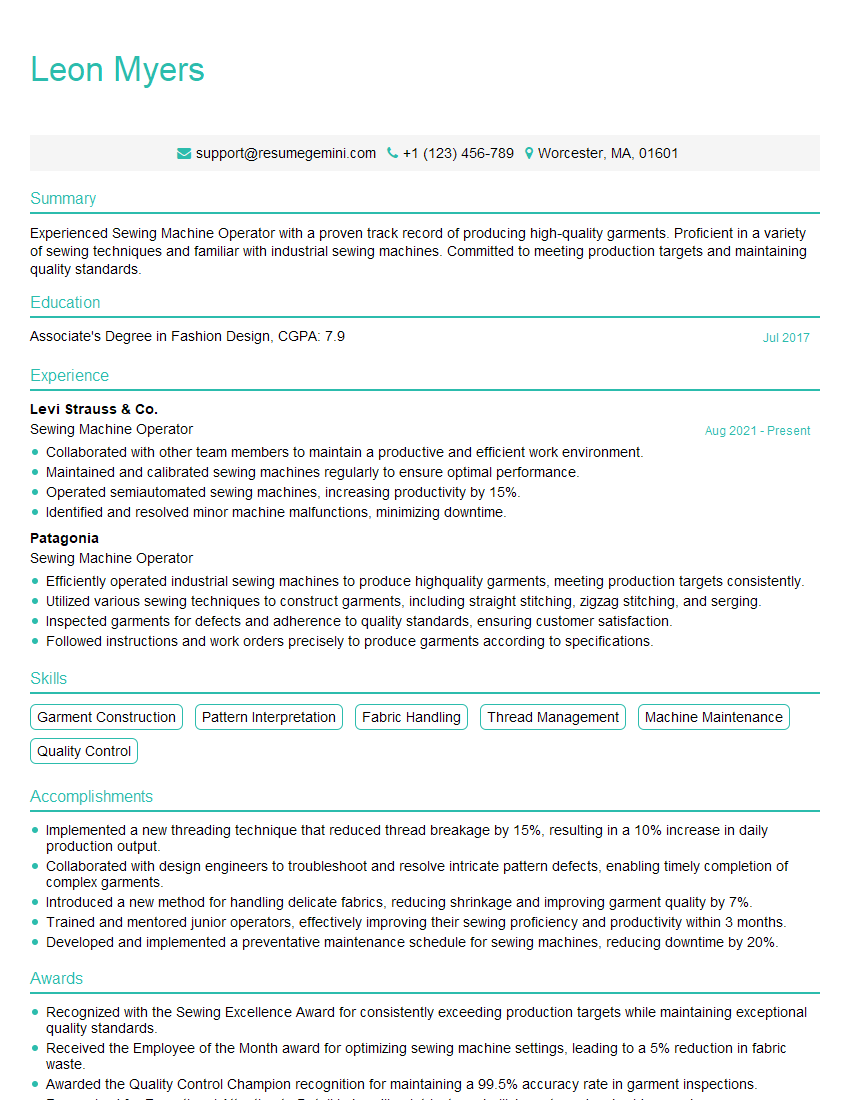
Sewing Machine Operator Resume Sample
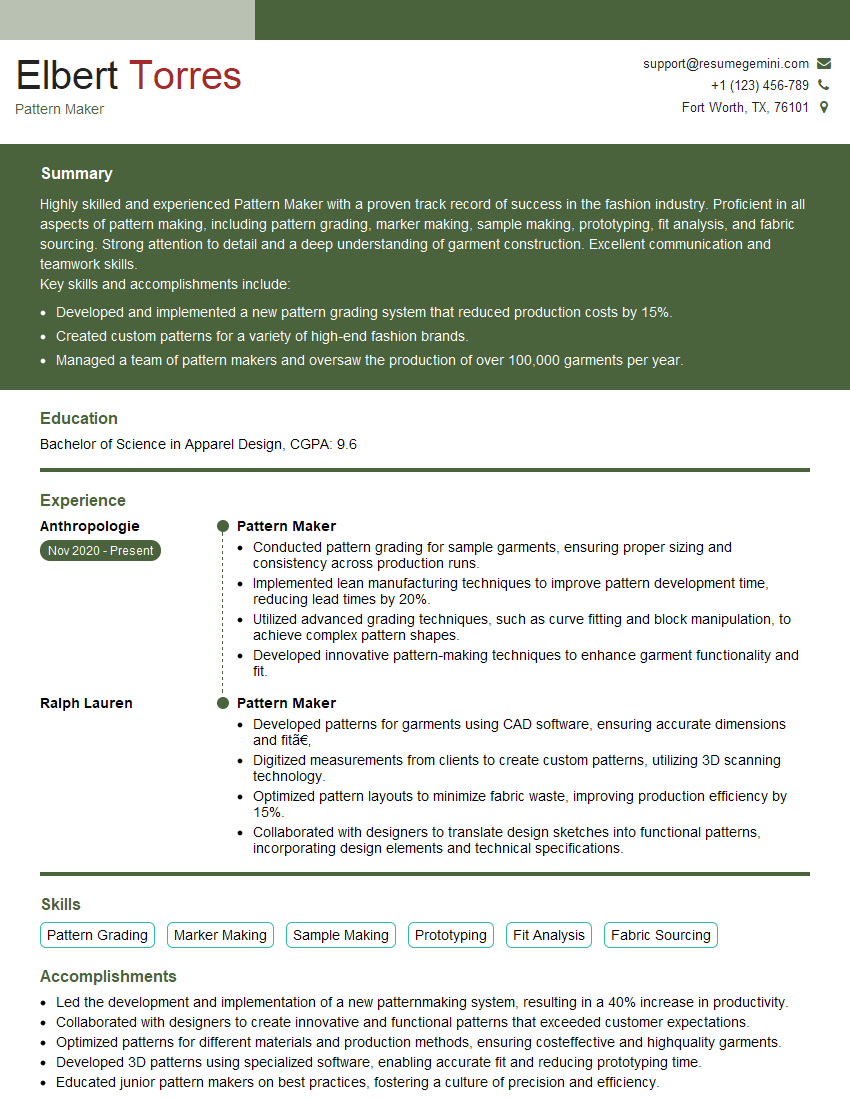
Pattern Maker Resume Sample

Embroiderer Resume Sample
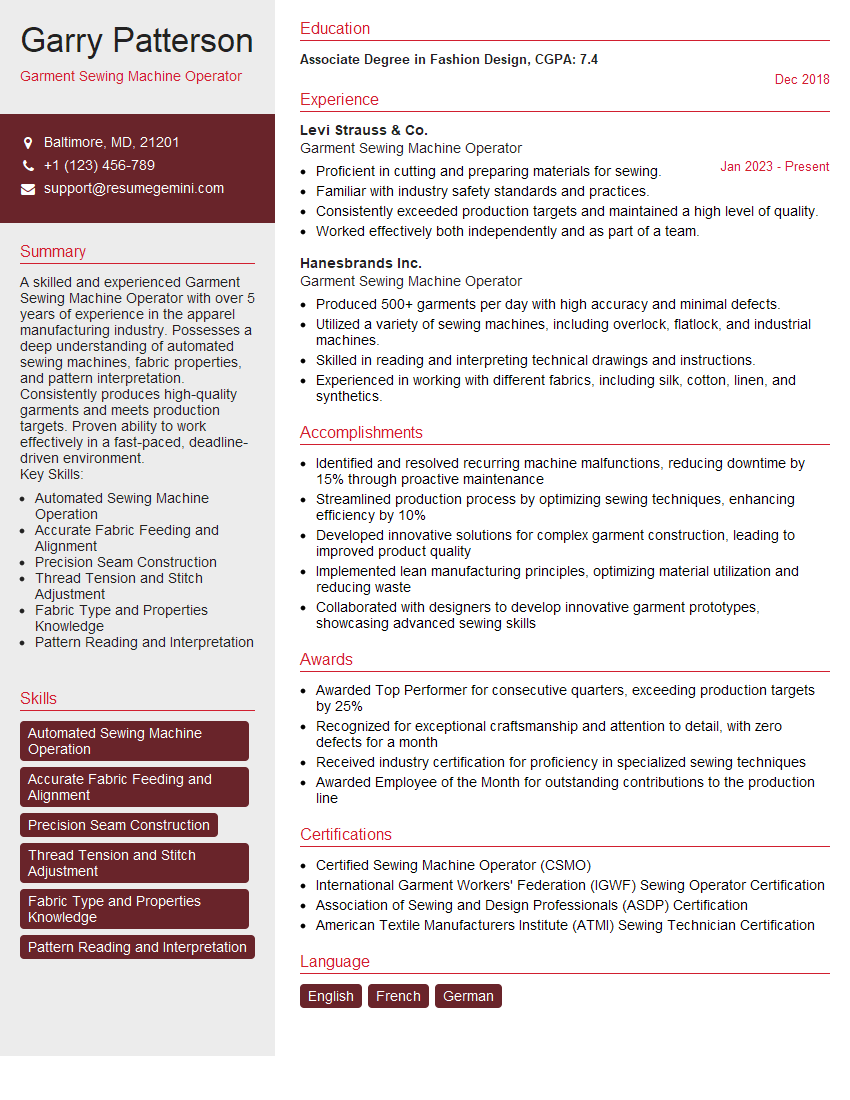
Garment Sewing Machine Operator Resume Sample
Sample Maker Resume Sample
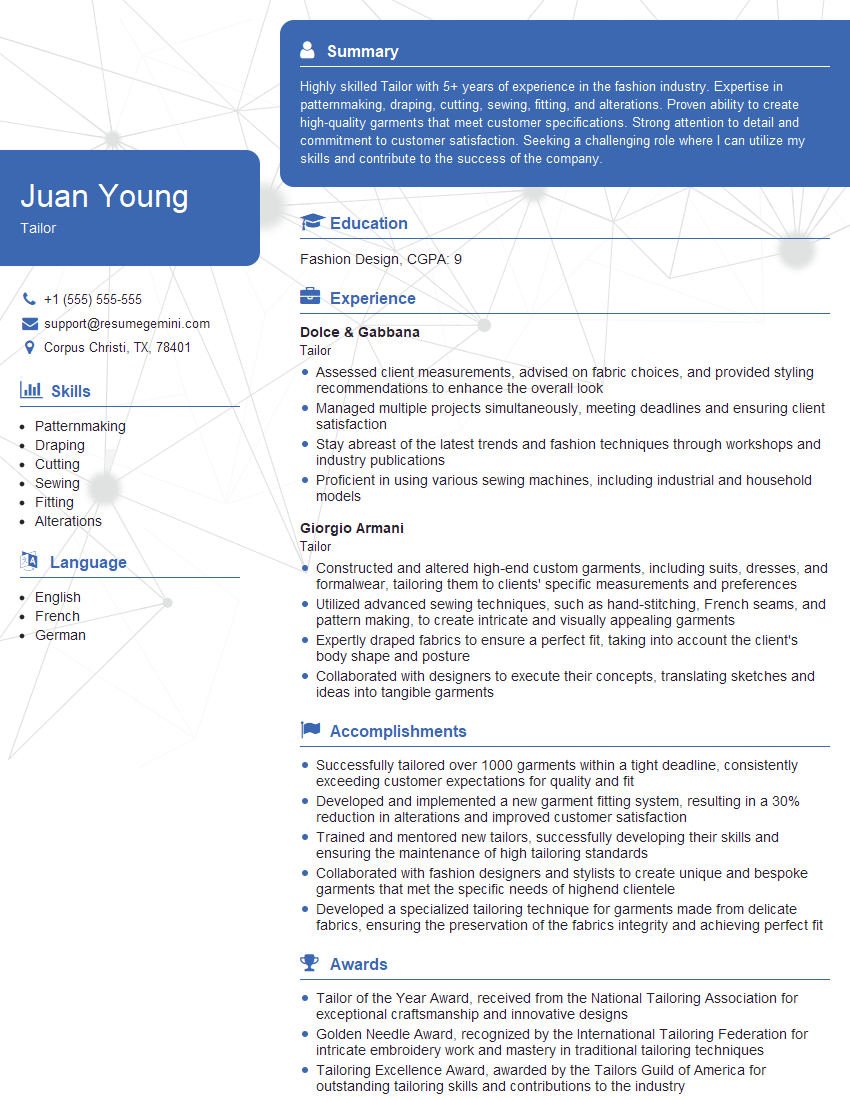
Tailor Resume Sample
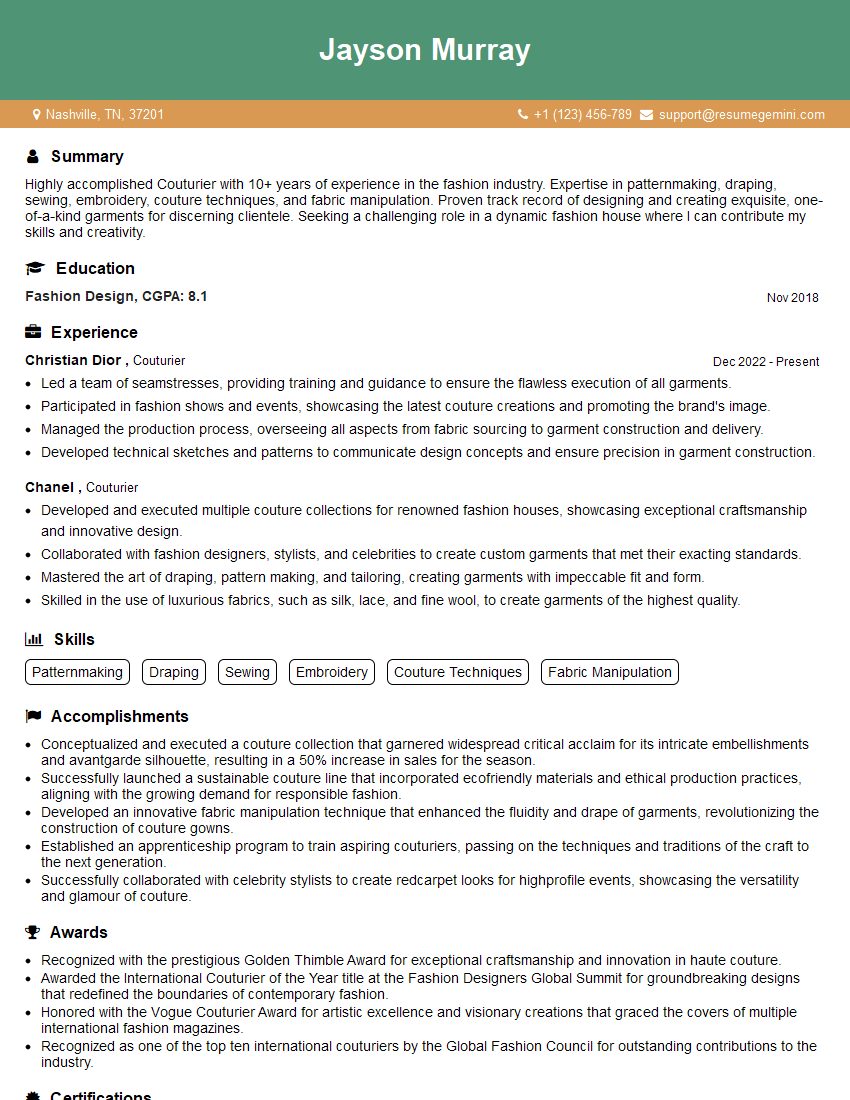
Couturier Resume Sample
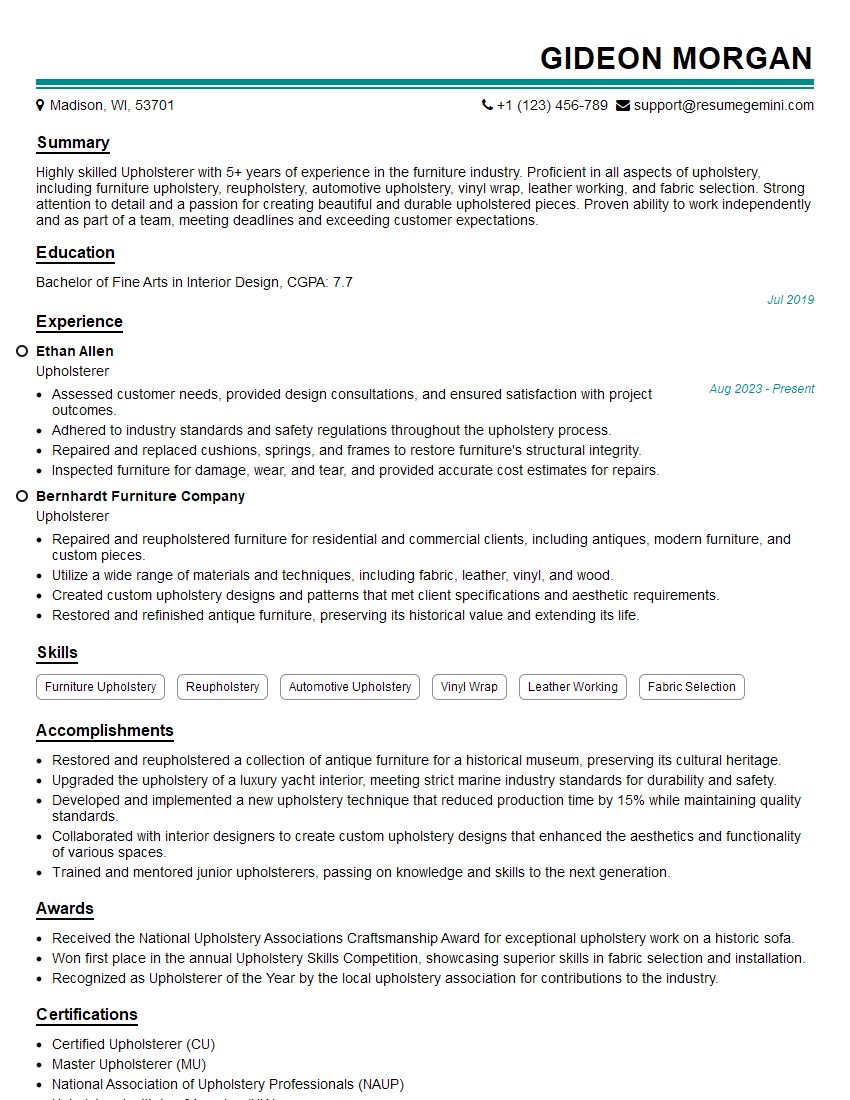
Upholsterer Resume Sample
Explore more articles
Users Rating of Our Blogs
Share Your Experience
We value your feedback! Please rate our content and share your thoughts (optional).
What Readers Say About Our Blog
Very informative content, great job.
good