Every successful interview starts with knowing what to expect. In this blog, we’ll take you through the top Skilled in Mirror Installation and Repair Techniques interview questions, breaking them down with expert tips to help you deliver impactful answers. Step into your next interview fully prepared and ready to succeed.
Questions Asked in Skilled in Mirror Installation and Repair Techniques Interview
Q 1. Describe your experience with different types of mirror installation techniques (e.g., adhesive, mechanical fastening).
My experience encompasses a wide range of mirror installation techniques, primarily focusing on adhesive and mechanical fastening methods. Adhesive installation, ideal for smaller mirrors and those requiring a seamless look, relies on strong, specialized mirror adhesives. I’m proficient in using different types, selecting the appropriate one based on factors like mirror size, weight, substrate material (e.g., drywall, tile, wood), and environmental conditions. For instance, a heavy mirror on a tiled wall requires a high-strength epoxy adhesive, whereas a lighter mirror on a smooth, stable surface might be suitable for a silicone-based adhesive. Mechanical fastening, on the other hand, provides a more secure and robust solution for larger, heavier mirrors. This involves using specialized clips, brackets, or screws, strategically placed to distribute weight evenly and prevent stress points. I’ve worked with various systems, from simple channel clips for frameless mirrors to more complex custom bracket designs for larger or uniquely shaped pieces. The choice between methods depends on factors like the mirror’s size and weight, the type of wall, and aesthetic preferences. I always conduct a thorough assessment of each project to determine the most appropriate and safest approach.
Q 2. What safety precautions do you take when working with mirrors and glass?
Safety is paramount in mirror installation. I always prioritize personal protective equipment (PPE), including safety glasses to protect against flying debris during cutting or potential breakage, gloves to prevent cuts from sharp edges, and dust masks to mitigate inhalation of glass particles. When handling larger mirrors, I use suction cups and/or specialized lifting devices to prevent accidental drops. Moreover, I thoroughly assess the installation area, ensuring there’s adequate support and stability to prevent the mirror from falling. This includes checking wall integrity, properly securing any brackets or supports, and ensuring the adhesive used is rated for the weight of the mirror. I also implement safety procedures when working at heights, utilizing appropriate scaffolding or harnesses if necessary. Clear communication with clients and other workers on site is also vital in preventing accidents.
Q 3. How do you handle chipped or cracked mirrors during repair?
Chipped or cracked mirrors usually require replacement, as attempting repair is often impractical and could lead to further damage or injury. However, minor chips might be addressed using specialized glass repair kits that contain resin to fill the chip and strengthen the area. These kits are not a perfect solution, and the repair will be visible. It’s crucial to carefully assess the extent of the damage. If the crack is extensive or compromises the structural integrity, replacing the mirror is the safest course of action. Before disposal, I always wrap the broken mirror carefully in thick cardboard or bubble wrap to prevent further damage and ensure safe handling and transport.
Q 4. Explain your process for measuring and cutting mirrors for custom installations.
Measuring and cutting mirrors for custom installations requires precision and accuracy. I start by taking detailed measurements of the designated space, accounting for any necessary tolerances and ensuring proper alignment. For instance, I use a laser level to ensure precise vertical and horizontal alignment. Then, I transfer these measurements to a template, typically cardboard or plywood, which serves as a guide for cutting the mirror. I employ a professional glass cutter, always making clean, controlled scores. I use a specialized tool to snap the mirror along the score line. It is a precise and demanding process. After cutting, the edges are carefully polished to prevent sharp edges and improve safety. Throughout the process, I continuously check for accuracy to avoid costly errors, and I always double-check measurements before cutting.
Q 5. What types of adhesives are suitable for various mirror installation scenarios?
The choice of adhesive depends heavily on the specific application. For smaller, lightweight mirrors on stable surfaces like tile or smooth drywall, silicone-based adhesives provide a good balance of adhesion and ease of application. For larger, heavier mirrors or those on less stable surfaces like plasterboard, I opt for high-strength epoxy adhesives specifically formulated for mirror installation. These epoxies provide superior bonding strength and resistance to vibrations. For specialized applications, like outdoor installations, I would consider UV-resistant adhesives to prevent degradation from sunlight. Always check the manufacturer’s specifications to ensure the adhesive is compatible with both the mirror and the substrate material.
Q 6. How do you ensure the proper alignment and leveling of mirrors during installation?
Ensuring proper alignment and leveling is critical for a professional-looking and safe installation. Before applying adhesive or securing any mechanical fasteners, I use a laser level to establish perfectly vertical and horizontal lines. For larger mirrors, I often use temporary supports to hold the mirror in place during the curing process of the adhesive, allowing precise adjustments as needed. Shims can be used to achieve perfect leveling, ensuring the mirror is not tilted. Regularly checking with a level during installation prevents errors and ensures a flawless final result. This meticulous attention to detail is what separates professional installations from DIY attempts.
Q 7. Describe your experience with different types of mirror frames and installation methods.
My experience includes working with various mirror frames, from simple beveled edges to ornate, custom-designed frames. Installation methods vary based on the frame design and material. For frameless mirrors, I frequently use channel clips, which provide a secure and almost invisible mounting solution. For framed mirrors, the method depends on the frame’s construction. Some frames have pre-installed brackets or clips, while others require custom fabrication or the use of adhesive and screws to attach the frame securely to the wall. I’m adept at working with different frame materials, including wood, metal, and resin, ensuring a secure and aesthetically pleasing fit every time. The frame’s attachment method must be compatible with the mirror’s mounting system to ensure a safe and stable installation.
Q 8. How do you deal with uneven or difficult-to-access installation surfaces?
Uneven or hard-to-reach surfaces require careful planning and specialized techniques. Think of it like building a house on uneven terrain – you need a solid foundation. For instance, if a wall is slightly bowed, I’ll use shims (thin wedges of wood) to create a perfectly flat surface for the mirror to adhere to. For high or awkward placements, I utilize adjustable scaffolding or harnesses to ensure safety and precision while maintaining a steady hand. In cases of extremely complex surfaces, I might need to create a custom backing structure to ensure the mirror sits perfectly and securely. I’ll always prioritize safety and meticulously assess the situation before beginning installation.
- Shims: Correct minor imperfections in the wall.
- Scaffolding/Harnesses: Provides secure access to difficult heights or angles.
- Custom Backing: Creates a level surface for mirrors on unusually shaped surfaces.
Q 9. What are the common causes of mirror breakage and how can they be prevented?
Mirror breakage is often caused by impacts, improper installation, or environmental factors. Think of a mirror like a delicate pane of glass; it needs proper care. Common causes include accidental bumps or drops during handling, faulty installation leading to stress points, temperature fluctuations causing expansion and contraction, and even improper cleaning with abrasive materials. To prevent breakage, I use protective film during transport and installation. I ensure proper adhesion with the right adhesive and support systems, avoiding any pressure points. I educate clients on proper cleaning techniques and advise against placing mirrors in areas prone to extreme temperature swings or potential impacts. For high-traffic areas or places with children, I may recommend safety film to hold the glass together in case of breakage.
- Impact Protection: Using protective film and padding during transport and installation.
- Proper Adhesion: Using correct adhesive and techniques to distribute weight evenly.
- Environmental Considerations: Avoiding placement in areas prone to temperature fluctuations or impacts.
Q 10. Explain your troubleshooting skills when dealing with faulty mirror installations.
Troubleshooting faulty installations involves a systematic approach. I begin by visually inspecting the mirror for cracks or damage. Then I check the adhesive for proper bonding and assess whether the mirror is properly level and secure. If the mirror is loose, I’ll investigate the wall behind it for unevenness or other issues. I’ll also check the surrounding structure for any potential causes of stress. For example, I recently encountered a mirror that kept falling despite seemingly proper adhesion; it turned out the wall was damp and the adhesive wasn’t properly cured. Identifying the root cause—be it a faulty wall, improper adhesive application, or even settling in the house—is crucial to a lasting solution. Once the issue is identified, I carefully plan the repair strategy, often involving removing the mirror and starting over to ensure long-term stability.
- Visual Inspection: Checking for cracks, damage, and loose areas.
- Adhesive Assessment: Evaluating the bonding strength and application.
- Structural Evaluation: Investigating the wall for unevenness, dampness, or other issues.
Q 11. Describe your experience working with different types of glass (e.g., tempered, laminated).
I’ve extensive experience with various types of mirror glass, including tempered and laminated. Tempered glass, for instance, is much stronger and safer than regular glass, making it ideal for high-traffic areas or bathrooms. It shatters into smaller, less dangerous pieces than regular glass when broken. Laminated glass is another option that consists of two pieces of glass bonded together with a plastic interlayer, which keeps the fragments together even if the glass breaks. This makes it incredibly safe, particularly in areas where safety is a paramount concern. I choose the type of glass based on the client’s needs and the application location, always prioritizing safety and durability. For example, a large mirror in a gym would absolutely need tempered glass to withstand potential impacts. My expertise extends to understanding the specific handling and installation requirements for each type to ensure a safe and professional outcome.
- Tempered Glass: Stronger, safer, shatters into small pieces.
- Laminated Glass: Keeps fragments together upon breakage, enhancing safety.
Q 12. How do you handle customer complaints or issues related to mirror installations?
Handling customer complaints requires patience, empathy, and a proactive approach. My priority is to understand the customer’s concerns thoroughly. I listen carefully to their issues, asking clarifying questions and showing that I take their feedback seriously. Once I grasp the problem, I work to find a solution, be it a minor adjustment, a full reinstall, or even a replacement if needed. Transparency is key; I clearly explain the steps I’ll take to resolve the issue, keeping the customer informed throughout the process. Even if the issue is not directly my fault, I will try to find a solution to ensure customer satisfaction. In my experience, a prompt response and a willingness to go the extra mile often turn a negative situation into a positive one.
- Active Listening: Understanding the customer’s concerns.
- Problem-Solving: Finding appropriate solutions.
- Transparency: Keeping the customer informed.
Q 13. What tools and equipment are essential for successful mirror installation and repair?
Essential tools and equipment for successful mirror installation and repair include a measuring tape, level, safety glasses, utility knife, silicone adhesive, putty knife, shims, and possibly a mirror cutter or grinder (depending on the project). For larger or more complex projects, I’d also use scaffolding, suction cups, and additional safety equipment, such as a harness. The specific tools vary with each job. I always prioritize the use of high-quality tools and materials to guarantee a secure and long-lasting installation. For example, using cheap silicone can lead to mirror failure in the long run, causing considerable inconvenience for the customer.
- Measuring Tape & Level: For accurate measurements and alignment.
- Safety Glasses: Protecting eyes from debris.
- Utility Knife & Putty Knife: For precise cutting and adhesive application.
- Silicone Adhesive: For secure bonding.
- Shims: For correcting uneven surfaces.
Q 14. What are the building codes and safety regulations related to mirror installation that you are familiar with?
Building codes and safety regulations related to mirror installations vary by location, but common themes include ensuring secure fastening to prevent accidental breakage and falls, especially in areas like bathrooms. This usually involves using appropriate adhesives and backing methods for the weight and size of the mirror. There are often regulations regarding the type of glass used, typically mandating tempered or laminated glass in high-risk areas to minimize injury in case of breakage. I stay updated on local building codes and always adhere to safety guidelines throughout the process. For example, using the correct type of mounting hardware for different wall materials is critical for safety and compliance. It’s my responsibility to understand these regulations and apply them to every project, ensuring both safety and adherence to the law.
- Secure Fastening: Using appropriate methods to prevent falling.
- Glass Type: Using safety glass like tempered or laminated glass in high-risk zones.
- Adherence to Local Codes: Staying updated on and following relevant regulations.
Q 15. How do you maintain the cleanliness and safety of your work area?
Maintaining a clean and safe work area is paramount for efficiency and preventing accidents. Before I even begin, I thoroughly assess the space, clearing away any obstacles like furniture or debris. I then lay down drop cloths to protect the floor and surrounding areas from damage, dust, and potential spills. Safety is key; I always wear appropriate personal protective equipment (PPE), including safety glasses, gloves, and closed-toe shoes. Throughout the process, I regularly clean up any glass shards or adhesive residue immediately to prevent injuries. Proper waste disposal, segregating materials like glass and packaging, is also crucial for environmental responsibility. Think of it like preparing a surgical field – a clean and organized space minimizes risks and enhances focus.
Career Expert Tips:
- Ace those interviews! Prepare effectively by reviewing the Top 50 Most Common Interview Questions on ResumeGemini.
- Navigate your job search with confidence! Explore a wide range of Career Tips on ResumeGemini. Learn about common challenges and recommendations to overcome them.
- Craft the perfect resume! Master the Art of Resume Writing with ResumeGemini’s guide. Showcase your unique qualifications and achievements effectively.
- Don’t miss out on holiday savings! Build your dream resume with ResumeGemini’s ATS optimized templates.
Q 16. Describe your experience working with large or heavy mirrors.
Handling large or heavy mirrors requires specialized techniques and equipment. My experience includes working with mirrors weighing hundreds of pounds, often requiring two or more people for safe handling. We use suction cups, specialized mirror carrying straps, and sturdy lifting equipment like a two-person lift or a small crane depending on the mirror’s size and weight. Before lifting, we carefully plan the route to avoid obstacles and ensure a clear path. Accurate measurements and precise placement are critical to prevent stress on the mirror and ensure it hangs securely. Safety is paramount here; we’ll always use appropriate supports and bracing while maneuvering and installing the mirror to avoid breakage or injury. For instance, I once installed a massive full-wall mirror in a dance studio. The careful planning and teamwork involved in that project perfectly illustrate the importance of safety and precision in handling large-format mirrors.
Q 17. How do you calculate the necessary materials for a mirror installation project?
Calculating materials for a mirror installation involves precise measurements and careful consideration of the project’s specifics. I begin by meticulously measuring the dimensions of the mirror itself and the area where it will be installed. This includes accounting for any necessary cutting or shaping. Then, I determine the type and quantity of adhesive required, factoring in the mirror’s size, weight, and the wall’s surface. I also need to account for the backing material (if needed), any additional hardware like mounting brackets, screws, and spacers, and the sealant to create a watertight and secure bond in applications like bathrooms. For instance, a larger mirror might require more adhesive and potentially different mounting hardware compared to a small decorative mirror. Waste factors are also included in my calculations to ensure I have enough material for any potential mistakes or adjustments. Accurate calculations are crucial for avoiding unnecessary costs and ensuring a successful project.
Q 18. Explain your knowledge of different mirror finishes and their applications.
Mirrors come in various finishes, each with specific applications. Standard clear mirrors provide a true reflection. Antiqued mirrors have a slightly distressed look, ideal for vintage or rustic designs. Beveled mirrors have edges that are sloped or angled, adding a decorative element, often seen in more elegant settings. Framed mirrors integrate the mirror with a decorative frame, offering design versatility. The choice of finish depends on the desired aesthetic and the project’s context. A modern bathroom might benefit from a clear or antiqued mirror, while a grand entryway could feature a beveled or ornately framed mirror. Understanding the visual impact of different finishes is crucial for creating the desired look and feel for any space.
Q 19. How do you handle situations where the existing wall or surface is not suitable for mirror installation?
If the existing wall or surface isn’t suitable for direct mirror installation – for example, if it’s too fragile, uneven, or has unsuitable material like drywall that can’t support the weight – I employ alternative methods. This might involve installing a backing board, such as plywood or a reinforced substrate, to provide a solid foundation. This provides a stable, even surface for adhesive application and ensures the mirror’s long-term security. For exceptionally fragile surfaces, using specialized adhesive or anchoring systems may be required. Assessing the wall’s structure and choosing the right supporting method is crucial for preventing damage and ensuring the mirror’s safety and longevity. In one project, I had to use a reinforced backing board to install a large mirror onto a plaster wall, thus preventing the weight of the mirror from damaging the wall.
Q 20. Describe your experience with specialized mirror installations (e.g., bevelled mirrors, mirrored walls).
I have extensive experience with specialized mirror installations, including bevelled mirrors and mirrored walls. Bevelled mirrors require precise cutting and polishing to achieve clean angles. Mirrored walls present unique challenges, including accurate measurements, seamless joining techniques, and ensuring the entire surface is perfectly level and aligned. These projects demand meticulous planning, precise execution, and often the use of specialized tools and materials. For instance, installing a mirrored wall often involves creating a framework and carefully applying the mirrors to ensure there are no gaps or inconsistencies. This is usually done in stages, checking for alignment and leveling frequently. My experience in these projects highlights my ability to handle complex installations requiring precision and attention to detail.
Q 21. What are the different types of mirror backing and their purpose?
Mirror backing serves multiple crucial purposes. The most common type is copper foil backing, which protects the mirror’s reflective surface from moisture and oxidation, extending its lifespan. Some mirrors use paint backing, often in bathrooms to prevent moisture damage. Other specialized backing materials may provide additional protection or enhancement. The choice of backing depends on the mirror’s location, the environmental conditions, and the desired level of protection. For instance, mirrors in high-humidity environments, like bathrooms, require moisture-resistant backing to prevent deterioration.
Q 22. How do you determine the correct type of sealant or adhesive for a specific installation?
Selecting the right sealant or adhesive is crucial for a successful and long-lasting mirror installation. The choice depends heavily on the substrate (the surface the mirror is being attached to), the mirror’s size and weight, the environmental conditions, and the desired aesthetic outcome.
- Substrate: For drywall, I’d typically use a strong construction adhesive specifically designed for mirrors, often a modified silicone or polyurethane-based adhesive. For tile, a different adhesive might be necessary, one that adheres well to the specific tile type. Wood substrates might require a different adhesive again to prevent damage or warping.
- Mirror Size and Weight: Larger, heavier mirrors demand a more robust adhesive with higher shear strength to prevent sagging or detachment. Smaller, lighter mirrors can sometimes get away with a less heavy-duty adhesive, though I always err on the side of caution.
- Environmental Conditions: In humid environments, a moisture-resistant adhesive is a must. Exposure to extreme temperatures might call for an adhesive that remains flexible and strong across a wide temperature range.
- Aesthetic Outcome: Some adhesives are designed for a more visible bead, offering a particular design element, while others are designed to be practically invisible.
For example, I recently installed a large antique mirror in a bathroom. Because of the humidity and the mirror’s weight, I carefully chose a premium, mildew-resistant polyurethane adhesive with a high shear strength to guarantee a secure and long-lasting installation.
Q 23. What is your experience with using power tools for mirror installation?
Power tools are essential for efficient and precise mirror installation, especially for larger projects. My experience encompasses using various tools, including:
- Drill/Driver: Used for pre-drilling pilot holes in substrates when necessary, particularly with solid surfaces to prevent cracking. Choosing the right drill bit for the substrate is key to prevent damage.
- Impact Driver: Provides extra torque when driving screws into harder materials like concrete or dense wood. It ensures a secure attachment.
- Jigsaw or Circular Saw: Used for cutting mirrors to size, though this requires significant skill and precision to avoid chipping or cracking. I always wear safety glasses and a dust mask when cutting. If it’s beyond my expertise or the mirror is delicate, I’ll always recommend a professional glass cutter.
Safety is paramount. I always ensure that the power tools are in good working condition and that I’m using the appropriate safety equipment, including safety glasses, ear protection, and a dust mask when needed. My experience allows me to select the right tool for the job and use it safely and effectively.
Q 24. Explain your process for inspecting a completed mirror installation to ensure quality and safety.
Inspecting a completed mirror installation is a multi-step process that ensures both quality and safety. It’s not just about aesthetics; it’s about functionality and longevity.
- Visual Inspection: I carefully examine the entire mirror for any visible imperfections, such as cracks, chips, or unevenness in the adhesive bead.
- Stability Test: I gently apply pressure to different points on the mirror’s surface to check for stability and firmness. Any wobble or instability indicates a problem with the adhesive or mounting method.
- Adhesive Check: I check the adhesive bead to make sure it’s adequately distributed and covers the entire surface area needed for proper bonding.
- Level Check: I use a level to verify that the mirror is perfectly aligned and straight. Even a slight misalignment can be aesthetically unappealing.
- Safety Check: I assess the overall safety of the installation, including checking for any sharp edges or potential hazards. If the mirror is near a water source, for example, extra care is taken to ensure proper sealing.
If any issues are found, I will immediately address them before signing off on the project, ensuring that the installation meets the highest standards of quality and safety.
Q 25. How do you manage your time effectively during multiple mirror installation projects?
Effective time management is crucial when handling multiple mirror installation projects. My approach involves:
- Prioritization: I prioritize projects based on deadlines, urgency, and complexity. This ensures that the most time-sensitive projects are tackled first.
- Detailed Planning: Before starting any project, I create a detailed plan that outlines the necessary steps, materials, and timelines. This helps me stay organized and avoid unnecessary delays.
- Efficient Scheduling: I schedule projects strategically, taking into account factors such as travel time and potential logistical challenges. This prevents scheduling conflicts and maximizes productivity.
- Resource Management: I efficiently manage resources, such as tools, materials, and personnel, to ensure smooth workflow and minimal downtime. Preparation is key to avoid interruptions.
- Regular Evaluation: I regularly evaluate my progress and adjust my schedule as needed. Flexibility is vital in handling unexpected challenges.
For instance, I recently managed three mirror installations simultaneously. Through careful planning and scheduling, I completed all three projects on time and to the client’s satisfaction.
Q 26. Describe your experience working independently and as part of a team on mirror installation projects.
I’m comfortable working both independently and as part of a team. Independent work allows me to focus intensely on a specific project, ensuring high-quality workmanship, especially for intricate or delicate installations. For example, I recently completed a bespoke mirror installation for a high-end client, requiring precise measurements and meticulous craftsmanship. This called for complete independent execution.
Teamwork is invaluable for larger-scale projects requiring multiple skill sets. I have collaborated with other installers on several commercial projects, where efficient communication and coordination are key to completing installations on time and budget. I contribute my skills, while simultaneously benefiting from the expertise of others on the team. This collaboration helps resolve problems effectively and ensures project success.
Q 27. How do you stay updated on the latest techniques and safety standards in the mirror installation industry?
Staying updated in this field is vital. I actively engage in continuous professional development by:
- Industry Publications: I subscribe to relevant trade magazines and online resources to stay informed about the latest techniques, products, and safety standards.
- Workshops and Seminars: I attend workshops and seminars conducted by industry professionals to enhance my skills and learn new techniques.
- Manufacturer Training: I participate in manufacturer-sponsored training programs to learn about the latest products and their proper installation methods. This often includes details on warranties and best practices.
- Networking: I actively network with other professionals in the field to share knowledge and learn from their experiences.
Staying current ensures I can offer the most efficient, safe, and high-quality mirror installation services possible.
Q 28. Explain your understanding of warranty procedures for mirror installations.
Warranty procedures for mirror installations vary depending on the manufacturer of the mirror and the adhesive used. My understanding encompasses:
- Manufacturer’s Warranty: Many mirrors come with a manufacturer’s warranty that covers defects in materials and workmanship. This warranty typically doesn’t cover damage caused by improper installation.
- Installer’s Warranty: As an installer, I often provide my own warranty covering my workmanship, typically for a specified period (e.g., one year). This covers issues stemming from my installation process, not the product itself.
- Documentation: Meticulous documentation of the installation, including materials used, methods employed, and any relevant photographs, is essential for processing warranty claims. This serves as proof of correct installation practices.
- Claim Process: If a warranty claim arises, I guide the client through the appropriate process, liaising with the relevant manufacturer or supplier as needed. This includes assessing the nature of the damage and establishing whether it’s covered under the respective warranties.
Transparency and clear communication are key to handling warranty claims efficiently and fairly.
Key Topics to Learn for Skilled in Mirror Installation and Repair Techniques Interview
- Mirror Types and Materials: Understanding different mirror types (e.g., framed, frameless, beveled), backing materials, and their properties is crucial for selecting appropriate installation methods and addressing potential issues.
- Installation Techniques: Mastering various installation methods, including using adhesives, brackets, and specialized hardware for different wall types (drywall, concrete, tile) and mirror sizes. Practice explaining your preferred methods and why they are effective.
- Measurement and Cutting: Accurate measurement and cutting techniques are paramount. Be prepared to discuss safe practices, tools used (e.g., glass cutter, wet saw), and techniques for achieving precise cuts to avoid damage.
- Repair Techniques: Familiarize yourself with common mirror damage (cracks, chips, scratches) and various repair methods. Be able to discuss the use of specialized resins, fillers, and polishing techniques. Understand when a repair is feasible versus replacement.
- Safety Procedures: Demonstrate a comprehensive understanding of safety protocols related to handling glass, using power tools, and working at heights. Discuss personal protective equipment (PPE) and safe work practices.
- Troubleshooting and Problem Solving: Practice describing scenarios where you encountered installation or repair challenges and how you effectively solved them. Highlight your problem-solving skills and ability to adapt to unexpected situations.
- Code Compliance and Regulations: Be aware of relevant building codes and safety regulations pertaining to mirror installation and ensure your understanding of adhering to these standards.
- Tools and Equipment: Showcase your familiarity with a range of tools and equipment used in mirror installation and repair, explaining their proper use and maintenance.
Next Steps
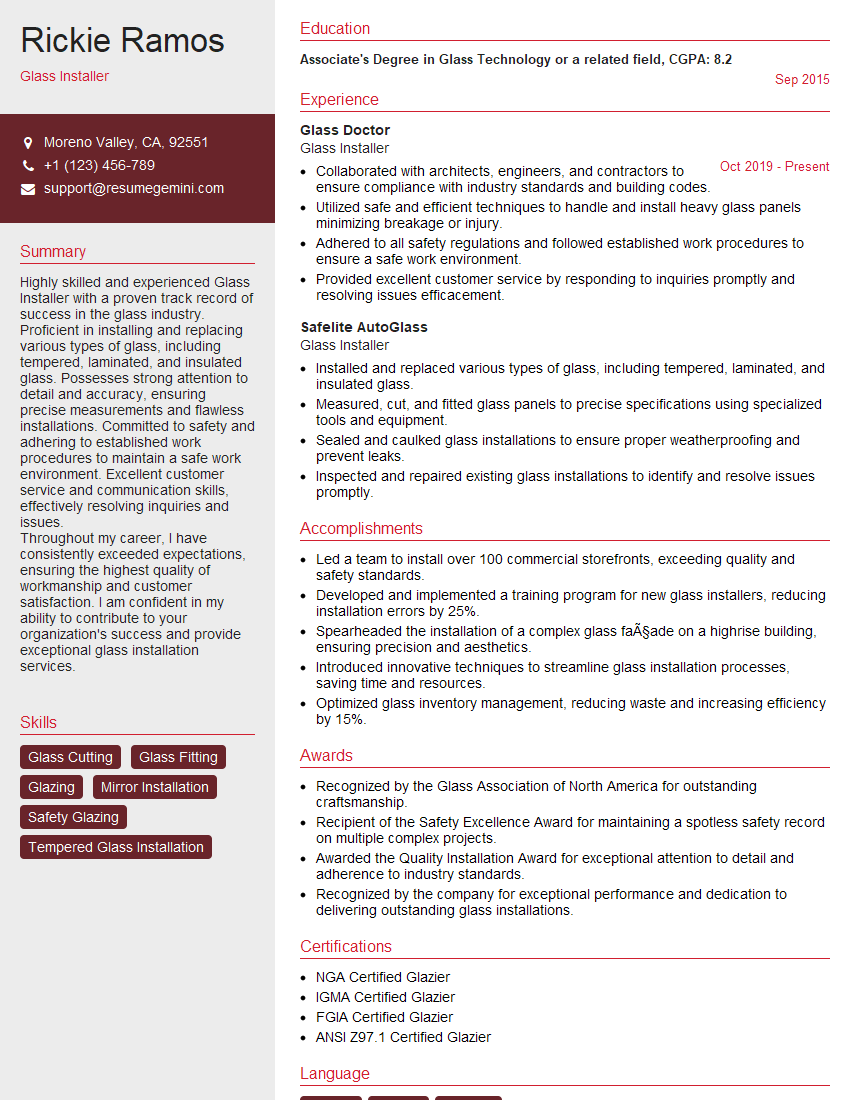
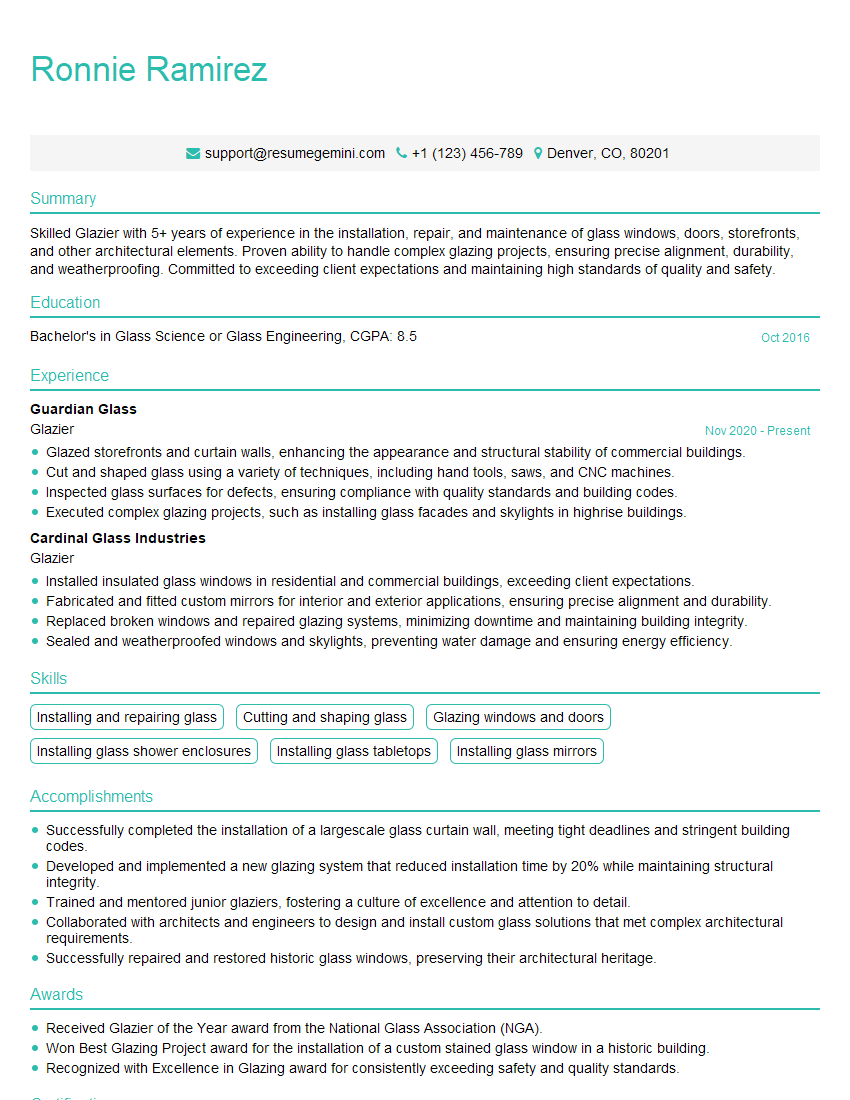
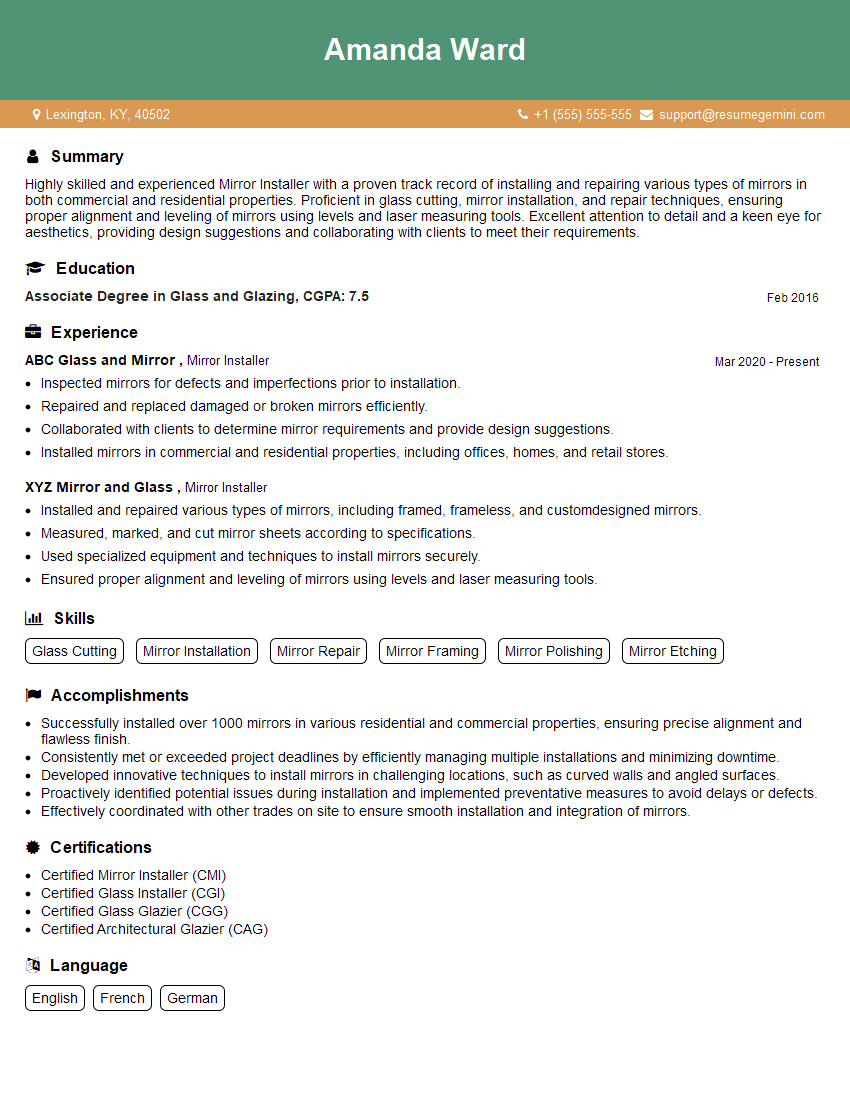
Mastering Skilled in Mirror Installation and Repair Techniques is vital for career advancement in the construction, home improvement, or retail sectors. A strong command of these skills demonstrates professionalism, technical expertise, and a commitment to quality workmanship, leading to higher earning potential and greater job security. Creating an ATS-friendly resume is crucial for getting your application noticed by potential employers. ResumeGemini is a trusted resource to help you build a professional, impactful resume that highlights your skills and experience effectively. Examples of resumes tailored to Skilled in Mirror Installation and Repair Techniques are available to help guide you in crafting yours.
Explore more articles
Users Rating of Our Blogs
Share Your Experience
We value your feedback! Please rate our content and share your thoughts (optional).
What Readers Say About Our Blog
Very informative content, great job.
good