Interviews are opportunities to demonstrate your expertise, and this guide is here to help you shine. Explore the essential Soffit and Fascia Installation interview questions that employers frequently ask, paired with strategies for crafting responses that set you apart from the competition.
Questions Asked in Soffit and Fascia Installation Interview
Q 1. Explain the difference between soffit and fascia.
Soffit and fascia are both crucial components of a building’s exterior, but they serve different purposes and are located in different places. Think of it like this: the fascia is the finishing trim, and the soffit is the underside of the overhang.
Fascia is the vertical board that runs along the edge of the roof, covering the ends of the rafters. It provides a finished look and protects the roof structure from the elements. It often acts as a mounting point for gutters.
Soffit is the horizontal underside of the roof overhang. It’s the material you see when you look up at the underside of the eaves. Its primary functions are ventilation and protection of the roof’s structure from moisture.
Q 2. Describe the various materials used for soffit and fascia installation.
A wide range of materials are used for soffit and fascia, each with its own pros and cons. The choice often depends on budget, aesthetics, and the overall style of the house.
- Vinyl: Very popular due to its affordability, low maintenance, and wide array of colors. It’s resistant to rot, insects, and moisture. However, it can be susceptible to damage from impacts.
- Aluminum: Durable and lightweight, aluminum offers excellent resistance to corrosion. It’s a good choice for coastal areas or areas with harsh weather conditions. It’s also available in a variety of colors and finishes.
- Wood: Provides a classic and aesthetically pleasing look, but requires regular maintenance (painting or staining) to protect it from rot, insects, and weather damage. Cedar and redwood are popular choices for their natural durability.
- Fiber Cement: A strong and durable material that mimics the look of wood, but with greater resistance to moisture and insects. It requires less maintenance than wood but is more expensive.
Q 3. What are the common challenges encountered during soffit and fascia installation?
Soffit and fascia installation can present several challenges, particularly when working with older homes or complex rooflines.
- Difficult Access: Reaching high points on a roof can be challenging and requires proper safety precautions like scaffolding or harnesses.
- Unpredictable Existing Conditions: Older homes may have uneven framing or unexpected obstructions, requiring adjustments to the installation plan.
- Weather Conditions: Rain, wind, and extreme temperatures can significantly impact the installation process and the quality of the finished product. Proper planning and weather monitoring are essential.
- Matching Existing Materials: Finding materials that precisely match existing soffit and fascia can be difficult, especially with older homes.
- Improper Ventilation: Failing to provide adequate ventilation can lead to moisture build-up and potential structural damage.
Q 4. How do you ensure proper ventilation during soffit installation?
Proper ventilation is crucial to prevent moisture buildup in the attic, which can lead to mold, mildew, and structural damage. Soffit vents are essential for drawing in fresh air, while ridge vents or gable vents allow the hot, moist air to escape. This creates a natural airflow that keeps the attic dry.
During installation, I ensure adequate spacing between soffit panels to allow air to flow freely. We often use perforated soffit vents or pre-cut vented panels to maximize airflow. It’s also critical to make sure that nothing blocks the pathway of the air, from the soffit vent to the exit points at the roof ridge.
I always check local building codes for ventilation requirements to ensure compliance.
Q 5. Explain the importance of proper flashing in soffit and fascia installation.
Flashing is a crucial element in preventing water from penetrating the areas where the soffit and fascia meet other parts of the building. Think of flashing as a waterproof barrier.
Proper flashing is essential around chimneys, dormers, and other penetrations in the roofline. It redirects water away from these vulnerable areas, preventing leaks and protecting the structure. Failing to install flashing correctly can lead to costly water damage and repairs.
I typically use galvanized steel or aluminum flashing, ensuring it overlaps properly and is sealed with appropriate sealant to create a watertight seal. The flashing should be installed before the soffit and fascia are installed to ensure a proper fit.
Q 6. Describe your experience with different types of fasteners used in soffit and fascia installation.
The choice of fasteners depends on the material being used. Safety and durability are paramount.
- Nails: Galvanized nails are common for wood and some types of vinyl. The size and type of nail are selected based on the material thickness and expected stress.
- Screws: Stainless steel screws are often preferred for aluminum and fiber cement, offering greater holding power and resistance to corrosion. They also allow for easier adjustments during installation.
- Staples: These are sometimes used for attaching some vinyl soffit products but require careful attention to avoid damaging the material.
I always use fasteners that are appropriate for the material and environmental conditions. Over-driving fasteners can damage the material, while under-driving can compromise the strength of the installation.
Q 7. How do you measure and cut soffit and fascia materials accurately?
Accurate measuring and cutting are critical for a professional-looking and functional installation. Sloppy work leads to gaps and potential water intrusion.
I start by taking detailed measurements of the area, accounting for any irregularities or obstructions. I use a combination of measuring tapes, levels, and speed squares to ensure accuracy. For complex cuts, I often create templates to aid in precise cutting.
For cutting materials like wood, I use a miter saw to achieve precise angles. For vinyl and aluminum, a sharp utility knife or shears are typically sufficient. Always double-check measurements before cutting to minimize waste and ensure a perfect fit. A little extra care in this phase saves a lot of headaches later.
Q 8. What safety precautions do you take during soffit and fascia installation?
Safety is paramount in soffit and fascia installation, which often involves working at heights. My safety precautions begin with a thorough pre-job site assessment. This includes checking for overhead hazards like power lines, overhanging branches, and unstable structures. I always use appropriate Personal Protective Equipment (PPE), including a safety harness, fall arrest system, hard hat, safety glasses, and work gloves. Before starting any work aloft, I ensure my ladder is properly secured and positioned on stable ground. I also frequently check the equipment and my harness throughout the job to ensure everything is functioning correctly. For example, on a recent job, I noticed a weakened branch overhanging the work area. Instead of proceeding, I carefully removed the branch before starting the installation, preventing a potential hazard. I also brief my team regularly on the inherent risks involved and always double-check our safety procedures before starting each task.
Q 9. How do you handle different types of rooflines and angles during installation?
Handling varying rooflines and angles requires careful planning and precise cutting. I start by meticulously measuring and sketching the roofline, noting all angles and complexities. This detailed blueprint guides my material cutting and installation. For instance, on a complex gambrel roof, I’ll pre-cut fascia boards at the precise angles needed to ensure a clean, seamless fit. I use specialized tools like a miter saw with a fine-tooth blade for accurate cuts, especially on intricate angles. To handle difficult curves, I may use flexible fascia or soffit materials, or employ a technique of carefully bending rigid materials while ensuring that the material integrity remains unaffected and the joints are appropriately sealed. Each section is meticulously fitted and fastened, ensuring a watertight and aesthetically pleasing result. The goal is to create a perfectly integrated system that complements the roof’s unique design.
Q 10. Explain your process for installing soffit vents.
Installing soffit vents involves several key steps. First, I carefully measure and mark the vent locations on the soffit, ensuring proper spacing for optimal ventilation. I then use a jigsaw or hole saw to create precise openings according to the vent manufacturer’s specifications. Next, I secure the vent covers to the soffit using appropriate fasteners, ensuring a tight, weather-resistant seal. I always check for proper airflow and make adjustments as necessary to prevent obstructions. Finally, I seal any gaps around the vents with high-quality caulking to prevent water infiltration. For example, I prefer vents that offer easy access to the attic, making cleaning and maintenance straightforward. The vents I choose often come with insect screens to prevent pest entry. Proper installation of soffit vents is critical for effective attic ventilation and preventing moisture buildup that can lead to mold or structural damage.
Q 11. How do you repair damaged soffit and fascia?
Repairing damaged soffit and fascia depends on the extent of the damage. Minor damage, like small cracks or holes, can often be repaired using wood filler or epoxy, followed by sanding and painting to match the existing finish. For more significant damage, such as rot or insect infestation, I may need to replace the affected sections completely. This involves carefully removing the damaged portion, ensuring a clean, straight cut. The replacement piece is then cut to the exact dimensions and securely fastened, ensuring a tight fit and weatherproofing. Finally, the repaired area is primed and painted to seamlessly blend with the surrounding surface. In a recent repair job, I had to replace a section of fascia damaged by woodpeckers. I used pressure-treated lumber for the replacement to extend its lifespan and prevent further woodpecker damage.
Q 12. Describe your experience with working at heights.
I have extensive experience working at heights, having spent over 15 years in this trade. Safety training and certifications are essential aspects of my career. I am always comfortable and proficient in using ladders, scaffolding, and fall protection systems. I also understand the importance of regular checks for equipment soundness, appropriate weather conditions, and taking frequent breaks to maintain my physical and mental alertness. I always prioritize careful planning and risk assessment before starting any high-altitude work. On one particularly challenging job, we had to install soffit and fascia on a very steep, high roof. Using advanced scaffolding techniques and multiple safety lines, we completed the job safely and efficiently. My experience working at heights gives me both the technical proficiency and awareness needed to ensure the project and my team’s safety.
Q 13. What tools and equipment are essential for soffit and fascia installation?
Essential tools and equipment for soffit and fascia installation include: measuring tapes, levels, circular saws, miter saws, jigsaws, drills, various bits and drivers, safety equipment (harness, ropes, etc.), ladders, scaffolding (when necessary), pry bars, hammers, chisels, caulking guns, and various fasteners (screws, nails, etc.). High-quality safety equipment is non-negotiable and choosing the right tools for the job ensures both quality and efficiency. For example, a good quality miter saw with a fine-tooth blade is critical for achieving precise cuts, especially on angled fascia boards. Using the proper tools also helps to prevent damage to the materials and ensures the final product is durable.
Q 14. How do you deal with unexpected issues or problems during installation?
Unexpected issues are part of the job. My approach is to remain calm and systematically assess the problem. This often involves re-evaluating the initial plan, consulting the building codes or manufacturer’s instructions, and then employing creative problem-solving skills. For example, encountering unexpected rot behind the fascia during a repair job. Instead of just patching the surface, I would investigate the extent of the damage, remove the affected areas, and treat the underlying structure before installing new fascia. Communication is key – I would promptly inform the client of the unexpected issue, outline the necessary repair solutions, and get their approval before proceeding. The priority is always delivering a quality, long-lasting, and safe outcome despite the unanticipated challenges.
Q 15. Describe your experience with different types of soffit and fascia profiles.
My experience encompasses a wide range of soffit and fascia profiles, from the classic vinyl styles prevalent in suburban homes to more elaborate aluminum and wood options found in custom-built houses. Vinyl soffits are popular due to their affordability and low maintenance. They come in various colors and styles, often with pre-punched ventilation holes. Aluminum soffits, while more expensive, offer superior durability and resistance to weather damage, especially in coastal areas. They can be custom-fabricated to meet unique design requirements. I’ve also worked with wood soffits, a beautiful but higher-maintenance choice often used in historic restoration projects or luxury homes. Each material requires different installation techniques; for instance, vinyl soffits usually involve simple snapping into place, while aluminum and wood may demand more intricate cutting and fastening. Similarly, fascia profiles vary—from simple, flat boards to more ornate designs with crown molding or decorative trim. Understanding these variations is critical for accurate material estimation and seamless integration into the overall home aesthetic.
- Vinyl: Cost-effective, readily available, various colors and styles.
- Aluminum: Durable, weather-resistant, suitable for harsh climates.
- Wood: Aesthetically pleasing, high-maintenance, requires protective finishes.
Career Expert Tips:
- Ace those interviews! Prepare effectively by reviewing the Top 50 Most Common Interview Questions on ResumeGemini.
- Navigate your job search with confidence! Explore a wide range of Career Tips on ResumeGemini. Learn about common challenges and recommendations to overcome them.
- Craft the perfect resume! Master the Art of Resume Writing with ResumeGemini’s guide. Showcase your unique qualifications and achievements effectively.
- Don’t miss out on holiday savings! Build your dream resume with ResumeGemini’s ATS optimized templates.
Q 16. How do you ensure a watertight seal around windows and doors during installation?
Ensuring a watertight seal around windows and doors during soffit and fascia installation is paramount to prevent water damage. We achieve this through a multi-layered approach. First, we ensure proper flashing is installed at the intersection of the window or door frame and the existing wall. This flashing acts as a barrier, directing water away from the building. Next, we carefully caulk all gaps and seams between the flashing, the window/door frame, and the new soffit and fascia. We use high-quality, weather-resistant caulking specifically designed for exterior applications. Finally, we carefully inspect the entire area after installation, checking for any gaps or imperfections. A visual inspection is crucial, but sometimes we use a pressure washer test, if possible, to simulate heavy rain and check for any leaks before the customer moves in. Thinking of it as building a series of overlapping layers that protect the home from the elements is key. For example, on a particularly tricky window installation, we might add an extra layer of self-adhering flashing tape to ensure complete water protection.
Q 17. Explain your process for cleaning up after the job is complete.
Cleaning up after a job is as crucial as the installation itself. It’s not just about aesthetics; a clean site reflects professionalism and safety. Our process involves several steps: First, we collect all scraps of materials, separating them into recyclable and non-recyclable piles. This respects the environment and ensures proper disposal. Then, we sweep and thoroughly clean the work area, removing any debris, dust, or leftover caulk. We use high-pressure air to remove any stubborn dust from hard-to-reach areas. Finally, we inspect the entire area one last time, making sure everything is spotless. The last thing we do is to remove any temporary safety barriers or markings left during installation. The client’s property should be left cleaner than how we found it. I even keep a small broom and dustpan in my work truck for quick clean ups throughout the day.
Q 18. Describe your experience working as part of a team.
I have extensive experience collaborating within a team setting. On larger projects, I’ve worked closely with other installers, carpenters, and even architects. Effective teamwork is essential for completing projects on time and within budget. My role often involves coordinating tasks, ensuring everyone understands their responsibilities, and maintaining open communication. For example, in one project, we faced a challenge integrating a complex soffit design with an existing gutter system. Through clear communication and shared problem-solving, we developed a solution that satisfied both aesthetic and structural requirements. I am comfortable taking the lead and delegating tasks as well as taking directions and working as part of a larger group.
Q 19. How do you maintain quality control during installation?
Quality control is maintained throughout the entire installation process, not just at the end. We start with careful measurement and planning, using precise tools to ensure accurate cuts and fitting of materials. During installation, we continuously check for levelness, alignment, and proper fastening. We use quality control checklists that specify material type, required fasteners, and dimensions that we check at each stage of the project. Regular inspections are performed by myself and my team throughout the process to catch any potential errors early. This avoids costly mistakes down the line. Any deviations from the plan are immediately addressed. I also take pride in going the extra mile by always taking pictures of my work to review and improve in future projects. Post-installation, we conduct a final walkthrough with the client, addressing any concerns and ensuring their complete satisfaction.
Q 20. What is your experience with different types of building codes and regulations?
I’m familiar with a range of building codes and regulations, including those related to wind resistance, water penetration, and energy efficiency. These vary depending on location and project specifications. My experience includes working with both local and national codes, staying updated on any changes or amendments. I meticulously review all pertinent codes before starting a project to ensure compliance. This includes checking for requirements related to materials, installation methods, and safety standards. For example, in hurricane-prone areas, we adhere to stricter wind load requirements, using reinforced materials and fastening techniques. Staying current with these regulations is crucial, not only for the legal aspects but also for protecting homeowners from potential damage and ensuring the longevity of the soffit and fascia system.
Q 21. How do you calculate the material quantities required for a project?
Calculating material quantities is a crucial aspect of project planning. We begin by carefully measuring the perimeter of the house and the areas needing soffit and fascia installation. Detailed blueprints and architectural plans, if available, are invaluable. We account for all factors, including overhangs, corners, and any unique design features. Next, we consider the size and type of materials being used. For instance, vinyl soffits are usually sold in fixed lengths, whereas aluminum can be custom-ordered. We factor in waste and add an extra percentage (typically 5-10%) to account for cuts, mistakes, and potential damage. Software can be used to provide accurate material estimations based on detailed plans. For example, on a recent project we used a spreadsheet to lay out the details of each section of soffit and fascia. This helped us ensure we accurately calculated the linear footage of each material required for the job. Finally, we cross-check our calculations to prevent over-or under-ordering materials.
Q 22. How do you manage your time and prioritize tasks during a project?
Effective time management is crucial in construction. I utilize a combination of techniques. Firstly, I thoroughly review the project blueprints and specifications upon receiving them to identify potential challenges and create a detailed timeline. This includes breaking down the project into smaller, manageable tasks with allocated timeframes. I then use a project management system (I prefer a digital one for ease of tracking) to schedule these tasks, factoring in potential delays due to weather or material sourcing. Prioritization is key; I tackle urgent and critical tasks first, such as those impacting the project’s overall timeline or structural integrity. I also regularly review my schedule, adapting it as needed based on unforeseen circumstances. For example, if a material delivery is delayed, I’ll adjust the schedule to focus on other tasks that don’t rely on that specific material. This proactive approach prevents delays and ensures projects are completed efficiently and on time.
Q 23. What is your experience with reading blueprints and construction drawings?
Reading blueprints and construction drawings is fundamental to my work. I have extensive experience interpreting architectural, structural, and elevation drawings to understand the scope of soffit and fascia installation projects. This includes identifying dimensions, materials specified, and the overall design. I’m proficient in understanding various symbols and notations common in construction drawings and am comfortable using measuring tools to verify dimensions on-site, ensuring accuracy during installation. For instance, I recently worked on a project where the drawings indicated a specific type of flashing detail at the intersection of the soffit and chimney. My understanding of the drawings allowed me to correctly install the flashing, preventing potential water damage.
Q 24. How do you handle customer concerns or complaints?
Customer satisfaction is paramount. When addressing concerns or complaints, I approach them with empathy and professionalism. First, I listen attentively to understand their perspective fully. Then, I clearly explain the situation from a technical standpoint, providing evidence-based responses. If a mistake was made on our part, I’ll readily acknowledge it and outline the steps we will take to rectify the issue. Open communication is vital; I keep the customer updated on our progress and involve them in the solution-finding process if appropriate. For example, if a customer is unhappy with the paint color of the fascia, I’ll discuss their options – repainting or alternative solutions – ensuring they feel heard and valued. The goal is always to resolve the issue to their satisfaction, maintaining a positive working relationship.
Q 25. Describe a time you had to troubleshoot a problem during installation.
During a recent project, we encountered unexpected framing inconsistencies in a section of the house’s eaves. The existing framing wasn’t aligned correctly for seamless soffit installation. My initial troubleshooting involved carefully measuring the discrepancies and consulting the blueprints to see if the framing issues were noted. They weren’t. The problem was solved by using additional blocking and custom-cut soffit pieces to accommodate the irregular framing. We documented the solution for future reference, highlighting the importance of thorough site surveys before commencing work. This experience emphasized the importance of adaptability and problem-solving skills in construction. The situation was handled smoothly, and the final result was exactly as planned, demonstrating my ability to overcome challenges and ensure a quality outcome.
Q 26. What are the common causes of soffit and fascia failure?
Soffit and fascia failure stems from various factors, often interrelated. Common causes include:
- Water Damage: Improper flashing, gaps in seams, or inadequate ventilation allowing water intrusion leading to rot and decay.
- Insect Infestation: Termites, carpenter ants, and other insects can cause significant structural damage, weakening the fascia and soffit boards.
- Poor Material Selection: Using low-quality materials, not designed for exterior exposure, can lead to rapid deterioration.
- Inadequate Installation: Incorrect nailing, improper fastening, or failure to adhere to building codes can cause premature failure.
- Lack of Maintenance: Regular cleaning and inspection can prevent minor issues from escalating into major problems. For example, removing debris and checking for loose components can prevent significant damage.
- Extreme Weather Conditions: Prolonged exposure to sun, wind, ice, or snow can affect the longevity of the materials.
Q 27. How do you prepare the site before starting the installation process?
Site preparation is crucial for a smooth and efficient installation. This involves several key steps:
- Safety First: Securing the perimeter with appropriate warning signs and ensuring the area is free of hazards.
- Clear the Area: Removing any obstructions, such as debris, overgrown vegetation, and existing materials, that may interfere with the installation process.
- Verify Dimensions: Double-checking measurements against the blueprints, ensuring accuracy before starting installation.
- Inspect Existing Structure: Assessing the condition of the existing framing, checking for damage or rot that might require repairs before new soffit and fascia can be installed.
- Material Staging: Organizing materials efficiently near the work area to ensure easy access and minimize movement during installation.
- Equipment Check: Making sure that all necessary tools and equipment are on-site and in good working condition to avoid delays.
A well-prepared site minimizes disruptions and allows for a focused and efficient installation process.
Key Topics to Learn for Soffit and Fascia Installation Interview
- Understanding Soffit and Fascia Systems: Learn the different types of soffit and fascia materials (vinyl, aluminum, wood), their respective pros and cons, and common installation methods.
- Measuring and Planning: Master accurate measurements and calculations for material needs, accounting for angles, overlaps, and waste. Practice creating detailed installation plans from blueprints or site surveys.
- Safe Installation Practices: Demonstrate a thorough understanding of safety regulations, proper use of tools and equipment (including ladders and power tools), and hazard prevention techniques.
- Installation Techniques: Be prepared to discuss specific installation procedures, including fastening methods, sealing techniques, and the importance of proper ventilation.
- Troubleshooting and Problem-Solving: Explain how to identify and address common installation problems, such as gaps, leaks, or misaligned components. Showcase your ability to think critically and find practical solutions.
- Building Codes and Regulations: Familiarize yourself with relevant building codes and regulations pertaining to soffit and fascia installation in your area. This demonstrates your commitment to safety and compliance.
- Material Handling and Storage: Describe best practices for handling and storing various soffit and fascia materials to prevent damage and ensure longevity.
- Working with Different Building Materials: Show your understanding of how soffit and fascia installation interacts with other building components, such as roofing, siding, and gutters.
Next Steps
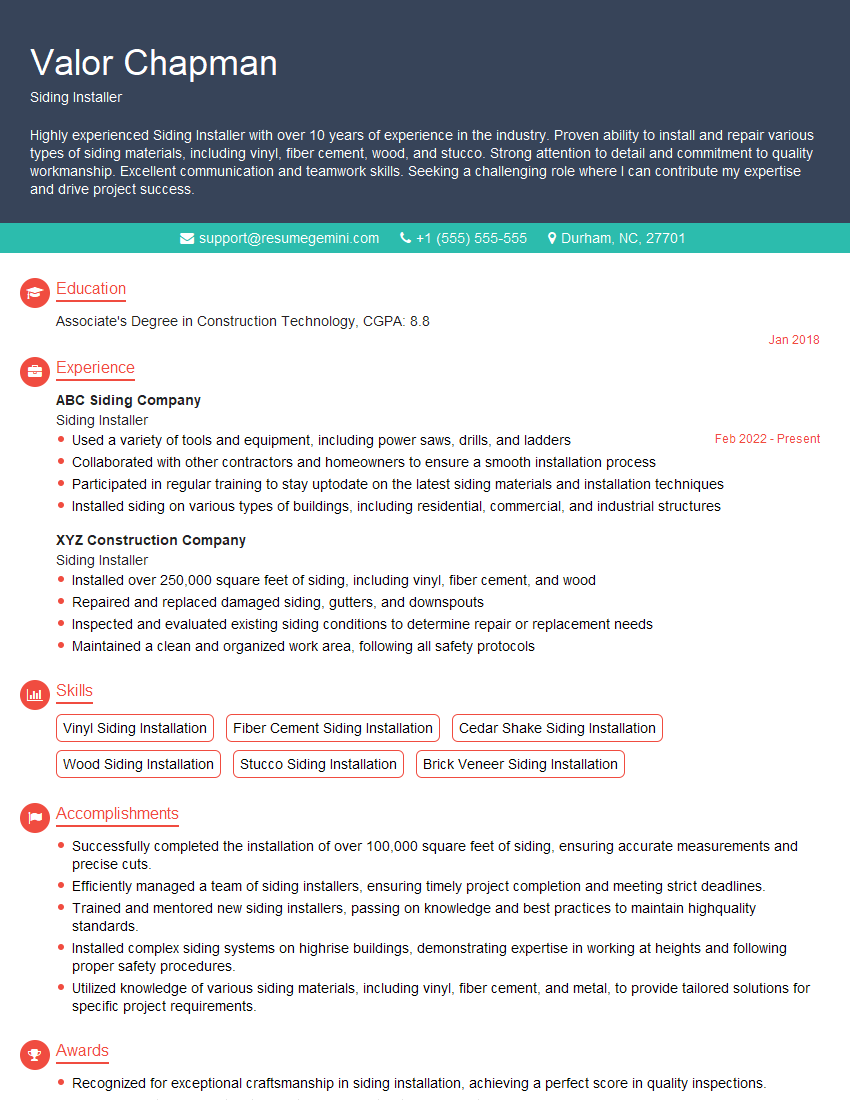
Mastering soffit and fascia installation opens doors to a rewarding career with excellent growth potential. Demand for skilled professionals in this field remains consistently high. To maximize your job prospects, it’s crucial to present your skills effectively. Creating an ATS-friendly resume is key to getting your application noticed by potential employers. ResumeGemini is a trusted resource that can help you build a professional and impactful resume, ensuring your qualifications shine. Examples of resumes tailored to Soffit and Fascia Installation are available to help you get started.
Explore more articles
Users Rating of Our Blogs
Share Your Experience
We value your feedback! Please rate our content and share your thoughts (optional).
What Readers Say About Our Blog
Very informative content, great job.
good