Preparation is the key to success in any interview. In this post, we’ll explore crucial Soil and Water Conservation Practices interview questions and equip you with strategies to craft impactful answers. Whether you’re a beginner or a pro, these tips will elevate your preparation.
Questions Asked in Soil and Water Conservation Practices Interview
Q 1. Explain the difference between sheet, rill, and gully erosion.
Soil erosion is the detachment and movement of soil particles by water or wind. It occurs at varying scales, and we categorize it based on the flow of water involved. Sheet, rill, and gully erosion represent a progression of increasing severity.
Sheet erosion: This is a relatively uniform removal of soil across a large area, like a thin sheet of water flowing over a field. Imagine a gentle rain gradually washing away the topsoil. It’s often insidious because it’s hard to notice until significant topsoil loss has occurred.
Rill erosion: This involves the formation of small, temporary channels or rills (think tiny streams) that carry water and soil away. These rills are typically less than a foot deep and are easily smoothed out with tillage. A heavy downpour on a sloping field might create a network of these temporary rills.
Gully erosion: This is the most severe form. Gullies are larger, deeper channels (often several feet deep) that are difficult to repair. They often remain as permanent features in the landscape, significantly impacting land productivity and even creating safety hazards. A concentrated flow of water, maybe after a flash flood, can carve out these significant channels.
Understanding the differences is critical for selecting the appropriate erosion control measures. Sheet erosion might require a focus on improving soil structure and infiltration, while gully erosion may necessitate structural solutions like check dams or terraces.
Q 2. Describe various methods for controlling soil erosion.
Controlling soil erosion requires a multi-faceted approach, integrating various techniques tailored to specific conditions. These methods broadly fall under vegetative, structural, and managerial practices.
Vegetative methods: These utilize plants to protect the soil. This includes cover cropping (planting crops specifically to protect the soil), contour farming (planting along the contour lines of the land to slow down water flow), and windbreaks (planting trees or shrubs to reduce wind erosion).
Structural methods: These involve physical structures to modify the landscape. This includes terraces (creating level platforms on slopes to slow down water flow), contour bunds (small earth embankments built along the contour), check dams (small dams constructed across gullies to reduce flow velocity), and gabions (wire cages filled with rocks used for streambank stabilization).
Managerial methods: These focus on land use practices and management decisions. This includes crop rotation (alternating different crops to maintain soil health), minimum tillage (reducing soil disturbance during planting), and rotational grazing (managing livestock grazing to avoid overgrazing and soil compaction).
The best approach will depend on the specific site conditions, including slope, soil type, rainfall patterns, and land use. Often, a combination of methods is most effective.
Q 3. What are the key components of a successful watershed management plan?
A successful watershed management plan is a comprehensive strategy for managing the resources and environmental quality within a watershed (the area that drains to a common point). Key components include:
Watershed characterization: A thorough understanding of the watershed’s physical characteristics (topography, soils, geology), hydrological processes (rainfall, runoff), and ecological features (vegetation, wildlife).
Water quality assessment: Monitoring and evaluating water quality parameters (e.g., turbidity, nutrient levels, bacterial contamination) to identify pollution sources and track effectiveness of management practices.
Erosion and sediment control: Implementing soil conservation practices like those discussed earlier (terracing, cover cropping, etc.) to minimize erosion and sediment transport.
Flood risk management: Strategies to mitigate flood risks, including flood forecasting, reservoir management, and floodplain zoning.
Stakeholder involvement: Engaging all stakeholders (landowners, residents, government agencies) in the planning and implementation process, fostering collaboration and ownership.
Monitoring and evaluation: Regular monitoring to track the effectiveness of implemented measures and adapt the plan as needed. This involves collecting data, analyzing results, and making adjustments to optimize performance.
Effective watershed management is a long-term commitment requiring ongoing monitoring, adaptation, and stakeholder collaboration to ensure sustainable resource management and environmental protection.
Q 4. Explain the principles of water infiltration and its importance in soil conservation.
Water infiltration is the process by which water enters the soil. It’s governed by several factors, including soil texture (sand, silt, clay), soil structure (arrangement of soil particles), organic matter content, and antecedent soil moisture (how much water is already in the soil). Good infiltration is crucial for soil conservation because it reduces runoff, recharges groundwater, and supports plant growth.
Importance in soil conservation:
Reduced runoff and erosion: When water infiltrates readily, less runoff occurs, minimizing the erosive power of water.
Improved water availability for plants: Infiltrated water becomes available to plant roots, promoting plant growth and soil stability.
Groundwater recharge: Infiltration replenishes groundwater resources, vital for water supply.
Reduced flooding: Increased infiltration helps reduce the volume of surface runoff, thereby decreasing the risk of flooding.
Practices that enhance infiltration include adding organic matter (improves soil structure), reducing compaction (minimizes resistance to water entry), and using conservation tillage (minimizes soil disturbance).
Q 5. How do you assess the water quality of a given source?
Assessing water quality involves a multifaceted approach, often depending on the intended use of the water. A comprehensive assessment involves several steps:
Physical parameters: These include measuring turbidity (cloudiness), temperature, color, odor, and pH (acidity/alkalinity). Simple methods like visual inspection or using a thermometer and pH meter can be used.
Chemical parameters: This assesses the presence of dissolved substances such as nutrients (nitrogen, phosphorus), heavy metals (lead, mercury), pesticides, and salinity. This requires laboratory analysis using various techniques like spectrophotometry and chromatography.
Biological parameters: This involves evaluating the presence of microorganisms like bacteria, algae, and other indicator organisms. This can be done using laboratory tests to quantify the number and types of microorganisms.
Sampling strategy: Samples should be collected systematically at multiple locations and depths to obtain a representative picture of water quality. The frequency of sampling depends on the variability of water quality and the objectives of the assessment.
The specific parameters measured and the methods used will vary depending on the goals of the assessment. For instance, assessing water for drinking will require a more extensive analysis than assessing water for irrigation.
Q 6. Discuss different irrigation techniques and their efficiency.
Irrigation techniques vary widely in their efficiency and suitability for different conditions. Efficiency is measured by how much water actually reaches the plant roots compared to the total amount applied. Here are some common methods:
Flood irrigation: This is the simplest, involving flooding the field. It’s low-cost but highly inefficient, leading to significant water loss through runoff and evaporation. Think of rice paddies—a classic example but not the most efficient.
Furrow irrigation: Water flows in furrows between crop rows. It’s more efficient than flood irrigation but still experiences some runoff and evaporation.
Drip irrigation: Water is delivered directly to the plant roots through a network of tubes and emitters. It’s highly efficient, minimizing water loss and maximizing water use by plants.
Sprinkler irrigation: Water is sprayed through sprinklers, simulating rainfall. It’s relatively efficient but susceptible to water loss through evaporation, particularly in windy conditions.
Center pivot irrigation: A sprinkler system on a central pivot, irrigating a circular area. It’s more efficient than traditional sprinkler systems because it covers a large area uniformly.
Choosing the right irrigation method depends on various factors including water availability, topography, soil type, and crop type. Drip irrigation is generally the most efficient but may be more expensive to install.
Q 7. Describe the role of cover crops in soil conservation.
Cover crops play a vital role in soil conservation by improving soil health and reducing erosion. These are plants grown specifically to protect the soil, not for harvest. They offer several benefits:
Erosion control: Cover crops provide a protective layer of vegetation that shields the soil from raindrops and wind, reducing erosion.
Improved soil structure: Their roots improve soil structure by creating channels that enhance water infiltration and aeration.
Increased organic matter: When cover crops decompose, they add organic matter to the soil, improving soil fertility and water-holding capacity.
Nutrient cycling: Cover crops can fix atmospheric nitrogen, reducing the need for synthetic fertilizers, and they scavenge nutrients that would otherwise be lost through leaching.
Weed suppression: They can suppress weeds, reducing competition with cash crops.
Examples include legumes (like clover and vetch) that fix nitrogen, and grasses (like rye and barley) that protect against erosion. Selecting the right cover crop depends on the climate, soil type, and the subsequent cash crop. Integrating cover crops into farming systems can substantially improve soil health and reduce the need for chemical inputs.
Q 8. What are the benefits and drawbacks of contour farming?
Contour farming involves plowing and planting crops along the contours of the land, following the natural curves of the slope rather than plowing up and down the hill. This simple practice offers significant benefits but also has some limitations.
- Benefits:
- Reduced Erosion: By following the contours, the technique significantly slows down the flow of water, reducing its erosive power. Imagine water flowing down a steep hill – it gathers speed and carries away soil. Contour farming acts like a series of small dams, slowing the water down and preventing this.
- Increased Water Infiltration: The terraced effect created by contour farming allows more water to seep into the soil, increasing soil moisture and benefiting plant growth. This means less runoff and more efficient water use.
- Improved Soil Structure: Reduced erosion helps maintain the soil structure, preventing compaction and improving its overall health and fertility.
- Drawbacks:
- Labor Intensive: Planning and implementing contour farming requires careful surveying and potentially more labor compared to conventional methods. It’s less efficient with mechanized farming in uneven terrain.
- Limited Applicability: It’s not suitable for extremely steep slopes or areas with significant drainage challenges. Other conservation methods might be more appropriate in these cases.
- Potential for Waterlogging: In poorly drained areas, contour farming can lead to waterlogging if not properly implemented. Careful consideration of drainage patterns is essential.
For example, a farmer on a gently sloping hillside could significantly reduce soil erosion and improve yields by implementing contour farming. However, a farmer on a very steep mountainside might need to consider terracing or other techniques instead.
Q 9. Explain the concept of sustainable agriculture and its relevance to soil and water conservation.
Sustainable agriculture focuses on producing food and fiber while protecting the environment and ensuring long-term resource availability. It’s a holistic approach that considers the ecological, economic, and social dimensions of farming. Its relevance to soil and water conservation is paramount because it emphasizes practices that minimize environmental damage and promote healthy ecosystems.
Sustainable agriculture incorporates a range of soil and water conservation practices, including crop rotation, cover cropping, no-till farming, agroforestry, and integrated pest management. These practices improve soil health, reduce erosion, enhance water infiltration, and minimize water pollution. For instance, cover crops prevent soil erosion during fallow periods, while no-till farming preserves soil structure and organic matter, improving water retention.
By promoting sustainable farming practices, we ensure that future generations have access to fertile soils and clean water resources. This contrasts with conventional agriculture, which often depletes these resources, leading to soil degradation and water contamination.
Q 10. How do you determine the appropriate soil conservation measures for a specific site?
Determining the appropriate soil conservation measures for a specific site requires a thorough assessment of several factors. It’s a multi-step process involving site characterization, soil analysis, and consideration of the local climate and land use.
- Site Assessment: This involves evaluating the topography (slope, aspect, length of slope), soil type (texture, structure, drainage), climate (rainfall, temperature), and current land use practices. A site visit is crucial.
- Soil Analysis: Laboratory analysis of soil samples can determine the soil’s texture, structure, organic matter content, nutrient levels, and erosion potential. This provides crucial data to inform conservation decisions.
- Climate Data: Historical and projected rainfall patterns are vital. High rainfall areas with steep slopes require more aggressive erosion control measures than flatter areas with moderate rainfall.
- Land Use Considerations: The intended use of the land (e.g., cropping, grazing, forestry) significantly influences the choice of conservation practices. Different practices are suited to different land uses.
- Selection of Conservation Practices: Based on the assessment, appropriate measures are selected. This could involve contour farming, terracing, strip cropping, windbreaks, cover cropping, or a combination thereof. The selected practices must be tailored to the specific site conditions.
- Implementation and Monitoring: Effective implementation is crucial. This also involves regular monitoring to evaluate the success of the chosen measures and make adjustments as needed.
For example, a steep slope with highly erodible soil might require terracing combined with vegetative barriers, while a gently sloping field with good soil might only need contour farming and cover cropping.
Q 11. What are the common indicators of soil degradation?
Soil degradation manifests in several ways, providing visible and measurable indicators of its severity. These indicators can be broadly categorized into physical, chemical, and biological changes.
- Physical Indicators:
- Erosion: Loss of topsoil through wind or water erosion is a primary indicator, often visible as gullies, rills, or reduced soil depth.
- Compaction: Reduced soil porosity due to heavy machinery or overgrazing, leading to poor water infiltration and reduced root growth.
- Crusting: Formation of a hard soil surface layer, hindering water infiltration and seedling emergence.
- Chemical Indicators:
- Nutrient depletion: Loss of essential nutrients like nitrogen, phosphorus, and potassium through erosion or excessive cropping without replenishment.
- Salinization: Accumulation of salts in the soil profile, reducing plant growth and soil health.
- Acidification: Decrease in soil pH, affecting nutrient availability and microbial activity.
- Biological Indicators:
- Reduced organic matter: Lower levels of organic matter content, leading to decreased soil fertility and water retention.
- Loss of biodiversity: Decrease in the number and types of soil organisms, including microorganisms, earthworms, and other invertebrates.
- Decreased soil microbial activity: Reduced activity of beneficial soil microbes that are essential for nutrient cycling and soil health.
For instance, a farmer might observe increased sediment in streams draining their fields (erosion), a decline in crop yields (nutrient depletion), or a decrease in earthworm populations (biological degradation).
Q 12. Describe the process of conducting a soil survey.
Conducting a soil survey involves a systematic process of collecting and analyzing information about the soil resources of a given area. It aims to map and classify different soil types, assess their properties, and determine their suitability for various land uses.
- Planning and Reconnaissance: The first step involves defining the survey area, reviewing existing data (maps, aerial photos), and conducting a preliminary field reconnaissance to get a general understanding of the landscape.
- Soil Sampling: Soil samples are collected from representative locations across the survey area using standardized procedures. The number and location of sampling points depend on the scale and objectives of the survey.
- Laboratory Analysis: The collected soil samples are analyzed in a laboratory to determine their physical and chemical properties, such as texture, structure, organic matter content, pH, nutrient levels, and drainage characteristics.
- Soil Mapping: Based on the field observations and laboratory analysis, a soil map is created, delineating different soil types and their boundaries. This map provides a visual representation of the soil resources in the survey area.
- Soil Classification: The soil types identified are classified according to established taxonomic systems, providing a standardized way to describe and compare different soils. This allows for effective communication among soil scientists and land managers.
- Report Preparation: Finally, a comprehensive report is prepared, summarizing the survey findings, including the soil map, soil descriptions, and interpretations of soil suitability for different land uses. This document serves as a valuable resource for land-use planning and management decisions.
For example, a soil survey might be conducted before a large-scale construction project to assess the suitability of the soil for foundation support or to determine the potential for erosion and sedimentation.
Q 13. What are the impacts of climate change on soil and water resources?
Climate change poses significant threats to soil and water resources, leading to various interconnected challenges.
- Increased Temperatures: Higher temperatures accelerate evaporation rates, leading to decreased soil moisture and increased drought frequency and severity. This can negatively impact crop yields and increase the risk of wildfires.
- Altered Precipitation Patterns: Changes in rainfall patterns, including increased intensity of rainfall events and longer periods of drought, increase the risk of soil erosion, flooding, and water scarcity. Intense rainfall leads to runoff and reduced water infiltration, while droughts dry out soil, reducing fertility and plant growth.
- Sea Level Rise: Rising sea levels can lead to saltwater intrusion into coastal freshwater aquifers, contaminating drinking water supplies and affecting agricultural productivity. This salinization of soil renders it unsuitable for many crops.
- Extreme Weather Events: Increased frequency and intensity of extreme weather events, such as hurricanes and floods, can cause severe soil erosion, damage to infrastructure, and contamination of water resources. These events can wipe out crops and livestock.
- Changes in Soil Carbon: Climate change can affect soil carbon storage, influencing soil fertility and greenhouse gas emissions. Changes in temperature and moisture can alter the rate of decomposition of organic matter.
Addressing these challenges requires implementing climate-smart agriculture practices, improving water management strategies, and enhancing soil health to enhance resilience to climate change impacts.
Q 14. How do you manage stormwater runoff to prevent erosion and pollution?
Managing stormwater runoff is crucial for preventing erosion and pollution. Effective strategies involve a combination of techniques aimed at reducing runoff volume, slowing down its flow, and filtering pollutants.
- Retention and Infiltration: This involves creating features that capture and retain stormwater, allowing it to slowly infiltrate into the ground. Examples include rain gardens, bioswales (vegetated channels), infiltration basins, and permeable pavements.
- Slowing Down Runoff: Techniques that slow down the flow of runoff reduce its erosive power. This includes using vegetative buffers (strips of vegetation along waterways), contour farming, and terracing.
- Filtering Pollutants: Pollutants from stormwater runoff can be filtered through various methods. This could involve using constructed wetlands, bioretention areas (areas filled with vegetation and soil that filters water), and green roofs.
- Improved Drainage Systems: Properly designed and maintained drainage systems can effectively channel stormwater away from vulnerable areas without causing erosion or flooding. This also includes using techniques to minimize the impact of impervious surfaces (such as roads and buildings).
- Best Management Practices (BMPs): A comprehensive approach involves implementing a suite of BMPs tailored to the specific site conditions and considering factors like topography, soil type, and land use. This might include a combination of the above-mentioned strategies.
For example, a city could implement rain gardens in residential areas, bioswales along streets, and green roofs on buildings to effectively manage stormwater runoff, reducing both erosion and water pollution.
Q 15. Explain the role of riparian buffers in protecting water quality.
Riparian buffers are vegetated areas established along the banks of rivers, streams, and other water bodies. They act as a natural filter, significantly improving water quality. Think of them as nature’s kidneys for our waterways.
Filtering Pollutants: The dense vegetation in a riparian buffer intercepts runoff from the surrounding land, trapping sediment, pesticides, fertilizers, and other pollutants before they reach the water. The plant roots also absorb nutrients, preventing them from leaching into the water.
Reducing Erosion: The buffer’s roots stabilize the soil, preventing erosion and minimizing sediment runoff into the water. This is especially important in areas prone to flooding or heavy rainfall.
Shading the Water: The shade provided by riparian vegetation helps regulate water temperature, which is crucial for aquatic life. Cooler water has higher dissolved oxygen levels, supporting a healthier aquatic ecosystem.
Providing Habitat: Riparian buffers offer critical habitat for various wildlife, including birds, mammals, and insects, contributing to biodiversity.
Example: A farmer implementing a riparian buffer along a creek reduces the amount of nitrogen and phosphorus entering the waterway, improving water quality for downstream communities and aquatic life. The buffer also prevents erosion during heavy rains, protecting the creek banks and stabilizing the streambed.
Career Expert Tips:
- Ace those interviews! Prepare effectively by reviewing the Top 50 Most Common Interview Questions on ResumeGemini.
- Navigate your job search with confidence! Explore a wide range of Career Tips on ResumeGemini. Learn about common challenges and recommendations to overcome them.
- Craft the perfect resume! Master the Art of Resume Writing with ResumeGemini’s guide. Showcase your unique qualifications and achievements effectively.
- Don’t miss out on holiday savings! Build your dream resume with ResumeGemini’s ATS optimized templates.
Q 16. What are the different types of irrigation systems and their suitability for various climates?
Various irrigation systems exist, each with advantages and disadvantages depending on climate and specific needs. The choice depends on factors like water availability, terrain, crop type, and budget.
Surface Irrigation: This includes methods like furrow, border strip, and basin irrigation. They are simple and low-cost, suitable for flat lands with ample water resources. However, they are less efficient in terms of water use, and are susceptible to water losses from evaporation and runoff, particularly in hot, dry climates.
Sprinkler Irrigation: This involves distributing water through sprinklers, mimicking rainfall. It’s relatively efficient, suitable for various terrains, and can be used in areas with limited water resources, but higher initial costs are a consideration. In windy conditions, water loss can be a concern.
Drip Irrigation (Micro-Irrigation): Water is delivered directly to the plant roots through a network of tubes and emitters. This is the most water-efficient method, minimizing evaporation and runoff losses. It is ideal for arid and semi-arid regions and high-value crops, but requires a higher initial investment and careful maintenance.
Subsurface Irrigation: Water is applied below the soil surface, reducing evaporation losses and enhancing soil moisture uniformity. This is suitable for areas with saline or sodic soils. However, it can be more complex to install and manage.
Climate Suitability: Drip irrigation is best suited for arid and semi-arid climates due to its high water-use efficiency. Sprinkler irrigation is more versatile but may need modifications in windy areas. Surface irrigation is less suitable for water-scarce regions.
Q 17. How do you assess the effectiveness of implemented soil and water conservation practices?
Assessing the effectiveness of soil and water conservation practices requires a multi-faceted approach. We need both quantitative and qualitative data to get a complete picture.
Monitoring Soil Health: This involves regular soil sampling to assess indicators like organic matter content, soil structure, infiltration rate, and nutrient levels. Changes in these parameters over time reflect the impact of conservation practices.
Water Quality Monitoring: We assess water quality parameters like sediment load, nutrient concentrations (nitrogen, phosphorus), and pesticide residues in streams and rivers, both upstream and downstream of the implemented practices.
Erosion Measurement: Techniques like sediment traps, erosion pins, and remote sensing help quantify soil erosion rates, revealing the effectiveness of practices in preventing soil loss.
Yield Monitoring: Increased crop yields often indicate improved soil health and water availability as a result of conservation practices. This is a crucial measure of economic benefits.
Vegetation Cover Assessment: Monitoring vegetation cover, especially in riparian buffers and on slopes, helps assess the success of conservation measures in reducing erosion and improving water infiltration.
Surveys and Interviews: Gather feedback from farmers and stakeholders involved to understand the practical impacts and challenges faced.
Example: Measuring the reduction in sediment load in a river downstream of a watershed implementing contour plowing and cover cropping demonstrates the effectiveness of these practices in controlling erosion and improving water quality.
Q 18. Discuss the use of GIS and remote sensing in soil and water conservation planning.
Geographic Information Systems (GIS) and remote sensing are invaluable tools in soil and water conservation planning. They allow for the efficient analysis of large datasets and visualization of spatial patterns.
Identifying Suitable Locations: GIS can analyze factors like slope, soil type, elevation, and proximity to water bodies to pinpoint areas most susceptible to erosion or needing specific conservation treatments.
Monitoring Changes Over Time: Remote sensing provides data from satellites and aerial imagery, allowing for the monitoring of land cover changes, vegetation health, and erosion patterns over time. This helps evaluate the effectiveness of implemented practices.
Predicting Runoff and Erosion: Using GIS and hydrological models, we can simulate the impact of different land management practices on runoff and erosion, helping to optimize conservation strategies.
Planning and Design: GIS enables the design and visualization of conservation structures like terraces, check dams, and contour bunds, ensuring optimal placement and efficiency.
Data Integration and Analysis: GIS integrates various data sources, including soil maps, climate data, and land ownership information, to provide a comprehensive understanding of the landscape and inform decision-making.
Example: Using satellite imagery, we can identify areas with degraded vegetation or high erosion risk and then use GIS to design and implement targeted conservation measures, like reforestation or terracing, in those specific areas.
Q 19. What are the common challenges in implementing soil and water conservation projects?
Implementing soil and water conservation projects faces various challenges:
Funding Limitations: Conservation practices often require significant upfront investments, and securing adequate funding can be a major hurdle.
Lack of Awareness and Adoption: Farmers and landowners may lack awareness of the benefits of conservation practices or hesitate to adopt new technologies and techniques.
Technical Expertise: Proper implementation of certain conservation measures requires technical expertise, which may not always be readily available.
Land Tenure Issues: Uncertainty about land ownership or tenure can hinder the implementation of long-term conservation projects.
Policy and Regulatory Frameworks: Inadequate policy support and enforcement can make it difficult to implement and maintain conservation practices.
Climate Change Impacts: Increased frequency and intensity of extreme weather events challenge the effectiveness of conservation practices and necessitate adaptive strategies.
Example: A farmer may be hesitant to adopt contour plowing due to the initial labor cost and lack of readily available technical support.
Q 20. How do you communicate technical information about soil and water conservation to non-technical audiences?
Communicating technical information about soil and water conservation to non-technical audiences requires clear, concise, and engaging communication strategies.
Use Simple Language: Avoid jargon and technical terms. Explain concepts using everyday language and analogies.
Visual Aids: Employ charts, graphs, maps, and images to illustrate key points and make information more accessible. Show, don’t just tell.
Storytelling: Share real-world examples and success stories to make the information relatable and memorable.
Interactive Presentations: Engage the audience with interactive elements like quizzes, discussions, and hands-on demonstrations.
Focus on Benefits: Highlight the benefits of soil and water conservation in terms that are relevant to the audience, such as increased crop yields, reduced water bills, or improved environmental health.
Use Multiple Channels: Utilize a variety of communication channels, including workshops, field days, brochures, websites, and social media, to reach a wider audience.
Example: Instead of saying, “Implementing no-till farming increases soil organic matter, enhancing water infiltration rates,” you might say, “Leaving crop residue on the soil is like adding a blanket that protects the soil and helps it absorb water like a sponge, improving crop growth.“
Q 21. Explain the importance of soil health in maintaining water quality.
Healthy soil is the foundation for maintaining clean water. Soil acts as a natural filter, regulating the flow and quality of water.
Improved Water Infiltration: Healthy soil with good structure allows water to infiltrate easily, reducing surface runoff and erosion. This prevents pollutants from being washed into water bodies.
Nutrient Retention: Healthy soil rich in organic matter has a high capacity to retain nutrients, preventing them from leaching into groundwater or surface water. This reduces nutrient pollution, which can cause algal blooms and other water quality problems.
Reduced Sedimentation: Healthy soil resists erosion, minimizing sediment runoff into streams and rivers. Sediment pollution clouds the water, reduces light penetration, and harms aquatic life.
Improved Water Holding Capacity: Healthy soil retains more water, reducing the frequency and intensity of droughts and protecting water resources during dry periods.
Example: A farm with healthy soil, rich in organic matter, will have a lower nutrient runoff compared to a farm with degraded soil, leading to cleaner water in nearby streams and rivers.
Q 22. Describe the role of different soil textures in water infiltration and retention.
Soil texture, determined by the proportions of sand, silt, and clay, significantly impacts water infiltration and retention. Think of it like this: sand is like a sieve – water drains through quickly, resulting in low water retention. Clay, on the other hand, is like a sponge – it holds water tightly, but infiltration is slow. Silt falls somewhere in between.
- Sandy soils have large pores, allowing for rapid infiltration but poor retention. This leads to increased runoff and potential for erosion, especially in high-rainfall areas.
- Clay soils have small pores, resulting in slow infiltration and high water retention. While this is good for drought conditions, it can lead to waterlogging and hinder plant growth if drainage is inadequate.
- Silty soils represent a balance, offering moderate infiltration and retention. These soils often have good agricultural potential.
- Loam soils, which are a mixture of sand, silt, and clay, are ideal for agriculture. Their balanced texture provides good infiltration, aeration, and water-holding capacity.
Understanding these differences is crucial for selecting appropriate conservation practices. For instance, sandy soils might benefit from practices that increase surface roughness (like no-till farming) to slow down runoff, while clay soils may require improved drainage systems.
Q 23. What are the legal and regulatory frameworks related to soil and water conservation in your region?
The legal and regulatory frameworks concerning soil and water conservation vary significantly depending on the region. In many areas, these frameworks are a complex interplay of federal, state, and local laws. Generally, they address issues like:
- Water quality protection: Laws limiting pollutants entering waterways, often involving permitting for agricultural activities and industrial discharges. Examples include the Clean Water Act and associated state regulations.
- Erosion control: Regulations mandating specific soil conservation practices on sloping lands to prevent erosion and sedimentation. These might involve mandatory conservation plans for certain land uses.
- Watershed management: Programs focusing on integrated watershed management, bringing together various stakeholders to address water resource challenges collaboratively.
- Funding and incentives: Government programs often offer financial assistance or tax incentives to encourage the adoption of conservation practices. These could include cost-share programs for implementing terraces or cover crops.
Specific details will depend on local environmental agencies and their mandates, so a thorough understanding of your specific region’s regulations is essential before undertaking any soil and water conservation project.
Q 24. Describe your experience with designing and implementing soil and water conservation projects.
Throughout my career, I’ve been involved in the design and implementation of numerous soil and water conservation projects. One particularly memorable project involved restoring a degraded watershed. The area was experiencing significant erosion, leading to sedimentation in a nearby river and impacting water quality.
Our approach involved a multi-faceted strategy:
- Site Assessment: We conducted detailed surveys to assess the soil types, slopes, and existing vegetation. This allowed us to tailor our solutions to the specific site conditions.
- Design Phase: We designed a plan incorporating contour farming, terracing, and the establishment of buffer strips along the riverbank. These practices aimed to reduce runoff and trap sediment.
- Implementation: We worked closely with local farmers and landowners to implement the plan. This involved providing training on proper farming techniques and offering financial incentives through available cost-share programs.
- Monitoring and Evaluation: We continued to monitor the site to evaluate the effectiveness of our interventions. This involved regular soil sampling and water quality testing.
The project resulted in a significant reduction in erosion, improved water quality, and increased agricultural productivity. This success highlighted the importance of integrated approaches and community engagement in soil and water conservation.
Q 25. How do you address conflicts of interest in soil and water conservation planning?
Conflicts of interest in soil and water conservation planning are common. They can arise between different stakeholders with competing interests, such as farmers wanting to maximize yields and environmental groups prioritizing water quality. Addressing these requires a transparent and participatory approach:
- Open Communication: Establishing a platform for open dialogue between all stakeholders is crucial. This allows for the identification of conflicting interests early on.
- Mediation and Negotiation: Employing mediation techniques can help find common ground and negotiate mutually acceptable solutions. Compromise is often essential.
- Data-Driven Decision Making: Using scientific data and modeling to demonstrate the environmental and economic impacts of different options can help inform decisions objectively.
- Independent Review: Involving independent experts to assess the proposed conservation plan can help ensure impartiality and build trust among stakeholders.
- Legal Frameworks: Referring to existing legal and regulatory frameworks, where applicable, can provide a basis for resolving conflicts.
By prioritizing transparency, communication, and collaboration, many conflicts can be resolved effectively, leading to a conservation plan that balances competing interests and benefits all parties involved.
Q 26. What are the long-term economic and environmental benefits of soil and water conservation?
The long-term economic and environmental benefits of soil and water conservation are substantial and far-reaching.
- Economic Benefits: Improved soil health leads to increased crop yields and reduced input costs (fertilizers, pesticides). Reduced erosion protects infrastructure (roads, bridges) from damage, saving taxpayers money. Enhanced water quality ensures reliable water supply for various uses (irrigation, drinking water), contributing to economic stability.
- Environmental Benefits: Reduced soil erosion minimizes sedimentation in waterways, protecting aquatic ecosystems. Improved water quality protects biodiversity and enhances recreational opportunities. Reduced greenhouse gas emissions from healthy soils helps mitigate climate change. Healthy soils act as carbon sinks.
These benefits are not just short-term gains; they contribute to the long-term sustainability of our agricultural systems and ecosystems, ensuring a healthy environment for future generations.
Q 27. How do you stay updated with the latest advancements in soil and water conservation technologies?
Staying updated in the rapidly evolving field of soil and water conservation requires a multi-pronged approach:
- Professional Organizations: Actively participating in professional organizations like the Soil and Water Conservation Society (SWCS) provides access to publications, conferences, and networking opportunities.
- Scientific Journals: Regularly reading peer-reviewed journals keeps me abreast of the latest research findings and technological advancements.
- Conferences and Workshops: Attending conferences and workshops provides opportunities to learn from experts and network with colleagues in the field.
- Online Resources: Utilizing online resources, including government websites, university extension programs, and reputable online databases, provides access to a wealth of information.
- Continuing Education: Actively seeking out continuing education opportunities allows me to maintain my professional credentials and stay current on best practices.
By combining these methods, I ensure that my knowledge and skills remain current and relevant, allowing me to provide the most effective soil and water conservation solutions.
Q 28. Describe your experience working with stakeholders in soil and water conservation projects.
Working with stakeholders is fundamental to successful soil and water conservation. Effective collaboration requires:
- Building Trust: Establishing strong relationships based on trust and mutual respect is paramount. This involves active listening, understanding different perspectives, and acknowledging concerns.
- Shared Vision: Developing a shared vision for the project helps unite stakeholders around common goals. It’s important to find common ground early on.
- Participatory Planning: Involving stakeholders in the planning process empowers them and ensures that the project addresses their needs and concerns. This often involves workshops and group discussions.
- Clear Communication: Maintaining clear and consistent communication throughout the project lifecycle ensures everyone is informed and can contribute effectively.
- Conflict Resolution: Addressing potential conflicts fairly and transparently ensures a smooth and productive working relationship among stakeholders.
My experience shows that by prioritizing effective communication and building collaborative relationships, we can achieve successful and sustainable soil and water conservation outcomes benefiting all parties involved.
Key Topics to Learn for Soil and Water Conservation Practices Interview
- Soil Erosion Control: Understanding different erosion types (sheet, rill, gully), and the principles behind various control methods like contour farming, terracing, and vegetative barriers. Consider practical applications like selecting appropriate methods based on slope, soil type, and climate.
- Water Management Techniques: Explore irrigation methods (drip, sprinkler, flood) and their efficiency, focusing on water conservation and minimizing runoff. Analyze the impact of different techniques on soil health and crop yields. Consider case studies illustrating successful water management strategies.
- Sustainable Land Management: Examine principles of no-till farming, cover cropping, crop rotation, and their benefits in improving soil health, reducing erosion, and enhancing water infiltration. Discuss the practical challenges and solutions associated with implementing these practices.
- Nutrient Management: Understand the importance of soil fertility and nutrient cycling. Explore methods for optimizing fertilizer application, minimizing nutrient runoff, and protecting water quality. Discuss the role of organic amendments and precision agriculture techniques.
- Wetland Conservation and Restoration: Learn about the ecological functions of wetlands and the impact of human activities on their degradation. Explore techniques for wetland restoration and management, including water quality improvement and habitat enhancement. Consider the legal and regulatory frameworks surrounding wetland protection.
- Policy and Regulations: Familiarize yourself with relevant legislation, policies, and regulations related to soil and water conservation at local, state, and national levels. This demonstrates an understanding of the broader context of your work.
- Data Analysis and Modeling: Understanding how to interpret soil data, hydrological models, and GIS applications will be crucial for demonstrating your technical skills and problem-solving abilities. Be prepared to discuss your experience with relevant software and tools.
Next Steps
Mastering Soil and Water Conservation Practices is crucial for a thriving career in this vital field. Demonstrating a deep understanding of these principles will significantly enhance your job prospects. To make a strong impression, it’s vital to have a professional and ATS-friendly resume that effectively showcases your skills and experience. ResumeGemini is a trusted resource that can help you create a compelling resume tailored to the specific requirements of Soil and Water Conservation jobs. Examples of resumes tailored to this field are available, allowing you to learn from best practices and create a document that will grab the attention of potential employers.
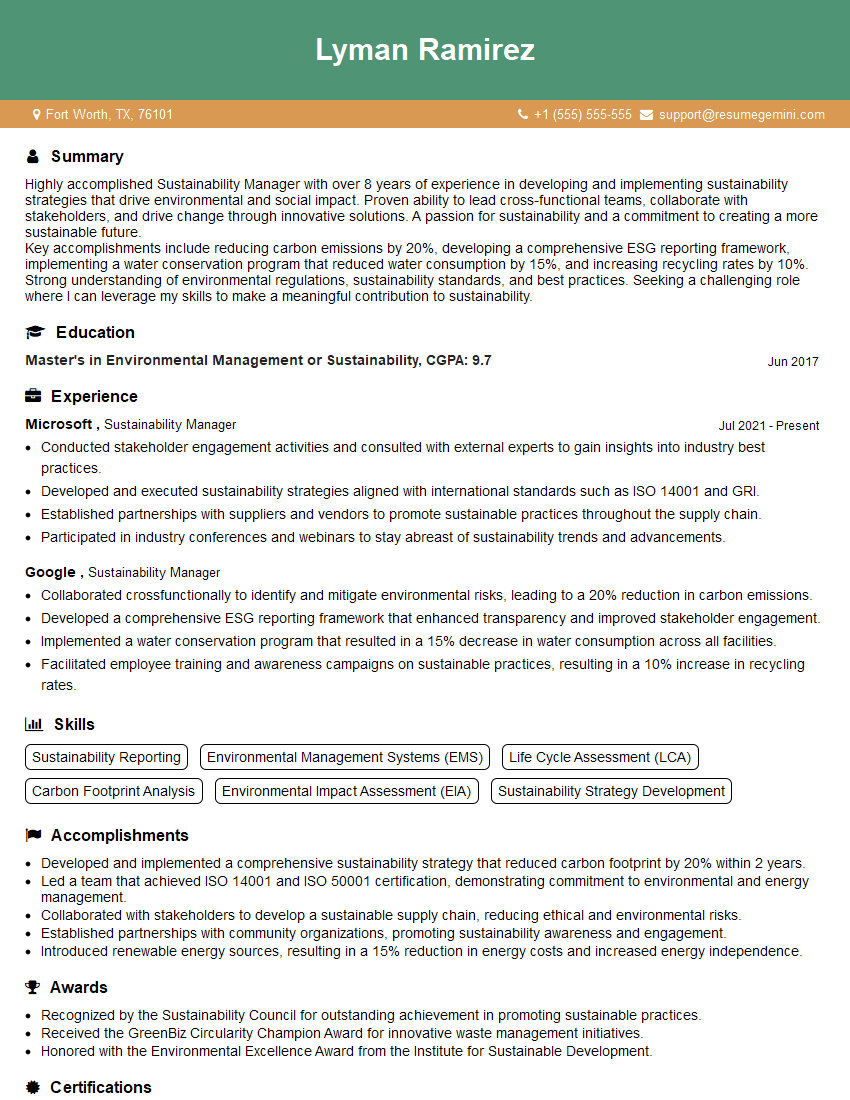
Sustainability Manager Resume Sample
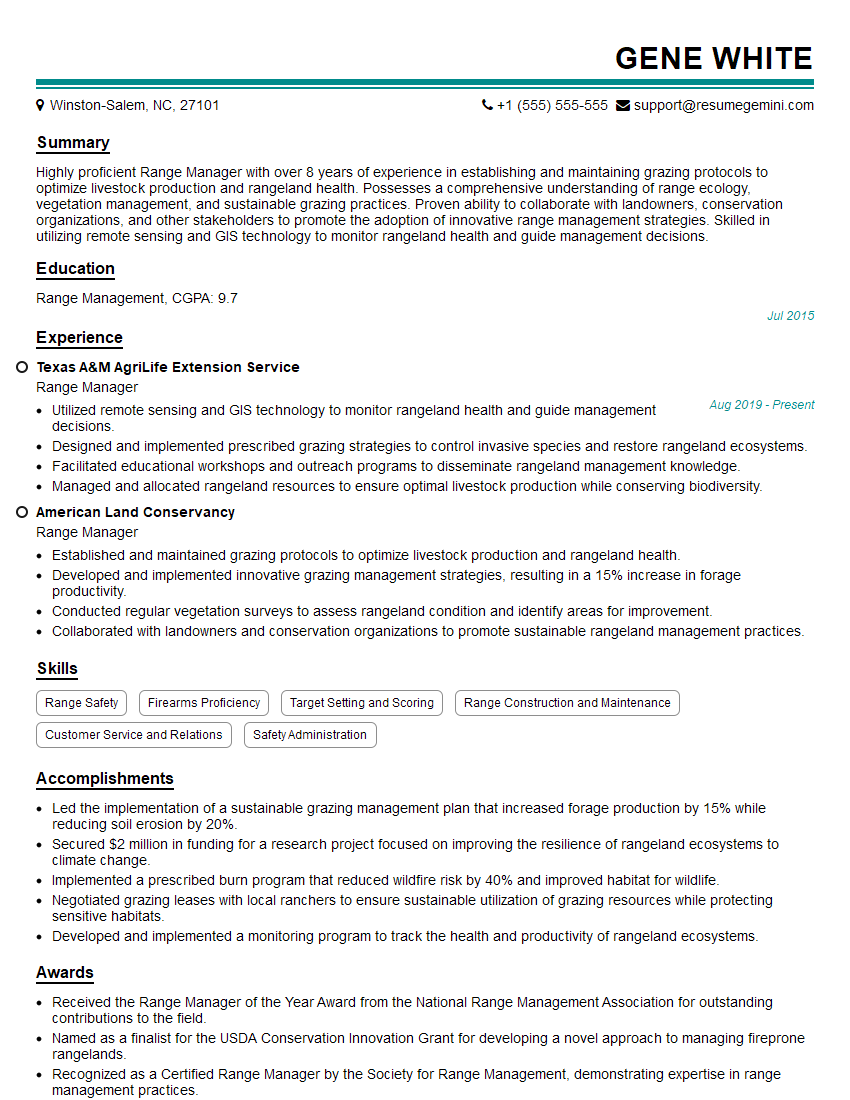
Range Manager Resume Sample
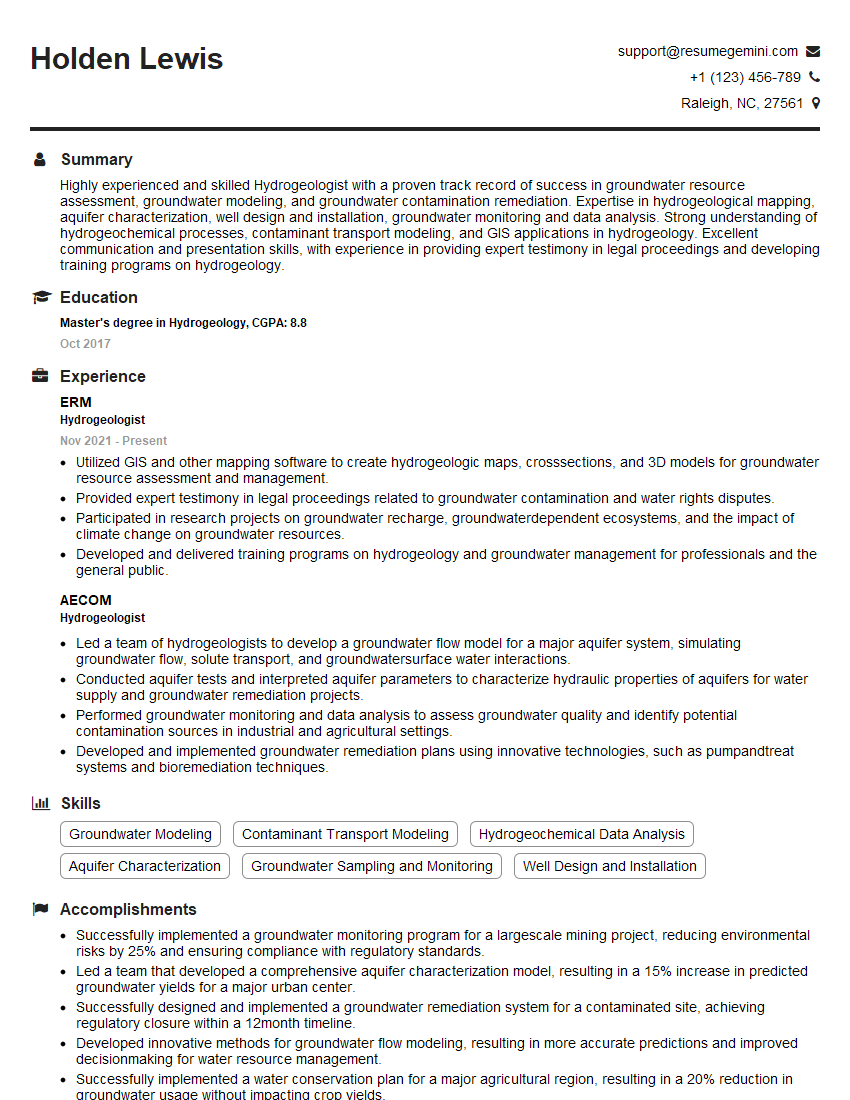
Hydrogeologist Resume Sample
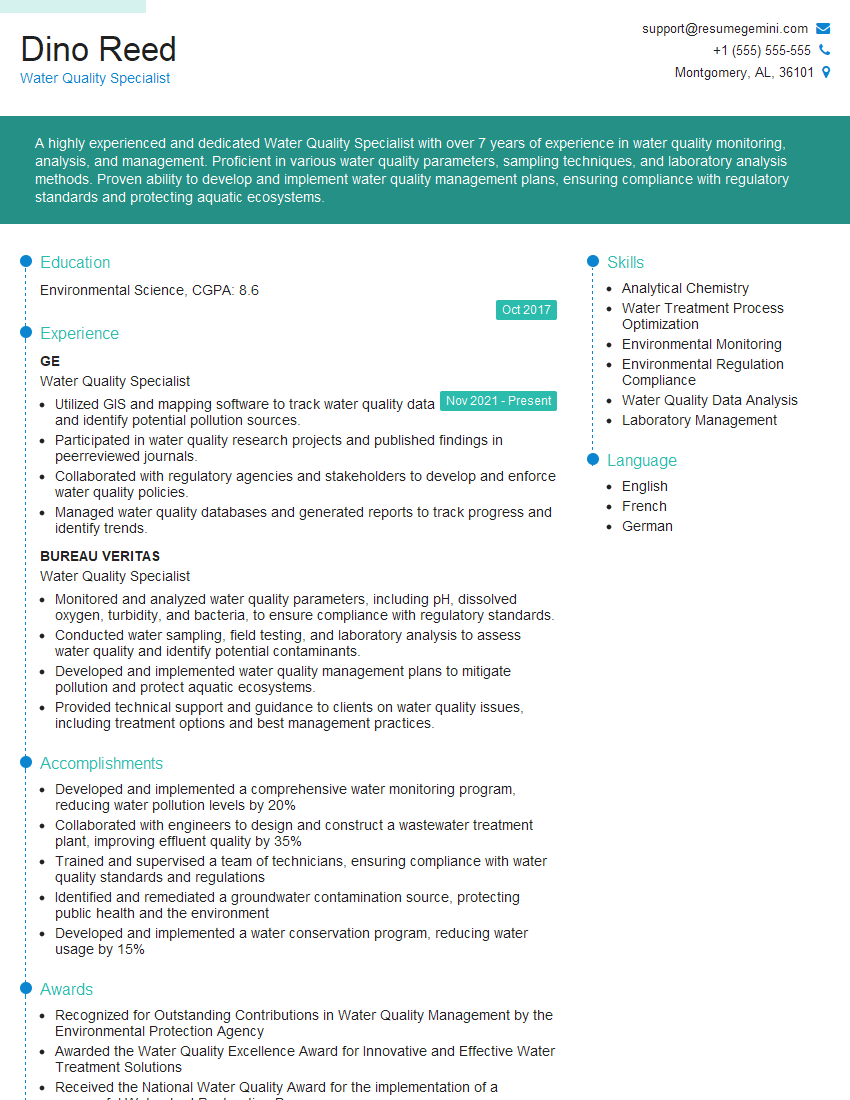
Water Quality Specialist Resume Sample
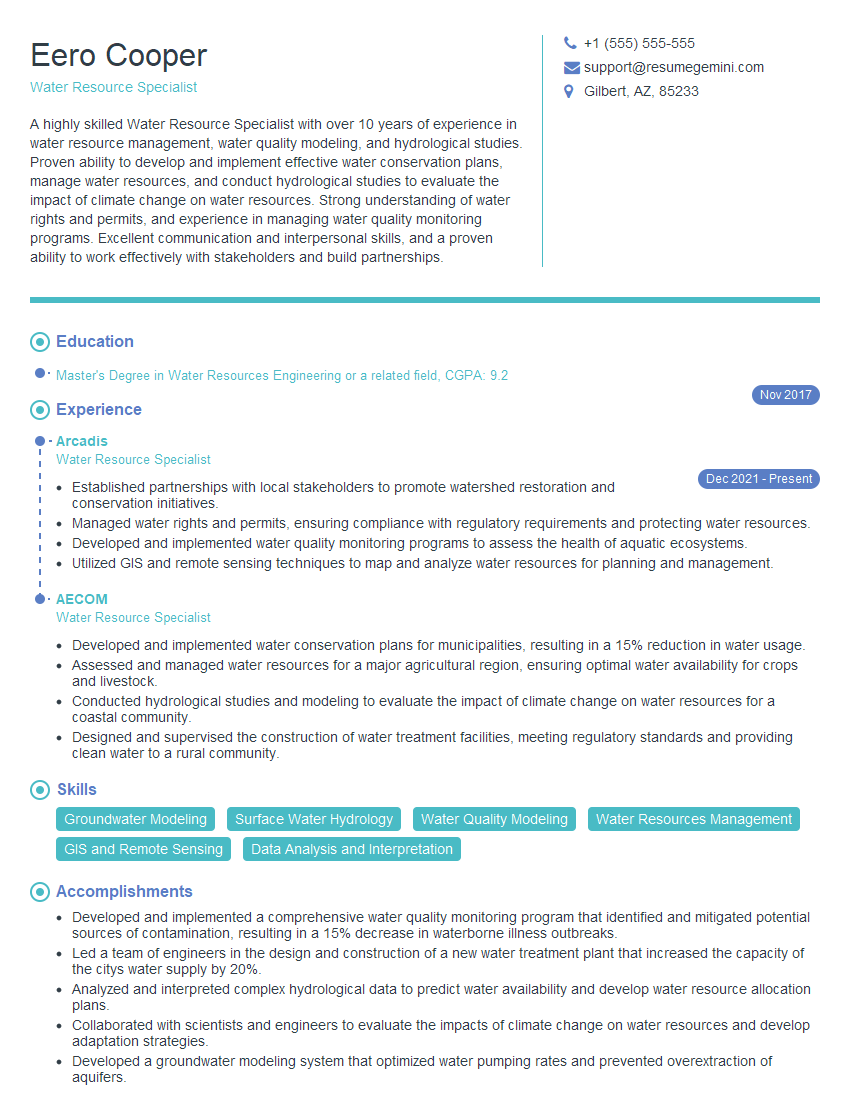
Water Resource Specialist Resume Sample
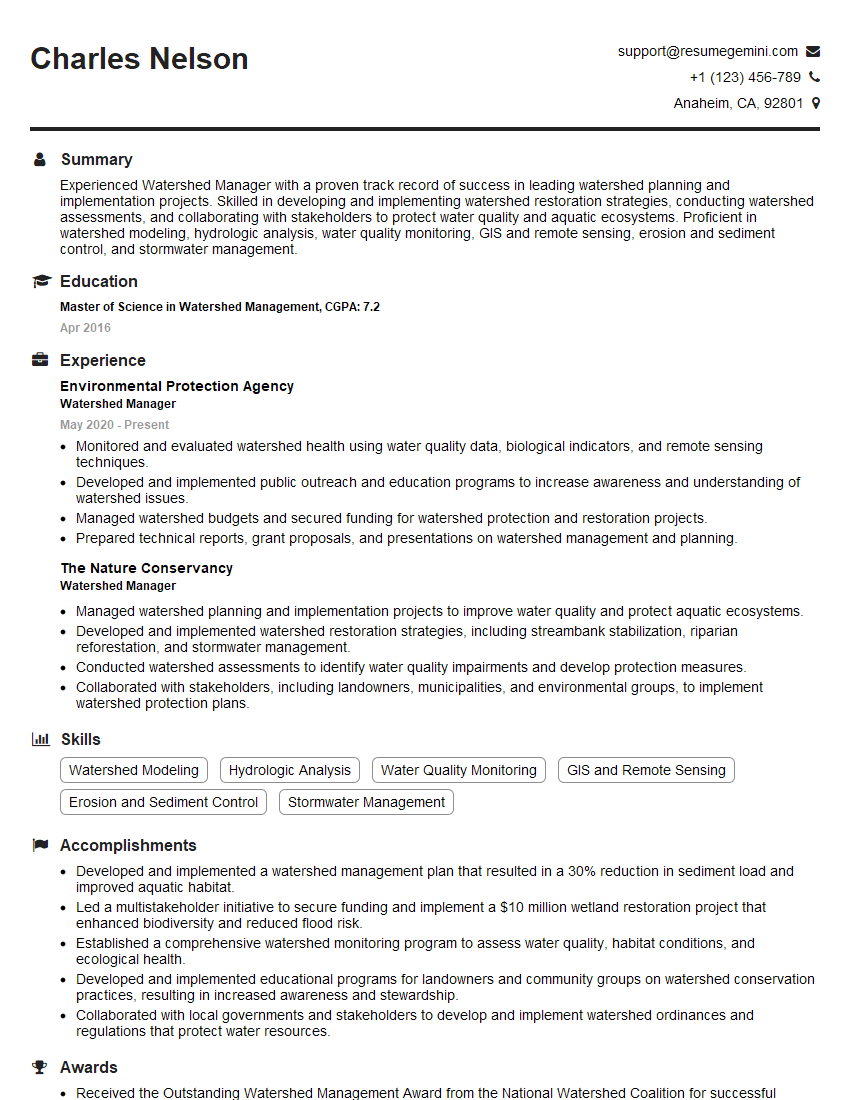
Watershed Manager Resume Sample
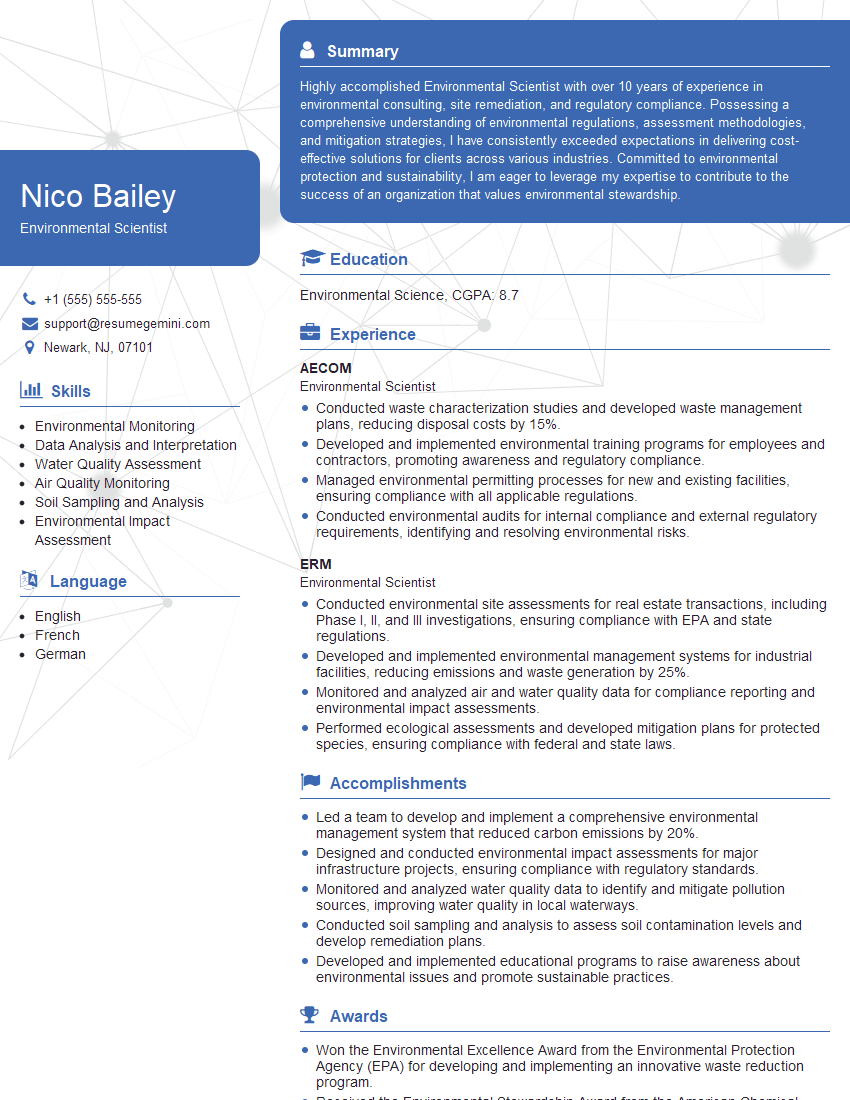
Environmental Scientist Resume Sample

Geologist Resume Sample
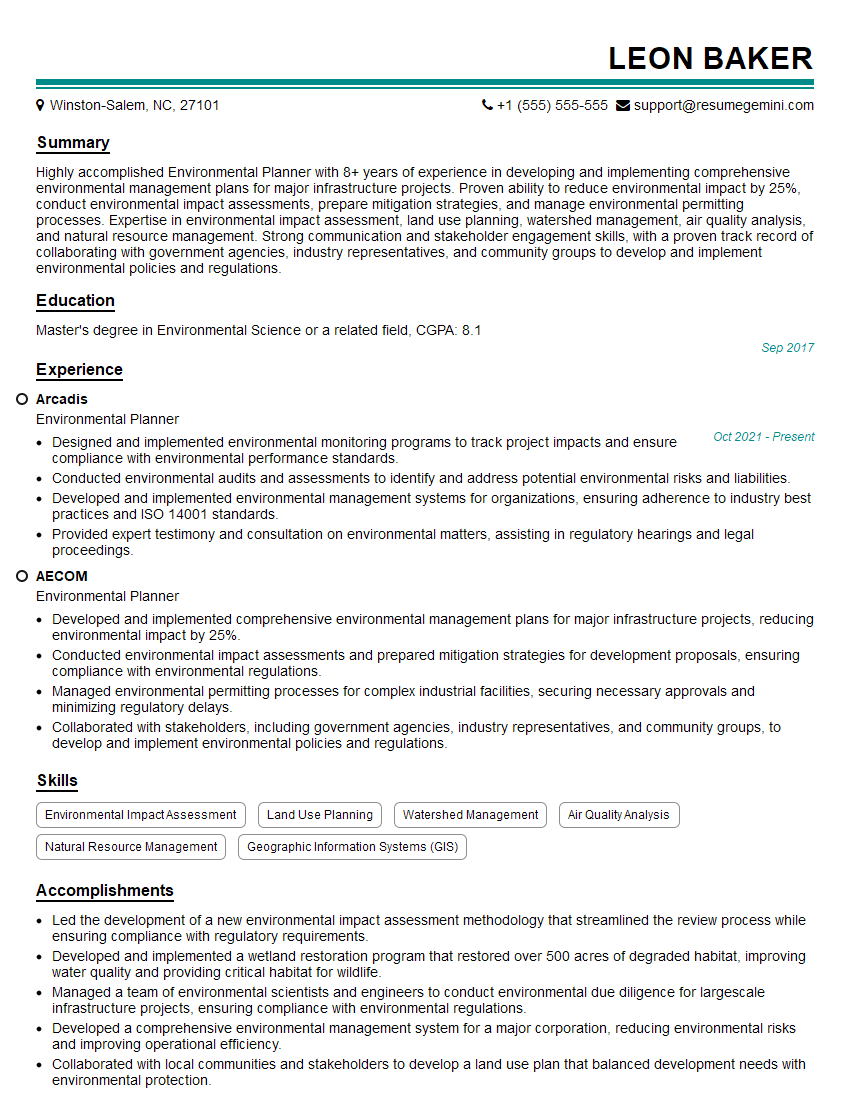
Environmental Planner Resume Sample
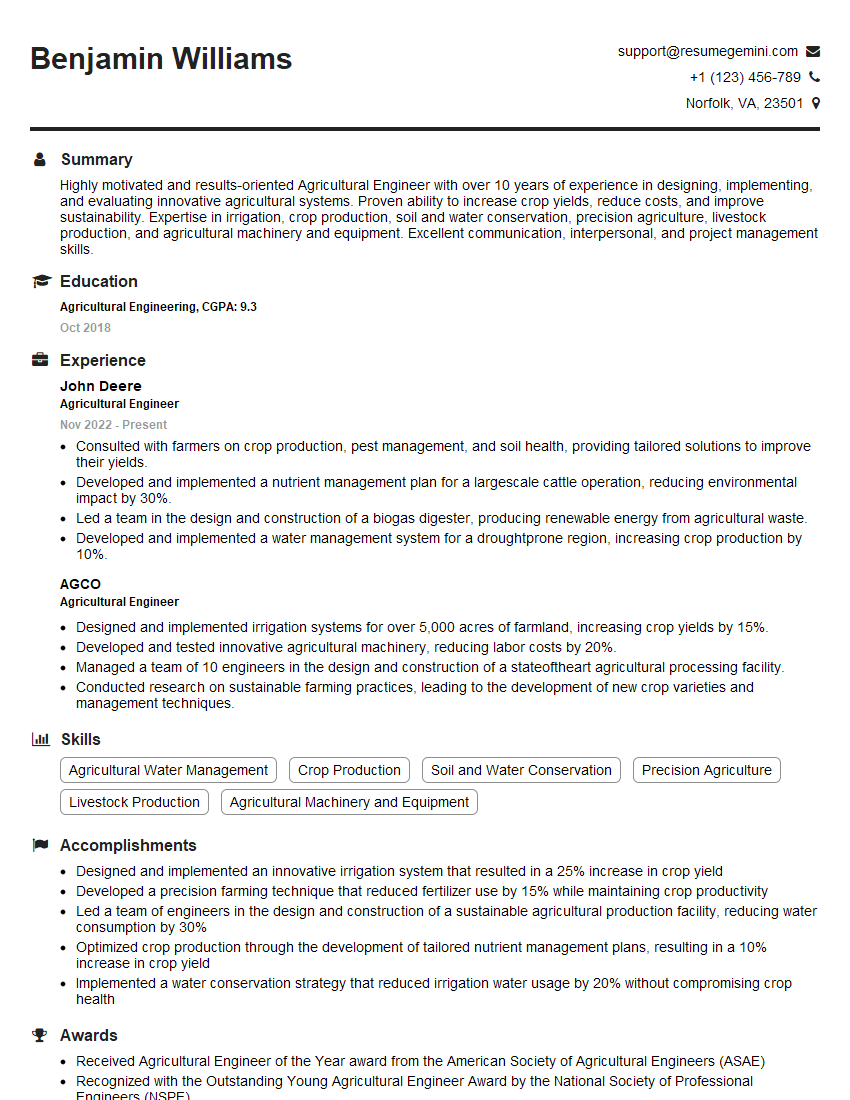
Agricultural Engineer Resume Sample
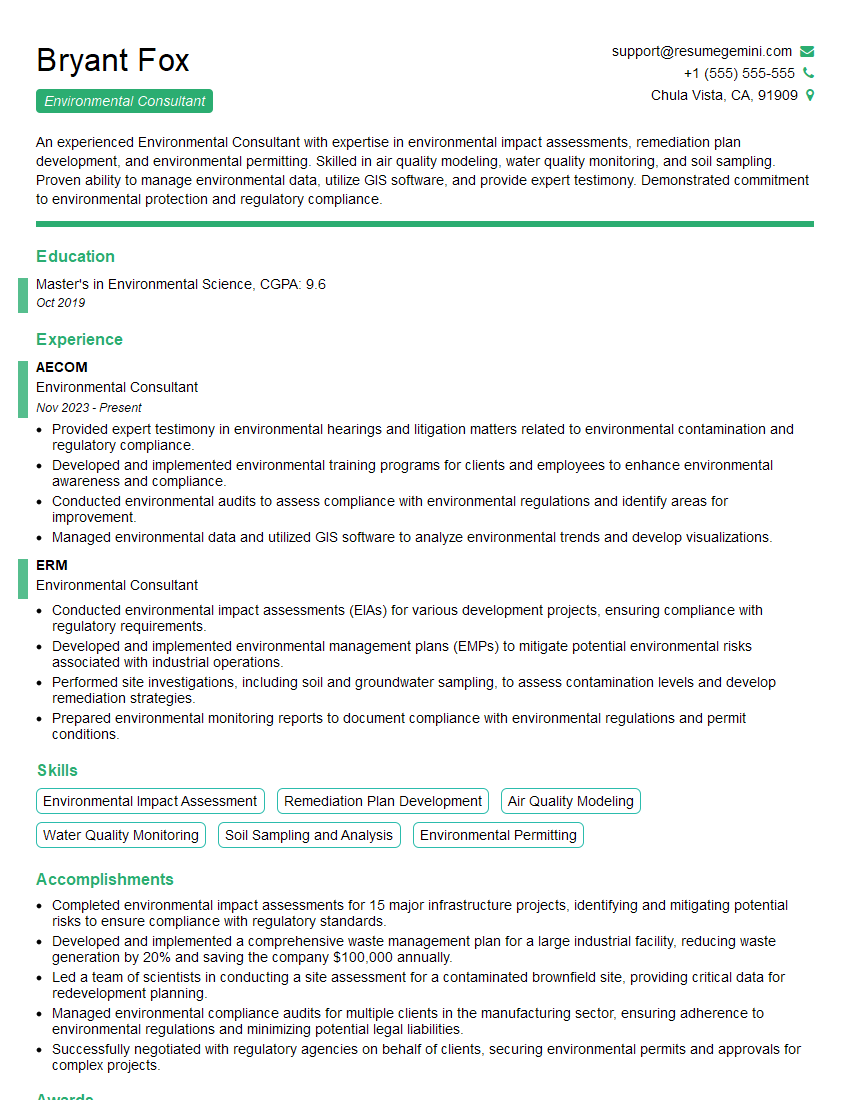
Environmental Consultant Resume Sample

Soil Scientist Resume Sample

Wildlife Biologist Resume Sample
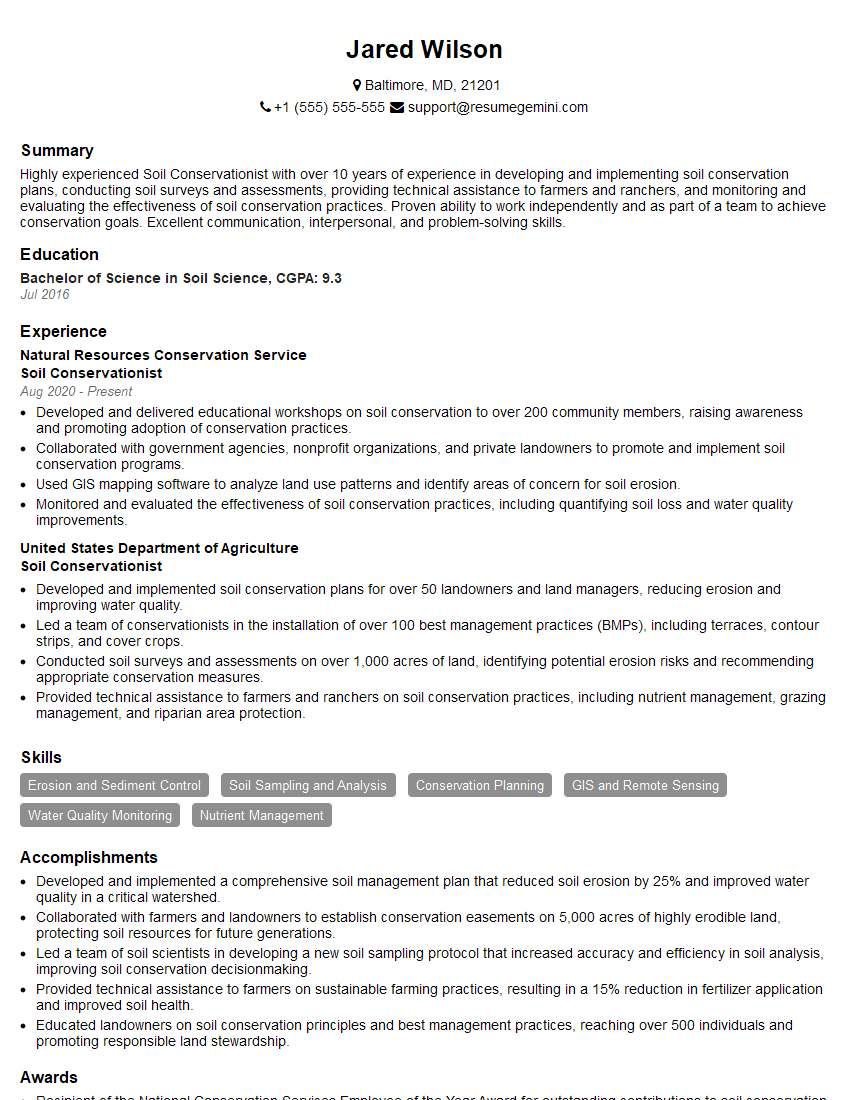
Soil Conservationist Resume Sample

Erosion Control Specialist Resume Sample
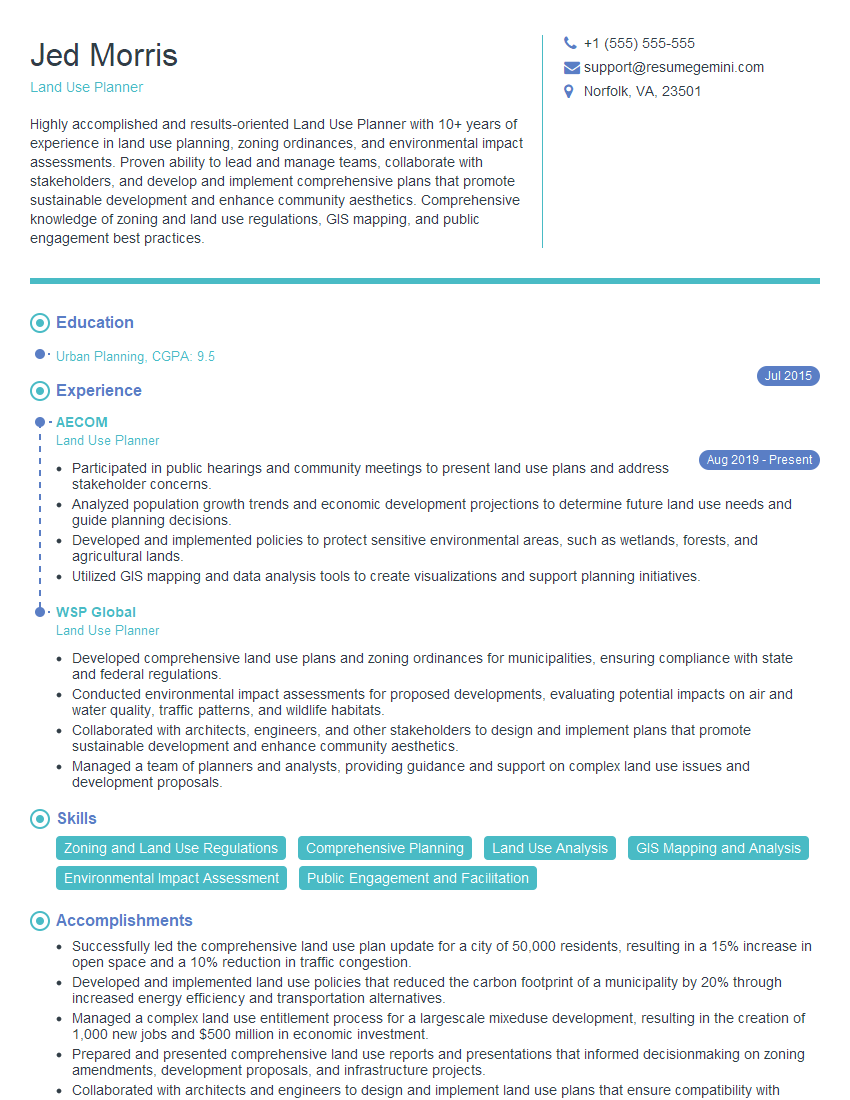
Land Use Planner Resume Sample
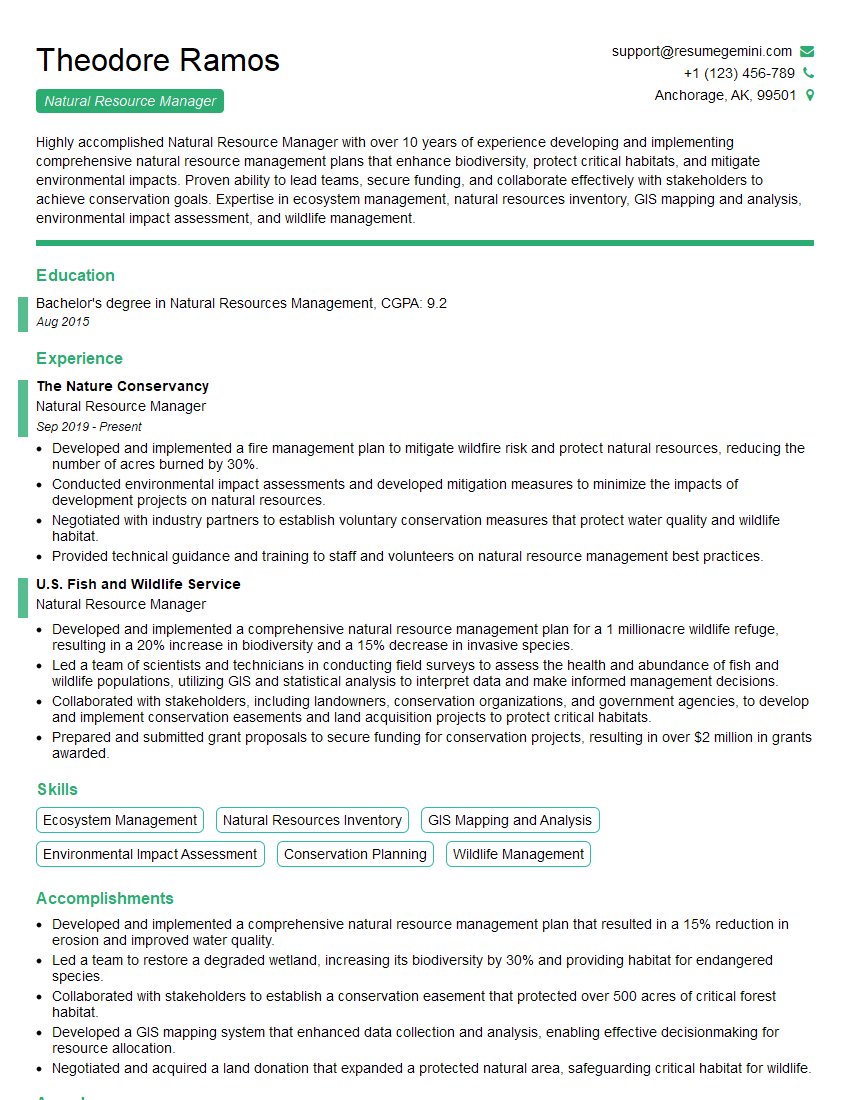
Natural Resource Manager Resume Sample

Forestry Technician Resume Sample

Conservation Planner Resume Sample
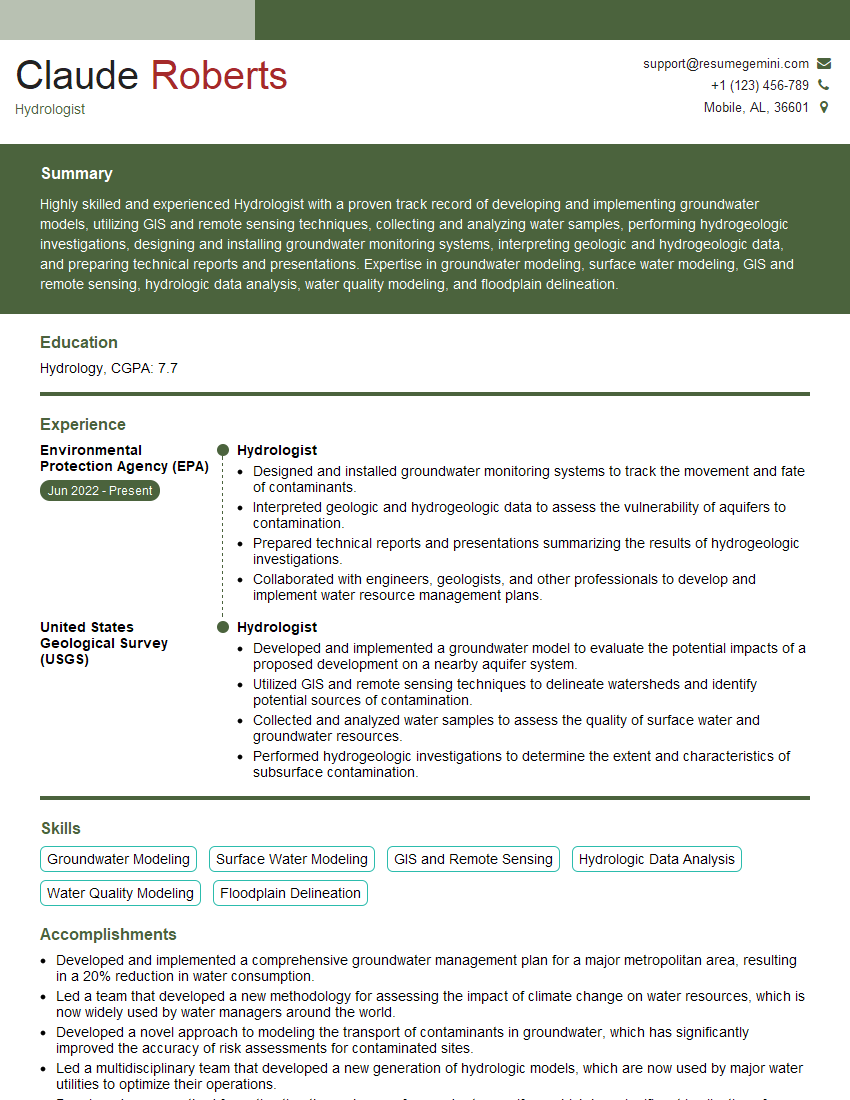
Hydrologist Resume Sample

Remote Sensing Specialist Resume Sample
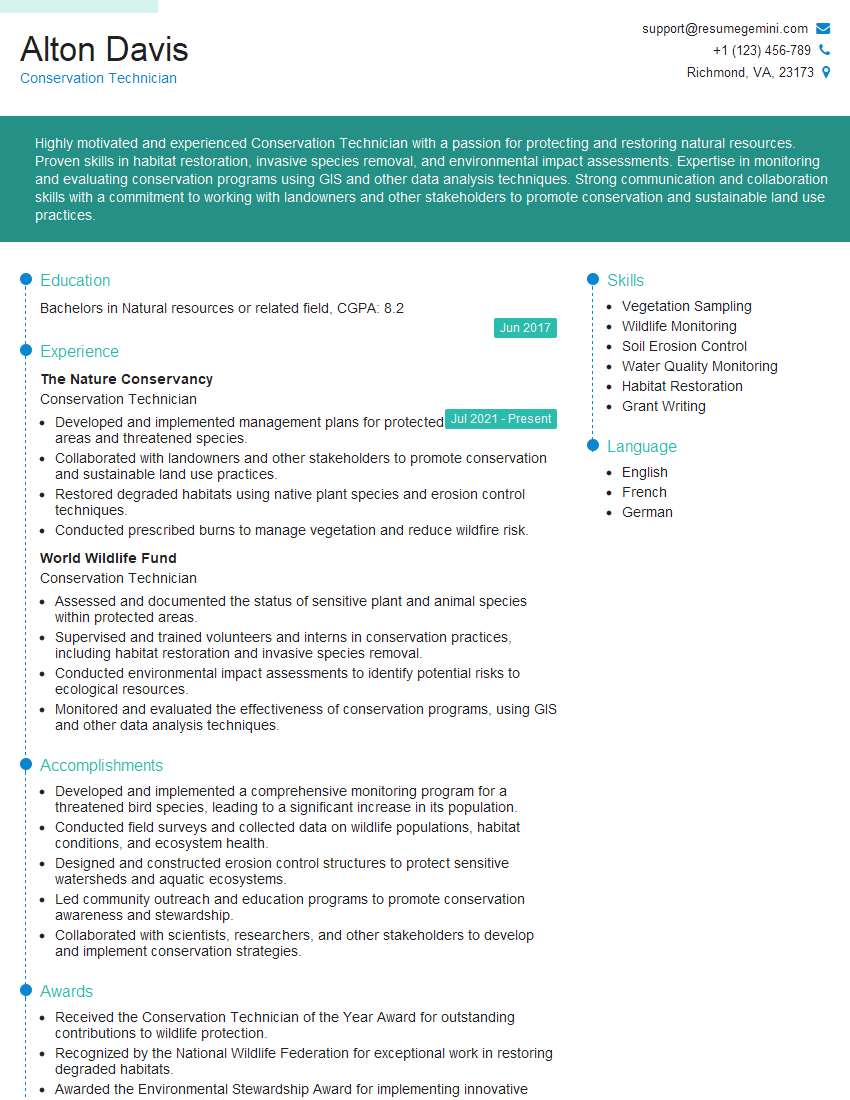
Conservation Technician Resume Sample
- Sustainability Manager
- Range Manager
- Hydrogeologist
- Water Quality Specialist
- Water Resource Specialist
- Watershed Manager
- Environmental Scientist
- Geologist
- Environmental Planner
- Agricultural Engineer
- Environmental Consultant
- Soil Scientist
- Wildlife Biologist
- Soil Conservationist
- Erosion Control Specialist
- Land Use Planner
- Natural Resource Manager
- Forestry Technician
- Conservation Planner
- Hydrologist
- Remote Sensing Specialist
- Conservation Technician
Explore more articles
Users Rating of Our Blogs
Share Your Experience
We value your feedback! Please rate our content and share your thoughts (optional).
What Readers Say About Our Blog
Very informative content, great job.
good