Preparation is the key to success in any interview. In this post, we’ll explore crucial Soil Preparation and Maintenance interview questions and equip you with strategies to craft impactful answers. Whether you’re a beginner or a pro, these tips will elevate your preparation.
Questions Asked in Soil Preparation and Maintenance Interview
Q 1. Explain the importance of soil testing before planting.
Soil testing before planting is crucial because it provides a snapshot of your soil’s health, revealing its composition, nutrient levels, and potential problems. Think of it as a health check-up for your garden. Without this information, you’re essentially gardening blind, potentially wasting time, money, and effort on plants that may struggle to thrive.
A soil test identifies key factors like pH level (acidity or alkalinity), nutrient deficiencies (lack of nitrogen, phosphorus, potassium, etc.), and the presence of potentially harmful substances. This allows you to amend the soil appropriately before planting, maximizing your chances of a successful harvest. For example, if your soil test reveals a low pH, you can add lime to raise it, creating a more favorable environment for many plants. Conversely, if your soil is highly alkaline, you might add sulfur to lower the pH. A complete understanding of your soil’s properties allows for informed decisions regarding plant selection and fertilization.
Q 2. Describe different methods of soil preparation for vegetable gardens.
Preparing soil for a vegetable garden involves several steps, depending on the existing condition. The goal is to create a well-draining, nutrient-rich bed that’s suitable for root development.
- Clearing and Cleaning: Remove any debris, weeds, rocks, and previous plant material. A thorough clearing is essential for a healthy garden.
- Digging and Turning: Loosen the soil to a depth of at least 12 inches using a shovel or garden fork. This improves aeration and allows for better root penetration. Turning the soil incorporates organic matter, such as compost, into the existing soil.
- Amending the Soil: Based on your soil test, add necessary amendments. This could include compost, peat moss (for improving drainage in clay soils), or gypsum (to improve soil structure).
- Leveling: Create a level and even surface for planting. This ensures uniform water distribution and plant growth.
- Adding Mulch: After planting, add a layer of mulch to retain moisture, suppress weeds, and regulate soil temperature.
For example, if you have heavy clay soil, adding compost and peat moss will improve drainage and create a more workable soil structure for your vegetables. Conversely, sandy soil, which tends to drain too quickly, can benefit from the addition of organic matter to improve water retention.
Q 3. What are the benefits of using compost in soil preparation?
Compost is essentially decayed organic matter that acts as a natural fertilizer and soil conditioner. Using compost in soil preparation offers numerous benefits:
- Improved Soil Structure: Compost enhances soil structure by improving aeration and water retention. It binds soil particles together, creating a crumbly texture ideal for root growth.
- Increased Nutrient Availability: Compost is rich in essential nutrients, slowly releasing them as the microorganisms in the soil break it down. This provides a sustained supply of nutrients to plants throughout the growing season.
- Enhanced Water Retention: Compost helps the soil retain moisture, reducing the frequency of watering and minimizing water stress on plants.
- Suppressed Weed Growth: A thick layer of compost can suppress weed growth by blocking sunlight.
- Improved Microbial Activity: Compost introduces beneficial microorganisms into the soil, stimulating microbial activity and creating a healthier soil ecosystem. This leads to better nutrient cycling and overall soil health.
Think of compost as a natural ‘vitamin’ for your soil. It helps build a strong and healthy foundation for your plants to thrive.
Q 4. How do you determine the appropriate amount of fertilizer for a particular soil type?
Determining the appropriate amount of fertilizer depends heavily on the results of your soil test. It’s not a one-size-fits-all approach. The soil test will provide the nutrient levels (typically nitrogen, phosphorus, and potassium, represented as NPK) in your soil. Based on the test results and the specific needs of the plants you’re growing, you can determine the amount of fertilizer needed.
Fertilizer recommendations are usually expressed as ratios (e.g., 10-10-10). This represents the percentage of nitrogen, phosphorus, and potassium, respectively. The exact amount needed will vary depending on factors like the soil type, plant type, and desired yield. Following the instructions on the fertilizer packaging is crucial, as over-fertilizing can harm plants. If you’re unsure, consulting a local agricultural extension office or a horticultural expert is recommended.
For example, if your soil test shows a significant deficiency in phosphorus, you might select a fertilizer with a higher phosphorus content (e.g., a 5-10-5 blend) than if your soil had sufficient phosphorus.
Q 5. Explain the process of soil aeration and its benefits.
Soil aeration involves improving the flow of air into the soil. Imagine it as giving your soil a breath of fresh air! This is achieved through various methods, and it’s beneficial for several reasons:
- Improved Root Growth: Air is essential for root respiration. Aerated soil allows roots to grow more easily and access more nutrients and water.
- Increased Microbial Activity: Beneficial microorganisms thrive in well-aerated soil, contributing to nutrient cycling and overall soil health.
- Better Water Drainage: Aeration improves drainage, preventing waterlogging and root rot.
- Reduced Soil Compaction: Aeration helps break up compacted soil, making it easier for roots to penetrate and improving water infiltration.
Methods include using a garden fork to loosen the soil, adding organic matter (like compost), or using specialized aeration tools for larger areas. For example, if you have heavy clay soil that’s prone to compaction, regular aeration is vital for healthy plant growth.
Q 6. What are the signs of nutrient deficiencies in soil, and how do you address them?
Nutrient deficiencies manifest in various ways, depending on the specific nutrient lacking. Identifying these signs requires careful observation:
- Nitrogen Deficiency: Stunted growth, pale green or yellow leaves (chlorosis), especially on older leaves.
- Phosphorus Deficiency: Dark green or purplish leaves, stunted growth, delayed maturity.
- Potassium Deficiency: Yellowing or browning of leaf margins, leaf curling, weak stems.
- Magnesium Deficiency: Yellowing between leaf veins (interveinal chlorosis).
- Iron Deficiency: Yellowing between leaf veins, especially on young leaves (interveinal chlorosis).
Addressing nutrient deficiencies involves soil testing to confirm the deficiency and then amending the soil with the appropriate nutrient. You can use fertilizers tailored to specific nutrient needs or organic amendments like compost, manure, or specific nutrient-rich materials. For instance, if your soil test reveals a severe iron deficiency, you might apply iron chelates, a readily available form of iron for plants.
Q 7. Describe different soil types and their suitability for various plants.
Soil types are broadly categorized based on their texture, which is determined by the proportions of sand, silt, and clay. Different soil types have varying properties affecting water retention, drainage, and nutrient availability.
- Sandy Soil: Well-draining, but poor at retaining water and nutrients. Suitable for plants that prefer dry conditions.
- Silty Soil: Holds moisture better than sandy soil and has good nutrient-holding capacity.
- Clay Soil: Retains water and nutrients well but can become waterlogged and compacted. Suitable for plants tolerant of wet conditions, but requires amendments for improved drainage and aeration.
- Loam Soil: An ideal soil type; it’s a mixture of sand, silt, and clay, offering a balance of good drainage, water retention, and nutrient availability. Suitable for a wide range of plants.
Choosing plants that suit your soil type is crucial for success. For example, succulents thrive in well-draining sandy soil, while water-loving plants like rice do well in clay soil. Understanding your soil type enables you to select plants that will flourish, simplifying your gardening efforts.
Q 8. How do you manage soil erosion and compaction?
Soil erosion and compaction are major threats to soil health, reducing its productivity and overall quality. Managing them requires a multi-pronged approach focusing on prevention and remediation.
Erosion Control: This involves minimizing the impact of wind and water on the soil. Key strategies include:
- Cover cropping: Planting crops like legumes or rye to protect the soil surface from the elements. Think of it like putting a blanket on the soil during the off-season.
- Contour farming: Plowing and planting along the contours of the land to slow down water runoff. This creates natural barriers that prevent erosion.
- Terracing: Creating level platforms on slopes to reduce water flow velocity and increase water infiltration. This is particularly useful in hilly regions.
- Windbreaks: Planting trees or shrubs to reduce wind speed and protect the soil from wind erosion. This is crucial in arid and semi-arid regions.
- No-till farming: Minimizing soil disturbance during planting, thereby preserving soil structure and reducing erosion.
Compaction Control: Compaction reduces soil porosity, hindering water infiltration and root penetration. Solutions include:
- Reduced tillage: Using minimal tillage techniques to avoid excessive compaction. This is gentler on the soil structure.
- Cover cropping: Again, cover crops improve soil structure and reduce compaction.
- Aerating: For compacted areas, mechanical aeration can be employed, similar to aerating a lawn, to break up the compacted layer.
- Adding organic matter: Organic matter improves soil structure and helps prevent compaction. It’s like adding a natural sponge to the soil.
For example, a farmer in a hilly region might combine contour farming with cover cropping to effectively manage both erosion and compaction. A gardener might incorporate compost to improve soil structure and reduce compaction in their vegetable beds.
Q 9. Explain the role of organic matter in improving soil health.
Organic matter is the lifeblood of healthy soil. It’s comprised of decomposed plant and animal material, and its role is multifaceted:
- Improved Soil Structure: Organic matter acts like a glue, binding soil particles together to form aggregates. This creates pore spaces crucial for water infiltration, aeration, and root growth. Imagine a sponge versus a solid block of clay; the sponge is far more functional.
- Enhanced Water Retention: Organic matter increases the soil’s water holding capacity, reducing the frequency of irrigation. This is essential for drought resistance.
- Nutrient Availability: Organic matter acts as a slow-release fertilizer, providing essential nutrients to plants over time. It enhances nutrient cycling in the soil.
- Increased Microbial Activity: Organic matter feeds the beneficial soil microorganisms, such as bacteria and fungi, which are essential for nutrient cycling and disease suppression. Think of them as the soil’s tiny workforce.
- Reduced Erosion: The improved soil structure resulting from organic matter helps reduce erosion by wind and water.
Adding compost, manure, or cover crops significantly increases soil organic matter content. For instance, a farmer might rotate crops and incorporate cover crops into their rotation to improve soil organic matter naturally.
Q 10. What are the best practices for maintaining soil moisture levels?
Maintaining optimal soil moisture is critical for plant growth. Excessive or deficient moisture can severely impact yield and plant health. Best practices include:
- Mulching: Applying a layer of organic material (e.g., straw, wood chips) to the soil surface to reduce evaporation and maintain moisture. Think of it as a natural moisture barrier.
- Cover Cropping: Cover crops shade the soil, reducing evaporation and improving water infiltration. They act as a living mulch.
- Efficient Irrigation: Utilizing appropriate irrigation methods (discussed in question 7) to deliver water efficiently and avoid water wastage. This includes drip irrigation or other water-saving methods.
- Soil Testing: Regular soil testing helps determine the optimal moisture levels for the specific soil type and crop. Knowing your soil is key to managing it effectively.
- Drainage: Ensuring proper drainage to prevent waterlogging. Poor drainage can lead to root rot and other problems.
For example, a gardener might use mulch around their plants to conserve moisture, while a farmer might employ a combination of drip irrigation and cover cropping to optimize water use efficiency.
Q 11. How do you identify and control soil-borne diseases?
Soil-borne diseases are a significant challenge for plant health. Identifying and controlling them requires a combination of preventative and curative measures.
Identification: Symptoms vary depending on the pathogen, but they often include wilting, yellowing, stunted growth, and lesions on plant parts. Laboratory testing can confirm the specific disease.
Control:
- Crop Rotation: Rotating crops breaks the disease cycle by preventing the buildup of pathogens specific to one type of plant. This disrupts the disease’s life cycle.
- Soil Solarization: Covering the soil with clear plastic during the hottest part of the year to kill soil-borne pathogens using the sun’s heat. Think of it as a natural form of sterilization.
- Biofumigation: Planting specific crops (e.g., mustard) that release compounds toxic to certain soilborne pathogens. These plants release natural pesticides into the soil.
- Biological Control: Introducing beneficial microorganisms that compete with or suppress pathogens. This harnesses the power of nature’s own pest control mechanisms.
- Chemical Control: Using soil fumigants or other chemical treatments as a last resort. This should be used judiciously, considering the environmental impact.
For instance, a farmer might implement a crop rotation plan to reduce the incidence of Fusarium wilt in their tomato crops. A home gardener might use soil solarization to combat a soil-borne disease problem in a small vegetable patch.
Q 12. What are the common soil pests and how do you manage them?
Common soil pests include nematodes, insects, and rodents. Managing these pests requires an integrated pest management (IPM) approach that minimizes harm to the environment.
Identification: Careful observation, including visual inspection of plants and soil, can help identify pest damage. Traps can also be useful.
Management:
- Biological Control: Introducing beneficial insects or nematodes that prey on harmful pests. This utilizes natural predators to control populations.
- Cultural Control: Practicing good sanitation, crop rotation, and proper irrigation to reduce pest populations. This focuses on preventing pest problems from arising.
- Physical Control: Using barriers, traps, or handpicking to remove pests. This is particularly effective for larger pests or in smaller gardens.
- Chemical Control: Using pesticides as a last resort, choosing products with minimal environmental impact and following label instructions carefully. This should be a last resort, used only when other methods fail.
For example, a farmer might use beneficial nematodes to control root-knot nematodes in their fields. A home gardener might use sticky traps to monitor and control aphid populations on their plants.
Q 13. Explain the concept of soil pH and its importance in plant growth.
Soil pH refers to the acidity or alkalinity of the soil, measured on a scale of 0-14, with 7 being neutral. pH significantly impacts nutrient availability and plant growth.
Importance: Different plants have different pH preferences. Optimal pH ensures that essential nutrients are available for plant uptake. If the pH is too high or too low, certain nutrients become less available, leading to nutrient deficiencies and stunted growth. For example, phosphorus is less available at very high or very low pH values.
Management: Soil testing is crucial to determine the current pH. If the pH is outside the optimal range, amendments can be used to adjust it.
- Increasing pH (making soil less acidic): Limestone or lime are commonly used to increase soil pH.
- Decreasing pH (making soil less alkaline): Elemental sulfur or acidifying fertilizers can be used to lower soil pH.
The amount of amendment needed depends on the soil type, desired pH change, and soil buffer capacity. It’s always best to follow testing recommendations for accurate application.
Q 14. Describe various methods of irrigation and their suitability for different soil types.
Various irrigation methods exist, each with its strengths and weaknesses depending on the soil type and crop.
- Drip Irrigation: Water is delivered directly to the plant roots through a network of tubes and emitters. This is highly efficient and minimizes water waste, suitable for various soil types, especially sandy soils which drain quickly.
- Sprinkler Irrigation: Water is sprayed over the soil surface using sprinklers. This is suitable for many soil types but can lead to significant water loss through evaporation and runoff, especially in sandy or sloped areas.
- Flood Irrigation: Water is flooded onto the field. This is suitable for flat land with heavy clay soils that retain water well, but it can be inefficient and lead to waterlogging.
- Furrow Irrigation: Water is channeled along furrows between crop rows. This is relatively simple and inexpensive but can be less efficient than other methods, suitable for soils with good water retention.
The choice of irrigation method depends on several factors, including soil type, topography, water availability, and crop requirements. For example, drip irrigation is ideal for sandy soils because it minimizes water loss, while flood irrigation might be suitable for heavy clay soils that retain water well. However, drip irrigation is generally considered more efficient and better for water conservation.
Q 15. How do you select the appropriate drainage system for a specific site?
Selecting the right drainage system depends heavily on the site’s specific characteristics. Think of it like designing a plumbing system for your house – you wouldn’t use the same approach for a bungalow as you would for a skyscraper. We need to consider several factors:
- Soil Type: Clay soils drain poorly, requiring more extensive systems like French drains or subsurface drainage pipes. Sandy soils drain readily, often needing only surface grading. Loamy soils, a mix of sand, silt, and clay, usually fall somewhere in between.
- Topography: The slope of the land dictates the flow of water. Steeper slopes might only need swales (shallow ditches) to direct runoff, while flatter areas require more intricate systems to prevent waterlogging.
- Climate: Rainfall intensity and frequency are crucial. Areas with heavy rainfall require more robust drainage systems than those with lower rainfall.
- Hydrology: Understanding the groundwater table and surface water flow patterns is essential. A high water table necessitates systems that manage both surface and subsurface water.
- Intended Use: The purpose of the land dictates drainage needs. A sports field requires different drainage than a residential garden.
For example, if you’re working on a clay soil site with a flat topography in a region with high rainfall, you’d likely opt for a combination of surface grading (to create gentle slopes) and a network of subsurface drains to move water away efficiently. Conversely, a sandy, sloped site in a drier climate might only need appropriate surface grading to manage runoff.
Career Expert Tips:
- Ace those interviews! Prepare effectively by reviewing the Top 50 Most Common Interview Questions on ResumeGemini.
- Navigate your job search with confidence! Explore a wide range of Career Tips on ResumeGemini. Learn about common challenges and recommendations to overcome them.
- Craft the perfect resume! Master the Art of Resume Writing with ResumeGemini’s guide. Showcase your unique qualifications and achievements effectively.
- Don’t miss out on holiday savings! Build your dream resume with ResumeGemini’s ATS optimized templates.
Q 16. What are the environmental considerations in soil preparation and maintenance?
Environmental considerations in soil preparation and maintenance are paramount. We need to minimize our impact and ideally improve soil health and ecosystem function. Key considerations include:
- Erosion Control: Soil erosion depletes topsoil, a crucial resource. Techniques like contour plowing, terracing, and using cover crops help reduce erosion.
- Water Quality: Runoff from improperly managed soils can carry pollutants such as fertilizers and pesticides into waterways. Implementing buffer strips of vegetation and using environmentally friendly fertilizers can mitigate this.
- Biodiversity: Healthy soil supports a diverse range of organisms, impacting overall ecosystem health. Practices such as no-till farming and the use of organic matter promote biodiversity.
- Carbon Sequestration: Soil acts as a significant carbon sink. Sustainable soil management practices, like maintaining organic matter, enhance carbon storage, combating climate change.
- Chemical Use: Minimizing the use of synthetic fertilizers and pesticides reduces the environmental burden. Organic farming practices prioritize natural soil fertility and pest control.
For instance, using excessive nitrogen fertilizers can lead to groundwater contamination and eutrophication of water bodies. Choosing organic alternatives and employing precision farming techniques minimizes environmental impact.
Q 17. Explain the use of cover crops in improving soil health.
Cover crops are like superheroes for soil health! These plants are grown specifically to improve soil conditions, rather than for harvest. They’re planted between main crops or during fallow periods.
- Improved Soil Structure: Cover crops’ roots penetrate and break up compacted soil, improving aeration and drainage.
- Increased Organic Matter: When the cover crops are tilled into the soil, they decompose, adding organic matter which improves soil fertility and water retention.
- Nutrient Cycling: Some cover crops fix nitrogen from the atmosphere, enriching the soil with this essential nutrient and reducing the need for synthetic fertilizers.
- Weed Suppression: Cover crops can outcompete weeds, reducing the need for herbicides.
- Erosion Control: Their roots hold the soil in place, preventing erosion.
For example, planting legumes like clover or alfalfa as a cover crop can significantly improve nitrogen levels in the soil, reducing reliance on nitrogen fertilizers and lowering environmental impact. Rye, on the other hand, is a good cover crop for suppressing weeds and preventing erosion.
Q 18. Describe different techniques for improving soil structure.
Improving soil structure is key to healthy and productive land. It’s about creating a balanced soil with good aeration, drainage, and water retention.
- No-Till Farming: This avoids disturbing the soil structure, maintaining soil aggregates and improving organic matter content.
- Crop Rotation: Rotating different types of crops helps maintain soil health and prevents depletion of specific nutrients. Different root systems also improve soil structure.
- Adding Organic Matter: Compost, manure, and other organic materials improve soil structure by increasing aggregation and water holding capacity.
- Cover Cropping (as discussed above): Cover crops contribute significantly to improved soil structure.
- Subsoiling: This involves breaking up compacted subsoil layers, improving root penetration and drainage. However, this should be done carefully to avoid damaging the soil further.
For instance, a farmer experiencing compaction in their fields might employ no-till farming alongside the addition of compost to gradually improve soil structure over time. In cases of severe compaction, subsoiling might be considered, but always with careful consideration of soil type and potential damage.
Q 19. How do you assess the health of a soil sample?
Assessing soil health is a multi-faceted process. It’s not just about looking at the soil, but also understanding its characteristics and function. We typically use a combination of methods:
- Visual Inspection: Observing soil color, texture, and structure can provide initial clues about its health.
- Soil Texture Analysis: Determining the proportions of sand, silt, and clay helps categorize the soil type and its water retention and drainage properties.
- pH Testing: Measuring the soil pH indicates its acidity or alkalinity, affecting nutrient availability.
- Nutrient Analysis: Laboratory tests determine the levels of essential plant nutrients like nitrogen, phosphorus, and potassium.
- Organic Matter Content: This measures the amount of organic material present, a vital indicator of soil health and fertility.
- Biological Assessment: Analyzing soil organisms (earthworms, microbes) provides information on soil biodiversity and activity.
A simple example: If you notice your soil is very dark and rich in organic matter, with a good crumb structure, that’s a strong indicator of good soil health. However, a laboratory test will give precise values of organic matter, nutrient content, and pH for a definitive assessment.
Q 20. What are the challenges of working with clay soils?
Clay soils present several challenges. Imagine trying to build a sandcastle with wet cement – it’s incredibly difficult to work with. Their high clay content leads to:
- Poor Drainage: Clay particles pack tightly together, hindering water infiltration and causing waterlogging.
- Compaction: Heavy machinery or even foot traffic can easily compact clay soils, further reducing drainage and aeration.
- Poor Aeration: The dense structure of clay soils restricts oxygen flow to plant roots, negatively impacting plant growth.
- Difficult to Work With: Clay soils become very sticky and difficult to till when wet, and hard and cloddy when dry.
Managing clay soils often involves strategies like adding organic matter (compost or manure) to improve structure, using no-till practices to minimize compaction, and employing drainage systems to manage excess water. It’s about improving the soil’s structure to make it more workable and suitable for plant growth.
Q 21. How do you manage sandy soils to retain moisture?
Sandy soils are like a sieve – they drain quickly and lose moisture easily. The challenge is to improve their water retention capacity.
- Adding Organic Matter: Organic materials like compost, manure, and leaf mold increase the water-holding capacity of sandy soils. Think of it like adding a sponge to the sand.
- Mulching: Applying mulch (organic matter like wood chips or straw) to the soil surface helps reduce evaporation and retain moisture.
- Water Management: Irrigating frequently but with smaller amounts of water helps prevent runoff and allows for better absorption. Drip irrigation is particularly effective.
- Windbreaks: Planting windbreaks can reduce wind erosion and evaporation, helping to retain soil moisture.
- Soil Amendments: Certain soil amendments, like clay or hydrogel, can help improve water retention, but their use depends on specific soil conditions.
For example, a gardener working with sandy soil would benefit from adding a thick layer of organic mulch to their garden beds, along with regular but less frequent watering. This strategy helps retain moisture and improve soil structure over time.
Q 22. What are the safety precautions to take during soil preparation?
Safety is paramount during soil preparation. Think of it like preparing for any other physically demanding task – you wouldn’t climb a ladder without securing it first! We need to protect ourselves from potential hazards.
- Personal Protective Equipment (PPE): Always wear sturdy work boots to protect your feet from sharp objects like rocks or broken glass. Safety glasses are crucial to protect your eyes from flying debris when tilling or using power tools. Gloves prevent cuts and blisters. A dust mask is essential, especially when working with dry soil or chemicals.
- Equipment Safety: Before operating any machinery, ensure it’s in good working order, you understand its operation, and you’re following the manufacturer’s safety instructions. Regularly inspect equipment for damage and wear and tear. Never operate machinery when tired or under the influence of drugs or alcohol.
- Handling Chemicals: If using soil amendments or pesticides, carefully read and follow the label instructions. Wear appropriate PPE as recommended, and store chemicals safely out of reach of children and pets. Always mix chemicals in well-ventilated areas to avoid inhaling fumes.
- Weather Awareness: Avoid working in extreme weather conditions. Heavy rain can make the soil unstable and dangerous, while extreme heat can lead to dehydration and heatstroke.
For instance, I once witnessed a colleague get a minor injury from a flying rock while using a rototiller without safety glasses. This reinforced the importance of consistent PPE use.
Q 23. Explain the difference between topdressing and overseeding.
Topdressing and overseeding are both used to improve turfgrass, but they differ significantly in their approach. Think of it like renovating a carpet: topdressing is like adding a thin layer of new material to refresh the existing carpet, while overseeding is like replacing parts of the carpet with entirely new pieces.
Topdressing: This involves applying a thin layer of fine material (like sand, compost, or a soil-peat mix) over the existing turf. Its primary purpose is to improve drainage, level uneven surfaces, and improve soil structure. It doesn’t directly introduce new grass seeds.
Overseeding: This involves sowing new grass seed directly into the existing lawn. Its main goal is to improve turf density, add new varieties, or repair thin or damaged areas. It doesn’t necessarily improve soil structure in the same way that topdressing does.
In practice, I often use topdressing as a preventative measure to improve overall lawn health, while overseeding is employed to address specific issues like thinning or weed invasion. Sometimes they are even used in combination – topdressing can help ensure good seed-to-soil contact during overseeding, improving germination rates.
Q 24. Describe your experience with using various soil amendments.
My experience with soil amendments is extensive, ranging from organic matter additions to chemical fertilizers. It’s crucial to understand that the right amendment depends entirely on the soil test results and the desired outcome.
- Compost: I frequently use compost to improve soil structure, increase water retention, and boost organic matter content. It’s a fantastic all-around amendment that benefits most soils. I’ve seen significant improvements in soil health and plant growth after incorporating compost into clay soils, which improves drainage and aeration.
- Lime: To counteract soil acidity (low pH), I utilize lime. This raises the pH, making nutrients more available to plants. I’ve used it successfully to improve the growth of acid-sensitive plants in previously acidic soils.
- Gypsum: In clay soils, gypsum helps improve drainage and reduce compaction. I’ve observed notable improvements in soil workability and root penetration after applying gypsum to heavy clay areas.
- Fertilizers: I utilize a variety of fertilizers, both organic and synthetic, tailoring the type and amount to the specific nutrient deficiencies revealed by soil tests. I carefully avoid over-fertilizing, which can harm plants and the environment.
Each amendment requires careful application. For instance, compost needs to be thoroughly mixed into the soil, while lime needs to be spread evenly. The incorrect application of amendments can lead to localized burn or nutrient imbalances.
Q 25. How do you interpret soil test results and make recommendations?
Interpreting soil test results is a crucial skill. It’s like reading a patient’s medical report – the data provides vital information for diagnosis and treatment. The report typically includes pH, nutrient levels (nitrogen, phosphorus, potassium, etc.), and sometimes organic matter content.
I first identify any nutrient deficiencies or imbalances. For example, a low phosphorus level might indicate a need for phosphorus-rich fertilizer. A low pH might signify a need for lime. After identifying the problems, I develop a tailored soil amendment plan, outlining the types and amounts of amendments needed to bring the soil into balance.
I then consider the specific needs of the plants to be grown. Different plants have different nutrient requirements. The recommendations are always adjusted to suit the target plants and their growth stage.
Finally, I provide clear and concise recommendations, including the type and amount of amendments, application methods, and anticipated results. I also communicate potential risks and limitations. Effective communication ensures that my clients understand the recommendations and how to implement them successfully.
Q 26. How do you handle unexpected issues during soil preparation or maintenance?
Unexpected issues are inevitable in soil preparation. Think of it like a doctor facing a patient’s unexpected complication; a quick assessment and tailored response are key. My approach involves a systematic problem-solving process:
- Assessment: I first identify and thoroughly document the problem. What is the unexpected issue? How severe is it? What are the potential causes?
- Analysis: I analyze the situation, considering various potential causes and their impact. Is it a pest infestation, a sudden change in weather conditions, or a problem with the chosen soil amendments?
- Solution Development: I develop a solution based on the analysis. This might involve adjusting the soil amendment plan, implementing pest control measures, or consulting with specialists if necessary.
- Implementation and Monitoring: I implement the chosen solution, carefully monitoring its effectiveness. Documentation throughout the process is vital for future reference.
- Adaptation: I’m prepared to adapt the solution based on the monitoring results. Flexibility is crucial – sometimes, the initial approach needs adjustments to achieve optimal results.
For example, I once encountered an unexpected infestation of grubs during lawn establishment. A thorough assessment led to targeted pesticide application, combined with preventative measures to prevent future infestations. The outcome was a healthy lawn despite the initial setback.
Q 27. Describe your experience with sustainable soil management practices.
Sustainable soil management is central to my practice. It’s about preserving soil health for future generations, much like responsible banking ensures future financial security. My approach focuses on several key practices:
- Reduced Tillage: I minimize soil disturbance through techniques like no-till farming. This preserves soil structure, reduces erosion, and enhances the activity of beneficial soil organisms.
- Cover Cropping: I frequently incorporate cover crops to improve soil health. Cover crops help prevent erosion, suppress weeds, and add organic matter to the soil.
- Crop Rotation: Rotating crops helps maintain soil fertility, minimizes pest and disease build-up, and improves soil structure.
- Organic Amendments: I prefer organic amendments like compost and manure over synthetic fertilizers whenever feasible. This enhances soil health, reduces reliance on chemical inputs, and protects the environment.
- Water Conservation: Efficient irrigation practices, such as drip irrigation, help conserve water and prevent soil erosion.
In my previous role, I implemented sustainable practices on a large-scale farm, demonstrating their efficacy in improving soil health and reducing environmental impact. The results showed a significant improvement in soil fertility and reduced reliance on synthetic fertilizers.
Q 28. What are your strategies for dealing with challenging soil conditions?
Challenging soil conditions, like compacted clay or sandy soils, require tailored solutions. It’s like building a house on unstable ground – a strong foundation is crucial. My strategies depend on the specific challenges:
- Compacted Soils: For compacted soils, I utilize techniques like deep tillage or the incorporation of organic matter to improve aeration and drainage. Sometimes, I might use specialized equipment to break up compacted layers.
- Sandy Soils: Sandy soils are prone to drought and nutrient leaching. I address this by adding organic matter to improve water retention and nutrient holding capacity. Mulching can also help conserve moisture.
- Clay Soils: Clay soils can be poorly drained and difficult to work with. I incorporate organic matter, gypsum, and potentially other amendments to improve drainage and aeration. Proper soil testing is vital to guide amendment choices.
- Saline Soils: Saline soils require specialized management, often involving leaching to remove excess salts. I’d rely heavily on soil testing and may consult with a soil scientist for guidance.
A recent project involved rehabilitating a severely compacted clay area. Through a combination of deep tillage, the incorporation of large amounts of compost, and regular aeration, we transformed it into a healthy and productive area suitable for landscaping.
Key Topics to Learn for Soil Preparation and Maintenance Interview
- Soil Testing and Analysis: Understanding soil composition, pH levels, nutrient content, and texture. Practical application: Interpreting soil test results to inform fertilization and amendment strategies.
- Soil Amendments and Fertilization: Selecting and applying appropriate amendments (e.g., compost, lime) and fertilizers to optimize soil health and plant growth. Practical application: Calculating fertilizer application rates based on soil test results and plant needs.
- Tillage Practices: Understanding different tillage methods (conventional, conservation, no-till) and their impact on soil structure, erosion, and water retention. Practical application: Choosing the most suitable tillage method for a specific soil type and crop.
- Irrigation and Water Management: Efficient irrigation techniques, water conservation strategies, and the impact of water on soil health. Practical application: Designing and implementing an irrigation system to meet the water needs of a specific crop.
- Pest and Disease Management: Identifying and managing common soilborne pests and diseases through integrated pest management (IPM) strategies. Practical application: Implementing preventative measures and selecting appropriate control methods to minimize pest and disease impact.
- Soil Erosion Control: Implementing techniques to prevent soil erosion, such as cover cropping, contour farming, and terracing. Practical application: Designing and implementing erosion control measures for a specific site.
- Sustainable Soil Management Practices: Understanding and applying sustainable soil management principles to improve soil health, reduce environmental impact, and enhance long-term productivity. Practical application: Developing a sustainable soil management plan for a specific agricultural operation.
Next Steps
Mastering Soil Preparation and Maintenance is crucial for a successful and rewarding career in agriculture, horticulture, landscaping, or related fields. A strong understanding of these principles demonstrates your commitment to sustainable practices and efficient resource management, making you a highly valuable asset to any employer. To significantly boost your job prospects, focus on crafting an ATS-friendly resume that effectively highlights your skills and experience. ResumeGemini is a trusted resource that can help you build a professional and impactful resume. We provide examples of resumes tailored specifically to Soil Preparation and Maintenance roles to guide you in creating your own compelling application materials.

Sustainability Manager Resume Sample

Farm Manager Resume Sample
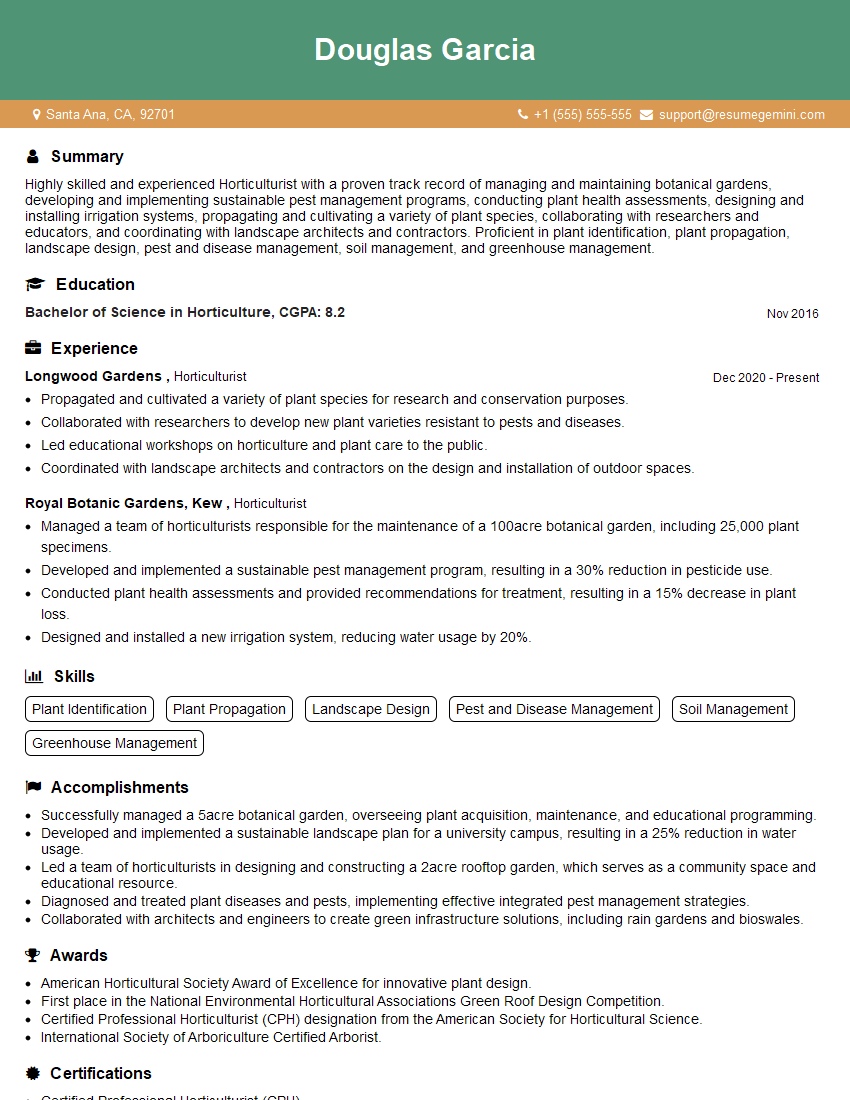
Horticulturist Resume Sample

Nursery Manager Resume Sample
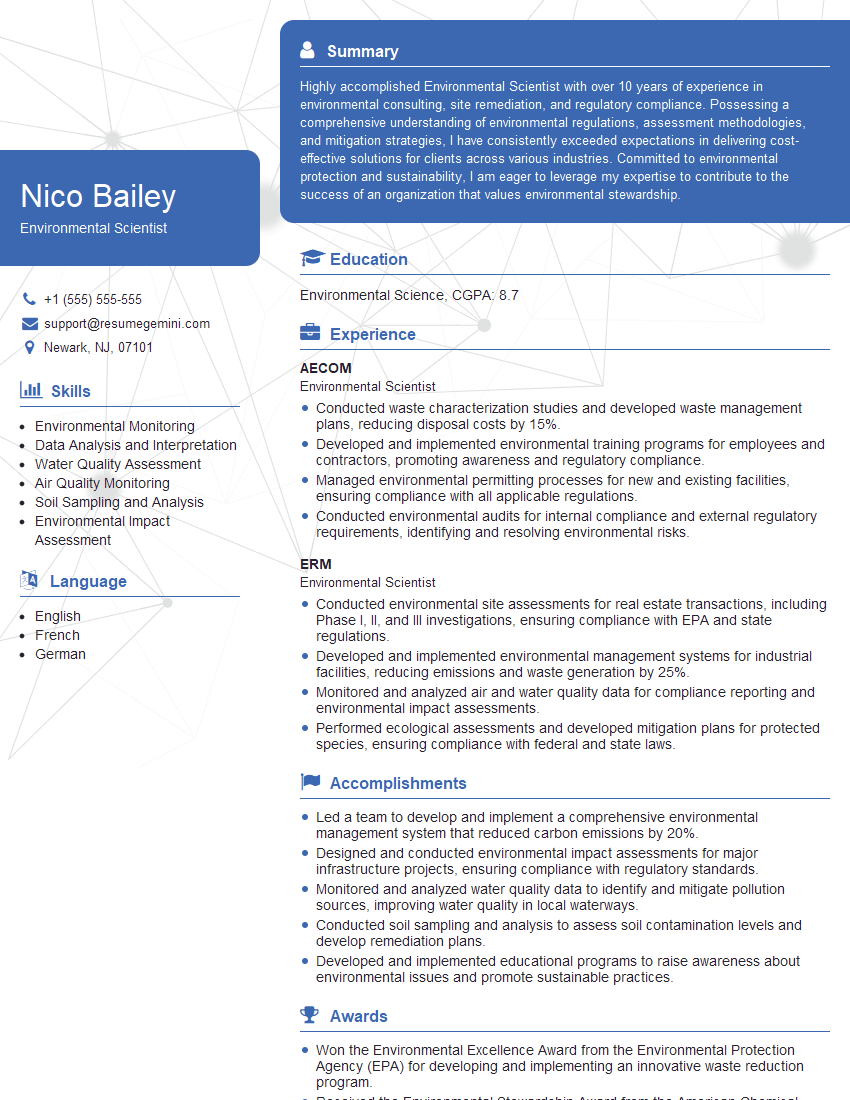
Environmental Scientist Resume Sample
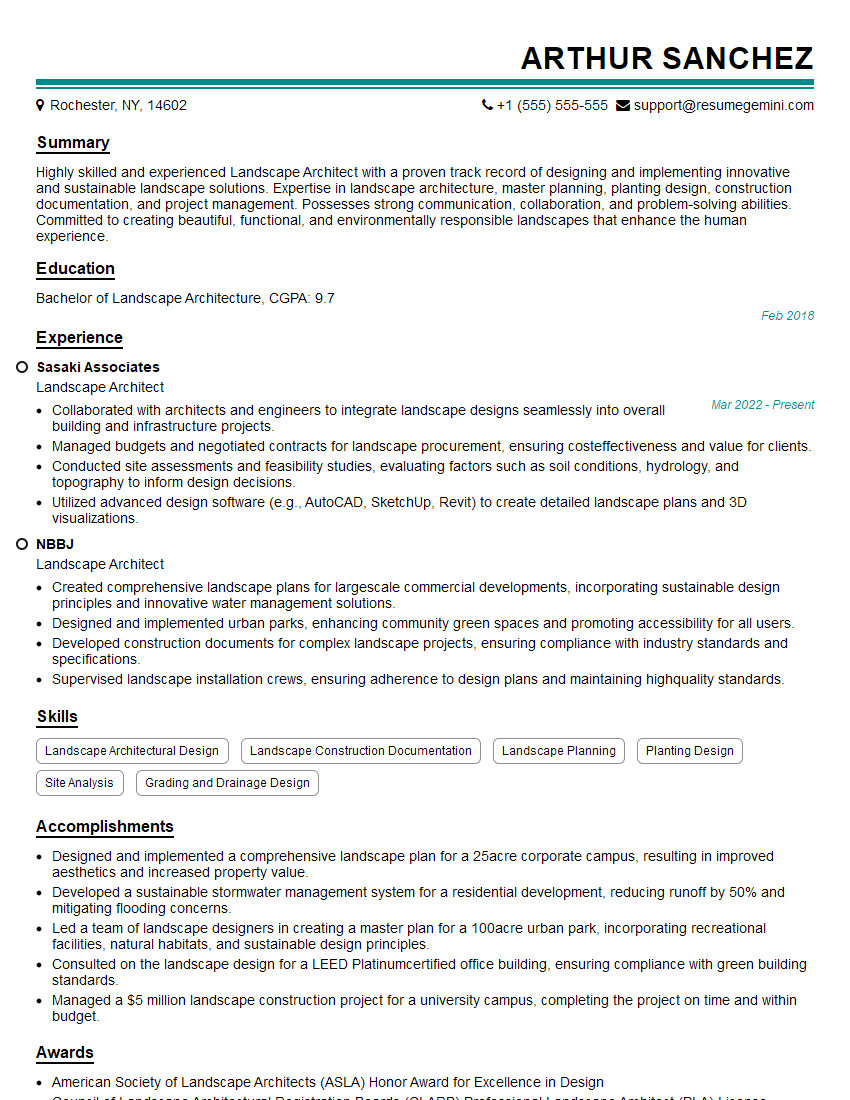
Landscape Architect Resume Sample
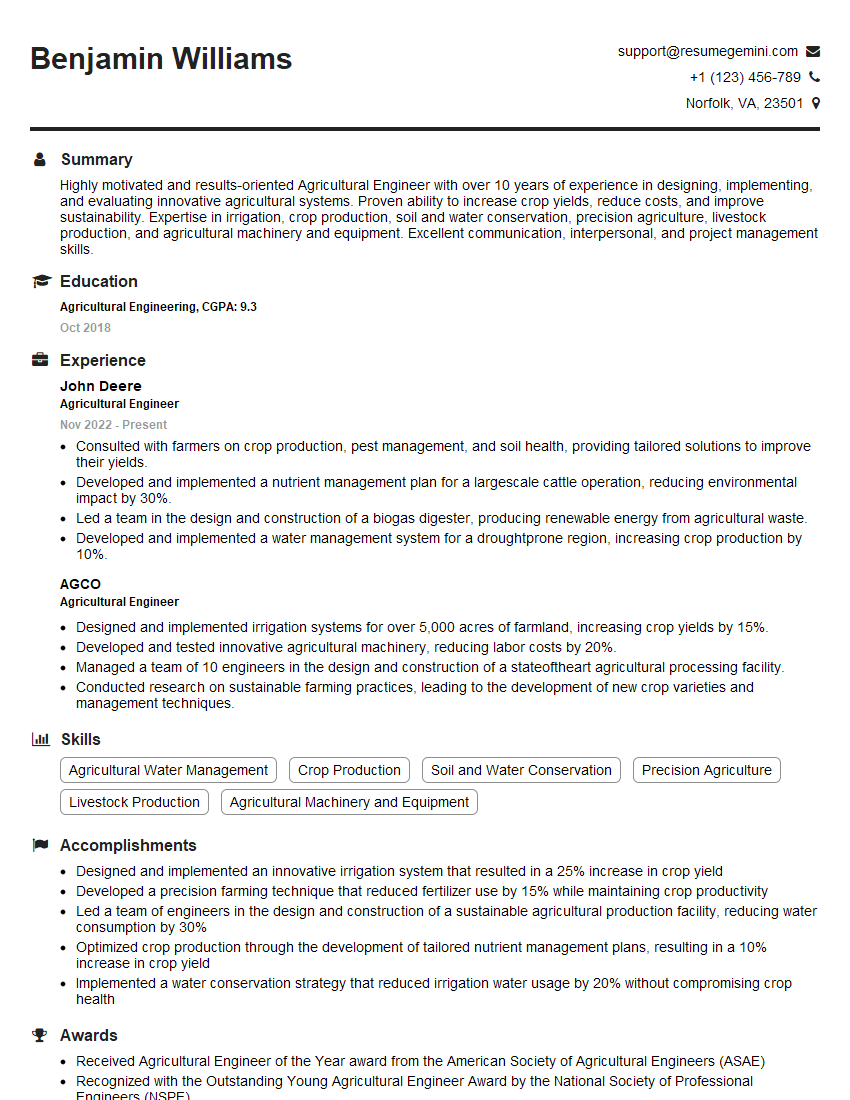
Agricultural Engineer Resume Sample
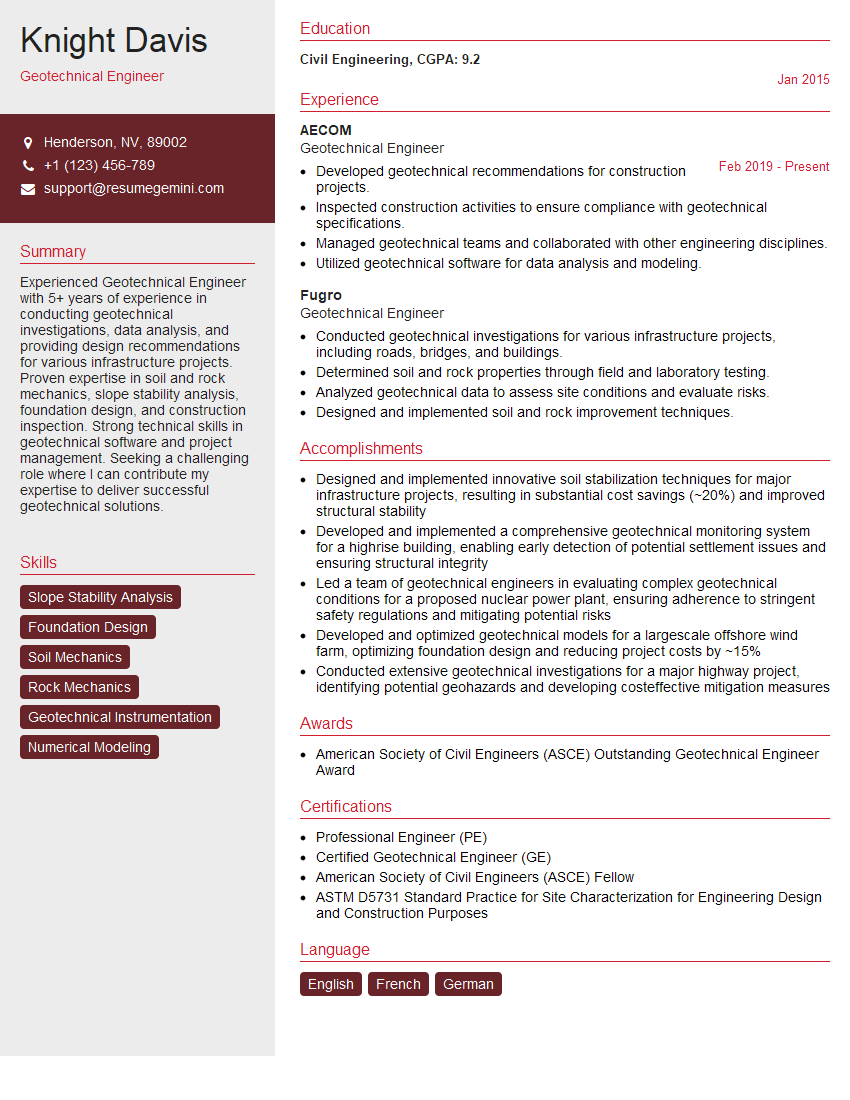
Geotechnical Engineer Resume Sample
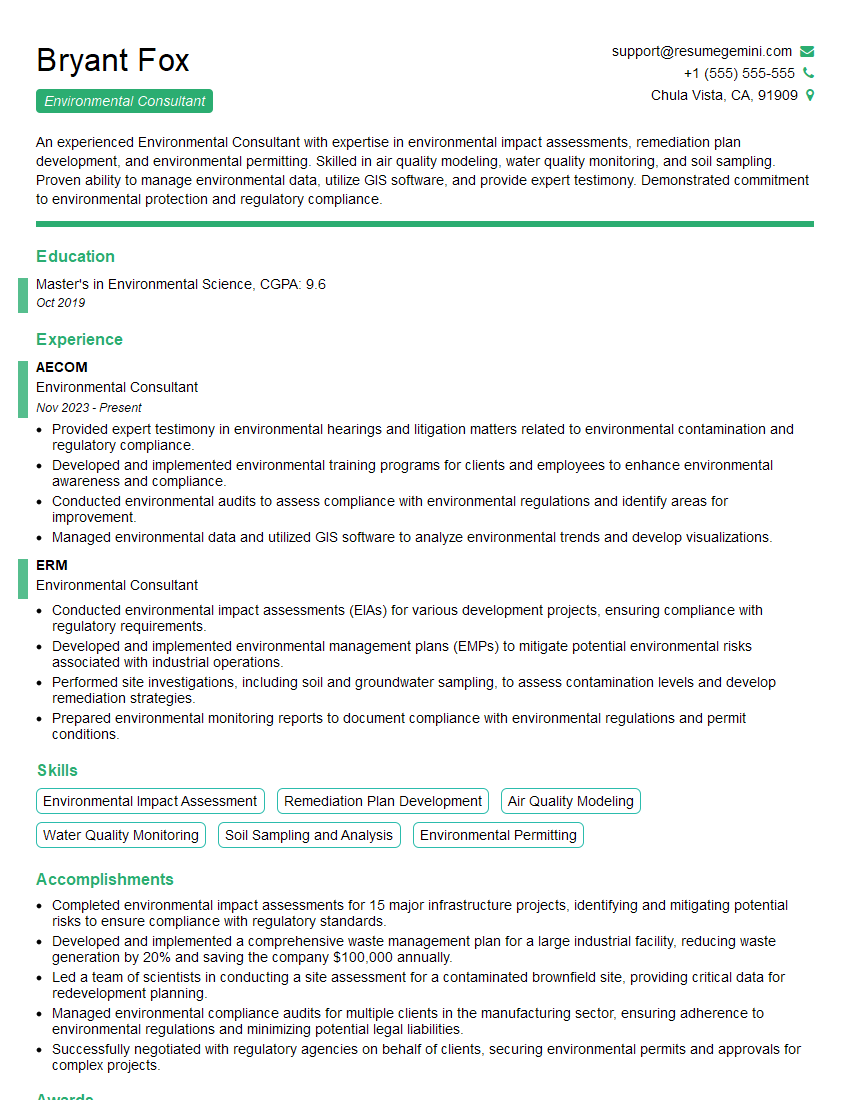
Environmental Consultant Resume Sample
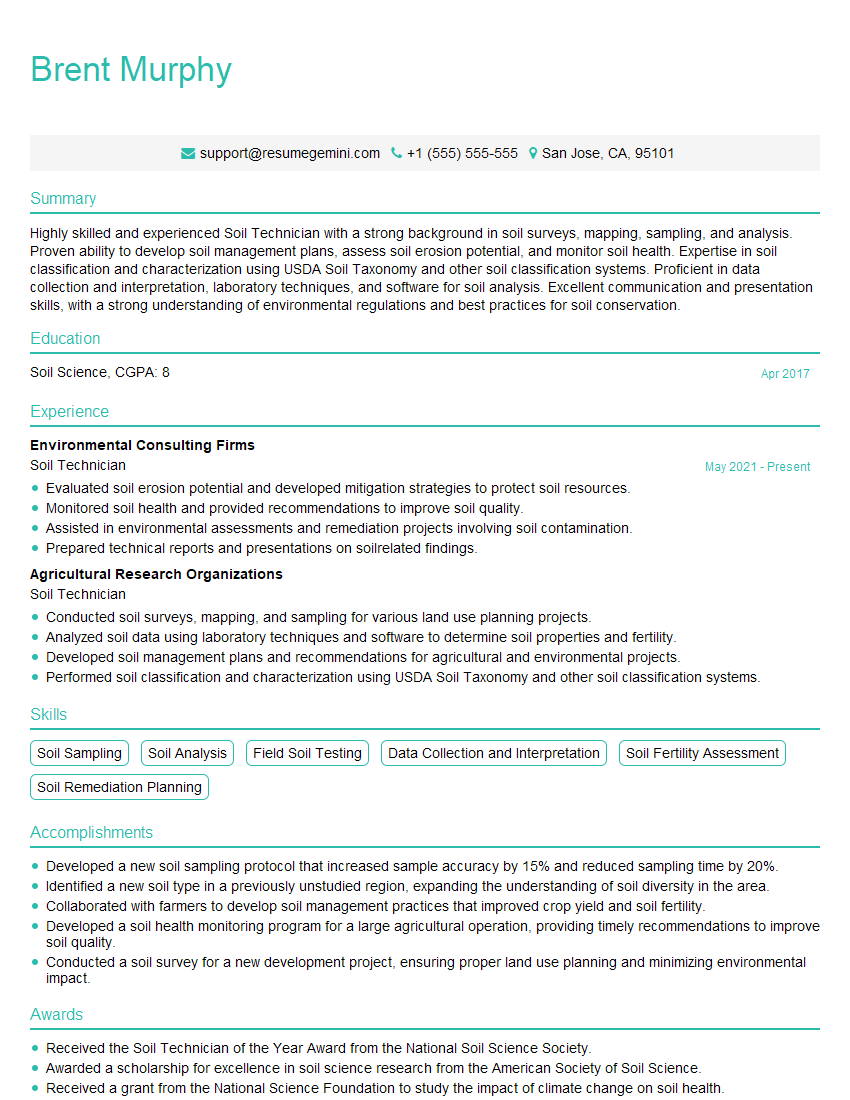
Soil Technician Resume Sample
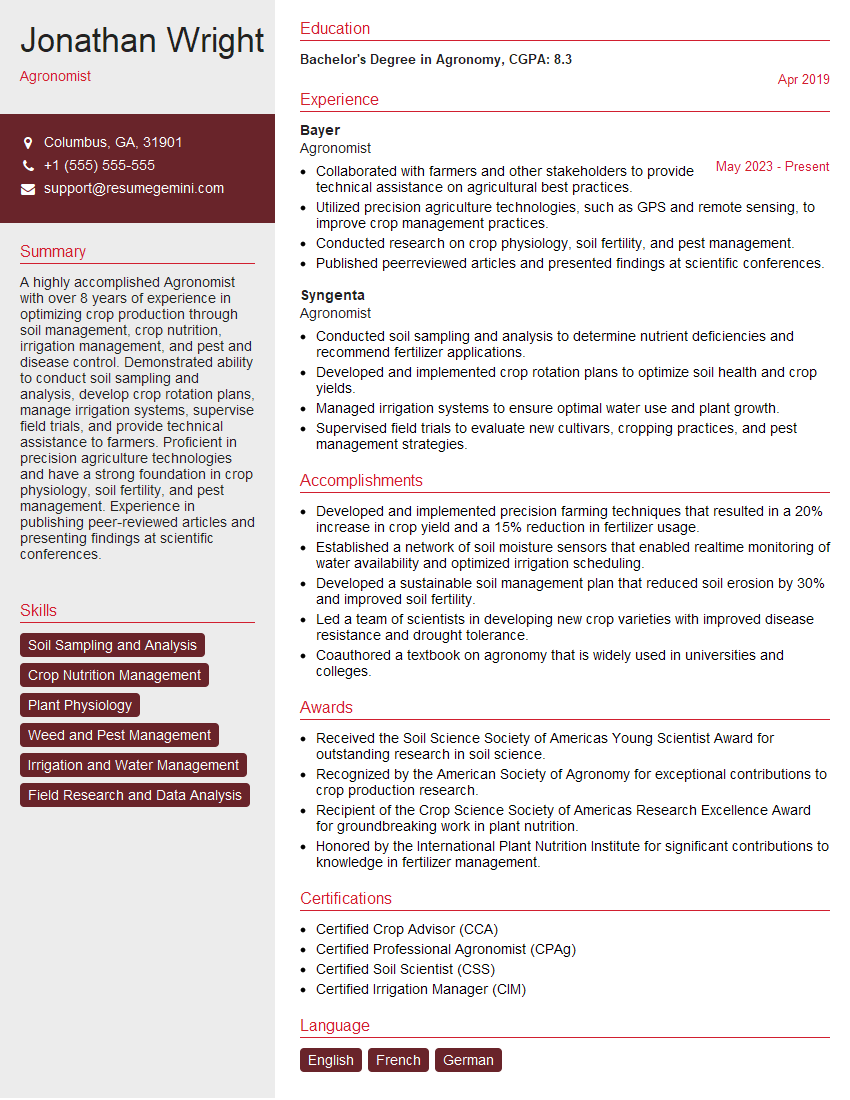
Agronomist Resume Sample

Arborist Resume Sample

Soil Scientist Resume Sample
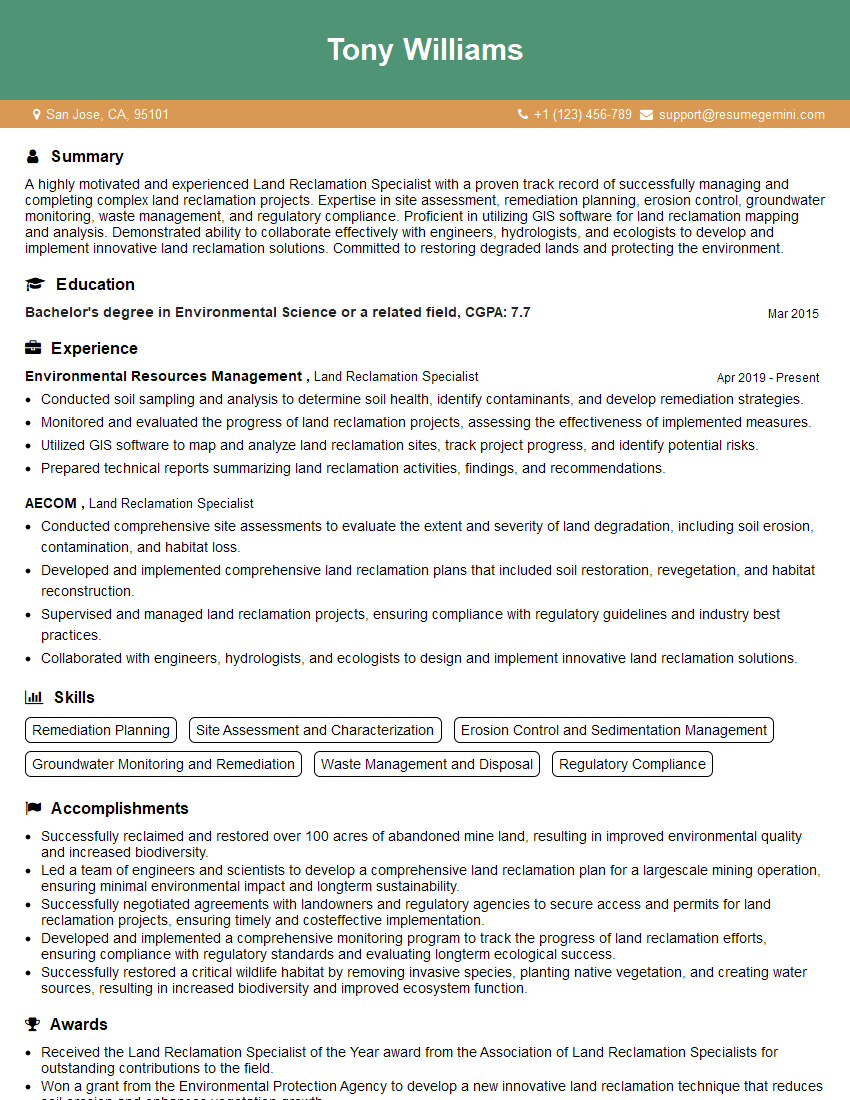
Land Reclamation Specialist Resume Sample
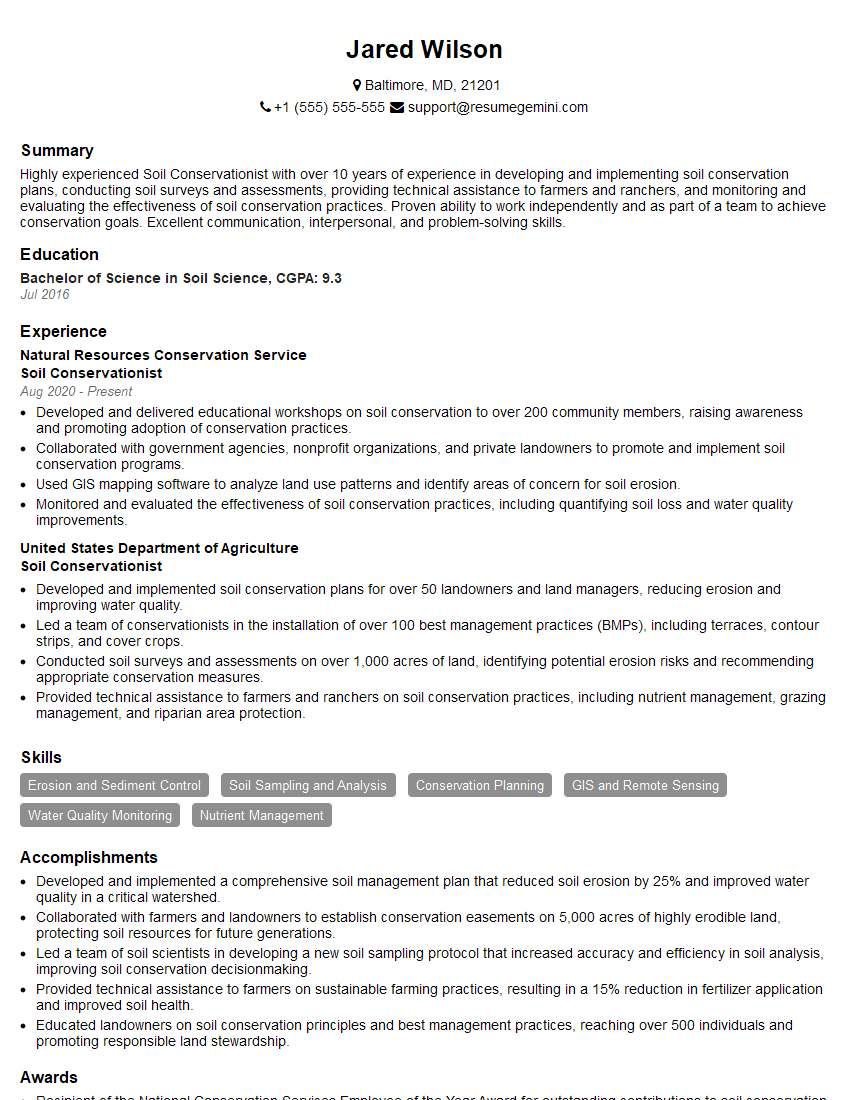
Soil Conservationist Resume Sample
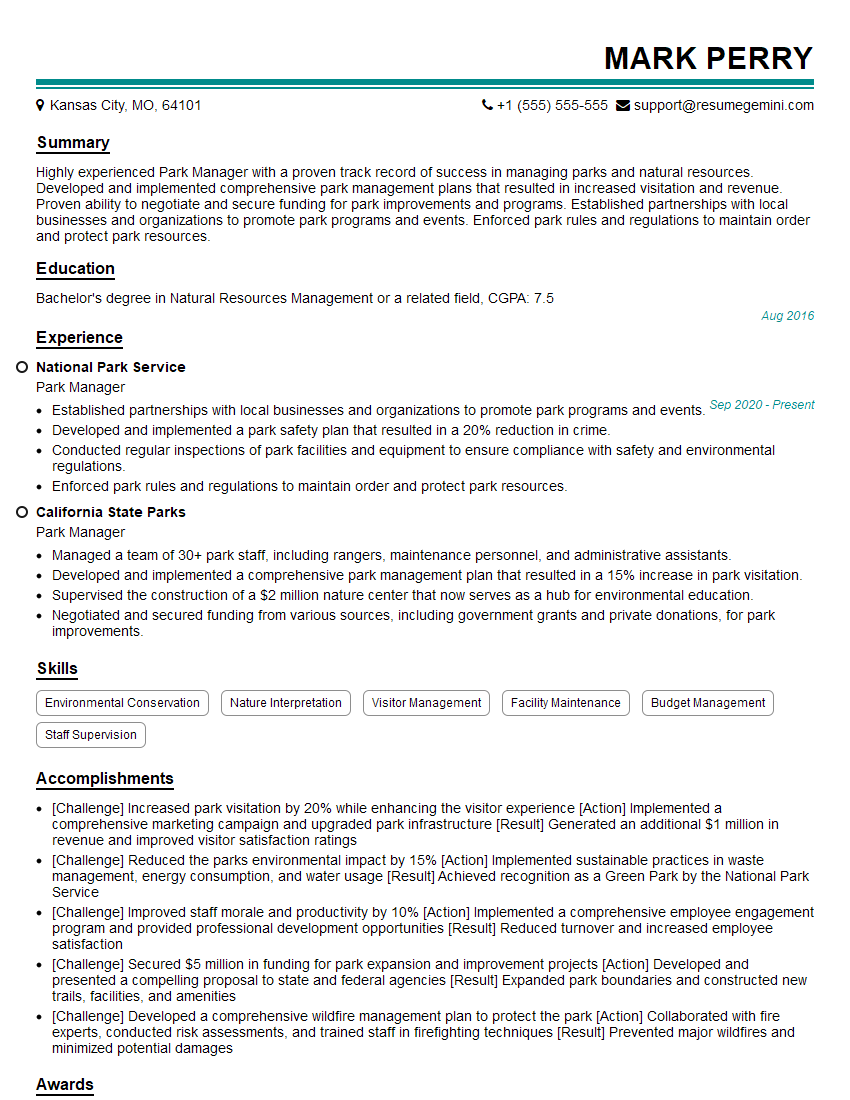
Park Manager Resume Sample
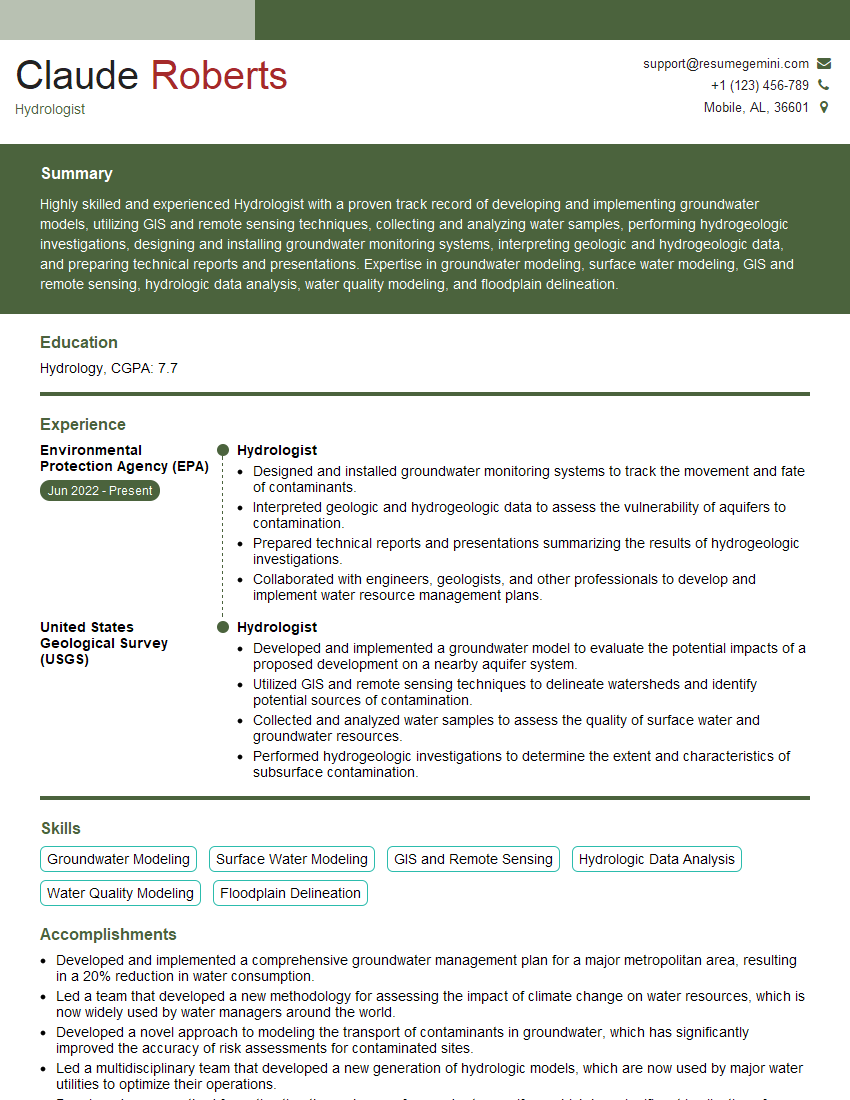
Hydrologist Resume Sample
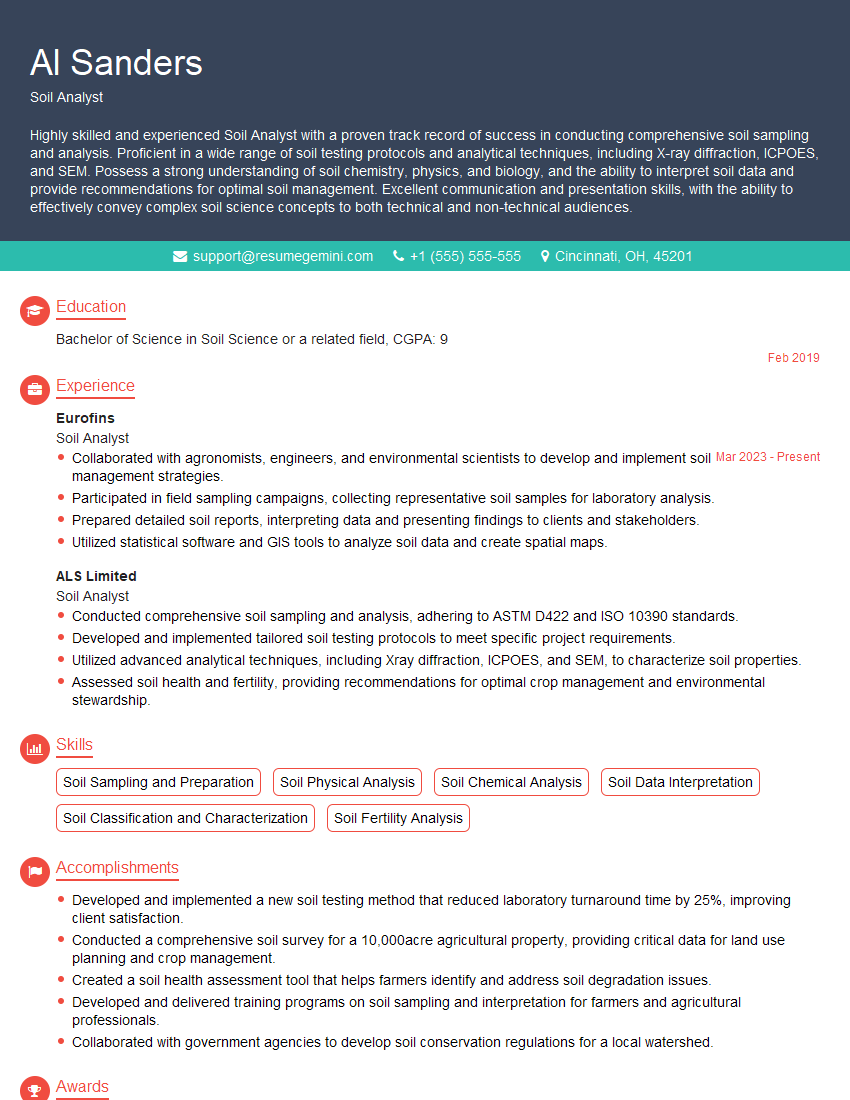
Soil Analyst Resume Sample

Golf Course Superintendent Resume Sample

Groundskeeper Resume Sample
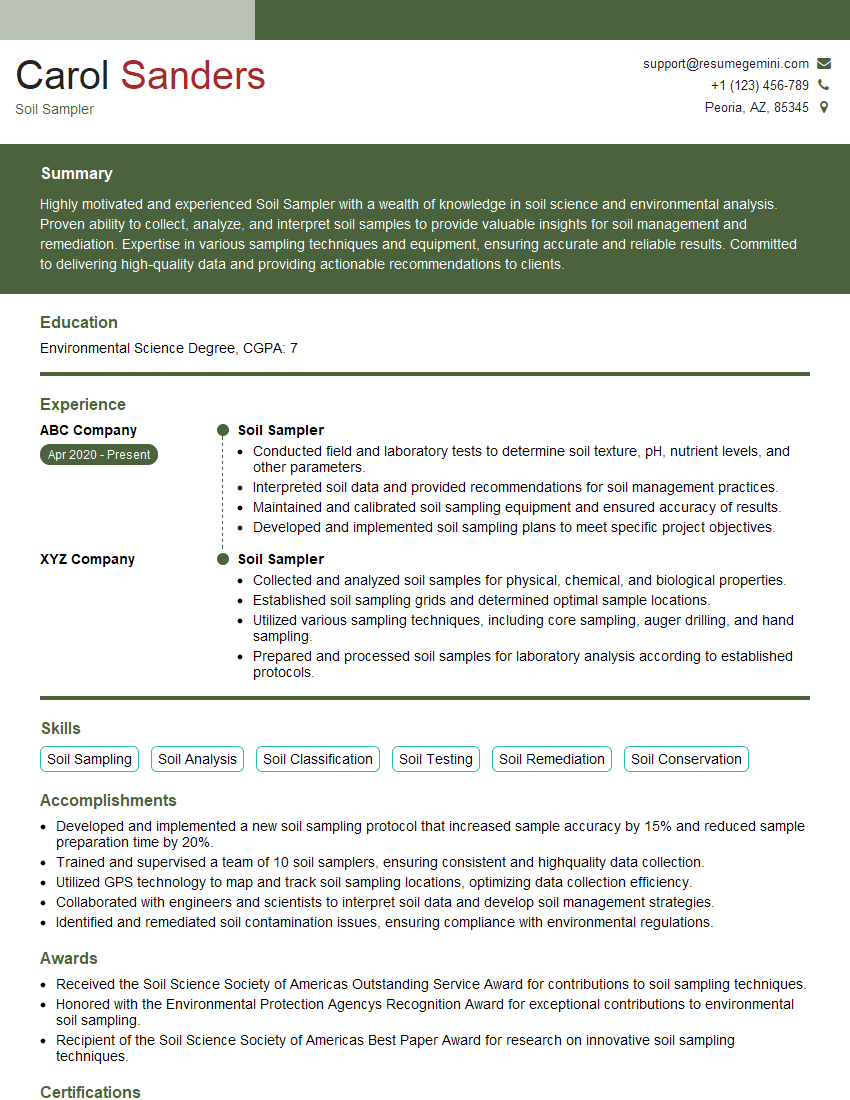
Soil Sampler Resume Sample
- Sustainability Manager
- Farm Manager
- Horticulturist
- Nursery Manager
- Environmental Scientist
- Landscape Architect
- Agricultural Engineer
- Geotechnical Engineer
- Environmental Consultant
- Soil Technician
- Agronomist
- Arborist
- Soil Scientist
- Land Reclamation Specialist
- Soil Conservationist
- Park Manager
- Hydrologist
- Soil Analyst
- Golf Course Superintendent
- Groundskeeper
- Soil Sampler
Explore more articles
Users Rating of Our Blogs
Share Your Experience
We value your feedback! Please rate our content and share your thoughts (optional).
What Readers Say About Our Blog
Very informative content, great job.
good