Every successful interview starts with knowing what to expect. In this blog, we’ll take you through the top Solar Energy Research and Development interview questions, breaking them down with expert tips to help you deliver impactful answers. Step into your next interview fully prepared and ready to succeed.
Questions Asked in Solar Energy Research and Development Interview
Q 1. Explain the difference between monocrystalline, polycrystalline, and thin-film solar cells.
The main difference between monocrystalline, polycrystalline, and thin-film solar cells lies in their silicon structure and manufacturing process, directly impacting their efficiency and cost.
- Monocrystalline silicon cells: These are made from a single, large, pure silicon crystal. This results in a uniform structure, allowing for higher efficiency (typically 18-22%) because electrons can move more freely. Think of it like a perfectly smooth highway for electrons – less resistance, more speed. They are also typically more expensive due to the energy-intensive process of growing large, single crystals.
- Polycrystalline silicon cells: These are made from multiple silicon crystals fused together. This process is less energy-intensive and thus cheaper than monocrystalline. However, the grain boundaries between the crystals impede electron flow, resulting in slightly lower efficiency (typically 15-17%). Imagine a highway with many speed bumps – the journey is slower.
- Thin-film solar cells: These use a thin layer of photovoltaic material, such as amorphous silicon, cadmium telluride (CdTe), or copper indium gallium selenide (CIGS), deposited on a substrate like glass or plastic. They are flexible, lightweight, and can be less expensive than crystalline silicon cells, but generally have lower efficiency (typically 8-12%). They are like a small, efficient road network suitable for low-light conditions, but with lower overall capacity.
The choice between these cell types depends on the specific application and the balance between cost and efficiency. High-efficiency applications often favour monocrystalline cells, while large-scale utility projects might opt for polycrystalline or thin-film due to cost considerations.
Q 2. Describe the working principle of a photovoltaic cell.
Photovoltaic (PV) cells work on the principle of the photovoltaic effect. When sunlight strikes a PV cell, photons (light particles) interact with the silicon atoms in the cell. This interaction causes electrons to be excited and break free from their atoms. This creates a flow of electrons, which is an electric current.
A PV cell is essentially a semiconductor diode, consisting of a p-n junction. The p-type silicon has an abundance of ‘holes’ (positive charge carriers), while the n-type silicon has an excess of electrons (negative charge carriers). When light hits the junction, electrons from the n-type region are excited and cross over to the p-type region, leaving behind positive ‘holes’. This creates an electric field across the junction that drives the electrons towards the n-type side, creating a direct current (DC) that can power electrical devices.
Imagine a water pump: sunlight is the energy source that ‘pumps’ electrons from one side to the other. This flow of electrons is the electricity we harness.
Q 3. What are the main challenges in large-scale solar energy integration into the power grid?
Integrating large-scale solar energy into the power grid presents several challenges:
- Intermittency: Solar energy generation is intermittent, dependent on sunlight availability. This variability poses a challenge to grid stability, requiring sophisticated grid management strategies and energy storage solutions (like batteries or pumped hydro).
- Geographic limitations: Solar resources vary geographically, limiting the deployment locations of large-scale solar farms. Transmission infrastructure often needs upgrades to transport power from remote solar farms to load centers.
- Land use: Large-scale solar installations require substantial land areas, raising concerns about land use conflicts with agriculture, ecosystems, and other land uses.
- Grid integration costs: Integrating large amounts of solar power necessitates upgrades to the existing grid infrastructure, involving significant capital investment in transformers, substations, and transmission lines.
- Environmental impacts: The manufacturing and disposal of solar panels involve environmental considerations, such as resource consumption and waste management.
Addressing these challenges often involves advanced forecasting techniques, smart grids, energy storage systems, and careful environmental planning and lifecycle assessments.
Q 4. Discuss different solar tracking systems and their advantages and disadvantages.
Solar tracking systems maximize solar energy harvesting by constantly adjusting the orientation of solar panels to follow the sun’s path throughout the day. There are several types:
- Single-axis tracking: These systems rotate panels around a single axis, either east-west (azimuth) or north-south (elevation). Azimuth tracking generally offers better performance in most locations. They are simpler and cheaper than dual-axis systems, but less efficient at maximizing energy capture.
- Dual-axis tracking: These systems rotate panels around two axes, allowing them to follow the sun’s position with greater precision. They yield the highest energy production but are more expensive and complex to install and maintain.
- Fixed-tilt systems: These don’t track the sun, leading to lower energy yield. However, they are the simplest and cheapest option.
The choice of tracking system depends on factors such as energy yield requirements, budget, site conditions, and maintenance considerations. Dual-axis systems are most effective in high-irradiance regions where the increased yield justifies the higher cost. For example, a large utility-scale solar plant in a sunny desert might use dual-axis trackers, while a residential installation might use a simpler fixed-tilt system.
Q 5. Explain the concept of solar irradiance and its importance in solar energy system design.
Solar irradiance refers to the amount of solar power received by a surface per unit area. It’s typically measured in watts per square meter (W/m²). It is crucial in solar energy system design because it directly impacts the power output of a solar panel.
Knowing the average daily, monthly, or annual solar irradiance at a specific location is essential for sizing solar panels and inverters, predicting energy generation, and assessing the economic viability of a solar project. Higher irradiance means more power generation, requiring fewer panels to meet a certain energy target. This data is obtained from solar resource maps and weather data.
For instance, a solar system designer in Phoenix, Arizona (high irradiance) would need far fewer panels to generate the same amount of electricity compared to a similar system in Seattle, Washington (lower irradiance).
Q 6. What are the different types of solar thermal systems?
Solar thermal systems utilize solar energy to generate heat. Different types exist, based on how they capture and use heat:
- Passive solar thermal systems: These systems rely on the building’s design and materials to absorb and store solar heat. Examples include using south-facing windows for natural heating or incorporating thermal mass (like concrete or stone) to retain heat. They are cost-effective but have limited control over heat distribution.
- Active solar thermal systems: These systems use mechanical devices to collect and distribute solar heat. Examples include:
- Flat-plate collectors: These are relatively simple and inexpensive collectors that absorb solar radiation and transfer heat to a working fluid (usually water or air).
- Evacuated tube collectors: These collectors use vacuum-insulated tubes to reduce heat loss, resulting in higher efficiency, particularly in colder climates.
- Concentrated solar power (CSP) systems: These systems use mirrors or lenses to concentrate sunlight onto a receiver, generating high temperatures for electricity generation or industrial process heat. They are expensive but can achieve high efficiencies and operate even at night.
The choice of solar thermal system depends on factors such as climate, application, cost considerations, and desired level of control over heat distribution. Passive systems might be suitable for heating individual buildings, while large-scale industrial applications could opt for CSP systems.
Q 7. Describe the various methods for testing and characterizing solar cells and modules.
Testing and characterizing solar cells and modules are crucial to assess their performance and ensure quality. Several methods exist:
- I-V curve measurements: This is a fundamental test to determine the current-voltage characteristics of a solar cell or module under various illumination conditions. The data reveals key parameters such as short-circuit current (Isc), open-circuit voltage (Voc), fill factor (FF), and maximum power (Pmax).
- Spectral response measurements: This test measures the cell’s response to different wavelengths of light, providing insights into its spectral sensitivity and identifying potential weaknesses in certain parts of the solar spectrum.
- Quantum efficiency measurements: This determines the number of electrons generated per incident photon. It helps to understand the cell’s efficiency at different wavelengths.
- Temperature coefficient measurements: These determine how the cell’s performance changes with temperature. This is essential for designing systems that perform optimally under different climatic conditions.
- Thermal imaging: This technique identifies hot spots or defects within a module, which could reduce the cell’s efficiency or lifetime.
- Electroluminescence (EL) imaging: This method detects internal defects and shunts in solar cells and modules by visualizing light emission under forward bias.
- Mechanical testing: Tests such as tensile strength, bending strength, and impact resistance are done to assess the physical robustness of modules, ensuring structural integrity under various environmental conditions.
These tests are conducted using specialized equipment in certified laboratories, adhering to industry standards like IEC 61215 and IEC 61646. The results ensure that solar panels and modules meet quality, performance, and safety requirements before deployment in real-world applications.
Q 8. How do you calculate the energy yield of a solar power system?
Calculating the energy yield of a solar power system involves estimating the total amount of electricity it will generate over a specific period, typically a year. This isn’t a simple calculation, as it depends on many factors.
The most common approach is to use the following formula:
Annual Energy Yield (kWh) = System Size (kWp) × Peak Sun Hours (hours/day) × Days in Year × Derating FactorLet’s break this down:
- System Size (kWp): This represents the total power output of your solar panel array at peak sunlight conditions, measured in kilowatts-peak (kWp).
- Peak Sun Hours (hours/day): This represents the average number of hours per day during which your system receives peak sunlight intensity. This varies significantly based on location, time of year, and weather conditions. You can find this data from solar irradiance maps or online resources for your specific location.
- Days in Year: This is simply 365 days.
- Derating Factor: This accounts for various losses in the system, including losses due to temperature, soiling, inverter efficiency, and shading. A typical derating factor ranges from 0.75 to 0.85. A lower factor indicates greater losses.
Example: Let’s say you have a 5 kWp system in a location with an average of 4 peak sun hours per day, and you use a derating factor of 0.8. Your estimated annual energy yield would be:
Annual Energy Yield = 5 kWp × 4 hours/day × 365 days × 0.8 = 5840 kWhIt’s crucial to remember that this is an estimate. Actual energy yield can vary due to unpredictable factors like weather and system malfunctions.
Q 9. Explain the concept of the energy payback time for a solar energy system.
Energy payback time (EPBT) for a solar energy system is the time it takes for the energy produced by the system to equal the energy consumed in its manufacturing, installation, and transportation. Think of it like this: how long does it take for the system to ‘pay back’ the energy invested in creating it?
Calculating EPBT requires a detailed Life Cycle Assessment (LCA), considering all energy inputs throughout the system’s life cycle. This includes the energy used to extract raw materials, manufacture components (solar panels, inverters, racking), transport them, install the system, and finally, decommission it at the end of its life. The energy generated by the system is then compared to this total energy consumption.
A shorter EPBT is desirable, indicating a more sustainable investment. Factors affecting EPBT include the type of solar panels (e.g., monocrystalline silicon panels generally have a shorter EPBT than polycrystalline silicon panels), the manufacturing processes involved, and the system’s overall efficiency and lifespan.
For example, a system with a high-efficiency panel and a low-energy-intensive manufacturing process might have an EPBT of under 2 years, while a less efficient system might take 3-5 years or longer.
Q 10. What are the different types of solar inverters and their applications?
Solar inverters are crucial components that convert the direct current (DC) electricity generated by solar panels into alternating current (AC) electricity, which is what we use in our homes and businesses. Several types exist, each with specific applications:
- String Inverters: These are the most common and cost-effective type. They connect multiple solar panels in series (a ‘string’), and a single inverter converts the combined DC output to AC. Suitable for smaller residential systems, but can be affected by shading on even one panel in the string.
- Microinverters: These are small inverters attached to individual solar panels, converting DC to AC at the panel level. This offers improved energy harvesting, as shading on one panel doesn’t affect the others. However, they are more expensive than string inverters.
- Power Optimizers: These devices sit between the solar panels and the inverter, maximizing the energy output of each panel by adjusting to varying conditions like shading or temperature. They work in conjunction with string or central inverters.
- Central Inverters: Used in large-scale solar farms, these handle the output of thousands of solar panels. They are highly efficient but require specialized installation and maintenance.
The choice of inverter depends heavily on system size, budget, and desired performance. For instance, a homeowner with a small roof-top system might choose a string inverter for cost-effectiveness, while a large commercial installation would benefit from the scalability and efficiency of a central inverter.
Q 11. Describe different types of solar energy storage systems and their pros and cons.
Solar energy storage systems are crucial for utilizing solar power beyond daylight hours. Several types are available:
- Battery Storage (Lithium-ion, Lead-acid): Lithium-ion batteries offer higher efficiency, longer lifespan, and faster charge/discharge rates than lead-acid batteries, but are also more expensive. Lead-acid batteries are cheaper but less efficient and have a shorter lifespan. Both store energy in chemical form and can provide power during outages.
- Pumped Hydro Storage: This large-scale method uses excess solar energy to pump water uphill to a reservoir. During periods of low solar generation, the water flows downhill, generating hydroelectric power. It is extremely efficient and suitable for large grid-scale applications but requires significant infrastructure investment and suitable geography.
- Thermal Storage: This involves using solar energy to heat a substance (e.g., water, molten salt), which then releases the heat later to generate electricity or provide heat for buildings. Thermal storage systems are especially beneficial for concentrated solar power plants.
- Compressed Air Energy Storage (CAES): Excess solar energy drives a compressor to store compressed air in underground caverns. When energy is needed, the air is released to drive turbines, generating electricity.
The choice of storage depends on the application. For residential use, battery storage is common. For large-scale grids, pumped hydro or CAES are more appropriate, albeit with higher capital costs and location restrictions. Battery systems offer flexibility and backup power but have a limited lifespan and need replacement. Large-scale storage options provide longer-term storage capabilities but require significant upfront investment.
Q 12. Explain the impact of shading on solar panel performance.
Shading significantly impacts solar panel performance. Even a small amount of shade can drastically reduce the overall power output of a string of panels connected in series. This is because the current flowing through the entire string is limited by the shaded panel, effectively ‘bottlenecking’ the entire system. Imagine it like a chain: the strength of the entire chain is limited by its weakest link.
The effect of shading is particularly pronounced in string inverters, which are commonly used in residential systems. If one panel in the string is shaded, its voltage drops, reducing the current flowing through all panels and consequently reducing the power output of the entire string. The loss is not simply proportional to the shaded area, but can be much more substantial.
To mitigate this, microinverters or power optimizers can be used. These devices bypass the shaded panel, allowing other panels in the string to operate at their full capacity. Proper panel orientation and placement to avoid shading are also critical considerations during system design. Careful analysis of potential shading sources (trees, buildings) is necessary to optimize the system’s efficiency.
Q 13. What are the main factors affecting the efficiency of solar cells?
The efficiency of solar cells – their ability to convert sunlight into electricity – is influenced by several factors:
- Material Properties: The semiconductor material used (e.g., silicon, cadmium telluride, perovskite) directly impacts its bandgap, affecting how effectively it absorbs sunlight. The purity and crystalline structure of the material are also crucial.
- Temperature: Higher temperatures reduce the efficiency of solar cells. This is because increased thermal energy reduces the electron-hole separation in the material.
- Light Intensity and Spectrum: Solar cells are designed to perform optimally at a certain light intensity and spectral distribution. Differences in sunlight intensity (due to weather, time of day, and season) and variations in the solar spectrum (e.g., at different altitudes) can affect output.
- Surface Recombination: Electrons and holes generated in the solar cell can recombine before they are collected, resulting in energy loss. High-quality surface passivation is critical to minimize this.
- Manufacturing Defects and Imperfections: Any defects or impurities in the solar cell material can act as recombination centers, reducing efficiency. Advanced manufacturing techniques are used to minimize these defects.
These factors interact in complex ways, and improving efficiency often involves balancing competing effects. For example, using a material with a wider bandgap increases its voltage output but might reduce its current output.
Q 14. Describe different methods for maximizing the efficiency of solar energy systems.
Maximizing the efficiency of solar energy systems involves several strategies:
- Optimizing Panel Placement and Orientation: Careful consideration of shading, roof angle, and compass direction maximizes sunlight exposure. South-facing installations (in the Northern Hemisphere) generally achieve optimal results.
- Employing Advanced Solar Cell Technologies: Utilizing higher-efficiency solar cells (e.g., those with advanced anti-reflective coatings or multiple junctions) significantly boosts overall system output.
- Using Power Optimizers or Microinverters: These mitigate power losses due to shading or panel mismatch within the array.
- Implementing Effective Thermal Management: Cooling systems or techniques that prevent overheating enhance panel performance and longevity.
- Regular Cleaning and Maintenance: Cleaning solar panels to remove dirt and debris ensures optimal light absorption. Regular inspection and maintenance prevent system failures.
- Utilizing Energy Storage: Storage solutions allow for better use of energy generated during peak sunlight hours, reducing reliance on the grid and increasing self-sufficiency.
- Smart Energy Management Systems: Employing smart inverters and monitoring systems optimizes energy usage and distribution, enhancing overall efficiency.
Integrating these strategies effectively requires a holistic approach, taking into account site-specific conditions, budgetary constraints, and long-term goals. For example, a large-scale solar farm might prioritize the use of advanced tracking systems and high-efficiency panels, while a residential installation might focus on optimizing panel placement and employing microinverters to maximize energy harvesting even with shading.
Q 15. Discuss the environmental impacts of solar energy production and use.
Solar energy, while a clean energy source, isn’t without environmental impact. The production phase involves material extraction, manufacturing, and transportation, all with associated carbon footprints. For example, the mining of silicon for photovoltaic (PV) cells requires energy and can cause habitat disruption. Manufacturing PV panels also uses energy and releases some pollutants. However, these impacts are significantly less than those associated with fossil fuel energy production over the lifespan of a solar panel. The use phase has minimal environmental impact, primarily concerning the eventual disposal of panels at the end of their life. Research focuses on developing more sustainable materials and recycling processes to minimize the overall environmental footprint of solar energy.
Think of it like this: building a house requires cutting down trees and using energy for construction. But the house provides shelter for decades, and its impact is far less than continually building new houses from scratch every year.
- Material extraction and processing: Mining silicon, metals for frames and components.
- Manufacturing: Energy consumption and potential emissions from factories.
- Transportation: Energy used in transporting materials and finished panels.
- End-of-life management: Recycling and disposal of panels, minimizing landfill waste.
Career Expert Tips:
- Ace those interviews! Prepare effectively by reviewing the Top 50 Most Common Interview Questions on ResumeGemini.
- Navigate your job search with confidence! Explore a wide range of Career Tips on ResumeGemini. Learn about common challenges and recommendations to overcome them.
- Craft the perfect resume! Master the Art of Resume Writing with ResumeGemini’s guide. Showcase your unique qualifications and achievements effectively.
- Don’t miss out on holiday savings! Build your dream resume with ResumeGemini’s ATS optimized templates.
Q 16. How do you assess the economic feasibility of a solar energy project?
Assessing the economic feasibility of a solar energy project requires a comprehensive analysis considering various factors. This typically involves a detailed cost-benefit analysis, factoring in initial investment costs, operational expenses, and projected energy production and revenue streams. A crucial aspect is the evaluation of the project’s Return on Investment (ROI) and Net Present Value (NPV). Other important factors include:
- Initial investment costs: This includes land acquisition, panel procurement, installation, inverters, and grid connection fees.
- Operational and maintenance costs: Regular cleaning, repairs, and insurance.
- Energy production estimates: Based on solar irradiance, panel efficiency, and system size.
- Electricity price forecasts: Projected cost of electricity over the project’s lifetime significantly influences profitability.
- Incentives and subsidies: Government tax credits, rebates, or feed-in tariffs can dramatically improve the project’s financial viability.
- Financing options: Loans, equity investments, or Power Purchase Agreements (PPAs).
Example: A feasibility study might compare the total cost of owning and operating a solar system over 25 years against the cost of purchasing electricity from the grid. Sensitivity analyses, considering different electricity price scenarios and financing rates, provide robustness to the assessment.
Q 17. What are the key performance indicators (KPIs) for a solar energy system?
Key Performance Indicators (KPIs) for solar energy systems are crucial for monitoring performance, identifying potential issues, and optimizing energy production. These metrics should be tracked regularly to ensure the system operates as efficiently as possible. Important KPIs include:
- Energy yield (kWh): The total amount of energy produced by the system over a specific period (daily, monthly, annually).
- Capacity factor (%): The ratio of actual energy produced to the maximum possible energy output (considering system capacity and available sunlight). A higher capacity factor indicates better system performance.
- Performance ratio (%): Accounts for losses in the system, including those due to shading, soiling, and temperature effects. A higher ratio implies fewer energy losses.
- System efficiency (%): The overall efficiency of converting solar irradiance into usable electricity. This is influenced by panel efficiency and system losses.
- Specific yield (kWh/kWp): Energy produced per kilowatt peak (kWp) of installed capacity. This standardizes performance comparisons across systems of different sizes.
- O&M costs ($/kWh): Operational and maintenance costs per kilowatt-hour produced.
Practical Application: Regular monitoring of these KPIs helps identify issues like shading, equipment malfunction, or soiling, which can be addressed to maintain optimal performance.
Q 18. What are the latest advancements in solar cell technology?
Recent advancements in solar cell technology aim to improve efficiency, reduce costs, and enhance durability. Key areas of innovation include:
- Perovskite solar cells: Offer potential for higher efficiencies and lower manufacturing costs compared to traditional silicon cells. However, long-term stability remains a research focus.
- Tandem solar cells: Combining different materials (e.g., silicon and perovskite) to absorb a broader spectrum of sunlight, leading to higher overall efficiency.
- High-efficiency silicon solar cells: Continuous improvements in silicon wafer production and cell design lead to increased efficiencies.
- Organic solar cells: Flexible, lightweight, and potentially low-cost, but efficiency and durability are areas of ongoing development.
- Improved anti-reflective coatings and surface passivation techniques: Reducing energy losses within the cell itself to maximize light absorption.
These advancements are driving the development of more efficient, affordable, and sustainable solar technologies.
Q 19. Explain the concept of Concentrated Solar Power (CSP).
Concentrated Solar Power (CSP) utilizes mirrors or lenses to concentrate sunlight onto a receiver, generating heat that drives a conventional power generation cycle (e.g., using steam turbines). Unlike photovoltaic systems that directly convert sunlight into electricity, CSP systems generate heat, then convert that heat to electricity.
Types of CSP technologies:
- Parabolic trough: Linear mirrors focus sunlight onto a receiver tube containing a heat transfer fluid.
- Power tower: Hundreds of heliostats (mirrors) track the sun and focus sunlight onto a central receiver tower.
- Linear Fresnel reflector: Uses rows of flat mirrors to concentrate sunlight onto a receiver.
- Dish Stirling systems: Uses a parabolic dish to concentrate sunlight onto a Stirling engine, which directly converts heat to electricity.
Advantages of CSP: CSP systems can incorporate thermal storage, allowing for electricity generation even after sunset, addressing the intermittency challenge associated with solar energy.
Q 20. Describe the different types of solar collectors used in solar thermal systems.
Solar thermal systems use various collector types to capture solar energy for heating applications. The choice depends on factors like application, budget, and climate.
- Flat-plate collectors: Relatively simple and inexpensive, suitable for lower-temperature applications like domestic hot water heating. They consist of a flat absorber plate covered with a transparent glazing.
- Evacuated tube collectors: More efficient than flat-plate collectors, especially in colder climates. They use vacuum insulation to reduce heat loss.
- Concentrating collectors: Use mirrors or lenses to concentrate sunlight, achieving higher temperatures suitable for industrial process heat or electricity generation (as in CSP systems).
- Unglazed collectors: Simplest and least expensive; suitable for applications where low temperatures suffice and freezing is not a concern.
Example: A solar domestic hot water system would likely use flat-plate collectors, while a large-scale solar thermal power plant would utilize concentrating collectors.
Q 21. How do you design a solar energy system for a specific location?
Designing a solar energy system for a specific location requires a systematic approach, taking into account several critical factors. The process involves:
- Site assessment: Analyzing the available roof or land area, shading patterns, and solar irradiance data (sunlight availability) for the location using tools and resources like Google maps and solar resource maps.
- Energy load calculation: Determining the energy consumption profile of the building or facility to size the system appropriately. This involves analyzing electricity usage patterns over a year.
- System design and component selection: Choosing appropriate solar panels (considering efficiency and aesthetic requirements), inverters, mounting structures, and other components based on the energy load and site conditions.
- Economic analysis: Evaluating the financial feasibility of the project, including initial investment costs, operational expenses, and potential energy savings or revenue generation.
- Regulatory compliance: Ensuring that the system design adheres to all relevant building codes, safety regulations, and permitting requirements.
- Installation and commissioning: Professional installation is crucial for optimal performance and safety. Post-installation testing verifies system functionality.
- Monitoring and maintenance: Regular monitoring of system performance and periodic maintenance will prolong its lifespan.
Software tools: Specialized software packages are available for detailed system design, performance simulation, and financial modeling.
Q 22. What are the safety regulations and standards for solar energy systems?
Safety regulations and standards for solar energy systems are crucial for ensuring both worker and public safety, and for system reliability. These regulations cover various aspects of the system lifecycle, from design and installation to operation and maintenance. They vary by location, but generally include adherence to national and international electrical codes (like NEC in the US or IEC internationally), as well as specific standards for photovoltaic (PV) modules, inverters, and racking systems.
- Electrical Safety: This involves proper grounding, overcurrent protection (fuses and circuit breakers), arc flash mitigation, and safe working practices during installation and maintenance. Think of it like any other electrical system, but with the added complexity of working outdoors and potentially on high voltages.
- Structural Safety: Roof mounting systems must be designed to withstand high winds, snow loads, and other environmental factors. Improper installation can lead to system failure and structural damage. We always need to ensure robust mounting that can handle worst-case scenarios.
- Fire Safety: Solar systems, particularly those with battery storage, carry fire risks. Regulations address safe installation practices, fire suppression systems, and the use of fire-resistant materials. Think about designing the system with fire safety in mind from the beginning, not as an afterthought.
- Environmental Considerations: Regulations also cover the safe disposal of solar panels at the end of their lifespan, minimizing environmental impact. This is becoming increasingly important as older panels reach the end of their service life.
Compliance with these standards is typically verified through inspections and certifications by qualified professionals. Ignoring these standards can lead to significant safety hazards, financial penalties, and legal ramifications.
Q 23. Explain the role of maximum power point tracking (MPPT) in solar energy systems.
Maximum Power Point Tracking (MPPT) is a crucial component in solar energy systems. Think of a solar panel as a small power plant; its power output isn’t constant. It varies with changes in sunlight intensity (clouds passing by) and temperature. MPPT algorithms constantly monitor the voltage and current from the solar panel and adjust the operating point to extract the maximum possible power at any given moment.
Solar panels have a unique voltage-current curve. The maximum power point (MPP) is the specific voltage and current combination that produces the highest power output. Without MPPT, the system might operate far from the MPP, resulting in significant power loss. Imagine trying to squeeze the maximum juice from an orange; you wouldn’t just randomly squeeze – you’d apply the right amount of pressure at the right spot.
MPPT algorithms use various techniques, such as Perturb and Observe (P&O) or Incremental Conductance (IncCond), to find the MPP and maintain operation at that point. These algorithms are implemented in the solar charge controller or inverter. Different algorithms have different strengths and weaknesses in terms of efficiency and speed.
The practical impact of MPPT is significant. A well-designed system with efficient MPPT can increase power generation by 15-30% compared to systems without MPPT, especially in conditions with varying sunlight or high temperatures. It’s a cost-effective way to maximize energy yield from a solar array.
Q 24. Discuss your experience with solar energy modeling software (e.g., PVsyst, SAM).
I have extensive experience utilizing solar energy modeling software, primarily PVsyst and SAM (System Advisor Model). These tools are indispensable for designing and optimizing solar energy systems. PVsyst excels in detailed simulations of PV system performance, considering factors like shading, temperature, and module characteristics. SAM, on the other hand, offers a broader perspective, incorporating financial analysis, energy storage, and system optimization tools.
For example, in a recent project, we used PVsyst to simulate the performance of a rooftop solar array in a highly shaded environment. By using the detailed shading analysis capabilities of PVsyst, we were able to optimize the array layout, minimizing shading losses and maximizing energy production. We then integrated this data into SAM to conduct a financial analysis of the project, assessing various financing options and determining the optimal system size.
My experience encompasses various aspects of these software packages: inputting site-specific data, performing simulations, analyzing results, and generating reports. This includes proficiency in using advanced features like detailed meteorological data input and custom component modeling. We often need to refine the input data to reflect unique site challenges or specific hardware we may use to provide the most accurate predictions.
Q 25. How do you troubleshoot common problems in solar energy systems?
Troubleshooting solar energy systems requires a systematic approach, starting with a thorough understanding of the system’s components and their interconnections. A common analogy is a chain – the weakest link determines the overall strength. The same holds for solar systems where one failing component can compromise the entire system.
My troubleshooting methodology typically follows these steps:
- Visual Inspection: Start with a visual inspection of the entire system, checking for obvious problems like damaged panels, loose connections, or shading issues. Sometimes, the problem is as simple as a bird’s nest blocking sunlight!
- Data Acquisition: Use monitoring tools to gather data on the system’s performance, such as voltage, current, power output, and temperature. These sensors give us critical insight into what is going on in the system.
- Component Testing: Once we identify potential problem areas, we proceed with testing individual components like panels, inverters, and wiring. Using multimeters and other specialized equipment, we can isolate the root cause of the fault.
- System Diagnostics: Advanced inverters often have built-in diagnostic capabilities providing specific error codes and valuable clues to the problem.
- Data Analysis: We can analyze the data collected to understand trends and identify patterns that may point to systematic issues. This might involve pattern recognition in a dataset or cross-referencing information from multiple sensors.
Through experience, we become adept at pinpointing the causes of problems. For example, a sudden drop in power output can indicate a faulty inverter, while consistent low production across all panels might suggest an issue with the array’s orientation or significant shading.
Q 26. Describe your experience in data analysis related to solar energy.
Data analysis is integral to my work in solar energy. I regularly analyze data from various sources to optimize system design, assess performance, and predict future behavior. This involves a range of techniques.
For instance, I’ve used statistical analysis to determine the correlation between solar irradiance and energy production. This helps in developing accurate predictive models for energy generation. I have also used time series analysis techniques to model energy production over time, identifying seasonal variations and other factors affecting output. This understanding can be used to better manage storage or grid integration.
Additionally, I am proficient in using data visualization tools to represent complex datasets in a clear and understandable manner. This aids in communicating findings to clients and stakeholders, enabling them to make informed decisions. We might also apply machine learning techniques to forecast energy production or predict system faults based on historical data.
My experience includes working with large datasets from multiple solar systems, requiring efficient data handling and processing techniques. We usually utilize data cleaning, preprocessing, and validation routines before applying analytic approaches to ensure data integrity and reliability.
Q 27. What are the future trends and challenges in the field of solar energy research and development?
The future of solar energy R&D is incredibly exciting, but also faces significant challenges.
- Perovskite Solar Cells: These emerging cells offer the potential for higher efficiencies and lower manufacturing costs than traditional silicon-based cells. However, stability issues remain a major hurdle.
- Solar Energy Storage: Integrating efficient and cost-effective energy storage solutions is critical for overcoming the intermittency of solar energy. Research is focusing on advanced battery technologies and other storage methods, like pumped hydro and thermal storage.
- AI and Machine Learning: These technologies are transforming solar energy. We can improve forecasting accuracy for energy production, optimize system operation, and even facilitate predictive maintenance to reduce downtime.
- Smart Grid Integration: Developing intelligent grids that can seamlessly integrate the distributed generation of solar power while maintaining system stability and reliability is an ongoing challenge.
- Material Science Advancements: Ongoing research focuses on developing new materials with improved optical and electrical properties for more efficient and durable solar cells.
The major challenges include achieving grid parity (making solar power cost-competitive with fossil fuels in all scenarios), enhancing the durability and lifespan of solar panels, and reducing the environmental impact of manufacturing processes. Overcoming these challenges will be key to unlocking the full potential of solar energy and transitioning to a sustainable energy future.
Q 28. Describe your experience with specific solar energy research projects.
I’ve been involved in several key research projects. One focused on developing a novel MPPT algorithm using artificial neural networks. We aimed to improve tracking speed and efficiency in dynamic conditions, particularly those with rapidly changing cloud cover. The results were promising, showing a significant improvement in energy yield compared to traditional MPPT algorithms. Another project involved the life-cycle assessment (LCA) of different PV module technologies, analyzing their environmental impacts from material extraction to disposal. We found that using recycled materials and improving end-of-life management significantly reduced the environmental footprint of solar energy.
Recently, I participated in a project using drone-based imagery and machine learning to detect and quantify shading losses in large-scale solar farms. This allowed for a quick and efficient assessment of potential performance losses and improved operational optimization strategies. Each project required a multidisciplinary approach combining electrical engineering, software development, and data analysis skills.
These projects, along with many others, have allowed me to deepen my knowledge and contribute to the advancement of solar energy technology. They’ve demonstrated the importance of collaboration, meticulous data analysis, and a commitment to innovation in tackling the complexities of renewable energy research.
Key Topics to Learn for Solar Energy Research and Development Interview
- Photovoltaic (PV) Technology: Understanding different PV cell materials (silicon, perovskite, etc.), their efficiency, manufacturing processes, and limitations. Consider exploring advancements in thin-film solar cells and tandem solar cells.
- Solar Thermal Energy: Learn about concentrating solar power (CSP) systems, parabolic troughs, power towers, and their applications in electricity generation and thermal energy storage. Explore the challenges related to efficiency and thermal management.
- Solar Energy Modeling and Simulation: Familiarize yourself with software and techniques used to model and simulate solar energy systems, including PV system performance, solar irradiance, and energy yield. This includes understanding the impact of weather patterns and shading on system output.
- Energy Storage Solutions: Explore various energy storage technologies paired with solar energy, such as battery systems (lithium-ion, flow batteries), pumped hydro storage, and thermal energy storage. Understand their advantages, disadvantages, and integration challenges.
- Grid Integration and Power Electronics: Learn about the challenges and solutions related to integrating solar power into the electrical grid, including power converters, inverters, and grid stability. Consider exploring smart grid technologies and their role in managing renewable energy sources.
- Materials Science and Nanotechnology: Understand the role of materials science in improving solar cell efficiency and durability. Explore advancements in nanotechnology and their potential applications in solar energy research.
- Environmental Impact and Life Cycle Assessment: Familiarize yourself with the environmental impact of solar energy technologies throughout their lifecycle, from material extraction to disposal. This includes understanding carbon footprints and sustainable manufacturing practices.
- Data Analysis and Interpretation: Develop skills in analyzing experimental data, interpreting results, and presenting findings effectively. This is crucial for research and development roles.
Next Steps
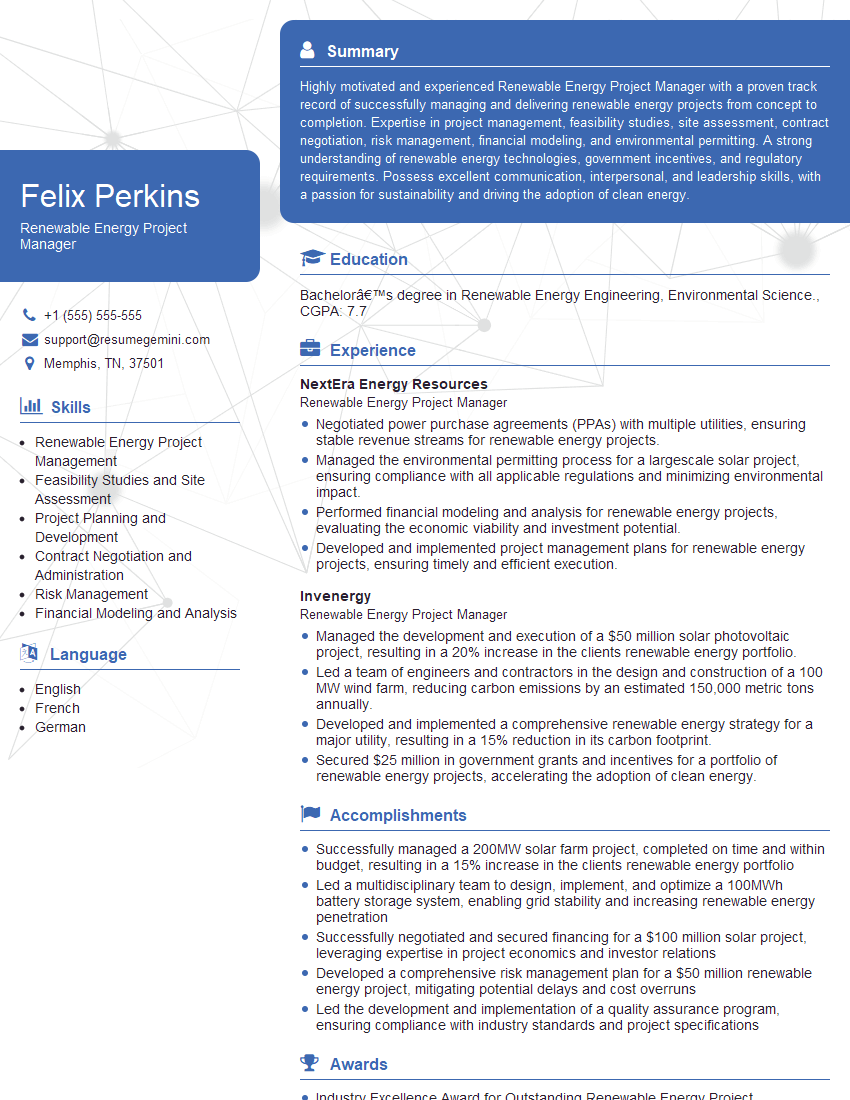
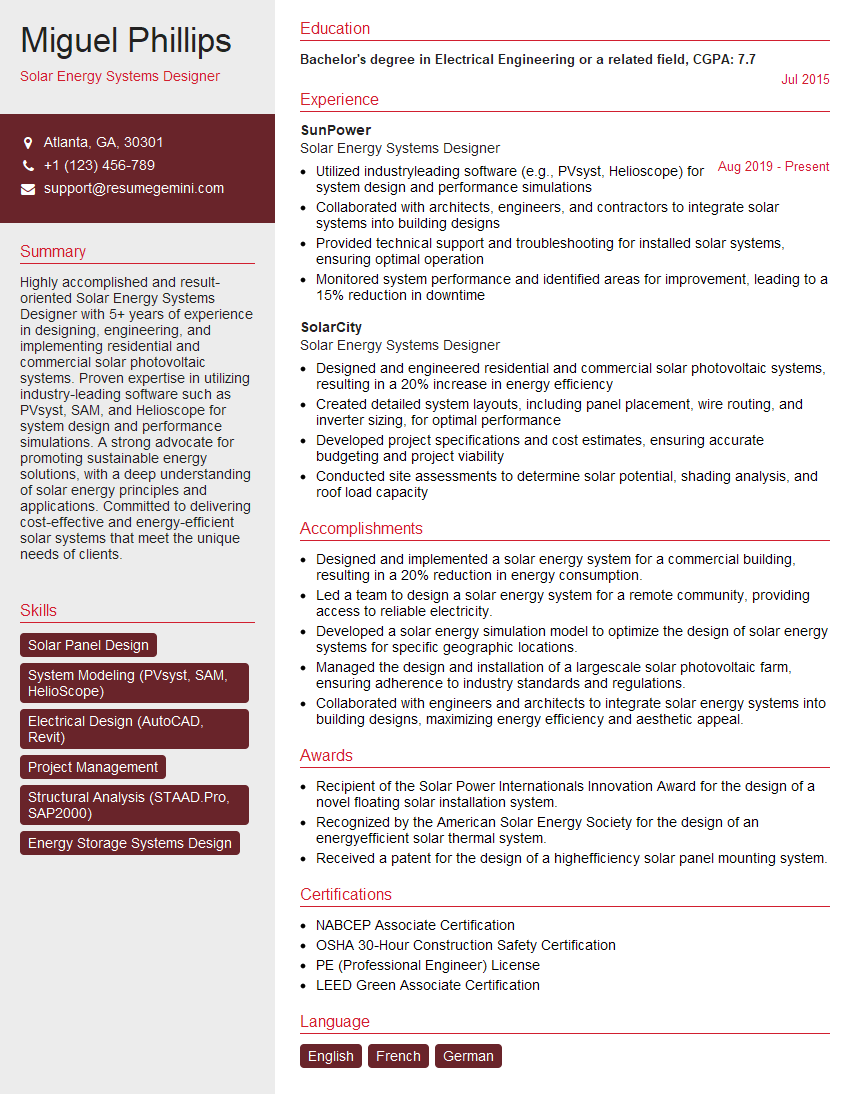
Mastering Solar Energy Research and Development opens doors to a rewarding and impactful career, contributing to a sustainable energy future. A strong resume is crucial for showcasing your skills and experience to potential employers. Creating an ATS-friendly resume is essential to ensure your application gets noticed. ResumeGemini can help you craft a professional and effective resume tailored to the demands of the Solar Energy sector. Examples of resumes tailored to Solar Energy Research and Development are available to guide you through the process.

Explore more articles
Users Rating of Our Blogs
Share Your Experience
We value your feedback! Please rate our content and share your thoughts (optional).
What Readers Say About Our Blog
Very informative content, great job.
good