Cracking a skill-specific interview, like one for Solar Panel Design, requires understanding the nuances of the role. In this blog, we present the questions you’re most likely to encounter, along with insights into how to answer them effectively. Let’s ensure you’re ready to make a strong impression.
Questions Asked in Solar Panel Design Interview
Q 1. Explain the difference between monocrystalline, polycrystalline, and thin-film solar panels.
The main difference between monocrystalline, polycrystalline, and thin-film solar panels lies in their silicon structure and manufacturing process, impacting their efficiency and cost.
- Monocrystalline solar panels: Made from a single, large silicon crystal, resulting in a uniform structure. This uniformity leads to higher efficiency (typically 18-22%), but they are more expensive to produce due to the energy-intensive process of growing large, perfect crystals. Think of it like a perfectly cut diamond – beautiful and efficient but costly.
- Polycrystalline solar panels: Made from multiple silicon crystals melted and solidified together. This results in a less uniform structure with slightly lower efficiency (typically 15-17%) compared to monocrystalline panels, but they are cheaper to manufacture because the process is less energy-intensive. Imagine it like a mosaic – many smaller, imperfect pieces creating a whole, resulting in a lower price tag.
- Thin-film solar panels: Made by depositing a thin layer of photovoltaic material onto a substrate like glass or plastic. They are flexible, lightweight, and can be produced at a lower cost, but their efficiency is generally lower (typically 7-13%). They are excellent for integrating into building materials or curved surfaces.
In summary, the choice depends on the budget and efficiency requirements. For maximum efficiency, monocrystalline is preferred, while polycrystalline offers a good balance between cost and performance. Thin-film excels in applications where flexibility and lower weight are crucial.
Q 2. Describe the process of designing a grid-tied solar PV system.
Designing a grid-tied solar PV system involves a systematic approach, encompassing several key stages:
- Load assessment: Determine the energy consumption of the building or facility. This involves analyzing historical energy bills and identifying peak demand periods.
- Solar resource assessment: Analyze solar irradiance data for the location using online tools or specialized software to determine the annual solar energy potential.
- System sizing: Calculate the required PV array size based on the load assessment and solar resource data. This includes factoring in losses from inverters, wiring, and shading.
- Panel selection: Choose appropriate solar panels considering factors like efficiency, cost, and physical dimensions. The panel’s orientation (south-facing in the Northern Hemisphere) and tilt angle are crucial.
- Inverter selection: Select a grid-tied inverter with sufficient capacity to handle the power output of the PV array. Consider features such as MPPT (Maximum Power Point Tracking) and safety certifications.
- System design and layout: Develop a detailed schematic of the system, including panel arrangement, wiring, grounding, and protection devices.
- Component procurement: Source all necessary components such as panels, inverter, mounting hardware, wiring, and disconnect switches.
- Installation and commissioning: Install the system according to the design specifications and ensure proper grounding and safety measures. Commissioning involves testing the system for optimal performance.
- Monitoring and maintenance: Implement a system for monitoring performance and scheduling regular maintenance to ensure long-term efficiency and safety.
For example, designing a system for a home might involve using online calculators to estimate energy needs, choosing panels with high efficiency, and selecting an inverter sized to handle the total power output. This is followed by physically arranging panels to optimize solar exposure and using proper wiring and safety devices. A professional installer is crucial to ensure code compliance and efficient system performance.
Q 3. How do you calculate the energy output of a solar panel array?
Calculating the energy output of a solar panel array involves several steps and considerations:
- Panel power rating: Determine the peak power output (in watts, Wp) of each individual solar panel from its specifications. This is the power output under standard test conditions (STC).
- Number of panels: Count the total number of panels in the array.
- Array power: Multiply the panel power rating by the number of panels:
Total Power (Wp) = Panel Power (Wp) * Number of Panels - Solar irradiance: Account for the actual solar irradiance (amount of sunlight) at the location. This is typically expressed in kW/m² and varies throughout the day and year. This data can be obtained from weather data resources or solar irradiance maps.
- System losses: Factor in various system losses: These include losses due to wiring, shading, temperature effects, soiling (dirt accumulation), and inverter efficiency. Typically, a system loss factor of 10-15% is assumed, though it can be higher in challenging scenarios.
- Annual energy yield: Use solar irradiance data and system losses to calculate the annual energy output (in kilowatt-hours, kWh) of the array. This may require using specialized software or online calculators that incorporate local climate data and system parameters.
Example: If you have 10 panels each rated at 300 Wp, the array’s peak power is 3000 Wp. Considering 10% losses, the effective power output is 2700 Wp. Using a local solar irradiance value and accounting for seasonal variations, a software tool would estimate annual energy output in kWh.
Q 4. What are the key factors to consider when sizing a solar inverter?
Sizing a solar inverter correctly is crucial for optimal system performance and safety. Key factors to consider include:
- DC input power: The inverter must be able to handle the maximum DC power output of the solar array. This value should be slightly higher than the array’s peak power to provide a safety margin.
- AC output power: The inverter’s AC output power should match the expected energy demand of the load. Consider the peak demand, as the inverter must be able to handle peak power requirements.
- Number of MPPT trackers: Multiple MPPT trackers allow for better optimization of power harvesting from different strings of panels with varying shading or orientations. More trackers generally result in higher efficiency.
- Inverter efficiency: Choose an inverter with high efficiency to minimize energy losses. Look for efficiency ratings under various operating conditions.
- Safety certifications: Ensure the inverter meets relevant safety standards and regulations, such as UL 1741 SA or equivalent standards in your region.
- Grid compatibility: The inverter must be compatible with the local grid’s voltage and frequency.
- Environmental considerations: Consider operating temperature range and noise levels.
Undersizing the inverter limits the system’s power output, while oversizing increases costs and might impact grid stability in some installations. Careful consideration of these factors is essential for a well-designed and efficient solar PV system.
Q 5. Explain the concept of maximum power point tracking (MPPT).
Maximum Power Point Tracking (MPPT) is a technique used in solar inverters to maximize the power harvested from solar panels. Solar panels don’t produce constant power, rather the power they generate is determined by the solar irradiance and cell temperature.
The power-voltage curve of a solar panel is not linear; there’s a specific voltage (Vmp) and current (Imp) combination that produces the maximum power (Pmax). This point is called the Maximum Power Point (MPP).
An MPPT algorithm constantly monitors the solar panel’s voltage and current and adjusts the inverter’s input impedance to keep the panel operating at or near its MPP, regardless of changing conditions like cloud cover or temperature fluctuations. This results in significantly increased energy output throughout the day compared to a system without MPPT. Think of it as a skilled driver finding the optimal gear at all times to climb a hill; they avoid unnecessary loss of energy.
Without MPPT, a solar panel may operate at a much lower power output during periods of varying sunlight intensity.
Q 6. What are the different types of solar panel mounting systems?
Solar panel mounting systems are crucial for supporting the panels and ensuring optimal orientation. Several types exist:
- Roof-mounted systems: These are commonly used for residential and commercial applications and can be further classified into:
- Rack-mounted systems: Use metal frames and rails to securely attach panels to the roof. They are relatively easy to install and allow for adjustments to panel tilt.
- Tile-integrated systems: Panels are integrated into roof tiles, providing a sleek and aesthetically pleasing solution.
- Ground-mounted systems: Panels are mounted on the ground using various structures. These are suitable for large-scale solar farms and ground-mounted systems can be adjustable for optimal angle and orientation.
- Pole-mounted systems: Panels are mounted on poles, often used for ground-mounted systems or in areas with limited roof space.
- Wall-mounted systems: Suitable for mounting panels on the walls of buildings.
- Balcony-mounted systems: Designed for smaller installations, perfect for apartments or houses with balconies. Usually smaller, less powerful setups.
The choice of mounting system depends on factors like roof type, building structure, available space, and aesthetic considerations. Careful consideration is required to ensure structural integrity, wind resistance, and snow load capacity (where applicable).
Q 7. How do you account for shading effects in solar panel array design?
Shading significantly reduces the power output of solar panels. Even partial shading on a single panel can impact the entire string’s performance due to the series connection in most PV arrays.
Addressing shading effects in solar panel array design involves several strategies:
- Careful site assessment: Conduct a thorough site analysis to identify potential shading sources such as trees, buildings, or other structures. Use solar modeling software to estimate shading throughout the year.
- Panel arrangement: Design the array to minimize shading. Arrange panels to prevent one panel from casting a shadow on another, especially during peak sun hours.
- Optimized string design: Divide the array into multiple strings, so that shading on one string doesn’t affect other strings. This improves the overall power output and limits the impact of shading.
- Bypass diodes: Panels and strings usually incorporate bypass diodes. These diodes allow current to bypass a shaded cell, preventing it from acting as a bottleneck and significantly reducing the power losses from shading.
- Microinverters: Using microinverters, which are small inverters attached to individual panels or small groups of panels, is a effective way to minimize the impact of shading. Each panel (or a small group) can operate independently near its MPP even if others are shaded.
- Employing shading mitigation software/tools: Software is available to model shading effects and suggest optimal panel arrangement and string configurations.
Ignoring shading effects can lead to substantial energy loss and reduced system efficiency. A well-designed system takes these effects into account to maximize power generation.
Q 8. What are the common causes of solar panel degradation?
Solar panel degradation, the gradual loss of power output over time, is a natural phenomenon, but it can be accelerated by several factors. Think of it like the aging process; everything wears down eventually. However, understanding the causes allows us to mitigate the effects and extend the lifespan of our systems.
- PID (Potential Induced Degradation): This is a significant factor, especially in humid environments. Essentially, electrical potential differences within the panel lead to current leakage and degradation. Proper grounding and panel design can help mitigate this.
- Soiling and Shading: Dust, dirt, bird droppings, and snow accumulating on panels reduce efficiency. Shading from trees or buildings can significantly impact the output of an entire string of panels. Regular cleaning and strategic panel placement are crucial.
- Temperature: High operating temperatures decrease the efficiency of solar cells. Proper ventilation and mounting techniques are key to reducing these temperatures. Consider using panels with better temperature coefficients.
- UV Degradation: Prolonged exposure to ultraviolet (UV) radiation from sunlight can gradually degrade the materials within the panel, reducing its overall performance. Using high-quality encapsulant materials can help resist this.
- Microcracks and Manufacturing Defects: Minor imperfections introduced during the manufacturing process or damage during transportation and installation can lead to performance losses. Thorough quality control checks are essential.
For example, I once worked on a project where PID was a major concern. By implementing proper grounding techniques and using specialized grounding components, we were able to significantly reduce the rate of degradation and extend the system’s useful life.
Q 9. Explain the importance of system grounding in a solar PV system.
System grounding in a solar PV system is absolutely critical for safety and performance. It provides a low-resistance path for fault currents to flow to the earth, preventing dangerous voltage buildup and protecting both equipment and personnel. Imagine it as a safety valve, diverting potentially harmful energy away from sensitive components.
- Safety: Grounding prevents electric shock by diverting fault currents to earth, preventing dangerous voltages from appearing on exposed metal parts of the system.
- Protection of Equipment: It protects against voltage surges and lightning strikes, which can cause significant damage to the inverters and other equipment. Think of it as a lightning rod for your solar system.
- PID Mitigation: As mentioned earlier, proper grounding is essential in mitigating PID, a common cause of solar panel degradation.
In practice, this involves connecting all metal components of the array, racking, and mounting structures to a grounding rod driven deep into the earth. The grounding rod’s connection must have low resistance, usually less than 5 ohms, as measured with a ground resistance tester. Failure to properly ground a system is incredibly dangerous and violates many building codes.
Q 10. Describe the safety precautions involved in working with solar panels.
Safety is paramount when working with solar panels. DC voltages in solar PV systems can be lethal. Never approach a system without proper training and safety equipment.
- Lockout/Tagout (LOTO): Always disconnect the system from the source and lock the disconnect switch to prevent accidental energization before performing any maintenance or repairs. This procedure is essential to prevent electrocution.
- Personal Protective Equipment (PPE): Wear appropriate PPE, including insulated gloves, safety glasses, and arc flash protective clothing, especially when working on high-voltage systems. Insulated tools are also mandatory.
- Awareness of DC Voltages: Understand that even seemingly small solar panels can generate dangerous voltages. Never touch energized components.
- Working at Heights: If working on a rooftop or elevated structure, follow all fall protection procedures, using harnesses, lifelines, and fall arrest systems. Safety first!
- Fire Safety: Be aware of potential fire hazards, especially when working near flammable materials or in hot climates. Have a fire extinguisher readily available.
A simple oversight, like not properly using LOTO, can lead to severe consequences. A colleague once received a minor shock due to neglecting this crucial step. This incident reinforced the importance of strict adherence to safety protocols.
Q 11. What software tools are you familiar with for solar panel design?
I’m proficient in several software tools for solar panel design, each offering unique capabilities. The choice often depends on the specific project requirements and personal preference.
- PVsyst: A comprehensive software package that allows for detailed simulations of solar panel performance, taking into account various factors like shading, temperature, and panel characteristics.
- Helioscope: A user-friendly tool for 3D modeling and shading analysis, especially helpful for optimizing system placement and yield.
- Autodesk AutoCAD: Essential for creating detailed drawings and schematics of the solar panel array and mounting structures. I use it to create professional drawings for permits and construction.
- SketchUp: Great for creating 3D models and visualizations of the overall system, aiding in client presentations and illustrating system layout.
For example, in a recent project, I used PVsyst to model the performance of a large-scale solar farm, considering the impact of different panel orientations and shading profiles. The detailed simulations helped optimize the system design for maximum energy generation.
Q 12. How do you perform a solar panel system load calculation?
Performing a solar panel system load calculation is fundamental to ensure the system is adequately sized to meet the energy demands of the building or site. It involves determining the total power consumption of all appliances and devices that will be powered by the solar system.
The process typically involves the following steps:
- Identify all Loads: Create a complete list of all electrical appliances and devices, noting their wattage (power consumption) and typical daily usage hours. This is often obtained from the appliance’s data plate or energy labels.
- Calculate Daily Energy Consumption: For each appliance, multiply its wattage by its daily usage hours to get its daily energy consumption in watt-hours (Wh). Sum all these values to determine the total daily energy consumption in Wh.
- Estimate Peak Demand: Determine the maximum power demand at any given time. This is the sum of the power consumption of all appliances operating simultaneously during peak usage periods.
- Factor in Safety Margin: Add a safety margin (typically 10-20%) to account for unforeseen increases in energy consumption or variations in solar production. This acts as a buffer.
- Size the Solar Panel System: Based on the total daily energy consumption and the expected solar irradiance at the location, determine the required size of the solar panel array (in kilowatts). You’ll need to consider panel efficiency and system losses.
Example: If a house has a total daily energy consumption of 10 kWh, adding a 20% safety margin would result in a 12 kWh requirement. The system would then be designed to generate at least 12 kWh per day. Software such as PVsyst or Helioscope automates much of this process.
Q 13. What are the different types of solar batteries and their applications?
Several types of solar batteries exist, each with its own characteristics and applications. The best choice depends on factors like cost, lifespan, depth of discharge, and energy density.
- Lead-Acid Batteries: These are mature technology, relatively inexpensive, and widely available. However, they have a shorter lifespan and lower energy density compared to other options. Suitable for smaller off-grid systems or backup power.
- Lithium-ion Batteries: These are currently the most popular type due to their high energy density, longer lifespan, and faster charging times. They are more expensive upfront but offer superior performance. Ideal for larger off-grid systems, residential backup power, and electric vehicles.
- Flow Batteries: These store energy in liquid electrolytes, offering long lifespans and high depth of discharge. They are typically more expensive and require larger footprints. Often used in grid-scale energy storage applications.
- Nickel-Cadmium (NiCd) Batteries: These are robust and have a long cycle life but are expensive, contain toxic materials, and have a memory effect (reduced capacity if not fully discharged). Less common now.
- Nickel-Metal Hydride (NiMH) Batteries: These offer a higher energy density than NiCd but a shorter cycle life. Less common in solar systems.
For instance, a residential backup power system would likely use lithium-ion batteries due to their high energy density and longer lifespan, while a large-scale grid-tied solar farm might utilize flow batteries for their long duration storage capacity.
Q 14. Explain the concept of net metering.
Net metering is a billing mechanism that allows solar energy system owners to sell excess electricity generated by their system back to the utility grid. Think of it as a two-way electricity meter – it measures both the energy you consume from the grid and the energy you feed back into it.
During the day, when your solar panels generate more electricity than your home consumes, the excess energy flows back to the grid, and the meter spins backward. At night, or when your solar production is low, you draw power from the grid, and the meter spins forward. At the end of the billing cycle, you only pay for the net difference – the amount of energy consumed minus the amount of energy generated. Essentially, you get credit for the excess clean energy you produce.
Net metering encourages the adoption of renewable energy sources by providing financial incentives to solar energy system owners. It also benefits the grid by reducing the overall demand for electricity, potentially leading to reduced reliance on fossil fuels.
However, the specific rules and regulations of net metering vary significantly across different regions and utility companies. Some programs may have limits on the amount of excess energy that can be fed back to the grid or may offer different compensation rates depending on the time of day.
Q 15. Describe your experience with solar panel performance monitoring and troubleshooting.
Solar panel performance monitoring is crucial for ensuring optimal energy production and identifying potential issues. My experience involves using sophisticated monitoring systems that track key performance indicators (KPIs) like power output, voltage, current, and temperature. These systems often employ data loggers and communication protocols like Modbus or Ethernet to transmit data to a central monitoring platform. I’m proficient in analyzing this data to identify trends, anomalies, and potential problems like shading, faulty panels, or inverter malfunctions.
Troubleshooting involves a systematic approach. I begin by reviewing the performance data to pinpoint the affected area. This might involve isolating specific strings of panels or individual inverters. Then, I perform visual inspections, checking for obvious problems like damaged wiring, loose connections, or debris on the panels. Advanced troubleshooting might involve using specialized tools like infrared cameras to detect hot spots indicative of cell failures or using multimeters to measure voltage and current at various points in the system. For example, a sudden drop in power output from a specific string could point towards a shading issue or a faulty panel within that string. I’ve successfully resolved numerous issues, ranging from simple wiring problems to more complex problems requiring panel replacements or inverter repairs.
Career Expert Tips:
- Ace those interviews! Prepare effectively by reviewing the Top 50 Most Common Interview Questions on ResumeGemini.
- Navigate your job search with confidence! Explore a wide range of Career Tips on ResumeGemini. Learn about common challenges and recommendations to overcome them.
- Craft the perfect resume! Master the Art of Resume Writing with ResumeGemini’s guide. Showcase your unique qualifications and achievements effectively.
- Don’t miss out on holiday savings! Build your dream resume with ResumeGemini’s ATS optimized templates.
Q 16. What is your experience with designing off-grid solar systems?
Designing off-grid solar systems requires a deep understanding of energy consumption patterns and available solar resources. My approach starts with a detailed energy audit to determine the daily and seasonal energy demands of the intended load. This includes appliances, lighting, and any other energy-consuming devices. I then use specialized software to model the system’s performance based on local solar irradiance data, considering factors like cloud cover and seasonal variations. This allows me to accurately size the solar array, battery bank, and charge controller. For instance, a remote cabin with limited energy needs might require a smaller array and battery bank compared to a larger dwelling with higher energy consumption.
A critical aspect is selecting appropriate battery technology. I consider factors like lifespan, depth of discharge, and cost when choosing between different battery chemistries, such as lead-acid, lithium-ion, or nickel-iron. Proper sizing of the inverter is also crucial to ensure efficient power conversion. I also account for safety features, like overcurrent protection and grounding, to ensure the system operates reliably and safely. I’ve successfully designed several off-grid systems for remote homes, cabins, and even small community projects, each tailored to the unique energy demands and environmental conditions.
Q 17. How do you design for different environmental factors (e.g., snow, wind)?
Environmental factors significantly impact solar panel system design and performance. Snow accumulation can reduce power output, so I account for this by incorporating appropriate tilt angles and snow-load calculations in the design, ensuring the system can withstand the weight of snow without damage. In areas with heavy snowfall, I might even specify self-cleaning panels or systems with integrated snow melting capabilities. Wind loads are another critical consideration, particularly in high-wind regions. I use specialized software to calculate wind pressures on the panels and mounting structures to ensure structural integrity. This involves selecting robust mounting systems and bracing to withstand high winds, potentially employing stronger materials or more substantial anchoring systems. For coastal regions, I also consider corrosion resistance, selecting materials appropriate for the saline environment.
For example, a system designed for a high-altitude, snowy mountain region would require a steeper tilt angle to minimize snow accumulation and a more robust mounting structure to withstand strong winds and potential ice loading. Conversely, a system in a desert environment needs to consider extreme temperatures and potential sand abrasion, requiring careful selection of components with high temperature tolerance and adequate protection from sand.
Q 18. What is your experience with building codes and regulations related to solar panel installations?
I have extensive experience navigating building codes and regulations related to solar panel installations. This includes familiarity with the National Electrical Code (NEC), International Building Code (IBC), and local ordinances, which vary significantly from region to region. My expertise encompasses understanding requirements for permitting, inspections, and compliance. This involves preparing detailed design drawings and specifications that meet all applicable codes and regulations.
For example, understanding the NEC’s requirements for grounding, overcurrent protection, and interconnection is crucial for ensuring a safe and compliant installation. Similarly, familiarity with local permitting processes, including obtaining necessary approvals and inspections, is essential for a smooth project execution. I’ve successfully navigated these complexities in numerous projects, ensuring all installations adhere to the strictest safety and compliance standards.
Q 19. How do you ensure the system meets regulatory requirements?
Ensuring regulatory compliance is a paramount concern in solar panel system design and installation. My approach involves a multi-step process. First, I conduct a thorough review of all applicable codes and regulations, including local, state, and national standards. This includes understanding requirements for safety, performance, and interconnection. Next, I design the system to meet these requirements, incorporating appropriate safety features and complying with all relevant standards. This involves selecting certified components, ensuring proper grounding, and adhering to all wiring and installation guidelines.
Throughout the project, I maintain meticulous documentation, including design drawings, calculations, and test results. This documentation is essential for obtaining necessary permits and undergoing inspections. After installation, I perform thorough testing and commissioning to verify that the system meets performance specifications and complies with all regulatory requirements. I also ensure all necessary documentation is submitted for final inspections and approvals. This proactive approach ensures regulatory compliance and minimizes potential risks or delays.
Q 20. What is your approach to cost optimization in solar panel system design?
Cost optimization in solar panel system design is a crucial aspect that requires a balanced approach. It involves careful consideration of several factors, without compromising on quality and performance. My strategy begins with a thorough energy audit and load analysis to determine the actual energy requirements. This helps avoid oversizing the system, which can lead to unnecessary costs. Next, I carefully select components based on a cost-benefit analysis. This considers factors like initial cost, lifespan, maintenance requirements, and efficiency. For example, using higher-efficiency panels may have a higher upfront cost but can result in long-term savings due to increased power generation.
I also explore financing options and incentive programs that can reduce the overall cost. This could involve leveraging tax credits, rebates, or power purchase agreements. Furthermore, I optimize system design to reduce installation costs. This may include choosing mounting systems that are easy and quick to install or designing the system for efficient wiring and cabling. I always strive to find the optimal balance between initial investment and long-term operational costs, ensuring a cost-effective solution that meets the client’s energy needs and budget.
Q 21. Explain your experience with different types of solar trackers.
Solar trackers maximize energy generation by constantly adjusting the angle of the solar panels to follow the sun’s path throughout the day. I have experience with various types, including single-axis and dual-axis trackers. Single-axis trackers rotate on a single axis, usually east-west, to follow the sun’s movement from east to west. They are generally less expensive than dual-axis trackers but offer slightly lower energy gains. Dual-axis trackers rotate on two axes, allowing them to track the sun’s movement more precisely, leading to higher energy yields but at a higher initial cost. I’ve worked with various tracker technologies, including those driven by hydraulics, electric motors, and even passive systems.
The choice of tracker depends on several factors, including site-specific conditions, energy requirements, budget, and available space. For instance, a large-scale solar farm in a sunny region with ample land might benefit from dual-axis trackers to maximize energy output, while a smaller residential system might utilize a simpler, cost-effective single-axis tracker or even a fixed-tilt mounting system. I carefully evaluate these factors to recommend the most suitable tracker type for each project.
Q 22. Describe the different types of solar inverters and their functionalities.
Solar inverters are crucial components in a photovoltaic (PV) system, converting the direct current (DC) electricity generated by solar panels into alternating current (AC) electricity usable in homes and businesses. There are several types, each with its own strengths and weaknesses:
- String Inverters: These are the most common and cost-effective type. They connect multiple solar panels in series (a string) and convert the DC power from that entire string into AC. They are simple to install and maintain, but a single malfunction can impact the entire string. Think of them as a single power processing unit for a group of panels.
- Microinverters: These are smaller inverters connected individually to each solar panel. This means that if one panel is shaded or faulty, the others continue to operate normally, maximizing energy production. While more expensive upfront, they offer superior performance and reliability, especially in complex rooftop layouts or situations with partial shading. Imagine them as tiny individual power plants for each solar panel.
- Power Optimizers: These devices sit between the solar panel and the inverter. They act as mini-inverters, optimizing the power output of each panel independently. They provide some of the benefits of microinverters, such as improved performance in partially shaded conditions, without the need for a separate inverter per panel. They’re a kind of ‘middle ground’ approach.
- Central Inverters: Often used in large-scale solar farms, these handle the DC output from many strings of panels. They are very powerful but are a single point of failure; a problem with the central inverter brings down the entire system. Think of them as a large power plant at the center of a solar farm.
The choice of inverter depends on factors like system size, budget, complexity of the array, and desired performance levels. For a small residential system, a string inverter might be sufficient. For a large commercial system or a roof with significant shading issues, microinverters or power optimizers offer better performance and resilience.
Q 23. How do you assess the economic viability of a solar project?
Assessing the economic viability of a solar project involves a comprehensive analysis of costs and benefits over the system’s lifetime. Here’s a breakdown of the process:
- Initial Investment Costs: This includes the cost of solar panels, inverters, racking, installation, permits, and any other associated expenses. Obtain detailed quotes from reputable installers.
- Operational Costs: Consider ongoing maintenance, cleaning, insurance, and potential repair expenses. These are usually lower than traditional electricity bills but are important to account for.
- Energy Production: Estimate the amount of energy the system will generate annually using PVSyst or similar software, considering factors like solar irradiance, panel tilt, and shading. This data forms the basis for calculating savings.
- Electricity Cost Savings: Calculate the amount you’ll save on your electricity bill each year based on the system’s energy production and your local electricity rates. Factor in any potential increases in electricity prices over time.
- Incentives and Rebates: Explore available government incentives, tax credits, and rebates that can significantly reduce the upfront cost of the project. These can vary by region and time.
- Financial Analysis: Use tools like net present value (NPV) or internal rate of return (IRR) calculations to determine the project’s overall financial attractiveness. A positive NPV or IRR indicates a financially viable project. Consider the system’s lifespan (typically 25-30 years) when making these calculations.
For example, I recently worked on a project where we utilized a detailed financial model incorporating all these factors to show the client a clear picture of the payback period and total cost savings over the next 25 years. This ensured transparency and built confidence in the project’s financial soundness. The analysis clearly demonstrated that the project’s long-term savings significantly outweighed the initial investment.
Q 24. What are the key considerations when designing a large-scale solar farm?
Designing a large-scale solar farm requires meticulous planning and consideration of numerous factors:
- Site Selection: Choose a location with high solar irradiance, ample land area, and good access to the electrical grid. Factors such as land costs, environmental regulations, and proximity to transmission lines play a significant role.
- Land Use and Environmental Impact: Conduct thorough environmental assessments and adhere to all relevant regulations to minimize the ecological impact. This might involve studies on soil erosion, water usage, and impact on local flora and fauna.
- System Layout and Design: Optimize the arrangement of solar panels to maximize energy production, taking into account factors like shading, panel spacing, and ground conditions. Software like PVsyst is crucial for this stage.
- Electrical Design: Design the electrical infrastructure, including wiring, transformers, and switchgear, to ensure efficient power collection and transmission to the grid. This involves careful consideration of voltage levels, current ratings, and safety regulations.
- Grid Connection and Permitting: Secure the necessary permits and agreements for connecting the solar farm to the electricity grid. This involves working closely with utility companies and regulatory authorities.
- Construction and Installation: Manage the construction process effectively, ensuring the timely and efficient installation of solar panels, inverters, and other components. Quality control at each stage is crucial.
- Monitoring and Maintenance: Implement a robust monitoring system to track the performance of the solar farm and ensure early detection of any issues. Establish a regular maintenance schedule to optimize energy production and system lifespan.
One recent project involved designing a 10MW solar farm. Careful site analysis using GIS data helped pinpoint the optimum land area maximizing sun exposure while minimizing environmental disruption. Furthermore, detailed simulations in PVsyst allowed us to optimize the array layout to mitigate shading losses caused by the terrain’s undulations.
Q 25. Explain your understanding of the different types of solar cells.
Solar cells are the fundamental building blocks of solar panels, converting sunlight directly into electricity through the photovoltaic effect. Several types exist, each with its own characteristics:
- Crystalline Silicon: This is the most common type, further categorized into monocrystalline and polycrystalline silicon. Monocrystalline cells are made from a single crystal of silicon, resulting in higher efficiency and a uniform black appearance. Polycrystalline cells are made from multiple silicon crystals, resulting in lower efficiency and a speckled blue appearance. Monocrystalline cells are generally more expensive but have a higher energy output per unit area.
- Thin-Film Solar Cells: These use a thin layer of semiconductor material deposited on a substrate, making them lighter, flexible, and potentially less expensive to manufacture than crystalline silicon cells. Common thin-film technologies include amorphous silicon, cadmium telluride (CdTe), and copper indium gallium selenide (CIGS). However, they typically have lower efficiency than crystalline silicon cells.
- Perovskite Solar Cells: These are a relatively new type of solar cell that offers high potential efficiency and low manufacturing costs. Perovskites are a class of materials that can efficiently absorb sunlight and convert it to electricity. They are still under development, but their efficiency is rapidly increasing, making them a promising technology for the future.
The choice of solar cell depends on various factors, including cost, efficiency requirements, aesthetic considerations, and application. For example, monocrystalline silicon cells are ideal for high-efficiency residential installations, while thin-film cells are suitable for large-scale applications where cost-effectiveness is prioritized.
Q 26. How do you ensure the longevity and durability of your designs?
Ensuring the longevity and durability of solar panel designs requires a multi-faceted approach:
- Material Selection: Use high-quality, weather-resistant materials for all components. This includes selecting panels with robust frames, tempered glass, and encapsulants that protect against moisture and UV degradation.
- Design for Environmental Conditions: Design the system to withstand the specific environmental conditions of the installation location, including wind loads, snow loads, and temperature extremes. This often involves detailed structural analysis and calculations.
- Proper Installation: Ensure the solar panels are properly installed and secured to the mounting system. Poor installation can lead to premature failure due to mechanical stress, water ingress, or electrical problems.
- Regular Maintenance: Establish a routine maintenance schedule, including periodic cleaning of the panels to remove dirt and debris. This ensures that the panels remain clean and operating at peak efficiency.
- Monitoring and Fault Detection: Implement a monitoring system that detects performance deviations and potential failures early on. This allows for timely intervention, preventing minor issues from escalating into major problems.
- Over-Engineering and Safety Factors: In crucial aspects, consider adding safety margins to account for unforeseen circumstances and aging. This is particularly important for structures exposed to harsh weather.
In one instance, I designed a solar array for a coastal location known for its high winds and saltwater spray. We incorporated reinforced mounting structures, specifically designed to withstand these conditions, and used panels with enhanced corrosion resistance, ensuring a long operational lifetime.
Q 27. What are your skills in AutoCAD, PVsyst, or similar design software?
I possess extensive experience with AutoCAD, PVsyst, and other solar design software. AutoCAD is invaluable for creating detailed drawings of the system layout, mounting structures, and electrical schematics. My proficiency extends to developing accurate 2D and 3D models, ensuring the design meets all relevant building codes and regulations.
PVsyst is my primary tool for simulating the performance of solar PV systems. I can leverage its advanced modeling capabilities to optimize the system design, accurately predict energy production, and assess the impact of shading, soiling, and other environmental factors. My expertise encompasses detailed simulation for shading analysis, optimizing tilt angles, azimuths, and panel arrangements to maximize power output. I’ve used this to successfully troubleshoot and correct shading issues in numerous past projects, leading to significant performance improvements.
Beyond these, I’m also proficient in Helioscope, SketchUp, and other specialized software, providing comprehensive design and analysis capabilities for all types of solar projects.
Q 28. Explain your experience with system design optimization techniques
My experience with system design optimization techniques is extensive. I employ a variety of strategies to maximize energy production and minimize costs:
- Shading Analysis: Using software like PVsyst, I perform detailed shading analysis to identify and mitigate shading losses caused by trees, buildings, or other obstructions. This often involves adjusting panel orientation, using bypass diodes, or incorporating other techniques to minimize their impact.
- Mismatch Loss Minimization: I carefully select panels with consistent performance characteristics to reduce mismatch losses within the array. Understanding and managing tolerance variations within a panel string is paramount to optimizing power generation.
- Array Layout Optimization: I optimize the arrangement of solar panels to maximize energy production, considering factors like panel spacing, orientation, and tilt angle. Sophisticated algorithms and simulations within PVsyst provide critical data for this process.
- Inverter Sizing and Selection: I select inverters with the appropriate capacity to efficiently handle the power output of the solar array. Oversizing can lead to unnecessary costs, while undersizing can limit the system’s performance. This process factors in projected power generation, safety margins, and future expansion possibilities.
- DC/AC Ratio Optimization: This involves balancing the DC power generated by the solar panels with the AC power handled by the inverter to enhance efficiency and prevent bottlenecks. This is crucial for maximizing the return on investment.
In a recent project, the application of these techniques led to a 15% increase in energy production compared to an initial, less optimized design, highlighting the significant impact of proper system design optimization on project success.
Key Topics to Learn for Your Solar Panel Design Interview
- Photovoltaic (PV) Cell Technology: Understand the different types of PV cells (e.g., monocrystalline, polycrystalline, thin-film), their efficiency characteristics, and manufacturing processes. Consider the trade-offs between cost and performance.
- Solar Panel Electrical Characteristics: Master the concepts of I-V curves, power output, fill factor, short-circuit current, and open-circuit voltage. Be prepared to discuss how these parameters affect panel performance and system design.
- Solar Panel Design & Layout Optimization: Explore techniques for optimizing panel placement and orientation to maximize energy yield, considering factors like shading, angle of incidence, and geographical location. Discuss software and tools used for these calculations.
- System-Level Design Considerations: Understand the integration of solar panels into complete systems, including inverters, racking systems, and energy storage. Discuss your experience with different system architectures and their suitability for various applications.
- Simulation and Modeling: Be ready to discuss your experience with using simulation software to model and analyze solar panel performance under different conditions. This could involve tools for predicting energy production, assessing system losses, or optimizing design parameters.
- Troubleshooting and Maintenance: Familiarize yourself with common problems encountered in solar panel systems and the strategies for diagnosing and resolving them. This demonstrates practical, hands-on experience.
- Safety Regulations and Standards: Demonstrate knowledge of relevant safety codes and standards for designing and installing solar panel systems, emphasizing your commitment to safe and compliant work practices.
Next Steps: Power Up Your Career
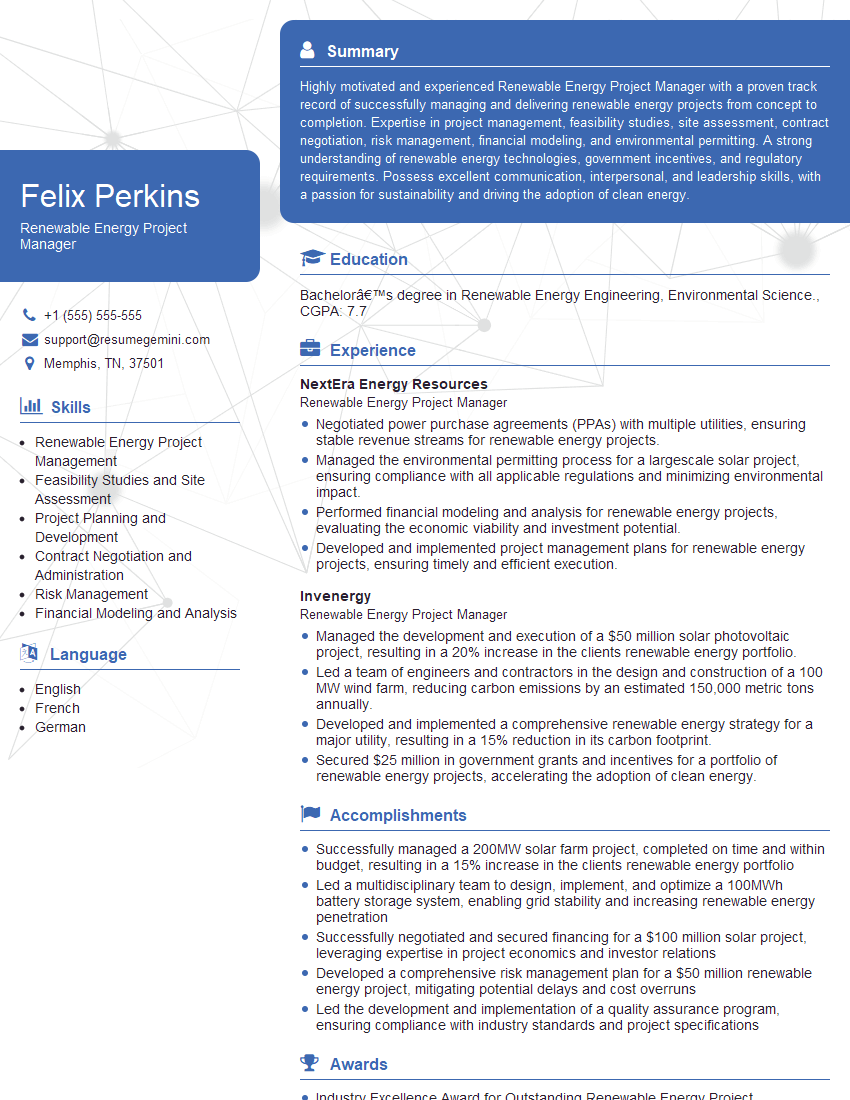
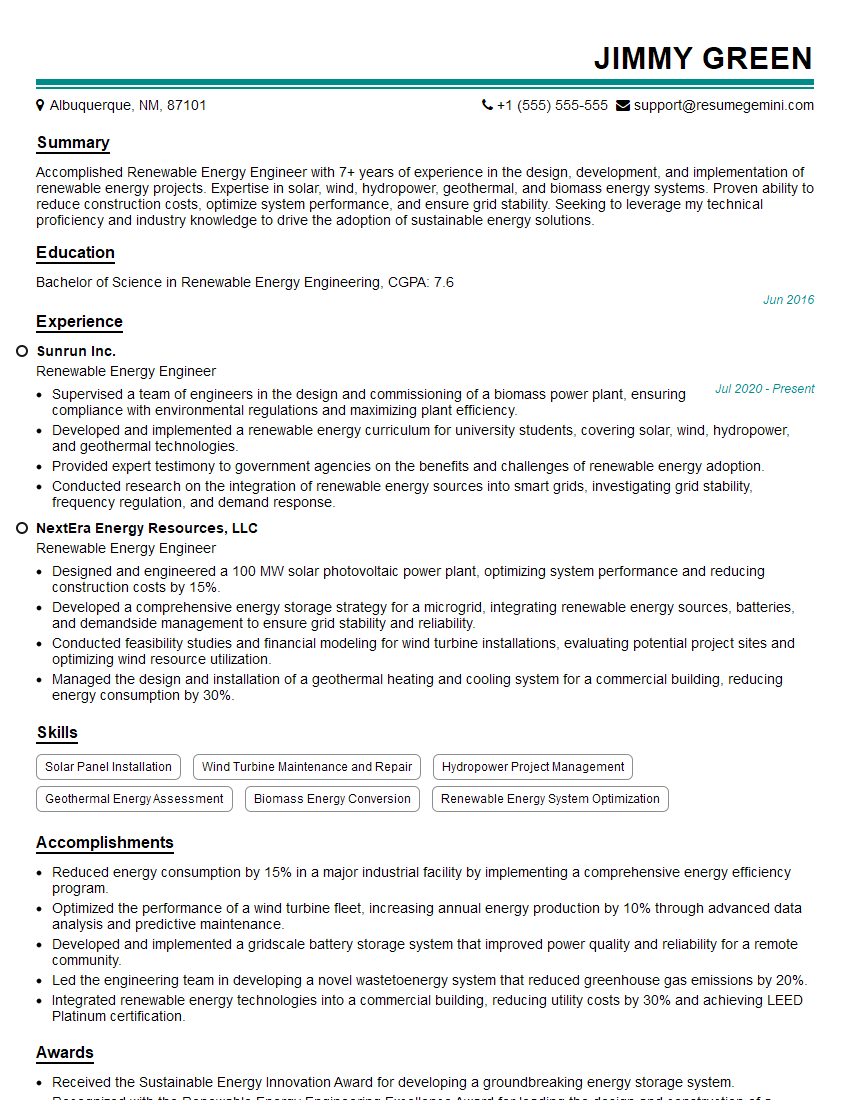
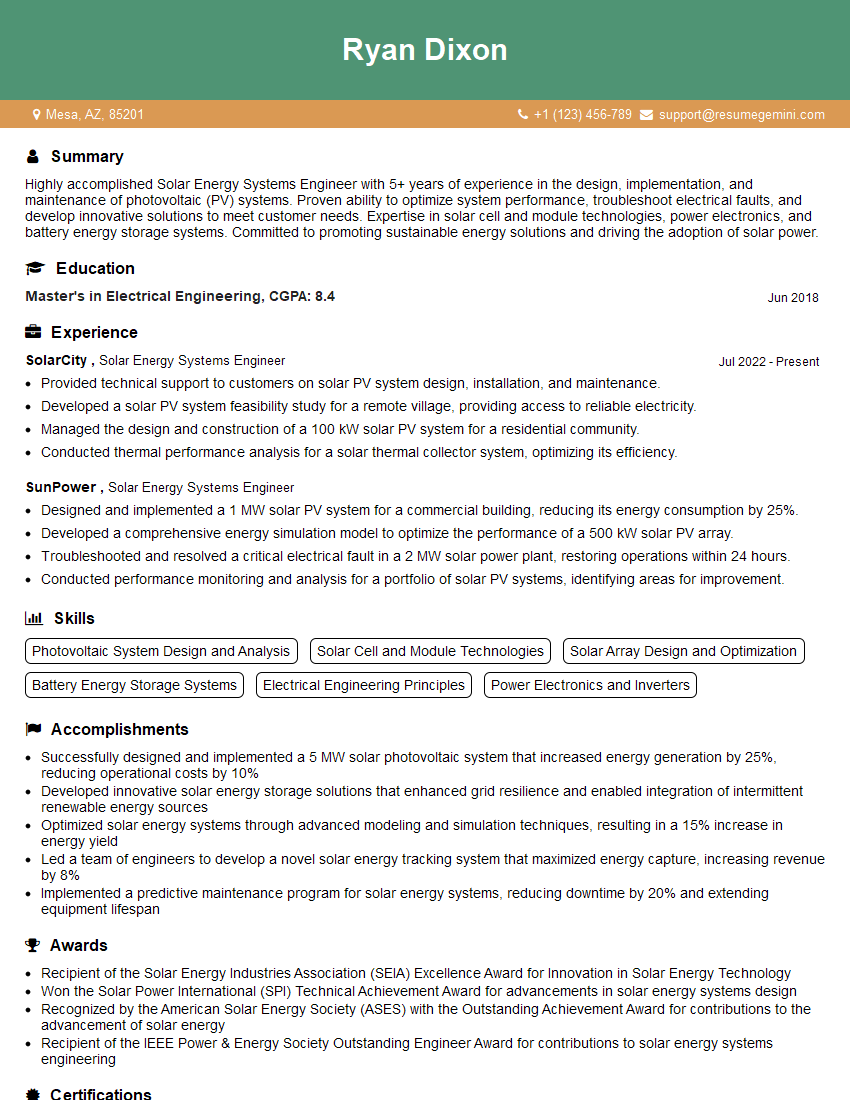
Mastering solar panel design opens doors to exciting opportunities in a rapidly growing industry. To maximize your chances of landing your dream job, create a compelling, ATS-friendly resume that showcases your skills and experience effectively. ResumeGemini is a trusted resource that can help you build a professional resume designed to get noticed. We provide examples of resumes tailored specifically to the Solar Panel Design field, helping you present your qualifications in the best possible light. Take the next step towards your successful career in solar energy today!
Explore more articles
Users Rating of Our Blogs
Share Your Experience
We value your feedback! Please rate our content and share your thoughts (optional).
What Readers Say About Our Blog
Very informative content, great job.
good