Are you ready to stand out in your next interview? Understanding and preparing for Solar Power Plant Development and Management interview questions is a game-changer. In this blog, we’ve compiled key questions and expert advice to help you showcase your skills with confidence and precision. Let’s get started on your journey to acing the interview.
Questions Asked in Solar Power Plant Development and Management Interview
Q 1. Explain the different types of solar photovoltaic (PV) technologies.
Solar photovoltaic (PV) technology converts sunlight directly into electricity. Several types exist, each with its strengths and weaknesses:
- Crystalline Silicon: This is the most common type, further divided into monocrystalline and polycrystalline silicon. Monocrystalline silicon is more efficient (around 18-22%) but more expensive, producing darker, uniformly colored cells. Polycrystalline silicon is less efficient (around 15-17%) but cheaper, resulting in cells with a mottled blue appearance. Think of it like the difference between a perfectly cut diamond (monocrystalline) and a slightly less refined gemstone (polycrystalline).
- Thin-Film: These solar cells are made by depositing a thin layer of photovoltaic material onto a substrate, typically glass or plastic. They are lighter, more flexible, and can be less expensive than crystalline silicon, but generally have lower efficiency (around 8-12%). Examples include amorphous silicon (a-Si), cadmium telluride (CdTe), and copper indium gallium selenide (CIGS).
- Perovskite: This is a relatively new technology with potential for very high efficiency and low manufacturing costs. Perovskite solar cells are known for their potential to be highly efficient and flexible, but stability and toxicity remain ongoing research challenges.
The choice of technology depends on factors like budget, desired efficiency, available space, and environmental considerations.
Q 2. Describe the process of solar power plant site selection.
Site selection for a solar power plant is crucial for maximizing energy yield and minimizing costs. It’s a multi-step process involving:
- Resource Assessment: This involves analyzing solar irradiance data (amount of sunlight) using satellite imagery, weather data, and on-site measurements. We need to know the annual average solar radiation, peak sun hours, and cloud cover.
- Land Availability and Suitability: Finding a large, relatively flat area with good access to transmission infrastructure is key. Land ownership issues, environmental impact assessments, and zoning regulations need to be carefully considered. We want to avoid areas prone to flooding or landslides.
- Grid Connection: Proximity to an existing power grid is essential to ensure efficient electricity transmission. This often involves working with the utility company to connect the plant to the grid and securing the necessary permits.
- Environmental Considerations: The environmental impact of the plant must be assessed, considering potential effects on wildlife, habitats, and water resources. Careful planning minimizes negative impacts and adheres to environmental regulations.
- Economic Factors: Land costs, transmission connection fees, and other economic factors play a significant role. Finding a balance between optimal solar resource and cost-effectiveness is important.
For example, in a desert environment, high solar irradiance is favorable, but water availability for construction and potential ecological sensitivities need to be considered. Conversely, a site close to a large population center might offer better grid connection but potentially higher land costs and stricter regulations.
Q 3. What are the key considerations for solar panel array design?
Designing a solar panel array involves optimizing energy production while considering several factors:
- Orientation and Tilt Angle: Panels are typically oriented south (in the northern hemisphere) to maximize sunlight exposure. The optimal tilt angle depends on the latitude of the location and can be adjusted seasonally for enhanced performance. This is important because the sun’s angle changes throughout the year.
- Spacing and Shading: Sufficient spacing between panels is crucial to minimize shading effects, which significantly reduce energy output. Careful consideration needs to be given to the surrounding environment, trees, buildings etc.
- Ground Coverage Ratio (GCR): This represents the percentage of land covered by solar panels. Optimizing GCR involves balancing energy production with land usage and cost. A higher GCR increases energy production but also may require more land and lead to higher costs.
- Panel Selection: The choice of solar panels depends on factors like efficiency, cost, and manufacturer reputation. We want to choose panels with reliable performance and warranties.
- System Losses: Factors like wiring losses, mismatch losses (different panels performing differently), and temperature effects reduce the overall efficiency. These factors are taken into account during the design phase, and strategies are developed to mitigate their impact.
Imagine designing a field of sunflowers – you would want them spaced optimally to receive maximum sunlight. A similar principle applies to solar panel array design.
Q 4. Explain the role of inverters in a solar power plant.
Inverters are essential components in a solar power plant that convert the direct current (DC) electricity generated by solar panels into alternating current (AC) electricity used by homes and businesses. They perform several crucial functions:
- DC to AC Conversion: This is their primary function. Solar panels produce DC electricity, while the grid operates on AC electricity. Inverters bridge this gap.
- Maximum Power Point Tracking (MPPT): Inverters constantly monitor the solar panels’ voltage and current to extract the maximum possible power, even under varying sunlight conditions. This is vital to maximizing energy production.
- Grid Synchronization: Inverters ensure the AC power produced is synchronized with the grid’s frequency and voltage, allowing the plant to feed power into the grid safely and reliably.
- Protection: Inverters incorporate several safety features, such as overcurrent and overvoltage protection, to protect both the solar plant and the grid. This is critical to ensure the long term reliability and safety of the system.
Without inverters, the electricity generated by solar panels would be unusable by the grid. Think of an inverter as a translator that converts the solar panel’s language into the grid’s language.
Q 5. How do you calculate the capacity factor of a solar power plant?
The capacity factor of a solar power plant represents the actual energy produced over a period, relative to the plant’s maximum possible output. It shows how efficiently a power plant operates. It’s calculated as:
Capacity Factor = (Actual Energy Produced / (Rated Capacity x Time Period)) x 100%
For example, if a 1 MW solar plant produces 1,500 MWh of energy in a year (8760 hours), its capacity factor is:
Capacity Factor = (1500 MWh / (1 MW x 8760 hours)) x 100% ≈ 17.16%
A higher capacity factor indicates better performance. Capacity factor of solar power plants usually varies between 15% and 25% depending on the geographical location and other factors.
Q 6. What are the common challenges faced during solar power plant construction?
Constructing solar power plants presents several challenges:
- Land Acquisition and Permits: Securing suitable land and obtaining necessary permits can be time-consuming and complex, often involving negotiations with landowners, environmental agencies, and local authorities.
- Grid Connection Issues: Connecting the plant to the grid can be a major hurdle, involving delays and significant costs due to grid infrastructure limitations or capacity constraints. We often need to coordinate with multiple stakeholders.
- Weather-Related Delays: Unfavorable weather conditions can significantly delay construction, leading to cost overruns and schedule disruptions.
- Supply Chain Issues: Delays in procuring solar panels, inverters, and other equipment can impact the project timeline.
- Labor Shortages: Finding skilled labor for installation and construction can be challenging, especially during periods of high demand.
- Financing Challenges: Securing project financing, especially for large-scale projects, can be complex due to high capital investments and long payback periods.
For instance, a project might experience delays due to unforeseen geological conditions during site preparation or face issues connecting to a grid that lacks sufficient capacity.
Q 7. Describe your experience with solar power plant commissioning.
Commissioning a solar power plant is a critical phase ensuring it operates as designed and meets performance specifications. My experience encompasses:
- Pre-commissioning: This involves thorough inspections of all equipment and systems before energization, verifying correct installation and wiring and identifying any potential issues.
- System Testing: Various tests are conducted to verify the functionality of individual components and the entire system, including insulation resistance tests, grounding checks, and performance measurements under different operating conditions.
- Performance Verification: The plant’s performance is closely monitored during the commissioning period to ensure it meets the expected energy output and efficiency levels. This involves monitoring various parameters like power output, energy yield, and system losses.
- Grid Synchronization Testing: We ensure the plant can connect to the grid safely and reliably without causing disturbances. This is carried out rigorously to avoid any impact on the main grid.
- Documentation and Reporting: Comprehensive documentation of all commissioning activities, test results, and performance data is crucial for future operations and maintenance.
I have been involved in commissioning several solar power plants of varying sizes, and each project presented unique challenges. For example, one project experienced an unexpected delay because of a last-minute grid connection issue. My team and I solved it by coordinating with the utility company and the EPC contractor.
Q 8. What are the key performance indicators (KPIs) for a solar power plant?
Key Performance Indicators (KPIs) are crucial for monitoring the efficiency and profitability of a solar power plant. They provide a quantitative measure of how well the plant is performing against its targets. Think of them as a solar plant’s report card.
- Capacity Factor: This is perhaps the most important KPI. It represents the actual energy produced compared to the plant’s maximum potential output over a given period. A higher capacity factor indicates better performance. For example, a capacity factor of 25% means the plant produced 25% of its maximum possible energy output.
- Energy Yield: This measures the total amount of energy generated by the plant over a specific period (daily, monthly, annually). It’s typically expressed in kilowatt-hours (kWh). Tracking energy yield helps identify trends and potential issues.
- Performance Ratio (PR): This KPI combines several factors to assess overall system efficiency, including the capacity factor, module efficiency, and inverter efficiency. A higher PR signifies better overall system performance.
- Specific Yield: This measures energy produced per kilowatt peak (kWp) of installed capacity. This helps compare the performance of plants with different sizes.
- Availability: This KPI tracks the percentage of time the plant is operational. Downtime due to maintenance or faults directly impacts energy production.
- System Losses: Analyzing losses due to shading, soiling, temperature, or other factors helps in optimizing plant performance and identifying areas for improvement.
Regular monitoring of these KPIs allows for proactive maintenance, efficient resource allocation, and improved overall plant profitability.
Q 9. How do you monitor and maintain the performance of a solar power plant?
Monitoring and maintaining a solar power plant involves a multi-faceted approach combining technology and human expertise. Imagine it as a health check-up for your power plant.
- SCADA Systems: Supervisory Control and Data Acquisition (SCADA) systems are the backbone of monitoring. These systems continuously collect data from various components, including inverters, meteorological sensors, and power meters, transmitting this information to a central location for analysis. This allows for real-time performance tracking and early detection of anomalies.
- Remote Monitoring: Remote monitoring capabilities allow operators to view plant performance and identify issues from anywhere with an internet connection. This reduces response time to problems.
- Predictive Maintenance: Analyzing data from SCADA and other sources can help predict potential equipment failures before they occur, minimizing downtime and maintenance costs. This is similar to a doctor predicting a potential health issue and suggesting preventative steps.
- Regular Inspections: Routine physical inspections of the plant are crucial. This includes visually inspecting panels for damage, checking for soiling or shading issues, and verifying the functionality of all components.
- Cleaning and Maintenance: Regular cleaning of solar panels is vital to maintain optimal performance. Soiling significantly reduces energy output. Preventative maintenance involves scheduled servicing of inverters and other equipment.
Combining these strategies ensures optimal performance, minimizes downtime, and extends the lifespan of the solar power plant.
Q 10. Explain different solar power plant financing models.
Financing a solar power plant can be complex, requiring careful consideration of various models. Each model has its own advantages and disadvantages, much like choosing the right financing for a house.
- Debt Financing: This involves securing loans from banks or other financial institutions. The loan is repaid with interest over a specific period. It is common for large-scale projects.
- Equity Financing: This involves raising capital by selling ownership shares in the project to investors. Investors receive a return on their investment based on the plant’s profits.
- Project Finance: This is a specialized type of financing used for large-scale projects, where the financing is secured based on the project’s cash flows. It reduces the financial risk for the developers.
- Power Purchase Agreements (PPAs): This is a common model where a third-party investor develops and owns the plant, and the power is purchased by a buyer at a pre-agreed price. The buyer often avoids upfront investment costs.
- Leasing: In some cases, the equipment, such as solar panels, can be leased rather than purchased outright, reducing the initial capital expenditure.
The choice of financing model depends on the project size, developer’s financial strength, investor appetite, and the specific regulatory environment.
Q 11. Describe the grid interconnection process for a solar power plant.
Grid interconnection is a critical process that involves connecting the solar power plant to the existing electricity grid. Think of it as building a bridge between your power plant and the main road network. This process is usually regulated and involves many steps.
- Feasibility Study: This initial step assesses the technical and economic viability of connecting the plant to the grid.
- Application Submission: A formal application is submitted to the relevant grid authority, providing detailed information about the plant’s technical specifications, location, and proposed interconnection point.
- System Studies: The grid authority conducts system studies to evaluate the impact of the solar plant on grid stability and reliability. This is crucial for ensuring a safe and seamless integration.
- Interconnection Agreement: Once the studies are completed and approved, an interconnection agreement is negotiated between the plant developer and the grid authority. This legally binds both parties to the terms of connection.
- Construction and Testing: The interconnection facilities are built, and rigorous testing is conducted to ensure compliance with the grid code and safety standards.
- Commissioning: Once all tests are passed, the plant is commissioned, and energy can be injected into the grid.
The process is quite rigorous and can take several months or even years to complete, depending on the project size and complexity.
Q 12. What are the safety procedures for working on a solar power plant?
Safety is paramount when working on a solar power plant. It’s crucial to follow strict procedures to protect workers from potential hazards such as high voltages, falls from heights, and exposure to UV radiation.
- Lockout/Tagout Procedures: Before any work is carried out on electrical equipment, the power must be completely isolated and locked out. This ensures no accidental energization.
- Personal Protective Equipment (PPE): Workers must wear appropriate PPE, including safety helmets, gloves, eye protection, and high-visibility clothing.
- Fall Protection: When working at heights, proper fall protection measures must be in place, such as safety harnesses and guardrails.
- Arc Flash Protection: Solar inverters and other electrical equipment can produce dangerous arc flashes. Workers must be trained to mitigate the risks associated with arc flashes.
- Training and Certification: All personnel working on the plant must receive appropriate training and certifications to handle equipment safely.
- Emergency Response Plan: A comprehensive emergency response plan must be in place to address any accidents or emergencies.
Regular safety audits and training programs are essential to ensure a safe working environment and prevent accidents.
Q 13. How do you deal with shading effects on solar panel performance?
Shading significantly reduces the power output of solar panels. Even a small amount of shade on a single panel can affect the entire string’s performance. Imagine a string of Christmas lights – if one bulb goes out, the rest can dim.
- Site Assessment: Careful site selection and assessment are crucial to minimize shading. This involves analyzing potential shading from trees, buildings, or other structures.
- Panel Placement and Orientation: Optimal panel placement and orientation maximize sunlight exposure and minimize shading. This often requires specialized software and analysis.
- Bypass Diodes: Bypass diodes are incorporated into solar panels to prevent shading from affecting the entire panel. If one cell is shaded, the bypass diode shunts the current around it, minimizing the performance impact.
- Microinverters: Microinverters are employed to optimize the energy production of individual panels or strings. This helps mitigate the impact of shading on the overall system performance.
- String Optimization: Using technologies like power optimizers helps to mitigate the effect of shading by adjusting voltage and current at the panel level.
Understanding and addressing shading is vital for maximizing the efficiency and profitability of a solar power plant. This requires careful planning, advanced technologies, and ongoing monitoring.
Q 14. Explain the concept of solar irradiance and its impact on energy production.
Solar irradiance refers to the amount of solar radiation received per unit area at a specific location. It’s essentially the sun’s power hitting a surface, and its impact on energy production is immense. It’s like the water pressure in a water turbine – higher pressure means more power.
Solar irradiance is measured in watts per square meter (W/m²). Higher irradiance levels translate to increased power output from solar panels. Factors such as time of day, weather conditions (cloud cover), and the season influence irradiance levels. For example, a sunny midday in the desert will have much higher irradiance than a cloudy day in a temperate climate.
Understanding solar irradiance is crucial for:
- Predicting Energy Production: Irradiance data is used in forecasting models to predict the expected energy output of a solar power plant.
- System Sizing: Knowing the average irradiance at a location helps determine the appropriate size of a solar power plant to meet energy demands.
- Performance Monitoring: Comparing actual energy production with predicted values based on irradiance data helps identify potential performance issues.
Accurate irradiance data and forecasting are critical for efficient solar power plant design, operation, and performance assessment.
Q 15. What are the environmental impacts of solar power plant development?
While solar power is a clean energy source, its development and operation do have some environmental impacts. These impacts are generally less significant than those from fossil fuel-based power generation, but they still need careful consideration.
Habitat Loss and Fragmentation: Large-scale solar farms require significant land areas, potentially leading to habitat loss for plants and animals. This can be mitigated by careful site selection, choosing brownfield sites (previously developed land) and employing strategies like pollinator-friendly landscaping.
Water Usage: Manufacturing solar panels requires water, and some cleaning processes for solar panels also use water. However, the water footprint of solar is considerably lower than that of many other energy sources. Using water-efficient cleaning methods and recycling water can further reduce this impact.
Material Extraction and Manufacturing: The extraction of raw materials for solar panels, such as silicon, can have environmental consequences, including mining impacts and greenhouse gas emissions from manufacturing processes. Investing in sustainable manufacturing practices and using recycled materials can reduce this footprint.
Waste Generation: At the end of their lifespan, solar panels need to be responsibly recycled to recover valuable materials and prevent the release of hazardous substances into the environment. Proper disposal and recycling programs are crucial.
Visual Impacts: Large solar farms can alter the landscape’s visual appearance, which may be a concern for some communities. Careful planning and integration with the surrounding environment can minimize this impact.
Career Expert Tips:
- Ace those interviews! Prepare effectively by reviewing the Top 50 Most Common Interview Questions on ResumeGemini.
- Navigate your job search with confidence! Explore a wide range of Career Tips on ResumeGemini. Learn about common challenges and recommendations to overcome them.
- Craft the perfect resume! Master the Art of Resume Writing with ResumeGemini’s guide. Showcase your unique qualifications and achievements effectively.
- Don’t miss out on holiday savings! Build your dream resume with ResumeGemini’s ATS optimized templates.
Q 16. Describe your experience with solar power plant operation and maintenance (O&M).
I’ve been involved in the O&M of various solar power plants, ranging from small rooftop installations to large utility-scale projects. My experience encompasses all aspects of plant operation, from preventive maintenance to troubleshooting and performance monitoring. For example, at a 50MW utility-scale plant, I led a team responsible for implementing a predictive maintenance program using drone-based inspections and infrared thermography. This allowed us to identify potential issues like module degradation or faulty inverters early on, preventing costly downtime and maximizing energy production. In another project involving a series of smaller commercial installations, I designed and implemented a centralized monitoring system that provided real-time performance data and automated alerts for anomalies, allowing for proactive maintenance and reduced operational costs.
Q 17. What are the common faults in solar PV systems and how do you troubleshoot them?
Common faults in solar PV systems can be categorized into issues with modules, inverters, wiring, and the balance of system (BOS).
Module-level faults: These include shading, soiling, cracking, and hot spots. Troubleshooting involves visual inspection, infrared thermography, and electrical testing to identify affected modules. Solutions range from cleaning to module replacement.
Inverter faults: Inverters are prone to issues like over-temperature, communication errors, and output failures. Troubleshooting often involves checking fault codes, reviewing performance data, and verifying power levels. Replacement or repair of faulty inverters might be necessary.
Wiring faults: Loose connections, corrosion, and cable damage can lead to power loss and safety hazards. Regular inspections, testing for continuity, and appropriate grounding are essential. Repairs include re-wiring, replacing damaged cables, and ensuring proper grounding.
BOS faults: Issues with mounting structures, trackers, or other components of the BOS can affect performance and safety. Regular inspections and preventative maintenance are necessary to address these. Repairs vary widely, from tightening bolts to replacing damaged components.
A systematic approach to troubleshooting, combining visual inspection with data analysis, is key to efficiently identifying and resolving faults.
Q 18. Explain the role of energy storage systems in solar power plants.
Energy storage systems (ESS) play a crucial role in improving the reliability and value of solar power plants. They address the intermittency of solar energy, which is dependent on weather conditions. ESS typically use batteries, but other technologies are emerging.
Peak Shaving: ESS can store excess solar energy generated during peak production times and release it during periods of high demand, reducing the strain on the grid and improving grid stability.
Frequency Regulation: ESS can quickly respond to changes in grid frequency, providing essential grid services and improving grid reliability. This is particularly important for integrating large amounts of solar power.
Time Shifting: Stored solar energy can be discharged during nighttime or periods of low solar irradiance, extending the duration of solar power supply and improving energy self-sufficiency for the plant.
Backup Power: In the event of grid outages, ESS can provide backup power to critical loads, ensuring continuous operation of essential systems.
The type of ESS selected depends on factors such as cost, application, and desired performance characteristics. Battery technologies such as lithium-ion are commonly used but other chemistries are also being explored.
Q 19. How do you manage and mitigate the risks associated with solar power plant development?
Managing risks in solar power plant development requires a proactive and multi-faceted approach. Key risks include technical, financial, regulatory, and environmental factors.
Technical Risks: These include equipment failures, performance degradation, and grid connection issues. Mitigation involves using high-quality components, rigorous testing, and robust monitoring systems.
Financial Risks: These include cost overruns, financing challenges, and revenue uncertainties. Mitigation involves detailed project planning, securing appropriate financing, and developing robust revenue forecasting models.
Regulatory Risks: These encompass permitting delays, policy changes, and compliance requirements. Mitigation involves thorough due diligence, engaging with regulatory agencies early on, and ensuring compliance with all applicable regulations.
Environmental Risks: These involve land use conflicts, biodiversity impacts, and water resource management. Mitigation involves careful site selection, environmental impact assessments, and sustainable land management practices.
A comprehensive risk management plan, incorporating risk identification, assessment, mitigation, and monitoring, is essential for successful solar power plant development.
Q 20. What are the different types of solar trackers and their advantages?
Solar trackers optimize energy production by constantly adjusting the angle of solar panels to follow the sun’s movement throughout the day. Different types of trackers offer various advantages.
Single-axis trackers: These rotate along a single axis (typically east-west), following the sun’s movement across the sky. They are relatively simple, cost-effective, and provide significant energy gains compared to fixed-tilt systems.
Dual-axis trackers: These rotate along two axes (azimuth and elevation), allowing for optimal tracking throughout the day and across seasons. They achieve higher energy yields than single-axis trackers but are more complex and expensive.
Fixed-tilt systems: These have a fixed angle, typically optimized for the specific location’s climate. While the simplest and least expensive, they produce lower energy yields than trackers.
The choice of tracker depends on factors such as budget, site conditions (land availability, shading), energy yield targets, and operational and maintenance considerations. A detailed cost-benefit analysis is essential to determine the optimal tracking system for a given project.
Q 21. Describe your experience with solar power plant performance analysis and reporting.
Performance analysis and reporting are crucial for optimizing the operation of solar power plants and demonstrating their value. My experience includes using specialized software and tools to collect, analyze, and interpret data from various sources, such as SCADA systems, weather stations, and performance monitoring units (PMUs).
I’ve developed comprehensive reports showing key performance indicators (KPIs) such as energy production, capacity factor, performance ratio, and specific yield. These reports help identify areas for improvement, troubleshoot issues, and track the overall health and efficiency of the solar power plant. For instance, I used performance data to identify shading issues in a particular section of a plant, leading to corrective actions that resulted in a noticeable increase in energy output. I also have experience in preparing reports for investors and stakeholders, showcasing the plant’s financial performance and environmental impact.
Utilizing data visualization techniques to present the performance data effectively is a key aspect of my approach. This ensures that important findings are easily understood and acted upon.
Q 22. How do you ensure compliance with relevant regulations and standards in solar power plant development?
Ensuring compliance in solar power plant development is paramount. It involves a multifaceted approach, starting even before the first shovel hits the ground. We meticulously review and adhere to all relevant local, regional, and national regulations, including building codes, environmental impact assessments (EIAs), and grid interconnection standards. This often involves working closely with regulatory bodies and obtaining all necessary permits and licenses. For example, in a recent project, we had to secure permits from the local environmental agency concerning protected bird species nesting near the proposed site. We employed specialized bird surveys and mitigation strategies to meet those specific requirements. Beyond permits, we also implement strict quality control measures throughout the construction process, ensuring the plant adheres to international standards like IEC 62446-1 (for photovoltaic power systems). This rigorous approach minimizes risk, reduces potential delays, and protects the long-term viability of the project.
Furthermore, we maintain detailed records of all compliance activities, providing easily accessible documentation for audits. This proactive approach to compliance not only safeguards our reputation but also ensures the safety and longevity of the plant.
Q 23. Explain the different types of solar power plant balance of system (BOS) components.
The Balance of System (BOS) encompasses all components of a solar power plant *excluding* the solar panels themselves. Think of it as the infrastructure that supports and optimizes the panels’ energy production and transmission. Key components include:
- Inverters: These convert the DC electricity generated by the solar panels into AC electricity usable by the grid.
- Mounting Structures: These support the solar panels, ensuring optimal angle and orientation for sunlight capture. Different types exist depending on the location (ground-mount, roof-mount, etc.).
- Wiring and Cabling: This intricate network connects the panels, inverters, and the main grid, ensuring efficient power flow.
- Protection Devices: These include fuses, circuit breakers, and surge protectors, protecting the system from damage caused by overcurrents, lightning strikes, or other electrical events.
- Transformers: These step up the voltage for efficient long-distance transmission to the grid.
- Monitoring Systems (SCADA): These are essential for real-time performance tracking and remote control.
- Grounding and Earthing Systems: These ensure the safety of personnel and equipment by safely diverting electrical current to the earth.
Choosing the right BOS components is crucial for system efficiency, safety, and cost-effectiveness. A well-designed BOS ensures maximum energy yield and minimal downtime.
Q 24. What are the key factors influencing the Levelized Cost of Energy (LCOE) of a solar power plant?
The Levelized Cost of Energy (LCOE) represents the average cost of producing one unit of electricity over the entire lifetime of a solar power plant. Several key factors influence this crucial metric:
- Capital Costs: This includes the cost of land acquisition, equipment (panels, BOS), construction, and permitting.
- Operation and Maintenance (O&M) Costs: These are recurring expenses for cleaning, repairs, and system monitoring.
- Financing Costs: Interest rates and loan terms significantly impact the LCOE.
- Energy Yield: Higher energy production from factors like optimal panel placement and weather conditions reduces the LCOE.
- Project Lifetime: A longer lifespan generally leads to a lower LCOE as the fixed costs are spread over more years.
- Decommissioning Costs: These are the costs associated with safely dismantling the plant at the end of its operational life.
- Insurance and Taxes: These costs contribute to the overall project expenditure and impact the LCOE.
Optimizing LCOE involves strategic decisions in all these areas. For instance, selecting high-efficiency panels can reduce capital costs and increase energy yield. Similarly, proactive O&M can minimize downtime and prolong the plant’s lifespan. A thorough analysis of each factor is necessary to ensure the project’s financial viability.
Q 25. Describe your experience with using SCADA systems for monitoring solar power plants.
SCADA (Supervisory Control and Data Acquisition) systems are indispensable for effective solar power plant management. My experience spans various SCADA platforms, from industry-standard solutions to more specialized systems tailored to solar energy. I’ve utilized SCADA systems to monitor various aspects of plant performance, including:
- Real-time energy production: Tracking the power output of individual panels and strings to identify underperforming areas.
- Inverter performance: Detecting and addressing any faults or inefficiencies in the inverters.
- Environmental conditions: Monitoring temperature, solar irradiance, and wind speed to correlate with energy production.
- System alerts: Receiving instant notifications of potential issues such as equipment malfunctions or abnormal operating conditions.
- Remote control functionalities: Adjusting settings or performing remote troubleshooting.
- Data analysis and reporting: Generating reports on plant performance, identifying trends and areas for improvement. For example, we could analyze daily energy output and then correlate it with weather patterns to build predictive models for future production.
The data provided by SCADA systems are invaluable for optimizing plant operations, reducing downtime, and enhancing overall efficiency. In a project with hundreds of inverters, SCADA’s ability to quickly identify the one malfunctioning device saved us significant repair time and prevented large-scale energy losses.
Q 26. How do you handle unexpected downtime or equipment failure in a solar power plant?
Unexpected downtime is an inevitable aspect of solar power plant operation. Our strategy involves a proactive and reactive approach to minimize the impact of such events. Proactive measures include regular preventive maintenance, employing robust equipment, and implementing a comprehensive safety management system. Reactive measures are equally crucial; when a failure occurs, our well-defined response plan kicks in immediately:
- Rapid Assessment: Using the SCADA system, we identify the affected component and the extent of the problem.
- Isolate the Problem: We take immediate steps to isolate the faulty component, preventing the problem from spreading to other parts of the system.
- Dispatch Technicians: Our skilled technicians are dispatched to the site for repairs or replacements. We maintain a well-stocked spare parts inventory to minimize repair times.
- Communicate with Stakeholders: We promptly inform relevant parties – including the grid operator – about the outage and the projected recovery time.
- Root Cause Analysis: Once the issue is resolved, a thorough investigation is conducted to determine the root cause and prevent similar incidents in the future.
- Data Analysis: The collected data will be analyzed and may lead to an upgrade in our system or maintenance procedures.
For example, we recently experienced a sudden inverter failure. Thanks to our SCADA system’s alerts, we identified and resolved the problem within a couple of hours, minimizing the impact on energy production.
Q 27. What is your experience with different types of solar energy storage technologies (e.g., batteries, pumped hydro)?
My experience with solar energy storage technologies includes both battery-based and pumped hydro systems. Battery storage solutions, particularly lithium-ion batteries, are becoming increasingly prevalent due to their scalability and relatively quick deployment. They are useful for smoothing out power fluctuations, providing backup power during outages and enabling grid services (frequency regulation).
Pumped hydro storage, on the other hand, offers larger-scale energy storage capabilities but requires suitable geographical conditions (two reservoirs at different elevations). While it’s a more established technology, its higher capital costs and geographical limitations restrict its widespread use. I’ve worked on projects employing both technologies, and the choice depends largely on the specific project requirements, budget, and site conditions. For example, a large-scale utility plant might be a better candidate for pumped hydro, while a smaller commercial project might use lithium-ion batteries for their ease of integration and reduced upfront investment.
Emerging technologies, like flow batteries and compressed air energy storage, are also promising, but their commercial viability is still under development. Keeping abreast of technological advancements in this field is vital for optimal plant design and future-proofing projects.
Q 28. How do you optimize the energy yield of a solar power plant?
Optimizing energy yield involves a holistic approach that encompasses several key strategies:
- Site Selection and Design: Careful consideration of factors such as solar irradiance, shading, and land availability. Using advanced modeling tools, we ensure optimal panel orientation and spacing to maximize sunlight capture.
- Panel Selection: Choosing high-efficiency solar panels with appropriate performance characteristics for the specific climate and environmental conditions.
- Regular Cleaning and Maintenance: Regular cleaning removes dirt and debris that reduce panel efficiency. Proactive maintenance ensures optimal system performance and minimizes downtime.
- Advanced Monitoring and Control Systems: Utilizing SCADA and other smart monitoring tools to detect and address potential performance issues promptly.
- Predictive Maintenance: Using data analytics to predict potential equipment failures and schedule maintenance accordingly.
- Power Optimization Techniques: Employing techniques like Maximum Power Point Tracking (MPPT) algorithms within the inverters to extract the maximum power possible from the solar panels under varying conditions.
- Integration with Energy Storage: Incorporating energy storage systems can improve grid stability and increase energy dispatch flexibility, potentially enabling the plant to generate more income.
For example, by optimizing panel placement based on detailed solar irradiance mapping, we recently increased the annual energy yield of a project by 5%, resulting in significant cost savings and enhanced revenue generation. This illustrates the substantial impact that even minor improvements in optimization can have on the overall plant performance.
Key Topics to Learn for Solar Power Plant Development and Management Interview
- Site Assessment and Selection: Understanding factors like solar irradiance, land availability, grid connection, and environmental impact assessments. Practical application: Analyzing site data to determine optimal plant location and size.
- System Design and Engineering: Choosing appropriate solar panels, inverters, and other components; designing the electrical layout and balance of system. Practical application: Calculating energy production and system losses, optimizing system efficiency.
- Project Financing and Economics: Understanding different financing models, calculating levelized cost of energy (LCOE), and assessing project profitability. Practical application: Developing a comprehensive financial model for a solar project.
- Permitting and Regulatory Compliance: Navigating the regulatory landscape, obtaining necessary permits, and ensuring compliance with local, state, and federal regulations. Practical application: Preparing and submitting permit applications, addressing regulatory concerns.
- Construction and Commissioning: Overseeing the construction process, ensuring quality control, and commissioning the plant for optimal performance. Practical application: Managing contractors, scheduling tasks, and troubleshooting technical issues.
- Operations and Maintenance (O&M): Developing and implementing O&M plans, managing performance monitoring, and addressing equipment failures. Practical application: Optimizing plant performance through preventative maintenance and predictive analytics.
- Grid Integration and Power Management: Understanding grid codes, managing power output, and ensuring grid stability. Practical application: Working with grid operators to interconnect the plant and manage power fluctuations.
- Health and Safety: Implementing safety protocols and ensuring compliance with safety regulations throughout the project lifecycle. Practical application: Developing and implementing a comprehensive safety plan.
- Renewable Energy Policy and Market Trends: Staying updated on the latest industry trends, policy changes, and market developments. Practical application: Analyzing market trends to inform strategic decision-making.
Next Steps
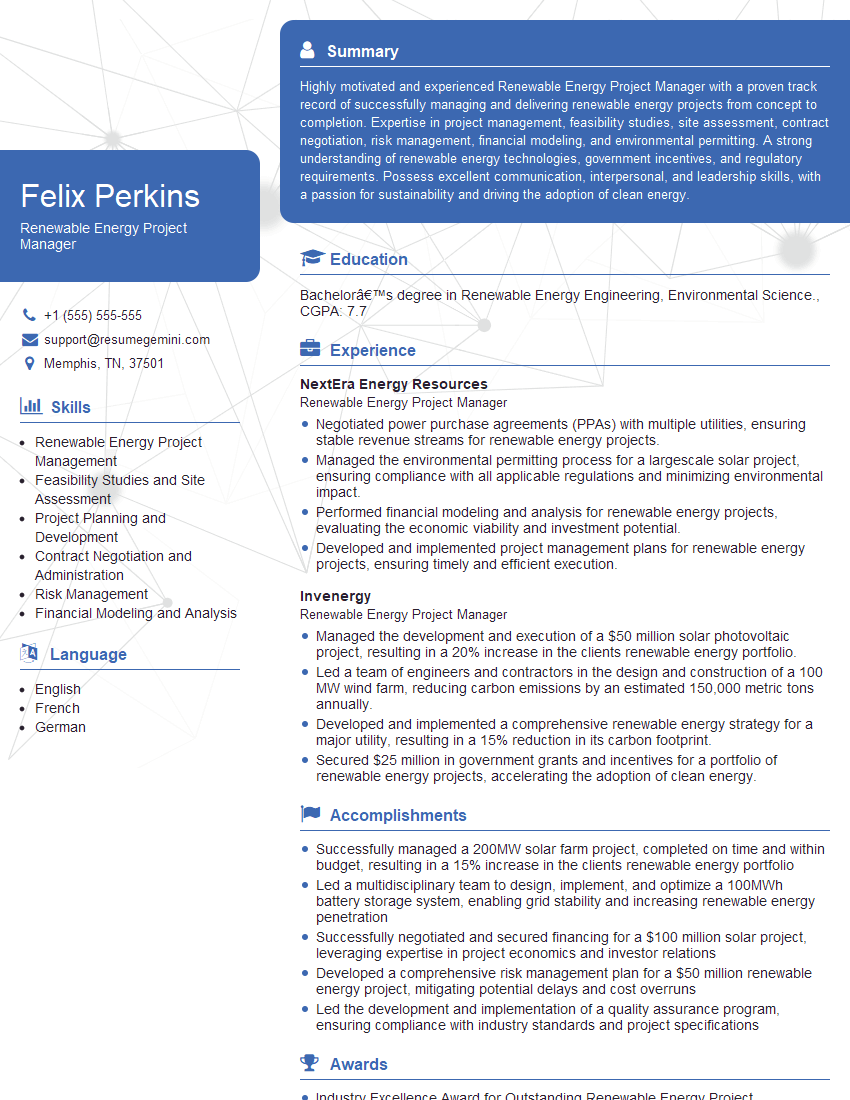
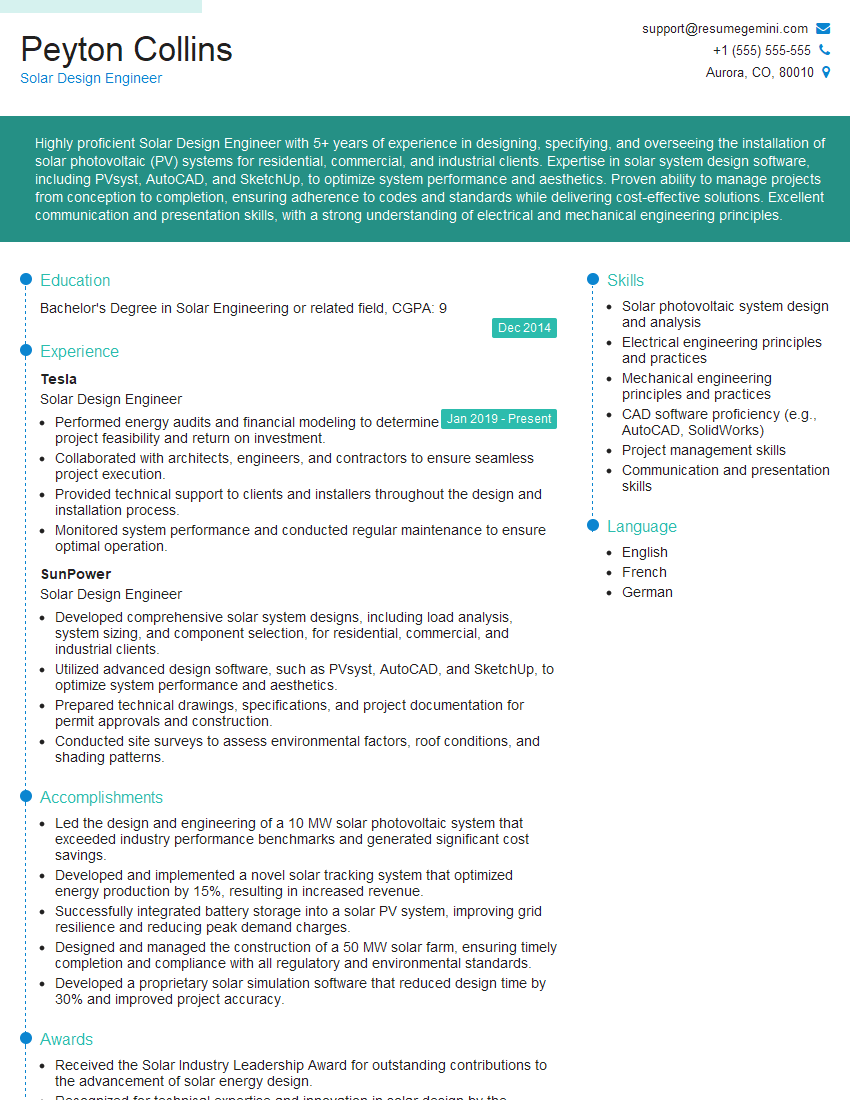
Mastering Solar Power Plant Development and Management opens doors to a rewarding and impactful career, offering excellent growth potential within a rapidly expanding industry. To significantly enhance your job prospects, it’s crucial to create an ATS-friendly resume that effectively highlights your skills and experience. ResumeGemini is a trusted resource that can help you build a professional and impactful resume tailored to this competitive field. Examples of resumes specifically designed for Solar Power Plant Development and Management roles are available to guide you. Invest in creating a compelling resume – it’s your first impression and a key step to securing your dream job.
Explore more articles
Users Rating of Our Blogs
Share Your Experience
We value your feedback! Please rate our content and share your thoughts (optional).
What Readers Say About Our Blog
Very informative content, great job.
good