Unlock your full potential by mastering the most common Experience in working with musicians of all ages and skill levels interview questions. This blog offers a deep dive into the critical topics, ensuring you’re not only prepared to answer but to excel. With these insights, you’ll approach your interview with clarity and confidence.
Questions Asked in Experience in working with musicians of all ages and skill levels Interview
Q 1. Describe your experience teaching music to children aged 5-8.
Teaching music to young children (5-8) requires a playful yet structured approach. My experience centers around making learning fun and engaging, understanding their short attention spans, and building a strong foundation in musical literacy. I use a multi-sensory approach, incorporating singing games, movement activities, and simple instruments like xylophones and shakers. For example, we might learn about rhythm by clapping patterns, then translate those patterns onto instruments, and finally incorporate singing simple melodies.
I focus on building their confidence through positive reinforcement and celebrating their achievements, no matter how small. A simple ‘great job!’ or a high-five can go a long way. Lessons are kept short and varied to maintain engagement, incorporating visual aids like flashcards with musical notes and colorful charts. We might even create our own instruments from recycled materials to make learning a hands-on experience. The emphasis is always on exploration and enjoyment rather than rigorous technical training at this age.
Q 2. How do you adapt your teaching methods for different learning styles?
Adapting to different learning styles is crucial for effective music education. I use a variety of teaching methods to cater to visual, auditory, and kinesthetic learners. Visual learners benefit from charts, diagrams, and videos demonstrating musical concepts. Auditory learners thrive on singing, listening exercises, and rhythmic dictation. Kinesthetic learners, who learn best through physical activity, are engaged through movement-based activities, playing instruments, and composing music through physical actions.
For example, when teaching note values, I might use visual flashcards for visual learners, sing rhythmic patterns for auditory learners, and have them physically step, clap, or tap out the rhythms for kinesthetic learners. This layered approach ensures that every student has a way to grasp the material and build a solid foundation. Regular observation and feedback help me adjust my techniques as needed.
Q 3. What strategies do you use to motivate students with varying skill levels?
Motivating students with varying skill levels requires a differentiated approach. I celebrate individual progress rather than focusing solely on comparisons. For beginners, simple achievements, like mastering a short melody or recognizing a specific note, are highlighted and praised. More advanced students are challenged with progressively complex tasks, composition projects, or opportunities to lead group activities. I make sure to give every student a chance to shine, creating a supportive environment where everyone feels valued.
I also use a system of small, achievable goals to build confidence and momentum. For instance, a student who is struggling might be set a goal of mastering a single measure, while a more advanced student could work towards memorizing a longer piece. Regular feedback, both positive and constructive, is critical. Games, challenges, and group collaborations also offer fun and engaging ways to learn and improve while fostering a sense of teamwork.
Q 4. Explain your approach to assessing student progress in music.
Assessing student progress is an ongoing process that goes beyond simple tests. I use a variety of methods to evaluate learning, including observation of their performance in class, listening to their practice recordings, analyzing their compositions, and conducting formal assessments. Observations help me gauge their understanding of concepts, their engagement levels, and their overall progress.
Listening to practice recordings provides insights into technical skills and musicality. Analysis of their compositions reveals their creativity, problem-solving abilities, and musical understanding. Formal assessments, such as playing a piece or answering questions about music theory, provide a more structured evaluation. I provide regular and constructive feedback in all assessments, tailoring it to each student’s individual needs and learning style.
Q 5. How do you handle disruptive behavior in a music class?
Handling disruptive behavior in a music class requires a proactive and positive approach. First, I try to identify the root cause of the disruption. Is the student bored? Frustrated? Overwhelmed? Understanding the underlying issue is crucial in addressing the behavior effectively.
I use positive reinforcement techniques, such as praising appropriate behavior, and redirecting students when they become disruptive. If a student is consistently disruptive, I might adjust the learning activities or offer one-on-one attention. Clear expectations and consistent application of classroom rules are important for maintaining order and respect. In some cases, collaboration with parents or guardians may be necessary to address persistent behavioral issues. The goal is always to create a supportive and inclusive learning environment where all students can thrive.
Q 6. Describe your experience working with students who have learning disabilities.
My experience working with students who have learning disabilities has taught me the importance of patience, flexibility, and individualized instruction. I adapt my teaching methods to suit each student’s unique needs and learning style, using various strategies to ensure accessibility. This might involve breaking down tasks into smaller, more manageable steps, providing visual aids or other sensory supports, or using assistive technology.
For example, a student with ADHD might benefit from frequent movement breaks or shorter lesson durations. A student with dyslexia might require visual aids or alternative methods of learning music theory. Open communication with parents, therapists, and other support staff is crucial in developing an effective learning plan for these students. I am always committed to making music education accessible and enjoyable for all.
Q 7. How do you incorporate technology into your music teaching?
Technology plays a significant role in modern music education, offering exciting possibilities for enhanced learning and creativity. I incorporate technology in several ways. Music notation software like MuseScore allows students to compose and arrange music, fostering creativity and developing their musical skills. Online platforms such as YouTube and Spotify provide access to a vast library of music, allowing students to explore diverse genres and styles.
Interactive music games and apps can make learning fun and engaging. For example, apps like ‘Tenuto’ and ‘Music Tutor’ provide interactive lessons and exercises to strengthen musical skills. Virtual instruments and digital audio workstations (DAWs) provide opportunities for experimentation and composition. I use technology to create a dynamic and engaging learning environment, ensuring that my teaching methods are relevant and contemporary.
Q 8. What is your experience with different musical genres and instruments?
My experience spans a wide range of musical genres and instruments. I’ve worked with students and musicians proficient in classical, jazz, rock, pop, folk, and world music styles. Instrumentally, my expertise includes piano, guitar, vocals, drums, and basic orchestral instruments. This broad experience allows me to cater to diverse musical interests and learning styles. For instance, I’ve helped a class of young children learn basic rhythm and melody using simple percussion instruments, while simultaneously mentoring a high school student preparing for a jazz improvisation competition. I can adapt my teaching methods to any instrument or genre, focusing on building a solid foundation in music theory and practical skills.
- Classical: Extensive experience teaching piano and theory, including Bach, Beethoven, and Mozart.
- Jazz: Taught improvisation, arranging, and ensemble playing, focusing on blues scales and chord progressions.
- Rock/Pop: Guided students in songwriting, performance techniques, and understanding popular music structures.
Q 9. How do you foster a positive and inclusive learning environment?
Creating a positive and inclusive learning environment is paramount. I achieve this by focusing on respect, empathy, and celebrating individual differences. My classroom is a judgment-free zone where students feel comfortable experimenting, making mistakes, and learning from each other. I incorporate collaborative activities, group projects, and peer-to-peer learning to foster a sense of community. For example, I often organize small ensemble practices where students can learn from each other’s strengths and support each other’s progress. I actively solicit feedback from students to ensure everyone feels heard and valued, constantly adapting my teaching style to meet diverse learning needs. This might mean adjusting the pace of instruction, using different teaching methods, or providing additional support to students who need it.
Q 10. Describe your experience in creating and implementing a music curriculum.
Curriculum design is a collaborative process. I begin by assessing the students’ existing skill levels and musical interests. Then, I develop a curriculum that incorporates a balance of theory, practical skills, and performance opportunities. My curriculum is aligned with national standards and is regularly reviewed and updated to reflect best practices and student feedback. For example, I might design a unit on music theory that progressively introduces concepts like rhythm, melody, harmony, and form. This unit will include interactive activities, listening exercises, and composition projects to cater to different learning styles. The practical skills component focuses on instrument-specific training, sight-reading, and ensemble playing. Performance opportunities are integrated throughout the year, culminating in a final concert or recital.
Q 11. How do you manage classroom discipline effectively in a music setting?
Classroom discipline in a music setting requires a proactive and positive approach. I establish clear expectations and rules from the outset, emphasizing respect for both the learning environment and other students. Instead of punitive measures, I focus on positive reinforcement, praising good behavior and rewarding progress. I believe in building relationships with students, understanding their individual needs and challenges. When issues arise, I address them directly and privately, focusing on finding solutions collaboratively. For example, if a student is disruptive, I’ll try to understand the underlying cause – boredom, frustration, or something else – and adjust my teaching approach accordingly. Ultimately, creating a fun and engaging learning experience is the best form of discipline.
Q 12. What is your approach to providing constructive feedback to students?
Constructive feedback is vital for student growth. My approach focuses on being specific, positive, and actionable. I avoid generic praise or criticism, instead providing detailed observations about the student’s performance, highlighting both strengths and areas for improvement. I frame my feedback in a supportive manner, emphasizing progress and potential. For instance, instead of saying “that was a bad performance,” I might say, “Your intonation was excellent in the first section, but we can work on improving your rhythmic precision in the second.” I always provide concrete suggestions for improvement, making it clear how the student can address the issues raised. Following feedback sessions, I provide opportunities for students to practice and demonstrate their improved skills.
Q 13. How do you differentiate instruction to meet the needs of gifted students?
Gifted students require differentiated instruction to challenge and nurture their talents. For these students, I create opportunities for advanced learning, such as independent study projects, composition assignments, or participation in advanced ensembles. I also provide mentorship and guidance, helping them explore their musical passions and develop their unique talents. For instance, I might work with a gifted student on composing their own piece of music, guiding them through the process of developing musical ideas, arranging them for an ensemble, and preparing for a performance. This provides them with opportunities to hone their skills in a creative, independent setting.
Q 14. How do you handle parent-teacher communication regarding student progress?
Open and consistent communication with parents is crucial. I utilize various methods, including regular progress reports, parent-teacher conferences, and email updates. I provide parents with detailed information about their child’s progress, highlighting strengths, areas for improvement, and goals for the future. I actively encourage parent involvement in their child’s musical development. For example, I might invite parents to attend rehearsals or performances, or I might suggest ways they can support their child’s musical learning at home. I’m always available to answer parent questions and concerns, ensuring everyone is informed and involved in the learning process.
Q 15. Describe your experience in preparing students for music performances.
Preparing students for music performances involves a multifaceted approach that goes beyond simply teaching the music. It’s about building confidence, honing technical skills, and fostering a deep understanding of the piece.
- Repertoire Selection: I carefully choose pieces appropriate to the student’s skill level and musical interests, ensuring they are challenged but not overwhelmed. For example, a beginner might start with simpler arrangements of familiar songs, while an advanced student could tackle a challenging sonata.
- Technical Development: We work on specific technical skills required for the piece, such as finger dexterity, articulation, intonation, and phrasing. I use targeted exercises and scales to build their proficiency. For instance, a student struggling with a rapid passage might benefit from practicing Hanon exercises to improve finger speed and coordination.
- Performance Practice: I emphasize expressive playing, focusing on dynamics, tempo changes, and articulation to create a compelling performance. We practice interpreting the music and conveying its emotional content. This might involve listening to different interpretations of the piece or discussing the composer’s intentions.
- Performance Anxiety Management: Performance anxiety is a common concern. I help students manage this by creating a supportive and encouraging environment, encouraging regular practice in realistic performance settings (e.g., informal recitals, practicing in front of friends and family), and employing relaxation techniques like deep breathing.
- Stage Presence: I guide students on proper stage etiquette, including posture, eye contact, and handling unexpected situations. We simulate performance situations during rehearsals to build their confidence and comfort level.
The ultimate goal is to empower students to perform with confidence, artistry, and enjoyment.
Career Expert Tips:
- Ace those interviews! Prepare effectively by reviewing the Top 50 Most Common Interview Questions on ResumeGemini.
- Navigate your job search with confidence! Explore a wide range of Career Tips on ResumeGemini. Learn about common challenges and recommendations to overcome them.
- Craft the perfect resume! Master the Art of Resume Writing with ResumeGemini’s guide. Showcase your unique qualifications and achievements effectively.
- Don’t miss out on holiday savings! Build your dream resume with ResumeGemini’s ATS optimized templates.
Q 16. What is your experience with music theory and its application in teaching?
Music theory is the bedrock of musical understanding and is crucial for effective teaching. My experience encompasses a wide range of theoretical concepts, from basic notation and harmony to counterpoint and analysis. I apply this knowledge in several ways:
- Foundational Understanding: I teach students the fundamentals of music theory – rhythm, melody, harmony, and form – providing them with the tools to understand and analyze music. This isn’t just about memorizing rules; it’s about developing aural skills and the ability to hear and identify musical structures.
- Improvisation and Composition: Music theory enables students to improvise and compose their own music. Understanding scales, chords, and harmonic progressions allows them to explore their creativity and express themselves through composition. For example, I might guide a student to write a simple melody based on a given scale or chord progression.
- Performance Enhancement: A strong theoretical understanding enhances performance. Students gain a deeper understanding of the music they are playing, leading to more insightful and expressive interpretations. Understanding chord progressions, for instance, helps them shape their phrasing and dynamics effectively.
- Troubleshooting: Theory helps in troubleshooting performance issues. If a student struggles with a particular passage, I can analyze it theoretically to identify the underlying problem (e.g., a harmonic ambiguity, rhythmic complexity) and devise targeted exercises to address it.
I strive to make learning theory engaging and practical, relating it directly to their playing and musical interests, making it relevant and less like rote learning.
Q 17. How do you promote students’ musical creativity and self-expression?
Promoting musical creativity and self-expression is at the heart of my teaching philosophy. I believe that every student has unique musical potential waiting to be unlocked.
- Open-Ended Activities: I incorporate open-ended activities that encourage experimentation and improvisation. For instance, I might ask students to compose a short piece based on a specific mood or emotion, or to improvise a melody over a given chord progression.
- Exploration of Different Genres: Exposing students to a wide range of musical genres – classical, jazz, pop, folk, world music – broadens their musical horizons and inspires creativity. We might listen to and discuss different styles, analyze their compositional techniques, and even try incorporating elements of different genres into their playing.
- Student-Led Projects: I encourage students to select pieces they are passionate about. This ownership fosters greater engagement and creativity. Giving them choices in repertoire allows for self-expression and personalization of their musical journey.
- Collaborative Projects: Collaborative projects, such as ensemble work or songwriting partnerships, encourage creativity and teamwork. Students learn to work together, share ideas, and contribute to a collective musical creation.
- Supportive and Encouraging Environment: A safe and encouraging environment is essential for creativity to flourish. I create a space where students feel comfortable taking risks, experimenting, and expressing themselves without fear of judgment.
Ultimately, my goal is to empower students to discover and develop their unique musical voices.
Q 18. Explain your approach to using music to develop students’ cognitive skills.
Music education significantly enhances cognitive skills. Learning music involves multiple brain regions, improving various cognitive functions.
- Memory Enhancement: Learning and memorizing musical pieces strengthens memory skills, both short-term and long-term. This involves memorizing melodies, rhythms, and harmonies, improving memory capacity and recall.
- Problem-Solving Skills: Analyzing musical pieces, improvising, and composing all require problem-solving skills. Students learn to identify challenges, explore solutions, and refine their approaches.
- Pattern Recognition: Music is full of patterns. Recognizing these patterns – melodic, rhythmic, harmonic – enhances pattern recognition abilities, which are beneficial in other areas of life.
- Language Development: Learning music theory often involves learning musical terminology and notation, which can boost vocabulary and language comprehension skills.
- Focus and Concentration: Practicing music requires sustained focus and concentration, strengthening these crucial cognitive skills.
Through structured lessons, engaging activities, and challenging tasks, I aim to maximize the cognitive benefits of music education, making learning a holistic and rewarding experience.
Q 19. Describe a challenging situation you faced while teaching music and how you resolved it.
One challenging situation I faced involved a student who was extremely talented but lacked motivation and discipline. He was capable of impressive performances but frequently missed practice and was unprepared for lessons.
My approach was multifaceted:
- Understanding the Root Cause: I first tried to understand the underlying reason for his lack of motivation. Through open conversations, I learned he was struggling with anxiety and self-doubt, which manifested in avoidance behavior.
- Setting Realistic Goals: We collaboratively set smaller, achievable goals, focusing on consistency rather than perfection. This shifted his focus from overwhelming expectations to making steady progress.
- Positive Reinforcement: I emphasized his strengths and progress, celebrating even small achievements to boost his confidence. Positive reinforcement helped him focus on his successes and overcome self-criticism.
- Incorporating his Interests: We incorporated musical styles and pieces he was genuinely interested in, making practice more enjoyable and engaging. This personalized approach rekindled his passion for music.
- Collaboration with Parents: I communicated regularly with his parents, keeping them informed of his progress and jointly devising strategies to support his motivation at home.
Over time, his motivation and discipline improved significantly. He became a more engaged and consistent student, and his musical development blossomed. This experience underscored the importance of understanding the individual needs of students and adapting my teaching methods accordingly.
Q 20. How do you maintain your own professional development in music education?
Maintaining professional development is essential for any music educator. I actively seek opportunities to enhance my skills and knowledge.
- Workshops and Conferences: I attend workshops and conferences on music education, pedagogy, and related topics. These events offer insights into new teaching methodologies, techniques, and resources.
- Continuing Education Courses: I regularly take continuing education courses to update my knowledge of music theory, pedagogy, and technology in music education.
- Mentorship and Collaboration: I engage in mentorship programs with experienced music educators, exchanging ideas and best practices. Collaboration with colleagues also provides valuable learning opportunities.
- Professional Organizations: I am an active member of professional organizations in music education, keeping abreast of the latest developments and research in the field.
- Self-Study: I regularly engage in self-study, reading books, articles, and journals related to music education and performance. This keeps me informed about current trends and research findings.
Continuous learning ensures I remain a dynamic and effective educator, always striving to improve my teaching methods and provide the best possible learning experience for my students.
Q 21. What is your experience with music performance and how does it benefit your teaching?
My own experience in music performance significantly benefits my teaching. Having performed myself, I understand the challenges and rewards of musical performance firsthand.
- Empathy and Understanding: I can empathize with my students’ challenges, anxieties, and joys related to performance. This enables me to offer targeted support and guidance based on my own experiences.
- Practical Application: I can demonstrate techniques and concepts effectively by applying them in my own playing, providing students with clear and relatable examples.
- Realistic Expectations: My performance experience gives me a realistic understanding of the time, effort, and dedication required to achieve musical excellence. This allows me to set appropriate expectations for my students.
- Inspiring Role Model: My own performance activities can serve as a source of inspiration for students, demonstrating the possibilities and rewards of dedicated musical pursuit.
- Performance Feedback: I can provide more informed and insightful feedback on students’ performances, offering constructive criticism and suggestions based on my own performance experience.
In essence, my performance background provides a crucial bridge between theory and practice, allowing me to connect with students on a deeper level and provide more effective and impactful instruction.
Q 22. How do you collaborate effectively with other teachers and staff members?
Effective collaboration with colleagues is crucial for creating a supportive and enriching learning environment. I believe in open communication, proactive sharing of ideas, and mutual respect. For instance, I regularly attend departmental meetings to discuss curriculum development, student progress, and share best practices. If a student is struggling, I’ll proactively reach out to other teachers, counselors, or support staff to develop a holistic support plan. I also actively participate in collaborative projects, such as creating interdisciplinary units that integrate music with other subjects, like history or drama. This collaborative approach ensures that every student receives the most comprehensive and tailored support possible.
A specific example: I once collaborated with a special education teacher to adapt a music lesson for a student with autism. By working together, we created a modified lesson plan that incorporated visual aids and adapted the pace of instruction to meet the student’s needs. This collaborative approach not only improved the student’s learning experience, but also enriched my own teaching practices.
Q 23. Describe your familiarity with different music assessment tools and methods.
My experience encompasses a wide range of music assessment tools and methods, tailored to the age and skill level of the student. For younger students, I frequently use informal assessments, such as observation during class activities and informal performances. This allows me to gauge their understanding and enthusiasm in a low-pressure environment. For older students, more formal assessments are utilized, including written tests on music theory, practical exams evaluating their technical proficiency, and performances that assess their musicality, interpretation, and stage presence.
Specific tools I regularly use include rubrics (for evaluating performances and compositions), checklists (for tracking progress on specific skills), and standardized achievement tests where appropriate. I also incorporate self- and peer-assessments to foster metacognition and encourage students to reflect on their own progress. The key is to use a combination of methods to get a holistic picture of each student’s abilities and growth.
Q 24. How do you incorporate music history and theory into your lessons?
Music history and theory are not separate entities; they are integral to understanding and appreciating music. I seamlessly weave them into my lessons by connecting them to the pieces students are learning. For example, when teaching a Bach prelude, I’ll discuss the Baroque period, the composer’s life, and the characteristics of counterpoint. This contextual understanding enriches the learning experience, moving beyond mere technical execution. I might show visual aids illustrating musical forms or timelines, and I encourage students to research composers and historical periods on their own. By doing so, they develop an appreciation for music’s historical and cultural context and become more informed and engaged musicians.
Practical application: When teaching a Beatles song, I might discuss the influence of rock and roll and the social context of the 1960s, showcasing the interplay between musical style and cultural shifts. This helps students understand that music is not just sound; it is a reflection of time, culture, and human experience.
Q 25. Explain your understanding of child development and its relevance to music education.
Understanding child development is paramount in music education. Different age groups have varying cognitive, social, and emotional developmental stages, which directly impact their learning styles and capabilities. For young children, lessons should be playful and engaging, focusing on foundational skills like rhythm and pitch. As they mature, I introduce more complex concepts, always ensuring that the challenges are age-appropriate and promote a sense of accomplishment. A key element is understanding the importance of positive reinforcement, patience, and creating a safe and encouraging environment where mistakes are viewed as opportunities for growth.
For example, with preschoolers, I utilize games and movement to teach musical concepts. With adolescents, I encourage self-expression and exploration, guiding them towards more independent learning and creative musical projects. This tailored approach ensures that each student’s unique developmental stage is respected and supported.
Q 26. Describe your experience in selecting appropriate music resources for different age groups.
Selecting appropriate music resources is crucial. For younger children, I use materials with catchy melodies, simple rhythms, and colorful visuals. I often incorporate songs from children’s literature or popular culture to spark their interest. As students get older, I introduce a broader range of genres and styles, exposing them to classical, jazz, folk, and contemporary music. I ensure the difficulty level is appropriate to their skill level, progressing gradually to challenge them and build their confidence. I also consider the cultural background of my students and incorporate diverse musical traditions into my curriculum.
Examples: For elementary school, I might use a collection of folk songs that are culturally relevant. For middle school, I might introduce pieces from the classical repertoire and analyze their structure. For high school, I might encourage exploration of diverse genres, including world music and contemporary compositions.
Q 27. How do you encourage collaboration and teamwork among students in music activities?
Collaboration and teamwork are essential elements of my teaching philosophy. I encourage students to work together through ensemble playing, group compositions, and collaborative projects. For example, I might assign students to compose a short piece together, requiring them to negotiate musical ideas and compromise. Ensemble playing develops crucial teamwork skills, like listening attentively to others, adjusting one’s own playing to fit the group dynamic, and supporting fellow musicians. In addition, I often structure activities where students provide peer feedback, fostering a culture of mutual support and improvement.
The benefits of collaboration extend beyond musical skills: it develops communication, problem-solving, and leadership abilities. It also helps foster a positive and inclusive classroom environment.
Q 28. What are your salary expectations for this music teaching position?
My salary expectations are commensurate with my experience, qualifications, and the responsibilities of this position. I am open to discussing a competitive salary range based on the specifics of the role and the institution’s compensation structure. I’m eager to learn more about the compensation package, including benefits.
Key Topics to Learn for Experience in working with Musicians of All Ages and Skill Levels Interview
- Understanding Diverse Learning Styles: Adapting teaching methods to suit the unique needs of children, teenagers, and adults, including different learning paces and musical preferences.
- Building Rapport and Trust: Creating a positive and encouraging learning environment where musicians feel comfortable taking risks and expressing themselves creatively. This includes effective communication strategies for different age groups.
- Curriculum Development and Adaptability: Designing and implementing engaging lesson plans that cater to various skill levels, from beginners to advanced musicians. Demonstrating flexibility in adjusting plans based on student progress and individual goals.
- Motivational Techniques and Feedback: Employing effective strategies to keep musicians engaged and motivated, including positive reinforcement, constructive criticism, and celebrating achievements. This also includes recognizing and addressing potential challenges or learning plateaus.
- Conflict Resolution and Group Dynamics: Managing group dynamics in ensemble settings, resolving conflicts constructively, and fostering collaboration among musicians of varying skill levels and personalities.
- Technical Skill Assessment and Guidance: Evaluating musicians’ technical abilities, identifying areas for improvement, and providing targeted instruction to help them reach their full potential. This includes identifying and addressing technical limitations.
- Performance Preparation and Support: Preparing musicians for performances, rehearsals, and auditions, offering guidance on stage presence, performance anxiety management, and technical aspects of performance.
- Ethical Considerations and Professionalism: Understanding and adhering to professional ethics and best practices in music education, including maintaining confidentiality, respecting boundaries, and providing a safe learning environment.
Next Steps
Mastering your experience in working with musicians of all ages and skill levels is crucial for career advancement in music education and related fields. A well-crafted resume is your first impression – make it count! An ATS-friendly resume increases your chances of getting noticed by recruiters. ResumeGemini is a trusted resource that can help you build a professional and impactful resume, highlighting your unique skills and experience. Examples of resumes tailored to showcase experience with musicians of all ages and skill levels are available to help guide your creation.
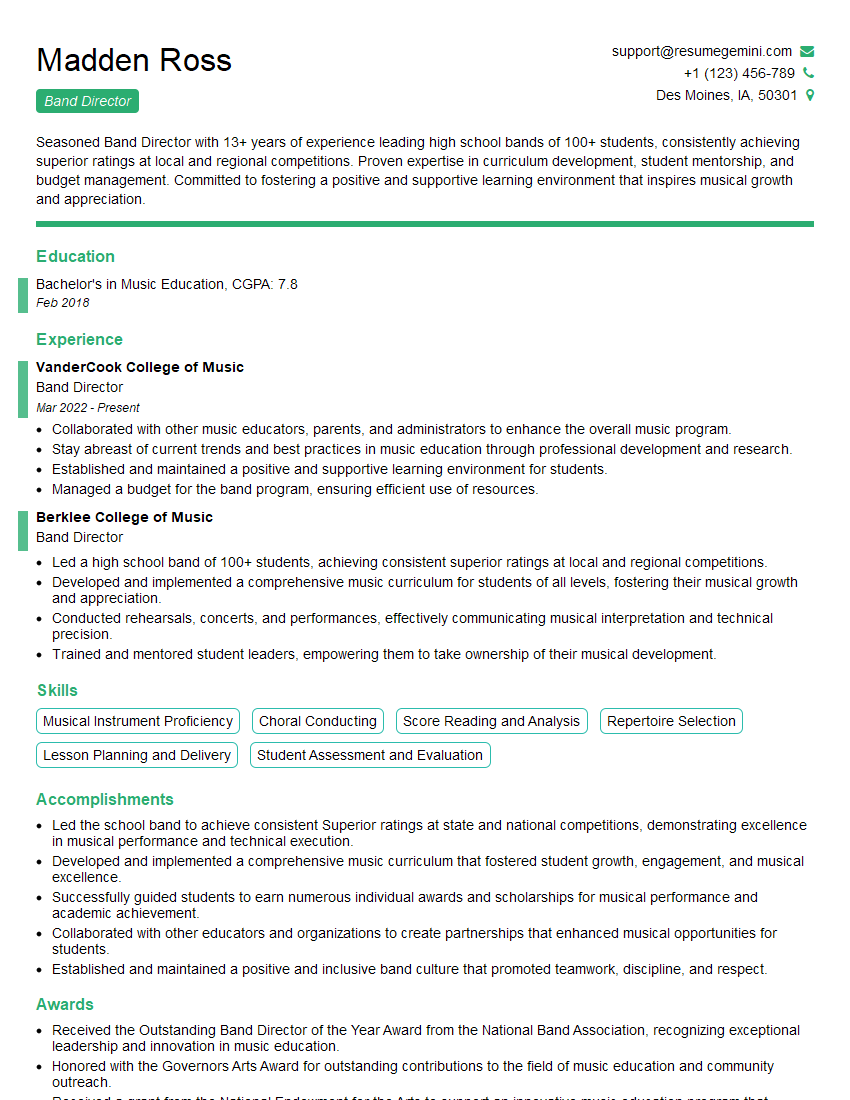
Band Director Resume Sample
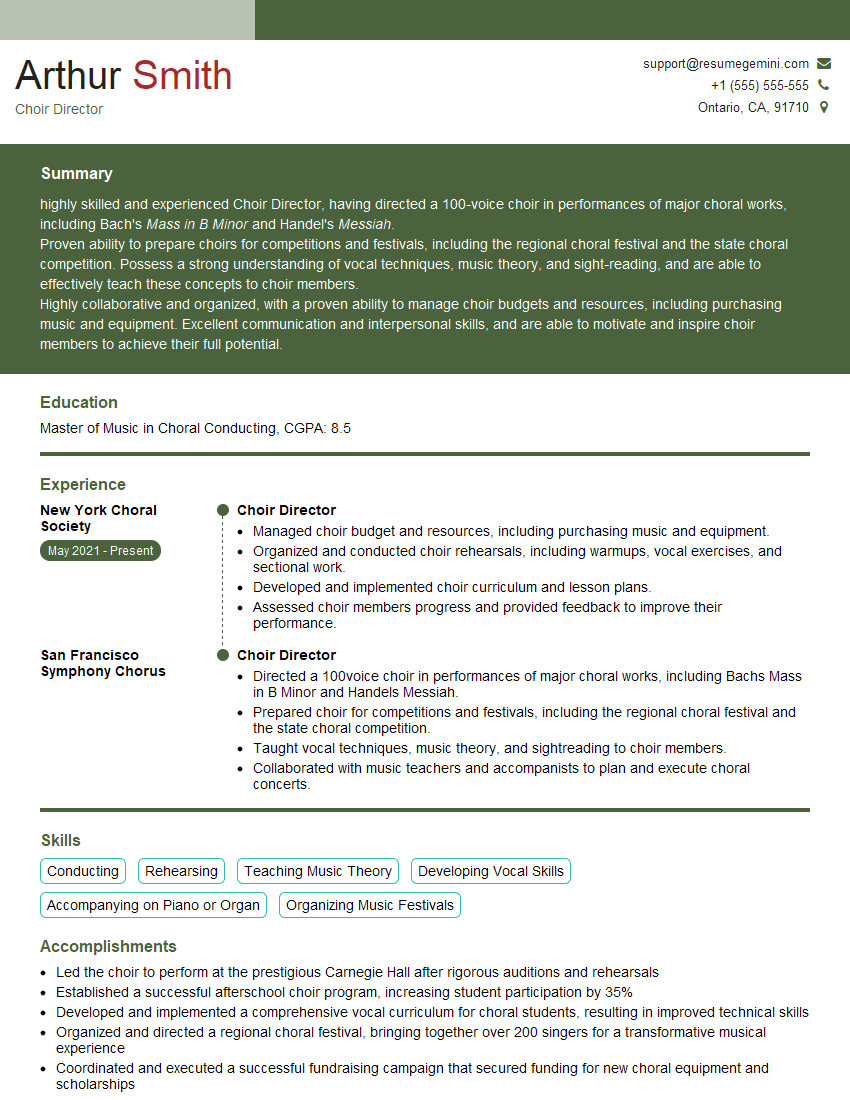
Choir Director Resume Sample
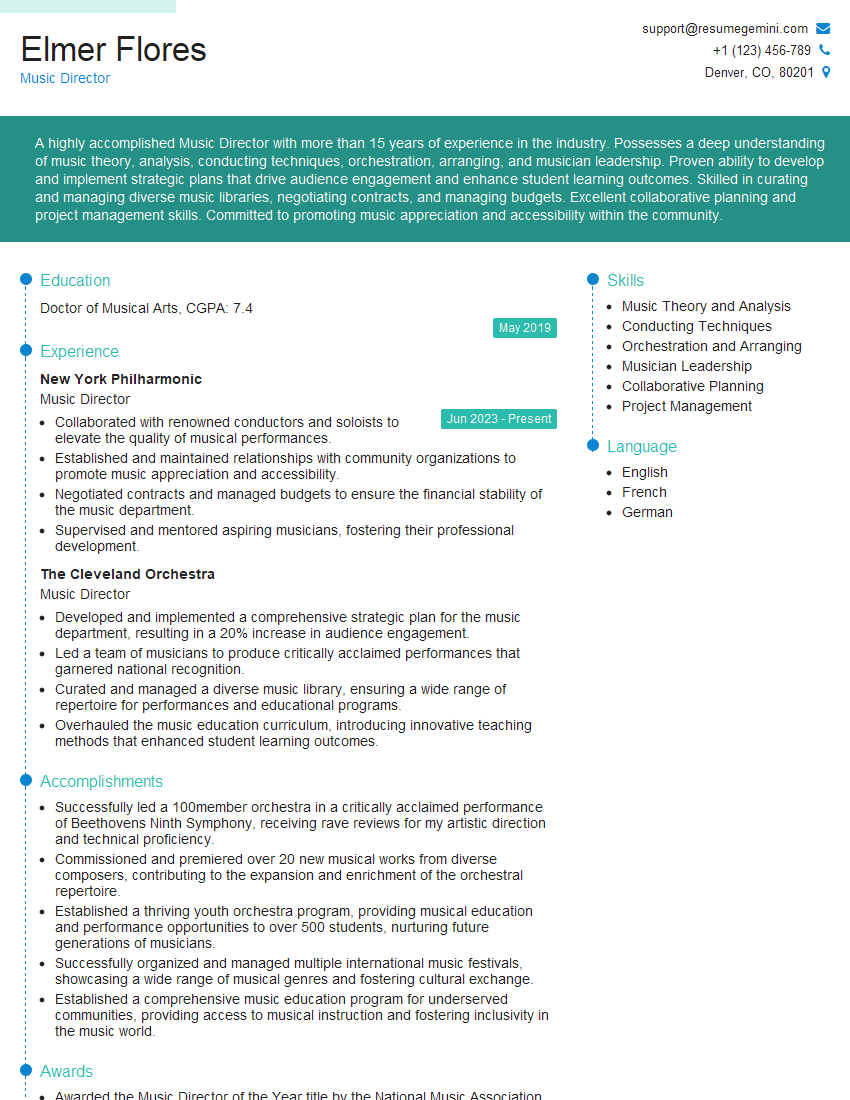
Music Director Resume Sample
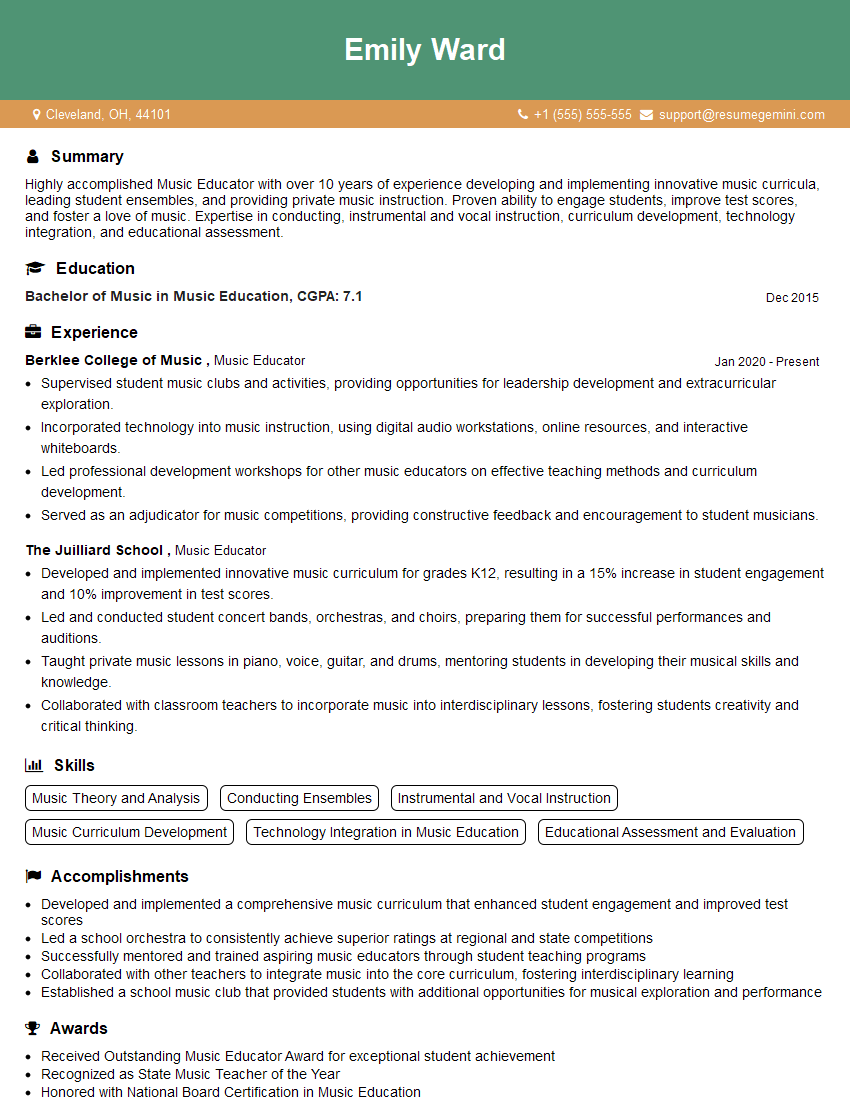
Music Educator Resume Sample
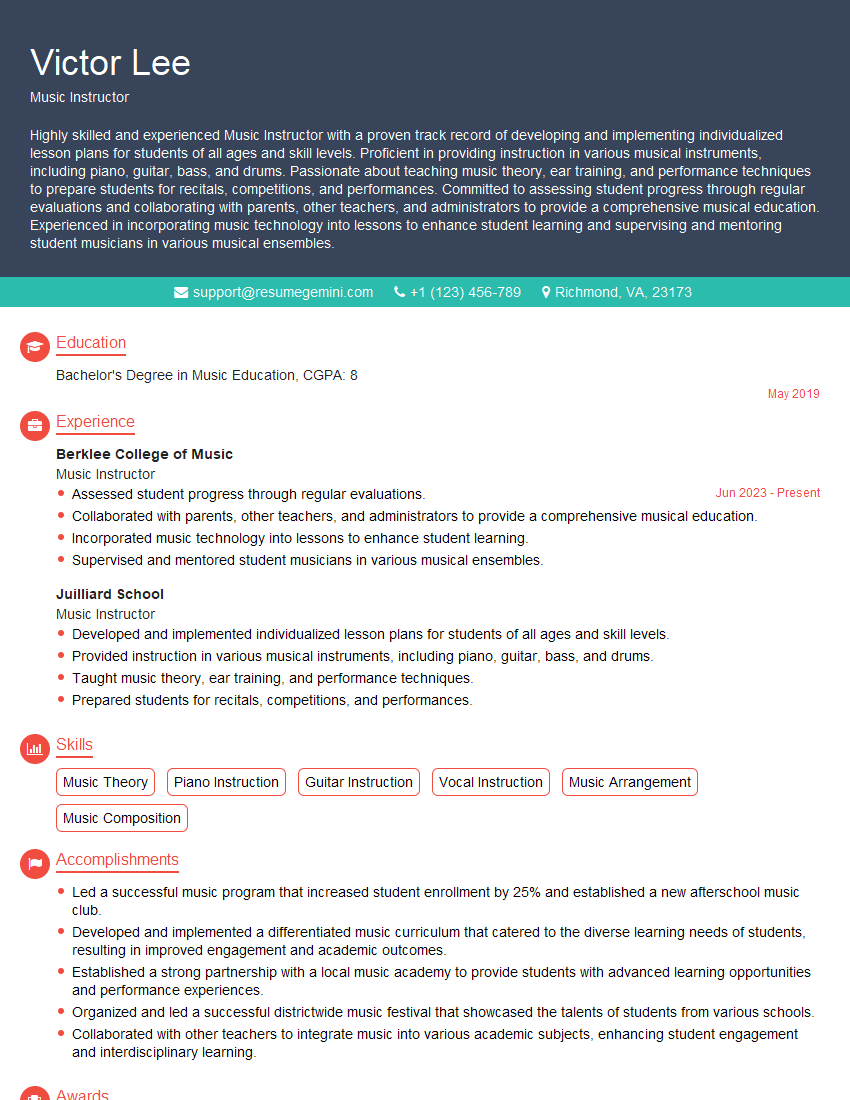
Music Instructor Resume Sample
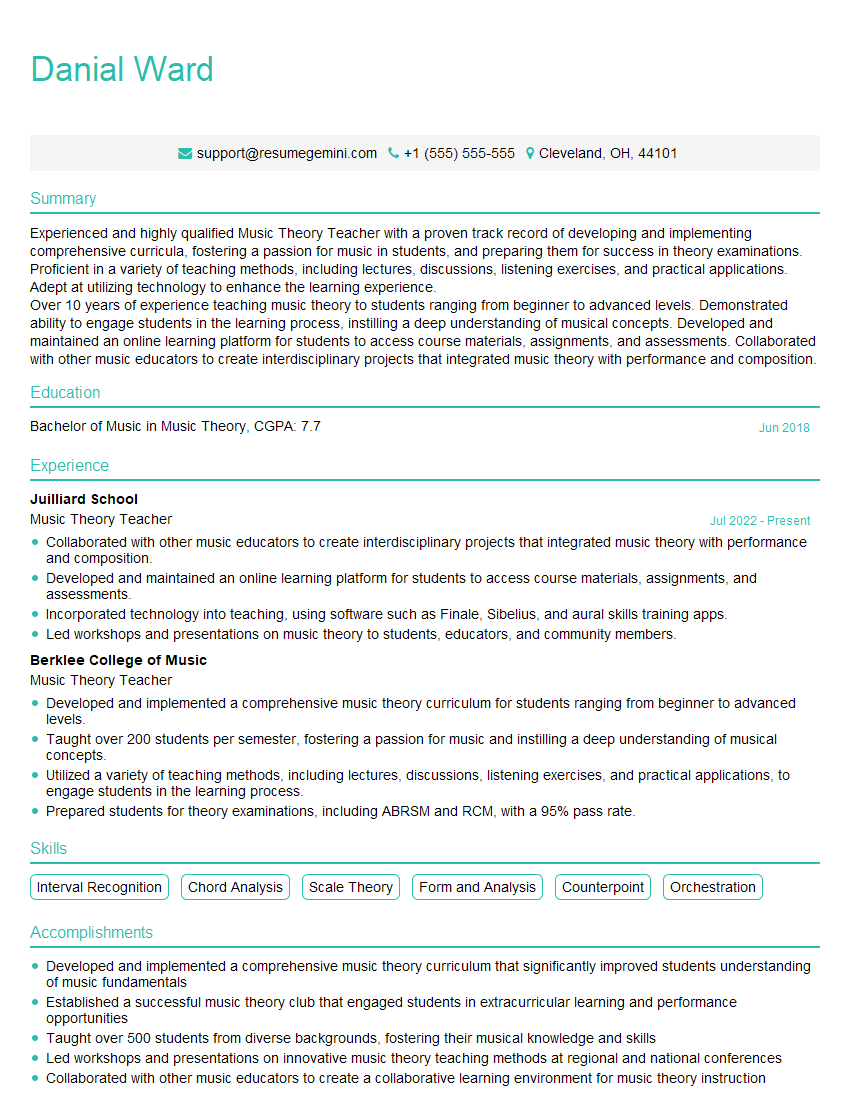
Music Theory Teacher Resume Sample
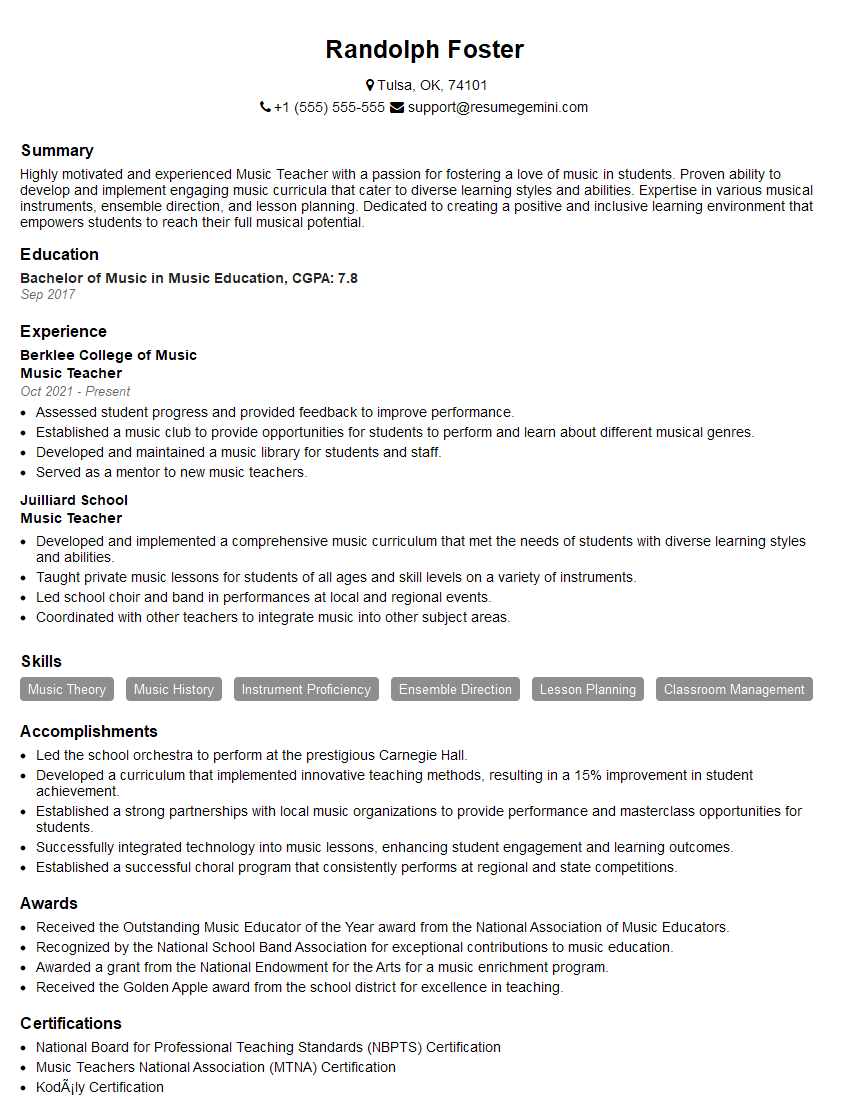
Music Teacher Resume Sample
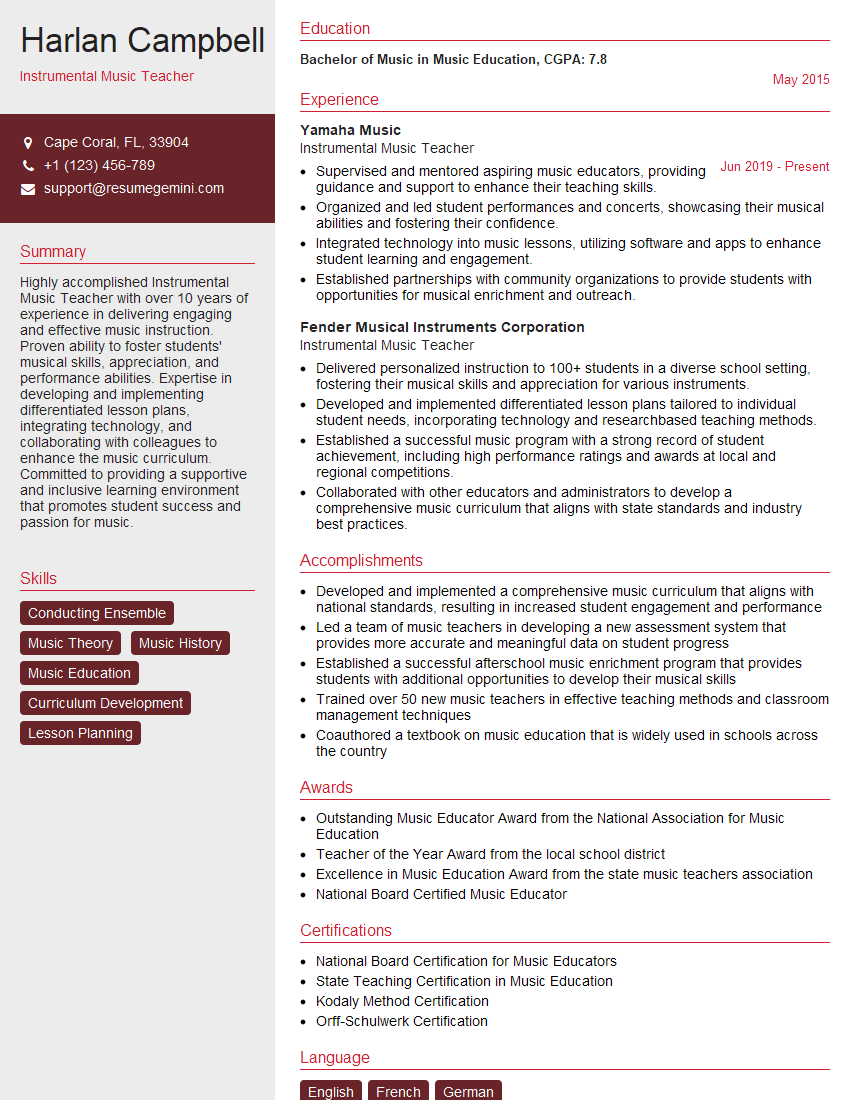
Instrumental Music Teacher Resume Sample
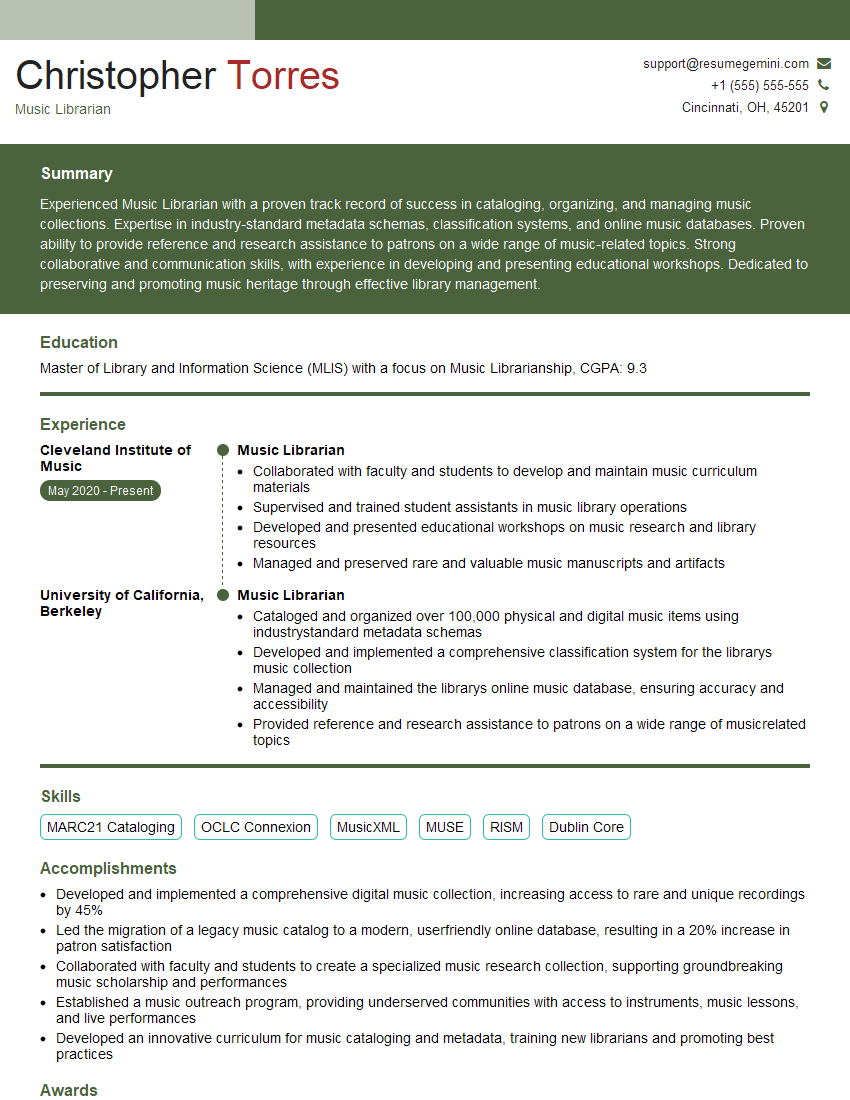
Music Librarian Resume Sample
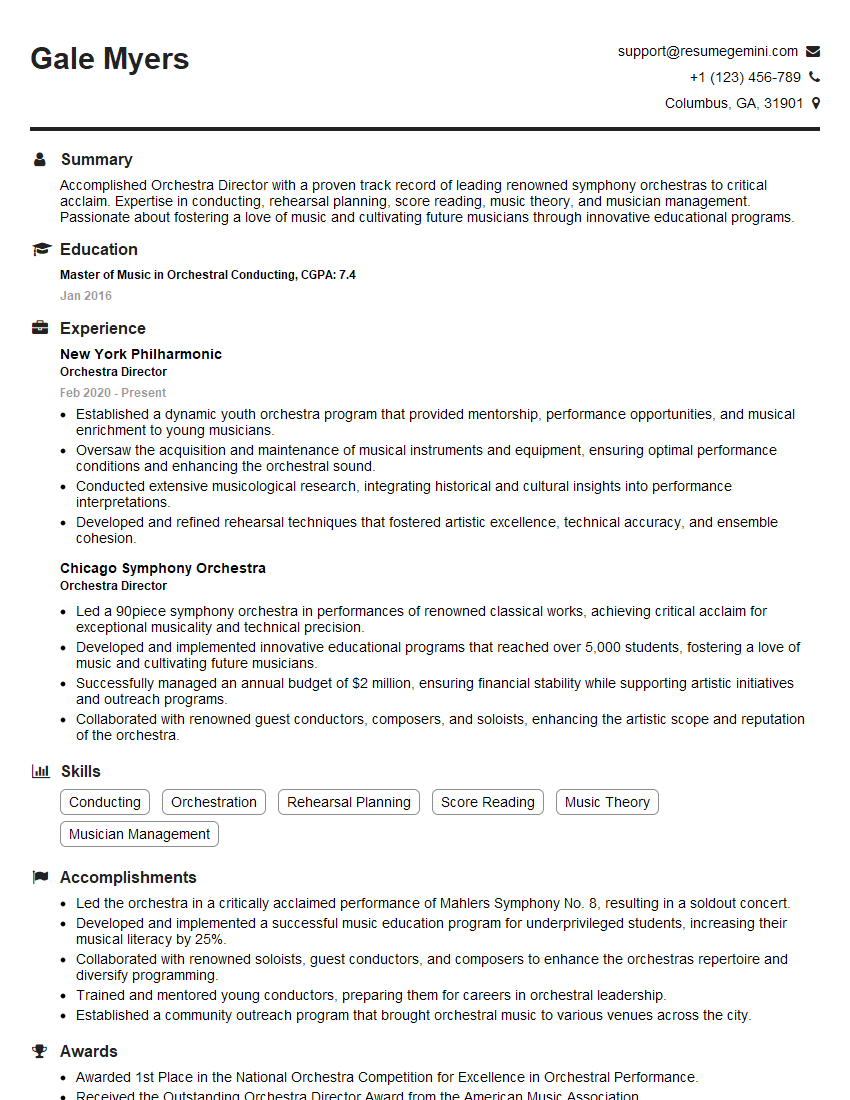
Orchestra Director Resume Sample
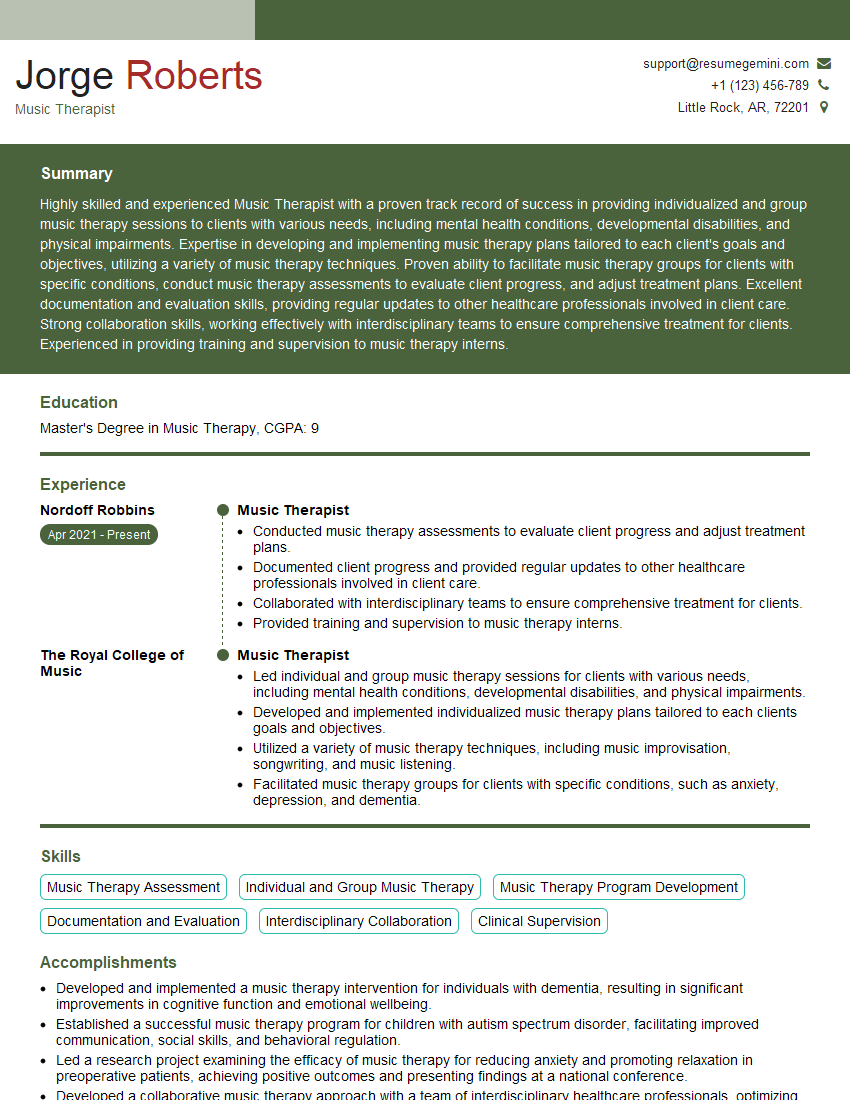
Music Therapist Resume Sample
Explore more articles
Users Rating of Our Blogs
Share Your Experience
We value your feedback! Please rate our content and share your thoughts (optional).
What Readers Say About Our Blog
Very informative content, great job.
good