Are you ready to stand out in your next interview? Understanding and preparing for SolventBased Painting interview questions is a game-changer. In this blog, we’ve compiled key questions and expert advice to help you showcase your skills with confidence and precision. Let’s get started on your journey to acing the interview.
Questions Asked in SolventBased Painting Interview
Q 1. Explain the difference between solvent-based and water-based paints.
The core difference between solvent-based and water-based paints lies in their binder – the substance that holds the pigment particles together and forms the film. Solvent-based paints use a resin dissolved in an organic solvent, such as mineral spirits or toluene, while water-based paints (also known as latex paints) use a resin dispersed in water. This fundamental difference impacts numerous aspects, including drying time, durability, cleanup, and VOC (Volatile Organic Compound) emissions. Solvent-based paints generally offer superior durability, hardness, and water resistance, resulting in a more durable finish. However, they also tend to have longer drying times, stronger odors, and higher VOC content, making them less environmentally friendly.
Think of it like this: Solvent-based paint is like a strong, durable glue that takes time to set, whereas water-based paint is a more flexible, fast-drying adhesive. The choice between them depends on the specific application and priorities.
Q 2. Describe the health and safety precautions associated with using solvent-based paints.
Working with solvent-based paints demands strict adherence to health and safety protocols. These paints contain volatile organic compounds (VOCs) that can be harmful if inhaled or absorbed through the skin. Key precautions include:
- Adequate Ventilation: Always work in a well-ventilated area, ideally outdoors or with strong exhaust fans. Poor ventilation can lead to dizziness, headaches, and even more serious health issues.
- Respiratory Protection: Wear a NIOSH-approved respirator designed for organic vapor protection, especially when spraying. This prevents inhalation of VOCs.
- Eye Protection: Safety glasses or goggles should always be worn to protect against splashes.
- Skin Protection: Wear gloves made of nitrile or other suitable material to prevent skin contact. Long sleeves and protective clothing are also recommended.
- Fire Safety: Solvent-based paints and their solvents are flammable. Avoid open flames, sparks, and smoking near application areas. Always handle and store paints according to manufacturer instructions.
- Proper Disposal: Dispose of leftover paint and solvents according to local regulations. Never pour them down the drain or into the trash.
Ignoring these precautions can result in serious health consequences, including respiratory problems, skin irritation, and even long-term health damage. Always refer to the Safety Data Sheet (SDS) provided by the paint manufacturer for detailed safety information.
Q 3. What are the various types of solvents used in solvent-based paints?
Solvent-based paints employ a range of solvents depending on the resin type and desired properties. Common examples include:
- Mineral Spirits (White Spirits): A relatively mild solvent, often used for cleaning brushes and thinning paints.
- Toluene: A more aggressive solvent, providing faster drying and better flow but with higher toxicity.
- Xylene: Similar to toluene but with a slightly higher boiling point, offering potentially better flow and leveling.
- Acetone: A strong and fast-evaporating solvent, suitable for cleaning but generally not for thinning most paints.
- Glycol Ethers: These are often used in specialized coatings for their ability to blend various resins and improve film properties.
The specific solvent used significantly influences the paint’s properties and the associated health and safety considerations. Always check the paint manufacturer’s recommendations for the correct thinner to use with a particular paint.
Q 4. How do you determine the appropriate viscosity of a solvent-based paint?
Determining the appropriate viscosity (thickness) of a solvent-based paint is crucial for achieving a smooth, even finish. Too thick, and the paint will be difficult to apply and may show brush marks; too thin, and it may run or sag. Viscosity is typically assessed using a Zahn cup or a similar instrument that measures the time it takes for a certain volume of paint to flow through an orifice. However, a simpler, practical method is to use the “stir test.”
Stir Test: Stir the paint thoroughly. If, after stirring, the paint falls back onto itself in a few seconds and does not run down the stir stick quickly, then it is likely at an appropriate viscosity for brushing or rolling. For spraying, the paint should be thinned further, but always according to the manufacturer’s recommendations. If you have a paint that is too thick, you can thin it using the recommended solvent – gradually adding small amounts and testing the viscosity until it meets the desired consistency.
Q 5. Explain the process of surface preparation for solvent-based painting.
Proper surface preparation is paramount for a successful solvent-based paint job. A well-prepared surface ensures good adhesion, prevents peeling, and maximizes the paint’s lifespan. The process typically involves these steps:
- Cleaning: Remove all loose dirt, dust, grease, and other contaminants using a suitable cleaner. Pressure washing might be necessary for heavily soiled surfaces.
- Scraping/Sanding: Remove any loose or flaking paint, rust, or other imperfections using scrapers or sandpaper. The surface should be smooth and sound.
- Priming (Often Necessary): Applying a primer is essential for optimal adhesion, especially on bare wood, metal, or previously painted surfaces. Primer also provides a uniform base for the topcoat and can improve its color coverage.
- Filling: Fill any holes, cracks, or imperfections with a suitable wood filler or patching compound, allowing it to dry completely before sanding smooth.
- Final Sanding: Lightly sand the entire surface to create a smooth, even texture. Remove any dust with a tack cloth before painting.
The level of preparation required will vary depending on the surface and condition, but thorough preparation will always lead to a better result.
Q 6. What are the different application methods for solvent-based paints?
Solvent-based paints can be applied using various methods, each offering its own advantages and challenges:
- Brushing: Suitable for detailed work and smaller areas, providing good control over the paint application. However, it can be labor-intensive and may leave visible brush strokes.
- Rolling: Efficient for larger areas and offers a smooth finish, though less control compared to brushing. Suitable for walls, fences, and similar surfaces.
- Spraying: Ideal for large surfaces and achieving a uniform finish. Requires specialized equipment (airless sprayers, HVLP spray guns) and expertise to avoid overspray and runs. Offers a very even finish but requires proper safety precautions.
- Dipping: Used for small items, giving uniform coating, usually used in industrial settings.
The best application method depends on the project’s scale, desired finish, and the painter’s experience. Always follow the paint manufacturer’s application instructions.
Q 7. Describe the proper techniques for spray painting with solvent-based paints.
Spray painting with solvent-based paints requires skill and careful attention to detail to avoid common issues like runs, sags, and uneven coverage. Here’s a breakdown of proper techniques:
- Equipment Preparation: Ensure your spray equipment is clean and properly adjusted. Thin the paint according to the manufacturer’s instructions and the specific sprayer being used.
- Test Spray: Always conduct a test spray on a scrap piece of material to check the spray pattern, paint consistency, and settings before applying it to the main surface.
- Consistent Distance and Speed: Maintain a consistent distance from the surface (typically 6-12 inches, depending on the sprayer) and move the sprayer at a steady, even pace to ensure uniform coverage. Avoid lingering in one spot.
- Overlapping Coats: Overlap each pass by about 50% to ensure complete coverage and avoid visible stripes.
- Multiple Thin Coats: Apply several thin coats rather than one thick coat to prevent runs and sags. Allow each coat to dry completely before applying the next.
- Clean-Up: Thoroughly clean your equipment immediately after use with the appropriate solvent to prevent clogging and damage.
Practice makes perfect. Start with smaller projects to gain experience and confidence before tackling larger, more demanding tasks. Proper training and safety precautions are essential for safe and effective spray painting.
Q 8. How do you handle different surface types (metal, wood, plastic) when using solvent-based paints?
Surface preparation is paramount when using solvent-based paints. Different surfaces require different approaches to ensure proper adhesion and a long-lasting finish.
- Metal: Metal surfaces often require thorough cleaning to remove rust, grease, and other contaminants. A wire brush, followed by a solvent wipe (like mineral spirits), is often necessary. A primer specifically designed for metal is crucial for optimal adhesion, preventing peeling or flaking. Think of it like creating a strong foundation for a house – you wouldn’t build on cracked earth, would you?
- Wood: Wood surfaces should be sanded smooth to create a uniform texture and remove any splinters. Fill any imperfections with wood filler and sand again. Depending on the type of wood and the desired finish, you may need to apply a wood primer or sealer before painting. This prevents the wood from absorbing the paint unevenly, leading to blotchiness. Imagine painting on bare wood versus a smoothly primed surface – the difference is night and day!
- Plastic: Plastics can be tricky. Some plastics are incompatible with solvent-based paints and may require a specialized primer or adhesion promoter. Always test a small, inconspicuous area first to check for compatibility. Thorough cleaning with a suitable solvent is also crucial. Similar to metal, a clean surface is key for good adhesion.
Proper surface preparation, tailored to the material, directly impacts the final result, ensuring a professional and durable paint job.
Q 9. What are the common problems encountered when using solvent-based paints, and how do you address them?
Solvent-based paints, while offering superior durability and coverage, can present certain challenges.
- Sagging/Running: Applying too thick a coat or working in excessively hot conditions can lead to paint sagging. The solution is to apply thin, even coats, allowing each coat to dry completely before applying the next. Think of it like layering icing on a cake – you wouldn’t pile it all on at once!
- Orange Peel Effect: This textured finish often results from improper spraying technique, incorrect nozzle settings, or poor ventilation. Using the correct spraying technique, adjusting pressure, and maintaining proper distance from the surface are essential.
- Brush Marks: Visible brush strokes are a common issue that can be minimized by using a high-quality brush with appropriate bristles, applying thin even coats, and using a smooth, consistent technique. Practice makes perfect! A good brush allows the paint to flow evenly.
- Poor Adhesion: This stems from inadequate surface preparation or using an incompatible paint type. Always follow manufacturer instructions and ensure proper surface cleaning before painting. If the surface isn’t prepared correctly, the paint will struggle to adhere properly.
Addressing these problems requires careful attention to detail, proper technique, and choosing the right materials for the job.
Q 10. Explain the importance of ventilation when working with solvent-based paints.
Ventilation is critical when working with solvent-based paints because they release volatile organic compounds (VOCs). These VOCs are harmful if inhaled and can cause headaches, dizziness, nausea, and in severe cases, more serious health problems.
Adequate ventilation, such as opening windows and using fans, helps to disperse these VOCs, keeping the air breathable. In enclosed spaces or when working with large quantities of paint, a respirator with appropriate cartridges is mandatory. Think of it like this: you wouldn’t want to breathe in car exhaust fumes all day; similarly, you need to protect yourself from the fumes of solvent-based paints.
Failing to provide adequate ventilation poses a significant health risk, therefore it’s not merely a suggestion but a crucial safety precaution.
Q 11. How do you clean your equipment after using solvent-based paints?
Cleaning equipment promptly and thoroughly after using solvent-based paints is essential to prevent paint from hardening and ruining your brushes and other tools.
The process involves several steps: immediately after use, rinse brushes and rollers with the recommended thinner (usually the same thinner used to thin the paint). This removes most of the wet paint. Then, use a dedicated brush cleaner or thinner to clean the brushes thoroughly, working the cleaner into the bristles. Finally, rinse with clean thinner and let them dry completely. For spray equipment, follow the manufacturer’s instructions for cleaning, usually involving multiple cycles of flushing with thinner. Failure to clean promptly will lead to damaged tools and potentially increase the cost of replacing them.
Proper cleaning ensures the longevity of your equipment, saving money in the long run.
Q 12. Describe the different types of brushes used for solvent-based painting.
The type of brush you use significantly impacts the quality of your solvent-based paint job. Different brushes are designed for various purposes and paint types.
- Natural Bristle Brushes: These brushes, typically made from hog bristle, are excellent for oil-based paints and varnishes. Their absorbent nature helps distribute the paint evenly. They’re ideal for smooth surfaces.
- Synthetic Bristle Brushes: Made from nylon or polyester, these brushes work well with both solvent-based and water-based paints. They’re more durable and easier to clean than natural bristle brushes.
- Angle Sash Brushes: These angled brushes are perfect for cutting in edges and painting trim work, offering precision and control.
- Wall Brushes: Larger brushes with wider bristles are used for covering large areas quickly and efficiently.
Choosing the right brush will greatly improve the final product, preventing brush strokes and giving you a more professional finish.
Q 13. Explain the concept of flash point and its importance in solvent-based painting.
The flash point is the lowest temperature at which the vapor of a flammable liquid can ignite in the presence of an ignition source. It’s a critical safety consideration when working with solvent-based paints because many of the solvents used are highly flammable.
Knowing the flash point helps you take necessary precautions to prevent fires. For example, you should always work in a well-ventilated area, keep away from open flames, and avoid using electrical equipment that could generate sparks. Paints with low flash points are especially hazardous and require extra caution. Understanding the flash point prevents accidental fires and ensures a safe working environment.
Q 14. What are the VOC regulations related to solvent-based paints?
VOC regulations vary significantly by region and country but aim to reduce air pollution caused by volatile organic compounds released by paints and other products. These regulations limit the maximum amount of VOCs that can be present in solvent-based paints.
Many manufacturers now offer low-VOC or zero-VOC solvent-based paints that meet these stricter regulations. Choosing low-VOC paints helps minimize your environmental impact while still allowing you to work with the durability and performance of solvent-based paints. Checking the paint’s label for VOC content is crucial to ensure compliance with local regulations.
Q 15. How do you manage waste generated from solvent-based painting?
Managing waste from solvent-based painting is crucial for environmental responsibility and workplace safety. It involves a multi-step process focusing on containment, proper disposal, and minimizing waste generation in the first place.
- Containment: Use designated containers for paint scraps, rags, and thinner waste. Never mix different waste streams. Keep containers tightly sealed to prevent spills and evaporation.
- Recycling/Disposal: Many communities offer hazardous waste disposal programs specifically for solvent-based paint and related materials. Check with your local authorities for regulations and drop-off locations. Some solvent-based paints can be recycled through specialized facilities. Always follow the instructions on the paint can and any local regulations carefully.
- Waste Minimization: Accurate color matching to avoid repainting and using the correct amount of paint prevents generating excessive waste. Invest in efficient spray techniques to reduce overspray.
- Cleaning: Use approved solvents and cleaning methods to thoroughly clean brushes, rollers, and equipment, ensuring that leftover paint is collected and disposed of properly. Avoid dumping solvents down the drain.
For example, on a recent large-scale project, we implemented a color-coding system for waste containers to prevent cross-contamination and ensure proper disposal according to material type. This streamlined the process and improved efficiency.
Career Expert Tips:
- Ace those interviews! Prepare effectively by reviewing the Top 50 Most Common Interview Questions on ResumeGemini.
- Navigate your job search with confidence! Explore a wide range of Career Tips on ResumeGemini. Learn about common challenges and recommendations to overcome them.
- Craft the perfect resume! Master the Art of Resume Writing with ResumeGemini’s guide. Showcase your unique qualifications and achievements effectively.
- Don’t miss out on holiday savings! Build your dream resume with ResumeGemini’s ATS optimized templates.
Q 16. Explain the importance of proper mixing ratios for solvent-based paints.
Proper mixing ratios are paramount in solvent-based painting. Incorrect ratios significantly impact the paint’s final properties like drying time, gloss level, and durability. The manufacturer’s instructions are your bible. They usually provide specific ratios for the base coat, thinner, and potentially hardeners or additives.
Imagine baking a cake: if you don’t follow the recipe accurately, the cake might turn out dry, crumbly, or just plain inedible. Similarly, deviating from the specified ratios in solvent-based paints can lead to poor adhesion, cracking, or uneven finish.
For instance, using too much thinner can lead to a weak, poorly adhering film that’s prone to cracking, while too little thinner can result in a thick, uneven coat that takes forever to dry and might exhibit brushstrokes. Always use a calibrated measuring device and thoroughly mix the components until you achieve a uniform consistency.
Q 17. Describe the process of color matching with solvent-based paints.
Color matching with solvent-based paints requires precision and often involves specialized tools. There are several methods:
- Using a color matching system: Many paint manufacturers offer computerized color matching systems. You provide a sample, and the system formulates the exact color match using their available pigments and solvent-based paints.
- Manual tinting: A skilled painter can manually tint paints using color charts and small amounts of colorants. This method requires experience and a keen eye for detail to achieve the desired shade.
- Trial and error (less precise): This involves mixing small batches of paint and experimenting until a close match is achieved. This method is time-consuming and less precise, leading to potential waste.
For example, in a recent project restoring antique furniture, we utilized a color matching system to replicate the original color accurately. The digital system created a formula, which was then mixed with precision to ensure consistency throughout the project.
Q 18. What are the different types of thinners used for solvent-based paints?
Different thinners are used for solvent-based paints depending on the paint type and desired outcome. The choice of thinner significantly impacts the paint’s viscosity, drying time, and overall application.
- Mineral spirits (white spirit): A common thinner for alkyd paints (oil-based). It’s relatively slow-drying and offers good flow and leveling.
- Lacquer thinner: Used for lacquer-based paints, this thinner evaporates quickly and produces a fast-drying finish. It’s more aggressive than mineral spirits.
- Specialty thinners: Certain paints require specific thinners tailored to their formulation. Always check the manufacturer’s recommendations for the best results.
The wrong thinner can cause incompatibility issues, leading to poor adhesion, discoloration, or even the paint failing to dry properly. Therefore, it is vital to select the appropriate thinner for your specific solvent-based paint.
Q 19. How do you deal with paint runs and sags when applying solvent-based paints?
Paint runs and sags are common issues in solvent-based painting, mainly due to applying too much paint, using too much thinner, or working in excessively hot conditions. Here’s how to deal with them:
- Prevention: Use the correct amount of paint and thinner. Apply thin, even coats. Work in a cool environment. Apply paint using the appropriate technique for the surface and viscosity.
- Correction: If runs and sags occur before the paint dries, carefully use a brush or soft rag to level the paint surface while it is still wet. For small runs and sags, you can smooth out the paint immediately. For larger areas, use a putty knife to carefully scrape off the excess paint once dry and re-apply. Sanding might be required once dry.
On a recent project, we had to deal with several sags in a high-gloss finish. By acting quickly, using a soft brush, and being gentle, we managed to smooth out the wet paint and prevent a costly re-coat.
Q 20. How do you achieve a smooth and even finish when using solvent-based paints?
Achieving a smooth and even finish with solvent-based paints is a matter of technique and preparation. This includes careful surface preparation and the right application method.
- Surface Preparation: Ensure the surface is clean, dry, and free from dust, grease, or imperfections. This may involve sanding, filling, and priming.
- Proper Technique: Use a quality brush or roller suitable for the type of paint. Apply thin, even coats, allowing sufficient drying time between coats. Use a wet-edge technique to avoid lap marks. Consider using a spray gun for larger areas for superior consistency.
- Thinning: If needed, thin the paint according to the manufacturer’s instructions to achieve the desired flow and application. Avoid excessive thinning to prevent poor adhesion.
- Sanding (between coats): Light sanding between coats can help create a smoother finish. Use fine-grit sandpaper and avoid sanding too aggressively.
Remember, patience is key. Rushing the process can lead to an uneven finish. Multiple thin coats are always preferred over one thick coat.
Q 21. What are the different types of primers used for solvent-based painting?
Primers play a vital role in solvent-based painting, providing a bonding layer between the substrate and the topcoat, promoting adhesion and improving the final finish. Several types cater to different needs:
- Alkyd primers: Oil-based primers offering excellent adhesion and durability on various surfaces. They are often chosen for wood, metal, and masonry.
- Shellac-based primers: Provide a very smooth, hard surface ideal for stain blocking. They are suitable for wood and other porous materials.
- Acrylic primers: Water-based primers, but still considered compatible for many solvent-based topcoats, they are known for their fast drying times and low odor.
- Specialty primers: Primers designed for specific substrates or purposes, like metal primers with rust inhibitors, or stain-blocking primers for wood.
Choosing the wrong primer can lead to poor adhesion, paint peeling, and an uneven final finish. Always select a primer compatible with your chosen topcoat and suitable for the substrate.
Q 22. Explain the concept of curing time for solvent-based paints.
Curing time in solvent-based paints refers to the period required for the solvent to evaporate and the paint film to fully harden and develop its intended properties. It’s not just about drying to the touch; it’s about achieving complete chemical cross-linking (for systems like epoxies and polyurethanes) or oxidation (for alkyds), leading to maximum hardness, durability, and chemical resistance. Think of it like baking a cake – it needs time in the oven (curing) to set properly, not just to cool down (dry).
The curing time is significantly influenced by factors like temperature, humidity, film thickness, and the specific paint formulation. Higher temperatures and lower humidity generally accelerate curing. Thicker coats take longer to cure completely. Manufacturers usually provide recommended curing times on the product label, but it’s crucial to understand that these are guidelines; real-world conditions may affect the actual time.
For instance, an epoxy coating might require 24 hours to cure to the touch but 72 hours for full chemical cure and optimal hardness. Ignoring the full cure time can lead to problems like scratching, chipping, or reduced chemical resistance.
Q 23. How do you troubleshoot common issues such as blistering or peeling?
Blistering and peeling in solvent-based paint jobs are common problems, usually stemming from poor surface preparation or application. Blistering often indicates trapped moisture underneath the paint film, which expands and pushes the paint up. Peeling, on the other hand, can be due to poor adhesion, substrate degradation, or excessive film thickness.
- Troubleshooting Blistering: This often requires addressing moisture issues. You need to investigate the cause, which might be inadequate surface preparation (not allowing sufficient drying time for a previously damp surface), moisture ingress through cracks in the substrate, or even osmotic blistering (where moisture diffuses through the paint film from a soluble substrate).
- Troubleshooting Peeling: This requires a more systematic approach. First, assess the extent of the peeling. Is it localized or widespread? If localized, you might be able to simply scrape off the loose paint and re-apply. Widespread peeling indicates a more serious underlying problem. Check for poor adhesion (likely caused by a contaminated or insufficiently prepared substrate), old deteriorated paint that wasn’t properly removed, or the application of an incompatible paint system over an existing coating.
In both cases, proper surface preparation is key. This involves thorough cleaning, sanding to create a suitable profile for adhesion, and the application of a primer appropriate for the substrate and topcoat. Using the right solvents for cleaning and appropriate thinners for the paint helps achieve a good finish. For example, using a solvent that is too aggressive can damage the underlying layer or cause the paint to become too thin, decreasing adhesion.
Q 24. What is the importance of proper storage of solvent-based paints and thinners?
Proper storage is crucial for maintaining the quality and performance of solvent-based paints and thinners. These products are sensitive to temperature fluctuations, humidity, and exposure to air. Improper storage can lead to thickening, skinning (formation of a hardened surface layer), or even chemical degradation, rendering them unusable.
- Temperature: Store them in a cool, well-ventilated area, away from direct sunlight or extreme temperatures. Freezing can damage some formulations, while excessive heat can accelerate solvent evaporation and thicken the paint.
- Humidity: High humidity can promote the growth of mold or mildew, especially on the surface of the container. Keep the storage area dry.
- Air Exposure: Always tightly seal containers after use. Exposure to air can lead to oxidation and degradation, altering the paint’s viscosity and properties. This is especially critical for thinners, which have a higher rate of evaporation.
- Container Integrity: Make sure the containers are undamaged and sealed correctly. Leaks can lead to product loss, spills, and safety hazards.
Imagine leaving a glass of milk out in the sun; it spoils quickly. Solvent-based paints and thinners are similarly susceptible to deterioration if not stored correctly. Proper storage protects your investment and ensures consistent quality for your projects.
Q 25. Describe your experience with different types of solvent-based paint systems (e.g., epoxy, polyurethane).
My experience encompasses a wide range of solvent-based paint systems. I’ve worked extensively with epoxy, polyurethane, and alkyd-based systems, each with its unique properties and applications.
- Epoxy systems are known for their exceptional hardness, chemical resistance, and adhesion. I’ve used them in demanding applications like industrial flooring and protective coatings where durability and resistance to chemicals, abrasion, and impact are crucial. Their two-part nature (resin and hardener) requires careful mixing for optimal results. Incorrect mixing ratios can significantly affect the final properties.
- Polyurethane systems offer excellent flexibility, gloss retention, and weatherability, making them suitable for automotive finishes and high-end furniture applications. They also come in various gloss levels and formulations for different substrates. I’ve seen firsthand how meticulous application is crucial for a flawless finish.
- Alkyd-based systems are more traditional and versatile. They are widely used for interior and exterior applications, offering good durability and a relatively easy application process. Their properties vary depending on the oil length and formulation. I’ve used them extensively in both residential and commercial projects.
My experience includes understanding each system’s application techniques, limitations, and necessary safety precautions. For example, epoxy systems often have a shorter pot life (time before the mixture starts hardening) requiring careful planning and efficient working.
Q 26. How do you ensure the quality and durability of a solvent-based paint job?
Ensuring the quality and durability of a solvent-based paint job involves a multi-step process, starting with thorough surface preparation and extending to careful application and proper curing.
- Surface Preparation: This is the most critical step. It involves cleaning the surface to remove dust, grease, and any loose material. Sanding might be necessary to create a suitable profile for adhesion, especially on smooth surfaces. The choice of sandpaper grit and techniques depends on the surface material. Priming is often essential to provide a uniform base, enhance adhesion, and protect the substrate.
- Paint Selection: Choosing the right paint system for the application is vital. Factors to consider include the substrate material, intended use (interior/exterior), required durability, and aesthetic requirements (gloss level, color).
- Application Technique: The method of application (brush, roller, spray) significantly impacts the final finish. Proper application involves applying thin, even coats to avoid runs and sags. Maintaining consistent wet edges is crucial to prevent lap marks. Spray application requires specialized equipment and expertise to prevent overspray and achieve an even finish.
- Curing: Allowing sufficient curing time is essential for achieving the full properties of the paint, as described earlier. Environmental factors like temperature and humidity play a crucial role.
By paying attention to each step, you can significantly improve the quality and durability of the paint job. Think of it like building a house; a strong foundation (surface preparation) and careful construction (application) are crucial for a long-lasting result.
Q 27. Explain your experience with different surface preparation techniques (e.g., sanding, priming, etching).
Surface preparation is the foundation of any successful paint job, and I’m proficient in various techniques tailored to different substrates and paint systems.
- Sanding: I use various grades of sandpaper, starting with coarser grits for removing old paint or leveling imperfections and progressing to finer grits for smoothing the surface before priming and topcoating. The choice of sandpaper depends on the substrate’s hardness and the desired surface finish. For example, a harder substrate might require a coarser grit.
- Priming: Priming serves several essential functions, including enhancing adhesion between the substrate and the topcoat, blocking stains, and providing a uniform base for a consistent final color. I choose primers based on the substrate and topcoat compatibility, as well as the specific needs of the project, such as stain-blocking properties or enhanced adhesion.
- Etching: This technique is particularly important for surfaces like metal or concrete that require improved adhesion. Etching creates a rougher surface texture, increasing the surface area for better mechanical bonding. Chemical etching is often used for metals, while abrasive blasting might be employed for concrete to remove contaminants and create a profile for improved adhesion. Proper safety precautions are paramount when performing etching procedures.
My experience includes understanding the importance of choosing the right preparation method for each substrate to ensure optimal adhesion and a long-lasting paint job. Ignoring proper surface preparation is a recipe for early paint failure, much like building a house on a weak foundation.
Key Topics to Learn for SolventBased Painting Interview
- Surface Preparation: Understanding different surface types and appropriate preparation techniques (cleaning, priming, etc.) for optimal paint adhesion and longevity.
- Paint Selection & Application: Choosing the right solvent-based paint for various surfaces and applications, mastering different application techniques (brushing, rolling, spraying), and understanding the impact of environmental factors.
- Health & Safety: Thorough knowledge of handling solvents safely, including proper ventilation, personal protective equipment (PPE), and waste disposal procedures. Understanding relevant health and safety regulations.
- Color Theory & Matching: Basic understanding of color mixing and matching, and the ability to accurately match existing colors.
- Troubleshooting & Problem Solving: Identifying and resolving common issues encountered during the painting process, such as brushstrokes, uneven application, and paint defects. Understanding the causes and solutions for common problems.
- Project Management: Planning and executing painting projects efficiently, including estimating materials, scheduling, and adhering to timelines and budgets.
- Tools & Equipment: Familiarity with various tools and equipment used in solvent-based painting, including their proper maintenance and usage.
- Cleaning & Maintenance: Understanding proper cleaning procedures for tools and equipment, and maintaining a clean and organized work environment.
Next Steps
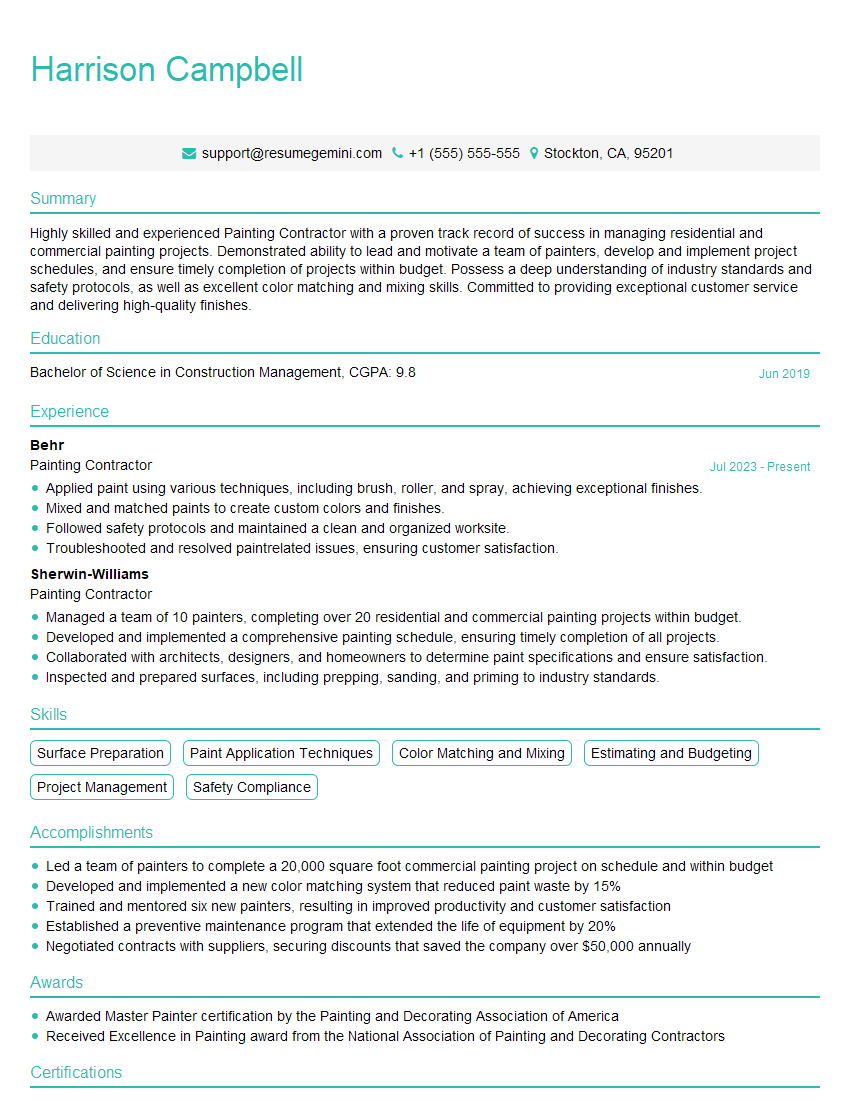
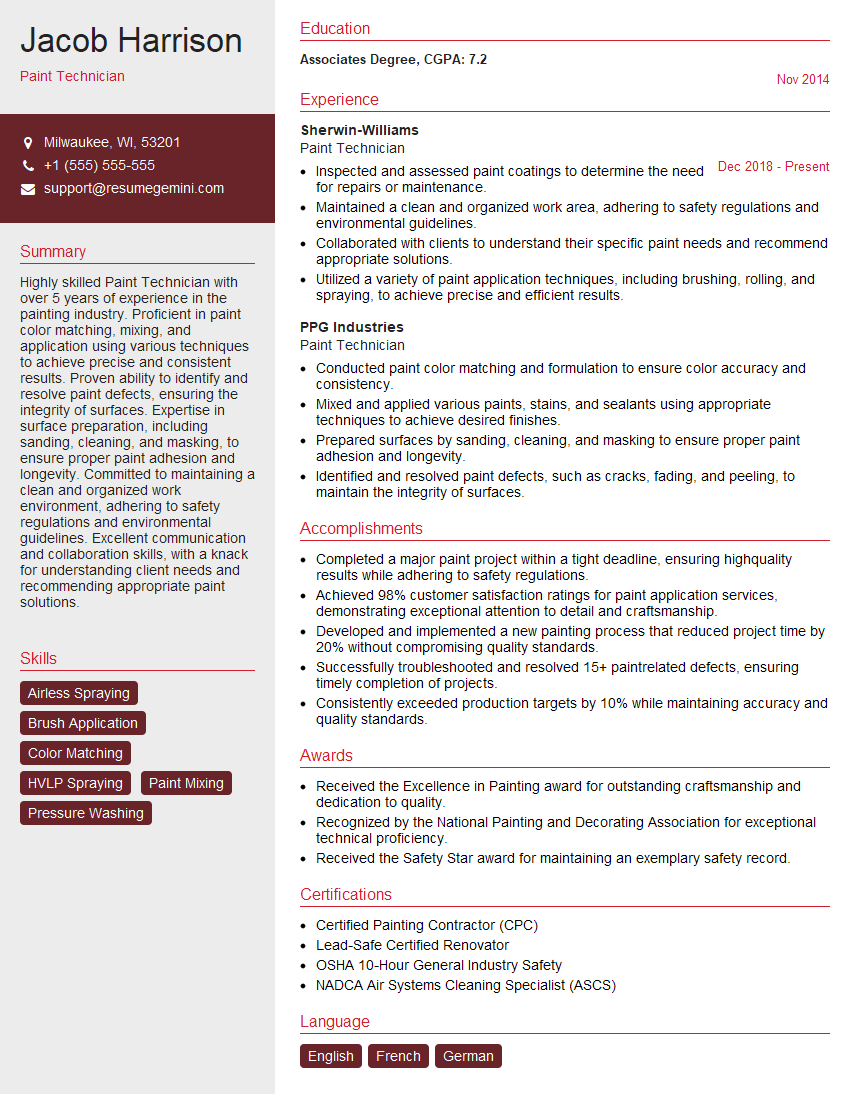
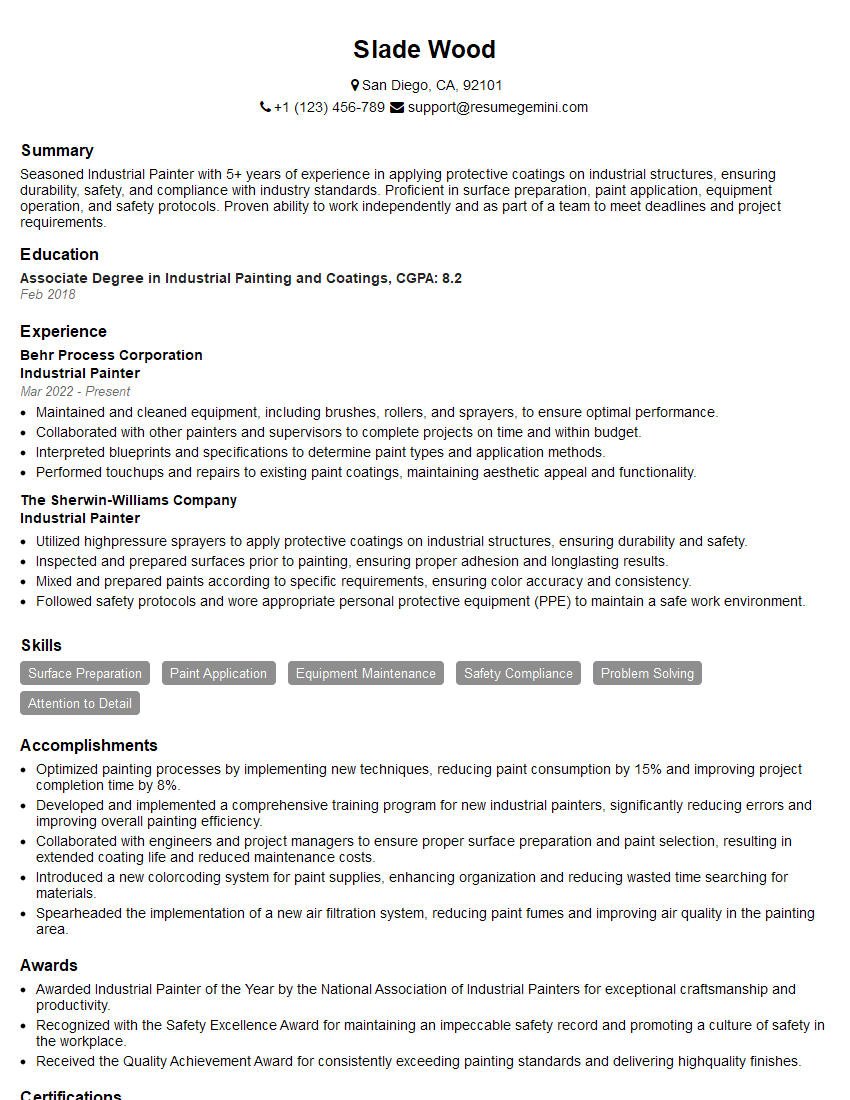
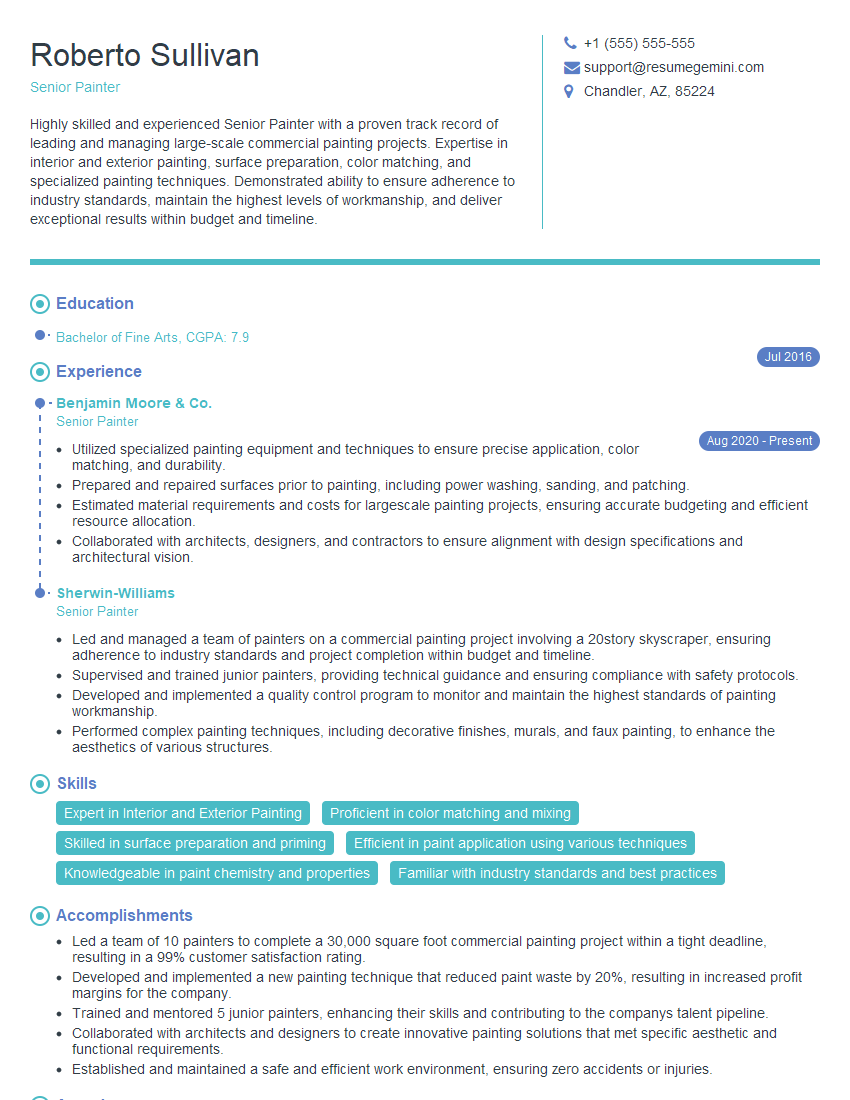
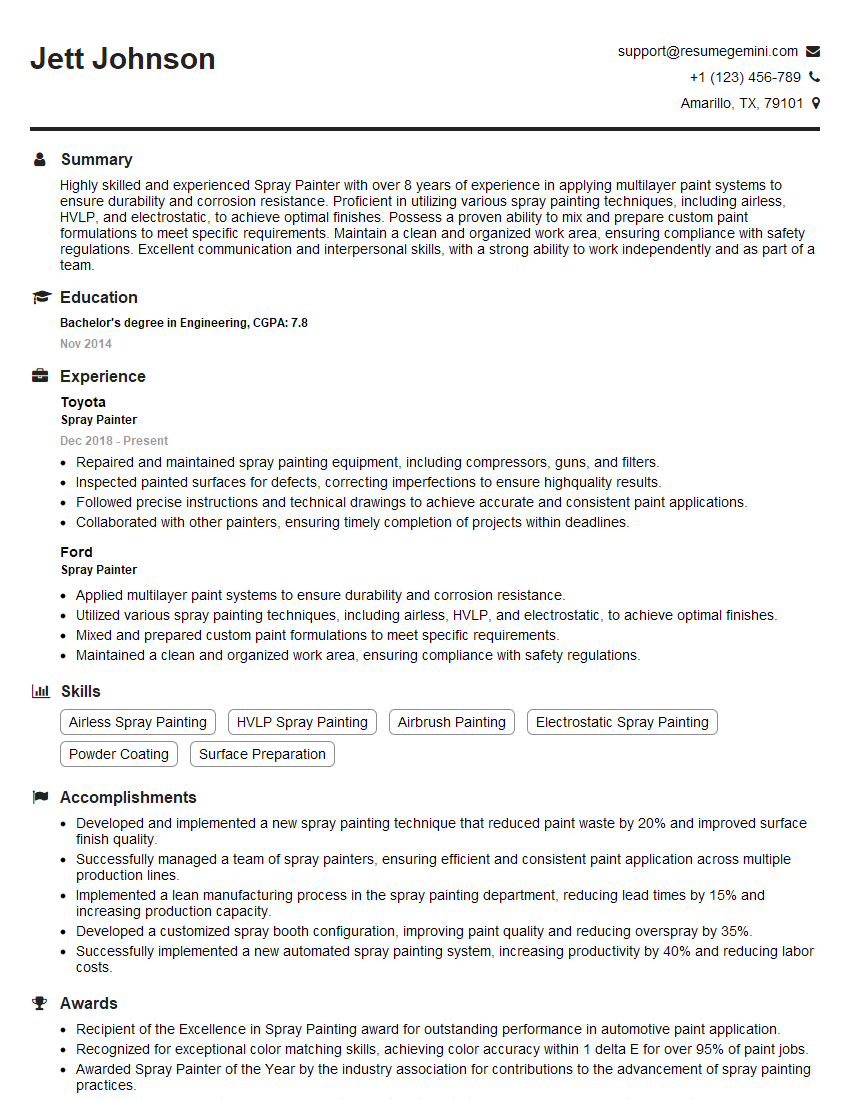
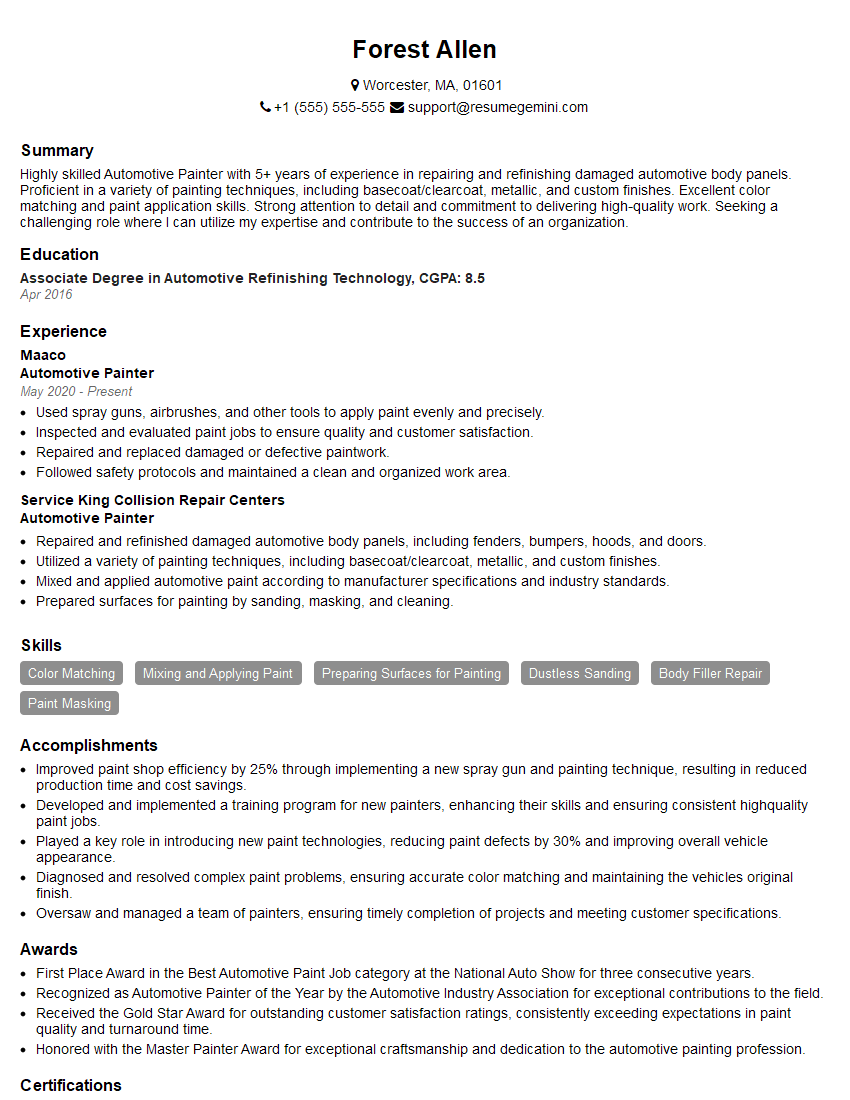
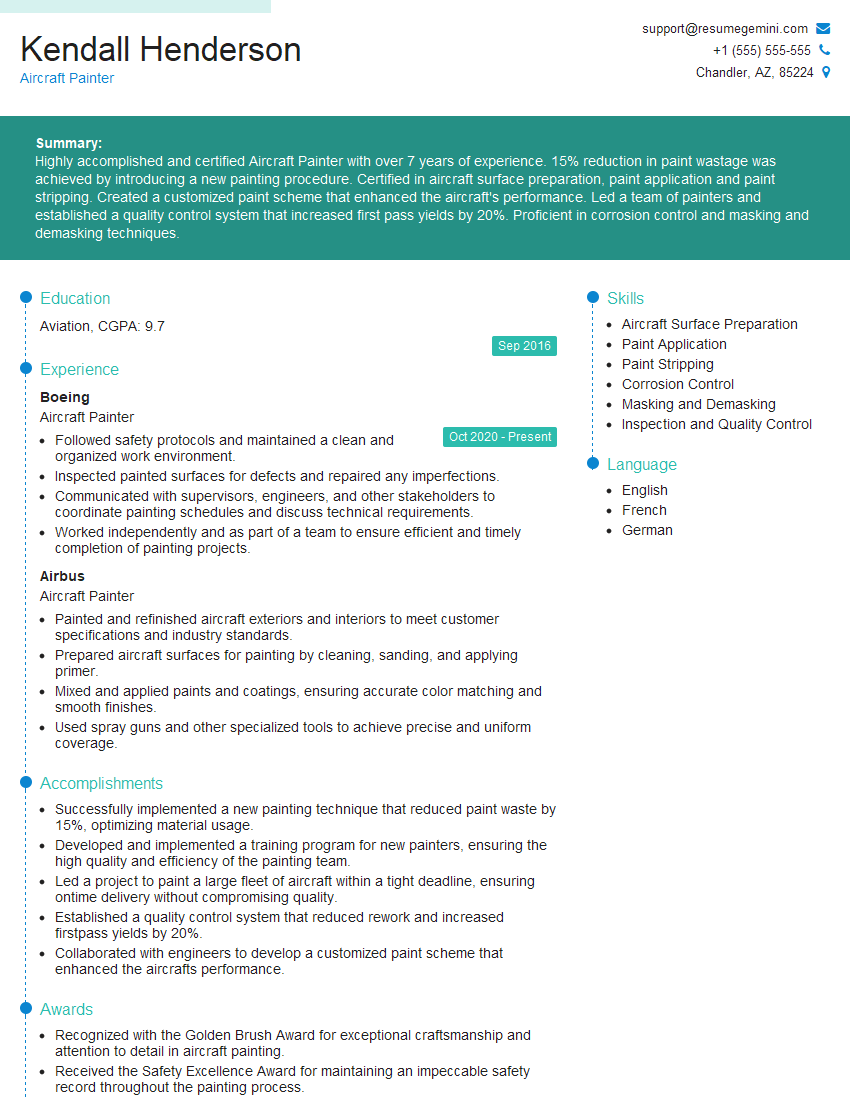
Mastering solvent-based painting techniques opens doors to a wide range of rewarding career opportunities in the construction, restoration, and industrial sectors. To significantly boost your job prospects, creating a professional and ATS-friendly resume is crucial. ResumeGemini is a trusted resource to help you craft a compelling resume that highlights your skills and experience effectively. We provide examples of resumes tailored to the solvent-based painting industry to give you a head start. Invest time in building a strong resume – it’s your first impression on potential employers.
Explore more articles
Users Rating of Our Blogs
Share Your Experience
We value your feedback! Please rate our content and share your thoughts (optional).
What Readers Say About Our Blog
Very informative content, great job.
good