Every successful interview starts with knowing what to expect. In this blog, we’ll take you through the top Welded Connections interview questions, breaking them down with expert tips to help you deliver impactful answers. Step into your next interview fully prepared and ready to succeed.
Questions Asked in Welded Connections Interview
Q 1. Explain the different types of welded joints.
Welded joints are classified based on the geometry of the joint and the position of the weld. Think of it like building with LEGOs – you can connect pieces in different ways. Here are some key types:
- Butt Joints: These join two pieces end-to-end, creating a continuous surface. Imagine welding two steel plates together to form a longer plate. Variations include single-V, double-V, and single-U butt joints, depending on the weld preparation.
- Lap Joints: These overlap two pieces, with the weld connecting the overlapping surfaces. This is like stacking two LEGO bricks on top of each other, then gluing them together. They are often easier to weld than butt joints.
- T-Joints: One piece is welded to the edge of another, forming a ‘T’ shape. Think of attaching a metal bracket to a beam. These can be challenging to weld completely, depending on the geometry.
- Corner Joints: Two pieces are joined at a 90-degree angle. Imagine creating a square frame using welding. These joints, if not properly done, can be vulnerable to cracking.
- Edge Joints: The edges of two pieces are welded together. This is frequently used in sheet metal applications.
The choice of joint type depends on the application, material thickness, and desired strength. A structural steel beam, for instance, would use different joints compared to a thin sheet metal enclosure.
Q 2. Describe the process of shielded metal arc welding (SMAW).
Shielded Metal Arc Welding (SMAW), often called stick welding, is a relatively simple and versatile arc welding process. Imagine a tiny lightning strike controlled by a skilled welder. It uses a consumable electrode coated with flux to create the weld. Here’s the breakdown:
- Electrode Selection: The welder chooses an electrode based on the base material and desired weld properties.
- Arc Initiation: The electrode is touched to the base metal, creating an arc that melts both the electrode and the base metal.
- Flux Protection: The flux coating on the electrode vaporizes, producing a shielding gas that protects the molten weld pool from atmospheric contamination.
- Weld Pool Formation: The molten metal from the electrode and base metal forms a weld pool.
- Solidification: The weld pool solidifies to form the weld bead as the electrode is moved along the joint.
- Flux Removal: Once cooled, the slag (a by-product of the flux) is removed from the weld bead.
SMAW is portable, inexpensive, and requires relatively simple equipment. However, it produces lower deposition rates compared to other methods and requires more post-weld cleanup.
Q 3. What are the advantages and disadvantages of Gas Metal Arc Welding (GMAW)?
Gas Metal Arc Welding (GMAW), or MIG welding, uses a continuous consumable wire electrode fed into the weld pool, providing higher deposition rates than SMAW. Think of it as a more automated, high-speed version of stick welding.
- Advantages: High deposition rates, good weld quality, relatively easy to automate, and produces smooth welds.
- Disadvantages: Requires shielding gas, spatter can be a problem (little molten metal drops outside of the weld bead), and may be more sensitive to variations in base metal or shielding gas.
GMAW is widely used in automotive manufacturing and other high-production applications due to its speed and efficiency. The selection of a shielding gas (e.g., Argon, CO2, or a mixture) is key to achieving good weld quality.
Q 4. Explain the principles of Gas Tungsten Arc Welding (GTAW).
Gas Tungsten Arc Welding (GTAW), or TIG welding, uses a non-consumable tungsten electrode to create the arc. It’s known for producing extremely high-quality welds with excellent control. Think of it as a very precise, artistic welding method.
The process involves using a tungsten electrode to create an arc in an inert shielding gas (usually argon). Filler metal may or may not be added separately. The precise control over heat input and the inert gas shield result in a very clean and controlled weld pool, making it ideal for applications requiring high integrity.
GTAW offers excellent control over the weld pool, making it suitable for welding thin materials and producing aesthetically pleasing welds. However, it’s slower than GMAW and requires more skill and training to master.
Q 5. What are the common weld defects and their causes?
Weld defects are imperfections that compromise the integrity and strength of the weld. These are like errors in a construction project that need addressing.
- Porosity: Small holes or voids in the weld metal caused by trapped gases. These reduce the strength and can cause leaks.
- Incomplete Penetration: The weld metal does not fuse completely through the joint, resulting in a weaker connection.
- Undercutting: A groove melted into the base metal adjacent to the weld, weakening the base metal.
- Cracks: Breaks in the weld metal, which are serious defects reducing strength and causing brittle failure.
- Spatter: Small droplets of molten metal expelled from the weld pool. While not always critical, excessive spatter can cause surface defects.
- Slag Inclusion: Entrapped flux or other foreign material in the weld, causing weakness and porosity.
Causes vary depending on the defect, but include incorrect welding parameters (e.g., current, voltage, travel speed), poor joint preparation, contamination of the base metal, or improper shielding gas.
Q 6. How do you identify porosity in a weld?
Identifying porosity involves visual inspection and often requires advanced techniques. A magnifying glass can often be enough to identify surface porosity. For internal porosity, techniques like radiography (X-rays), ultrasonic testing, or dye penetrant testing are necessary.
Visual inspection involves carefully examining the weld bead surface for small holes or pinholes. If internal porosity is suspected, non-destructive testing (NDT) methods like radiography can reveal internal flaws by observing changes in X-ray transmission through the weld. Ultrasonic testing uses high-frequency sound waves to detect internal defects; and dye penetrant testing reveals surface-breaking pores by drawing a dye into the surface flaws.
Q 7. Explain the concept of weld penetration and its importance.
Weld penetration is the depth to which the weld metal fuses into the base material. Imagine a knife cutting through butter—the depth of the cut is analogous to weld penetration. It’s crucial because insufficient penetration creates a weak point, while excessive penetration can weaken the base metal. The ‘sweet spot’ varies with material thickness and welding parameters.
Proper penetration ensures full fusion of the base materials, leading to a strong and reliable joint. Insufficient penetration creates a weaker weld prone to failure, while excessive penetration can create undesirable stress concentrations and lead to cracking.
Weld penetration is influenced by factors such as welding current, voltage, travel speed, electrode type, and joint design. Welders must adjust these parameters to achieve the optimal penetration depth for the specific application and material.
Q 8. Describe different types of weld preheating and their applications.
Weld preheating is a crucial step in many welding processes, especially with thicker materials or those prone to cracking. It involves raising the base material’s temperature before welding to reduce the cooling rate, improving weld quality and preventing defects. Different methods exist, each suited to specific applications:
- Gas preheating: This involves using oxy-fuel torches or other gas-fired equipment to heat the area surrounding the weld joint to the desired temperature. It’s versatile and suitable for various metals and joint types, particularly in large-scale construction or field applications where portability is essential. Imagine preheating a large steel beam before welding it in place on a bridge.
- Electric resistance preheating: This method uses electrical resistance heating elements to uniformly heat the workpiece. It’s precise and often preferred for applications requiring accurate temperature control, such as welding high-strength alloys or components with stringent quality requirements. Think of this method as using a giant heating pad for precise temperature control.
- Induction preheating: This uses electromagnetic induction to generate heat within the workpiece. It’s very efficient and fast, ideal for automated processes and applications requiring rapid heating cycles. This technology is frequently used in high-volume manufacturing settings.
- Oven preheating: For large or complex components, preheating in an oven ensures uniform temperature distribution throughout the entire structure. This method is commonly used in the aerospace industry for welding large aircraft components.
The choice of preheating method depends on factors such as the material being welded, the weld joint design, the desired temperature, the size and complexity of the workpiece, and the available equipment. Incorrect preheating can lead to defects like cracking, undercutting, or poor fusion.
Q 9. What are the safety precautions to be followed during welding?
Welding safety is paramount. Neglecting precautions can result in serious injuries like burns, eye damage, electric shock, and inhalation of harmful fumes. Here are some essential safety measures:
- Personal Protective Equipment (PPE): Always wear appropriate PPE, including welding helmets with appropriate shade lenses to protect eyes from intense UV radiation, flame-resistant clothing to shield the skin from sparks and burns, gloves to protect hands, and safety shoes to protect feet from falling objects.
- Ventilation: Ensure adequate ventilation to remove harmful fumes produced during welding. In enclosed spaces, use local exhaust ventilation systems or work in well-ventilated areas. Improper ventilation can lead to serious respiratory problems.
- Fire Safety: Welding often involves hot sparks and molten metal, creating a fire hazard. Keep fire extinguishers nearby, and clear the area of flammable materials before starting work. Having a fire watch is also a crucial element of safety.
- Electrical Safety: When using arc welding equipment, ensure the equipment is properly grounded to prevent electric shock. Regularly inspect cables for damage, and never work with wet or damaged equipment.
- Proper Welding Techniques: Always follow proper welding techniques to avoid accidents. This includes maintaining a stable arc, avoiding unnecessary movement, and handling the equipment safely.
- Emergency Procedures: Be aware of the emergency procedures, including the location of fire extinguishers, first-aid kits, and emergency exits. Ensure everyone on site is aware of how to respond to emergencies.
Safety is not just a matter of following rules; it’s a culture that starts with the individual welder and extends to the entire team and the company. Regular training and emphasis on safety practices are vital for ensuring a safe welding environment.
Q 10. Explain the importance of weld inspection and testing.
Weld inspection and testing are essential to ensure the structural integrity and quality of welded joints. Defects in welds can lead to catastrophic failures, particularly in critical applications like bridges, pipelines, and pressure vessels. The importance lies in:
- Preventing Failures: Inspection and testing identify defects early, allowing for corrective actions to be taken before the weld is put into service, thus preventing potential failures.
- Ensuring Quality: These processes ensure that the welded joints meet the required specifications and quality standards, leading to increased reliability and longevity of the structure.
- Compliance with Codes and Standards: Many industries have strict codes and standards for welding, and inspection and testing are crucial for demonstrating compliance.
- Cost Savings: Identifying and correcting defects early is more cost-effective than dealing with failures after the structure is in service.
Imagine a scenario where a weld in a bridge fails due to a defect that was not identified during inspection. The consequences could be devastating, including loss of life and significant financial costs. Regular inspections help prevent such scenarios.
Q 11. What are the different types of Non-Destructive Testing (NDT) methods used for welds?
Several Non-Destructive Testing (NDT) methods are used for weld inspection. These methods examine the weld without damaging it:
- Visual Inspection (VT): This is the most basic method, involving a visual examination of the weld for surface defects like cracks, porosity, and undercut. It’s usually the first step in any inspection process.
- Radiographic Testing (RT): This uses X-rays or gamma rays to penetrate the weld, revealing internal defects like cracks, porosity, and inclusions. Think of it like a medical X-ray for welds.
- Ultrasonic Testing (UT): This employs high-frequency sound waves to detect internal defects. It’s highly sensitive and can detect smaller flaws than RT. Imagine sending sound waves through the weld and listening for echoes that indicate defects.
- Magnetic Particle Testing (MT): This method uses magnetic fields to detect surface and near-surface defects in ferromagnetic materials. It’s effective for finding cracks and other discontinuities. This technique is similar to using magnets to detect defects in ferrous materials.
- Dye Penetrant Testing (PT): This is a surface inspection method that uses a colored dye to reveal surface cracks and other discontinuities. The dye penetrates into any cracks and is then drawn out to make them visible. This method is like painting the weld with a special dye that highlights the defects.
The choice of NDT method depends on factors such as the type of weld, the material being welded, and the type of defects being sought.
Q 12. How do you interpret a Welding Procedure Specification (WPS)?
A Welding Procedure Specification (WPS) is a document that outlines the specific parameters for a particular welding process. It’s a recipe for creating a sound weld. Interpreting a WPS involves understanding each parameter and its significance:
- Base Materials: Specifies the type and grade of materials to be welded (e.g., steel grade A36).
- Joint Design: Describes the geometry of the weld joint (e.g., butt weld, fillet weld, groove angle).
- Welding Process: Indicates the welding process to be used (e.g., Gas Metal Arc Welding (GMAW), Shielded Metal Arc Welding (SMAW)).
- Welding Parameters: Details the essential parameters, including voltage, current, travel speed, wire feed speed (for GMAW), and electrode type and size (for SMAW).
- Preheating and Interpass Temperature: Specifies the required preheating temperature and the temperature range between weld passes.
- Post-Weld Heat Treatment (PWHT): Indicates if PWHT is required and specifies the required temperature and time.
- Weld Qualification: Specifies the required qualifications and certifications for the welder.
Understanding the WPS is crucial for welders to create consistent and high-quality welds. Deviating from the WPS can lead to weld defects and compromise structural integrity. Imagine a WPS as a detailed recipe; every ingredient and step are crucial to achieve a successful outcome.
Q 13. Explain the role of a Procedure Qualification Record (PQR).
A Procedure Qualification Record (PQR) is a document that records the results of qualification tests performed to verify that the WPS produces acceptable welds. It acts as proof that the WPS is valid. It includes data such as:
- Base Material Chemical Composition and Mechanical Properties: Records the properties of the base material being welded.
- Welding Procedure Details: Documents the exact parameters used during the qualification welding tests, mirroring the WPS.
- Test Results: Contains the results of mechanical testing and NDT performed on the test welds, demonstrating their integrity.
- Visual Inspection Results: Records the visual inspection findings of the test welds.
The PQR is essential for demonstrating compliance with welding codes and standards. Without a valid PQR, the WPS is not considered qualified, and the welds produced using that WPS cannot be accepted. Think of the PQR as the certificate of successful testing for a given welding procedure.
Q 14. What are the requirements of AWS D1.1?
AWS D1.1 is a widely recognized standard in the United States for structural welding codes. Its requirements cover various aspects of structural welding, including:
- Weld Joint Design: Specifies acceptable weld joint designs and configurations for different loading conditions.
- Welding Procedures: Establishes requirements for the development and qualification of welding procedures.
- Welding Materials: Defines the allowable welding materials and their properties.
- Weld Quality: Sets requirements for the quality of welds, including allowable defect sizes and acceptance criteria.
- Welder Qualification: Outlines the requirements for welder qualification and certification.
- Inspection and Testing: Specifies the required inspection and testing methods for welds.
Adherence to AWS D1.1 is crucial for ensuring the safety and reliability of welded structures in construction and other industries. Failure to comply can lead to non-acceptance of the work and potential safety hazards. The standard provides a framework for consistent and high-quality welding practices.
Q 15. What is the difference between fillet and groove welds?
Fillet and groove welds are two fundamental types of welds, differing primarily in their geometry and application. Think of it like this: a fillet weld is like adding a blob of weld material to fill a corner, while a groove weld is like filling a groove or gap between two pieces of metal.
Fillet Welds: These are used to join two members that intersect, typically at a right angle. The weld metal forms a triangular cross-section, filling the corner between the members. They are commonly used in lap joints and T-joints. Imagine welding two pieces of sheet metal together; a fillet weld would be perfect.
Groove Welds: These welds are used to join two members edge-to-edge, creating a continuous joint. The weld metal fills a groove prepared in the edges of the members, ensuring complete fusion. They are essential for strong joints in applications like pipelines and pressure vessels. Think of welding two plates together so the weld is flush with the surface; this often requires a groove weld.
- Strength: Groove welds generally provide higher strength than fillet welds due to their greater cross-sectional area.
- Appearance: Fillet welds are often easier to visually inspect than complex groove welds.
- Preparation: Groove welds require more preparation, including beveling or grooving the edges of the members.
Career Expert Tips:
- Ace those interviews! Prepare effectively by reviewing the Top 50 Most Common Interview Questions on ResumeGemini.
- Navigate your job search with confidence! Explore a wide range of Career Tips on ResumeGemini. Learn about common challenges and recommendations to overcome them.
- Craft the perfect resume! Master the Art of Resume Writing with ResumeGemini’s guide. Showcase your unique qualifications and achievements effectively.
- Don’t miss out on holiday savings! Build your dream resume with ResumeGemini’s ATS optimized templates.
Q 16. Describe the importance of proper weld cleaning.
Proper weld cleaning is paramount for ensuring the structural integrity and longevity of a welded connection. Contamination—like oxides, scale, oil, grease, or moisture—on the weld surface hinders proper fusion, leading to weaknesses and potential failure. It’s like trying to glue two pieces of wood together with dirt in between; it won’t stick properly.
Cleaning removes these contaminants, creating a clean, sound surface for optimal weld penetration and fusion. This leads to:
- Improved Weld Quality: Ensures a stronger, more reliable weld with minimal defects.
- Reduced Porosity and Inclusion Defects: Prevents gases and impurities from becoming trapped in the weld.
- Better Corrosion Resistance: Clean welds are less susceptible to corrosion, extending the lifespan of the structure.
- Enhanced Weld Appearance: Improves the overall aesthetic quality of the weld.
Cleaning methods vary depending on the base material and the level of contamination. Common methods include grinding, wire brushing, chemical cleaning, and blasting.
Q 17. Explain the concept of Heat Affected Zone (HAZ).
The Heat Affected Zone (HAZ) is the area of the base material surrounding the weld that has been altered by the heat generated during the welding process. Think of it as the ‘halo’ around the weld. This heat causes changes in the material’s microstructure, affecting its mechanical properties like hardness, strength, and ductility.
These changes can be beneficial or detrimental, depending on the base material and welding parameters. The HAZ can become harder and more brittle, making it susceptible to cracking, especially in certain steels. It’s important to control HAZ size and properties to avoid such problems. Poor control of the HAZ is a common cause of weld failure.
Factors influencing HAZ size include: the welding process, the heat input, the base material’s properties, and the preheat temperature. Understanding and controlling the HAZ is a critical aspect of ensuring the overall integrity of the weldment.
Q 18. How do you determine the appropriate welding parameters for a specific application?
Determining appropriate welding parameters for a specific application is a critical step that demands careful consideration of multiple factors. It’s not a one-size-fits-all approach. You’re essentially creating a recipe for a strong and reliable weld.
Key parameters include:
- Welding Process: (e.g., GMAW, SMAW, GTAW) Different processes deliver different heat inputs.
- Current (Amperage): Controls the heat input and penetration depth.
- Voltage: Affects the arc length and heat distribution.
- Travel Speed: Determines the heat input per unit length.
- Electrode/Wire Type and Diameter: The choice affects the weld metal composition and strength.
- Shielding Gas (for some processes): Ensures proper arc protection and weld quality.
- Preheating/Postheating: May be necessary to control HAZ and reduce cracking.
The selection process often involves referring to welding codes (like AWS D1.1), material specifications, and manufacturer’s recommendations. Experience and testing also play crucial roles in optimizing these parameters for consistent weld quality.
For example, welding thicker steel plates requires higher current and voltage than thin sheet metal. Similarly, certain materials require preheating to avoid cracking. Understanding these relationships is crucial for success.
Q 19. What is the significance of weld symbols?
Weld symbols are a standardized graphical language used to communicate welding requirements on engineering drawings. They concisely convey information about the type of weld, its dimensions, location, and other essential details. Think of them as shorthand for complex instructions.
A weld symbol includes:
- Reference Line: The horizontal line connecting the symbol to the drawing.
- Arrow Side: Indicates the side of the joint on which the weld is applied.
- Other Side: Indicates if the weld is also applied to the opposite side.
- Weld Symbol: Represents the type of weld (e.g., fillet, groove, etc.).
- Dimensions: Specify the weld size, leg length, throat depth, etc.
- Process Specification: Identifies the welding process to be used.
These symbols ensure consistency and clarity across different parties involved in the manufacturing process. Without standardized symbols, misinterpretations could lead to significant errors and structural compromises.
For instance, a symbol might indicate a 6mm fillet weld on one side of a joint using the Gas Metal Arc Welding (GMAW) process. The absence of a symbol on the other side indicates that only one side will receive the weld.
Q 20. Explain the principles of different welding positions.
Welding positions describe the orientation of the joint and weld relative to gravity. They affect the weld puddle control and the penetration depth. Different positions require different techniques and skills to achieve high-quality welds.
Common welding positions include:
- Flat (1G): The simplest position where the weld is made horizontally, with gravity assisting in puddle control.
- Horizontal (2G): The weld is made horizontally but vertically, requiring more skill to prevent sagging.
- Vertical (3G): The weld is made vertically, which is more challenging due to gravity pulling the weld metal downwards.
- Overhead (4G): The most difficult position, where the weld is made above the welder, with gravity working against the welder.
The choice of position affects welding parameters and the welder’s skill level required. For instance, overhead welding requires careful control of the heat input and electrode manipulation to prevent weld sag and ensure proper penetration.
Q 21. How do you prevent weld cracking?
Weld cracking is a serious defect that can compromise the strength and integrity of a welded joint. It typically occurs due to excessive stresses during welding or cooling, often exacerbated by the presence of impurities. Think of it as a fracture within the weld metal or the surrounding HAZ.
Preventing weld cracking involves a multi-pronged approach:
- Proper Joint Design: Minimizing stress concentrations through appropriate joint geometry and minimizing the size of the HAZ is crucial.
- Control of Welding Parameters: Avoiding excessive heat input by carefully controlling current, voltage, and travel speed is important.
- Preheating and Postheating: Preheating reduces the temperature gradient during welding, minimizing thermal stresses. Postheating helps to relieve stresses that might have developed during cooling.
- Selection of Appropriate Materials: Using materials with good weldability and minimizing the risk of hydrogen cracking is essential.
- Proper Cleaning: Removing contaminants that can contribute to cracking.
- Interpass Temperature Control: Maintaining appropriate interpass temperature during multi-pass welding minimizes residual stresses.
Understanding the root cause of cracking is crucial. Hydrogen cracking, for instance, can be addressed by using low-hydrogen electrodes or preheating the base material. Understanding and implementing these strategies are critical to avoid weld failure.
Q 22. What are the common causes of undercut and how can they be avoided?
Undercut is a groove melted into the base metal adjacent to the weld toe, weakening the joint. It’s like carving a small channel next to your perfectly built structure – clearly undesirable!
Common causes include:
- Excessive current: Too much heat melts the base metal away faster than the weld pool can fill it.
- Incorrect travel speed: Moving too fast leaves insufficient time for the weld pool to solidify and fill the gap.
- Improper electrode angle: A poorly angled electrode can push molten metal away from the joint, creating an undercut.
- Contaminated base metal: Rust, grease, or other contaminants can hinder proper fusion and lead to undercut.
Avoiding undercut involves careful control of welding parameters:
- Optimize current and voltage: Use the appropriate settings for the material thickness and electrode type. Lowering the current and slightly increasing the travel speed often helps.
- Maintain consistent travel speed: Practice smooth, consistent movement to allow complete fusion.
- Use correct electrode angle: Usually a slightly forward angle helps ensure proper penetration and fusion.
- Thoroughly clean the base metal: Remove all contaminants before welding.
- Employ proper technique: Experienced welders develop a feel for the arc and weld pool, optimizing the process.
For instance, I once encountered significant undercut on a stainless steel pipeline project. By reducing the welding current by 10% and slightly increasing the travel speed, we eliminated the undercut while maintaining acceptable penetration.
Q 23. Explain the importance of interpass temperature control.
Interpass temperature control is crucial for achieving sound welds and preventing defects. Imagine baking a cake – if the temperature is too high or too low, the outcome will be flawed. Similarly, in welding, controlling the interpass temperature affects metallurgical properties and the overall strength and integrity of the joint.
Too high an interpass temperature can lead to:
- Hydrogen cracking: High temperatures can trap hydrogen within the weld metal, leading to cracks upon cooling.
- Loss of strength: Excessive heat can cause grain growth, reducing the weld’s mechanical properties.
- Distortion: High temperatures increase the risk of warping and distortion.
Too low an interpass temperature can result in:
- Poor fusion: The weld metal may not properly bond with the previous pass.
- Cold cracking: Rapid cooling can increase residual stresses, leading to cracks.
Effective interpass temperature control involves:
- Preheating: Heating the base metal before welding to control the cooling rate.
- Interpass cleaning: Removing slag and spatter between weld passes to ensure good fusion.
- Using appropriate welding procedures: Selecting the right welding process and parameters for the specific material.
In a large-scale construction project, we once experienced hydrogen cracking in a weld due to uncontrolled interpass temperature. Implementing preheating to a specific temperature, as per the welding procedure specification, resolved the issue completely.
Q 24. How do you manage the distortion in welded structures?
Distortion in welded structures is a common challenge that arises from the heat input during welding. The heat causes expansion and contraction of the metal, leading to warping and bending. Think of it like heating one side of a metal plate – it will bend!
Managing distortion requires a multi-pronged approach:
- Proper joint design: Selecting joint configurations that minimize distortion. For instance, using butt joints with backing strips can reduce warping.
- Preheating and post-weld heat treatment (PWHT): These techniques control the cooling rate and reduce residual stresses, thereby minimizing distortion.
- Welding sequence: Strategic planning of weld passes can balance the heat input and reduce distortion. Symmetrical welding, for example, can counteract warping effects.
- Using fixtures and clamps: Restraining the workpiece during welding can prevent excessive movement and distortion.
- Controlled cooling: Slowing the cooling rate by covering the weld with insulation helps minimize distortion.
On a recent bridge fabrication project, we used a combination of jigging and a carefully planned welding sequence to minimize distortion in the main girders. This significantly reduced the need for expensive straightening after welding.
Q 25. What are the different types of welding electrodes and their applications?
Welding electrodes are consumable rods used to create the weld. They come in various types, each suited to specific applications:
- E6010/E6011 (Cellulosic): These electrodes are known for their deep penetration and ability to weld in all positions, making them suitable for outdoor work even in strong winds. The cellulosic coating produces a shielding gas, enabling welding in drafty areas.
- E7018 (Low Hydrogen): These electrodes produce high-quality welds with excellent mechanical properties. Their low hydrogen content minimizes cracking risks, making them ideal for critical applications like pressure vessels.
- Stainless steel electrodes (308, 309, 316): Used for welding stainless steel components, offering excellent corrosion resistance. The specific electrode type depends on the grade of stainless steel being joined.
- Cast iron electrodes: Specifically designed for welding cast iron, accommodating its unique properties and preventing cracking.
- Aluminum electrodes: These are used for welding aluminum and its alloys, requiring specialized techniques and cleaning processes.
The choice of electrode depends on factors like base metal type, joint design, welding position, and required weld properties. For instance, in a high-pressure pipeline project, we would always opt for low-hydrogen electrodes (like E7018) to ensure high weld integrity.
Q 26. Describe your experience with different types of welding power sources.
My experience encompasses various welding power sources:
- Constant Current (CC) power sources: These provide a consistent current regardless of the arc length, making them ideal for manual metal arc welding (MMAW) and other stick welding processes. I’ve extensively used CC for MMAW applications.
- Constant Voltage (CV) power sources: These maintain a consistent voltage, leading to a more stable arc and making them better suited for Gas Metal Arc Welding (GMAW) or MIG welding. These are commonly used for automated and semi-automated applications.
- Pulse power sources: These offer a pulsating current, allowing for better control of the weld pool and improved weld quality. This is especially useful for thin materials or complex joint geometries where precise control is crucial.
Each power source has its own strengths and weaknesses. For example, while CV power sources are advantageous for their arc stability in GMAW, they may require more skill in MMAW due to their sensitivity to arc length changes. Understanding these nuances is critical for optimal performance and weld quality. Selecting the correct power source is critical for the welding procedure used.
Q 27. Explain the concept of residual stress in welds.
Residual stresses are internal stresses that remain in a welded structure after the welding process is complete. These stresses are a consequence of the non-uniform heating and cooling during welding. Imagine a metal bar being heated unevenly; it will contract differently in various regions creating internal stress.
Residual stresses can be tensile (pulling) or compressive (pushing). High tensile residual stresses are particularly problematic, as they can significantly reduce the weld’s fatigue strength and increase the risk of cracking, especially under cyclic loading. These stresses are not immediately obvious but can lead to problems later in the component’s life.
Factors influencing residual stress levels include:
- Weld geometry: The shape and size of the weld influence stress distribution.
- Welding parameters: Current, voltage, and travel speed affect the cooling rate and stress buildup.
Mitigation strategies include PWHT (post-weld heat treatment), which involves heating the entire structure to a specific temperature and then slowly cooling it down. This reduces the residual stresses. Another way to reduce residual stress is proper weld design and welding sequencing.
Q 28. How would you address a welding defect found during inspection?
Addressing a welding defect requires a systematic approach:
- Identify and document the defect: Accurately describe the defect’s type, location, and size using photography and detailed notes. Accurate documentation is critical for traceability and further analysis.
- Determine the severity: Assess the defect’s impact on the structure’s integrity using relevant codes and standards (e.g., AWS D1.1 for structural steel). This involves consulting the specification and drawing.
- Investigate the root cause: Determine why the defect occurred. This may involve analyzing the welding procedure, operator skills, equipment issues, and material properties. I often use a fishbone diagram to identify root causes.
- Select a remediation strategy: Decide whether to repair the defect, replace the component, or accept the defect (if permissible by the code). Repair options might include grinding, re-welding, or other corrective actions.
- Implement the remediation: Carry out the chosen action carefully, following established procedures and ensuring proper quality control.
- Verify the repair: Inspect the repaired area to ensure the defect has been adequately addressed and the weld meets the required standards. NDT (Non-destructive testing) methods might be needed to assess the weld’s integrity.
- Document the remediation: Clearly record all actions taken, including the repair method, inspection results, and any modifications to the welding procedure.
For example, during a pressure vessel inspection, we discovered a lack of fusion. We carefully investigated and realized the issue was due to inadequate cleaning of the base material before welding. The defective weld was removed, and the process was repeated with meticulous surface preparation, which resulted in a successful repair.
Key Topics to Learn for Welded Connections Interview
- Types of Welded Connections: Understand the differences between various weld types (e.g., fillet welds, butt welds, groove welds) and their applications.
- Weld Joint Design: Learn about designing strong and efficient welded joints considering factors like stress concentration, fatigue, and material properties.
- Weld Symbols and Drawings: Master interpreting weld symbols and technical drawings to understand weld specifications and requirements.
- Welding Processes: Familiarize yourself with common welding processes (e.g., GMAW, SMAW, GTAW) and their suitability for different materials and applications.
- Weld Inspection and Quality Control: Understand non-destructive testing (NDT) methods used to ensure weld quality and identify defects (e.g., visual inspection, radiography, ultrasonic testing).
- Weld Metallurgy: Gain a basic understanding of how welding affects the microstructure and properties of the base metal and the weld metal.
- Strength of Welded Joints: Learn how to calculate the strength of welded connections and design for specific load conditions.
- Code Compliance: Familiarize yourself with relevant welding codes and standards (e.g., AWS D1.1).
- Practical Problem Solving: Be prepared to discuss how you would approach real-world problems related to weld design, fabrication, and inspection.
- Failure Analysis: Understand common causes of weld failures and how to prevent them.
Next Steps
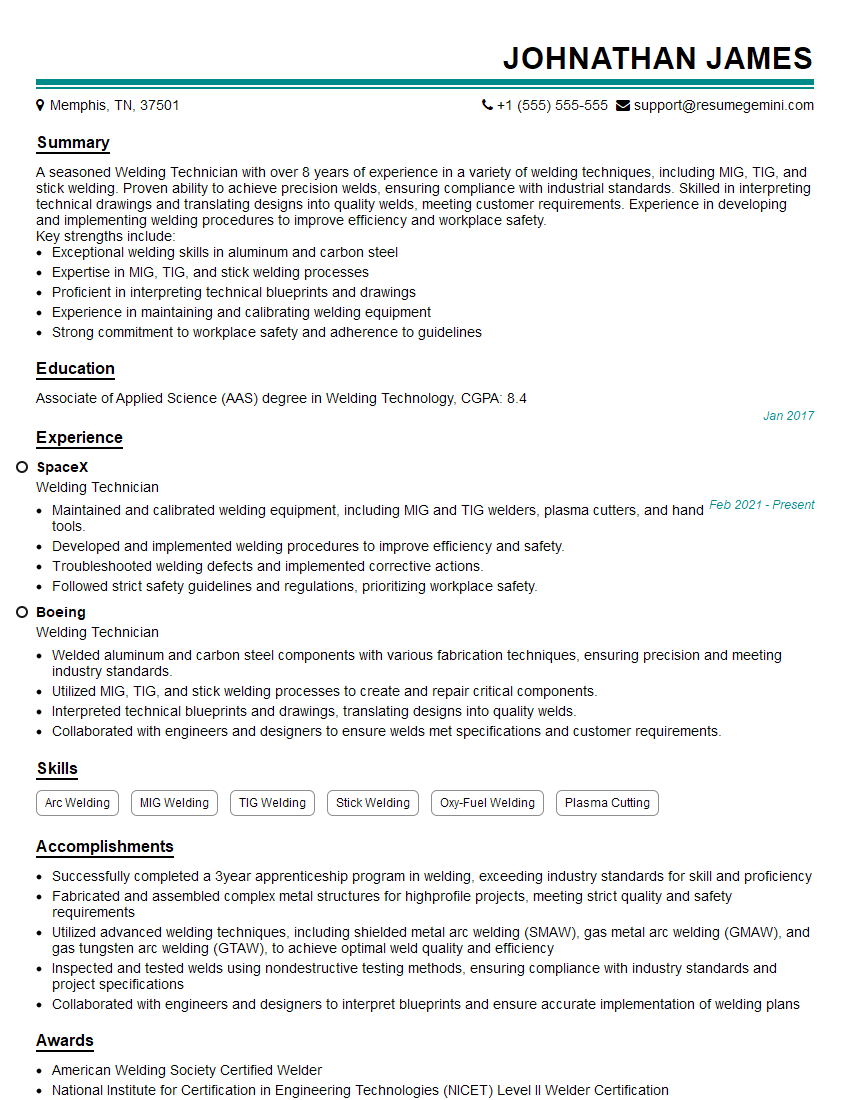
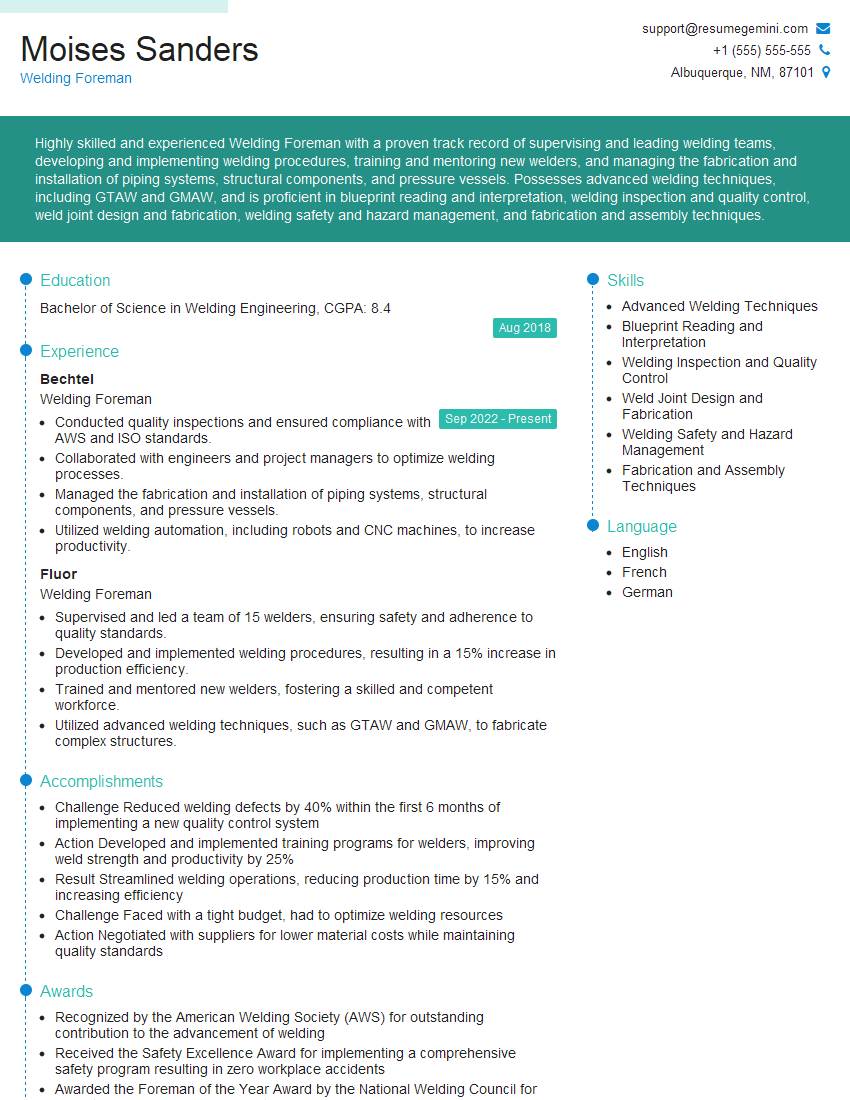
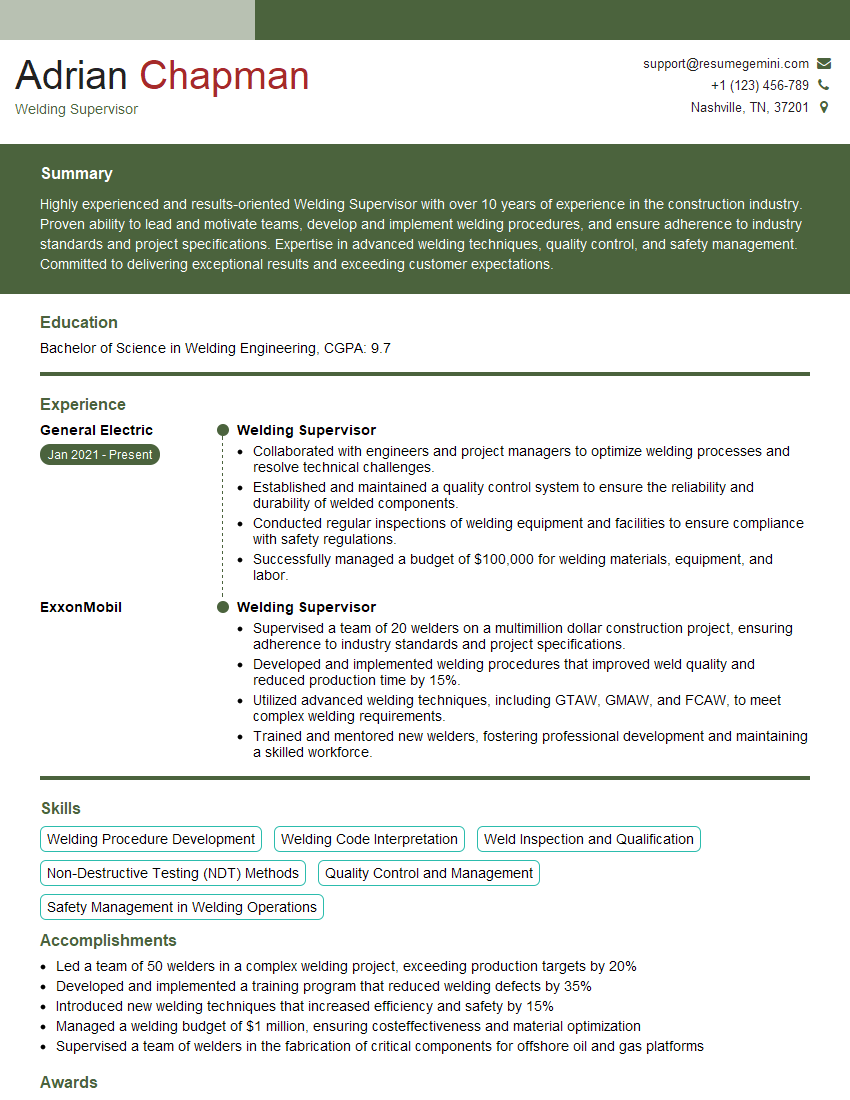
Mastering welded connections is crucial for career advancement in engineering and manufacturing. A strong understanding of these concepts demonstrates your technical expertise and problem-solving abilities, making you a highly desirable candidate. To significantly boost your job prospects, focus on creating an ATS-friendly resume that effectively highlights your skills and experience. ResumeGemini is a trusted resource that can help you build a professional and impactful resume tailored to the specific requirements of your target roles. Examples of resumes tailored to Welded Connections are available to help guide you.

Explore more articles
Users Rating of Our Blogs
Share Your Experience
We value your feedback! Please rate our content and share your thoughts (optional).
What Readers Say About Our Blog
Very informative content, great job.
good