Are you ready to stand out in your next interview? Understanding and preparing for Songwriter interview questions is a game-changer. In this blog, we’ve compiled key questions and expert advice to help you showcase your skills with confidence and precision. Let’s get started on your journey to acing the interview.
Questions Asked in Songwriter Interview
Q 1. Describe your songwriting process.
My songwriting process is iterative and often begins with an idea – a melody fragment, a lyrical phrase, or even a strong emotional feeling. I rarely start with a complete structure. Instead, I explore different avenues, experimenting with chords, melodies, and rhythms until something clicks. It’s like sculpting; I start with a rough form and gradually refine it.
- Idea Generation: This phase involves brainstorming, freewriting, or simply letting my mind wander. I often keep a notebook handy to jot down ideas whenever inspiration strikes.
- Melody Development: Once I have a core idea, I focus on developing a compelling melody. I’ll try different melodic contours and rhythms, experimenting with major and minor keys to find the right emotional tone.
- Lyric Writing: Lyric writing is a crucial part of my process. I aim for authenticity and try to paint vivid pictures with words, conveying a specific emotion or story. This often involves multiple revisions and edits.
- Structure & Arrangement: Once the melody and lyrics are established, I work on the song structure (verse, chorus, bridge, etc.) and arrangement. This includes deciding on instrumentation and the overall feel of the song.
- Refinement and Polish: The final stage involves refining the arrangement, ensuring the song flows well, and making any necessary adjustments to the melody or lyrics. This is where feedback from others is invaluable.
It’s a cyclical process; I might go back and forth between different stages, tweaking and refining until I’m satisfied with the final product. For example, I might write a chorus first, then build the verses around it, or vice-versa.
Q 2. What software or tools do you use for songwriting?
My songwriting toolkit is a blend of digital and analog tools. While I appreciate the immediacy of analog recording, digital tools offer flexibility and editing capabilities. My core tools include:
- Digital Audio Workstation (DAW): I primarily use Logic Pro X, which provides a comprehensive environment for recording, editing, mixing, and mastering. It allows me to experiment with different sounds and instruments easily.
- MIDI Keyboard: Essential for composing melodies and chord progressions quickly. I use a high-quality MIDI keyboard controller for expressive playing.
- Virtual Instruments (VSTs): I use a range of VSTs (virtual studio technology) instruments, including synthesizers, samplers, and drum machines to add depth and texture to my songs.
- Notepad and Pen: Old-school methods still play a big part in my process. I often sketch out initial melodies, lyrics, and chord progressions on paper before entering them into my DAW.
- Guitar/Piano: These are my primary instruments for composing and refining melodies and chord structures. The tactile experience helps me to develop musical ideas in a more organic way.
The choice of tools isn’t as important as the creative process itself. My focus is on using the tools that best facilitate my creative flow, regardless of whether they are digital or analog.
Q 3. How do you overcome writer’s block?
Writer’s block is a common challenge for songwriters. My approach involves a combination of strategies to overcome it. It’s crucial to remember that it’s a temporary state, not a reflection of one’s talent.
- Change of Scenery: A new environment can spark creativity. I might go for a walk, visit a coffee shop, or work in a different room.
- Collaborate: Working with other musicians can inject fresh ideas and perspectives, breaking the creative rut.
- Freewriting or Improvisation: I might start by writing down whatever comes to mind, without worrying about structure or quality. Improvising on an instrument can also help generate new melodic or rhythmic ideas.
- Embrace Constraints: Sometimes, setting limitations (e.g., writing a song in a specific key or time signature) can foster creativity by forcing you to think outside the box.
- Step Away: If I’m truly stuck, I step away from the project for a while and let my subconscious work on it. A fresh perspective often emerges after a break.
Ultimately, overcoming writer’s block is a matter of persistence and finding the techniques that work best for you. It’s not about forcing creativity, but nurturing it.
Q 4. Explain your experience with different musical genres.
My musical experiences span various genres. While I don’t rigidly adhere to any one style, I find inspiration and influence from diverse sources.
- Pop: The melodic sensibilities and structural clarity of pop music have always influenced my work. I appreciate its ability to create catchy and memorable songs.
- Folk: The raw emotionality and storytelling aspects of folk music appeal to me. I am often drawn to its simple, yet profound lyrical content.
- Jazz: Jazz has taught me the importance of improvisation and harmonic complexity. Its rhythmic sophistication and improvisational freedom inspires me to experiment with unexpected chord progressions and melodic twists.
- Classical: The structure and compositional techniques of classical music have provided a solid foundation for understanding musical form and harmony.
These genres are not mutually exclusive; I often blend elements from different genres in my songwriting. For example, I might combine the melodic simplicity of folk with the harmonic complexity of jazz, resulting in a unique musical style.
Q 5. How do you collaborate with other musicians?
Collaboration is a vital part of my songwriting process. It enriches the creative process by bringing different perspectives and skills to the table.
- Open Communication: Clear and open communication is essential. We openly discuss our ideas, inspirations, and concerns.
- Shared Vision: Establishing a shared artistic vision is crucial before beginning collaboration. This ensures everyone is working towards the same goal.
- Respectful Feedback: Constructive criticism is welcomed and essential. Feedback is given and received respectfully.
- Defined Roles: We often define roles based on individual strengths and interests – someone might be stronger at lyric writing, while another excels at melody composition.
- Embrace Differences: Differences in musical preferences are embraced as opportunities for innovation and creative growth.
I’ve collaborated with musicians across different backgrounds, and each experience has been enriching and unique. I believe that the strongest collaborations result from mutual respect, clear communication, and a shared passion for creating music.
Q 6. How do you handle feedback on your songwriting?
Handling feedback is crucial for growth as a songwriter. I strive to approach feedback constructively and objectively.
- Separate Emotion from Feedback: It’s important to separate any emotional reaction to the feedback from the feedback itself. Not all criticism is valid, but even negative feedback can provide valuable insights.
- Understand the Context: Consider the source and intent of the feedback. Is it constructive criticism intended to improve the song, or a personal opinion?
- Seek Diverse Perspectives: I often seek feedback from multiple sources to gain a more comprehensive understanding of the song’s strengths and weaknesses.
- Don’t Take it Personally: Feedback is about the song, not about you as a person. If a suggestion doesn’t fit, don’t force it in.
- Experiment & Revise: Try incorporating suggestions into a new version of the song and see how it changes the overall effect. Revise accordingly.
Feedback is a tool for improvement. While not every suggestion is worthwhile, listening to feedback and being open to change is essential for refining your craft.
Q 7. Describe your approach to melody writing.
Melody writing is a crucial aspect of songwriting. My approach is based on understanding the interplay of melody, harmony, and rhythm.
- Start with a Core Idea: Often, a melody begins with a simple, memorable phrase. It might be a single line or even a few notes.
- Explore melodic contours: I experiment with different melodic contours, including stepwise motion (moving between adjacent notes) and leaps (larger intervals). The contour shapes the emotional impact of the melody.
- Consider the Rhythm: The rhythm of the melody is just as important as its pitch. I play around with different rhythmic patterns to create a sense of movement and energy.
- Harmony and Melody Interaction: I consider the relationship between the melody and the underlying harmony. A good melody will complement the chords, creating a sense of resolution and tension.
- Experimentation and Iteration: I continuously experiment with different melodic ideas, revising and refining until I find a melody that effectively conveys the intended emotion and aligns with the song’s overall structure.
For example, I might start with a simple major scale melody and gradually introduce minor chords to create a more nuanced emotional depth. Or I might use a repetitive rhythmic motif to create a sense of momentum.
Q 8. How do you develop lyrical themes and concepts?
Developing lyrical themes and concepts is the heart of songwriting. It’s about finding the core idea that will resonate with the listener. I start by brainstorming, often using freewriting or mind-mapping techniques to explore different ideas and emotions. I might start with a single word, a striking image, a personal experience, or even a current event. Once I have a seed of an idea, I nurture it by asking myself probing questions: What’s the story? Who are the characters? What’s the conflict? What’s the resolution or message? For example, a simple idea like ‘loneliness’ can blossom into a song about the experience of moving to a new city, the struggles of long-distance relationships, or even the isolation of success.
Sometimes, a strong melody or chord progression will inspire the theme. The feeling evoked by the music dictates the emotional direction of the lyrics. It’s a collaborative process between music and words, where one informs the other. Ultimately, the strongest lyrical themes are authentic and deeply personal, even if they are presented metaphorically or through a fictional narrative.
Q 9. How do you structure your songs?
Song structure is crucial for creating a compelling and engaging listening experience. While there are many variations, a common structure involves a verse-chorus format. The verse introduces characters, setting, and the central conflict or narrative. The chorus is the memorable, often repetitive part that encapsulates the song’s main theme or message – think of it as the song’s summary or emotional hook. Bridges offer a change of perspective or a twist in the narrative, providing contrast and dynamism. And finally, the outro wraps things up, often fading out or leaving the listener with a powerful image or thought.
However, I don’t rigidly adhere to this structure. Sometimes, I experiment with unconventional approaches, such as omitting choruses, or using instrumental interludes. The goal is always to serve the song’s emotional arc and create a satisfying listening experience. For instance, a song about a fast-paced chase scene might utilize a more fragmented structure, mirroring the chaotic energy of the events.
Q 10. Explain your understanding of musical theory.
My understanding of musical theory is fundamental to my songwriting. It’s the language I use to construct melodies, harmonies, and rhythms. I have a solid grasp of scales, chords, and chord progressions, understanding how different keys and modes create distinct moods. For example, a minor key often evokes sadness or mystery, while a major key usually feels brighter and happier. I understand the concept of rhythm and meter, using syncopation and rhythmic variation to add interest and complexity.
I also apply knowledge of harmony, creating interesting chord voicings and inversions to enrich the texture and emotional depth of the song. My understanding of counterpoint helps me create melodic lines that complement and contrast each other. Although I don’t always consciously apply every aspect of theory, my knowledge allows me to instinctively craft musical ideas that are both pleasing and effective.
Q 11. How do you create a catchy hook?
A catchy hook is the most memorable part of a song, the element that gets stuck in people’s heads. It’s typically located in the chorus, but can also be a recurring melodic or lyrical phrase within the verses. To create a catchy hook, I focus on several key elements: memorability (simple, repetitive melodies and lyrics), emotional impact (conveying a strong emotion), and uniqueness (standing out from other songs). Think of the iconic hook in ‘Smells Like Teen Spirit’ – the raw energy and simple yet powerful melody are instantly memorable.
I often experiment with different rhythmic patterns and melodic intervals to find the most effective hook. I also pay close attention to the lyrics, ensuring they are concise, evocative, and easily understood. Sometimes a hook emerges organically during the writing process, and other times it requires conscious crafting and refinement.
Q 12. How do you incorporate storytelling into your songs?
Storytelling in songwriting is about creating a narrative that engages the listener emotionally. It’s not just about telling a story linearly; it’s about creating a vivid and believable experience. I employ several techniques to incorporate storytelling: developing relatable characters with clear motivations, establishing a clear setting and conflict, and using descriptive language and imagery to paint a picture in the listener’s mind. I might use metaphors and symbolism to add depth and meaning.
For example, in a song about heartbreak, I wouldn’t just say ‘I’m sad’; instead, I might describe the specific details of the situation, using imagery to express the pain and loss more powerfully. The best storytelling songs are relatable because they tap into universal human experiences, even if they’re presented through a fictional lens. The listener feels emotionally connected to the characters and their journey.
Q 13. Describe your experience with copyright and licensing.
Copyright and licensing are crucial aspects of songwriting. I understand that the moment a song is created, it’s automatically protected by copyright, granting me exclusive rights to reproduce, distribute, perform, and create derivative works. This protection extends to the melody, lyrics, and overall arrangement. However, for commercial use, registration with a copyright agency like the US Copyright Office provides stronger legal protection.
Licensing involves granting permission to others to use my music. This could be for use in films, television shows, advertisements, or other media. I carefully review licensing agreements to ensure my rights are protected and that I receive appropriate compensation. Understanding different licensing models (mechanical licenses, synchronization licenses, performance licenses) is essential for navigating this complex landscape. I regularly consult with legal professionals to ensure my work is protected and used ethically.
Q 14. How do you adapt your songwriting style to different projects?
Adapting my songwriting style to different projects involves understanding the specific requirements and target audience. For a children’s song, I would use simpler melodies, straightforward lyrics, and potentially a more upbeat tempo. Conversely, a song for a dramatic film might require a more sophisticated arrangement, perhaps incorporating darker harmonies or more complex melodic lines. The genre also plays a significant role; a country song will have different characteristics than a pop song or a classical piece.
Collaborating with other artists and producers further influences my style. Working with a different producer can introduce new techniques, instruments, or approaches to songwriting, broadening my creative horizons and allowing me to adapt my style to suit diverse projects. It’s a continuous learning and evolving process, constantly refining my skills to effectively serve the artistic vision of each project.
Q 15. How do you market and promote your music?
Marketing and promoting my music is a multifaceted process that requires a strategic approach combining online and offline tactics. I utilize a variety of platforms, starting with building a strong online presence. This includes maintaining engaging profiles on platforms like Spotify, Apple Music, and YouTube Music, regularly uploading high-quality audio and visual content.
Beyond streaming platforms, I actively engage with fans on social media (Instagram, Twitter, Facebook) by posting behind-the-scenes content, interacting with comments and messages, and running contests or giveaways. This helps build a loyal community and fosters direct communication.
I also leverage email marketing to keep my audience informed about new releases, concerts, and other relevant news. This allows me to directly reach fans who have shown interest in my work. Finally, I explore opportunities for collaborations with other musicians and actively seek out performance venues, both large and small, to expand my reach and gain exposure.
Offline promotion includes networking at industry events, collaborating with local radio stations and media outlets, and utilizing print advertising in relevant publications.
Career Expert Tips:
- Ace those interviews! Prepare effectively by reviewing the Top 50 Most Common Interview Questions on ResumeGemini.
- Navigate your job search with confidence! Explore a wide range of Career Tips on ResumeGemini. Learn about common challenges and recommendations to overcome them.
- Craft the perfect resume! Master the Art of Resume Writing with ResumeGemini’s guide. Showcase your unique qualifications and achievements effectively.
- Don’t miss out on holiday savings! Build your dream resume with ResumeGemini’s ATS optimized templates.
Q 16. What are your strengths and weaknesses as a songwriter?
My greatest strength as a songwriter lies in my ability to craft emotionally resonant lyrics. I believe in telling stories through my music, and I strive to create lyrics that are both relatable and evocative. I also possess a solid understanding of musical theory and structure, which allows me to create well-crafted songs that are both catchy and memorable. For example, I recently wrote a song about overcoming personal adversity, and the emotional depth of the lyrics resonated strongly with listeners.
However, I acknowledge that I sometimes struggle with writer’s block. Overcoming this requires discipline and a willingness to experiment with different writing techniques and approaches. I’m actively working on improving my skills in this area by experimenting with different writing prompts and collaborative songwriting sessions.
Q 17. How do you manage your time and deadlines?
Time management is crucial for a songwriter, as deadlines for recordings, releases, and performances are often tight. I utilize a project management system to organize my tasks and prioritize deadlines. I break down larger projects into smaller, manageable tasks, scheduling them within a calendar. This allows me to track progress and ensure that I stay on track. I also allocate specific times for writing, recording, and marketing, treating them as scheduled appointments to maintain consistency.
For example, I might dedicate Monday mornings to writing, Tuesday afternoons to recording, and Wednesday evenings to social media engagement. This structured approach helps me maintain a healthy work-life balance while ensuring that I meet my deadlines efficiently.
Q 18. Describe your experience with recording and production.
My recording and production experience is extensive, spanning both home studio recording and professional studio collaborations. I am proficient in using Digital Audio Workstations (DAWs) such as Logic Pro X and Ableton Live, allowing me to record, edit, mix, and master my own tracks. I’m comfortable with various recording techniques, from simple acoustic recordings to more complex multi-track productions. I understand the importance of achieving a good mix and master, which ensures my songs sound professional and polished.
While I can handle the majority of the production process myself, I also value the expertise of professional engineers and producers for collaborations. Their insights and fresh perspectives can significantly elevate the quality of my music.
Q 19. How do you handle criticism of your work?
Criticism, while sometimes difficult to hear, is an invaluable tool for growth. I approach criticism constructively, focusing on understanding the perspective of the critic rather than taking it personally. I look for specific feedback that can help improve my songwriting, arrangement, or production. I ask myself: What is the core message of this criticism? Is there valid merit to the point being made?
If the criticism is constructive, I use it to refine my work. If it’s unproductive or overly harsh, I learn to filter it out and focus on my own artistic vision. Remember, everyone’s taste is different, but constructive feedback can highlight areas for genuine improvement.
Q 20. What inspires your songwriting?
My songwriting inspiration comes from a variety of sources. Personal experiences, both positive and negative, are a significant wellspring of creative ideas. Relationships, travels, observations of everyday life, and even fictional narratives can all spark inspiration. I also find inspiration in other art forms such as literature, film, and visual arts. Sometimes, a particular image, phrase, or emotion can trigger a complete song.
I keep a journal to jot down ideas, lyrics, melodies, or even single words that capture my attention. This helps me build a reservoir of inspiration that I can draw upon when I’m actively writing.
Q 21. How do you stay current with musical trends?
Staying current with musical trends is crucial for remaining relevant and innovative. I regularly listen to a broad spectrum of music, across various genres and subgenres, to identify emerging trends and sounds. I utilize music streaming services with personalized recommendations and explore independent artists and labels that often push creative boundaries. Attending live performances, industry events, and workshops helps me connect with the current musical landscape. Analyzing the production techniques of successful contemporary artists through online tutorials and forums further expands my knowledge and understanding.
It’s important to remember that while staying current is valuable, it’s equally important to develop your unique artistic voice and avoid simply imitating trends. The goal is to integrate new influences creatively into my individual style.
Q 22. Describe your experience with different instruments.
My musical journey began with the piano at age seven. I spent years developing a strong foundation in classical music theory and technique. This provided a bedrock for understanding harmony, rhythm, and counterpoint, skills crucial in songwriting. Later, I picked up the guitar, drawn to its versatility and portability. The guitar became my primary songwriting instrument, allowing for quick sketching of melodies and chord progressions. I also dabble in ukulele and bass guitar, each instrument offering unique sonic textures that I incorporate into my songwriting process. For example, the ukulele provides a light and breezy feel, perfect for certain types of songs, whereas the bass adds depth and rhythmic drive. The key is understanding how each instrument contributes to the overall emotional impact of a piece.
- Piano: Provides strong theoretical foundation, useful for complex harmonies.
- Guitar: Primary songwriting instrument, versatile and portable.
- Ukulele: Adds light and breezy feel.
- Bass Guitar: Provides rhythmic drive and depth.
Q 23. How do you ensure the quality of your work?
Ensuring quality involves a multi-stage process. It starts with the initial idea: I meticulously refine the core concept – melody, lyrics, and structure – until it feels authentic and impactful. I then record demos, allowing for objective listening and identification of weaknesses. This often involves multiple revisions, playing around with instrumentation, arrangement, and even lyrical adjustments. Seeking feedback from trusted colleagues, musicians, and even potential listeners is invaluable. Their perspectives provide an outside-in look, highlighting aspects I might have overlooked. Finally, professional mixing and mastering are essential for achieving a polished and commercially viable product. I believe quality isn’t just about technical proficiency; it’s about emotional resonance and conveying the intended message effectively. It’s a continuous cycle of creation, refinement, and evaluation.
Q 24. What is your approach to creating unique and original music?
Originality is a blend of inspiration and deliberate effort. I draw inspiration from diverse sources – life experiences, literature, art, nature, even overheard conversations. But simply drawing inspiration isn’t enough; true originality lies in the synthesis and transformation of those influences. I actively experiment with unconventional chord progressions, rhythmic patterns, and melodic structures. I avoid clichés and strive for unexpected twists and turns within the song’s framework. For example, instead of a standard verse-chorus structure, I might incorporate bridges with unexpected tonal shifts or instrumental interludes that add intrigue. I also consider the overall sonic landscape – the specific instrumentation, sound design, and production choices – to ensure the final product sounds uniquely mine.
Q 25. Explain your experience with working in a team.
Collaboration is integral to my songwriting process. I’ve worked extensively with various musicians, producers, and engineers in studio settings and live performance environments. My experience includes both formal collaborations, where we have pre-defined roles and goals, and more organic collaborations where we simply jam and let the creative process unfold. Effective teamwork hinges on clear communication, mutual respect, and a shared artistic vision. I value open dialogue and the ability to leverage each team member’s unique strengths and perspectives. For instance, in one project, a guitarist’s improvisation sparked a completely new direction for the song, leading to a vastly improved result.
Q 26. How do you deal with creative differences within a team?
Creative differences are inevitable in collaborative environments. My approach centers on respectful discussion and finding common ground. I believe that every differing opinion holds potential value; sometimes the best ideas emerge from challenging initial assumptions. We aim for compromise, but not at the cost of artistic integrity. If a significant impasse occurs, we carefully weigh the pros and cons of different approaches, sometimes employing voting or even temporarily setting the issue aside to revisit it with a fresh perspective. The key is maintaining a constructive dialogue and respecting the creative process even when disagreeing on specific elements. The goal is to create something we all can be proud of, even if the final product isn’t exactly what each individual initially envisioned.
Q 27. How do you protect your intellectual property?
Protecting intellectual property is paramount. I register my copyrights diligently with the appropriate organizations, both domestically and internationally, as needed. I also maintain detailed records of my creative process, including early drafts, demos, and correspondence with collaborators. These records serve as crucial evidence of ownership should any disputes arise. Furthermore, I’m careful about how and when I share my unreleased material, limiting exposure to trusted individuals only. For digital distribution, I use reputable platforms and services that offer legal protection. It’s an ongoing process requiring vigilance and adherence to best practices.
Q 28. What are your future career goals as a songwriter?
My future goals involve expanding my reach and contributing to the broader musical landscape. I aim to collaborate with a wider range of artists, spanning diverse genres, to create innovative and impactful music. This includes writing for film and television, a field I’m particularly interested in. I also aspire to mentor aspiring songwriters, sharing my knowledge and experience to nurture the next generation of creative talent. Ultimately, I want to leave a lasting legacy through my music, creating works that resonate with audiences and contribute to the evolution of songwriting as an art form.
Key Topics to Learn for Songwriter Interview
- Music Theory Fundamentals: Understanding melody, harmony, rhythm, and form is crucial. Practice applying these concepts to analyze existing songs and create your own.
- Lyric Writing Techniques: Explore various poetic devices, storytelling structures, and approaches to crafting compelling and meaningful lyrics. Analyze successful song lyrics to understand their impact.
- Song Structure and Arrangement: Master different song structures (verse-chorus, etc.) and understand how to arrange elements effectively to create a cohesive and engaging listening experience.
- Instrumentation and Production: Familiarize yourself with different instruments and their roles in songwriting. Understand basic music production principles and techniques.
- Collaboration and Communication: Discuss your experience working with other musicians, producers, or artists. Highlight your ability to effectively communicate your creative vision.
- Copyright and Intellectual Property: Understand the legal aspects of songwriting, including copyright protection and licensing.
- Genre Styles and Influences: Demonstrate a broad understanding of various musical genres and the stylistic choices that define them. Be prepared to discuss your personal influences.
- Software Proficiency (if applicable): If the job description mentions specific software (e.g., DAWs, notation software), showcase your skills and experience.
- Problem-Solving and Creative Approaches: Be ready to discuss how you overcome creative blocks and approach challenges in the songwriting process. Highlight your creative problem-solving skills.
Next Steps
Mastering the art of songwriting can significantly boost your career prospects, opening doors to diverse opportunities in the music industry. A strong resume is your first impression – make it count! Creating an ATS-friendly resume is crucial for getting your application noticed. Leverage ResumeGemini to build a professional and impactful resume that highlights your unique skills and experience. ResumeGemini offers examples of resumes tailored to the songwriting field to guide you in crafting a compelling application. Take the next step towards your dream career today!
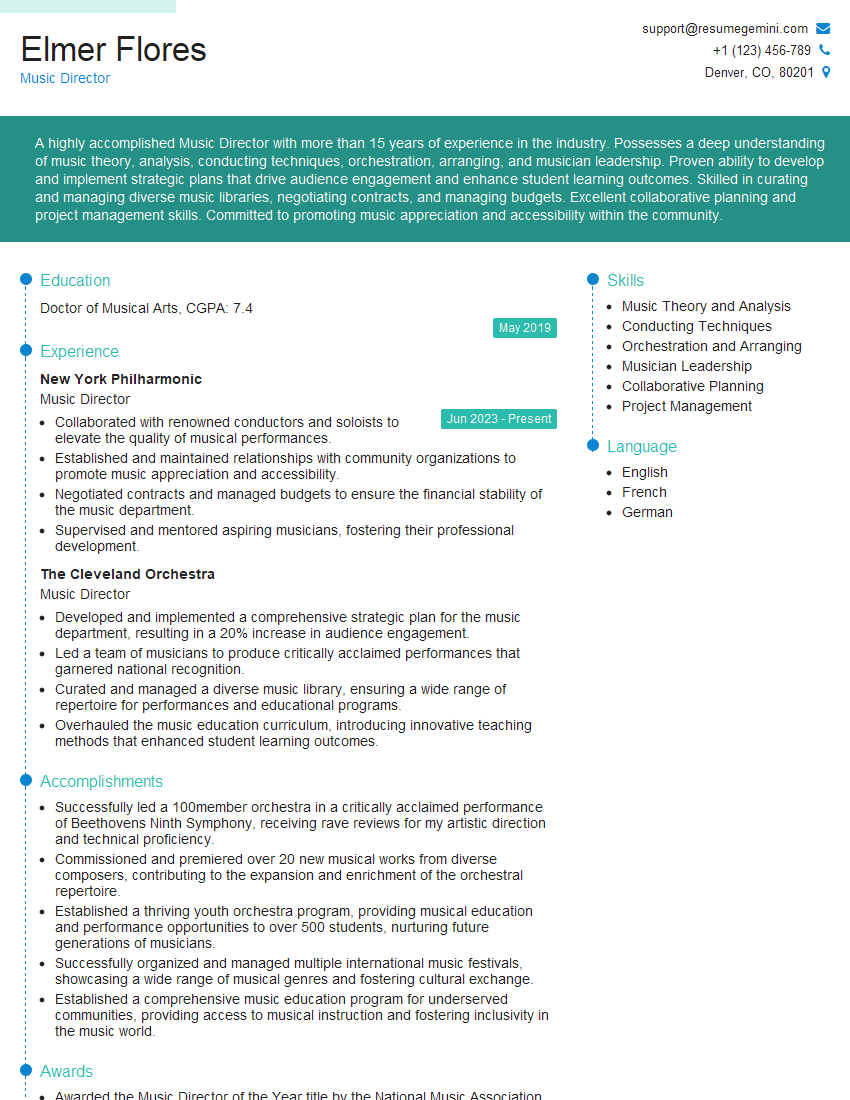
Music Director Resume Sample
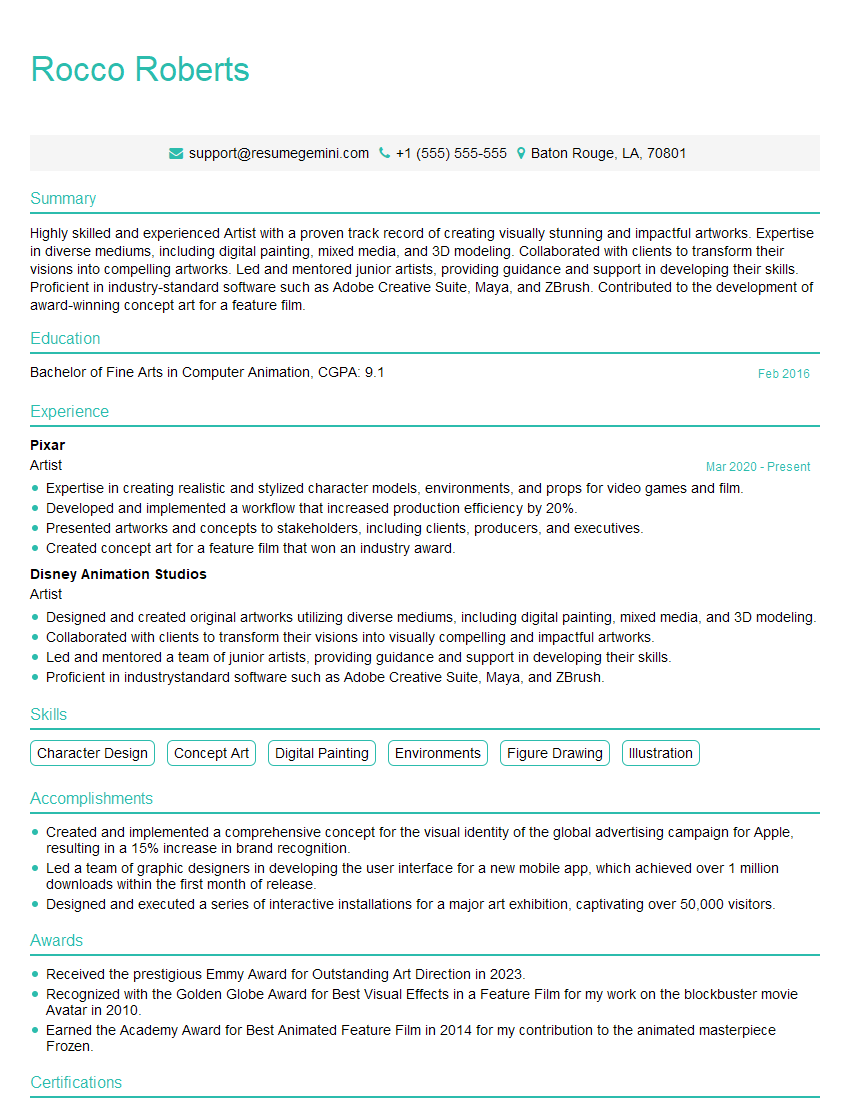
Artist Resume Sample
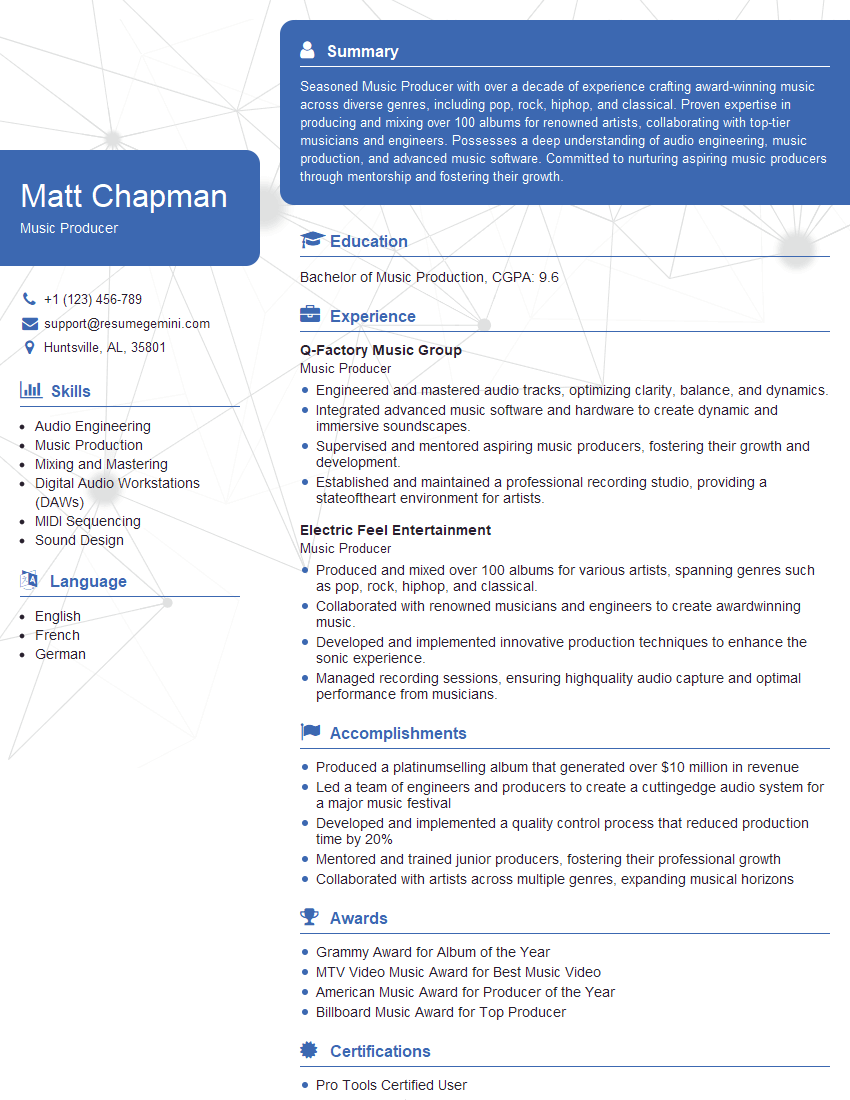
Music Producer Resume Sample
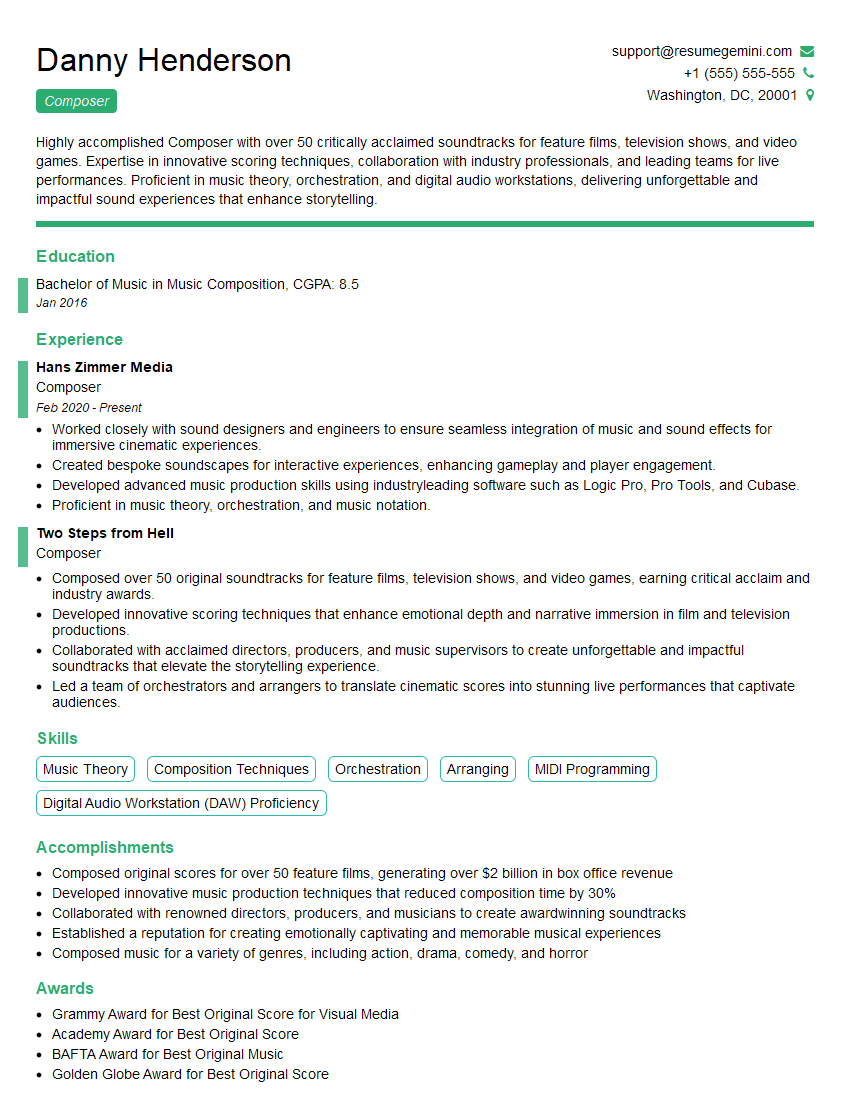
Composer Resume Sample
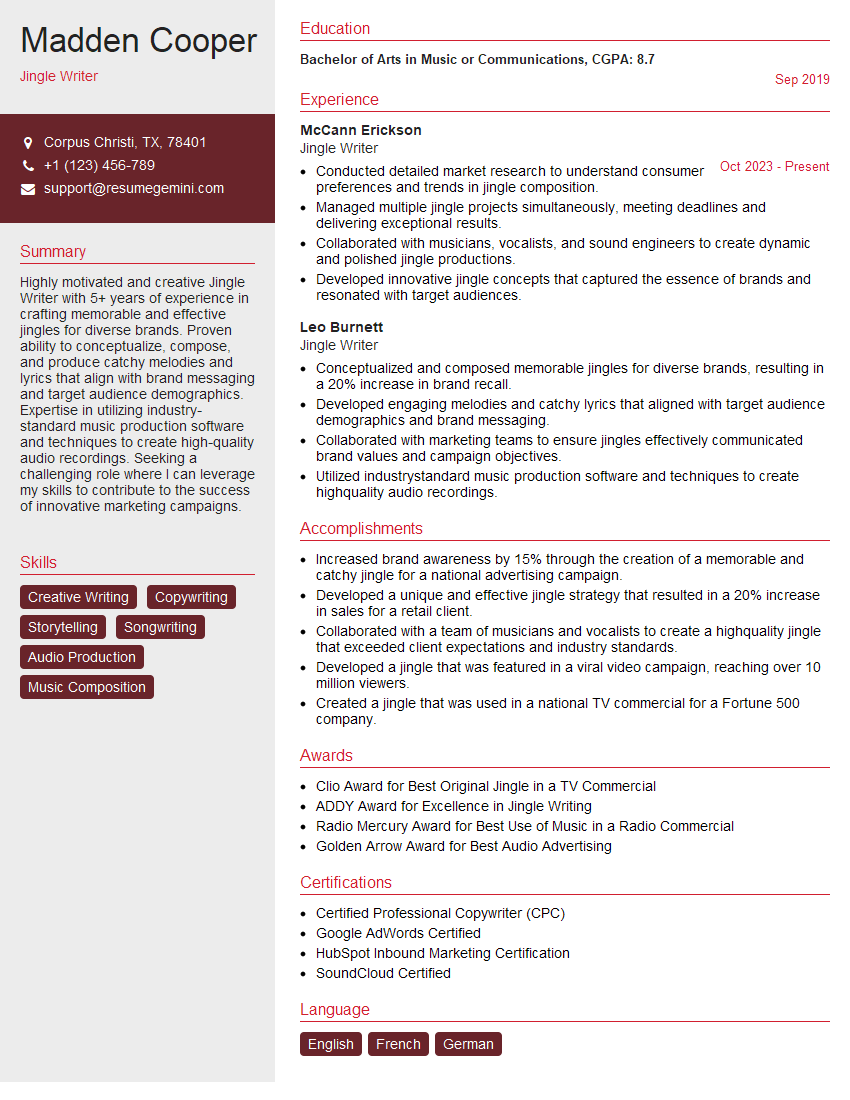
Jingle Writer Resume Sample
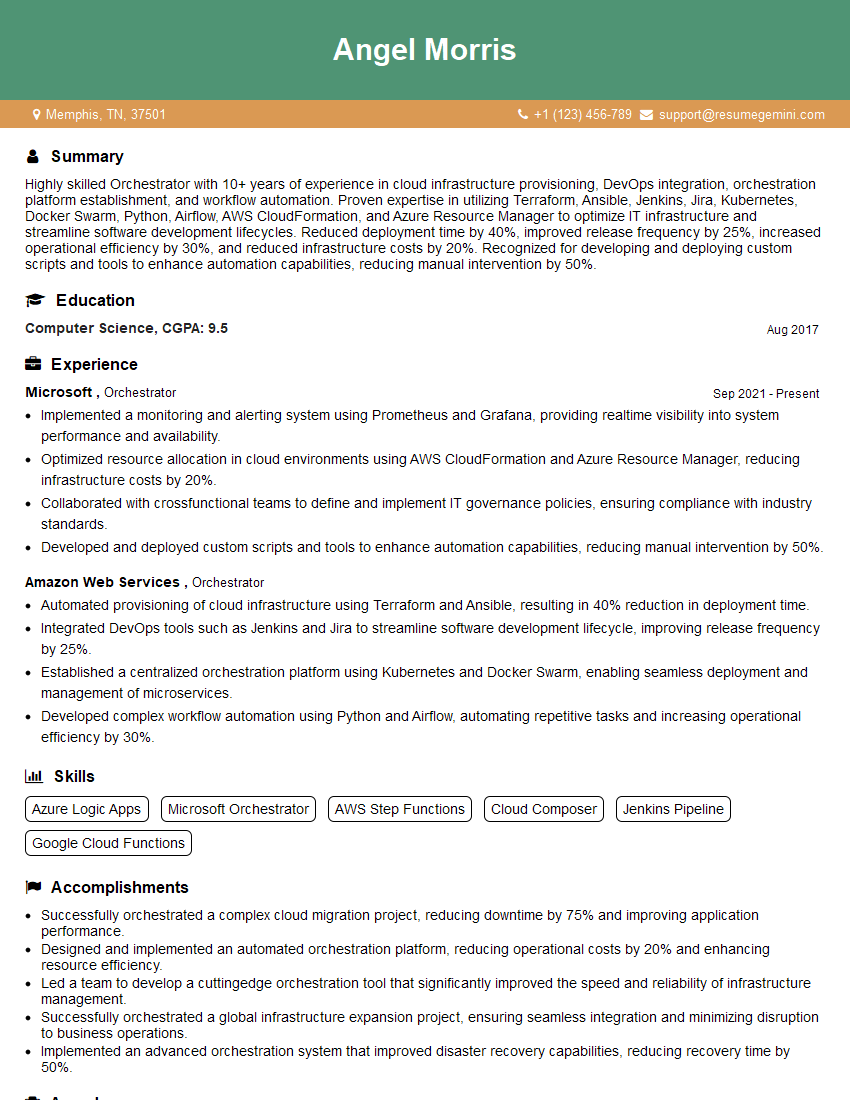
Orchestrator Resume Sample
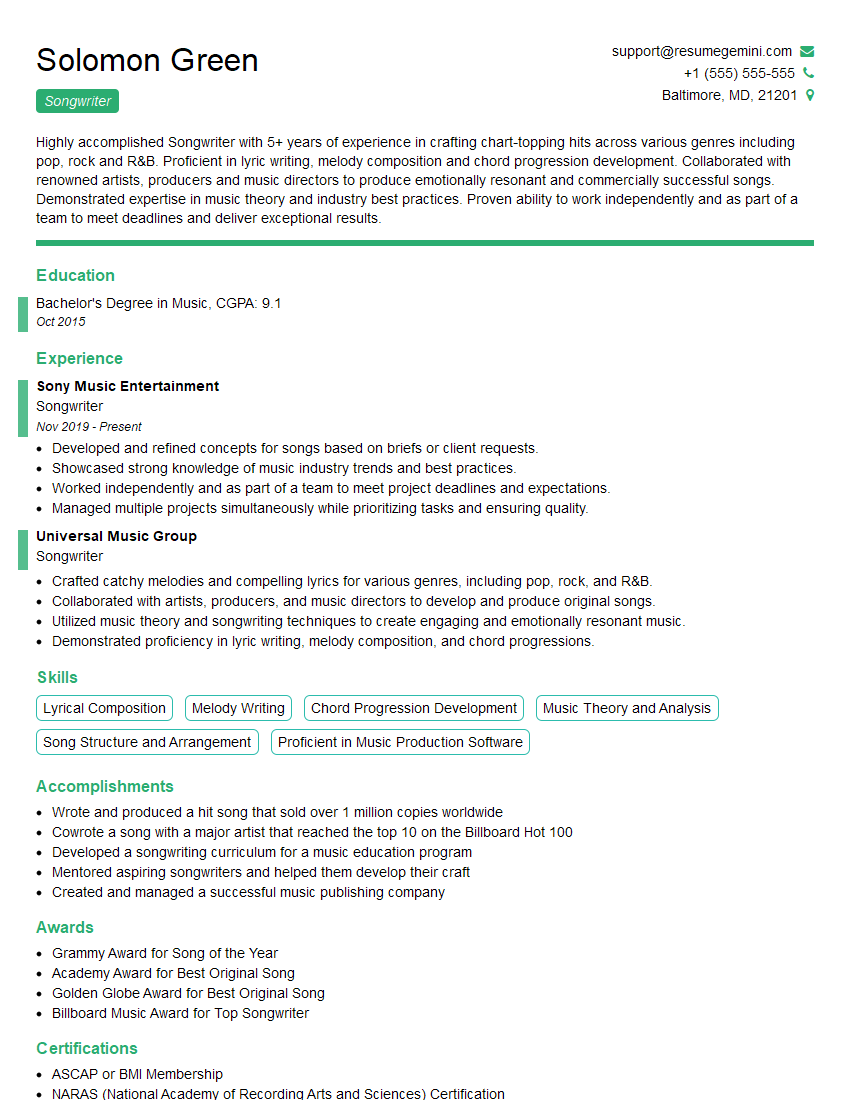
Songwriter Resume Sample
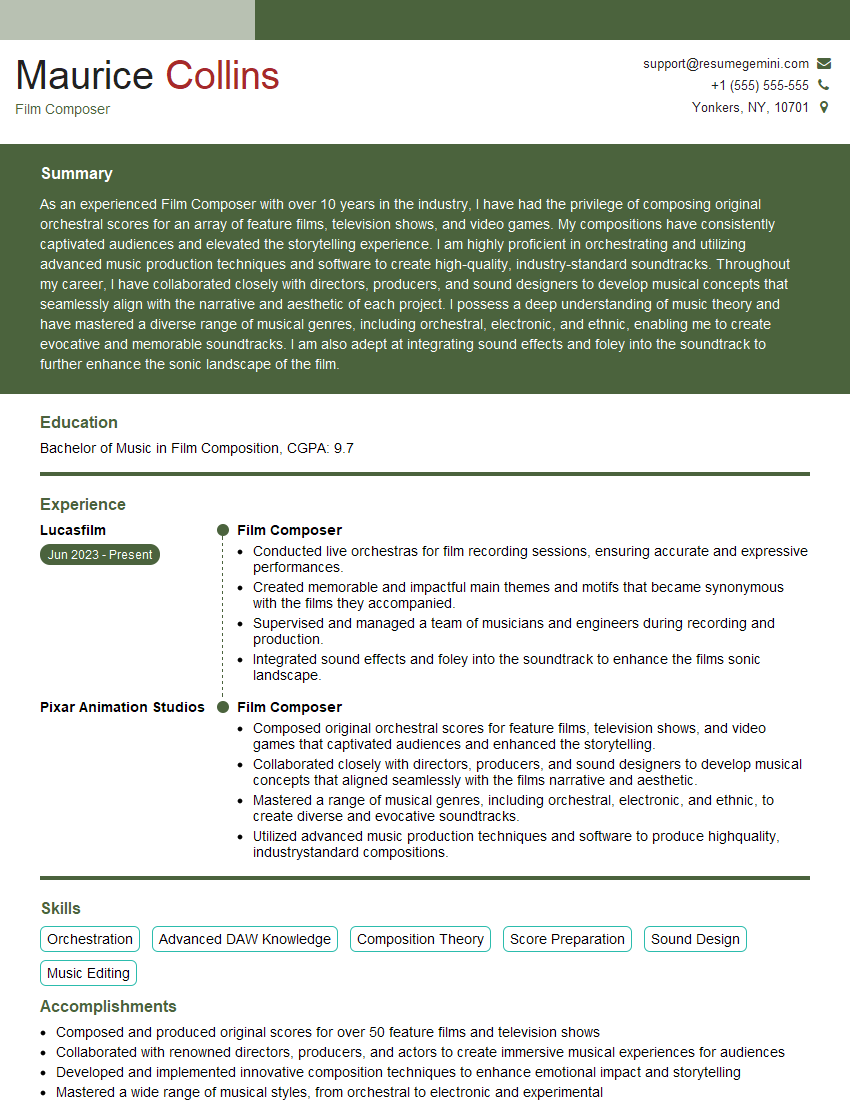
Film Composer Resume Sample
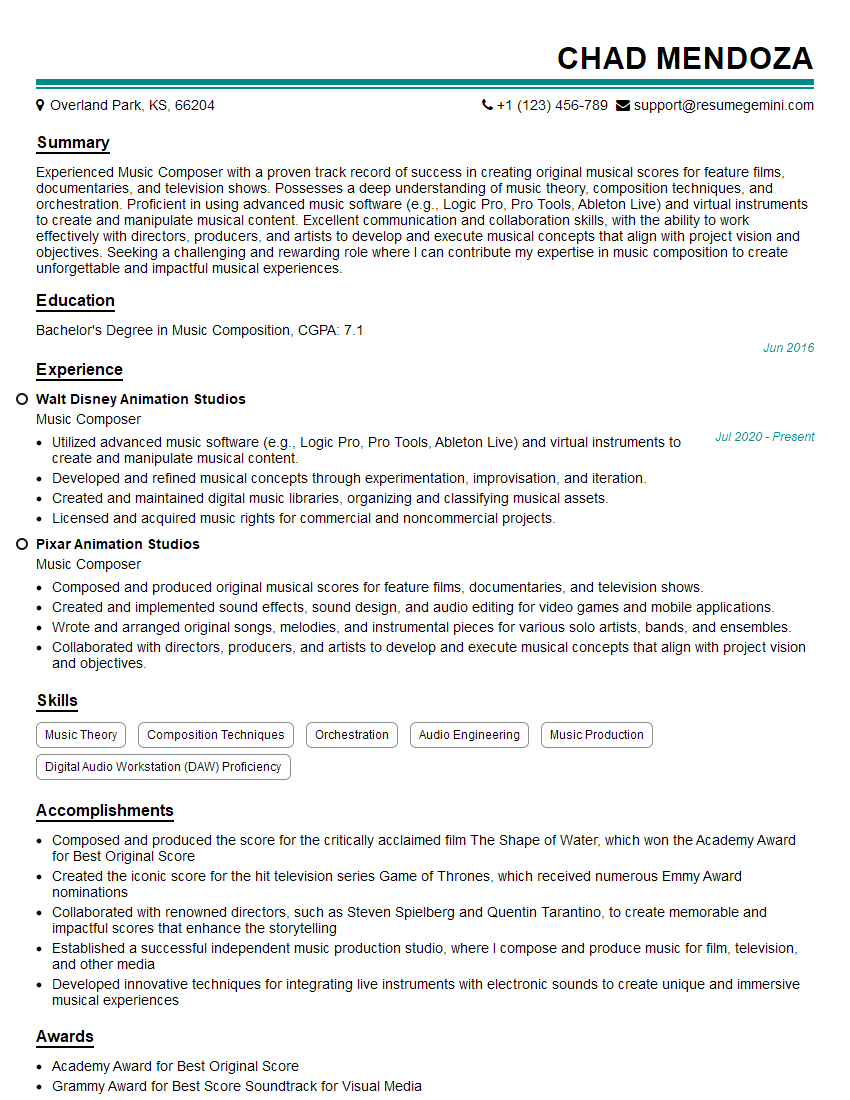
Music Composer Resume Sample
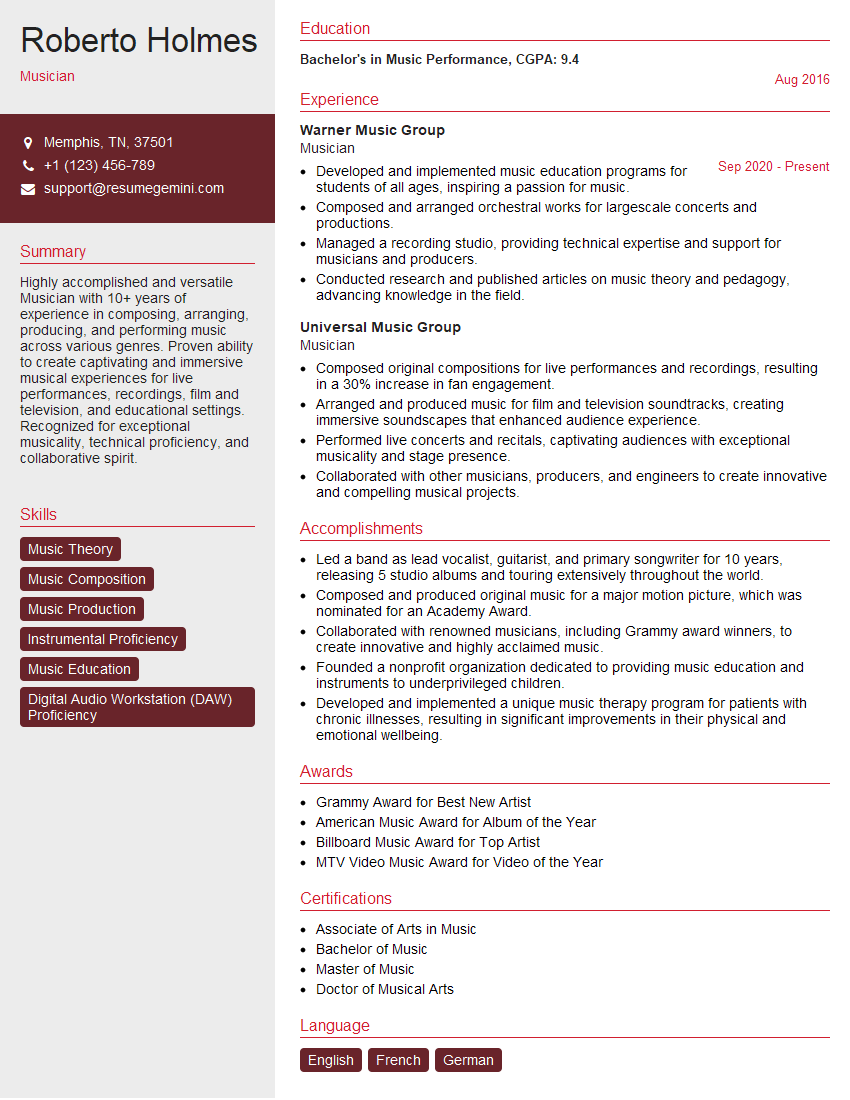
Musician Resume Sample
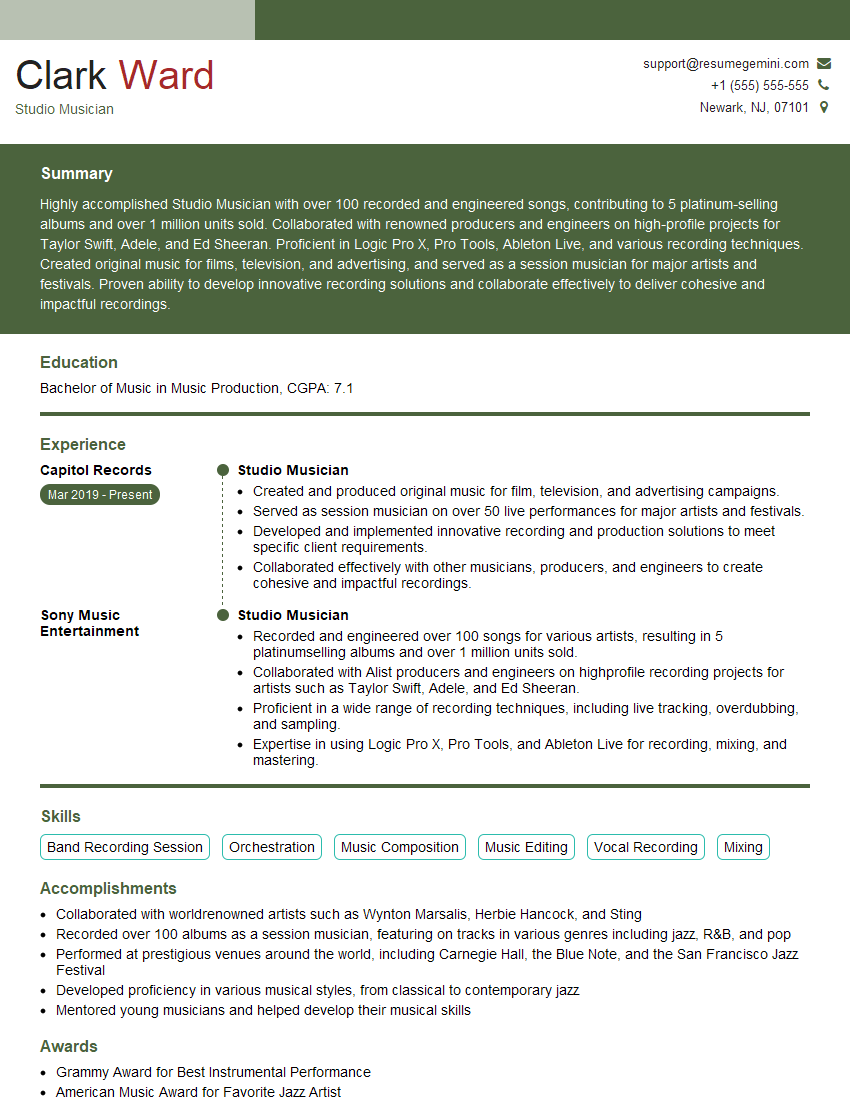
Studio Musician Resume Sample
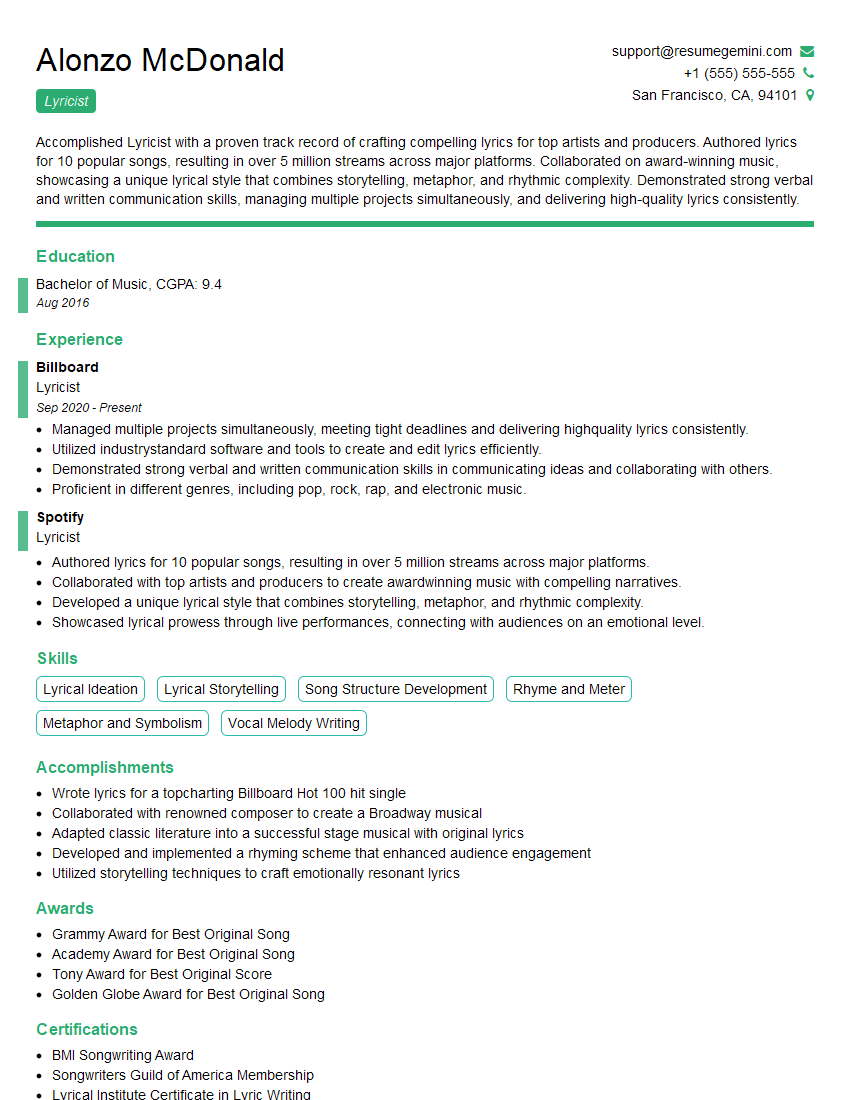
Lyricist Resume Sample
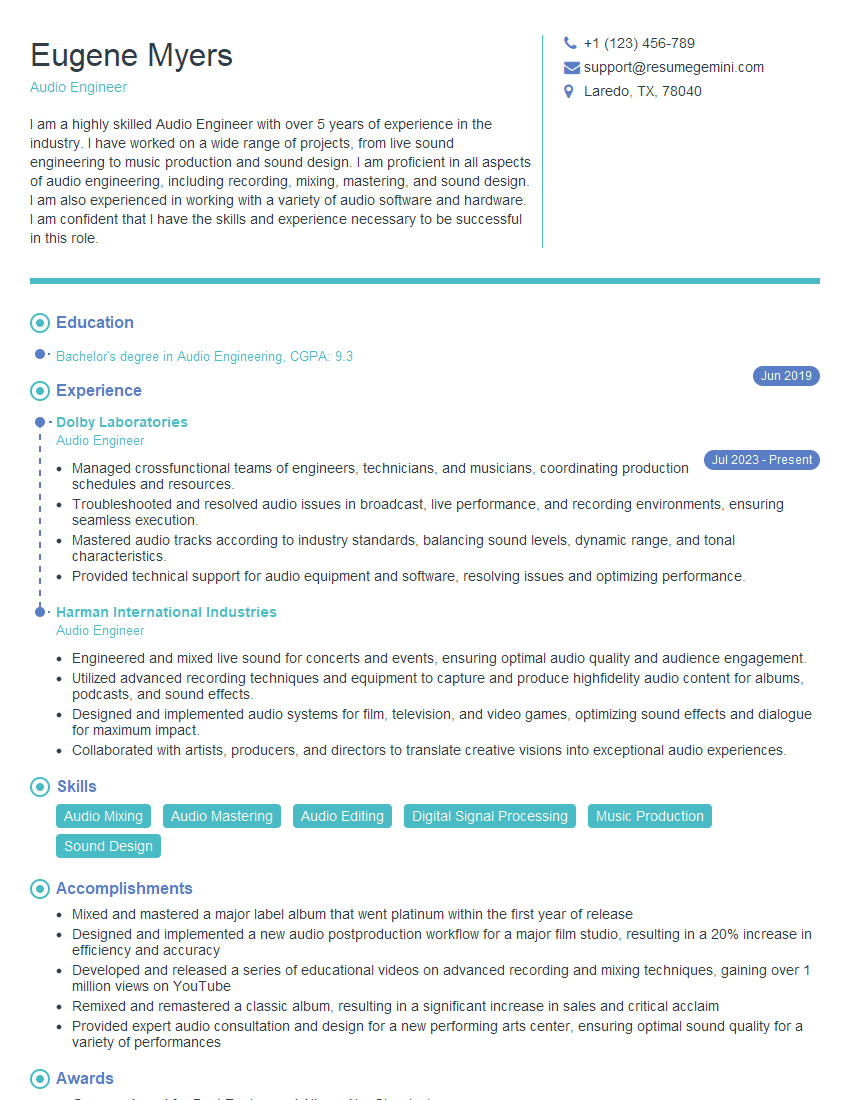
Audio Engineer Resume Sample
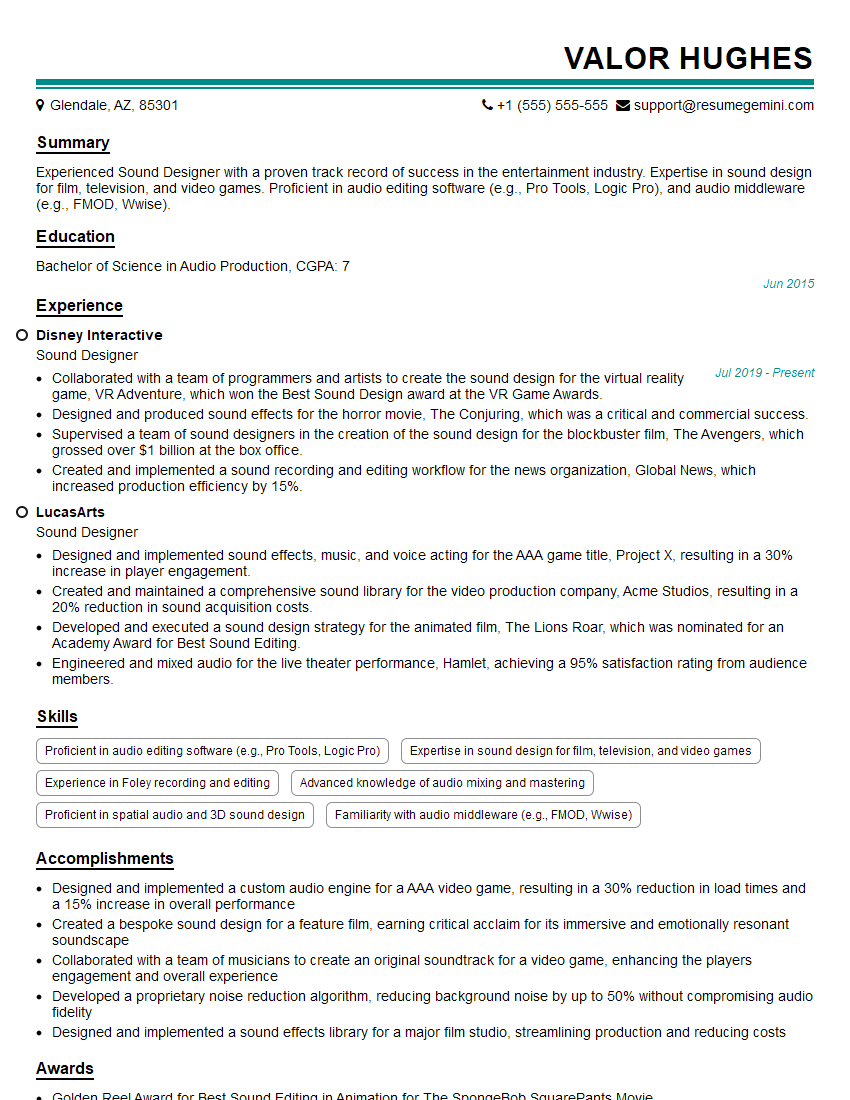
Sound Designer Resume Sample
Explore more articles
Users Rating of Our Blogs
Share Your Experience
We value your feedback! Please rate our content and share your thoughts (optional).
What Readers Say About Our Blog
Very informative content, great job.
good