Every successful interview starts with knowing what to expect. In this blog, we’ll take you through the top Sorting and Grading Vegetables interview questions, breaking them down with expert tips to help you deliver impactful answers. Step into your next interview fully prepared and ready to succeed.
Questions Asked in Sorting and Grading Vegetables Interview
Q 1. What are the common grading standards for tomatoes?
Tomato grading standards vary depending on market demands and the specific variety, but generally focus on factors like size, shape, color, and defects. For example, a premium grade might require tomatoes to be uniformly red, with minimal blemishes, and fall within a specific size range (e.g., 6-8 ounces). Lower grades might tolerate more imperfections or variations in size and color, making them suitable for processing or lower-priced markets. Imagine a supermarket; their display tomatoes will be a higher grade than those used for making tomato paste.
- Size: Diameters are often categorized into small, medium, large, and extra-large.
- Color: Uniformity of color is crucial; variations can indicate immaturity or over-ripeness.
- Shape: Ideally, round or near-round shapes are preferred, although some varieties naturally have different shapes.
- Defects: Blemish-free tomatoes command higher prices; cracks, bruises, and rot are common deductions.
Specific grading scales often use numerical or letter systems to denote quality levels, with higher numbers or letters indicating superior quality.
Q 2. Describe the different methods for sorting potatoes by size.
Sorting potatoes by size is critical for consistent product quality and efficient packing. Several methods are employed, ranging from simple manual sorting to automated systems.
- Manual Sorting: This is often the initial step, particularly for smaller operations. Workers visually inspect potatoes and place them into different size categories using bins or grading tables. This method is labor-intensive but allows for the identification of damaged or irregularly shaped potatoes.
- Roller Sorters: These machines use a series of rollers of varying sizes to separate potatoes based on diameter. Potatoes that are too large to pass through a roller are separated from those that are small enough to proceed.
- Optical Sorters: These advanced systems use cameras and sensors to assess multiple potato characteristics simultaneously, including size, shape, color, and defects. They can accurately sort potatoes into very specific size ranges and reject those with quality issues, significantly increasing efficiency and precision compared to manual sorting.
- Vibratory Conveyors: These gently shake potatoes along a conveyor belt to help separate them by size.
Size classifications are often based on weight or diameter, expressed in inches or centimeters. A common practice is to have various size ranges to accommodate different market needs.
Q 3. How do you identify and handle bruised or damaged vegetables?
Identifying and handling bruised or damaged vegetables is essential to maintain product quality and safety. Bruises might not always be immediately visible, but they can compromise the vegetable’s shelf life and increase the risk of spoilage.
- Visual Inspection: Careful visual examination is the primary method. Look for discoloration, dents, cuts, and soft spots.
- Touch and Feel: Gently pressing the vegetable can reveal hidden bruises or soft areas.
- Sorting and Segregation: Damaged vegetables should be immediately separated from undamaged ones to prevent cross-contamination and further damage. They might be processed differently, perhaps for sauces, or discarded entirely.
- Proper Storage: Damaged vegetables should be stored separately under appropriate conditions to minimize further deterioration.
It’s crucial to be thorough in identifying damaged vegetables; even minor bruises can lead to spoilage, affecting the entire batch. Imagine a single rotten apple spoiling the whole barrel—the principle is similar here.
Q 4. Explain the importance of maintaining proper hygiene during vegetable sorting.
Maintaining proper hygiene during vegetable sorting is paramount to prevent contamination and ensure food safety. Contamination can occur from various sources including workers, equipment, and the surrounding environment.
- Hand Hygiene: Frequent handwashing with soap and water is critical. Gloves are often used to reduce contamination.
- Equipment Cleaning: All sorting equipment, including conveyor belts, rollers, and bins, should be regularly cleaned and sanitized to remove dirt, debris, and bacteria.
- Work Area Cleanliness: The sorting area must be clean and free of debris and pests. Regular cleaning and disinfecting of the facility are necessary.
- Personnel Hygiene: Workers should maintain appropriate attire, such as hairnets and clean clothing, to prevent hair and other contaminants from falling onto the vegetables.
Neglecting hygiene can lead to serious foodborne illnesses and significant economic losses. Compliance with food safety regulations is essential. A rigorous hygiene protocol is not just a good practice; it’s a necessity for any serious operation.
Q 5. What are the key factors influencing the quality of vegetables?
Vegetable quality is influenced by a complex interplay of factors, affecting both appearance and nutritional value.
- Genetics: Variety selection plays a huge role. Some varieties naturally have better disease resistance, higher yields, and superior flavor profiles.
- Growing Conditions: Factors such as soil quality, sunlight exposure, water availability, and climate all significantly impact the size, color, and nutritional content of the vegetables.
- Harvesting Techniques: Proper harvesting methods, such as picking at the optimal maturity stage and handling the vegetables gently, minimize damage and preserve quality.
- Post-Harvest Handling: This includes storage, transportation, and processing. Maintaining appropriate temperatures and humidity throughout the supply chain is vital.
- Pest and Disease Management: Healthy plants produce high-quality vegetables. Effective pest and disease control measures are essential.
Imagine growing tomatoes in poor soil; the yield will be low, and the tomatoes will be smaller and less flavorful compared to those grown in rich, well-drained soil.
Q 6. How do you ensure accurate and efficient sorting of large volumes of vegetables?
Efficiently sorting large volumes of vegetables requires a combination of planning and technology.
- Process Optimization: Streamlining workflows, minimizing handling, and using appropriate equipment can significantly boost efficiency. For instance, a well-designed layout can minimize wasted movement.
- Automation: Automated sorting systems like optical sorters, already mentioned, can process large quantities of vegetables quickly and accurately, surpassing the capabilities of manual labor.
- Quality Control Checks: Regular quality checks are crucial to ensure that the sorted vegetables meet the desired standards throughout the process. This might involve random sampling and visual inspection.
- Data Management: Tracking metrics such as sorting speed, waste rates, and grading yields provides valuable insights for continuous improvement. This can be aided by data logging capabilities incorporated into modern sorting systems.
For example, a large-scale potato processing plant uses a combination of roller sorters and optical sorters to process tons of potatoes daily, far beyond what would be feasible with manual labor alone.
Q 7. What are the different types of equipment used for vegetable sorting?
A variety of equipment is used for vegetable sorting, ranging from simple hand tools to sophisticated automated systems.
- Grading Tables: Simple tables with compartments for different size categories, often used for manual sorting.
- Conveyor Belts: Used to move vegetables through the sorting process, often incorporated into automated systems.
- Roller Sorters: Mechanical sorters that use rollers of varying sizes to separate vegetables by diameter.
- Optical Sorters: Advanced systems that use cameras and sensors to detect and sort vegetables based on size, shape, color, and defects.
- Vibratory Conveyors: Gently shake vegetables to help separate them by size.
- Weighing Scales: Used for accurate weight-based sorting.
- Bins and Containers: Used for collecting and storing sorted vegetables.
The choice of equipment depends on factors such as the type of vegetable being sorted, the desired level of precision, and the scale of the operation. A small farm might use primarily manual methods with simple grading tables, while a large processing plant would invest in sophisticated automated systems.
Q 8. Describe your experience with using automated vegetable sorting systems.
My experience with automated vegetable sorting systems spans over five years, encompassing both implementation and optimization. I’ve worked with various systems, from simple optical sorters that identify size and color discrepancies to more sophisticated systems incorporating AI-powered image recognition for defect detection. For instance, in my previous role, we implemented a system that used near-infrared spectroscopy to detect internal bruising in potatoes, something impossible to detect manually with 100% accuracy. This significantly improved our quality control and reduced waste. The systems typically involve conveyor belts, sensors, and automated rejection mechanisms. The benefits are significant: increased throughput, consistent grading, and reduced labor costs. However, successful implementation requires careful calibration, regular maintenance, and skilled operators to monitor and troubleshoot potential issues. For example, changes in lighting or product variations can affect the system’s accuracy, requiring ongoing adjustments.
Q 9. How do you handle discrepancies in vegetable grading between different team members?
Discrepancies in grading are addressed through a combination of training, standardized procedures, and collaborative review. We start with comprehensive training sessions covering visual grading standards, using sample vegetables and clear grading criteria. A detailed grading manual with images serves as a constant reference. When discrepancies arise, we conduct a joint review of the disputed vegetables, often using calibrated measurement tools like calipers to ensure objectivity. This allows for open discussion, clarification of any confusion, and mutual learning. We build consensus on difficult cases. Regular quality checks, comparing the output of individual team members against established benchmarks, further enhance consistency. It’s essentially a process of continuous improvement, emphasizing teamwork and data-driven adjustments to our protocols.
Q 10. Explain your experience with different vegetable types and their specific sorting needs.
My experience encompasses a wide range of vegetables, each demanding unique sorting considerations. For instance, potatoes require attention to size, shape, color (checking for blemishes or discoloration), and the presence of internal defects. Carrots necessitate checks for size, uniformity, and surface imperfections. Leafy greens require inspection for freshness, color, and the absence of pests or disease. Berries demand careful handling to avoid damage, while assessing ripeness and size. Each vegetable has its specific quality characteristics and sensitive points; understanding these nuances is critical to effective sorting. For example, detecting small bruises on delicate berries requires a gentler, perhaps manual, sorting process compared to the more robust systems used for potatoes. This requires adaptable strategies and skilled team members capable of understanding these differences.
Q 11. How do you prioritize speed and accuracy during vegetable sorting?
Prioritizing speed and accuracy involves strategic resource allocation and process optimization. This includes the use of automated systems where appropriate, optimizing the layout of the sorting lines to minimize wasted movement, and continuous staff training to enhance their proficiency. However, speed should never compromise accuracy. Regular quality control checks are implemented, using both random sampling and targeted inspections of specific output batches. Data analysis is crucial to identify any bottlenecks or areas needing improvement. For example, tracking individual worker performance helps pinpoint areas where additional training might be beneficial. The balance is achieved through a combination of technology, well-trained personnel, and robust quality assurance practices. We strive for a system where speed is enhanced but accuracy remains the ultimate priority.
Q 12. Describe your experience working under pressure in a fast-paced environment.
I thrive in fast-paced environments. In one instance, we experienced a significant increase in harvest volume during a particularly favorable growing season. The challenge was to maintain our quality standards while dramatically increasing our processing throughput. We addressed this by implementing overtime shifts strategically, leveraging our automated sorting systems to their maximum capacity, and cross-training personnel to ensure flexibility. This required clear communication, efficient teamwork, and the ability to adapt quickly to changing conditions. The experience reinforced the importance of proactive planning, resource allocation, and the value of a highly motivated and adaptable team. Although stressful, the collaborative effort and successful outcome were immensely rewarding.
Q 13. What are some common quality defects in vegetables and how do you identify them?
Common quality defects vary widely depending on the vegetable type, but some common issues include physical damage (bruises, cuts, punctures), discoloration (browning, yellowing, spots), pest infestations (wormholes, insect damage), disease symptoms (rot, wilting, mold), and size/shape inconsistencies. Identification involves a combination of visual inspection and sometimes instrumental measurement (e.g., using a colorimeter for precise color assessment). Training emphasizes the use of standardized grading charts with clear visual examples of various defects to ensure consistent identification across the team. For example, the level of acceptable bruising on a potato differs significantly from that of a delicate tomato. Understanding these subtle variations is essential for proper grading and waste reduction.
Q 14. Explain your understanding of food safety regulations related to vegetable handling.
My understanding of food safety regulations is thorough and comprehensive. I am familiar with HACCP (Hazard Analysis and Critical Control Points) principles and their application to vegetable handling, including proper sanitation protocols, temperature control during storage and processing, pest control, and worker hygiene practices. We rigorously adhere to all relevant local, national, and international standards, including traceability systems to track product origin and handling procedures. Regular internal audits and external inspections are part of our quality control system. I am also familiar with regulations regarding pesticide residue limits and the correct labeling of produce. Adherence to food safety standards is paramount, impacting both product quality and consumer safety. It’s a critical aspect of my work, and ongoing training keeps us up-to-date with evolving regulations.
Q 15. How do you maintain proper documentation and record-keeping during sorting?
Maintaining accurate documentation during vegetable sorting is crucial for traceability, quality control, and efficient inventory management. We utilize a combination of digital and physical record-keeping methods.
- Digital Records: We use dedicated software to track each batch of vegetables, recording details such as the date of harvest, the farm of origin, the variety of vegetable, the weight, the grade assigned (e.g., A, B, C based on size, color, and defects), and any other relevant information. This data is often linked to barcodes or RFID tags attached to individual containers or pallets.
- Physical Records: Alongside digital records, we maintain physical logs. These logs are crucial for situations where electronic systems might fail. These logs typically mirror the digital information and may include additional notes such as any observed issues during sorting or any specific handling instructions.
- Example: Imagine a batch of carrots. Our system would record details like: ‘Harvest Date: 2024-10-27, Farm: Green Valley Farms, Variety: Nantes, Grade: A, Weight: 500kg, Lot Number: GV271024A’.
This meticulous approach ensures complete transparency throughout the process and helps us efficiently identify and address any issues or discrepancies that arise.
Career Expert Tips:
- Ace those interviews! Prepare effectively by reviewing the Top 50 Most Common Interview Questions on ResumeGemini.
- Navigate your job search with confidence! Explore a wide range of Career Tips on ResumeGemini. Learn about common challenges and recommendations to overcome them.
- Craft the perfect resume! Master the Art of Resume Writing with ResumeGemini’s guide. Showcase your unique qualifications and achievements effectively.
- Don’t miss out on holiday savings! Build your dream resume with ResumeGemini’s ATS optimized templates.
Q 16. How do you handle rejected or unusable vegetables?
Rejected or unusable vegetables are handled responsibly and efficiently, prioritizing food safety and waste reduction. Our procedures involve:
- Immediate Segregation: Rejected vegetables are immediately separated from the acceptable ones to prevent contamination.
- Quality Assessment: We carefully examine rejected produce to determine the cause of rejection (e.g., disease, pest damage, physical damage). This helps us identify potential issues in the growing or harvesting process.
- Waste Management: Depending on the condition and quantity, we utilize different disposal methods. In some cases, suitable vegetables might be donated to local food banks or animal shelters. Others may be composted, providing nutrient-rich soil amendment. Only when absolutely necessary, and in accordance with regulations, is landfill disposal considered as a last resort.
- Example: If a significant portion of a carrot harvest shows signs of blight, we would immediately segregate those carrots and notify the farm for investigation, possibly preventing further spoilage in future harvests. The rejected carrots would then be composted.
Our goal is to minimize waste, maximize resource utilization and always adhere to safety regulations.
Q 17. Describe your problem-solving skills as they relate to vegetable sorting challenges.
Problem-solving is an integral part of vegetable sorting. I approach challenges systematically, using a structured approach.
- Identify the Problem: This involves pinpointing the specific issue. For example: unusually high rejection rates, inconsistent grading, equipment malfunctions.
- Analyze the Cause: Once identified, we need to understand the root cause. Is it related to harvesting techniques, equipment issues, or changes in weather conditions that might have affected the vegetable quality?
- Develop Solutions: Based on the analysis, I brainstorm potential solutions. This may involve adjusting equipment settings, implementing new quality control procedures, or modifying handling practices. For example, a high rejection rate for bruising could be addressed by retraining workers on proper harvesting methods or using improved cushioning materials during transport.
- Implement and Monitor: The chosen solution is implemented, and its effectiveness is closely monitored. Data is collected and analyzed to ensure the solution addresses the problem effectively and efficiently.
- Adapt and Improve: If the initial solution isn’t fully effective, the process is iterated. This continuous improvement approach ensures optimal efficiency and quality.
For example, if we notice an increase in bruised tomatoes, we would investigate whether the problem stems from harvesting techniques, packaging methods, or transportation processes. We might then implement a training program for workers, invest in improved packaging materials, or work with transport partners to improve handling procedures.
Q 18. What are the key differences between manual and automated vegetable sorting?
Manual and automated vegetable sorting differ significantly in efficiency, cost, and precision.
- Manual Sorting: This relies on human workers visually inspecting and sorting vegetables based on size, color, shape, and the presence of defects. It’s labor-intensive, prone to inconsistencies due to human variability, and is generally more cost-effective for smaller-scale operations.
- Automated Sorting: This uses machines incorporating technologies like computer vision, sensors, and robotics. These systems can quickly and accurately assess a large volume of vegetables and sort them based on pre-defined parameters. Automated sorting offers greater consistency, higher throughput, and reduces labor costs, but involves high initial investment.
Example: In manual sorting, workers may visually inspect each potato to ensure it’s the right size and free of blemishes. In automated sorting, a machine would use cameras and sensors to quickly and objectively assess each potato’s size, shape, and surface quality, then automatically sort it into appropriate categories.
Q 19. How do you adapt your sorting techniques to different vegetable varieties?
Adapting sorting techniques to different vegetable varieties requires understanding the specific characteristics and quality standards for each type. This involves adjusting sorting criteria and potentially employing specialized equipment.
- Size and Shape: The size and shape standards for sorting vary widely. For instance, asparagus is sorted by length, while tomatoes are sorted by diameter. Specialized sizing equipment, like rollers and sorters, are often used.
- Color: Color is a critical grading factor for many vegetables, such as peppers, tomatoes, and lettuce. Color sensors are used in automated systems, while human sorters need to be trained to accurately identify color variations.
- Defects: The types of defects that are considered unacceptable also depend on the vegetable. For instance, blemishes are more acceptable on potatoes than on delicate lettuces. Automated systems may utilize cameras and image recognition software to identify defects.
Example: Sorting broccoli involves checking for floret size and compactness, whereas sorting bell peppers focuses on color uniformity and the absence of blemishes or insect damage. Each vegetable requires a tailored approach, encompassing specific equipment and trained personnel.
Q 20. Describe your experience with color grading of vegetables.
Color grading is a crucial aspect of vegetable sorting, impacting both the product’s marketability and price. We use a combination of techniques for effective color grading.
- Visual Inspection: For manual sorting, trained personnel visually assess the color of vegetables, comparing them to pre-defined color standards. This method requires well-trained eyes and consistent lighting.
- Color Sensors: In automated systems, color sensors measure the precise color values of vegetables. This provides objective and consistent color grading, significantly enhancing speed and accuracy.
- Color Charts and Standards: We use established color charts (e.g., those published by industry organizations) as references for consistent color grading. These charts act as guidelines for manual inspection and also inform the parameters set for automated color sensors.
- Example: For bell peppers, we might categorize them into green, yellow, orange, and red based on their maturity and color intensity. The color grading is done based on pre-defined ranges for each color, and the result affects the price and market destination of each category.
Accurate color grading ensures that consumers receive vegetables meeting their expectations and that products are marketed effectively based on maturity and desirability.
Q 21. How do you ensure the safety and security of vegetables during handling and sorting?
Ensuring the safety and security of vegetables during handling and sorting is paramount. Our procedures focus on:
- Hygiene: Maintaining strict hygiene standards is crucial to prevent contamination. Workers wear appropriate clothing and gloves, and equipment is regularly cleaned and sanitized. Our facility is also designed to minimize potential sources of contamination.
- Temperature Control: Temperature is carefully controlled throughout the process to maintain the quality and extend the shelf life of the vegetables. Cold storage is used where appropriate.
- Pest Control: We have strict pest control measures in place to prevent infestations. This includes regular inspections and the use of appropriate pest control methods.
- Security: Access to the sorting facility is restricted, and security measures are in place to prevent theft or vandalism.
- Traceability: As previously mentioned, our detailed record-keeping system ensures complete traceability, enabling us to quickly identify and address any issues or contamination events.
These comprehensive measures ensure that the vegetables remain safe, secure, and of high quality throughout the sorting process, safeguarding both product integrity and consumer health.
Q 22. What is your experience with using specific grading tools or equipment (e.g., calipers, scales)?
My experience with grading tools is extensive. I’m proficient in using calipers to accurately measure the dimensions of vegetables like carrots and cucumbers, ensuring they meet size specifications for different market grades. Digital scales are crucial for weighing produce, particularly when grading by weight, as is the case with many types of potatoes or onions. For example, I’ve used a combination of calipers and scales to grade bell peppers, categorizing them based on both their size and weight to ensure consistent quality within each grade. I also have experience with specialized equipment like colorimeters for objective assessment of color, a key factor in the grading of tomatoes and other colorful vegetables. In addition, I’m familiar with various automated sorting systems that use optical sensors and air jets to quickly and efficiently sort vegetables based on size, shape, and color.
Q 23. Describe your understanding of the impact of environmental conditions on vegetable quality.
Environmental conditions significantly impact vegetable quality. Temperature fluctuations, for instance, can lead to chilling injury in some vegetables (like tomatoes), resulting in blemishes and reduced shelf life. Insufficient sunlight or nutrient deficiencies in the soil can cause smaller sizes, reduced color intensity, and compromised flavor. Excessive rainfall can lead to diseases and rotting, while drought conditions can lead to smaller yields and stressed plants. Humidity plays a vital role in preventing fungal diseases; too high and you risk mold growth, too low and the produce may suffer from wilting. Understanding these factors is crucial for setting realistic grading standards and managing expectations based on growing season conditions. For example, during a particularly hot summer, we might adjust our size grading standards for certain vegetables to account for potentially smaller sizes due to stress.
Q 24. How do you prioritize different quality characteristics when sorting vegetables?
Prioritizing quality characteristics depends heavily on the vegetable type and its intended use. For fresh market vegetables sold in grocery stores, visual appeal (color, shape, absence of blemishes) is often paramount. For processing vegetables destined for canning or freezing, size uniformity and absence of defects take precedence. For example, when grading potatoes for french fries, uniformity in size is crucial for consistent cooking, outweighing minor cosmetic imperfections. But for potatoes sold as fresh produce, the absence of blemishes would be a higher priority. I use a scoring system that weighs different characteristics based on customer needs and market demand. This ensures consistency and maximizes value across all grades.
Q 25. What are some strategies you use to minimize vegetable damage during sorting?
Minimizing damage during sorting involves several strategies. First, we utilize appropriate handling techniques. For example, we avoid dropping vegetables or squeezing them unnecessarily. Second, we use soft, padded surfaces or conveyor belts to transport the produce. Third, we sort vegetables gently, avoiding abrasive actions. Fourth, we employ specialized tools that reduce the risk of bruising or cutting. For example, we use soft-bristled brushes to clean vegetables instead of harsh scrubbing. Finally, we maintain a well-organized work environment to prevent overcrowding and accidental damage. Think of it like handling precious cargo – every step should prioritize the integrity of the produce.
Q 26. Describe your experience training others in vegetable sorting and grading techniques.
I have extensive experience training others in vegetable sorting and grading. My approach involves a combination of hands-on training and theoretical instruction. I start by explaining the different quality standards, then demonstrate proper handling techniques using various tools and equipment. Trainees practice under supervision, and I provide regular feedback and correction. I also utilize visual aids like charts and images to illustrate the different grades. Throughout the training, I emphasize the importance of attention to detail, efficiency, and maintaining a clean and safe working environment. I create interactive training sessions, incorporating quizzes and real-world examples to ensure knowledge retention and practical application.
Q 27. How do you maintain a clean and organized work environment during vegetable sorting?
Maintaining a clean and organized workspace is critical for both efficiency and food safety. We regularly sanitize all surfaces and equipment. We use designated areas for different grades of vegetables to avoid cross-contamination. Proper waste disposal practices are implemented to prevent the buildup of discarded material. We regularly sweep and mop the floors to maintain hygiene. A well-organized workflow, with clearly defined areas for sorting, inspecting, and packing, eliminates unnecessary movement and improves efficiency. This includes clear labeling and storage of graded products to avoid confusion. Think of it as a well-oiled machine: a clean and organized environment ensures smooth operation.
Q 28. What are your strategies for improving efficiency and reducing waste in vegetable sorting?
Improving efficiency and reducing waste starts with optimizing the sorting process. This includes investing in efficient sorting equipment, such as automated systems, to increase throughput and reduce labor costs. We also implement strategies for minimizing waste, such as by carefully inspecting produce for potential defects early on and using damaged produce for other applications if possible (like juicing or composting). We use data analysis to identify bottlenecks and areas for improvement in the sorting process. Furthermore, regular training and employee empowerment ensures that everyone is aware of efficient procedures. By reducing losses through improved sorting and effective waste management, we minimize environmental impact while maximizing profitability. It’s all about balancing speed and precision with a focus on minimal loss.
Key Topics to Learn for Sorting and Grading Vegetables Interview
- Vegetable Identification: Understanding the different varieties of vegetables, their characteristics (size, shape, color, maturity), and common defects.
- Quality Standards: Familiarizing yourself with industry standards and grading systems for various vegetables (e.g., USDA grades). This includes understanding the criteria for acceptable quality and identifying defects that lead to downgrading.
- Sorting Techniques: Learning about different sorting methods, including manual sorting, automated sorting systems (e.g., size graders, color sorters), and the advantages and disadvantages of each. Consider the efficiency and accuracy of various techniques.
- Grading Procedures: Understanding the steps involved in the grading process, from initial inspection to final packaging. This includes proper handling to prevent damage and maintain quality.
- Hygiene and Safety: Knowing and adhering to food safety regulations and best practices for maintaining a clean and safe work environment. This includes proper sanitation procedures and personal hygiene.
- Yield and Efficiency: Understanding how to maximize yield and efficiency in the sorting and grading process, minimizing waste and optimizing workflow.
- Troubleshooting: Developing problem-solving skills to identify and address issues that may arise during the sorting and grading process, such as equipment malfunctions or quality control problems.
- Technology and Automation: Understanding the role of technology in modern sorting and grading facilities, including automated systems and data analysis tools.
Next Steps
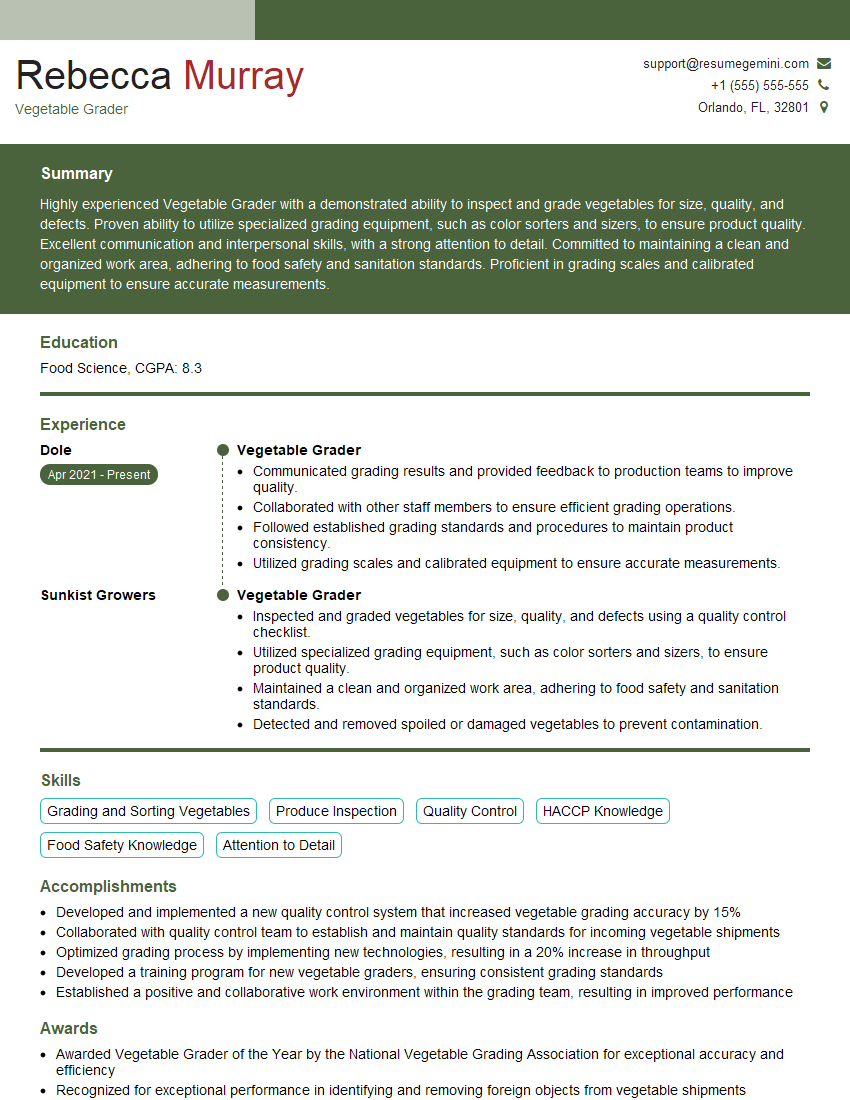
Mastering the art of sorting and grading vegetables is crucial for career advancement in the agricultural and food processing industries. It demonstrates essential skills in quality control, efficiency, and attention to detail – highly valued attributes in many roles. To significantly improve your job prospects, create an ATS-friendly resume that highlights your relevant skills and experience. ResumeGemini is a trusted resource that can help you build a professional and impactful resume. We offer examples of resumes tailored to the Sorting and Grading Vegetables field to guide you in showcasing your qualifications effectively.
Explore more articles
Users Rating of Our Blogs
Share Your Experience
We value your feedback! Please rate our content and share your thoughts (optional).
What Readers Say About Our Blog
Very informative content, great job.
good