Preparation is the key to success in any interview. In this post, we’ll explore crucial Sorting Fruits and Vegetables interview questions and equip you with strategies to craft impactful answers. Whether you’re a beginner or a pro, these tips will elevate your preparation.
Questions Asked in Sorting Fruits and Vegetables Interview
Q 1. What are the common criteria for sorting fruits and vegetables?
Sorting fruits and vegetables involves several key criteria, primarily focused on ensuring quality and marketability. These criteria can be broadly categorized into size, shape, color, ripeness, and freedom from defects. For example, apples might be sorted by diameter to meet specific retail requirements (e.g., extra large, large, medium), while peppers might be sorted by color (red, green, yellow) to meet customer demand. The specific criteria will vary based on the produce type, intended market, and customer preferences.
- Size and Caliber: This refers to the dimensions of the produce, often measured in diameter or weight. Uniform size is crucial for efficient packaging and retail display.
- Shape: The overall form of the produce. Deviations from ideal shapes (e.g., misshapen tomatoes) can lead to downgrading.
- Color: This is vital for visual appeal and can indicate ripeness. Consistent color within a grade is essential.
- Ripeness: The stage of maturity, impacting flavor, texture, and shelf life. Sorting by ripeness ensures consistent quality.
- Freedom from Defects: This encompasses bruises, blemishes, pest damage, and other imperfections that affect the quality and shelf life. Produce with significant defects is usually culled.
Q 2. Explain the difference between size grading and quality grading.
Size grading focuses solely on the physical dimensions of the produce – its length, width, diameter, or weight. It’s a purely objective measurement, often automated using machinery. Think of those perfectly aligned oranges at the grocery store – that’s size grading in action. Quality grading, on the other hand, is far more subjective and encompasses a wider range of factors, including size, but also color, ripeness, firmness, blemishes, and overall appearance. A quality grade considers the overall market appeal and expected shelf life. For instance, a perfectly sized tomato might receive a lower quality grade if it has significant bruising, whereas a slightly smaller but flawless tomato may achieve a higher grade.
Q 3. How do you identify and handle damaged or bruised produce?
Identifying damaged or bruised produce requires careful visual inspection. This often involves trained personnel who can quickly assess the extent of damage. Bruises may not always be visible on the surface; gently squeezing can help detect internal damage. Damaged produce is usually handled separately. The extent of damage dictates its fate: minor imperfections might be sold at discounted prices, while severely damaged produce might be sent for processing (e.g., juicing, canning) or disposed of to prevent spoilage and contamination.
Think of it like a quality control process. We want to ensure that what reaches the consumer is safe and appealing. This step is crucial for maintaining brand reputation and food safety.
Q 4. Describe your experience with different sorting techniques (e.g., manual, automated).
My experience spans both manual and automated sorting techniques. Manual sorting, while labor-intensive, offers flexibility and allows for detailed assessment of quality, particularly for high-value produce. It’s effective for smaller operations or when handling delicate items. I’ve personally sorted berries and asparagus by hand, relying on visual inspection for quality control. Automated sorting, on the other hand, uses technology such as optical sorters that employ sensors (color, shape, size) to rapidly categorize produce. This is crucial for large-scale operations, offering increased efficiency and consistency. In my previous role, we used an automated system for sorting potatoes based on size and blemishes. This system drastically reduced sorting time and increased throughput compared to manual methods.
Q 5. What are the key quality indicators for various fruits (e.g., apples, bananas, berries)?
Key quality indicators vary significantly across fruit types:
- Apples: Firmness, color (consistent within the variety), absence of bruises and blemishes, appropriate size for the variety.
- Bananas: Uniform yellow color (for ripe bananas), firmness (not overly soft or hard), absence of bruises or discoloration.
- Berries: Firmness, color uniformity, absence of mold, decay, or insect damage, proper size and shape for the variety.
These indicators directly impact the fruit’s flavor, texture, and shelf life, and ultimately determine its market value.
Q 6. What are the key quality indicators for various vegetables (e.g., lettuce, tomatoes, potatoes)?
Similarly, vegetable quality indicators are produce-specific:
- Lettuce: Freshness (crisp leaves), absence of wilting or discoloration, absence of pest damage or disease, proper size and shape for the variety.
- Tomatoes: Firmness, color (depending on variety), absence of cracks or blemishes, proper size and shape for the variety.
- Potatoes: Size uniformity, absence of bruises, cuts, or discoloration, smooth skin, and appropriate moisture content.
Consistent quality indicators guarantee the desired appearance, texture, flavor and nutritional value of the vegetables.
Q 7. How do you ensure the efficiency and speed of the sorting process?
Ensuring efficiency and speed in the sorting process relies on a multi-pronged approach. First, effective pre-sorting reduces the load on the main sorting system. This could involve simple steps like removing large debris or segregating produce based on obvious defects before it enters the main sorting line. Secondly, using automated systems significantly speeds up the process, particularly for high-volume operations. Furthermore, optimizing the layout of the sorting facility and ensuring adequate staffing levels are vital. Regular maintenance of equipment is crucial to prevent downtime. Finally, implementing quality control checks throughout the process helps identify and address any bottlenecks or inefficiencies. Think of it like an assembly line – optimizing each step improves the overall output.
Q 8. How do you maintain hygiene and food safety standards during sorting?
Maintaining hygiene and food safety is paramount in fruit and vegetable sorting. It’s not just about avoiding contamination; it’s about preserving the quality and extending the shelf life of the produce. Our protocols start with personal hygiene – handwashing, gloves, and hairnets are mandatory. The sorting area itself is meticulously cleaned and sanitized regularly, focusing on high-touch surfaces like conveyor belts and sorting tables. We also adhere strictly to temperature control, ensuring the environment is cool enough to prevent spoilage. Any damaged or rotten produce is immediately segregated and disposed of properly to prevent cross-contamination. Regular inspections and internal audits ensure we consistently meet the highest food safety standards, such as those set by the FDA or equivalent regulatory bodies. Think of it like this: we’re treating every piece of fruit or vegetable as if it were going directly to our own families’ tables.
For example, we use color-coded cutting boards and knives to prevent cross-contamination between different types of produce, and we utilize dedicated cleaning stations with appropriate sanitizers for different equipment.
Q 9. What is your experience with using sorting equipment (e.g., conveyor belts, sorters)?
I have extensive experience operating and maintaining various sorting equipment, including conveyor belts, optical sorters, and size graders. My expertise ranges from basic troubleshooting and preventative maintenance to advanced calibration and optimization of these systems. For instance, I’m proficient in adjusting the settings on optical sorters to accurately identify and remove blemished or undersized produce based on color, shape, and size parameters. I’ve worked with both manual and automated systems, and I understand the importance of adapting to different technologies and configurations to optimize throughput and efficiency while maintaining quality. I understand the importance of regular cleaning and lubrication of the machinery to ensure optimal function and extend its lifespan. In one instance, I was able to identify a malfunctioning sensor in an optical sorter, preventing significant losses in both time and produce.
Q 10. How do you handle different varieties of the same fruit or vegetable?
Handling different varieties of the same fruit or vegetable requires a nuanced approach. We categorize produce based on factors like variety, size, color, and ripeness. This might involve separate sorting lines or designated areas within a line. For example, we might sort apples into categories like ‘Gala,’ ‘Fuji,’ and ‘Honeycrisp,’ each with its own quality standards and packaging requirements. We carefully monitor and document the quality attributes of each variety to ensure consistent grading. This precise sorting prevents mixing of varieties, maintains market value, and reduces customer complaints. Imagine trying to sell a bag of ‘mixed apples’ – some might be great for baking, others for snacking, while some might be unsuitable for either. Proper sorting ensures each variety reaches its intended market.
Q 11. Describe a time you had to resolve a conflict between speed and quality in sorting.
During a peak harvest season, we faced a conflict between speed and quality. The volume of tomatoes arriving far exceeded our normal capacity. The pressure was on to maintain a high processing rate to prevent spoilage, but rushing the sorting process risked compromising our quality standards. My solution involved a two-pronged approach: first, we temporarily re-assigned staff to specific tasks to maximize efficiency, focusing on identifying the most critical quality checks; second, we prioritized sorting based on the urgency of processing – for example, more ripe and likely-to-spoil tomatoes were prioritized over those with a longer shelf life. While this did slow down processing slightly for some lower-priority items, it enabled us to salvage the majority of the tomatoes and maintain our quality standards. It was a compromise, but it taught me the value of prioritizing, delegating, and focusing on mitigating potential losses.
Q 12. How do you deal with inconsistent produce supply or unexpected quality issues?
Inconsistent supply or unexpected quality issues are inevitable. Our strategy involves flexible scheduling, quality control checks at every stage, and strong communication with our suppliers. If we receive produce that falls below our standards, we immediately communicate with the supplier to understand the cause. We may then utilize alternate sorting parameters, prioritize the best quality produce for immediate processing, and adjust our packaging or marketing strategies as needed. For instance, if a batch of oranges shows higher-than-normal levels of blemishes, we may segregate those with minor imperfections for juicing or processing instead of fresh market sale. This proactive approach minimizes losses and ensures we still meet our customer commitments, albeit potentially with adjustments to the product mix.
Q 13. What are the common spoilage indicators for different fruits and vegetables?
Spoilage indicators vary widely across fruits and vegetables. For example, in leafy greens, wilting, discoloration, and slimy textures are key signs of spoilage. With fruits, bruising, mold growth, and changes in color or firmness are critical indicators. Specifically, in strawberries, mold is common, requiring prompt identification and removal. In bananas, browning and softening indicate ripeness and potentially spoilage depending on intended use. For root vegetables, shriveling and soft spots can indicate decay. Regular training for our sorters ensures they are well-versed in recognizing these indicators for different types of produce. It’s a matter of knowing what to look for – visually, and sometimes even by touch or smell. We use visual aids and training sessions to ensure consistency in recognizing spoilage, allowing for quick and efficient removal of substandard products.
Q 14. How familiar are you with different packaging requirements for various produce?
I’m very familiar with diverse packaging requirements. Different fruits and vegetables necessitate varying packaging materials, sizes, and techniques to maintain quality and prevent damage during transit and storage. We utilize different types of packaging such as clamshells, mesh bags, cartons, and bulk bins depending on the produce type and its intended destination (e.g., retail, wholesale, processing). We also consider factors like shelf life, transportation conditions, and customer preferences. For example, delicate berries often require cushioning, while robust root vegetables might be packaged in bulk containers. Knowing these requirements is critical to avoid damage and extend shelf life, ensuring consumer satisfaction and reducing waste.
Q 15. Explain your understanding of food safety regulations related to produce handling.
Food safety regulations regarding produce handling are paramount to prevent contamination and illness. These regulations cover various aspects, from the field to the consumer’s table. My understanding encompasses adhering to Good Agricultural Practices (GAPs), which involve proper sanitation procedures in harvesting, cleaning, and packing. This includes washing and sanitizing equipment, maintaining hygiene among workers, and preventing cross-contamination between different produce types. I’m also familiar with Hazard Analysis and Critical Control Points (HACCP) principles, which focus on identifying potential hazards at each stage of the process and implementing controls to minimize risks. For instance, we’d implement temperature controls during storage to prevent bacterial growth, and carefully monitor water sources to avoid contamination. Regulations also cover labeling requirements, including accurate weight and origin information, as well as allergen declarations where applicable. Regular training on these regulations is crucial and is something I actively participate in.
For example, in one instance, we discovered a potential E. coli risk due to contaminated irrigation water. By immediately implementing stricter water treatment protocols and thorough sanitation checks, we prevented a major contamination incident.
Career Expert Tips:
- Ace those interviews! Prepare effectively by reviewing the Top 50 Most Common Interview Questions on ResumeGemini.
- Navigate your job search with confidence! Explore a wide range of Career Tips on ResumeGemini. Learn about common challenges and recommendations to overcome them.
- Craft the perfect resume! Master the Art of Resume Writing with ResumeGemini’s guide. Showcase your unique qualifications and achievements effectively.
- Don’t miss out on holiday savings! Build your dream resume with ResumeGemini’s ATS optimized templates.
Q 16. How do you ensure accurate recording and tracking of sorted produce?
Accurate recording and tracking are vital for traceability and efficiency. We employ a combination of manual and digital systems. Each batch of sorted produce receives a unique identification number, meticulously recorded at every stage – from initial inspection to final packaging. This information, which includes the type of produce, quantity, date of sorting, and any quality-related notes, is entered into our inventory management software. This allows us to track the produce’s journey, identify any potential issues, and quickly respond to customer inquiries. We also use barcode scanners to ensure swift and accurate data entry, minimizing human error. Regular audits of our records ensure data accuracy and compliance with industry standards. This detailed tracking also facilitates efficient inventory management and helps us identify trends, such as peak demand for particular items, optimizing our procurement and sorting processes.
Q 17. Describe your experience with inventory management related to sorted produce.
My experience in inventory management for sorted produce involves utilizing specialized software to monitor stock levels, predict demand, and manage order fulfillment. This system provides real-time updates on quantities available, facilitating efficient order processing and preventing stockouts. We use a First-In, First-Out (FIFO) system to ensure that the oldest produce is used first, minimizing waste and maintaining freshness. The software allows for forecasting based on historical data and seasonal trends, enabling us to optimize procurement and staffing levels during peak seasons. Regular stock takes are conducted to reconcile physical inventory with the digital records, ensuring accuracy and identifying any discrepancies. We also analyze sales data to refine our inventory strategies and adjust our ordering patterns to reflect market demands. This data-driven approach minimizes waste and maximizes profitability.
Q 18. How do you identify and address potential safety hazards during sorting?
Identifying and addressing safety hazards during sorting is a continuous process. We employ a multi-pronged approach. Firstly, a thorough pre-sort inspection checks for any damaged, bruised, or contaminated items, which are immediately removed. Secondly, our team is trained to identify potential hazards, such as broken equipment, slippery floors, or potential allergen cross-contamination. We use appropriate Personal Protective Equipment (PPE), like gloves and safety shoes, to minimize risks. Regular cleaning and sanitization of equipment and work areas are crucial. We have clear protocols in place for dealing with injuries or accidents, including first aid and reporting procedures. Furthermore, a robust training program ensures employees are aware of safety regulations and best practices. For example, if a spill occurs, we immediately cordon off the area, clean it up, and notify the relevant personnel to avoid slips and falls.
Q 19. What is your experience with different types of produce storage?
My experience encompasses a variety of produce storage methods, tailored to the specific needs of different fruits and vegetables. We use refrigerated storage for temperature-sensitive items like berries and leafy greens, maintaining optimal temperatures to preserve freshness and extend shelf life. Controlled Atmosphere (CA) storage is used for certain fruits, such as apples, to slow down respiration and ripening rates, thus lengthening their storage duration. We also use ambient storage for items like potatoes and onions, which don’t require refrigeration. Proper ventilation and humidity control are crucial in all storage areas to prevent spoilage. Regular temperature and humidity monitoring are conducted to ensure optimal storage conditions. Different storage areas are designated for different produce types to prevent cross-contamination. Proper stacking and handling techniques are also followed to prevent damage.
Q 20. How do you ensure the proper labeling and documentation of sorted produce?
Proper labeling and documentation are critical for maintaining traceability and ensuring compliance with regulations. Each package of sorted produce receives a clear label, indicating the type of produce, weight, date of sorting, and any relevant quality grades. Our labeling system includes lot numbers for traceability, allowing us to quickly identify the source and history of any batch in case of a problem. We maintain detailed records of all sorting activities, including the quantity sorted, any quality issues identified, and any adjustments made during the process. This documentation is essential for ensuring food safety, meeting customer requirements, and complying with industry standards. For instance, labels for organic produce adhere to specific regulations, ensuring accurate and transparent information.
Q 21. What are your strategies for dealing with large volumes of produce during peak seasons?
Dealing with large volumes of produce during peak seasons requires meticulous planning and efficient execution. We leverage forecasting models based on historical data to predict demand and optimize our workforce and resources. This includes scheduling additional staff and potentially using temporary labor to handle the increased workload. We streamline our sorting processes, prioritizing efficiency without compromising quality. We may employ additional sorting lines or implement more advanced sorting technologies to maximize throughput. We optimize our logistics and transportation to ensure timely delivery of the produce to markets and distribution centers. Effective communication with our suppliers and customers is key to managing expectations during these high-volume periods. We may also explore options such as pre-sorting or pre-packaging to reduce the workload at the peak times. This proactive approach ensures that we can handle the increased volume without sacrificing quality or efficiency.
Q 22. How familiar are you with different types of sorting machinery and their maintenance?
My familiarity with sorting machinery extends across various technologies, from basic conveyor belt systems to advanced optical sorters and robotic arms. I’m proficient in operating and maintaining a range of equipment, including color sorters that identify produce by color variations, size graders that classify by dimensions, and weight sorters that ensure consistent product weight.
Maintenance involves regular inspections, lubrication, calibration, and troubleshooting. For example, I’m skilled in identifying and resolving issues with sensor malfunctions in optical sorters, ensuring accurate product identification. I also understand the importance of preventative maintenance to minimize downtime and maximize equipment lifespan – things like replacing worn belts promptly and cleaning sensor lenses regularly.
My experience also covers different software interfaces for controlling and monitoring these systems, allowing for data analysis and optimization of the sorting process. I’m comfortable working with both mechanical and electronic components and possess a practical understanding of pneumatic and hydraulic systems commonly used in these machines.
Q 23. Explain your experience with team work in a fast paced sorting environment.
In fast-paced sorting environments, teamwork is paramount. I’ve worked in teams of up to 15 people, where efficient communication and coordinated actions are crucial for meeting daily targets. My role often involves coordinating with colleagues at different stages of the process – from loading to quality control.
For example, during peak season, we experienced a sudden surge in volume. To manage this, we implemented a system of real-time communication, using visual cues and quick verbal updates to ensure the flow of produce wasn’t disrupted. We quickly adjusted our roles and responsibilities to ensure a smooth operation, minimizing bottlenecks and maximizing throughput. This involved delegating tasks based on individual strengths and providing support where needed. I believe in fostering a collaborative atmosphere where everyone feels empowered to contribute and address challenges collectively.
Q 24. Describe a time you had to adapt to changing sorting requirements.
A significant challenge arose when our primary client changed their specifications for apple sorting, requiring a shift from size-based sorting to a color-based system. This involved a complete overhaul of our process. Initially, we faced delays due to the unfamiliarity with the new equipment and software.
My response involved taking the initiative to participate in intensive training provided by the equipment supplier, focusing on understanding the color sensor calibrations and the software’s parameters. I then led a training session for my team, breaking down the new protocols into manageable steps. We also implemented a system of regular calibration checks and created detailed checklists to ensure consistency. This helped us adapt quickly, minimizing errors and ultimately meeting the revised requirements within a week.
Q 25. How do you prioritize tasks when faced with multiple sorting responsibilities?
Prioritization in a sorting facility relies on a combination of factors – urgency, impact, and resource availability. I employ a system that involves:
- Identifying critical tasks: Tasks that directly impact meeting daily targets or maintaining quality take precedence. For instance, resolving a machinery malfunction that’s halting the entire line is always a priority.
- Assessing urgency and impact: I use a simple matrix where I weigh the urgency (high, medium, low) against the impact of completing or delaying the task (high, medium, low). High-urgency/high-impact tasks are tackled first.
- Resource allocation: I consider the resources required – personnel, equipment, time – for each task. Sometimes, delegating tasks based on expertise is crucial for effective prioritization.
For example, if a machine malfunctions and a large volume of produce is waiting to be processed, that takes precedence over a less urgent task like updating inventory records.
Q 26. What are your methods for identifying and preventing cross-contamination of produce?
Preventing cross-contamination is crucial for food safety. My methods involve:
- Strict sanitation protocols: Regular cleaning and sanitization of all equipment, work surfaces, and containers using approved food-grade disinfectants. This includes thorough rinsing to remove any residual chemicals.
- Designated areas: Separating different types of produce to minimize the risk of contact. This includes using different conveyors and storage areas for various fruits and vegetables.
- Protective clothing: Requiring personnel to wear clean clothing, gloves, and hairnets to prevent contamination.
- Regular inspections: Frequent checks for signs of contamination and immediate action to remove affected produce.
For instance, if we’re sorting both apples and berries, we ensure they move through separate lines to prevent berry juice from contaminating the apples. We also use color-coded containers and cleaning protocols to reinforce these segregation measures.
Q 27. How do you ensure compliance with weight and volume standards during sorting?
Ensuring compliance with weight and volume standards is achieved through:
- Calibration of weighing equipment: Regularly calibrating scales and other measuring instruments to ensure accuracy. This is typically done using standardized weights.
- Quality control checks: Random sampling and weighing of produce at different stages of the sorting process to verify compliance with specified standards. Any discrepancies are immediately addressed.
- Data recording and analysis: Maintaining accurate records of weights and volumes sorted. This allows for continuous monitoring of performance and identification of any systematic deviations from the standards.
- Adjustments to sorting parameters: Using the data to adjust settings on size graders and weight sorters to maintain compliance. This could involve altering the thresholds for acceptable weights or sizes.
We keep detailed logs of these checks and adjustments for traceability and auditing purposes.
Q 28. What are your strategies for continuous improvement in the sorting process?
Continuous improvement is a cornerstone of efficient sorting. My strategies include:
- Data-driven analysis: Analyzing production data to identify bottlenecks, inefficiencies, and areas for improvement. This could involve tracking sorting speeds, error rates, and downtime.
- Process optimization: Using the data to implement changes in the process flow, equipment settings, or work procedures to enhance efficiency and reduce waste. This may involve using Lean methodologies.
- Employee feedback: Regularly soliciting feedback from team members to identify potential improvements and address their concerns.
- Technology upgrades: Exploring and implementing new technologies to improve accuracy and efficiency, such as advanced vision systems or robotic sorting solutions.
For instance, after analyzing data showing a high error rate in a particular size-grading machine, we implemented a more frequent calibration schedule and provided additional training to the operators. This resulted in a significant reduction in errors and increased throughput.
Key Topics to Learn for Sorting Fruits and Vegetables Interview
- Quality Standards and Grading: Understanding industry standards for fruit and vegetable quality, including size, color, ripeness, and absence of defects. This includes learning about different grading systems and their applications.
- Sorting Techniques and Technologies: Familiarize yourself with various manual and automated sorting methods. This includes understanding the use of conveyor belts, optical sorters, and other technologies used in modern sorting facilities.
- Hygiene and Food Safety: Mastering safe handling practices to prevent contamination and spoilage. This involves understanding proper sanitation procedures, personal hygiene protocols, and food safety regulations.
- Efficiency and Productivity: Learn strategies for optimizing sorting speed and accuracy while minimizing waste. This may include understanding workflow processes, time management techniques, and the importance of teamwork.
- Waste Reduction and Management: Explore strategies for minimizing waste during the sorting process. This includes understanding methods for identifying and handling damaged or unsuitable produce, as well as recycling and composting options.
- Inventory Management: Gain an understanding of how sorted produce is tracked and managed within a larger supply chain context. This might include familiarity with inventory control systems and reporting processes.
Next Steps
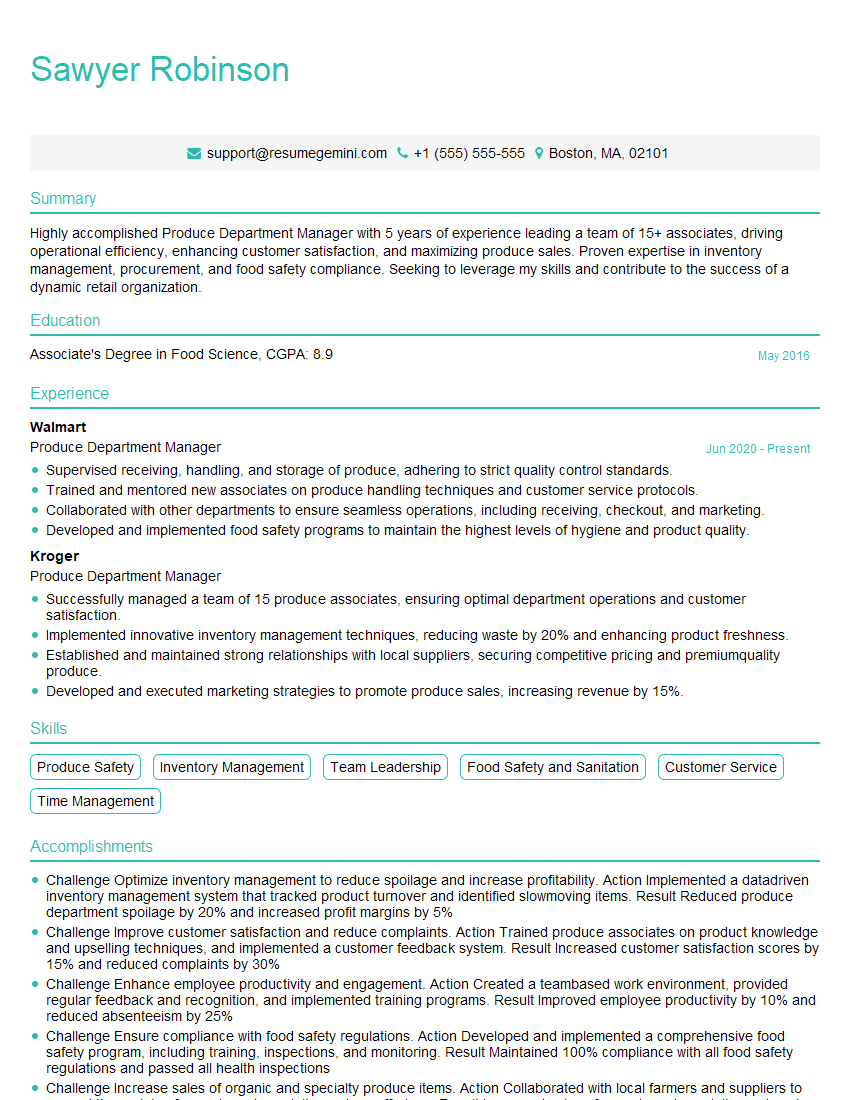
Mastering the skills involved in sorting fruits and vegetables opens doors to a variety of roles within the food industry, offering opportunities for career growth and stability. A strong resume is crucial for showcasing your abilities to potential employers. To maximize your job prospects, create an ATS-friendly resume that highlights your relevant skills and experience. ResumeGemini is a trusted resource that can help you build a professional and impactful resume. We provide examples of resumes tailored to the Sorting Fruits and Vegetables industry to guide you in creating your own.
Explore more articles
Users Rating of Our Blogs
Share Your Experience
We value your feedback! Please rate our content and share your thoughts (optional).
What Readers Say About Our Blog
Very informative content, great job.
good