Interviews are more than just a Q&A session—they’re a chance to prove your worth. This blog dives into essential Sphinx and Read the Docs interview questions and expert tips to help you align your answers with what hiring managers are looking for. Start preparing to shine!
Questions Asked in Sphinx and Read the Docs Interview
Q 1. Explain the benefits of using Sphinx for documentation.
Sphinx is a powerful documentation generator that offers numerous advantages over manually creating documentation. Think of it as a sophisticated word processor specifically designed for technical writing, but far more versatile. Its key benefits include:
- Structured and Consistent Output: Sphinx enforces a consistent structure, ensuring your documentation is easy to navigate and maintain. Imagine trying to manage a large, inconsistent document – Sphinx prevents that chaos.
- Version Control Integration: Seamlessly integrate your documentation with version control systems like Git, making collaboration and tracking changes a breeze.
- Cross-Referencing and Linking: Effortlessly link between different sections, creating a cohesive and interconnected documentation set. This avoids broken links and lost information.
- Multiple Output Formats: Generate HTML, PDF, ePub, and other formats from a single source, catering to various reader preferences and needs.
- Extensibility: A vast library of extensions allows you to customize Sphinx to meet specific needs, such as adding support for code highlighting in various programming languages or incorporating diagrams.
- Readability and Maintainability: Using reStructuredText (reST), a lightweight markup language, makes writing and updating documentation significantly easier than using word processors or other complex systems.
In short, Sphinx streamlines the entire documentation process, leading to higher quality, more maintainable, and ultimately, more effective documentation.
Q 2. Describe the process of building a Sphinx documentation project.
Building a Sphinx documentation project involves several steps. Let’s break it down:
- Project Setup: Create a new directory for your project. Then, initialize a Sphinx project using the command
sphinx-quickstart. This interactive script will guide you through setting project-specific options such as the project name, author, and default theme. - Content Creation: Write your documentation using reStructuredText (reST), a simple markup language. Create files with the
.rstextension in thesourcedirectory. Think of reST as a simplified version of HTML, easy to learn but powerful enough for complex documentation. - Configuration: The
conf.pyfile is your project’s configuration center. You can configure various aspects of your documentation here, including the project title, author, paths, extensions, and the chosen theme. This file holds all the crucial settings for your project. - Building the Documentation: Once your content is ready, use the command
make html(or a similar command depending on your build system) to generate the documentation. This command processes your reST files and applies your chosen theme to generate HTML output. - Deployment (Optional): You can deploy your generated HTML documentation to a web server or a service like Read the Docs for easy online access. This step gets your well-structured documentation onto the internet.
A simple conf.py might look like this (showing key elements):
import os
import sys
sys.path.insert(0, os.path.abspath('.'))
project = 'My Project'
html_theme = 'alabaster'
Q 3. How do you customize a Sphinx theme?
Sphinx themes control the visual appearance of your documentation. Customizing a theme can range from simple adjustments to complete overhauls. Here are the common approaches:
- Using Existing Themes: Sphinx offers a selection of built-in themes and many third-party themes available online. You can select a theme by modifying the
html_themesetting in yourconf.pyfile. - Modifying Existing Themes: Most themes allow for customization through configuration files (often located in a subdirectory of the theme directory itself). These files allow you to modify things like colors, fonts, and layout. Check the theme’s documentation for specific options.
- Creating Custom Themes: For extensive changes, creating a custom theme allows for complete control. This involves creating a directory structure following Sphinx’s theme conventions and writing CSS and template files (usually Jinja2 templates).
For example, to change the theme to ‘sphinx_rtd_theme’, you’d update your conf.py:
html_theme = 'sphinx_rtd_theme'Remember to install the theme if it’s not included with your Sphinx installation (e.g., pip install sphinx-rtd-theme).
Q 4. What are some common Sphinx extensions and their uses?
Sphinx extensions add functionality and features to your documentation. Here are some popular ones:
sphinx.ext.autodoc: Automatically generates documentation from your Python code’s docstrings. This is a lifesaver for keeping code and documentation in sync.sphinx.ext.napoleon: Allows you to write NumPy or Google style docstrings, which are then processed and displayed correctly.sphinx.ext.intersphinx: Enables linking to other Sphinx documentation projects, useful for referencing external libraries or APIs.sphinx.ext.mathjax: Renders mathematical equations using LaTeX syntax.sphinx.ext.todo: Tracks TODO items within your documentation, helpful for managing ongoing development and updates.sphinx.ext.viewcode: Allows you to link directly to the source code for your Python functions and classes.
To use an extension, add its name to the extensions list in your conf.py file:
extensions = ['sphinx.ext.autodoc', 'sphinx.ext.napoleon']Q 5. How do you handle cross-referencing in Sphinx?
Cross-referencing is crucial for creating well-connected documentation. Sphinx makes this easy through several mechanisms:
- Explicit References: Use the
:ref:role to link to sections labeled with the.. _label:directive. For example,:ref:`my-label`would link to a section defined by.. _my-label: My Section Title. - Implicit References: If a section has a title that’s also a valid Python identifier, you can often just use its name in backticks (e.g.,
`My Section Title`). - Targets: Create targets to allow linking to specific parts of your documentation, even if they don’t have formal section titles.
- Indices: Sphinx provides features for generating various indices (like a glossary or index of terms) which aid navigation and linking.
Example of explicit referencing:
.. _my-label: My Important Section

This is `my-label` :ref:`my-label`
Q 6. Explain the role of reStructuredText in Sphinx documentation.
reStructuredText (reST) is a lightweight markup language that serves as the primary input for Sphinx. It’s designed for readability and simplicity. Imagine it as a bridge: it translates plain text into structured and formatted documentation. It uses simple directives and roles to create various structural elements, like headings, lists, and code blocks, without the complexity of HTML or XML.
Think of reST as the ‘writing language’ of Sphinx. You write your documentation in reST, and Sphinx then processes this to create the final output in various formats. Its clarity and simplicity make it well-suited for technical writing.
Q 7. How do you generate different output formats (e.g., HTML, PDF) using Sphinx?
Sphinx supports generating various output formats. The format is specified when you build the documentation. The most common formats are:
- HTML: The default output format, ideal for online documentation.
- PDF: For printable versions, often using LaTeX as an intermediate step. Requires additional tools like LaTeX and a PDF converter (e.g., pdflatex).
- ePub: For electronic book readers.
- Text: A plain-text version of your documentation.
To generate a PDF, you typically need to use make latexpdf. The exact command might depend on your system’s LaTeX installation. This command generates a LaTeX file which is then compiled to a PDF. Generating other formats often involves similar commands like make epub or make text. If any extra software is required (like latex) ensure it is installed correctly before running the relevant ‘make’ command.
Q 8. Describe your experience with Read the Docs.
Read the Docs is a fantastic platform for hosting and building documentation. I’ve extensively used it for numerous projects, from small personal libraries to large-scale enterprise software documentation. My experience encompasses the entire lifecycle – from initial project setup and configuration to advanced customization using themes and extensions. I’m proficient in leveraging its features to streamline the documentation workflow, ensuring that the documentation is consistently updated, easily accessible, and beautifully presented. For example, I’ve used Read the Docs to create beautifully rendered documentation for Python projects, complete with search functionality and version history.
I’ve successfully managed multiple versions of documentation, implemented continuous integration, and even customized the look and feel using custom themes. This has consistently improved the user experience and reduced feedback cycles for the projects I’ve worked on.
Q 9. How do you deploy a Sphinx project to Read the Docs?
Deploying a Sphinx project to Read the Docs is remarkably straightforward. First, you need a Read the Docs account. Then, you create a project on Read the Docs, linking it to your source code repository (like GitHub, GitLab, or Bitbucket). Read the Docs automatically detects your Sphinx configuration files (conf.py) and builds your documentation. The key is ensuring that your repository contains a conf.py file correctly configured with your project settings, and that you have a Makefile or make.bat (for Windows) in the root of your project, which Read the Docs utilizes for building. The simplest Makefile would look something like this:
all: html html: $(SPHINXBUILD) -b html -d _build/doctrees . _build/html
Read the Docs will handle the rest, automatically building and deploying your documentation whenever you push changes to your repository.
Q 10. Explain the process of setting up continuous integration with Read the Docs.
Continuous integration (CI) with Read the Docs ensures that your documentation is always up-to-date. This is achieved by configuring your version control system (like GitHub) to trigger a build on Read the Docs whenever you push changes to your code. Read the Docs seamlessly integrates with popular CI services such as Travis CI, CircleCI, and Jenkins. You’ll typically configure a webhook in your repository settings to notify Read the Docs whenever a commit occurs.
By setting up CI, every push results in an automated build and deployment, ensuring your documentation accurately reflects the latest code changes. This avoids the risk of stale documentation, enhancing the user experience and accelerating the development workflow. It’s akin to having a dedicated assistant continuously ensuring your documentation mirrors the project’s current state.
Q 11. How do you manage versions of your documentation using Read the Docs?
Read the Docs elegantly handles documentation versioning using Git tags or branches. By tagging releases in your repository (e.g., v1.0, v2.0), Read the Docs automatically generates separate versions of your documentation, allowing users to access documentation for various releases. Similarly, you can configure Read the Docs to build documentation from specific branches, such as a develop branch for previewing upcoming features.
This keeps the documentation organized, prevents confusion, and ensures users always find the relevant information for their version of your software. This is particularly useful in collaborative environments where multiple versions of the software coexist.
Q 12. How do you handle different language versions in your documentation?
Read the Docs doesn’t directly support multiple languages within a single project, but you can achieve this using separate projects or repositories. For each language, you would have a dedicated Sphinx project in a separate repository. These repositories would then each have their own Read the Docs project, offering language-specific documentation. Then, you might link to each language version from a central index page, perhaps hosted elsewhere.
This approach is cleaner and easier to maintain than trying to embed multiple languages within the same project’s configuration. Each language version can be independently updated and maintained.
Q 13. How do you integrate Sphinx with other tools in your workflow?
Sphinx integrates well with various tools. For example, I often use it with:
- Version Control Systems (VCS): Git for managing documentation changes.
- Continuous Integration (CI) tools: As discussed earlier, Travis CI, CircleCI, Jenkins, etc., for automated builds and deployments.
- Issue Trackers: GitHub Issues or Jira for tracking documentation bugs or improvement requests.
- Diagrams/Illustration tools: PlantUML, draw.io for incorporating diagrams directly into the documentation.
The integration is usually achieved through command-line tools or simple configuration files. This streamlined workflow enhances the entire documentation process, bringing efficiency and cohesion.
Q 14. Describe your experience with Sphinx’s autodoc extension.
Sphinx’s autodoc extension is invaluable for automating the generation of documentation from Python code. It automatically extracts docstrings (comments in your code) and creates nicely formatted documentation pages for modules, classes, and functions. This significantly reduces the manual effort required for maintaining documentation. Imagine having to manually document every function in a large library—autodoc handles this automatically, keeping documentation updated with code changes.
For instance, if I have a function like this:
def my_function(arg1, arg2): """This function does something amazing. :param arg1: The first argument. :type arg1: int :param arg2: The second argument. :type arg2: str :returns: The result. :rtype: bool """ # ... function body ...
autodoc would automatically generate a well-formatted page describing my_function‘s parameters, return type, and description from the docstring. This keeps the documentation consistent, accurate, and always up-to-date with the codebase.
Q 15. Explain how to create a Sphinx project from scratch.
Creating a Sphinx project is straightforward. Think of it like building a house – you need a foundation (project setup), walls (content files), and a roof (the build process). First, you’ll need to install Sphinx: pip install sphinx. Then, create a project directory. Navigate to this directory in your terminal and run sphinx-quickstart. This interactive script will guide you through setting essential project parameters such as project name, author, and version. It will automatically generate the necessary files, including conf.py (Sphinx configuration file) and index.rst (your main documentation file written in reStructuredText). After this, you’ll start writing your documentation in reStructuredText files and place them in the source directory. Finally, build your documentation using make html to generate the HTML output in the _build directory. Remember, conf.py is where you customize things like the theme and extensions.
Example: Let’s say you’re documenting a Python library. You might have a source directory with files like index.rst (overview), installation.rst, usage.rst, and api.rst. Each .rst file would contain the content for a specific section of your documentation.
Career Expert Tips:
- Ace those interviews! Prepare effectively by reviewing the Top 50 Most Common Interview Questions on ResumeGemini.
- Navigate your job search with confidence! Explore a wide range of Career Tips on ResumeGemini. Learn about common challenges and recommendations to overcome them.
- Craft the perfect resume! Master the Art of Resume Writing with ResumeGemini’s guide. Showcase your unique qualifications and achievements effectively.
- Don’t miss out on holiday savings! Build your dream resume with ResumeGemini’s ATS optimized templates.
Q 16. How would you troubleshoot a common Sphinx build error?
Sphinx build errors often stem from issues in your reStructuredText files, configuration, or missing dependencies. The error messages themselves are usually quite helpful, pointing to the line and file causing the problem. The first step is to carefully read the error message. Does it point to a syntax error in your .rst file? Common errors include incorrect indentation, missing colons, or invalid markup. A simple typo can halt the entire build! Carefully review the indicated line and surrounding context.
If the error relates to extensions, ensure you’ve installed them correctly using pip install and that they are enabled in your conf.py. If you’re using a theme, make sure it’s correctly installed and configured. Sometimes, a stale build can lead to errors; try cleaning the build directory using make clean before rebuilding with make html. Finally, if you’re still stuck, consult the Sphinx documentation or search online for solutions related to the specific error message.
Example Error: [Errno 2] No such file or directory: 'source/my_missing_file.rst'This error clearly indicates a missing file. You would locate the file path specified, and ensure that the file is indeed present in the source directory.
Q 17. How do you write effective and clear documentation in reStructuredText?
Effective reStructuredText documentation should be clear, concise, and well-structured. Think of it as writing for a reader who needs to quickly understand the information. Use descriptive section headings, consistent formatting, and clear examples. Use inline markup for emphasis (*italics*, **bold**) sparingly, to highlight important points, not as a stylistic choice. Organize information logically, using lists (* item 1, * item 2), code blocks (.. code-block:: python), and tables to structure complex information. Always include examples illustrating how to use your software or library. Include cross-references to other sections, allowing readers to navigate your documentation easily. Finally, review your work before generating the final documentation.
Example: Instead of writing “The function does this,” write “The my_function() function calculates the sum of two numbers and returns the result.” This provides clear, concise information.
Q 18. How do you create and manage a Sphinx documentation theme?
Sphinx themes control the visual appearance of your documentation. You can either use existing themes or create your own. Popular themes include the Read the Docs theme and the Alabaster theme. To use a theme, you specify it in your conf.py file under the html_theme setting. For example: html_theme = 'alabaster'. To create a custom theme, you need to create a directory containing several template files (HTML, CSS, Javascript). The structure and requirements for custom themes can be found in the Sphinx documentation. This involves creating HTML templates, CSS stylesheets, and potentially JavaScript files, tailoring the visual presentation to your needs or branding. This requires web development skills (HTML, CSS, possibly Javascript).
Example: If you want a dark theme, you might create a custom theme with darker background colors and light text. Alternatively, a significant branding refresh might require a fully custom theme to reflect updated logos and color palettes.
Q 19. What are some best practices for structuring Sphinx documentation?
Structuring your documentation is crucial for readability and navigation. Start with an overview or introduction explaining the purpose and scope of your project. Then, logically group related content into sections and subsections. Use a clear hierarchy of headings (#, ##, ###, etc., in reStructuredText). Consider your audience – what information do they need first? A common approach is to have sections on installation, usage, API reference, and troubleshooting. Think of it like a well-organized book; it makes it easier to find the relevant information.
Example: A library’s documentation might be structured as: Introduction, Installation, Quick Start Guide, API Reference (with sub-sections for each module), Advanced Usage, and Troubleshooting. This approach provides a structured navigation for the users.
Q 20. How do you ensure the accessibility of your Sphinx documentation?
Accessible documentation ensures everyone can use it, regardless of their abilities. This involves using clear and concise language, avoiding jargon, and providing alternative text for images (using the :alt: attribute in reStructuredText image directives). Ensure sufficient color contrast between text and background (check your theme or CSS) so that it remains readable for people with visual impairments. Use headings and subheadings to structure content logically. Structure your document using semantic HTML. Use ARIA attributes where appropriate to enhance accessibility for screen readers.
Example: Instead of an image of a button with no description, include alt text like :alt: Submit button. Ensure enough color contrast between background and text. Consider providing transcripts for videos if included within your documentation.
Q 21. Explain the concept of Sphinx roles and directives.
Sphinx roles and directives are the building blocks of reStructuredText. Directives are instructions that control the document’s structure and content, while roles are used to insert special elements or cross-references into text. Think of directives as larger structural elements, like creating sections, code blocks, or tables. Roles, on the other hand, are small, inline additions, like creating links, emphasizing text, or including references.
Examples:
- Directive:
.. code-block:: pythoncreates a code block. Another example is.. figure:: image.pngwhich inserts an image. - Role:
:ref:`my_label`creates a cross-reference to a section labeledmy_label.:term:`technical_term`marks a term as glossary entry.
Understanding roles and directives is essential for creating rich and well-structured Sphinx documentation. They’re how you incorporate images, code examples, cross-references, and other essential elements into your documentation.
Q 22. How do you use Sphinx to generate API documentation?
Generating API documentation with Sphinx is straightforward, thanks to extensions like sphinx.ext.autodoc and sphinx.ext.napoleon. autodoc automatically generates documentation from your code’s docstrings (comments that describe your functions, classes, and modules). napoleon allows you to write docstrings in NumPy or Google style, making them more readable.
For example, if you have a Python function:
def my_function(arg1, arg2):
    """This function does something amazing.

    :param arg1: The first argument.
    :type arg1: int
    :param arg2: The second argument.
    :type arg2: str
    :returns: The result of the amazing operation.
    :rtype: bool
    """
    # ... function code ...
    return True
Sphinx, with the appropriate extensions enabled, will automatically parse the docstrings and create beautifully formatted API documentation. You would then include this in your Sphinx project by importing the module. This setup drastically reduces manual documentation efforts and ensures consistency.
Q 23. How do you include images and other media in your Sphinx documentation?
Including images and other media in Sphinx is handled using the image directive. You simply specify the path to your image file within your reStructuredText files.
For example:
.. image:: path/to/myimage.png
   :width: 200px
   :align: center
This code snippet inserts an image located at path/to/myimage.png. The :width: and :align: options allow you to control the image’s size and alignment. Similar directives exist for other media types; for videos or audio you might link to external resources or use more sophisticated embedding methods depending on the format.
In a professional setting, maintaining a structured directory for media assets, possibly mirroring the project structure, is crucial for organization and version control. Using relative paths ensures consistent referencing regardless of where the documentation is built from.
Q 24. How do you handle version control for your Sphinx project?
Version control for your Sphinx project is paramount. I typically use Git, which is standard in the industry. This allows you to track changes to your documentation over time, collaborate with others, and easily revert to previous versions if needed. A well-structured repository with meaningful commit messages is key.
Furthermore, integrating Git with a platform like GitHub or GitLab enables convenient collaboration, issue tracking, and pull requests for review. In my experience, maintaining a separate branch for each documentation version enhances management, allowing for parallel development of multiple versions without conflicts.
When dealing with different versions of the software being documented, separate Sphinx projects (or subdirectories in a larger repository) are typically recommended. This also simplifies the version control process. Each version’s documentation can be kept and maintained independently, even with updated content or a different build configuration.
Q 25. What are the advantages of using Read the Docs over other documentation platforms?
Read the Docs offers several advantages over other documentation platforms. Its seamless integration with Sphinx is a major benefit; it automates the build process, hosting, and versioning of your documentation, simplifying workflow significantly. The free tier is generous, ideal for open-source projects and many smaller commercial projects. Read the Docs also handles version control, allowing you to easily host multiple versions of your documentation side-by-side.
Beyond that, features like automatic theme selection, built-in search, and analytics provide a professional experience without extensive configuration. In contrast, self-hosting documentation requires significant infrastructure setup and maintenance— a time-consuming task. Read the Docs handles all of this behind the scenes, allowing you to focus on content creation.
Q 26. How would you optimize a Sphinx documentation site for search engines?
Optimizing a Sphinx documentation site for search engines involves several strategies. First, use descriptive titles and headings within your documents (
, , etc.). These provide structure for search engines and users alike.
Second, write clear and concise content, incorporating relevant keywords naturally within your text. Avoid keyword stuffing, as search engines penalize that. Third, utilize Sphinx’s built-in metadata functionality to create meaningful metadata for your pages which includes page titles, descriptions, and keywords. Use a well-structured sitemap and ensure that all pages are properly linked internally.
Finally, consider using a custom theme that is search engine friendly. Some themes optimize the site’s HTML structure for better crawlability. Regularly checking your site’s performance using tools like Google Search Console can help identify areas for improvement.
Q 27. Describe your experience with using Sphinx’s search functionality.
Sphinx’s default search functionality, powered by JavaScript, is generally robust for smaller projects. It’s efficient and user-friendly. For larger documentation sets, performance can become an issue unless you employ techniques like configuring a more advanced search backend or indexing selectively.
My experience shows that while the default search works well for quick searches within a relatively small amount of documentation, more extensive projects may benefit from using external search indexing services, like Algolia, that provide better speed and scalability. These external services can be integrated into Sphinx documentation with relative ease. Selecting the right search method is crucial to provide a good user experience.
Q 28. What are the limitations of using Sphinx and Read the Docs?
While Sphinx and Read the Docs are powerful tools, they have limitations. Sphinx’s primary limitation lies in its reliance on reStructuredText, which has a steeper learning curve than some other markup languages such as Markdown. While extensions exist for Markdown support, they might not offer all the features of reStructuredText.
Read the Docs, while excellent for hosting, has limitations regarding extensive customization. While it offers several themes, complete design freedom is limited compared to a fully customized, self-hosted solution. Moreover, relying on a third-party service introduces a dependency; if Read the Docs experiences downtime, your documentation becomes inaccessible. A self-hosted solution would avoid this.
Key Topics to Learn for Sphinx and Read the Docs Interviews
- Sphinx Fundamentals: Understanding the core concepts of Sphinx, including its role in documentation generation, reStructuredText syntax, and configuration files (conf.py).
- Sphinx Extensions: Exploring and utilizing various Sphinx extensions to enhance documentation features, such as code highlighting, cross-referencing, and the inclusion of mathematical formulas.
- Read the Docs Integration: Mastering the process of uploading and building Sphinx projects on Read the Docs, including version control integration and deployment strategies.
- Theme Customization (Sphinx): Tailoring the appearance and functionality of your generated documentation using different Sphinx themes and customizing their CSS for a polished professional look.
- Practical Application: Designing and implementing a comprehensive documentation project using Sphinx and deploying it to Read the Docs. Consider documenting a personal project or a hypothetical scenario.
- Troubleshooting and Debugging: Developing problem-solving skills to identify and resolve common issues encountered during Sphinx project development and Read the Docs deployment.
- Version Control (Git): Understanding the importance of Git for managing documentation changes and collaborating effectively on projects. This is crucial for both Sphinx and Read the Docs workflows.
- Automated Builds and Continuous Integration/Continuous Deployment (CI/CD): Explore how to automate the build and deployment process using CI/CD pipelines for efficient documentation updates.
Next Steps
Mastering Sphinx and Read the Docs significantly enhances your technical writing and documentation skills, highly valued in many software development roles. These skills demonstrate your ability to communicate complex technical information clearly and effectively, making you a more valuable asset to any team. To maximize your job prospects, crafting a strong, ATS-friendly resume is crucial. ResumeGemini is a trusted resource that can help you create a professional and impactful resume tailored to showcase your expertise in Sphinx and Read the Docs. Examples of resumes tailored to these technologies are available to guide your resume building process. Investing time in crafting a compelling resume will significantly increase your chances of landing your dream job.

Knowledge Manager Resume Sample

Information Architect Resume Sample
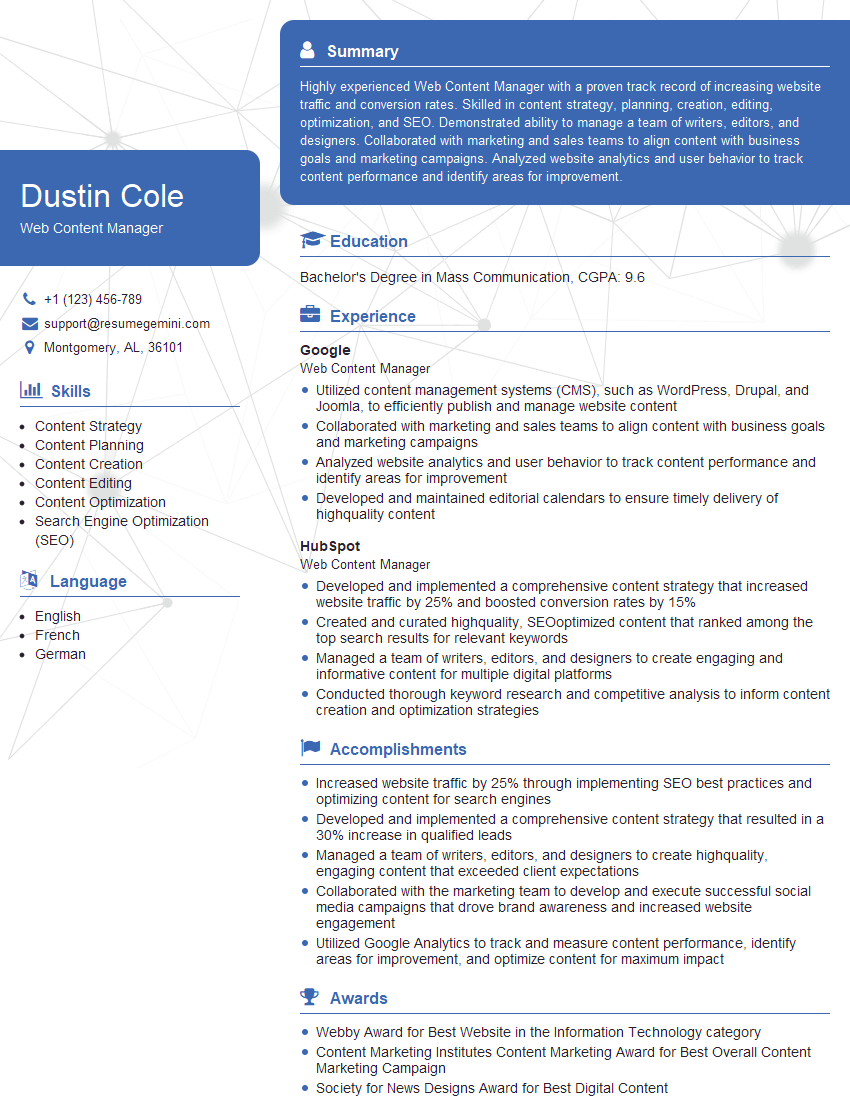
Web Content Manager Resume Sample

Content Strategist Resume Sample
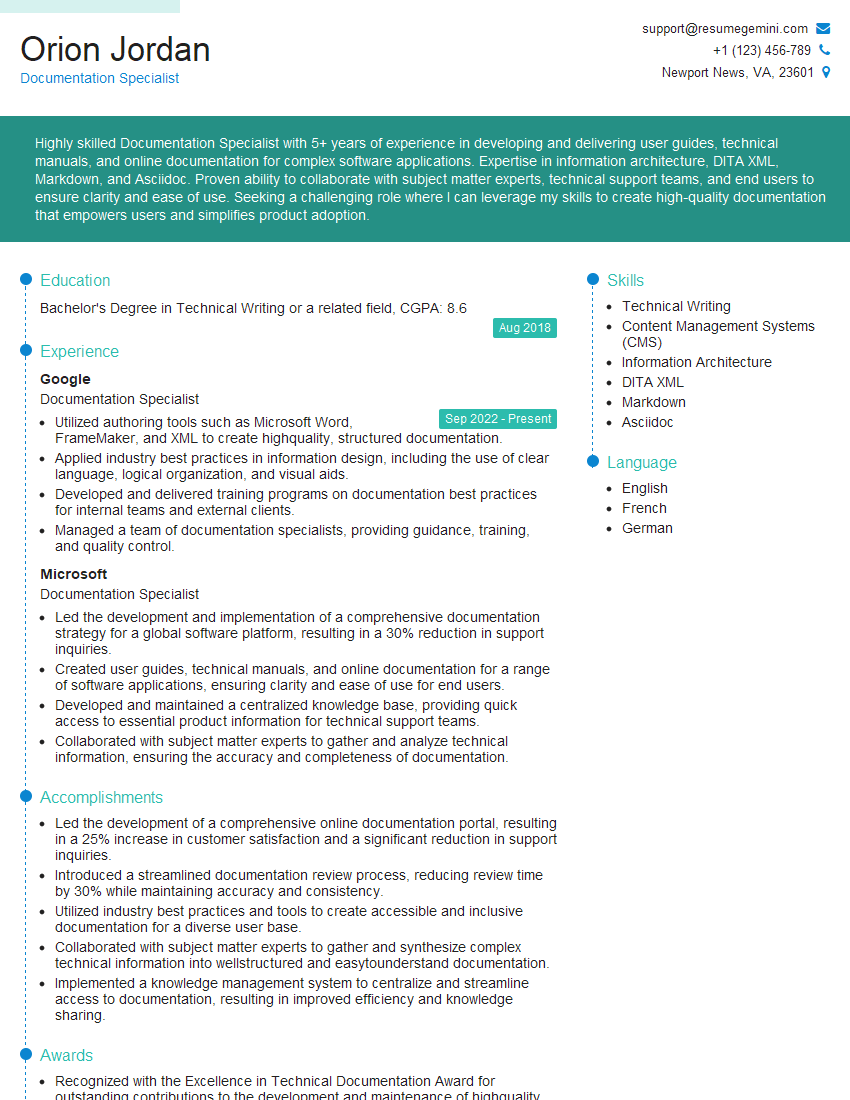
Documentation Specialist Resume Sample
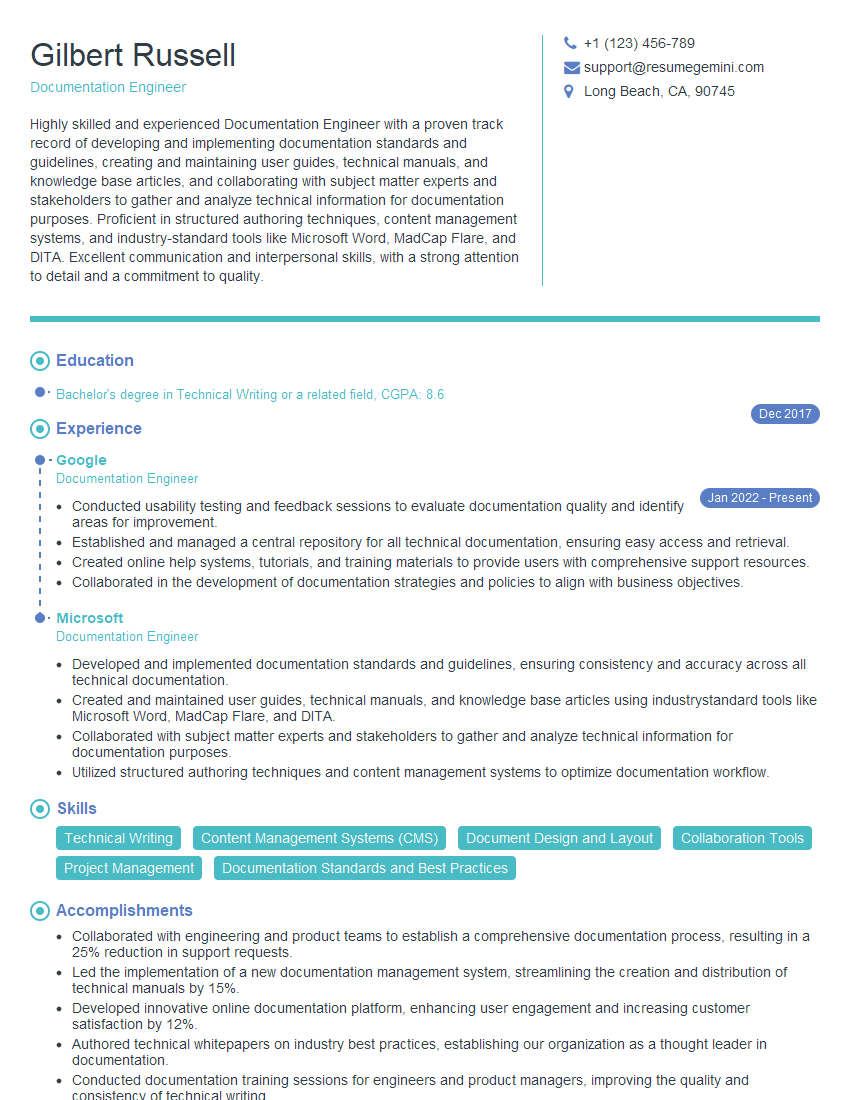
Documentation Engineer Resume Sample
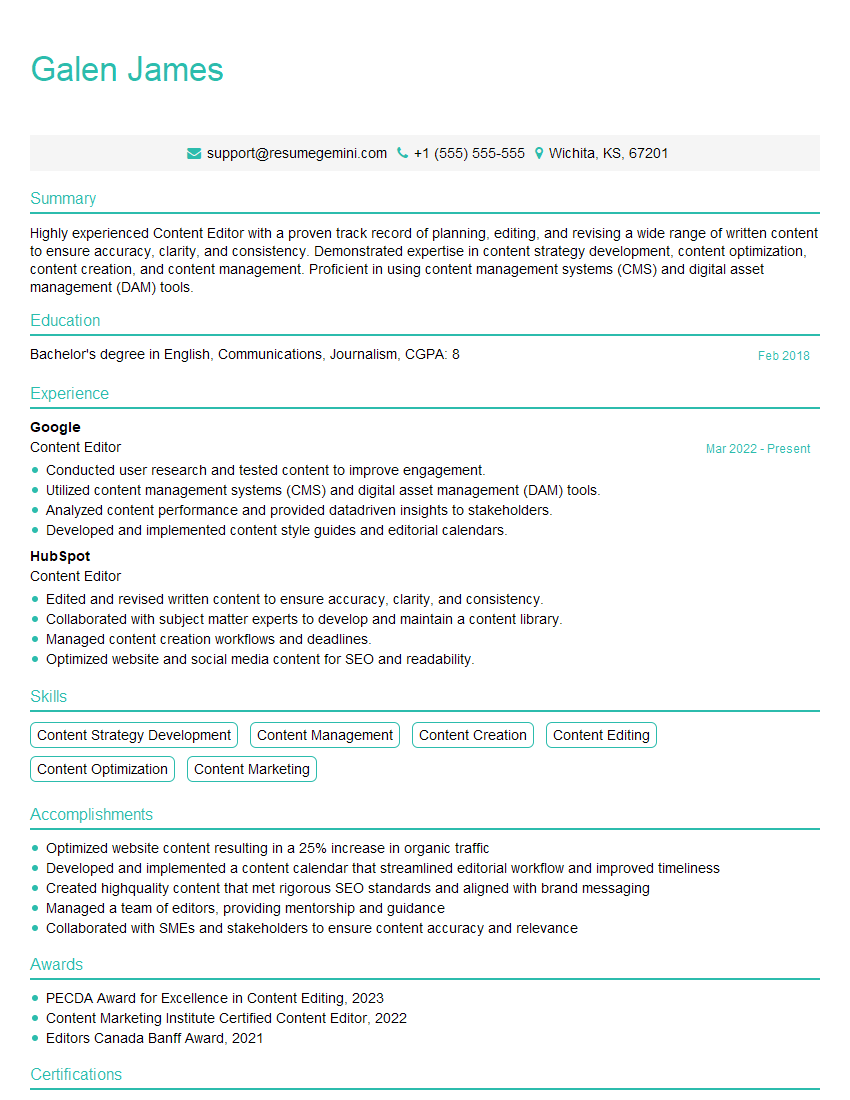
Content Editor Resume Sample
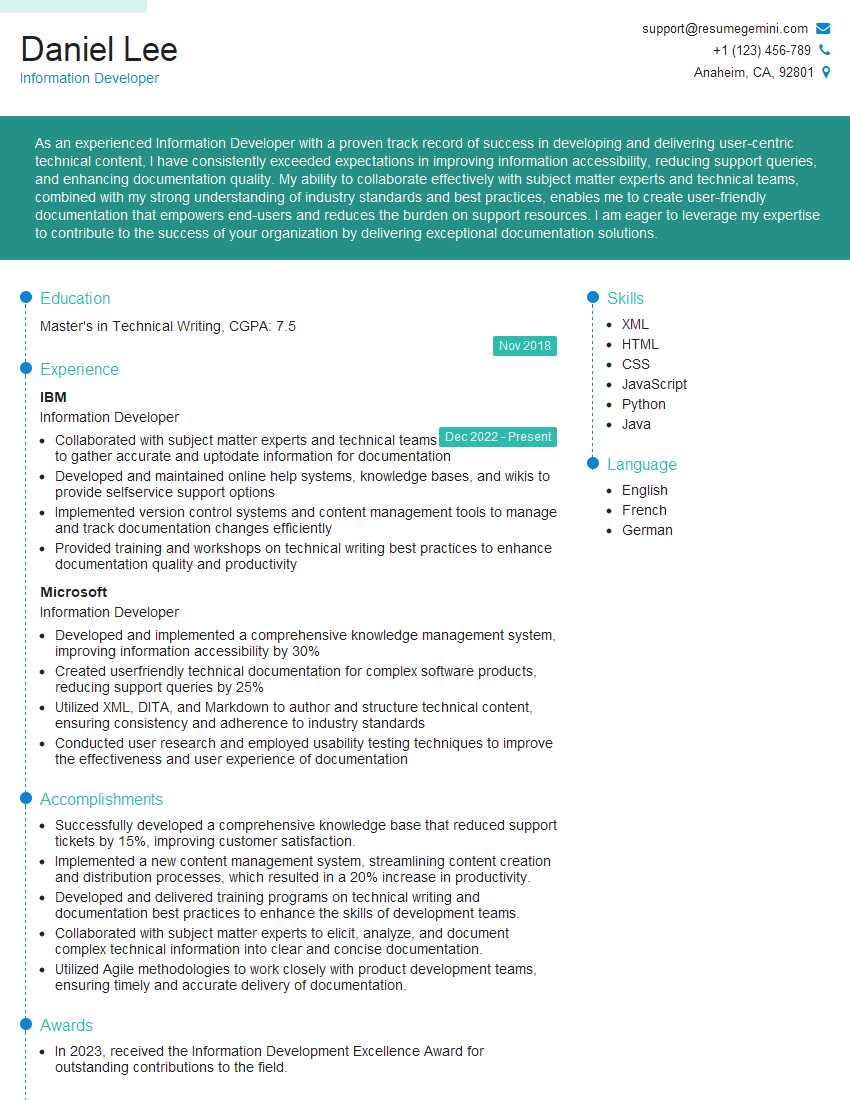
Information Developer Resume Sample
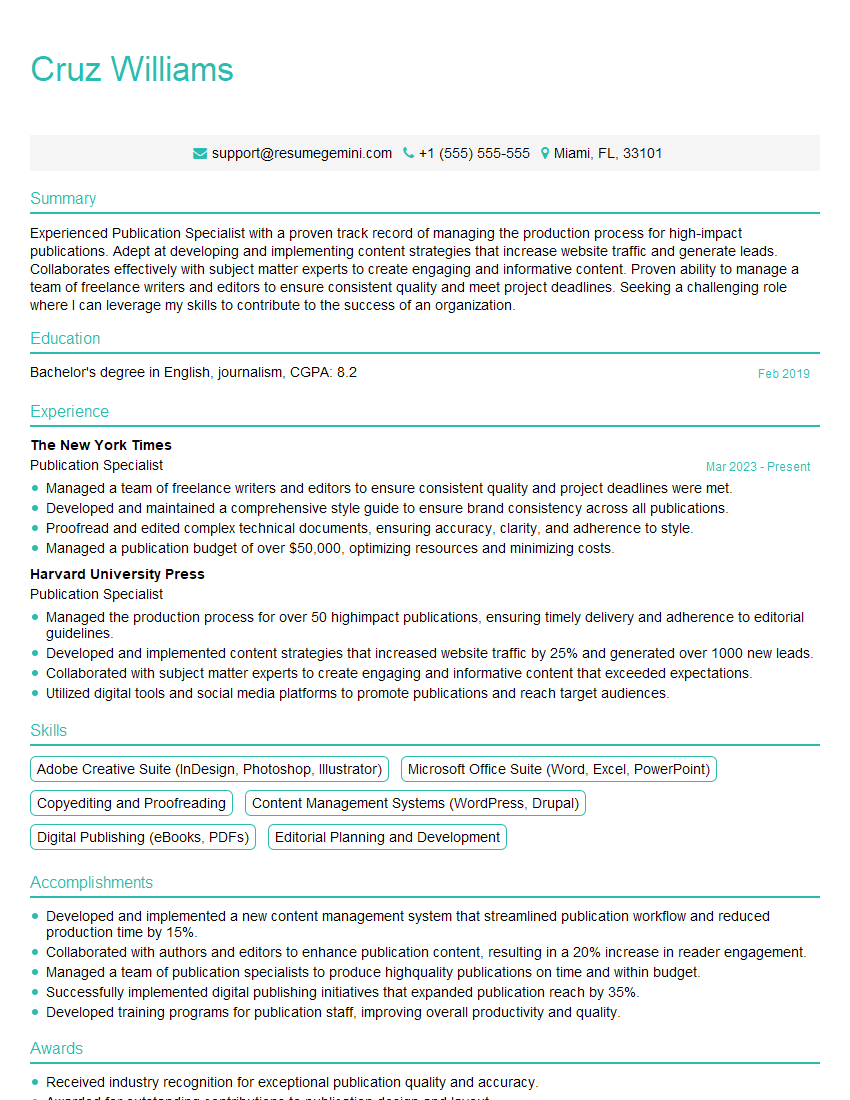
Publication Specialist Resume Sample
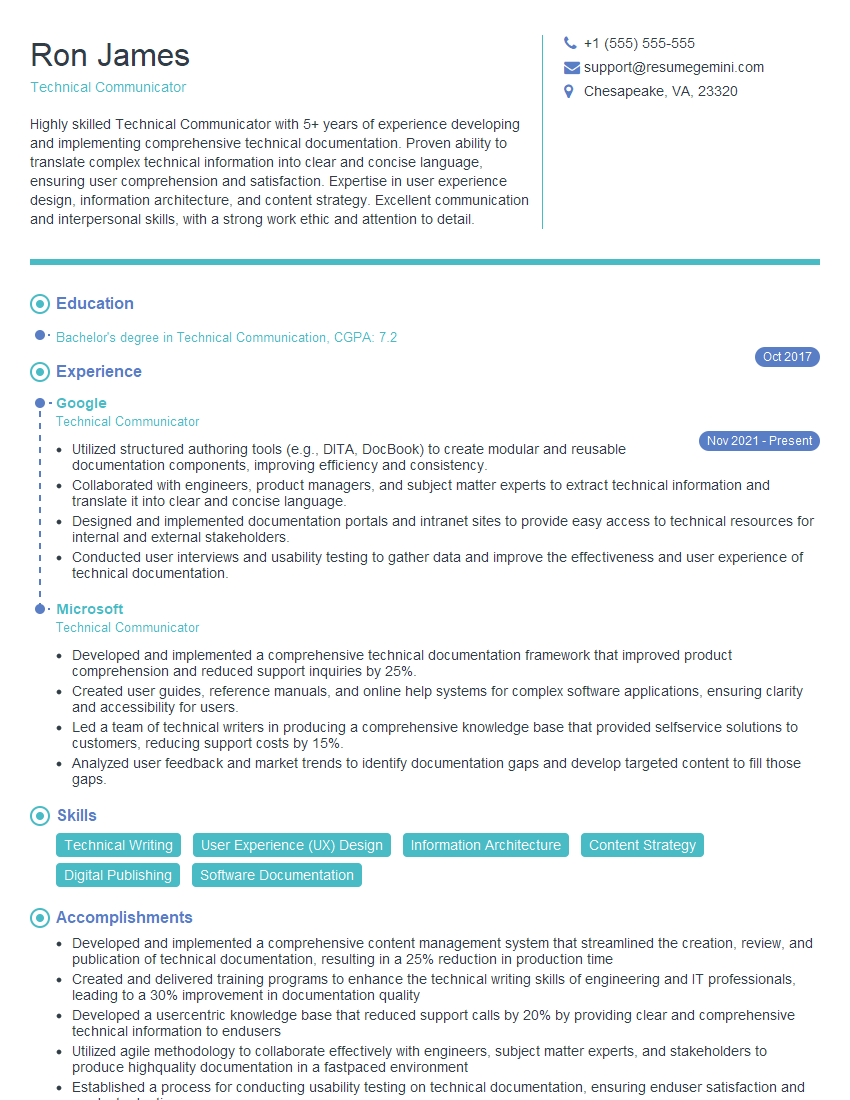
Technical Communicator Resume Sample

Technical Writer Resume Sample
Explore more articles
Users Rating of Our Blogs
Share Your Experience
We value your feedback! Please rate our content and share your thoughts (optional).
What Readers Say About Our Blog
Hello,
we currently offer a complimentary backlink and URL indexing test for search engine optimization professionals.
You can get complimentary indexing credits to test how link discovery works in practice.
No credit card is required and there is no recurring fee.
You can find details here:
https://wikipedia-backlinks.com/indexing/
Regards
NICE RESPONSE TO Q & A
hi
The aim of this message is regarding an unclaimed deposit of a deceased nationale that bears the same name as you. You are not relate to him as there are millions of people answering the names across around the world. But i will use my position to influence the release of the deposit to you for our mutual benefit.
Respond for full details and how to claim the deposit. This is 100% risk free. Send hello to my email id: [email protected]
Luka Chachibaialuka
Hey interviewgemini.com, just wanted to follow up on my last email.
We just launched Call the Monster, an parenting app that lets you summon friendly ‘monsters’ kids actually listen to.
We’re also running a giveaway for everyone who downloads the app. Since it’s brand new, there aren’t many users yet, which means you’ve got a much better chance of winning some great prizes.
You can check it out here: https://bit.ly/callamonsterapp
Or follow us on Instagram: https://www.instagram.com/callamonsterapp
Thanks,
Ryan
CEO – Call the Monster App
Hey interviewgemini.com, I saw your website and love your approach.
I just want this to look like spam email, but want to share something important to you. We just launched Call the Monster, a parenting app that lets you summon friendly ‘monsters’ kids actually listen to.
Parents are loving it for calming chaos before bedtime. Thought you might want to try it: https://bit.ly/callamonsterapp or just follow our fun monster lore on Instagram: https://www.instagram.com/callamonsterapp
Thanks,
Ryan
CEO – Call A Monster APP
To the interviewgemini.com Owner.
Dear interviewgemini.com Webmaster!
Hi interviewgemini.com Webmaster!
Dear interviewgemini.com Webmaster!
excellent
Hello,
We found issues with your domain’s email setup that may be sending your messages to spam or blocking them completely. InboxShield Mini shows you how to fix it in minutes — no tech skills required.
Scan your domain now for details: https://inboxshield-mini.com/
— Adam @ InboxShield Mini
Reply STOP to unsubscribe
Hi, are you owner of interviewgemini.com? What if I told you I could help you find extra time in your schedule, reconnect with leads you didn’t even realize you missed, and bring in more “I want to work with you” conversations, without increasing your ad spend or hiring a full-time employee?
All with a flexible, budget-friendly service that could easily pay for itself. Sounds good?
Would it be nice to jump on a quick 10-minute call so I can show you exactly how we make this work?
Best,
Hapei
Marketing Director
Hey, I know you’re the owner of interviewgemini.com. I’ll be quick.
Fundraising for your business is tough and time-consuming. We make it easier by guaranteeing two private investor meetings each month, for six months. No demos, no pitch events – just direct introductions to active investors matched to your startup.
If youR17;re raising, this could help you build real momentum. Want me to send more info?
Hi, I represent an SEO company that specialises in getting you AI citations and higher rankings on Google. I’d like to offer you a 100% free SEO audit for your website. Would you be interested?
Hi, I represent an SEO company that specialises in getting you AI citations and higher rankings on Google. I’d like to offer you a 100% free SEO audit for your website. Would you be interested?
good