The thought of an interview can be nerve-wracking, but the right preparation can make all the difference. Explore this comprehensive guide to Spirits and Wine Knowledge interview questions and gain the confidence you need to showcase your abilities and secure the role.
Questions Asked in Spirits and Wine Knowledge Interview
Q 1. Explain the difference between Old World and New World wines.
The terms “Old World” and “New World” refer to the historical and stylistic differences in winemaking traditions. Old World wines, primarily from Europe (France, Italy, Spain, Germany, etc.), generally emphasize tradition, terroir (the influence of soil and climate on the grape), and subtlety. They often employ minimal intervention in the winemaking process and tend towards lower yields per vine, resulting in more concentrated flavors. Think of a classic Burgundy Pinot Noir or a Bordeaux Cabernet Sauvignon – elegance and complexity are key.
New World wines, originating from regions outside of Europe (e.g., Australia, New Zealand, California, Chile, Argentina), tend to showcase bolder, more fruit-forward styles with a focus on ripe fruit flavors and often a more pronounced oak influence. They often have higher yields and employ more modern winemaking techniques. A classic example would be a California Cabernet Sauvignon or a New Zealand Sauvignon Blanc – known for their intense fruit character and approachability.
Q 2. Describe the process of winemaking from grape to bottle.
Winemaking is a fascinating journey from grape to bottle! It begins with harvesting, carefully selecting ripe grapes. Then comes crushing and destemming, separating the grapes from their stems. Next is fermentation, where yeast converts grape sugars into alcohol and carbon dioxide. Red wines undergo fermentation with skins for color and tannin extraction, while white wines are typically fermented without skins. After fermentation, malolactic fermentation (MLF) may occur, softening the wine’s acidity. Then comes aging, where the wine matures in oak barrels (optional) or stainless steel tanks, developing complexity and character. Finally, the wine is filtered, bottled, and labeled, ready for enjoyment!
Q 3. What are the primary grape varietals used in Cabernet Sauvignon?
While Cabernet Sauvignon is a single varietal, the term ‘primary grape varietals’ in this context is somewhat misleading. Cabernet Sauvignon is a single, distinct grape variety. However, it’s worth noting that blends sometimes include small percentages of other grapes to complement Cabernet Sauvignon’s characteristics. These might include Cabernet Franc (adding aromatics and softer tannins), Merlot (adding fruitiness and roundness), and Petit Verdot (adding color and structure). The percentages vary greatly depending on the winemaker’s style and the terroir.
Q 4. Explain the different types of wine closures and their impact on wine aging.
Wine closures significantly impact aging. The most common are:
- Cork: Traditional and allowing for micro-oxygenation, contributing to the development of complex aromas and flavors over time. However, cork taint (TCA) is a risk, affecting the wine’s aroma negatively.
- Screwcap: Provides a hermetic seal, preventing oxidation and offering consistent quality. It’s particularly beneficial for wines intended for earlier consumption or wines sensitive to oxidation.
- Synthetic Cork: Designed to mimic the properties of natural cork, often providing a more consistent seal than natural cork while reducing the risk of TCA.
The choice of closure depends on the wine’s style, intended aging potential, and the producer’s philosophy.
Q 5. What are the key characteristics of a well-balanced wine?
A well-balanced wine exhibits harmony between its components. Key characteristics include:
- Acidity: Provides freshness and structure, preventing the wine from tasting flat.
- Tannins: Contribute to structure and mouthfeel, often found in red wines from grape skins and seeds; they should be integrated, not harsh.
- Alcohol: Adds warmth and body, but should be balanced with the other elements; it shouldn’t be overpowering.
- Fruit: Provides the primary flavors, ranging from subtle to intense depending on the varietal and winemaking style.
- Oak (if applicable): Contributes to complexity and aromas, but shouldn’t overpower the fruit.
The balance between these elements creates a pleasant and enjoyable drinking experience.
Q 6. Describe the difference between sparkling wine production methods (e.g., Champagne, Prosecco).
Champagne and Prosecco are both sparkling wines, but their production methods differ significantly. Champagne uses the traditional method (Méthode Champenoise), where the second fermentation occurs in the bottle, creating the characteristic bubbles. This is a labor-intensive process. Prosecco, on the other hand, typically uses the Charmat method (tank method), where the second fermentation takes place in large stainless steel tanks. This is faster and more cost-effective, often resulting in a fruitier, lighter style of sparkling wine.
Q 7. Identify three major wine regions and their signature wines.
Three major wine regions and their signature wines are:
- Bordeaux, France: Known for its Cabernet Sauvignon-based red blends (e.g., Château Lafite Rothschild) and Merlot-based red wines. The region’s diverse terroir and blending techniques produce complex and age-worthy wines.
- Tuscany, Italy: Famous for Sangiovese-based wines like Chianti Classico, known for their earthy notes and bright acidity. Super Tuscans, blends often incorporating Cabernet Sauvignon and Merlot, represent another renowned style.
- Napa Valley, California, USA: Renowned for its Cabernet Sauvignon, Chardonnay, and Zinfandel, producing powerful, fruit-forward wines reflecting the region’s warm climate. Many Napa Valley wines are aged in oak for a rich, complex flavor profile.
Q 8. Explain the concept of terroir and its influence on wine.
Terroir, a French term, refers to the complete natural environment in which a wine grape is grown. It encompasses a complex interplay of factors that significantly influence the final product’s characteristics. Think of it as the ‘fingerprint’ of a wine’s origin.
- Soil: The composition of the soil – its mineral content, drainage, and texture – directly affects the vine’s access to nutrients and water, impacting grape flavor and concentration.
- Climate: Temperature, rainfall, sunshine, and wind all impact the ripening process of the grapes, influencing sugar levels, acidity, and overall aromatic complexity. A cool climate might yield grapes with higher acidity and vibrant fruit flavors, while a warmer climate might result in fuller-bodied wines with ripe tannins.
- Topography: Altitude, slope, and aspect (direction the vineyard faces) affect the amount of sunlight and exposure to wind, affecting temperature regulation and grape ripening.
- Human Factors: While terroir is primarily natural, human intervention like vineyard management practices (pruning, irrigation) can subtly influence the final product.
For example, the stony soils of the Loire Valley in France contribute to the crisp acidity of Sauvignon Blanc wines from that region. Conversely, the warm, sunny climate of Napa Valley in California leads to the development of rich, ripe Cabernet Sauvignon grapes.
Q 9. How do you assess the quality of a wine?
Assessing wine quality is subjective, but several key factors contribute to a professional evaluation. It’s rarely just about personal preference.
- Aroma and Bouquet: The nose is the first impression. We look for intensity, complexity, and the clarity of aromas (fruit, floral, spice, earthy). The bouquet develops with age and reveals secondary and tertiary aromas.
- Flavor Profile: A well-balanced wine showcases a harmony of flavors. We consider intensity, balance, length (how long the taste lingers), and the overall integration of flavors.
- Structure: This refers to the wine’s backbone. Acidity provides freshness and vibrancy; tannins (in red wines) offer structure and aging potential; and alcohol contributes to warmth and body.
- Finish: A lingering and pleasant aftertaste is a sign of quality. A long, complex finish signifies a well-crafted wine.
- Appearance: Color, clarity, and viscosity (the wine’s ‘legs’ running down the glass) can provide clues about the wine’s age and condition.
Professionals often use scoring systems to provide a more objective measure, though these are always subjective to some extent. A blind tasting is crucial to avoid biases.
Q 10. Explain the different types of spirits distillation methods.
Spirit distillation involves separating the alcohol from the fermented mash through boiling and condensation. Several methods exist:
- Pot Still Distillation: This traditional method uses a single pot still; the entire fermented mash is heated at once, resulting in a complex, flavorful spirit. It’s often used for Scotch Whisky, Cognac, and some types of rum.
- Column Still Distillation: Utilizing a tall column with multiple plates or trays, this method allows for more precise control over the alcohol concentration and separation of flavor compounds. It’s frequently used for vodka, gin, and some types of rum, resulting in a cleaner, more neutral spirit.
- Continuous Still Distillation: This highly efficient method involves a continuous flow of mash through the still, allowing for large-scale production. It’s commonly used for grain neutral spirits such as those used in vodka and gin production.
The choice of distillation method significantly influences the final spirit’s character. Pot still distillation preserves more of the original flavors, while column still distillation allows for greater refinement and purity.
Q 11. What are the key botanicals in Gin and how do they affect the flavor profile?
Gin’s unique flavor profile stems from the infusion of botanicals during or after distillation. Juniper berries are the defining characteristic, imparting a piney, slightly resinous note. Other common botanicals include:
- Citrus fruits (Lemon, Lime, Orange): Provide zest and brightness.
- Spices (Coriander, Cardamom, Cassia): Add warmth, spice, and complexity.
- Seeds (Angelica root, Grains of Paradise): Contribute unique aromatic and flavor notes.
- Floral elements (Lavender, Rose petals): Bring delicate floral fragrances.
- Roots and herbs (Licorice root, Iris root): Offer earthy and herbal undertones.
The combination and proportion of botanicals determine the gin’s style and flavor profile. A London Dry Gin, for instance, relies heavily on juniper and citrus, whereas a Old Tom Gin may incorporate sweeter botanicals.
Q 12. Describe the aging process of Whiskey and its impact on flavor.
Whiskey aging occurs in oak barrels, typically ex-bourbon barrels or new oak for specific types of whiskeys. This process dramatically alters the flavor profile. The wood imparts color, vanillin (vanilla-like) notes, and tannins. The interaction between the spirit and wood is influenced by several factors:
- Barrel type: Different woods (American oak versus European oak) and the charring level of the barrel significantly impact the flavor.
- Climate: Temperature and humidity fluctuations affect the rate of evaporation (‘angel’s share’) and the exchange of compounds between the whiskey and the wood.
- Time: Aging time is a major factor. Longer aging generally leads to a smoother, more complex whiskey, though this isn’t always the case.
During aging, esters, aldehydes, and other compounds develop, leading to the characteristic aromas and flavors of aged whiskey – from spicy notes to sweet vanilla and oaky notes. The type of barrel, climate, and aging time all contribute to a unique signature for each whiskey.
Q 13. What are the differences between Bourbon, Rye, and Scotch?
Bourbon, Rye, and Scotch are distinct whiskey types defined by their production regulations:
- Bourbon: Must be made in the USA, using at least 51% corn in the mash bill (grain mixture). Aged in new, charred oak barrels.
- Rye: Must be made with at least 51% rye grain in the mash bill. Can be made anywhere but is often associated with the USA. It tends to have a spicier, drier flavor profile than bourbon.
- Scotch: Must be produced in Scotland, using malted barley and aged in oak barrels for at least three years. It is further categorized into Single Malt (one distillery), Single Grain (one distillery, but not solely malted barley), Blended (mixture of malts and grains).
These regulations dictate the unique character of each whiskey. Bourbon is generally sweeter and smoother than rye, while Scotch can range from smoky and peaty to fruity and floral depending on the distillery and production methods.
Q 14. Explain the different types of cocktails and their construction techniques.
Cocktails are categorized based on their construction methods and primary ingredients. Some common types include:
- Highball: Typically consists of a spirit, mixer (such as soda water, tonic), and garnish. Constructed by building the ingredients directly in the glass with ice. Example: Gin and Tonic.
- Old Fashioned: Usually a spirit, sugar, bitters, and a twist of citrus fruit, muddled or stirred with ice. Emphasizes the spirit’s flavor.
- Sour: Usually a spirit, citrus juice, sugar, and egg white (sometimes). Shaken with ice to create a frothy texture. Example: Whiskey Sour.
- Daiquiri: A spirit, lime juice, and simple syrup. Shaken with ice.
- Margarita: Tequila, Cointreau (or similar orange liqueur), and lime juice. Shaken with ice.
Construction techniques significantly influence a cocktail’s taste and texture. Shaking creates dilution and a chill, while stirring maintains the spirit’s integrity. Muddling releases flavors from fruits or herbs. Building involves layering ingredients directly in a glass, often to create visual appeal. Mastering these techniques is vital for creating balanced and flavorful cocktails.
Q 15. How would you pair a particular wine with a specific dish?
Wine pairing is the art of selecting a wine that complements a dish, enhancing both the food and the wine experience. It’s not about strict rules, but rather finding harmonious combinations of flavors and textures.
The key is to consider the weight, acidity, tannins, and sweetness of the wine, and how they interact with the main ingredients and flavors of the dish. For example, a rich, buttery Chardonnay pairs well with creamy dishes like lobster risotto or scallops because the wine’s richness and acidity cut through the richness of the food without overpowering it. Conversely, a lighter-bodied Sauvignon Blanc with its high acidity would be a fantastic choice alongside a salad with citrus vinaigrette or grilled fish, as the acidity cleanses the palate and complements the bright flavors.
Another principle is considering the intensity of flavors. A full-bodied Cabernet Sauvignon with its powerful tannins is best suited to accompany robust dishes like grilled red meat, while a Pinot Noir, with its lighter body and delicate earthiness, is a better partner for delicate game birds or mushroom dishes.
Ultimately, successful wine pairing is a matter of balance and understanding the interplay of flavors. Experimentation is key! Don’t be afraid to try different combinations to discover your own preferences.
Career Expert Tips:
- Ace those interviews! Prepare effectively by reviewing the Top 50 Most Common Interview Questions on ResumeGemini.
- Navigate your job search with confidence! Explore a wide range of Career Tips on ResumeGemini. Learn about common challenges and recommendations to overcome them.
- Craft the perfect resume! Master the Art of Resume Writing with ResumeGemini’s guide. Showcase your unique qualifications and achievements effectively.
- Don’t miss out on holiday savings! Build your dream resume with ResumeGemini’s ATS optimized templates.
Q 16. How do you manage wine inventory in a restaurant or retail setting?
Managing wine inventory in a restaurant or retail setting requires a robust system that combines technology and meticulous record-keeping. The goal is to minimize waste, track profitability, and ensure the availability of popular wines.
Firstly, a detailed inventory management system is crucial. This can be a spreadsheet, specialized wine inventory software, or a combination of both. The system should track each bottle, noting its vintage, producer, cost price, purchase date, and location within the storage area. Regular physical inventory counts should be performed to verify the accuracy of the system and identify any discrepancies.
Secondly, proper storage is vital. Wines should be stored in a cool, dark, and humid environment to prevent spoilage. First-in, first-out (FIFO) methodology should be followed to ensure older bottles are sold before newer ones. This minimizes the risk of spoilage and reduces losses.
Thirdly, analyzing sales data helps predict demand and optimize ordering. Tracking sales figures per wine, region, and type helps identify popular wines and predict future demands, enabling more efficient ordering and minimizing waste.
Finally, periodic reviews of the inventory, considering factors like slow-moving items and upcoming events, allow for adjustments to the purchasing strategy, enabling efficient management of the stock and potentially avoiding financial losses.
Q 17. What are the legal requirements for selling alcoholic beverages?
Legal requirements for selling alcoholic beverages vary considerably by jurisdiction but generally involve obtaining licenses, adhering to age restrictions, and complying with regulations on serving and advertising.
Firstly, licenses are almost universally required. The specific licenses needed differ based on the type of establishment (restaurant, bar, retail store) and the type of alcohol sold (beer, wine, spirits). These licenses are often issued by local or state authorities and require applications, fees, and background checks.
Secondly, strict age restrictions are in place to prevent underage drinking. Businesses must have clear and visible signage indicating the minimum legal drinking age and must implement systems (ID checks) to ensure compliance. Failure to comply with these regulations can result in heavy penalties.
Thirdly, regulations on serving alcohol often include restrictions on serving intoxicated individuals, operating hours, advertising, and sales promotions. These vary greatly from region to region and should be diligently researched and followed. For example, some areas may prohibit happy hour promotions or limit the number of drinks served per person.
Regular training for staff on responsible alcohol service is also vital to ensure compliance and prevent liabilities. Knowing the laws and regulations of your specific location is of paramount importance.
Q 18. How do you handle customer complaints related to wine or spirits?
Handling customer complaints related to wine or spirits requires a calm, professional, and empathetic approach. The goal is to resolve the issue fairly, retain the customer’s goodwill, and prevent future similar situations.
Begin by actively listening to the customer’s complaint without interruption. Show empathy and understanding, acknowledging their frustration. Ask clarifying questions to fully understand the nature of the problem. Was the wine corked? Was it served at the wrong temperature? Did the customer find a flaw in the bottle?
Once the problem is understood, offer a sincere apology. Depending on the nature of the complaint, potential solutions could include replacing the wine, offering a discount on their next purchase, or issuing a refund. Document the complaint and the resolution taken to prevent future occurrences.
In cases of spoiled or faulty wine, carefully examine the bottle for any visible defects. It’s important to follow established procedures for handling such instances, possibly involving contacting the supplier or distributor. Maintaining a calm and professional demeanor throughout the process is key to turning a negative experience into a positive one and preserving the customer relationship.
Q 19. Describe your experience with wine or spirits tasting.
My experience with wine and spirits tasting is extensive, spanning many years and encompassing a wide range of styles and regions. I’ve participated in numerous formal and informal tastings, from blind tastings to guided sessions focusing on specific varietals or production techniques.
In formal tastings, I employ a systematic approach, carefully observing the wine’s color, clarity, aroma (nose), and taste (palate). I note the intensity of fruit flavors, the presence of oaky notes, tannins, acidity, and the overall balance. I meticulously record my observations and compare my notes with those of other tasters. This process helps me refine my ability to identify different wine characteristics and styles.
Informal tastings provide a more relaxed opportunity to experiment with different combinations and to appreciate the diversity of wines from different terroirs and vintages. This casual setting allows me to develop a more intuitive approach to wine tasting and pairing, which complements my analytical skills. Ultimately, my tasting experiences help me understand and share my knowledge effectively with others.
Q 20. What are some common wine faults and how do you identify them?
Common wine faults can significantly impact a wine’s quality and enjoyment. These defects can originate from various sources, including grape cultivation, winemaking, or bottle aging.
Cork taint (TCA) is a prevalent fault caused by a compound produced by microorganisms, resulting in a musty, moldy aroma and flavor. It’s identified by a distinct damp cellar smell.
Oxidation occurs when wine is exposed to excessive oxygen, leading to browning and a loss of fruit flavor, often accompanied by a dull, lifeless appearance and nutty or sherry-like notes.
Reduction is the opposite of oxidation. It is caused by insufficient exposure to oxygen during aging, resulting in aromas and flavors reminiscent of cabbage, burnt rubber, or rotten eggs (mercaptans).
Acetic acid (vinegar) gives a wine a sour, vinegary taste due to bacterial spoilage. This is easily identified by its strong acidic smell and taste.
Brettanomyces (Brett) is a yeast that can produce undesirable barnyard, smoky, or plastic-like off-flavors. It’s identified by its distinctive earthy aroma.
Identifying these faults relies on sensory evaluation – sight, smell, and taste – combined with experience. Looking for cloudiness, unusual colors, off-aromas, and off-flavors will help pinpoint problems.
Q 21. What are your strategies for suggesting wine pairings to customers?
Suggesting wine pairings effectively involves understanding the customer’s preferences, the menu’s offerings, and the principles of food and wine compatibility.
Begin by engaging the customer in conversation. Inquire about their preferred wine styles (red, white, rosé, sparkling) and any flavor preferences (fruity, oaky, earthy). Consider any dietary restrictions or allergies.
Then, consider the dish they’ve ordered or are about to order. Take into account the main ingredients, sauce, and cooking method. Use the guidelines of weight and intensity matching, as well as complementary flavors, to choose a wine that will create a harmonious pairing.
Offer a range of suggestions, providing brief descriptions of each wine’s characteristics and highlighting what makes it a suitable pairing. Explain the reasoning behind your suggestions, focusing on the interplay of flavors and textures. This demonstrates your expertise and provides the customer with a greater appreciation for the pairing.
If a customer expresses uncertainty, don’t hesitate to provide tasting notes or to offer a smaller sample. The goal is to make a personalized recommendation that enhances their dining experience and encourages them to explore new wines and flavors.
Q 22. Explain the concept of ‘vintage’ in wine.
In the world of wine, ‘vintage’ refers to the year the grapes were harvested. It’s not just a year printed on a label; it signifies the unique characteristics of that particular growing season. Factors like weather patterns, sunlight, and rainfall during the year heavily influence the grapes’ development, impacting the resulting wine’s flavor profile, acidity, and overall quality. A ‘good vintage’ indicates ideal growing conditions that led to exceptional grapes and, thus, a superior wine.
For example, a 2010 Bordeaux might be considered a legendary vintage due to exceptional weather that year, resulting in wines with concentrated flavors and remarkable aging potential. Conversely, a poor vintage, say, a 2011 in a particular region, might produce wines with lower acidity or less complex aromas due to unfavorable weather conditions. So, understanding the vintage allows wine enthusiasts to predict the wine’s character and potential.
Q 23. Discuss your knowledge of different wine glasses and their purpose.
Different wine glasses are designed to enhance the sensory experience of drinking wine. The shape, size, and bowl of the glass influence how aromas are released and how the wine feels in your mouth.
- Bordeaux Glass: Tall, with a larger bowl, designed to aerate fuller-bodied red wines, allowing their complex aromas to unfold.
- Burgundy Glass: More rounded and slightly smaller than the Bordeaux glass, ideal for lighter-bodied red wines, emphasizing their delicate fruit flavors.
- Riesling Glass: Typically smaller with a taller, narrower bowl, focusing the intense aromas of aromatic white wines.
- Champagne Flute: Tall and narrow, preserving the carbonation in sparkling wines, allowing for a longer-lasting effervescence.
- White Wine Glass: Generally smaller than red wine glasses with a slightly more narrow bowl, designed to showcase the nuances of white wines.
Choosing the right glass can significantly improve your enjoyment of the wine. Using a Bordeaux glass for a delicate Pinot Noir, for instance, might overwhelm the wine’s delicate notes. The glass helps guide the wine to your palate, emphasizing particular aspects of the wine’s taste and smell.
Q 24. How do you stay updated on industry trends in wine and spirits?
Staying abreast of industry trends requires a multifaceted approach. I regularly subscribe to wine publications such as Wine Spectator and Decanter, reading their reviews and articles on new vintages and emerging regions. I also attend trade shows like Vinexpo and ProWein, interacting with producers and distributors from across the globe. Participating in wine tastings and masterclasses provides valuable hands-on experience and keeps me connected with the latest developments. Following influential wine critics and sommeliers on social media and utilizing online resources dedicated to wine and spirits provide additional insights.
Crucially, I actively engage with my network of colleagues within the industry, exchanging information and participating in discussions about emerging trends.
Q 25. What is your understanding of responsible alcohol service?
Responsible alcohol service is paramount. It centers on preventing underage drinking, responsible consumption, and minimizing the risks associated with alcohol misuse. This involves strictly adhering to legal drinking ages, refusing service to visibly intoxicated individuals, and educating patrons about responsible consumption habits, such as paced drinking and food pairings. Promoting alternative non-alcoholic beverages and providing information about blood alcohol content (BAC) levels are crucial aspects. Ultimately, responsible alcohol service is about creating a safe and enjoyable environment for everyone.
Q 26. Describe your experience working with different wine and spirits distributors.
My experience spans collaborations with various distributors, each with its own strengths and focus. For example, I’ve worked with a large national distributor that offered broad market reach and extensive inventory, streamlining distribution for popular brands. I’ve also collaborated with smaller, specialized distributors that focused on niche wines from emerging regions, offering unique products and providing in-depth product knowledge. Each relationship has its value; the larger distributors offered reach and efficiency, while the smaller distributors offered unique and specialized selections.
This varied experience has provided valuable insights into the dynamics of the wine and spirits distribution landscape, enhancing my understanding of logistical processes, pricing strategies, and market demands.
Q 27. Explain the impact of climate change on grape growing and wine production.
Climate change poses a significant threat to grape growing and wine production. Rising temperatures, altered rainfall patterns, and increased frequency of extreme weather events like hailstorms and droughts directly impact grape yields and quality. Warmer temperatures can lead to faster ripening, potentially resulting in wines with higher alcohol content and less acidity. Changes in rainfall can negatively affect the water balance in vineyards, leading to water stress or increased disease susceptibility in grapes.
These changes necessitate adaptation in viticulture. Winemakers are exploring new grape varieties better suited to warmer climates, implementing water-efficient irrigation techniques, and adjusting harvest times to mitigate the impact of climate change. Some regions may even become unsuitable for certain grape varietals, forcing shifts in wine production strategies across the globe.
Q 28. How would you train staff on proper wine service protocols?
Training staff on proper wine service involves a multi-stage process focusing on theoretical knowledge and practical application.
- Theoretical Knowledge: I’d begin with a comprehensive overview of wine regions, grape varietals, and basic winemaking techniques. This includes understanding wine classifications (e.g., Old World vs. New World), flavor profiles, and food pairing principles. The training would also address responsible alcohol service regulations and best practices.
- Practical Application: Hands-on training is vital. This would involve blind tastings to develop palate skills, practice in decanting and serving wine properly, and scenarios to handle customer questions and concerns. Role-playing would help them master various situations, such as dealing with customer complaints or explaining wine characteristics.
- Ongoing Evaluation: Regular quizzes and practical assessments ensure retention of knowledge and consistent adherence to service standards. Providing opportunities for feedback and ongoing learning is crucial for continual improvement.
The training should be engaging and interactive to improve staff comprehension and retention. Using visual aids, real-world examples, and incorporating the staff’s individual learning styles would significantly enhance the learning outcome.
Key Topics to Learn for Spirits and Wine Knowledge Interview
- Wine Production: Understanding the entire process from grape varietals and terroir to fermentation and aging techniques. Practical application: Discussing winemaking styles and their impact on flavor profiles.
- Spirit Distillation: Familiarizing yourself with different distillation methods and their effects on the final product. Practical application: Comparing and contrasting the characteristics of various spirits (e.g., vodka, whiskey, gin).
- Sensory Evaluation: Developing your palate and ability to describe aromas, flavors, and textures. Practical application: Analyzing and articulating the nuances of a particular spirit or wine.
- Wine & Spirit Pairing: Mastering the art of complementing food with the appropriate beverage. Practical application: Suggesting pairings based on flavor profiles and culinary techniques.
- Service & Sales Techniques: Understanding proper service protocols and sales strategies within the spirits and wine industry. Practical application: Demonstrating knowledge of glassware, temperature control, and customer interaction.
- Industry Regulations & Legalities: Familiarity with relevant laws and regulations governing alcohol production, distribution, and sales. Practical application: Discussing responsible alcohol service practices.
- History & Regions: Gaining knowledge of the historical development and geographical influences on wine and spirit production. Practical application: Identifying key regions and their signature styles.
- Emerging Trends: Staying current with trends and innovations in the spirits and wine industry. Practical application: Discussing sustainable practices or new production methods.
Next Steps
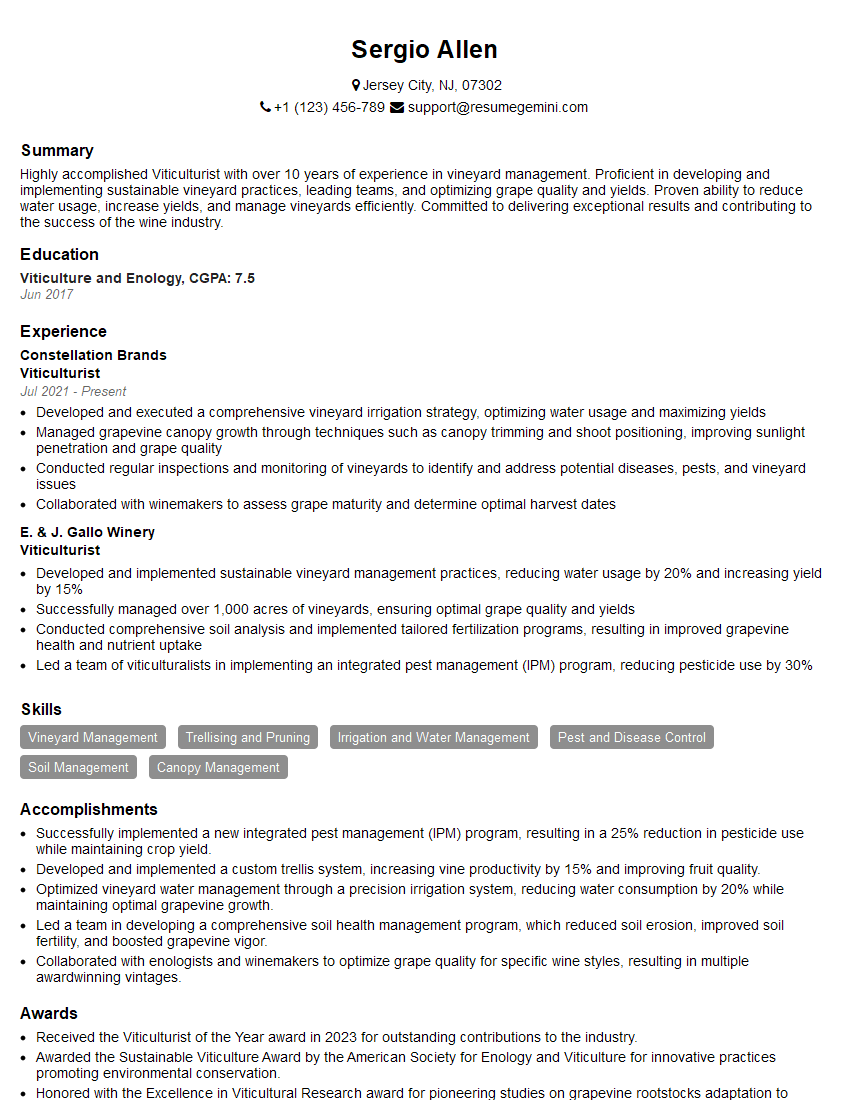
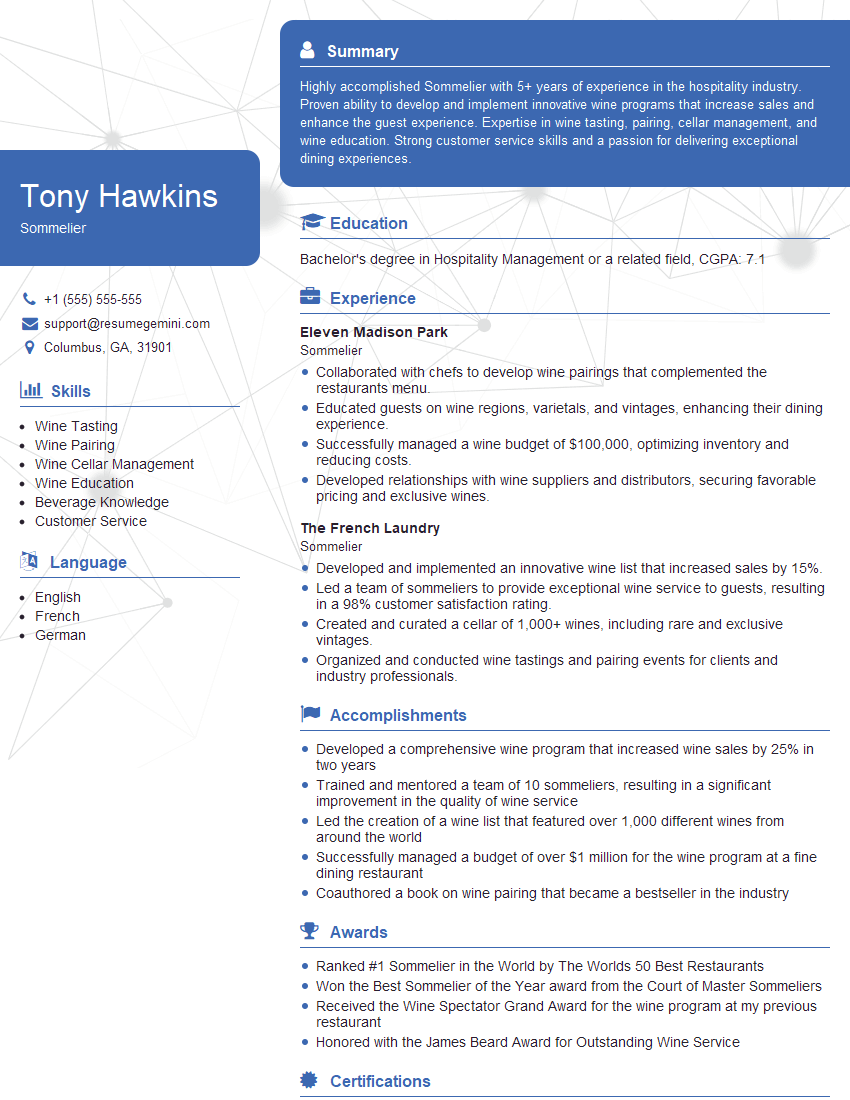
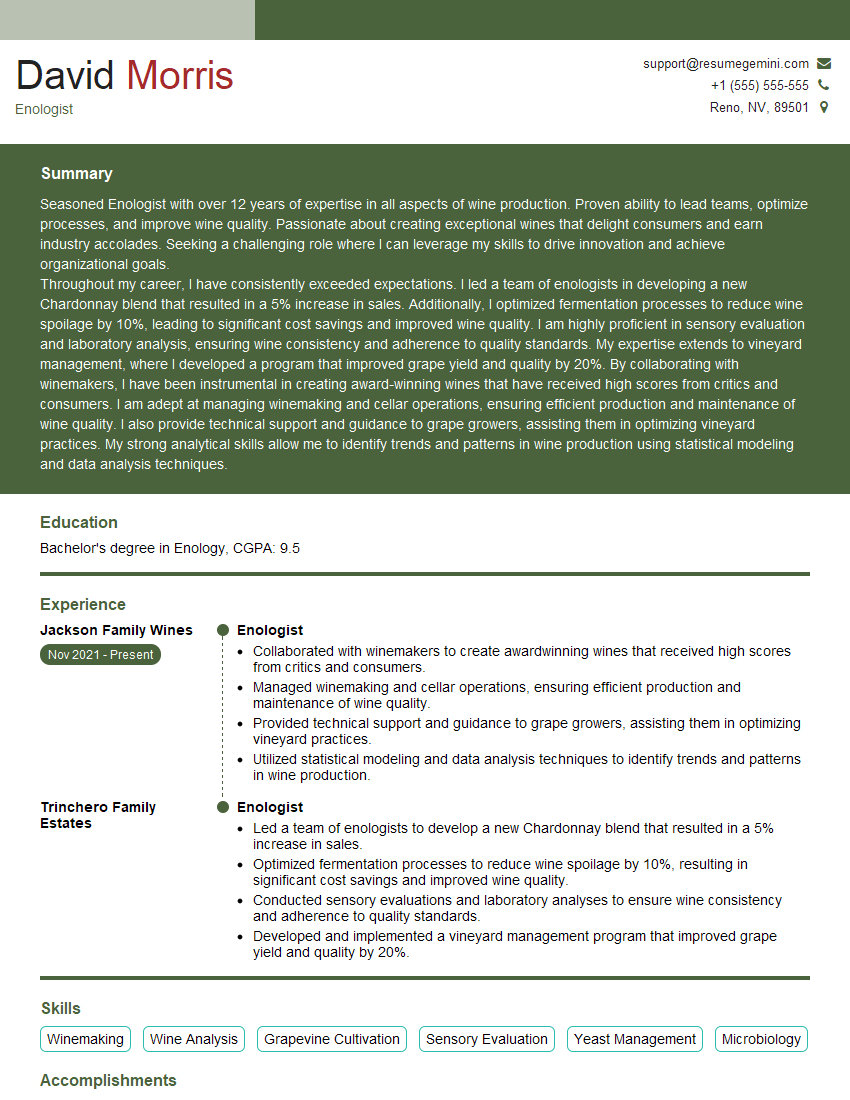
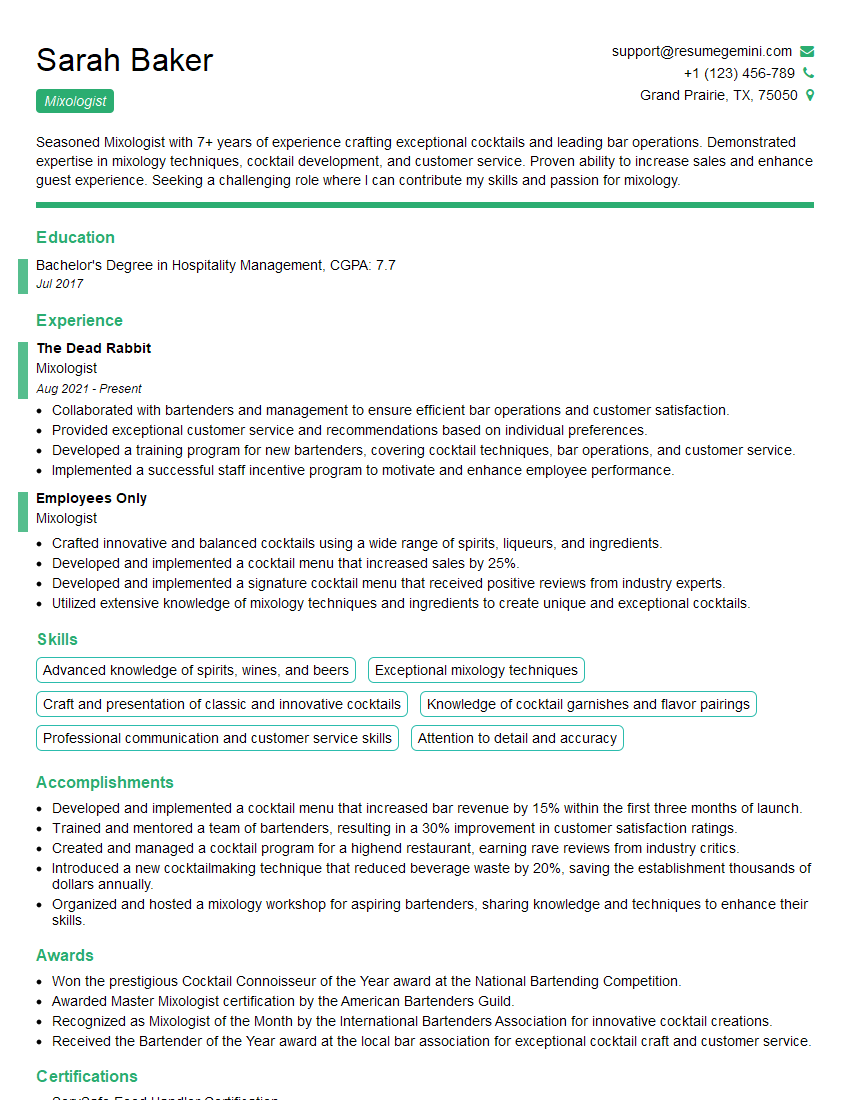
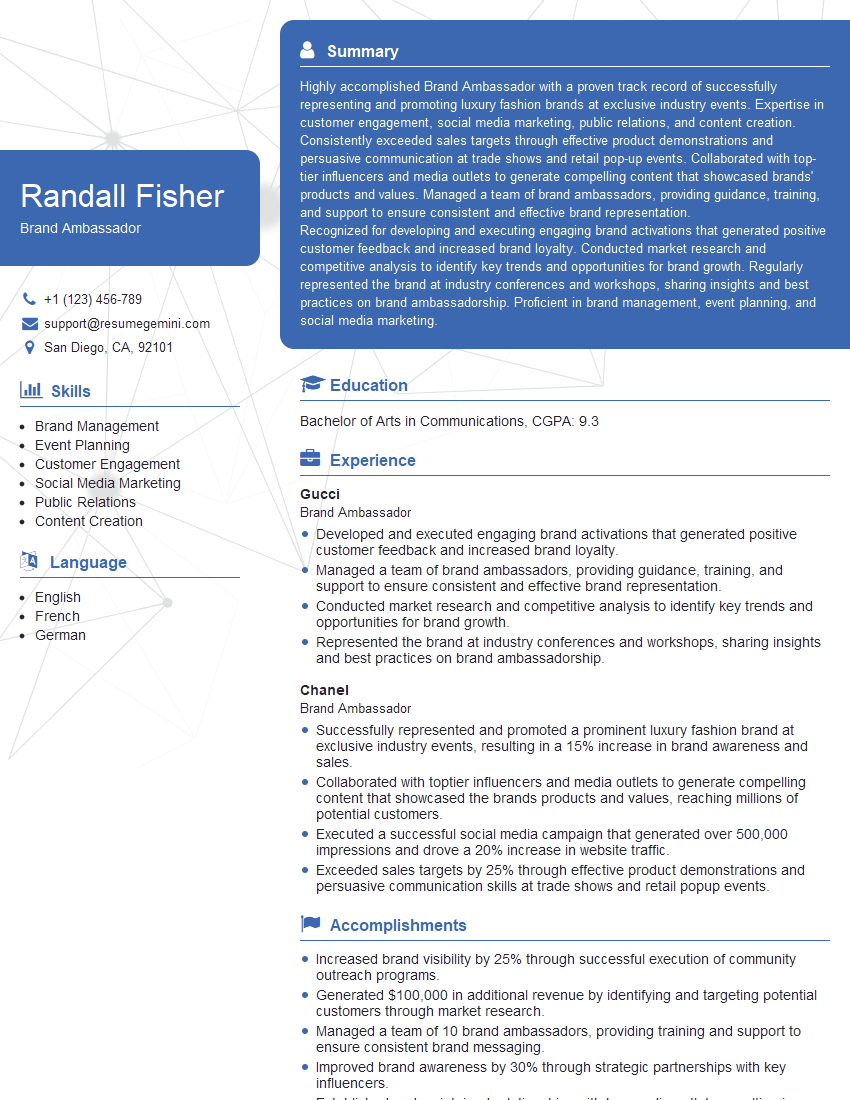
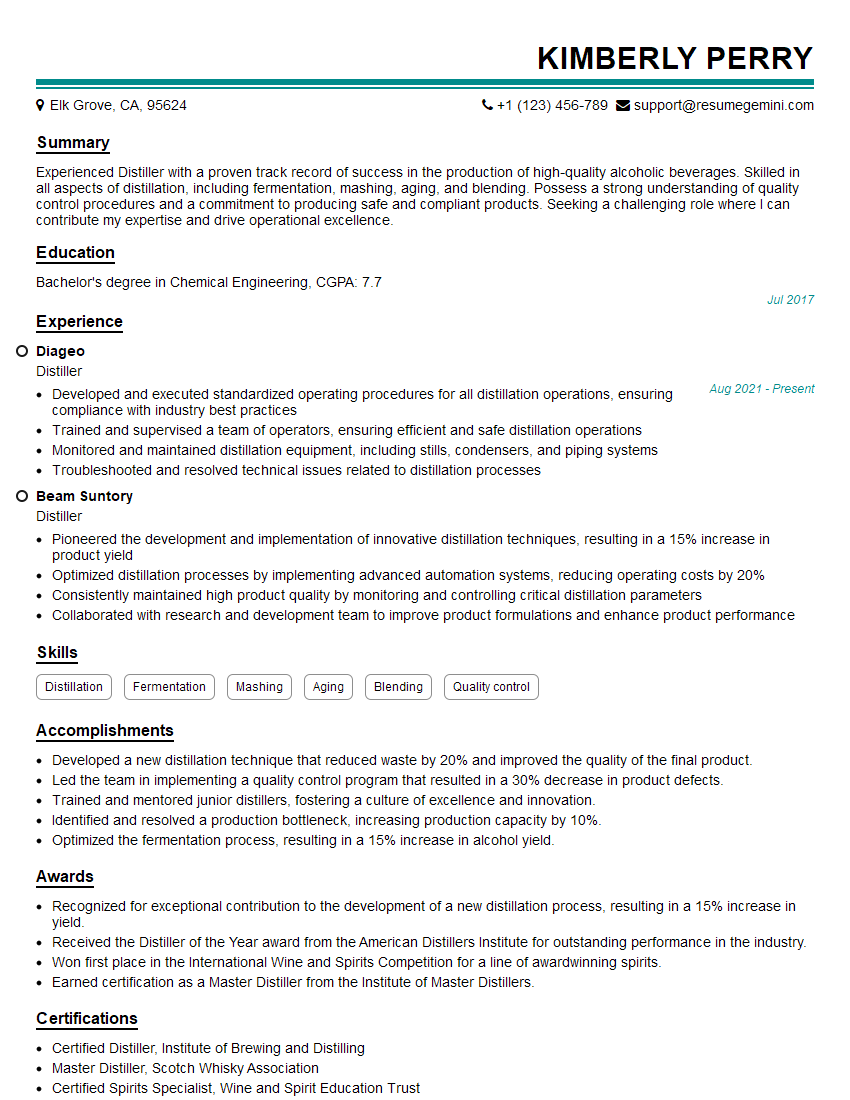
Mastering Spirits and Wine Knowledge is crucial for career advancement in this exciting and dynamic industry. A strong understanding of these topics will set you apart from other candidates and demonstrate your passion and expertise. To maximize your job prospects, focus on crafting an ATS-friendly resume that highlights your skills and experience effectively. ResumeGemini is a trusted resource that can help you build a professional and impactful resume tailored to the spirits and wine industry. Examples of resumes tailored to Spirits and Wine Knowledge are available to help guide you.
Explore more articles
Users Rating of Our Blogs
Share Your Experience
We value your feedback! Please rate our content and share your thoughts (optional).
What Readers Say About Our Blog
Very informative content, great job.
good