Are you ready to stand out in your next interview? Understanding and preparing for Standards and Regulations Knowledge interview questions is a game-changer. In this blog, we’ve compiled key questions and expert advice to help you showcase your skills with confidence and precision. Let’s get started on your journey to acing the interview.
Questions Asked in Standards and Regulations Knowledge Interview
Q 1. Explain your understanding of ISO 9001.
ISO 9001 is an internationally recognized standard that outlines the requirements for a quality management system (QMS). It’s not a prescription for how to do your job, but rather a framework for ensuring consistent processes that deliver quality products and services. Think of it as a roadmap for achieving customer satisfaction and continuous improvement.
The standard focuses on key principles like customer focus, leadership, engagement of people, process approach, improvement, evidence-based decision making, and relationship management. A company implementing ISO 9001 needs to document its processes, define responsibilities, establish metrics for measuring performance, and regularly review its QMS to ensure effectiveness. For example, a manufacturing company might use ISO 9001 to standardize its production process, ensuring consistent product quality and reducing defects. A software company might use it to manage its development lifecycle, ensuring software meets customer requirements and is delivered on time.
- Documented Procedures: Every key process within the organization needs a documented procedure. This makes the process repeatable and consistent. For example, a procedure for handling customer complaints.
- Internal Audits: Regular internal audits ensure the QMS is functioning correctly and identifies areas for improvement. This is like a health check for your QMS.
- Management Review: Top management periodically reviews the performance of the QMS to identify opportunities for improvement. This provides strategic oversight.
Q 2. Describe your experience with regulatory compliance audits.
I have extensive experience conducting and participating in regulatory compliance audits across diverse industries, including manufacturing and healthcare. My role typically involves reviewing documentation, observing processes, and interviewing personnel to assess compliance with relevant regulations. This includes preparing for the audit, identifying potential non-compliances, and collaborating with the auditee to develop corrective actions.
For instance, in one project, we audited a pharmaceutical manufacturer against Good Manufacturing Practices (GMP) regulations. We identified a gap in their documentation procedures, leading to corrective actions aimed at improving their record-keeping. This involved training staff on proper documentation and implementing a standardized system for managing manufacturing records. In another instance, I led an audit of a medical device company’s compliance with ISO 13485, focusing on risk management processes. This highlighted the importance of proactive risk assessment and robust change control procedures.
My experience extends beyond simply identifying non-compliances; I actively contribute to improving the overall compliance posture of the organizations I work with. I’m adept at explaining complex regulations in a clear and accessible manner to both technical and non-technical audiences.
Q 3. How do you stay updated on changes in relevant standards and regulations?
Staying current with changes in standards and regulations is paramount. I utilize a multi-pronged approach to ensure I remain informed. This includes:
- Subscription to Regulatory Newsletters and Databases: I subscribe to industry-specific newsletters and databases that provide updates on changes in regulations and standards. This allows me to receive timely notifications on important changes.
- Active Participation in Professional Organizations: I actively participate in professional organizations related to standards and regulatory compliance, which often provide training, networking opportunities, and updates on current developments.
- Monitoring Government Websites: I regularly monitor government websites for updates to regulations and guidance documents. This is particularly crucial for industry-specific regulations.
- Attendance at Industry Conferences and Webinars: Attending conferences and webinars provides an opportunity to learn about the latest trends and developments in standards and regulations from experts in the field.
This combination of proactive information gathering helps me stay ahead of the curve and ensures I provide my clients with the most up-to-date compliance advice.
Q 4. What is your approach to identifying and mitigating compliance risks?
My approach to identifying and mitigating compliance risks involves a systematic, risk-based methodology. I begin by conducting a thorough risk assessment, identifying potential areas of vulnerability. This assessment considers the likelihood and impact of various risks. This could involve reviewing current processes, legal and regulatory requirements, and past incidents or near misses. A useful tool is a risk matrix, plotting likelihood against impact.
Once risks are identified, I prioritize them based on their potential impact. High-priority risks require immediate attention and the development of mitigation strategies. This could range from implementing new controls, revising procedures, or enhancing employee training. I also document all risks and mitigation plans, creating an auditable trail.
For example, in a recent project, a risk assessment identified a potential cybersecurity breach. To mitigate this, we implemented multi-factor authentication, enhanced employee training on cybersecurity best practices, and developed incident response plans.
Q 5. How would you handle a situation where a standard conflicts with a regulation?
When a standard conflicts with a regulation, the regulation always takes precedence. Regulations are legally binding requirements imposed by government bodies, while standards are generally voluntary guidelines, best practices, or recommendations. A conflict indicates a gap that needs to be addressed.
My approach involves first documenting the conflict clearly, outlining the specific points of divergence between the standard and the regulation. I would then collaborate with stakeholders, including legal counsel, to develop a solution that ensures full regulatory compliance. This might involve modifying internal processes to align with the regulatory requirement, seeking clarification or waivers from the regulatory body, or, in some cases, even advocating for changes to the standard to better reflect the regulatory landscape. The goal is to ensure the organization maintains both regulatory compliance and best practices, even if they involve a deviation from the standard.
Q 6. Describe your experience with implementing a new compliance program.
Implementing a new compliance program is a multi-stage process that requires careful planning and execution. My experience includes leading teams through this process, from initial assessment to full implementation and ongoing maintenance. I start with a thorough gap analysis, assessing the current state of compliance against the requirements of the new program. This helps identify the areas needing improvement.
Next, I develop a detailed implementation plan, outlining specific tasks, timelines, and responsibilities. This plan often includes training programs for employees to ensure they understand the new requirements and how to comply. I also develop key performance indicators (KPIs) to monitor the effectiveness of the program. For example, a KPI might be the percentage of employees who complete the necessary training or the number of compliance incidents. Throughout the implementation, I leverage project management best practices, including regular communication and status reporting.
Finally, once the program is implemented, I establish a process for continuous improvement and monitoring. This ensures the program remains effective and aligns with evolving standards and regulations.
Q 7. What are the key elements of a robust compliance management system?
A robust compliance management system (CMS) incorporates several key elements, working together to ensure consistent and effective adherence to relevant standards and regulations.
- Risk Assessment and Management: Proactive identification and mitigation of compliance risks.
- Policy and Procedure Development: Clear, concise, and well-communicated policies and procedures that guide employee behavior and processes.
- Training and Awareness Programs: Training programs to educate employees about relevant standards and regulations and their responsibilities.
- Monitoring and Auditing: Regular monitoring and auditing to ensure compliance and identify areas for improvement.
- Incident Management: Procedures for handling compliance incidents or breaches, including corrective and preventative actions.
- Documentation and Record-Keeping: Maintaining comprehensive documentation and records to demonstrate compliance.
- Continuous Improvement: A commitment to ongoing improvement of the CMS based on audits, performance reviews, and industry best practices.
- Management Commitment and Accountability: Demonstrated commitment and accountability from upper management to ensure the effectiveness of the CMS.
The effectiveness of a CMS hinges on strong leadership, consistent monitoring, and a culture of compliance within the organization.
Q 8. How do you ensure compliance within a team or department?
Ensuring compliance within a team or department requires a multifaceted approach, combining robust training, clear communication, and proactive monitoring. It’s not simply about ticking boxes; it’s about fostering a culture of compliance.
Training and Education: Regular training sessions are crucial to educate team members about relevant standards and regulations. This isn’t a one-time event; it needs to be ongoing, addressing updates and specific scenarios. For example, if we’re working with GDPR, regular training on data privacy best practices is essential.
Clear Communication: Establishing clear communication channels ensures everyone understands their responsibilities and can readily access necessary information. This could involve creating a dedicated compliance intranet site, regular newsletters, or team meetings focused on compliance updates.
Documentation and Procedure Manuals: Creating and maintaining detailed procedure manuals outlining compliant practices is essential. These should be easily accessible and regularly reviewed and updated to reflect any changes in legislation or internal procedures. This helps avoid confusion and ensures consistency.
Monitoring and Audits: Regular monitoring of compliance through internal audits helps identify potential weaknesses early on. This proactive approach allows for timely corrective actions, preventing larger issues down the line. This might involve randomly checking data handling practices or reviewing project documentation for adherence to relevant guidelines.
Accountability and Consequences: A clear system of accountability needs to be in place. Individuals need to understand the potential consequences of non-compliance, which could range from warnings to disciplinary action. This fosters a sense of responsibility and helps maintain compliance.
Q 9. Explain your understanding of risk assessment in relation to standards and regulations.
Risk assessment, in relation to standards and regulations, is the systematic process of identifying, analyzing, and evaluating potential risks to an organization’s ability to meet its compliance obligations. It’s about proactively identifying potential problems before they become significant issues.
This involves a thorough understanding of both internal operations and the external regulatory landscape. For example, a financial institution needs to assess risks related to data breaches (GDPR) and anti-money laundering regulations. A manufacturing company must assess risks related to environmental regulations (e.g., discharge limits) and product safety standards.
The process typically involves:
Identifying potential risks: This involves brainstorming potential scenarios that could lead to non-compliance, such as outdated software, inadequate training, or changes in legislation.
Analyzing the likelihood and impact of each risk: This helps to prioritize risks based on their potential severity. A high-likelihood, high-impact risk demands immediate attention.
Evaluating existing controls: Assessing the effectiveness of existing controls in mitigating these risks. Are current safeguards sufficient? Do they require improvement or enhancement?
Developing mitigation strategies: Creating plans to address the identified risks, including preventative measures and contingency plans.
Monitoring and review: Regularly reviewing and updating the risk assessment process to reflect changes in the business environment, new regulations, or evolving threats.
Q 10. What is your experience with internal audits and corrective action plans?
I have extensive experience with internal audits and corrective action plans. Internal audits provide a systematic and independent examination of an organization’s compliance efforts. They provide an objective view of how effectively the organization is managing its compliance obligations.
My approach typically involves:
Planning: Defining the scope of the audit, identifying relevant standards and regulations, and developing an audit plan.
Execution: Conducting the audit, collecting evidence, and documenting findings.
Reporting: Preparing a comprehensive report summarizing the findings, including any identified gaps in compliance.
Follow-up: Creating and implementing corrective action plans (CAPs) to address identified issues. CAPs define specific actions, responsibilities, and deadlines for remediation. I regularly monitor the implementation and effectiveness of CAPs, ensuring issues are resolved.
For example, in a past role, I conducted an internal audit of data security practices. The audit revealed a vulnerability in our network security. The resulting CAP involved implementing a multi-factor authentication system, staff training on cybersecurity best practices, and a review of our network infrastructure.
Q 11. Describe a time you identified a compliance gap. How did you address it?
In a previous role, I identified a compliance gap related to data retention policies. Our organization was retaining customer data beyond the legally required period, violating both regional privacy laws and our internal data governance policies.
Addressing this required a multi-step approach:
Investigation: I first investigated the root cause of the problem. We discovered outdated software and a lack of awareness among employees regarding data retention policies.
Development of a Remediation Plan: I then collaborated with IT and legal to develop a comprehensive remediation plan. This included updating software to automatically delete data after the prescribed retention period and implementing mandatory training on data retention policies for all staff.
Implementation: I oversaw the implementation of the remediation plan, ensuring the software update was successful and staff completed the training.
Verification: Finally, I conducted follow-up audits to verify the effectiveness of the remediation plan and ensure compliance was achieved and maintained.
Q 12. How do you prioritize compliance activities when resources are limited?
Prioritizing compliance activities with limited resources requires a strategic approach focusing on risk assessment and impact. I use a risk-based prioritization method.
This involves:
Risk Assessment: Conducting a thorough risk assessment to identify high-risk areas that require immediate attention. This helps focus resources on the areas that pose the greatest potential impact on the organization if non-compliant.
Impact Analysis: Determining the potential legal, financial, and reputational impact of non-compliance in each area. This helps quantify the consequences of inaction and prioritize accordingly.
Resource Allocation: Allocating resources to address high-risk areas first, addressing lower-risk areas as resources become available. This ensures effective use of limited resources while minimizing potential losses.
Continuous Monitoring: Regularly reviewing the prioritization based on changing risks and available resources. This helps adapt to evolving circumstances and ensures ongoing compliance.
For instance, if facing limited resources, I would prioritize addressing risks related to data breaches ahead of less critical compliance areas, due to the significant financial and reputational damage that a data breach could cause.
Q 13. What is your understanding of GDPR (or other relevant regional regulation)?
GDPR, or the General Data Protection Regulation, is a comprehensive EU regulation on data protection and privacy for all individuals within the European Union (EU) and the European Economic Area (EEA). It significantly impacts how organizations collect, process, and store personal data.
Key aspects of GDPR include:
Data Subject Rights: Individuals have the right to access, rectify, erase, restrict processing, and object to the processing of their personal data.
Data Protection by Design and Default: Organizations must incorporate data protection principles into the design and implementation of systems and processes from the outset.
Data Security: Organizations are required to implement appropriate technical and organizational measures to protect personal data against unauthorized or unlawful processing and accidental loss, destruction, or damage.
Data Breaches: Organizations must report data breaches to the relevant supervisory authority and, where necessary, to affected individuals.
Accountability: Organizations are accountable for demonstrating compliance with GDPR.
Non-compliance with GDPR can result in significant fines, reputational damage, and legal action.
Q 14. Explain your familiarity with different types of compliance certifications (e.g., ISO 14001, ISO 27001).
I am familiar with various compliance certifications, understanding their scope and application within different organizational contexts. These certifications provide independent verification that an organization meets specific standards and best practices.
For example:
ISO 14001: This standard focuses on environmental management systems. Certification demonstrates a commitment to minimizing environmental impact and improving environmental performance. It involves establishing and maintaining an environmental management system that complies with specific requirements.
ISO 27001: This standard relates to information security management systems (ISMS). Certification indicates that an organization has implemented robust security controls to protect sensitive information. It covers areas such as access control, data encryption, incident management, and business continuity planning.
ISO 9001: This standard pertains to quality management systems. Certification shows that an organization has a systematic approach to managing its processes to ensure consistent product or service quality. It’s focused on continuous improvement and customer satisfaction.
Understanding the requirements and implications of these certifications is vital in guiding organizations towards better compliance and operational efficiency. The selection of the relevant certification depends on the specific industry, regulatory requirements, and the organization’s objectives.
Q 15. Describe your experience with documentation and record-keeping related to compliance.
Effective documentation and record-keeping are the cornerstones of a robust compliance program. It’s not just about keeping files; it’s about creating a system that ensures traceability, accountability, and the ability to demonstrate compliance to auditors or regulators. My approach involves a multi-faceted strategy:
Structured Filing System: I implement a clearly defined, logical filing system, often using a combination of electronic and physical storage. This ensures easy retrieval of documents and prevents information silos.
Version Control: Using version control systems like SharePoint or dedicated document management software prevents confusion from outdated documents. Each version is clearly labeled and accessible, with clear indications of changes and approvals.
Metadata Tagging: I utilize metadata tagging to categorize documents based on relevant compliance aspects (e.g., regulation, date, location, etc.). This facilitates efficient searching and reporting.
Regular Audits: I conduct periodic audits of documentation to ensure completeness, accuracy, and adherence to retention policies. This is crucial for identifying gaps and preventing potential compliance breaches.
Secure Storage: Physical and electronic documents are stored securely, adhering to data protection regulations, to prevent unauthorized access and loss.
For example, in a previous role overseeing environmental compliance, we implemented a system for tracking hazardous waste disposal, including detailed manifests, chain-of-custody documents, and waste analysis reports, all meticulously filed and readily accessible. This system was instrumental in successfully passing several regulatory inspections.
Career Expert Tips:
- Ace those interviews! Prepare effectively by reviewing the Top 50 Most Common Interview Questions on ResumeGemini.
- Navigate your job search with confidence! Explore a wide range of Career Tips on ResumeGemini. Learn about common challenges and recommendations to overcome them.
- Craft the perfect resume! Master the Art of Resume Writing with ResumeGemini’s guide. Showcase your unique qualifications and achievements effectively.
- Don’t miss out on holiday savings! Build your dream resume with ResumeGemini’s ATS optimized templates.
Q 16. How do you ensure consistent application of standards and regulations across different locations/departments?
Consistency in applying standards and regulations across different locations and departments is paramount. I achieve this through a combination of centralized resources, standardized procedures, and ongoing training and communication.
Centralized Compliance Portal: I establish a centralized online portal (e.g., SharePoint, dedicated compliance software) containing all relevant policies, procedures, training materials, and regulatory updates. This ensures everyone accesses the same, up-to-date information.
Standardized Operating Procedures (SOPs): I develop and implement clear, concise SOPs for all relevant processes, ensuring consistency in execution regardless of location or department. These SOPs should be regularly reviewed and updated.
Regular Training and Audits: I conduct regular training programs for all staff, reinforcing compliance requirements and providing opportunities for clarification. Internal audits help identify inconsistencies in application and address them proactively.
Compliance Champions: I designate compliance champions within each department to act as local points of contact and help enforce consistent application of standards.
Regular Reporting and Performance Metrics: Tracking key performance indicators (KPIs) related to compliance across all departments provides insights into areas requiring attention and ensures accountability.
Imagine a global company with manufacturing plants in several countries. A centralized compliance portal, containing translated versions of SOPs and relevant regional regulations, ensures consistent application of safety standards across all locations.
Q 17. How do you communicate compliance requirements effectively to different stakeholders?
Effective communication is critical for ensuring compliance. My approach involves tailoring communication strategies to different stakeholder groups, using diverse channels and formats:
Targeted Communication: I segment stakeholders (e.g., executives, managers, employees) and tailor communication to their specific needs and understanding. Executives may need high-level summaries, while employees require detailed instructions.
Multiple Channels: I leverage a variety of communication channels including emails, intranet postings, presentations, workshops, and training videos to reach a broader audience and cater to different learning styles.
Interactive Training: Interactive training sessions, including quizzes and case studies, enhance comprehension and retention of compliance information. This makes learning engaging and improves understanding.
Plain Language: I use clear, concise, and easily understandable language, avoiding jargon whenever possible. Visual aids such as infographics or flowcharts can be helpful.
Feedback Mechanisms: I establish feedback mechanisms such as surveys or suggestion boxes to gather input from stakeholders and address any concerns or questions.
For example, when implementing a new data privacy policy, I would communicate the key changes to executives through a concise presentation, provide detailed training materials for employees, and offer FAQs for addressing common questions.
Q 18. What is your approach to investigating and resolving compliance violations?
Investigating and resolving compliance violations requires a systematic and objective approach. My methodology follows these steps:
Prompt Identification and Reporting: Establish a clear process for reporting potential violations, ensuring confidentiality and prompt investigation.
Thorough Investigation: Conduct a thorough investigation, gathering all relevant evidence and interviewing witnesses. Document all findings meticulously.
Root Cause Analysis: Identify the root cause of the violation, not just the symptoms. This helps prevent recurrence.
Corrective Actions: Implement appropriate corrective actions to address the violation and prevent future occurrences. This might include retraining, process improvements, or disciplinary actions.
Documentation and Reporting: Document the entire investigation process, including findings, corrective actions, and outcomes. Report the violation to relevant authorities as required.
Preventive Measures: Implement preventive measures to reduce the likelihood of future violations. This might involve strengthening policies, improving training, or enhancing monitoring systems.
For instance, if a safety violation occurred on a construction site, we would investigate the incident thoroughly, identify contributing factors (e.g., inadequate training, lack of safety equipment), implement corrective actions (e.g., retraining, provision of equipment), and review our safety procedures to prevent similar incidents from happening again.
Q 19. How do you measure the effectiveness of your compliance program?
Measuring the effectiveness of a compliance program involves tracking key performance indicators (KPIs) and regularly assessing its overall performance. Here’s how I approach it:
Compliance Audit Results: Regular internal and external audits provide valuable insights into the effectiveness of our program. The frequency and depth of audits depend on the complexity of the regulatory environment and the nature of the business.
Incident Reporting Rates: Tracking the number and nature of reported compliance violations provides valuable information about problem areas. A decreasing trend is a positive sign.
Employee Knowledge and Compliance Behavior: Conducting surveys or assessments can help determine the level of employee knowledge and compliance behavior. This feedback aids in improving training programs.
Regulatory Inspection Results: Analyzing the results of regulatory inspections reveals the effectiveness of the compliance program in meeting regulatory expectations.
Timely Remediation of Non-Compliance: Monitoring the time taken to remediate non-compliance issues highlights the efficiency and effectiveness of our processes.
By using a dashboard to track these KPIs, we can identify areas for improvement and demonstrate the overall effectiveness of our compliance program to stakeholders. For example, a reduction in safety incidents and an increase in employee knowledge about safety regulations indicate a successful safety compliance program.
Q 20. What are some common challenges in maintaining regulatory compliance, and how do you overcome them?
Maintaining regulatory compliance presents numerous challenges. Some common ones include:
Evolving Regulations: Regulations frequently change, requiring continuous monitoring and updates to policies and procedures.
Global Compliance: Operating in multiple jurisdictions necessitates navigating diverse and sometimes conflicting regulations.
Technology Changes: Technological advancements introduce new compliance challenges, such as data privacy and cybersecurity.
Resource Constraints: Maintaining compliance can be resource-intensive, requiring significant investment in personnel, training, and technology.
Human Error: Human error remains a significant contributor to compliance failures. This necessitates robust training and procedures.
To overcome these challenges, I employ proactive strategies:
Dedicated Compliance Team: A dedicated team ensures that compliance is a priority and allows for specialized expertise.
Technology Solutions: Using compliance management software helps streamline processes and manage regulatory updates efficiently.
Continuous Monitoring and Training: Regular monitoring and training keep employees informed about the latest regulations and best practices.
Risk Assessment: A proactive risk assessment helps identify potential compliance issues before they become significant problems.
Collaboration and Communication: Collaboration with regulatory bodies and industry peers enhances understanding and ensures timely adaptation to changes.
Q 21. Explain your understanding of the relationship between standards and legislation.
Standards and legislation are closely related but distinct. Legislation represents legally binding rules and regulations enforced by government bodies. Non-compliance can lead to penalties.
Standards, on the other hand, are often voluntary guidelines or best practices developed by industry organizations or other expert bodies. They may be adopted by companies to improve quality, safety, or efficiency. While not legally binding in themselves, standards can be referenced in legislation, thereby making compliance with the standard a legal requirement.
For example, ISO 9001 (quality management systems) is a standard. While not legally required for all businesses, some government contracts might stipulate compliance with ISO 9001 as a condition of participation. In this case, the standard becomes legally relevant through its incorporation into the legislation (the contract). It’s a framework that provides best practices. Following the standard helps to meet the criteria of the legislation.
In essence, legislation sets the legal requirements, while standards offer a framework for meeting those requirements efficiently and effectively. Often, aligning with industry standards demonstrates proactive compliance and good business practice, even if the standard isn’t specifically mentioned in the legislation.
Q 22. How familiar are you with industry-specific regulations in your field?
My familiarity with industry-specific regulations is extensive. Over the past [Number] years, I’ve worked across various sectors, including [List Sectors, e.g., finance, healthcare, technology], gaining deep expertise in the relevant regulatory landscapes. This includes a comprehensive understanding of laws and standards such as [List Relevant Standards and Regulations, e.g., HIPAA, GDPR, SOX, PCI DSS]. I’m not just familiar with the text of these regulations; I understand their practical application and the potential consequences of non-compliance. For instance, in the financial sector, I have a strong grasp of KYC/AML regulations and their implications for risk management and data security. In healthcare, I’m well-versed in HIPAA’s requirements for patient privacy and data breach notification.
My understanding extends beyond simply knowing the regulations; I also understand the underlying principles and rationale behind them. This allows me to adapt to evolving regulatory environments and anticipate potential future changes.
Q 23. Describe your experience with conducting compliance training.
I have significant experience designing and delivering compliance training programs. My approach is highly interactive and tailored to the specific needs and roles of the audience. I avoid a purely lecture-based format, instead using case studies, interactive exercises, and quizzes to enhance understanding and retention.
- Needs Assessment: I begin by conducting a thorough needs assessment to identify knowledge gaps and tailor the training content accordingly.
- Modular Design: I design modular training programs that can be easily updated to reflect changes in regulations.
- Interactive Methods: I incorporate interactive elements like group discussions, role-playing scenarios, and gamified quizzes to keep trainees engaged and promote active learning.
- Assessment and Feedback: I employ pre- and post-training assessments to measure knowledge retention and provide personalized feedback.
For example, when developing compliance training for a financial institution regarding anti-money laundering regulations, I incorporated realistic scenarios involving suspicious transactions, allowing participants to practice identifying and reporting them. This hands-on approach significantly improved their understanding and confidence in applying the regulations.
Q 24. What are your strategies for keeping up-to-date with new regulations and updates?
Staying current with new regulations and updates is a continuous process. My strategies include:
- Subscription to Regulatory Updates: I subscribe to reputable legal and regulatory newsletters and publications that provide timely updates in my relevant fields.
- Professional Organizations: Active membership in professional organizations [e.g., name specific organizations] provides access to webinars, conferences, and networking opportunities that keep me informed about the latest developments.
- Government Websites: I regularly check the websites of relevant regulatory bodies [e.g., name specific regulatory bodies] for official updates and announcements.
- Legal Databases: I leverage legal research databases [e.g., LexisNexis, Westlaw] to access the latest case law, legislation, and regulatory guidance.
- Networking: I maintain a strong network of contacts within the regulatory community to share information and insights.
I also use RSS feeds and alerts to receive immediate notifications of important updates, ensuring I remain at the forefront of regulatory changes.
Q 25. How do you prioritize competing regulatory demands?
Prioritizing competing regulatory demands requires a structured approach. I typically use a risk-based prioritization framework. This involves:
- Risk Assessment: Identifying the potential risks associated with non-compliance with each regulation. This includes considering the likelihood of a violation and the potential severity of the consequences.
- Impact Analysis: Assessing the impact of non-compliance on the organization, including financial, reputational, and operational risks.
- Resource Allocation: Allocating resources (time, budget, personnel) based on the assessed risk and impact.
- Documentation: Maintaining meticulous documentation of the prioritization process, including the rationale behind the decisions made.
For instance, if an organization faces both impending GDPR compliance deadlines and a less time-sensitive update to a less impactful internal policy, the GDPR compliance will naturally take priority given the potentially far-reaching legal consequences of non-compliance. This structured approach ensures that resources are focused on addressing the most critical regulatory requirements first.
Q 26. Describe a situation where you had to interpret ambiguous regulations. How did you approach the situation?
In one instance, I encountered ambiguity in interpreting a section of the GDPR related to data subject access requests. The regulation lacked specific guidance on handling requests involving complex data structures. My approach involved:
- Thorough Research: I conducted extensive research, reviewing the relevant sections of the GDPR, related guidance documents from data protection authorities, and relevant case law.
- Internal Consultation: I consulted with legal counsel and other internal experts to gain diverse perspectives on the interpretation of the ambiguous section.
- Prudent Approach: Given the ambiguity, I recommended a conservative and transparent approach, prioritizing data subject rights and minimizing potential risks. We documented our interpretation and rationale to demonstrate due diligence.
- Continuous Monitoring: We closely monitored developments and updates from regulatory bodies to adapt our approach if necessary.
This methodical approach ensured that we addressed the ambiguous regulation in a compliant and defensible manner. It highlighted the importance of proactive research and seeking expert advice when confronted with uncertainty in regulatory interpretation.
Q 27. How do you ensure that compliance initiatives align with the overall business objectives?
Aligning compliance initiatives with overall business objectives is crucial for success. This requires:
- Strategic Integration: Integrating compliance considerations into the organization’s overall strategic planning process.
- Business Case Development: Developing a strong business case for compliance initiatives, demonstrating their value in terms of risk mitigation, cost savings, and enhanced reputation.
- Stakeholder Alignment: Ensuring that all relevant stakeholders (executive management, legal, operations) are aligned on the importance of compliance and its integration into business goals.
- Performance Measurement: Defining clear metrics to track the effectiveness of compliance initiatives and their contribution to achieving business objectives.
- Continuous Improvement: Regularly reviewing and updating compliance programs to ensure they remain aligned with the evolving needs of the business and the regulatory landscape.
For example, integrating robust data security measures not only ensures GDPR compliance but also protects sensitive business information, strengthens customer trust, and minimizes the risk of costly data breaches. By framing compliance as an opportunity to enhance business performance, I can successfully align compliance initiatives with overarching organizational goals.
Key Topics to Learn for Standards and Regulations Knowledge Interview
- Understanding Regulatory Frameworks: Explore the legal and ethical foundations of relevant standards and regulations within your industry. Consider the historical context and evolution of these frameworks.
- Interpreting and Applying Standards: Practice analyzing specific standards documents to understand their requirements and limitations. Focus on how to translate these requirements into practical actions and processes.
- Compliance Management Systems: Learn about implementing and maintaining systems for ensuring ongoing compliance. This includes aspects like documentation, auditing, and continuous improvement.
- Risk Assessment and Mitigation: Understand how to identify potential non-compliance risks and develop strategies to mitigate them. This involves evaluating the potential impact of non-compliance.
- Stakeholder Engagement: Explore the importance of communication and collaboration with internal and external stakeholders regarding compliance matters. Consider how to effectively manage expectations and address concerns.
- Emerging Trends and Best Practices: Stay updated on evolving regulations and industry best practices related to standards and compliance. Be prepared to discuss how new regulations might impact existing processes.
- Problem-Solving in a Regulatory Context: Practice identifying and resolving compliance-related issues, demonstrating a systematic and analytical approach.
Next Steps
Mastering Standards and Regulations Knowledge is crucial for career advancement in today’s regulated industries. A deep understanding of compliance opens doors to leadership roles and positions of greater responsibility. To maximize your job prospects, crafting an ATS-friendly resume is essential. A well-structured resume highlights your relevant skills and experience, ensuring your application gets noticed. We highly recommend using ResumeGemini, a trusted resource, to build a professional and effective resume that showcases your expertise in Standards and Regulations Knowledge. Examples of resumes tailored to this field are available to help guide you.
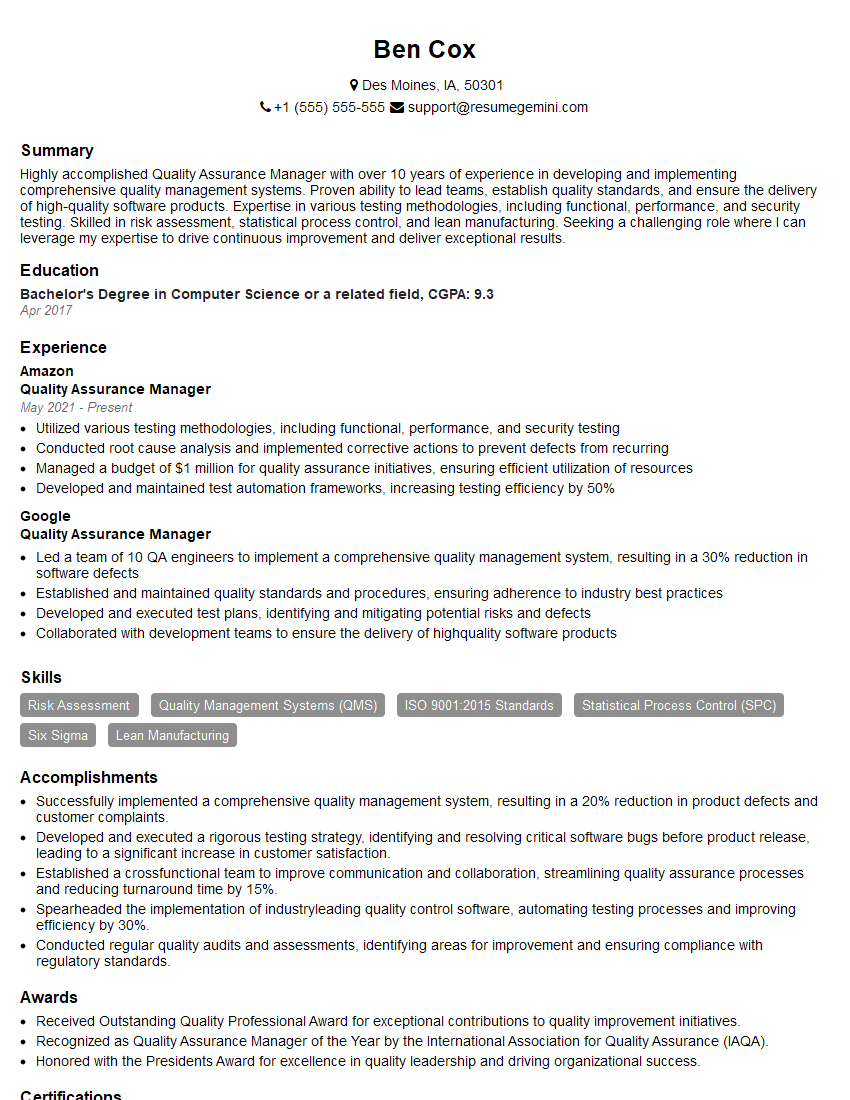
Quality Assurance Manager Resume Sample
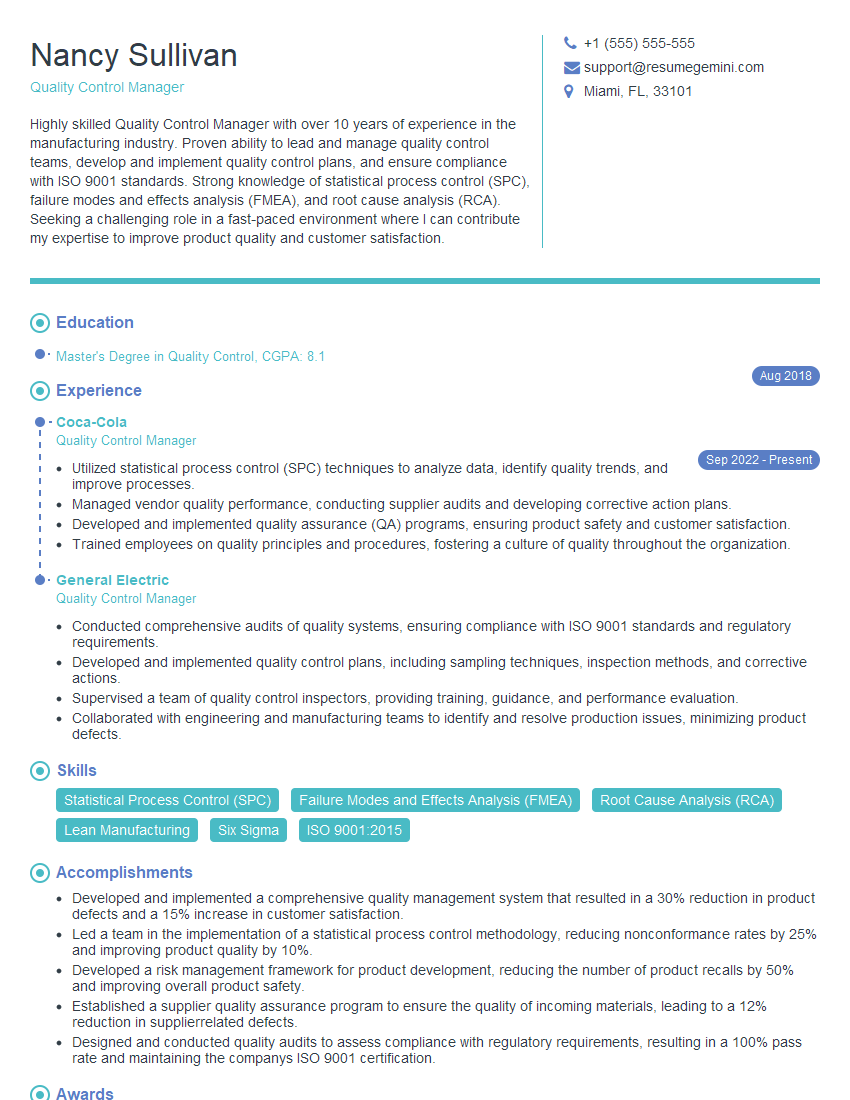
Quality Control Manager Resume Sample
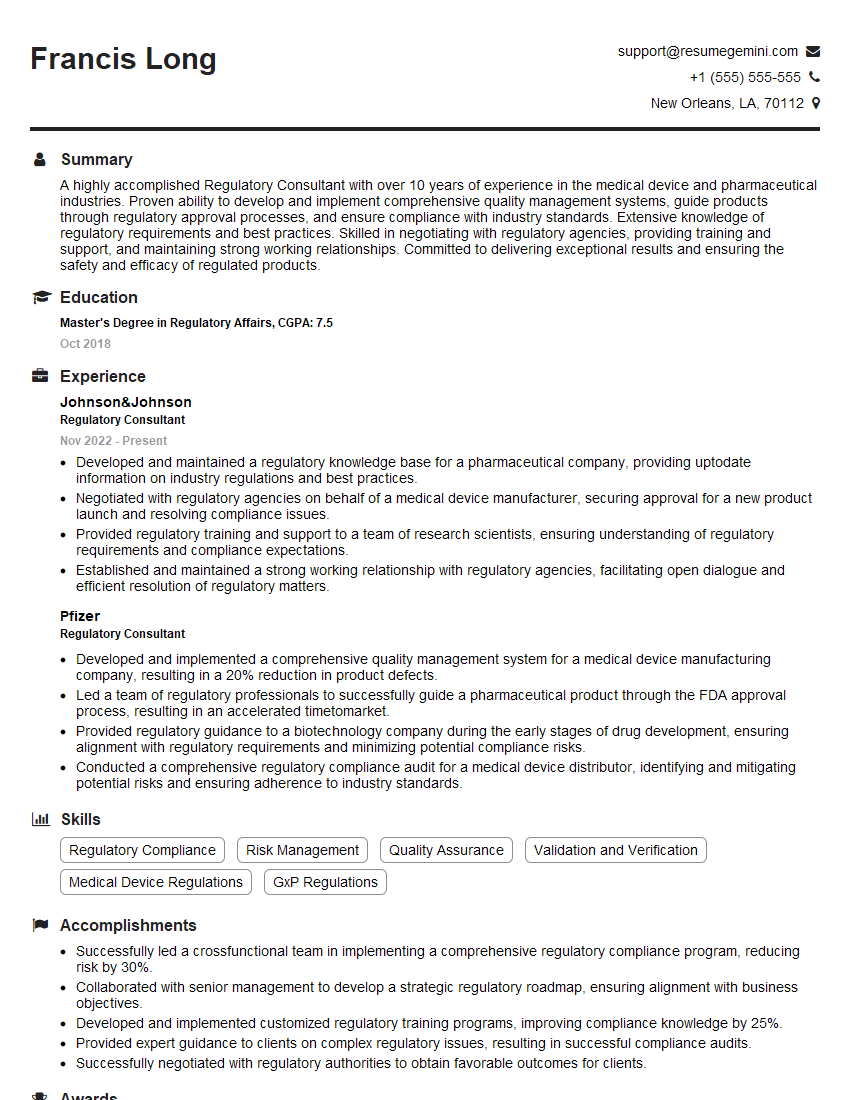
Regulatory Consultant Resume Sample
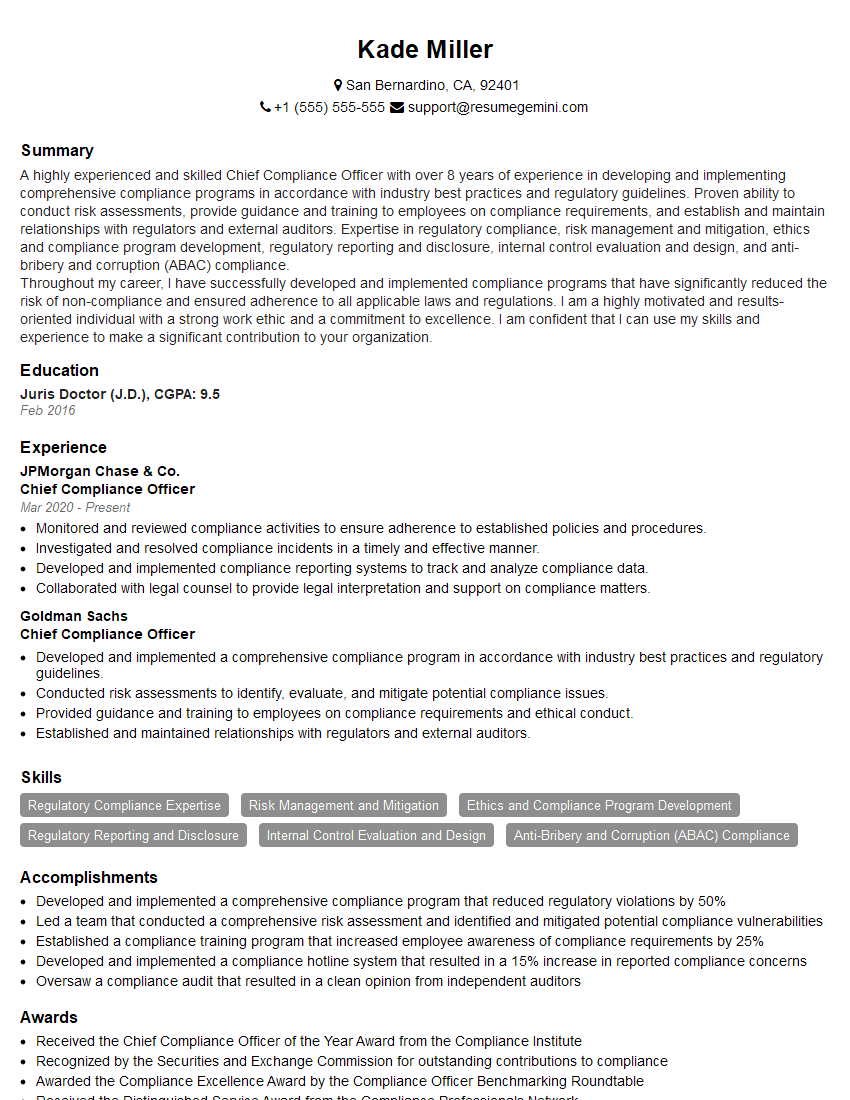
Chief Compliance Officer Resume Sample
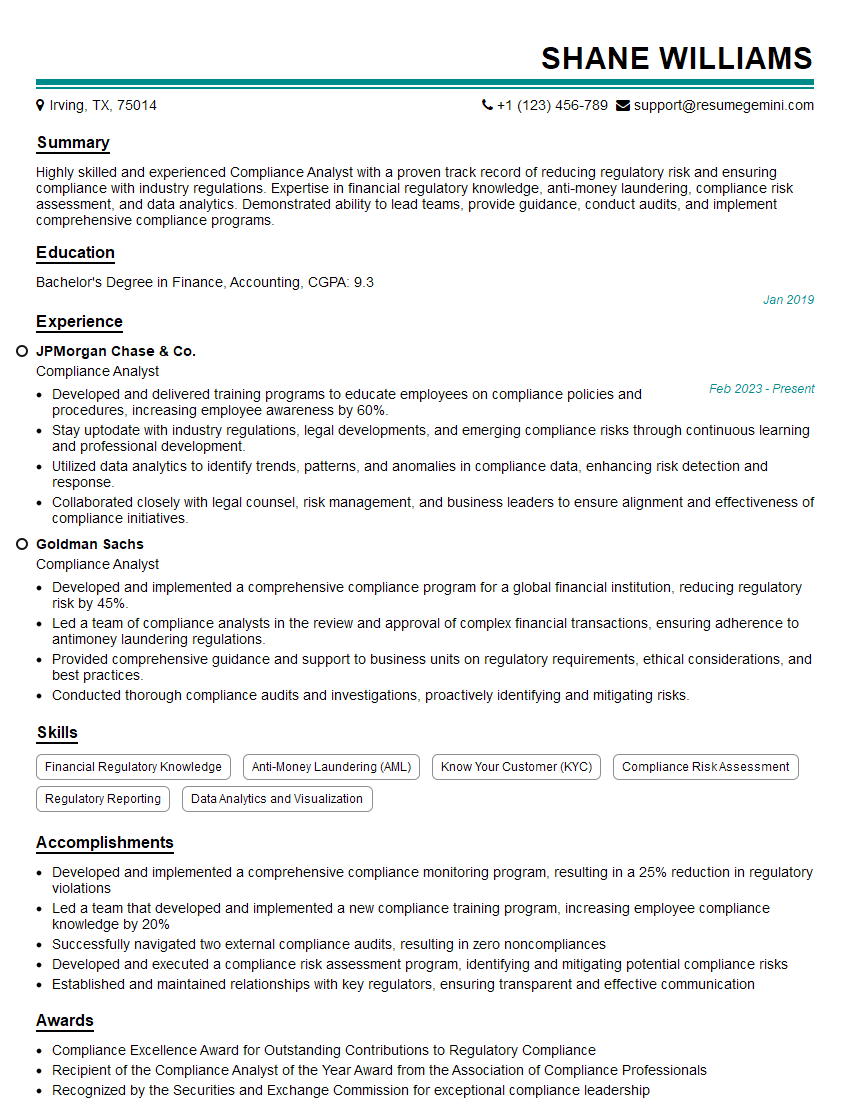
Compliance Analyst Resume Sample
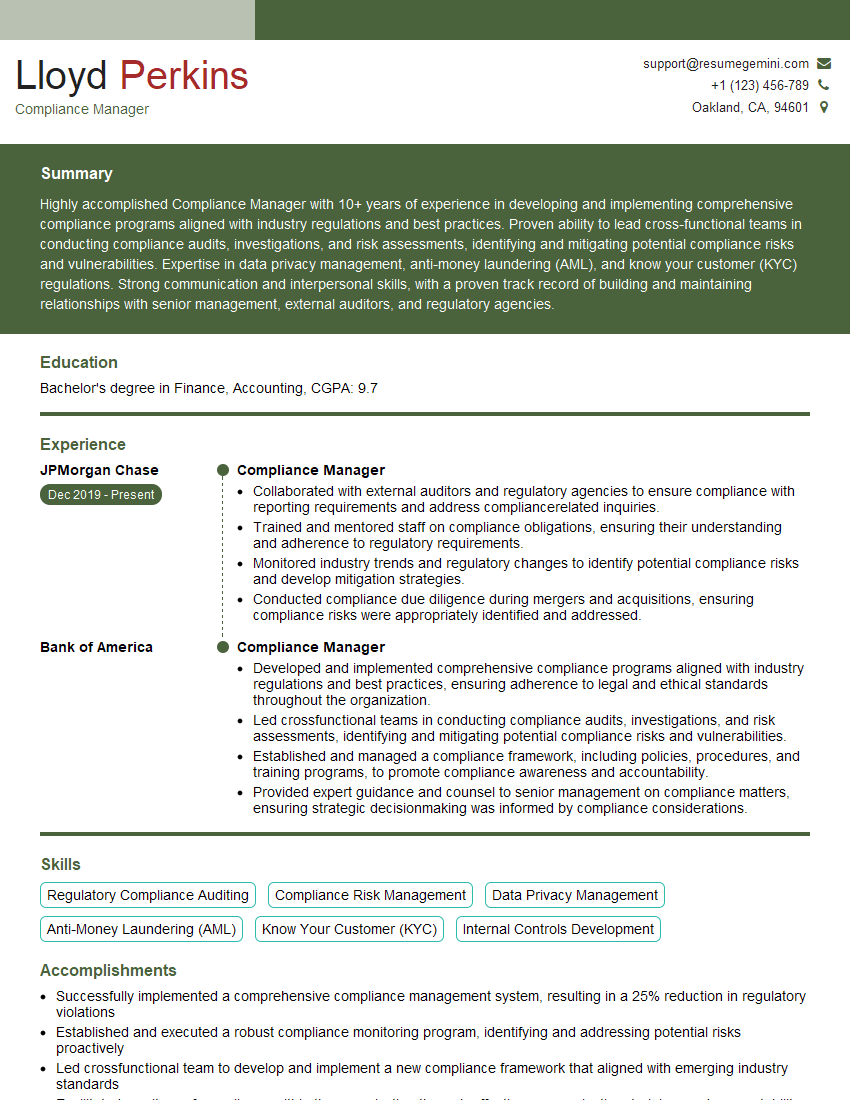
Compliance Manager Resume Sample

Compliance Officer Resume Sample
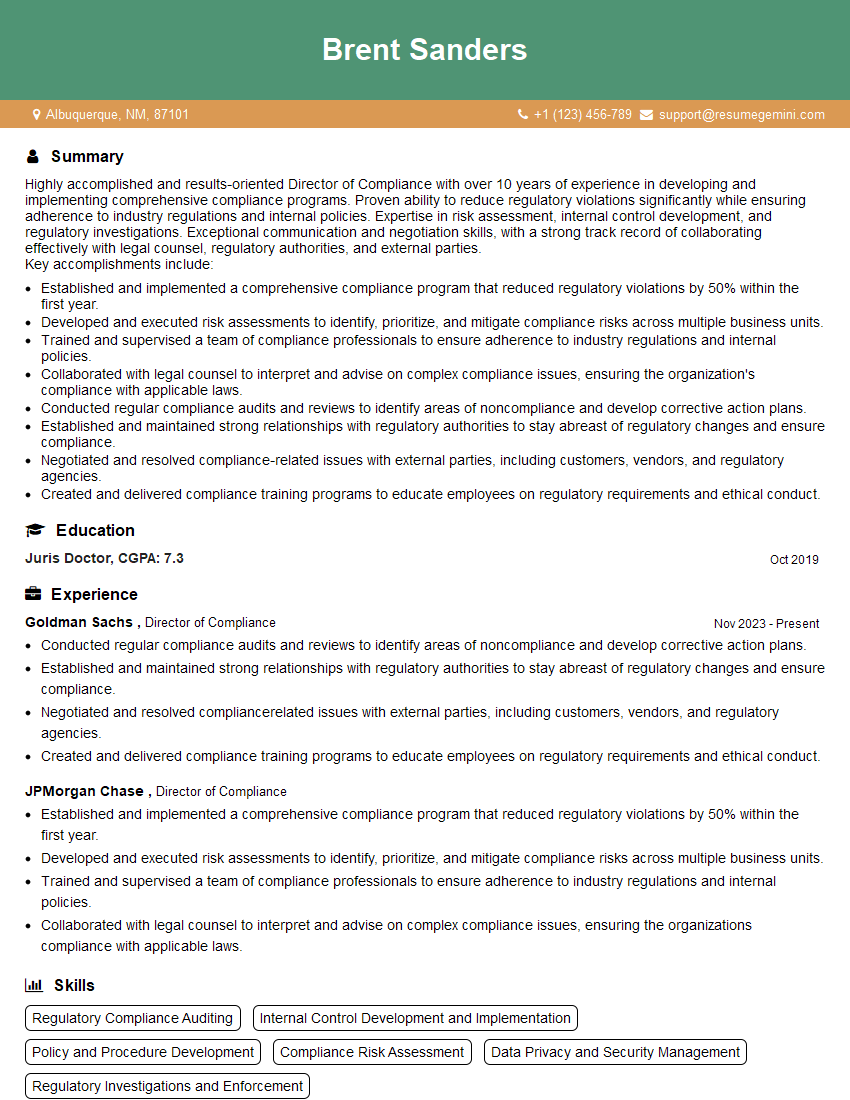
Director of Compliance Resume Sample
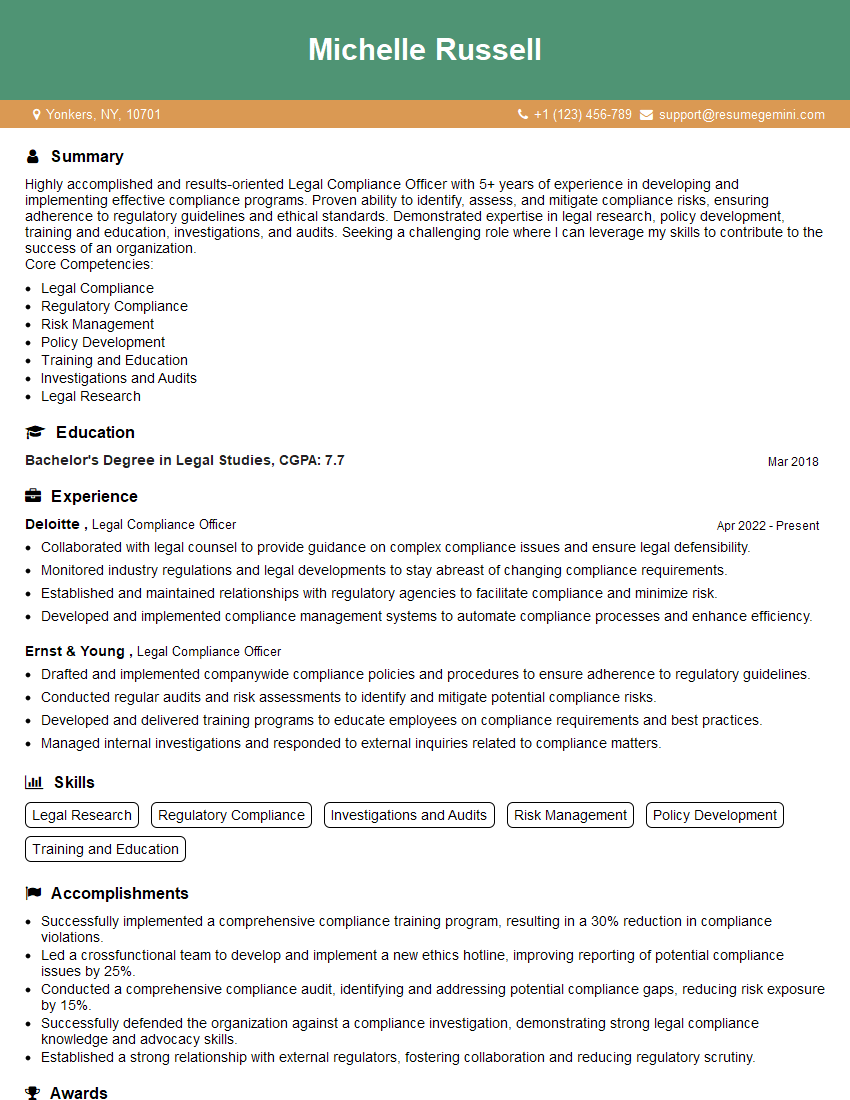
Legal Compliance Officer Resume Sample
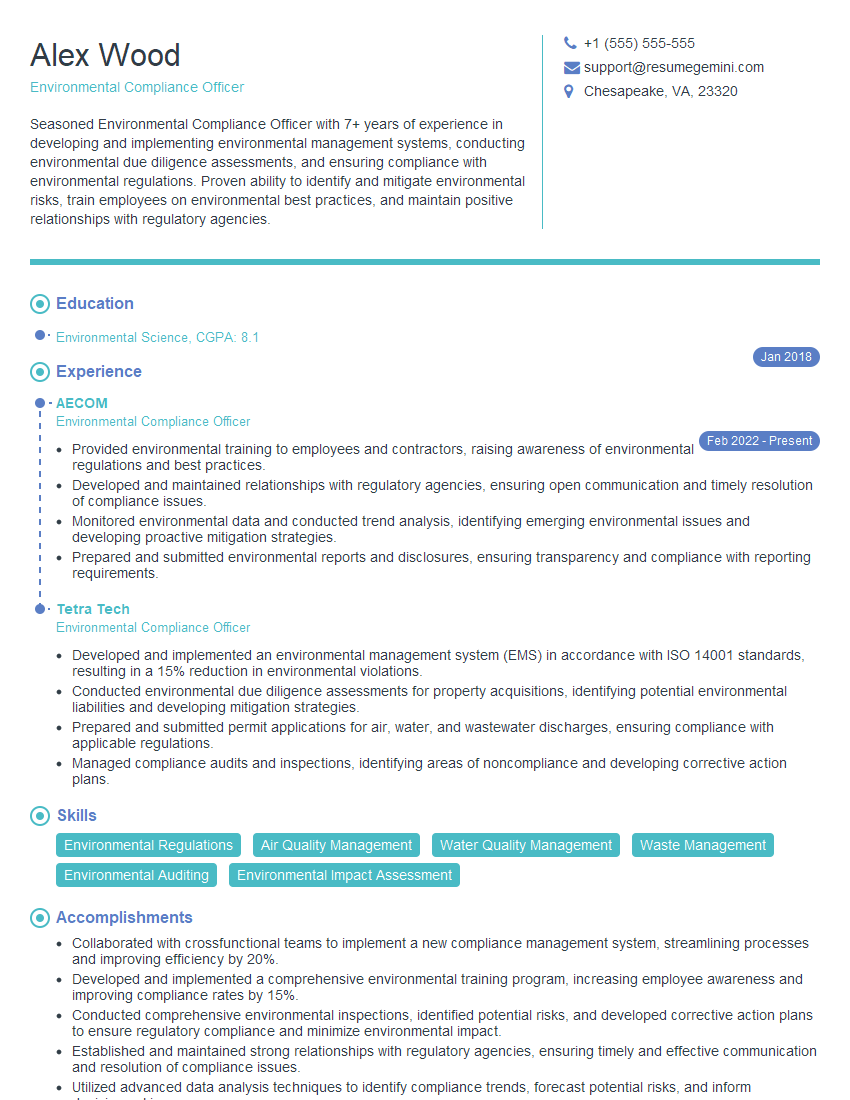
Environmental Compliance Officer Resume Sample
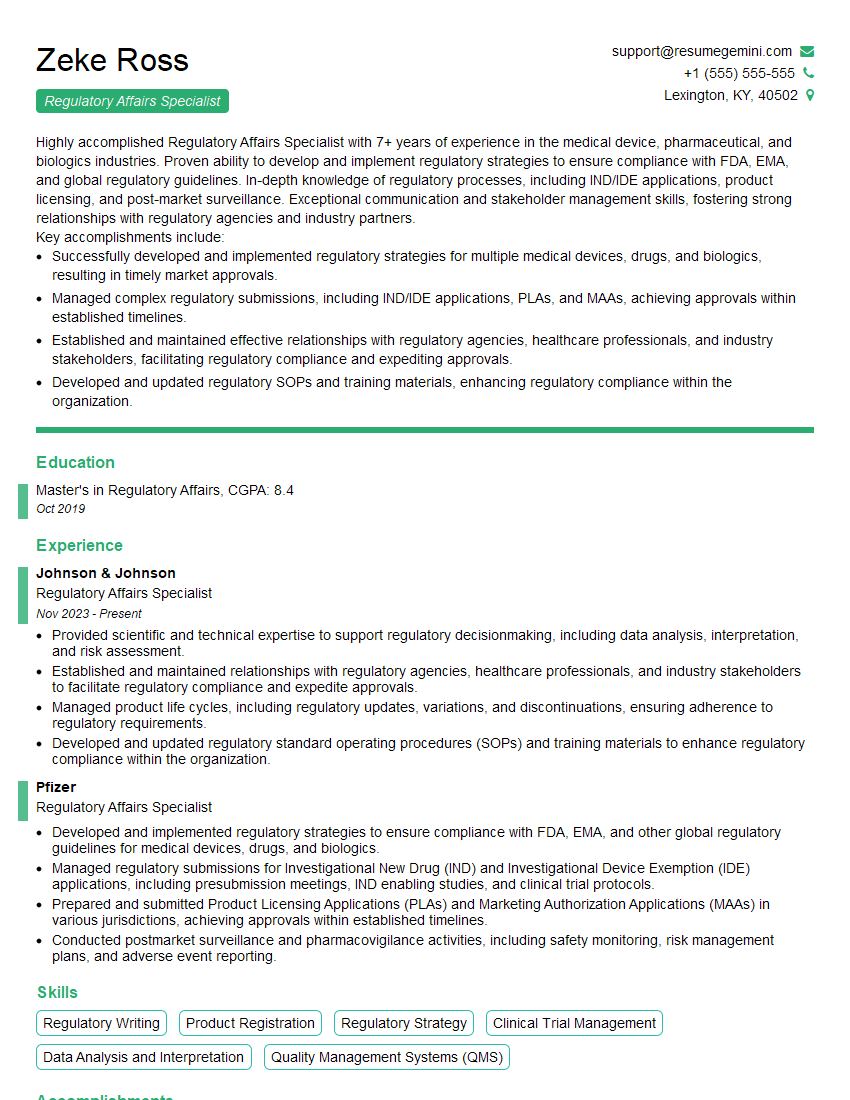
Regulatory Affairs Specialist Resume Sample
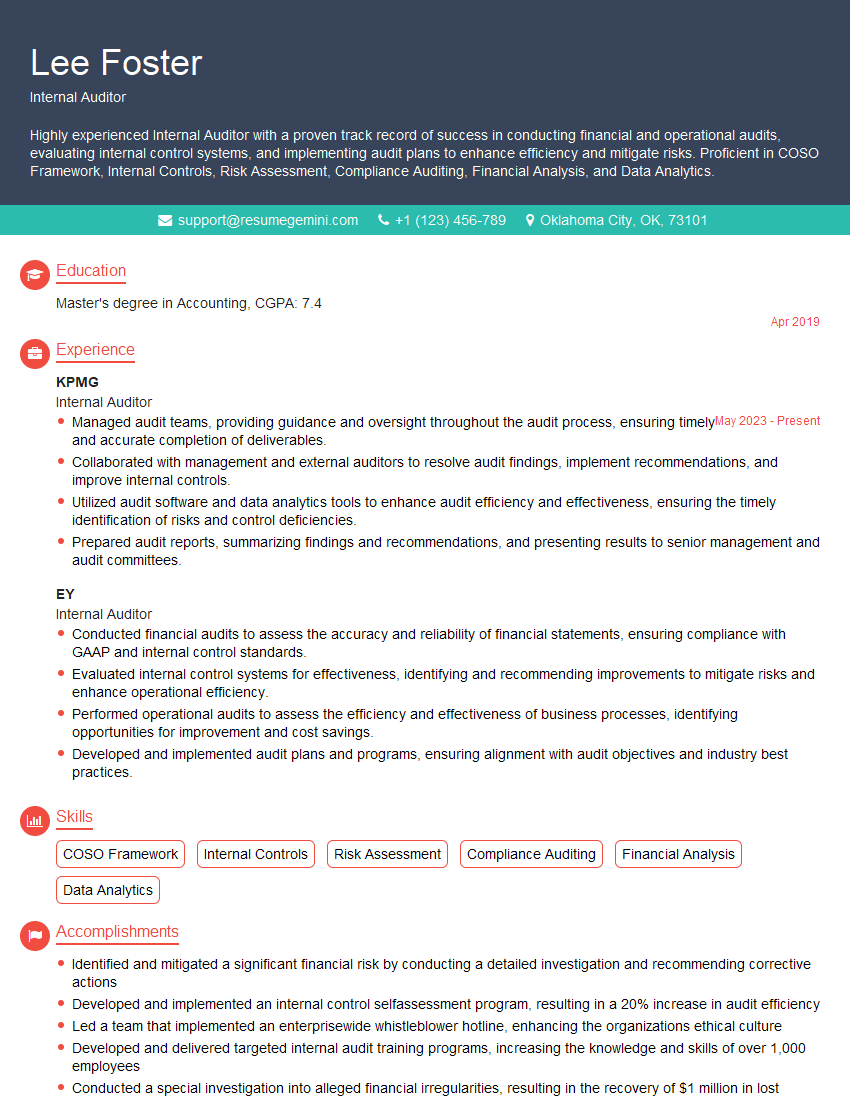
Internal Auditor Resume Sample
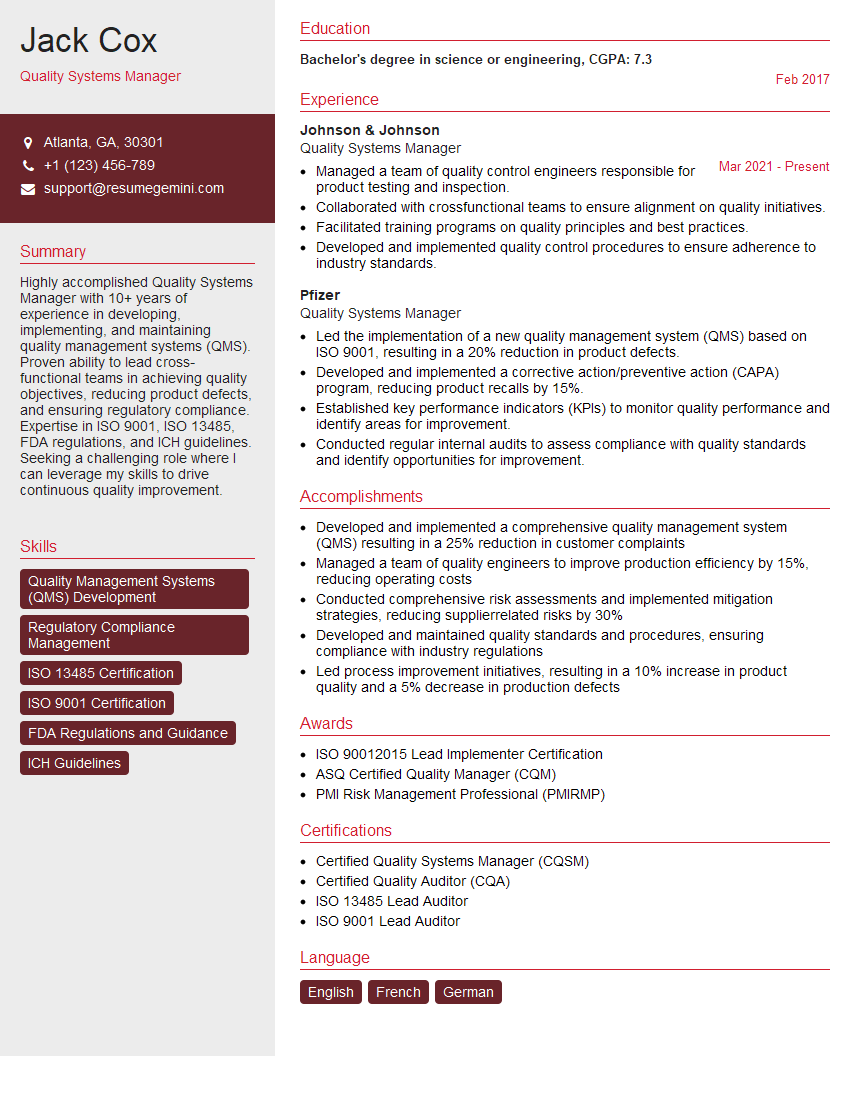
Quality Systems Manager Resume Sample
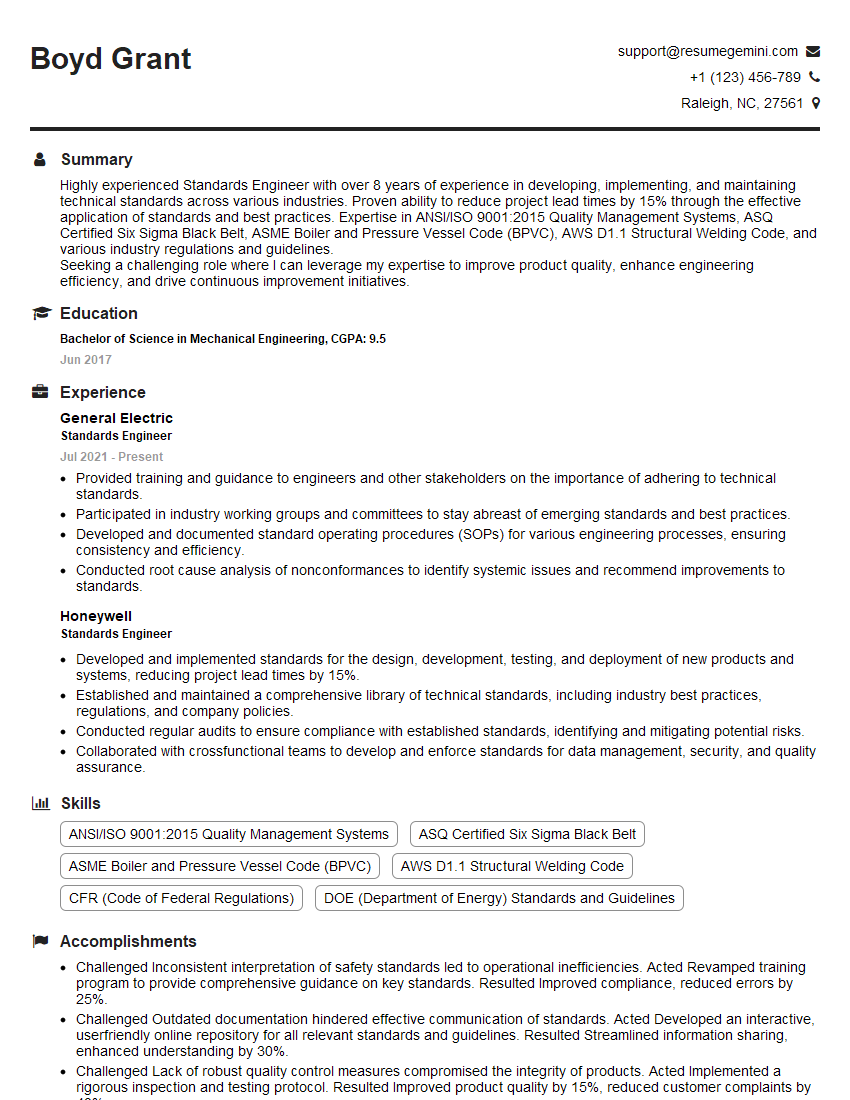
Standards Engineer Resume Sample
- Quality Assurance Manager
- Quality Control Manager
- Regulatory Consultant
- Chief Compliance Officer
- Compliance Analyst
- Compliance Manager
- Compliance Officer
- Director of Compliance
- Legal Compliance Officer
- Environmental Compliance Officer
- Regulatory Affairs Specialist
- Internal Auditor
- Quality Systems Manager
- Standards Engineer
Explore more articles
Users Rating of Our Blogs
Share Your Experience
We value your feedback! Please rate our content and share your thoughts (optional).
What Readers Say About Our Blog
Very informative content, great job.
good