The right preparation can turn an interview into an opportunity to showcase your expertise. This guide to Stitch Adjustment interview questions is your ultimate resource, providing key insights and tips to help you ace your responses and stand out as a top candidate.
Questions Asked in Stitch Adjustment Interview
Q 1. Explain the different types of stitches used in garment construction.
Garment construction relies on a variety of stitches, each chosen for its specific properties and application. Think of stitches as the glue holding your garment together; the wrong glue will result in a weak and poorly constructed product.
- Straight Stitch: The workhorse of sewing, ideal for seams, topstitching, and basting. It’s strong and versatile. Imagine it as the foundation upon which you build your garment.
- Zigzag Stitch: Used for finishing raw edges to prevent fraying, creating decorative effects, and sewing stretchy fabrics. It’s like adding a protective border to your seams.
- Overlock Stitch (Serger Stitch): A specialized stitch that cuts, sews, and finishes raw edges simultaneously, creating a professional and durable finish. It’s the ultimate seam finisher, creating clean and neat edges.
- Blind Hem Stitch: Almost invisible, this stitch is perfect for hemming trousers or skirts cleanly. It’s the stealth stitch, discreetly holding the hem in place.
- Buttonhole Stitch: Creates buttonholes in various styles and sizes. Each type is selected according to the button and fabric. It’s the perfect partner to a button, ensuring a smooth and secure closure.
- Decorative Stitches: A wide range of stitches used for aesthetic purposes, adding flair and individuality to your garments. Think of them as the jewellery of your garment, enhancing its beauty.
Selecting the right stitch is crucial for both functionality and aesthetics. A strong seam needs a straight stitch, while a decorative element might use a zigzag or satin stitch.
Q 2. Describe the process of adjusting stitch length on a typical sewing machine.
Adjusting stitch length is usually straightforward. Most sewing machines have a dial or button marked with numbers representing stitches per inch (SPI) or millimeters (mm). A lower number indicates longer stitches, while a higher number means shorter stitches.
Typically, you’ll find this adjustment on the front panel of your sewing machine. It’s usually clearly labeled with ‘stitch length’ or a similar designation. Simply rotate the dial or press the buttons to select your desired stitch length.
For example, a stitch length of 2.5 might be suitable for a strong seam, while a length of 1 might be better for delicate fabrics or fine details. Always test your stitch length on a scrap of fabric before working on the garment.
Q 3. How do you troubleshoot a skipped stitch on a sewing machine?
Skipped stitches are frustrating, but usually easy to fix! The key is systematic troubleshooting. Think of it like detective work – you need to find the culprit.
- Check the Needle: A bent, dull, or incorrectly inserted needle is the most common cause. Replace the needle with a new one, ensuring it’s the correct size and type for your fabric.
- Inspect the Thread: Make sure the thread is correctly threaded through the machine, that it’s not frayed or knotted, and that it’s the right type for your fabric and needle. Sometimes, even a tiny snag will throw off the whole system.
- Examine the Bobbin: A poorly wound or improperly placed bobbin can cause skipped stitches. Ensure the bobbin is wound correctly and sits snugly in its case. A loose bobbin case can cause a multitude of issues.
- Check the Tension: Incorrect tension settings can lead to skipped stitches. Adjust the tension dial according to the fabric type and thread. This usually involves a dial or screw, and it can take some experimentation to find the perfect balance.
- Clean the Machine: Lint and dust build-up can interfere with the machine’s mechanism. Clean the machine thoroughly, paying attention to the feed dogs and bobbin area. Regular cleaning is preventative maintenance.
By systematically eliminating these possibilities, you’ll usually track down the source of the problem.
Q 4. What are the common causes of uneven stitching?
Uneven stitching is often caused by several factors working in combination. It’s like a recipe – a small variation in any ingredient will affect the final result.
- Inconsistent Fabric Feed: Uneven fabric feed, caused by dirty or damaged feed dogs, can lead to uneven stitches. Clean the feed dogs and make sure there are no obstructions.
- Incorrect Tension: Improperly adjusted tension on either the upper or lower thread will result in uneven stitches. Adjust the tension dial to balance the tension of both threads.
- Fabric Type: Different fabrics require different needle sizes and stitch lengths. The wrong setting will result in uneven stitch length and inconsistent appearances.
- Needle Problems: Bent, dull, or incorrectly sized needles will contribute to uneven stitch formation. Always use a sharp, correctly sized needle for your fabric type.
- Machine Issues: Faulty or poorly maintained sewing machines can cause uneven stitches. Ensure the machine is properly maintained and lubricated.
Addressing these issues one by one will generally improve the evenness of your stitching.
Q 5. How do you adjust stitch tension for different fabric types?
Stitch tension is the balance between the upper and lower threads. Think of it like a delicate dance between two partners – they must move in harmony.
Adjusting tension depends on the fabric type. Lighter fabrics, like silk, require less tension to avoid puckering, while heavier fabrics, like denim, may require more tension for a secure stitch.
Experimentation is key! Start with a neutral tension setting and adjust gradually, testing on scraps of fabric. Too much tension pulls the fabric together, while too little results in loose, weak stitches. Often, a small adjustment will make a significant difference in quality.
Consider the fabric weight and type before making adjustments. For instance, delicate fabrics might need a lower tension, while heavier fabrics might require a higher one. Observe the stitch formation to make fine-tuned adjustments during the sewing process.
Q 6. Explain the importance of proper stitch selection for different garment components.
Stitch selection is vital for both structural integrity and the visual appeal of a garment. Different components demand different stitch properties. Imagine building a house – you wouldn’t use the same type of brick for the foundation as you would for the chimney.
- Seams: Straight stitches or overlock stitches are commonly used for seams, depending on the fabric and desired seam finish.
- Hems: Blind hems or narrow zigzag stitches are used for neat, invisible hems.
- Zips: A zigzag stitch or a specific zipper foot might be needed for securing zippers, ensuring durability and a clean finish.
- Buttonholes: Specialized buttonhole stitches are required for creating functional and aesthetically pleasing buttonholes.
- Decorative Elements: Decorative stitches add design elements and personalization.
Improper stitch selection can result in weak seams, unraveling hems, or poor overall garment construction. Selecting the correct stitch type ensures both durability and quality.
Q 7. How do you identify and correct broken needles during sewing?
A broken needle is a common sewing mishap. It’s a clear sign that something went wrong, and ignoring it can lead to further damage.
- Stop Sewing Immediately: Never force the machine; this can damage the machine further.
- Remove the Broken Needle: Carefully remove the broken needle using needle nose pliers or tweezers, making sure to avoid injury. Be cautious and methodical.
- Inspect the Machine: Check for any damage to the sewing machine that the broken needle might have caused. A bent needle can cause damage to the machine parts.
- Insert a New Needle: Insert a new, correctly sized and type needle, ensuring it is correctly aligned and firmly in place. Pay close attention to insertion instructions to prevent any additional damage.
- Check the Thread: Inspect the thread for any damage or knots; replace if necessary. A damaged thread could be a contributing factor.
- Reseat Bobbin: Ensure the bobbin is properly seated to avoid any further complications. A misplaced bobbin may contribute to future needle breakage.
Preventing broken needles starts with using the correct needle size and type for the fabric, ensuring proper threading, and maintaining the sewing machine regularly. A small investment in preventative maintenance goes a long way in preventing needle breakages and ensuring quality results.
Q 8. What are the signs of a poorly adjusted stitch?
A poorly adjusted stitch manifests in several ways, all impacting the final garment’s quality and durability. Think of a stitch as the tiny glue holding your fabric together; if the glue is weak or uneven, the whole structure suffers.
- Uneven stitch length: Stitches are inconsistently spaced, appearing bunched in some areas and loose in others. This weakens the seam and creates an unprofessional look.
- Broken or skipped stitches: The needle fails to complete the stitch, leaving gaps in the seam. This drastically reduces strength and is a common sign of improper tension or needle issues.
- Puckering or distortion of fabric: The fabric wrinkles or distorts around the seam, indicating incorrect presser foot pressure or unbalanced feed dog action.
- Stitch is too loose or too tight: A stitch that’s too loose will easily unravel; a stitch that’s too tight will put undue stress on the fabric, leading to breakage.
- Loose threads or birdnesting: Excess thread gathers behind the needle, a clear indication of tension problems or improper needle/thread combination.
For instance, imagine sewing a delicate silk blouse. Poor stitch adjustment would lead to visible puckering and potentially damage the fabric, ruining the finished product. On the other hand, a sturdy canvas tote bag would require a strong stitch that can withstand significant weight; an improperly adjusted stitch could easily break under pressure.
Q 9. Describe the relationship between stitch length, stitch width, and fabric type.
The relationship between stitch length, stitch width, and fabric type is crucial for achieving optimal stitch quality and seam strength. They work together to balance tension and prevent fabric damage.
- Stitch length: Determines the distance between individual stitches. Shorter stitches are stronger and more durable, ideal for areas under stress (like seams on jeans). Longer stitches are suitable for less demanding applications (like basting or decorative stitching). The choice should always depend on the fabric’s thickness and intended use.
- Stitch width: Refers to the width of the stitch pattern, commonly seen in zig-zag stitches. Wider stitches offer increased durability and flexibility, useful when stitching stretchy fabrics. Narrower stitches are better suited for precise seams and details.
- Fabric type: Different fabrics require different stitch settings. Lightweight fabrics need finer stitches to avoid damage, while heavier fabrics require longer and possibly wider stitches to penetrate the material effectively. Consider factors like fabric weight, weave structure (e.g., tightly woven or loosely knit), and stretchiness when choosing your stitch parameters.
For example, sewing a lightweight chiffon requires a short, narrow stitch to prevent puckering and breakage. Conversely, sewing denim would require a longer and potentially wider stitch to secure the thick material.
Q 10. How do you maintain consistent stitch quality throughout a production run?
Maintaining consistent stitch quality across a production run necessitates meticulous attention to detail and proactive measures. Imagine a factory producing thousands of shirts – every stitch must be perfect!
- Regular machine maintenance: Clean and lubricate the machine regularly to ensure smooth operation. This prevents skipped stitches and inconsistent tension.
- Consistent thread and needle selection: Always use the correct type and size of needles and thread for the fabric. This is crucial for maintaining even stitches.
- Frequent quality checks: Regularly inspect stitch quality throughout the run. Use a quality control checklist to ensure consistency.
- Calibration of machine settings: At the start of each run, carefully calibrate stitch length, width, and tension to the fabric type. Maintain those settings throughout the entire process.
- Operator training: Well-trained operators are essential. They should be able to identify and rectify minor stitch irregularities quickly.
- Use of standardized procedures: Implement clear guidelines and standard operating procedures for stitch adjustment and machine maintenance.
Imagine a large-scale garment factory. By implementing these practices, they can ensure that every shirt produced has the same high-quality stitching, boosting brand reputation and customer satisfaction.
Q 11. How do you adjust the feed dogs on a sewing machine?
Feed dogs are the teeth under the needle plate that move the fabric during sewing. Adjusting them is vital for even fabric feed and stitch quality. Incorrect adjustment can lead to puckering, skipped stitches, or uneven seams.
The adjustment method varies depending on the sewing machine model, but generally involves:
- Locating the feed dog adjustment lever: Consult your machine’s manual to find this lever; it’s usually located near the needle plate.
- Lowering or raising the feed dogs: The lever usually controls the height of the feed dogs. Lowering them allows for free-motion quilting or embroidery; raising them ensures even fabric movement for straight stitching.
- Testing and fine-tuning: Sew a test seam to check the feed dog adjustment. Adjust as needed until you achieve consistent fabric movement.
Some machines have more sophisticated feed dog adjustments, including options for altering the speed or pressure of the feed dogs. Refer to your machine’s manual for specific instructions.
Q 12. What is the difference between a lockstitch and a chainstitch?
Lockstitch and chainstitch are two fundamental stitch types, each with unique characteristics and applications. The main difference lies in how the stitches are formed and their resulting strength and appearance.
- Lockstitch: This is the most common stitch type, characterized by interlocking threads creating a strong, secure seam from both the top and bottom. It forms a symmetrical stitch, ideal for most garment construction. The thread interlocks in a way that makes it very difficult to unravel, even if a few stitches are broken.
- Chainstitch: This stitch forms a chain-like series of loops on the underside of the fabric, with only one thread visible on the top. It’s less durable than a lockstitch and more prone to unraveling. While weaker, it’s often used for decorative purposes or temporary stitching (like basting).
Think of it like this: A lockstitch is like a tightly woven knot, while a chainstitch is like a chain of links that can be easily broken. A lockstitch is crucial for strength and durability in clothing, while a chainstitch can be used in applications where aesthetics are prioritized over extreme strength.
Q 13. How do you adjust the presser foot pressure?
Presser foot pressure refers to the force with which the presser foot holds the fabric against the feed dogs. Correct pressure is essential for even feeding and stitch formation; incorrect pressure can lead to puckering, skipped stitches, or fabric damage.
Adjusting presser foot pressure usually involves:
- Locating the pressure adjustment knob: This knob is usually on the back or side of the presser foot. It could also be a dial or a screw.
- Turning the knob to increase or decrease pressure: Turn clockwise to increase pressure, counter-clockwise to decrease it. Start with a moderate setting and adjust based on the fabric type and thickness.
- Testing and fine-tuning: Sew a test seam and adjust until you achieve even fabric feed and stitch formation without puckering or distortion. Different fabrics require different pressure levels.
For example, delicate fabrics require very light pressure to avoid stretching or damaging the material, whereas heavier fabrics may need firmer pressure to ensure proper stitch formation. This is why it’s important to have a clear understanding of the material you’re working with before beginning any project.
Q 14. How do you troubleshoot a machine that is producing birdnesting?
Birdnesting, where the thread bunches up behind the needle, is a common sewing machine problem stemming from tension issues or improper needle/thread interactions.
Troubleshooting birdnesting involves a systematic approach:
- Check the upper thread tension: Reduce the upper tension dial setting. Too much tension is a primary cause of birdnesting.
- Check the lower thread tension (bobbin): Ensure the bobbin is correctly wound and inserted. Sometimes, an improperly wound bobbin or a low bobbin tension contributes to birdnesting.
- Check the needle: Make sure the needle is correctly inserted and is appropriate for the thread type and fabric. A bent needle or a wrong needle size is a common cause of this issue.
- Check the thread: Use a high-quality thread, the correct size, and verify it’s running smoothly. Avoid using damaged or knotted thread.
- Check the needle plate: Ensure it’s clean and free of obstructions that could impede the thread path.
- Clean the machine: Remove lint or debris around the needle and bobbin case, as these can disrupt thread movement.
If the issue persists after these checks, you may need professional machine maintenance. Systematic troubleshooting, focusing on these potential causes, is key to resolving birdnesting problems and preventing costly production delays.
Q 15. What are the safety precautions you take while adjusting stitches?
Safety is paramount when adjusting stitches. Before I even begin, I always ensure the sewing machine is unplugged unless it has a built-in safety mechanism to prevent accidental starts. I keep my fingers clear of the needle and moving parts at all times. I use a seam ripper carefully, and avoid forcing it, to prevent accidental injury. I also maintain a clean and organized workspace to prevent tripping or accidents. For example, I always keep the floor clear of fabric scraps and cords. Finally, I wear safety glasses to protect my eyes from flying debris, particularly when dealing with heavier fabrics or challenging stitch adjustments.
Think of it like working with any power tool – respect the machine and its potential for harm, and take every precaution to protect yourself.
Career Expert Tips:
- Ace those interviews! Prepare effectively by reviewing the Top 50 Most Common Interview Questions on ResumeGemini.
- Navigate your job search with confidence! Explore a wide range of Career Tips on ResumeGemini. Learn about common challenges and recommendations to overcome them.
- Craft the perfect resume! Master the Art of Resume Writing with ResumeGemini’s guide. Showcase your unique qualifications and achievements effectively.
- Don’t miss out on holiday savings! Build your dream resume with ResumeGemini’s ATS optimized templates.
Q 16. How do you determine the appropriate stitch type for a specific garment design?
Choosing the right stitch type depends heavily on the garment’s design and the fabric’s properties. A delicate silk blouse requires a very fine, almost invisible stitch like a 1.5mm straight stitch or a slightly lengthened zigzag. This ensures the fabric isn’t damaged while maintaining a strong seam. A heavy-duty canvas tote bag, on the other hand, might call for a stronger stitch like a double-needle stitch or a heavy-duty zig-zag for durability. I always consider factors like fabric weight, weave, stretch, and desired aesthetic when selecting a stitch.
For instance, a stretch fabric needs a stitch that will give with the fabric to prevent breakage. Similarly, using a delicate stitch on a heavy fabric could lead to broken needles and poorly constructed seams.
Q 17. What is the impact of incorrect stitch adjustment on garment durability?
Incorrect stitch adjustment directly impacts garment durability. Too loose a stitch creates weak seams prone to ripping under stress. I’ve seen countless examples where a poorly adjusted stitch has led to seams bursting at the shoulders of a shirt or along the seams of a pair of trousers after just a few wears. Conversely, a stitch that’s too tight can cause puckering and stress the fabric, leading to premature wear and tear. The ideal stitch length and density need to balance strength and flexibility to ensure long-lasting garments.
Imagine building a house: if you use loose nails, your walls are going to fall down! The right stitch is the foundation of a garment’s longevity.
Q 18. Explain how stitch density affects the final garment’s appearance and strength.
Stitch density, the number of stitches per inch (SPI), significantly affects both appearance and strength. A higher SPI leads to a denser, more robust, and smoother seam with less visible stitching. It’s often preferable for areas requiring high strength, like stress points. However, excessively high SPI can also lead to fabric damage, especially with delicate materials. Conversely, a lower SPI creates a more open seam, which is visually apparent and can compromise durability. This type of stitch is suitable for areas that require flexibility.
Think of weaving a basket: a tightly woven basket is stronger and more durable than one loosely woven. Similarly, a higher SPI translates to a stronger, more durable seam, but it also may create a less aesthetically pleasing effect depending on the fabric.
Q 19. How do you handle inconsistent fabric during stitching?
Inconsistent fabric presents a challenge, but I address it by adjusting my stitching technique. If the fabric is unevenly thick or thin, I might use a walking foot on my sewing machine to help feed the fabric evenly. This attachment ensures that both layers of fabric move at the same pace, preventing one layer from pulling ahead and causing puckering. I also adjust the stitch tension and speed, slowing down for thicker areas and using a slightly looser stitch to avoid strain on the seams.
For example, when sewing with a fabric featuring both thick and thin sections, I maintain a slow and steady pace; using a walking foot and adjusting my needle position will help prevent any unexpected pulling or puckering during stitching.
Q 20. Describe your experience with different types of sewing machine needles.
My experience encompasses a wide range of sewing machine needles. I am familiar with the differences between universal needles, ballpoint needles (for knits), sharps (for woven fabrics), stretch needles, and embroidery needles, each suitable for different fabrics and stitch types. I know which needle type is appropriate for each fabric weight, weave, and thread type. Choosing the right needle is crucial because an incorrectly chosen needle can lead to skipped stitches, broken needles, and damaged fabric.
For example, using a sharp needle on a knit fabric can cause snags and runs. Using the correct needle is essential to avoid problems and ensure a high-quality result.
Q 21. How do you address a problem with puckering or gathering in the fabric?
Puckering and gathering often result from incorrect stitch tension, improper needle type, or uneven fabric feeding. To address this, I first identify the cause. If the tension is too tight, I loosen it slightly and test it again. If the problem persists, I check the needle for sharpness and proper type, replacing it if necessary. Sometimes, changing to a walking foot helps with feeding issues. If the fabric itself is the culprit, pre-washing it can help relax it and minimize puckering. A final technique I often use is to carefully ease out the gathered sections by hand, working slowly and gently to avoid damaging the seams.
Troubleshooting these issues requires a systematic approach; check the tension, the needle, and the feeding mechanism to determine the source of the problem, and address each issue before moving on. This is a standard problem-solving approach used in garment construction.
Q 22. What is your approach to diagnosing and fixing a sewing machine malfunction?
Diagnosing sewing machine malfunctions requires a systematic approach. I begin by visually inspecting the machine for any obvious problems like loose parts, tangled threads, or broken needles. Then, I listen carefully to the machine’s operation; unusual noises can often pinpoint the source of the problem. Next, I’ll run a test stitch using a scrap piece of fabric. Observing the stitch quality—consistent stitch length, even tension, and straightness—helps identify whether the issue is mechanical or related to thread tension or needle selection.
For example, if the stitches are skipping, I might check the needle for damage, the timing of the hook and feed dogs, or the bobbin tension. If the stitches are uneven in length, I would check the stitch length dial and the machine’s internal mechanisms. I follow a troubleshooting checklist, systematically eliminating potential causes until the problem is identified and resolved. This process often involves adjusting the tension, cleaning lint buildup, lubricating moving parts, and replacing worn components.
Q 23. Describe your experience with different types of sewing machine threads.
My experience encompasses a wide range of sewing machine threads, each with its unique properties and applications. I’m familiar with various thread types, including cotton, polyester, rayon, silk, and nylon. The choice of thread depends greatly on the fabric being sewn and the desired outcome. Cotton threads are versatile and strong, suitable for everyday sewing. Polyester threads offer strength and resilience, ideal for durable garments. Rayon threads provide a luxurious sheen but are less strong. Nylon thread, known for its strength and elasticity, is frequently used for stretch fabrics. Understanding the properties of each thread type, such as its tensile strength, elasticity, and abrasion resistance, is essential for selecting the optimal thread for any project.
For instance, when working with delicate fabrics like silk, I opt for finer threads like silk or a very fine polyester to prevent damage to the fabric. For heavy-duty fabrics like denim, I would choose a stronger thread like cotton or polyester to ensure the seams are strong and durable. I also understand the importance of using the appropriate thread size and matching the thread to the needle size to achieve optimal stitch quality.
Q 24. How do you maintain and clean your sewing machine to prevent stitch issues?
Regular maintenance is crucial for preventing stitch issues and ensuring the longevity of the sewing machine. After each use, I remove any fabric scraps and lint from around the needle, bobbin case, and feed dogs using a soft brush or compressed air. I also clean the bobbin case thoroughly, ensuring it’s free of lint and debris that could interfere with the smooth operation of the machine. I lubricate the moving parts with a high-quality sewing machine oil as per the manufacturer’s recommendations.
Every few months or after extensive use, I perform a more thorough cleaning. This involves removing the needle plate, taking apart the bobbin case, and meticulously cleaning any accumulated lint or dust. I also inspect the needle for wear or damage and replace it as needed. Consistent preventative maintenance keeps my machine running smoothly and avoids unexpected stitch problems during production. Think of it like regularly servicing a car—regular maintenance prevents major breakdowns down the line.
Q 25. How do you handle a large volume of work while maintaining consistent stitch quality?
Maintaining consistent stitch quality while handling a large volume of work demands a combination of efficient techniques and meticulous attention to detail. I prioritize organization—setting up my workspace effectively and using standardized procedures for thread changes, needle replacements, and fabric handling. I also ensure that my machine is properly adjusted and maintained to minimize downtime. I frequently check my stitch quality, using a sample piece at regular intervals to verify that my machine is still producing consistent stitches. This helps to catch problems early and prevent larger quality control issues.
For example, if I notice slight variations in stitch length or tension during a high-volume job, I’ll immediately adjust the machine settings accordingly and double-check my thread tension. A consistent approach to quality control, combined with proper machine maintenance, ensures the production of consistent, high-quality stitches even when working under pressure and with a large workload.
Q 26. Explain your experience with different types of fabrics and their impact on stitching.
Different fabrics greatly impact stitching, requiring adjustments to machine settings and thread selection. For example, lightweight fabrics like silk or chiffon require a fine needle, a light thread, and a delicate stitch length. Otherwise, you risk piercing the fabric or causing puckering. Heavyweight fabrics like denim or canvas need a heavier needle, stronger thread, and a larger stitch length to create a strong seam that can withstand stress. Stretchy fabrics like jersey require a stretch needle and a ballpoint needle to avoid snagging the fabric.
Understanding fabric properties like weave, weight, and stretch is crucial. I always test my settings on a scrap piece of fabric before working on the final product to ensure the stitch quality is suitable for the fabric. In addition, proper pre-treatment of the fabric, such as pressing or stabilizing, can make a big difference in the quality of the final stitching.
Q 27. How do you prioritize tasks when facing multiple stitching problems on the production line?
When facing multiple stitching problems on a production line, I prioritize issues based on their impact on production and overall quality. Critical issues that affect a large number of products or could lead to significant defects are addressed first. For example, a machine malfunction that produces consistently faulty stitches needs immediate attention to prevent waste and delays. Less critical issues, such as minor adjustments to stitch length or tension, can often be handled later without significantly impacting overall production.
I use a system of visual cues or a checklist to track problems and their priorities. This helps me manage multiple problems effectively and avoid making mistakes due to pressure. The process prioritizes efficiency, minimizes waste, and ensures the consistent production of high-quality items.
Q 28. Describe a time when you had to troubleshoot a complex stitch adjustment issue. How did you resolve it?
I once encountered a complex stitch adjustment issue where the stitches were consistently uneven and occasionally skipping, despite multiple attempts at adjusting the tension and needle. The problem persisted across different fabrics and thread types. After systematically eliminating common causes like bobbin tension, needle condition, and thread quality, I suspected an issue with the machine’s internal timing mechanism. I carefully consulted the machine’s manual and watched several instructional videos, learning about the timing adjustments of the machine.
By meticulously checking the hook timing and adjusting it with the appropriate tools, I managed to resolve the problem. It turned out that a slight misalignment in the hook timing was causing the inconsistent stitch formation. This experience highlighted the importance of thorough troubleshooting, detailed knowledge of the machine’s inner workings, and the ability to consult relevant resources when dealing with complex sewing machine issues. It reinforced my commitment to continuous learning and the value of patience when solving challenging technical problems.
Key Topics to Learn for Stitch Adjustment Interview
- Understanding Stitch Types and Properties: Learn to differentiate between various stitch types (e.g., running stitch, backstitch, satin stitch) and their respective strengths and weaknesses in different fabrics and applications.
- Fabric Analysis and Selection: Master the ability to assess fabric characteristics (weave, weight, fiber content) to determine appropriate stitch adjustments for optimal results. This includes understanding how fabric type impacts stitch density and tension.
- Stitch Tension and Adjustment Mechanisms: Gain a comprehensive understanding of how stitch tension affects seam quality and garment construction. Learn to diagnose and correct tension issues using various machine settings and techniques.
- Troubleshooting Common Stitch Problems: Develop practical problem-solving skills to identify and rectify common stitch defects, such as skipped stitches, puckering, and uneven seams. This includes understanding the causes of these issues and implementing corrective actions.
- Advanced Stitch Techniques: Explore more complex stitch techniques like decorative stitches, embroidery stitches, and specialized stitches for specific garment constructions. Understand their applications and potential challenges.
- Machine Maintenance and Calibration: Learn the importance of regular machine maintenance and calibration for optimal stitch quality. Understanding basic machine upkeep is crucial.
- Safety Procedures and Best Practices: Familiarize yourself with relevant safety guidelines and best practices associated with sewing machine operation and stitch adjustment techniques.
Next Steps
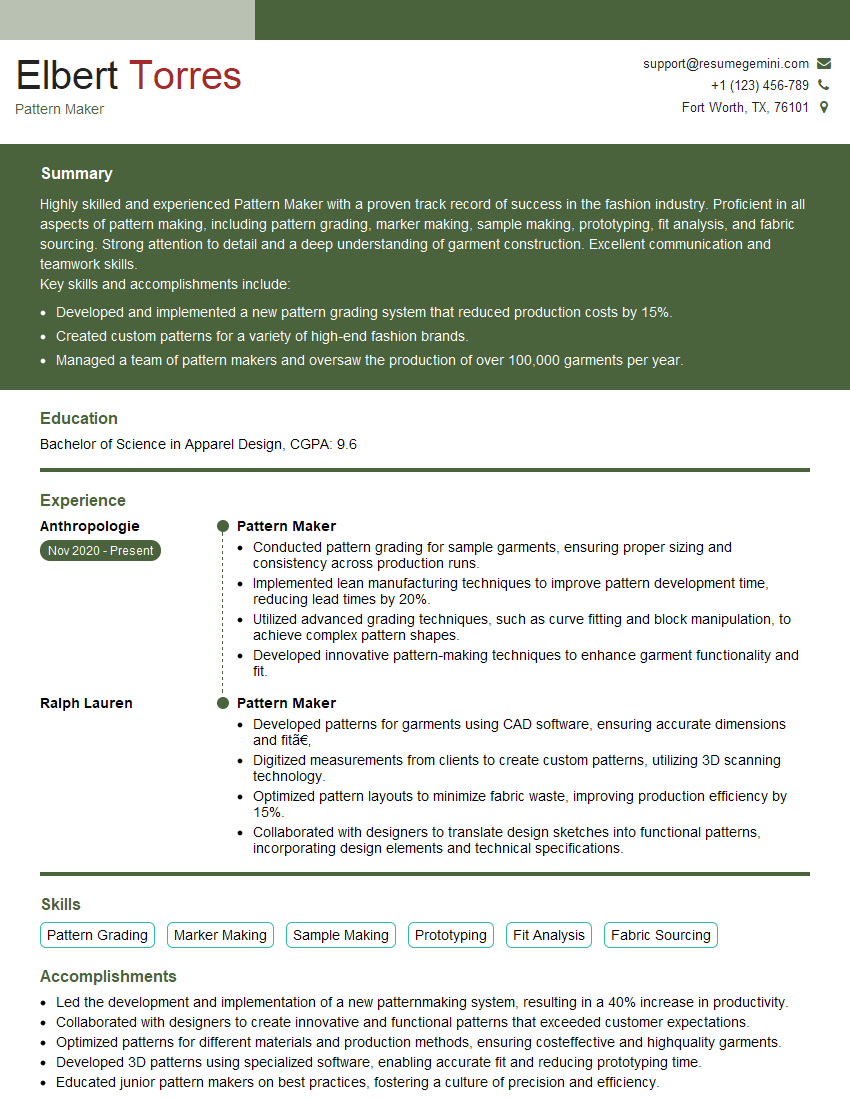
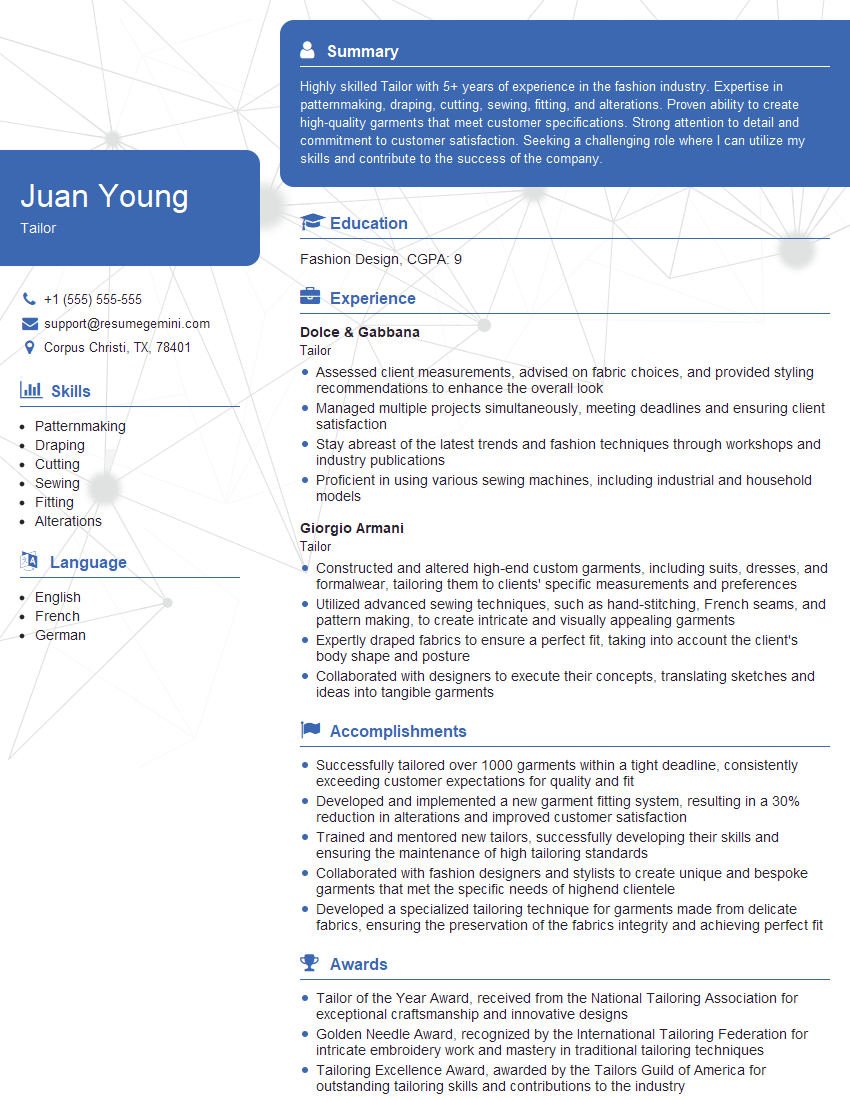
Mastering stitch adjustment is vital for career advancement in the textile and apparel industries, opening doors to specialized roles and higher earning potential. A well-crafted resume is crucial for showcasing your skills effectively to potential employers. Creating an ATS-friendly resume is essential to ensure your application is seen by recruiters. Use ResumeGemini to build a professional resume tailored to the specific requirements of your target roles. Examples of resumes specifically tailored for Stitch Adjustment positions are provided to help you get started.







Explore more articles
Users Rating of Our Blogs
Share Your Experience
We value your feedback! Please rate our content and share your thoughts (optional).
What Readers Say About Our Blog
Very informative content, great job.
good