Preparation is the key to success in any interview. In this post, we’ll explore crucial Stitching and Trimming interview questions and equip you with strategies to craft impactful answers. Whether you’re a beginner or a pro, these tips will elevate your preparation.
Questions Asked in Stitching and Trimming Interview
Q 1. What types of stitches are you proficient in?
My stitching proficiency spans a wide range of techniques, crucial for diverse projects. I’m expert in both hand and machine stitching, mastering various stitch types.
- Basic Stitches: Running stitch, backstitch, slip stitch – foundational for many projects, from basic repairs to intricate details.
- Decorative Stitches: Blanket stitch, chain stitch, satin stitch – adding aesthetic appeal and durability.
- Functional Stitches: French seams, felling stitches, blindstitches – vital for professional-looking garments, enhancing strength and clean finishes.
- Machine Stitches: Straight stitch, zig-zag stitch, overlock stitch, blind hem stitch – I utilize these to achieve specific effects, from simple seams to complex decorative elements. I’m comfortable adjusting stitch length, width, and tension to match fabric type and project needs.
For example, I recently used a combination of French seams and a blind hem stitch to create a tailored skirt with an invisible hem. The French seams provided durability and a clean finish inside, while the blind hem kept the hem perfectly invisible on the outside.
Q 2. Describe your experience with different trimming techniques.
Trimming techniques are as critical as stitching itself. They determine the final look and feel of a garment, impacting both aesthetics and functionality. My experience includes:
- Pinking Shears: Creating a zig-zag edge to prevent fraying, particularly useful for lightweight fabrics.
- Scissors: Precise trimming for clean seams and accurate pattern cutting. I use different types of scissors – from small embroidery scissors to larger fabric shears – depending on the task.
- Sergers (Overlock Machines): Creates a professional-looking, durable finish on seam edges while preventing fraying. I’m proficient at adjusting tension and differential feed for different fabrics.
- Clipping Curves: Essential for creating smooth curves and preventing bulkiness in seams; my skill here allows for flawless fitting.
- Notching and V-notching: These techniques help in creating sharper points and curves.
I select trimming methods based on fabric type, seam allowance, and desired finish. For instance, on a delicate silk garment, I use pinking shears to minimize fraying. However, for a durable denim jacket, a serger is perfect to guarantee longevity and a clean professional finish.
Q 3. How do you ensure consistent stitch quality?
Consistent stitch quality is paramount. I achieve this through a multi-faceted approach:
- Proper Machine Maintenance: Regularly cleaning and oiling the sewing machine ensures smooth operation and consistent stitch formation.
- Correct Tension Adjustment: Adjusting the upper and lower tensions based on the fabric type and thread weight prevents skipped stitches and broken threads.
- Appropriate Needle Selection: The correct needle size and type for the fabric prevents skipped stitches and damage to the fabric.
- Consistent Seam Allowance: Using accurate seam allowances maintains a professional and uniform finish.
- Proper Threading: Correctly threading the machine is fundamental for avoiding jams and inconsistent stitches.
For example, when working with a heavy denim, I’d use a heavier needle and adjust the tension for a strong and even stitch. Conversely, delicate fabrics require a finer needle and precise tension adjustment to prevent damage.
Q 4. What are the common problems encountered during stitching and how do you resolve them?
Common stitching problems are often solvable with systematic troubleshooting:
- Skipped Stitches: Caused by incorrect tension, dull needles, or improper threading. Solution: Check tension, replace the needle, and re-thread the machine.
- Broken Threads: Can be due to worn needles, incorrect tension, or low-quality thread. Solution: Replace the needle, adjust tension, and use high-quality thread.
- Uneven Stitches: Could result from inconsistent speed, improper tension, or a dirty machine. Solution: Sew at a consistent speed, adjust tension, and clean the machine.
- Fabric Pucker or Gathering: Often caused by incorrect tension or pulling the fabric while stitching. Solution: Adjust tension, use a walking foot (if necessary), and avoid pulling the fabric.
I always diagnose the problem methodically, starting with the simplest solutions before moving to more complex ones. My experience allows me to quickly identify and fix issues, minimizing delays and maximizing efficiency.
Q 5. Explain your experience with different types of sewing machines.
My experience encompasses a variety of sewing machines:
- Industrial Sewing Machines: I’m familiar with high-speed, heavy-duty machines used for mass production, understanding their unique maintenance requirements.
- Domestic Sewing Machines: I’m proficient with various models from different brands, each with specific features and functionalities.
- Sergers (Overlock Machines): I’ve extensive experience using sergers to create professional finishes, adjust tensions, and utilize various differential feeds.
- Specialty Sewing Machines: My experience includes using machines for quilting, embroidery, and other specialized applications.
I adapt my approach based on the machine’s capabilities and the project’s demands. Understanding the nuances of each machine allows for optimal performance and efficiency.
Q 6. How do you maintain sewing machines and equipment?
Maintaining sewing machines and equipment is crucial for longevity and consistent performance. My maintenance routine includes:
- Regular Cleaning: Removing lint and dust from the bobbin case, feed dogs, and other areas.
- Lubrication: Applying appropriate sewing machine oil to moving parts, preventing wear and tear.
- Needle Replacement: Frequently changing needles, especially when working with heavy fabrics or noticing skipped stitches.
- Tension Adjustment: Regularly checking and adjusting tension to ensure consistent stitch formation.
- Storage: Properly storing machines and equipment to protect them from dust and damage.
I believe in preventative maintenance. Regular cleaning and lubrication prevents major problems down the line, saving time and resources in the long run. This proactive approach ensures my machines operate smoothly and consistently.
Q 7. What safety precautions do you follow while operating sewing machines?
Safety is paramount in my work. I always:
- Keep my workspace clean and organized: Preventing accidents caused by clutter.
- Use appropriate safety guards: On all moving parts of the sewing machine.
- Keep fingers away from the needle: Avoiding needle punctures.
- Use sharp needles and scissors: To avoid applying excessive force, and handle them with care.
- Unplug the machine: Before cleaning or making any adjustments.
- Wear appropriate clothing: Avoiding loose clothing or jewelry that could get caught in the machine.
My commitment to safety is unwavering. It’s a crucial aspect of my work ethic, ensuring both personal safety and the protection of my equipment.
Q 8. How do you identify and correct stitching defects?
Identifying and correcting stitching defects requires a keen eye and a systematic approach. I start by visually inspecting the stitched area for inconsistencies. Common defects include skipped stitches, broken threads, uneven stitch length, puckering, and distortions. The type of defect dictates the correction method.
- Skipped Stitches: These are easily identifiable gaps in the stitching line. I’d carefully re-stitch the missed area, matching the existing stitch length and tension as closely as possible.
- Broken Threads: I would carefully remove the broken thread ends, ensuring I don’t pull the surrounding stitches loose. Then, I’d re-stitch the affected area using a matching thread.
- Uneven Stitch Length: This often results from inconsistent machine settings or operator technique. Depending on the severity, I may hand-stitch the uneven section to match the rest, or if it’s a significant portion, I might have to re-stitch the entire seam.
- Puckering: This is a gathering of fabric around the seam, usually caused by tension issues. I would check the tension settings on my machine or adjust my hand-stitching technique to even it out.
- Distortions: These can range from slight waviness to significant misalignments. Often, a careful re-stitching with attention to fabric alignment is enough. However, if severe, a seam might have to be unpicked and re-sewn from the beginning.
Throughout the process, I prioritize maintaining the overall integrity and appearance of the garment. I always aim for a seamless repair that is invisible to the naked eye.
Q 9. How do you handle large volumes of work while maintaining accuracy?
Handling large volumes of work accurately involves a blend of efficient workflow management and meticulous attention to detail. My approach emphasizes organization and process optimization.
- Batch Processing: I organize projects into manageable batches based on fabric type, stitching requirements, and complexity, allowing for focused work and reduced switching costs.
- Quality Checkpoints: Instead of inspecting only after completion, I implement regular quality checks during the stitching process. This allows me to identify and correct errors early on, reducing the need for extensive rework and increasing speed.
- Ergonomics and Efficiency: Maintaining a comfortable and efficient workspace is critical. This includes proper lighting, comfortable seating, and organized work surfaces to avoid fatigue and enhance focus.
- Technology: When appropriate, I utilize automated equipment and computerized stitching aids to streamline the process and boost accuracy. This is particularly helpful for repetitive tasks.
- Teamwork (If applicable): In a team environment, clear communication and task delegation are crucial for efficient workflow and quality control.
Think of it like an assembly line – each step is optimized for maximum efficiency while maintaining the high standards expected in the final product.
Q 10. What materials are you experienced in stitching and trimming?
My experience spans a wide range of materials, including various types of fabrics, leathers, and even some specialty materials like canvas and suede.
- Fabrics: I’m proficient with cotton, linen, silk, wool, polyester, nylon, and blends. I understand the unique properties of each – such as their drape, thickness, and strength— to select appropriate needles, threads, and stitching techniques.
- Leathers: I’m experienced in stitching different types of leather, understanding the nuances of working with heavier and more delicate materials and utilizing specialized needles and threads.
- Specialty Materials: My work also encompasses canvas and suede, requiring specific attention to the type of stitching needed to avoid damage or distortion.
This diverse experience allows me to adapt quickly to different projects and client specifications. The key is understanding the limitations and strengths of each material to achieve the best possible result.
Q 11. Describe your experience with different fabrics and their unique stitching requirements.
Different fabrics present unique stitching challenges. Understanding these nuances is vital for producing high-quality results.
- Delicate Fabrics (Silk, Chiffon): These require fine needles and threads, gentle handling, and often specialized stitching techniques to prevent tearing or snagging. A lighter touch and slower speed are essential.
- Heavy Fabrics (Denim, Canvas): These demand stronger needles, heavier threads, and potentially different stitch patterns to provide durability and prevent breakage. You may need to adjust the stitch length to accommodate the thickness of the material.
- Stretchy Fabrics (Lycra, Jersey): Special consideration is given to using needles and thread types that allow the seam to stretch without breaking. Special stitch types (like stretch stitches) are also important.
- Woven vs. Knit Fabrics: Woven fabrics have a distinct grain, and stitching should generally follow the grain to avoid distortion. Knit fabrics, being more malleable, offer greater flexibility in stitching direction.
I always consider the fabric’s characteristics— its weight, weave, stretch, and potential for damage — to determine the most appropriate stitching method. It’s like being a chef who selects the right tools and technique based on the ingredients.
Q 12. How do you ensure the accuracy and precision of trimming?
Accuracy and precision in trimming are crucial for achieving a clean, professional finish. My approach prioritizes consistent and controlled cutting.
- Sharp Tools: Using sharp, well-maintained shears or rotary cutters is paramount. Dull blades lead to uneven cuts, fraying, and potential damage to the fabric.
- Cutting Techniques: I employ appropriate techniques depending on the material and desired outcome. This might involve straight cuts, curved cuts, or more intricate shaping.
- Templates and Guides: For consistent results, especially when trimming multiple pieces, I use templates, rulers, and cutting mats. This ensures precise and even cuts.
- Material Handling: Careful handling of the material prevents shifting or slippage during the cutting process. This is especially important with delicate fabrics or materials that are prone to stretching.
- Post-Trimming Inspection: I always carefully inspect the trimmed edges for imperfections. This allows me to address any uneven cuts or fraying before proceeding to the next stage.
Precision trimming is like sculpting – each cut contributes to the overall aesthetic appeal and functional integrity of the final product.
Q 13. What quality control measures do you implement in your work?
Quality control is integrated into every step of my process. It’s not an afterthought but a fundamental aspect of my work.
- Pre-Stitching Inspection: I thoroughly inspect the fabric for defects like holes, stains, or inconsistencies before I start stitching. This prevents wasting time and materials.
- Regular Checks During Stitching: I perform quality checks at regular intervals, focusing on stitch consistency, tension, and fabric alignment. This helps to catch errors early.
- Post-Stitching Inspection: After stitching is completed, I perform a final thorough inspection to identify any defects, such as skipped stitches, broken threads, or uneven seams.
- Trimming Inspection: I carefully examine the trimmed edges for cleanliness, evenness, and any fraying. This helps maintain a professional finish.
- Documentation: Maintaining records of the materials used, stitching parameters, and quality control findings provides traceability and aids in process improvement.
Quality control is a proactive approach that aims to produce high-quality outputs every time. It’s like a chef tasting the food at every stage of preparation to make sure it meets their standards.
Q 14. How do you interpret technical drawings and specifications?
Interpreting technical drawings and specifications is a crucial skill. I approach it systematically and methodically.
- Understanding the Scale and Dimensions: First, I carefully review the scale and dimensions to accurately understand the size and proportions of the garment or component.
- Identifying Stitch Types and Specifications: I carefully examine the specifications to identify the stitching type, stitch length, and other critical details (e.g., seam allowances).
- Interpreting Symbols and Markings: I’m familiar with standard symbols and markings commonly used in technical drawings, such as seam allowances, notches, and grainlines. This knowledge allows me to accurately follow the instructions.
- Material Specifications: The drawings often indicate the type of fabric to be used. I carefully note this information to select the appropriate needles and threads.
- Creating a Work Plan: Once I have a complete understanding of the drawing, I develop a plan detailing the steps involved in completing the task efficiently and accurately.
Interpreting technical drawings is akin to reading a recipe. Each detail and instruction must be understood and followed precisely to achieve the desired outcome.
Q 15. What is your experience with different types of trimming tools?
My experience with trimming tools spans a wide range, from basic rotary cutters and scissors to specialized tools like pinking shears and electric shears. Rotary cutters are invaluable for cutting large pieces of fabric quickly and accurately, especially when working with precise patterns. I find pinking shears particularly useful for finishing raw edges, preventing fraying on lightweight fabrics. Electric shears excel in cutting multiple layers of thick fabrics like denim or leather, a task far too strenuous for manual shears. My proficiency extends to understanding the nuances of each tool – the best blade type for different fabrics, proper maintenance (sharpening, cleaning, lubrication), and safety practices to avoid injury. For example, I know to use a self-healing cutting mat with rotary cutters to protect both the blade and the work surface. Selecting the right tool for the task is crucial for efficiency and quality.
- Rotary Cutters: Ideal for straight cuts and precise pattern cutting.
- Pinking Shears: Excellent for finishing raw edges to prevent fraying.
- Electric Shears: Best for cutting multiple layers of thick fabrics.
- Scissors: Versatile for intricate cutting and detail work.
Career Expert Tips:
- Ace those interviews! Prepare effectively by reviewing the Top 50 Most Common Interview Questions on ResumeGemini.
- Navigate your job search with confidence! Explore a wide range of Career Tips on ResumeGemini. Learn about common challenges and recommendations to overcome them.
- Craft the perfect resume! Master the Art of Resume Writing with ResumeGemini’s guide. Showcase your unique qualifications and achievements effectively.
- Don’t miss out on holiday savings! Build your dream resume with ResumeGemini’s ATS optimized templates.
Q 16. Describe your experience working with patterns and templates.
Working with patterns and templates is fundamental to my work. I’m adept at interpreting both commercial and custom-made patterns, understanding grading (sizing), notation, and construction techniques. My experience encompasses various pattern types – from simple shirt patterns to complex garments requiring multiple pattern pieces. I’m comfortable adapting patterns to accommodate different fabric types or design changes. I meticulously prepare patterns, transferring markings accurately, and ensuring the pattern pieces are aligned correctly before cutting. A recent project involved adjusting a vintage dress pattern to incorporate a modern sleeve design – this required a detailed understanding of the pattern’s construction and careful manipulation of the pattern pieces to ensure a seamless fit. Accurate pattern use is the foundation of a well-made garment.
Furthermore, I can create my own patterns and templates using various methods, including drafting from body measurements and modifying existing patterns. I use software such as Adobe Illustrator for precision and scaling as needed.
Q 17. How do you handle variations in material thickness or texture?
Handling variations in material thickness and texture requires adaptability and attention to detail. The same stitch settings won’t work for a lightweight silk as they would for a heavy-duty canvas. For thicker fabrics, I might adjust stitch length, use a heavier-duty needle, and increase pressure on the presser foot. With delicate fabrics, I use a finer needle, a shorter stitch length, and reduce pressure to prevent damage. For textured fabrics, I might experiment with different needle types to ensure proper penetration and avoid skipped stitches. Understanding fabric behavior is key – for example, a stretchy fabric requires a stitch that will allow for movement without breaking. I always perform test stitches on a scrap of fabric before working on the main garment, and that includes testing on the specific direction of the material’s nap.
I also consider how the thickness affects the trimming process; thicker materials might require more robust tools like electric shears or a heavier rotary cutter. A thorough understanding of how different fabric types will react to the various tools and sewing settings is essential for professional, high-quality stitching.
Q 18. Explain your understanding of stitch tension and its impact on the final product.
Stitch tension is critical to the final product’s quality and durability. Proper tension ensures that stitches are neither too loose (resulting in weak seams) nor too tight (causing puckering and fabric distortion). Too loose a stitch can lead to easily frayed or broken seams while too tight a stitch can damage a thin fabric. I adjust tension based on the fabric type, needle size, and thread type – for example, a heavier fabric requires more tension than a lighter one. Understanding the relationship between tension, stitch type, and needle selection is crucial for producing strong, well-finished seams. I typically use a test piece to fine-tune the tension settings before starting on the actual project to ensure optimal results. Many modern machines have adjustable tension dials, providing great control for customization.
I also understand how stitch tension impacts different stitching techniques like gathering, shirring, or embroidery. Each technique requires a specific tension setting for the best results; a badly set tension on shirring will lead to the project being unusable. Experience has taught me the best approaches for each technique, and I can often diagnose a problem with a garment simply by observing the stitch tension.
Q 19. How do you maintain a clean and organized workspace?
Maintaining a clean and organized workspace is paramount for efficiency and safety. My workspace is arranged to optimize workflow, with frequently used tools readily accessible. I use designated containers for scraps, needles, and other small items. Regular cleaning is essential; I always clear away scraps and debris after each project and regularly clean and lubricate my sewing machine. A tidy workspace prevents accidents, saves time searching for tools, and contributes to a more focused and productive work environment. A cluttered space often leads to stress and poor efficiency.
My organizational system includes labeled storage for patterns, threads, and notions, further contributing to a streamlined and efficient process. Keeping my work area clean is an intrinsic part of my professional approach; my workspace is a mirror of my work ethics.
Q 20. Describe your experience working within a team environment.
I thrive in team environments, valuing collaboration and communication. I’ve worked on numerous projects where teamwork was essential. My experience includes collaborating with designers, pattern makers, and other seamstresses to complete complex projects on time and to specification. I’m adept at delegating tasks, providing support to team members, and effectively contributing my skills to the overall goal. I actively participate in team discussions, offering suggestions and solutions, and appreciate hearing other perspectives. For example, in a recent collaborative project, I was responsible for the garment construction while another team member handled the embellishments – our collaboration ensured that the final product met the high standards expected.
Effective communication is key to collaborative success. I prioritize open communication to avoid misunderstandings and ensure everyone is on the same page. A team approach often allows for tasks to be distributed, allowing for expertise in every aspect to be used.
Q 21. How do you manage time effectively to meet deadlines?
Effective time management is crucial in meeting deadlines. I utilize a combination of planning tools and strategies. Before starting a project, I carefully review the specifications, break down the tasks into smaller, manageable steps, and create a realistic timeline. I prioritize tasks based on urgency and importance, focusing on the most critical steps first. I regularly monitor my progress, adjusting the timeline as needed, and communicate any potential delays proactively. I avoid procrastination and maintain a focused work ethic. For example, on a recent project with a tight deadline, I used a project management app to track my progress, and by adhering to the schedule I successfully completed the project on time and within budget.
Proactive planning and consistent monitoring is key to hitting deadlines. It’s also important to be realistic about timeframes and to communicate any challenges that could affect the deadline promptly to stakeholders.
Q 22. What is your experience with different types of threads?
My experience with threads is extensive, encompassing various types crucial for diverse stitching and trimming applications. I’m proficient with natural fibers like cotton, linen, and silk, each offering unique properties. Cotton is a workhorse—strong, versatile, and readily available in countless colors and weights. Linen possesses a beautiful sheen and durability, ideal for high-end projects. Silk, with its delicate luster, is perfect for intricate detail work. I’m also well-versed in synthetic threads like polyester and nylon, which provide superior strength and resistance to shrinking and fading, particularly beneficial in outdoor applications or areas subject to frequent washing. My selection depends heavily on the fabric, the project’s intended use, and the desired aesthetic.
For example, when working with a delicate silk garment, I’d choose a fine silk thread to maintain the fabric’s integrity and create an almost invisible stitch. Conversely, a heavy-duty canvas bag might require a strong nylon thread to withstand considerable stress. I understand the importance of thread weight and its impact on stitch strength and appearance, ensuring consistent quality across projects.
Q 23. How do you troubleshoot common trimming issues?
Troubleshooting trimming issues often involves systematic investigation. A common problem is uneven trimming, which can stem from dull blades, inconsistent pressure, or improper machine settings. My approach is to first check the sharpness of the blades—a simple test with a piece of fabric often reveals the culprit. I regularly maintain and replace blades to ensure consistent cuts. If the issue persists, I investigate the machine’s settings, ensuring consistent feed rate and blade pressure. Sometimes, fabric type plays a role; heavier fabrics may require adjusted settings compared to lighter materials.
Another frequent issue is frayed edges. This often arises from improperly configured blades or using an unsuitable trimming technique. Pre-treating the fabric’s edges (e.g., using a serger or zigzag stitch) prevents fraying in many cases. If the fraying persists despite these precautions, a different blade or trimming technique might be necessary. I systematically eliminate possibilities, meticulously documenting my steps to avoid repeating mistakes. My approach is always preventative—preventing problems before they arise through careful planning and attention to detail.
Q 24. Describe your experience with hand-stitching and hand-trimming techniques.
My hand-stitching and hand-trimming skills are refined through years of practice. Hand-stitching allows for exceptional precision and control, particularly useful in areas inaccessible to machines. I’m adept at various hand stitches, including running stitch, backstitch, slip stitch, and blanket stitch, each tailored to the specific project requirements. For example, a slip stitch is almost invisible, perfect for attaching linings, while a blanket stitch provides a decorative and secure edge finish.
Hand-trimming complements hand-stitching, offering exquisite control and accuracy for intricate detailing. I can achieve extremely precise cuts for fine fabrics, preventing damage that can occur with machine trimming. This detailed approach is often critical for antique restoration, bespoke tailoring, and other high-end applications. I consider hand techniques an invaluable asset in my skill set, allowing for flexibility and artistry beyond machine capabilities.
Q 25. How do you ensure the durability and longevity of your work?
Ensuring durability and longevity involves a multifaceted approach. First, the selection of high-quality materials is paramount. I prioritize robust threads and fabrics known for their strength and resistance to wear and tear. Proper stitching techniques are equally important; secure stitches and appropriate seam allowances minimize the risk of seam failure. For example, reinforced stitching at stress points (like corners or heavily used areas) adds significant durability.
Finally, appropriate finishing techniques play a vital role. Properly trimmed edges prevent fraying and increase the garment’s lifespan. Interfacing can add structure and support to vulnerable areas. I meticulously review each aspect of the process to ensure the finished product not only looks excellent but also stands the test of time. My philosophy is to create projects that last, delivering enduring value to the client.
Q 26. What are your preferred methods for quality checking your work?
My quality control methods are rigorous and systematic. Each stage of the process undergoes careful scrutiny. I start with a thorough examination of the materials, checking for imperfections or inconsistencies. During stitching and trimming, I regularly inspect my work, correcting any errors promptly. Once a piece is completed, I perform a comprehensive final inspection, verifying seam strength, evenness of stitching and trimming, and overall aesthetic quality.
I often use a magnifying glass to detect minor flaws that might otherwise be missed. I also check for consistent tension and stitch length. My approach is meticulous, and I strive for excellence in every aspect of the project. A final walk-through with the client, if possible, helps ensure that everything meets their expectations. My aim is to deliver consistently high-quality work, exceeding expectations wherever possible.
Q 27. How do you adapt to changes in production requirements or deadlines?
Adaptability is key in this industry. I’ve honed my ability to efficiently manage shifting priorities and deadlines through effective time management and prioritization. I break down large tasks into smaller, manageable steps and utilize project management tools to track progress and allocate resources effectively. If unforeseen changes arise, I proactively communicate with relevant stakeholders to discuss potential adjustments, ensuring a seamless workflow.
For example, if a deadline is unexpectedly shortened, I may prioritize critical tasks and delegate less urgent ones if possible, while maintaining open communication to manage expectations. My flexible approach allows me to navigate complex situations with minimal disruption, delivering high-quality work despite changing circumstances.
Q 28. What are your strengths and weaknesses in stitching and trimming?
My strengths lie in my meticulous attention to detail, my mastery of diverse stitching and trimming techniques, and my problem-solving abilities. I’m particularly adept at handling intricate projects requiring precision and patience. I possess strong hand-eye coordination and a keen eye for quality, ensuring consistent excellence. I’m also a quick learner and readily adapt to new techniques and technologies.
One area for improvement is delegation. While capable of managing a large workload independently, I’m working on improving my ability to effectively delegate tasks to others when appropriate to enhance efficiency. This is an ongoing process, but I’m actively focusing on building my team leadership skills.
Key Topics to Learn for Stitching and Trimming Interview
- Stitch Types and Applications: Understanding various stitch types (e.g., running stitch, backstitch, blind stitch) and their appropriate applications in different fabrics and garments.
- Fabric Handling and Selection: Knowing how different fabrics behave during stitching and trimming, and selecting appropriate techniques based on fabric type (e.g., delicate silks vs. sturdy denim).
- Seam Finishes: Mastering various seam finishing techniques (e.g., serging, pinking, overlocking) to prevent fraying and enhance garment durability.
- Trimming Techniques: Proficiency in precise trimming techniques, including using shears, pinking shears, and rotary cutters for clean and consistent results.
- Quality Control and Inspection: Developing a keen eye for detail to identify and correct stitching and trimming imperfections. This includes understanding industry standards for quality.
- Machine Operation and Maintenance: Familiarity with industrial sewing machines, including their operation, maintenance, and troubleshooting common issues.
- Safety Procedures: Understanding and adhering to safety protocols related to machinery operation and handling sharp tools.
- Problem-Solving and Adaptability: Demonstrating the ability to identify and resolve stitching and trimming challenges creatively and efficiently.
- Production Efficiency: Understanding techniques to optimize stitching and trimming speed while maintaining high quality standards.
Next Steps
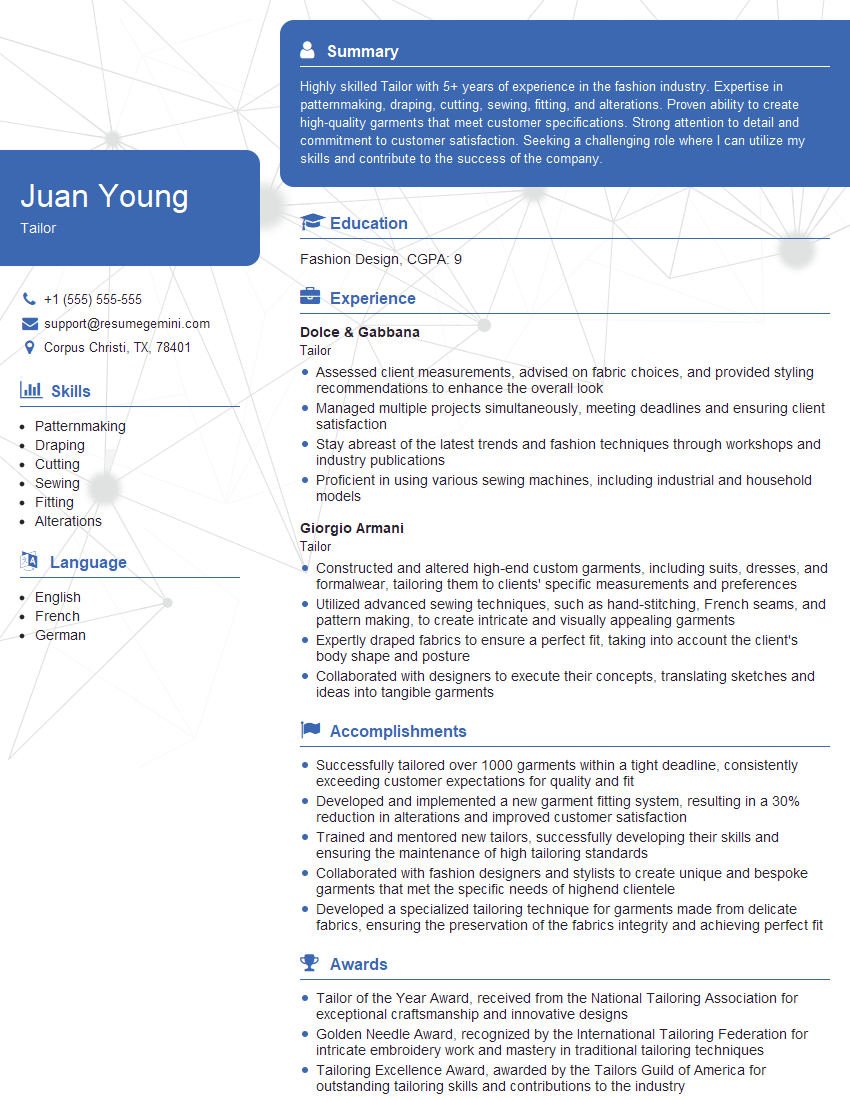
Mastering stitching and trimming skills is crucial for career advancement in the fashion and apparel industry. These skills are highly sought after, leading to diverse opportunities and potentially higher earning potential. To maximize your job prospects, creating a strong, ATS-friendly resume is essential. ResumeGemini is a trusted resource to help you build a professional resume that highlights your skills and experience effectively. ResumeGemini provides examples of resumes tailored to the Stitching and Trimming field, giving you a head start in crafting a compelling application.



Explore more articles
Users Rating of Our Blogs
Share Your Experience
We value your feedback! Please rate our content and share your thoughts (optional).
What Readers Say About Our Blog
Very informative content, great job.
good