Interviews are more than just a Q&A session—they’re a chance to prove your worth. This blog dives into essential Swine Management interview questions and expert tips to help you align your answers with what hiring managers are looking for. Start preparing to shine!
Questions Asked in Swine Management Interview
Q 1. Describe your experience with different swine breeding systems.
My experience encompasses a variety of swine breeding systems, from traditional methods to more advanced technologies. I’ve worked extensively with both purebred and crossbred herds, utilizing different mating strategies to achieve specific genetic goals. For example, I’ve managed operations employing purebred lines for genetic improvement programs, focusing on traits like growth rate, feed efficiency, and carcass quality. In other settings, I’ve implemented crossbreeding systems, such as rotational or terminal crosses, to leverage hybrid vigor (heterosis) and improve overall herd performance. Understanding the strengths and weaknesses of each system – such as the higher initial investment required for purebred programs versus the quicker gains often seen in crossbreeding – is crucial for making informed decisions based on the specific goals and resources of the operation. I’m also familiar with the use of artificial insemination (AI) and embryo transfer (ET), techniques that allow for wider genetic reach and accelerate genetic progress. My experience includes optimizing breeding programs to meet various market demands, including producing animals for specific weight ranges or lean meat percentages.
Q 2. Explain your approach to managing swine health and biosecurity.
My approach to swine health and biosecurity is built on a proactive, multi-layered strategy. It begins with strict biosecurity protocols at the farm’s perimeter, including vehicle and personnel disinfection, controlling access, and implementing rodent and pest control. Internally, we maintain strict sanitation practices – thorough cleaning and disinfection of facilities between batches, implementing all-in/all-out systems to minimize disease spread. Vaccination programs are tailored to the specific risks of the region and herd, and regular health checks, including fecal sampling and clinical examinations, help identify potential problems early. We also leverage data analysis, tracking morbidity, mortality, and other key health indicators, to identify trends and address health issues promptly. Maintaining good communication with veterinarians and collaborating on health management plans is also a critical aspect of my strategy. For instance, we once experienced a minor outbreak of Streptococcus suis. Our prompt response, including isolating affected animals, initiating antibiotic treatment under veterinary supervision, and enhancing sanitation, successfully contained the spread and minimized losses. A post-outbreak review helped refine our biosecurity protocols for even greater effectiveness.
Q 3. How do you monitor and optimize feed efficiency in a swine operation?
Monitoring and optimizing feed efficiency is crucial for profitability in swine production. We employ a multi-pronged approach. Firstly, accurate feed intake data is recorded using automated feeding systems and regular weighings. Growth data, obtained through regular weighing of individual animals or groups, is then used to calculate feed conversion ratio (FCR), a key indicator of feed efficiency (FCR = feed consumed / weight gain). We use FCR data to monitor the effectiveness of feed formulations and feeding strategies. Secondly, we analyze feed composition, ensuring it meets the nutritional requirements of different growth stages. Regular testing of feed samples ensures quality control. We also optimize feeding strategies based on age, weight, and growth phase, employing precision feeding technologies where possible. For example, adjusting feed formulations to meet the higher energy requirements of growing pigs or optimizing feed delivery systems for targeted nutrition. Finally, we analyze data regularly to identify areas for improvement – for example, if FCR is unexpectedly high, we might review feed formulation, feeding management, or even the health status of the animals. Improving feed efficiency also leads to reduced environmental impact through decreased manure output.
Q 4. What are the key indicators of a healthy and productive swine herd?
Key indicators of a healthy and productive swine herd include consistently high daily weight gain, low mortality rates, excellent feed conversion ratios (FCR), and high reproductive performance (e.g., high farrowing rates, litter sizes, and weaning weights). Other important indicators include minimal prevalence of diseases, good overall body condition of animals, and consistent behavior patterns indicating comfort and well-being. Regular monitoring of these parameters, in conjunction with ongoing health assessments, provides a comprehensive picture of the herd’s health and productivity. These data are valuable not just for managing the immediate situation, but also for ongoing improvement – allowing us to detect subtle shifts that might signal an emerging problem and to continually refine our management strategies. For instance, a sudden dip in daily weight gain might point to a nutritional deficiency or a subclinical infection which can be addressed before it becomes a major issue.
Q 5. Detail your experience with swine reproduction management techniques.
My experience in swine reproduction management includes implementing and optimizing breeding programs, focusing on maximizing reproductive performance. This involves careful selection of breeding stock, utilizing superior genetics to improve litter size and piglet survival. I’m proficient in implementing strategies to enhance estrus detection, utilizing heat detection aids and implementing efficient mating protocols, including both natural mating and artificial insemination (AI). I have considerable experience managing gestation and farrowing, monitoring sow health and nutrition, and providing appropriate care to ensure optimal piglet survival. Data-driven approaches are central to my methodology; monitoring parameters like conception rates, farrowing rates, litter size, and piglet survival rates to identify areas for improvement. Techniques like optimizing boar management, utilizing hormonal treatments (when appropriate and under veterinary guidance), and providing optimal housing conditions are all critical aspects of my management strategies. For example, in one operation, we improved farrowing rates significantly by implementing a program that focused on early detection of pregnancy complications and targeted nutritional interventions to support sows during late gestation. This was achieved through close monitoring and rapid adjustment of nutrition according to the individual needs of the sow.
Q 6. How do you handle disease outbreaks in a swine facility?
Handling disease outbreaks requires a swift and decisive response. The first step is rapid identification of the disease, which usually involves clinical examination, laboratory testing (e.g., serology or PCR), and often consultation with veterinary specialists. Once the disease is identified, a comprehensive strategy is developed and implemented, which typically involves isolating affected animals, implementing strict biosecurity measures (including limiting access to the affected area), and administering appropriate treatment as guided by veterinary advice. We also prioritize maintaining detailed records of the outbreak, including the number of affected animals, the course of the disease, and the effectiveness of treatment. Post-outbreak analysis is crucial for improving biosecurity protocols and preventing future outbreaks. For instance, during a PRRS (Porcine Reproductive and Respiratory Syndrome) outbreak, we quickly quarantined the infected group, initiated a vaccination program for the remaining herd, and implemented enhanced sanitation procedures. This, combined with veterinarian guidance on therapeutic strategies, helped control the spread and limit the impact on herd health and productivity. Our post-outbreak review identified weaknesses in our existing biosecurity procedures which we subsequently addressed.
Q 7. Describe your knowledge of swine genetics and selection.
My understanding of swine genetics and selection is grounded in a strong foundation of quantitative genetics. I am proficient in utilizing genetic evaluation tools and technologies to identify superior animals based on their performance and pedigree. This includes working with breeding values, heritability estimates, and genomic selection technologies, where available. I understand the importance of selecting for traits such as growth rate, feed efficiency, carcass quality, and disease resistance. I also take into account the economic value of each trait when making selection decisions. My experience involves selecting breeding animals based on performance data collected on-farm and utilizing genetic evaluation reports provided by various genetic companies. For example, I have implemented genomic selection to improve the rate of genetic gain in a specific herd. By using genomic information, we could select for superior animals earlier, accelerating the genetic improvement program and leading to faster progress in key economic traits.
Q 8. What are your strategies for minimizing mortality rates in swine production?
Minimizing mortality in swine production requires a multifaceted approach focusing on biosecurity, disease prevention, and efficient management practices. Think of it like building a strong castle – you need robust defenses against invaders (diseases) and a well-organized system within the walls (farm management).
Biosecurity: This is our first line of defense. Strict protocols are essential, including limiting access to the farm, implementing proper disinfection procedures for vehicles and personnel, and separating different age groups of pigs to prevent disease spread. Imagine a hospital – the same level of hygiene is needed. For example, we’d implement foot dips at the entrance and enforce a strict cleaning schedule for all equipment.
Disease Prevention: Vaccination programs are crucial, tailored to the specific diseases prevalent in the region. Regular health checks by a veterinarian, including fecal and blood sampling, allow for early detection and treatment. We also focus on environmental management – proper ventilation and temperature control minimize stress and disease susceptibility. Think of it like boosting their immune system with proper nutrition and a comfortable environment.
Efficient Management: This includes optimal nutrition, proper weaning protocols to reduce stress, and careful monitoring of piglet health. Quick identification and treatment of sick animals are vital. We use technology such as automated feeding systems and temperature monitors for precise control. We also implement a robust record-keeping system to track mortality trends and identify potential problem areas.
By combining these strategies, we can significantly reduce mortality rates and improve overall herd health. For instance, in my previous role, we reduced mortality in weanlings by 15% within a year by implementing a stricter biosecurity protocol and adjusting the weaning procedure.
Q 9. Explain your experience with different swine housing systems.
My experience encompasses various swine housing systems, each with its own advantages and disadvantages. The choice of system depends on factors like climate, farm size, and production goals.
Conventional Systems: These include various designs of barns, typically with slatted floors for manure management. I’ve worked with both totally enclosed and partially open-sided barns, each presenting different challenges in terms of temperature regulation and ventilation. Open-sided barns, for instance, offer better ventilation but require careful consideration during harsh weather.
Free-Range Systems: I have limited experience with completely free-range systems, as these are less common in large-scale commercial operations. However, I understand the importance of providing adequate space and enrichment in these settings to ensure pig welfare. Pasture-based systems, for example, can reduce the environmental impact of manure but present challenges in disease control.
Advanced Systems: I’m familiar with automated systems incorporating technology for environmental control, feeding, and health monitoring. These systems can optimize resource utilization and improve productivity but require significant capital investment and technical expertise. For example, I worked with a farm that used automated feeding systems to precisely control feed rations, resulting in improved feed conversion ratios.
Choosing the right housing system is critical for efficient production and animal welfare. It’s not a one-size-fits-all solution; a thorough assessment of the specific needs and resources is necessary.
Q 10. How do you implement and manage a swine waste management plan?
A robust swine waste management plan is crucial for environmental protection and operational efficiency. It needs to address storage, treatment, and disposal or utilization of manure.
Storage: This often involves lagoons, storage tanks, or solid-liquid separation systems. The choice depends on factors such as farm size, climate, and regulatory requirements. Regular monitoring of lagoon levels and liquid manure storage is essential to prevent overflow and environmental contamination.
Treatment: Treatment options include anaerobic digestion (producing biogas), composting (creating fertilizer), and various other methods aimed at reducing pathogens and odors. The choice depends on factors such as the scale of operation and the level of treatment required.
Disposal/Utilization: Treated manure can be applied to fields as fertilizer, subject to regulations and environmental considerations to prevent nutrient runoff. Some treated byproducts can be used in other industries. Accurate record-keeping is crucial to ensure compliance with regulations.
A well-designed waste management plan minimizes environmental impact and can even generate revenue through the sale of biogas or composted manure. For instance, in a previous project, we implemented an anaerobic digestion system that reduced odor and generated biogas, which was then used to power the farm’s operations.
Q 11. Describe your understanding of swine nutrition and feed formulation.
Swine nutrition is a complex field requiring a detailed understanding of pig physiology and nutrient requirements. Feed formulation is about creating balanced diets that meet the specific needs of pigs at different life stages (e.g., gestation, lactation, growth, finishing).
Nutrient Requirements: Pigs have different nutrient needs depending on their age, weight, and physiological status. For example, lactating sows require higher energy and protein levels than growing pigs. These requirements are detailed in NRC (National Research Council) publications.
Feed Ingredients: Feed formulations utilize various ingredients such as corn, soybean meal, barley, wheat, and various protein and mineral supplements. The selection of ingredients considers cost, availability, and nutrient content. We use software tools to optimize ingredient selection and meet specific nutritional targets.
Feed Formulation Software: Specialized software helps formulate diets that meet nutritional requirements while minimizing costs. These programs use linear programming to optimize ingredient selection based on nutrient content and price. This helps ensure that each pig receives the right balance of nutrients, leading to efficient growth and optimal health.
Efficient feed formulation leads to improved growth rates, reduced feed costs, and better overall herd health. In my previous role, we optimized our feed formulation using software, resulting in a 5% reduction in feed costs and a 3% increase in daily weight gain.
Q 12. What are the common challenges faced in swine manure management?
Manure management in swine farming presents several challenges, primarily environmental and economic.
Environmental Concerns: Manure is rich in nutrients (nitrogen, phosphorus) and can contaminate water sources if not managed properly. Runoff can lead to eutrophication (excessive algae growth) in waterways, harming aquatic life. Odor is another major concern, requiring effective odor control strategies.
Regulatory Compliance: Stringent regulations govern manure management to protect the environment. Farmers must comply with permits, nutrient management plans, and other rules. Failure to comply can result in significant penalties.
Economic Factors: Manure management can be expensive, especially for large-scale operations. The cost of storage, treatment, and disposal can significantly impact profitability. Finding economically viable ways to utilize manure as fertilizer is crucial for sustainability.
Nutrient Management: Balancing nutrient application to fields to maximize crop yields and minimize environmental impact is key. Over-application can lead to nutrient runoff and contamination, while under-application reduces crop productivity.
Addressing these challenges requires a comprehensive approach, integrating technology, sound management practices, and regulatory compliance. For example, proper lagoon design, precise nutrient application techniques, and the use of odor control agents are critical for successful manure management.
Q 13. Explain your experience with record-keeping and data analysis in swine farming.
Accurate record-keeping and data analysis are essential for efficient and profitable swine farming. Think of it as the ‘control panel’ of your farm. It allows you to monitor performance, identify problems, and make informed decisions.
Record-Keeping Systems: I have experience using both manual and computerized record-keeping systems. These systems track various parameters including feed intake, weight gain, mortality rates, medication usage, and environmental conditions (temperature, humidity). Software solutions are increasingly common, offering real-time data analysis and reporting.
Data Analysis: Data analysis involves identifying trends and patterns in the collected data. This helps in detecting problems such as disease outbreaks or nutritional deficiencies early. Statistical methods and visualizations are helpful in understanding the data and making informed decisions.
Performance Indicators: Key performance indicators (KPIs) such as feed conversion ratio (FCR), average daily gain (ADG), and mortality rate are closely monitored to assess the farm’s efficiency and profitability. Regular analysis of these KPIs helps in identifying areas for improvement.
Data-driven decision-making is crucial for optimizing production and improving profitability. In a previous role, we used data analysis to identify a correlation between high ambient temperatures and increased mortality rates, leading to the implementation of improved ventilation strategies.
Q 14. How do you ensure the welfare of swine in your care?
Ensuring swine welfare is paramount. It’s not just about meeting basic needs; it’s about providing a comfortable, healthy, and enriching environment. This significantly impacts productivity and is ethically crucial.
Five Freedoms: I adhere to the ‘Five Freedoms of Animal Welfare,’ which serve as a guide: freedom from hunger and thirst; freedom from discomfort; freedom from pain, injury, or disease; freedom to express normal behavior; and freedom from fear and distress.
Environmental Enrichment: Providing stimulating environments helps pigs express natural behaviors. This might include providing substrates for rooting, toys for play, or appropriate group sizes to facilitate social interaction.
Health and Hygiene: Maintaining high hygiene standards, providing access to clean water, and implementing vaccination and disease prevention programs are essential. Prompt veterinary care is vital for treating injuries and illnesses.
Handling Practices: Proper handling and training techniques minimize stress and injuries during routine procedures. Workers receive training on humane handling techniques, ensuring all interactions are safe and respectful.
Prioritizing swine welfare is not only ethically responsible but also economically beneficial. Stressed animals are more susceptible to disease and have reduced productivity. By focusing on welfare, we create a more resilient and productive herd. For example, improving the handling practices at a previous farm resulted in a noticeable reduction in injuries and improved pig temperament.
Q 15. Describe your knowledge of relevant swine industry regulations and standards.
My understanding of swine industry regulations and standards is comprehensive, encompassing both national and international guidelines. I’m intimately familiar with regulations concerning animal welfare, biosecurity, environmental protection, and food safety. For example, in the US, I’m well-versed in the regulations set forth by the USDA (United States Department of Agriculture), including the Animal Welfare Act and various guidelines concerning the humane handling and slaughter of swine. I also stay updated on GMPs (Good Manufacturing Practices) to ensure the highest quality and safety standards are met throughout the production process. Internationally, I’m aware of the OIE (World Organisation for Animal Health) terrestrial animal health code and its influence on disease prevention and control. This knowledge allows me to ensure full regulatory compliance in any swine operation I manage, minimizing risk and maximizing ethical and sustainable production.
Furthermore, I understand the importance of traceability systems, ensuring the ability to track animals throughout their lifespan from birth to slaughter. This is crucial for both food safety and disease control, allowing for swift response to any potential outbreaks or recalls. Compliance with these regulations isn’t just a legal requirement; it’s integral to maintaining public trust and ensuring the long-term viability of the operation.
Career Expert Tips:
- Ace those interviews! Prepare effectively by reviewing the Top 50 Most Common Interview Questions on ResumeGemini.
- Navigate your job search with confidence! Explore a wide range of Career Tips on ResumeGemini. Learn about common challenges and recommendations to overcome them.
- Craft the perfect resume! Master the Art of Resume Writing with ResumeGemini’s guide. Showcase your unique qualifications and achievements effectively.
- Don’t miss out on holiday savings! Build your dream resume with ResumeGemini’s ATS optimized templates.
Q 16. How do you manage labor and resources effectively in a swine operation?
Effective labor and resource management in a swine operation requires a strategic approach combining careful planning, efficient technology, and a strong team. I begin by analyzing the operation’s size, production goals, and available resources. This forms the basis for establishing efficient workflow processes. This includes optimizing tasks such as feeding, cleaning, and animal care to minimize labor costs and maximize efficiency. I’m a strong advocate for technology integration. Automated feeding systems, monitoring software, and data analytics tools significantly enhance productivity and reduce reliance on manual labor. For example, using sensors to monitor environmental conditions and animal health can enable timely intervention, improving animal welfare and reducing losses.
Equally important is effective workforce management. This involves recruiting, training, and retaining skilled and motivated employees. I believe in creating a positive and supportive work environment, fostering teamwork and open communication. Regular performance reviews and opportunities for professional development help employees improve their skills and feel valued. Finally, resource allocation requires close monitoring of feed costs, energy consumption, and veterinary expenses. Data-driven decision-making based on key performance indicators (KPIs) ensures resources are utilized effectively, optimizing profitability and minimizing waste. For example, tracking feed conversion ratios (FCR) helps us identify areas for improvement in nutrition and feeding strategies.
Q 17. What is your approach to training and supervising swine farm employees?
My approach to training and supervising swine farm employees focuses on a combination of hands-on experience and formal instruction. I believe in a tiered training system. New employees receive a comprehensive orientation, covering farm safety, animal handling techniques, biosecurity protocols, and standard operating procedures (SOPs). This is supplemented with on-the-job training under the supervision of experienced staff. For more advanced skills, I utilize workshops and specialized training programs focused on areas such as disease recognition, medication administration, and record-keeping. I leverage technology by utilizing training videos and online resources to reinforce learning.
Supervision is ongoing and involves regular observation, mentoring, and performance feedback. I conduct regular meetings to discuss challenges, best practices, and any updates in regulations or technology. I encourage open communication and actively solicit feedback from employees. This fosters a culture of continuous improvement and ensures that all staff members feel comfortable raising concerns or suggesting new approaches. For example, regular review of animal health records helps to identify early signs of disease outbreaks or other problems, allowing for proactive intervention.
Q 18. How do you identify and address stress factors that can affect swine productivity?
Identifying and addressing stress factors in swine is crucial for maximizing productivity and animal welfare. Stress can manifest in various ways, affecting growth rates, reproduction, and immune function. My approach begins with a thorough understanding of the potential stressors. This includes environmental factors such as temperature fluctuations, humidity, overcrowding, and poor ventilation. Management practices also play a significant role. Sudden changes in diet, handling techniques, and mixing of animals can cause considerable stress. Early identification is vital. Regular observation of animals allows for the detection of subtle changes in behavior, such as reduced feed intake, increased aggression, or skin lesions.
Addressing stress involves creating a supportive environment that meets the animals’ basic needs. This includes ensuring proper ventilation, temperature control, and sufficient space. I implement humane handling techniques to minimize physical stress during procedures such as vaccination or transportation. Dietary adjustments and gradual changes in management practices help reduce stress from abrupt changes. Close monitoring of animal health, including regular veterinary checks, enables early intervention to prevent stress-related illness. Utilizing data from monitoring systems helps to pinpoint and alleviate specific stressors. For instance, if temperature sensors indicate high heat stress, adjustments to ventilation or cooling systems can be implemented.
Q 19. What are the key components of a successful swine biosecurity program?
A successful swine biosecurity program is essential for preventing the introduction and spread of diseases. It’s a multifaceted approach involving several key components. First, strict hygiene protocols are vital, beginning with thorough cleaning and disinfection of facilities and equipment. All personnel should follow strict hygiene procedures, such as changing clothing and footwear when entering and leaving barns. Second, effective rodent and pest control is crucial to prevent the spread of diseases. Regular monitoring and implementation of control measures are essential. Third, visitor control and vehicle access must be managed stringently, reducing exposure to external pathogens. All visitors should be subject to biosecurity protocols, such as showering and changing clothing before entering the facilities.
Another critical aspect is quarantine of new animals. Newly introduced animals should be isolated for a period to observe their health and prevent any potential spread of disease. Importantly, a comprehensive health monitoring program, involving regular veterinary examinations, serological tests, and mortality checks, helps detect early signs of disease and allows for prompt intervention. Finally, thorough record-keeping of animal movements, health events, and biosecurity measures is paramount. This allows traceability of pathogens and assessment of the program’s effectiveness. Regular review and updates to the biosecurity plan are essential in adapting to evolving disease threats and best practices. This approach prioritizes minimizing risks and protecting the health of the herd.
Q 20. Describe your experience with different swine vaccination protocols.
My experience encompasses a wide range of swine vaccination protocols, tailored to specific disease challenges and herd demographics. I’m familiar with both modified-live virus (MLV) and inactivated vaccines, each having its own advantages and disadvantages. MLV vaccines provide longer-lasting immunity but carry a slight risk of reversion, while inactivated vaccines are safer but may require booster shots. The choice of vaccine depends on several factors, including the prevalence of specific diseases in the region, the age and health status of the animals, and the overall cost-benefit analysis. For example, in areas with high prevalence of Porcine Reproductive and Respiratory Syndrome (PRRS), a comprehensive vaccination strategy using both MLV and inactivated vaccines is often implemented. This strategy often targets both sows and piglets at specific times within their life cycle.
Vaccination protocols often involve a combination of maternal immunity transfer via the sow and subsequent vaccinations given to the piglets at various ages. The timing and type of vaccination are crucial for building robust herd immunity. I prioritize vaccination records, meticulously tracking the type of vaccine, dosage, administration date, and any post-vaccination reactions. This detailed record-keeping allows for effective evaluation of vaccine efficacy and identification of any unusual patterns. Furthermore, I’m experienced in implementing vaccination strategies that minimize stress on the animals. This includes using appropriate handling techniques and prioritizing vaccination schedules to avoid overlaps with other stressful procedures. Effective vaccination planning is essential in promoting animal health and welfare.
Q 21. How do you evaluate the effectiveness of different swine management strategies?
Evaluating the effectiveness of swine management strategies relies on a robust data-driven approach. I employ a range of key performance indicators (KPIs) to assess various aspects of the operation. For growth performance, I closely monitor average daily gain (ADG), feed conversion ratio (FCR), and mortality rates. Reproductive performance is evaluated using parameters like farrowing rate, litter size, and piglet survival rate. Economic parameters like cost of production, profit margins, and return on investment (ROI) are also critically important. To analyze these data, I utilize statistical software and data visualization techniques to identify trends and correlations. For example, tracking ADG over time can help assess the effectiveness of dietary changes or environmental improvements.
Beyond numerical data, qualitative assessments are essential. I regularly observe animal behavior, noting any signs of stress, disease, or discomfort. Employee feedback and input are valued for providing insights into potential problems or areas for improvement. I also conduct regular audits of management protocols, ensuring adherence to established procedures. For example, comparing mortality rates in different barns may reveal differences in management practices that need to be addressed. This comprehensive evaluation process allows me to identify strengths, weaknesses, and areas for improvement in swine management strategies, ultimately leading to enhanced productivity, improved animal welfare, and improved profitability.
Q 22. Explain your experience with implementing and monitoring performance indicators in swine production.
Implementing and monitoring performance indicators (KPIs) in swine production is crucial for maximizing efficiency and profitability. It involves selecting relevant metrics, establishing baselines, tracking progress, and making data-driven adjustments.
For example, I’ve extensively used KPIs such as:
- Daily weight gain (ADG): Tracking ADG helps assess feed efficiency and overall animal health. A consistently low ADG might indicate a problem with feed quality, disease, or environmental conditions. We’d investigate feed formulations, conduct health checks, and review environmental controls (temperature, ventilation).
- Feed conversion ratio (FCR): This metric shows the amount of feed required to produce one kilogram of weight gain. A high FCR signals inefficiency, potentially due to poor feed quality, disease, or genetic factors. We’d analyze feed composition, investigate disease outbreaks, and evaluate genetic selection strategies.
- Mortality rate: Tracking mortality rates helps identify potential health issues or management problems. An increase in mortality warrants immediate investigation into potential causes like disease outbreaks, inadequate biosecurity, or environmental stress. We’d implement stricter biosecurity measures, increase disease surveillance, and review environmental factors.
- Pre-weaning mortality: This is particularly important and can indicate issues with sow health, farrowing management, or neonatal care. We implemented a program of vigilant observation of sows pre and post-farrowing and improved sanitation and colostrum management.
Regular monitoring and analysis of these KPIs, coupled with benchmarking against industry standards, allows for timely identification of problems and implementation of corrective actions, ultimately leading to improved productivity and profitability.
Q 23. Describe your knowledge of different swine breeds and their characteristics.
My knowledge of swine breeds encompasses a wide range, understanding their strengths and weaknesses is critical for successful breeding programs. Breed selection depends heavily on the production goals – meat production, mothering ability, disease resistance etc.
For instance:
- Yorkshire (Large White): Known for prolificacy (large litter sizes) and good mothering ability, making them popular for maternal lines. They are excellent for producing high-quality meat, but feed efficiency might be a slight concern.
- Landrace: Similar to Yorkshires in their prolificacy, Landraces also excel at milk production, contributing to strong piglet survival rates. However, they might be slightly less efficient in feed conversion.
- Duroc: Renowned for their exceptional growth rate and meat quality (high marbling and intramuscular fat), Durocs are primarily used in terminal sire lines. Their maternal traits are weaker and this must be balanced in selection strategies.
- Pietrain: Known for their muscularity and lean meat production, Pietrains are used in terminal crosses. However, they can have issues with meat quality (pale, soft, exudative meat) and lower reproductive performance which necessitates careful management and selection.
I understand that hybrid vigor (heterosis) plays a crucial role in optimizing production traits. Therefore, crossbreeding strategies, using a combination of breeds with complementary strengths, are often the most efficient approach.
Q 24. How do you handle conflict resolution within a swine farm team?
Conflict resolution within a swine farm team is essential for maintaining a positive and productive work environment. My approach is based on open communication, active listening, and a focus on finding mutually beneficial solutions.
My process typically involves:
- Identifying the root cause: Understanding the underlying issues behind the conflict, rather than just the symptoms, is crucial. This often involves individual conversations to get each person’s perspective.
- Facilitating communication: Creating a safe space for everyone to express their concerns without interruption. Reframing negative statements into positive constructive questions is helpful.
- Finding common ground: Focusing on shared goals and objectives to bridge differences. Highlighting the collective impact of the conflict on overall farm performance is often a powerful motivator.
- Developing a collaborative solution: Working together to brainstorm solutions that address everyone’s concerns. This may involve compromise and agreement on clear responsibilities.
- Following up: Regularly checking in to ensure the agreed-upon solutions are working effectively and addressing any new issues that might arise. Regular team meetings help prevent conflicts arising again.
In one instance, a conflict arose between the farrowing crew and the breeding manager regarding the timing of insemination. By facilitating open communication, we identified a lack of clear communication protocol as the root cause. We implemented a new system using a digital communication tool and improved scheduling, which resolved the conflict and enhanced efficiency.
Q 25. What are your strategies for improving the overall efficiency of a swine operation?
Improving the overall efficiency of a swine operation requires a holistic approach focusing on multiple areas. My strategies include:
- Genetic selection: Implementing a robust breeding program that focuses on selecting animals with superior genetic traits for growth rate, feed efficiency, and disease resistance. Regular genetic evaluation and selective breeding are critical.
- Optimized nutrition: Formulating balanced rations to minimize feed costs while maximizing growth performance. Regular monitoring of feed intake and growth rates allows adjustments to ensure optimal nutrition.
- Disease prevention and control: Implementing robust biosecurity measures to prevent disease outbreaks and minimizing their impact through vaccination programs. Strict adherence to hygiene standards reduces the risk of disease and minimizes losses.
- Improved management practices: Optimizing farrowing management, nursery and finishing practices to maximize piglet survival and growth. Data collection and analysis help identify areas for improvement in overall management.
- Precision livestock farming (PLF) technology: Utilizing technologies such as electronic sow feeders (ESFs), automated sow feeding systems, and activity monitoring systems to enhance efficiency and reduce labor costs. Data driven decisions can significantly improve the efficiency of resource allocation.
- Environmental control: Maintaining optimal environmental conditions in barns to ensure animal comfort and reduce stress. Climate control and ventilation management have a strong impact on animal welfare and productivity.
By implementing these strategies concurrently, a synergistic effect is achieved resulting in significant improvement in overall farm efficiency.
Q 26. Describe your experience with budgeting and cost control in swine production.
Budgeting and cost control in swine production demand a meticulous approach. It starts with accurate forecasting of production costs and revenues based on historical data and market projections.
My approach involves:
- Detailed cost accounting: Tracking all expenses, including feed, veterinary care, labor, utilities, and repairs, to identify areas of high cost and potential savings. This detailed breakdown often reveals surprising efficiency improvements.
- Feed cost management: Negotiating favorable prices with feed suppliers, utilizing alternative feed ingredients when appropriate, and minimizing feed waste through efficient feeding systems. Bulk purchasing, optimizing feed formulations, and precise feeding systems all impact profitability.
- Labor cost optimization: Streamlining workflow processes, utilizing automation where possible, and investing in employee training to improve efficiency and reduce labor costs. Careful task allocation, proper staff scheduling, and effective training programs directly improve efficiency.
- Inventory management: Implementing an efficient system to monitor and manage inventory levels of feed, medications, and supplies to minimize waste and storage costs. Using inventory management software helps avoid overstocking and potential spoilage or wastage.
- Regular budget review: Conducting regular reviews of the budget against actual performance to identify variances and take corrective actions promptly. Regular meetings to review progress, identifying deviations and implementing suitable corrective actions, are essential.
By diligently monitoring costs and implementing cost-saving measures, profitability can be significantly improved, even in challenging market conditions.
Q 27. Explain your understanding of sustainable swine farming practices.
Sustainable swine farming practices are crucial for the long-term viability of the industry and the environment. It’s about minimizing environmental impact while ensuring animal welfare and economic sustainability.
My understanding encompasses:
- Manure management: Implementing strategies for efficient manure handling and utilization, such as anaerobic digestion to produce biogas for energy, or using manure as fertilizer to reduce reliance on synthetic fertilizers. This reduces environmental impact whilst providing additional resources.
- Water conservation: Implementing water-saving technologies in cleaning and sanitation processes, and utilizing rainwater harvesting systems where possible. This minimizes water usage and reduces operational costs.
- Feed efficiency: Optimizing feed formulations to minimize the use of resources and reduce greenhouse gas emissions. This involves strategic feed selection and precise feeding systems.
- Waste reduction: Minimizing waste generation through efficient feeding practices, proper waste disposal methods, and reducing the use of single-use plastics. Minimizing waste in all areas is fundamental to sustainability.
- Animal welfare: Ensuring high standards of animal welfare through proper housing, nutrition, and health management. This also improves productivity and efficiency.
- Biosecurity: Implementing strict biosecurity protocols to prevent disease outbreaks and minimize the use of antibiotics. Effective biosecurity protects the animals and the environment.
Adopting these practices enhances the long-term sustainability and resilience of swine farms.
Q 28. How do you stay current with the latest advancements in swine management technology?
Staying current with the latest advancements in swine management technology is paramount for maintaining a competitive edge. I employ several strategies:
- Professional organizations: Active membership in organizations like the American Association of Swine Veterinarians (AASV) and the National Pork Board provides access to research, publications, and conferences which are at the forefront of developments.
- Scientific journals and publications: Regularly reviewing peer-reviewed articles and industry publications to stay informed about new research findings and technological developments. This keeps me abreast of the latest discoveries.
- Industry conferences and workshops: Attending industry events to network with colleagues and learn about new technologies and best practices. Learning from industry leaders is very valuable.
- Online resources and webinars: Utilizing online resources and webinars provided by industry leaders and technology providers to access the latest information and training opportunities. This offers convenience and flexibility.
- Collaboration with technology providers: Engaging with technology providers to learn about new products and solutions relevant to swine management. This offers insight into the practical application of new technology.
This multifaceted approach ensures that I remain at the forefront of advancements in swine management technology, allowing me to implement innovative solutions in my work.
Key Topics to Learn for Swine Management Interview
- Swine Nutrition and Feed Management: Understanding nutrient requirements at different life stages, feed formulation, feed efficiency calculations, and strategies for optimizing feed conversion ratios.
- Swine Health and Biosecurity: Disease prevention and control protocols, vaccination programs, parasite management, biosecurity measures to minimize disease outbreaks, and recognizing clinical signs of common swine diseases.
- Reproduction and Breeding Management: Understanding estrus detection, artificial insemination techniques, gestation management, farrowing management, and optimizing reproductive performance indicators.
- Housing and Environment: Designing and managing environmentally controlled barns, optimizing ventilation systems, understanding thermal comfort for pigs, and maintaining proper hygiene.
- Growth and Development: Monitoring growth parameters, understanding factors affecting growth rate, implementing strategies to optimize growth performance, and evaluating carcass characteristics.
- Waste Management: Implementing effective manure management systems, understanding environmental regulations related to waste disposal, and minimizing environmental impact.
- Record Keeping and Data Analysis: Utilizing record-keeping systems to track performance data, analyzing data to identify areas for improvement, and using data-driven decision-making in management strategies.
- Financial Management: Budgeting, cost analysis, understanding profitability metrics, and managing financial resources effectively within a swine operation.
- Animal Welfare: Implementing practices that ensure animal welfare, complying with animal welfare regulations, and recognizing signs of stress or illness in pigs.
Next Steps
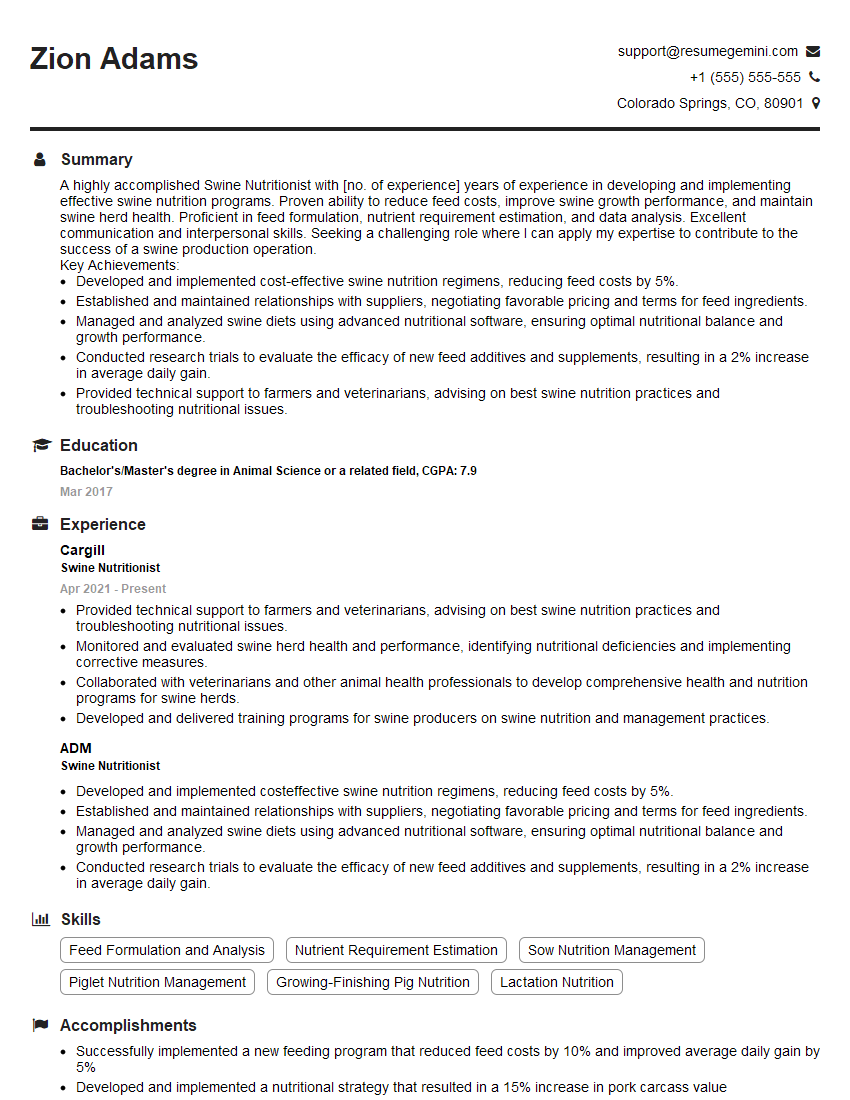
Mastering swine management opens doors to exciting and rewarding careers in the agricultural industry. A strong understanding of these core principles demonstrates your commitment to excellence and positions you as a valuable asset to any swine operation. To significantly enhance your job prospects, crafting an ATS-friendly resume is crucial. This ensures your application gets noticed by recruiters and hiring managers. We strongly encourage you to leverage ResumeGemini, a trusted resource for building professional and impactful resumes. ResumeGemini provides examples of resumes specifically tailored to the swine management field, giving you a head start in creating a compelling application that highlights your skills and experience.
Explore more articles
Users Rating of Our Blogs
Share Your Experience
We value your feedback! Please rate our content and share your thoughts (optional).
What Readers Say About Our Blog
Very informative content, great job.
good