Unlock your full potential by mastering the most common Stitching Techniques and Seam Finishes interview questions. This blog offers a deep dive into the critical topics, ensuring you’re not only prepared to answer but to excel. With these insights, you’ll approach your interview with clarity and confidence.
Questions Asked in Stitching Techniques and Seam Finishes Interview
Q 1. Explain the difference between a French seam and a serged seam.
French seams and serged seams are both methods of finishing seams, but they differ significantly in technique and resulting aesthetic. A French seam encases the raw edges completely, creating a very clean, professional finish, especially suitable for sheer fabrics where raw edges are highly visible. It involves stitching the seam allowance with wrong sides together, trimming it, and then stitching again with right sides together, effectively hiding the raw edges within the seam. Think of it like wrapping a present – the raw edges are completely concealed. A serged seam, on the other hand, uses a serger (an overlock machine) to create a finished seam edge simultaneously while joining fabric pieces. The serger cuts, stitches, and overlocks the raw edges in one pass, preventing fraying. It’s fast and efficient but leaves a slightly bulkier, more visible seam finish compared to a French seam. For instance, a French seam would be ideal for a fine silk blouse, while a serged seam might be perfectly acceptable for sturdy cotton workwear.
Q 2. Describe three different methods for finishing a raw edge.
Three common methods for finishing raw edges are:
- Pinking shears: These shears create a zig-zag edge that helps to reduce fraying, particularly effective on woven fabrics that don’t ravel excessively. It’s a quick and simple method, often used for less visible seams or when speed is prioritized. Think of it as a quick trim to prevent further fraying.
- Zigzag stitch: Using a sewing machine’s zigzag stitch creates a similar effect to pinking shears but offers more secure containment of the raw edge. It’s versatile and can be adjusted for different fabric weights. This is a more robust solution than pinking shears, offering better prevention of fraying, especially on lightweight or loosely woven fabrics.
- Serging: As previously mentioned, serging is a superior method for preventing fraying, particularly on fabrics prone to unraveling. It provides a professional finish and adds durability to the seam. Ideal for both woven and knit fabrics, and it’s commonly used in ready-to-wear garments.
Q 3. What are the advantages and disadvantages of using a zigzag stitch?
The zigzag stitch is a workhorse in sewing, offering several advantages but also some disadvantages.
- Advantages: Prevents fraying effectively, adds elasticity to seams (useful for knit fabrics), creates a decorative element on some seams.
- Disadvantages: Can add bulk to the seam, especially with wider zigzag widths, not suitable for all fabrics (may be too bulky for fine fabrics), and can be less aesthetically pleasing than other seam finishes, depending on the project.
For instance, a narrow zigzag stitch is perfect for preventing fraying on a cotton garment, whereas a wider stitch might be too bulky for a delicate silk scarf. The key is to select the appropriate stitch width and length depending on the fabric and the overall design.
Q 4. When would you use a blind stitch, and how is it executed?
A blind stitch is used to invisibly join two pieces of fabric, typically for hems or seams where a completely hidden stitch is desired. It’s frequently used for hemming trousers or skirts for a clean, professional finish. The stitch is executed by catching a few threads from the fabric edge on one side and then a few threads from the edge on the other side, creating tiny, barely visible stitches. Several methods exist, including hand-sewing and using a blind stitch setting on a sewing machine. Hand-sewing a blind stitch allows for excellent control and precision, whereas a machine’s blind stitch setting offers efficiency for larger projects. It’s crucial to ensure consistent stitch tension and depth for an invisible finish. Think of it as a magician’s trick: the seam disappears!
Q 5. How do you select the appropriate needle and thread for different fabrics?
Choosing the right needle and thread is paramount for a successful sewing project. Different fabrics require different needle sizes and thread types to avoid damage and ensure a quality stitch.
- Fabric Type: Lightweight fabrics like silk or chiffon require fine needles (size 60/8) and fine threads, whereas heavier fabrics like denim or canvas require heavier needles (size 110/18) and stronger threads.
- Fabric Structure: Knit fabrics require needles designed for knit fabrics (ballpoint or stretch needles) to avoid snagging the loops. Woven fabrics can generally use universal or sharp needles.
- Thread Type: Polyester thread is versatile and strong, suitable for most fabrics. Cotton thread is a good choice for natural fibers, while silk thread is ideal for fine fabrics such as silk or rayon. Thread weight should match the needle and fabric weight.
For instance, using a heavy needle on silk will result in holes, while using a fine needle on denim might lead to broken needles. Always consult the fabric content and select needles and threads accordingly for a clean and effective stitch.
Q 6. Explain the importance of proper seam allowance.
A seam allowance refers to the distance between the stitching line and the raw edge of the fabric. It’s crucial for several reasons:
- Construction: It provides enough fabric to allow for adjustments during construction, especially if alterations are necessary.
- Finishing: A sufficient seam allowance enables proper seam finishing techniques, preventing fraying and providing a professional finish.
- Design: It’s incorporated into the design of the garment itself and allows for shaping and fitting.
- Durability: Ample seam allowance contributes to the overall strength and durability of the garment.
Typical seam allowances range from 1/4 inch (6mm) to 5/8 inch (1.5cm), depending on the garment and fabric type. Consistency is key; maintaining a uniform seam allowance throughout the project is essential for proper fit and a polished look.
Q 7. What are some common seam finish problems and how do you troubleshoot them?
Several common seam finish problems can be encountered:
- Seam puckering: Usually caused by inconsistent tension, improper needle selection, or using incorrect stitch length. Solution: Adjust machine tension, use appropriate needle and thread, and check the stitch length. For hand-sewing, maintain even tension while stitching.
- Uneven seam: Often caused by inaccurate cutting or inconsistent feeding of the fabric through the machine. Solution: Ensure fabric pieces are accurately cut, properly aligned before stitching, and feed fabric evenly through the machine during sewing.
- Seam fraying: Occurs when the raw edges aren’t properly finished. Solution: Employ appropriate seam finishes such as serging, zigzag stitching, or pinking.
- Broken needle: Caused by using a blunt needle, sewing too quickly, or hitting pins or other obstacles. Solution: Use sharp needles appropriate for the fabric type, sew at a moderate speed, and remove any pins or obstacles from the sewing area.
Careful planning and attention to detail can prevent most seam finish problems, and effective troubleshooting techniques help resolve any issues.
Q 8. Describe the process of creating a welt pocket.
Creating a welt pocket involves meticulously crafting a clean, tailored pocket that sits flush against the garment. Imagine it as a small, elegant window into your pocket. It’s a hallmark of high-quality garment construction.
Marking and Cutting: Begin by marking the pocket placement on the garment’s exterior and lining. Cut the welt (a narrow strip of fabric) slightly longer than the intended pocket opening. Remember to add seam allowances.
Welt Construction: Fold the welt in half lengthwise, wrong sides together, and press. Stitch along one long edge, creating a neat seam. This forms a strong and durable pocket opening.
Attaching the Welt: Position the welt onto the garment’s exterior, aligning it with the marked pocket opening. Stitch it in place, close to the folded edge, securing it firmly.
Pocket Bag Construction: Cut the pocket bag from lining fabric, slightly larger than the welt opening. Fold the bag in half, right sides together, and stitch along the three sides. Turn the pocket bag right side out.
Attaching the Pocket Bag: Insert the pocket bag behind the welt, aligning the raw edges. Carefully stitch the pocket bag to the garment lining, encasing the raw edges of the welt. Ensure the stitching is invisible from the exterior.
Finishing: Press the seam allowances flat, paying attention to avoid creating bulges or distortions. This step is crucial for a professional finish.
The result is a beautifully crafted, functional welt pocket, showcasing a high level of tailoring expertise. The stitching should be precise and nearly invisible from the outside, reflecting the time and care put into its creation.
Q 9. How do you press seams to ensure a professional finish?
Pressing seams is more than just flattening fabric; it’s about shaping the garment and creating a professional, crisp finish. Think of it as sculpting with fabric and steam. Using the correct technique dramatically impacts the final garment’s drape and overall quality.
Timing: Press seams while they are still slightly damp, either immediately after sewing or after lightly spritzing them with water. This allows the fibers to relax and accept the shape you’re creating.
Techniques: Use a tailor’s clapper or a pressing ham to help set sharp creases and prevent unwanted shine or impressions from the iron. For delicate fabrics, always use a pressing cloth to protect the surface.
Direction: Always press seams open unless a design specifically calls for pressing them to one side. Opening seams reduces bulk and improves drape. When pressing to one side, press toward the darker fabric.
Pressure: Adjust the iron’s temperature and pressure according to the fabric’s type. Too much heat or pressure can scorch or damage delicate fabrics. Always test your iron’s setting on a scrap piece of the same fabric.
Proper pressing is an art, and mastering it elevates your sewing skills considerably. A well-pressed garment has a refined, professional look that sets it apart from amateur work.
Q 10. What are different types of seams suitable for stretchy fabrics?
Stretchy fabrics require seams that offer flexibility and prevent breakage. Choosing the right seam is critical to creating comfortable and durable garments.
Serged Seams: This is arguably the most common and effective method for stretchy fabrics. A serger trims and stitches the seam allowance simultaneously, creating a neat, stretchy, and durable finish. It’s ideal for knits and activewear.
Overlock Seams: Similar to serged seams, overlock seams encase the raw edges, preventing fraying. They can be done with a regular sewing machine using a special overlock presser foot and stitching pattern.
Zigzag Seams: A simple zigzag stitch on a regular sewing machine works well for less stretchy fabrics. However, this may not be as durable as serged or overlock seams for highly elastic materials.
French Seams: A robust seam suitable for very stretchy fabrics and delicate fabrics requiring a smooth, clean finish, however it uses more fabric.
Mock French Seams: A simpler alternative to French seams offering similar properties. They are easier to sew but slightly less polished.
The choice of seam often depends on the fabric’s weight, stretch, and the garment’s intended use. For example, leggings need a very stretchy seam like a serged seam, whereas a t-shirt might benefit from a simple zigzag or overlock seam.
Q 11. Explain the difference between topstitching and edge stitching.
Both topstitching and edge stitching involve stitching close to the edge of the fabric, but they serve different purposes and have distinct appearances.
Topstitching: This refers to stitching visible on the right side of the garment. It’s often used for decorative purposes, or for reinforcing seams and adding structure to garments. Think of the visible stitching on jeans pockets or the decorative stitching on a tailored shirt collar.
Edge Stitching: This is a functional stitch placed very close to the edge of the fabric, usually on the wrong side. Its primary function is to secure seam allowances and prevent fraying or unraveling. It is typically not decorative in nature.
In essence, topstitching is decorative and functional, while edge stitching is primarily functional and unseen. They are frequently used together – for instance, topstitching on a collar might be accompanied by edge stitching on the underside for added security.
Q 12. Describe various methods for attaching a zipper.
Attaching a zipper is a fundamental skill, and different methods cater to different zipper types and garment designs.
Center-Front Zipper (Invisible): This method cleverly conceals the zipper teeth, creating a clean, seamless look. It involves creating a narrow lapped seam and carefully inserting the zipper teeth into a hidden channel.
Center-Front Zipper (Visible): This is a simpler technique where the zipper teeth are visible. It uses a facing method to cover the raw edges and creates a stronger, sturdier seam.
Lapped Zipper: One side of the zipper is applied to one side of the garment while the other side is overlapped. This provides strength and is commonly used in skirts and dresses.
Fly Zipper: This is frequently used in trousers. A fly zipper requires specific techniques to create a clean, functional closure.
The choice of method depends on the zipper’s type (invisible, metal, plastic), the garment’s design, and the desired aesthetic. Each method requires precision and attention to detail to create a durable and neat finish.
Q 13. How do you handle different types of fabrics during the construction process?
Handling diverse fabrics effectively is key to successful garment construction. Each fabric has its own unique properties that demand specific handling techniques.
Woven Fabrics (Cotton, Linen, Silk): These fabrics usually require a sharper needle and a moderate stitch length. Pressing is crucial to maintain shape and structure.
Knit Fabrics (Jersey, Rib Knit): These stretchy fabrics need a ballpoint or stretch needle to prevent skipped stitches and fabric damage. Use a serger or a zigzag stitch for optimal seam strength.
Delicate Fabrics (Chiffon, Lace): Use a fine needle, a slow sewing speed, and a lightweight stabilizer to prevent breakage and maintain fabric integrity. Press with caution using a pressing cloth.
Heavyweight Fabrics (Denim, Canvas): Require a stronger needle, a sturdier machine, and potentially walking or even feed-dogs-down presser feet. Use a longer stitch length for less strain on the needle.
Understanding a fabric’s characteristics is paramount. Before starting a project, always test your settings on a scrap piece of the fabric. This ensures the appropriate needle, stitch length, and pressing techniques are used, preventing frustration and maximizing project success.
Q 14. What techniques do you use for preventing puckering in seams?
Puckering, that frustrating unevenness in seams, is often caused by inconsistent feeding of fabric. There are several effective techniques to prevent it.
Matching Notions to Fabric: Select the appropriate needle and thread weight for the fabric. Using the wrong needle will cause skipped stitches, and using the wrong thread can cause uneven tension.
Accurate Cutting and Marking: Precise cutting and accurate marking of seam allowances are essential. Inconsistent seam allowances lead to fabric pulling and puckering.
Consistent Seam Allowance: Maintain a consistent seam allowance throughout the stitching process. Using a seam guide on your sewing machine is helpful.
Proper Tension Adjustment: Ensure your sewing machine’s tension is correctly adjusted for the specific fabric type and thread. Incorrect tension is a common cause of puckering.
Grading Seam Allowances: Trimming seam allowances to varying widths before sewing reduces bulk, improving even fabric flow.
Using Stabilizers: For very delicate or slippery fabrics, use a lightweight stabilizer underneath to assist with even feeding and prevent pulling or puckering.
Pressing: Gentle and careful pressing is important to maintain evenness in the seam and prevent puckering. Press seams open where appropriate to reduce bulk.
Preventing puckering is about attention to detail and understanding the fabric. By combining the right tools and techniques, you can eliminate this common sewing problem.
Q 15. What is the importance of maintaining consistent stitch length?
Consistent stitch length is crucial for achieving a professional and durable finish in sewing. Think of it like building a brick wall – inconsistent mortar (stitch length) will lead to a weak and uneven structure. A uniform stitch length ensures even tension across the seam, preventing puckering, stretching, or breakage. Shorter stitches are generally stronger and better suited for areas under stress, like seams on a pair of jeans. Longer stitches are more appropriate for lighter fabrics where strength isn’t as critical, allowing for more flexibility and drape.
For example, a seam allowance of 5/8 inch sewn with a 2.5 mm stitch length (a common setting for most sewing machines) will be significantly stronger than the same seam sewn with a 4 mm stitch length. The shorter stitch length provides more points of contact between the threads, creating a more secure bond.
Career Expert Tips:
- Ace those interviews! Prepare effectively by reviewing the Top 50 Most Common Interview Questions on ResumeGemini.
- Navigate your job search with confidence! Explore a wide range of Career Tips on ResumeGemini. Learn about common challenges and recommendations to overcome them.
- Craft the perfect resume! Master the Art of Resume Writing with ResumeGemini’s guide. Showcase your unique qualifications and achievements effectively.
- Don’t miss out on holiday savings! Build your dream resume with ResumeGemini’s ATS optimized templates.
Q 16. How do you identify and repair common sewing machine malfunctions?
Troubleshooting sewing machine malfunctions requires a systematic approach. First, always ensure the machine is unplugged before any internal inspection. Common issues include skipped stitches, broken needles, and inconsistent tension. Skipped stitches often result from a bent or dull needle, improper threading, or a clogged bobbin case. A broken needle is usually obvious, requiring simple replacement. Inconsistent tension can stem from incorrect thread tension settings, a tangled bobbin, or lint build-up under the presser foot.
For example, if your stitches are consistently bunched on the top, but loose on the bottom, you likely need to increase the upper thread tension. If the issue is the opposite, decrease the upper tension. Always consult your sewing machine’s manual for specific troubleshooting guides and diagrams. Regular cleaning and maintenance, including oiling moving parts, is paramount in preventing malfunctions.
Q 17. What are different types of button attachments, and which ones are most durable?
Several methods exist for attaching buttons, each with varying degrees of durability. The most common are sewing on by hand, using a sewing machine, and using button fasteners. Hand-sewing offers precise control and is suitable for delicate fabrics. Sewing on with a machine is faster for larger quantities but requires a specialized presser foot. Button fasteners, particularly shank buttons, offer the best durability as they distribute stress across the fabric, preventing tear-out.
Consider this: for a heavy coat, shank buttons sewn on securely are the ideal choice because they allow the fabric to move and breathe, resisting stress better than buttons sewn directly to the fabric. For a delicate blouse, hand-sewing smaller buttons provides a neat and lasting finish.
Q 18. Describe different types of interfacing and their uses.
Interfacing provides support and structure to fabrics. Several types exist, each with specific properties and applications. Woven interfacing offers stability and crispness, ideal for collars, cuffs, and structured garments. Fusible interfacing adheres to fabric with heat, simplifying application. Non-woven interfacing, also known as tear-away or sew-in, is softer and more flexible, suitable for curved seams or areas requiring less stiffness.
For instance, when making a tailored jacket, woven interfacing is used to provide the necessary structure for the collar and lapels. In contrast, a lightweight fusible interfacing might be perfect for stabilizing a delicate lace fabric.
Q 19. Explain how to create a clean, professional-looking buttonhole.
Creating professional-looking buttonholes involves careful attention to detail. Whether using a machine or hand-sewing, the goal is a clean, precisely sized opening that allows the button to pass through easily without being too loose or too tight. With a sewing machine, utilize the buttonhole function, adjusting the length and width to match the button size and fabric thickness.
If hand-sewing, begin by marking the buttonhole location accurately. Use a small running stitch along the length to create a consistent base. Then, use a buttonhole stitch, carefully creating even loops along both sides to finish the edge. Reinforce the ends by tying off securely. A well-made hand-sewn buttonhole displays precision and craftsmanship, a hallmark of quality tailoring.
Q 20. How do you adjust stitch tension for different fabrics and threads?
Stitch tension is adjusted to balance the top and bottom threads, creating even, neat stitches. Different fabrics and threads require varying adjustments. Heavyweight fabrics or thick threads usually require higher tension, while lightweight fabrics or thin threads need lower tension. Experimentation is key to find the perfect balance.
For example, a thick wool coat will require a higher stitch tension setting to prevent loose stitches. Conversely, a sheer silk garment will require a lower tension to avoid puckering or breaking the delicate fabric.
Q 21. Describe the best methods for finishing curved seams.
Finishing curved seams requires techniques that prevent bulk and ensure a smooth, flat finish. Clipping curves closely, but not into the stitching line, is crucial to remove excess fabric and allow the seam to lie flat. Grading seams, where one seam allowance is trimmed slightly smaller than the other, reduces bulk further. Pressing the seam open or to one side, depending on the garment construction, helps to create a clean and professional finish.
Imagine sewing a curved neckline. Clipping the curve carefully, then grading the seam allowances and pressing the seam open will allow the fabric to lie smoothly, avoiding any unsightly puckering that would ruin the garment’s look.
Q 22. How do you deal with difficult fabrics like silk or leather?
Working with delicate fabrics like silk and leather requires specialized techniques to prevent damage. Silk, being prone to slippage and snagging, needs careful handling. I always use a sharp needle, appropriate for the fabric weight, and a walking foot on my sewing machine to ensure even feed. For seams, I prefer a small seam allowance and a slipstitch or a very fine French seam for an invisible finish. Leather, on the other hand, is strong but can be easily punctured. I use heavier-duty needles and often pre-punch holes for stitching to avoid tearing. A strong, even stitch like a saddle stitch is ideal, and I might use a specialized leather sewing machine for larger projects. The key is always to select the right tools and techniques based on the fabric’s specific properties.
For example, when sewing silk, I often use a fine silk thread to match the fabric and avoid bulky seams that could distort the garment. With leather, using the appropriate needle size and thread weight will create a smooth seam. A test patch is always a good idea to ensure proper stitch selection and tension before moving onto the actual garment.
Q 23. Explain the difference between flat-felled and Hong Kong seams.
Both flat-felled and Hong Kong seams are strong and durable seam finishes, but they differ significantly in their construction and appearance. A flat-felled seam is a double-stitched seam where one seam allowance is completely enclosed within the other. It creates a very strong, flat seam, commonly used in men’s shirting and outerwear. It’s visible on the outside, but the seam is very robust and resistant to wear and tear.
A Hong Kong seam, however, is a completely enclosed seam where both raw edges are bound with bias tape. The bias tape completely encases the seam allowance, creating a clean, professional finish that is invisible from the outside. This seam is favored for its clean and luxurious look, often found in high-end garments where aesthetics are paramount. Imagine the difference between rugged denim jeans (flat-felled) and a finely tailored silk blouse (Hong Kong seam).
Q 24. What are the different types of seam allowances used in garment construction?
Seam allowances vary greatly depending on the garment type, fabric, and desired look. Some common seam allowances include:
- 1/4 inch (6mm): Often used for delicate fabrics and tight curves.
- 5/8 inch (1.5cm): A standard allowance for many garments, offering good strength and flexibility.
- 3/8 inch (1cm): Commonly used in children’s clothing or situations requiring a less bulky seam.
- 1/2 inch (1.2cm): Versatile allowance suitable for many garment constructions.
- Variable: In some cases, such as couture garments, allowances can be increased or decreased to accommodate design elements or pattern manipulation.
It is important to always follow the pattern instructions for specific seam allowance requirements.
Q 25. How do you choose the appropriate stitch type for different types of seams?
The choice of stitch depends greatly on the fabric, seam type, and desired outcome. For example, a straight stitch is versatile and works well for most seams, but a zigzag stitch is better for preventing fraying on loosely woven fabrics.
- Straight Stitch: A basic, strong stitch suitable for most fabrics and seam types.
- Zigzag Stitch: Prevents fraying and provides elasticity, useful for knit fabrics and curved seams.
- Overlock Stitch (Serger): A four-thread stitch that overlocks and finishes raw edges simultaneously, common in sportswear.
- Blind Stitch: Used for invisible hems and seams.
- Slipstitch: A hand stitch often used for finishing seams or hand sewing decorative elements.
In practice, I’ll select a stitch based on the fabric’s weight, weave, and tendency to fray. For instance, I’d choose a zigzag stitch for a silk garment’s seam to prevent raveling, whereas a straight stitch would suffice for a sturdy cotton fabric.
Q 26. Describe how to create a bound buttonhole.
Creating a bound buttonhole involves encasing the buttonhole opening with fabric, providing a neat, durable, and professional finish. It’s particularly suitable for delicate fabrics where a machine-made buttonhole might damage the fabric.
- Prepare the buttonhole: Mark the buttonhole placement and cut a slit using sharp fabric shears.
- Cut the binding: Cut a strip of fabric—bias tape is ideal—slightly longer than the buttonhole, and twice its width.
- Fold and Stitch: Fold the binding strip in half lengthwise, enclosing the raw edges. Stitch along one side of the fold, creating a narrow tube.
- Encase the buttonhole: Slide the binding tube over the buttonhole, enclosing the raw edges. Stitch the binding to the garment close to the buttonhole edges on both sides.
- Finish the buttonhole: Fold the binding fabric at the ends of the buttonhole and stitch it securely to the garment. Trim any excess binding.
This creates a very clean and professional-looking finish that’s significantly more durable than a simple cut buttonhole.
Q 27. Explain your experience with different sewing machine types (e.g., industrial, domestic).
My experience encompasses both domestic and industrial sewing machines. Domestic machines are versatile and excellent for smaller projects and home use; however, they lack the power and precision of industrial machines. Industrial machines are designed for heavy-duty use, offering significantly higher speeds, stronger stitching, and often specialized functionalities like blind-stitching or specific stitch types for particular applications (leather, denim, etc.). I’ve worked extensively with industrial machines in production environments and appreciate their efficiency for large-scale projects. I can adjust the tension, needle position, and stitch length as needed, catering to specific fabric needs. Understanding the nuances of both machine types allows me to choose the optimal machine for a given project and achieve the desired results efficiently.
Q 28. How do you ensure consistent quality in your sewing work?
Maintaining consistent quality requires meticulous attention to detail throughout the entire process. It starts with careful fabric selection and preparation: pre-washing to prevent shrinkage, pressing to remove wrinkles, and precise cutting using sharp tools. Consistent stitch length and tension are crucial, achieved through meticulous machine calibration and regular maintenance. I utilize test patches to ensure the machine settings are optimal before working on the final piece. Proper seam finishing, such as pressing seams open or to the side to keep them flat and prevent puckering, is essential for high quality. Finally, a thorough quality check throughout the construction and after completion ensures flaws are identified and addressed before the project is finalized. I also frequently review my work against industry standards and best practices to continually refine my techniques and ensure I deliver consistently high-quality results.
Key Topics to Learn for Stitching Techniques and Seam Finishes Interview
- Hand Stitching Techniques: Understanding various hand stitches (e.g., running stitch, backstitch, slip stitch) – their applications, strengths, and limitations in different fabric types.
- Machine Stitching Techniques: Mastering basic machine settings and stitch types, including straight stitch, zigzag stitch, and decorative stitches. Knowing when to adjust stitch length and tension for optimal results.
- Seam Finishes: Exploring different seam finishes (e.g., serging, pinking, zigzagging, French seams) and their impact on garment durability and appearance. Understanding which finish is best suited for various fabrics and garment types.
- Seam Construction: Practical application of various seam constructions (e.g., plain seam, French seam, welt seam) and their appropriate use cases. Understanding the advantages and disadvantages of each.
- Fabric Selection and its Influence on Stitching: Knowing how different fabric types (e.g., woven, knit, stretch) affect stitch selection and seam finish choices. Understanding appropriate needle and thread choices for various materials.
- Troubleshooting Common Stitching Problems: Developing problem-solving skills to address issues such as skipped stitches, broken needles, uneven seams, and fabric puckering. Identifying and resolving these issues efficiently.
- Understanding Stitch Properties: Grasping the concept of stitch density, tension, and length, and their impact on the final product’s strength, aesthetics, and durability.
- Advanced Techniques (if applicable): Exploring more advanced techniques relevant to your target role, such as topstitching, blind stitching, or specific specialized stitches.
Next Steps
Mastering stitching techniques and seam finishes is crucial for success in the garment industry. A strong foundation in these areas demonstrates precision, attention to detail, and a commitment to quality – highly sought-after qualities by employers. To significantly boost your job prospects, create a resume that showcases your skills effectively. An ATS-friendly resume is essential for getting your application noticed. ResumeGemini is a trusted resource that can help you build a professional and impactful resume. We provide examples of resumes tailored to highlight expertise in Stitching Techniques and Seam Finishes to help you get started. Take the next step toward your dream career today!
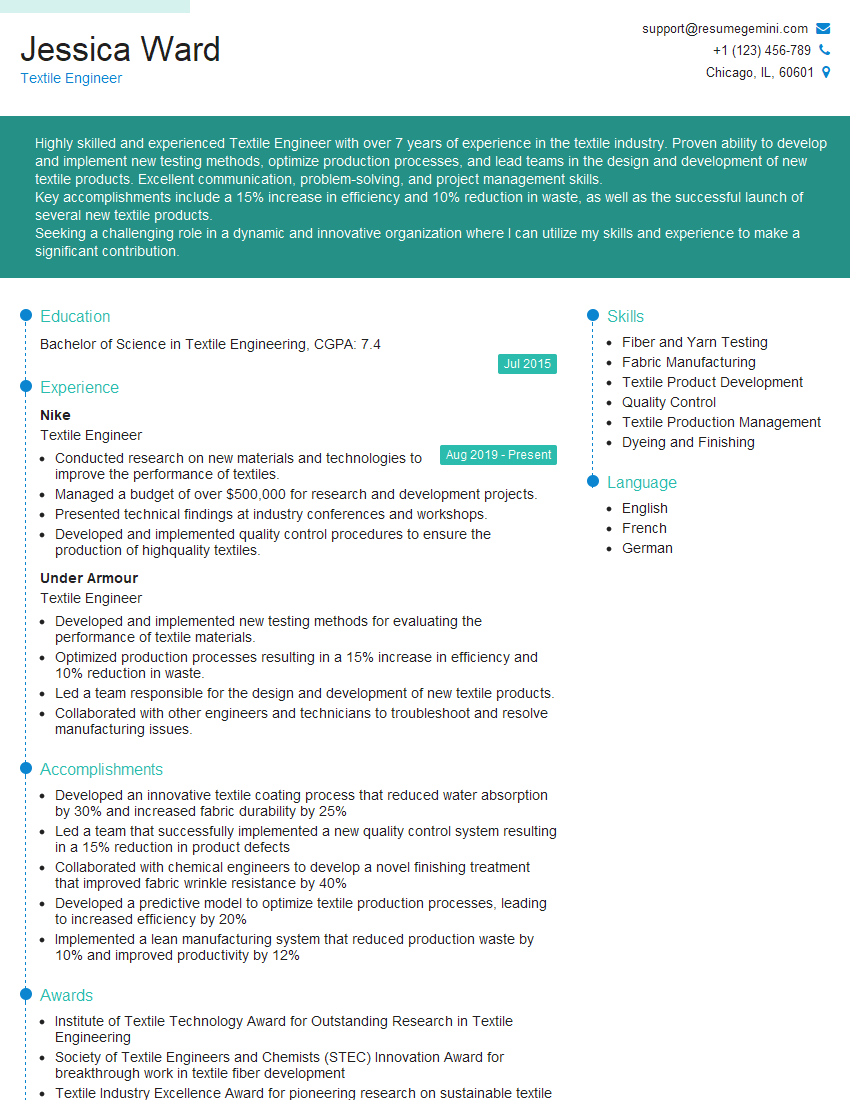
Textile Engineer Resume Sample

Clothing Designer Resume Sample
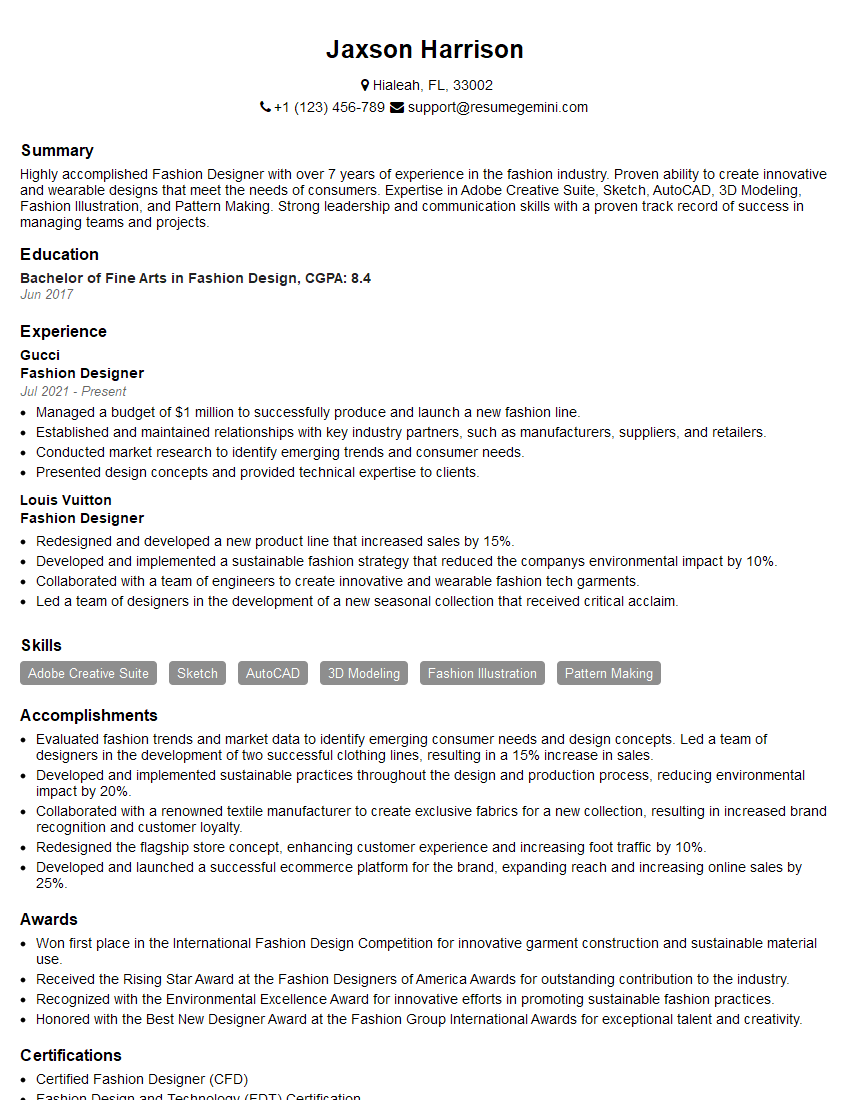
Fashion Designer Resume Sample

Draper Resume Sample

Seamstress Resume Sample
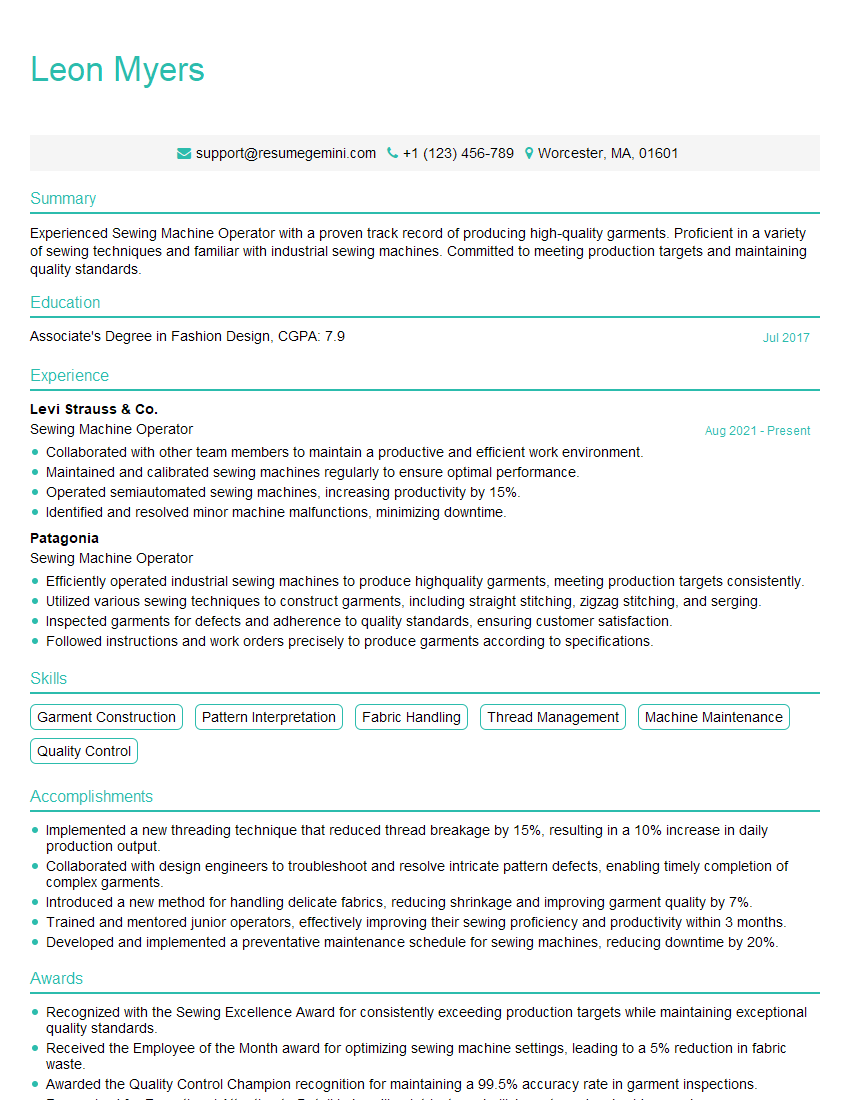
Sewing Machine Operator Resume Sample
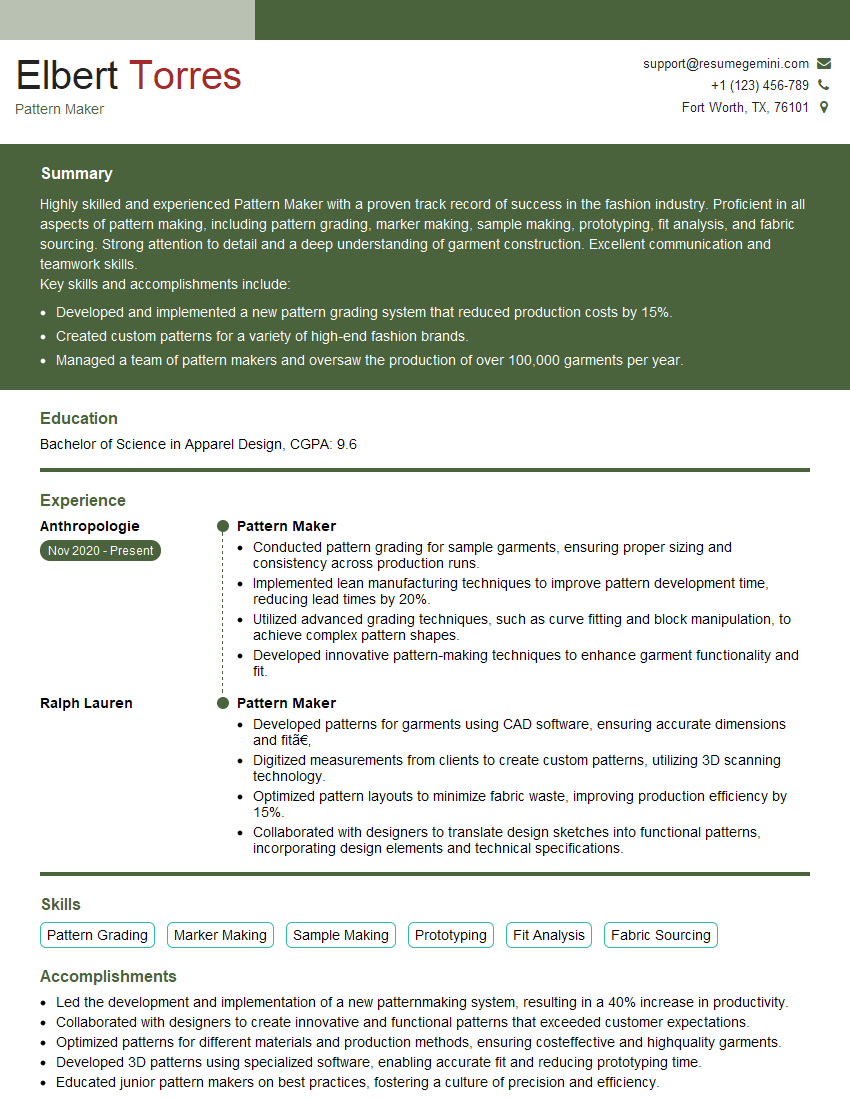
Pattern Maker Resume Sample
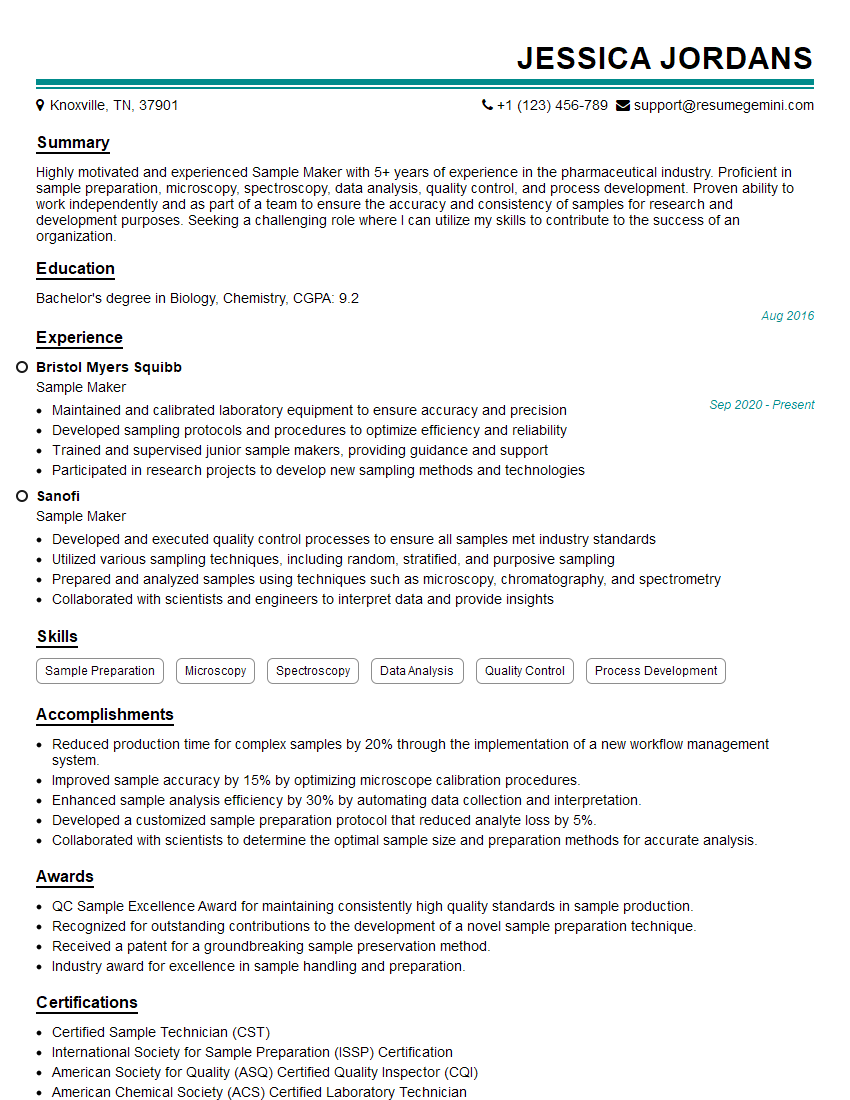
Sample Maker Resume Sample

Stitcher Resume Sample
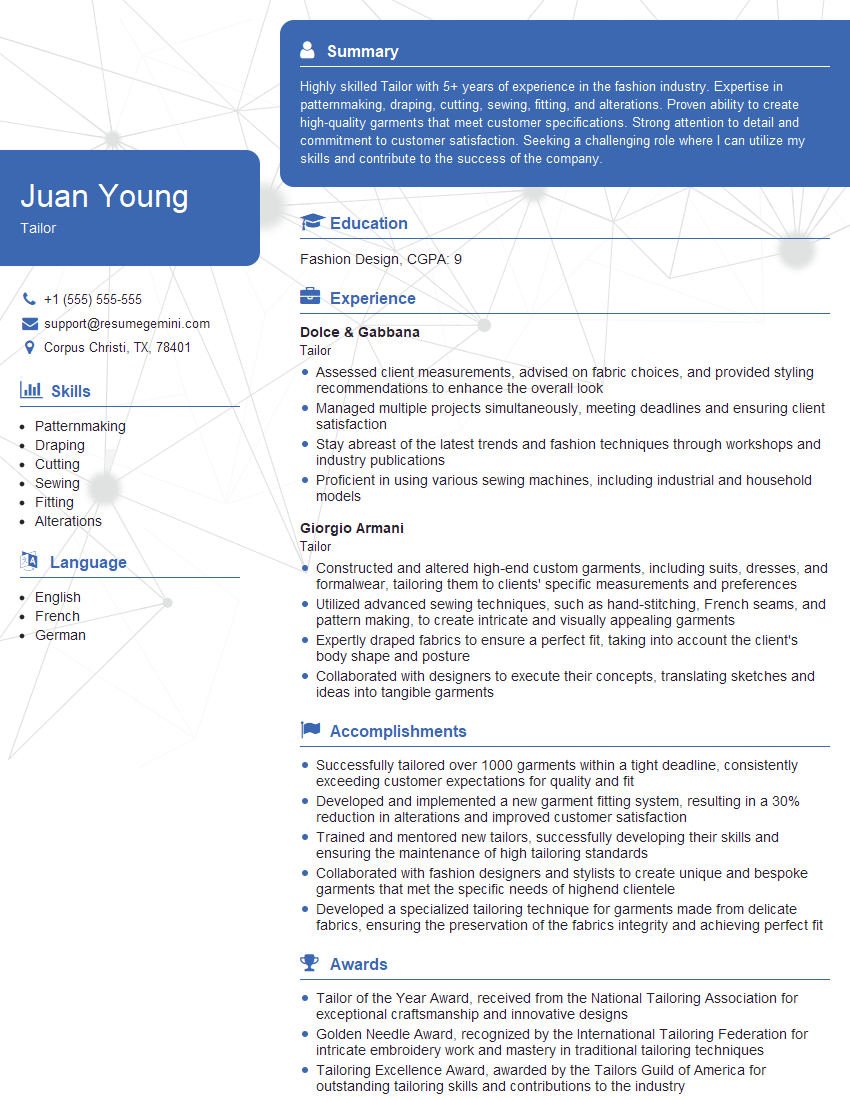
Tailor Resume Sample

Embroidery Specialist Resume Sample
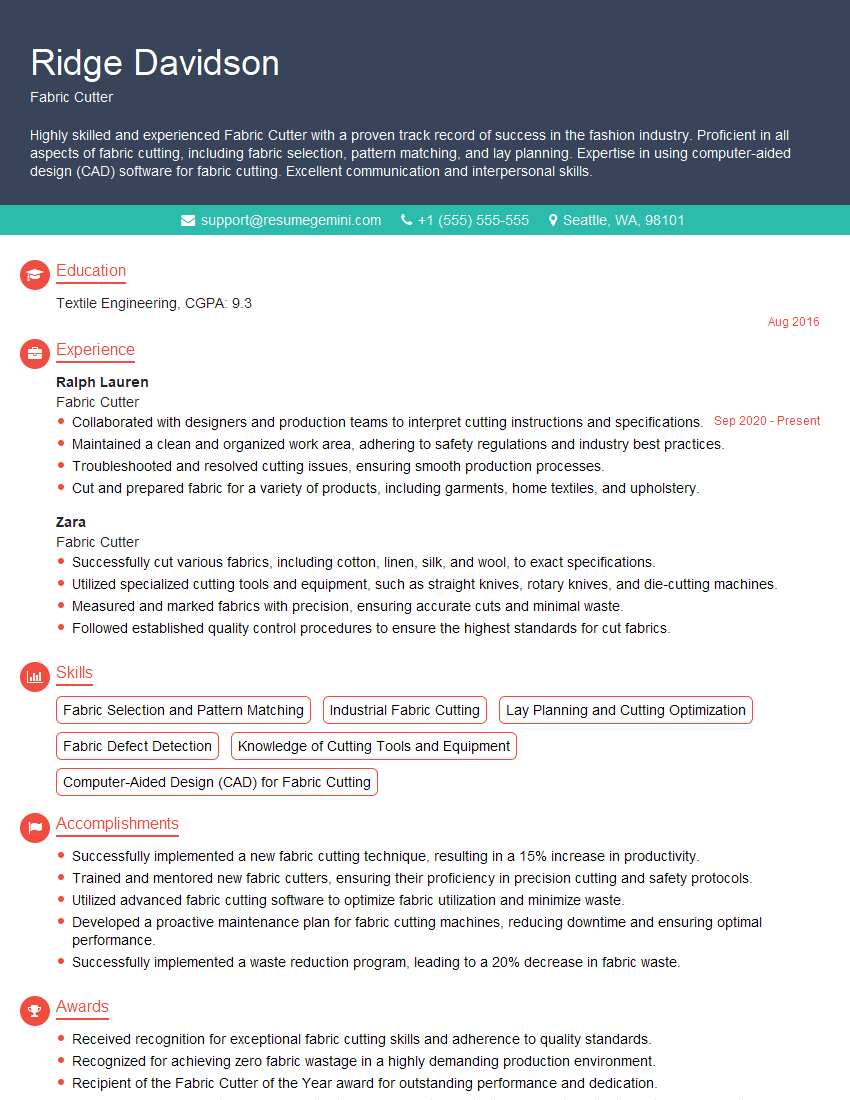
Fabric Cutter Resume Sample
Explore more articles
Users Rating of Our Blogs
Share Your Experience
We value your feedback! Please rate our content and share your thoughts (optional).
What Readers Say About Our Blog
Very informative content, great job.
good